

A Compassion-Focused Ecological Momentary Intervention for Enhancing Resilience in Help-Seeking Youth: Uncontrolled Pilot Study
Open accessPublished version of a preprint
The DOI matches its Crossref record; 110 of the 110 references it cites were found in a registry or an index.
Abstract
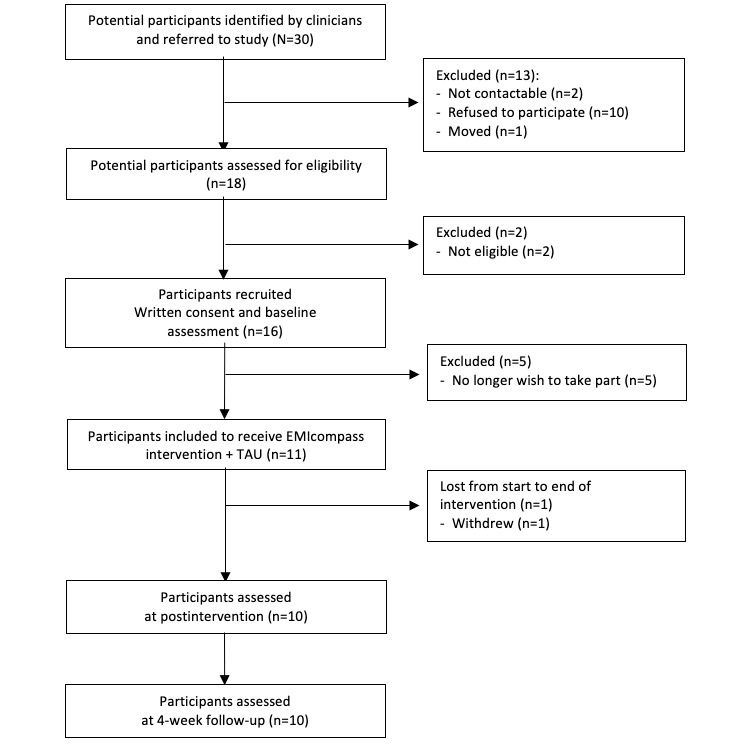
Background: Digital interventions offer new avenues for low-threshold prevention and treatment in young people. Ecological momentary interventions (EMIs) represent a powerful approach that allows for adaptive, real-time, and real-world delivery of intervention components in daily life by real-time processing of ecological momentary assessment (EMA) data. Compassion-focused interventions (CFIs) may be particularly amenable to translation into an EMI to strengthen emotional resilience and modify putative risk mechanisms, such as stress sensitivity, in the daily lives of young help-seeking individuals. Objective: This study aims to investigate the feasibility, safety, and initial therapeutic effects of a novel, accessible, transdiagnostic, ecological momentary CFI for improving emotional resilience to stress (EMIcompass). Methods: In this uncontrolled pilot study, help-seeking youth with psychotic, depressive, or anxiety symptoms were offered the EMIcompass intervention in addition to treatment as usual. The EMIcompass intervention consisted of a 3-week EMI (including enhancing, consolidating, and EMA-informed interactive tasks) administered through a mobile health app and three face-to-face sessions with a trained psychologist intended to provide guidance and training on the CFI exercises presented in the app (ie, training session, follow-up booster session, and review session). Results: In total, 10 individuals (mean age 20.3 years, SD 3.8; range 14-25) were included in the study. Most (8/10, 80%) participants were satisfied and reported a low burden of app usage. No adverse events were observed. In approximately one-third of all EMAs, individuals scored high on stress, negative affect, or threat anticipation during the intervention period, resulting in real-time, interactive delivery of the CFI intervention components in addition to weekly enhancing and daily consolidating tasks. Although the findings should be interpreted with caution because of the small sample size, reduced stress sensitivity, momentary negative affect, and psychotic experiences, along with increased positive affect, were found at postintervention and the 4-week follow-up. Furthermore, reductions in psychotic, anxiety, and depressive symptoms were found (r=0.30-0.65). Conclusions: Our findings provide evidence on the feasibility and safety of the EMIcompass intervention for help-seeking youth and lend initial support to beneficial effects on stress sensitivity and mental health outcomes. An exploratory randomized controlled trial is warranted to establish the feasibility and preliminary evidence of its efficacy.
Overview
The claims and statistics of this paper haven’t been checked yet.
Free: it reads the open-access text and checks the first 5 claims that cite a source we can check. Create a free account to check every claim.
Integrity signals
Registry
Cites
Statistics
Figures
Verification
Claims the paper makes
The claims and statistics of this paper haven’t been checked yet.
Free: it reads the open-access text and checks the first 5 claims that cite a source we can check. Create a free account to check every claim.
Claims other papers make about this one
Each is checked against this paper’s own text: does it say what the citing paper says it does?
The cited source says what the claim attributes to it.
In the citing paper
“Additionally, transformative digital mental health concepts such as ecological momentary assessment (EMA) and ecological momentary interventions (EMI) are on the rise and based on apps/smartphones [64–66].”
Self-check
Percentages, sums and reported differences re-computed from the paper’s own numbers.
The self-check needs the paper’s full text.
Citations
Cites
Kessler, R. C., Berglund, P., Demler, O., Jin, R., Merikangas, K. R., & Walters, E. E. (2005) · Archives of General Psychiatry · doi:10.1001/archpsyc.62.6.593 · Cited by 20,391 · cited 1×
“Most mental disorders first emerge in adolescence and young adulthood (three-fourths by the age of 24 years [1]), with an estimated lifetime prevalence of approximately 50% of any mental disorder in young age groups [1-5].”
BackgroundThe brief symptom inventory: an introductory report.
Derogatis, L. R., & Melisaratos, N. (1983) · Psychological Medicine · doi:10.1017/s0033291700048017 · Cited by 6,650 · cited 4×
“BSI: Brief Symptom Inventory CBT: cognitive behavioral therapy CFI: compassion-focused intervention EMA: ecological momentary assessment EMI: ecological momentary intervention ESM: experience sampling method mHealth: mobile health PQ: prodromal questionnaire RCT: randomized controlled trial Edited by J Torous; submitt…”
BackgroundMethodInfluentialMerikangas, K. R., He, J.-P., Burstein, M., Swanson, S. A., Avenevoli, S., Cui, L., Benjet, C., Georgiades, K., & Swendsen, J. (2010) · Journal of the American Academy of Child & Adolescent Psychiatry · doi:10.1016/j.jaac.2010.05.017 · Cited by 6,278 · cited 1×
“Most mental disorders first emerge in adolescence and young adulthood (three-fourths by the age of 24 years [1]), with an estimated lifetime prevalence of approximately 50% of any mental disorder in young age groups [1-5].”
BackgroundGlobal burden of disease in young people aged 10–24 years: a systematic analysis
Gore, F. M., Bloem, P. J., Patton, G. C., Ferguson, J., Joseph, V., Coffey, C., Sawyer, S. M., & Mathers, C. D. (2011) · The Lancet · doi:10.1016/s0140-6736(11)60512-6 · Cited by 2,301 · cited 1×
“Furthermore, the Global Burden of Disease study has reported that mental and substance use disorders in children and youth aged 10 to 24 years were the leading cause of overall disease burden in high-income countries [6-8].”
BackgroundNahum-Shani, I., Smith, S. N., Spring, B. J., Collins, L. M., Witkiewitz, K., Tewari, A., & Murphy, S. A. (2018) · Annals of Behavioral Medicine · doi:10.1007/s12160-016-9830-8 · Cited by 2,171 · cited 1×
“More recently, some authors have started to use the term just-in-time adaptive interventions, which emphasize EMI’s capability of adapting the delivery of intervention components to person and context based on experience sampling or other, for example, sensing data [47,48].”
BackgroundMeta-Analysis: Recent Developments in Quantitative Methods for Literature Reviews
Rosenthal, R., & DiMatteo, M. R. (2001) · Annual Review of Psychology · doi:10.1146/annurev.psych.52.1.59 · Cited by 1,780 · cited 2×
“aEffect size estimates are based on r described by Rosenthal and DiMatteo [102] using the following formula: r=Z/√number of pairs.”
MethodEldridge, S. M., Lancaster, G. A., Campbell, M. J., Thabane, L., Hopewell, S., Coleman, C. L., & Bond, C. M. (2016) · PLOS ONE · doi:10.1371/journal.pone.0150205 · Cited by 1,581 · cited 7×
“the effect size of initial therapeutic effects rather than statistical significance to provide the basis for a feasibility RCT [105].”
BackgroundInfluentialLifetime Prevalence of Psychotic and Bipolar I Disorders in a General Population
Perälä, J., Suvisaari, J., Saarni, S. I., Kuoppasalmi, K., Isometsä, E., Pirkola, S., Partonen, T., Tuulio-Henriksson, A., Hintikka, J., Kieseppä, T., et al. (2007) · Archives of General Psychiatry · doi:10.1001/archpsyc.64.1.19 · Cited by 1,516 · cited 1×
“Most mental disorders first emerge in adolescence and young adulthood (three-fourths by the age of 24 years [1]), with an estimated lifetime prevalence of approximately 50% of any mental disorder in young age groups [1-5].”
BackgroundHeron, K. E., & Smyth, J. M. (2010) · British Journal of Health Psychology · doi:10.1348/135910709x466063 · Cited by 1,438 · cited 1×
“They are based on fine-grained ecological momentary assessment (EMA) data acquired through cutting-edge digital technology [21,23,24,38,39,45,46].”
BackgroundIntroducing compassion-focused therapy
Gilbert, P. (2009) · Advances in Psychiatric Treatment · doi:10.1192/apt.bp.107.005264 · Cited by 1,435 · cited 13×
“This session was fully manualized based on previous research that used CFIs [67,68,74,78,94].”
BackgroundMethodInfluential
Research works printed but not linked: 2
- Gilbert P Compassion Focused Therapy (CBT Distinctive Features) 2010 London, United Kingdom Routledge 1 248
- Derogatis L BSI, Brief Symptom Inventory: Administration, Scoring & Procedures Manual 1993 Minneapolis, MN National Computer Systems A
Cited by
Götzl, C., Hiller, S., Rauschenberg, C., Schick, A., Fechtelpeter, J., Fischer-Abaigar, U., Koppe, G., Durstewitz, D., Reininghaus, U., & Krumm, S. (2022) · Child and Adolescent Psychiatry and Mental Health · doi:10.1186/s13034-022-00522-6 · Cited by 105
“…et al. found in an uncontrolled pilot EMI study, that within 3 weeks of using a compassion focused program (including, inter alia, EMA–informed interactive tasks), stress sensitivity, momentary negative affect, and psychotic experiences could be reduced in ten individuals aged 14–25 [34].”
BackgroundResultInfluentialSelf-citationDigital Mental Health Interventions for Young People Aged 16-25 Years: Scoping Review
Potts, C., Kealy, C., McNulty, J. M., Madrid‐Cagigal, A., Wilson, T., Mulvenna, M. D., O’Neill, S. M., Donohoe, G. J., & Barry, M. M. (2025) · Journal of Medical Internet Research · doi:10.2196/72892 · Cited by 75
“Ten interventions were used across more than one study, including Calm [71,120], EMIcompass [148,158], Grow It!”
Reininghaus, U., Paetzold, I., Rauschenberg, C., Hirjak, D., Banaschewski, T., Meyer-Lindenberg, A., Boehnke, J. R., Boecking, B., & Schick, A. (2023) · Schizophrenia Bulletin · doi:10.1093/schbul/sbac212 · Cited by 42
“18 While an uncontrolled pilot study found preliminary evidence on the feasibility, safety, and initial effects of this intervention, 18 evidence from an exploratory trial on feasibility and initial signals of efficacy is pending.”
BackgroundSelf-citationKolenik, T. (2022) · Internet of things · doi:10.1007/978-3-030-91181-2_7 · Cited by 60
Ecological Momentary Interventions in Public Mental Health Provision
Schulte‐Strathaus, J. C. C., Rauschenberg, C., Baumeister, H., & Reininghaus, U. (2022) · Studies in neuroscience, psychology and behavioral economics · doi:10.1007/978-3-030-98546-2_25 · Cited by 34
Self-citationSchick, A., Paetzold, I., Rauschenberg, C., Hirjak, D., Banaschewski, T., Meyer-Lindenberg, A., Boehnke, J. R., Boecking, B., & Reininghaus, U. (2021) · JMIR Research Protocols · doi:10.2196/27462 · Cited by 30
Self-citationDaemen, M., Postma, M. R., Lindauer, R., der Meulen, I. H.-V., Nieman, D. H., Delespaul, P., Breedvelt, J., van der Gaag, M., Viechtbauer, W., Schruers, K. R. J., et al. (2021) · Trials · doi:10.1186/s13063-021-05585-y · Cited by 33
Self-citationWeermeijer, J. D. M., Kiekens, G., Wampers, M., Kuppens, P., & Myin‐Germeys, I. (2023) · Behaviour and Information Technology · doi:10.1080/0144929x.2023.2178235 · Cited by 29
Wendel, F., Bender, S., Breitinger, E., Coenen, M., Hummel, J., Immich, G., Kirschneck, M., Klünder, V., Kunzler, A. M., Lieb, K., et al. (2024) · European Child & Adolescent Psychiatry · doi:10.1007/s00787-023-02280-y · Cited by 19
Paetzold, I., Schick, A., Rauschenberg, C., Hirjak, D., Banaschewski, T., Meyer‐Lindenberg, A., Butz, S., Floesser, C., Schültke, L., Boehnke, J. R., et al. (2022) · JMIR Formative Research · doi:10.2196/39511 · Cited by 19
Self-citationZainal, N. H., & Newman, M. G. (2024) · Journal of Anxiety Disorders · doi:10.1016/j.janxdis.2024.102825 · Cited by 20
A control theoretic approach to evaluate and inform ecological momentary interventions
Fechtelpeter, J., Rauschenberg, C., Jamalabadi, H., Boecking, B., van Amelsvoort, T., Reininghaus, U., Durstewitz, D., & Koppe, G. (2023) · doi:10.31234/osf.io/97teh · Cited by 16
“Ten participants underwent several weeks of EMA with interleaved EMI (see Rauschenberg et al. (2021) and Supplement 1.1 in Supporting Information S1).”
BackgroundMethodResultInfluentialSelf-citationRauschenberg, C., Schulte‐Strathaus, J. C. C., van Os, J., Goedhart, M., Schieveld, J. N. M., & Reininghaus, U. (2022) · Social Psychiatry and Psychiatric Epidemiology · doi:10.1007/s00127-022-02276-0 · Cited by 26
Self-citationNahum, M., Sinvani, R.-T., Afek, A., Ben-Avraham, R., Jordan, J. T., Ben‐Shachar, M. S., Yehuda, A. B., Cohen, N., Davidov, A., & Gilboa, Y. (2023) · Scientific Reports · doi:10.1038/s41598-023-40242-1 · Cited by 19
Sinvani, R.-T., Fogel‐Grinvald, H., Afek, A., Ben-Avraham, R., Davidov, A., Cohen, N., Yehuda, A. B., Nahum, M., & Gilboa, Y. (2021) · Frontiers in Psychiatry · doi:10.3389/fpsyt.2021.672397 · Cited by 18
Digital health technologies in the accelerating medicines Partnership® Schizophrenia Program
Wigman, J. T. W., Ching, A. E., Chung, Y., Rahimi-Eichi, H., Lane, E., Langholm, C., Vaidyam, A. N., Byun, A. J. S., Haidar, A., Hartmann, J., et al. (2025) · Schizophrenia · doi:10.1038/s41537-025-00599-w · Cited by 17
Digitale Versorgungsformen zur Personalisierung der stationsäquivalenten Behandlung
Rauschenberg, C., Hirjak, D., Ganslandt, T., Schulte‐Strathaus, J. C. C., Schick, A., Meyer‐Lindenberg, A., & Reininghaus, U. (2021) · Der Nervenarzt · doi:10.1007/s00115-021-01100-5 · Cited by 17
Self-citationPaetzold, I., Schick, A., Rauschenberg, C., Hirjak, D., Banaschewski, T., Meyer‐Lindenberg, A., Boehnke, J. R., Boecking, B., & Reininghaus, U. (2023) · Behaviour Research and Therapy · doi:10.1016/j.brat.2023.104367 · Cited by 18
Self-citationElmer, T., Wolf, M., Snippe, E., & Scholz, U. (2025) · JMIR Mental Health · doi:10.2196/74103 · Cited by 22
“For instance, interventions can be triggered at critical moments when a particular individual is experiencing high levels of negative affect, stress, or rumination [27,28].”
Liu, J., Zhuo, S., Li, X., Dillon, A. P., Howell, N., Smith, A. D. R., & Zhang, Y. (2025) · Proceedings of the ACM on Human-Computer Interaction · doi:10.1145/3757605 · Cited by 27
“The efficacy of these approaches has been subsequently confirmed by empirical studies [53, 144].”
Mobile applications in adolescent psychotherapy during the COVID-19 pandemic: a systematic review
Wüllner, S., Hermenau, K., Krutkova, M., Petras, I.-K., Hecker, T., & Siniatchkin, M. (2024) · Frontiers in Public Health · doi:10.3389/fpubh.2024.1345808 · Cited by 12
van Amelsvoort, T., & Leijdesdorff, S. M. J. (2022) · World Psychiatry · doi:10.1002/wps.20930 · Cited by 11
Hybrid approaches to allied health services for children and young people: a scoping review
Krasovsky, T., Weiss, P. L., Gafni-Lachter, L., Kizony, R., & Gefen, N. (2024) · Journal of NeuroEngineering and Rehabilitation · doi:10.1186/s12984-024-01401-1 · Cited by 11
“…39], participation in online sessions [24, 25], using learned strategies [32], recruitment [38], retention [26], compliance [38], acceptability [25, 38], attendance [25, 26], usage [25], System Usability Scale (SUS) [30], Client Evaluation of Services Questionnaire (CSQ-8) [30], no. of technical…”
BackgroundMethodInfluentialChávez-Baray, S. M., Martínez, O., Chaparro, P., & Moya, E. M. (2022) · Frontiers in Public Health · doi:10.3389/fpubh.2022.865944 · Cited by 11
Dietvorst, E., de Vries, L. P., van Eijl, S., Mesman, E., Legerstee, J. S., Keijsers, L., Hillegers, M. H. J., & Vreeker, A. (2024) · Digital Health · doi:10.1177/20552076241294105 · Cited by 13
Pavlacic, J. M., Hampton, B. N., Young, J. N., Witcraft, S. M., Flores, C. M. N., Vázquez, A. L., & Rheingold, A. A. (2024) · Journal of Technology in Behavioral Science · doi:10.1007/s41347-024-00416-8 · Cited by 9
“…et al., 2020; Hawker et al., 2021; Huffziger et al., 2013; Krisjansdottir et al. 2013; Lahtinen et al. 2020; Lee et al. 2018; Levin et al., 2018; Levin et al., 2019b; Ponzo et al., 2020; Rauschenberg et al., 2021; Reyes et al., 2020a; Schnepper et al., 2020; Thonon et al., 2022; Yang et al., 2018).”
Designing for all youth: a scoping review of equity and participation in mental health apps
Figueroa, C. A., Pérez‐Flores, N. J., Guan, K., Zhang, R., Orchard, N. A., Kuebler, W., Williams, G. C., & Stiles‐Shields, C. (2026) · npj Digital Public Health · doi:10.1038/s44482-026-00012-y · Cited by 6
Schick, A., Paetzold, I., Rauschenberg, C., Hirjak, D., Banaschewski, T., Meyer‐Lindenberg, A., Boehnke, J. R., Boecking, B., & Reininghaus, U. (2020) · doi:10.31234/osf.io/5qhdv · Cited by 4
Self-citationPaetzold, I., Gugel, J., Schick, A., Rauschenberg, C., Hirjak, D., Boecking, B., Doi, L., Schwannauer, M., & Reininghaus, U. (2024) · Psychology and Psychotherapy Theory Research and Practice · doi:10.1111/papt.12565 · Cited by 7
“…was an important external context factor that impacted on participants in various ways: As indicated in recent publications (Panchal et al., 2021; Rauschenberg, Schick, et al., 2021), some experienced loss of daily structure, loneliness, and their mental health was negatively affected by the…”
Self-citationKim, H., Stanley, B. L., Harms, B., & Michaelides, A. P. (2024) · Journal of Applied Communication Research · doi:10.1080/00909882.2024.2338836 · Cited by 3
“Hence, scholars and practitioners have developed various ways to cultivate compassionate health communication, such as compassion-focused intervention (Rauschenberg et al., 2021) and compassion education intervention (Sinclair et al., 2021).”
Guan, K., Amara, M., Gürbüz, S., Khan, I. A., Adlung, C., Cortiana, V., Ali, R., Iorio, C., Thalassinou, E., Smit, C. R., et al. (2026) · Journal of Medical Internet Research · doi:10.2196/84422 · Cited by 4
“These include interventions that target anxiety, depression, psychological distress, and suicide prevention among AYAs [64-79 , 106].”
Towards mechanism-focused and scalable resilience interventions
Schäfer, S. K., Stoffers‐Winterling, J., & Lieb, K. (2026) · Nature Reviews Psychology · doi:10.1038/s44159-026-00573-y · Cited by 6
“This methodology has been used to examine associations between regulatory flexibility and affect 144 and is increasingly being adopted for delivering resilience interventions 156,189 , but intervention studies have not yet focused on dynamic within-person change processes.”
Yoo, Y., Kim, M., Kim, S., Lee, G., & Kim, J. (2026) · Digital Health · doi:10.1177/20552076261464801 · Cited by 2
“88,90 Quantitative user acceptability was also firmly established, with a mean daily satisfaction score of 3.49, successfully exceeding the established ≥ 3.0 benchmark 83 over 42 consecutive days.”
InfluentialStaab, P. A., Bhattacharya, A., & Slovák, P. (2025) · CHI Conference on Human Factors in Computing Systems · doi:10.1145/3706598.3713859 · Cited by 1
Xie, Q., Amo, V., Nahum-Shani, I. B., & Goldberg, S. B. (2025) · Journal of Technology in Behavioral Science · doi:10.1007/s41347-025-00568-1 · Cited by 2
“…outcomes, some EMIs focused on enhancing engagement in meditation practices (Garland et al., 2023; Pavlacic et al., 2022; Spears, Abroms, et al., 2019), while others emphasized improving momentary distress and mindfulness (Everitt et al., 2021; Rauschenberg et al., 2021; Zainal & Newman, 2023).”
InfluentialWierzba, E., Schick, A., Rauschenberg, C., Fechtelpeter, J., Hiller, S., Götzl, C., Durstewitz, D., Krumm, S., Koppe, G., & Reininghaus, U. (2026) · Journal of Medical Internet Research · doi:10.2196/85552 · Cited by 1
“Three types of delivery schemes were used for the delivery of EMI components: enhancing, consolidating, and interactive/adaptive delivery of EMI components, as previously used in other EMIs [24-26 , 43 ].”
Self-citationFiß, F., Berndt, L., Anickova, S., Vaessen, T., & Kraiss, J. T. (2026) · Journal of Affective Disorders · doi:10.1016/j.jad.2026.121661 · Cited by 1
Fechtelpeter, J., Rauschenberg, C., Götzl, C., Hiller, S., Wierzba, E., Krumm, S., Reininghaus, U., Durstewitz, D., & Koppe, G. (2026) · Die Psychotherapie · doi:10.1007/s00278-026-00848-y · Cited by 1
Self-citationGugel, J., Rauschenberg, C., Paetzold, I., Schick, A., Wierzba, E., Hirjak, D., Boehnke, J. R., Boecking, B., & Reininghaus, U. (2026) · Journal of Medical Internet Research · doi:10.2196/77150 · Cited by 3
“…improving resilience in youths with early mental health problems, was specifically designed to building on previous findings on EMA and EMI [4,9,14] as well as transdiagnostic momentary mechanisms [13,24,32-34] to target psychological distress, clinical symptoms, and candidate mechanisms [35,36].”
Self-citationSampling the self: investigating and improving self-esteem in pathways to psychopathology
Daemen, M. (2022) · Research Publications (Maastricht University) · doi:10.26481/dis.20220715md · Cited by 1
Gugel, J., Paetzold, I., Rauschenberg, C., Schick, A., Hirjak, D., Boehnke, J. R., Boecking, B., & Reininghaus, U. (2025) · doi:10.2196/preprints.77150 · Cited by 1
Self-citationChong, E. S. K., Chen, H., Po, S. K., & Zhang, Y. (2025) · Research Square · doi:10.21203/rs.3.rs-7417381/v1 · Cited by 1
Technological Interventions for Psychosis
Rauschenberg, C., Rus‐Calafell, M., Reininghaus, U., & Valmaggia, L. (2021) · Elsevier eBooks · doi:10.1016/b978-0-12-818697-8.00070-4
Self-citationNahum, M., Sinvani, R.-T., Afek, A., Ben-Avraham, R., Jordan, J., Yehuda, A. B., Cohen, N. B., Davidov, A., & Gilboa, Y. (2022) · doi:10.2196/preprints.36728
Caplazi, S. (2023) · Psychotherapie-Wissenschaft · doi:10.30820/1664-9583-2023-1-73
Fechtelpeter, J., Rauschenberg, C., Jalalabadi, H., Boecking, B., van Amelsvoort, T., Reininghaus, U., Durstewitz, D., & Koppe, G. (2023) · doi:10.2196/preprints.51472
Self-citationWorking your way through self-esteem
Postma, M. R. (2024) · Research Publications (Maastricht University) · doi:10.26481/dis.20240111mp
Xie, Q., Amo, V., Nahum-Shani, I. B., & Goldberg, S. B. (2024) · PsyArXiv (OSF Preprints) · doi:10.31234/osf.io/nrma6 · Cited by 2
Guan, K., Amara, M., Gürbüz, S., Khan, I. A., Adlung, C., Cortiana, V., Ali, R., Iorio, C., Thalassinou, E., Smit, C. R., et al. (2025) · medRxiv · doi:10.1101/2025.09.01.25334834
“32 A recent development since 2024 includes 2 studies focussed on promoting healthy digital behaviours, specifically to address the over-use of digital devices.”
InfluentialGötzl, C., Hiller, S., Rauschenberg, C., Schick, A., Fechtelpeter, J., Fischer Abaigar, U., Koppe, G., Durstewitz, D., Reininghaus, U., & Krumm, S. (2022) · Figshare · doi:10.6084/m9.figshare.21582095
Self-citationGötzl, C., Hiller, S., Rauschenberg, C., Schick, A., Fechtelpeter, J., Fischer Abaigar, U., Koppe, G., Durstewitz, D., Reininghaus, U., & Krumm, S. (2022) · Figshare · doi:10.6084/m9.figshare.21582092
Self-citationGötzl, C., Hiller, S., Rauschenberg, C., Schick, A., Fechtelpeter, J., Fischer Abaigar, U., Koppe, G., Durstewitz, D., Reininghaus, U., & Krumm, S. (2022) · Figshare · doi:10.6084/m9.figshare.21582101
Self-citationGötzl, C., Hiller, S., Rauschenberg, C., Schick, A., Fechtelpeter, J., Fischer Abaigar, U., Koppe, G., Durstewitz, D., Reininghaus, U., & Krumm, S. (2022) · Figshare · doi:10.6084/m9.figshare.21582089
Self-citationGötzl, C., Hiller, S., Rauschenberg, C., Schick, A., Fechtelpeter, J., Fischer Abaigar, U., Koppe, G., Durstewitz, D., Reininghaus, U., & Krumm, S. (2022) · Figshare · doi:10.6084/m9.figshare.21582098
Self-citationGötzl, C., Hiller, S., Rauschenberg, C., Schick, A., Fechtelpeter, J., Fischer Abaigar, U., Koppe, G., Durstewitz, D., Reininghaus, U., & Krumm, S. (2022) · Figshare · doi:10.6084/m9.figshare.21582104
Self-citationBoonstra, A., Daemen, M., Osstyn, S. L., Handels, R. L. H., Drost, R. M. W. A., Postma, M. R., der Meulen, I. H.-V., Volbragt, N., Nieman, D. H., Delespaul, P., et al. (2026) · Psychological Medicine · doi:10.1017/s003329172610395x · Cited by 1
“These innovative mobile applications are now applied, for example, in third-wave behavioral therapy interventions, with studies showing feasibility, efficacy (van Aubel et al., 2020), and medium-to-large effect sizes (Rauschenberg et al., 2021).”
Self-citationShin, D., & Kim, Y. (2026) · Advances in experimental medicine and biology · doi:10.1007/978-981-95-6872-7_7
Parola, G., Contreras, A., Colombo, D., Etchemendy, E., Baños, R., & Wrzesien, M. (2026) · Research Square · doi:10.21203/rs.3.rs-9480720/v1
Kouijzer, M. M. T. E., Serno, C., Vaessen, T., Kelders, S. M., Uyttebroek, L., & Kip, H. (2026) · doi:10.2196/preprints.106718
Uyttebroek, L., Beames, J. R., Wampers, M., van Aubel, E., Weermeijer, J. D. M., & Myin‐Germeys, I. (2026) · Internet Interventions · doi:10.1016/j.invent.2026.100979
“…with the EMA questionnaires was comparable to other blended care interventions that combine face-to-face sessions with an EMI, which have reported 25% to 48% engagement during the intervention period (van Aubel et al., 2020; van Aubel et al., 2024; Rauschenberg et al., 2021; Thonon et al., 2021).”
Digital Solutions for LGBTQIA+ Youth Social Support: A systematic reviewPreprint
Rickard, N. S., & Hunt, D. (2026) · Research Square · doi:10.21203/rs.3.rs-10953202/v1
Do Psychological Interventions Reduce Paranoia in Adolescents? A Systematic Review
Tierney-Sutton, L., Taylor, C. D. J., Pile, V., Watling, D., Lobo, S., Courten, E., & Kingston, J. L. (2026) · Clinical Child and Family Psychology Review · doi:10.1007/s10567-026-00587-1
Rauschenberg, C., Schirmbeck, F. N., Fechtelpeter, J., Wierzba, E., Hiller, S., Kahr, K., Kessler, A. S., Hornbacher, L. L. F., Götzl, C., Schick, A., et al. (2026) · Translational Psychiatry · doi:10.1038/s41398-026-04475-8
Self-citationFifield, K., Simblett, S. K., Graham, T., Blackford, K., & Tye, C. (2026) · Research Square · doi:10.21203/rs.3.rs-10394948/v1
Privacy in India’s digital credit ecosystem: a systematic literature review and policy directions
Koul, S., Verma, R., & Ajaygopal, K. V. (2026) · Cogent Business & Management · doi:10.1080/23311975.2026.2725313
Luijsmans, M., Claes, L., Tatnell, R., Houben, M., Vaessen, T., Smeets, T. J. M., Myin‐Germeys, I., & Kiekens, G. (2026) · Internet Interventions · doi:10.1016/j.invent.2026.101014
“Emotions could be addressed by imagery of emotions as a wave, meaning they are temporary and will pass (Gilbert, 2009; Rauschenberg et al., 2021).”
Metadata
- Authors
- Rauschenberg, C., Boecking, B., Paetzold, I., Schruers, K., Schick, A., van Amelsvoort, T., & Reininghaus, U.
- Affiliations
- Heidelberg University (DE)
- Charité – Universitätsmedizin Berlin (DE)
- Maastricht University (NL)
- King's College London (GB)
- Corresponding author
- Reininghaus, Ulrich
- ORCID
- Venue
- JMIR Mental Health
- Publisher
- JMIR Publications Inc.
- Published
- 2021-08-05
- Volume
- 8
- Issue
- 8
- Pages
- e25650
- ISSN
- 2368-7959 (ISSN-L)
- PMC
- PMC8380580
- OpenAlex
- W3187379416
- Cited by
- 63
- References
- 110
- Citations by year
- 2026: 19 · 2025: 7 · 2024: 11 · 2023: 6 · 2022: 15 · 2021: 5
- FWCI
- 7.90
- Type
- journal article
- Language
- en
- Open access
- gold
- doi.org
- Licence
- cc-by
- Locations
- JMIR Mental Health (publishedVersion, cc-by)
- PubMed Central (publishedVersion, cc-by)
- PubMed (publishedVersion)
- Research Publications (Maastricht University) (publishedVersion, cc-by)
- DOAJ (DOAJ: Directory of Open Access Journals) (submittedVersion)
- Research Portal (King's College London) (submittedVersion, other-oa)
- PsyArXiv (OSF Preprints) (submittedVersion, cc-by)
- PsyArXiv (OSF Preprints) (submittedVersion)
- Research Publications (Maastricht University) (submittedVersion, other-oa)
- Funders
- Deutsche Forschungsgemeinschaft (389624707)
- Nederlandse Organisatie voor Wetenschappelijk Onderzoek (451‐13‐022)
- Topics
- Social Sciences › Psychology › Applied Psychology › Digital Mental Health Interventions
- Social Sciences › Psychology › Clinical Psychology › Mindfulness and Compassion Interventions
- Social Sciences › Psychology › Experimental and Cognitive Psychology › Mental Health Research Topics
- Keywords
- compassion-focused interventions, ecological momentary intervention, ecological momentary assessment, psychological resilience, stress sensitivity, mobile health apps, digital mental health interventions, psychotic symptoms, depressive symptoms, anxiety symptoms, transdiagnostic treatment, feasibility and safety
About these checks
Registry, retraction, Cites and statistics results are computed, not judged, with one exception: a printed reference that no index lists is read once by a model before it counts as a citation error. Claims are extracted by a model and kept only when their quote appears verbatim in the text; each cited source is then checked, with a model’s help, for whether it says what the claim relies on. Those verdicts can be wrong — read the claim’s quote and the cited source before relying on one.
Statistics and arithmetic are recomputed, not judged.
Confidence bands are shown only for fields calibrated on our annotated test set. None is calibrated yet, so no band is shown.
What counts as a claim ›How we measure confidence ›How we check this ›
Are you an author, or do you see a problem with this page? Request a review
Data sources
Bibliographic data: Semantic Scholar, OpenAlex, Crossref.
Contains information from the Semantic Scholar Academic Graph Datasets, made available under the ODC Attribution License (ODC-BY 1.0).
Semantic Scholar’s data is described in: Kinney, R., et al. (2023). The Semantic Scholar Open Data Platform. arXiv:2301.10140.
