

A Compassion-Focused Ecological Momentary Intervention for Enhancing Resilience in Help-Seeking Youth: Uncontrolled Pilot Study
Open accessPublished version of a preprint
The DOI matches its Crossref record; 110 of the 110 references it cites were found in a registry or an index.
Abstract
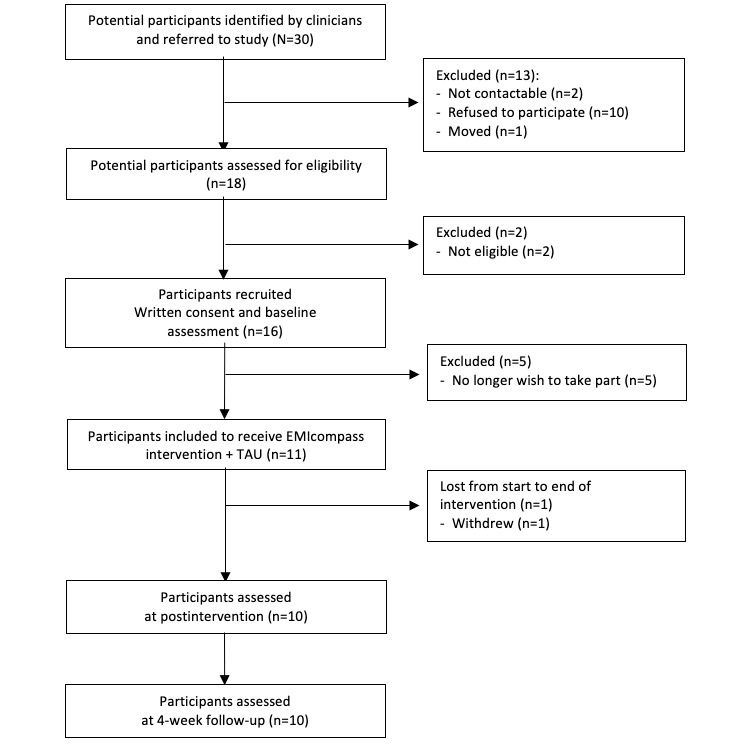
Background: Digital interventions offer new avenues for low-threshold prevention and treatment in young people. Ecological momentary interventions (EMIs) represent a powerful approach that allows for adaptive, real-time, and real-world delivery of intervention components in daily life by real-time processing of ecological momentary assessment (EMA) data. Compassion-focused interventions (CFIs) may be particularly amenable to translation into an EMI to strengthen emotional resilience and modify putative risk mechanisms, such as stress sensitivity, in the daily lives of young help-seeking individuals. Objective: This study aims to investigate the feasibility, safety, and initial therapeutic effects of a novel, accessible, transdiagnostic, ecological momentary CFI for improving emotional resilience to stress (EMIcompass). Methods: In this uncontrolled pilot study, help-seeking youth with psychotic, depressive, or anxiety symptoms were offered the EMIcompass intervention in addition to treatment as usual. The EMIcompass intervention consisted of a 3-week EMI (including enhancing, consolidating, and EMA-informed interactive tasks) administered through a mobile health app and three face-to-face sessions with a trained psychologist intended to provide guidance and training on the CFI exercises presented in the app (ie, training session, follow-up booster session, and review session). Results: In total, 10 individuals (mean age 20.3 years, SD 3.8; range 14-25) were included in the study. Most (8/10, 80%) participants were satisfied and reported a low burden of app usage. No adverse events were observed. In approximately one-third of all EMAs, individuals scored high on stress, negative affect, or threat anticipation during the intervention period, resulting in real-time, interactive delivery of the CFI intervention components in addition to weekly enhancing and daily consolidating tasks. Although the findings should be interpreted with caution because of the small sample size, reduced stress sensitivity, momentary negative affect, and psychotic experiences, along with increased positive affect, were found at postintervention and the 4-week follow-up. Furthermore, reductions in psychotic, anxiety, and depressive symptoms were found (r=0.30-0.65). Conclusions: Our findings provide evidence on the feasibility and safety of the EMIcompass intervention for help-seeking youth and lend initial support to beneficial effects on stress sensitivity and mental health outcomes. An exploratory randomized controlled trial is warranted to establish the feasibility and preliminary evidence of its efficacy.
Overview
The claims and statistics of this paper haven’t been checked yet.
Free: it reads the open-access text and checks the first 5 claims that cite a source we can check. Create a free account to check every claim.
Integrity signals
Registry
Cites
Statistics
Figures
Verification
Claims the paper makes
The claims and statistics of this paper haven’t been checked yet.
Free: it reads the open-access text and checks the first 5 claims that cite a source we can check. Create a free account to check every claim.
Claims other papers make about this one
Each is checked against this paper’s own text: does it say what the citing paper says it does?
The cited source says what the claim attributes to it.
In the citing paper
“Additionally, transformative digital mental health concepts such as ecological momentary assessment (EMA) and ecological momentary interventions (EMI) are on the rise and based on apps/smartphones [64–66].”
Self-check
Percentages, sums and reported differences re-computed from the paper’s own numbers.
The self-check needs the paper’s full text.
Citations
Cites
Kessler, R. C., Berglund, P., Demler, O., Jin, R., Merikangas, K. R., & Walters, E. E. (2005) · Archives of General Psychiatry · doi:10.1001/archpsyc.62.6.593 · Cited by 20,391 · cited 1×
“Most mental disorders first emerge in adolescence and young adulthood (three-fourths by the age of 24 years [1]), with an estimated lifetime prevalence of approximately 50% of any mental disorder in young age groups [1-5].”
BackgroundThe brief symptom inventory: an introductory report.
Derogatis, L. R., & Melisaratos, N. (1983) · Psychological Medicine · doi:10.1017/s0033291700048017 · Cited by 6,650 · cited 4×
“BSI: Brief Symptom Inventory CBT: cognitive behavioral therapy CFI: compassion-focused intervention EMA: ecological momentary assessment EMI: ecological momentary intervention ESM: experience sampling method mHealth: mobile health PQ: prodromal questionnaire RCT: randomized controlled trial Edited by J Torous; submitt…”
BackgroundMethodInfluentialMerikangas, K. R., He, J.-P., Burstein, M., Swanson, S. A., Avenevoli, S., Cui, L., Benjet, C., Georgiades, K., & Swendsen, J. (2010) · Journal of the American Academy of Child & Adolescent Psychiatry · doi:10.1016/j.jaac.2010.05.017 · Cited by 6,278 · cited 1×
“Most mental disorders first emerge in adolescence and young adulthood (three-fourths by the age of 24 years [1]), with an estimated lifetime prevalence of approximately 50% of any mental disorder in young age groups [1-5].”
BackgroundGlobal burden of disease in young people aged 10–24 years: a systematic analysis
Gore, F. M., Bloem, P. J., Patton, G. C., Ferguson, J., Joseph, V., Coffey, C., Sawyer, S. M., & Mathers, C. D. (2011) · The Lancet · doi:10.1016/s0140-6736(11)60512-6 · Cited by 2,301 · cited 1×
“Furthermore, the Global Burden of Disease study has reported that mental and substance use disorders in children and youth aged 10 to 24 years were the leading cause of overall disease burden in high-income countries [6-8].”
BackgroundNahum-Shani, I., Smith, S. N., Spring, B. J., Collins, L. M., Witkiewitz, K., Tewari, A., & Murphy, S. A. (2018) · Annals of Behavioral Medicine · doi:10.1007/s12160-016-9830-8 · Cited by 2,171 · cited 1×
“More recently, some authors have started to use the term just-in-time adaptive interventions, which emphasize EMI’s capability of adapting the delivery of intervention components to person and context based on experience sampling or other, for example, sensing data [47,48].”
BackgroundMeta-Analysis: Recent Developments in Quantitative Methods for Literature Reviews
Rosenthal, R., & DiMatteo, M. R. (2001) · Annual Review of Psychology · doi:10.1146/annurev.psych.52.1.59 · Cited by 1,780 · cited 2×
“aEffect size estimates are based on r described by Rosenthal and DiMatteo [102] using the following formula: r=Z/√number of pairs.”
MethodEldridge, S. M., Lancaster, G. A., Campbell, M. J., Thabane, L., Hopewell, S., Coleman, C. L., & Bond, C. M. (2016) · PLOS ONE · doi:10.1371/journal.pone.0150205 · Cited by 1,581 · cited 7×
“the effect size of initial therapeutic effects rather than statistical significance to provide the basis for a feasibility RCT [105].”
BackgroundInfluentialLifetime Prevalence of Psychotic and Bipolar I Disorders in a General Population
Perälä, J., Suvisaari, J., Saarni, S. I., Kuoppasalmi, K., Isometsä, E., Pirkola, S., Partonen, T., Tuulio-Henriksson, A., Hintikka, J., Kieseppä, T., et al. (2007) · Archives of General Psychiatry · doi:10.1001/archpsyc.64.1.19 · Cited by 1,516 · cited 1×
“Most mental disorders first emerge in adolescence and young adulthood (three-fourths by the age of 24 years [1]), with an estimated lifetime prevalence of approximately 50% of any mental disorder in young age groups [1-5].”
BackgroundHeron, K. E., & Smyth, J. M. (2010) · British Journal of Health Psychology · doi:10.1348/135910709x466063 · Cited by 1,438 · cited 1×
“They are based on fine-grained ecological momentary assessment (EMA) data acquired through cutting-edge digital technology [21,23,24,38,39,45,46].”
BackgroundIntroducing compassion-focused therapy
Gilbert, P. (2009) · Advances in Psychiatric Treatment · doi:10.1192/apt.bp.107.005264 · Cited by 1,435 · cited 13×
“This session was fully manualized based on previous research that used CFIs [67,68,74,78,94].”
BackgroundMethodInfluentialMental Imagery: Functional Mechanisms and Clinical Applications
Pearson, J., Naselaris, T., Holmes, E. A., & Kosslyn, S. M. (2015) · Trends in Cognitive Sciences · doi:10.1016/j.tics.2015.08.003 · Cited by 1,087 · cited 2×
“Furthermore, CFIs have been shown to induce reductions in negative affect and paranoia in moments of high stress in previous research lab experimental work [78,79].”
BackgroundCollins, L. M., Murphy, S. A., & Strecher, V. (2007) · American Journal of Preventive Medicine · doi:10.1016/j.amepre.2007.01.022 · Cited by 1,082 · cited 1×
“First, in line with state-of-the-art guidance on developing and evaluating complex interventions [103], mHealth interventions in particular [104], the sample size (N=10) of this pilot study was selected to be small.”
BackgroundMental imagery in emotion and emotional disorders
Holmes, E. A., & Mathews, A. (2010) · Clinical Psychology Review · doi:10.1016/j.cpr.2010.01.001 · Cited by 976 · cited 2×
“The manual was based on widely used CFI techniques (eg, compassionate and positive imagery, compassionate writing, and emotion as a wave) and developed following a process of reviewing existing manuals and the extant CFI literature [67,68,73,74,78,80] through the team’s clinical experience of working with these approa…”
BackgroundMethodLattie, E. G., Adkins, E. C., Winquist, N., Stiles-Shields, C., Wafford, Q. E., & Graham, A. K. (2019) · Journal of Medical Internet Research · doi:10.2196/12869 · Cited by 843 · cited 1×
“However, in this study, the burden associated with app usage was low, and problems with engagement have mainly been reported for stand-alone mHealth apps without components of blended care [110].”
BackgroundA Meta-Analysis of Compassion-Based Interventions: Current State of Knowledge and Future Directions
Kirby, J. N., Tellegen, C. L., & Steindl, S. R. (2017) · Behavior Therapy · doi:10.1016/j.beth.2017.06.003 · Cited by 827 · cited 11×
“This session was fully manualized based on previous research that used CFIs [67,68,74,78,94].”
MethodInfluentialExperience sampling research in psychopathology: opening the black box of daily life
Myin-Germeys, I., Oorschot, M., Collip, D., Lataster, J., Delespaul, P., & van Os, J. (2009) · Psychological Medicine · doi:10.1017/s0033291708004947 · Cited by 817 · cited 3×
“For this, the same app was used as for the EMIcompass intervention (PsyMate), and assessments were completed at baseline, postintervention, and 4-week follow-up for 6 consecutive days, following the protocol from previous EMA studies [22,24,29,46,49].”
BackgroundMethodStress-reactivity in psychosis: Evidence for an affective pathway to psychosis
Myin-Germeys, I., & van Os, J. (2007) · Clinical Psychology Review · doi:10.1016/j.cpr.2006.09.005 · Cited by 719 · cited 1×
“Previous studies have suggested that stress sensitivity is elevated in individuals with (1) higher familial or psychometric risk, (2) an ultra–high risk state for psychosis, (3) other early mental health problems, (4) first-episode psychosis, (5) severe and enduring psychosis, and (6) depressive disorders [21,22,24,28…”
BackgroundExperience sampling methodology in mental health research: new insights and technical developments.
Myin‐Germeys, I., Kasanova, Z., Vaessen, T., Vachon, H., Kirtley, O., Viechtbauer, W., & Reininghaus, U. (2018) · World Psychiatry · doi:10.1002/wps.20513 · Cited by 709 · cited 14×
“However, it remains to be established whether evidence on reductions in negative affect and paranoia in moments of high stress—observed in the research laboratory—and effects on other mental health outcomes can indeed be translated to real-world and real-time delivery of EMIs that harness CFI techniques, especially in…”
BackgroundMethodInfluentialSelf-citationErskine, H. E., Moffitt, T. E., Copeland, W. E., Costello, E. J., Ferrari, A. J., Patton, G., Degenhardt, L., Vos, T., Whiteford, H. A., & Scott, J. G. (2015) · Psychological Medicine · doi:10.1017/s0033291714002888 · Cited by 688 · cited 1×
“Furthermore, the Global Burden of Disease study has reported that mental and substance use disorders in children and youth aged 10 to 24 years were the leading cause of overall disease burden in high-income countries [6-8].”
BackgroundEmotional Reactivity to Daily Life Stress in Psychosis
Myin-Germeys, I., van Os, J., Schwartz, J. E., Stone, A. A., & Delespaul, P. A. (2001) · Archives of General Psychiatry · doi:10.1001/archpsyc.58.12.1137 · Cited by 653 · cited 5×
“Previous studies have suggested that stress sensitivity is elevated in individuals with (1) higher familial or psychometric risk, (2) an ultra–high risk state for psychosis, (3) other early mental health problems, (4) first-episode psychosis, (5) severe and enduring psychosis, and (6) depressive disorders [21,22,24,28…”
BackgroundMethodInfluentialPsychotherapeutic benefits of compassion-focused therapy: an early systematic review
Leaviss, J., & Uttley, L. (2015) · Psychological Medicine · doi:10.1017/s0033291714002141 · Cited by 546 · cited 2×
“reducing various mental health problems, including depression, anxiety, and psychosis [76,80,81] and increasing positive affect, optimism, and behavioral activation [79,82-84].”
BackgroundTorous, J., Lipschitz, J., Ng, M., & Firth, J. (2020) · Journal of Affective Disorders · doi:10.1016/j.jad.2019.11.167 · Cited by 546 · cited 1×
“Second, sustained engagement in using digital tools remains a significant challenge [107], which may be addressed through the use of gamification elements, especially in youth [108,109].”
BackgroundPsychosis as a transdiagnostic and extended phenotype in the general population
van Os, J., & Reininghaus, U. (2016) · World Psychiatry · doi:10.1002/wps.20310 · Cited by 531 · cited 2×
“Recent transformations in our understanding of the phenomenology, etiology, and early course of mental disorders have contributed to a move toward early detection and prevention [10-13,20,25-31].”
BackgroundSelf-citationMcGorry, P., Bates, T., & Birchwood, M. (2013) · British Journal of Psychiatry · doi:10.1192/bjp.bp.112.119214 · Cited by 523 · cited 2×
“Furthermore, tailoring therapeutic options to specific needs and preferences of youth remains a challenge [32-36] and likely contributes to the problem that only a fraction of young people in need of help access any mental health service.”
BackgroundGalante, J., Dufour, G., Vainre, M., Wagner, A. P., Stochl, J., Benton, A., Lathia, N., Howarth, E., & Jones, P. B. (2018) · The Lancet Public Health · doi:10.1016/s2468-2667(17)30231-1 · Cited by 516 · cited 1×
“Thus, CFIs are particularly well placed to be administered as an EMI to strengthen emotional resilience and modify putative risk mechanisms of poor mental health in young individuals with psychological distress [72,78,85], including stress sensitivity and threat anticipation [21,22].”
BackgroundReliability and validity of the Brief Symptom Inventory.
Boulet, J., & Boss, M. W. (1991) · Psychological Assessment · doi:10.1037//1040-3590.3.3.433 · Cited by 503 · cited 1×
“Good psychometric properties have been reported for these measures [88,97,98,100,101].”
BackgroundProgress in achieving quantitative classification of psychopathology
Krueger, R. F., Kotov, R., Watson, D., Forbes, M. K., Eaton, N. R., Ruggero, C. J., Simms, L. J., Widiger, T. A., Achenbach, T. M., Bach, B., et al. (2018) · World Psychiatry · doi:10.1002/wps.20566 · Cited by 490 · cited 1×
“Evidence further suggests that most mental disorders are continuous—phenomenologically and temporarily—and, in their early stages, are nonspecific in nature, often evolving into transdiagnostic phenotypes associated with a range of exit psychopathologies [9-16].”
BackgroundSelf-citationBeyond the “at risk mental state” concept: transitioning to transdiagnostic psychiatry
McGorry, P. D., Hartmann, J. A., Spooner, R., & Nelson, B. (2018) · World Psychiatry · doi:10.1002/wps.20514 · Cited by 488 · cited 2×
“Recent transformations in our understanding of the phenomenology, etiology, and early course of mental disorders have contributed to a move toward early detection and prevention [10-13,20,25-31].”
BackgroundIsing, H. K., Veling, W., Loewy, R. L., Rietveld, M. W., Rietdijk, J., Dragt, S., Klaassen, R. M. C., Nieman, D. H., Wunderink, L., Linszen, D. H., et al. (2012) · Schizophrenia Bulletin · doi:10.1093/schbul/sbs068 · Cited by 460 · cited 2×
“The prodromal questionnaire (PQ) [88,89], which has been reported to be a very good screening measure in routine mental health services [89,90], was used to screen for psychotic”
MethodEisele, G., Vachon, H., Lafit, G., Kuppens, P., Houben, M., Myin-Germeys, I., & Viechtbauer, W. (2022) · Assessment · doi:10.1177/1073191120957102 · Cited by 459
The digital revolution and its impact on mental health care
Bucci, S., Schwannauer, M., & Berry, N. (2019) · Psychology and Psychotherapy: Theory, Research and Practice · doi:10.1111/papt.12222 · Cited by 444
Green, C. E. L., Freeman, D., Kuipers, E., Bebbington, P., Fowler, D., Dunn, G., & Garety, P. A. (2008) · Psychological Medicine · doi:10.1017/s0033291707001638 · Cited by 401 · cited 2×
“Good psychometric properties have been reported for these measures [88,97,98,100,101].”
BackgroundMethodThe WPA-Lancet psychiatry commission on the future of psychiatry
Bhugra, D., Tasman, A., Pathare, S., Priebe, S., Smith, S., Torous, J., Arbuckle, M. R., Langford, A., Alarcón, R. D., Chiu, H. F. K., et al. (2017) · The Lancet Psychiatry · doi:10.1016/s2215-0366(17)30333-4 · Cited by 392 · cited 1×
“There is increasing interest in using digital tools to deliver mental health services [37], which may help extend access to and personalization of mental health care [38,39].”
BackgroundLoewy, R. L., Bearden, C. E., Johnson, J. K., Raine, A., & Cannon, T. D. (2005) · Schizophrenia Research · doi:10.1016/j.schres.2005.03.007 · Cited by 363 · cited 3×
“Good psychometric properties have been reported for these measures [88,97,98,100,101].”
BackgroundMethodPersecutory delusions: a cognitive perspective on understanding and treatment.
Freeman, D. (2016) · The Lancet Psychiatry · doi:10.1016/s2215-0366(16)00066-3 · Cited by 356 · cited 1×
“In addition, heightened interpersonal sensitivity and threat anticipation have previously been reported to represent further candidate mechanisms in individuals with ultra–high risk state for psychosis, paranoia, and psychotic disorders [24,29,30,59-62] and individuals with depression and anxiety [63-66].”
BackgroundMental Imagery in Depression: Phenomenology, Potential Mechanisms, and Treatment Implications
Holmes, E. A., Blackwell, S. E., Burnett Heyes, S., Renner, F., & Raes, F. (2016) · Annual Review of Clinical Psychology · doi:10.1146/annurev-clinpsy-021815-092925 · Cited by 325 · cited 1×
“reducing various mental health problems, including depression, anxiety, and psychosis [76,80,81] and increasing positive affect, optimism, and behavioral activation [79,82-84].”
BackgroundFrom adversity to psychosis: pathways and mechanisms from specific adversities to specific symptoms
Bentall, R. P., de Sousa, P., Varese, F., Wickham, S., Sitko, K., Haarmans, M., & Read, J. (2014) · Social Psychiatry and Psychiatric Epidemiology · doi:10.1007/s00127-014-0914-0 · Cited by 320 · cited 1×
“In addition, heightened interpersonal sensitivity and threat anticipation have previously been reported to represent further candidate mechanisms in individuals with ultra–high risk state for psychosis, paranoia, and psychotic disorders [24,29,30,59-62] and individuals with depression and anxiety [63-66].”
BackgroundValidity and utility of Hierarchical Taxonomy of Psychopathology (HiTOP): I. Psychosis superspectrum
Kotov, R., Jonas, K. G., Carpenter, W. T., Dretsch, M. N., Eaton, N. R., Forbes, M. K., Forbush, K. T., Hobbs, K., Reininghaus, U., Slade, T., et al. (2020) · World Psychiatry · doi:10.1002/wps.20730 · Cited by 309
Self-citationReininghaus, U., Kempton, M. J., Valmaggia, L., Craig, T. K. J., Garety, P., Onyejiaka, A., Gayer-Anderson, C., So, S. H., Hubbard, K., Beards, S., et al. (2016) · Schizophrenia Bulletin · doi:10.1093/schbul/sbv190 · Cited by 304 · cited 21×
“However, it remains to be established whether evidence on reductions in negative affect and paranoia in moments of high stress—observed in the research laboratory—and effects on other mental health outcomes can indeed be translated to real-world and real-time delivery of EMIs that harness CFI techniques, especially in…”
BackgroundMethodInfluentialSelf-citationBentall, R. P., Rowse, G., Shryane, N., Kinderman, P., Howard, R., Blackwood, N., Moore, R., & Corcoran, R. (2009) · Archives of General Psychiatry · doi:10.1001/archgenpsychiatry.2009.1 · Cited by 295 · cited 1×
“Third, the threat anticipation measure [98] was used to measure threat anticipation by asking participants to estimate the future likelihood of a list of threatening, neutral, and positive events happening to themselves and other people [62,98,99].”
MethodBraehler, C., Gumley, A., Harper, J., Wallace, S., Norrie, J., & Gilbert, P. (2013) · British Journal of Clinical Psychology · doi:10.1111/bjc.12009 · Cited by 294 · cited 1×
“reducing various mental health problems, including depression, anxiety, and psychosis [76,80,81] and increasing positive affect, optimism, and behavioral activation [79,82-84].”
BackgroundFreeman, D., Loe, B. S., Kingdon, D., Startup, H., Molodynski, A., Rosebrock, L., Brown, P., Sheaves, B., Waite, F., & Bird, J. C. (2021) · Psychological Medicine · doi:10.1017/s0033291719003155 · Cited by 288 · cited 1×
“Good psychometric properties have been reported for these measures [88,97,98,100,101].”
BackgroundGamification in apps and Technologies for Improving Mental Health and Well-Being: systematic review
Cheng, V. W. S., Davenport, T., Johnson, D., Vella, K., & Hickie, I. B. (2019) · JMIR Mental Health · doi:10.2196/13717 · Cited by 280
Ormel, J., Raven, D., van Oort, F., Hartman, C. A., Reijneveld, S. A., Veenstra, R., Vollebergh, W. A. M., Buitelaar, J., Verhulst, F. C., & Oldehinkel, A. J. (2015) · Psychological Medicine · doi:10.1017/s0033291714001469 · Cited by 276 · cited 1×
“Most mental disorders first emerge in adolescence and young adulthood (three-fourths by the age of 24 years [1]), with an estimated lifetime prevalence of approximately 50% of any mental disorder in young age groups [1-5].”
BackgroundEuropean Network of National Networks studying Gene-Environment Interactions in Schizophrenia (EU-GEI) (2014) · Schizophrenia Bulletin · doi:10.1093/schbul/sbu069 · Cited by 259
Applying clinical staging to young people who present for mental health care
Hickie, I. B., Scott, E. M., Hermens, D. F., Naismith, S. L., Guastella, A. J., Kaur, M., Sidis, A., Whitwell, B., Glozier, N., Davenport, T., et al. (2013) · Early Intervention in Psychiatry · doi:10.1111/j.1751-7893.2012.00366.x · Cited by 229 · cited 1×
“Consequently, clinical staging models as an adjunct to formal diagnoses have been introduced [17-19], highlighting the importance of transdiagnostic (indicated) prevention and early intervention [20-24].”
BackgroundEcological momentary interventions in psychiatry
Myin-Germeys, I., Klippel, A., Steinhart, H., & Reininghaus, U. (2016) · Current Opinion in Psychiatry · doi:10.1097/yco.0000000000000255 · Cited by 220 · cited 14×
“However, it remains to be established whether evidence on reductions in negative affect and paranoia in moments of high stress—observed in the research laboratory—and effects on other mental health outcomes can indeed be translated to real-world and real-time delivery of EMIs that harness CFI techniques, especially in…”
BackgroundMethodInfluentialSelf-citationTesting the continuum of delusional beliefs: An experimental study using virtual reality.
Freeman, D., Pugh, K., Vorontsova, N., Antley, A., & Slater, M. (2010) · Journal of Abnormal Psychology · doi:10.1037/a0017514 · Cited by 198 · cited 1×
“In addition, heightened interpersonal sensitivity and threat anticipation have previously been reported to represent further candidate mechanisms in individuals with ultra–high risk state for psychosis, paranoia, and psychotic disorders [24,29,30,59-62] and individuals with depression and anxiety [63-66].”
BackgroundMalla, A., Iyer, S., McGorry, P., Cannon, M., Coughlan, H., Singh, S., Jones, P., & Joober, R. (2016) · Social Psychiatry and Psychiatric Epidemiology · doi:10.1007/s00127-015-1165-4 · Cited by 196 · cited 3×
“Furthermore, tailoring therapeutic options to specific needs and preferences of youth remains a challenge [32-36] and likely contributes to the problem that only a fraction of young people in need of help access any mental health service.”
BackgroundEmotion Regulation in Psychotherapy: A Practitioner's Guide
Leahy, R. L., Tirch, D. D., & Napolitano, L. A. (2011) · Cited by 189
The pragmatic randomised controlled trial
Hotopf, M. (2002) · Advances in Psychiatric Treatment · doi:10.1192/apt.8.5.326 · Cited by 188 · cited 1×
“Our recruitment strategy drew on our previous and ongoing work with youth [22,24,29,34-36,44] and guidance for pragmatic randomized controlled trials (RCTs) [87] and hence was geared to reflect the heterogeneity of the population commonly encountered in routine care.”
MethodIorfino, F., Scott, E. M., Carpenter, J. S., Cross, S. P., Hermens, D. F., Killedar, M., Nichles, A., Zmicerevska, N., White, D., Guastella, A. J., et al. (2019) · JAMA Psychiatry · doi:10.1001/jamapsychiatry.2019.2360 · Cited by 188 · cited 1×
“Consequently, clinical staging models as an adjunct to formal diagnoses have been introduced [17-19], highlighting the importance of transdiagnostic (indicated) prevention and early intervention [20-24].”
BackgroundSmartphone Apps for the Treatment of Mental Disorders: Systematic Review
Miralles, I., Granell, C., Díaz-Sanahuja, L., Van Woensel, W., Bretón-López, J., Mira, A., Castilla, D., & Casteleyn, S. (2020) · JMIR mHealth and uHealth · doi:10.2196/14897 · Cited by 188 · cited 1×
“This shift has driven the development of novel mobile health (mHealth) interventions for various mental health problems [40-42], of which ecological momentary interventions (EMIs) [23,34,38,39,43], such as the Acceptance and Commitment Therapy in Daily Life [34-36,44], represent a very powerful approach.”
BackgroundHollis, C., Sampson, S., Simons, L., Davies, E. B., Churchill, R., Betton, V., Butler, D., Chapman, K., Easton, K., Gronlund, T. A., et al. (2018) · The Lancet Psychiatry · doi:10.1016/s2215-0366(18)30296-7 · Cited by 186 · cited 1×
“Fifth, it should be further examined whether and, if so, how the therapeutic alliance can be strengthened in light of a limited number of face-to-face sessions [111].”
BackgroundUsing Health and Well-Being Apps for Behavior Change: A Systematic Search and Rating of Apps
McKay, F. H., Wright, A., Shill, J., Stephens, H., & Uccellini, M. (2019) · JMIR mHealth and uHealth · doi:10.2196/11926 · Cited by 182 · cited 1×
“This shift has driven the development of novel mobile health (mHealth) interventions for various mental health problems [40-42], of which ecological momentary interventions (EMIs) [23,34,38,39,43], such as the Acceptance and Commitment Therapy in Daily Life [34-36,44], represent a very powerful approach.”
BackgroundFrom Environment to Therapy in Psychosis: A Real-World Momentary Assessment Approach
Myin-Germeys, I., Birchwood, M., & Kwapil, T. (2011) · Schizophrenia Bulletin · doi:10.1093/schbul/sbq164 · Cited by 177 · cited 3×
“For this, the same app was used as for the EMIcompass intervention (PsyMate), and assessments were completed at baseline, postintervention, and 4-week follow-up for 6 consecutive days, following the protocol from previous EMA studies [22,24,29,46,49].”
BackgroundMethodCollip, D., Nicolson, N. A., Lardinois, M., Lataster, T., van Os, J., & Myin-Germeys, I. (2011) · Psychological Medicine · doi:10.1017/s0033291711000602 · Cited by 176 · cited 1×
“Previous studies have suggested that stress sensitivity is elevated in individuals with (1) higher familial or psychometric risk, (2) an ultra–high risk state for psychosis, (3) other early mental health problems, (4) first-episode psychosis, (5) severe and enduring psychosis, and (6) depressive disorders [21,22,24,28…”
BackgroundNew MRC guidance on evaluating complex interventions
Anderson, R. (2008) · BMJ · doi:10.1136/bmj.a1937 · Cited by 172 · cited 1×
“First, in line with state-of-the-art guidance on developing and evaluating complex interventions [103], mHealth interventions in particular [104], the sample size (N=10) of this pilot study was selected to be small.”
BackgroundThe psychometric properties of the Interpersonal Sensitivity Measure in social anxiety disorder
Harb, G. C., Heimberg, R. G., Fresco, D. M., Schneier, F. R., & Liebowitz, M. R. (2002) · Behaviour Research and Therapy · doi:10.1016/s0005-7967(01)00125-5 · Cited by 161 · cited 1×
“In addition, heightened interpersonal sensitivity and threat anticipation have previously been reported to represent further candidate mechanisms in individuals with ultra–high risk state for psychosis, paranoia, and psychotic disorders [24,29,30,59-62] and individuals with depression and anxiety [63-66].”
BackgroundTai, S., & Turkington, D. (2009) · Schizophrenia Bulletin · doi:10.1093/schbul/sbp080 · Cited by 154 · cited 10×
“This session was fully manualized based on previous research that used CFIs [67,68,74,78,94].”
BackgroundInfluentialSeppälä, J., De Vita, I., Jämsä, T., Miettunen, J., Isohanni, M., Rubinstein, K., Feldman, Y., Grasa, E., Corripio, I., Berdun, J., et al. (2019) · JMIR Mental Health · doi:10.2196/mental.9819 · Cited by 148 · cited 1×
“This shift has driven the development of novel mobile health (mHealth) interventions for various mental health problems [40-42], of which ecological momentary interventions (EMIs) [23,34,38,39,43], such as the Acceptance and Commitment Therapy in Daily Life [34-36,44], represent a very powerful approach.”
BackgroundMomentary assessment research in psychosis.
Oorschot, M., Kwapil, T., Delespaul, P., & Myin-Germeys, I. (2009) · Psychological Assessment · doi:10.1037/a0017077 · Cited by 145 · cited 2×
“Previous studies have suggested that stress sensitivity is elevated in individuals with (1) higher familial or psychometric risk, (2) an ultra–high risk state for psychosis, (3) other early mental health problems, (4) first-episode psychosis, (5) severe and enduring psychosis, and (6) depressive disorders [21,22,24,28…”
BackgroundPalmier-Claus, J. E., Dunn, G., & Lewis, S. W. (2012) · Psychological Medicine · doi:10.1017/s0033291711001929 · Cited by 140 · cited 4×
“Positive affect was assessed by asking participants to rate the extent to which they felt cheerful and relaxed, all rated on a 7-point Likert scale ranging from not at all (rating of 1) to very much (rating of 7) [54,55,96].”
BackgroundMethodInfluentialRutigliano, G., Valmaggia, L., Landi, P., Frascarelli, M., Cappucciati, M., Sear, V., Rocchetti, M., De Micheli, A., Jones, C., Palombini, E., et al. (2016) · Journal of Affective Disorders · doi:10.1016/j.jad.2016.05.053 · Cited by 138 · cited 1×
“Evidence further suggests that most mental disorders are continuous—phenomenologically and temporarily—and, in their early stages, are nonspecific in nature, often evolving into transdiagnostic phenotypes associated with a range of exit psychopathologies [9-16].”
BackgroundLinardon, J. (2020) · Behavior Therapy · doi:10.1016/j.beth.2019.10.002 · Cited by 133 · cited 1×
“However, the use of conventional CFIs under real-world conditions remains limited [86].”
BackgroundWichers, M., Schrijvers, D., Geschwind, N., Jacobs, N., Myin-Germeys, I., Thiery, E., Derom, C., Sabbe, B., Peeters, F., Delespaul, P., et al. (2009) · Psychological Medicine · doi:10.1017/s0033291708004388 · Cited by 131 · cited 1×
“Previous studies have suggested that stress sensitivity is elevated in individuals with (1) higher familial or psychometric risk, (2) an ultra–high risk state for psychosis, (3) other early mental health problems, (4) first-episode psychosis, (5) severe and enduring psychosis, and (6) depressive disorders [21,22,24,28…”
BackgroundReininghaus, U., Böhnke, J. R., Chavez‐Baldini, U., Gibbons, R., Ivleva, E., Clementz, B. A., Pearlson, G. D., Keshavan, M. S., Sweeney, J. A., & Tamminga, C. A. (2019) · World Psychiatry · doi:10.1002/wps.20607 · Cited by 130 · cited 2×
“Recent transformations in our understanding of the phenomenology, etiology, and early course of mental disorders have contributed to a move toward early detection and prevention [10-13,20,25-31].”
BackgroundSelf-citationLincoln, T. M., Hohenhaus, F., & Hartmann, M. M. (2012) · Cognitive Therapy and Research · doi:10.1007/s10608-012-9470-7 · Cited by 129 · cited 15×
“This session was fully manualized based on previous research that used CFIs [67,68,74,78,94].”
BackgroundMethodInfluentialTesting the Psychopathology of Psychosis: Evidence for a General Psychosis Dimension
Reininghaus, U., Priebe, S., & Bentall, R. P. (2013) · Schizophrenia Bulletin · doi:10.1093/schbul/sbr182 · Cited by 128 · cited 2×
“Recent transformations in our understanding of the phenomenology, etiology, and early course of mental disorders have contributed to a move toward early detection and prevention [10-13,20,25-31].”
BackgroundSelf-citationCurrent Paranoid Thinking in Patients With Delusions: The Presence of Cognitive-Affective Biases
Freeman, D., Dunn, G., Fowler, D., Bebbington, P., Kuipers, E., Emsley, R., Jolley, S., & Garety, P. (2013) · Schizophrenia Bulletin · doi:10.1093/schbul/sbs145 · Cited by 127 · cited 2×
“In addition, heightened interpersonal sensitivity and threat anticipation have previously been reported to represent further candidate mechanisms in individuals with ultra–high risk state for psychosis, paranoia, and psychotic disorders [24,29,30,59-62] and individuals with depression and anxiety [63-66].”
BackgroundMethodMyin‐Germeys, I., Marcelis, M. C., Krabbendam, L., Delespaul, P., & van Os, J. (2005) · Biological Psychiatry · doi:10.1016/j.biopsych.2005.02.012 · Cited by 126 · cited 2×
“Positive affect was assessed by asking participants to rate the extent to which they felt cheerful and relaxed, all rated on a 7-point Likert scale ranging from not at all (rating of 1) to very much (rating of 7) [54,55,96].”
Method'Third wave' cognitive and behavioural therapies versus other psychological therapies for depression
Hunot, V., Moore, T. H., Caldwell, D. M., Furukawa, T. A., Davies, P., Jones, H., Honyashiki, M., Chen, P., Lewis, G., & Churchill, R. (2013) · Cochrane Database of Systematic Reviews · doi:10.1002/14651858.cd008704.pub2 · Cited by 124 · cited 10×
“This session was fully manualized based on previous research that used CFIs [67,68,74,78,94].”
InfluentialSavill, M., D'Ambrosio, J., Cannon, T. D., & Loewy, R. L. (2018) · Early Intervention in Psychiatry · doi:10.1111/eip.12446 · Cited by 122 · cited 1×
“The prodromal questionnaire (PQ) [88,89], which has been reported to be a very good screening measure in routine mental health services [89,90], was used to screen for psychotic”
MethodThe Dynamics of Subthreshold Psychopathology: Implications for Diagnosis and Treatment
van Os, J. (2013) · American Journal of Psychiatry · doi:10.1176/appi.ajp.2013.13040474 · Cited by 121 · cited 1×
“Evidence further suggests that most mental disorders are continuous—phenomenologically and temporarily—and, in their early stages, are nonspecific in nature, often evolving into transdiagnostic phenotypes associated with a range of exit psychopathologies [9-16].”
BackgroundThe relationship between interpersonal sensitivity, anxiety disorders and major depression
Wilhelm, K. (2004) · Journal of Affective Disorders · doi:10.1016/s0165-0327(02)00069-1 · Cited by 117 · cited 1×
“In addition, heightened interpersonal sensitivity and threat anticipation have previously been reported to represent further candidate mechanisms in individuals with ultra–high risk state for psychosis, paranoia, and psychotic disorders [24,29,30,59-62] and individuals with depression and anxiety [63-66].”
BackgroundBeesdo‐Baum, K., Knappe, S., Asselmann, E., Zimmermann, P., Brückl, T. M., Höfler, M., Behrendt, S., Lieb, R., & Wïttchen, H. (2015) · Social Psychiatry and Psychiatric Epidemiology · doi:10.1007/s00127-015-1062-x · Cited by 116 · cited 1×
“Most mental disorders first emerge in adolescence and young adulthood (three-fourths by the age of 24 years [1]), with an estimated lifetime prevalence of approximately 50% of any mental disorder in young age groups [1-5].”
BackgroundReininghaus, U., Gayer-Anderson, C., Valmaggia, L., Kempton, M. J., Calem, M., Onyejiaka, A., Hubbard, K., Dazzan, P., Beards, S., Fisher, H. L., et al. (2016) · Psychological Medicine · doi:10.1017/s003329171600146x · Cited by 108 · cited 20×
“However, it remains to be established whether evidence on reductions in negative affect and paranoia in moments of high stress—observed in the research laboratory—and effects on other mental health outcomes can indeed be translated to real-world and real-time delivery of EMIs that harness CFI techniques, especially in…”
BackgroundMethodInfluentialSelf-citationRenner, F., Ji, J. L., Pictet, A., Holmes, E. A., & Blackwell, S. E. (2017) · Cognitive Therapy and Research · doi:10.1007/s10608-016-9776-y · Cited by 106 · cited 1×
“reducing various mental health problems, including depression, anxiety, and psychosis [76,80,81] and increasing positive affect, optimism, and behavioral activation [79,82-84].”
BackgroundQuattrone, D., Di Forti, M., Gayer-Anderson, C., Ferraro, L., Jongsma, H. E., Tripoli, G., La Cascia, C., La Barbera, D., Tarricone, I., Berardi, D., et al. (2019) · Psychological Medicine · doi:10.1017/s0033291718002131 · Cited by 101 · cited 1×
“Recent transformations in our understanding of the phenomenology, etiology, and early course of mental disorders have contributed to a move toward early detection and prevention [10-13,20,25-31].”
BackgroundSelf-citationReininghaus, U., Klippel, A., Steinhart, H., Vaessen, T., van Nierop, M., Viechtbauer, W., Batink, T., Kasanova, Z., van Aubel, E., van Winkel, R., et al. (2019) · Trials · doi:10.1186/s13063-019-3912-4 · Cited by 101 · cited 10×
“BSI: Brief Symptom Inventory CBT: cognitive behavioral therapy CFI: compassion-focused intervention EMA: ecological momentary assessment EMI: ecological momentary intervention ESM: experience sampling method mHealth: mobile health PQ: prodromal questionnaire RCT: randomized controlled trial Edited by J Torous; submitt…”
BackgroundMethodInfluentialSelf-citationReininghaus, U., Depp, C. A., & Myin-Germeys, I. (2016) · Schizophrenia Bulletin · doi:10.1093/schbul/sbv193 · Cited by 100 · cited 13×
“EMIs are fundamentally translational as they directly build on evidence of underlying momentary mechanisms in daily life and translate these into the development and evaluation of novel digital interventions by targeting these mechanisms in real time and the real world, outside the research lab or clinic [23,39,43].”
BackgroundMethodInfluentialSelf-citationHartmann, J. A., Nelson, B., Spooner, R., Paul Amminger, G., Chanen, A., Davey, C. G., McHugh, M., Ratheesh, A., Treen, D., Yuen, H. P., et al. (2019) · Early Intervention in Psychiatry · doi:10.1111/eip.12483 · Cited by 100
Morgan, C., Reininghaus, U., Fearon, P., Hutchinson, G., Morgan, K., Dazzan, P., Boydell, J., Kirkbride, J. B., Doody, G. A., Jones, P. B., et al. (2014) · Psychological Medicine · doi:10.1017/s0033291713000767 · Cited by 97 · cited 1×
“Recent transformations in our understanding of the phenomenology, etiology, and early course of mental disorders have contributed to a move toward early detection and prevention [10-13,20,25-31].”
BackgroundSelf-citationJohns, L. C., Oliver, J. E., Khondoker, M., Byrne, M., Jolley, S., Wykes, T., Joseph, C., Butler, L., Craig, T., & Morris, E. M. J. (2016) · Journal of Behavior Therapy and Experimental Psychiatry · doi:10.1016/j.jbtep.2015.10.001 · Cited by 97 · cited 10×
“This session was fully manualized based on previous research that used CFIs [67,68,74,78,94].”
InfluentialKlippel, A., Viechtbauer, W., Reininghaus, U., Wigman, J., van Borkulo, C., MERGE, Myin-Germeys, I., & Wichers, M. (2018) · Schizophrenia Bulletin · doi:10.1093/schbul/sbx037 · Cited by 94 · cited 1×
“Previous studies have suggested that stress sensitivity is elevated in individuals with (1) higher familial or psychometric risk, (2) an ultra–high risk state for psychosis, (3) other early mental health problems, (4) first-episode psychosis, (5) severe and enduring psychosis, and (6) depressive disorders [21,22,24,28…”
BackgroundSelf-citationKlippel, A., Myin-Germeys, I., Chavez-Baldini, U., Preacher, K. J., Kempton, M., Valmaggia, L., Calem, M., So, S., Beards, S., Hubbard, K., et al. (2017) · Schizophrenia Bulletin · doi:10.1093/schbul/sbw185 · Cited by 93 · cited 2×
“Recent transformations in our understanding of the phenomenology, etiology, and early course of mental disorders have contributed to a move toward early detection and prevention [10-13,20,25-31].”
BackgroundSelf-citationDoes reactivity to stress cosegregate with subclinical psychosis? A general population twin study
Lataster, T., Wichers, M., Jacobs, N., Mengelers, R., Derom, C., Thiery, E., Van Os, J., & Myin‐Germeys, I. (2009) · Acta Psychiatrica Scandinavica · doi:10.1111/j.1600-0447.2008.01263.x · Cited by 92 · cited 1×
“Previous studies have suggested that stress sensitivity is elevated in individuals with (1) higher familial or psychometric risk, (2) an ultra–high risk state for psychosis, (3) other early mental health problems, (4) first-episode psychosis, (5) severe and enduring psychosis, and (6) depressive disorders [21,22,24,28…”
BackgroundDesigning m-Health interventions for precision mental health support
Bidargaddi, N., Schrader, G., Klasnja, P., Licinio, J., & Murphy, S. (2020) · Translational Psychiatry · doi:10.1038/s41398-020-00895-2 · Cited by 92 · cited 1×
“More recently, some authors have started to use the term just-in-time adaptive interventions, which emphasize EMI’s capability of adapting the delivery of intervention components to person and context based on experience sampling or other, for example, sensing data [47,48].”
BackgroundReininghaus, U., Böhnke, J. R., Hosang, G., Farmer, A., Burns, T., McGuffin, P., & Bentall, R. P. (2016) · British Journal of Psychiatry · doi:10.1192/bjp.bp.115.167882 · Cited by 91 · cited 2×
“Recent transformations in our understanding of the phenomenology, etiology, and early course of mental disorders have contributed to a move toward early detection and prevention [10-13,20,25-31].”
BackgroundSelf-citationAcceptance and commitment therapy for psychosis: Randomised controlled trial
Shawyer, F., Farhall, J., Thomas, N., Hayes, S. C., Gallop, R., Copolov, D., & Castle, D. J. (2017) · British Journal of Psychiatry · doi:10.1192/bjp.bp.116.182865 · Cited by 89 · cited 10×
“This session was fully manualized based on previous research that used CFIs [67,68,74,78,94].”
InfluentialGamifying CBT to deliver emotional health treatment to young people on smartphones
Christie, G. I., Shepherd, M., Merry, S. N., Hopkins, S., Knightly, S., & Stasiak, K. (2019) · Internet Interventions · doi:10.1016/j.invent.2019.100286 · Cited by 81
Compassion Focused Approaches to Working With Distressing Voices
Heriot-Maitland, C., McCarthy-Jones, S., Longden, E., & Gilbert, P. (2019) · Frontiers in Psychology · doi:10.3389/fpsyg.2019.00152 · Cited by 80 · cited 1×
“CFIs have been successfully administered to and appraised positively by help-seeking individuals, including individuals with depression, anxiety, and psychosis [74-77].”
BackgroundInterpersonal sensitivity in the at-risk mental state for psychosis
Masillo, A., Day, F., Laing, J., Howes, O., Fusar-Poli, P., Byrne, M., Bhattacharyya, S., Fiori Nastro, P., Girardi, P., McGuire, P. K., et al. (2012) · Psychological Medicine · doi:10.1017/s0033291711002996 · Cited by 77 · cited 1×
“In addition, heightened interpersonal sensitivity and threat anticipation have previously been reported to represent further candidate mechanisms in individuals with ultra–high risk state for psychosis, paranoia, and psychotic disorders [24,29,30,59-62] and individuals with depression and anxiety [63-66].”
BackgroundRauschenberg, C., van Os, J., Cremers, D., Goedhart, M., Schieveld, J. N. M., & Reininghaus, U. (2017) · Acta Psychiatrica Scandinavica · doi:10.1111/acps.12775 · Cited by 77 · cited 21×
“However, it remains to be established whether evidence on reductions in negative affect and paranoia in moments of high stress—observed in the research laboratory—and effects on other mental health outcomes can indeed be translated to real-world and real-time delivery of EMIs that harness CFI techniques, especially in…”
BackgroundMethodInfluentialSelf-citationCarlier, I. V. E., Maaren, Y. W. M. S.-V., Wardenaar, K. J., Giltay, E. J., van Noorden, M. S., Vergeer, P., & Zitman, F. G. (2012) · Psychiatry Research · doi:10.1016/j.psychres.2012.07.035 · Cited by 75 · cited 1×
“In addition, the Brief Symptom Inventory (BSI) [91,92] was used to screen for anxiety, depressive, and psychotic symptoms, and the Symptom Questionnaire-48 [93] was used in addition to the PQ to screen for anxiety and depressive symptoms.”
MethodCuppage, J., Baird, K., Gibson, J., Booth, R., & Hevey, D. (2018) · British Journal of Clinical Psychology · doi:10.1111/bjc.12162 · Cited by 66 · cited 1×
“CFIs have been successfully administered to and appraised positively by help-seeking individuals, including individuals with depression, anxiety, and psychosis [74-77].”
BackgroundACT in daily life in early psychosis: An ecological momentary intervention approach
Vaessen, T., Steinhart, H., Batink, T., Klippel, A., Van Nierop, M., Reininghaus, U., & Myin-Germeys, I. (2019) · Psychosis · doi:10.1080/17522439.2019.1578401 · Cited by 62 · cited 14×
“However, it remains to be established whether evidence on reductions in negative affect and paranoia in moments of high stress—observed in the research laboratory—and effects on other mental health outcomes can indeed be translated to real-world and real-time delivery of EMIs that harness CFI techniques, especially in…”
BackgroundMethodInfluentialSelf-citationvan Aubel, E., Bakker, J. M., Batink, T., Michielse, S., Goossens, L., Lange, I., Schruers, K., Lieverse, R., Marcelis, M., van Amelsvoort, T., et al. (2020) · Behaviour Research and Therapy · doi:10.1016/j.brat.2020.103592 · Cited by 57 · cited 5×
“Third, we used a modified version of an established debriefing scale already used for a decade in EMA studies and, more recently, in other EMIs [34,35] to assess satisfaction, engagement, and other domains of feasibility.”
BackgroundMethodInfluentialSelf-citationCORCORAN, R., CUMMINS, S., ROWSE, G., MOORE, R., BLACKWOOD, N., HOWARD, R., KINDERMAN, P., & BENTALL, R. P. (2006) · Psychological Medicine · doi:10.1017/s003329170600794x · Cited by 52 · cited 2×
“Good psychometric properties have been reported for these measures [88,97,98,100,101].”
BackgroundMethodAscone, L., Sundag, J., Schlier, B., & Lincoln, T. M. (2017) · Clinical Psychology & Psychotherapy · doi:10.1002/cpp.2003 · Cited by 52 · cited 13×
“This session was fully manualized based on previous research that used CFIs [67,68,74,78,94].”
BackgroundMethodInfluentialPries, L. ‐., Klingenberg, B., Menne‐Lothmann, C., Decoster, J., van Winkel, R., Collip, D., Delespaul, P., De Hert, M., Derom, C., Thiery, E., et al. (2020) · Acta Psychiatrica Scandinavica · doi:10.1111/acps.13158 · Cited by 51 · cited 1×
“Furthermore, a composite stress score was calculated using the mean score of all seven stress items [21,95].”
MethodOverall cortisol, diurnal slope, and stress reactivity in psychosis: An experience sampling approach
Vaessen, T., Kasanova, Z., Hernaus, D., Lataster, J., Collip, D., van Nierop, M. M., & Myin‐Germeys, I. (2018) · Psychoneuroendocrinology · doi:10.1016/j.psyneuen.2018.06.007 · Cited by 50 · cited 1×
“Previous studies have suggested that stress sensitivity is elevated in individuals with (1) higher familial or psychometric risk, (2) an ultra–high risk state for psychosis, (3) other early mental health problems, (4) first-episode psychosis, (5) severe and enduring psychosis, and (6) depressive disorders [21,22,24,28…”
BackgroundRauschenberg, C., van Os, J., Goedhart, M., Schieveld, J. N. M., & Reininghaus, U. (2020) · European Child & Adolescent Psychiatry · doi:10.1007/s00787-020-01540-5 · Cited by 50 · cited 19×
“However, it remains to be established whether evidence on reductions in negative affect and paranoia in moments of high stress—observed in the research laboratory—and effects on other mental health outcomes can indeed be translated to real-world and real-time delivery of EMIs that harness CFI techniques, especially in…”
BackgroundMethodInfluentialSelf-citationBell, V., & Freeman, D. H. (2014) · Journal of Behavior Therapy and Experimental Psychiatry · doi:10.1016/j.jbtep.2014.06.001 · Cited by 48 · cited 1×
“In addition, heightened interpersonal sensitivity and threat anticipation have previously been reported to represent further candidate mechanisms in individuals with ultra–high risk state for psychosis, paranoia, and psychotic disorders [24,29,30,59-62] and individuals with depression and anxiety [63-66].”
BackgroundBatink, T., Bakker, J., Vaessen, T., Kasanova, Z., Collip, D., van Os, J., Wichers, M., Germeys, I., & Peeters, F. (2016) · JMIR mhealth and uhealth · doi:10.2196/mhealth.5437 · Cited by 48
Elucidating negative symptoms in the daily life of individuals in the early stages of psychosis
Hermans, K. S. F. M., Myin‐Germeys, I., Gayer-Anderson, C. E., Kempton, M. J., Valmaggia, L., McGuire, P. K., Murray, R. M., Garety, P. A., Wykes, T., Morgan, C., et al. (2020) · Psychological Medicine · doi:10.1017/s0033291720001154 · Cited by 44 · cited 1×
“Recent transformations in our understanding of the phenomenology, etiology, and early course of mental disorders have contributed to a move toward early detection and prevention [10-13,20,25-31].”
BackgroundSelf-citationGlobal burden of disease in young people aged 10–24 years
Harhay, M. O., & King, C. H. (2012) · The Lancet · doi:10.1016/s0140-6736(12)60019-1 · Cited by 39 · cited 1×
“Furthermore, the Global Burden of Disease study has reported that mental and substance use disorders in children and youth aged 10 to 24 years were the leading cause of overall disease burden in high-income countries [6-8].”
BackgroundReininghaus, U. (2018) · Psychiatrische Praxis · doi:10.1055/s-0044-101986 · Cited by 39 · cited 4×
“There is increasing interest in using digital tools to deliver mental health services [37], which may help extend access to and personalization of mental health care [38,39].”
BackgroundInfluentialSelf-citationReininghaus, U., Oorschot, M., Moritz, S., Gayer-Anderson, C. E., Kempton, M. J., Valmaggia, L., McGuire, P. K., Murray, R. M., Garety, P. A., Wykes, T., et al. (2018) · Schizophrenia Bulletin · doi:10.1093/schbul/sby116 · Cited by 39 · cited 2×
“In addition, heightened interpersonal sensitivity and threat anticipation have previously been reported to represent further candidate mechanisms in individuals with ultra–high risk state for psychosis, paranoia, and psychotic disorders [24,29,30,59-62] and individuals with depression and anxiety [63-66].”
BackgroundSelf-citationBlackwell, S. E., & Holmes, E. A. (2017) · Journal of Clinical Psychology · doi:10.1002/jclp.22455 · Cited by 38 · cited 1×
“reducing various mental health problems, including depression, anxiety, and psychosis [76,80,81] and increasing positive affect, optimism, and behavioral activation [79,82-84].”
Background
Research works printed but not linked: 2
- Gilbert P Compassion Focused Therapy (CBT Distinctive Features) 2010 London, United Kingdom Routledge 1 248
- Derogatis L BSI, Brief Symptom Inventory: Administration, Scoring & Procedures Manual 1993 Minneapolis, MN National Computer Systems A
Cited by
Götzl, C., Hiller, S., Rauschenberg, C., Schick, A., Fechtelpeter, J., Fischer-Abaigar, U., Koppe, G., Durstewitz, D., Reininghaus, U., & Krumm, S. (2022) · Child and Adolescent Psychiatry and Mental Health · doi:10.1186/s13034-022-00522-6 · Cited by 105
“…et al. found in an uncontrolled pilot EMI study, that within 3 weeks of using a compassion focused program (including, inter alia, EMA–informed interactive tasks), stress sensitivity, momentary negative affect, and psychotic experiences could be reduced in ten individuals aged 14–25 [34].”
BackgroundResultInfluentialSelf-citationDigital Mental Health Interventions for Young People Aged 16-25 Years: Scoping Review
Potts, C., Kealy, C., McNulty, J. M., Madrid‐Cagigal, A., Wilson, T., Mulvenna, M. D., O’Neill, S. M., Donohoe, G. J., & Barry, M. M. (2025) · Journal of Medical Internet Research · doi:10.2196/72892 · Cited by 75
“Ten interventions were used across more than one study, including Calm [71,120], EMIcompass [148,158], Grow It!”
Reininghaus, U., Paetzold, I., Rauschenberg, C., Hirjak, D., Banaschewski, T., Meyer-Lindenberg, A., Boehnke, J. R., Boecking, B., & Schick, A. (2023) · Schizophrenia Bulletin · doi:10.1093/schbul/sbac212 · Cited by 42
“18 While an uncontrolled pilot study found preliminary evidence on the feasibility, safety, and initial effects of this intervention, 18 evidence from an exploratory trial on feasibility and initial signals of efficacy is pending.”
BackgroundSelf-citationKolenik, T. (2022) · Internet of things · doi:10.1007/978-3-030-91181-2_7 · Cited by 60
Ecological Momentary Interventions in Public Mental Health Provision
Schulte‐Strathaus, J. C. C., Rauschenberg, C., Baumeister, H., & Reininghaus, U. (2022) · Studies in neuroscience, psychology and behavioral economics · doi:10.1007/978-3-030-98546-2_25 · Cited by 34
Self-citation
Metadata
- Authors
- Rauschenberg, C., Boecking, B., Paetzold, I., Schruers, K., Schick, A., van Amelsvoort, T., & Reininghaus, U.
- Affiliations
- Heidelberg University (DE)
- Charité – Universitätsmedizin Berlin (DE)
- Maastricht University (NL)
- King's College London (GB)
- Corresponding author
- Reininghaus, Ulrich
- ORCID
- Venue
- JMIR Mental Health
- Publisher
- JMIR Publications Inc.
- Published
- 2021-08-05
- Volume
- 8
- Issue
- 8
- Pages
- e25650
- ISSN
- 2368-7959 (ISSN-L)
- PMC
- PMC8380580
- OpenAlex
- W3187379416
- Cited by
- 63
- References
- 110
- Citations by year
- 2026: 19 · 2025: 7 · 2024: 11 · 2023: 6 · 2022: 15 · 2021: 5
- FWCI
- 7.90
- Type
- journal article
- Language
- en
- Open access
- gold
- doi.org
- Licence
- cc-by
- Locations
- JMIR Mental Health (publishedVersion, cc-by)
- PubMed Central (publishedVersion, cc-by)
- PubMed (publishedVersion)
- Research Publications (Maastricht University) (publishedVersion, cc-by)
- DOAJ (DOAJ: Directory of Open Access Journals) (submittedVersion)
- Research Portal (King's College London) (submittedVersion, other-oa)
- PsyArXiv (OSF Preprints) (submittedVersion, cc-by)
- PsyArXiv (OSF Preprints) (submittedVersion)
- Research Publications (Maastricht University) (submittedVersion, other-oa)
- Funders
- Deutsche Forschungsgemeinschaft (389624707)
- Nederlandse Organisatie voor Wetenschappelijk Onderzoek (451‐13‐022)
- Topics
- Social Sciences › Psychology › Applied Psychology › Digital Mental Health Interventions
- Social Sciences › Psychology › Clinical Psychology › Mindfulness and Compassion Interventions
- Social Sciences › Psychology › Experimental and Cognitive Psychology › Mental Health Research Topics
- Keywords
- compassion-focused interventions, ecological momentary intervention, ecological momentary assessment, psychological resilience, stress sensitivity, mobile health apps, digital mental health interventions, psychotic symptoms, depressive symptoms, anxiety symptoms, transdiagnostic treatment, feasibility and safety
About these checks
Registry, retraction, Cites and statistics results are computed, not judged, with one exception: a printed reference that no index lists is read once by a model before it counts as a citation error. Claims are extracted by a model and kept only when their quote appears verbatim in the text; each cited source is then checked, with a model’s help, for whether it says what the claim relies on. Those verdicts can be wrong — read the claim’s quote and the cited source before relying on one.
Statistics and arithmetic are recomputed, not judged.
Confidence bands are shown only for fields calibrated on our annotated test set. None is calibrated yet, so no band is shown.
What counts as a claim ›How we measure confidence ›How we check this ›
Are you an author, or do you see a problem with this page? Request a review
Data sources
Bibliographic data: Semantic Scholar, OpenAlex, Crossref.
Contains information from the Semantic Scholar Academic Graph Datasets, made available under the ODC Attribution License (ODC-BY 1.0).
Semantic Scholar’s data is described in: Kinney, R., et al. (2023). The Semantic Scholar Open Data Platform. arXiv:2301.10140.
