

AI Interventions to Alleviate Healthcare Shortages and Enhance Work Conditions in Critical Care: Qualitative Analysis
Open accessPublished version of a preprint
The DOI matches its Crossref record; 96 of the 96 references it cites were found in a registry or an index; none of the 75 sources its claims cite is checked for support yet.
Abstract
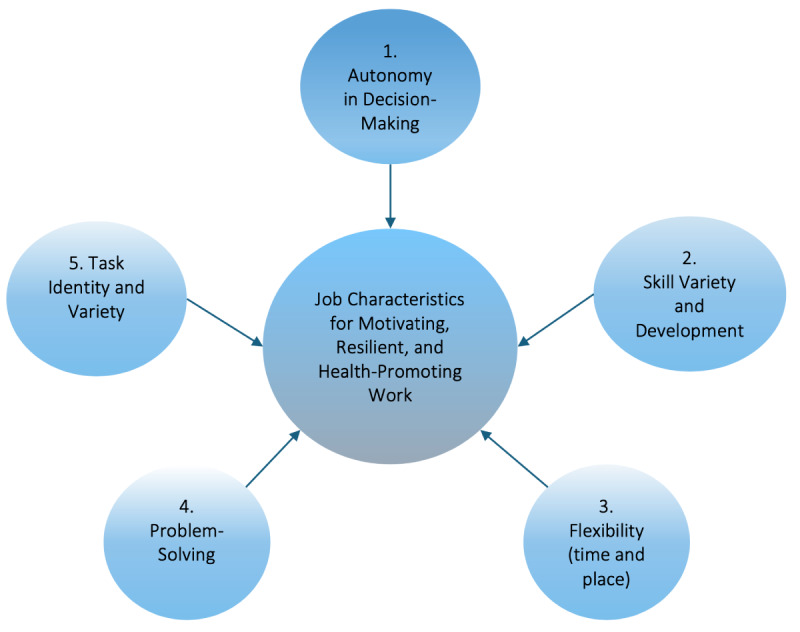
Background: The escalating global scarcity of skilled health care professionals is a critical concern, further exacerbated by rising stress levels and clinician burnout rates. Artificial intelligence (AI) has surfaced as a potential resource to alleviate these challenges. Nevertheless, it is not taken for granted that AI will inevitably augment human performance, as ill-designed systems may inadvertently impose new burdens on health care workers, and implementation may be challenging. An in-depth understanding of how AI can effectively enhance rather than impair work conditions is therefore needed. Objective: This research investigates the efficacy of AI in alleviating stress and enriching work conditions, using intensive care units (ICUs) as a case study. Through a sociotechnical system lens, we delineate how AI systems, tasks, and responsibilities of ICU nurses and physicians can be co-designed to foster motivating, resilient, and health-promoting work. Methods: We use the sociotechnical system framework COMPASS (Complementary Analysis of Sociotechnical Systems) to assess 5 job characteristics: autonomy, skill diversity, flexibility, problem-solving opportunities, and task variety. The qualitative analysis is underpinned by extensive workplace observation in 6 ICUs (approximately 559 nurses and physicians), structured interviews with work unit leaders (n=12), and a comparative analysis of data science experts’ and clinicians’ evaluation of the optimal levels of human-AI teaming. Results: The results indicate that AI holds the potential to positively impact work conditions for ICU nurses and physicians in four key areas. First, autonomy is vital for stress reduction, motivation, and performance improvement. AI systems that ensure transparency, predictability, and human control can reinforce or amplify autonomy. Second, AI can encourage skill diversity and competence development, thus empowering clinicians to broaden their skills, increase the polyvalence of tasks across professional boundaries, and improve interprofessional cooperation. However, careful consideration is required to avoid the deskilling of experienced professionals. Third, AI automation can expand flexibility by relieving clinicians from administrative duties, thereby concentrating their efforts on patient care. Remote monitoring and improved scheduling can help integrate work with other life domains. Fourth, while AI may reduce problem-solving opportunities in certain areas, it can open new pathways, particularly for nurses. Finally, task identity and variety are essential job characteristics for intrinsic motivation and worker engagement but could be compromised depending on how AI tools are designed and implemented. Conclusions: This study demonstrates AI’s capacity to mitigate stress and improve work conditions for ICU nurses and physicians, thereby contributing to resolving health care staffing shortages. AI solutions that are thoughtfully designed in line with the principles for good work design can enhance intrinsic motivation, learning, and worker well-being, thus providing strategic value for hospital management, policy makers, and health care professionals alike.
Overview
CoChat Summary
TL;DR
This qualitative sociotechnical study uses COMPASS in six ICUs to assess how AI may affect five job characteristics for nurses and physicians. It finds AI can improve autonomy, skill variety, flexibility, and problem-solving, but task identity and variety may be compromised depending on design and implementation.
Key findings
- AI holds potential to positively impact work conditions for ICU nurses and physicians in four key areas: autonomy, skill diversity/competence development, flexibility, and problem-solving opportunities.
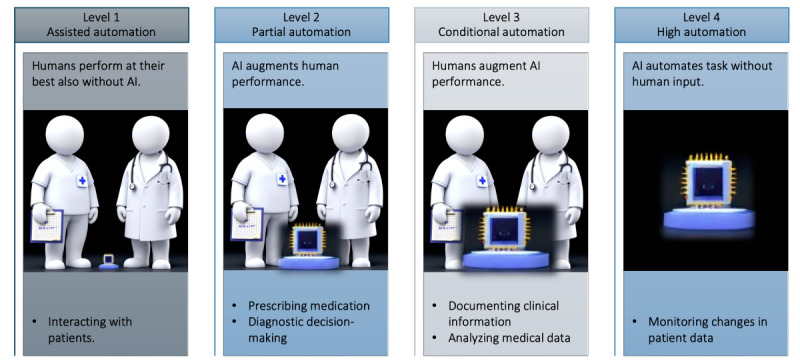
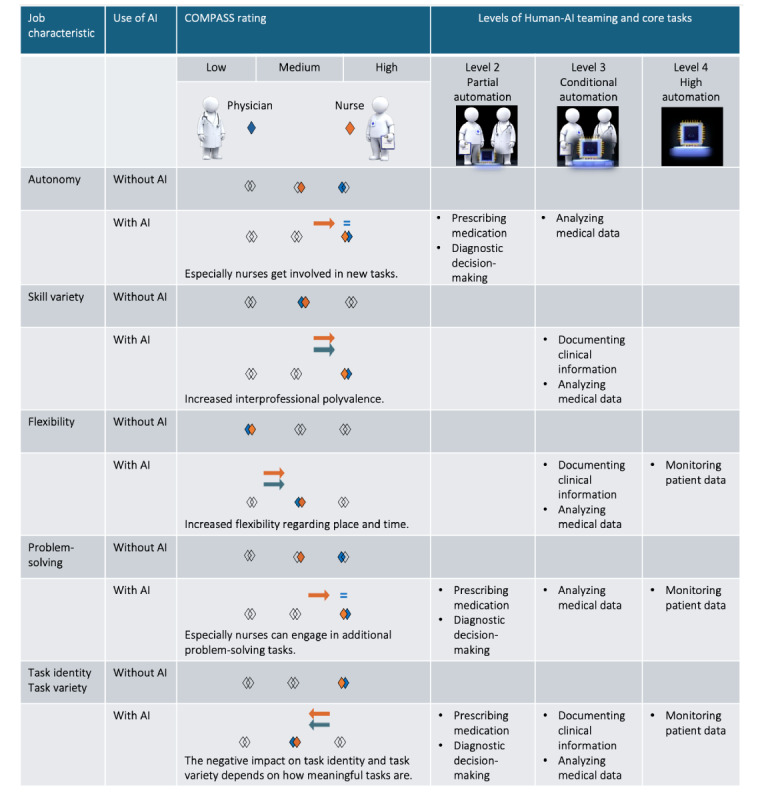
- Autonomy is vital for stress reduction, motivation, and performance; AI systems with transparency, predictability, and human control can reinforce or amplify autonomy. Level 2 partial automation can maintain autonomy for diagnostic decision-making and prescribing, while level 3 analysis of medical data could threaten physicians’ autonomy; AI could increase autonomy for nurses but would require changes to education, roles, and responsibilities.
- AI can encourage skill diversity and competence development, enabling clinicians to broaden skills, increase polyvalence across professional boundaries, and improve interprofessional cooperation, but careful consideration is needed to avoid deskilling experienced professionals.
- AI automation can expand flexibility by relieving administrative duties and concentrating efforts on patient care; remote monitoring and improved scheduling can help integrate work with other life domains. Task identity and variety are essential for intrinsic motivation and engagement but could be compromised depending on AI design and implementation.
Methods
- Qualitative sociotechnical work system assessment using COMPASS across 6 ICUs; observed 30 morning shifts (5 per ICU) lasting 8.5 hours each, with approximately 559 nurses and physicians observed. All nurses were registered nurses; nurses in training and nurse practitioners were excluded; residents and attending physicians were combined as physicians.
- Structured interviews with work unit leaders (n=12: 6 head physicians, 5 nursing staff heads, 1 head of nursing education), lasting around 60 minutes, audio-recorded and transcribed. Analysis used COMPASS guidelines and a grounded theory approach with MAXQDA 2020; data were triangulated with hospital documentation, 6 member-checking workshops were conducted, and 2 work unit heads validated the analysis.
- Comparative analysis of AI-induced changes used optimal levels of human-AI teaming for ICU tasks from a prior mixed methods study (n=19 data science experts and n=61 nurses and physicians), assessing five job characteristics: autonomy, skill variety/competence development, flexibility, problem-solving opportunities, and task identity/variety.
Limitations
- The paper states potential Hawthorne effect bias from COMPASS observations, mitigated by unobtrusive observation, even distribution across six ICUs, standardized guidelines, observer training (>15 years), and centering data collection in one experienced qualitative researcher.
- The paper states findings are likely most applicable to settings with similar boundary conditions (e.g., emergency or acute care teams); the qualitative nature allowed capture of situated work practices, but the sample of approximately 570 ICU nurses and physicians may not have captured the full spectrum of interprofessional ICU team experiences.
- The paper states future research should examine less experienced professionals (e.g., nurse students, junior residents), long-term effects, resistance to change, team dynamics, and leadership; job demands such as time pressure, complex patient cases, and emotionally demanding situations may continue despite AI support; economic pressures and fair pay were not addressed. Evident from the text: the analysis is predictive/comparative rather than an empirical implementation study, so AI effects are projected rather than observed.
Model-written summary. Check it against the paper before relying on it.
Integrity signals
Registry
Cites
Statistics
Figures
Verification
Claims the paper makes
0 Valid · 4 Not valid · 43 Not checked · 80 Own results and interpretations
A result the paper states — it cites no source for it, so there is none to check. The quote shows it is in the paper.
In the paper
“Without AI, nurses’ autonomy in decision-making is currently limited with a high dependency on decisions made by physicians for any task that is outside of their decision-making scope (eg, physicians must sign off before medication can be administered).”
§ AI Interventions to Alleviate Healthcare Shortages and Enhance Work Conditions in Critical Care: Qualitative Analysis > Results > Autonomy in Decision-Making
plainstates a cause- Asserted: passes — The authors put it forward as true.
- Checkable: passes — It can be checked against evidence.
- Load-bearing: passes — The paper’s conclusions depend on it.
- Based: passes — The paper gives a reason why it holds.
A result the paper reports from its own data — it cites no other source for it, so there is none to check. The quote shows it is in the paper.
In the paper
“The generally high levels of autonomy in decision-making and the associated ability to solve problems locally at their source were identified as major strengths in the current work system without AI.”
§ AI Interventions to Alleviate Healthcare Shortages and Enhance Work Conditions in Critical Care: Qualitative Analysis > Results > Autonomy in Decision-Making
plainstates an association- Asserted: passes — The authors put it forward as true.
- Checkable: passes — It can be checked against evidence.
- Load-bearing: passes — The paper’s conclusions depend on it.
- Based: passes — The paper gives a reason why it holds.
A result the paper states — it cites no source for it, so there is none to check. The quote shows it is in the paper.
In the paper
“Physicians generally have high levels of autonomy in performing tasks, though within the typical decision-making hierarchy (eg, attending physicians must sign off decisions suggested by resident physicians).”
§ AI Interventions to Alleviate Healthcare Shortages and Enhance Work Conditions in Critical Care: Qualitative Analysis > Results > Autonomy in Decision-Making
plain- Asserted: passes — The authors put it forward as true.
- Checkable: passes — It can be checked against evidence.
- Load-bearing: passes — The paper’s conclusions depend on it.
- Based: passes — The paper gives a reason why it holds.
A result the paper reports from its own data — it cites no other source for it, so there is none to check. The quote shows it is in the paper.
In the paper
“The results indicate that AI holds the potential to positively impact work conditions for ICU nurses and physicians in four key areas.”
- Also stated in: § Principal Findings · plain
“our findings highlight four areas where AI can enhance work conditions for at least one professional group and one area where the application of AI should be cautiously approached.”
§ AI Interventions to Alleviate Healthcare Shortages and Enhance Work Conditions in Critical Care: Qualitative Analysis > Abstract > Results
plainstates a possible cause- Asserted: passes — The authors put it forward as true.
- Checkable: passes — It can be checked against evidence.
- Load-bearing: passes — The paper’s conclusions depend on it.
- Based: passes — The paper gives a reason why it holds.
- Rests on an assumption not shown here.
- Also stated in: § Principal Findings · plain
A result the paper reports from its own data — it cites no other source for it, so there is none to check. The quote shows it is in the paper.
In the paper
“Even though we included a relatively large sample of approximately 570 ICU nurses and physicians in this study, we may not have captured the full spectrum of experiences within interprofessional ICU teams.”
§ AI Interventions to Alleviate Healthcare Shortages and Enhance Work Conditions in Critical Care: Qualitative Analysis > Discussion > Limitations and Future Research Directions
plain- Asserted: passes — The authors put it forward as true.
- Checkable: passes — It can be checked against evidence.
- Load-bearing: unclear — It is unclear whether the paper’s conclusions depend on it.
- Based: passes — The paper gives a reason why it holds.
60 more claims
Create a free account to see all 127 claims and to verify the 74 references still open.
- It may state two separate claims as one. 36
- Probably not a substantial claim. 37
- The quote only partly states this claim. 1
Self-check
Percentages, sums and reported differences re-computed from the paper’s own numbers.
Each contradiction between two passages listed here was confirmed by an independent check.
Rated minor: it would not touch a result — a value no result rests on, a p-value that stays on the same side of the significance level, or a conflict that is clerical, resolved elsewhere in the paper, or outside its own findings.
In the paper
§ AI Interventions to Alleviate Healthcare Shortages and Enhance Work Conditions in Critical Care: Qualitative Analysis > Results > Task Identity and Variety
“Without AI, task identity and variety are rated as medium for both nurses and physicians.”
§ AI Interventions to Alleviate Healthcare Shortages and Enhance Work Conditions in Critical Care: Qualitative Analysis > Discussion > Principal Findings
“Finally, task identity and variety are important factors for intrinsic motivation and worker engagement, and were rated as high in work conditions without AI.”
Citations
Cites
The Discovery of Grounded Theory: Strategies for Qualitative Research
Glaser, B. G., & Strauss, A. L. (2017) · Aldine (Routledge reprint) · doi:10.4324/9780203793206 · Cited by 25,789
The job demands-resources model of burnout.
Demerouti, E., Bakker, A. B., Nachreiner, F., & Schaufeli, W. B. (2001) · Journal of Applied Psychology · doi:10.1037/0021-9010.86.3.499 · Cited by 13,643
Seeking Qualitative Rigor in Inductive Research: Notes on the Gioia Methodology
Gioia, D. A., Corley, K. G., & Hamilton, A. L. (2013) · Organizational Research Methods · doi:10.1177/1094428112452151 · Cited by 13,227
Job Demands, Job Decision Latitude, and Mental Strain: Implications for Job Redesign
Karasek, R. A. (1979) · Administrative Science Quarterly · doi:10.2307/2392498 · Cited by 12,597
Standards for Reporting Qualitative Research: A Synthesis of Recommendations
O’Brien, B. C., Harris, I. B., Beckman, T. J., Reed, D. A., & Cook, D. A. (2014) · Academic Medicine · doi:10.1097/acm.0000000000000388 · Cited by 12,211
Job demands, job resources, and their relationship with burnout and engagement: a multi‐sample study
Schaufeli, W. B., & Bakker, A. B. (2004) · Journal of Organizational Behavior · doi:10.1002/job.248 · Cited by 9,297
Motivation through the design of work: test of a theory
Hackman, J. R., & Oldham, G. R. (1976) · Organizational Behavior and Human Performance · doi:10.1016/0030-5073(76)90016-7 · Cited by 8,962
Self-determination theory: A macrotheory of human motivation, development, and health
Deci, E. L., & Ryan, R. M. (2008) · Canadian Psychology / Psychologie canadienne · doi:10.1037/a0012801 · Cited by 6,664
Rajpurkar, P., Chen, E., Banerjee, O., & Topol, E. J. (2022) · Nature Medicine · doi:10.1038/s41591-021-01614-0 · Cited by 3,212
Humphrey, S. E., Nahrgang, J. D., & Morgeson, F. P. (2007) · Journal of Applied Psychology · doi:10.1037/0021-9010.92.5.1332 · Cited by 2,303
Research works printed but not linked: 4
- Grote Gudela Design approaches for the complementary interaction of people and technology in Industry 4.0 Digitization of Industrial Work 2018 Germany Nomos Verlagsgesellschaft mbH & Co 215 232
- Kuckartz U Rädiker S Analyzing qualitative data with MAXQDA Text, Audio, and Video 2020 Cham Springer International Publishing
- Schwab P Keller E Muroi C Mack DJ Strässle C Karlen W Not to cry wolf: distantly supervised multitask learning in critical care 2018 Proceedings of the 35th International Conference on Machine Learning, PMLR July 10-15, 2018 Stockholm, Sweden 4518 4527
- Parker SK Grote G Automation, algorithms, and beyond: why work design matters more than ever in a digital world Appl Psychol 2020 71 4 1171 1204 10.1111/apps.12241 · DOI · Paper page
Cited by
Bienefeld, N., Keller, E., & Grote, G. (2024) · Journal of Medical Internet Research · doi:10.2196/50130 · Cited by 62
Self-citationHussain, S. A., Bresnahan, M., & Zhuang, J. (2025) · Digital Health · doi:10.1177/20552076251348024 · Cited by 33
A review of global reskilling and upskilling initiatives in the age of AI
Ersanlı, C. Y., Çelık, F., Barjesteh, H., Duran, V., & Manoochehrzadeh, M. (2025) · AI and Ethics · doi:10.1007/s43681-025-00767-9 · Cited by 31
Mache, S., Bernburg, M., Würtenberger, A., & Groneberg, D. A. (2025) · Clinics and Practice · doi:10.3390/clinpract15080138 · Cited by 30
AI-Based EMG Reporting: A Randomized Controlled Trial
Gorenshtein, A., Weisblat, Y., Khateb, M., Kenan, G., Tsirkin, I., Fayn, G., Geller, S., & Shelly, S. (2025) · Journal of Neurology · doi:10.1007/s00415-025-13261-3 · Cited by 29
Artificial Intelligence for the Diagnosis and Management of Cancers: Potentials and Challenges
Wang, M., Chang, W., & Zhang, Y. (2025) · MedComm · doi:10.1002/mco2.70460 · Cited by 24
Virgillito, D., & Ledda, C. (2026) · Frontiers in Public Health · doi:10.3389/fpubh.2025.1718474 · Cited by 24
Human-AI Collaboration in Healthcare: A Scoping Review
Strong, J., Rogers, H., Sun, E., Todsen, A. L., Ede, J., Lumley, C., Yeung, N., Higham, H., & Noble, J. A. (2026) · npj Digital Medicine · doi:10.1038/s41746-026-02918-6 · Cited by 23
Galani, A., Zikopoulos, A., Moustakli, E., Potiris, A., Paraskevaidi, M., Arkoulis, I., Machairoudias, P., Stavrakaki, S. M., Kyrgiou, M., & Stavros, S. (2025) · Cancers · doi:10.3390/cancers17193179 · Cited by 21
Pereira, S. C. D. A., Ferreira, R. A., Silva, J. M. A. V., Santos, E. J. F., Fassarella, C. S., & Ribeiro, O. M. P. L. (2025) · Journal of Clinical Nursing · doi:10.1111/jocn.70127 · Cited by 17
Bautista, J. R., Westendorf, R., & Goth, O. (2025) · Journal of Advanced Nursing · doi:10.1111/jan.70401 · Cited by 15
Artificial Intelligence Platform Architecture for Hospital Systems: Systematic Review
Maimaitiaili, M., Jiamaliding, Y., Dai, G., Xiao, H., Kuerbanjiang, W., & Yi, Y. (2025) · Journal of Medical Internet Research · doi:10.2196/79788 · Cited by 14
Sen, C. K., & DeMazumder, D. (2025) · Advances in Wound Care · doi:10.1177/21621918251380217 · Cited by 14
Cui, H., & Yu, P. (2026) · Information Technology and People · doi:10.1108/itp-09-2024-1184 · Cited by 14
Lv, X., Tao, Y., Zhang, Y., & Xue, Y. (2025) · Applied Sciences · doi:10.3390/app15073831 · Cited by 14
Artificial intelligence in medicine: a position paper by the Italian Society of Internal Medicine
Balsano, C., Cabitza, F., Cicco, S., Gori, M., Malerba, D., Montagna, M., Tarquini, R., Vacca, A., & The Working Group on Artificial Intelligence, D. T. O. T. I. S. O. I. M. (. (2025) · Internal and Emergency Medicine · doi:10.1007/s11739-025-04146-4 · Cited by 9
Ferrarini, F., & Leonelli, S. (2025) · Industrial Management & Data Systems · doi:10.1108/imds-05-2025-0661 · Cited by 8
Malik, M. A., Lince, R., & Husnaeni, H. (2026) · International Journal of Environment Engineering and Education · doi:10.55151/ijeedu.v8i1.331 · Cited by 7
Mishra, S. K., Hamadou, M., Gurung, K., Subba, A., Mukhia, P., Chhetri, T., Roy, A., Rai, P., & Georrge, J. J. (2026) · Archives of Computational Methods in Engineering · doi:10.1007/s11831-026-10617-4 · Cited by 6
Chen, X., Ding, W., Wang, X., Wang, Y., Ma, S., & Tao, M. (2026) · Frontiers in Public Health · doi:10.3389/fpubh.2026.1885808 · Cited by 6
Los, A. P. M., Bartusik‐Aebisher, D., Mytych, W., & Aebisher, D. (2026) · Algorithms · doi:10.3390/a19010054 · Cited by 6
Kohan, A., Xu, J., Xiao, L., Wu, X., Kukkar, A., Hussain, S., Roshanzamir, M., Alizadehsani, R., & Acharya, U. R. (2026) · Research Square · doi:10.21203/rs.3.rs-8976235/v1 · Cited by 5
Synthetic data generation in paediatrics and paediatric nursing: what, how, and why?
Mezzalira, E., Boaro, M. P., Reggiani, G., Biondi, R., Castellani, G., & Colombatti, R. (2025) · International Journal of Medical Informatics · doi:10.1016/j.ijmedinf.2025.106236 · Cited by 5
Zhu, Y., Sui, D., Wang, Z., Hu, X., Gu, L., Qi, Y., Wu, T., Wang, L., Wei, Y., Tang, W., et al. (2026) · Proceedings of the 2026 CHI Conference on Human Factors in Computing Systems · doi:10.1145/3772318.3791458 · Cited by 3
“Bienefeld et al. warn that without careful design, automation can atrophy the implicit knowledge required for holistic care [7, 8].”
Scholz, F., Sahakian, T. S., GÜVEN, N., Renkema, M., Shulzhenko, E., Cuijpers, C., Schouten, G., Wouters, E., & de Vries, E. (2026) · The International Journal of Human Resource Management · doi:10.1080/09585192.2026.2711067 · Cited by 3
Artificial Intelligence in Uveitis: A 360-Degree Perspective
Agrawal, R. V., See, A. U., Kiosia, A., & Gupta, V. (2026) · Ocular Immunology and Inflammation · doi:10.1080/09273948.2025.2612107 · Cited by 3
Zaher, A., Prikshat, V., Vinot, D., Malik, A., & el aziz, J. A. (2026) · Technological Forecasting and Social Change · doi:10.1016/j.techfore.2026.124645 · Cited by 3
Nurses’ ethical leadership, artificial intelligence, and moral sensitivity activation
Jing, J., Fu, Y., Liu, D., Ma, Z., Qiu, H., Liu, F., & Chen, C. (2025) · Nursing Ethics · doi:10.1177/09697330251403139 · Cited by 3
From bedside to bytes: the digital transformation of the healthcare workforce
Kyratsis, Y. (2026) · Frontiers in Digital Health · doi:10.3389/fdgth.2026.1777607 · Cited by 2
Artificial intelligence and job design: Insights from Job Demands–Resources theory
Bakker, A. B., Junker, T. L., Scharp, Y. S., & Černe, M. (2026) · Technology in Society · doi:10.1016/j.techsoc.2026.103533 · Cited by 2
Predicting violence in the intensive care unit: Can artificial intelligence protect those who care?
Johnson, G. U., Towell‐Barnard, A., & Ewens, B. A. (2025) · Intensive and Critical Care Nursing · doi:10.1016/j.iccn.2025.104054 · Cited by 2
Artificial intelligence literacy in nursing: a concept analysis
Li, X., Hu, X., Xu, H., Ju, H., & Yu, P. (2026) · Frontiers in Public Health · doi:10.3389/fpubh.2026.1874659 · Cited by 2
Work and Motivation in a Generative Artificial Intelligence Augmented Workplace
Cruz, E. D. L. (2026) · IGI Global eBooks · doi:10.4018/979-8-3373-2287-2.ch004 · Cited by 2
Çakmak, C. (2026) · Nişantaşı üniversitesi sosyal bilimler dergisi/Nişantaşı Üniversitesi sosyal bilimler dergisi · doi:10.52122/nisantasisbd.1816489 · Cited by 2
The Impact of AI Implementation on Healthcare Workers’ Satisfaction and Performance
Galdames, I. S., & Gil, A. M. C. (2025) · Lecture notes in networks and systems · doi:10.1007/978-3-031-99699-3_20 · Cited by 2
Heponiemi, T., Kainiemi, E., Virtanen, L., Hilama, P., & Kaihlanen, A. (2026) · Finnish Journal of eHealth and eWelfare · doi:10.23996/fjhw.176882 · Cited by 2
ICT Management Models for Improving Hospital Service Quality: A Systematic Review
García-Angulo, J. L. (2026) · Revista Cientifica de Sistemas e Informatica · doi:10.51252/rcsi.v6i1.888 · Cited by 2
Gao, Y., Chen, X., Zhang, S., Yang, J., Liu, R., Moyle, W., Pu, L., & Shen, W. (2025) · Frontiers in Public Health · doi:10.3389/fpubh.2025.1434440 · Cited by 2
Code Meets Care: The Digital Shift in Health Promotion
Nogueira, J., Santos, T., Pina, A. F., & Martins, S. S. (2026) · IGI Global eBooks · doi:10.4018/979-8-3373-3531-5.ch003 · Cited by 1
Guerra, F., Schermer, M., Visser, J. J., & Kyratsis, Y. (2026) · Social Science & Medicine · doi:10.1016/j.socscimed.2026.119788 · Cited by 1
Huang, L., Xu, M., Yang, Y., Tian, Y., Xu, Z., Wang, Y., Hou, A., Zhu, L., Lin, Y., Wang, L., et al. (2026) · Journal of Medical Internet Research · doi:10.2196/100216 · Cited by 1
Government and institutional responses to AI in Australia: a professional job roles perspective
Ala, M., & Boucher, C. (2026) · Labour & Industry a journal of the social and economic relations of work · doi:10.1080/10301763.2026.2739107 · Cited by 1
Chen, C., Cotton, A., Gresser, L., & Yap, T. (2026) · Healthcare · doi:10.3390/healthcare14111433 · Cited by 1
Chiu, S., & Wei, L. (2025) · International Journal of Mental Health Nursing · doi:10.1111/inm.70075 · Cited by 1
Olamide, B. I., Ovbiagele, O. P., Osei-Bonsu, B., & Omoniyi, M. A. (2026) · Journal of Biomedicine and Biosensors. · doi:10.58613/jbb635 · Cited by 1
AI at Work: To Know Whether Technology Improves or Damages Work–Life Balance
Josephin, G., & Haorei, W. (2026) · International Journal For Multidisciplinary Research · doi:10.36948/ijfmr.2026.v08i01.66605 · Cited by 1
Saleem, H., Nisar, S., & Ratta, A. A. (2025) · Contemporary Issues in Social Sciences and Management Practices · doi:10.61503/cissmp.v4i3.353 · Cited by 1
From Oracles to Productive Friction: Designing for Meaningful Human Oversight in Clinical AI
Rubegni, E., Natali, C., Valsecchi, C., Rizzo, S., Ayoub, O., & Facchini, A. (2026) · Proceedings of the AAAI/ACM Conference on AI, Ethics, and Society · doi:10.1609/aies.v9i3.43300
Bauernschmidt, D., Bieber, A., Hubrich, R., Wittmann, J., & Meyer, G. (2026) · Journal of Medical Internet Research · doi:10.2196/81669
Saidi, H., & Rhouiri, M. (2026) · Advances in computational intelligence and robotics book series · doi:10.4018/979-8-3373-7966-1.ch003
Uysal, B., Kamer, H., SARIYILDIZ, A. Y., TİYEK, R., & ASLAN, Ö. F. (2026) · Healthcare · doi:10.3390/healthcare14183078
Real-World Data Needs Real-World Doctors: When Automation Advances Faster Than Clinical Workflow
Price, A. I., & Raesfeld, C. V. (2026) · Journal of Participatory Medicine · doi:10.2196/97972
Artificial Intelligence and Clinician Burnout in the United States: A Narrative Review
Sucharitrak, C. (2026) · Cureus · doi:10.7759/cureus.112814
ICU Staffing, Models, and Outcomes
Chen, K., & Nates, J. L. (2026) · Springer eBooks · doi:10.1007/978-3-319-74698-2_2-2
AI in the healthcare system: Current viewpoint developments
Herbert, E., & Fournier, D. (2025) · Health Sciences Quarterly · doi:10.26900/hsq.2850
Re-centering Human Experience in AI-Driven Organizations: An EX–CX–Purpose Alignment Framework
Mann, S., & Mann, S. S. (2026) · Advances in computational intelligence and robotics book series · doi:10.4018/979-8-3373-8282-1.ch002
Healthcare professionals’ buy-in to change: the role of task characteristics
Shulzhenko, E., & Obel, B. (2025) · Journal of Professions and Organization · doi:10.1093/jpo/joaf016
Reskilling the Workforce for Human–AI Symbiosis in Smart Industry: A Systematic Qualitative Analysis
Rhouiri, M., Hassani, M. E. A. E., Saidi, H., Soulami, M., & Yazidi, R. E. (2026) · Advances in computational intelligence and robotics book series · doi:10.4018/979-8-3373-8217-3.ch012
Crafting the future of drinks: a TAM and Jd-R perspective on bartenders’ AI adoption
Alimohammadirokni, M., & Emadlou, N. (2026) · Journal of Human Resources in Hospitality & Tourism · doi:10.1080/15332845.2026.2738985
Chan, C., Tan, S., Girardi, A., & Gasbarro, D. (2026) · Acta Psychologica · doi:10.1016/j.actpsy.2026.108047
Natali, C. (n.d.) · BOA (University of Milano-Bicocca)
Fredriksdotter, K., Kuratomi, A., & Quintero, L. (2026) · JMIR Human Factors · doi:10.2196/104490
Godoy, C. A., Sanflorencio, L. P., Ricart, S., Vilarrubí, S. N., Roure, M. R., Ruiz‐Herguido, C., Valls-Esteve, A., Pilli, L. E., Groot, C. U.-D., Redekop, K., et al. (2026) · Journal of Palliative Care · doi:10.1177/08258597261458091
Ngui, D., & Boivin, M. (2025) · Canadian Primary Care Today · doi:10.58931/cpct.2025.3351
Waladani, B., Setianingsih, E., & Hidayah, M. N. W. (2026) · Sechenov Medical Journal · doi:10.47093/2218-7332.2025.16.4.31-40
Alanazi, F. (2026) · Journal of Intelligent Decision Making and Information Science · doi:10.59543/jidmis.v3.1473
Beyer, D., Mazura, F., Köder, J., & Stork, W. (2026) · International Conference on Technology Innovation and Its Applications (ICTIIA) · doi:10.1109/ictiia70925.2026.11717155
Artificial intelligence anxiety in future healthcare professionals
Brown, S. (2026) · American Journal of Education and Learning · doi:10.55284/ajel.v11i1.1774
The Future of Physician: AI Collaboration in Ophthalmology
Espaillat, A. (2026) · Springer eBooks · doi:10.1007/978-3-032-19336-0_25
Technology Acceptance and ChatGPT Use in the Workplace
LEWIS, N. (2026) · Digital Commons (Liberty University)
Ishola, A. A., Kenku, A. A., & Omaku, P. S. A. S. (2026) · International Journal of Advanced Research in Social Sciences Environmental Studies & Technology · doi:10.48028/iiprds/ijarssest.v10.i1.01
Global Health Disasters and Medical Tourism
Lord, S., & Lee, J. (2026) · Springer eBooks · doi:10.1007/978-3-032-22660-0_43
Human-AI Relationships at the Intersection of Engineering, Ethics, and Policy: A Systematic ReviewPreprint
Wang, Z. A., Hari, S., Dembele, T., & Intahchomphoo, C. (2026) · Research Square · doi:10.21203/rs.3.rs-11514160/v1
Farid, H. (2025) · UTUPub (University of Turku)
AlOtaibi, A. H. N., Alasmari, M. M. A., Alghamdi, S. A. S., Alasmari, A. S. A., Al-Qahtani, A. M., Al-Barakati, M. A. R. H., Alharbi, Y. A. Y., Alharbi, F. H., Alotaibi, B. A., Alqarni, A. A. A., et al. (2025) · Acta Innovations · doi:10.62441/actainnovations.vi.3158
Alanazi, M. G., Al-Anzi, G. J. K., Alharbi, M. S. B., Alotaibi, N. D. N., Ajib, A. A. A. B., Aldawsari, H. A. B. H., Alshammari, T. J. R., Alenizi, K. H. F., Alamri, Z. Q. H., Alharbi, A. M. S., et al. (2025) · Acta Innovations · doi:10.62441/actainnovations.vi.3271
An Intelligent Framework for Early Detection of AI-Induced Risks in Safety-Critical Systems
Lawanna, T. (2026) · Engineering Journal · doi:10.4186/ej.2026.30.7.1
Time Heals Some Wounds? Burnout but Not Secondary Traumatic Stress in Critical Care Nurses
Watson, A. L. (2026) · American Journal of Critical Care · doi:10.4037/ajcc2026573
Benefits and Barriers to Human-AI Teaming for Crisis CounselingPreprint
Pham, I., Swaminathan, A., Garcia, S., Lim, J., Ye, G., Verma, D., Pham, A., Chung, C., Shah, S., Azzam, S., et al. (2026) · arXiv (Cornell University) · doi:10.48550/arxiv.2611.21558
Juillet, Y., & Diot, P. (2025) · Bulletin de l Académie Nationale de Médecine · doi:10.1016/j.banm.2025.07.003
Davies, V. F., Perrut, I. M., Thow, A. M., & Duran, A. C. (2026) · medRxiv · doi:10.64898/2026.04.22.26351508
Strategic Approaches to Human Resources Management in the Healthcare Sector
Verulava, T., & CHKHEIDZE, A. (2026) · International Journal of Social Sciences · doi:10.55367/frks3639
Yauri, R., Espino, R., & Nieto, A. C. (2026) · WSEAS TRANSACTIONS ON SYSTEMS AND CONTROL · doi:10.37394/23203.2026.21.9
Aas, M. (2026) · Theseus (Ammattikorkeakoulujen)
Rifai, R., & Nuryono, W. (2026) · Journal Of Social Research · doi:10.55324/josr.v5i7.3238
Ishola, A. A., Kenku, A. A., & Asuquo, S. P. (2026) · International Journal of Strategic Research in Entrepreneurship Engineering and Biomedical Research · doi:10.48028/iiprds/ijsreebr/v2.i1.06
Preserving clinical competence alongside AI in resource-constrained settings of the Americas
Patel, M., Ranganathan, S., Acevedo, H., Agyemang, G. O., Dee, E. C., Feliciano, E. J. G., Kaggwa, F., Lee, N. Y., de Moraes, F. Y., Osorio, F. O., et al. (2026) · The Lancet Regional Health - Americas · doi:10.1016/j.lana.2026.101703
Governance, liability, and community oversight for health AI in the Americas
Patel, M., Ranganathan, S., Abulibdeh, R., Acevedo, H., Agyemang, G. O., Dee, E. C., Kaggwa, F., Osorio, F. O., Paruk, F., Zhang, E. R., et al. (2026) · The Lancet Regional Health - Americas · doi:10.1016/j.lana.2026.101699
Metadata
- Authors
- Bienefeld, N., Keller, E., & Grote, G.
- Affiliations
- ETH Zurich (CH)
- University Hospital Zurich (CH)
- Corresponding author
- Bienefeld, Nadine
- Venue
- Journal of Medical Internet Research
- Publisher
- JMIR Publications Inc.
- Published
- 2025-01-13
- Volume
- 27
- Pages
- e50852
- ISSN
- 1438-8871 (ISSN-L)
- PMC
- PMC11773285
- OpenAlex
- W4403340362
- Cited by
- 91
- References
- 93
- Citations by year
- 2026: 63 · 2025: 27
- FWCI
- 12.57
- Type
- journal article
- Language
- en
- Open access
- gold
- doi.org
- Licence
- cc-by
- Locations
- Journal of Medical Internet Research (publishedVersion, cc-by)
- PubMed Central (publishedVersion, cc-by)
- PubMed (publishedVersion)
- Repository for Publications and Research Data (ETH Zurich) (publishedVersion, cc-by)
- DOAJ (DOAJ: Directory of Open Access Journals) (submittedVersion)
- Zurich Open Repository and Archive (University of Zurich) (submittedVersion, cc-by)
- ETH Zürich Research Collection (cc-by)
- Zurich Open Repository and Archive (University of Zurich)
- Funders
- National Science Foundation
- Schweizerischer Nationalfonds zur Förderung der Wissenschaftlichen Forschung (187331, 407740)
- Topics
- Health Sciences › Medicine › Health Informatics › Artificial Intelligence in Healthcare and Education
- Social Sciences › Psychology › Social Psychology › Technostress in Professional Settings
- Health Sciences › Health Professions › General Health Professions › Healthcare professionals’ stress and burnout
- Keywords
- artificial intelligence in healthcare, intensive care unit, critical care nursing, clinician burnout, health workforce shortage, working conditions, job characteristics, socio-technical systems, human-AI teaming, autonomy, skill variety, task variety, intrinsic motivation, deskilling, remote patient monitoring, administrative burden, interprofessional collaboration, stress reduction
- MeSH terms
- Artificial Intelligence, Burnout, Professional, Critical Care, Humans, Intensive Care Units, Workplace, Qualitative Research
About these checks
Registry, retraction, Cites and statistics results are computed, not judged, with one exception: a printed reference that no index lists is read once by a model before it counts as a citation error. Claims are extracted by a model and kept only when their quote appears verbatim in the text; each cited source is then checked, with a model’s help, for whether it says what the claim relies on. Those verdicts can be wrong — read the claim’s quote and the cited source before relying on one.
A language model drew the claims from the paper on 2026-11-23, under version 3 of the claim definition (model deepseek-v4.1-flash, prompt extract-v3).
A second model labelled each claim on 2026-11-23 (model jev-1.13-20260917, definition revision gold-guideline-v0.2).
Statistics and arithmetic are recomputed, not judged.
Confidence bands are shown only for fields calibrated on our annotated test set. None is calibrated yet, so no band is shown.
What counts as a claim ›How we measure confidence ›How we check this ›
Are you an author, or do you see a problem with this page? Request a review
Data sources
Bibliographic data: Semantic Scholar, OpenAlex, Crossref.
Contains information from the Semantic Scholar Academic Graph Datasets, made available under the ODC Attribution License (ODC-BY 1.0).
Semantic Scholar’s data is described in: Kinney, R., et al. (2023). The Semantic Scholar Open Data Platform. arXiv:2301.10140.
