

The DOI matches its Crossref record; 60 of the 60 references it cites were found in a registry or an index.
Can Mobile Phone Apps Influence People’s Health Behavior Change? An Evidence Review
Open accessAbstract
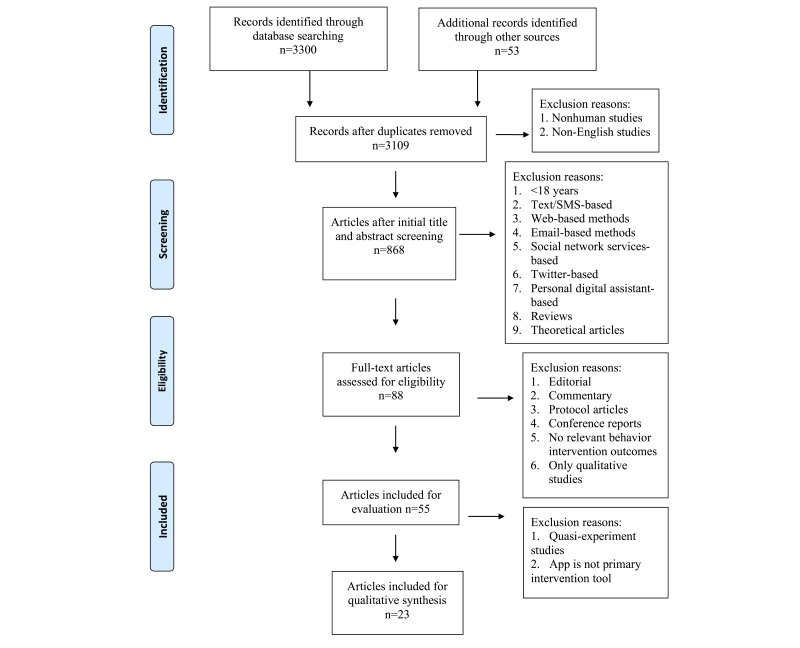
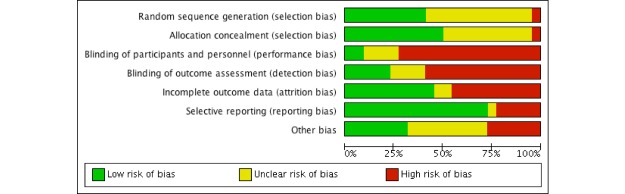
BACKGROUND: Globally, mobile phones have achieved wide reach at an unprecedented rate, and mobile phone apps have become increasingly prevalent among users. The number of health-related apps that were published on the two leading platforms (iOS and Android) reached more than 100,000 in 2014. However, there is a lack of synthesized evidence regarding the effectiveness of mobile phone apps in changing people's health-related behaviors. OBJECTIVE: The aim was to examine the effectiveness of mobile phone apps in achieving health-related behavior change in a broader range of interventions and the quality of the reported studies. METHODS: We conducted a comprehensive bibliographic search of articles on health behavior change using mobile phone apps in peer-reviewed journals published between January 1, 2010 and June 1, 2015. Databases searched included Medline, PreMedline, PsycINFO, Embase, Health Technology Assessment, Education Resource Information Center (ERIC), and Cumulative Index to Nursing and Allied Health Literature (CINAHL). Articles published in the Journal of Medical Internet Research during that same period were hand-searched on the journal's website. Behavior change mechanisms were coded and analyzed. The quality of each included study was assessed by the Cochrane Risk of Bias Assessment Tool. RESULTS: A total of 23 articles met the inclusion criteria, arranged under 11 themes according to their target behaviors. All studies were conducted in high-income countries. Of these, 17 studies reported statistically significant effects in the direction of targeted behavior change; 19 studies included in this analysis had a 65% or greater retention rate in the intervention group (range 60%-100%); 6 studies reported using behavior change theories with the theory of planned behavior being the most commonly used (in 3 studies). Self-monitoring was the most common behavior change technique applied (in 12 studies). The studies suggest that some features improve the effectiveness of apps, such as less time consumption, user-friendly design, real-time feedback, individualized elements, detailed information, and health professional involvement. All studies were assessed as having some risk of bias. CONCLUSIONS: Our results provide a snapshot of the current evidence of effectiveness for a range of health-related apps. Large sample, high-quality, adequately powered, randomized controlled trials are required. In light of the bias evident in the included studies, better reporting of health-related app interventions is also required. The widespread adoption of mobile phones highlights a significant opportunity to impact health behaviors globally, particularly in low- and middle-income countries.
Overview
The claims and statistics of this paper haven’t been checked yet.
Run the check — free, no account needed. It reads the open-access text and checks the sources it cites.
Integrity signals
Registry
Cites
Statistics
Figures
Verification
Claims the paper makes
The claims and statistics of this paper haven’t been checked yet.
Run the check — free, no account needed. It reads the open-access text and checks the sources it cites.
Claims other papers make about this one
Each is checked against this paper’s own text: does it say what the citing paper says it does?
The source backs part of the claim, not all of it — or backs it for a different population, condition or comparison.
In the citing paper
“Systematic reviews that focused on one specific behavior or a certain type of health or well-being app suggest that the effectiveness of evidence-based smartphone apps can be improved by targeting the design and engagement features, such as user-friendly design, individualized and culturally tailored content, or health professional support [17-19].”
From Influences on the Uptake of and Engagement With Health and Well-Being Smartphone Apps: Systematic Review (2020) · cites this paper as [17]
Experimental — accuracy not yet measuredThe source backs part of the claim, not all of it — or backs it for a different population, condition or comparison.
In the citing paper
“In line with the findings of previous reviews, help with initial engagement could be achieved by improving the users’ app literacy skills and by providing knowledge [14,17].”
From Influences on the Uptake of and Engagement With Health and Well-Being Smartphone Apps: Systematic Review (2020) · cites this paper as [17]
Experimental — accuracy not yet measuredThe source backs part of the claim, not all of it — or backs it for a different population, condition or comparison.
In the citing paper
“Behavior change techniques, widely reported by others previously [14,17-19], were also identified as important factors to sustain engagement, including self-monitoring, feedback, goal setting, reminders, rewards, and social support.”
From Influences on the Uptake of and Engagement With Health and Well-Being Smartphone Apps: Systematic Review (2020) · cites this paper as [17]
Experimental — accuracy not yet measuredThe source backs part of the claim, not all of it — or backs it for a different population, condition or comparison.
In the citing paper
“Complementary delivery routes that include mobile health (mHealth) may help satisfy this need as they can continue to be used autonomously by participants after an intervention period [84–86].”
From Barriers and facilitators to diet, physical activity and lifestyle behavior intervention adherence: a qualitative systematic review of the literature (2023) · cites this paper as [85]
Experimental — accuracy not yet measuredThe cited source says what the claim attributes to it.
In the citing paper
“In line with the emerging evidence from the human-computer interaction (HCI) literature, we found that an app coupled with human support [14,17] was likely to be more effective by increasing the intervention effectiveness and engagement [78,79].”
From Influences on the Uptake of and Engagement With Health and Well-Being Smartphone Apps: Systematic Review (2020) · cites this paper as [17]
Self-check
Percentages, sums and reported differences re-computed from the paper’s own numbers.
The self-check needs the paper’s full text.
Citations
Cites
Cochrane Handbook for Systematic Reviews of Interventions: Cochrane Book Series
(2008) · doi:10.1002/9780470712184 · Cited by 25,048 · cited 9×
“All 23 studies had some kind of risk of bias according to the Cochrane Risk of Bias Assessment Tool.”
BackgroundMethodInfluentialHealth Behavior and Health Education: Theory, Research, and Practice
(1992) · Annals of Internal Medicine · doi:10.7326/0003-4819-116-4-350_1 · Cited by 13,232
Des Jarlais, D. C., Lyles, C., Crepaz, N., & the TREND Group (2004) · American Journal of Public Health · doi:10.2105/ajph.94.3.361 · Cited by 2,817 · cited 1×
“Additionally, the Transparent Reporting of Evaluations with Nonrandomized Designs (TREND) statement could assist to improve the reporting quality of nonrandomized evaluations of public health interventions [56].”
BackgroundA taxonomy of behavior change techniques used in interventions
Abraham, C., & Michie, S. (2008) · Health Psychology · doi:10.1037/0278-6133.27.3.379 · Cited by 2,525 · cited 1×
“Behavior change techniques used in the interventions were coded according to Abraham and Michie’s taxonomy of behavior change techniques (BCTs) [25].”
MethodWebb, T. L., Joseph, J., Yardley, L., & Michie, S. (2010) · Journal of Medical Internet Research · doi:10.2196/jmir.1376 · Cited by 2,517 · cited 9×
“With respect to the mechanisms of behavior change, it is important to use theory to inform intervention design as well as specifying BCTs [48,49].”
BackgroundInfluentialGlanz, K., & Bishop, D. B. (2010) · Annual Review of Public Health · doi:10.1146/annurev.publhealth.012809.103604 · Cited by 2,336
Effective techniques in healthy eating and physical activity interventions: A meta-regression.
Michie, S., Abraham, C., Whittington, C., McAteer, J., & Gupta, S. (2009) · Health Psychology · doi:10.1037/a0016136 · Cited by 2,229
Eysenbach, G., & CONSORT-EHEALTH Group (2011) · Journal of Medical Internet Research · doi:10.2196/jmir.1923 · Cited by 1,863 · cited 4×
“It might be possible to blind outcome assessors, those doing data analysis, or those administering co-interventions, which is one of the 22 essential items recommended in the CONSORT checklist [54].”
BackgroundMethodInfluentialHilpert, M., Brockmeier, K., Dordel, S., Koch, B., Weiß, V., Ferrari, N., Tokarski, W., & Gräf, C. (2017) · Obesity Facts · doi:10.1159/000464105 · Cited by 1,185
(2008) · Journal of Clinical Oncology · doi:10.1200/jco.2008.16.4368 · Cited by 986
Research works printed but not linked: 2
- Ventola, CL, 2014, Pharm Ther, 39, 356
- Quanbeck, A, 2014, Alcohol Res, 36, 111
Cited by
Sorted by citations
Items 601–617 of 617
Kaptelinin, V., Kilic, K., & Lindgren, H. (2026) · Frontiers in Digital Health · doi:10.3389/fdgth.2026.1754399
“Their ubiquity and rich functionality make mobile technologies a potentially effective tool for supporting people in their transition to healthier behavior, e.g., by providing reminders, motivation, and advice (5).”
Fukuda, Y., & Fukuda, K. (2026) · JMIR mhealth and uhealth · doi:10.2196/87832
“Additionally, few studies distinguish between disease-management apps and wellness-oriented apps, despite potentially distinct adoption drivers [36,37].”
InfluentialCurrent Mobile Applications for The Prevention of Child Sexual Abuse: A Scoping Review
Solehati, T., Hermayanti, Y., Trisyani, M., Islamah, R. N., & Kosasih, C. E. (2026) · Journal of Public Health Sciences · doi:10.56741/iistr.jphs.001138
Thomasson, M., Cardinal, M., Beaulieu‐Bonneau, S., Boubetana, E. M., Wittich, W., Kehayia, E., Choukou, M.-A., & Poncet, F. (2026) · Disability and Rehabilitation Assistive Technology · doi:10.1080/17483107.2026.2678545
Bryant, E. F., Hallet, D., Nielsen, E. E., Evans, T., Rees-Lee, J. E., Riley, N., Newlove‐Delgado, T., & Price, A. (2026) · JMIR Formative Research · doi:10.2196/85013
“Mobile phone apps have been shown to create behavior change and engagement by harnessing behavior change techniques [16,17].”
Gurumurthy, N. P., Hurley, L., Nezami, B. T., & Gottfredson, N. C. (2026) · Digital Health · doi:10.1177/20552076261458891
de Groot, E. C. S., Gadiraju, U., Kudina, O., Keijsers, L., Hillegers, M. H. J., & Brinkman, W. (2026) · Frontiers in Digital Health · doi:10.3389/fdgth.2026.1691697
Hematabadi, A., Rashidlamir, A., Motevalli, M. S., Schauer, M., & Arazi, H. (2026) · Health Education & Behavior · doi:10.1177/10901981261458638
Salinas, J. J., Lopez, V., Gay, J. L., Buchholz, S. W., Robles, E. H., Meza, L., Juarez, A., Sapargeldiyeva, M., Parra-Medina, D. M., & Yin, Z. (2026) · JMIR Formative Research · doi:10.2196/80341
“The popularity of smartphones, along with advances in smartphone technology and 5G internet, has promoted the scalability of smartphones and apps for the uptake of chronic disease self-management practices through self-monitoring of lifestyle behaviors [2,12].”
Gvamichava, R., Baramidze, L., Tananashvili, D., & Tewfik, I. (2026) · International Journal of Innovation Studies · doi:10.1016/j.ijis.2026.100204
Bohachova, O., Трач, В. В., & Hrytskov, V. (2025) · ГРААЛЬ НАУКИ · doi:10.36074/grail-of-science.23.05.2025.154
Agentic AI System for Adaptive Goal-Setting for Physical Activity
Waqar, H., & Mohammed, E. A. (2026) · Learning and Technology Conference (L&T) · doi:10.1109/lt68265.2026.11592521
“…the implementation view, a JMIR evidence review synthesized results across mobile app-based behaviour change interventions and concluded that apps can influence health behaviours when interventions are concrete, feedback is timely, and behaviour change techniques are clearly implemented [2].”
InfluentialSas-Nowosielski, K., & Szopa-Wiśnios, S. (2026) · Polish Journal of Sport and Tourism · doi:10.2478/pjst-2026-0012
“This trend is especially relevant in the context of increasing mobility among younger generations and their preference for technological solutions [3].”
Ghani, N. D. H., Fadzil, N. M., Mohammed, Z., Rahman, M. H. A., Hassan, R., & Rasdi, H. F. M. (2026) · PLoS ONE · doi:10.1371/journal.pone.0353767
“These findings are consistent with previous studies indicating that mHealth apps tend to be more effective in behaviour change compared to improving knowledge and individual attitudes [33,37,41].”
Turner, C. A., Chang, A. B., Hall, K., & Lee, A. L. (2026) · Physiotherapy Research International · doi:10.1002/pri.70338
Arora, M., Panda, R., Bassi, S., Jadhav, K. S., Chand, P., Biswas, M., Biswas, M. M., Rawal, T., Kaur, N., Pimple, S. A., et al. (2026) · JMIR Research Protocols · doi:10.2196/82264
Metadata
- Authors
- Zhao, J., Freeman, B., & Li, M.
- Affiliations
- The University of Sydney (AU)
- Corresponding author
- Zhao, Jing
- Venue
- Journal of Medical Internet Research
- Publisher
- JMIR Publications Inc.
- Published
- 2016-11-02
- Volume
- 18
- Issue
- 11
- Pages
- e287
- ISSN
- 1438-8871 (ISSN-L)
- PMC
- PMC5295827
- OpenAlex
- W2546565370
- Cited by
- 618
- References
- 60
- Citations by year
- 2026: 24 · 2025: 52 · 2024: 31 · 2023: 51 · 2022: 74 · 2021: 104 · 2020: 111 · 2019: 71 · 2018: 68 · 2017: 28 · 2016: 2
- FWCI
- 10.75
- Type
- journal article
- Language
- en
- Open access
- gold
- doi.org
- Licence
- cc-by
- Locations
- Journal of Medical Internet Research (publishedVersion, cc-by)
- Europe PMC (PubMed Central) (publishedVersion, cc-by)
- PubMed Central (publishedVersion, cc-by)
- PubMed (publishedVersion)
- Topics
- Health Sciences › Health Professions › General Health Professions › Mobile Health and mHealth Applications
- Social Sciences › Psychology › Applied Psychology › Digital Mental Health Interventions
- Physical Sciences › Computer Science › Information Systems › Mobile Learning in Education
- Keywords
- mobile health apps, health behavior change, mobile health intervention, behaviour change techniques, self-monitoring, theory of planned behavior, app retention, real-time feedback, app design features, health professional involvement, risk of bias, application effectiveness
- MeSH terms
- Behavior Therapy, Humans, Health Behavior, Cell Phone, Mobile Applications
About these checks
Registry, retraction, Cites and statistics results are computed, not judged, with one exception: a printed reference that no index lists is read once by a model before it counts as a citation error. Claims are extracted by a model and kept only when their quote appears verbatim in the text; each cited source is then checked, with a model’s help, for whether it says what the claim relies on. Those verdicts can be wrong — read the claim’s quote and the cited source before relying on one.
Statistics and arithmetic are recomputed, not judged.
Confidence bands are shown only for fields calibrated on our annotated test set. None is calibrated yet, so no band is shown.
What counts as a claim ›How we measure confidence ›How we check this ›
Are you an author, or do you see a problem with this page? Request a review
