

The DOI matches its Crossref record; 45 of the 47 references it cites were found in a registry or an index; 1 of the 30 sources its claims cite were checked for support.
Análisis multi-criterio sobre barreras biogeográficas para la movilidad humana en Patagonia meridional
Open accessAbstract
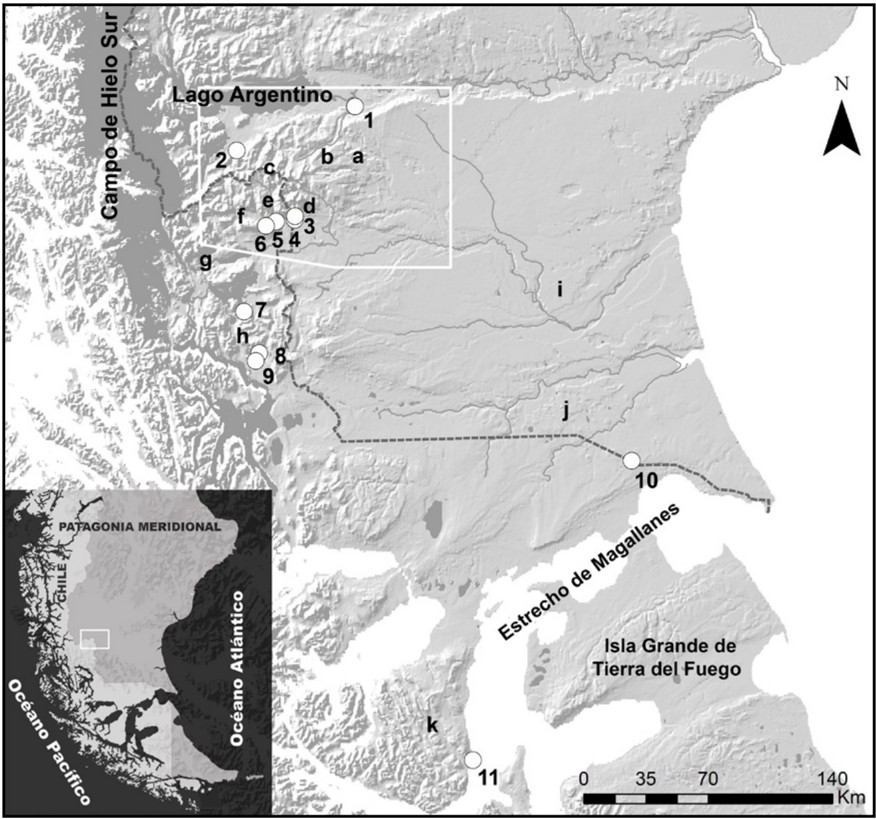
Much of the discussion on the human biogeography of the lake system south of Lago Argentino (southern Patagonia) has been focused on the “dead ends”, near the Andean lakes, its link with continental ice as an important barrier to human movement, and the Baguales Range immediately to the east. Other minor barriers were discussed recently. Among the latter, here we add the plateaus, their edges and the small fluvial valleys at the foot of the plateaus locally called ensenadas or "inlets". The methodology includes a least-cost pathways analysis based on multi-criteria cost surfaces, a hierarchical spatial model based on landscape resistance to human circulation, the use of GIS (Geographic Information Systems) tools and remote sensing techniques on satellite images. A scheme of priority and alternative pathways is derived, whose availability and potential spatial disconnections at times of snowfall, reinforce the logistical exploitation of the area. Thus, the key to the intensity of human occupation in this sector has very likely been linked to the increase or decrease of costs movements, also articulated with land-use strategies centered on other ecologically complementary spaces.
Overview
AI snapshot
Written from the paper’s full text.
TL;DR
The paper models potential human circulation in southern Patagonia using multi-criteria cost surfaces and GIS least-cost paths, focusing on the mesetas, their edges, and small fluvial valleys (“ensenadas”) as minor biogeographic barriers. It argues that snow cover strongly reshapes route availability, reinforcing a logistic use of the area and likely affecting occupation intensity through seasonal changes in circulation costs.
Key findings
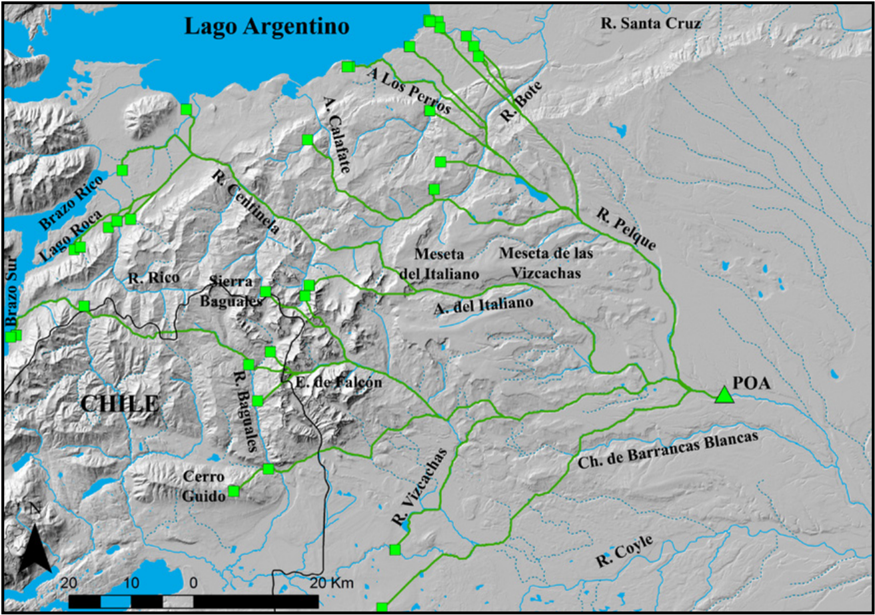
- The Pelque River valley appears as an optimal corridor in all three models, including periods of low snow (model 1) and higher snow cover (models 2 and 3), while the Italiano stream valley maintains continuity only when snow is scarce (model 1).
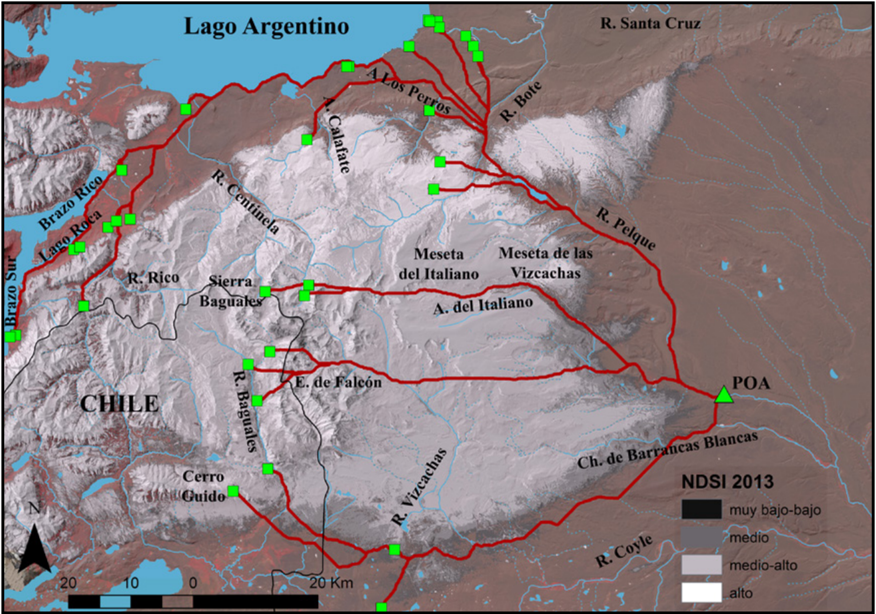
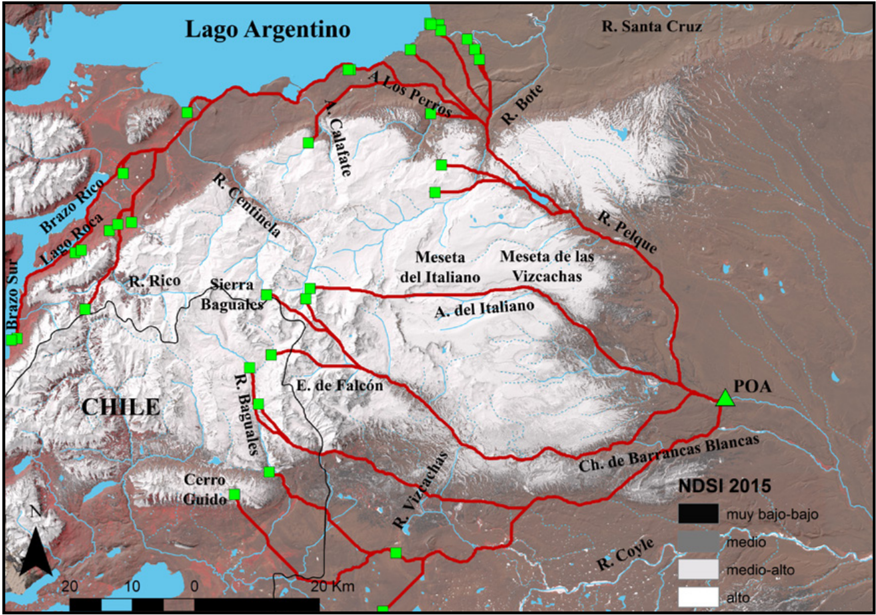
- Snow cover reduces optimal routes and may inhibit interior circuits across the mesetas and Sierra Baguales; in models 2 and 3, connections are rerouted through snow-free spaces, and crossing Sierra Baguales may become unfavorable or impossible.
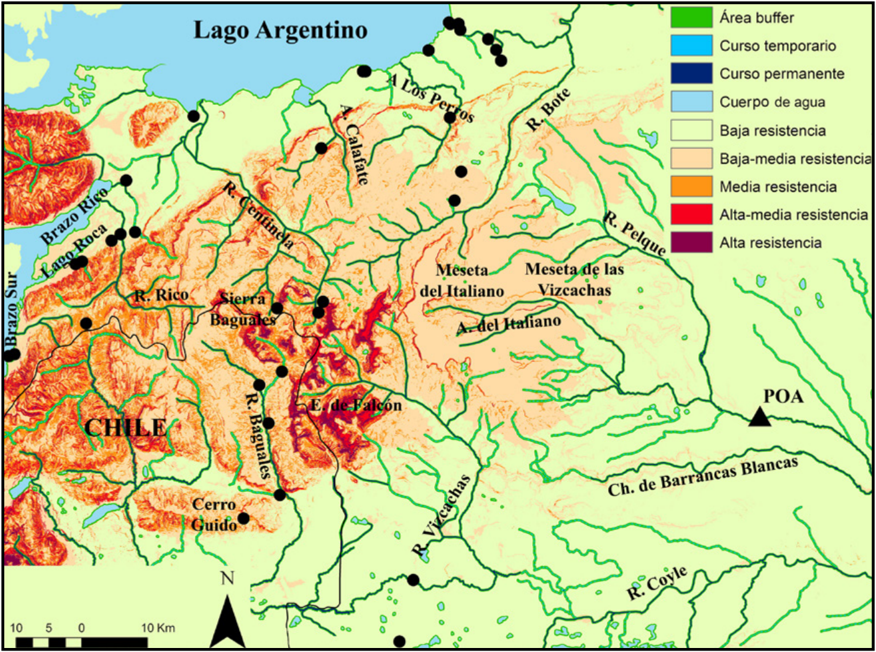
- The spatial hierarchy model classifies most of the study area as low resistance (61.95%), followed by medium-low (25.52%), medium (8.04%), medium-high (3.27%), and high (1.23%); buffer areas are <8%, temporary watercourses 0.37%, permanent watercourses 0.38%, and areas without buffer/water 91.32%.
- The authors conclude that small fluvial basins are minor barriers or highly permeable obstacles, but historical travelers’ accounts suggest avoidance of the mesetas, and snow variability likely reinforced logistical exploitation and alternative route use.
Methods
- Optimal route analysis using multi-criteria cost surfaces in ArcMap 9.3 at 30 m resolution, based on four variables: slope, water, vegetation, and snow.
- Three cost models were built: model 1 without snow, and models 2 and 3 with snow cover from Landsat-8 OLI NDSI images for August 2013 and 2015; NDVI used a January 2015 Landsat-8 OLI image.
- A complementary spatial hierarchy model ranked resistance using slope, altitude, and vegetation; origin point was placed randomly in the Pelque River basin, with destinations at Late Holocene hunter-gatherer archaeological sites around the mesetas.
Limitations
- The paper states that NDVI and NDSI have mainly qualitative utility because livestock activity and global warming in recent centuries have affected vegetation and precipitation representation.
- The paper notes that the optimal-path models are heuristic, that archaeological sites and the origin point serve operational functions, and that routes crossing the mesetas to Sierra Baguales may be an artifact of forcing connections between origin and destination rather than viable options under abundant snow.
- Evident from the text: modern satellite snow and vegetation data are used as proxies for past conditions, and the cost weights are analyst-assigned, so the models do not directly validate past human movement.
Model-written summary. Check it against the paper before relying on it.
Integrity signals
Registry
Cites
Statistics
Figures
Verification
Claims the paper makes
24 Own interpretation · 19 No basis given · 16 Own result · 11 Sources not found · 4 Not checked yet · 3 No full text of the sources · 1 Supported · 1 Own method
The paper states this without a source or data behind it here, so there is nothing to check it against. The quote shows it is in the paper.
In the paper
“Otro tramo principal de acceso a la cuenca del lago Argentino es el valle del arroyo del Italiano.”
§ Análisis multicriterio sobre barreras biogeográficas para la movilidad humana en Patagonia meridional Multi-criteria analysis on biogeographic barriers to human movement in southern Patagonia > Resultados
plain- Asserted: passes — The authors put it forward as true.
- Checkable: passes — It can be checked against evidence.
- Load-bearing: unclear — It is unclear whether the paper’s conclusions depend on it.
- Based: passes — The paper gives a reason why it holds.
- The authors state this as an assumption: Water is a critical resource that attracts humans, and its absence tends to repel them.
- The authors state this as an assumption: Buffer areas are the main human attractor resource.
A result the paper reports from its own data — it cites no other source for it, so there is none to check. The quote shows it is in the paper.
In the paper
“El modelo 1 incluye potenciales corredores para períodos con escasa cobertura nival (Figura 2).”
§ Análisis multicriterio sobre barreras biogeográficas para la movilidad humana en Patagonia meridional Multi-criteria analysis on biogeographic barriers to human movement in southern Patagonia > Resultados
plain- Asserted: passes — The authors put it forward as true.
- Checkable: passes — It can be checked against evidence.
- Load-bearing: unclear — It is unclear whether the paper’s conclusions depend on it.
- Based: passes — The paper gives a reason why it holds.
- The authors state this as an assumption: Water is a critical resource that attracts humans, and its absence tends to repel them.
- The authors state this as an assumption: Buffer areas are the main human attractor resource.
The paper states this without a source or data behind it here, so there is nothing to check it against. The quote shows it is in the paper.
In the paper
“También el valle del arroyo Italiano se mantiene como vía de conexión entre la estepa oriental y el sector argentino de la Sierra Baguales.”
§ Análisis multicriterio sobre barreras biogeográficas para la movilidad humana en Patagonia meridional Multi-criteria analysis on biogeographic barriers to human movement in southern Patagonia > Resultados
plaincorrelational- Asserted: passes — The authors put it forward as true.
- Checkable: passes — It can be checked against evidence.
- Load-bearing: passes — The paper’s conclusions depend on it.
- Based: passes — The paper gives a reason why it holds.
- The authors state this as an assumption: Water is a critical resource that attracts humans, and its absence tends to repel them.
- The authors state this as an assumption: Buffer areas are the main human attractor resource.
A result the paper reports from its own data — it cites no other source for it, so there is none to check. The quote shows it is in the paper.
In the paper
“Lo mismo ocurre con los cursos de agua temporarios (0,37%) y permanentes (0,38%).”
§ Análisis multicriterio sobre barreras biogeográficas para la movilidad humana en Patagonia meridional Multi-criteria analysis on biogeographic barriers to human movement in southern Patagonia > Resultados
plain- Asserted: passes — The authors put it forward as true.
- Checkable: passes — It can be checked against evidence.
- Load-bearing: passes — The paper’s conclusions depend on it.
- Based: passes — The paper gives a reason why it holds.
A result the paper reports from its own data — it cites no other source for it, so there is none to check. The quote shows it is in the paper.
In the paper
“Incluso, algunos de ellos atraviesan espacios altos de la Sierra Baguales (entre 1400 y 1800 msnm), donde se registran sitios arqueológicos.”
§ Análisis multicriterio sobre barreras biogeográficas para la movilidad humana en Patagonia meridional Multi-criteria analysis on biogeographic barriers to human movement in southern Patagonia > Resultados
plain- Asserted: passes — The authors put it forward as true.
- Checkable: passes — It can be checked against evidence.
- Load-bearing: unclear — It is unclear whether the paper’s conclusions depend on it.
- Based: passes — The paper gives a reason why it holds.
- The authors state this as an assumption: Water is a critical resource that attracts humans, and its absence tends to repel them.
- The authors state this as an assumption: Buffer areas are the main human attractor resource.
The paper states this without a source or data behind it here, so there is nothing to check it against. The quote shows it is in the paper.
In the paper
“Las conexiones espaciales se establecen ahora a través de espacios sin nieve, que unen la estepa oriental con sectores al sur de la Sierra Baguales, al noreste de las mesetas, y el suroeste del lago Argentino.”
§ Análisis multicriterio sobre barreras biogeográficas para la movilidad humana en Patagonia meridional Multi-criteria analysis on biogeographic barriers to human movement in southern Patagonia > Resultados
plaincorrelational- Asserted: passes — The authors put it forward as true.
- Checkable: passes — It can be checked against evidence.
- Load-bearing: passes — The paper’s conclusions depend on it.
- Based: passes — The paper gives a reason why it holds.
- The authors state this as an assumption: Water is a critical resource that attracts humans, and its absence tends to repel them.
- The authors state this as an assumption: Buffer areas are the main human attractor resource.
A result the paper reports from its own data — it cites no other source for it, so there is none to check. The quote shows it is in the paper.
In the paper
“el modelo de jerarquización espacial divide el área de estudio en sectores de menor a mayor resistencia para la circulación humana (Figura 5).”
§ Análisis multicriterio sobre barreras biogeográficas para la movilidad humana en Patagonia meridional Multi-criteria analysis on biogeographic barriers to human movement in southern Patagonia > Resultados
plaindirect- Asserted: passes — The authors put it forward as true.
- Checkable: passes — It can be checked against evidence.
- Load-bearing: passes — The paper’s conclusions depend on it.
- Based: passes — The paper gives a reason why it holds.
The paper states this without a source or data behind it here, so there is nothing to check it against. The quote shows it is in the paper.
In the paper
“Una continuidad de esta misma ruta alcanza el ecotono próximo al Brazo Rico a través de arroyos menores y el bosque lacustre aledaño al lago Roca, bordeando las serranías próximas a él.”
§ Análisis multicriterio sobre barreras biogeográficas para la movilidad humana en Patagonia meridional Multi-criteria analysis on biogeographic barriers to human movement in southern Patagonia > Resultados
plain- Asserted: passes — The authors put it forward as true.
- Checkable: passes — It can be checked against evidence.
- Load-bearing: unclear — It is unclear whether the paper’s conclusions depend on it.
- Based: passes — The paper gives a reason why it holds.
- The authors state this as an assumption: Water is a critical resource that attracts humans, and its absence tends to repel them.
- The authors state this as an assumption: Buffer areas are the main human attractor resource.
The paper states this without a source or data behind it here, so there is nothing to check it against. The quote shows it is in the paper.
In the paper
“en general, los espacios nevados y atravesados por rutas óptimas del modelo 2 caen en el rango medio-alto.”
§ Análisis multicriterio sobre barreras biogeográficas para la movilidad humana en Patagonia meridional Multi-criteria analysis on biogeographic barriers to human movement in southern Patagonia > Resultados
plaincorrelational- Asserted: passes — The authors put it forward as true.
- Checkable: passes — It can be checked against evidence.
- Load-bearing: passes — The paper’s conclusions depend on it.
- Based: passes — The paper gives a reason why it holds.
The paper states this without a source or data behind it here, so there is nothing to check it against. The quote shows it is in the paper.
In the paper
“Pero a diferencia del modelo 1, la vía no traspasa la Sierra Baguales.”
§ Análisis multicriterio sobre barreras biogeográficas para la movilidad humana en Patagonia meridional Multi-criteria analysis on biogeographic barriers to human movement in southern Patagonia > Resultados
plain- Asserted: passes — The authors put it forward as true.
- Checkable: passes — It can be checked against evidence.
- Load-bearing: passes — The paper’s conclusions depend on it.
- Based: passes — The paper gives a reason why it holds.
- The authors state this as an assumption: Water is a critical resource that attracts humans, and its absence tends to repel them.
- The authors state this as an assumption: Buffer areas are the main human attractor resource.
- It may state two separate claims as one. 31
- Probably not a substantial claim. 6
Every source the paper cites for this claim was checked and supports it.
In the paper
“Se trata de un componente de variación estacional (Pallo, 2012) que no solo limita las condiciones de acceso a ciertas regiones, sino que también afecta las formas de circulación humana.”
§ Análisis multicriterio sobre barreras biogeográficas para la movilidad humana en Patagonia meridional Multi-criteria analysis on biogeographic barriers to human movement in southern Patagonia > estudios atacameños
What the sources say
- Supportedcites Pallo, 2012
El resumen (sin página indicada) identifica la carga nival como causa principal de diferencias estacionales que afectan la disponibilidad de espacios para uso humano. En «Áreas marginales y estrés invernal» (sin página indicada), el artículo sostiene que el estrés invernal condiciona la movilidad humana y que las transformaciones estacionales pueden actuar como barreras temporarias. Esto respalda la paráfrasis sobre acceso y circulación. (LLM, conf=0.90)
plaindirect- Asserted: passes — The authors put it forward as true.
- Checkable: passes — It can be checked against evidence.
- Load-bearing: passes — The paper’s conclusions depend on it.
- Based: passes — The paper gives a reason why it holds.
It may state two separate claims as one.
- Supported
The paper states this without a source or data behind it here, so there is nothing to check it against. The quote shows it is in the paper.
In the paper
“el modelo 3 registra valores de NDSI más altos (0.45 a 0.6) pero más concentrados que el modelo 2.”
§ Análisis multicriterio sobre barreras biogeográficas para la movilidad humana en Patagonia meridional Multi-criteria analysis on biogeographic barriers to human movement in southern Patagonia > Resultados
plaincorrelational- Asserted: passes — The authors put it forward as true.
- Checkable: passes — It can be checked against evidence.
- Load-bearing: unclear — It is unclear whether the paper’s conclusions depend on it.
- Based: passes — The paper gives a reason why it holds.
It may state two separate claims as one.
A result the paper reports from its own data — it cites no other source for it, so there is none to check. The quote shows it is in the paper.
In the paper
“El modelo 3 también ratifica los corredores por los valles del arroyo del Italiano y el río Pelque, tanto para momentos con nieve (modelo 1) como sin ella (modelo 2).”
§ Análisis multicriterio sobre barreras biogeográficas para la movilidad humana en Patagonia meridional Multi-criteria analysis on biogeographic barriers to human movement in southern Patagonia > Resultados
plaincorrelational- Asserted: passes — The authors put it forward as true.
- Checkable: passes — It can be checked against evidence.
- Load-bearing: passes — The paper’s conclusions depend on it.
- Based: passes — The paper gives a reason why it holds.
It may state two separate claims as one.
The paper states this without a source or data behind it here, so there is nothing to check it against. The quote shows it is in the paper.
In the paper
“La otra ruta comparte un primer tramo con la ruta más al sur del modelo 2, para luego cruzar el río Vizcachas y conectar con el valle del río Baguales.”
§ Análisis multicriterio sobre barreras biogeográficas para la movilidad humana en Patagonia meridional Multi-criteria analysis on biogeographic barriers to human movement in southern Patagonia > Resultados
plain- Asserted: passes — The authors put it forward as true.
- Checkable: passes — It can be checked against evidence.
- Load-bearing: unclear — It is unclear whether the paper’s conclusions depend on it.
- Based: passes — The paper gives a reason why it holds.
It may state two separate claims as one.
A result the paper reports from its own data — it cites no other source for it, so there is none to check. The quote shows it is in the paper.
In the paper
“Las zonas de baja resistencia ocupan la mayor parte (61,95%), seguidas por aquellas de resistencia media-baja (25,52%), media (8,04%), media-alta (3,27%) y alta (1,23%).”
§ Análisis multicriterio sobre barreras biogeográficas para la movilidad humana en Patagonia meridional Multi-criteria analysis on biogeographic barriers to human movement in southern Patagonia > Resultados
plain- Asserted: passes — The authors put it forward as true.
- Checkable: passes — It can be checked against evidence.
- Load-bearing: passes — The paper’s conclusions depend on it.
- Based: passes — The paper gives a reason why it holds.
It may state two separate claims as one.
The paper states this without a source or data behind it here, so there is nothing to check it against. The quote shows it is in the paper.
In the paper
“Este arroyo atraviesa el área central del sector mesetario y conecta con el valle del río Centinela, que nace en la porción suroeste de la cuenca.”
§ Análisis multicriterio sobre barreras biogeográficas para la movilidad humana en Patagonia meridional Multi-criteria analysis on biogeographic barriers to human movement in southern Patagonia > Resultados
plaincorrelational- Asserted: passes — The authors put it forward as true.
- Checkable: passes — It can be checked against evidence.
- Load-bearing: unclear — It is unclear whether the paper’s conclusions depend on it.
- Based: passes — The paper gives a reason why it holds.
It may state two separate claims as one.
- The authors state this as an assumption: Water is a critical resource that attracts humans, and its absence tends to repel them.
- The authors state this as an assumption: Buffer areas are the main human attractor resource.
A result the paper reports from its own data — it cites no other source for it, so there is none to check. The quote shows it is in the paper.
In the paper
“la conexión espacial derivada del análisis de rutas óptimas implica principalmente sectores de baja y baja-media resistencia dentro del área, quedando la selección de sectores de alta resistencia restringida al cruce de la Sierra Baguales durante períodos con escasa cobertura nival (modelo 1).”
§ Análisis multicriterio sobre barreras biogeográficas para la movilidad humana en Patagonia meridional Multi-criteria analysis on biogeographic barriers to human movement in southern Patagonia > Resultados
plaincorrelational- Asserted: passes — The authors put it forward as true.
- Checkable: passes — It can be checked against evidence.
- Load-bearing: passes — The paper’s conclusions depend on it.
- Based: passes — The paper gives a reason why it holds.
It may state two separate claims as one.
The paper states this without a source or data behind it here, so there is nothing to check it against. The quote shows it is in the paper.
In the paper
“Tampoco lo hace una ruta nueva respecto del modelo 1, que atraviesa las mesetas y alcanza el río Vizcachas, en el sector chileno de la Sierra Baguales.”
§ Análisis multicriterio sobre barreras biogeográficas para la movilidad humana en Patagonia meridional Multi-criteria analysis on biogeographic barriers to human movement in southern Patagonia > Resultados
plain- Asserted: passes — The authors put it forward as true.
- Checkable: passes — It can be checked against evidence.
- Load-bearing: passes — The paper’s conclusions depend on it.
- Based: passes — The paper gives a reason why it holds.
It may state two separate claims as one.
- The authors state this as an assumption: Water is a critical resource that attracts humans, and its absence tends to repel them.
- The authors state this as an assumption: Buffer areas are the main human attractor resource.
A result the paper reports from its own data — it cites no other source for it, so there is none to check. The quote shows it is in the paper.
In the paper
“Las diferencias del trazado de rutas al cambiar la dirección del movimiento (por ejemplo, conforme suben o bajan una pendiente) resultaron ser mínimas, por lo que solo las rutas de ida (es decir, de este a oeste) se incluyen en las figuras aquí presentadas.”
§ Análisis multicriterio sobre barreras biogeográficas para la movilidad humana en Patagonia meridional Multi-criteria analysis on biogeographic barriers to human movement in southern Patagonia > Resultados
plain- Asserted: passes — The authors put it forward as true.
- Checkable: passes — It can be checked against evidence.
- Load-bearing: unclear — It is unclear whether the paper’s conclusions depend on it.
- Based: passes — The paper gives a reason why it holds.
It may state two separate claims as one.
- The authors state this as an assumption: Water is a critical resource that attracts humans, and its absence tends to repel them.
- The authors state this as an assumption: Buffer areas are the main human attractor resource.
The paper states this without a source or data behind it here, so there is nothing to check it against. The quote shows it is in the paper.
In the paper
“El tramo del río Pelque atraviesa el borde noreste de las mesetas y luego se diversifica en tramos que cruzan el río Bote y atraviesan arroyos menores (p.e., Los Perros), próximos a la naciente del río Santa Cruz y la margen sureste de la cuenca.”
§ Análisis multicriterio sobre barreras biogeográficas para la movilidad humana en Patagonia meridional Multi-criteria analysis on biogeographic barriers to human movement in southern Patagonia > Resultados
plain- Asserted: passes — The authors put it forward as true.
- Checkable: passes — It can be checked against evidence.
- Load-bearing: unclear — It is unclear whether the paper’s conclusions depend on it.
- Based: passes — The paper gives a reason why it holds.
It may state two separate claims as one.
- The authors state this as an assumption: Water is a critical resource that attracts humans, and its absence tends to repel them.
- The authors state this as an assumption: Buffer areas are the main human attractor resource.
The paper states this without a source or data behind it here, so there is nothing to check it against. The quote shows it is in the paper.
In the paper
“Estos últimos establecen conexiones entre la estepa oriental y la Sierra Baguales, otros espacios al sur de Baguales, y el bosque próximo al Brazo Sur.”
§ Análisis multicriterio sobre barreras biogeográficas para la movilidad humana en Patagonia meridional Multi-criteria analysis on biogeographic barriers to human movement in southern Patagonia > Resultados
plaincorrelational- Asserted: passes — The authors put it forward as true.
- Checkable: passes — It can be checked against evidence.
- Load-bearing: unclear — It is unclear whether the paper’s conclusions depend on it.
- Based: passes — The paper gives a reason why it holds.
It may state two separate claims as one.
- The authors state this as an assumption: Water is a critical resource that attracts humans, and its absence tends to repel them.
- The authors state this as an assumption: Buffer areas are the main human attractor resource.
A result the paper reports from its own data — it cites no other source for it, so there is none to check. The quote shows it is in the paper.
In the paper
“el río Pelque aparece como corredor óptimo tanto en momentos de baja (modelo 1) como de más alta cobertura nívea (modelos 2 y 3).”
§ Análisis multicriterio sobre barreras biogeográficas para la movilidad humana en Patagonia meridional Multi-criteria analysis on biogeographic barriers to human movement in southern Patagonia > estudios atacameños
hedged- Asserted: passes — The authors put it forward as true.
- Checkable: passes — It can be checked against evidence.
- Load-bearing: passes — The paper’s conclusions depend on it.
- Based: passes — The paper gives a reason why it holds.
It may state two separate claims as one.
A conclusion the paper draws from its own results — it cites no other source for it, so there is none to check. The quote shows it is in the paper.
In the paper
“Las variaciones en la disponibilidad de espacios por mayor presencia de nieve (modelos 2 y 3) pudieron repercutir en una imposibilidad de acceso y/o cruce de la Sierra Baguales, y en un aumento de la distancia recorrida para conectar la estepa oriental y el bosque lacustre más occidental, a través del recorrido de la margen sur del lago Argentino.”
§ Análisis multicriterio sobre barreras biogeográficas para la movilidad humana en Patagonia meridional Multi-criteria analysis on biogeographic barriers to human movement in southern Patagonia > Resultados
hedgedconditional- Asserted: passes — The authors put it forward as true.
- Checkable: passes — It can be checked against evidence.
- Load-bearing: passes — The paper’s conclusions depend on it.
- Based: passes — The paper gives a reason why it holds.
It may state two separate claims as one.
In the paper
“Aun cuando el umbral típico para definir nieve de no-nieve es 0.4, dentro del rango de valores de -1 a 1 del NDSI (Hall, Riggs y Salomonson, 1995)”
§ Análisis multicriterio sobre barreras biogeográficas para la movilidad humana en Patagonia meridional Multi-criteria analysis on biogeographic barriers to human movement in southern Patagonia > Resultados
What the sources say
- Not checked — no full text of the sourcecites Hall, Riggs y Salomonson, 1995 source
plain- Asserted: passes — The authors put it forward as true.
- Checkable: passes — It can be checked against evidence.
- Load-bearing: passes — The paper’s conclusions depend on it.
- Based: passes — The paper gives a reason why it holds.
Probably not a substantial claim.
In the paper
“la superficie de las mesetas que, además de despareja, incluye numerosos tramos muy agresivos para la circulación ecuestre (Gerardo Povaszán, com.pers.2017).”
§ Análisis multicriterio sobre barreras biogeográficas para la movilidad humana en Patagonia meridional Multi-criteria analysis on biogeographic barriers to human movement in southern Patagonia > estudios atacameños
What the sources say
- Not matchedcites Gerardo Povaszán, com.pers.2017
Couldn’t be matched to a paper in Crossref, so it can’t be checked.
plain- Asserted: passes — The authors put it forward as true.
- Checkable: passes — It can be checked against evidence.
- Load-bearing: passes — The paper’s conclusions depend on it.
- Based: passes — The paper gives a reason why it holds.
It may state two separate claims as one.
- Not matched
None of the sources cited for this claim have been checked yet.
In the paper
“Aunque cabe mencionar aquí las marchas de Rogers en 1878, a orillas de los brazos Sur y Rico, fueron particularmente dificultosas (Martinic, 1977, p. 76), al igual que la de Prichard en 1901 por las costas del Rico (Prichard, 2003(Prichard, [1902]], pp.236-242).”
§ Análisis multicriterio sobre barreras biogeográficas para la movilidad humana en Patagonia meridional Multi-criteria analysis on biogeographic barriers to human movement in southern Patagonia > Resultados
What the sources say
- Not checked — no full text of the sourcecites Martinic, 1977
- Not matchedcites Prichard, 2003
Couldn’t be matched to a paper in Crossref, so it can’t be checked.
plain- Asserted: passes — The authors put it forward as true.
- Checkable: passes — It can be checked against evidence.
- Load-bearing: unclear — It is unclear whether the paper’s conclusions depend on it.
- Based: passes — The paper gives a reason why it holds.
It may state two separate claims as one.
None of the sources cited for this claim have been checked yet.
In the paper
“Dado que las decisiones humanas sobre la circulación están vinculadas en gran medida a los costos y beneficios que la misma implica en función de los atributos del espacio físico (Binford, 1982;Kelly, 1995), es esperable que las poblaciones prioricen los espacios de más baja resistencia, a fin de alcanzar destinos cuyo costo energético de traslado sea el mínimo en el menor tiempo posible (Connolly”
§ Análisis multicriterio sobre barreras biogeográficas para la movilidad humana en Patagonia meridional Multi-criteria analysis on biogeographic barriers to human movement in southern Patagonia > Metodología
What the sources say
- Not checked — no full text of the sourcecites Binford, 1982 source
- Not matchedcites Kelly, 1995
Couldn’t be matched to a paper in Crossref, so it can’t be checked.
- Not matchedcites Connolly y Lake, 2006
Couldn’t be matched to a paper in Crossref, so it can’t be checked.
hedgedcorrelational- Asserted: passes — The authors put it forward as true.
- Checkable: passes — It can be checked against evidence.
- Load-bearing: passes — The paper’s conclusions depend on it.
- Based: passes — The paper gives a reason why it holds.
It may state two separate claims as one.
A conclusion the paper draws from its own results — it cites no other source for it, so there is none to check. The quote shows it is in the paper.
In the paper
“Todos estos cambios a través del tiempo son relevantes en relación con la transitabilidad del terreno, con variaciones establecidas en el sentido de mayor dificultad para la circulación invernal (durante períodos fríos) o para la circulación en general en zonas bajas (durante períodos húmedos).”
§ Análisis multicriterio sobre barreras biogeográficas para la movilidad humana en Patagonia meridional Multi-criteria analysis on biogeographic barriers to human movement in southern Patagonia > Evolución ambiental
boosteddirect- Asserted: passes — The authors put it forward as true.
- Checkable: passes — It can be checked against evidence.
- Load-bearing: passes — The paper’s conclusions depend on it.
- Based: unclear — It is unclear why the paper says it holds.
It may state two separate claims as one.
In the paper
“no todas estas objeciones aplican por igual para cazadores pedestres, pero algunas tienen la posibilidad de ser aún más importantes en tiempos pasados, por ejemplo la estacionalidad que debió ser más marcada durante la Pequeña Edad de Hielo (Meyer y Wagner, 2008).”
§ Análisis multicriterio sobre barreras biogeográficas para la movilidad humana en Patagonia meridional Multi-criteria analysis on biogeographic barriers to human movement in southern Patagonia > estudios atacameños
What the sources say
- Not matchedcites Meyer y Wagner, 2008
Couldn’t be matched to a paper in Crossref, so it can’t be checked.
hedgedconditional- Asserted: passes — The authors put it forward as true.
- Checkable: passes — It can be checked against evidence.
- Load-bearing: unclear — It is unclear whether the paper’s conclusions depend on it.
- Based: passes — The paper gives a reason why it holds.
It may state two separate claims as one.
- Rests on an assumption: La altura de las mesetas acota las estaciones en que su circulación es posible.
- Not matched
A conclusion the paper draws from its own results — it cites no other source for it, so there is none to check. The quote shows it is in the paper.
In the paper
“el potencial uso de estas cuencas como rutas óptimas debió ser mayor asociado con su más alta disponibilidad cuando la nieve caída era escasa, permitiendo conexiones espaciales más directas entre la estepa y el bosque occidental, por ejemplo a través de la ensenada de Falcón en la Sierra Baguales (modelo 1).”
§ Análisis multicriterio sobre barreras biogeográficas para la movilidad humana en Patagonia meridional Multi-criteria analysis on biogeographic barriers to human movement in southern Patagonia > Discusión y conclusión
hedgedcorrelational- Asserted: passes — The authors put it forward as true.
- Checkable: passes — It can be checked against evidence.
- Load-bearing: passes — The paper’s conclusions depend on it.
- Based: passes — The paper gives a reason why it holds.
It may state two separate claims as one.
A conclusion the paper draws from its own results — it cites no other source for it, so there is none to check. The quote shows it is in the paper.
In the paper
“Posiblemente, tales conexiones hayan podido generarse por la existencia de poca nieve en estos sectores”
§ Análisis multicriterio sobre barreras biogeográficas para la movilidad humana en Patagonia meridional Multi-criteria analysis on biogeographic barriers to human movement in southern Patagonia > Resultados
hedgedconditional- Asserted: passes — The authors put it forward as true.
- Checkable: passes — It can be checked against evidence.
- Load-bearing: fails — The paper’s conclusions may not depend on it.
- Based: fails — The paper may give no reason why it holds.
Probably not a substantial claim. The paper’s conclusions may not depend on it. The paper may give no reason why it holds.
None of the sources cited for this claim have been checked yet.
In the paper
“En este sentido, la Sierra Baguales debió ser explotada de manera logística por grupos concentrados en ambientes de estepa oriental, donde se aglutinan los sitios con mayor intensidad ocupacional (Borrero et al., 2006;Borrero, Barberena, Franco, Charlin y Tykot, 2009;Charlin et al., 2011;L'Heureux y Borrazzo, 2013).”
§ Análisis multicriterio sobre barreras biogeográficas para la movilidad humana en Patagonia meridional Multi-criteria analysis on biogeographic barriers to human movement in southern Patagonia > Arqueología regional
What the sources say
- Not matchedcites Borrero et al., 2006
Couldn’t be matched to a paper in Crossref, so it can’t be checked.
- Not checked — no full text of the sourcecites Borrero, Barberena, Franco, Charlin y Tykot, 2009 source
- Not matchedcites Charlin et al., 2011
Couldn’t be matched to a paper in Crossref, so it can’t be checked.
hedgeddirect- Asserted: passes — The authors put it forward as true.
- Checkable: passes — It can be checked against evidence.
- Load-bearing: passes — The paper’s conclusions depend on it.
- Based: passes — The paper gives a reason why it holds.
It may state two separate claims as one.
- Not matched
None of the sources cited for this claim have been checked yet.
In the paper
“Estos índices expresan un gradiente espacial de la densidad de la cobertura, cuya utilidad es principalmente cualitativa, dado que el impacto de la actividad ganadera y el calentamiento global en los últimos siglos han repercutido en la representación de las comunidades vegetales y la precipitación, probablemente más densas en momentos previos al Holoceno tardío (Mancini et al., 2011;Kreps, Mart”
§ Análisis multicriterio sobre barreras biogeográficas para la movilidad humana en Patagonia meridional Multi-criteria analysis on biogeographic barriers to human movement in southern Patagonia > Metodología
What the sources say
- Not matchedcites Mancini et al., 2011
Couldn’t be matched to a paper in Crossref, so it can’t be checked.
- Not matchedcites Kreps, Martínez Pastur y Peri, 2012
Couldn’t be matched to a paper in Crossref, so it can’t be checked.
- Not checked — no full text of the sourcecites Villalba et al., 2012 source
hedgeddirect- Asserted: passes — The authors put it forward as true.
- Checkable: passes — It can be checked against evidence.
- Load-bearing: unclear — It is unclear whether the paper’s conclusions depend on it.
- Based: passes — The paper gives a reason why it holds.
It may state two separate claims as one.
- Not matched
In the paper
“Esta barrera está constituida por el hielo continental y, en los sectores más cercanos a nuestra microrregión, se complementa con el cordón Baguales (Borrero et al., 2006).”
§ Análisis multicriterio sobre barreras biogeográficas para la movilidad humana en Patagonia meridional Multi-criteria analysis on biogeographic barriers to human movement in southern Patagonia > Arqueología regional
What the sources say
- Not matchedcites Borrero et al., 2006
Couldn’t be matched to a paper in Crossref, so it can’t be checked.
plaindirect- Asserted: passes — The authors put it forward as true.
- Checkable: passes — It can be checked against evidence.
- Load-bearing: passes — The paper’s conclusions depend on it.
- Based: passes — The paper gives a reason why it holds.
It may state two separate claims as one.
- Not matched
In the paper
“Agrega que su travesía fue muy difícil y que no había leña (Prichard, 2003(Prichard, [1902]], p. 199).”
§ Análisis multicriterio sobre barreras biogeográficas para la movilidad humana en Patagonia meridional Multi-criteria analysis on biogeographic barriers to human movement in southern Patagonia > estudios atacameños
What the sources say
- Not matchedcites Prichard, 2003
Couldn’t be matched to a paper in Crossref, so it can’t be checked.
plainSingle case- Asserted: passes — The authors put it forward as true.
- Checkable: passes — It can be checked against evidence.
- Load-bearing: fails — The paper’s conclusions may not depend on it.
- Based: passes — The paper gives a reason why it holds.
Probably not a substantial claim. The paper’s conclusions may not depend on it. It may state two separate claims as one.
- Not matched
A conclusion the paper draws from its own results — it cites no other source for it, so there is none to check. The quote shows it is in the paper.
In the paper
“Así, el lado este de Baguales parece haber sido utilizado marginalmente respecto a la estepa atlántica; y el lado sudoeste lo sería respecto al sector de canales.”
§ Análisis multicriterio sobre barreras biogeográficas para la movilidad humana en Patagonia meridional Multi-criteria analysis on biogeographic barriers to human movement in southern Patagonia > Arqueología regional
hedged- Asserted: passes — The authors put it forward as true.
- Checkable: passes — It can be checked against evidence.
- Load-bearing: passes — The paper’s conclusions depend on it.
- Based: passes — The paper gives a reason why it holds.
It may state two separate claims as one.
A conclusion the paper draws from its own results — it cites no other source for it, so there is none to check. The quote shows it is in the paper.
In the paper
“esto no significa que fuera imposible circular por las mesetas, solo que era percibido como un camino más dificultoso.”
§ Análisis multicriterio sobre barreras biogeográficas para la movilidad humana en Patagonia meridional Multi-criteria analysis on biogeographic barriers to human movement in southern Patagonia > estudios atacameños
plain- Asserted: passes — The authors put it forward as true.
- Checkable: passes — It can be checked against evidence.
- Load-bearing: passes — The paper’s conclusions depend on it.
- Based: passes — The paper gives a reason why it holds.
It may state two separate claims as one.
In the paper
“mencionando que muchos guanacos murieron durante el último invierno tratando de bajar.”
§ Análisis multicriterio sobre barreras biogeográficas para la movilidad humana en Patagonia meridional Multi-criteria analysis on biogeographic barriers to human movement in southern Patagonia > estudios atacameños
What the sources say
- Not matchedcites Prichard, 2003
Couldn’t be matched to a paper in Crossref, so it can’t be checked.
plaindirect- Asserted: passes — The authors put it forward as true.
- Checkable: passes — It can be checked against evidence.
- Load-bearing: fails — The paper’s conclusions may not depend on it.
- Based: passes — The paper gives a reason why it holds.
Probably not a substantial claim. The paper’s conclusions may not depend on it.
- Not matched
None of the sources cited for this claim could be matched to a paper in Crossref, so there is nothing to check it against.
In the paper
“Debe destacarse, además, que las diferencias en la densidad de hallazgos en cada uno de los pasos del cordón Baguales indican que la intensidad de uso humano es decreciente de este a oeste y a medida que disminuye la altura (Borrero y Carballo Marina, 1998;Franco et al. 1999;San Román y Morello, 1999).”
§ Análisis multicriterio sobre barreras biogeográficas para la movilidad humana en Patagonia meridional Multi-criteria analysis on biogeographic barriers to human movement in southern Patagonia > Arqueología regional
What the sources say
- Not matchedcites Borrero y Carballo Marina, 1998
Couldn’t be matched to a paper in Crossref, so it can’t be checked.
- Not matchedcites Franco et al. 1999
Couldn’t be matched to a paper in Crossref, so it can’t be checked.
- Not matchedcites San Román y Morello, 1999
Couldn’t be matched to a paper in Crossref, so it can’t be checked.
hedgedcorrelational- Asserted: passes — The authors put it forward as true.
- Checkable: passes — It can be checked against evidence.
- Load-bearing: passes — The paper’s conclusions depend on it.
- Based: passes — The paper gives a reason why it holds.
It may state two separate claims as one.
- Not matched
A conclusion the paper draws from its own results — it cites no other source for it, so there is none to check. The quote shows it is in the paper.
In the paper
“La conexión que involucra al Brazo Rico y el lago Roca parece ser la menos directa, priorizando un gasto energético relativamente escaso al atravesar sectores bajos pero aumentando la distancia recorrida.”
§ Análisis multicriterio sobre barreras biogeográficas para la movilidad humana en Patagonia meridional Multi-criteria analysis on biogeographic barriers to human movement in southern Patagonia > Resultados
hedgeddirect- Asserted: passes — The authors put it forward as true.
- Checkable: passes — It can be checked against evidence.
- Load-bearing: passes — The paper’s conclusions depend on it.
- Based: passes — The paper gives a reason why it holds.
It may state two separate claims as one.
- The authors state this as an assumption: Water is a critical resource that attracts humans, and its absence tends to repel them.
- The authors state this as an assumption: Buffer areas are the main human attractor resource.
In the paper
“El recorrido de Rogers es particularmente interesante, pues previamente había experimentado dificultades con un cruce bajo, en las llanuras de Diana (Martinic, 1977, p. 73).”
§ Análisis multicriterio sobre barreras biogeográficas para la movilidad humana en Patagonia meridional Multi-criteria analysis on biogeographic barriers to human movement in southern Patagonia > Discusión y conclusión
What the sources say
- Not checked — no full text of the sourcecites Martinic, 1977
plainSingle case- Asserted: passes — The authors put it forward as true.
- Checkable: passes — It can be checked against evidence.
- Load-bearing: fails — The paper’s conclusions may not depend on it.
- Based: passes — The paper gives a reason why it holds.
Probably not a substantial claim. The paper’s conclusions may not depend on it.
In the paper
“sobre la base de registros paleoecológicos obtenidos en la laguna Las Vizcachas, a 1100 msnm, recientemente se ha sugerido un contraste con las observaciones realizadas en la Patagonia oriental durante la Anomalía Climática Medieval, donde las condiciones habrían sido un poco más secas (Fey et al., 2009).”
§ Análisis multicriterio sobre barreras biogeográficas para la movilidad humana en Patagonia meridional Multi-criteria analysis on biogeographic barriers to human movement in southern Patagonia > estudios atacameños
What the sources say
- Not checked — no full text of the sourcecites Fey et al., 2009 source
hedgedcorrelational- Asserted: passes — The authors put it forward as true.
- Checkable: passes — It can be checked against evidence.
- Load-bearing: fails — The paper’s conclusions may not depend on it.
- Based: passes — The paper gives a reason why it holds.
Probably not a substantial claim. The paper’s conclusions may not depend on it.
In the paper
“hemos tratado un área de uso consistentemente marginal y asociado a la modalidad terrestre dentro de la referida configuración del modelo dual de uso regional (Borrero et al., 2006).”
§ Análisis multicriterio sobre barreras biogeográficas para la movilidad humana en Patagonia meridional Multi-criteria analysis on biogeographic barriers to human movement in southern Patagonia > estudios atacameños
What the sources say
- Not matchedcites Borrero et al., 2006
Couldn’t be matched to a paper in Crossref, so it can’t be checked.
plaincorrelational- Asserted: passes — The authors put it forward as true.
- Checkable: passes — It can be checked against evidence.
- Load-bearing: unclear — It is unclear whether the paper’s conclusions depend on it.
- Based: passes — The paper gives a reason why it holds.
It may state two separate claims as one.
- Not matched
A conclusion the paper draws from its own results — it cites no other source for it, so there is none to check. The quote shows it is in the paper.
In the paper
“En momentos de caída de nieve, el esquema de disponibilidad temporal y diferencial de espacios refuerza el sentido logístico de explotación del área, y la existencia de rutas prioritarias y alternativas para conectar los ambientes de estepa y bosque.”
§ Análisis multicriterio sobre barreras biogeográficas para la movilidad humana en Patagonia meridional Multi-criteria analysis on biogeographic barriers to human movement in southern Patagonia > estudios atacameños
plaindirect- Asserted: passes — The authors put it forward as true.
- Checkable: passes — It can be checked against evidence.
- Load-bearing: passes — The paper’s conclusions depend on it.
- Based: passes — The paper gives a reason why it holds.
It may state two separate claims as one.
A conclusion the paper draws from its own results — it cites no other source for it, so there is none to check. The quote shows it is in the paper.
In the paper
“la presencia de nieve pudo ser un factor inhibidor de la disponibilidad de los circuitos interiores (p.e., pequeñas cuencas fluviales que atraviesan las mesetas de Las Vizcachas y del Italiano, y la Sierra Baguales), conllevando una posible búsqueda y uso de espacios alternativos para establecer conexión entre la estepa oriental y el bosque más occidental, como la margen del lago Argentino.”
§ Análisis multicriterio sobre barreras biogeográficas para la movilidad humana en Patagonia meridional Multi-criteria analysis on biogeographic barriers to human movement in southern Patagonia > estudios atacameños
hedgedconditional- Asserted: passes — The authors put it forward as true.
- Checkable: passes — It can be checked against evidence.
- Load-bearing: passes — The paper’s conclusions depend on it.
- Based: passes — The paper gives a reason why it holds.
It may state two separate claims as one.
A conclusion the paper draws from its own results — it cites no other source for it, so there is none to check. The quote shows it is in the paper.
In the paper
“Esto último permite estimar la existencia de una restricción en los espacios óptimos para establecer conexiones espaciales y, por tanto, del desarrollo de estrategias humanas vinculadas a la selección de espacios particulares para la circulación.”
§ Análisis multicriterio sobre barreras biogeográficas para la movilidad humana en Patagonia meridional Multi-criteria analysis on biogeographic barriers to human movement in southern Patagonia > estudios atacameños
hedgeddirect- Asserted: passes — The authors put it forward as true.
- Checkable: passes — It can be checked against evidence.
- Load-bearing: passes — The paper’s conclusions depend on it.
- Based: passes — The paper gives a reason why it holds.
It may state two separate claims as one.
The authors state this as an assumption.
Water is a critical resource that attracts humans, and its absence tends to repel them.
“asumiendo el agua como un recurso crítico que atrae a los humanos, mientras que su ausencia tiende a repelerlos”
The authors state this as an assumption.
Buffer areas are the main human attractor resource.
“la existencia de las áreas buffer que hemos señalado como principal recurso atractor de humanos”
The paper relies on this without support.
La altura de las mesetas acota las estaciones en que su circulación es posible.
“la altura de las mesetas, que acota las estaciones en que su circulación es posible.”
Claims other papers make about this one
Each is checked against this paper’s own text: does it say what the citing paper says it does?
The source backs part of the claim, not all of it — or backs it for a different population, condition or comparison.
In the citing paper
“The hunter-gatherer movement in western Patagonia was organized along corridors; many of them are west-to-east landscape features that break the mountainous terrain [2,23].”
From Past human mobility corridors and least-cost path models south of general carrera lake, central west patagonia (46° S, south america) (2022) · cites this paper as [23]
Experimental — accuracy not yet measured
Self-check
Percentages, sums and reported differences re-computed from the paper’s own numbers.
Each contradiction between two passages listed here was confirmed by an independent check.
Rated minor: it would not touch a result — a value no result rests on, a p-value that stays on the same side of the significance level, or a conflict that is clerical, resolved elsewhere in the paper, or outside its own findings.
In the paper
§ Análisis multicriterio sobre barreras biogeográficas para la movilidad humana en Patagonia meridional Multi-criteria analysis on biogeographic barriers to human movement in southern Patagonia > Resultados
“El modelo 3 también ratifica los corredores por los valles del arroyo del Italiano y el río Pelque, tanto para momentos con nieve (modelo 1) como sin ella (modelo 2).”
§ Análisis multicriterio sobre barreras biogeográficas para la movilidad humana en Patagonia meridional Multi-criteria analysis on biogeographic barriers to human movement in southern Patagonia > NDSI = (b3 -b6) / (b3 + b6)
“En el primer modelo se exceptuó la cubierta de nieve a fin de evaluar la circulación humana en períodos en que la misma no funcionó como un potencial factor inhibidor (Tabla 1).El segundo y tercer modelo incluyen la cubierta de nieve”
Citations
Cites
The Perception of the Environment
Ingold, T. (2002) · doi:10.4324/9780203466025 · Cited by 3,356
The foraging spectrum: diversity in hunter-gatherer lifeways
(1996) · Choice Reviews Online · doi:10.5860/choice.33-4591 · Cited by 1,594
Hall, D. K., Riggs, G. A., & Salomonson, V. V. (1995) · Remote Sensing of Environment · doi:10.1016/0034-4257(95)00137-p · Cited by 1,132
Geographical Information Systems in Archaeology
Conolly, J., & Lake, M. (2006) · doi:10.1017/cbo9780511807459 · Cited by 761
The climate of Patagonia: general patterns and controls on biotic processes
Paruelo, J. M., Beltran, A. B., Jobbagy, E. G., Sala, O. E., & Golluscio, R. Á. (1998) · LA Referencia (Red Federada de Repositorios Institucionales de Publicaciones Científicas) · Cited by 569
Binford, L. R. (1982) · Journal of Anthropological Archaeology · doi:10.1016/0278-4165(82)90006-x · Cited by 533
Social networks and information: Non-“utilitarian” mobility among hunter-gatherers
Whallon, R. (2006) · Journal of Anthropological Archaeology · doi:10.1016/j.jaa.2005.11.004 · Cited by 379
Unusual Southern Hemisphere tree growth patterns induced by changes in the Southern Annular Mode
Villalba, R., Lara, A., Masiokas, M. H., Urrutia, R., Luckman, B. H., Marshall, G. J., Mundo, I. A., Christie, D. A., Cook, E. R., Neukom, R., et al. (2012) · Nature Geoscience · doi:10.1038/ngeo1613 · Cited by 258
Late Pleistocene and Holocene palaeoclimate and glacier fluctuations in Patagonia
Glasser, N. F., Harrison, S., Winchester, V., & Aniya, M. (2004) · Global and Planetary Change · doi:10.1016/j.gloplacha.2004.03.002 · Cited by 188
Mayr, C., Lücke, A., Stichler, W., Trimborn, P., Ercolano, B., Oliva, G., Ohlendorf, C., Soto, J., Fey, M., Torsten Haberzettl, A., et al. (2006) · Journal of Hydrology · doi:10.1016/j.jhydrol.2006.09.025 · Cited by 166
Research works printed but not linked: 28
- Bate, L. (1970). Primeras investigaciones sobre el arte ru- pestre de la Patagonia. Anales del Instituto de la Patago- nia, 1(1), 15-26.
- Belardi, J., Carballo Marina, F. y Espinosa, S. (Eds.). (2006). Cazadores recolectores en la cuenca media e in- ferior del río Coyle. En La cuenca del río Coyle. Estado actual de las investigaciones (pp. 21-28). Río Gallegos, Ar- gentina: UNPA.
- Borrazzo, K. (2006). Tecnología lítica del alero Cerro León 3. Magallania, 34(2), 63-74.
- Borrazzo, K. (2008). Análisis tecnológico de distribuciones artefactuales en la periferia sudeste de la Sierra Baguales. Magallania, 36(1), 103-116.
- Borrero, L. A. y Borrazzo, K. (2011). La geografía cultural del sudoeste de Patagonia Continental. En Borrero, L. A. y Borrazzo, K. (Eds.). En Bosques, montañas y cazadores: investigaciones arqueológicas en Patagonia Meridional (pp. 7-36). Buenos Aires: Dunken.
- Borrero, L. A. y Carballo Marina, F. (1998). Proyecto Magallania: La cuenca superior del río Santa Cruz. En Borrero, L. A. (Ed.). Arqueología de la Patagonia Meri- dional. Proyecto Magallania (pp. 11-27). Concepción del Uruguay, Argentina: Búsqueda de Ayllu.
- Borrero, L. A. y Franco, N. V. (2000). Cuenca superior del río Santa Cruz: perspectivas temporales. En Belardi, J. B., Carballo Marina, F. y Espinosa, S. (Eds.). Desde el país de los gigantes. Perspectivas Arqueológicas en Patagonia (pp. 345-356). Río Gallegos, Argentina: UNPA.
- Borrero, L. A., Franco, N. V., Martin, F. M., Barberena, R., Guichón, R. A., Belardi, J. B. y Favier Dubois, C. (2007). Arqueología del Este de Baguales (Provincia de Santa Cruz). En Oliva, F., De Grandis, N. y Rodríguez, J. (Comps.). Arqueología Argentina en los Inicios de un Nuevo Siglo, vol. I (VI) (pp. 299-308).
- Borrero, L. A., Franco, N. V., Martin, F., Barberena, R., Guichon, R., Belardi, J. B., Favier Dubois, C. y L'Heureux, L. (2006). Las Cabeceras del Coyle: informa- ción arqueológica y circulación de poblaciones humanas. En Carballo Marina, F., Belardi, J. y Espinosa, S. (Eds.). Pasado y Presente en la cuenca del río Coyle (pp. 75-95).
- Borrero, L. A., Barberena, R., Franco, N. V., Charlin, J. y Tykot, R. H. (2009). Isotopes and Rocks: Geographic Organization of Patagonian Hunter-gatherers. Interna- tional Journal of Osteoarchaeology, 19, 309-327.
- Charlin, J., Borrero, L. A. y Pallo, M. C. (2011). Ocupacio- nes humanas en el área noroccidental del río Gallegos. Nº 64 / 2020, pp. 277-295 estudios atacameños Arqueología y Antropología Surandinas En Borrero, L. y Borrazo, K. (Eds.). Bosques, montañas y cazadores: investigaciones arqueológicas en Patagonia Meri- dional (pp. 179-210). Buenos Aires: Dunken.
- Franco, N. V. (2008). La estructura tecnológica regional y la comprensión de la movilidad humana: tendencias para la cuenca del río Santa Cruz. En Borrero, L. A. y Franco, N. V. (Comps.). Arqueología del extremo sur del continente americano. Resultados de nuevos proyectos (pp. 119-154). Buenos Aires: IMHICIHU.
- Franco, N. y Borrero, L. (2003). Chorrillo Malo 2: initial peopling of the Upper Santa Cruz Basin, Argentina. En Miotti, L., Salemme, M. y Flegenheimer, N. (Eds.). Whe- re the South winds Blow. Ancient evidence of Paleo South Americans (pp. 149-152). Texas: Center for the study of the first Americans y Texas A & M University Press.
- Franco, N., Cirigliano, N. y Ambrústolo, P. (2011). Seme- janzas en tecnologías, diseños y prácticas funerarias al sur de la cuenca superior del río Santa Cruz: algunos ejem- plos correspondientes al Holoceno tardío. En Borrero, L. y Borrazo, K. (Eds.). Bosques, montañas y cazadores: investigaciones arqueológicas en Patagonia Meridional (pp. 155-178). Buenos Aires: Dunken.
- Glasser, N., Harrison, S., Winchester, V. y Aniya, M. (2004). Late Pleistocene and Holocene glacier fluctuations in Pa- tagonia. Global and Planetary Change, 43(1-2), 79-101.
- Grondona, M. F. (1975). Pendiente del Océano Atlántico. Geografía de la República Argentina VII, Hidrografía (pp. 203-393). Buenos Aires: Sociedad Argentina de Es- tudios Geográficos.
- Huidobro, C. (2016). Fabricación de instrumentos líticos en Cueva del Medio, Última Esperanza, Patagonia Aus- tral. En Mena, F. (Ed.). Arqueología de la Patagonia. De mar a mar (pp. 189-199). Coyhaique, Chile: Ñire Negro.
- Langlais, M. y Morello, F. (2009). Estudio tecno-económi- co de la industria lítica de Cerro Castillo (Última Espe- ranza, Chile). Magallania, 37(1), 61-84.
- Mancini, M. V., Bamonte, F. y Sottile, G. D. (2011). Paleo- ecología y ocupaciones humanas durante el Holoceno en el área cordillerana y Patagonia extra-andina entre los 49° y 51° S, Santa Cruz (Argentina). En Borrero, L. y Borra- zzo, K. (Eds.). Bosques, montañas y cazadores: investiga- ciones arqueológicas en Patagonia meridional (pp. 37-59). Buenos Aires: IMHICIHU.
- Oliva, G., González, L., Rial, P. y Livrachi, E. (2001). Áreas Ecológicas de Santa Cruz y Tierra del Fuego. En Borrelli, P. y Oliva, G. (Eds.). Ganadería ovina sustentable en la Patagonia Austral. Tecnología de manejo extensivo (pp. 41- 82). Buenos Aires: INTA.
- Ortiz-Troncoso, O. (1972). Material lítico de Patagonia austral. Seis yacimientos de superficie. Anales del Instituto de la Patagonia, 3(1-2), 49-65.
- Otaola, C. (2009). Sitio Chorrillo Malo 2, Provincia de Santa Cruz, Argentina. Enfoque arqueofaunístico de un sitio en un "callejón sin salida". En Salemme, M., San- tiago, F., Álvarez, M., Piana, E., Vázquez, M. y Mansur, M. E. (Eds.). Arqueología de Patagonia: una mirada desde el último confín (pp. 355-365). Ushuaia, Argentina: Uto- pías.
- Pafundi, L. y Borrazzo, K. (2006). Estudio de la dinámica postdepositacional de márgenes lacustres: El caso de los endicamientos del Sistema Lacustre al sur del lago Ar- gentino. En Bourlot, T., Bozzuto, D., Crespo, C., Hecht, A. C. y Kuperszmit, N. (Eds.). Entre Pasados y Presen- tes II. Estudios contemporáneos en Ciencias Antropológicas (pp. 127-140). Buenos Aires: Fundación de Historia Na- tural Félix de Azara y Asociación de amigos del INPL.
- Peláez, P. y Jiménez, L. (2006). Los viajeros en el Coy. En Belardi, J., Carballo Marina, F. y Espinosa, S. (Eds.). La cuenca del río Coyle. Estado actual de las investigaciones (pp. 129-164). Río Gallegos, Argentina: UNPA.
- Rogers, T. (2002 [1877]). Espedición a la parte austral de la Patagonia por Teniente 2º de la Armada de Chile señor Juan Tomás Rogers. En Martinic, M. (Ed.). Marinos de a caballo. Exploraciones terrestres de la Armada de Chile en la Patagonia austral y la Tierra del Fuego. 1877-1897 (pp. 19-60). Punta Arenas, Chile: Universidad de Magallanes y Universidad de Playa Ancha. San Román, M. y Morello, F. (1999). Caracterización ar- queológica preliminar de la cuenca del río Baguales. Ana- les del Instituto de la Patagonia, 27, 199-208.
- San Román, M. y Morello, F. (2003). Nota sobre una exca- vación de sondeo en el alero Cerro Castillo 1. Magalla- nia, 31, 139-148. Nº 64 / 2020, pp. 277-295 estudios atacameños Arqueología y Antropología Surandinas Este es un artículo de acceso abierto bajo licencia Creative Commons Reconocimiento 4.0
- Sturzenbaum, P. y Borrelli, P. (2001). Manejo de riesgos climáticos. En Borrelli, P. y Oliva, G. (Eds.). Ganade- ría Ovina Sustentable en la Patagonia Austral. Tecnolo- gías de Manejo Extensivo (pp. 255-270). Buenos Aires: INTA.
- Tripcevich, N. (2009). Practical Workshop. Working with Archaeological data in Arcmap 9.2: A brief tour of Views- hed and Cost distance functions. En Workshop 2009, Nº 1 -Viewshed and Cost Distance. Archaeological Research. Facility at UC Berkeley. Recuperado de http://www.ma- paspects.org/courses/gis-and-anthropology/workshop- 2009-viewshed-and-cost-distance (Acceso dic. 2017).
Cited by
Sorted by citations
24.0 kyr cal BP stone artefact from Vale da Pedra Furada, Piauí, Brazil: Techno-functional analysis
Boëda, É., Ramos, M. P., Pérez-Balarezo, A., Christine, H. Y., Lahaye, C., Mario Pino, Q., Hérisson, D., Clemente‐Conte, I., Fontugne, M., Guérin, G., et al. (2021) · PLoS ONE · doi:10.1371/journal.pone.0247965 · Cited by 52
Moreno-Meynard, P., Méndez, C., Irarrázaval, I., & Nuevo-Delaunay, A. (2022) · Land · doi:10.3390/land11081351 · Cited by 11
Merino-Pelaz, A., Herrero, M. D. A., Herrero, A. D., Alonso, D. Á., & Tanarro, L. M. (2025) · Journal of Archaeological Method and Theory · doi:10.1007/s10816-025-09745-1
Metadata
- Authors
- Pallo, M. C., & Borrero, L. A.
- Venue
- Estudios Atacamenos
- Published
- 2020-06-20
- Issue
- 64
- Pages
- 277-295
- ISSN
- 0716-0925 (ISSN-L)
- 0718-1043
- OpenAlex
- W3025124842
- Semantic Scholar
- f598ccf83849f67fbb0f9715537bd7fb35d16b72
- Cited by
- 3
- References
- 47
- Citations by year
- 2025: 1 · 2022: 1 · 2021: 1
- FWCI
- 0.25
- Type
- journal article
- Language
- en
- Open access
- diamond
- doi.org
- Locations
- Estudios Atacameños Arqueología y antropología surandinas (publishedVersion, cc-by)
- LA Referencia (Red Federada de Repositorios Institucionales de Publicaciones Científicas) (publishedVersion, other-oa)
- Americanae (AECID Library) (submittedVersion, other-oa)
- DOAJ (DOAJ: Directory of Open Access Journals) (submittedVersion)
- Topics
- Physical Sciences › Environmental Science › Ecology › Wildlife-Road Interactions and Conservation
- Social Sciences › Archeology › Archaeological Research and Protection
- Social Sciences › Archeology › Archaeology and ancient environmental studies
- Keywords
- human biogeography, biogeographic barriers, human mobility, least-cost path analysis, Lake Argentino, southern Patagonia, Andean lakes, snowfall, land use strategies
About these checks
Registry, retraction, Cites and statistics results are computed, not judged, with one exception: a printed reference that no index lists is read once by a model before it counts as a citation error. Claims are extracted by a model and kept only when their quote appears verbatim in the text; each cited source is then checked, with a model’s help, for whether it says what the claim relies on. Those verdicts can be wrong — read the claim’s quote and the cited source before relying on one.
A language model drew the claims from the paper on 2026-11-10, under version 3 of the claim definition (model deepseek-v4.1-flash, prompt extract-v3).
A second model labelled each claim on 2026-11-10 (model jev-1.13-20260917, definition revision gold-guideline-v0.2).
Cited sources are checked with a language model’s help (gpt-6-sol).
Statistics and arithmetic are recomputed, not judged.
Confidence bands are shown only for fields calibrated on our annotated test set. None is calibrated yet, so no band is shown.
What counts as a claim ›How we measure confidence ›How we check this ›
Are you an author, or do you see a problem with this page? Request a review
