

The DOI matches its Crossref record; 24 of the 24 references it cites were found in a registry or an index; none of the 15 sources its claims cite is checked for support yet.
Long-Term Safety, Tolerability, and Weight Loss Associated With Metformin in the Diabetes Prevention Program Outcomes Study
Open accessAbstract
OBJECTIVE: Metformin produced weight loss and delayed or prevented diabetes in the Diabetes Prevention Program (DPP). We examined its long-term safety and tolerability along with weight loss, and change in waist circumference during the DPP and its long-term follow-up. RESEARCH DESIGN AND METHODS: The randomized double-blind clinical trial of metformin or placebo followed by a 7–8-year open-label extension and analysis of adverse events, tolerability, and the effect of adherence on change in weight and waist circumference. RESULTS: No significant safety issues were identified. Gastrointestinal symptoms were more common in metformin than placebo participants and declined over time. During the DPP, average hemoglobin and hematocrit levels were slightly lower in the metformin group than in the placebo group. Decreases in hemoglobin and hematocrit in the metformin group occurred during the first year following randomization, with no further changes observed over time. During the DPP, metformin participants had reduced body weight and waist circumference compared with placebo (weight by 2.06 ± 5.65% vs. 0.02 ± 5.52%, P < 0.001, and waist circumference by 2.13 ± 7.06 cm vs. 0.79 ± 6.54 cm, P < 0.001 in metformin vs. placebo, respectively). The magnitude of weight loss during the 2-year double-blind period was directly related to adherence (P < 0.001). Throughout the unblinded follow-up, weight loss remained significantly greater in the metformin group than in the placebo group (2.0 vs. 0.2%, P < 0.001), and this was related to the degree of continuing metformin adherence (P < 0.001). CONCLUSIONS: Metformin used for diabetes prevention is safe and well tolerated. Weight loss is related to adherence to metformin and is durable for at least 10 years of treatment.
Overview
AI snapshot
Written from the paper’s full text.
TL;DR
In the Diabetes Prevention Program and its Outcomes Study, metformin for diabetes prevention showed no significant safety issues, was well tolerated, and produced modest durable weight loss. Weight loss was directly related to metformin adherence and persisted over long-term follow-up.
Key findings
- During the DPP, metformin vs placebo reduced body weight (2.06 ± 5.65% vs. 0.02 ± 5.52%, P < 0.001) and waist circumference (2.13 ± 7.06 cm vs. 0.79 ± 6.54 cm, P < 0.001); at 2 years, weight loss was 2.1 ± 5.7% vs. 0.02 ± 5.5%.
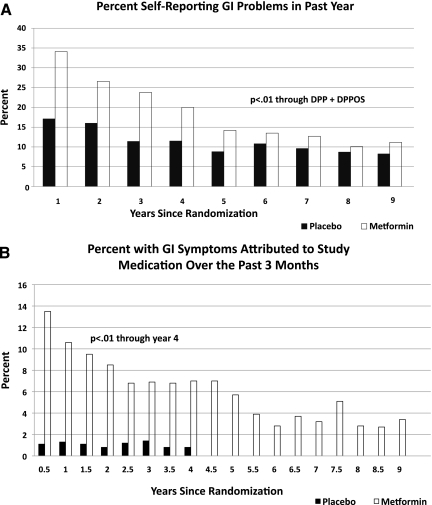
- Gastrointestinal symptoms were more common with metformin than placebo (average 28% vs. 16%, P = 0.01; medication-related 9.5% vs. 1.1%, P < 0.001) and declined over time, with similar rates by years 6–9 (P > 0.10).
- Hemoglobin and hematocrit were slightly lower in the metformin group during the DPP (13.6 vs. 13.8 mg/dL; 40.6 vs. 41.1%; P < 0.001 for both), with changes occurring in the first year and no further changes; low hematocrit was higher with metformin (12.6% vs. 8.4%, P = 0.035), while low hemoglobin was not significantly different (11.2% vs. 7.6%, P = 0.17).
- Over total follow-up, weight loss remained greater with metformin than placebo (2.0% vs. 0.2%, P < 0.001) and was related to continuing metformin adherence (P < 0.001); highly adherent metformin participants lost 3.5% (3.1 kg). No lactic acidosis or hypoglycemia serious adverse events occurred during nearly 18,000 patient-years.
Methods
- Randomized double-blind trial: 3,234 participants enrolled in the DPP; 2,155 assigned to metformin (1,073) or placebo (1,082), followed by a 7–8-year open-label DPPOS extension. Participants were ≥25 years, had BMI ≥24 kg/m² (≥22 kg/m² in Asian Americans), elevated fasting glucose, and impaired glucose tolerance.
- Adverse events were collected by quarterly queries during the DPP and annual gastrointestinal symptom questions; weight was measured twice yearly, waist circumference annually, and hemoglobin/hematocrit annually. Adherence was assessed by pill counts as ≥80% or <80%.
- Analyses covered the first 2 years of double-blind treatment and the full follow-up period; fixed-effects repeated-measures models adjusted for baseline weight and waist circumference, and generalized estimating equations assessed symptoms and adverse events over time.
Limitations
- Stated: 12% of DPP participants chose not to continue into the DPPOS; some may have discontinued or declined open-label metformin because of side effects, potentially influencing the safety and tolerability profile during the open-label DPPOS period.
- Stated/implied: the adherence–weight analyses were post hoc, adherence was not randomized, and placebo was discontinued during the open-label phase so adherence could not be assigned for placebo.
- Evident: the open-label DPPOS phase was unblinded, and adherence categories may be confounded by tolerability, health behaviors, or reasons for low adherence; the paper notes that low-adherence metformin and placebo groups would not be expected to have the same characteristics.
Model-written summary. Check it against the paper before relying on it.
Integrity signals
Registry
Cites
Statistics
Figures
Verification
Claims the paper makes
35 Own result · 9 Not checked yet · 8 Own interpretation · 3 No basis given · 1 Own method
A result the paper reports from its own data — it cites no other source for it, so there is none to check. The quote shows it is in the paper.
In the paper
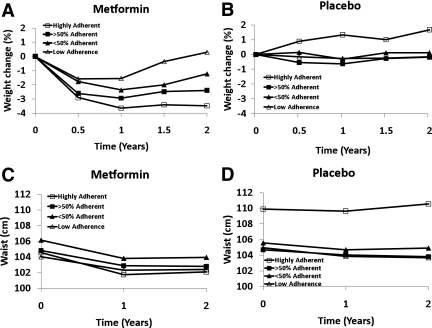
“The associations of adherence to medication with changes in waist circumference were not statistically significant for either the metformin or placebo groups. (Fig. 1C and D).”
§ Long-Term Safety, Tolerability, and Weight Loss Associated With Metformin in the Diabetes Prevention Program Outcomes Study > RESULTS > DPP—results from the double-blind phase
plain- Asserted: passes — The authors put it forward as true.
- Checkable: passes — It can be checked against evidence.
- Load-bearing: unclear — It is unclear whether the paper’s conclusions depend on it.
- Based: passes — The paper gives a reason why it holds.
A result the paper reports from its own data — it cites no other source for it, so there is none to check. The quote shows it is in the paper.
In the paper
“The percentage losing ≥10% of their body weight at 1 year was 8% for the metformin versus 4% for the placebo group and at 2 years was 10% for the metformin and 5% for the placebo group (P < 0.001 for both time periods).”
§ Long-Term Safety, Tolerability, and Weight Loss Associated With Metformin in the Diabetes Prevention Program Outcomes Study > RESULTS > DPP—results from the double-blind phase
plaincorrelational- Asserted: passes — The authors put it forward as true.
- Checkable: passes — It can be checked against evidence.
- Load-bearing: passes — The paper’s conclusions depend on it.
- Based: passes — The paper gives a reason why it holds.
A result the paper reports from its own data — it cites no other source for it, so there is none to check. The quote shows it is in the paper.
In the paper
“Rates of gastrointestinal symptoms were similar between groups by years 6 through 9 (P > 0.10).”
§ Long-Term Safety, Tolerability, and Weight Loss Associated With Metformin in the Diabetes Prevention Program Outcomes Study > RESULTS > Safety and tolerability
plain- Asserted: passes — The authors put it forward as true.
- Checkable: passes — It can be checked against evidence.
- Load-bearing: passes — The paper’s conclusions depend on it.
- Based: passes — The paper gives a reason why it holds.
A result the paper reports from its own data — it cites no other source for it, so there is none to check. The quote shows it is in the paper.
In the paper
“Over the total follow-up, average weight loss from baseline in the metformin treatment group, independent of adherence, was 2.0% (1.9 kg).”
§ Long-Term Safety, Tolerability, and Weight Loss Associated With Metformin in the Diabetes Prevention Program Outcomes Study > RESULTS > Results including DPPOS—open-label treatment
plain- Asserted: passes — The authors put it forward as true.
- Checkable: passes — It can be checked against evidence.
- Load-bearing: passes — The paper’s conclusions depend on it.
- Based: passes — The paper gives a reason why it holds.
A result the paper reports from its own data — it cites no other source for it, so there is none to check. The quote shows it is in the paper.
In the paper
“During the DPP, metformin participants had reduced body weight and waist circumference compared with placebo (weight by 2.06 ± 5.65% vs. 0.02 ± 5.52%, P < 0.001, and waist circumference by 2.13 ± 7.06 cm vs. 0.79 ± 6.54 cm, P < 0.001 in metformin vs. placebo, respectively).”
- Also stated in: § DPP—results from the double-blind phase · plain
“After 2 years, weight loss was 2.1 ± 5.7% in the metformin group compared with 0.02 ± 5.5% (P < 0.001) in the placebo group.”
§ Long-Term Safety, Tolerability, and Weight Loss Associated With Metformin in the Diabetes Prevention Program Outcomes Study > Abstract
plaincorrelational- Asserted: passes — The authors put it forward as true.
- Checkable: passes — It can be checked against evidence.
- Load-bearing: passes — The paper’s conclusions depend on it.
- Based: passes — The paper gives a reason why it holds.
- Also stated in: § DPP—results from the double-blind phase · plain
A result the paper reports from its own data — it cites no other source for it, so there is none to check. The quote shows it is in the paper.
In the paper
“Gastrointestinal symptoms were more common in metformin than placebo participants and declined over time.”
- Also stated in: § Safety and tolerability · plain
“Both types of gastrointestinal symptom reports declined throughout the DPP.”
§ Long-Term Safety, Tolerability, and Weight Loss Associated With Metformin in the Diabetes Prevention Program Outcomes Study > Abstract
plain- Asserted: passes — The authors put it forward as true.
- Checkable: passes — It can be checked against evidence.
- Load-bearing: unclear — It is unclear whether the paper’s conclusions depend on it.
- Based: passes — The paper gives a reason why it holds.
- Also stated in: § Safety and tolerability · plain
A result the paper reports from its own data — it cites no other source for it, so there is none to check. The quote shows it is in the paper.
In the paper
“During the DPP, metformin participants had reduced body weight and waist circumference compared with placebo (weight by 2.06 ± 5.65% vs. 0.02 ± 5.52%, P < 0.001, and waist circumference by 2.13 ± 7.06 cm vs. 0.79 ± 6.54 cm, P < 0.001 in metformin vs. placebo, respectively).”
- Also stated in: § DPP—results from the double-blind phase · plain
“Waist circumference was reduced at year 1 in the metformin group by 2.2 ± 6.2 cm vs. 0.71 ± 5.6 cm in the placebo group (P < 0.001) and at 2 years by 2.1 ± 7.1 cm in the metformin group vs. 0.79 ± 6.5 cm in the placebo group (P < 0.001 for both time periods).”
§ Long-Term Safety, Tolerability, and Weight Loss Associated With Metformin in the Diabetes Prevention Program Outcomes Study > Abstract
plaindirect- Asserted: passes — The authors put it forward as true.
- Checkable: passes — It can be checked against evidence.
- Load-bearing: unclear — It is unclear whether the paper’s conclusions depend on it.
- Based: passes — The paper gives a reason why it holds.
- Also stated in: § DPP—results from the double-blind phase · plain
A result the paper reports from its own data — it cites no other source for it, so there is none to check. The quote shows it is in the paper.
In the paper
“The percentage losing ≥10% of their body weight at 1 year was 8% for the metformin versus 4% for the placebo group and at 2 years was 10% for the metformin and 5% for the placebo group (P < 0.001 for both time periods).”
§ Long-Term Safety, Tolerability, and Weight Loss Associated With Metformin in the Diabetes Prevention Program Outcomes Study > RESULTS > DPP—results from the double-blind phase
plaincorrelational- Asserted: passes — The authors put it forward as true.
- Checkable: passes — It can be checked against evidence.
- Load-bearing: passes — The paper’s conclusions depend on it.
- Based: passes — The paper gives a reason why it holds.
A result the paper reports from its own data — it cites no other source for it, so there is none to check. The quote shows it is in the paper.
In the paper
“At year 1, 29% in the metformin group had lost ≥5% of their initial body weight, compared with 13% of the placebo group, and at 2 years, 26% of the metformin and 14% of the placebo group had lost ≥5% of baseline body weight (P < 0.001 for both time periods).”
§ Long-Term Safety, Tolerability, and Weight Loss Associated With Metformin in the Diabetes Prevention Program Outcomes Study > RESULTS > DPP—results from the double-blind phase
plaincorrelational- Asserted: passes — The authors put it forward as true.
- Checkable: passes — It can be checked against evidence.
- Load-bearing: passes — The paper’s conclusions depend on it.
- Based: passes — The paper gives a reason why it holds.
A result the paper reports from its own data — it cites no other source for it, so there is none to check. The quote shows it is in the paper.
In the paper
“During the total follow-up period, 62% of the metformin participants were in the ≥50% or highly adherent categories compared with 72% in the 2-year double-blind phase (Table 1).”
§ Long-Term Safety, Tolerability, and Weight Loss Associated With Metformin in the Diabetes Prevention Program Outcomes Study > RESULTS > Results including DPPOS—open-label treatment
plain- Asserted: passes — The authors put it forward as true.
- Checkable: passes — It can be checked against evidence.
- Load-bearing: unclear — It is unclear whether the paper’s conclusions depend on it.
- Based: passes — The paper gives a reason why it holds.
- It may state two separate claims as one. 20
- Probably not a substantial claim. 1
A result the paper reports from its own data — it cites no other source for it, so there is none to check. The quote shows it is in the paper.
In the paper
“Placebo participants in all adherence subgroups remained within 1% of their baseline weight, on average, over the 2 years (Table 1), except for the 7% who were highly adherent with placebo, who had a small weight gain of 1.2% (P < 0.05 for the highly adherent compared with the >50% adherent group; all other P values >0.05).”
§ Long-Term Safety, Tolerability, and Weight Loss Associated With Metformin in the Diabetes Prevention Program Outcomes Study > RESULTS > DPP—results from the double-blind phase
plain- Asserted: passes — The authors put it forward as true.
- Checkable: passes — It can be checked against evidence.
- Load-bearing: unclear — It is unclear whether the paper’s conclusions depend on it.
- Based: passes — The paper gives a reason why it holds.
It may state two separate claims as one.
A result the paper reports from its own data — it cites no other source for it, so there is none to check. The quote shows it is in the paper.
In the paper
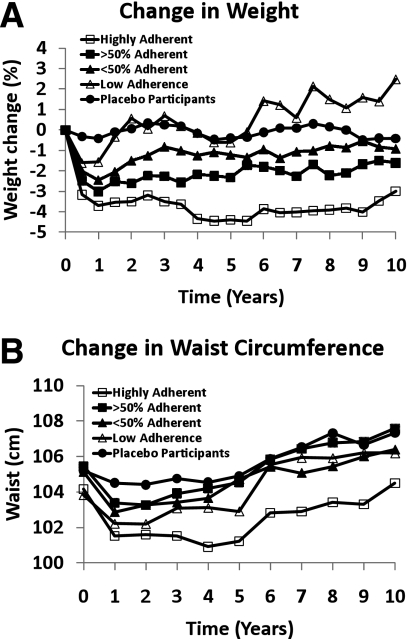
“Among placebo participants, body weight was relatively stable but waist circumference increased after the fourth year, continuing throughout the entire open-label follow-up (Fig. 2).”
§ Long-Term Safety, Tolerability, and Weight Loss Associated With Metformin in the Diabetes Prevention Program Outcomes Study > RESULTS > Results including DPPOS—open-label treatment
plaindirect- Asserted: passes — The authors put it forward as true.
- Checkable: passes — It can be checked against evidence.
- Load-bearing: unclear — It is unclear whether the paper’s conclusions depend on it.
- Based: passes — The paper gives a reason why it holds.
It may state two separate claims as one.
A result the paper reports from its own data — it cites no other source for it, so there is none to check. The quote shows it is in the paper.
In the paper
“Average weight of highly adherent participants was 3.5 ± 0.35% below baseline at 2 years, very close to their 1-year weight loss.”
§ Long-Term Safety, Tolerability, and Weight Loss Associated With Metformin in the Diabetes Prevention Program Outcomes Study > RESULTS > DPP—results from the double-blind phase
plaincorrelational- Asserted: passes — The authors put it forward as true.
- Checkable: passes — It can be checked against evidence.
- Load-bearing: passes — The paper’s conclusions depend on it.
- Based: passes — The paper gives a reason why it holds.
It may state two separate claims as one.
The paper states this without a source or data behind it here, so there is nothing to check it against. The quote shows it is in the paper.
In the paper
“Metformin participants in the low adherence group lost weight but placebo participants with low adherence did not.”
§ Long-Term Safety, Tolerability, and Weight Loss Associated With Metformin in the Diabetes Prevention Program Outcomes Study > CONCLUSIONS
plain- Asserted: passes — The authors put it forward as true.
- Checkable: passes — It can be checked against evidence.
- Load-bearing: passes — The paper’s conclusions depend on it.
- Based: passes — The paper gives a reason why it holds.
It may state two separate claims as one.
A result the paper reports from its own data — it cites no other source for it, so there is none to check. The quote shows it is in the paper.
In the paper
“No unexpected adverse events or treatment group differences in adverse events were identified, either by the study’s Data and Safety Monitoring Board or in this analysis.”
§ Long-Term Safety, Tolerability, and Weight Loss Associated With Metformin in the Diabetes Prevention Program Outcomes Study > RESULTS > Safety and tolerability
plain- Asserted: passes — The authors put it forward as true.
- Checkable: passes — It can be checked against evidence.
- Load-bearing: passes — The paper’s conclusions depend on it.
- Based: passes — The paper gives a reason why it holds.
It may state two separate claims as one.
A result the paper reports from its own data — it cites no other source for it, so there is none to check. The quote shows it is in the paper.
In the paper
“Waist circumference remained significantly lower than at baseline in the highly adherent group (P < 0.05) through the 7-year visit, whereas in the partially adherent groups it was lower up to the 4-year visit, and in the low-adherence group only through 2 years.”
§ Long-Term Safety, Tolerability, and Weight Loss Associated With Metformin in the Diabetes Prevention Program Outcomes Study > RESULTS > Results including DPPOS—open-label treatment
plaincorrelational- Asserted: passes — The authors put it forward as true.
- Checkable: passes — It can be checked against evidence.
- Load-bearing: passes — The paper’s conclusions depend on it.
- Based: passes — The paper gives a reason why it holds.
It may state two separate claims as one.
The paper states this without a source or data behind it here, so there is nothing to check it against. The quote shows it is in the paper.
In the paper
“Waist circumference increased in all groups after year 2, except for the highly adherent participants where the increase began after 5 years and waist circumference remained lower than baseline.”
§ Long-Term Safety, Tolerability, and Weight Loss Associated With Metformin in the Diabetes Prevention Program Outcomes Study > CONCLUSIONS
plaincorrelational- Asserted: passes — The authors put it forward as true.
- Checkable: passes — It can be checked against evidence.
- Load-bearing: passes — The paper’s conclusions depend on it.
- Based: passes — The paper gives a reason why it holds.
It may state two separate claims as one.
A result the paper reports from its own data — it cites no other source for it, so there is none to check. The quote shows it is in the paper.
In the paper
“Nonserious adverse events for hypoglycemia and anemia during the DPP were also uncommon and similar in metformin and placebo participants, with seven metformin participants and eight placebo participants ever reporting hypoglycemia, and fifty metformin participants and thirty-eight placebo participants ever reporting anemia.”
§ Long-Term Safety, Tolerability, and Weight Loss Associated With Metformin in the Diabetes Prevention Program Outcomes Study > RESULTS > Safety and tolerability
plainn = 7- Asserted: passes — The authors put it forward as true.
- Checkable: passes — It can be checked against evidence.
- Load-bearing: passes — The paper’s conclusions depend on it.
- Based: passes — The paper gives a reason why it holds.
It may state two separate claims as one.
The paper states this without a source or data behind it here, so there is nothing to check it against. The quote shows it is in the paper.
In the paper
“Waist circumference initially declines, then steadily increases after a nadir at 12–36 months in all groups except in the highly adherent group, in which this increase was delayed for 5 years.”
§ Long-Term Safety, Tolerability, and Weight Loss Associated With Metformin in the Diabetes Prevention Program Outcomes Study > CONCLUSIONS
plaindirect- Asserted: passes — The authors put it forward as true.
- Checkable: passes — It can be checked against evidence.
- Load-bearing: passes — The paper’s conclusions depend on it.
- Based: passes — The paper gives a reason why it holds.
It may state two separate claims as one.
A result the paper reports from its own data — it cites no other source for it, so there is none to check. The quote shows it is in the paper.
In the paper
“There were three SAE reports for anemia (two metformin and one placebo participant), and there were none for lactic acidosis or hypoglycemia during nearly 18,000 patient-years of follow-up.”
§ Long-Term Safety, Tolerability, and Weight Loss Associated With Metformin in the Diabetes Prevention Program Outcomes Study > RESULTS > Safety and tolerability
plain- Asserted: passes — The authors put it forward as true.
- Checkable: passes — It can be checked against evidence.
- Load-bearing: passes — The paper’s conclusions depend on it.
- Based: passes — The paper gives a reason why it holds.
It may state two separate claims as one.
In the paper
“Weight loss in the metformin group was maintained throughout the combined DPP and DPPOS period with metformin participants having an average 2.5-kg weight loss over time (6).”
§ Long-Term Safety, Tolerability, and Weight Loss Associated With Metformin in the Diabetes Prevention Program Outcomes Study > Abstract
What the sources say
- Not checked yetcites [6] Knowler, 2009, 10-year follow-up of diabetes incidence and weight loss in the Diabetes Prevention Program Outcomes Study, Lancet source
plaincorrelational- Asserted: passes — The authors put it forward as true.
- Checkable: passes — It can be checked against evidence.
- Load-bearing: passes — The paper’s conclusions depend on it.
- Based: passes — The paper gives a reason why it holds.
It may state two separate claims as one.
A conclusion the paper draws from its own results — it cites no other source for it, so there is none to check. The quote shows it is in the paper.
In the paper
“Metformin used for diabetes prevention is safe and well tolerated.”
- Also stated in: § CONCLUSIONS · plain
“Metformin used in overweight or obese individuals with elevated fasting glucose and impaired glucose tolerance was associated with modest but durable weight loss and was safe and well tolerated over many years.”
§ Long-Term Safety, Tolerability, and Weight Loss Associated With Metformin in the Diabetes Prevention Program Outcomes Study > Abstract
plain- Asserted: passes — The authors put it forward as true.
- Checkable: passes — It can be checked against evidence.
- Load-bearing: passes — The paper’s conclusions depend on it.
- Based: passes — The paper gives a reason why it holds.
It may state two separate claims as one.
- Also stated in: § CONCLUSIONS · plain
In the paper
“Weight loss was a strong predictor of diabetes prevention in both the metformin and placebo groups with weight loss accounting for 64% of the metformin versus placebo effect on diabetes prevention (7).”
§ Long-Term Safety, Tolerability, and Weight Loss Associated With Metformin in the Diabetes Prevention Program Outcomes Study > Abstract
What the sources say
- Not checked yetcites [7] Lachin, 2007, Factors associated with diabetes onset during metformin versus placebo therapy in the Diabetes Prevention Program, Diabetes source
boostedcorrelational- Asserted: passes — The authors put it forward as true.
- Checkable: passes — It can be checked against evidence.
- Load-bearing: passes — The paper’s conclusions depend on it.
- Based: passes — The paper gives a reason why it holds.
It may state two separate claims as one.
In the paper
“In summary, metformin produces a highly significant reduction in body weight and waist circumference with minimal safety issues and limited issues of tolerability (22).”
§ Long-Term Safety, Tolerability, and Weight Loss Associated With Metformin in the Diabetes Prevention Program Outcomes Study > CONCLUSIONS
What the sources say
- Not checked yetcites [22] Fujioka, 2005, Efficacy, dose-response relationship and safety of once-daily extended-release metformin (Glucophage XR) in type 2 diabetic patients with inadequate glycaemic control despite prior treatment with diet and exercise: results from two double-blind, placebo-controlled studies, Diabetes Obes Metab source
boosteddirect- Asserted: passes — The authors put it forward as true.
- Checkable: passes — It can be checked against evidence.
- Load-bearing: passes — The paper’s conclusions depend on it.
- Based: passes — The paper gives a reason why it holds.
It may state two separate claims as one.
A conclusion the paper draws from its own results — it cites no other source for it, so there is none to check. The quote shows it is in the paper.
In the paper
“Adherence to placebo did not affect weight loss, suggesting that metformin, rather than nonspecific adherence to positive health behaviors, was the relevant factor.”
§ Long-Term Safety, Tolerability, and Weight Loss Associated With Metformin in the Diabetes Prevention Program Outcomes Study > CONCLUSIONS
hedged- Asserted: passes — The authors put it forward as true.
- Checkable: passes — It can be checked against evidence.
- Load-bearing: passes — The paper’s conclusions depend on it.
- Based: passes — The paper gives a reason why it holds.
It may state two separate claims as one.
A conclusion the paper draws from its own results — it cites no other source for it, so there is none to check. The quote shows it is in the paper.
In the paper
“Adherence to metformin improved the magnitude of weight loss—but not waist circumference—during the first 2 years.”
§ Long-Term Safety, Tolerability, and Weight Loss Associated With Metformin in the Diabetes Prevention Program Outcomes Study > CONCLUSIONS
plaindirect- Asserted: passes — The authors put it forward as true.
- Checkable: passes — It can be checked against evidence.
- Load-bearing: passes — The paper’s conclusions depend on it.
- Based: passes — The paper gives a reason why it holds.
It may state two separate claims as one.
A conclusion the paper draws from its own results — it cites no other source for it, so there is none to check. The quote shows it is in the paper.
In the paper
“Metformin was well tolerated with few side effects.”
§ Long-Term Safety, Tolerability, and Weight Loss Associated With Metformin in the Diabetes Prevention Program Outcomes Study > CONCLUSIONS
plain- Asserted: passes — The authors put it forward as true.
- Checkable: passes — It can be checked against evidence.
- Load-bearing: passes — The paper’s conclusions depend on it.
- Based: passes — The paper gives a reason why it holds.
It may state two separate claims as one.
What the paper did — it cites no source for this, so there is none to check. The quote shows it is in the paper.
In the paper
“One potential bias is that 12% of DPP participants chose not to continue into the DPPOS. It is likely that some of those who discontinued the study or who continued but chose not to take open-label metformin did so because of side effects, which may have influenced the safety and tolerability profile of metformin during the open-label DPPOS period.”
§ Long-Term Safety, Tolerability, and Weight Loss Associated With Metformin in the Diabetes Prevention Program Outcomes Study > CONCLUSIONS
hedgedconditional- Asserted: passes — The authors put it forward as true.
- Checkable: passes — It can be checked against evidence.
- Load-bearing: fails — The paper’s conclusions may not depend on it.
- Based: passes — The paper gives a reason why it holds.
Probably not a substantial claim. The paper’s conclusions may not depend on it. It may state two separate claims as one.
A conclusion the paper draws from its own results — it cites no other source for it, so there is none to check. The quote shows it is in the paper.
In the paper
“The weight reduction persists for up to 10 years and is related to adherence to metformin.”
§ Long-Term Safety, Tolerability, and Weight Loss Associated With Metformin in the Diabetes Prevention Program Outcomes Study > CONCLUSIONS
plaincorrelational- Asserted: passes — The authors put it forward as true.
- Checkable: passes — It can be checked against evidence.
- Load-bearing: passes — The paper’s conclusions depend on it.
- Based: passes — The paper gives a reason why it holds.
It may state two separate claims as one.
None of the sources cited for this claim have been checked yet.
In the paper
“Metformin lowers glucose and reduces risk for diabetes in part through weight loss (2,7,16,17).”
§ Long-Term Safety, Tolerability, and Weight Loss Associated With Metformin in the Diabetes Prevention Program Outcomes Study > CONCLUSIONS
What the sources say
- Not checked yetcites [2] UK Prospective Diabetes Study (UKPDS) Group, 1998, Effect of intensive blood-glucose control with metformin on complications in overweight patients with type 2 diabetes (UKPDS 34), Lancet source
- Not checked yetcites [7] Lachin, 2007, Factors associated with diabetes onset during metformin versus placebo therapy in the Diabetes Prevention Program, Diabetes source
- Not checked yetcites [16] Yanovski, 2011, Effects of metformin on body weight and body composition in obese insulin-resistant children: a randomized clinical trial, Diabetes source
- Not checked yetcites [17] Avenell, 2004, Systematic review of the long-term effects and economic consequences of treatments for obesity and implications for health improvement, Health Technol Assess source
plaindirect- Asserted: passes — The authors put it forward as true.
- Checkable: passes — It can be checked against evidence.
- Load-bearing: passes — The paper’s conclusions depend on it.
- Based: passes — The paper gives a reason why it holds.
It may state two separate claims as one.
Claims other papers make about this one
Each is checked against this paper’s own text: does it say what the citing paper says it does?
In the citing paper
“In addition, data from the Diabetes Prevention Program (DPP) indicates that metformin is effective in preventing the development of diabetes in patients with pre-diabetes and its use following a 10-year follow up associated with an average 2.1-kg weight loss (7).”
From A Critical Review of the Evidence That Metformin Is a Putative Anti-Aging Drug That Enhances Healthspan and Extends Lifespan (2021) · cites this paper as [7]
In the citing paper
“In addition to its benefits as an anti-hyperglycemic agent, metformin also lowers the atherosclerotic burden in non-diabetic persons at risk of developing T2DM (1, 7).”
From A Critical Review of the Evidence That Metformin Is a Putative Anti-Aging Drug That Enhances Healthspan and Extends Lifespan (2021) · cites this paper as [7]
In the citing paper
“data from the Diabetes Prevention Program study of 3234 pre-diabetic subjects over an average of 2.8 years who were randomized to receive placebo, metformin (850 mg bid), or lifestyle intervention, indicated that although both metformin and lifestyle changes were effective in reducing the risk of developing diabetes, lifestyle intervention was more effective (7).”
From A Critical Review of the Evidence That Metformin Is a Putative Anti-Aging Drug That Enhances Healthspan and Extends Lifespan (2021) · cites this paper as [7]
In the citing paper
“In contrast to other antidiabetic drugs including insulin, metformin can lead independently to glycemic control and weight loss by decreasing food intake in both diabetic and non-diabetic individuals (18–20).”
From GDF-15 as a Weight Watcher for Diabetic and Non-Diabetic People Treated With Metformin (2020) · cites this paper as [19]
In the citing paper
“The magnitude of weight loss during the 2-year double-blind period was directly related to drug adherence, indicating a potential dose-effect (19).”
From GDF-15 as a Weight Watcher for Diabetic and Non-Diabetic People Treated With Metformin (2020) · cites this paper as [19]
Self-check
Percentages, sums and reported differences re-computed from the paper’s own numbers.
Each contradiction between two passages listed here was confirmed by an independent check.
Rated minor: it would not touch a result — a value no result rests on, a p-value that stays on the same side of the significance level, or a conflict that is clerical, resolved elsewhere in the paper, or outside its own findings.
In the paper
§ Long-Term Safety, Tolerability, and Weight Loss Associated With Metformin in the Diabetes Prevention Program Outcomes Study > CONCLUSIONS
“In the double-blind phase of the trial, 72% were highly adherent, and throughout the entire trial, 62% of the metformin group was highly adherent.”
§ Long-Term Safety, Tolerability, and Weight Loss Associated With Metformin in the Diabetes Prevention Program Outcomes Study > RESULTS > Results including DPPOS—open-label treatment
“During the total follow-up period, 62% of the metformin participants were in the ≥50% or highly adherent categories compared with 72% in the 2-year double-blind phase (Table 1).”
Citations
Cites
Reduction in the incidence of type 2 diabetes with lifestyle intervention or metformin
(2002) · New England Journal of Medicine · doi:10.1056/nejmoa012512 · Cited by 19,011
Everitt, B. S. (2001) · Psychology Press eBooks · doi:10.4324/9781410605542-11 · Cited by 6,877
Diabetes Prevention Program Research Group (2009) · The Lancet · doi:10.1016/s0140-6736(09)61457-4 · Cited by 3,020
Ramachandran, A., Snehalatha, C., Mary, S., Mukesh, B., Bhaskar, A. D., Vijay, V., & Indian Diabetes Prevention Programme (IDPP) (2006) · Diabetologia · doi:10.1007/s00125-005-0097-z · Cited by 1,881
Pharmacologic Therapy for Type 2 Diabetes Mellitus
DeFronzo, R. A. (1999) · Annals of Internal Medicine · doi:10.7326/0003-4819-131-4-199908170-00008 · Cited by 1,173
Analysis of Longitudinal Data.
Have, T. R. T., Diggle, P. J., Liang, K., & Zeger, S. L. (1995) · Journal of the American Statistical Association · doi:10.2307/2291352 · Cited by 1,171
Metabolic effects of metformin in non-insulin-dependent diabetes mellitus
Stumvoll, M., Nurjhan, N., Perriello, G., Dailey, G., & Gerich, J. E. (1995) · New England Journal of Medicine · doi:10.1056/nejm199508313330903 · Cited by 1,148 · cited 2×
“This is because metformininduced weight loss is almost exclusively confined to reductions in adipose mass (2,16,18) with little change in lean tissue.”
BackgroundAvenell, A., Broom, J., Brown, T., Poobalan, A., Aucott, L., Stearns, S., Smith, W., Jung, R., Campbell, M., & Grant, A. (2004) · Health Technology Assessment · doi:10.3310/hta8210 · Cited by 1,041
Cited by
Sorted by citations
Items 201–300 of 493
Valtetsiotis, K., Valsamakis, G., Charmandari, E., & Vlahos, N. (2023) · International Journal of Molecular Sciences · doi:10.3390/ijms24129828 · Cited by 19
“Given that its already established as a rather safe medication for diabetes [110], it could have potential as a preventative.”
BackgroundTomasson, M. H., Ali, M., Oliveira, V. D., Xiao, Q., Jethava, Y. S., Zhan, F., Fitzsimmons, A. M., & Bates, M. L. (2018) · International Journal of Molecular Sciences · doi:10.3390/ijms19113621 · Cited by 21
Lentine, K. L., Koraishy, F. M., Sarabu, N., Naik, A. S., Lam, N. N., Garg, A. X., Axelrod, D. A., Zhang, Z., Hess, G. P., Kasiske, B. L., et al. (2019) · Clinical Transplantation · doi:10.1111/ctr.13696 · Cited by 19
Long-term effects of lifestyle and metformin interventions in DPP on bone density
Schwartz, A. V., Pan, Q., Aroda, V. R., Crandall, J. P., Kriska, A. M., Piromalli, C. S., Wallia, A., Temprosa, M. G., & Florez, H. J. (2021) · Osteoporosis International · doi:10.1007/s00198-021-05989-1 · Cited by 19
Novel Treatments for Obesity: Implications for Cancer Prevention and Treatment
Cuttica, C. M., Briata, I. M., & DeCensi, A. (2023) · Nutrients · doi:10.3390/nu15173737 · Cited by 18
“Liraglutide and semaglutide are two GLP-1 receptor agonists (GLP-1RAs) formerly known as antidiabetic drugs for the treatment of T2DM and currently approved, in higher dosages, for chronic weight management in addition to diet and physical activity in patients with obesity (BMI ≥ 30 kg/m2) or who are overweight (BMI ≥…”
InfluentialOptions for empagliflozin in combination therapy in type 2 diabetes mellitus
Thompson, G., & Hershon, K. S. (2016) · International Journal of General Medicine · doi:10.2147/ijgm.s100288 · Cited by 18
Metformin Affects Heme Function as a Possible Mechanism of Action
Li, X., Wang, X., & Snyder, M. P. (2018) · G3 Genes Genomes Genetics · doi:10.1534/g3.118.200803 · Cited by 18
Wu, L., Liu, Y., Huang, X., Lin, K., Liu, Y., Li, Z., Wei, T., Song, L., Hua, Y., & Wang, X. (2023) · Clinical Endocrinology · doi:10.1111/cen.14895 · Cited by 17
Saiz‐Rodríguez, M., Ochoa, D., Zubiaur, P., Navares‐Gómez, M., Román, M. C., Camargo-Mamani, P., Bueno, S. L., Villapalos‐García, G., Alcaraz, R., Mejía-Abril, G. P., et al. (2023) · Journal of Personalized Medicine · doi:10.3390/jpm13030489 · Cited by 17
Survey of knowledge for diagnosing and managing prediabetes in Latin-America: cross-sectional study
Garay, J., Camacho, P. A., López-López, J., Alvernia, J., Garcia, M., Cohen, D. D., Calderón, C., & López-Jaramillo, P. A. (2019) · Diabetology & Metabolic Syndrome · doi:10.1186/s13098-019-0500-4 · Cited by 20
Metformin inhibits mitochondrial complex I in intestinal epithelium to promote glycaemic control
Sebo, Z. L., Chakrabarty, R. P., Grant, R. A., D’Alessandro, K. B., Koss, A., Blum, J. L. E., Davidson, S. M., Reczek, C. R., & Chandel, N. S. (2026) · Nature Metabolism · doi:10.1038/s42255-026-01530-y · Cited by 21
“Metformin modestly lowers body weight in humans (~3% loss over a year) 66 .”
Impact of Adjunctive Pharmacotherapy With Intragastric Balloons for the Treatment of Obesity
Mehta, A., Shah, S. L., Dawod, E., Hajifathalian, K., Kumar, R. B., Igel, L. I., Saunders, K. H., Kumbhari, V., Farha, J., Badurdeen, D., et al. (2021) · The American Surgeon · doi:10.1177/00031348211038579 · Cited by 16
Asgari, S., Khalili, D., Zayeri, F., Azizi, F., & Hadaegh, F. (2021) · Journal of Clinical Epidemiology · doi:10.1016/j.jclinepi.2021.08.026 · Cited by 19
Yang, L., Jia, X., Fang, D., Cheng, Y., Zhai, Z., Deng, W., Du, B., Lu, T., Wang, L., Yang, C., et al. (2022) · International Journal of Molecular Sciences · doi:10.3390/ijms23115986 · Cited by 16
NK cells vs. obesity: A tale of dysfunction & redemption
Barra, C. D., O'Shea, D. B., & Hogan, A. E. (2023) · Clinical Immunology · doi:10.1016/j.clim.2023.109744 · Cited by 17
Mai, W., Shang, Y., Wang, Y., Chen, Y., Mu, B., Zheng, Q., & Liu, H. (2024) · Reproductive Sciences · doi:10.1007/s43032-024-01502-1 · Cited by 16
“Metformin is a classic antihyperglycemic agent [35–37 , 56].”
BackgroundMetformin for preventing the progression of chronic kidney disease
El-Damanawi, R., Stanley, I. K., Staatz, C. E., Pascoe, E. M., Craig, J. C., Johnson, D. W., Mallett, A. J., Hawley, C. M., Milanzi, E., Hiemstra, T. F., et al. (2024) · Cochrane Database of Systematic Reviews · doi:10.1002/14651858.cd013414.pub2 · Cited by 17
Richardson, B., Khan, M. Q., Brown, S. A., Watt, K. D. S., & Izzy, M. J. (2021) · Hepatology Communications · doi:10.1002/hep4.1876 · Cited by 18
Optimal Pharmacologic Treatment Strategies in Obesity and Type 2 Diabetes
Goswami, G., Shinkazh, N., & Davis, N. J. (2014) · Journal of Clinical Medicine · doi:10.3390/jcm3020595 · Cited by 17
Ida, S., Murata, K., & Kaneko, R. (2016) · Journal of Diabetes · doi:10.1111/1753-0407.12445 · Cited by 16
Cost-Minimization Analysis of Metformin and Acarbose in Treatment of Type 2 Diabetes
Gu, S., Tang, Z., Shi, L., Sawhney, M. S., Hu, H., & Dong, H. (2015) · Value in Health Regional Issues · doi:10.1016/j.vhri.2015.03.012 · Cited by 16
Mohamed, S. (2024) · Medicine · doi:10.1097/md.0000000000040221 · Cited by 20
“Decreased appetite [72,73,78,79] • Commonly encountered.”
Wang, N. F., Jue, T. R., Holst, J., & Gunter, J. H. (2022) · BJUI Compass · doi:10.1002/bco2.187 · Cited by 15
Wang, W., Chen, S., Xu, S., Liao, G., Li, W., Xiao, Y., Li, T., Zhang, H., Huang, H., Zhou, Y., et al. (2023) · Journal of Ethnopharmacology · doi:10.1016/j.jep.2023.117102 · Cited by 16
Tassoulas, L. J., & Wackett, L. P. (2024) · iScience · doi:10.1016/j.isci.2024.108900 · Cited by 17
“11 Probiotics like Bifidobacteria , which ferment acid metabolites like lactate and SCFAs, lower intestinal pH and may increase agmatine production of E. coli -like bacteria in the gut and could also be co-administered with metformin.”
BackgroundKenkre, J. S., Tan, T., & Bloom, S. R. (2013) · Expert Review of Clinical Pharmacology · doi:10.1586/ecp.13.5 · Cited by 14
Therapy of obese patients with cardiovascular disease
Jindal, A., Whaley‐Connell, A. T., Brietzke, S., & Sowers, J. R. (2013) · Current Opinion in Pharmacology · doi:10.1016/j.coph.2012.12.006 · Cited by 15
Kocarnik, B. M., Moore, K. P., Smith, N. L., & Boyko, E. J. (2016) · Diabetes Research and Clinical Practice · doi:10.1016/j.diabres.2016.11.025 · Cited by 15
Sawami, K., Tanaka, A., & Node, K. (2022) · Cardiovascular Diabetology · doi:10.1186/s12933-022-01611-8 · Cited by 15
Effects of medications on hypoxia‐inducible factor in the retina: A review
Kim, A. H., Kolesnikova, M., Ngo, W. K., & Tsang, S. H. (2023) · Clinical and Experimental Ophthalmology · doi:10.1111/ceo.14161 · Cited by 15
Ding, L., Qu, Z., Chi, J., Shi, R., Wang, L., Hou, L., Wang, Y., & Pang, S. (2015) · PubMed · Cited by 15
Brunisholz, K. D., Joy, E. A., Hashibe, M., Gren, L. H., Savitz, L. A., Hamilton, S., Cannon, W., & Kim, J. (2016) · PLoS ONE · doi:10.1371/journal.pone.0157729 · Cited by 15
Thyroid disorders and COVID-19: a comprehensive review of literature
Anbardar, N., Dixon, S. L., Munugoti, S., Gaddam, M., Kashfi, K., Kasulis, L., Messersmith, A. L., & Asadipooya, K. (2025) · Frontiers in Endocrinology · doi:10.3389/fendo.2025.1535169 · Cited by 14
“It has been reported that there is a correlation between thyroid or pituitary dysfunction and long COVID (25, 86).”
Markowicz-Piasecka, M., Huttunen, J., Zajda, A., Sikora, J., & Huttunen, K. M. (2021) · Chemico-Biological Interactions · doi:10.1016/j.cbi.2021.109795 · Cited by 14
The anti-diabetic effects of metformin are mediated by regulating long non-coding RNA
Chang, W., Li, W., & Li, P. (2023) · Frontiers in Pharmacology · doi:10.3389/fphar.2023.1256705 · Cited by 19
“Metformin has been shown to lower fasting plasma glucose and HbA1c in a dose-related manner in patients with T2DM (Garber et al., 1997) and is associated with reduced body weight and waist circumference (Diabetes Prevention Program Research, 2012).”
BackgroundKim, H. J., Jin, B.-Y., Oh, M.-J., Shin, K.-H., Choi, S.-H., & Kim, D. H. (2015) · Physiology & Behavior · doi:10.1016/j.physbeh.2015.11.028 · Cited by 14
Metformin prescribing in low-income and insured patients with prediabetes
Wu, J., Ward, E. D., Threatt, T. B., & Lu, K. (2017) · Journal of the American Pharmacists Association · doi:10.1016/j.japh.2017.04.008 · Cited by 14
Novel lipid-mimetic prodrugs delivering active compounds to adipose tissue
Mattarei, A., Rossa, A., Bombardelli, V., Azzolini, M., Spina, M. L., Paradisi, C., Zoratti, M., & Biasutto, L. (2017) · European Journal of Medicinal Chemistry · doi:10.1016/j.ejmech.2017.04.034 · Cited by 14
Palui, R., Sahoo, J., Kamalanathan, S., Kar, S. S., Sridharan, K., Durgia, H., Raj, H., & Patil, M. (2019) · Journal of Endocrinological Investigation · doi:10.1007/s40618-019-01059-w · Cited by 15
Steps Toward the Meaningful Translation of Prevention Strategies for Type 2 Diabetes
Cefalu, W. T. (2012) · Diabetes Care · doi:10.2337/dc12-0119 · Cited by 14
Gerber, S., Silver, R. E., Das, S. K., Greene, S. S., Dix, S. R., Ramirez, I., Morcos, C. L., Dao, M. C., Ceglia, L., & Roberts, S. B. (2024) · Nutrients · doi:10.3390/nu16070930 · Cited by 13
“The original designers of the DPP indicated that support and feedback from interventionists during programs were a critical element, predictive of greater weight loss success [9,67,77].”
BackgroundThe Effects of Metformin on Weight Loss, Cardiovascular Health, and Longevity
Pillai, A. A., Melo, L., Frishman, W. H., & Aronow, W. S. (2024) · Cardiology in Review · doi:10.1097/crd.0000000000000832 · Cited by 17
Heckman‐Stoddard, B. M., Crandall, J. P., Edelstein, S. L., Prorok, P. C., Dabelea, D., Hamman, R. F., Hazuda, H. P., Horton, E. S., Hoskin, M. A., Perloff, M., et al. (2025) · Cancer Prevention Research · doi:10.1158/1940-6207.capr-23-0461 · Cited by 14
Huelgas, R. G., Peralta, F. G., Fernández, L. C., Galve, E., Casanueva, F. F., Puig‐Domingo, M., Bravo, J. J. M., Orozco‐Beltrán, D., Muñoz, J. E., Torre, E. L. M., et al. (2015) · Revista Clínica Española · doi:10.1016/j.rce.2015.07.003 · Cited by 13
Wu, X., Xiao, X., Chen, X., Yang, M., Hu, Z., Shuai, S., Fu, Q., Yang, H., & Du, Q. (2022) · Frontiers in Pharmacology · doi:10.3389/fphar.2022.948101 · Cited by 14
Weight variability and diabetes complications
Prattichizzo, F., Frigé, C., Grotta, R. L., & Ceriello, A. (2023) · Diabetes Research and Clinical Practice · doi:10.1016/j.diabres.2023.110646 · Cited by 13
Giovanni, C. B. S., Sweeney, B. R., Skelton, J. A., Kelsey, M. M., & Kelly, A. S. (2021) · The Journal of Clinical Endocrinology & Metabolism · doi:10.1210/clinem/dgab276 · Cited by 13
Ferrannini, G., Pollock, C. A., Natali, A., Yavin, Y., Mahaffey, K. W., & Ferrannini, E. (2023) · Cardiovascular Diabetology · doi:10.1186/s12933-023-01832-5 · Cited by 11
Johansson, H. A., Bellerba, F., Macis, D., Bertelsen, B.-E., Guerrieri‐Gonzaga, A., Aristarco, V., Viste, K., Mellgren, G., Cola, G. D., Jemos, C., et al. (2024) · Breast Cancer Research and Treatment · doi:10.1007/s10549-023-07241-2 · Cited by 11
“Metformin reduces diabetes incidence in obese women with glucose intolerance with a good tolerability profile [9].”
Chu, N. H. S., Ling, J., Poon, E. W. M., Lee, J. Y. S., Song, Q., Zuo, Z., Muir, J. G., Chan, J. C. N., & Chow, E. (2025) · Nature Metabolism · doi:10.1038/s42255-025-01336-4 · Cited by 11
“In the China Diabetes Prevention Program Study 11,12 , 16–28% of patients Article https://doi.org/10.1038/s42255-025-01336-4 after 48 h of receiving a low-FODMAP diet 24 .”
Influentialthe ABLE-MET Investigators, Ono, K., Wada, H., Satoh‐Asahara, N., Inoue, H., Uehara, K., Funada, J., Ogo, A., Horie, T., Fujita, M., et al. (2019) · American Journal of Cardiovascular Drugs · doi:10.1007/s40256-019-00381-1 · Cited by 12
Luque‐Ramírez, M., Ortiz-Flores, A. E., Nattero‐Chávez, L., & Escobar-Morreale, H. F. (2020) · Expert Opinion on Drug Safety · doi:10.1080/14740338.2020.1839409 · Cited by 11
Garrib, A. V., Kivuyo, S. L., Bates, K., Ramaiya, K. L., Wang, D., Majaliwa, E., Simbauranga, R. H., Charles, G., van Widenfelt, E., Luo, H., et al. (2023) · Diabetologia · doi:10.1007/s00125-023-05968-7 · Cited by 11
Can metformin limit weight gain in the obese with pregnancy?
Fattah, E. A. A. E. (2016) · International Journal of Reproduction Contraception Obstetrics and Gynecology · doi:10.18203/2320-1770.ijrcog20160591 · Cited by 11
Typ 2 Diabetes mellitus – Screening und Prävention
Stadler, M., Fröhlich-Reiterer, E. E., & Prager, R. (2016) · Wiener klinische Wochenschrift · doi:10.1007/s00508-016-0971-3 · Cited by 11
Garber, A. J. (2015) · Endocrine Practice · doi:10.4158/ep14460.ra · Cited by 11
A “Spoonful of Sugar” and the Realities of Diabetes Prevention!
Cefalu, W. T. (2014) · Diabetes Care · doi:10.2337/dc14-0181 · Cited by 11
Should I consider metformin therapy for weight loss in patients with obesity but without diabetes?
Rodriguez, P., Pantalone, K. M., Griebeler, M. L., & Burguera, B. G. (2023) · Cleveland Clinic Journal of Medicine · doi:10.3949/ccjm.90a.22096 · Cited by 9
Ng, C. Y. J., Zhong, L. L. D., Ng, H. S., Goh, K. S., & Zhao, Y. X. (2024) · Nutrients · doi:10.3390/nu16223935 · Cited by 11
Low-dose metformin requires brain Rap1 for its antidiabetic action
Lin, H., Lu, W., He, Y., Fu, Y., Kaneko, K., Huang, P., la Puente-Gomez, A. B. D., Wang, C., Yang, Y., Li, F., et al. (2025) · Science Advances · doi:10.1126/sciadv.adu3700 · Cited by 13
Ghannam, N., Alahmed, S., Aldahash, R., Aljohani, N., Alshammary, A., Amir, A., Kamal, A., Khader, S., Salah, M., Shalabi, H., et al. (2023) · Diabetes Metabolic Syndrome and Obesity · doi:10.2147/dmso.s396621 · Cited by 10
Azimian, L., Weerasuriya, N. M., Munasinghe, R., Song, S., Lin, C., & You, L. (2023) · Cell Biochemistry and Function · doi:10.1002/cbf.3778 · Cited by 11
Efficacy of metformin and electrical pulses in breast cancer MDA-MB-231 cells
Sahu, P., Camarillo, I. G., & Sundararajan, R. (2024) · Exploration of Targeted Anti-tumor Therapy · doi:10.37349/etat.2024.00204 · Cited by 10
Mogul, H. R., Freeman, R., Nguyen, K., Frey, M., Klein, L.-A., Jozak, S., & Tanenbaum, K. (2014) · PLoS ONE · doi:10.1371/journal.pone.0108264 · Cited by 10
Das, A. K., Shah, S., Singh, S. K., Juneja, A., Mishra, N. K., Dasgupta, A., Deka, N., Abhyankar, M., & Revankar, S. Y. (2021) · Clinical Medicine Insights Endocrinology and Diabetes · doi:10.1177/11795514211030513 · Cited by 10
Smith, R. C. (2012) · American Journal of Psychiatry · doi:10.1176/appi.ajp.2012.12050591 · Cited by 10
Metformin improves ovarian function and increases egg production in broiler breeder hens
Weaver, E. A., & Ramachandran, R. (2022) · Reproduction · doi:10.1530/rep-22-0256 · Cited by 10
Yu, L., Wang, J., Gong, Q., An, Y., Chen, F., Chen, Y., Chen, X., He, S., Qian, X., Chen, B., et al. (2024) · Diabetes Obesity and Metabolism · doi:10.1111/dom.15413 · Cited by 12
“14,15 After about 21 years' follow-up, the DPP Outcome study revealed that both the lifestyle and metformin interventions significantly decreased the incidence of diabetes but did not significantly reduce the of CVD events, CVD death and all-cause death in comparison with the control group.”
BackgroundDelaying Renal Aging: Metformin Holds Promise as a Potential Treatment
Qiao, Z., Zhao, J., Yuan, J., Qin, Y., Zhu, Z., Liu, J., & Sun, S. (2024) · Aging and Disease · doi:10.14336/ad.2024.0168 · Cited by 10
“In a diabetes prevention program, 72% of the participants demonstrated a high level of compliance during a two-year follow-up, and 62% exhibited a high level of compliance during a 10-year median follow-up [152].”
Jacobs, C. A., Jones, M. H., Collins, J. E., Waddell, L. M., Li, X., Winalski, C. S., Pietrosimone, B., Kraus, V. B., Otero, M., Wellsandt, E. A., et al. (2024) · Osteoarthritis and Cartilage Open · doi:10.1016/j.ocarto.2024.100563 · Cited by 9
Pérez-Gómez, N., Fernández-Ortega, M. D., Elizari-Roncal, M., Mazo, E. S., Pereg, L. D. L. M., Calvo, S., Alcaraz, R., Sanz-Solas, A., Campo, R. V., & Saiz‐Rodríguez, M. (2023) · Pharmacogenomics · doi:10.2217/pgs-2023-0109 · Cited by 9
Shin, S., & Kim, H. (2016) · Therapeutics and Clinical Risk Management · doi:10.2147/tcrm.s105285 · Cited by 9
Metformin acts on the gut-brain axis to ameliorate antipsychotic-induced metabolic dysfunction
Wang, X., Huang, H., Zhu, Y., Li, S., Zhang, P., Jiang, J., Xi, C., Wu, L., Gao, X., Fu, Y., et al. (2021) · BioScience Trends · doi:10.5582/bst.2021.01317 · Cited by 9
“Previous studies have shown that metformin can cause weight loss ( 37 ).”
Alfayez, O. M., Alsallum, A., Aljabri, A. F., Almutairi, F. S., AlAzzeh, O., Almalki, O. S., Yami, M. S. A., & Almohammed, O. A. (2022) · Frontiers in Public Health · doi:10.3389/fpubh.2022.989072 · Cited by 9
Metformina: más allá del control glucémico
de Colombia, U. N., Morantes-Caballero, J. A., Londoño-Zapata, G. A., de Colombia, U. N., Rivera, M. R., de Colombia, U. N., Pinilla-Roa, A. E., & de Colombia, U. N. (2017) · Revista Médicas UIS · doi:10.18273/revmed.v30n1-2017005 · Cited by 9
Dedov, I. I., Romantsova, T. I., & Shestakova, M. V. (2019) · Obesity and metabolism · doi:10.14341/omet10076 · Cited by 9
Metformin in Glaucoma Treatment
Daka, Q., Neziri, B., Lindner, E., & Azuara‐Blanco, A. (2024) · Journal of Glaucoma · doi:10.1097/ijg.0000000000002387 · Cited by 8
“21,22 28 Although there are controversies, data from some registry-based studies suggest that metformin is protective against both the development and progression of glaucoma, and that this protection is dose-dependent and more bene fi cial when prescribed earlier.”
BackgroundMetformin for preventing the progression of chronic kidney disease
El-Damanawi, R., Viecelli, A. K., Pascoe, E. M., Craig, J. C., Johnson, D. W., Mallett, A. J., Hawley, C. M., & Hiemstra, T. F. (2019) · Cochrane Database of Systematic Reviews · doi:10.1002/14651858.cd013414 · Cited by 8
Kravos, N. A., Janež, A., Goričar, K., Dolžan, V., & Jensterle, M. (2021) · Diabetology & Metabolic Syndrome · doi:10.1186/s13098-021-00660-5 · Cited by 8
Potential of mRNA vaccines to become versatile cancer vaccines
Tsao, S. Y. (2022) · World Journal of Clinical Oncology · doi:10.5306/wjco.v13.i8.663 · Cited by 8
Navigating the Role of Anti-Obesity Agents Prior to Pregnancy: A Narrative Review
Goldberg, A. S., Dolatabadi, S., Dutton, H., & Benham, J. L. (2023) · Seminars in Reproductive Medicine · doi:10.1055/s-0043-1776795 · Cited by 8
A New Strategy for Obesity Treatment: Revealing the Frontiers of Anti-obesity Medications
Huang, P.-T., Wang, Q., Chen, R., Wang, Y., Wang, Y.-Y., Liu, J., Xiao, X., & Liao, Z. (2024) · Current Molecular Medicine · doi:10.2174/0115665240270426231123155924 · Cited by 8
Tasnim, J., Hashim, N. M., & Han, H. C. (2024) · Cell Biochemistry and Function · doi:10.1002/cbf.3967 · Cited by 8
Repurposing metformin as a potential anticancer agent using in silico technique
Mahfauz, M., Yuruker, O., & Kalkan, R. (2024) · DARU Journal of Pharmaceutical Sciences · doi:10.1007/s40199-024-00523-0 · Cited by 8
Toma, T., Miyakawa, N., Arakaki, Y., Watanabe, T., Nakahara, R., Ali, T. F. S., Biswas, T., Todaka, M., Kondo, T., Fujita, M., et al. (2024) · Diabetologia · doi:10.1007/s00125-024-06260-y · Cited by 10
“Double-blind studies have reported that metformin is effective in inducing weight loss [21, 22].”
Xiao, D., Zhang, S., Li, X., Yin, J., Gong, W., Zheng, Y., Xu, X., Lin, X., Ji, L., Liu, R., et al. (2015) · Pharmacogenomics · doi:10.2217/pgs.15.95 · Cited by 8
Fan, H., Shikun, B. A. I., Guan, X., Wen, M. A., Fu, Y., Zhang, X., Lili, D. E. N. G., & Tian, J. (2021) · Minerva Endocrinology · doi:10.23736/s2724-6507.21.03289-2 · Cited by 9
Metformin and glioma: Targeting metabolic dysregulation for enhanced therapeutic outcomes
Basheer, H. A., Salman, N., Abdullah, R. M., Elsalem, L., & Afarinkia, K. (2025) · Translational Oncology · doi:10.1016/j.tranon.2025.102323 · Cited by 7
Rodriguez, N. S., & Hartmann, P. (2025) · Pharmacological Reviews · doi:10.1016/j.pharmr.2025.100058 · Cited by 10
Rethinking about Metformin: Promising Potentials
Kim, K. (2024) · Korean Journal of Family Medicine · doi:10.4082/kjfm.24.0156 · Cited by 7
“26) Generally, the observed cases occurred in patients who received high doses and/or had severe hepatic and renal impairment, old age, and alcoholism.”
BackgroundZhou, L., Cai, X., Yang, W., Han, X., & Ji, L. (2017) · Advances in Clinical and Experimental Medicine · doi:10.17219/acem/63025 · Cited by 7
“17 The discrepancy may be ascribed to different ethnicities and characteristics of subjects enrolled in the different studies.”
BackgroundInfluentialAssessing the Effectiveness of the Aging Mastery Program
Ferretti, L. A., McCallion, P., McDonald, E. G., Kye, H., Herrera-Venson, A. P., & Firman, J. P. (2018) · Healthcare · doi:10.3390/healthcare6020041 · Cited by 7
Energy Balance and Weight Loss for Diabetes Remission
Ryan, D. H. (2020) · Diabetes Spectrum · doi:10.2337/ds20-0005 · Cited by 7
Osmolar-gap in the setting of metformin-associated lactic acidosis
Elshafei, M. N., Alamin, M., & Mohamed, M. F. H. (2020) · Medicine · doi:10.1097/md.0000000000022492 · Cited by 7
Xhakaza, L., Abrahams-October, Z., Pearce, B., Masilela, C. M., Adeniyi, O. V., Johnson, R., Ongole, J. J., & Benjeddou, M. (2020) · Drug metabolism and drug interactions · doi:10.1515/dmpt-2020-0111 · Cited by 7
Metformin and other biguanides: pharmacology and therapeutic usage
Samson, S. L., & Garber, A. J. (2015) · Wiley eBooks · doi:10.1002/9781118387658.ch43 · Cited by 7
Javed, F., Shaat, I. A. A., & Oyibo, S. O. (2025) · Cureus · doi:10.7759/cureus.88350 · Cited by 6
Brinkmann, M. L. S., Krasilnikoff, N. J., Chaaban, M. A., Luef, B. M., Newman, C., Dunne, F., Jensen, D. M., & Vinter, C. A. (2025) · Diabetic Medicine · doi:10.1111/dme.70173 · Cited by 6
“13 While metformin has potential benefits, concerns about its safety during pregnancy persist.”
Pi, L., Yan, J., Fei, D., Zheng, Y. F., Shi, X., Wang, Z., & Zhou, Z. (2023) · Frontiers in Public Health · doi:10.3389/fpubh.2023.1086147 · Cited by 7
Genetics, pharmacotherapy, and dietary interventions in childhood obesity
Son, J. E. (2024) · Journal of Pharmacy & Pharmaceutical Sciences · doi:10.3389/jpps.2024.12861 · Cited by 10
“Some research suggests that metformin may be effective for weight loss [88 – 91]; however, due to its modest and inconsistent weight-loss effects, the FDA has yet to approve metformin as a weight-loss agent.”
Background
Metadata
- Authors
- The Diabetes Prevention Program Research Group
- Affiliations
- Pennington Biomedical Research Center (US)
- Corresponding author
- The Diabetes Prevention Program Research Group
- Venue
- Diabetes Care
- Publisher
- American Diabetes Association
- Published
- 2012-03-13
- Volume
- 35
- Issue
- 4
- Pages
- 731-737
- ISSN
- 0149-5992 (ISSN-L)
- 1935-5548
- PMC
- PMC3308305
- OpenAlex
- W2096559770
- Cited by
- 494
- References
- 24
- Citations by year
- 2026: 19 · 2025: 34 · 2024: 68 · 2023: 44 · 2022: 31 · 2021: 51 · 2020: 36 · 2019: 35 · 2018: 36 · 2017: 25 · 2016: 28 · 2015: 35 · 2014: 19 · 2013: 22 · 2012: 10
- FWCI
- 22.06
- Type
- journal article
- Language
- en
- Open access
- hybrid
- doi.org
- Licence
- cc-by-nc-nd
- Locations
- Diabetes Care (publishedVersion, cc-by-nc-nd)
- Europe PMC (PubMed Central) (publishedVersion, cc-by-nc-nd)
- PubMed Central (publishedVersion, cc-by-nc-nd)
- PubMed (publishedVersion)
- Hispana (submittedVersion)
- Lund University Publications (Lund University) (submittedVersion)
- Funders
- National Institutes of Health
- National Institute of Diabetes and Digestive and Kidney Diseases (P30DK017047)
- Topics
- Health Sciences › Medicine › Endocrinology, Diabetes and Metabolism › Diabetes Treatment and Management
- Health Sciences › Medicine › Endocrinology, Diabetes and Metabolism › Diabetes, Cardiovascular Risks, and Lipoproteins
- Health Sciences › Medicine › Pharmacology (medical) › Pharmacology and Obesity Treatment
- Keywords
- metformin, diabetes prevention, long-term safety, tolerability, weight loss, waist circumference, gastrointestinal adverse effects, hemoglobin, hematocrit, medication adherence, type 2 diabetes prevention, open-label extension
- MeSH terms
- Adult, Aged, Aged, 80 and over, Diabetes Mellitus, Type 2, Double-Blind Method, Female, Follow-Up Studies, Humans, Hypoglycemic Agents, Male, Metformin, Middle Aged, Placebos, Prediabetic State, Time Factors, Weight Loss, Treatment Outcome
About these checks
Registry, retraction, Cites and statistics results are computed, not judged, with one exception: a printed reference that no index lists is read once by a model before it counts as a citation error. Claims are extracted by a model and kept only when their quote appears verbatim in the text; each cited source is then checked, with a model’s help, for whether it says what the claim relies on. Those verdicts can be wrong — read the claim’s quote and the cited source before relying on one.
A language model drew the claims from the paper on 2026-10-10, under version 3 of the claim definition (model deepseek-v4.1-flash, prompt extract-v3).
A second model labelled each claim on 2026-10-10 (model jev-1.13-20260917, definition revision gold-guideline-v0.2).
Statistics and arithmetic are recomputed, not judged.
Confidence bands are shown only for fields calibrated on our annotated test set. None is calibrated yet, so no band is shown.
What counts as a claim ›How we measure confidence ›How we check this ›
Are you an author, or do you see a problem with this page? Request a review
