

Hypoglycemia and Cardiovascular Risks
Open accessThe DOI matches its Crossref record; 47 of the 49 references it cites were found in a registry or an index.
Abstract
Although hypoglycemia is the most common side effect of insulin therapy in diabetes and its morbidity is well known, for many years, the potentially life-threatening effects of hypoglycemia on the cardiovascular (CV) system have either been overlooked or have been dismissed as inconsequential to people with insulin-treated type 2 diabetes. This scenario may possibly be a consequence of the persisting misconception that this population is seldom exposed to severe hypoglycemia, defined as any episode that requires external assistance for recovery, whereas self-treated events are classified as “mild” (1). This myth was firmly repudiated by the findings of the large prospective study by the U.K. Hypoglycemia Study Group (2), which demonstrated that severe hypoglycemia is a common problem in insulin-treated type 2 diabetes and that the incidence increases with duration of insulin therapy. However, evidence for CV morbidity associated with hypoglycemia has been predominantly hypothetical and anecdotal (1,3). The potential dangers of intensive treatment regimens and strict glycemic control in people with type 2 diabetes who have CV disease (CVD) have now been highlighted by the disconcerting outcomes of recent studies (4–6), in which hypoglycemia was implicated in the excess mortality that was observed in some of these trials. It is therefore timely to review the effects of hypoglycemia on the CV system, how this major metabolic stress could precipitate major vascular events such as myocardial infarction and stroke, and its potential role in these recent clinical studies. In the adult human, acute hypoglycemia causes pronounced physiological responses as a consequence of autonomic activation, principally of the sympatho-adrenal system, and results in end-organ stimulation and a profuse release of epinephrine (adrenaline). This profound autonomic stimulus provokes hemodynamic changes, the important consequences of which are to maintain the supply of glucose to the brain and promote the hepatic …
Overview
The claims and statistics of this paper haven’t been checked yet.
Free: it reads the open-access text and checks the first 5 claims that cite a source we can check. Create a free account to check every claim.
Integrity signals
Registry
Cites
Statistics
Figures

Verification
Claims the paper makes
The claims and statistics of this paper haven’t been checked yet.
Free: it reads the open-access text and checks the first 5 claims that cite a source we can check. Create a free account to check every claim.
Claims other papers make about this one
Each is checked against this paper’s own text: does it say what the citing paper says it does?
The cited source says what the claim attributes to it.
In the citing paper
“Hypoglycemia is associated with increased heart rate, systolic blood pressure (BP), myocardial contractility, stroke volume and cardiac output, and can induce ST-and T-wave changes with a lengthening of the QT interval (slower repolarization), which may increase the risk of arrhythmias (67)(68)(69)(70)(71).”
From Hypoglycemia (2018) · cites this paper as [70]
Self-check
Percentages, sums and reported differences re-computed from the paper’s own numbers.
The self-check needs the paper’s full text.
Citations
Cites
Effects of Intensive Glucose Lowering in Type 2 Diabetes
(2008) · New England Journal of Medicine · doi:10.1056/nejmoa0802743 · Cited by 7,888
Intensive blood glucose control and vascular outcomes in patients with type 2 diabetes
(2008) · New England Journal of Medicine · doi:10.1056/nejmoa0802987 · Cited by 7,397 · cited 2×
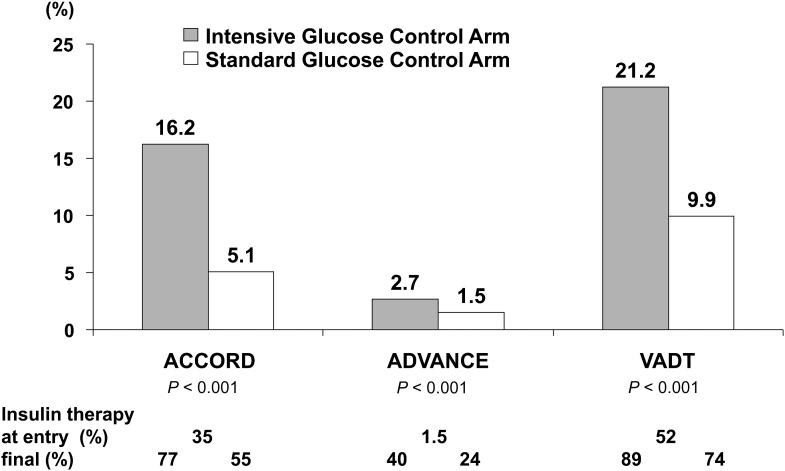
“HYPOGLYCEMIA IN ACCORD, ADVANCE, AND VADT—CVD is the predominant cause of death in patients with type 2 diabetes, and reducing the risk of CVD has recently been the focus of three large glucose-lowering trials: ACCORD (Action to Control Cardiovascular Risk in Diabetes) (4), ADVANCE (Action in Diabetes and Vascular Dis…”
BackgroundResultIntensive versus Conventional Glucose Control in Critically Ill Patients
(2009) · New England Journal of Medicine · doi:10.1056/nejmoa0810625 · Cited by 5,119 · cited 2×
“In a large multicenter randomized controlled trial in Australia (NICESUGAR) (35), the relationship of glycemic control to outcome from critical illness was examined in patients being treated in intensive care units.”
BackgroundGlucose control and vascular complications in veterans with type 2 diabetes
Duckworth, W., Abraira, C., Moritz, T., Reda, D., Emanuele, N., Reaven, P. D., Zieve, F. J., Marks, J., Davis, S. N., Hayward, R., et al. (2009) · New England Journal of Medicine · doi:10.1056/nejmoa0808431 · Cited by 4,762 · cited 1×
“HYPOGLYCEMIA IN ACCORD, ADVANCE, AND VADT—CVD is the predominant cause of death in patients with type 2 diabetes, and reducing the risk of CVD has recently been the focus of three large glucose-lowering trials: ACCORD (Action to Control Cardiovascular Risk in Diabetes) (4), ADVANCE (Action in Diabetes and Vascular Dis…”
BackgroundA molecular basis for cardiac arrhythmia: HERG mutations cause long QT syndrome
Curran, M. E., Splawski, I., Timothy, K. W., Vincen, G. M., Green, E. D., & Keating, M. T. (1995) · Cell · doi:10.1016/0092-8674(95)90358-5 · Cited by 2,259 · cited 1×
“Those affected have abnormal cardiac repolarization represented by prolonged QT on their electrocardiograms and an increased risk of sudden death due to cardiac arrhythmias (26).”
BackgroundSevere hypoglycemia and risks of vascular events and death
Zoungas, S., Patel, A., Chalmers, J., de Galan, B. E., Li, Q., Billot, L., Woodward, M., Ninomiya, T., Neal, B., MacMahon, S., et al. (2010) · New England Journal of Medicine · doi:10.1056/nejmoa1003795 · Cited by 1,471
Self-citationIntensive glucose control and macrovascular outcomes in type 2 diabetes
Turnbull, F. M., Abraira, C., Anderson, R. J., Byington, R. P., Chalmers, J. P., Duckworth, W. C., Evans, G. W., Gerstein, H. C., Holman, R. R., Moritz, T. E., et al. (2009) · Diabetologia · doi:10.1007/s00125-009-1470-0 · Cited by 1,189
Griesdale, D. E. G., de Souza, R. J., van Dam, R. M., Heyland, D. K., Cook, D. J., Malhotra, A., Dhaliwal, R., Henderson, W. R., Chittock, D. R., Finfer, S., et al. (2009) · Canadian Medical Association Journal · doi:10.1503/cmaj.090206 · Cited by 1,096 · cited 1×
“Two meta-analyses (36,37) have shown that strict glycemic control in seriously ill patients does not improve overall survival but reduces the risk of septicemia in surgical intensive care units at the expense of a fivefold higher incidence of hypoglycemia (13.”
BackgroundBonds, D. E., Miller, M. E., Bergenstal, R. M., Buse, J. B., Byington, R. P., Cutler, J. A., Dudl, R. J., Ismail-Beigi, F., Kimel, A. R., Hoogwerf, B., et al. (2010) · BMJ · doi:10.1136/bmj.b4909 · Cited by 933
Survival as a function of HbA1c in people with type 2 diabetes: a retrospective cohort study
Currie, C. J., Peters, J. R., Tynan, A., Evans, M., Heine, R. J., Bracco, O. L., Zagar, T., & Poole, C. D. (2010) · The Lancet · doi:10.1016/s0140-6736(09)61969-3 · Cited by 874 · cited 2×
“A study using the large U.K. General Practice Research Database (39) examined the relationship between HbA1c and survival using data collected for .20 years from 48,000 patients with type 2 diabetes.”
Research works printed but not linked: 1
- Graveling AJ Frier BM Does hypoglycaemia cause cardiovascular events? Br J Diabetes Vasc Dis 2010; 10: 5– 13
Cited by
Items 301–380 of 380
Demirtaş, A. O., İçen, Y. K., Koca, H., Sümbül, H. E., Demirtaş, D., Köseoğlu, Z., & Koç, M. (2019) · Journal of Interventional Cardiac Electrophysiology · doi:10.1007/s10840-019-00549-4 · Cited by 2
Kotsa, K., Kolokas, K., Koufakis, T., Avramidis, I., Gerou, S., Chatzidimitriou, M., & Kazakos, K. (2020) · Indian Journal of Pharmacology · doi:10.4103/ijp.ijp_80_19 · Cited by 1
A nátrium-glükóz-kotranszporter-2-gátlók a diabetes mellitus kezelésén túl
Szekeres, Z. J., Stolcz, T., & Szabados, E. (2020) · Cardiologia Hungarica · doi:10.26430/chungarica.2020.50.5.372 · Cited by 2
“A pozitív metabolikus hatáshoz hozzátartozik továbbá, hogy az SGLT2-gátlók csak ritkán okoznak hypoglykaemiát, amely köztudottan fokozott szimpatikus aktivitáshoz, magasabb pulzusszámhoz és perifériás szisztolés vérnyomáshoz, aritmiahajlamhoz vezethet (35).”
CPD article: Sedation and general anaesthesia of the portosystemic shunt patient
Tonge, M. E. (2021) · Companion animal · doi:10.12968/coan.2020.0103 · Cited by 1
(2016) · Cambridge University Press eBooks · doi:10.1017/cbo9781139519557.004 · Cited by 1
Hvid, H., Brand, C. L., Hummelshøj, T., Jensen, S., Bouman, S. D., Bowler, A. N., Poulsen, B. R., Tiainen, P., Åkertröm, T., Demozay, D., et al. (2022) · Diabetologia · doi:10.1007/s00125-022-05828-w · Cited by 1
Gebremichael, G. B., & Zemichael, T. M. (2019) · Research Square · doi:10.21203/rs.2.11704/v1 · Cited by 1
“In addition to causing distress for patients, severe hypoglycemia is associated with cardiac arrhythmias, cardiac ischemia, seizures, brain dam age, and death (5-7).”
BackgroundGebremichael, G. B., & Zemichael, T. M. (2019) · Research Square · doi:10.21203/rs.2.11704/v2 · Cited by 1
“In addition to causing distress for patients, severe hypoglycemia is associated with cardiac arrhythmias, cardiac ischemia, seizures, brain dam age, and death (5-7).”
BackgroundHaas, A. V., Koefoed, A. W., Celli, J., Bonyhay, I., White, J., Meyer, K. M., Easly-Merski, R. M., Heydarpour, M., Adler, G. K., & Freeman, R. (2025) · The Journal of Clinical Endocrinology & Metabolism · doi:10.1210/clinem/dgae919
Glucosensing, Hypoglycemia, and the Brain
Reno, C. M. (2013) · Open Scholarship Institutional Repository (Washington University in St. Louis) · doi:10.7936/k7xw4gs6
Mechanisms of hypoglycaemia related sudden cardiac death in type 2 diabetes mellitus
Chow, E. (2015) · White Rose eTheses Online (University of Leeds, The University of Sheffield, University of York)
CVD and type 2 diabetes: The nurse prescriber's role
Bostock-Cox, B. (2014) · British Journal of Cardiac Nursing · doi:10.12968/bjca.2014.9.7.325
Ong, M. L., Teede, H. J., Zoungas, S., & Wong, J. L. A. (2013) · Frontiers in Endocrinology · doi:10.3389/fendo.2013.00168
“This finding has been extended to patients hospitalized with ACS, where severe hypoglycemia was a major predictor of cardiovascular death (8).”
BackgroundEditorial Adding a DPP-4 inhibitor to metformin therapy may be safer than you think
Aravind, S. R. (2014)
Hypoglycaemia: patient inconvenience or serious cardiovascular risk?
(2014) · British Journal of Cardiology · doi:10.5837/bjc.2014.031
Variabilité glycémique et hyperglycémie postprandiale : quelle importance au-delà del’HbA1c?
Monnier, L., Colette, C., Wojtusciszyn, A., & Dejager, S. (2015) · Médecine des Maladies Métaboliques · doi:10.1016/s1957-2557(15)30260-1
Cardiac implications of drugs used to treat type 2 diabetes
Bostock-Cox, B. (2016) · British Journal of Cardiac Nursing · doi:10.12968/bjca.2016.11.4.168
Mechanism of Hypoglycemia-Associated Cardiovascular Diseases
Kang, Y. M., & Lee, W. J. (2016) · Journal of Korean Diabetes · doi:10.4093/jkd.2016.17.1.24
“kr 27 로 유발하거나 자연적으로 발생하는 저혈당 상황 모두에서 이 재분극 시기가 지연되어 부정맥에 더 취약한 상태가 된 다[14].”
Parry, H. (2015) · Discovery Research Portal (University of Dundee)
Defective Counterregulation and Hypoglycemia Unawareness in
Reno, C. M., Litvin, M., Clark, A. L., & Fisher, S. J. (2013)
Type 1 diabetes & cardiovascular disease
Kreider, K. E., & Padilla, B. I. (2016) · The Nurse Practitioner · doi:10.1097/01.npr.0000497007.02127.fa · Cited by 1
Glucose lowering therapy of type 2 diabetes – the art of possible
Зуєв, К. О., & Когут, Д. Г. (2016) · Clinical endocrinology and endocrine surgery · doi:10.24026/1818-1384.4(56).2016.87232
Impacto cardiovascular de la hipoglicemia
Espitia, M. D. L. (2017) · Revista Colombiana de Cardiología · doi:10.1016/j.rccar.2016.12.002 · Cited by 2
DIABETES AND OBESITY: EVIDENCE FOR A CARDIOMYOPATHY
Ashrafi, R. (2016) · University of Liverpool · doi:10.17638/03003030
Oral diabetes treatments and cardiovascular disease
Saulnier, P., & Hadjadj, S. (2018) · doi:10.1093/med/9780198784906.003.0040_update_001
Erkrankungen des Stoffwechsels ∗ ∗Überarbeitet und aktualisiert von Dr. Walter Burghardt
Kasper, H. (2014) · Elsevier eBooks · doi:10.1016/b978-3-437-42013-9.00004-x
“Is There a Doctor on Board?” The Plight of the In-Flight Orthopaedic Surgeon
Scollan, J. P., Lee, S.-Y., Shah, N. V., Diebo, B. G., Paulino, C. B., & Naziri, Q. (2019) · JBJS Reviews · doi:10.2106/jbjs.rvw.18.00181
Treatment of Patients with Heart failure and Type 2 Diabetes: a review of the literature
Fabbri, E., & Nizzoli, M. (2019) · Italian Journal of Medicine · doi:10.4081/itjm.2019.1184
Bahrmann, A., & Meyhöfer, S. (2020) · e Curriculum Innere Medizin · doi:10.1007/s40531-020-00038-8
Nzesseu, V. L., Kouam, C. K., Tamokou, J.-D.-D., & Kuiate, J. (2020) · World Journal of Cardiovascular Surgery · doi:10.4236/wjcs.2020.109020
Watts, S. B. (2020) · UVic’s Research and Learning Repository (University of Victoria)
Noh, R. M., Graveling, A. J., Lang, N. N., White, A. C., Lee, K. K., Mills, N. L., Newby, D. E., Lang, C. C., & Frier, B. M. (2021) · Endocrinology Diabetes & Metabolism · doi:10.1002/edm2.258
Self-citation72/w mit Kollaps nach Schwindel und starkem Schwitzen: Vorbereitung auf die Facharztprüfung: Fall 6
Meyhöfer, S. M. (2021) · Der Internist · doi:10.1007/s00108-021-00944-y
Hypoglycemia In The Emergency, But What Awaits Us For Cardiac Risks In The Future?Preprint
Akhan, O., & Ardahanlı, İ. (2021) · doi:10.22541/au.161003343.32075984/v1
Hyperinsulinemic hypoglycemia, clinical considerations and a case report of a novel GCK mutation
Kraslow, M., Miller, A., Memon, R., Pinault, L. F., Steinle, N., & Spanakis, I. (2021) · Journal of Clinical and Translational Endocrinology Case Reports · doi:10.1016/j.jecr.2021.100084 · Cited by 1
72/w mit Kollaps nach Schwindel und starkem Schwitzen: Vorbereitung auf die Facharztprüfung: Fall 6
Meyhöfer, S. M. (2021) · Der Internist
Attitudes and opinions of clinicians toward severe hypoglycemia and its management
Occhipinti, M. A. (2020) · The Journal of AMD · doi:10.36171/jamd20.23.4.11
Mertens, M., Dauben, L., Roden, M., & Müssig, K. (2021) · Diabetes aktuell · doi:10.1055/a-1645-9436
Evolution in Understanding of Cardiovascular Outcomes in Diabetes
Maheshwari, A. (2021) · Journal of Diabetes Mellitus · doi:10.4236/jdm.2021.115030
“Resulting in ST wave alterations with increasing QT interval and cardiac repolarization [13].”
Background93/w mit plötzlichem Unwohlsein, Verwirrtheit und Kaltschweißigkeit
Meyhöfer, S. (2022) · Der Internist · doi:10.1007/s00108-021-01254-z
Pituitary Macroadenoma: An Unlikely Cause of Hypoglycaemia: A Case Report
Lamba, S., Kaur, R. D., Rawal, M., Aggarwal, S., & Singh, N. (2021) · Indian Journal of Scientific Research · doi:10.32606/ijsr.v12.i1.00024
Thérapeutique des désordres glycémiques
(2019) · Elsevier eBooks · doi:10.1016/b978-2-294-75889-8.00007-5
Noh, R. M., Graveling, A. J., Lang, N. N., White, A., Lee, K. K., Mills, N. L., Newby, D. E., Lang, C. C., & Frier, B. M. (2020) · doi:10.21203/rs.3.rs-123770/v1
Self-citationNoh, R. M., Graveling, A. J., Lang, N. N., White, A. C., Lee, K. K., Mills, N. L., Newby, D. E., Lang, C. C., & Frier, B. M. (2020) · doi:10.21203/rs.3.rs-31359/v1
“Page 3/17 Mechanisms that could promote adverse effects of hypoglycemia on cardiovascular function have been proposed (10).”
BackgroundResultSelf-citationCha, S., Yun, J., Kim, G.-H., & Ahn, Y. (2022) · Research Square · doi:10.21203/rs.3.rs-1568437/v1
Paneni, F., & Cosentino, F. (2015) · Springer eBooks · doi:10.1007/978-3-319-17762-5_8
Noh, R. M., Graveling, A. J., Lang, N. N., White, A. C., Lee, K. K., Mills, N. L., Newby, D. E., Lang, C. C., & Frier, B. M. (2020) · doi:10.21203/rs.3.rs-31359/v2
Self-citationHipszer, B. R., Heitz, J. W., & Joseph, J. I. (2016) · Cambridge University Press eBooks · doi:10.1017/cbo9781139519557.017
Sreemantula, G. (2012) · doi:10.1007/978-1-908517-81-4_3
Clinical practice guidelines update 2022: Focus on diabetes
Cornell, S. A. (2022) · Pharmacy Today · doi:10.1016/j.ptdy.2022.05.022
Horton, W. B., Hannah, E. E., Morales, F. L., Chaney, C., Krahn, K. N., Chernyavskiy, P., Clark, M., & Moorman, J. R. (2022) · Critical Care Medicine · doi:10.1097/ccm.0000000000005713 · Cited by 1
Hypoglycemia: Diagnosis, Management, and Prevention
Faradji, R. N., Uribe-Wiechers, A. C., & de la Maza, E. S. (2023) · Springer eBooks · doi:10.1007/978-3-031-25519-9_45 · Cited by 2
Minimizing Hypoglycemia with Insulin Therapy: The “THINK” Strategy
Priya, G., & Grewal, E. (2022) · Chronicle of Diabetes Research and Practice · doi:10.4103/cdrp.cdrp_9_22
Perfil de seguridad y beneficios de los fármacos antidiabéticos en cuanto al riesgo cardiovascular
Dulcey, L., Therán, J. S., Cabrera, V., Parales, R., Caltagironne, R., Blanco, E., & Ciliberti, M. (2023) · Acta Bioclínica · doi:10.53766/acbio/2023.13.26.11
Iqbal, A., Chow, E., Jones, T. W., & Heller, S. R. (2024) · Wiley eBooks · doi:10.1002/9781119697473.ch40
Self-citationДанилова, Л. И., Короленко, Г. Г., Lushchik, M. L., Романовский, А. А., Бурко, И. И., & Исачкина, О. Н. (2023) · Рецепт · doi:10.34883/pi.2023.26.5.014
Gölz, S., Eckert, A. J., Wosch, F. J., Hugenberg, I., Karl, M., Seufert, J., Nun-Boetzel, H., Wagner, S., Weber-Lauffer, R., Milek, K., et al. (2024) · Diabetes aktuell · doi:10.1055/a-2272-4407
Merzlova, P. Y., Bulgakova, S. V., Kurmaev, D. P., & Treneva, E. V. (2025) · Science and Innovations in Medicine · doi:10.35693/sim626840
Sekiguchi, S., Ohta, R., & Sano, C. (2024) · Cureus · doi:10.7759/cureus.72682
Bader, S., Ashfaq, A., Mussa, B. M., & Abusanana, S. (2025) · Research Square · doi:10.21203/rs.3.rs-6563191/v1
Arrhythmias in patients with diabetes
Pabis, P., Radziewicz, A., Krawiec, M., Mazurek, M., Wyskida, K., Średniawa, B., & Jędrzejczyk‐Patej, E. (2025) · In a good rythm · doi:10.5604/01.3001.0055.0130
Electrocardiographic Changes of Sinoatrial Dysfunction in Hypoglycemia: A Case Report
López, L. A. R., Águila, Y. G., Esquerra, A. G., Cárdenas, M. D., & Leandro, D. C. (2025) · South Health and Policy · doi:10.56294/shp2024398
Heo, W. Y., Ryu, S. J., Lee, D. H., Lee, B. K., Jung, Y. H., & Jeung, K. W. (2025) · Journal of Clinical Medicine · doi:10.3390/jcm14207354 · Cited by 1
“Hypoglycemia also pre-cipitates cardiac arrhythmias and sudden death via oxidative stress, QT prolongation, and myocardial injury [12,13].”
UK Resuscitation Advanced Life Support Guidelines: Should the Paradigm be Extended?
Jude, E. B., Saluja, S., Mannan, F., Heagerty, A. M., & Frier, B. M. (2025) · Diabetes Therapy · doi:10.1007/s13300-025-01813-9
“Thus, while intranasal and ready-to-use glucagon formulations improve ease of administration, intravenous dextrose remains the fastest and most effective option for rapidly correcting hypoglycaemia, particularly in emergencies [11].”
InfluentialSelf-citationGiri, S., Patil, S. S., Ganganahalli, P., Udgiri, R. S., & Senapati, A. (2025) · International Journal of Research in Medical Sciences · doi:10.18203/2320-6012.ijrms20253971
Glucose deprivation impairs lipid tolerance related to mitophagy disorder in cardiomyocytes
Huang, L., Huang, C., Xiao, Z., Chen, X., Zhan, M., Yao, S., Zhu, S., Chen, Z., & Liu, L. (2026) · Molecular and Cellular Endocrinology · doi:10.1016/j.mce.2026.112804
Cha, S.-A., Yun, J.-S., Kim, G.-H., & 안유배 (2022) · Figshare · doi:10.6084/m9.figshare.21383101
Hsu, J.-C., Yang, Y.-Y., Chuang, S.-L., Yu, C., & Lin, L.-Y. (2021) · Figshare · doi:10.6084/m9.figshare.15047632
Morar-Stan, A., Dobrotă, L., Radutu, A., & Domnariu, C. D. (2025) · medRxiv · doi:10.64898/2025.12.19.25342708
Cardiovascular Complications of Hypoglycemia
Opi, T., Frishman, W. H., & Aronow, W. S. (2026) · Cardiology in Review · doi:10.1097/crd.0000000000001165 · Cited by 1
Type 1 Diabetes: Pathophysiology and Treatment Considerations for Cardiovascular Risk and Disease
Tommerdahl, K. L., & Bjornstad, P. (2026) · Elsevier eBooks · doi:10.1016/b978-0-323-87862-3.00005-7
Bentzel, S., Andersson, T., Ljungman, C. E. A., Johansson, J. S. M., Hjerpe, P., Schiöler, L., Ravn‐Fischer, A., Boström, K. B., Kahan, T., & Mourtzinis, G. (2026) · American Journal of Preventive Cardiology · doi:10.1016/j.ajpc.2026.101573
“In addition, hypoglycemia has earlier been linked to increase risk for AF in adults with T2D [38] and low glucose levels could contribute to AF through mechanisms such as increased sympathetic activity, catecholamine surge and inflammation [39].”
Zaman, S., Unutmaz, M., Özensoy, H. S., & Gürü, S. (2026) · Archives of Current Medical Research · doi:10.47482/acmr.1792143
Владимировна, Д. С. (2026) · Meditsinskiy sovet = Medical Council · doi:10.21518/ms2026-133
Bader, S., Ashfaq, A., Mussa, B. M., Alawadi, F., Bhamidimarri, P. M., Al-Abadla, Z., & Abusnana, S. (2026) · Acta Neurologica Scandinavica · doi:10.1155/ane/6400429
Verdoia, M., Nardin, M., Ciliberti, G., Leverone, M., Paternoster, J., Faraguna, A., Barnoffi, E., Lorusso, D., Ciliberti, G., Piva, T., et al. (2026) · Diabetology · doi:10.3390/diabetology7080154
Akute diabetische Stoffwechselentgleisung
Mertens, M., Dauben, L., Roden, M., & Müssig, K. (2026) · Diabetologie und Stoffwechsel · doi:10.1055/a-2769-4961
Cardiotropic effects of hypoglycemia in patients with diabetes mellitus
Салухов, В. В., Феофанова, С. Г., Владимировна, П. Е., & Zaslavskaya, E. L. (2026) · The future of medicine · doi:10.67666/3033-9057-2026-1-2-89-101
SUSMITHA, G., & Gandhimathi, R. (2026) · Toxicology International · doi:10.18311/ti/2026/v33i3/50592
Metadata
- Authors
- Frier, B. M., Schernthaner, G., & Heller, S. R.
- Affiliations
- Edinburgh Royal Infirmary (GB)
- Krankenanstalt Rudolfstiftung der Stadt Wien (AT)
- Northern General Hospital (GB)
- Corresponding author
- Schernthaner, Guntram
- Venue
- Diabetes Care
- Publisher
- American Diabetes Association
- Published
- 2011-04-22
- Volume
- 34
- Issue
- Supplement_2
- Pages
- S132-S137
- ISSN
- 0149-5992 (ISSN-L)
- 1935-5548
- PMC
- PMC3632150
- OpenAlex
- W2004870840
- Cited by
- 381
- References
- 49
- Citations by year
- 2026: 12 · 2025: 18 · 2024: 22 · 2023: 16 · 2022: 18 · 2021: 32 · 2020: 24 · 2019: 35 · 2018: 26 · 2017: 24 · 2016: 31 · 2015: 43 · 2014: 34 · 2013: 29 · 2012: 15
- FWCI
- 3.57
- Type
- journal article
- Language
- en
- Open access
- hybrid
- doi.org
- Licence
- Locations
- Diabetes Care (publishedVersion, cc-by-nc-nd)
- Europe PMC (PubMed Central) (publishedVersion, cc-by-nc-nd)
- PubMed Central (publishedVersion, cc-by-nc-nd)
- PubMed (publishedVersion)
- White Rose Research Online (University of Leeds, The University of Sheffield, University of York) (acceptedVersion)
- Topics
- Health Sciences › Medicine › Endocrinology, Diabetes and Metabolism › Diabetes Management and Research
- Health Sciences › Medicine › Endocrinology, Diabetes and Metabolism › Diabetes Treatment and Management
- Health Sciences › Medicine › Endocrinology, Diabetes and Metabolism › Diabetes, Cardiovascular Risks, and Lipoproteins
- Keywords
- hypoglycemia, cardiovascular risk, type 2 diabetes, insulin therapy, severe hypoglycemia, myocardial infarction, stroke, autonomic responses, sympathoadrenal system, epinephrine, glycemic control, cardiovascular disease, mortality
- MeSH terms
- Cardiovascular Diseases, Humans, Hypoglycemia, Hypoglycemic Agents, Insulin
About these checks
Registry, retraction, Cites and statistics results are computed, not judged, with one exception: a printed reference that no index lists is read once by a model before it counts as a citation error. Claims are extracted by a model and kept only when their quote appears verbatim in the text; each cited source is then checked, with a model’s help, for whether it says what the claim relies on. Those verdicts can be wrong — read the claim’s quote and the cited source before relying on one.
Statistics and arithmetic are recomputed, not judged.
Confidence bands are shown only for fields calibrated on our annotated test set. None is calibrated yet, so no band is shown.
What counts as a claim ›How we measure confidence ›How we check this ›
Are you an author, or do you see a problem with this page? Request a review
Data sources
Bibliographic data: Semantic Scholar, OpenAlex, Crossref.
Contains information from the Semantic Scholar Academic Graph Datasets, made available under the ODC Attribution License (ODC-BY 1.0).
Semantic Scholar’s data is described in: Kinney, R., et al. (2023). The Semantic Scholar Open Data Platform. arXiv:2301.10140.
