

The DOI matches its Crossref record; 1 of the 1 references it cites were found in a registry or an index.
The efficacy of CRISPR-Cas9-mediated induction of the CCR5delta32 mutation in the human embryo
Abstract
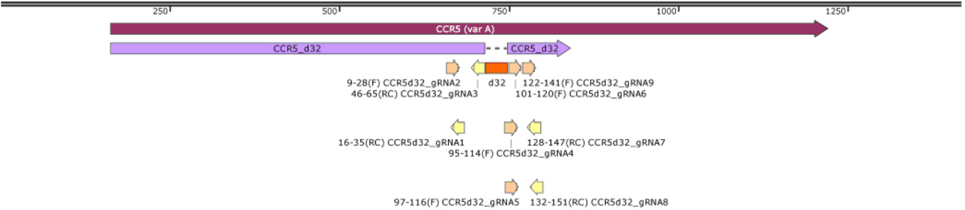
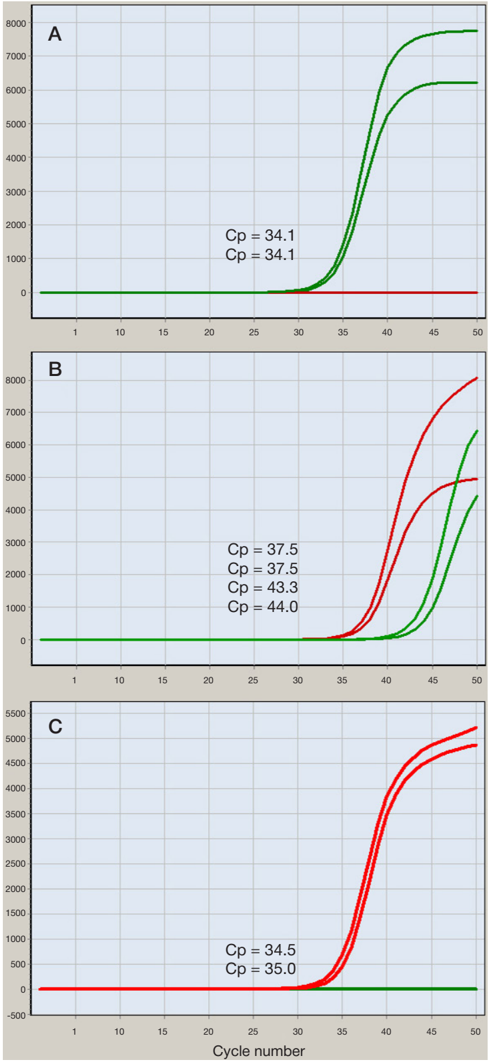
The editing of the CCR5 gene in the CD4+ T cell genome is an effective way of preventing HIV-1 proliferation. Very similar strategies can be used to protect the fetus of an HIV-infected female showing a weak response to antiretroviral therapy. Inducing the “natural” CCR5delta32 mutation in a zygote may guard the fetus against HIV infection both in utero and at birth. In this study, we optimize the CRISPR-Cas9 system to induce a homozygous 32-nt deletion similar to the naturally occurring CCR5delta32 allele in the human zygote at the S-phase. Edits were done in the abnormal tripronuclear zygotes unsuitable for IVF. Sixteen tripronuclear zygotes in the S-phase obtained from WT CCR5 donors were injected with an original CRISPR-Cas9 system designed by the authors. Upon injection, the zygotes were transferred into the Blastocyst (COOK) embryo culture medium and cultured for 5 days in a CO2 incubator until blastocysts were formed (approximately 250 cells). Eight zygotes that successfully developed into blastocysts were PCR-genotyped to analyze the efficacy of genome editing. Of 16 zygotes injected with CRISPR-Cas9, only 8 reached the blastocyst stage. PCR genotyping revealed the absence of the initial WT CCR5 variant in 5 of 8 blastocysts (100% CCR5delta32 homozygous). Two had about 3% and one about 20% of WT CCR5 mosaicism. This leads us to conclude that the efficacy of the proposed CRISPR-Cas9 system for the induction of the CCR5delta32 mutation in human embryos is very high producing more than 50% of completely modified embryos.
Overview
The claims and statistics of this paper haven’t been checked yet.
Run the check — free, no account needed. It reads the open-access text and checks the sources it cites.
Integrity signals
Registry
Cites
Statistics
Figures
Verification
Claims the paper makes
The claims and statistics of this paper haven’t been checked yet.
Run the check — free, no account needed. It reads the open-access text and checks the sources it cites.
Claims other papers make about this one
Each is checked against this paper’s own text: does it say what the citing paper says it does?
In the citing paper
“As in the experiments of He, he was planning to edit the CCR5 gene, and the preliminary work from his laboratory on non-viable embryos was published in the Bulletin of the Russian National Research Medical University [59].”
From CRISPR–Cas9: A History of Its Discovery and Ethical Considerations of Its Use in Genome Editing (2022) · cites this paper as [59]
Self-check
Percentages, sums and reported differences re-computed from the paper’s own numbers.
The self-check needs the paper’s full text.
Citations
Cites
Genome editing reveals a role for OCT4 in human embryogenesis
Fogarty, N. M. E., McCarthy, A., Snijders, K. E., Powell, B. E., Kubikova, N., Blakeley, P., Lea, R., Elder, K., Wamaitha, S. E., Kim, D., et al. (2017) · Nature · doi:10.1038/nature24033 · Cited by 392
Research works printed but not linked: 14
- Yu S, Yao Y, Xiao H, Li J, Liu Q, Yang Y, et al. Simultaneous Knockout of CXCR4 and CCR5 Genes in CD4+ T Cells via CRISPR-Cas9 Confers Resistance to Both X4- and R5-Tropic Human Immunodeficiency Virus Type 1 Infection. Hum Gene Ther. 2018 Jan; 29 (1): 51–67. DOI: 10.1089/hum.2017.032 · DOI
- Xu L, Yang H, Gao Y, Chen Z, Xie L, Liu Y, Liu Y, Wang X, Li H, Lai W, He Y, Yao A, Ma L, Shao Y, Zhang B, Wang Ch, Chen H, and Deng H. CRISPR-Cas9-Mediated CCR5 Ablation in Human Hematopoietic Stem/Progenitor Cells Confers HIV-1 Resistance In Vivo. Mol Ther. 2017 Aug 2; 25 (8): 1782–9. DOI: 10.1016/j.ymthe.2017.04.027 · DOI
- Haworth KG, Peterson CW, Kiem HP. CCR5-edited gene therapies for HIV cure: Closing the door to viral entry. Cytotherapy. 2017 Nov; 19 (11): 1325–38. DOI: 10.1016/j.jcyt.2017.05.013 · DOI
- Liu Z, Chen S, Jin X, Wang Q, Yang K, Li C, et al. Genome editing of the HIV co-receptors CCR5 and CXCR4 by CRISPR-Cas9 protects CD4+ T cells from HIV-1 infection. Cell Biosci. 2017 Sep 9; (7): 47. DOI: 10.1186/s13578-017-0174-2 · DOI · Paper page
- Nerys-Junior A, Braga-Dias LP, Pezzuto P, Cotta-de-Almeida V, Tanuri A. Comparison of the editing patterns and editing efficiencies of TALEN and CRISPR-Cas9 when targeting the human CCR5 gene. Genet Mol Biol. 2018 Jan-Mar; 41 (1): 167– 79. DOI: 10.1590/1678-4685-GMB-2017-0065 · DOI
- Makokha EP, Songok EM, Orago AA, Koech DK, Chemtai AK, Kobayashi N, et al. Maternal immune responses and risk of infant infection with HIV-1 after a short course Zidovudine in a cohort of HIV-1 infected pregnant women in rural Kenya. East Afr Med J. 2002 Nov; 79 (11): 567–73. · DOI
- French CE, Tookey PA, Cortina-Borja M, de Ruiter A, Townsend CL, Thorne C. Influence of short-course antenatal antiretroviral therapy on viral load and mother-to-child transmission in subsequent pregnancies among HIV-infected women. Antivir Ther. 2013; 18 (2): 183–92. DOI: 10.3851/IMP2327 · DOI
- Liang P, Xu Y, Zhang X, Ding C, Huang R, Zhang Z, et al. CRISPR-Cas9-mediated gene editing in human tripronuclear zygotes. Protein Cell. 2015 May; 6 (5): 363–72. Epub 2015 Apr 18. DOI: 10.1007/s13238- 015-0153-5 · DOI · Paper page
- Tang L, Zeng Y, Du H, Gong M, Peng J, Zhang B, et al. CRISPR-Cas9-mediated gene editing in human zygotes using Cas9 protein. Mol Genet Genomics. 2017 Jun; 292 (3): 525–33. DOI: 10.1007/s00438-017-1299-z. · DOI
- Ma H, Marti-Gutierrez N, Park S-W, Wu J, Lee Y, Suzuki K, Koski A, Ji D, Hayama T, Ahmed R, Darby H, Van Dyken C, Li Y, Kang E, Park AR, Kim D, Kim ST, Gong J, Gu Y, Xu X, Battaglia D, Krieg SA, Lee DM, et. al Correction of a pathogenic gene mutation in human embryos. Nature. 2017 Aug 24; 548 (7668): 413–19. DOI: 10.1038/nature23305 · DOI
- Liang P, Ding C, Sun H, Xie X, Xu Y, Zhang X, et al. Correction of β-thalassemia mutant by base editor in human embryos. Protein Cell. 2017 Nov; 8 (11): 811–22. DOI: 10.1007/s13238-017-0475-6 · DOI
- Joris H, Nagy Z, Van de Velde H, De Vos A, Van Steirteghem A. Intracytoplasmic sperm injection: laboratory set-up and injection procedure. Hum Reprod. 1998 Apr; 13 Suppl 1: 76–86. · DOI
- Kofiadi IA, Rebrikov DV, Trofimov DY, Alexeev LP, Khaitov RM. Allelic distribution of the CCR5, CCR2, and SDF1 gene polymorphisms associated with HIV-1/AIDS resistance in Russian populations. Dokl Biol Sci. 2007 Jul-Aug; (415): 320–3. · DOI
- Kang X, He W, Huang Y, Yu Q, Chen Y, Gao X, Sun X, Fan Y. Introducing precise genetic modifications into human 3PN embryos by CRISPR/Cas-mediated genome editing. J Assist Reprod Genet. 2016 May; 33 (5):581-588. DOI: 10.1007/s10815-016-0710-8 · DOI
Cited by
Sorted by citations
CRISPR–Cas9: A History of Its Discovery and Ethical Considerations of Its Use in Genome Editing
Gostimskaya, I. (2022) · Biochemistry (Moscow) · doi:10.1134/s0006297922080090 · Cited by 224
Metadata
- Authors
- Kodyleva, T. A., Kirillova, A. O., Tyschik, E. A., Makarov, V. V., Khromov, A. V., Guschin, V. A., Abubakirov, A. N., Rebrikov, D. V., & Sukhikh, G. T.
- Affiliations
- Kulakov National Medical Research Center for Obstetrics, Gynecology and Perinatology, Moscow
- Lomonosov Moscow State University, Moscow
- Kulakov National Medical Research Center for Obstetrics, Gynecology and Perinatology, Moscow; Pirogov Russian National Research Medical University, Moscow
- Venue
- Bulletin of Russian State Medical University
- Published
- 2018-10-16
- Issue
- (4)2018
- Pages
- 70-74
- ISSN
- 2500-1094
- 2542-1204
- Cited by
- 3
- References
- 1
About these checks
Registry, retraction, Cites and statistics results are computed, not judged, with one exception: a printed reference that no index lists is read once by a model before it counts as a citation error. Claims are extracted by a model and kept only when their quote appears verbatim in the text; each cited source is then checked, with a model’s help, for whether it says what the claim relies on. Those verdicts can be wrong — read the claim’s quote and the cited source before relying on one.
Statistics and arithmetic are recomputed, not judged.
Confidence bands are shown only for fields calibrated on our annotated test set. None is calibrated yet, so no band is shown.
What counts as a claim ›How we measure confidence ›How we check this ›
Are you an author, or do you see a problem with this page? Request a review
