

Novel insights into genetics and clinics of the HNF1A-MODY
Open accessThe DOI matches its Crossref record; 205 of the 205 references it cites were found in a registry or an index.
Abstract
MODY (Maturity Onset Diabetes of the Young) is a type of diabetes resulting from a pathogenic effect of gene mutations. Up to date, 13 MODY genes are known. Gene HNF1A is one of the most common causes of MODY diabetes (HNF1A-MODY; MODY3). This gene is polymorphic and more than 1200 pathogenic and non-pathogenic HNF1A variants were described in its UTRs, exons and introns. For HNF1A-MODY, not just gene but also phenotype heterogeneity is typical. Although there are some clinical instructions, HNF1A-MODY patients often do not meet every diagnostic criteria or they are still misdiagnosed as type 1 and type 2 diabetics. There is a constant effort to find suitable biomarkers to help with in distinguishing of MODY3 from Type 1 Diabetes (T1D) and Type 2 Diabetes (T2D). DNA sequencing is still necessary for unambiguous confirmation of clinical suspicion of MODY. NGS (Next Generation Sequencing) methods brought discoveries of multiple new gene variants and new instructions for their pathogenicity classification were required. The most actual problem is classification of variants with uncertain significance (VUS) which is a stumbling-block for clinical interpretation. Since MODY is a hereditary disease, DNA analysis of family members is helpful or even crucial. This review is updated summary about HNF1A-MODY genetics, pathophysiology, clinics functional studies and variant classification.
Overview
The claims and statistics of this paper haven’t been checked yet.
Free: it reads the open-access text and checks the first 5 claims that cite a source we can check. Create a free account to check every claim.
Integrity signals
Registry
Cites
Statistics
Figures
Verification
Claims the paper makes
The claims and statistics of this paper haven’t been checked yet.
Free: it reads the open-access text and checks the first 5 claims that cite a source we can check. Create a free account to check every claim.
Claims other papers make about this one
Each is checked against this paper’s own text: does it say what the citing paper says it does?
The source backs part of the claim, not all of it — or backs it for a different population, condition or comparison.
In the citing paper
“It is inherited in an autosomal dominant pattern with abnormalities in at least 13 genes on different chromosomes identi fi ed to date (162).”
From 2. Diagnosis and Classification of Diabetes: Standards of Care in Diabetes—2024 (2024) · cites this paper as [162]
Experimental — accuracy not yet measured
Self-check
Percentages, sums and reported differences re-computed from the paper’s own numbers.
The self-check needs the paper’s full text.
Citations
Cites
Richards, S., Aziz, N., Bale, S., Bick, D., Das, S., Gastier-Foster, J., Grody, W. W., Hegde, M., Lyon, E., Spector, E., et al. (2015) · Genetics in Medicine · doi:10.1038/gim.2015.30 · Cited by 32,594 · cited 2×
“Therefore, based on the instructions of American College of Medical Genetics and Genomics (ACMG), the more appropriate term is “variant” and it can be classified as pathogenic (class 5), likely pathogenic (class 4), variant with uncertain significance (class 3), likely benign (class 2) and benign (class 1) (Richards e…”
BackgroundMethodAnalysis of protein-coding genetic variation in 60,706 humans
Exome Aggregation Consortium, Lek, M., Karczewski, K. J., Minikel, E. V., Samocha, K. E., Banks, E., Fennell, T., O’Donnell-Luria, A. H., Ware, J. S., Hill, A. J., et al. (2016) · Nature · doi:10.1038/nature19057 · Cited by 9,587 · cited 2×
“…variants, ExAC database presents 894 variants and GnomAD 1231 variants spanning from the HNF1A promoter to 3´UTR region, including missense, frame shift, nonsense, splicing mutations, in-frame amino acid deletions, insertions, duplications or partial and whole-gene deletions (Lek et al. 2016).”
BackgroundSzklarczyk, D., Morris, J. H., Cook, H., Kuhn, M., Wyder, S., Simonovic, M., Santos, A., Doncheva, N. T., Roth, A., Bork, P., et al. (2017) · Nucleic Acids Research · doi:10.1093/nar/gkw937 · Cited by 6,980 · cited 1×
“They stem from computational prediction, from knowledge transfer between organisms, and from interactions aggregated from other (primary) databases (Szklarczyk et al. 2017).”
BackgroundO'Leary, N. A., Wright, M. W., Brister, J. R., Ciufo, S., Haddad, D., McVeigh, R., Rajput, B., Robbertse, B., Smith-White, B., Ako-Adjei, D., et al. (2016) · Nucleic Acids Research · doi:10.1093/nar/gkv1189 · Cited by 6,357 · cited 1×
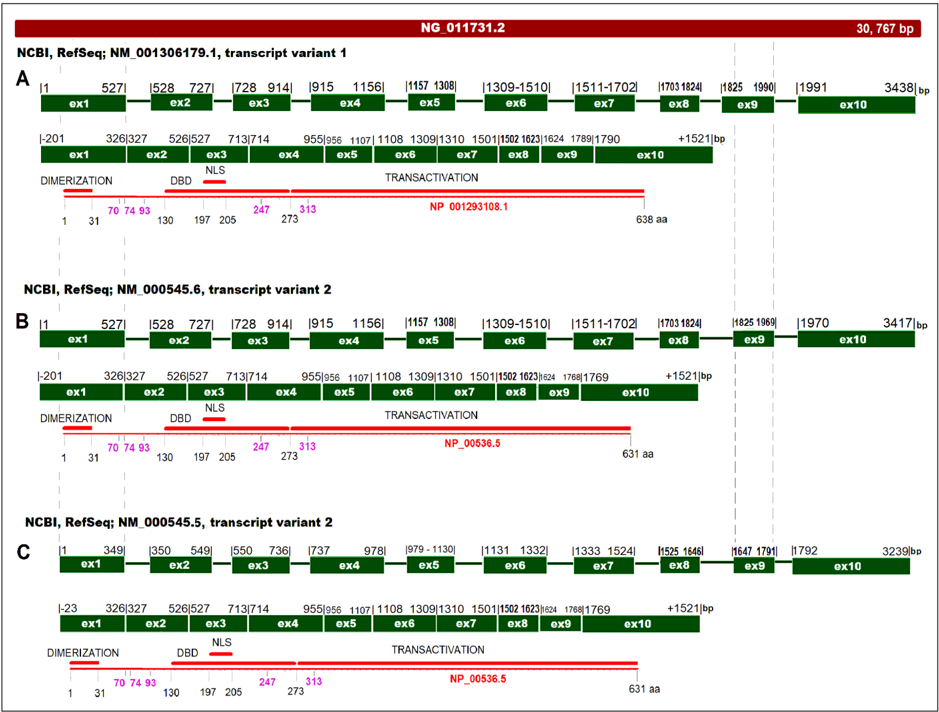
“The exact genomic position varies depending on genome assembly version, chr12:121,41,549-121,442,315 (30,767 bp) in GRCh37/hg19 assembly and chr12:120,973,746121,004,512 (30, 767 bp) in GRCh38/hg38 assembly (O’Leary et al. 2016).”
BackgroundFagerberg, L., Hallström, B. M., Oksvold, P., Kampf, C., Djureinovic, D., Odeberg, J., Habuka, M., Tahmasebpoor, S., Danielsson, A., Edlund, K., et al. (2014) · Molecular & Cellular Proteomics · doi:10.1074/mcp.m113.035600 · Cited by 3,665 · cited 3×
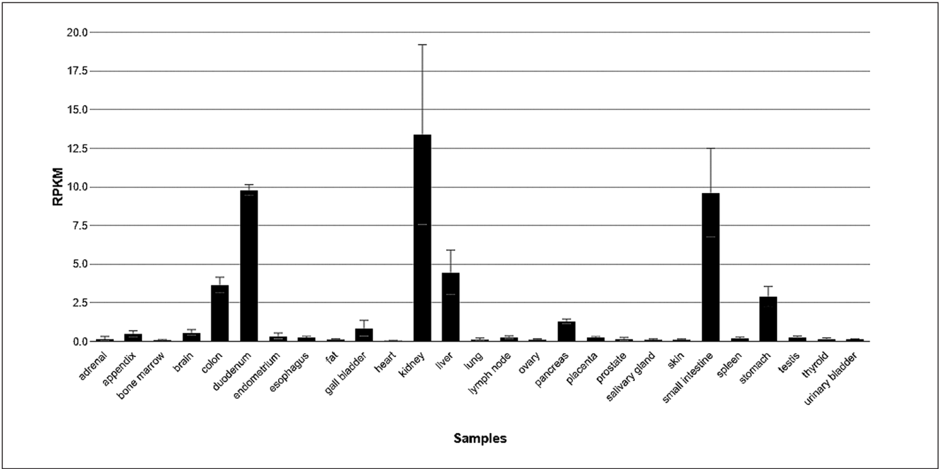
“RPKM (Reads Per Kilobase Million) indicates the transcript abundance (Geer et al. 2009; Fagerberg et al. 2014).”
BackgroundC-reactive protein: a critical update
Pepys, M. B., & Hirschfield, G. M. (2003) · Journal of Clinical Investigation · doi:10.1172/jci18921 · Cited by 3,503 · cited 1×
“This attribute of CRP is commonly used for detection of infection and inflammation since its expression rises during that time (Pepys and Hirschfield 2003; Armendariz and Krauss 2009).”
BackgroundA role for ghrelin in the central regulation of feeding
Nakazato, M., Murakami, N., Date, Y., Kojima, M., Matsuo, H., Kangawa, K., & Matsukura, S. (2001) · Nature · doi:10.1038/35051587 · Cited by 3,443 · cited 1×
“Despite that it was confirmed also by an animal studies, ghrelin is not sufficient discriminator of diabetes subtypes (Nakazato et al. 2001; Lussier et al. 2010; Brial et al. 2013; Nowak et al. 2015).”
ResultC-reactive protein: a critical update
Pepys, M. B., & Hirschfield, G. M. (2003) · Journal of Clinical Investigation · doi:10.1172/jci200318921 · Cited by 3,436
The new NHGRI-EBI Catalog of published genome-wide association studies (GWAS Catalog)
MacArthur, J., Bowler, E., Cerezo, M., Gil, L., Hall, P., Hastings, E., Junkins, H., McMahon, A., Milano, A., Morales, J., et al. (2017) · Nucleic Acids Research · doi:10.1093/nar/gkw1133 · Cited by 2,161 · cited 2×
“Study information are manually extracted from the literature and entered into the GWAS Catalogue (MacArthur et al. 2017).”
BackgroundMethodAmiGO: online access to ontology and annotation data
Carbon, S., Ireland, A., Mungall, C. J., Shu, S., Marshall, B., Lewis, S., Hub, T. A., & the Web Presence Working Group (2009) · Bioinformatics · doi:10.1093/bioinformatics/btn615 · Cited by 1,952 · cited 2×
“Gene ontology database is combination of automatically assigned electronic annotations: IEA (Inferred from Electronic annotation) and curator-assigned annotations: IDA (Inferred from direct assay), IGI (Inferred from Genetic Interactions) and IMP (Inferred from Mutant Phenotype) (Carbon et al. 2009).”
MethodAlbert, M. A., Danielson, E., Rifai, N., Ridker, P. M., & for the PRINCE Investigators (2001) · JAMA · doi:10.1001/jama.286.1.64 · Cited by 1,641 · cited 1×
“On the other hand, statin therapy, which is widely used for decreasing the level of total or LDL-cholesterol in T2D, decreases also the CRP levels (Albert et al. 2001).”
BackgroundCommon variants at 30 loci contribute to polygenic dyslipidemia
Kathiresan, S., Willer, C. J., Peloso, G. M., Demissie, S., Musunuru, K., Schadt, E. E., Kaplan, L., Bennett, D., Li, Y., Tanaka, T., et al. (2009) · Nature Genetics · doi:10.1038/ng.291 · Cited by 1,364 · cited 1×
“Furthermore, an intergenic variant rs2650000, near the gene HNF1A, may influence the levels of LDL-cholesterol and C-reactive protein (Kathiresan et al. 2009; Sabatti et al. 2009).”
BackgroundStenson, P. D., Mort, M., Ball, E. V., Shaw, K., Phillips, A. D., & Cooper, D. N. (2014) · Human Genetics · doi:10.1007/s00439-013-1358-4 · Cited by 1,346 · cited 1×
“Although Human Gene Mutation Database (HGMD) is considered to be central unified repository of mutations associated with human inherited diseases (Stenson et al. 2014) it should be used with caution.”
BackgroundControl of Pancreas and Liver Gene Expression by HNF Transcription Factors
Odom, D. T., Zizlsperger, N., Gordon, D. B., Bell, G. W., Rinaldi, N. J., Murray, H. L., Volkert, T. L., Schreiber, J., Rolfe, P. A., Gifford, D. K., et al. (2004) · Science · doi:10.1126/science.1089769 · Cited by 1,321 · cited 1×
“HNF1α binds to at least 222 target genes in the human liver and at least 106 target genes in human pancreatic islets (Odom et al. 2004).”
BackgroundMolecular mechanisms and clinical pathophysiology of maturity-onset diabetes of the young
Fajans, S. S., Bell, G. I., & Polonsky, K. S. (2001) · New England Journal of Medicine · doi:10.1056/nejmra002168 · Cited by 1,123 · cited 4×
“MODY is primarily nonketotic and non-autoimmunity form of diabetes (Fajans et al. 2001), however, in some individuals with HNF1A-MODY positive B-cell autoantibodies and diabetes ketoacidosis were described (Pruhova et al.”
BackgroundInfluentialLOVD v.2.0: the next generation in gene variant databases
Fokkema, I. F. A. C., Taschner, P. E. M., Schaafsma, G. C. P., Celli, J., Laros, J. F. J., & den Dunnen, J. T. (2011) · Human Mutation · doi:10.1002/humu.21438 · Cited by 1,048 · cited 2×
“Fokkema IFAC, Taschner PEM, Schaafsma GCP, Celli J, Laros JFJ, den Dunnen JT. LOVD v.2.0: the next generation in gene variant databases.”
BackgroundInfluentialKoepsell, H., Lips, K., & Volk, C. (2007) · Pharmaceutical Research · doi:10.1007/s11095-007-9254-z · Cited by 988 · cited 1×
“HNF1α helps to promote the expression of organic cation transporter 1 (OCT1) in the liver which is responsible for hepatic uptake of small, hydrophilic, positively charged organic molecules (Koepsell et al. 2007).”
BackgroundLarge‐scale mapping of human protein–protein interactions by mass spectrometry
Ewing, R. M., Chu, P., Elisma, F., Li, H., Taylor, P., Climie, S., McBroom‐Cerajewski, L., Robinson, M. D., O'Connor, L., Li, M., et al. (2007) · Molecular Systems Biology · doi:10.1038/msb4100134 · Cited by 984
Effect of genetic variation in the organic cation transporter 1 (OCT1) on metformin action
Shu, Y., Sheardown, S. A., Brown, C., Owen, R. P., Zhang, S., Castro, R. A., Ianculescu, A. G., Yue, L., Lo, J. C., Burchard, E. G., et al. (2007) · Journal of Clinical Investigation · doi:10.1172/jci30558 · Cited by 967 · cited 1×
“Genetic variations in HNF1α may change OCT1 expression and affect the liver uptake and drug metabolism of OCT1 substrates such as metformin, tropisetron, ondansetron. tramadol and morphine (Shu et al. 2007; Tzvetkov et al. 2011, 2012; O’Brien et al. 2013).”
BackgroundEarly-onset type-ll diabetes mellitus (MODY4) linked to IPF1
Staffers, D. A., Ferrer, J., Clarke, W. L., & Habener, J. F. (1997) · Nature Genetics · doi:10.1038/ng1097-138 · Cited by 882 · cited 1×
“HNF1α is co-expressed with other transcription factors, e.g. HNF1β, HNF4α and HNF6 (Stoffers et al. 1997; Edlund 1998; Shih and Stoffel 2001; Nammo et al. 2008; De Vas et al. 2015).”
BackgroundGeer, L. Y., Marchler-Bauer, A., Geer, R. C., Han, L., He, J., He, S., Liu, C., Shi, W., & Bryant, S. H. (2010) · Nucleic Acids Research · doi:10.1093/nar/gkp858 · Cited by 875 · cited 2×
“RPKM (Reads Per Kilobase Million) indicates the transcript abundance (Geer et al. 2009; Fagerberg et al. 2014).”
BackgroundThe Human Phenotype Ontology in 2017
Köhler, S., Vasilevsky, N. A., Engelstad, M., Foster, E., McMurry, J., Aymé, S., Baynam, G., Bello, S. M., Boerkoel, C. F., Boycott, K. M., et al. (2017) · Nucleic Acids Research · doi:10.1093/nar/gkw1039 · Cited by 754 · cited 1×
“In addition, Gene Ontology (GO) Consortium provide experimentally-supported GO annotations accompanied with web access and analytical tools that use the GO knowledgebase (Carbon et al. 2009; Kohler et al. 2017).”
MethodGenome-wide association analysis of metabolic traits in a birth cohort from a founder population
Sabatti, C., Service, S. K., Hartikainen, A.-L., Pouta, A., Ripatti, S., Brodsky, J., Jones, C. G., Zaitlen, N. A., Varilo, T., Kaakinen, M., et al. (2009) · Nature Genetics · doi:10.1038/ng.271 · Cited by 736 · cited 1×
“Furthermore, an intergenic variant rs2650000, near the gene HNF1A, may influence the levels of LDL-cholesterol and C-reactive protein (Kathiresan et al. 2009; Sabatti et al. 2009).”
BackgroundMaturity-onset diabetes of the young (MODY): how many cases are we missing?
Shields, B. M., Hicks, S., Shepherd, M. H., Colclough, K., Hattersley, A. T., & Ellard, S. (2010) · Diabetologia · doi:10.1007/s00125-010-1799-4 · Cited by 725 · cited 1×
“Population prevalence of MODY is 50–100 per million (Shields et al. 2010).”
BackgroundGenetic cause of hyperglycaemia and response to treatment in diabetes
Pearson, E. R., Starkey, B. J., Powell, R. J., Gribble, F. M., Clark, P. M., & Hattersley, A. T. (2003) · The Lancet · doi:10.1016/s0140-6736(03)14571-0 · Cited by 607 · cited 2×
“While MODY penetration of patients up to 25 years is approximately 63%, it is increased to 93.6% in patients up to 50 years and 98.7% among patients up to 75 years (Pearson et al. 2003).”
BackgroundInfluentialPontoglio, M., Barra, J., Hadchouel, M., Doyen, A., Kress, C., Bach, J. P., Babinet, C., & Yaniv, M. (1996) · Cell · doi:10.1016/s0092-8674(00)81033-8 · Cited by 588 · cited 2×
“…discovered, that inactivation of mouse HNF1A gene by homologous recombination results in hepatic dysfunction, phenylketonuria and Fanconi syndrome (Pontoglio et al. 1996) as well as decreased expression of the genes encoding glucose transporter 2 (Glut2) and L-pyruvate kinase (pklr) (Parrizas et…”
BackgroundGenome-wide association study identifies loci influencing concentrations of liver enzymes in plasma
Alcohol Genome-wide Association (AlcGen) Consortium, Chambers, J. C., Study, D. G. R. A. M.-A. (., Genetic Investigation of Anthropometric Traits (GIANT) Consortium, Global Lipids Genetics Consortium, Genetics of Liver Disease (GOLD) Consortium, International Consortium for Blood Pressure (ICBP-GWAS), Meta-analyses of Glucose and Insulin-Related Traits Consortium (MAGIC), Zhang, W., Sehmi, J., et al. (2011) · Nature Genetics · doi:10.1038/ng.970 · Cited by 564 · cited 2×
“In addition, HNF1A antisense RNA 1 (HNF1A-AS1) is transcribed in the opposite transcription direction from HNF1A gene as 2.455 bp long non-coding RNA (lncRNA) (Chambers et al. 2011).”
BackgroundInfluentialRegulation of LEF-1/TCF transcription factors by Wnt and other signals
Eastman, Q., & Grosschedl, R. (1999) · Current Opinion in Cell Biology · doi:10.1016/s0955-0674(99)80031-3 · Cited by 540
Mammalian hepatocyte differentiation requires the transcription factor HNF-4alpha.
(2000) · PubMed Central · Cited by 489
Mammalian hepatocyte differentiation requires the transcription factor HNF-4α
Li, J., Ning, G., & Duncan, S. A. (2000) · Genes & Development · doi:10.1101/gad.14.4.464 · Cited by 458 · cited 1×
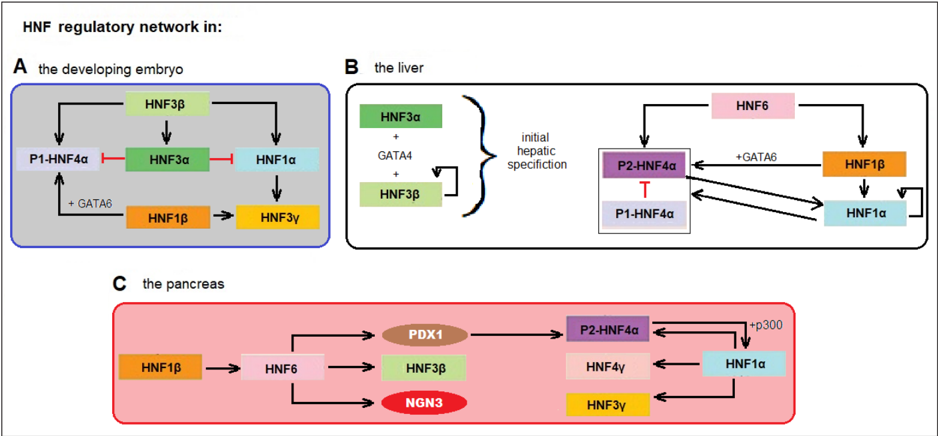
“In the pancreas and liver, HNF1α and HNF4α make transcriptional loop (Figure 5C) (Kuo et al. 1992; Kritis et al. 1993; Bulla and Fournier 1994; Gragnoli et al. 1997; Godart et al. 2000; Li et al. 2000; Wang et al. 2000; Eeckhoute et al. 2004).”
BackgroundBest practice guidelines for the molecular genetic diagnosis of maturity-onset diabetes of the young
Ellard, S., Bellanné-Chantelot, C., Hattersley, A. T., & European Molecular Genetics Quality Network (EMQN) MODY group (2008) · Diabetologia · doi:10.1007/s00125-008-0942-y · Cited by 433 · cited 2×
“The first of them are the clinical diagnostic criteria (Ellard et al. 2008) which help diabetologists to discriminate patients with HNF1A-MODY from other forms of diabetes: • Onset of diabetes usually before 25 years (at least one family member).”
BackgroundA transcriptional hierarchy involved in mammalian cell-type specification
Kuo, C. J., Conley, P. B., Chen, L., Sladek, F. M., Darnell, J. E., & Crabtree, G. R. (1992) · Nature · doi:10.1038/355457a0 · Cited by 423 · cited 1×
“In the pancreas and liver, HNF1α and HNF4α make transcriptional loop (Figure 5C) (Kuo et al. 1992; Kritis et al. 1993; Bulla and Fournier 1994; Gragnoli et al. 1997; Godart et al. 2000; Li et al. 2000; Wang et al. 2000; Eeckhoute et al. 2004).”
BackgroundShih, D. Q., Bussen, M., Sehayek, E., Ananthanarayanan, M., Shneider, B. L., Suchy, F. J., Shefer, S., Bollileni, J. S., Gonzalez, F. J., Breslow, J. L., et al. (2001) · Nature Genetics · doi:10.1038/86871 · Cited by 422 · cited 3×
“Interconnection of HNF transcription factors was experimentally supported by HNF1A-null mice which pancreas displays decreased expression of HNF4A, HNF4G (HNF4γ) and HNF3 genes (Boj et al. 2001; Shih et al. 2001b).”
BackgroundTranscription Factors in Liver Development, Differentiation, and Regeneration
Costa, R. H., Kalinichenko, V. V., Holterman, A.-X. L., & Wang, X. (2003) · Hepatology · doi:10.1016/j.hep.2003.09.034 · Cited by 409 · cited 1×
“Together with HNF3 (hepatocyte nuclear factor 3), they constitute a functional network regulating the expression of different tissue genes that contain promoter or enhancer DNA sites for these HNFs (Shih et al. 2001b; Costa et al. 2003; Jacquemin et al. 2003; Lau et al. 2018).”
Backgroundthe DIAbetes Genetics Replication And Meta-analysis (DIAGRAM) Consortium, Gaulton, K. J., Ferreira, T., Lee, Y., Raimondo, A., Mägi, R., Reschen, M. E., Mahajan, A., Locke, A., William Rayner, N., et al. (2015) · Nature Genetics · doi:10.1038/ng.3437 · Cited by 398 · cited 1×
“Although HNF1α polymorphisms I27L and A98V do not influence the function of pancreatic B-cells, they may be associated with insulin resistance and HDL cholesterol levels (Chiu et al. 2000; Holmkvist et al. 2006; Gaulton et al. 2015).”
BackgroundAll Tcf HMG box transcription factors interact with Groucho-related co-repressors
Brantjes, H. (2001) · Nucleic Acids Research · doi:10.1093/nar/29.7.1410 · Cited by 361
Bi-allelic inactivation of TCF1 in hepatic adenomas
Bluteau, O., Jeannot, E., Bioulac-Sage, P., Marqués, J. M., Blanc, J.-F., Bui, H., Beaudoin, J.-C., Franco, D., Balabaud, C., Laurent-Puig, P., et al. (2002) · Nature Genetics · doi:10.1038/ng1001 · Cited by 353 · cited 2×
“Significantly lower levels of HNF1α protein were observed in pancreatic tumors and hepatocellular adenomas than in normal adjacent tissues (Bluteau et al. 2002; Luo et al. 2015), so HNF-1α might be a tumor suppressor protein, too.”
BackgroundShields, B. M., McDonald, T. J., Ellard, S., Campbell, M. J., Hyde, C., & Hattersley, A. T. (2012) · Diabetologia · doi:10.1007/s00125-011-2418-8 · Cited by 335 · cited 1×
“MODY calculator was developed to estimate the likelihood of monogenic diabetes for individuals with onset of diabetes before 35 years (Shields et al. 2012).”
MethodDefective insulin secretion in hepatocyte nuclear factor 1alpha-deficient mice.
Pontoglio, M., Sreenan, S., Roe, M., Pugh, W., Ostrega, D., Doyen, A., Pick, A. J., Baldwin, A., Velho, G., Froguel, P., et al. (1998) · Journal of Clinical Investigation · doi:10.1172/jci2548 · Cited by 321 · cited 1×
“Impaired B-cell glucose sensing is probably the result of reduced aerobic glycolysis and mitochondrial metabolism (Byrne et al. 1996; Dukes et al. 1998; Pontoglio et al. 1998).”
BackgroundMendel, D. B., Hansen, L. P., Graves, M. K., Conley, P. B., & Crabtree, G. R. (1991) · Genes & Development · doi:10.1101/gad.5.6.1042 · Cited by 311 · cited 1×
“Destabilization of this bundle or recessive mutations in PCBD1 gene lead to antibody-negative monogenic diabetes with normal pancreatic morphology and puberty onset (Mendel et al. 1991; Hua et al. 2000; Simaite et al. 2014).”
BackgroundPurified hepatocyte nuclear factor 1 interacts with a family of hepatocyte-specific promoters.
Courtois, G., Baumhueter, S., & Crabtree, G. R. (1988) · Proceedings of the National Academy of Sciences · doi:10.1073/pnas.85.21.7937 · Cited by 304
Oram, R. A., Jones, A. G., Besser, R. E. J., Knight, B. A., Shields, B. M., Brown, R. J., Hattersley, A. T., & McDonald, T. J. (2014) · Diabetologia · doi:10.1007/s00125-013-3067-x · Cited by 298
HNF-1, a member of a novel class of dimerizing homeodomain proteins.
Mendel, D. B., & Crabtree, G. R. (1991) · Journal of Biological Chemistry · doi:10.1016/s0021-9258(17)35222-5 · Cited by 283 · cited 1×
“The transactivation domain is at the C-terminus (residues 282–631) (Baumhueter et al. 1990; Mendel and Crabtree 1991; Chi et al. 2002; Harries et al. 2006).”
BackgroundThe genetic abnormality in the beta cell determines the response to an oral glucose load
Stride, A., Vaxillaire, M., Tuomi, T., Barbetti, F., Njølstad, P. R., Hansen, T., Costa, A., Conget, I., Pedersen, O., Søvik, O., et al. (2002) · Diabetologia · doi:10.1007/s00125-001-0770-9 · Cited by 277 · cited 3×
“06 mmol/l/year), with some patients experiencing a higher insulin secretion failure (a decrease in C-peptide concentrations at the limit of measurability) (Stride et al. 2002).”
BackgroundInfluentialZhu, H., & Leung, S. W. (2015) · Diabetologia · doi:10.1007/s00125-015-3510-2 · Cited by 271 · cited 1×
“It was found, that miRNA-103 is consistently deregulated in pancreatic and adipose tissue and in serum of patients with T2D (Zhu and Leung 2015).”
BackgroundRyffel, G. (2001) · Journal of Molecular Endocrinology · doi:10.1677/jme.0.0270011 · Cited by 267 · cited 1×
“The DBD domain includes two POUsub-domains, POUs (specific domain, amino acids 82–172) and POUH (homeodomain, amino acids 198–281) (Vaxillaire et al. 1999; Ryffel 2001).”
BackgroundLaron Dwarfism and Non-Insulin-Dependent Diabetes Mellitus in the Hnf-1 α Knockout Mouse
Lee, Y.-H., Sauer, B., & Gonzalez, F. J. (1998) · Molecular and Cellular Biology · doi:10.1128/mcb.18.5.3059 · Cited by 262 · cited 3×
“(1998) is one of the first study where non-insulindependent diabetes mellitus (NIDDM), Laron dwarfism, impaired liver development and dysfunctional reproductive system developed in HNF1A (–/–) mice within the time range of two weeks after birth (Lee et al. 1998).”
BackgroundHNF-1 shares three sequence motifs with the POU domain proteins and is identical to LF-B1 and APF.
Baumhueter, S., Mendel, D. B., Conley, P. B., Kuo, C. J., Turk, C., Graves, M. K., Edwards, C. A., Courtois, G., & Crabtree, G. R. (1990) · Genes & Development · doi:10.1101/gad.4.3.372 · Cited by 260 · cited 1×
“The transactivation domain is at the C-terminus (residues 282–631) (Baumhueter et al. 1990; Mendel and Crabtree 1991; Chi et al. 2002; Harries et al. 2006).”
BackgroundByrne, M. M., Sturis, J., Menzel, S., Yamagata, K., Fajans, S. S., Dronsfield, M. J., Bain, S. C., Hattersley, A. T., Velho, G., Froguel, P., et al. (1996) · Diabetes · doi:10.2337/diab.45.11.1503 · Cited by 259 · cited 2×
“Impaired B-cell glucose sensing is probably the result of reduced aerobic glycolysis and mitochondrial metabolism (Byrne et al. 1996; Dukes et al. 1998; Pontoglio et al. 1998).”
BackgroundAssociation of a Low-Frequency Variant in HNF1A With Type 2 Diabetes in a Latino Population
Estrada, K., Aukrust, I., Bjørkhaug, L., Burtt, N. P., Mercader, J. M., García-Ortiz, H., Huerta-Chagoya, A., Moreno-Macías, H., Walford, G., Flannick, J., et al. (2014) · JAMA · doi:10.1001/jama.2014.6511 · Cited by 259 · cited 1×
“An association of the rare HNF1α variant E508K with T2D was demonstrated in Mexican population (Estrada et al. 2014).”
BackgroundPearson, E. R., Liddell, W. G., Shepherd, M., Corrall, R. J., & Hattersley, A. T. (2000) · Diabetic Medicine · doi:10.1046/j.1464-5491.2000.00305.x · Cited by 259 · cited 4×
“Glycemia is so more stable and diabetes compensation is also improved (Pearson et al. 2000).”
BackgroundInfluentialEdlund, H. (1998) · Diabetes · doi:10.2337/diabetes.47.12.1817 · Cited by 256 · cited 1×
“HNF1α is co-expressed with other transcription factors, e.g. HNF1β, HNF4α and HNF6 (Stoffers et al. 1997; Edlund 1998; Shih and Stoffel 2001; Nammo et al. 2008; De Vas et al. 2015).”
BackgroundIntegrated interactions database: tissue-specific view of the human and model organism interactomes
Kotlyar, M., Pastrello, C., Sheahan, N., & Jurisica, I. (2016) · Nucleic Acids Research · doi:10.1093/nar/gkv1115 · Cited by 254 · cited 2×
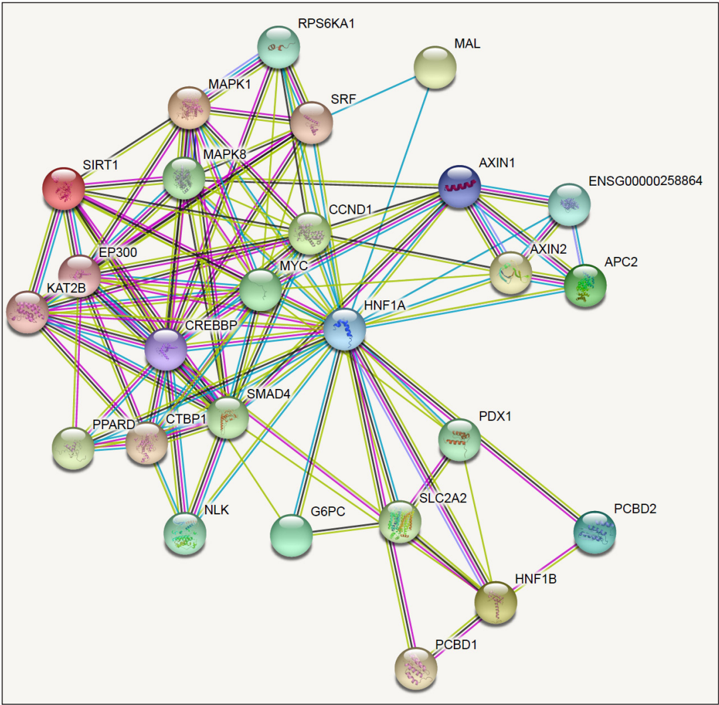
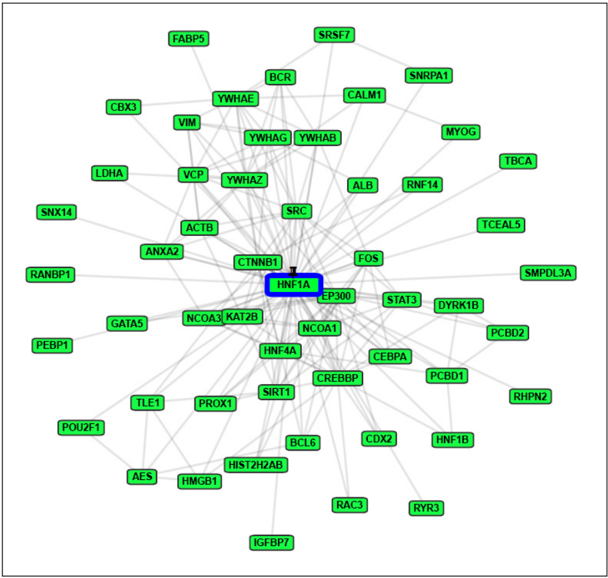
“HNF1α protein partners occurred in both databases are black colored and red colored are proteins occurring in only one of the databases (Fahey et al. 2011; Kotlyar et al. 2016).”
BackgroundA transcription factor regulatory circuit in differentiated pancreatic cells
Boj, S. F., Párrizas, M., Maestro, M. A., & Ferrer, J. (2001) · Proceedings of the National Academy of Sciences · doi:10.1073/pnas.241349398 · Cited by 253 · cited 1×
“Interconnection of HNF transcription factors was experimentally supported by HNF1A-null mice which pancreas displays decreased expression of HNF4A, HNF4G (HNF4γ) and HNF3 genes (Boj et al. 2001; Shih et al. 2001b).”
BackgroundThe molecular functions of hepatocyte nuclear factors – In and beyond the liver
Lau, H. H., Ng, N. H. J., Loo, L. S. W., Jasmen, J. B., & Teo, A. K. K. (2018) · Journal of Hepatology · doi:10.1016/j.jhep.2017.11.026 · Cited by 250 · cited 2×
“Mutations in the HNF1A promoter can alter or disrupt the binding site for other transcription factors in the liver and pancreas (Lau et al. 2018).”
BackgroundToward an understanding of the protein interaction network of the human liver
Wang, J., Huo, K., Ma, L., Tang, L., Li, D., Huang, X., Yuan, Y., Li, C., Wang, W., Guan, W., et al. (2011) · Molecular Systems Biology · doi:10.1038/msb.2011.67 · Cited by 243
Shepherd, M., Shields, B., Ellard, S., Rubio‐Cabezas, O., & Hattersley, A. T. (2009) · Diabetic Medicine · doi:10.1111/j.1464-5491.2009.02690.x · Cited by 241 · cited 3×
“Compared to insulin treatment, sulfonylurea derivatives increase endogenous insulin secretion, which allows the body to respond spontaneously to glycemic changes (Shepherd et al. 2009).”
BackgroundAbdul-Rasoul, M., Habib, H., & Al-Khouly, M. (2006) · Pediatric Diabetes · doi:10.1111/j.1399-543x.2006.00155.x · Cited by 236 · cited 2×
“5 U/kg/day and hemoglobin A1c (HbA1c) level of less or equal to 6% (Abdul-Rasoul et al. 2006).”
BackgroundInfluentialMcDonald, T. J., Colclough, K., Brown, R., Shields, B., Shepherd, M., Bingley, P., Williams, A., Hattersley, A. T., & Ellard, S. (2011) · Diabetic Medicine · doi:10.1111/j.1464-5491.2011.03287.x · Cited by 229 · cited 15×
“For example, apolipoprotein M has been suggested as a discriminator between HNF1A-MODY and T1D, but not T2D (Mughal et al. 2013).”
BackgroundInfluentialHNF1α controls renal glucose reabsorption in mouse and man
Pontoglio, M., Prié, D., Cheret, C., Doyen, A., Leroy, C., Froguel, P., Velho, G., Yaniv, M., & Friedlander, G. (2000) · EMBO reports · doi:10.1093/embo-reports/kvd071 · Cited by 228 · cited 1×
“In kidneys, HNF1α is involved in the reuptake of glucose from the glomerular filtrate (Pontoglio et al. 2000).”
BackgroundCharacterization of a Cofactor That Regulates Dimerization of a Mammalian Homeodomain Protein
Mendel, D. B., Khavari, P. A., Conley, P. B., Graves, M. K., Hansen, L. P., Admon, A., & Crabtree, G. R. (1991) · Science · doi:10.1126/science.1763325 · Cited by 228 · cited 1×
“Destabilization of this bundle or recessive mutations in PCBD1 gene lead to antibody-negative monogenic diabetes with normal pancreatic morphology and puberty onset (Mendel et al. 1991; Hua et al. 2000; Simaite et al. 2014).”
BackgroundColclough, K., Bellanne-Chantelot, C., Saint-Martin, C., Flanagan, S. E., & Ellard, S. (2013) · Human Mutation · doi:10.1002/humu.22279 · Cited by 224 · cited 10×
“variants (Colclough et al. 2013) states more than 400 different variants, ExAC database presents 894 variants and GnomAD 1231 variants spanning from the HNF1A promoter to 3 ́UTR region, including missense, frame shift, nonsense, splicing mutations, in-frame amino acid deletions, insertions, duplications or partial and…”
BackgroundInfluentialShih, D. Q., Screenan, S., Munoz, K. N., Philipson, L., Pontoglio, M., Yaniv, M., Polonsky, K. S., & Stoffel, M. (2001) · Diabetes · doi:10.2337/diabetes.50.11.2472 · Cited by 223 · cited 3×
“Interconnection of HNF transcription factors was experimentally supported by HNF1A-null mice which pancreas displays decreased expression of HNF4A, HNF4G (HNF4γ) and HNF3 genes (Boj et al. 2001; Shih et al. 2001b).”
BackgroundWang, H., Maechler, P., Antinozzi, P. A., Hagenfeldt, K. A., & Wollheim, C. B. (2000) · Journal of Biological Chemistry · doi:10.1074/jbc.m006612200 · Cited by 213 · cited 2×
“Diabetic and non-diabetic mice are widely used as models for functional studies since their genetic variability is the same as in the human populations (Wang et al. 2000).”
BackgroundYang, X., Song, J. H., Cheng, Y., Wu, W., Bhagat, T., Yu, Y., Abraham, J. M., Ibrahim, S., Ravich, W., Roland, B. C., et al. (2014) · Gut · doi:10.1136/gutjnl-2013-305266 · Cited by 209
Diagnosis and management of maturity onset diabetes of the young (MODY)
Thanabalasingham, G., & Owen, K. R. (2011) · BMJ · doi:10.1136/bmj.d6044 · Cited by 200 · cited 1×
“…subtypes of MODY traditionally include mutations of the genes ABCC8, CEL, GCK, HNF1A, HNF1B, HNF4A, INS, KCNJ11, NEUROD1, PDX1, BLK, KLF11 and PAX4 but the last three genes are discussed (Plengvidhya et al. 2007; Borowiec et al. 2009; Fernandez-Zapico et al. 2009; Thanabalasingham and Owen 2011).”
BackgroundBellanné-Chantelot, C., Carette, C., Riveline, J.-P., Valéro, R., Gautier, J.-F., Larger, E., Reznik, Y., Ducluzeau, P.-H., Sola, A., Hartemann-Heurtier, A., et al. (2008) · Diabetes · doi:10.2337/db07-0859 · Cited by 197 · cited 4×
“The longest isoform is HNF1A A (10 exons), shorter is HNF1A B (7 exons) and the shortest is HNF1A C (6 exons) (Harries et al. 2006; Bellanne-Chantelot et al. 2008).”
BackgroundInfluentialEllard, S., & Colclough, K. (2006) · Human Mutation · doi:10.1002/humu.20357 · Cited by 191 · cited 1×
“Glycosuria usually precedes the B-cell insulin secretion defect for several years (Ellard and Colclough 2006).”
BackgroundMutations at the BLK locus linked to maturity onset diabetes of the young and β-cell dysfunction
Borowiec, M., Liew, C. W., Thompson, R., Boonyasrisawat, W., Hu, J., Mlynarski, W. M., El Khattabi, I., Kim, S.-H., Marselli, L., Rich, S. S., et al. (2009) · Proceedings of the National Academy of Sciences · doi:10.1073/pnas.0906474106 · Cited by 189 · cited 2×
“The subtypes of MODY traditionally include mutations of the genes ABCC8, CEL, GCK, HNF1A, HNF1B, HNF4A, INS, KCNJ11, NEUROD1, PDX1, BLK, KLF11 and PAX4 but the last three genes are discussed (Plengvidhya et al. 2007; Borowiec et al. 2009; Fernandez-Zapico et al. 2009; Thanabalasingham and Owen 2011).”
BackgroundReiner, A. P., Barber, M. J., Guan, Y., Ridker, P. M., Lange, L. A., Chasman, D. I., Walston, J. D., Cooper, G. M., Jenny, N. S., Rieder, M. J., et al. (2008) · The American Journal of Human Genetics · doi:10.1016/j.ajhg.2008.03.017 · Cited by 186 · cited 2×
“…(c.326+2159T>C), rs2464196 (S486N), rs1169303 (c.1502-695A>C) and rs1169310 (c.*438G>A) were significantly associated with lower plasma CRP levels (Reiner et al. 2008). hs-CRP has a big potential to be a cost-effective and helpful biomarker for selecting of HNF1A-MODY patients (Szopa et al. 2019).”
BackgroundSchober, E., Rami, B., Grabert, M., Thon, A., Kapellen, T., Reinehr, T., & Holl, R. W. (2009) · Diabetic Medicine · doi:10.1111/j.1464-5491.2009.02720.x · Cited by 182 · cited 1×
“2011a), 17% in German/Austrian cohort (Schober et al. 2009) and 28%, in Czech cohort (Urbanova et al.”
BackgroundInflammatory Biomarkers and Atherosclerosis
Soeki, T., & Sata, M. (2016) · International Heart Journal · doi:10.1536/ihj.15-346 · Cited by 182 · cited 1×
“High-sensitivity CRP (hs-CRP) is an assay for detection of small variations in low CRP levels (Soeki and Sata 2016).”
BackgroundJacquemin, P., Lemaigre, F. P., & Rousseau, G. G. (2003) · Developmental Biology · doi:10.1016/s0012-1606(03)00115-5 · Cited by 179 · cited 1×
“Together with HNF3 (hepatocyte nuclear factor 3), they constitute a functional network regulating the expression of different tissue genes that contain promoter or enhancer DNA sites for these HNFs (Shih et al. 2001b; Costa et al. 2003; Jacquemin et al. 2003; Lau et al. 2018).”
BackgroundPAX4 Mutations in Thais with Maturity Onset Diabetes of the Young
Plengvidhya, N., Kooptiwut, S., Songtawee, N., Doi, A., Furuta, H., Nishi, M., Nanjo, K., Tantibhedhyangkul, W., Boonyasrisawat, W., Yenchitsomanus, P.-T., et al. (2007) · The Journal of Clinical Endocrinology & Metabolism · doi:10.1210/jc.2006-1927 · Cited by 172 · cited 1×
“…subtypes of MODY traditionally include mutations of the genes ABCC8, CEL, GCK, HNF1A, HNF1B, HNF4A, INS, KCNJ11, NEUROD1, PDX1, BLK, KLF11 and PAX4 but the last three genes are discussed (Plengvidhya et al. 2007; Borowiec et al. 2009; Fernandez-Zapico et al. 2009; Thanabalasingham and Owen 2011).”
BackgroundNovel Presentations of Congenital Hyperinsulinism due to Mutations in the MODY genes:HNF1A and HNF4A
Stanescu, D. E., Hughes, N., Kaplan, B., Stanley, C. A., & De León, D. D. (2012) · The Journal of Clinical Endocrinology & Metabolism · doi:10.1210/jc.2012-1356 · Cited by 172 · cited 1×
“Hyperinsulinemia can be caused by deregulation of the insulin secretion but is less frequent compared to HNF4A mutations (Dusatkova et al. 2011; Stanescu et al. 2012).”
Defective Pancreatic β-Cell Glycolytic Signaling in Hepatocyte Nuclear Factor-1α-deficient Mice
Dukes, I. D., Sreenan, S., Roe, M. W., Levisetti, M., Zhou, Y.-P., Ostrega, D., Bell, G. I., Pontoglio, M., Yaniv, M., Philipson, L., et al. (1998) · Journal of Biological Chemistry · doi:10.1074/jbc.273.38.24457 · Cited by 166 · cited 1×
“Impaired B-cell glucose sensing is probably the result of reduced aerobic glycolysis and mitochondrial metabolism (Byrne et al. 1996; Dukes et al. 1998; Pontoglio et al. 1998).”
BackgroundTzvetkov, M. V., Saadatmand, A. R., Bokelmann, K., Meineke, I., Kaiser, R., & Brockmöller, J. (2010) · The Pharmacogenomics Journal · doi:10.1038/tpj.2010.75 · Cited by 154
Maturity onset diabetes of the young: identification and diagnosis
McDonald, T. J., & Ellard, S. (2013) · Annals of Clinical Biochemistry: International Journal of Laboratory Medicine · doi:10.1177/0004563213483458 · Cited by 152 · cited 1×
“HNF1A-MODY is one of the most common subtypes of the Maturity Onset Diabetes of the Young (MODY) (McDonald and Ellard 2013).”
BackgroundThe long non-coding RNA HNF1A-AS1 regulates proliferation and metastasis in lung adenocarcinoma
Wu, Y., Liu, H., Shi, X., Yao, Y., Yang, W., & Song, Y. (2015) · Oncotarget · doi:10.18632/oncotarget.3247 · Cited by 150 · cited 1×
“Deregulation of HNF1A-AS1 participates in esophageal adenocarcinoma (Yang et al. 2014) and lung adenocarcinoma (Wu et al. 2015).”
BackgroundLoss-of-Function Mutations in APPL1 in Familial Diabetes Mellitus
Prudente, S., Jungtrakoon, P., Marucci, A., Ludovico, O., Buranasupkajorn, P., Mazza, T., Hastings, T., Milano, T., Morini, E., Mercuri, L., et al. (2015) · The American Journal of Human Genetics · doi:10.1016/j.ajhg.2015.05.011 · Cited by 148 · cited 2×
“Genes APPL1 (MODY14), PCBD1 and RFX6 are newly associated with MODY (Schwitzgebel 2014; Simaite et al. 2014; Prudente et al. 2015; Vaxillaire and Froguel 2016; Kherra et al. 2017).”
BackgroundTzvetkov, M. V., Saadatmand, A. R., Lötsch, J., Tegeder, I., Stingl, J., & Brockmöller, J. (2011) · Clinical Pharmacology & Therapeutics · doi:10.1038/clpt.2011.56 · Cited by 147 · cited 1×
“Genetic variations in HNF1α may change OCT1 expression and affect the liver uptake and drug metabolism of OCT1 substrates such as metformin, tropisetron, ondansetron. tramadol and morphine (Shu et al. 2007; Tzvetkov et al. 2011, 2012; O’Brien et al. 2013).”
BackgroundHegele, R. A., Cao, H., Harris, S. B., Hanley, A. J. G., & Zinman, B. (1999) · The Journal of Clinical Endocrinology & Metabolism · doi:10.1210/jcem.84.3.5528 · Cited by 144 · cited 1×
“In Canadian Oji-Cre population, G319S is connected with an early-onset T2D (Hegele et al. 1999).”
BackgroundPárrizas, M., Maestro, M. A., Boj, S. F., Paniagua, A., Casamitjana, R., Gomis, R., Rivera, F., & Ferrer, J. (2001) · Molecular and Cellular Biology · doi:10.1128/mcb.21.9.3234-3243.2001 · Cited by 141 · cited 2×
“1996) as well as decreased expression of the genes encoding glucose transporter 2 (Glut2) and L-pyruvate kinase (pklr) (Parrizas et al. 2001).”
BackgroundHnf1b controls pancreas morphogenesis and the generation of Ngn3+ endocrine progenitors
De Vas, M. G., Kopp, J. L., Heliot, C., Sander, M., Cereghini, S., & Haumaitre, C. (2015) · Development · doi:10.1242/dev.110759 · Cited by 134 · cited 1×
“HNF1α is co-expressed with other transcription factors, e.g. HNF1β, HNF4α and HNF6 (Stoffers et al. 1997; Edlund 1998; Shih and Stoffel 2001; Nammo et al. 2008; De Vas et al. 2015).”
BackgroundLeu, J. I., Crissey, M. A. S., Leu, J. P., Ciliberto, G., & Taub, R. (2001) · Molecular and Cellular Biology · doi:10.1128/mcb.21.2.414-424.2001 · Cited by 134
Steele, A. M., Shields, B. M., Shepherd, M., Ellard, S., Hattersley, A. T., & Pearson, E. R. (2010) · Diabetic Medicine · doi:10.1111/j.1464-5491.2009.02913.x · Cited by 130 · cited 1×
“Hypertension and ischemic heart disease are at the level of T1D, much rarer than in T2D, but more often than in healthy controls (Steele et al. 2010).”
BackgroundShepherd, M., Pearson, E. R., Houghton, J., Salt, G., Ellard, S., & Hattersley, A. T. (2003) · Diabetes Care · doi:10.2337/diacare.26.11.3191-a · Cited by 129 · cited 1×
“Several patients were successfully switched from insulin therapy to sulfonylureas (Shepherd et al. 2003, 2009).”
BackgroundThanabalasingham, G., Shah, N., Vaxillaire, M., Hansen, T. F., Tuomilehto, J., Gašperíková, D., Szopa, M., Tjora, E., James, T. J., Kokko, P., et al. (2011) · Diabetologia · doi:10.1007/s00125-011-2261-y · Cited by 128 · cited 1×
“Several studies have confirmed that hs-CRP levels were significantly lower in patients with HNF1A-MODY than in patients with HNF4A-MODY, GCK-MODY, T2D and T1D or without diabetes (Bacon et al. 2013; Owen et al. 2010; McDonald et al. 2011b; Thanabalasingham et al. 2011; Shah et al. 2014).”
BackgroundSoutoglou, E., Papafotiou, G., Katrakili, N., & Talianidis, I. (2000) · Journal of Biological Chemistry · doi:10.1074/jbc.275.17.12515 · Cited by 127 · cited 2×
“HNF1α physically interacts with histone acetyltransferases (HATs) such as CREB-binding protein (CBP), P300/CBP-associated factor (P/CAF) or steroid receptor coactivator-1 (Src-1) and small GTPase receptor-associated coactivator 3 (RAC3) and they can interact with each other or bind independently to different HNF1α fun…”
BackgroundHarries, L. W., Ellard, S., Stride, A., Morgan, N. G., & Hattersley, A. T. (2006) · Human Molecular Genetics · doi:10.1093/hmg/ddl147 · Cited by 127 · cited 9×
“POUs is an integral part of HNF1α that helps in maintaining the stability of the protein, whereas the POUH domain acts as a crucial interface initiating the interaction between the protein and DNA (Cleary et al. 1997; Harries et al. 2006).”
BackgroundMethodInfluentialMolecular Genetics of Maturity-onset Diabetes of the Young
Froguel, P., & Velho, G. (1999) · Trends in Endocrinology and Metabolism · doi:10.1016/s1043-2760(98)00134-9 · Cited by 124 · cited 1×
“Transcription hierarchy in B-cells has unique properties since HNF1A mutations can cause B-cell dysfunction while the other tissues expressing HNF1A are not damaged (Byrne et al. 1996; Froguel and Velho 1999).”
BackgroundFernández-Zapico, M. E., van Velkinburgh, J. C., Gutiérrez‐Aguilar, R., Neve, B., Froguel, P., Urrutia, R. A., & Stein, R. W. (2009) · Journal of Biological Chemistry · doi:10.1074/jbc.m109.028852 · Cited by 121 · cited 2×
“The subtypes of MODY traditionally include mutations of the genes ABCC8, CEL, GCK, HNF1A, HNF1B, HNF4A, INS, KCNJ11, NEUROD1, PDX1, BLK, KLF11 and PAX4 but the last three genes are discussed (Plengvidhya et al. 2007; Borowiec et al. 2009; Fernandez-Zapico et al. 2009; Thanabalasingham and Owen 2011).”
BackgroundDe novo mutations of GCK, HNF1A and HNF4A may be more frequent in MODY than previously assumed
Staník, J., Dušátková, P., Cinek, O., Valentínová, L., Hučková, M., Škopková, M., Dušátková, L., Staníková, D., Pura, M., Klimeś, I., et al. (2013) · Diabetologia · doi:10.1007/s00125-013-3119-2 · Cited by 120 · cited 1×
“HNF1A de novo mutations are less frequent (approximately 7% of all HNF1A-MODY patients) (Stanik et al. 2014).”
BackgroundDiabetes Mutations Delineate an Atypical POU Domain in HNF-1α
Chi, Y., Frantz, J. D., Oh, B., Hansen, L., Dhe‐Paganon, S., & Shoelson, S. E. (2002) · Molecular Cell · doi:10.1016/s1097-2765(02)00704-9 · Cited by 117 · cited 5×
“High rates of mutations causing MODY3 were observed at the POUS and POUH regions of HNF1α DBD domain (Chi et al. 2002; Harries et al. 2006; Bellanne-Chantelot et al. 2008; Colclough et al. 2013).”
BackgroundInfluentialMitchelmore, C., Troelsen, J. T., Spodsberg, N., Sjöström, H., & Norén, O. (2000) · Biochemical Journal · doi:10.1042/bj3460529 · Cited by 117
Germline hepatocyte nuclear factor 1α and 1β mutations in renal cell carcinomas
Rebouissou, S., Vasiliu, V., Thomas, C., Bellanné-Chantelot, C., Bui, H., Chrétien, Y., Timsit, J., Rosty, C., Laurent-Puig, P., Chauveau, D., et al. (2005) · Human Molecular Genetics · doi:10.1093/hmg/ddi057 · Cited by 116
Owen, K. R., Thanabalasingham, G., James, T. J., Karpe, F., Farmer, A. J., McCarthy, M. I., & Gloyn, A. L. (2010) · Diabetes Care · doi:10.2337/dc10-0288 · Cited by 115
Gragnoli, C., Lindner, T., Cockburn, B. N., Kaisaki, P. J., Gragnoli, F., Marozzi, G., & Bell, G. I. (1997) · Diabetes · doi:10.2337/diacare.46.10.1648 · Cited by 115
Locus Reference Genomic sequences: an improved basis for describing human DNA variants
Dalgleish, R., Flicek, P., Cunningham, F., Astashyn, A., Tully, R. E., Proctor, G., Chen, Y., McLaren, W. M., Larsson, P., Vaughan, B. W., et al. (2010) · Genome Medicine · doi:10.1186/gm145 · Cited by 112
Common variants in HNF-1 α and risk of type 2 diabetes
Holmkvist, J., Cervin, C., Lyssenko, V., Winckler, W., Anevski, D., Cilio, C., Almgren, P.-E., Berglund, G., Nilsson, P. M., Tuomilehto, J., et al. (2006) · Diabetologia · doi:10.1007/s00125-006-0450-x · Cited by 107 · cited 2×
“Although HNF1α polymorphisms I27L and A98V do not influence the function of pancreatic B-cells, they may be associated with insulin resistance and HDL cholesterol levels (Chiu et al. 2000; Holmkvist et al. 2006; Gaulton et al. 2015).”
BackgroundD'Angelo, A., Bluteau, O., Garcia-Gonzalez, M. A., Gresh, L., Doyen, A., Garbay, S., Robine, S., & Pontoglio, M. (2010) · Development · doi:10.1242/dev.044420 · Cited by 105 · cited 1×
“HNF1α plays an important role during embryonic development as it affects intestinal epithelial cell growth and cell lineage differentia- tion (D’Angelo et al. 2010; Lussier et al. 2010).”
BackgroundHigh-sensitivity CRP discriminates HNF1A-MODY from other subtypes of diabetes
McDonald, T. J., Shields, B. M., Lawry, J., Owen, K. R., Gloyn, A. L., Ellard, S., & Hattersley, A. T. (2011) · Diabetes Care · doi:10.2337/dc11-0323 · Cited by 105 · cited 15×
“For example, apolipoprotein M has been suggested as a discriminator between HNF1A-MODY and T1D, but not T2D (Mughal et al. 2013).”
BackgroundInfluentialAnatomy of a Homeoprotein Revealed by the Analysis of Human MODY3 Mutations
Vaxillaire, M., Abderrahmani, A., Boutin, P., Bailleul, B., Froguel, P., Yaniv, M., & Pontoglio, M. (1999) · Journal of Biological Chemistry · doi:10.1074/jbc.274.50.35639 · Cited by 105 · cited 3×
“The DBD domain includes two POUsub-domains, POUs (specific domain, amino acids 82–172) and POUH (homeodomain, amino acids 198–281) (Vaxillaire et al. 1999; Ryffel 2001).”
BackgroundMany faces of monogenic diabetes
Schwitzgebel, V. (2014) · Journal of Diabetes Investigation · doi:10.1111/jdi.12197 · Cited by 104 · cited 1×
“Genes APPL1 (MODY14), PCBD1 and RFX6 are newly associated with MODY (Schwitzgebel 2014; Simaite et al. 2014; Prudente et al. 2015; Vaxillaire and Froguel 2016; Kherra et al. 2017).”
BackgroundHansen, S. K., Párrizas, M., Jensen, M. L., Pruhova, S., Ek, J., Boj, S. F., Johansen, A., Maestro, M. A., Rivera, F., Eiberg, H., et al. (2002) · Journal of Clinical Investigation · doi:10.1172/jci15085 · Cited by 104
Funk, W. D., & Wright, W. E. (1992) · Proceedings of the National Academy of Sciences · doi:10.1073/pnas.89.20.9484 · Cited by 96
Ban, N., Yamada, Y., Someya, Y., Miyawaki, K., Ihara, Y., Hosokawa, M., Toyokuni, S., Tsuda, K., & Seino, Y. (2002) · Diabetes · doi:10.2337/diabetes.51.5.1409 · Cited by 95
Klupa, T., Warram, J. H., Antonellis, A., Pezzolesi, M. G., Nam, M., Malecki, M. T., Doria, A., Rich, S. S., & Królewski, A. S. (2002) · Diabetes Care · doi:10.2337/diacare.25.12.2292 · Cited by 95 · cited 1×
“In agreement with this, approximately 50% carriers of HNF1A mutation from father have MODY3 onset after age of 25 years (Klupa et al. 2002).”
BackgroundA Genetic Switch in Pancreatic β-Cells
Ferrer, J. P. (2002) · Diabetes · doi:10.2337/diabetes.51.8.2355 · Cited by 89 · cited 1×
“Haploinsufficiency of either HNF1α or HNF4α alters bistable transcriptional cascade (Ferrer 2002).”
BackgroundGPS-Prot: A web-based visualization platform for integrating host-pathogen interaction data
Fahey, M. E., Bennett, M. J., Mahon, C., Jäger, S., Pache, L., Kumar, D., Shapiro, A., Rao, K., Chanda, S. K., Craik, C. S., et al. (2011) · BMC Bioinformatics · doi:10.1186/1471-2105-12-298 · Cited by 87 · cited 3×
“HNF1α protein partners occurred in both databases are black colored and red colored are proteins occurring in only one of the databases (Fahey et al. 2011; Kotlyar et al. 2016).”
BackgroundHepatocyte Nuclear Factor-1α Gene Mutations and Diabetes in Norway
Bjørkhaug, L., Sagen, J. V., Thorsby, P., Søvik, O., Molven, A., & Njølstad, P. R. (2003) · The Journal of Clinical Endocrinology & Metabolism · doi:10.1210/jc.2002-020945 · Cited by 87 · cited 6×
“2003), several mutations in DBD (R263C) and transactivation domain (P379fs, Q446*, S587fs) are responsible for incorrect or abnormal subcellular localization (Yang et al. 1999; Bjorkhaug et al. 2003).”
BackgroundMethodInfluentialSpecies-Specific Differences in the Expression of the HNF1A, HNF1B and HNF4A Genes
Harries, L. W., Brown, J. E., & Gloyn, A. L. (2009) · PLoS ONE · doi:10.1371/journal.pone.0007855 · Cited by 87 · cited 1×
“Phenotypic differences between human and mice with the same genotype may be explained by the higher expression of the HNF1A gene in rodents than in humans (Harries et al. 2009).”
BackgroundZou, Y., Lim, S., Lee, K., Deng, X., & Friedman, E. (2003) · Journal of Biological Chemistry · doi:10.1074/jbc.m307556200 · Cited by 87
Hansen, S. K., Párrizas, M., Jensen, M. L., Pruhova, S., Ek, J., Boj, S. F., Johansen, A., Maestro, M. A., Rivera, F., Eiberg, H., et al. (2002) · Journal of Clinical Investigation · doi:10.1172/jci0215085 · Cited by 85
Homeodomain revisited: a lesson from disease-causing mutations
Chi, Y. (2005) · Human Genetics · doi:10.1007/s00439-004-1252-1 · Cited by 83 · cited 1×
“Mutations in the DNA-binding homeodomain of the protein attract much attention, as they are related to various human diseases (Chi 2005).”
BackgroundHepatic nuclear factor 1-α: inflammation, genetics, and atherosclerosis
Armendariz, A. D., & Krauss, R. M. (2009) · Current Opinion in Lipidology · doi:10.1097/mol.0b013e3283295ee9 · Cited by 82 · cited 2×
“This attribute of CRP is commonly used for detection of infection and inflammation since its expression rises during that time (Pepys and Hirschfield 2003; Armendariz and Krauss 2009).”
BackgroundIshigaki, K., Namba, H., Nakashima, M., Nakayama, T., Mitsutake, N., Hayashi, T., Maeda, S., Ichinose, M., Kanematsu, T., & Yamashita, S. (2002) · The Journal of Clinical Endocrinology & Metabolism · doi:10.1210/jcem.87.7.8648 · Cited by 81
van Wering, H. M., Huibregtse, I. L., van der Zwan, S. M., de Bie, M. S., Dowling, L. N., Boudreau, F., Rings, E. H. H. M., Grand, R. J., & Krasinski, S. D. (2002) · Journal of Biological Chemistry · doi:10.1074/jbc.m203645200 · Cited by 80
Urbanová, J., Rypáčková, B., Procházková, Z., Kučera, P., Černá, M., Anděl, M., & Heneberg, P. (2014) · Diabetic Medicine · doi:10.1111/dme.12314 · Cited by 80 · cited 2×
“2009) and 28%, in Czech cohort (Urbanova et al. 2014).”
Byrne, M. M., Sturis, J., Menzel, S., et al. (1996) · Diabetes · doi:10.2337/diabetes.45.11.1503 · Cited by 78
Investigating maturity onset diabetes of the young.
Nyunt, O., Wu, J. Y., McGown, I. N., Harris, M. A., Huynh, T., Leong, G. M., Cowley, D. M., & Cotterill, A. M. (2009) · PubMed Central · Cited by 76
Mirk Protein Kinase Is Activated by MKK3 and Functions as a Transcriptional Activator of HNF1α
Lim, S., Jin, K., & Friedman, E. (2002) · Journal of Biological Chemistry · doi:10.1074/jbc.m203257200 · Cited by 75
Jeannot, E., Mellottee, L., Bioulac‐Sage, P., Balabaud, C. P., Scoazec, J., Nhieu, J. T. V., Bacq, Y., Michalak, S., Buob, D., Groupe d'étude Génétique des Tumeurs Hépatiques (INSERM Network), et al. (2010) · Diabetes · doi:10.2337/db09-1819 · Cited by 75 · cited 1×
“Mutations in the HNF1A gene are connected not just with pancreatic but also with hepatal tumors and renal tumors (Bluteau et al. 2002; Rebouissou et al. 2005; Jeannot et al. 2010; Pierce and Ahsan 2011).”
BackgroundLausen, J. (2000) · Nucleic Acids Research · doi:10.1093/nar/28.2.430 · Cited by 75 · cited 1×
“-218T>C mutation decreases the activity only to 70% of the wild type (Godart et al. 2000; Lausen et al. 2000).”
BackgroundWu, K. J., Wilson, D. R., Shih, C., & Darlington, G. (1994) · Journal of Biological Chemistry · doi:10.1016/s0021-9258(17)42239-3 · Cited by 74
Bach, I., Galcheva-Gargova, Z., Mattéi, M., Simon‐Chazottes, D., Guénet, J., Cereghini, S., & Yaniv, M. (1990) · Genomics · doi:10.1016/0888-7543(90)90238-p · Cited by 74 · cited 1×
“It is oriented on the plus strand (Bach et al. 1990; Szpirer et al. 1994; Scherer et al. 2006).”
BackgroundMiyamoto‐Sato, E., Fujimori, S., Ishizaka, M., Hirai, N., Masuoka, K., Saito, R., Ozawa, Y., Hino, K., Washio, T., Tomita, M., et al. (2010) · PLoS ONE · doi:10.1371/journal.pone.0009289 · Cited by 73
Ishii, Y., Hansen, A. J., & Mackenzie, P. I. (2000) · PubMed · Cited by 72
Eeckhoute, J. (2004) · Nucleic Acids Research · doi:10.1093/nar/gkh581 · Cited by 71
Divine, J. K., Staloch, L. J., Haveri, H., Jacobsen, C. M., Wilson, D. B., Heikinheimo, M., & Simon, T. C. (2004) · American Journal of Physiology-Gastrointestinal and Liver Physiology · doi:10.1152/ajpgi.00421.2003 · Cited by 71
Průhová, Š., Dušátková, P., Šumník, Z., Koloušková, S., Pedersen, O. B., Hansen, T. F., Cinek, O., & Lebl, J. (2010) · Pediatric Diabetes · doi:10.1111/j.1399-5448.2010.00646.x · Cited by 69 · cited 2×
“A similar situation is in Slovakia and the Czech Republic (Pruhova et al. 2010).”
BackgroundNajmi, L. A., Aukrust, I., Flannick, J., Molnes, J., Burtt, N., Molven, A., Groop, L., Altshuler, D., Johansson, S., Bjørkhaug, L., et al. (2017) · Diabetes · doi:10.2337/db16-0460 · Cited by 69 · cited 2×
“In fact, these MODY3 benign variants have mild impact to HNF1α function but their combination can significantly impair HNF1α transactivation activity (Holmkvist et al. 2006; Najmi et al. 2017).”
BackgroundAnalysis of BCL6-interacting Proteins by Tandem Mass Spectrometry
Miles, R. R., Crockett, D. K., Lim, M. S., & Elenitoba‐Johnson, K. S. J. (2005) · Molecular & Cellular Proteomics · doi:10.1074/mcp.m500112-mcp200 · Cited by 68
Angiotensin-converting enzyme 2 regulates mitochondrial function in pancreatic β-cells
Shi, T., Yang, F., Liu, C., Cao, X., Lü, J., Zhang, X., Yuan, M., Chen, C., & Yang, J. (2017) · Biochemical and Biophysical Research Communications · doi:10.1016/j.bbrc.2017.11.055 · Cited by 63 · cited 1×
“It is also the transcription regulator of angiotensin-converting enzyme 2 which can be involved in mitochondrial metabolism (Shi et al. 2018).”
BackgroundDissecting the transcriptional network of pancreatic islets during development and differentiation
Shih, D. Q., & Stoffel, M. (2001) · Proceedings of the National Academy of Sciences · doi:10.1073/pnas.251558998 · Cited by 61 · cited 9×
“In adult pancreatic B-cells, PDX1 is activator of P2-HNF4α expression (Shih and Stoffel 2001).”
BackgroundInfluentialPierce, B. L., & Ahsan, H. (2011) · Cancer Research · doi:10.1158/0008-5472.can-11-0124 · Cited by 60 · cited 1×
“Mutations in the HNF1A gene are connected not just with pancreatic but also with hepatal tumors and renal tumors (Bluteau et al. 2002; Rebouissou et al. 2005; Jeannot et al. 2010; Pierce and Ahsan 2011).”
BackgroundRecessive Mutations in PCBD1 Cause a New Type of Early-Onset Diabetes
Šimaitė, D., Kofent, J., Gong, M., Rüschendorf, F., Jia, S., Arn, P. H., Bentler, K., Ellaway, C., Kühnen, P., Hoffmann, G. F., et al. (2014) · Diabetes · doi:10.2337/db13-1784 · Cited by 60 · cited 3×
“Genes APPL1 (MODY14), PCBD1 and RFX6 are newly associated with MODY (Schwitzgebel 2014; Simaite et al. 2014; Prudente et al. 2015; Vaxillaire and Froguel 2016; Kherra et al. 2017).”
BackgroundThe finished DNA sequence of human chromosome 12
Scherer, S. E., Muzny, D. M., Buhay, C., Chen, R., Cree, A., Ding, Y., Dugan-Rocha, S., Gill, R., Gunaratne, P. H., Harris, R. A., et al. (2006) · Nature · doi:10.1038/nature04569 · Cited by 59 · cited 1×
“It is oriented on the plus strand (Bach et al. 1990; Szpirer et al. 1994; Scherer et al. 2006).”
BackgroundEpistasis of Transcriptomes Reveals Synergism between Transcriptional Activators Hnf1α and Hnf4α
Boj, S. F., Petrov, D., & Ferrer, J. (2010) · PLoS Genetics · doi:10.1371/journal.pgen.1000970 · Cited by 59 · cited 1×
“HNF1A (+/–) mouse mutant reveals the same phenotype as the wild type (Lee et al. 1998; Boj et al. 2010).”
BackgroundHegele, R. A. (1999) · The Journal of Clinical Endocrinology & Metabolism · doi:10.1210/jc.84.3.1077 · Cited by 59
Sneha, P., Kumar, D. T., Doss, C. G. P., Ramamoorthy, S., & Zayed, H. (2017) · PLoS ONE · doi:10.1371/journal.pone.0174953 · Cited by 58
Transcriptome analysis of pancreatic cancer reveals a tumor suppressor function for HNF1A
Hoskins, J. W., Jia, J., Flandez, M., Parikh, H., Xiao, W., Collins, I., Emmanuel, M. A., Ibrahim, A., Powell, J., Zhang, L., et al. (2014) · Carcinogenesis · doi:10.1093/carcin/bgu193 · Cited by 54 · cited 1×
“This is a strong evidence that HNF1α has a tumor suppressor function (Hoskins et al. 2014).”
BackgroundLipoprotein composition in HNF1A-MODY: Differentiating between HNF1A-MODY and Type 2 diabetes
McDonald, T. J., McEneny, J., Pearson, E. R., Thanabalasingham, G., Szopa, M., Shields, B. M., Ellard, S., Owen, K. R., Malecki, M. T., Hattersley, A. T., et al. (2012) · Clinica Chimica Acta · doi:10.1016/j.cca.2012.02.005 · Cited by 53 · cited 1×
“Despite of that, HNF1A-MODY patients have similar lipid constituents of HDL and plasma-lipid profiles as people without diabetes (McDonald et al. 2012).”
BackgroundKritis, A. A., Ktistaki, E., Barda, D., Zannis, V. I., & Talianidis, L. (1993) · Nucleic Acids Research · doi:10.1093/nar/21.25.5882 · Cited by 52 · cited 1×
“In the pancreas and liver, HNF1α and HNF4α make transcriptional loop (Figure 5C) (Kuo et al. 1992; Kritis et al. 1993; Bulla and Fournier 1994; Gragnoli et al. 1997; Godart et al. 2000; Li et al. 2000; Wang et al. 2000; Eeckhoute et al. 2004).”
BackgroundPrevalence of HNF1A (MODY3) mutations in a Norwegian population (the HUNT2 Study)
Eide, S. Å., Ræder, H., Johansson, S., Midthjell, K., Søvik, O., Njølstad, P. R., & Molven, A. (2008) · Diabetic Medicine · doi:10.1111/j.1464-5491.2008.02459.x · Cited by 52 · cited 1×
“In the Scandinavian countries and Great Britain, HNF1A-MODY is the most common type of monogenic diabetes, while in the Southern Europe, less than 15% of MODY patients have HNF1A-MODY (Eide et al. 2008; Borowiec et al. 2012).”
BackgroundMonogenic diabetes: Implementation of translational genomic research towards precision medicine
Vaxillaire, M., & Froguel, P. (2016) · Journal of Diabetes · doi:10.1111/1753-0407.12446 · Cited by 50 · cited 2×
“Genes APPL1 (MODY14), PCBD1 and RFX6 are newly associated with MODY (Schwitzgebel 2014; Simaite et al. 2014; Prudente et al. 2015; Vaxillaire and Froguel 2016; Kherra et al. 2017).”
BackgroundIshii, Y., Hansen, A. J., & Mackenzie, P. I. (2000) · Molecular Pharmacology · doi:10.1016/s0026-895x(24)26503-2 · Cited by 50
Nammo, T., Yamagata, K., Tanaka, T., Kodama, T., Sladek, F. M., Fukui, K., Katsube, F., Sato, Y., Miyagawa, J.-I., & Shimomura, I. (2007) · Gene Expression Patterns · doi:10.1016/j.modgep.2007.09.006 · Cited by 49
Hepatocyte Nuclear Factor 1A (HNF1A) as a Possible Tumor Suppressor in Pancreatic Cancer
Luo, Z., Li, Y., Wang, H., Fleming, J., Li, M., Kang, Y., Zhang, R., & Li, D. (2015) · PLOS ONE · doi:10.1371/journal.pone.0121082 · Cited by 49 · cited 1×
“Significantly lower levels of HNF1α protein were observed in pancreatic tumors and hepatocellular adenomas than in normal adjacent tissues (Bluteau et al. 2002; Luo et al. 2015), so HNF-1α might be a tumor suppressor protein, too.”
BackgroundBacon, S., Engelbrecht, B., Schmid, J., Pfeiffer, S., Gallagher, R., McCarthy, A., Burke, M., Concannon, C. G., Prehn, J. H. M., & Byrne, M. M. (2015) · Genes · doi:10.3390/genes6020399 · Cited by 48 · cited 1×
“Another biomarker considered for HNF1AMODY is miRNA-244 – biomarker for B-cell demise (Bacon et al. 2015).”
BackgroundHiraiwa, H., Pan, C., Lin, B., Akiyama, T. E., Gonzalez, F. J., & CHOU, J. Y. (2001) · Journal of Biological Chemistry · doi:10.1074/jbc.m010523200 · Cited by 46 · cited 2×
“This supports their hypothesis that high G6Pase expression leading to hepatic glucose overproduction can cause the hyperglycemia (Hiraiwa et al. 2001).”
BackgroundMethodMagee, T. R., Cai, Y., El-Houseini, M. E., Locker, J. D., & Wan, Y. Y. (1998) · Journal of Biological Chemistry · doi:10.1074/jbc.273.45.30024 · Cited by 45
Structural basis of dimerization, coactivator recognition and MODY3 mutations in HNF-1alpha.
Alber, T., Rose, R. B., Bayle, J. H., Endrizzi, J. A., Cronk, J. D., & Crabtree, G. R. (2000) · Nature Structural Biology · doi:10.1038/78966 · Cited by 44 · cited 3×
“An N-terminal dimerization domain (residues 1–32) forms a four-helix bundle where two α-helices are separated by a turn and that allows the formation of homodimers (Rose et al. 2000b; Narayana et al. 2001).”
BackgroundYu, M., Wang, J., Li, W., Yuan, Y. Z., Li, C. Y., Qian, X. H., Xu, W., Zhan, Y., & Yang, X. M. (2007) · Nucleic Acids Research · doi:10.1093/nar/gkm1131 · Cited by 43
Godart, F., Bellanné‐Chantelot, C., Clauin, S., Gragnoli, C., Abderrahmani, A., Blanch�, H., Boutin, P., Chèvre, J.-C., Froguel, P., & Bailleul, B. (2000) · Human Mutation · doi:10.1002/(sici)1098-1004(200002)15:2<173::aid-humu6>3.0.co;2-w · Cited by 43 · cited 3×
“-218T>C mutation decreases the activity only to 70% of the wild type (Godart et al. 2000; Lausen et al. 2000).”
BackgroundWu, B., Piloto, S., Zeng, W., Hoverter, N. P., Schilling, T. F., & Waterman, M. L. (2013) · EMBO Reports · doi:10.1038/embor.2013.19 · Cited by 42
Awa, W. L., Thon, A., Raile, K., Grulich-Henn, J., Meissner, T., Schober, E., Holl, R. W., & _, _. (2011) · European Journal of Endocrinology · doi:10.1530/eje-10-0842 · Cited by 42 · cited 1×
“On the other hand, when comparing missense and truncating mutations within dimerization/DBD domain, there is no influence of onset (Vaxillaire et al. 1999; Harries et al. 2006; Bellanne-Chantelot et al. 2008; Awa et al. 2011; Colclough et al. 2013).”
BackgroundSourdive, D. J. D., Transy, C., Garbay, S., & Yaniv, M. (1997) · Nucleic Acids Research · doi:10.1093/nar/25.8.1476 · Cited by 40
Apolipoprotein M can discriminate HNF 1A‐ MODY from Type 1 diabetes
Mughal, S. A., Park, R., Nowak, N., Gloyn, A. L., Karpe, F., Matile, H., Malecki, M. T., McCarthy, M. I., Stoffel, M., & Owen, K. R. (2013) · Diabetic Medicine · doi:10.1111/dme.12066 · Cited by 39 · cited 1×
“For example, apolipoprotein M has been suggested as a discriminator between HNF1A-MODY and T1D, but not T2D (Mughal et al. 2013).”
BackgroundReduced Pancreatic Volume in Hepatocyte Nuclear Factor 1A-Maturity-Onset Diabetes of the Young
Vesterhus, M. N., Haldorsen, I. S., Ræder, H., Molven, A., & Njølstad, P. R. (2008) · The Journal of Clinical Endocrinology & Metabolism · doi:10.1210/jc.2008-0340 · Cited by 39 · cited 1×
“Low ATP concentration in B-cells disturbs insulin secretion and leads to HNF1A-MODY diabetes (Vesterhus et al. 2008; Sur and Taipale 2016).”
BackgroundTwo Cases of Diabetic Ketoacidosis in HNF1A-MODY Linked to Severe Dehydration
Průhová, Š., Dušátková, P., Neumann, D., Hollay, E., Cinek, O., Lebl, J., & Šumník, Z. (2013) · Diabetes Care · doi:10.2337/dc13-0058 · Cited by 38 · cited 3×
“In individuals with an inappropriate treatment and poor collaboration, ketoacidosis could develop over the time (Nyunt et al. 2009; Pruhova et al. 2013).”
BackgroundGragnoli, C., Lindner, T. H., Cockburn, B. N., Kaisaki, P. J., Gragnoli, F., Marozzi, G., & Bell, G. I. (1997) · Diabetes · doi:10.2337/diabetes.46.10.1648 · Cited by 38
Galán, M., García-Herrero, C.-M., Azriel, S., Gargallo, M., Durán, M., Gorgojo, J.-J., Andía, V.-M., & Navas, M.-A. (2011) · Molecular Medicine · doi:10.2119/molmed.2010.00097 · Cited by 37 · cited 1×
“On the other hand, V133M mutation causes relatively small decrease of DNA-binding (to 84% of the wild type) but HNF1α transcription activity is only 50% of the wild type (Galan et al. 2011).”
BackgroundO'Brien, V. P., Bokelmann, K., Ramı́rez, J., Jobst, K., Ratain, M. J., Brockmöller, J., & Tzvetkov, M. V. (2013) · Journal of Pharmacology and Experimental Therapeutics · doi:10.1124/jpet.113.206359 · Cited by 37 · cited 1×
“Genetic variations in HNF1α may change OCT1 expression and affect the liver uptake and drug metabolism of OCT1 substrates such as metformin, tropisetron, ondansetron. tramadol and morphine (Shu et al. 2007; Tzvetkov et al. 2011, 2012; O’Brien et al. 2013).”
BackgroundYang, Q., Yamagata, K., Yamamoto, K., Miyagawa, J.-I., Takeda, J., Iwasaki, N., Iwahashi, H., Yoshiuchi, I., Namba, M., Miyazaki, J., et al. (1999) · Biochemical and Biophysical Research Communications · doi:10.1006/bbrc.1999.1747 · Cited by 37 · cited 4×
“However, reduced DNA-binding does not necessary mean reduced transactivation activity, e.g. missense G191D mutation within HNF1α DNA-binding domain decrease DNA-binding activity to 46% of the wild type but transactivation activity remains 88% or even 100% of the wild type (Yang et al. 1999).”
BackgroundInfluentialGenetic analysis of a transcriptional activation pathway by using hepatoma cell variants.
Bulla, G. A., & Fournier, R. E. (1994) · Molecular and Cellular Biology · doi:10.1128/mcb.14.11.7086 · Cited by 36 · cited 1×
“In the pancreas and liver, HNF1α and HNF4α make transcriptional loop (Figure 5C) (Kuo et al. 1992; Kritis et al. 1993; Bulla and Fournier 1994; Gragnoli et al. 1997; Godart et al. 2000; Li et al. 2000; Wang et al. 2000; Eeckhoute et al. 2004).”
BackgroundDušátková, P., Průhová, Š., Šumnı́k, Z., Koloušková, S., Obermannová, B., Cinek, O., & Lebl, J. (2011) · Journal of Pediatric Endocrinology and Metabolism · doi:10.1515/jpem.2011.083 · Cited by 36
High-Resolution Structure of the HNF-1α Dimerization Domain,
Rose, R. B., Endrizzi, J. A., Cronk, J. D., Holton, J., & Alber, T. (2000) · Biochemistry · doi:10.1021/bi001996t · Cited by 36 · cited 3×
“An N-terminal dimerization domain (residues 1–32) forms a four-helix bundle where two α-helices are separated by a turn and that allows the formation of homodimers (Rose et al. 2000b; Narayana et al. 2001).”
BackgroundStructural flexibility in transcription complex formation revealed by protein–DNA photocrosslinking
Cleary, M. A., Pendergrast, P. S., & Herr, W. (1997) · Proceedings of the National Academy of Sciences · doi:10.1073/pnas.94.16.8450 · Cited by 35 · cited 2×
“POUs is an integral part of HNF1α that helps in maintaining the stability of the protein, whereas the POUH domain acts as a crucial interface initiating the interaction between the protein and DNA (Cleary et al. 1997; Harries et al. 2006).”
BackgroundLussier, C. R., Brial, F., Roy, S. A. B., Langlois, M., Verdu, E. F., Rivard, N., Perreault, N., & Boudreau, F. (2010) · PLoS ONE · doi:10.1371/journal.pone.0012378 · Cited by 35 · cited 2×
“HNF1α plays an important role during embryonic development as it affects intestinal epithelial cell growth and cell lineage differentia- tion (D’Angelo et al. 2010; Lussier et al. 2010).”
BackgroundResultLuni, C., Marth, J. D., & Doyle, F. J. (2012) · PLoS ONE · doi:10.1371/journal.pone.0053130 · Cited by 35
Qin, J., Zhai, J., Hong, R., Shan, S., Kong, Y., Wen, Y., Wang, Y., Liu, J., & Xie, Y. (2009) · Journal of General Virology · doi:10.1099/vir.0.006007-0 · Cited by 35
Investigating the role of transcription factors of pancreas development in pancreatic cancer
Naqvi, A. A. T., Hasan, G. M., & Hassan, M. I. (2017) · Pancreatology · doi:10.1016/j.pan.2017.12.013 · Cited by 35 · cited 2×
“Anyway, the most extensive publication summarizing HNF1A pancreatic development (Naqvi et al. 2018).”
BackgroundDohda, T., Kaneoka, H., Inayoshi, Y., Kamihira, M., Miyake, K., & Iijima, S. (2004) · The Journal of Biochemistry · doi:10.1093/jb/mvh123 · Cited by 34
Identification of circulating microRNAs in HNF1A-MODY carriers
Bonner, C., Nyhan, K. C., Bacon, S., Kyithar, M. P., Schmid, J., Concannon, C. G., Bray, I. M., Stallings, R. L., Prehn, J. H. M., & Byrne, M. M. (2013) · Diabetologia · doi:10.1007/s00125-013-2939-4 · Cited by 32 · cited 3×
“In the study Bonner et al. (2013), miRNA-103 and miRNA-244 serum levels were measured in patients with HNF1A-MODY and their MODY-negative family members as well as T2D patients.”
BackgroundInfluentialThe I27L Amino Acid Polymorphism of Hepatic Nuclear Factor-1 Is Associated with Insulin Resistance
Chiu, K. C., Chuang, L., Ryu, J. M., Tsai, G. P., & Saad, M. F. (2000) · The Journal of Clinical Endocrinology & Metabolism · doi:10.1210/jcem.85.6.6618 · Cited by 31 · cited 1×
“Although HNF1α polymorphisms I27L and A98V do not influence the function of pancreatic B-cells, they may be associated with insulin resistance and HDL cholesterol levels (Chiu et al. 2000; Holmkvist et al. 2006; Gaulton et al. 2015).”
BackgroundNarayana, N., Hua, Q. X., & Weiss, M. A. (2001) · Journal of Molecular Biology · doi:10.1006/jmbi.2001.4780 · Cited by 29 · cited 1×
“An N-terminal dimerization domain (residues 1–32) forms a four-helix bundle where two α-helices are separated by a turn and that allows the formation of homodimers (Rose et al. 2000b; Narayana et al. 2001).”
BackgroundBellanné‐Chantelot, C., Coste, J., Ciangura, C., Fonfrède, M., Saint‐Martin, C., Bouché, C., Sonnet, E., Valéro, R., Levy, D. J., Dubois‐Laforgue, D., et al. (2015) · Diabetes & Metabolism · doi:10.1016/j.diabet.2015.02.001 · Cited by 26 · cited 1×
“Some researchers claim that hs-CRP is not useful for distinguishing HNF1A-MODY from (familial) young-onset T2D (Ley et al. 2010; Bellanne-Chantelot et al. 2016; Majidi et al. 2018).”
BackgroundBerg, L.-P., Scopes, D. A., Alhaq, A., Kakkar, V. V., & Cooper, D. N. (1994) · Human Molecular Genetics · doi:10.1093/hmg/3.12.2147 · Cited by 26 · cited 1×
“Gene promoter of the protein C acts as a binding site for HNF1α and disruption of this promoter leads to hereditary thrombophilia, a predisposition of an inappropriate clots forming (Berg et al. 1994).”
BackgroundSzpirer, J., Pédeutour, F., Kesti, T., Rivière, M., Syväoja, J. E., Turc‐Carel, C., & Szpirer, C. (1994) · Genomics · doi:10.1006/geno.1994.1156 · Cited by 24 · cited 1×
“It is oriented on the plus strand (Bach et al. 1990; Szpirer et al. 1994; Scherer et al. 2006).”
BackgroundA nutrient‐sensitive interaction between Sirt1 and HNF‐1α regulates Crp expression
Grimm, A. A., Brace, C. S., Wang, T., Stormo, G. D., & Imai, S. (2011) · Aging Cell · doi:10.1111/j.1474-9726.2010.00667.x · Cited by 23
Molecular background and clinical characteristics of HNF1A MODY in a Polish population
SKUPIEN, J. K., Górczyńska-Kosiorz, S. B., Klupa, T., Cyganek, K., Wanic, K., Borowiec, M., Sieradzki, J., & Malecki, M. T. (2008) · Diabetes & Metabolism · doi:10.1016/j.diabet.2008.05.004 · Cited by 23 · cited 1×
“However, they could have presence of glucose in the urine (glycosuria) despite normoglycemia (Skupien et al. 2008; Colclough et al. 2013).”
BackgroundBorowiec, M., Antosik, K., Fendler, W. M., Deja, G., Jarosz-Chobot, P. A., Myśliwiec, M., Zmysłowska, A., Malecki, M. T., Szadkowska, A., & Mlynarski, W. M. (2011) · Clinical Genetics · doi:10.1111/j.1399-0004.2011.01656.x · Cited by 23 · cited 2×
“In the Scandinavian countries and Great Britain, HNF1A-MODY is the most common type of monogenic diabetes, while in the Southern Europe, less than 15% of MODY patients have HNF1A-MODY (Eide et al. 2008; Borowiec et al. 2012).”
BackgroundNowak, N., Hohendorff, J., Solecka, I., Szopa, M., SKUPIEN, J. K., Kieć‐Wilk, B., Mlynarski, W. M., & Malecki, M. T. (2015) · Endocrine · doi:10.1007/s12020-015-0627-5 · Cited by 21 · cited 1×
“Despite that it was confirmed also by an animal studies, ghrelin is not sufficient discriminator of diabetes subtypes (Nakazato et al. 2001; Lussier et al. 2010; Brial et al. 2013; Nowak et al. 2015).”
ResultMrozińska, S., Radkowski, P., Gosiewski, T., Szopa, M., Bulanda, M., Ludwig‐Słomczyńska, A. H., Trznadel-Morawska, I., Sroka-Oleksiak, A., Matejko, B., Kapusta, P., et al. (2016) · Journal of Diabetes Research · doi:10.1155/2016/3876764 · Cited by 21 · cited 1×
“It was observed that also colonic microbiome composition differs among patients with HNF1A-MODY, T2D, and the control group (Mrozinska et al. 2016).”
BackgroundSzopa, M., Klupa, T., Kapusta, M., Matejko, B., Ucieklak, D., Głodzik, W., Zapała, B., Sani, C., Hohendorff, J., Malecki, M. T., et al. (2019) · Endocrine · doi:10.1007/s12020-019-01863-7 · Cited by 21 · cited 2×
“…(c.326+2159T>C), rs2464196 (S486N), rs1169303 (c.1502-695A>C) and rs1169310 (c.*438G>A) were significantly associated with lower plasma CRP levels (Reiner et al. 2008). hs-CRP has a big potential to be a cost-effective and helpful biomarker for selecting of HNF1A-MODY patients (Szopa et al. 2019).”
BackgroundBcr interferes with β‐catenin–Tcf1 interaction
Reß, A., & Moelling, K. (2006) · FEBS Letters · doi:10.1016/j.febslet.2006.01.034 · Cited by 19
Cystatin C is not a good candidate biomarker for HNF1A-MODY
Nowak, N., Szopa, M., Thanabalasingham, G., McDonald, T. J., Colclough, K., SKUPIEN, J. K., James, T. J., Kieć‐Wilk, B., Kozek, E., Mlynarski, W. M., et al. (2012) · Acta Diabetologica · doi:10.1007/s00592-012-0378-1 · Cited by 17 · cited 1×
“Cystain C was also studied as a biomarker for HNF1A-MODY but it was shown that this is not a good candidate (Nowak et al. 2013).”
BackgroundMaturity onset diabetes of the young due to HNF1A variants in Croatia
Štambuk, T., Juszczak, A., Medvidović, E. P., Burrows, C., Šekerija, M., Bennett, A. J., Knežević, J. Ć., Gloyn, A. L., Lauc, G., McCarthy, M. I., et al. (2018) · Biochemia Medica · doi:10.11613/bm.2018.020703 · Cited by 17 · cited 1×
“Population prevalence of HNF1A-MODY ranges from 0,0066% (in Croatia; Pavic et al. 2018) to 3,6% (in UK; Shields and Colclough.”
BackgroundThree novel mutations in MODY and its phenotype in three different Czech families
Bazalová, Z., Rypáčková, B., Brož, J., Brunerová, L., Polak, J., Rušavý, Z., Treslová, L., & Anděl, M. (2010) · Diabetes Research and Clinical Practice · doi:10.1016/j.diabres.2010.01.005 · Cited by 16 · cited 1×
“Even in patients initially treated with insulin, treatment may be successfully changed to sulfonylureas getting better diabetes control (Bazalova et al. 2010).”
BackgroundTowards a systematic nationwide screening strategy for MODY
Shields, B. M., & Colclough, K. (2017) · Diabetologia · doi:10.1007/s00125-017-4213-7 · Cited by 16
Hua, Q. X., Zhao, M., Narayana, N., Nakagawa, S. H., Jia, W., & Weiss, M. A. (2000) · Proceedings of the National Academy of Sciences · doi:10.1073/pnas.97.5.1999 · Cited by 14 · cited 1×
“Destabilization of this bundle or recessive mutations in PCBD1 gene lead to antibody-negative monogenic diabetes with normal pancreatic morphology and puberty onset (Mendel et al. 1991; Hua et al. 2000; Simaite et al. 2014).”
BackgroundTaneera, J., Storm, P., & Groop, L. (2014) · Journal of Diabetes Research · doi:10.1155/2014/237535 · Cited by 14 · cited 7×
“Secretion of insulin, secretory response to nutrients, decreased proliferation of B-cells, and abnormal structure of Langerhans islets occur when production of HNF1α protein is insufficient.”
BackgroundInfluentialLey, S. H., Hegele, R. A., Connelly, P. W., Harris, S. B., Mamakeesick, M., Cao, H., Gittelsohn, J., Retnakaran, R. R., Zinman, B., & Hanley, A. J. (2010) · Cardiovascular Diabetology · doi:10.1186/1475-2840-9-39 · Cited by 13 · cited 1×
“Some researchers claim that hs-CRP is not useful for distinguishing HNF1A-MODY from (familial) young-onset T2D (Ley et al. 2010; Bellanne-Chantelot et al. 2016; Majidi et al. 2018).”
BackgroundThe I27L Amino Acid Polymorphism of Hepatic Nuclear Factor-1 Is Associated with Insulin Resistance
Chiu, K. C. (2000) · The Journal of Clinical Endocrinology & Metabolism · doi:10.1210/jc.85.6.2178 · Cited by 12
Kherra, S., Blouin, J., Santoni, F. A., & Schwitzgebel, V. (2017) · Swiss Medical Weekly · doi:10.4414/smw.2017.14535 · Cited by 11 · cited 3×
“Genes APPL1 (MODY14), PCBD1 and RFX6 are newly associated with MODY (Schwitzgebel 2014; Simaite et al. 2014; Prudente et al. 2015; Vaxillaire and Froguel 2016; Kherra et al. 2017).”
BackgroundMethodCirculating CD36 Is Reduced in HNF1A-MODY Carriers
Bacon, S., Kyithar, M. P., Schmid, J., Costa-Pozza, A., Handberg, A., & Byrne, M. M. (2013) · PLoS ONE · doi:10.1371/journal.pone.0074577 · Cited by 10 · cited 1×
“Several studies have confirmed that hs-CRP levels were significantly lower in patients with HNF1A-MODY than in patients with HNF4A-MODY, GCK-MODY, T2D and T1D or without diabetes (Bacon et al. 2013; Owen et al. 2010; McDonald et al. 2011b; Thanabalasingham et al. 2011; Shah et al. 2014).”
BackgroundRho, H. M., Jones, C. N., & Rose, R. B. (2010) · Biochemistry · doi:10.1021/bi1015056 · Cited by 10
Majidi, S., Fouts, A., Pyle, L. L., Chambers, C., Armstrong, T., Wang, Z., Batish, S. D., KLINGENSMITH, G. J., & Steck, A. K. (2018) · Diabetes Technology & Therapeutics · doi:10.1089/dia.2017.0317 · Cited by 10 · cited 1×
“Some researchers claim that hs-CRP is not useful for distinguishing HNF1A-MODY from (familial) young-onset T2D (Ley et al. 2010; Bellanne-Chantelot et al. 2016; Majidi et al. 2018).”
BackgroundCorrales, P. J. P., López-Garrido, M.-P., Rodríguez, S. A., Rubio, L. L., Jiménez, L. M. L., Lamas, C., Martínez, J. J. A., García, J. J. L., López, A. H., Castillo, R. R., et al. (2010) · Endocrinología y Nutrición · doi:10.1016/s1575-0922(10)70002-4 · Cited by 8 · cited 1×
“However, clinical features of HNF1A-MODY are variable not just from one family to another but also within the family (Bellanne-Chantelot et al. 2008; Corrales et al. 2010; Colclough et al. 2013) and that complicates the diagnostic process.”
Background
Research works printed but not linked: 1
- Owen K, Thanabalasingham G, Juszczak A. Biomarkers for MODY subtypes [internet]. Diapedia 4104526113 rev. no. 29, 2014. Available from: https://doi.org/10.14496/dia.4104526113. · doi:10.14496/dia.4104526113
Cited by
2. Classification and Diagnosis of Diabetes: Standards of Medical Care in Diabetes—2022
American Diabetes Association Professional Practice Committee (2022) · Diabetes Care · doi:10.2337/dc22-s002 · Cited by 4,792
2. Classification and Diagnosis of Diabetes:Standards of Care in Diabetes—2023
ElSayed, N. A., Aleppo, G., Aroda, V. R., Bannuru, R. R., Brown, F. M., Bruemmer, D., Collins, B. S., Gaglia, J. L., Hilliard, M. E., Isaacs, D., et al. (2023) · Diabetes Care · doi:10.2337/dc23-s002 · Cited by 2,433
“It is inherited in an autosomal dominant pattern with abnormalities in at least 13 genes on different chromosomes identi fi ed to date (177).”
Background2. Diagnosis and Classification of Diabetes: Standards of Care in Diabetes—2024
American Diabetes Association Professional Practice Committee, ElSayed, N. A., Aleppo, G., Bannuru, R. R., Bruemmer, D., Collins, B. S., Ekhlaspour, L., Gaglia, J. L., Hilliard, M. E., Johnson, E. L., et al. (2024) · Diabetes Care · doi:10.2337/dc24-s002 · Cited by 2,086
Nkonge, K. M., Nkonge, D. K., & Nkonge, T. N. (2020) · Clinical Diabetes and Endocrinology · doi:10.1186/s40842-020-00112-5 · Cited by 178
Treatment options for MODY patients: a systematic review of literature
Delvecchio, M., Pastore, C., & Giordano, P. (2020) · Diabetes Therapy · doi:10.1007/s13300-020-00864-4 · Cited by 172
Metadata
- Authors
- Valkovicova, T., Skopkova, M., Stanik, J., & Gasperikova, D.
- Affiliations
- Slovak Academy of Sciences (SK)
- Diabgene Laboratory , Institute of Experimental Endocrinology, Biomedical Research Center, Slovak Academy of Sciences , Bratislava , Slovakia
- Venue
- Endocrine Regulations
- Publisher
- Walter de Gruyter GmbH
- Published
- 2019-04-01
- Volume
- 53
- Issue
- 2
- Pages
- 110-134
- ISSN
- 1210-0668 (ISSN-L)
- 1336-0329
- OpenAlex
- W2945188063
- Cited by
- 84
- References
- 205
- Citations by year
- 2026: 7 · 2025: 12 · 2024: 6 · 2023: 14 · 2022: 21 · 2021: 17 · 2020: 7
- FWCI
- 1.51
- Type
- journal article
- Language
- en
- Open access
- diamond
- doi.org
- Licence
- Locations
- Endocrine Regulations (publishedVersion, cc-by-nc-nd)
- PubMed (publishedVersion)
- DOAJ (DOAJ: Directory of Open Access Journals) (submittedVersion, cc-by-sa)
- Funders
- Agentúra na Podporu Výskumu a Vývoja (APVV-17-0296, 17-0296)
- Vedecká Grantová Agentúra MŠVVaŠ SR a SAV (1/0211/18)
- European Regional Development Fund
- Topics
- Life Sciences › Biochemistry, Genetics and Molecular Biology › Genetics › Diabetes and associated disorders
- Life Sciences › Biochemistry, Genetics and Molecular Biology › Genetics › Genomics and Rare Diseases
- Health Sciences › Medicine › Endocrinology, Diabetes and Metabolism › Pancreatic function and diabetes
- Keywords
- HNF1A-MODY, MODY3, maturity-onset diabetes of the young, genetic variants, variant interpretation, variants of uncertain significance, pathogenicity classification, biomarkers, misdiagnosis, type 1 diabetes, type 2 diabetes, hereditary diabetes, family screening, pathophysiology
- MeSH terms
- Diabetes Mellitus, Type 2, Diagnosis, Differential, DNA Mutational Analysis, Humans, Mutation, Phenotype, Biomarkers, Hepatocyte Nuclear Factor 1-alpha
About these checks
Registry, retraction, Cites and statistics results are computed, not judged, with one exception: a printed reference that no index lists is read once by a model before it counts as a citation error. Claims are extracted by a model and kept only when their quote appears verbatim in the text; each cited source is then checked, with a model’s help, for whether it says what the claim relies on. Those verdicts can be wrong — read the claim’s quote and the cited source before relying on one.
Statistics and arithmetic are recomputed, not judged.
Confidence bands are shown only for fields calibrated on our annotated test set. None is calibrated yet, so no band is shown.
What counts as a claim ›How we measure confidence ›How we check this ›
Are you an author, or do you see a problem with this page? Request a review
Data sources
Bibliographic data: Semantic Scholar, OpenAlex, Crossref.
Contains information from the Semantic Scholar Academic Graph Datasets, made available under the ODC Attribution License (ODC-BY 1.0).
Semantic Scholar’s data is described in: Kinney, R., et al. (2023). The Semantic Scholar Open Data Platform. arXiv:2301.10140.
