

A systematic review of the effects of different resistance training volumes on muscle hypertrophy.
Open accessThe DOI matches its Crossref record; 32 of the 34 references it cites were found in a registry or an index.
Abstract
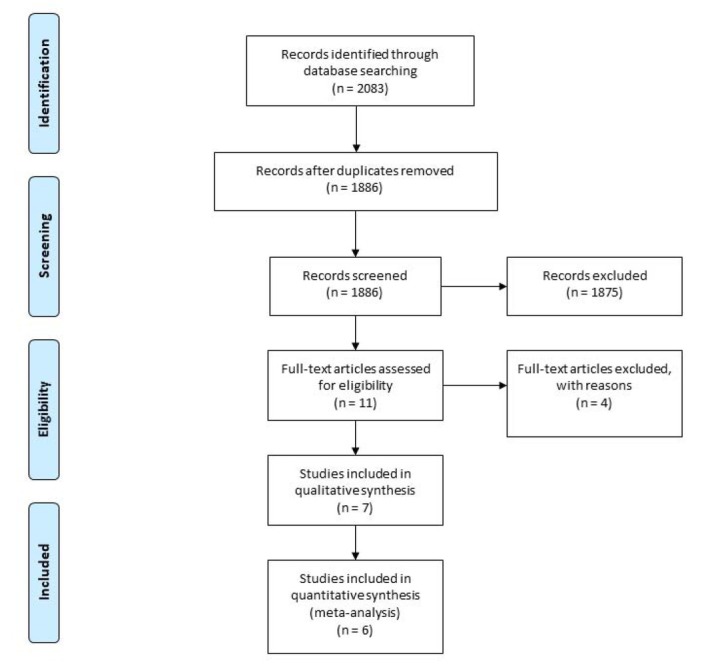
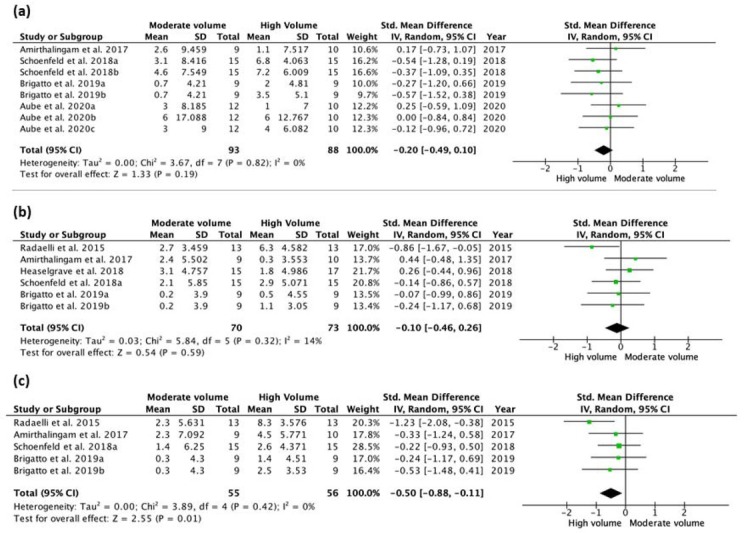
The main goal of this study was to compare responses to moderate and high training volumes aimed at inducing muscle hypertrophy. A literature search on 3 databases (Pubmed, Scopus and Chocrane Library) was conducted in January 2021. After analyzing 2083 resultant articles, studies were included if they met the following inclusion criteria: a) studies were randomized controlled trials (with the number of sets explicitly reported), b) interventions lasted at least six weeks, c) participants had a minimum of one year of resistance training experience, d) participants’ age ranged from 18 to 35 years, e) studies reported direct measurements of muscle thickness and/or the cross-sectional area, and f) studies were published in peer-review journals. Seven studies met the inclusion criteria and were included in the qualitative analysis, whereas just six were included in the quantitative analysis. All participants were divided into three groups: “low” (<12 weekly sets), “moderate” (12-20 weekly sets) and “high” volume (>20 weekly sets). According to the results of this meta-analysis, there were no differences between moderate and high training volume responses for the quadriceps (p = 0.19) and the biceps brachii (p = 0.59). However, it appears that a high training volume is better to induce muscle mass gains in the triceps brachii (p = 0.01). According to the results of this review, a range of 12-20 weekly sets per muscle group may be an optimum standard recommendation for increasing muscle hypertrophy in young, trained men.
Overview
The claims and statistics of this paper haven’t been checked yet.
Free: it reads the open-access text and checks the first 5 claims that cite a source we can check. Create a free account to check every claim.
Integrity signals
Registry
Cites
Statistics
Figures
Verification
Claims the paper makes
The claims and statistics of this paper haven’t been checked yet.
Free: it reads the open-access text and checks the first 5 claims that cite a source we can check. Create a free account to check every claim.
Claims other papers make about this one
Each is checked against this paper’s own text: does it say what the citing paper says it does?
The source backs part of the claim, not all of it — or backs it for a different population, condition or comparison.
In the citing paper
“Muscle hypertrophy was enhanced by higher volumes (≥10 sets/wk) and eccentric overload.”
From American College of Sports Medicine Position Stand. Resistance Training Prescription for Muscle Function, Hypertrophy, and Physical Performance in Healthy Adults: An Overview of Reviews (2026) · cites this paper as [130]
Experimental — accuracy not yet measured
Self-check
Percentages, sums and reported differences re-computed from the paper’s own numbers.
The self-check needs the paper’s full text.
Citations
Cites
de Morton, N. A. (2009) · Australian Journal of Physiotherapy · doi:10.1016/s0004-9514(09)70043-1 · Cited by 2,201 · cited 1×
“Study quality Oxford’s level of evidence (OCEBM Levels of Evidence Working Group et al., 2011) and the Physiotherapy Evidence Database (PEDro) scale (de Morton, 2009) were used by two independent observers to assess the methodological quality of the studies included in the systematic review.”
MethodData on the distribution of fibre types in thirty-six human muscles
Johnson, M. A., Polgar, J., Weightman, D., & Appleton, D. (1973) · Journal of the Neurological Sciences · doi:10.1016/0022-510x(73)90023-3 · Cited by 2,200 · cited 1×
“This contrasts with the results of the present meta-analysis, as the triceps brachii, which contains a higher proportion of type II fibers (Johnson et al., 1973; Terzis et al., 2003) should have responded worse to higher training volumes.”
ResultSchoenfeld, B. J., Ogborn, D., & Krieger, J. W. (2017) · Journal of Sports Sciences · doi:10.1080/02640414.2016.1210197 · Cited by 671 · cited 2×
“However, as long as the level of effort is high, training volume seems to be the most important variable (Schoenfeld et al., 2017).”
BackgroundBird, S. P., Tarpenning, K. M., & Marino, F. E. (2005) · Sports Medicine · doi:10.2165/00007256-200535100-00002 · Cited by 533 · cited 1×
“In order to generate an optimal stimulus, several variables can be manipulated, being training volume, time under tension (TUT), frequency, load (generally expressed as percentages of the 1-repetition maximum) or proximity to muscle failure which is the most widely used (Bird et al., 2005).”
BackgroundStimuli and sensors that initiate skeletal muscle hypertrophy following resistance exercise
Wackerhage, H., Schoenfeld, B. J., Hamilton, D. L., Lehti, M., & Hulmi, J. J. (2019) · Journal of Applied Physiology · doi:10.1152/japplphysiol.00685.2018 · Cited by 357
Burd, N. A., Holwerda, A. M., Selby, K. C., West, D. W. D., Staples, A. W., Cain, N. E., Cashaback, J. G. A., Potvin, J. R., Baker, S. K., & Phillips, S. M. (2010) · The Journal of Physiology · doi:10.1113/jphysiol.2010.192856 · Cited by 317 · cited 4×
“Mechanical tension is one of the main mechanisms inducing muscle hypertrophy by leading to signal transduction and increasing muscle protein synthesis (MPS) (Olsen et al., 2019; Wackerhage et al., 2018).”
BackgroundInfluentialResistance Training Volume Enhances Muscle Hypertrophy but Not Strength in Trained Men
SCHOENFELD, B. J., CONTRERAS, B., KRIEGER, J., GRGIC, J., DELCASTILLO, K., BELLIARD, R., & ALTO, A. (2019) · Medicine & Science in Sports & Exercise · doi:10.1249/mss.0000000000001764 · Cited by 281
Single vs. multiple sets of resistance exercise for muscle hypertrophy: a meta-analysis.
Krieger, J. W. (2010) · Journal of Strength and Conditioning Research · doi:10.1519/jsc.0b013e3181d4d436 · Cited by 276 · cited 2×
“Krieger (2010) compared the number of sets per exercise with its effects on hypertrophy.”
BackgroundKrzysztofik, M., Wilk, M., Wojdała, G., & Gołaś, A. (2019) · International Journal of Environmental Research and Public Health · doi:10.3390/ijerph16244897 · Cited by 264 · cited 2×
“Lastly, we have to acknowledge that increasing the number of sets is not the only way of increasing the training volume, as advanced resistance training techniques such as drop sets, cluster sets and others could be very useful when aiming at muscle hypertrophy (Krzysztofik et al., 2019).”
BackgroundMuscle fiber typology substantially influences time to recover from high-intensity exercise
Lievens, E., Klass, M., Bex, T., & Derave, W. (2020) · Journal of Applied Physiology · doi:10.1152/japplphysiol.00636.2019 · Cited by 157 · cited 2×
“…volume and fiber-type hypertrophy, and even acknowledging that different rep ranges do not necessarily affect hypertrophy in different fiber types (Schoenfeld et al., 2020), previous research suggests that type I muscle fibers tolerate higher amounts of training volume (Lievens et al., 2020).”
BackgroundRadaelli, R., Fleck, S. J., Leite, T., Leite, R. D., Pinto, R. S., Fernandes, L., & Simão, R. (2015) · Journal of Strength and Conditioning Research · doi:10.1519/jsc.0000000000000758 · Cited by 145 · cited 17×
“9%) were observed in three out of five studies (Brigatto et al., 2019; Radaelli et al., 2015; Schoenfeld et al., 2019a), respectively, and in the MV group (7.”
BackgroundMethodResultInfluentialDo metabolites that are produced during resistance exercise enhance muscle hypertrophy?
Dankel, S. J., Mattocks, K. T., Jessee, M. B., Buckner, S. L., Mouser, J. G., & Loenneke, J. P. (2017) · European Journal of Applied Physiology · doi:10.1007/s00421-017-3690-1 · Cited by 143 · cited 2×
“Proximity to failure is essential to achieve an optimal stimulus for muscle hypertrophy, regardless of the repetition range used, due to an increase in the recruitment of motor units (MUs) and their fatigue (Dankel et al., 2017; Morton et al., 2019).”
BackgroundMorton, R. W., Sonne, M. W., Farias Zuniga, A., Mohammad, I. Y. Z., Jones, A., McGlory, C., Keir, P. J., Potvin, J. R., & Phillips, S. M. (2019) · The Journal of Physiology · doi:10.1113/jp278056 · Cited by 139 · cited 2×
“Proximity to failure is essential to achieve an optimal stimulus for muscle hypertrophy, regardless of the repetition range used, due to an increase in the recruitment of motor units (MUs) and their fatigue (Dankel et al., 2017; Morton et al., 2019).”
BackgroundTerzis, G., Spengos, K., Mascher, H., Georgiadis, G., Manta, P., & Blomstrand, E. (2010) · European Journal of Applied Physiology · doi:10.1007/s00421-010-1527-2 · Cited by 110 · cited 1×
“…Kinetics - volume 81/2022 http://www.johk.pl From an acute physiological standpoint, there is evidence suggesting a dose-response relationship between training volume and phosphorylation of proteins related to MPS (Gerasimos Terzis et al., 2010), or directly an increase in MPS (Burd et al., 2010).”
BackgroundBenefits of higher resistance-training volume are related to ribosome biogenesis
Hammarström, D., Øfsteng, S., Koll, L., Hanestadhaugen, M., Hollan, I., Apró, W., Whist, J. E., Blomstrand, E., Rønnestad, B. R., & Ellefsen, S. (2020) · The Journal of Physiology · doi:10.1113/jp278455 · Cited by 99 · cited 1×
“Interestingly, a recent study found greater responses in ribosomal biogenesis after an intervention of moderate training volume vs. low training volume (Hammarström et al., 2020).”
BackgroundBaz-Valle, E., Fontes-Villalba, M., & Santos-Concejero, J. (2021) · Journal of Strength & Conditioning Research · doi:10.1519/jsc.0000000000002776 · Cited by 84 · cited 3×
“Therefore, when muscle hypertrophy is the main goal, training volume can be quantified as the number of sets per muscle group which are close to failure (Baz-Valle et al., 2018), namely, “hard sets”.”
BackgroundSelf-citationThe skeletal muscle fiber: a mechanically sensitive cell
Olsen, L. A., Nicoll, J. X., & Fry, A. C. (2019) · European Journal of Applied Physiology · doi:10.1007/s00421-018-04061-x · Cited by 83 · cited 2×
“Mechanical tension is one of the main mechanisms inducing muscle hypertrophy by leading to signal transduction and increasing muscle protein synthesis (MPS) (Olsen et al., 2019; Wackerhage et al., 2018).”
BackgroundTerzis, G. D., Georgiadis, G., Vassiliadou, E., & Manta, P. (2003) · European Journal of Applied Physiology · doi:10.1007/s00421-003-0847-x · Cited by 75 · cited 1×
“This contrasts with the results of the present meta-analysis, as the triceps brachii, which contains a higher proportion of type II fibers (Johnson et al., 1973; Terzis et al., 2003) should have responded worse to higher training volumes.”
ResultAube, D., Wadhi, T., Rauch, J., Anand, A., Barakat, C., Pearson, J., Bradshaw, J., Zazzo, S., Ugrinowitsch, C., & De Souza, E. O. (2022) · Journal of Strength & Conditioning Research · doi:10.1519/jsc.0000000000003524 · Cited by 61 · cited 18×
“In some studies, more than one analysis was carried out because they included several groups performing HV (+20 weekly sets) (Brigatto et al., 2019), and/or performed different measurements to explore muscle changes in the case of quadriceps femoris (Aube et al., 2020).”
BackgroundResultInfluentialRevisiting the roles of protein synthesis during skeletal muscle hypertrophy induced by exercise
Figueiredo, V. C. (2019) · American Journal of Physiology-Regulatory, Integrative and Comparative Physiology · doi:10.1152/ajpregu.00162.2019 · Cited by 59 · cited 1×
“Ribosomal biogenesis, understood as ribosomal capacity, has been linked to long-term muscle mass gains along with ribosomal efficiency, since they are important physiological adaptations (Figueiredo, 2019).”
BackgroundScarpelli, M. C., Nóbrega, S. R., Santanielo, N., Alvarez, I. F., Otoboni, G. B., Ugrinowitsch, C., & Libardi, C. A. (2022) · Journal of Strength & Conditioning Research · doi:10.1519/jsc.0000000000003558 · Cited by 57 · cited 5×
“S Radaelli et al. (2015) 48 young trained subjects Military, calisthenics experience CG LV: 6 Sets MV: 18 sets HV: 30 sets 24 weeks 3 HV> MV HV>LV HV>CG Scarpelli et al. (2020) 16 young trained subjects 5.1+-4,1 years Fixed group: 20 Ind group: pre intervention volume x 1.2 8 weeks 2 Ind > Fixed Schoenfeld et al. (201…”
BackgroundInfluentialSchoenfeld, B. J., Vigotsky, A. D., Grgic, J., Haun, C., Contreras, B., Delcastillo, K., Francis, A., Cote, G., & Alto, A. (2020) · Physiological Reports · doi:10.14814/phy2.14427 · Cited by 56 · cited 2×
“…volume and fiber-type hypertrophy, and even acknowledging that different rep ranges do not necessarily affect hypertrophy in different fiber types (Schoenfeld et al., 2020), previous research suggests that type I muscle fibers tolerate higher amounts of training volume (Lievens et al., 2020).”
BackgroundHeaselgrave, S. R., Blacker, J., Smeuninx, B., McKendry, J., & Breen, L. (2019) · International Journal of Sports Physiology and Performance · doi:10.1123/ijspp.2018-0427 · Cited by 55 · cited 9×
“%) in the remaining two (Amirthalingam et al., 2017; Heaselgrave et al., 2019), respectively.”
BackgroundResultInfluentialHigh Resistance-Training Volume Enhances Muscle Thickness in Resistance-Trained Men
Brigatto, F. A., Lima, L. E. D. M., Germano, M. D., Aoki, M. S., Braz, T. V., & Lopes, C. R. (2022) · Journal of Strength & Conditioning Research · doi:10.1519/jsc.0000000000003413 · Cited by 53 · cited 29×
“In some studies, more than one analysis was carried out because they included several groups performing HV (+20 weekly sets) (Brigatto et al., 2019), and/or performed different measurements to explore muscle changes in the case of quadriceps femoris (Aube et al., 2020).”
BackgroundMethodResultInfluentialBrandão, L., Painelli, V. D. S., Lasevicius, T., Silva‐Batista, C., Brendon, H., Schoenfeld, B. J., Aihara, A. Y., Cardoso, F. N., Peres, B. D. A., & Teixeira, E. L. (2020) · The Journal of Strength and Conditioning Research · doi:10.1519/jsc.0000000000003550 · Cited by 52 · cited 2×
“However, as suggested by recent studies, such as Brandão et al. (2020), the growth of the triceps brachii is not uniform, and multi-joint exercises can affect more the lateral head, and single-joint exercises the long head.”
BackgroundResultWilk, M., Tufano, J. J., & Zajac, A. (2020) · Journal of Strength and Conditioning Research · doi:10.1519/jsc.0000000000003636 · Cited by 50 · cited 2×
“…types of techniques, together with the management of repetition tempos, may increase the effective TUT (Maszczyk et al., 2020; Wilk et al., 2019) and thus, the acute increase in physiological responses (Wilk et al., 2018) may ultimately lead to further hypertrophy adaptations (Wilk et al., 2020).”
BackgroundEffects of a Modified German Volume Training Program on Muscular Hypertrophy and Strength
Amirthalingam, T., Mavros, Y., Wilson, G. C., Clarke, J. L., Mitchell, L., & Hackett, D. A. (2017) · Journal of Strength and Conditioning Research · doi:10.1519/jsc.0000000000001747 · Cited by 49 · cited 21×
“, 2019); and, in the last one, no significant differences were observed (Amirthalingam et al., 2017).”
BackgroundMethodResultInfluentialRegional Hypertrophy, the Inhomogeneous Muscle Growth: A Systematic Review
Zabaleta-Korta, A., Fernández-Peña, E., & Santos‐Concejero, J. (2020) · Strength and conditioning journal · doi:10.1519/ssc.0000000000000574 · Cited by 48 · cited 1×
“This suggests that a combination of these is important for triceps brachii hypertrophy and that, depending on where the measurements are taken (in the triceps brachii), results may vary due to regional hypertrophy (Zabaleta-Korta et al., 2020).”
BackgroundSelf-citationSchoenfeld, B., Grgic, J., Haun, C., Itagaki, T., & Helms, E. (2019) · Sports · doi:10.3390/sports7070177 · Cited by 36 · cited 28×
“Among those studies in which no significant differences were observed between groups, in one of them a larger effect size was observed in HV compared to LV and MV (Schoenfeld et al., 2019a).”
BackgroundMethodResultInfluentialThe Influence of Grip Width on Training Volume During the Bench Press with Different Movement Tempos
Wilk, M., Gepfert, M., Krzysztofik, M., Golas, A., Mostowik, A., Maszczyk, A., & Zajac, A. (2019) · Journal of Human Kinetics · doi:10.2478/hukin-2019-0055 · Cited by 35 · cited 5×
“These types of techniques, together with the management of repetition tempos, may increase the effective TUT (Maszczyk et al., 2020; Wilk et al., 2019) and thus, the acute increase in physiological responses (Wilk et al.”
BackgroundInfluentialPhysiological responses to different neuromuscular movement task during eccentric bench press.
Wilk, M., Šťastný, P., Gołaś, A., Nawrocka, M., Jelen, K., Zając, A., & Tufano, J. J. (2018) · PubMed · Cited by 35
Maszczyk, A., Wilk, M., Krzysztofik, M., Gepfert, M., Zając, A., Petr, M., & Šťastný, P. (2020) · Biology of Sport · doi:10.5114/biolsport.2019.83008 · Cited by 35 · cited 5×
“These types of techniques, together with the management of repetition tempos, may increase the effective TUT (Maszczyk et al., 2020; Wilk et al., 2019) and thus, the acute increase in physiological responses (Wilk et al.”
BackgroundInfluential
Research works printed but not linked: 1
- OCEBM Levels of Evidence Working Group, Durieux, N., Pasleau, F., & Howick, J. 2011 The Oxford 2011 Levels of Evidence Group, 2011 1 version 5653
Cited by
Exercise Metabolism and Adaptation in Skeletal Muscle
Smith, J. A. B., Murach, K. A., Dyar, K. A., & Zierath, J. R. (2023) · Nature Reviews Molecular Cell Biology · doi:10.1038/s41580-023-00606-x · Cited by 342
Refalo, M. C., Helms, E. R., Trexler, E. T., Hamilton, D. L., & Fyfe, J. J. (2023) · Sports Medicine · doi:10.1007/s40279-022-01784-y · Cited by 61
“As such, future research investigating the effect of proximity-to-failure on muscle hypertrophy should thus (i) focus on equating set volume between conditions, (ii) investigate whether the number of sets performed for a given muscle group/exercises moderates the influence of proximity-to-failure on muscle hypertrophy…”
BackgroundNuzzo, J. L., Pinto, M. D., Kirk, B. J. C., & Nosaka, K. (2024) · Sports Medicine · doi:10.1007/s40279-024-02009-0 · Cited by 56
“…fr o m s t ud i e s t h a t h a v e e x a m i n e d c h a ng e s i n m u s c l e s t r e ng t h a f t e r m i n i m a l do s e r e s i s t a n ce e x e r c i s e p r og r a m s c o m p r i s e d o f ecce n t r i c - on l y r e p e titi on s O t h e r ou t c o m e s t h a t i m p r ov e d i n s o m…”
CURRIER, B. S., D’SOUZA, A. C., SINGH, M. A. F., LOWISZ, C. V., RAWSON, E. S., SCHOENFELD, B. J., SMITH-RYAN, A. E., STEEN, J. P., THOMAS, G. A., TRIPLETT, N. T., et al. (2026) · Medicine & Science in Sports & Exercise · doi:10.1249/mss.0000000000003897 · Cited by 105
“In comparisons between distinct RTx, muscle hypertrophy was positively affected by contraction type (24,104,128,129) and volume (24,91,128,130–133), but muscle hypertrophy was not affected by frequency (24,73,74,128,131,134,135), load (24,78–81, 83, Improving hypertrophy.”
Lecce, E., Amoruso, P., Felici, F., & Bazzucchi, I. (2025) · The Journal of Physiology · doi:10.1113/jp289716 · Cited by 63
Metadata
- Authors
- Baz-Valle, E., Balsalobre-Fernández, C., Alix-Fages, C., & Santos-Concejero, J.
- Affiliations
- University of the Basque Country (ES)
- Corresponding author
- Baz-Valle, Eneko
- ORCID
- Baz-Valle, Eneko
- Venue
- Journal of Human Kinetics
- Publisher
- Termedia Sp. z.o.o.
- Published
- 2022-02-10
- Volume
- 81
- Pages
- 199-210
- ISSN
- 1640-5544 (ISSN-L)
- 1899-7562
- PMC
- PMC8884877
- OpenAlex
- W4211109326
- Cited by
- 83
- References
- 34
- Citations by year
- 2026: 18 · 2025: 22 · 2024: 23 · 2023: 16 · 2022: 4
- FWCI
- 3.55
- Type
- journal article
- Language
- en
- Open access
- diamond
- doi.org
- Licence
- cc-by
- creativecommons.org/licenses/by/4.0/ (vor)
- creativecommons.org/licenses/by/4.0/ (am)
- creativecommons.org/licenses/by/4.0/ (tdm)
- Locations
- Journal of Human Kinetics (publishedVersion, cc-by)
- PubMed Central (publishedVersion, cc-by-nc-nd)
- PubMed (publishedVersion)
- Communities in ADDI (University of the Basque Country) (submittedVersion, other-oa)
- Communities in ADDI (Universidad del Pais Vasco) (submittedVersion, cc-by)
- Hispana (submittedVersion, cc-by)
- Topics
- Health Sciences › Medicine › Orthopedics and Sports Medicine › Sports Performance and Training
- Health Sciences › Nursing › Nutrition and Dietetics › Muscle metabolism and nutrition
- Health Sciences › Medicine › Physiology (medical) › Cardiovascular and exercise physiology
- Keywords
- resistance training, training volume, muscle hypertrophy, muscle thickness, cross-sectional area, trained men, quadriceps, biceps brachii, triceps brachii, muscle mass gain
About these checks
Registry, retraction, Cites and statistics results are computed, not judged, with one exception: a printed reference that no index lists is read once by a model before it counts as a citation error. Claims are extracted by a model and kept only when their quote appears verbatim in the text; each cited source is then checked, with a model’s help, for whether it says what the claim relies on. Those verdicts can be wrong — read the claim’s quote and the cited source before relying on one.
Statistics and arithmetic are recomputed, not judged.
Confidence bands are shown only for fields calibrated on our annotated test set. None is calibrated yet, so no band is shown.
What counts as a claim ›How we measure confidence ›How we check this ›
Are you an author, or do you see a problem with this page? Request a review
Data sources
Bibliographic data: Semantic Scholar, OpenAlex, Crossref.
Contains information from the Semantic Scholar Academic Graph Datasets, made available under the ODC Attribution License (ODC-BY 1.0).
Semantic Scholar’s data is described in: Kinney, R., et al. (2023). The Semantic Scholar Open Data Platform. arXiv:2301.10140.
