

A systematic review of the effects of different resistance training volumes on muscle hypertrophy.
Open accessThe DOI matches its Crossref record; 32 of the 34 references it cites were found in a registry or an index.
Abstract
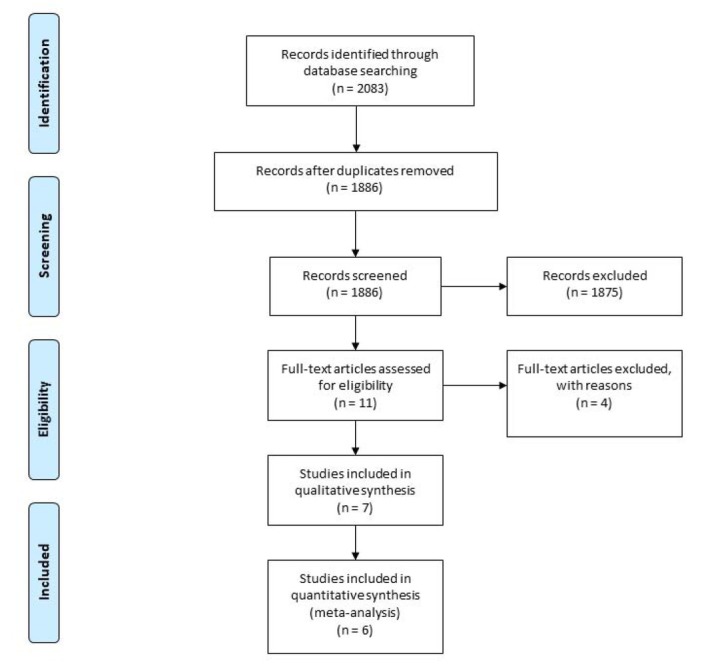
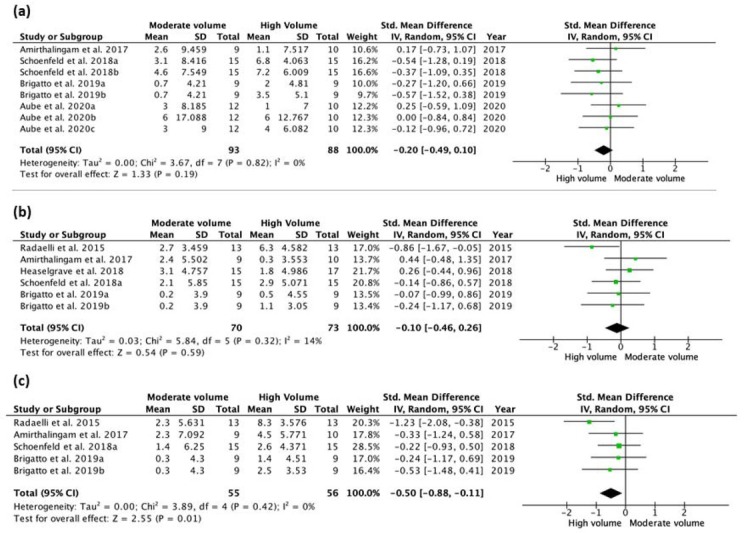
The main goal of this study was to compare responses to moderate and high training volumes aimed at inducing muscle hypertrophy. A literature search on 3 databases (Pubmed, Scopus and Chocrane Library) was conducted in January 2021. After analyzing 2083 resultant articles, studies were included if they met the following inclusion criteria: a) studies were randomized controlled trials (with the number of sets explicitly reported), b) interventions lasted at least six weeks, c) participants had a minimum of one year of resistance training experience, d) participants’ age ranged from 18 to 35 years, e) studies reported direct measurements of muscle thickness and/or the cross-sectional area, and f) studies were published in peer-review journals. Seven studies met the inclusion criteria and were included in the qualitative analysis, whereas just six were included in the quantitative analysis. All participants were divided into three groups: “low” (<12 weekly sets), “moderate” (12-20 weekly sets) and “high” volume (>20 weekly sets). According to the results of this meta-analysis, there were no differences between moderate and high training volume responses for the quadriceps (p = 0.19) and the biceps brachii (p = 0.59). However, it appears that a high training volume is better to induce muscle mass gains in the triceps brachii (p = 0.01). According to the results of this review, a range of 12-20 weekly sets per muscle group may be an optimum standard recommendation for increasing muscle hypertrophy in young, trained men.
Overview
The claims and statistics of this paper haven’t been checked yet.
Free: it reads the open-access text and checks the first 5 claims that cite a source we can check. Create a free account to check every claim.
Integrity signals
Registry
Cites
Statistics
Figures
Verification
Claims the paper makes
The claims and statistics of this paper haven’t been checked yet.
Free: it reads the open-access text and checks the first 5 claims that cite a source we can check. Create a free account to check every claim.
Claims other papers make about this one
Each is checked against this paper’s own text: does it say what the citing paper says it does?
The source backs part of the claim, not all of it — or backs it for a different population, condition or comparison.
In the citing paper
“Muscle hypertrophy was enhanced by higher volumes (≥10 sets/wk) and eccentric overload.”
From American College of Sports Medicine Position Stand. Resistance Training Prescription for Muscle Function, Hypertrophy, and Physical Performance in Healthy Adults: An Overview of Reviews (2026) · cites this paper as [130]
Experimental — accuracy not yet measured
Self-check
Percentages, sums and reported differences re-computed from the paper’s own numbers.
The self-check needs the paper’s full text.
Citations
Cites
de Morton, N. A. (2009) · Australian Journal of Physiotherapy · doi:10.1016/s0004-9514(09)70043-1 · Cited by 2,201 · cited 1×
“Study quality Oxford’s level of evidence (OCEBM Levels of Evidence Working Group et al., 2011) and the Physiotherapy Evidence Database (PEDro) scale (de Morton, 2009) were used by two independent observers to assess the methodological quality of the studies included in the systematic review.”
MethodData on the distribution of fibre types in thirty-six human muscles
Johnson, M. A., Polgar, J., Weightman, D., & Appleton, D. (1973) · Journal of the Neurological Sciences · doi:10.1016/0022-510x(73)90023-3 · Cited by 2,200 · cited 1×
“This contrasts with the results of the present meta-analysis, as the triceps brachii, which contains a higher proportion of type II fibers (Johnson et al., 1973; Terzis et al., 2003) should have responded worse to higher training volumes.”
ResultSchoenfeld, B. J., Ogborn, D., & Krieger, J. W. (2017) · Journal of Sports Sciences · doi:10.1080/02640414.2016.1210197 · Cited by 671 · cited 2×
“However, as long as the level of effort is high, training volume seems to be the most important variable (Schoenfeld et al., 2017).”
BackgroundBird, S. P., Tarpenning, K. M., & Marino, F. E. (2005) · Sports Medicine · doi:10.2165/00007256-200535100-00002 · Cited by 533 · cited 1×
“In order to generate an optimal stimulus, several variables can be manipulated, being training volume, time under tension (TUT), frequency, load (generally expressed as percentages of the 1-repetition maximum) or proximity to muscle failure which is the most widely used (Bird et al., 2005).”
BackgroundStimuli and sensors that initiate skeletal muscle hypertrophy following resistance exercise
Wackerhage, H., Schoenfeld, B. J., Hamilton, D. L., Lehti, M., & Hulmi, J. J. (2019) · Journal of Applied Physiology · doi:10.1152/japplphysiol.00685.2018 · Cited by 357
Burd, N. A., Holwerda, A. M., Selby, K. C., West, D. W. D., Staples, A. W., Cain, N. E., Cashaback, J. G. A., Potvin, J. R., Baker, S. K., & Phillips, S. M. (2010) · The Journal of Physiology · doi:10.1113/jphysiol.2010.192856 · Cited by 317 · cited 4×
“Mechanical tension is one of the main mechanisms inducing muscle hypertrophy by leading to signal transduction and increasing muscle protein synthesis (MPS) (Olsen et al., 2019; Wackerhage et al., 2018).”
BackgroundInfluentialResistance Training Volume Enhances Muscle Hypertrophy but Not Strength in Trained Men
SCHOENFELD, B. J., CONTRERAS, B., KRIEGER, J., GRGIC, J., DELCASTILLO, K., BELLIARD, R., & ALTO, A. (2019) · Medicine & Science in Sports & Exercise · doi:10.1249/mss.0000000000001764 · Cited by 281
Single vs. multiple sets of resistance exercise for muscle hypertrophy: a meta-analysis.
Krieger, J. W. (2010) · Journal of Strength and Conditioning Research · doi:10.1519/jsc.0b013e3181d4d436 · Cited by 276 · cited 2×
“Krieger (2010) compared the number of sets per exercise with its effects on hypertrophy.”
BackgroundKrzysztofik, M., Wilk, M., Wojdała, G., & Gołaś, A. (2019) · International Journal of Environmental Research and Public Health · doi:10.3390/ijerph16244897 · Cited by 264 · cited 2×
“Lastly, we have to acknowledge that increasing the number of sets is not the only way of increasing the training volume, as advanced resistance training techniques such as drop sets, cluster sets and others could be very useful when aiming at muscle hypertrophy (Krzysztofik et al., 2019).”
BackgroundMuscle fiber typology substantially influences time to recover from high-intensity exercise
Lievens, E., Klass, M., Bex, T., & Derave, W. (2020) · Journal of Applied Physiology · doi:10.1152/japplphysiol.00636.2019 · Cited by 157 · cited 2×
“…volume and fiber-type hypertrophy, and even acknowledging that different rep ranges do not necessarily affect hypertrophy in different fiber types (Schoenfeld et al., 2020), previous research suggests that type I muscle fibers tolerate higher amounts of training volume (Lievens et al., 2020).”
Background
Research works printed but not linked: 1
- OCEBM Levels of Evidence Working Group, Durieux, N., Pasleau, F., & Howick, J. 2011 The Oxford 2011 Levels of Evidence Group, 2011 1 version 5653
Cited by
Exercise Metabolism and Adaptation in Skeletal Muscle
Smith, J. A. B., Murach, K. A., Dyar, K. A., & Zierath, J. R. (2023) · Nature Reviews Molecular Cell Biology · doi:10.1038/s41580-023-00606-x · Cited by 342
Refalo, M. C., Helms, E. R., Trexler, E. T., Hamilton, D. L., & Fyfe, J. J. (2023) · Sports Medicine · doi:10.1007/s40279-022-01784-y · Cited by 61
“As such, future research investigating the effect of proximity-to-failure on muscle hypertrophy should thus (i) focus on equating set volume between conditions, (ii) investigate whether the number of sets performed for a given muscle group/exercises moderates the influence of proximity-to-failure on muscle hypertrophy…”
BackgroundNuzzo, J. L., Pinto, M. D., Kirk, B. J. C., & Nosaka, K. (2024) · Sports Medicine · doi:10.1007/s40279-024-02009-0 · Cited by 56
“…fr o m s t ud i e s t h a t h a v e e x a m i n e d c h a ng e s i n m u s c l e s t r e ng t h a f t e r m i n i m a l do s e r e s i s t a n ce e x e r c i s e p r og r a m s c o m p r i s e d o f ecce n t r i c - on l y r e p e titi on s O t h e r ou t c o m e s t h a t i m p r ov e d i n s o m…”
CURRIER, B. S., D’SOUZA, A. C., SINGH, M. A. F., LOWISZ, C. V., RAWSON, E. S., SCHOENFELD, B. J., SMITH-RYAN, A. E., STEEN, J. P., THOMAS, G. A., TRIPLETT, N. T., et al. (2026) · Medicine & Science in Sports & Exercise · doi:10.1249/mss.0000000000003897 · Cited by 105
“In comparisons between distinct RTx, muscle hypertrophy was positively affected by contraction type (24,104,128,129) and volume (24,91,128,130–133), but muscle hypertrophy was not affected by frequency (24,73,74,128,131,134,135), load (24,78–81, 83, Improving hypertrophy.”
Lecce, E., Amoruso, P., Felici, F., & Bazzucchi, I. (2025) · The Journal of Physiology · doi:10.1113/jp289716 · Cited by 63
Refalo, M. C., Helms, E. R., Robinson, Z. P., Hamilton, D. L., & Fyfe, J. J. (2024) · Journal of Sports Sciences · doi:10.1080/02640414.2024.2321021 · Cited by 29
“Therefore, it is possible that the similar quadriceps hypertrophy observed between FAIL and RIR may be explained by the similar RT volumes achieved (Baz-Valle et al., 2022; Schoenfeld et al., 2017), rather than differences in proximity-to-failure per se .”
BackgroundEffects of Mental Fatigue on Strength Endurance: A Systematic Review and Meta-Analysis
Alix‐Fages, C., Grgić, J., Jiménez‐Martínez, P., Baz-Valle, E., & Balsalobre‐Fernández, C. (2022) · Motor Control · doi:10.1123/mc.2022-0051 · Cited by 38
Self-citationLarsen, S., Kristiansen, B. S., Swinton, P. A., Wolf, M., Fredriksen, A. B., Falch, H. N., van den Tillaar, R., & Sandberg, N. Ø. (2024) · Journal of Sports Sciences · doi:10.1080/02640414.2024.2444713 · Cited by 28
“In addition, the resistance training intervention was designed to be ecologically valid with a moderate weekly set volume (Baz-Valle et al., 2022) aiming to achieve momentary failure, following a double progression method.”
Enes, A. A. N., Souza, E. O. D., & de Souza, T. P. (2023) · Medicine & Science in Sports & Exercise · doi:10.1249/mss.0000000000003317 · Cited by 29
“Additionally, recent studies have investigated the effects of RT volume on muscular adaptations via weekly sets per muscle group (3,4,6,7).”
BackgroundLin, T., Chueh, T., & Hung, T. (2023) · Sports Medicine - Open · doi:10.1186/s40798-023-00640-1 · Cited by 19
Pelland, J. C., Remmert, J. F., Robinson, Z. P., Hinson, S. R., & Zourdos, M. C. (2026) · Sports Medicine · doi:10.1007/s40279-025-02344-w · Cited by 18
Zabaleta-Korta, A., Fernández-Peña, E., Torres‐Unda, J., Francés, M., Zubillaga, A., & Santos‐Concejero, J. (2023) · Journal of Human Kinetics · doi:10.5114/jhk/163561 · Cited by 33
“This amount of weekly sets follows current guidelines of weekly resistance exercise volume to maximize muscle growth (Baz-Valle et al., 2022).”
BackgroundSelf-citationThe Importance of Recovery in Resistance Training Microcycle Construction
Sousa, C. A., Zourdos, M. C., Storey, A. G., & Helms, E. R. (2024) · Journal of Human Kinetics · doi:10.5114/jhk/186659 · Cited by 27
“When comparing 12–20 sets per muscle group per week to 20+, there were no significant differences in muscle hypertrophy for most muscle groups (Baz-Valle et al., 2022).”
BackgroundHelms, E. R., Spence, A., Sousa, C. A., Kreiger, J., Taylor, S., Oranchuk, D. J., Dieter, B. P., & Watkins, C. M. (2023) · Sports Medicine - Open · doi:10.1186/s40798-023-00651-y · Cited by 21
“Further, in a similar analysis of higher-volume studies, Baz-Valle et al. [35] reported no significant differences between 12–20 and 20 + sets for both biceps and quadriceps, but significantly greater hypertrophy in the triceps when performing 20 + weekly sets compared to 12–20.”
ResultAlix‐Fages, C., González-Cano, H., Baz-Valle, E., & Balsalobre‐Fernández, C. (2023) · Motor Control · doi:10.1123/mc.2022-0129 · Cited by 18
Self-citationGarbisu-Hualde, A., Gutierrez, L., & Santos‐Concejero, J. (2023) · Journal of Human Kinetics · doi:10.5114/jhk/162958 · Cited by 16
“The quantity of work performed per session, understood as the total number of sets (Baz-Valle et al., 2022) or the volume load (sets x repetitions x kilogram) (Schoenfeld et al., 2014), is related to the quantity of gained muscle mass.”
BackgroundSelf-citationEnes, A. A. N., Oneda, G., Leonel, D. F., Lemos, L., Alves, F., Ferreira, L. H. B., Escalante, G., Schoenfeld, B. J., & de Souza, T. P. (2024) · European Journal of Sport Science · doi:10.1002/ejsc.12042 · Cited by 12
“Furthermore, training volume could be a confounding variable regarding muscular adaptations (Baz ‐ Valle et al., 2022; Ralston et al., 2017).”
BackgroundVargas-Molina, S., García-Sillero, M., Bonilla, D. A., Petro, J. L., García-Romero, J., & Benítez‐Porres, J. (2024) · Journal of the International Society of Sports Nutrition · doi:10.1080/15502783.2024.2306308 · Cited by 14
“While performing RT exercises for muscle hypertrophy often involves 12 and 20 sets [13], and even reaching up to 20 repetitions [14], evaluating 1-RM may not fully capture the effectiveness of musculoskeletal adaptations in recreational or advanced individuals.”
BackgroundLyngbæk, M. P. P., Legaard, G. E., Nielsen, N. S., Durrer, C. G., Almdal, T., Lund, M. A. V., Liebetrau, B., Ewertsen, C., Lauridsen, C. A., Solomon, T. P. J., et al. (2024) · Journal of sport and health science/Journal of Sport and Health Science · doi:10.1016/j.jshs.2024.100999 · Cited by 11
Moreno, E. N., Sampson, D. T., Figueroa, E. C., Jessee, M. B., & Buckner, S. L. (2024) · European Journal of Applied Physiology · doi:10.1007/s00421-024-05655-4 · Cited by 8
“Although these volumes would fall under a “low-volume approach” according to a recent review by Baz-Valle et al. (2022) (i.e., < 12 weekly sets) and are considerably lower than those performed in the Scarpelli et al. (2022) investigation, they are comparable to studies that have prescribed…”
Enes, A. A. N., Correa, C. L., Bernardo, M. F., Salles, G. N., Oneda, G., Leonel, D. F., Fleck, S. J., Phillips, S. M., Souza, E. O. D., & de Souza, T. P. (2025) · Journal of Sports Sciences · doi:10.1080/02640414.2025.2459003 · Cited by 9
“The volume load and the number of weekly sets for a muscle group are key factors in muscular adaptations (Baz-Valle et al., 2022; B. Schoenfeld et al., 2021).”
Dereshgi, H. A. (2023) · IEEE Access · doi:10.1109/access.2023.3325669 · Cited by 7
“These exercises contract the BB by using resistance to create tension in the muscle, which can help increase muscle strength and size [22].”
BackgroundEffect weight training on muscular hypertrophy: a systematic review
Ihsan, F., Nasrulloh, A., Nugroho, S., & Yuniana, R. (2023) · Pedagogy of Physical Culture and Sports · doi:10.15561/26649837.2023.0601 · Cited by 11
“According to Baz-Valle et al. [18, 19], high training volumes (i.e., many sets and reps) tend to be more effective in stimulating hypertrophy than low training volumes.”
MethodThe Effect of Time-Equated Concurrent Training Programs in Resistance-Trained Men
Dolan, C., Quiles, J. M., Goldsmith, J. A., Mendez, K. M., Klemp, A., Robinson, Z. P., Pelland, J. C., Coccia, C. C., & Zourdos, M. C. (2024) · Journal of Human Kinetics · doi:10.5114/jhk/185637 · Cited by 7
“This aligns with research indicating a dose-response relationship between volume and hypertrophy (Baz-Valle et al., 2022; Schoenfeld et al., 2017a) and that hypertrophy can be achieved with a wide loading range (Schoenfeld et al., 2017b).”
BackgroundBigger Calves from Doing Higher Resistance Training Volume?
Kassiano, W., Costa, B. D. D. V., Kunevaliki, G., Lisboa, F., Tricoli, I., Francsuel, J., Lima, L., Stavinski, N. G. D. L., & Cyrino, E. S. (2024) · International Journal of Sports Medicine · doi:10.1055/a-2316-7885 · Cited by 5
“Results are less consistent for other muscles such as biceps and triceps brachii [5, 8, 9].”
BackgroundNunes, P. R. P., Kassiano, W., Castro-e-Souza, P., Camilo, B. D. F., Cristina-Souza, G., Souza, L. M. V., Cyrino, E. S., & Carneiro, M. A. S. (2024) · Archives of Gerontology and Geriatrics · doi:10.1016/j.archger.2024.105474 · Cited by 10
Nakatani, M., Takai, Y., & Kanehisa, H. (2024) · PLoS ONE · doi:10.1371/journal.pone.0307841 · Cited by 11
Reljic, D., Zieseniss, N., Herrmann, H. J., Neurath, M. F., & Zopf, Y. (2024) · Nutrients · doi:10.3390/nu16162713 · Cited by 12
“…periods of warm-up and cool-down [55]) and low-volume resistance training (LOW-RT, previously defined as 12 weekly exercise sets per muscle group [56]), have gained increasing popularity among exercisers who have tight time schedules and thus have become a fruitful topic of research in recent…”
BackgroundAshtary‐Larky, D., Mohammadi, S., Mousavi, S. A. H., Hajizadeh, L., Candow, D. G., Forbes, S. C., Afrisham, R., Farrokhi, V., António, J., & Suzuki, K. (2025) · Nutrients · doi:10.3390/nu17193126 · Cited by 6
“Improvements in body composition, particularly reductions in FM, increases in lean mass, or both, are primarily influenced by dietary intake and the duration and intensity of exercise training [72,73].”
Ashtary‐Larky, D., Mohammadi, S., Hajizadeh, L., Mousavi, S. A. H., Forbes, S. C., Candow, D. G., & António, J. (2025) · Journal of the International Society of Sports Nutrition · doi:10.1080/15502783.2025.2586523 · Cited by 6
Kamo, H., Oyama, G., Nagaki, K., & Hattori, N. (2025) · Frontiers in Neurology · doi:10.3389/fneur.2025.1609823 · Cited by 3
Varović, D., Žganjer, K., Wolf, M., Androulakis‐Korakakis, P., Schoenfeld, B. J., & Mikulić, P. (2025) · Applied Physiology, Nutrition, and Metabolism · doi:10.1139/apnm-2025-0238 · Cited by 6
The Importance of Previous Resistance Training Volume on Muscle Growth in Trained Individuals
Hammert, W. B., Moreno, E. N., & Buckner, S. L. (2023) · Strength and conditioning journal · doi:10.1519/ssc.0000000000000798 · Cited by 6
Fernández-Pardo, T. E., Furio‐Valverde, M., García-Arrabé, M., Valcárcel-Linares, D., Mahíllo, I., & Peces‐Barba, G. (2023) · Heliyon · doi:10.1016/j.heliyon.2023.e21103 · Cited by 8
“This is true if we think of diaphragmatic thickness as an indicator of strength [18], but it has already been seen that this muscular hypertrophy is also a response of the organism to training [20].”
BackgroundResultKorotych, V. (2024) · Bulletin Of Medical And Biological Research · doi:10.61751/bmbr/2.2024.25 · Cited by 8
González-Alcázar, F. J., Jiménez‐Martínez, P., Alix‐Fages, C., Ruiz‐Ariza, A., Casuso, R. A., Varela-Goicoechea, J., García‐Ramos, A., & Jerez‐Martínez, A. (2025) · Applied Sciences · doi:10.3390/app15041974 · Cited by 3
Self-citationLesinski, M., Bashford, G. R., & Cassel, M. (2024) · Journal of Sports Sciences · doi:10.1080/02640414.2024.2413803 · Cited by 2
“While the long-term effects of resistance training on, for instance, muscle hypertrophy and muscle architecture have received considerable attention (Baz-Valle et al., 2022; Cuthbert et al., 2019; Gérard et al., 2020; Krzysztofik et al., 2019; Lopez et al., 2021; Schoenfeld et al., 2016; Yagiz et…”
Jerez‐Martínez, A., Frutos, J. M. G.-D., & Romero‐Arenas, S. (2025) · Journal of science and medicine in sport · doi:10.1016/j.jsams.2025.06.007 · Cited by 3
Camargo, J. B. B., Bittencourt, D., da Silva, D. G., Bergamasco, J. G. A., Michel, J. M., Roberts, M. D., & Libardi, C. A. (2025) · European Journal of Applied Physiology · doi:10.1007/s00421-025-05959-z · Cited by 3
“Importantly, risk of bias analysis was not applied in any of the previous meta-analyses on this topic (Schoenfeld et al. 2017; Baz-Valle et al. 2022; Krieger 2010).”
InfluentialFitas, A., Miras‐Moreno, S., SANTOSOLIVEIRA, J., Cidrais, M., Pezarat‐Correia, P., Schoenfeld, B. J., & Mendonça, G. V. (2026) · Sports Health A Multidisciplinary Approach · doi:10.1177/19417381261416535 · Cited by 3
“3,22,24 However, an issue that remains unresolved is whether VBT can potentiate increases in muscle size beyond those seen with a more conventional approach to muscle hypertrophy (i.e., based on a preset movement tempo for concentric and eccentric phases).”
Fonseca, P. A. B., Ide, B. N., Pascher, E., & da Mota, G. R. (2023) · Sports Medicine · doi:10.1007/s40279-023-01946-6 · Cited by 2
“Similarly, the authors also recommended that future research should employ set volumes that reflect current scientific guidelines for best practice [17]; however, the cited study investigated young trained participants only.”
Managing Fatigue in Team Sports: A Brief Review of Concurrent Training Effects Within the Microcycle
Γραμμένου, Μ., & Nulty, C. D. (2025) · Strength and conditioning journal · doi:10.1519/ssc.0000000000000903 · Cited by 2
Wulaningsih, R., Hudiyawati, D., & Subrata, S. A. (2025) · Malahayati International Journal of Nursing and Health Science · doi:10.33024/minh.v8i3.939 · Cited by 1
“Conversely, in finger grip strength, the control group exhibited positive outcomes, while the intervention group declined, likely due to fatigue or the lack of focused training for intrinsic hand muscles (Baz-Valle et al., 2022).”
Cardozo, D. (2025) · International Journal of Physical Education Fitness and Sports · doi:10.54392/ijpefs2531 · Cited by 1
Hammert, W. B., Moreno, E. N., Sallberg, R. W., Yamada, Y., Metcalf, E. E., Young, E. W., Kataoka, R., & Loenneke, J. P. (2026) · European Journal of Applied Physiology · doi:10.1007/s00421-026-06129-5 · Cited by 2
Dhahbi, W., Briki, W., Dergaa, I., Slim, I., Omri, A. E., Pyne, D. B., & Saad, H. B. (2026) · International Journal of Sports Physiology and Performance · doi:10.1123/ijspp.2025-0454 · Cited by 3
Casanova‐Rodríguez, D., Ranchal‐Sánchez, A., Rodríguez, R. B., Perrino, F. M., Varona, A. P., & Jurado‐Castro, J. M. (2026) · Annals of Physical and Rehabilitation Medicine · doi:10.1016/j.rehab.2026.102155 · Cited by 1
Peinado, P. J. B., & Sotillo, A. A. (2024) · IntechOpen eBooks · doi:10.5772/intechopen.1007051 · Cited by 2
Photobiomodulation before blood flow restriction exercises: a randomized clinical trial
Ferlito, J. V., Ferlito, M. V., Rolnick, N. D., Ferreira, D. M., Leal‐Junior, E. C. P., Marchi, T. D., & Branco, C. S. (2025) · International Journal of Sports Medicine · doi:10.1055/a-2564-8876 · Cited by 1
Lyngbæk, M. P. P., Legaard, G. E., Nielsen, N. S., Durrer, C. G., Almdal, T., Lund, M. A. V., Liebetrau, B., Ewertsen, C., Lauridsen, C. A., Solomon, T. P. J., et al. (2023) · medRxiv · doi:10.1101/2023.06.04.23290749 · Cited by 2
“promotes more skeletal muscle hypertrophy, 12-20 sets/per week is likely most effective, but these numbers of sets/per week were not examined when undertaking a catabolic state like weight loss [36].”
BackgroundTraining and Nutritional Habits Before and During COVID-19 Quarantine on Physically Active Women
Perez, J. L., Rosales‐Soto, G., Glaves, A., Echeverry, P., Parada, C., Gómez-López, J., Morales‐Acuna, F. J., & Monsalves‐Álvarez, M. (2022) · Journal of Exercise and Nutrition · doi:10.53520/jen2022.103123 · Cited by 1
Regional hypertrophy: the role of exercise resistance profile in trained womenPreprint
Zabaleta-Korta, A., Fernández-Peña, E., Torres‐Unda, J., Francés, M., Zubillaga, A., & Santos‐Concejero, J. (2022) · Research Square · doi:10.21203/rs.3.rs-1530884/v1
Self-citationFORMAS DE QUANTIFICAR O VOLUME DO TREINAMENTO RESISTIDO PARA HIPERTROFIA: UMA BREVE REVISÃO
Carvalho, A. D. S., da Silva, L. S. L., Abdalla, P. P., Silio, L. F., Fileni, C. H. P., Maneschy, M. D. S., Almeida, K. D. S., Pereira, A. D. A., de Carvalho, A. F., Rodrigues, M. F., et al. (2023) · Revista CPAQV - Centro de Pesquisas Avançadas em Qualidade de Vida · doi:10.36692/v15n1-03r
Ozaki, H. (2023) · Journal of Trainology · doi:10.17338/trainology.12.1_14
Is The Maximal Effort Method Killing Our Athletes? What Would Coaches Say?
El-gazzar, H. (2024) · Journal of Applied Sports Science · doi:10.21608/jass.2024.272411.1103
Campos, P. H. A., Barreto, R. V., Fontanetti, G., da Silva, L. S. L., Gomes, M. M., & de Lima, L. C. R. (2026) · JMIR Research Protocols · doi:10.2196/67537
“If the hypotheses that a greater training volume induces greater hypertrophy adaptations are confirmed, the results will align with previous findings in the literature [2,6,29,31].”
Jerez‐Martínez, A., & Romero‐Arenas, S. (2025) · Research Quarterly for Exercise and Sport · doi:10.1080/02701367.2025.2542816 · Cited by 2
“This extended muscular effort not only promotes significant increases in muscle hypertrophy (Baz-Valle et al., 2022; Krzysztofik et al., 2019), but also elevates metabolic stress within the muscle, which may stimulate mitochondrial biogenesis and enhance oxidative capacity (Koga et al., 2019; Mang…”
Larsen, S., Sandberg, N. Ø., Schoenfeld, B. J., Fredriksen, A. B., Kristiansen, B. S., Wolf, M., van den Tillaar, R., Swinton, P. A., & Falch, H. N. (2025) · European Journal of Sport Science · doi:10.1002/ejsc.70030
Impact of resistance training-induced changes in muscle quality on muscle power: a post-hoc analysis
Zimin, W. A. N. G., Taniguchi, M., Saeki, J., & Ichihashi, N. (2025) · The Journal of Sports Medicine and Physical Fitness · doi:10.23736/s0022-4707.25.16924-7 · Cited by 1
Arı, U., Ulupınar, S., & Özbay, S. (2025) · BMC Sports Science Medicine and Rehabilitation · doi:10.1186/s13102-025-01256-6
Enes, A. A. N., Nass, G., Alves, R. C., Mohan, A. E., Piñero, A., Oneda, G., Leonel, D. F., Schoenfeld, B. J., & de Souza, T. P. (2025) · Journal of Human Kinetics · doi:10.5114/jhk/209051 · Cited by 1
“Likewise, the number of sets compared within a single intervention can vary widely (Baz-Valle et al., 2022; Krieger, 2010; Scarpelli et al., 2020).”
Dias, W. G., de Camargo, J. B. B., Braz, T. V., Batista, D. R., Col, L. O., Prestes, J., & Lopes, C. R. (2025) · The Journal of Strength and Conditioning Research · doi:10.1519/jsc.0000000000005336
Lin, T.-Y., Chueh, T.-Y., & Hung, T.-M. (2024) · Figshare · doi:10.6084/m9.figshare.26648538
Lin, T.-Y., Chueh, T.-Y., & Hung, T.-M. (2023) · Figshare · doi:10.6084/m9.figshare.24715454
Lin, T.-Y., Chueh, T.-Y., & Hung, T.-M. (2024) · Figshare · doi:10.6084/m9.figshare.24715567
Lin, T.-Y., Chueh, T.-Y., & Hung, T.-M. (2024) · Figshare · doi:10.6084/m9.figshare.26648529
Lin, T.-Y., Chueh, T.-Y., & Hung, T.-M. (2024) · Figshare · doi:10.6084/m9.figshare.26648532
Lin, T.-Y., Chueh, T.-Y., & Hung, T.-M. (2024) · Figshare · doi:10.6084/m9.figshare.26648535
Lin, T.-Y., Chueh, T.-Y., & Hung, T.-M. (2024) · Figshare · doi:10.6084/m9.figshare.26648526
Dolan, C., Brown, G., Muirhead, E., & Swan, L. (2025) · International Journal of Cardiology Congenital Heart Disease · doi:10.1016/j.ijcchd.2025.100650
“Increase in load or volume should occur gradually [44].”
Training Practices Among Spanish Natural Elite Bodybuilders in the Pre-Contest Phase
Baz-Valle, E., Martínez-Gómez, S., Gené‐Morales, J., Jiménez‐Martínez, P., Alix‐Fages, C., & Santos‐Concejero, J. (2026) · Sports · doi:10.3390/sports14010020
“Although recent literature has provided evidence-based hypertrophy training recommendations for natural bodybuilders [11,12], little is known about the extent to which these guidelines are implemented in real-world practice.”
Self-citationViera, H. L. S., Gidiel-Machado, L., Pinto, R. S., & Lanferdini, F. J. (2026) · Clinical Physiology and Functional Imaging · doi:10.1111/cpf.70054
Luedeka, D., Strick, K., Roche, N., & Williams, C. (2026) · Journal of Functional Morphology and Kinesiology · doi:10.3390/jfmk11020131 · Cited by 3
Meta-analyses in sport and exercise science: sometimes the right tool at the wrong time?
Möck, S., Afonso, J. R., Warneke, K., & Klaus, W. (2026) · Systematic Reviews · doi:10.1186/s13643-026-03148-3
“Baz-Valle et al. [15], however, did not observe significant differences between medium and high training volumes for the quadriceps and the biceps brachii.”
InfluentialMorin, J.-P., Parent, A.-A. A., & Tremblay, M. (2026) · International Journal of Sports Science & Coaching · doi:10.1177/17479541261436950
“52,53 This could be because, in trained lifters, training history (de fi ned by their usual training volume) in fl uences hypertrophy outcomes, meaning the protocol might not have been a signi fi cant enough increase in workload from their typical routine to induce muscle adaptations over 6 weeks.”
Valério, D. F., Moriggi, R., Damas, F., & Barroso, R. (2026) · Research Quarterly for Exercise and Sport · doi:10.1080/02701367.2026.2652354
Nieto, Á. A. V., Díaz, A. H., Millán, M. H., & Sagredo, D. (2026) · Sports Health A Multidisciplinary Approach · doi:10.1177/19417381261438760
“6,121 In the case of elderly trainees, > 2 training days per muscle group per week appear to offer no significant benefits on hypertrophy or strength.”
InfluentialCoskun, I. A., & Kafkas, M. E. (2026) · BMC Sports Science Medicine and Rehabilitation · doi:10.1186/s13102-026-01874-8
“These outcomes are consistent with previous evidence supporting the superiority of multi-set programs for enhancing strength and hypertrophy [3, 4, 7, 12, 27–30].”
InfluentialMohabbat, M., Nouri, M., & Arazi, H. (2026) · The FASEB Journal · doi:10.1096/fj.202504395r
“Consistent with the present study, exercise typically leads to a decrease in this ratio [65] but, considering exercise modality reveals some contradictions.”
Methods and Systems of Resistance Training: A Narrative Review Based on Contemporary Recommendations
Rios, M. J., Ferreira, F. A., Chapman, D. W., Fernandes, R. J., & Reis, V. M. (2026) · Sports · doi:10.3390/sports14080348
Chien, K., Chan, T.-H., Lin, T.-R., & Lin, T.-C. (2026) · Journal of Functional Morphology and Kinesiology · doi:10.3390/jfmk11030370
Fitas, A., Gomes, M., Valdés-Álvarez, A., Miras‐Moreno, S., Cardoso, C., Correia, P. P., & Mendonça, G. V. (2026) · European Journal of Applied Physiology · doi:10.1007/s00421-026-06428-x
Trexler, E. T., & Pontzer, H. (2026) · Journal of Nutrition · doi:10.1016/j.tjnut.2026.101884
Ritterbusch, A., Grim, C., Tischer, T., Lutter, C., Mauch, F., Beitzel, K., Seil, R., & Hoppe, M. (2026) · Sportverletzung · Sportschaden · doi:10.1055/a-2937-3214
Metadata
- Authors
- Baz-Valle, E., Balsalobre-Fernández, C., Alix-Fages, C., & Santos-Concejero, J.
- Affiliations
- University of the Basque Country (ES)
- Corresponding author
- Baz-Valle, Eneko
- ORCID
- Baz-Valle, Eneko
- Venue
- Journal of Human Kinetics
- Publisher
- Termedia Sp. z.o.o.
- Published
- 2022-02-10
- Volume
- 81
- Pages
- 199-210
- ISSN
- 1640-5544 (ISSN-L)
- 1899-7562
- PMC
- PMC8884877
- OpenAlex
- W4211109326
- Cited by
- 83
- References
- 34
- Citations by year
- 2026: 18 · 2025: 22 · 2024: 23 · 2023: 16 · 2022: 4
- FWCI
- 3.55
- Type
- journal article
- Language
- en
- Open access
- diamond
- doi.org
- Licence
- cc-by
- creativecommons.org/licenses/by/4.0/ (vor)
- creativecommons.org/licenses/by/4.0/ (am)
- creativecommons.org/licenses/by/4.0/ (tdm)
- Locations
- Journal of Human Kinetics (publishedVersion, cc-by)
- PubMed Central (publishedVersion, cc-by-nc-nd)
- PubMed (publishedVersion)
- Communities in ADDI (University of the Basque Country) (submittedVersion, other-oa)
- Communities in ADDI (Universidad del Pais Vasco) (submittedVersion, cc-by)
- Hispana (submittedVersion, cc-by)
- Topics
- Health Sciences › Medicine › Orthopedics and Sports Medicine › Sports Performance and Training
- Health Sciences › Nursing › Nutrition and Dietetics › Muscle metabolism and nutrition
- Health Sciences › Medicine › Physiology (medical) › Cardiovascular and exercise physiology
- Keywords
- resistance training, training volume, muscle hypertrophy, muscle thickness, cross-sectional area, trained men, quadriceps, biceps brachii, triceps brachii, muscle mass gain
About these checks
Registry, retraction, Cites and statistics results are computed, not judged, with one exception: a printed reference that no index lists is read once by a model before it counts as a citation error. Claims are extracted by a model and kept only when their quote appears verbatim in the text; each cited source is then checked, with a model’s help, for whether it says what the claim relies on. Those verdicts can be wrong — read the claim’s quote and the cited source before relying on one.
Statistics and arithmetic are recomputed, not judged.
Confidence bands are shown only for fields calibrated on our annotated test set. None is calibrated yet, so no band is shown.
What counts as a claim ›How we measure confidence ›How we check this ›
Are you an author, or do you see a problem with this page? Request a review
Data sources
Bibliographic data: Semantic Scholar, OpenAlex, Crossref.
Contains information from the Semantic Scholar Academic Graph Datasets, made available under the ODC Attribution License (ODC-BY 1.0).
Semantic Scholar’s data is described in: Kinney, R., et al. (2023). The Semantic Scholar Open Data Platform. arXiv:2301.10140.
