

The DOI matches its Crossref record; 16 of the 16 references it cites were found in a registry or an index.
Quantum Secure Lightweight Cryptography with Quantum Permutation Pad
Open accessAbstract
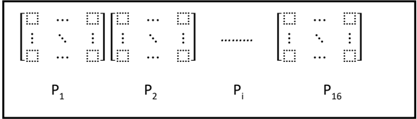
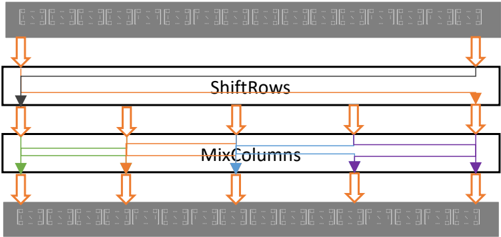
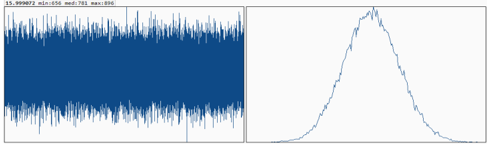
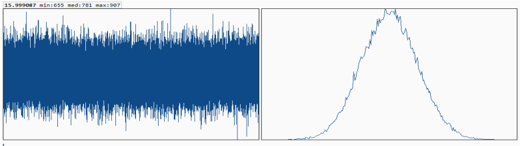
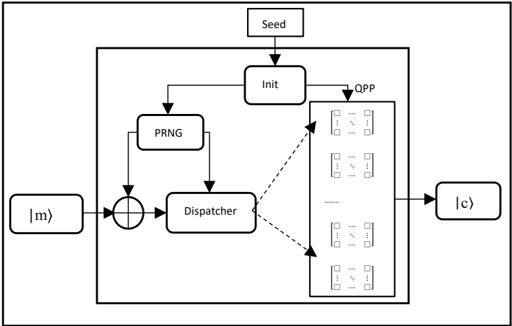
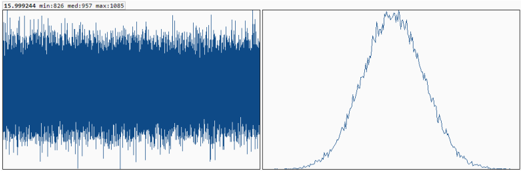
Quantum logic gates represent certain quantum operations to perform quantum computations.Of those quantum gates, there is a category of classical behavior gates called quantum permutation gates.As a quantum algorithm, quantum permutation pad or QPP consists of multiple quantum permutation gates to be implemented both in a quantum computing system as a quantum circuit operating on n-qubits' states for transformations and in a classical computing system represented by a pad of n-bit permutation matrices.Since first time proposed in 2020, QPP has been recently applied to create a quantum safe lightweight block cipher by replacing SubBytes and AddRoundKey with QPP in AES called AES-QPP.In AES-QPP, QPP consists of 16 selected 8-bit permutation matrices based on the shared classical key materials.For quantum safe, the key length can be any size from 256 bits to 4 KB.That means, this QPP holds up to 4 KB of Shannon information entropy.Its code size is less than 2 KB with 4 KB of RAM memory.In this paper, we propose to apply QPP for a streaming cipher and carry out its encryption performance and the randomness analysis of this streaming cipher.The proposed QPP streaming cipher demonstrates not only good randomness in its ciphertexts but also huge performance improvement: 13x faster than AES-256, with an overall runtime space (6.8 KB).
Overview
The claims and statistics of this paper haven’t been checked yet.
Free: it reads the open-access text and checks the first 5 claims that cite a source we can check. Create a free account to check every claim.
Integrity signals
Registry
Cites
Statistics
Figures
Verification
Claims the paper makes
The claims and statistics of this paper haven’t been checked yet.
Free: it reads the open-access text and checks the first 5 claims that cite a source we can check. Create a free account to check every claim.
Claims other papers make about this one
Each is checked against this paper’s own text: does it say what the citing paper says it does?
The cited source says what the claim attributes to it.
In the citing paper
“In view of this, recent research works [111] and [112] have attempted to design quantum safe lightweight cryptosystems using quantum permutation pads.”
From Zero Trust Architecture (ZTA): A Comprehensive Survey (2022) · cites this paper as [111]
Self-check
Percentages, sums and reported differences re-computed from the paper’s own numbers.
The self-check needs the paper’s full text.
Citations
Cites
Communication Theory of Secrecy Systems
Shannon, C. E. (1949) · Bell System Technical Journal · doi:10.1002/j.1538-7305.1949.tb00928.x · Cited by 9,440 · cited 1×
“Kuang and Bettenburg [15] extend the Shannon perfect secrecy of the classical one-time-pad (OTP) over GF(2) [16], to their proposed quantum permutation pad (QPP) over a quantum computational basis.”
A fast quantum mechanical algorithm for database search
Grover, L. K. (1996) · Proceedings of the twenty-eighth annual ACM symposium on Theory of computing - STOC '96 · doi:10.1145/237814.237866 · Cited by 8,830
Algorithms for quantum computation: discrete logarithms and factoring
Shor, P. W. (2002) · Proceedings 35th Annual Symposium on Foundations of Computer Science · doi:10.1109/sfcs.1994.365700 · Cited by 8,713
Quantum supremacy using a programmable superconducting processor
Arute, F., Arya, K., Babbush, R., Bacon, D., Bardin, J. C., Barends, R., Biswas, R., Boixo, S., Brandao, F. G. S. L., Buell, D. A., et al. (2019) · Nature · doi:10.1038/s41586-019-1666-5 · Cited by 7,720
Report on lightweight cryptography
McKay, K. A., Bassham, L., Turan, M. S., & Mouha, N. (2017) · doi:10.6028/nist.ir.8114 · Cited by 353
The Advanced Encryption Standard Process
Daemen, J., & Rijmen, V. (2002) · Information Security and Cryptography · doi:10.1007/978-3-662-04722-4_1 · Cited by 322
Triathlon of lightweight block ciphers for the Internet of things
Dinu, D., Corre, Y. L., Khovratovich, D., Perrin, L. P., Großschädl, J., & Biryukov, A. (2018) · Journal of Cryptographic Engineering · doi:10.1007/s13389-018-0193-x · Cited by 157
New Impossible Differential Attacks on AES
Lu, J., Dunkelman, O., Keller, N., & Kim, J. (2008) · Lecture Notes in Computer Science · doi:10.1007/978-3-540-89754-5_22 · Cited by 146
Substitution-Permutation Networks Resistant to Differential and Linear Cryptanalysis
Heys, H. M., & Tavares, S. E. (1996) · Journal of Cryptology · doi:10.1007/bf02254789 · Cited by 100
Saturnin: a suite of lightweight symmetric algorithms for post-quantum security
Canteaut, A., Duval, S., Leurent, G., Naya‐Plasencia, M., Perrin, L. P., Pornin, T., & Schrottenloher, A. (2020) · IACR Transactions on Symmetric Cryptology · doi:10.46586/tosc.v2020.is1.160-207 · Cited by 91
Cited by
Zero Trust Architecture (ZTA): A Comprehensive Survey
Syed, N. F., Shah, S. W., Shaghaghi, A., Anwar, A., Baig, Z., & Doss, R. (2022) · IEEE Access · doi:10.1109/access.2022.3174679 · Cited by 406
“In view of this, recent research works [111], [112] have attempted to design quantum safe lightweight cryptosystems using quantum permutation pads.”
BackgroundQuantum permutation pad for universal quantum-safe cryptography
Kuang, R., & Barbeau, M. (2022) · Quantum Information Processing · doi:10.1007/s11128-022-03557-y · Cited by 53
Self-citationQuantum encryption with quantum permutation pad in IBMQ systems
Kuang, R., & Perepechaenko, M. (2022) · EPJ Quantum Technology · doi:10.1140/epjqt/s40507-022-00145-y · Cited by 42
Self-citationQuantum encryption of superposition states with quantum permutation pad in IBM quantum computers
Perepechaenko, M., & Kuang, R. (2023) · EPJ Quantum Technology · doi:10.1140/epjqt/s40507-023-00164-3 · Cited by 34
Self-citationBenchmark Performance of Digital QKD Platform Using Quantum Permutation Pad
Lou, D., He, A., Redding, M., Geitz, M., Toth, R., Döring, R., Carson, R., & Kuang, R. (2022) · IEEE Access · doi:10.1109/access.2022.3212738 · Cited by 14
Self-citation
Metadata
- Authors
- Kuang, R., Lou, D., He, A., & Conlon, A.
- Affiliations
- Quantropi (Canada) (CA)
- Corresponding author
- Kuang, Randy
- Venue
- Advances in Science, Technology and Engineering Systems Journal
- Publisher
- ASTES Journal
- Published
- 2021-08
- Volume
- 6
- Issue
- 4
- Pages
- 401-405
- ISSN
- 2415-6698 (ISSN-L)
- OpenAlex
- W3196437899
- Semantic Scholar
- eb9e9aa96ce9c53f76dd29523c1c413966fc81bf
- Cited by
- 7
- References
- 16
- Citations by year
- 2025: 1 · 2023: 2 · 2022: 4
- FWCI
- 0.53
- Type
- journal article
- Language
- en
- Open access
- diamond
- doi.org
- Licence
- cc-by-sa
- Locations
- Advances in Science Technology and Engineering Systems Journal (publishedVersion, cc-by-sa)
- Topics
- Physical Sciences › Computer Science › Artificial Intelligence › Cryptographic Implementations and Security
- Physical Sciences › Computer Science › Artificial Intelligence › Quantum Computing Algorithms and Architecture
- Physical Sciences › Computer Science › Information Systems › Cryptography and Residue Arithmetic
- Keywords
- post-quantum cryptography, lightweight block cipher, permutation matrices, randomness analysis, encryption performance
About these checks
Registry, retraction, Cites and statistics results are computed, not judged, with one exception: a printed reference that no index lists is read once by a model before it counts as a citation error. Claims are extracted by a model and kept only when their quote appears verbatim in the text; each cited source is then checked, with a model’s help, for whether it says what the claim relies on. Those verdicts can be wrong — read the claim’s quote and the cited source before relying on one.
Statistics and arithmetic are recomputed, not judged.
Confidence bands are shown only for fields calibrated on our annotated test set. None is calibrated yet, so no band is shown.
What counts as a claim ›How we measure confidence ›How we check this ›
Are you an author, or do you see a problem with this page? Request a review
How to cite
Cite CoChat for the checks on this page, and the paper for its own findings.
- This page
- CoChat. (2026). Citation check: Quantum Secure Lightweight Cryptography with Quantum Permutation Pad. https://app.cochat.ai/papers/10.25046/aj060445
- The paper
- Kuang, R., Lou, D., He, A., & Conlon, A. (2021). Quantum Secure Lightweight Cryptography with Quantum Permutation Pad. Advances in Science, Technology and Engineering Systems Journal. https://doi.org/10.25046/aj060445
Data sources
Bibliographic data: Semantic Scholar, OpenAlex, Crossref.
Contains information from the Semantic Scholar Academic Graph Datasets, made available under the ODC Attribution License (ODC-BY 1.0).
Semantic Scholar’s data is described in: Kinney, R., et al. (2023). The Semantic Scholar Open Data Platform. arXiv:2301.10140.
