

The DOI matches its Crossref record; 1 of the 1 references it cites were found in a registry or an index.
Declining Employee Engagement & Employee Performance: The Noxious Effects of Workplace Bullying
Open accessAbstract
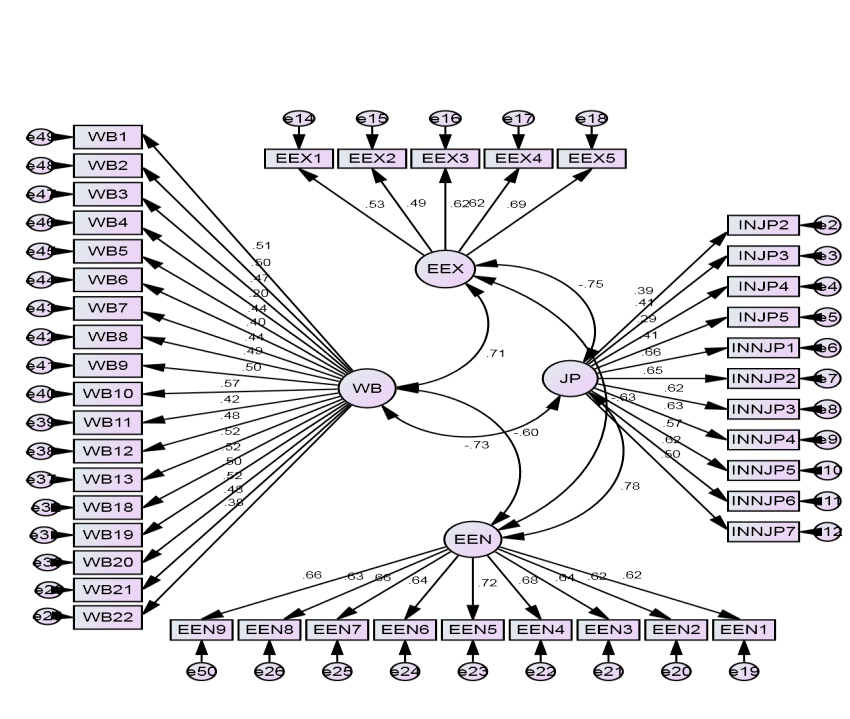
The rationale of this research study is to inspect about variations in employee performance and employee engagement in Pakistani context brought about by the workplace bullying. Another objective is to produce comprehensive empirical evidence of bullying in the specific Pakistani context. The purpose of paper is to examine whether emotional exhaustion plays a mediating role between workplace bullying, employee performance and employee engagement. Even most of the organizations are unaware about this critical issue to curtail down its effect. A cross-sectional design is used in the research study, which focuses on emotional exhaustion that serves as a mediator between workplace bullying and employee performance and employee engagement. The paper is based upon cross-sectional and self-reported survey research design. Furthermore longitudinal research design is recommended for future investigation of the relationships among these constructs. Consolidated policies must be sought by the management to combat with the vicious prevalence of workplace bullying. This will not only encourage the conducive work environment but also ensure positive work climate among employees.
Overview
The claims and statistics of this paper haven’t been checked yet.
Run the check — free, no account needed. It reads the open-access text and checks the sources it cites.
Integrity signals
Registry
Cites
Statistics
Figures
Verification
Claims the paper makes
The claims and statistics of this paper haven’t been checked yet.
Run the check — free, no account needed. It reads the open-access text and checks the sources it cites.
Claims other papers make about this one
Each is checked against this paper’s own text: does it say what the citing paper says it does?
The source backs part of the claim, not all of it — or backs it for a different population, condition or comparison.
In the citing paper
“Workplace bullying produces adverse effects, including increased individual turnover intention, diminished job satisfaction, reduced work engagement, and decreased job performance [15–18].”
From Narcissistic leadership, workplace bullying, turnover intention, and creative performance: a study of nurses (2025) · cites this paper as [18]
Experimental — accuracy not yet measured
Self-check
Percentages, sums and reported differences re-computed from the paper’s own numbers.
The self-check needs the paper’s full text.
Citations
Cites
The cognitive activation theory of stress.
Ursin, H., & Eriksen, H. R. (2004) · Psychoneuroendocrinology · doi:10.1016/s0306-4530(03)00091-x · Cited by 1,004
Research works printed but not linked: 59
- Arenas, A., Giorgi, G., Montani, F., Mancuso, S., Perez, J. F., Mucci, N., & Arcangeli, G. (2015a). Workplace bullying in a sample of Italian and Spanish employees and its relationship withjob satisfaction, and psychological well-being. Frontiers in Psychology, 6, e1912. https://doi. org/10.3389/fpsyg.2015.01912. · DOI
- Attell, B. K., Brown, K. K., & Treiber, L. A. (2017). Workplace bullying, perceived job stressors, and psychological distress: Gender and race differences in the stress process. Social Science Research, 65, 1–12, In press. · DOI
- Bagozzi, R. P., & Yi, Y. (2012). Specification, evaluation, and interpretation of structural equation models. Journal of the academy of marketing science, 40(1), 8-34. · DOI · Paper page
- Bakker, A. B., & Demerouti, E. (2007). The job demands-resources model: State of the art. Journal of Managerial Psychology, 22(3), 309–328. · DOI · Paper page
- Bakker, A. B., Schaufeli, W. B., Leiter, M. P., & Taris, T. W. (2008). Work engagement: An emerging concept in occupational health psychology. Work & Stress, 22, 187–200. · DOI · Paper page
- Bolton, L. R., Harvey, R. D., Grawitch, M. J., and Barber, L. K. (2012), “Counterproductive work behaviors in response to emotional exhaustion: A moderated meditational approach”, Stress and Health, Vol, 28, pp.222-233. · DOI
- Bowling, N.A. and Beehr, T.A. (2006), “Workplace harassment from the victim’s perspective: a theoretical model and meta-analysis”, Journal of Applied Psychology, Vol. 91 No. 5, pp. 998-1012. · DOI · Paper page
- Crawford, E. R., LePine, J. A., & Rich, B. L. (2010). Linking job demands and resources to employee engagement and burnout: A theoretical extension and meta-analytic test. American Psychological Association. Retrieved from http://psycnet.apa.org/journals/apl/95/5/834/ · DOI
- D’Cruz, P., Paull, M., Omari, M., & Guneri-Cangarli, B. (2016). Target experiences of workplace bullying: Insights from Australia, India and Turkey. Employee Relations: The International Journal, 38(5), 805–823. · DOI
- Einarsen, S. (2000). Harassment and bullying at work: A review of the scandinavian approach. Aggression and Violent Behavior, 5, 379–401. · DOI
- Einarsen, S., Hoel, H., Zapf, D., & Cooper, C. L. (2011). The concept of bullying and harassment at work: The European tradition. In S. Einarsen, H. Hoel, D. Zapf, & C. L. Cooper (Eds.), Bullying and harassment in the workplace: Developments in theory, research, and practice (pp. 3–40). Boca Raton: CRC · DOI
- Einarsen, S., Skogstad, A., Rørvik, E., Lande, A. B., & Nielsen, M. B. (2016). Climate for conflict management, exposure to workplace bullying and work engagement: A moderated mediation analysis. The International Journal of Human Resource Management, 1–22. · DOI
- Escartin, J., Zapf, D., Arrieta, C., & Rodriguez-Carballeira, A. (2011). Workers’ perception of workplace bullying: A cross-cultural study. European Journal of Work and Organizational Psychology, 20(2), 178–205. https://doi.org/10.1080/13594320903395652. · DOI
- Giorgi, G. (2012). Workplace bullying in academia creates a negative work environment: An Italian study. Employee Responsibilities & Rights Journal, 24(4), 261–275. https://doi.org/10.1007/s10672-012-9193-7. · DOI
- Glaso, L., Vie, T. L., Holmdal, G. R., & Einarsen, S. (2011a). An application of affective events theory to workplace bullying: The role of emotions, trait anxiety, and trait anger. European Psychologist, 16, 198–208. · DOI
- Gorgievski, M. J., & Hobfoll, S. E. (2008). Work can burn us out or fire us up: Conservation of resources in burnout and engagement. In J. R. B. Halbesleben (Ed.), Handbook of stress and burnout in health care (pp. 7–22). Hauppauge, NY: NOVA Science
- Gupta, R. (2017). Impact of workplace bullying on employee and organizational well-being in human services sector. Doctoral Dissertation, University of Jammu, India.
- Harrington, D. (2009). Confirmatory factor analysis. Oxford University Press. · DOI
- Hobfoll, S. E. (1989). Conservation of resources: A new attempt at conceptualizing stress. American Psychologist, 44(3), 513. · DOI · Paper page
- Hobfoll, S. E., & Shirom, A. (2001). Conservation of resource theory: Applications to stress and management in the workplace. In R. T. Golembiewski (Ed.), Handbook of organizational behavivor (2nd ed.). (pp. 57–80). New York, NY: Marcel Dekker.
- Hochschild, A. R. (1983), The managed heart. Berkeley: University of California Press
- Hogh, A., Hansen, A. M., Mikkelsen, E. G., & Persson, R. (2012). Exposure to negative acts at work, psychological stress reactions and physiological stress response. Journal of Psychosomatic Research, 73, 47–52. · DOI
- Houshmand, M., O’Reilly, J., Robinson, S., & Wolff, A. (2012). Escaping bullying: The simultaneous impact of individual and unit-level bullying on turnover intentions. Human Relations, 65, 901–918. · DOI
- Hu, L. T., & Bentler, P. M. (1999). Cutoff criteria for fit indexes in covariance structure analysis: Conventional criteria versus new alternatives. Structural equation modeling: a multidisciplinary journal, 6(1), 1-55. · DOI · Paper page
- Hurley, J., Hutchinson, M., Bradbury, J., & Browne, G. (2016). Nexus between preventive policy inadequacies, workplace bullying, and mental health: Qualitative findings from the experiences of Australian public sector employees. International Journal of Mental Health Nursing, 25(1), 12–18. https://doi.org/10.1111/inm.12190. · DOI
- Jackson, D., Clare, J. and Mannix, J. (2002), “Who would want to be a nurse? Violence in the workplace – a factor in recruitment and retention”, Journal of Nursing Management, Vol. 10 No. 1, pp. 13-20. · DOI
- Jarvis, C. B., MacKenzie, S. B., & Podsakoff, P. M. (2003). A critical review of construct indicators and measurement model misspecification in marketing and consumer research. Journal of consumer research, 30(2), 199-218. · DOI
- Kahn, W. A. (1990). Psychological conditions of personal engagement and disengagement at work. Academy of Management Journal, 33(4), 692–724. · DOI · Paper page
- KJ Preacher, AF Hayes - Behavior research methods, instruments, & …, 2004 – Springer
- L Hu, PM Bentler - … equation modeling: a multidisciplinary journal, 1999 - Taylor & Francis
- Macey, W. H., & Schneider, B. (2008). The meaning of employee engagement. Industrial and Organizational Psychology, 1(1), 3–30. · DOI
- Maslach, C. and Jackson, S. E. (1984), “Burnout in organizational settings”, In S. Oskamp (Ed.), Applied Social Psychology Annual: Applications in Organizational Settings, Thousand Oaks, California: Sage, pp. 133-153.
- Maslach, C., Schaufeli, W. B. and Leiter, M. P. (2001), “Job burnout”, Annual Review of Psychology, Vol. 52, pp. 397-422. · DOI · Paper page
- May, D. R., Gilson, R. L., & Harter, L. M. (2004). The psychological conditions of meaningfulness, safety and availability and the engagement of the human spirit at work. Journal of Occupational and Organizational Psychology, 77(1), 11–37. · DOI · Paper page
- McMillan, I. (1995), “Losing control”, Nursing Times, Vol. 91 No. 15, pp. 40-43.
- Meurs, J. A., & Perrewe, P. L. (2011). Cognitive activation theory of stress: An integrative theoretical approach to work stress. Journal of Management, 37, 1043–1068. · DOI
- Mikkelsen, E. G., & Einarsen, S. (2002). Relationships between exposure to bullying at work and psychological and psychosomatic health complaints: The role of state negative affectivity and generalized self–efficacy. Scandinavian Journal of Psychology, 43, 397–405. · DOI
- Miner, A. G., Glomb, T. M. and Hulin, C. (2005), “Experience sampling mood and its correlates at work”, Journal of Occupational and Organizational Psychology, Vol. 78 No. 2, pp. 171-193. · DOI
- Nielsen, M. B. and Einarsen, S. (2012), “Outcomes of workplace bullying: a meta-analytic review”, Work and Stress, Vol. 26 No. 4, pp. 309-332. · DOI
- Nielsen, M. B., Matthiesen, S. B., & Einarsen, S. (2008). Sense of coherence as a protective mechanism among targets of workplace bullying. Journal of Occupational Health Psychology, 13, 128–136. · DOI
- Park, J.H., & Ono, M. (2016). Effects of workplace bullying on work engagement and health: The mediating role of job insecurity. The International Journal of Human Resource Management, 1–24. https://doi.org/10.1080/09585192.2016.1155164. · DOI
- Parzefall, M.-R., & Salin, D. M. (2010). Perceptions of and reactions to workplace bullying: A social exchange perspective. Human Relations, 63, 761–780. · DOI
- Peng, Y. C., Chen, L. J., Chang, C. C., & Zhuang, W. L. (2016). Workplace bullying and workplace deviance: The mediating effect of emotional exhaustion and the moderating effect of core self-evaluations. Employee Relations, 38(5), 755-769. · DOI
- Penhaligon, N. L., Louis, W. R., & Restubog, S. L. D. (2013). Feeling left out? The mediating role of perceived rejection on workgroup mistreatment and affective, behavioral, and organizational outcomes and the moderating role of organizational norms. Journal of Applied Social Psychology, 43, 480–497. · DOI
- Raman, P., Sambasivan, M. and Kumar, N. (2016), “Counterproductive work behavior among frontline government employees: Role of personality, emotional intelligence, affectivity, emotional labor, and emotional exhaustion”, Journal of Work and Organizational Psychology, Vol. 32, pp.25-37. · DOI
- Refsgaard, J. C., Van der Sluijs, J. P., Brown, J., & Van der Keur, P. (2006). A framework for dealing with uncertainty due to model structure error. Advances in Water Resources, 29(11), 1586-1597. · DOI
- Rodriguez-Munoz, A., Baillien, E., De Witte, H., Moreno-Jimenez, B., & Pastor, J. C. (2009). Cross-lagged relationships between workplace bullying, job satisfaction and engagement: Two longitudinal studies. Work & Stress, 23, 225–243. · DOI
- Rodriguez-Munoz, A., Moreno-Jimenez, B., Sanz Vergel, A. I., & Garrosa Hernandez, E. (2010). Post-traumatic symptoms among victims of workplace bullying: Exploring gender differences and shattered assumptions. Journal of Applied Social Psychology, 40, 2616–2635. · DOI
- Schaufeli, W. B., & Bakker, A. (2003). Test manual for the Utrecht work engagement scale. The Netherlands: Utrecht University · DOI
- Schaufeli, W. B., Salanova, M., González-Romá, V., & Bakker, A. B. (2002). The measurement of engagement and burnout: A two sample confirmatory factor analytic approach. Journal of Happiness Studies, 3(1), 71–92. · DOI · Paper page
- Spector, P. E., and Fox, S. (2005), “the stressor-emotion model of counterproductive work behavior (CWB)”. In S. Fox & P. E. Spector (Eds.), Counterproductive work behavior: Investigations of actors and targets. Washington, DC: American Psychological Association, pp, 151-174. · DOI
- Tabachnick, B. G., & Fidell, L. S. (2007). Using multivariate statistics. Allyn & Bacon/Pearson Education.
- Trépanier, S. G., Fernet, C. and Austin, S. (2013), “Workplace bullying and psychological health at work: The mediating role of satisfaction of needs for autonomy, competence and relatedness”, Work and Stress, Vol. 27 No. 2, pp. 123-140. · DOI
- Tuckey, M. R., & Neall, A. M. (2014). Workplace bullying erodes job and personal resources: Between- and within-person perspectives. Journal of Occupational Health Psychology, 19(4), 413. · DOI
- Vie, T. L., Glaso, L., & Einarsen, S. (2011). Health outcomes and self-labeling as a victim of workplace bullying. Journal of Psychosomatic Research, 70(1), 37–43. https://doi.org/10.1016/j. jpsychores.2010.06.007. · DOI
- Vie, T. L., GlasO, L., & Einarsen, S. (2012). How does it feel? Workplace bullying, emotions and musculoskeletal complaints. Scandinavian Journal of Psychology, 53, 165–173. · DOI
- Witt, L. A., Andrews, M. C. and Carlson, D. S. (2004), “When conscientiousness isn’t enough: Emotional exhaustion and performance among call center customer service representatives”, Journal of Management, Vol. 30 No. 1, pp. 149-160. · DOI
- Wright, T. A. and Cropanzano, R. (2000), “Psychological well-being and job satisfaction as predictors of job performance”, Journal of Occupational Health Psychology, Vol. 5 No. 1, pp. 84-94. · DOI
- Xu, A. J., Loi, R., & Lam, L. W. (2015). The bad boss takes it all: How abusive supervision and leader–member exchange interact to influence employee silence. The Leadership Quarterly, 26(5), 763–774. · DOI
Cited by
Sorted by citations
Faeq, D. K. (2025) · BMC Nursing · doi:10.1186/s12912-025-03479-x · Cited by 6
Metadata
- Authors
- Malik, M. S., & Sattar, S.
- Affiliations
- Bahauddin Zakariya University (PK)
- ORCID
- Shahzadi Sattar
- Venue
- Journal of Business and Social Review in Emerging Economies
- Published
- 2020-03-31
- Volume
- 6
- Issue
- 1
- Pages
- 165-176
- ISSN
- 2519-0326 (ISSN-L)
- 2519-089X
- OpenAlex
- W3017292035
- Cited by
- 2
- References
- 1
- Citations by year
- 2025: 1 · 2022: 1
- FWCI
- 0.27
- Type
- journal article
- Language
- en
- Open access
- diamond
- doi.org
- Licence
- Locations
- Journal of Business and Social Review in Emerging Economies (publishedVersion, cc-by-nc)
- RePEc: Research Papers in Economics (submittedVersion)
- DOAJ (DOAJ: Directory of Open Access Journals) (submittedVersion, cc-by-sa)
- Topics
- Social Sciences › Business, Management and Accounting › Organizational Behavior and Human Resource Management › Workplace Violence and Bullying
- Social Sciences › Business, Management and Accounting › Organizational Behavior and Human Resource Management › Job Satisfaction and Organizational Behavior
- Social Sciences › Business, Management and Accounting › Organizational Behavior and Human Resource Management › Employee Performance and Management
- Keywords
- workplace harassment, employee engagement, employee performance, emotional exhaustion, mediation, Pakistani employees, organizational climate
About these checks
Registry, retraction, Cites and statistics results are computed, not judged, with one exception: a printed reference that no index lists is read once by a model before it counts as a citation error. Claims are extracted by a model and kept only when their quote appears verbatim in the text; each cited source is then checked, with a model’s help, for whether it says what the claim relies on. Those verdicts can be wrong — read the claim’s quote and the cited source before relying on one.
Statistics and arithmetic are recomputed, not judged.
Confidence bands are shown only for fields calibrated on our annotated test set. None is calibrated yet, so no band is shown.
What counts as a claim ›How we measure confidence ›How we check this ›
Are you an author, or do you see a problem with this page? Request a review
