

Mindfulness buffers the impact of COVID-19 outbreak information on sleep duration.
Open accessPublished version of a preprint
The DOI matches its Crossref record; 79 of the 81 references it cites were found in a registry or an index.
Abstract
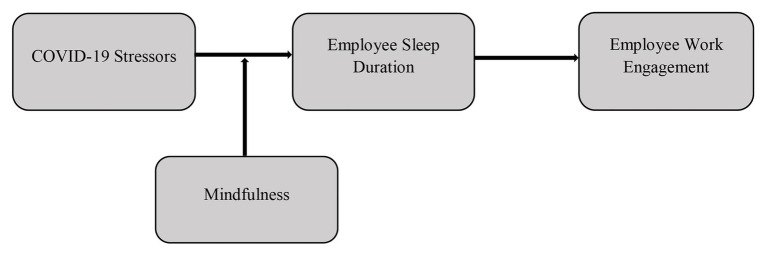
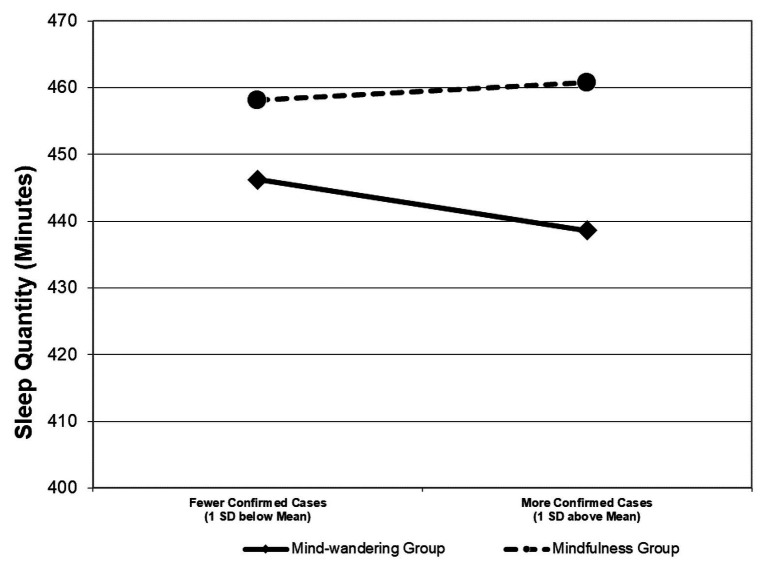
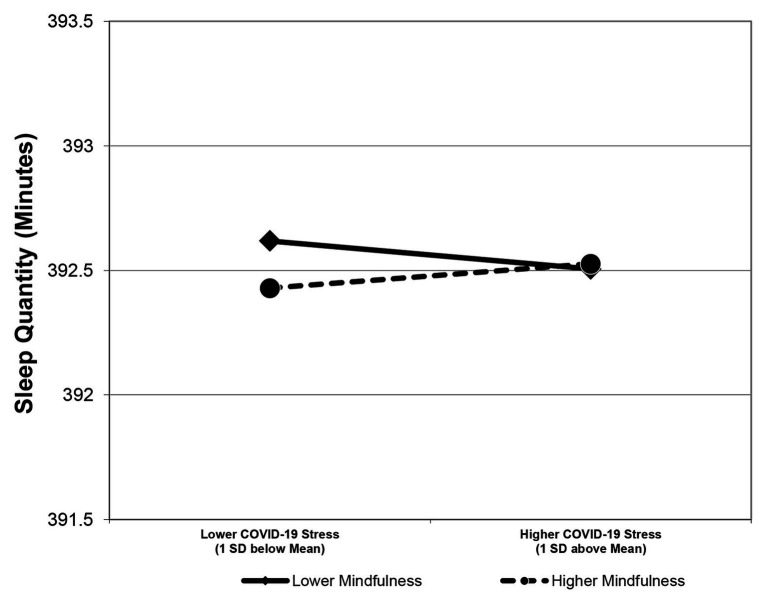
We examine whether mindfulness can neutralize the negative impact of COVID-19 stressors on employees’ sleep duration and work engagement. In Study 1, we conducted a field experiment in Wuhan, China during the lockdown between February 20, 2020, and March 2, 2020, in which we induced state mindfulness by randomly assigning participants to either a daily mindfulness practice or a daily mind-wandering practice. Results showed that the sleep duration of participants in the mindfulness condition, compared with the control condition, was less impacted by COVID-19 stressors (i.e., the increase of infections in the community). In Study 2, in a 10-day daily diary study in the United Kingdom between June 8, 2020, and June 19, 2020, we replicate our results from Study 1 using a subjective measure of COVID-19 stressors and a daily measure of state mindfulness. In addition, we find that mindfulness buffers the negative effect of COVID-19 stressors on work engagement mediated by sleep duration. As the COVID-19 pandemic is ongoing and the number of reported cases continues to rise globally, our findings suggest that mindfulness is an evidence-based practice that can effectively neutralize the negative effect of COVID-19 stressors on sleep and work outcomes. The findings of the present study contribute to the employee stress and well-being literature as well as the emerging organizational research on mindfulness.
Overview
The claims and statistics of this paper haven’t been checked yet.
Free: it reads the open-access text and checks the first 5 claims that cite a source we can check. Create a free account to check every claim.
Integrity signals
Registry
Cites
Statistics
Figures
Verification
Claims the paper makes
The claims and statistics of this paper haven’t been checked yet.
Free: it reads the open-access text and checks the first 5 claims that cite a source we can check. Create a free account to check every claim.
Claims other papers make about this one
Each is checked against this paper’s own text: does it say what the citing paper says it does?
The cited source doesn’t support the claim as written.
In the citing paper
“Multiple studies indicated that mindfulness-based practices have been particularly efficacious in improving sleep quality during the pandemic in the United Kingdom (Zheng et al., 2020), China (Zheng et al., 2020), Iran (Nourian et al., 2021), Italy (Bossi et al., 2022), and America (Weis et al., 2021).”
From RESILIENCE, COPING, AND THE COVID-19 PANDEMIC ACROSS THE GLOBE – AN UPDATE: WHAT HAVE WE LEARNED? (2023) · doi:10.36131/cnfioritieditore20230411 · cites this paper as Zheng et al., 2020
Checked by a reasoning model — may be wrong.
Experimental — accuracy not yet measuredThe source backs part of the claim, not all of it — or backs it for a different population, condition or comparison.
In the citing paper
“perhaps mindfulness may strongly improve sleep during the pandemic (e.g., Zheng et al., 2020)”
From RESILIENCE, COPING, AND THE COVID-19 PANDEMIC ACROSS THE GLOBE – AN UPDATE: WHAT HAVE WE LEARNED? (2023) · doi:10.36131/cnfioritieditore20230411 · cites this paper as Zheng et al., 2020
Experimental — accuracy not yet measuredThe source backs part of the claim, not all of it — or backs it for a different population, condition or comparison.
In the citing paper
“There is substantial evidence in adults that trait mindfulness promotes resilience to COVID-19 stressors [46–51].”
From Mindfulness supports emotional resilience in children during the COVID-19 pandemic (2023) · cites this paper as [51]
Experimental — accuracy not yet measuredThe source backs part of the claim, not all of it — or backs it for a different population, condition or comparison.
In the citing paper
“Furthermore, online mindfulness training proved a reduction of anxiety and depression in Covid-19 patients themselves during isolation41, an increase of resilience in adolescents42, as well as employees’ sleep duration and work engagement43.”
From Mindfulness-based online intervention increases well-being and decreases stress after Covid-19 lockdown (2022) · cites this paper as [43]
Experimental — accuracy not yet measuredThe source backs part of the claim, not all of it — or backs it for a different population, condition or comparison.
In the citing paper
“These factors enhance the state of being in contact with one’s values, overall well-being, and quality of life (Khandelwal, 2020; Zheng et al., 2020).”
From Knowledge of COVID-19 and Its Influence on Mindfulness, Cognitive Emotion Regulation and Psychological Flexibility in the Indian Community (2020) · cites this paper as Zheng et al., 2020
Experimental — accuracy not yet measured
3 more claims about this paper
Create a free account to see every claim other papers make about this one.
Self-check
Percentages, sums and reported differences re-computed from the paper’s own numbers.
The self-check needs the paper’s full text.
Citations
Cites
Yaşlı Kadınlarda Üreme Sağlığı
Kokanalı, D., & Engin Üstün, Y. (n.d.) · DergiPark (Istanbul University) · Cited by 170,090
Hierarchical Linear Models: Applications and Data Analysis Methods
Davidian, M. (2003) · Journal of the American Statistical Association · doi:10.1198/jasa.2003.s288 · Cited by 13,723
The benefits of being present: Mindfulness and its role in psychological well-being
Brown, K. W., & Ryan, R. M. (2003) · Journal of Personality and Social Psychology · doi:10.1037/0022-3514.84.4.822 · Cited by 13,448
PSYCHOLOGICAL CONDITIONS OF PERSONAL ENGAGEMENT AND DISENGAGEMENT AT WORK.
Kahn, W. A. (1990) · Academy of Management Journal · doi:10.2307/256287 · Cited by 10,975 · cited 1×
“Employees who are highly engaged in their work activities not only devote their physical effort, but are also mentally vigilant and emotionally dedicated to the endeavor, and thereby performing better in their tasks (Kahn, 1990; Ashforth and Humphrey, 1995; Rich et al., 2010).”
BackgroundThe measurement of engagement and burnout: a two sample confirmatory factor analytic approach.
Schaufeli, W. B., Salanova, M., González-romá, V., & Bakker, A. B. (2002) · Journal of Happiness Studies · doi:10.1023/a:1015630930326 · Cited by 10,014
Job demands, job resources, and their relationship with burnout and engagement: a multi‐sample study
Schaufeli, W. B., & Bakker, A. B. (2004) · Journal of Organizational Behavior · doi:10.1002/job.248 · Cited by 9,297
The Measurement of Work Engagement With a Short Questionnaire: A Cross-National Study
Schaufeli, W. B., Bakker, A. B., & Salanova, M. (2006) · Educational and Psychological Measurement · doi:10.1177/0013164405282471 · Cited by 7,403
Using social and behavioural science to support COVID-19 pandemic response
Bavel, J. J. V., Baicker, K., Boggio, P. S., Capraro, V., Cichocka, A., Cikara, M., Crockett, M. J., Crum, A. J., Douglas, K. M., Druckman, J. N., et al. (2020) · Nature Human Behaviour · doi:10.1038/s41562-020-0884-z · Cited by 4,964
Klein, K. J., & Kozlowski, S. W. J. (2000) · Cited by 4,914
Job Engagement: Antecedents and Effects on Job Performance
Rich, B. L., Lepine, J. A., & Crawford, E. R. (2010) · Academy of Management Journal · doi:10.5465/amj.2010.51468988 · Cited by 3,833
Research works printed but not linked: 1
- DeArmond S. Chen P. Y. (2004). The effects of job stressors on workplace sleepiness: A meta-analysis. Unpublished master’s thesis, Colorado State University, Fort Collins, Colorado.
Cited by
Williamson, A. J., Gish, J. J., & Stephan, U. (2021) · Entrepreneurship Theory and Practice · doi:10.1177/10422587211006431 · Cited by 175
Simonsson, O., Bazin, O., Fisher, S. D., & Goldberg, S. B. (2021) · Psychiatry Research · doi:10.1016/j.psychres.2021.114222 · Cited by 99
Bossi, F., Zaninotto, F., D’Arcangelo, S., Lattanzi, N., Malizia, A. P., & Ricciardi, E. (2022) · Scientific Reports · doi:10.1038/s41598-022-10361-2 · Cited by 74
Superio, D. L., Anderson, K. L., Oducado, R. M. F., Luceño, M. T., Palcullo, V. E. V., & Bendalian, M. V. T. (2021) · International Journal of Disaster Risk Reduction · doi:10.1016/j.ijdrr.2021.102414 · Cited by 73
Dubey, N., Podder, P., & Pandey, D. (2020) · Frontiers in Psychology · doi:10.3389/fpsyg.2020.589365 · Cited by 56
Sanilevici, M., Reuveni, O., Lev-Ari, S., Golland, Y., & Levit-Binnun, N. (2021) · Frontiers in Psychology · doi:10.3389/fpsyg.2021.720965 · Cited by 54
Impact of COVID-19 First Wave on Psychological and Psychosocial Dimensions: A Systematic Review
Filindassi, V., Pedrini, C., Sabadini, C., Duradoni, M., & Guazzini, A. (2022) · COVID · doi:10.3390/covid2030022 · Cited by 61
Schnepper, R., Reichenberger, J., & Blechert, J. (2020) · Frontiers in Psychology · doi:10.3389/fpsyg.2020.595806 · Cited by 48
How Urban Green Spaces Need to Change to Address the Public Post-Covid Expectations
Sikorska, D., Wojnowska-Heciak, M., Heciak, J., Bukowska, J., Łaszkiewicz, E., Hopkins, R. J., & Sikorski, P. (2022) · Urban forestry & urban greening · doi:10.1016/j.ufug.2023.127838 · Cited by 57
Employee Engagement Management in the COVID-19 Pandemic: A Systematic Literature Review
Andrlić, B., Priyashantha, K. G., & Alwis, D. (2023) · Sustainability · doi:10.3390/su15020987 · Cited by 84
Blanco‐Donoso, L. M., Garrosa, E., Moreno‐Jiménez, J. E., Gálvez‐Herrer, M., & Jiménez, B. M. (2020) · International Journal of Nursing Studies Advances · doi:10.1016/j.ijnsa.2020.100003 · Cited by 60
Here and now – the role of mindfulness in post-pandemic tourism
Stankov, U., & Filimonau, V. (2021) · Tourism Geographies · doi:10.1080/14616688.2021.2021978 · Cited by 58
Mamede, A., Merkelbach, I., Noordzij, G., & Denktas, S. (2022) · Frontiers in Psychology · doi:10.3389/fpsyg.2022.820959 · Cited by 37
Pizarro-Ruiz, J. P., Ordóñez-Camblor, N., Del-Líbano, M., & Escolar-LLamazares, M.-C. (2021) · International Journal of Environmental Research and Public Health · doi:10.3390/ijerph18020802 · Cited by 33
Adanaqué-Bravo, I., Segovia, K. F. E., Gómez-Salgado, J. C., García‐Iglesias, J. J., Fagundo-Rivera, J., & Ruíz-Frutos, C. (2023) · International Journal of Public Health · doi:10.3389/ijph.2022.1605605 · Cited by 56
Özmen, S., & Yürümezoğlu, H. A. (2022) · Journal of Nursing Management · doi:10.1111/jonm.13817 · Cited by 47
Clarke, F. J., Kotera, Y., & McEwan, K. (2021) · Sustainability · doi:10.3390/su13126761 · Cited by 45
Self-Compassion and Rumination Type Mediate the Relation between Mindfulness and Parental Burnout
Paucsik, M., Urbanowicz, A. M., Leys, C., Kotsou, I., Baeyens, C., & Shankland, R. (2021) · International Journal of Environmental Research and Public Health · doi:10.3390/ijerph18168811 · Cited by 44
Lim, J., Leow, Z., Ong, J., Pang, L.-S., & Lim, E. (2020) · doi:10.2196/preprints.21757 · Cited by 33
Bäuerle, A., Jahre, L. M., Teufel, M., Jansen, C., Musche, V., Schweda, A., Fink, M., Dinse, H., Weismüller, B., Dörrie, N., et al. (2021) · Frontiers in Psychiatry · doi:10.3389/fpsyt.2021.768132 · Cited by 36
Li, J., Guo, Y., Tanna, G. L. D., Neal, B. C., Chen, Y., & Schutte, A. E. (2021) · Global Heart · doi:10.5334/gh.913 · Cited by 71
Hajjami, O., & Crocco, O. S. (2023) · European journal of training and development · doi:10.1108/ejtd-10-2022-0103 · Cited by 57
Lin, Y., Jiang, C., Pan, Y., & Xu, Z. (2024) · Frontiers in Psychology · doi:10.3389/fpsyg.2024.1346326 · Cited by 43
Changes in Spiritual Practices and Relational Well-Being During the COVID-19 Pandemic
Kelley, H. H., Dollahite, D. C., James, S. L., & Marks, L. D. (2022) · Marriage & Family Review · doi:10.1080/01494929.2021.2022563 · Cited by 25
Beshai, S., Salimuddin, S., Refaie, N., & Maierhoffer, J. (2022) · Mindfulness · doi:10.1007/s12671-022-02008-0 · Cited by 22
“Second, the extant literature more consistently shows the buffering effect of regular mindfulness meditation practice, not necessarily dispositional mindfulness, in buffering the deleterious effects of COVID-19 stress (Zheng et al., 2020).”
BackgroundMindfulness supports emotional resilience in children during the COVID-19 pandemic
Treves, I. N., Li, C. E., Wang, K. L., Ozernov-Palchik, O., Olson, H. A., & Gabrieli, J. D. E. (2023) · PLoS ONE · doi:10.1371/journal.pone.0278501 · Cited by 19
Fear of COVID-19 and employee engagement: does emotional stability matter?
Shaheen, S., Zulfiqar, S., Ahmad, B., & Ahmad-ur-Rehman, M. (2022) · International Journal of Emerging Markets · doi:10.1108/ijoem-12-2020-1461 · Cited by 22
Gómez-Odriozola, J., & Calvete, E. (2021) · Personality and Individual Differences · doi:10.1016/j.paid.2021.110966 · Cited by 23
Mirolli, M., Simione, L., Martoni, M., & Fabbri, M. (2021) · International Journal of Environmental Research and Public Health · doi:10.3390/ijerph182413149 · Cited by 17
“Finally, a recent work involving two studies (one in Wuhan, China, and the other in the United Kingdom) demonstrated the protective role of mindfulness in the relationship between COVID-19-related stressors and decreases in sleep duration [13].”
BackgroundA mindful path to the COVID-19 pandemic: an approach to promote physical distancing behavior
Kumar, S., Panda, T. K., Behl, A., & Kumar, A. (2020) · International journal of organizational analysis · doi:10.1108/ijoa-08-2020-2358 · Cited by 21
Wen, X., Rafaï, I., Duchêne, S., & Willinger, M. (2022) · International Journal of Environmental Research and Public Health · doi:10.3390/ijerph19095051 · Cited by 18
RESILIENCE, COPING, AND THE COVID-19 PANDEMIC ACROSS THE GLOBE – AN UPDATE: WHAT HAVE WE LEARNED?
Polizzi, C. P., McDonald, C. W., Sleight, F. G., & Lynn, S. J. (2023) · PubMed Central · doi:10.36131/cnfioritieditore20230411 · Cited by 14
“However, one study in the United Kingdom found that greater use of problem-focused coping was associated with more psychological symptoms during the pandemic, which could imply that contextual factors (e.g., country of use, coping at the start versus the height of the pandemic) may influence the effectiveness of using…”
InfluentialImpact of COVID-19 pandemic on health care workers (HCWs) in Sindh Province of Pakistan
Saifullah, Ma, Z., Li, M., & Maqbool, M. Q. (2023) · Health Research Policy and Systems · doi:10.1186/s12961-023-01022-5 · Cited by 22
Figueiredo, S., João, R., Alho, L., & Hipólito, J. (2022) · International Journal of Environmental Research and Public Health · doi:10.3390/ijerph192114305 · Cited by 18
Impact of Covid-19 outbreak on psychological health–The case of Bangladesh
Sultana, S., Shafique, I., Majeed, N., Jamshed, S., Shahani, A. K., & Qureshi, F. (2021) · Heliyon · doi:10.1016/j.heliyon.2021.e06772 · Cited by 15
Bursky, M., Kosuri, M., Walsh Carson, K., Babad, S., Iskhakova, A., & Nikulina, V. (2023) · Psychological Reports · doi:10.1177/00332941211048734 · Cited by 13
“…of the presence or absence of reported confidence intervals, p-values and risk of bias rating; the studies which can be considered to possess the most certainly regarding their outcomes are those of Dubey et al. (2020); Pizzoli et al. (2020); Schnepper et al. (2020); and Zheng et al. (2020).”
BackgroundMethodResultInfluentialCOVID-19 is a moderating variable with its own moderating factors
Kniffin, K. M., Narayanan, J., & van Vugt, M. (2021) · Industrial and Organizational Psychology · doi:10.1017/iop.2021.38 · Cited by 12
Self-citationPredicting the replicability of social and behavioural science claims in COVID-19 preprints
Marcoci, A., Wilkinson, D. P., Vercammen, A., Wintle, B. C., Abatayo, A. L., Baskin, E., Berkman, H., Buchanan, E. M., Capitán, S., Capitán, T., et al. (2024) · Nature Human Behaviour · doi:10.1038/s41562-024-01961-1 · Cited by 21
López-Ramón, M. F., Campos, V. M., Alonso-Esteban, Y., Navarro‐Pardo, E., & Marín, F. A. (2023) · Mindfulness · doi:10.1007/s12671-023-02234-0 · Cited by 15
Impact of the COVID-19 Pandemic on the Work Engagement of UK Active Employees
Romero‐Martín, M., Gómez-Salgado, J. C., Alcaide-Carrasco, M., Rodríguez‐Jiménez, L., Ortega‐Moreno, M., López‐López, D., & Ruíz-Frutos, C. (2022) · Healthcare · doi:10.3390/healthcare10071226 · Cited by 15
An App-Based Workplace Mindfulness Intervention, and Its Effects Over Time
Lu, Y., Remond, J., Bunting, M., Ilieș, R., Tripathi, N., & Narayanan, J. (2021) · Frontiers in Psychology · doi:10.3389/fpsyg.2021.615137 · Cited by 15
Self-citationSleep Quality Among Informal Caregivers During the COVID-19 Pandemic: A Cross-Sectional Study
Greaney, M. L., Kunicki, Z. J., Drohan, M. M., Nash, C. C., & Cohen, S. A. (2022) · Gerontology and Geriatric Medicine · doi:10.1177/23337214211057387 · Cited by 12
Lam, C. B., Lam, C. S., & Chung, K. K. H. (2022) · Mindfulness · doi:10.1007/s12671-021-01818-y · Cited by 15
Micropublishing During and After the COVID-19 Era
Yamada, Y. (2020) · Collabra Psychology · doi:10.1525/collabra.370 · Cited by 10
Doren, N. V., Mahlobo, C. T., Galla, B. M., Colaianne, B. A., Hirshberg, M. J., Inkelas, K. K., & Roeser, R. W. (2023) · Social and Personality Psychology Compass · doi:10.1111/spc3.12870 · Cited by 9
Kwon, C., & Lee, B. (2020) · Asian Journal of Psychiatry · doi:10.1016/j.ajp.2020.102374 · Cited by 7
Good, D. J., Lyddy, C. J., Thompson, P. S., & Becker, W. J. (2024) · The Journal of Applied Behavioral Science · doi:10.1177/00218863241261071 · Cited by 9
Lan, Y., Han, C., Liu, X., Cao, Q., Chen, S., & Xia, Y. (2022) · Frontiers in Public Health · doi:10.3389/fpubh.2022.944942 · Cited by 6
Aldbyani, A., & Alhadoor, Z. A. N. (2024) · Heliyon · doi:10.1016/j.heliyon.2024.e31809 · Cited by 5
Garfin, D. R., Cipres, A. L., & Reyes, R. M. (2021) · doi:10.15406/ijcam.2021.14.00534 · Cited by 6
O'Donnell, K., Dunbar, M., & Speelman, D. L. (2023) · Cureus · doi:10.7759/cureus.42432 · Cited by 8
Deshpande, A., Raut, R., Mittal, A., & Kaul, N. (2024) · International journal of organizational analysis · doi:10.1108/ijoa-05-2024-4493 · Cited by 9
Work-From-Home Engagement during COVID-19: Implications for Human Resource Management
Eniola, O. E. (2022) · International Journal of Business and Management · doi:10.5539/ijbm.v17n3p134 · Cited by 4
Hamdallah, M. E., Al‐Okaily, M., Srouji, A. F., & Al-Okaily, A. (2024) · Asia-Pacific Journal of Business Administration · doi:10.1108/apjba-11-2023-0585 · Cited by 5
Manifesting hope in despair: Exploring prosocial behavioural outcomes of COVID‐19
Singla, H., Duggal, M., & Mehta, P. (2021) · International Social Science Journal · doi:10.1111/issj.12290 · Cited by 4
How team mindfulness influences team performance: a chain-mediation model
Shen, L. C., Jie, S., & Zhong, X. (2025) · Team Performance Management · doi:10.1108/tpm-10-2024-0117 · Cited by 3
Aşkun, D., & Çetin, F. (2022) · Journal of General Management · doi:10.1177/03063070221104587 · Cited by 4
Pinelli, M., Strub, L., Cuny, C., Trousselard, M., & Shankland, R. (2023) · Current Psychology · doi:10.1007/s12144-023-05179-8 · Cited by 3
Robert, M., Deschasaux, M., Shankland, R., Druesne‐Pecollo, N., Esseddik, Y., de Edelenyi, F. S., Baudry, J., Galan, P., Herçberg, S., Touvier, M., et al. (2021) · Appetite · doi:10.1016/j.appet.2021.105885 · Cited by 5
Eken, H. N., Dee, E. C., & Fuchs, D. C. (2020) · Journal of Psychiatric Research · doi:10.1016/j.jpsychires.2020.05.032 · Cited by 4
Vos, J. (2020) · PsyArXiv (OSF Preprints) · doi:10.31234/osf.io/mupk2 · Cited by 4
Collado, Z. C., Dueñas, Z. D., Orozco, N. M.-I. G., Pantaleta, F. O., & Rodriguez, V. R. (2021) · Sexual & Relationship Therapy · doi:10.1080/14681994.2021.1881055 · Cited by 2
Alkasaby, M. A., Philip, S., Douba, Z., Tu, H., Eaton, J., Mohammed, M., Essar, M. Y., Kamal, M. A., Riaz, M. M. A., Moussallem, M., et al. (2023) · medRxiv · doi:10.1101/2023.07.27.23293219 · Cited by 2
Qing, S. Z., Singh, J. S. K., & Wern, W. H. (2024) · Journal of Social Economics Research · doi:10.18488/35.v11i3.3873 · Cited by 2
Compromiso laboral en sector privado a partir de la pandemia por covid-19: una revisión sistemática
Arteaga, E. P., & Limo, E. F. P. (2022) · Ciencia Latina Revista Científica Multidisciplinar · doi:10.37811/cl_rcm.v6i5.3297 · Cited by 1
Wilinda, N., & Salim, R. M. A. (2023) · JPPP - Jurnal Penelitian dan Pengukuran Psikologi · doi:10.21009/jppp.121.08 · Cited by 5
Early phase of COVID-19 quarantine impacted insomnia symptoms in Turkish families
Çakmak, H. S. G. (2022) · Sleep Science · doi:10.5935/1984-0063.20220019 · Cited by 2
Veetil, A. K. V., & Pradhan, S. (2022) · Springer proceedings in business and economics · doi:10.1007/978-981-19-4892-3_14 · Cited by 1
Common Mental Disorders During the COVID-19 Pandemic: Frequency and Associated Factors
Saldanha‐Silva, R., de Figueredo-Campos, J. G., Santos, D. D. A., & Menezes, A. C. Z. (2023) · Psicologia - Teoria e Prática · doi:10.5935/1980-6906/eptpcp14446.en
How Urban Green Spaces Need to Change to Address the Public Post-Covid ExpectationsPreprint
Sikorska, D., Wojnowska-Heciak, M., Heciak, J., Bukowska, J., Łaszkiewicz, E., & Sikorski, P. (2022) · SSRN Electronic Journal · doi:10.2139/ssrn.4109031 · Cited by 1
Gómez-Mir, P., Gómez-Gómez, M., & Contreras, B. V. (2021) · INFORMACIO PSICOLOGICA · doi:10.14635/ipsic.2021.121.6 · Cited by 3
Bossi, F., Zaninotto, F., D’Arcangelo, S., Lattanzi, N., Malizia, A. P., & Ricciardi, E. (2021) · doi:10.2196/preprints.29949
Employee Engagement Outlooks in the Era of COVID-19: Implications for Human Resource Management
Eniola, O. E. (2022) · International Journal of Human Resource Studies · doi:10.5296/ijhrs.v12i1.19462 · Cited by 2
(2022) · Emerald Group Publishing Limited eBooks · doi:10.1108/978-1-80117-636-120221015
Abraham, J., & Neelakantan, M. S. (2022) · Nursing & Care Open Access Journal · doi:10.15406/ncoaj.2022.08.00232
da Silva, J. C. M., de Oliveira, A. S., & da Silva, A. P. M. (2023) · Revista Gestão e Desenvolvimento · doi:10.25112/rgd.v20i2.3121
Kumar, S., Arora, R., & Panda, T. K. (2024) · Evidence-based HRM a Global Forum for Empirical Scholarship · doi:10.1108/ebhrm-03-2023-0065
Aldbyani, A. (2024) · IntechOpen eBooks · doi:10.5772/intechopen.1003660
Metadata
- Authors
- Zheng, M. X., Yao, J., & Narayanan, J.
- Affiliations
- Universidade Católica Portuguesa (PT)
- National University of Singapore (SG)
- Corresponding author
- Narayanan, Jayanth
- Venue
- Frontiers in Psychology
- Publisher
- Center for Open Science
- Published
- 2020-03-20
- Volume
- 11
- Pages
- 610156-610156
- ISSN
- 1664-1078 (ISSN-L)
- PMC
- PMC7779584
- OpenAlex
- W3116801266
- Cited by
- 77
- References
- 81
- Citations by year
- 2025: 1 · 2024: 10 · 2023: 14 · 2022: 22 · 2021: 23 · 2020: 7
- FWCI
- 6.61
- Type
- journal article
- Language
- en
- Open access
- gold
- doi.org
- Locations
- Frontiers in Psychology (publishedVersion, cc-by)
- Europe PMC (PubMed Central) (publishedVersion, cc-by)
- PubMed Central (publishedVersion, cc-by)
- PubMed (publishedVersion)
- ePrints Soton (University of Southampton) (acceptedVersion)
- Singapore Management University Institutional Knowledge (InK) (Singapore Management University) (submittedVersion)
- National University of Singapore (submittedVersion, cc-by)
- DOAJ (DOAJ: Directory of Open Access Journals) (submittedVersion, cc-by-sa)
- CEIBS Institutional Repository (submittedVersion, cc-by)
- Portuguese National Funding Agency for Science, Research and Technology (RCAAP Project by FCT) (submittedVersion, cc-by)
- PsyArXiv (OSF Preprints) (submittedVersion, public-domain)
- PsyArXiv (OSF Preprints) (submittedVersion)
- Funders
- National University of Singapore (Tier 1)
- Topics
- Social Sciences › Psychology › Clinical Psychology › Mindfulness and Compassion Interventions
- Social Sciences › Psychology › Clinical Psychology › COVID-19 and Mental Health
- Social Sciences › Psychology › Social Psychology › Workaholism, burnout, and well-being
- Keywords
- mindfulness, COVID-19 stressors, work engagement, sleep duration, buffering effect, mind wandering, occupational stress, employee well-being, COVID-19 lockdown, mediation
About these checks
Registry, retraction, Cites and statistics results are computed, not judged, with one exception: a printed reference that no index lists is read once by a model before it counts as a citation error. Claims are extracted by a model and kept only when their quote appears verbatim in the text; each cited source is then checked, with a model’s help, for whether it says what the claim relies on. Those verdicts can be wrong — read the claim’s quote and the cited source before relying on one.
Statistics and arithmetic are recomputed, not judged.
Confidence bands are shown only for fields calibrated on our annotated test set. None is calibrated yet, so no band is shown.
What counts as a claim ›How we measure confidence ›How we check this ›
Are you an author, or do you see a problem with this page? Request a review
Data sources
Bibliographic data: Semantic Scholar, OpenAlex, Crossref.
Contains information from the Semantic Scholar Academic Graph Datasets, made available under the ODC Attribution License (ODC-BY 1.0).
Semantic Scholar’s data is described in: Kinney, R., et al. (2023). The Semantic Scholar Open Data Platform. arXiv:2301.10140.
