

The DOI matches its Crossref record; 23 of the 23 references it cites were found in a registry or an index.
The influence of long-term use of proton pump inhibitors on the gut microbiota: an age-sex-matched case-control study
Open accessAbstract
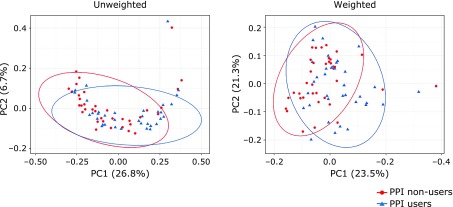
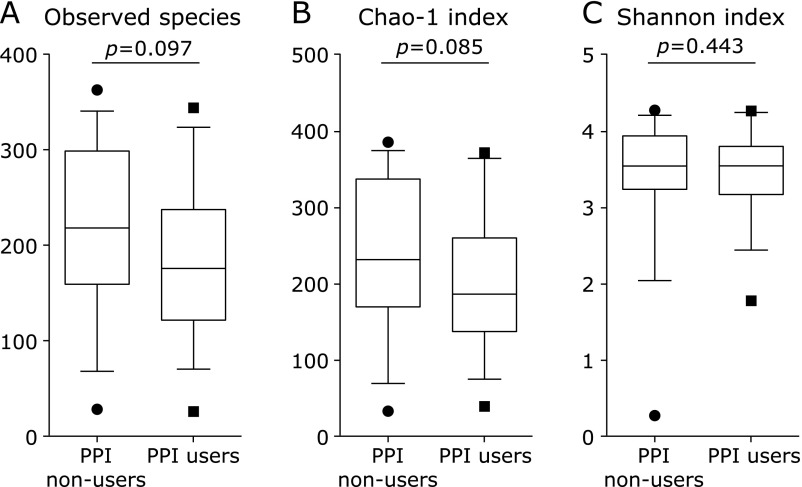
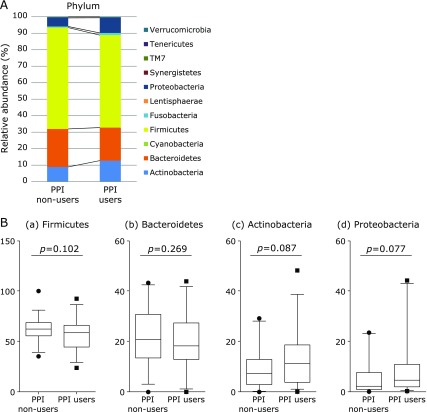
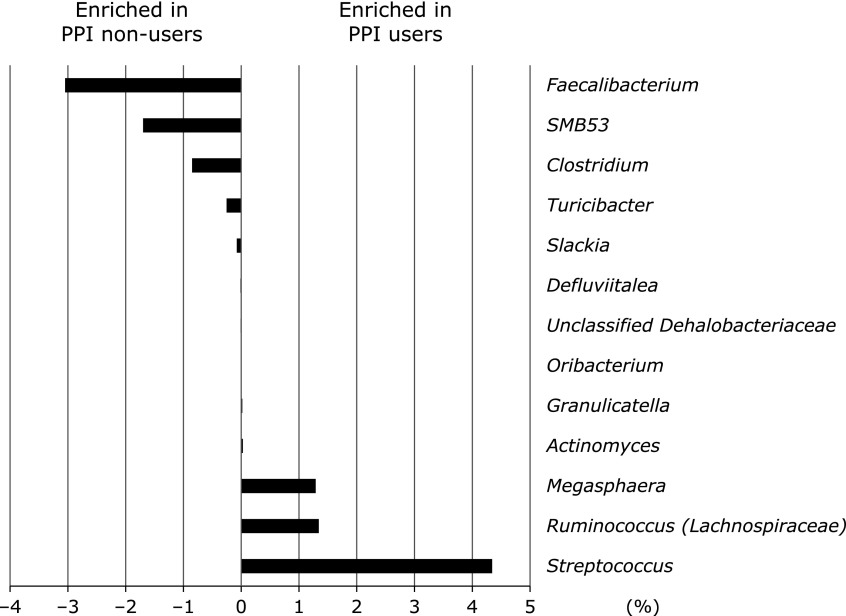
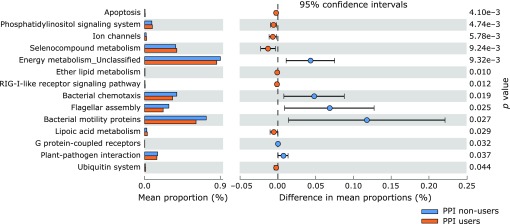
Proton pump inhibitors (PPIs) are widely used to treat gastro-esophageal reflux and prevent gastric ulcers, and have been considered as low risk. However, recent studies have identified possible associations between PPI use and gut microbiota, suggesting that PPIs use increases the risk of enteric infections, including Clostridium difficile infection. To investigate gut microbiota in Japanese PPIs users, we conducted 16S metagenomics analysis of fecal samples collected from PPI users and healthy adults. In total, 36 PPI users and 36 PPI non-users (as control subjects) matched by age and sex were recruited and fecal samples were obtained to analyze the gut microbiome using 16S rRNA gene sequencing. There were significant differences in the microbial structure between PPI non-users and PPI users. In contrast, the analysis of α-diversity revealed no significant differences between PPI non-users and PPI users. When comparing in genus level between these two groups, the genera Streptococcus was significantly abundant and the genera Faecalibacterium was significantly decreased in PPI users. Our findings indicate a probable association between PPI use and the alternation of microbiota. These alterations might provide a mechanism by which PPIs predispose enteric infection such as Clostridium difficile infection.
Overview
The claims and statistics of this paper haven’t been checked yet.
Run the check — free, no account needed. It reads the open-access text and checks the sources it cites.
Integrity signals
Registry
Cites
Statistics
Figures
Verification
Claims the paper makes
The claims and statistics of this paper haven’t been checked yet.
Run the check — free, no account needed. It reads the open-access text and checks the sources it cites.
Claims other papers make about this one
Each is checked against this paper’s own text: does it say what the citing paper says it does?
In the citing paper
“likely due to PPI-driven gastric hypo-chlorhydria, which can cause also significant changes in gut microbiota composition[9-11]”
From Proton pump inhibitors and dysbiosis: current knowledge and aspects to be clarified (2019) · cites this paper as [11]
Self-check
Percentages, sums and reported differences re-computed from the paper’s own numbers.
The self-check needs the paper’s full text.
Citations
Cites
QIIME allows analysis of high-throughput community sequencing data
Caporaso, J. G., Kuczynski, J., Stombaugh, J., Bittinger, K., Bushman, F. D., Costello, E. K., Fierer, N., Peña, A. G., Goodrich, J. K., Gordon, J. I., et al. (2010) · Nature Methods · doi:10.1038/nmeth.f.303 · Cited by 34,887
Search and clustering orders of magnitude faster than BLAST
Edgar, R. C. (2010) · Bioinformatics · doi:10.1093/bioinformatics/btq461 · Cited by 21,098
UCHIME improves sensitivity and speed of chimera detection
Edgar, R. C., Haas, B. J., Clemente, J. C., Quince, C., & Knight, R. (2011) · Bioinformatics · doi:10.1093/bioinformatics/btr381 · Cited by 15,114
Predictive functional profiling of microbial communities using 16S rRNA marker gene sequences
Langille, M. G. I., Zaneveld, J., Caporaso, J. G., McDonald, D., Knights, D., Reyes, J. A., Clemente, J. C., Burkepile, D. E., Vega Thurber, R. L., Knight, R., et al. (2013) · Nature Biotechnology · doi:10.1038/nbt.2676 · Cited by 9,116
Enterotypes of the human gut microbiome
MetaHIT Consortium (additional members), Arumugam, M., Raes, J., Pelletier, E., Le Paslier, D., Yamada, T., Mende, D. R., Fernandes, G. R., Tap, J., Bruls, T., et al. (2011) · Nature · doi:10.1038/nature09944 · Cited by 7,548
STAMP: statistical analysis of taxonomic and functional profiles
Parks, D. H., Tyson, G. W., Hugenholtz, P., & Beiko, R. G. (2014) · Bioinformatics · doi:10.1093/bioinformatics/btu494 · Cited by 4,246
The Human Intestinal Microbiome in Health and Disease
Lynch, S. V., & Pedersen, O. (2016) · New England Journal of Medicine · doi:10.1056/nejmra1600266 · Cited by 3,637
Data, information, knowledge and principle: back to metabolism in KEGG
Kanehisa, M. I., Goto, S., Sato, Y., Kawashima, M., Furumichi, M., & Tanabe, M. (2013) · Nucleic Acids Research · doi:10.1093/nar/gkt1076 · Cited by 3,103
Machiels, K., Joossens, M., Sabino, J., De Preter, V., Arijs, I., Eeckhaut, V., Ballet, V., Claes, K., Van Immerseel, F., Verbeke, K., et al. (2014) · Gut · doi:10.1136/gutjnl-2013-304833 · Cited by 1,904
Proton pump inhibitors affect the gut microbiome
Imhann, F., Bonder, M. J., Vich Vila, A., Fu, J., Mujagic, Z., Vork, L., Tigchelaar, E. F., Jankipersadsing, S. A., Cenit, M. C., Harmsen, H. J. M., et al. (2016) · Gut · doi:10.1136/gutjnl-2015-310376 · Cited by 1,371 · cited 2×
“(4,17) In our results, as shown in Fig.”
Cited by
Sorted by citations
Impact of commonly used drugs on the composition and metabolic function of the gut microbiota
Vich Vila, A., Collij, V., Sanna, S., Sinha, T., Imhann, F., Bourgonje, A. R., Mujagic, Z., Jonkers, D. M. A. E., Masclee, A. A. M., Fu, J., et al. (2020) · Nature Communications · doi:10.1038/s41467-019-14177-z · Cited by 791
Gut Microbiota and Colonization Resistance against Bacterial Enteric Infection
Ducarmon, Q. R., Zwittink, R. D., Hornung, B. V. H., van Schaik, W., Young, V. B., & Kuijper, E. J. (2019) · Microbiology and Molecular Biology Reviews · doi:10.1128/mmbr.00007-19 · Cited by 566
Microbiota-Gut-Brain Axis: New Therapeutic Opportunities
Long-Smith, C., O'Riordan, K. J., Clarke, G., Stanton, C., Dinan, T. G., & Cryan, J. F. (2020) · Annual Review of Pharmacology and Toxicology · doi:10.1146/annurev-pharmtox-010919-023628 · Cited by 419
Dysbiosis of the gut and lung microbiome has a role in asthma
Hufnagl, K., Pali‐Schöll, I., Roth‐Walter, F., & Jensen‐Jarolim, E. (2020) · Seminars in Immunopathology · doi:10.1007/s00281-019-00775-y · Cited by 394
Takagi, T., Naito, Y., Inoüe, R., Kashiwagi, S., Uchiyama, K., Mizushima, K., Tsuchiya, S., Dohi, O., Yoshida, N., Kamada, K., et al. (2018) · Journal of Gastroenterology · doi:10.1007/s00535-018-1488-5 · Cited by 314
Self-citationProton pump inhibitors and dysbiosis: current knowledge and aspects to be clarified
Bruno, G., Zaccari, P., Rocco, G., Scalese, G., Panetta, C., Porowska, B., Pontone, S., & Severi, C. (2019) · World Journal of Gastroenterology · doi:10.3748/wjg.v25.i22.2706 · Cited by 258
Aging, Frailty, and the Microbiome—How Dysbiosis Influences Human Aging and Disease
Haran, J. P., & McCormick, B. A. (2020) · Gastroenterology · doi:10.1053/j.gastro.2020.09.060 · Cited by 225
Mechanisms of proton pump inhibitor‐induced hypomagnesemia
Gommers, L. M. M., Hoenderop, J. G. J., & de Baaij, J. H. F. (2022) · Acta Physiologica · doi:10.1111/apha.13846 · Cited by 134
Macke, L., Schulz, C., Koletzko, L., & Malfertheiner, P. (2020) · Alimentary Pharmacology & Therapeutics · doi:10.1111/apt.15604 · Cited by 118
Gut Microbiota Composition Before and After Use of Proton Pump Inhibitors
Hojo, M., Asahara, T., Nagahara, A., Takeda, T., Matsumoto, K., Ueyama, H., Matsumoto, K., Asaoka, D., Takahashi, T., Nomoto, K., et al. (2018) · Digestive Diseases and Sciences · doi:10.1007/s10620-018-5122-4 · Cited by 114
Intestinal Dysbiosis Secondary to Proton-Pump Inhibitor Use
Naito, Y., Kashiwagi, K., Takagi, T., Andoh, A., & Inoüe, R. (2018) · Digestion · doi:10.1159/000481813 · Cited by 109
Self-citationBaxter, N. T., Lesniak, N. A., Sinani, H., Schloss, P. D., & Koropatkin, N. M. (2019) · mSphere · doi:10.1128/msphere.00528-18 · Cited by 97
Takagi, T., Naito, Y., Kashiwagi, S., Uchiyama, K., Mizushima, K., Kamada, K., Ishikawa, T., Inoüe, R., Okuda, K., Tsujimoto, Y., et al. (2020) · Nutrients · doi:10.3390/nu12102996 · Cited by 89
Self-citationXia, B., Yang, M. G., Nguyen, L. H., He, Q., Zhen, J., Yu, Y., Di, M., Qin, X. S., Lu, K., Kuo, Z. C., et al. (2021) · Gastroenterology · doi:10.1053/j.gastro.2021.08.005 · Cited by 88
Breast Cancer: Lifestyle, the Human Gut Microbiota/Microbiome, and Survivorship
Bodai, B. I., & Nakata, T. E. (2020) · The Permanente Journal · doi:10.7812/tpp/19.129 · Cited by 73
Xiao, X., Zhang, X., Wang, J., Liu, Y., Yan, H., Xing, X., & Yang, J. (2024) · Gut · doi:10.1136/gutjnl-2023-330883 · Cited by 75
Intestinal microbiome as a novel therapeutic target for local and systemic inflammation
Uchiyama, K., Naito, Y., & Takagi, T. (2019) · Pharmacology & Therapeutics · doi:10.1016/j.pharmthera.2019.03.006 · Cited by 65
Self-citationGut microbiota in dementia with Lewy bodies
Nishiwaki, H., Ueyama, J., Kashihara, K., Ito, M., Hamaguchi, T., Maeda, T., Tsuboi, Y., Katsuno, M., Hirayama, M., & Ohno, K. (2022) · npj Parkinson s Disease · doi:10.1038/s41531-022-00428-2 · Cited by 59
Meta-analysis of the effects of proton pump inhibitors on the human gut microbiota
Zhang, J., Zhang, C., Zhang, Q., Yu, L., Chen, W., Xue, Y., & Zhai, Q. (2023) · BMC Microbiology · doi:10.1186/s12866-023-02895-w · Cited by 65
Role of the duodenal microbiota in functional dyspepsia
Brown, G., Hoedt, E. C., Keely, S., Shah, A., Walker, M. M., Holtmann, G., & Talley, N. J. (2022) · Neurogastroenterology & Motility · doi:10.1111/nmo.14372 · Cited by 58
Nadatani, Y., Watanabe, T., Suda, W., Nakata, A., Matsumoto, Y., Kosaka, S., Higashimori, A., Otani, K., Hosomi, S., Tanaka, F., et al. (2019) · Scientific Reports · doi:10.1038/s41598-019-53559-7 · Cited by 55
Intake of sucrose affects gut dysbiosis in patients with type 2 diabetes
Hashimoto, Y., Hamaguchi, M., Kaji, A., Sakai, R., Osaka, T., Inoüe, R., Kashiwagi, S., Mizushima, K., Uchiyama, K., Takagi, T., et al. (2020) · Journal of Diabetes Investigation · doi:10.1111/jdi.13293 · Cited by 52
Self-citationHelicobacter pylori, gastric microbiota and gastric cancer relationship: Unrolling the tangle
Liatsos, C. N., Papaefthymiou, A., Kyriakos, N., Galanopoulos, M., Doulberis, M., Giakoumis, M., Petridou, E., Mavrogiannis, C. C., Rokkas, T., & Kountouras, J. (2022) · World Journal of Gastrointestinal Oncology · doi:10.4251/wjgo.v14.i5.959 · Cited by 52
Country-wide medical records infer increased allergy risk of gastric acid inhibition
Jordakieva, G., Kundi, M., Untersmayr, E., Pali‐Schöll, I., Reichardt, B., & Jensen‐Jarolim, E. (2019) · Nature Communications · doi:10.1038/s41467-019-10914-6 · Cited by 51
The relationship between gastric microbiota and gastric disease
Zhang, S., Shi, D., Li, M., Li, Y., Wang, X., & Li, W. (2019) · Scandinavian Journal of Gastroenterology · doi:10.1080/00365521.2019.1591499 · Cited by 51
Influence of proton pump inhibitors on microbiota in chronic liver disease patients
Yamamoto, K., Ishigami, M., Honda, T., Takeyama, T., Ito, T., Ishizu, Y., Kuzuya, T., Hayashi, K., Goto, H., & Hirooka, Y. (2019) · Hepatology International · doi:10.1007/s12072-019-09932-9 · Cited by 51
Naito, Y., Takagi, T., Inoüe, R., Kashiwagi, S., Mizushima, K., Tsuchiya, S., Itoh, Y., Okuda, K., Tsujimoto, Y., Adachi, A., et al. (2019) · Journal of Clinical Biochemistry and Nutrition · doi:10.3164/jcbn.19-26 · Cited by 49
Self-citationTyping of the Gut Microbiota Community in Japanese Subjects
Takagi, T., Inoüe, R., Oshima, A., Sakazume, H., Ogawa, K., Tominaga, T., Mihara, Y., Sugaya, T., Mizushima, K., Uchiyama, K., et al. (2022) · Microorganisms · doi:10.3390/microorganisms10030664 · Cited by 49
Self-citationManipulation of Gut Microbiota as a Key Target for Crohn's Disease
Rashed, R. T., Valcheva, R. S., & Dieleman, L. A. (2022) · Frontiers in Medicine · doi:10.3389/fmed.2022.887044 · Cited by 52
Gut microbiota profile in healthy Indonesians
Rahayu, E. S., Utami, T., Mariyatun, M., Hasan, P. N., Kamil, R. Z., Setyawan, R. H., Pamungkaningtyas, F. H., Harahap, I. A., Wiryohanjoyo, D. V., Pramesi, P. C., et al. (2019) · World Journal of Gastroenterology · doi:10.3748/wjg.v25.i12.1478 · Cited by 42
Yin, Y., Sripetchwandee, J., Chattipakorn, N., & Chattipakorn, S. C. (2021) · Anaerobe · doi:10.1016/j.anaerobe.2021.102361 · Cited by 44
Lee, S. M., Kim, N., Nam, R. H., Park, J. H., Choi, S. I., Park, Y., Kim, Y.-R., Seok, Y., Shin, C. M., & Lee, D. H. (2019) · Scientific Reports · doi:10.1038/s41598-019-43112-x · Cited by 41
Shah, A., Talley, N. J., Koloski, N. A., Macdonald, G. A., Kendall, B. J., Shanahan, E. R., Walker, M. M., Keely, S., Jones, M. P., Morrison, M., et al. (2020) · Alimentary Pharmacology & Therapeutics · doi:10.1111/apt.15786 · Cited by 41
Iino, C., Shimoyama, T., Chinda, D., Sakuraba, H., Fukuda, S., & Nakaji, S. (2019) · Digestion · doi:10.1159/000500634 · Cited by 40
Gastrointestinal Microbiome – What We Need to Know in Clinical Practice
Ortigão, R., Pimentel‐Nunes, P., Dinis-Ribeiro, M. J., & Libânio, D. (2020) · GE Portuguese Journal of Gastroenterology · doi:10.1159/000505036 · Cited by 41
Proton Pump Inhibitors and Oral–Gut Microbiota: From Mechanism to Clinical Significance
Zhang, X., Li, Q., Xia, S., He, Y., Liu, Y., Yang, J., & Xiao, X. (2024) · Biomedicines · doi:10.3390/biomedicines12102271 · Cited by 37
Lin, C.-Y., Cheng, H., Kuo, C., Lee, Y., Sung, C., Keidan, M., Rao, K. K., Kao, J. Y., & Hsieh, S. (2022) · Microbiology Spectrum · doi:10.1128/spectrum.00486-22 · Cited by 37
Šegregur, D., Flanagan, T. R., Mann, J., Moir, A. J., Karlsson, Ε., Hoch, M., Carlile, D. J., Sayah‐Jeanne, S., & Dressman, J. (2019) · Journal of Pharmaceutical Sciences · doi:10.1016/j.xphs.2019.06.021 · Cited by 34
Mucosa-Associated Microbiota in the Gastrointestinal Tract of Healthy Japanese Subjects
Kashiwagi, S., Naito, Y., Inoüe, R., Takagi, T., Nakano, T., Inada, Y., Fukui, A., Katada, K., Mizushima, K., Kamada, K., et al. (2019) · Digestion · doi:10.1159/000496102 · Cited by 31
Self-citationProton Pump Inhibitors, H2 Blocker Use, and Risk of Inflammatory Bowel Disease in Children
Schwartz, N. R. M., Hutfless, S. M., Herrinton, L. J., Amsden, L. B., Fevrier, H. B., Giefer, M. J., Lee, D. Y., Suskind, D. L., Delaney, J. A., & Phipps, A. I. (2019) · The Journal of Pediatric Pharmacology and Therapeutics · doi:10.5863/1551-6776-24.6.489 · Cited by 30
Kawahara, M., Kanamori, M., Meyer, G. R., Yoshinaga, T., & Itoh, N. (2018) · Fish Pathology · doi:10.3147/jsfp.53.78 · Cited by 27
Proton pump inhibitor use increases the risk of peritonitis in peritoneal dialysis patients
Maeda, S., Yamaguchi, M., Maeda, K., Kobayashi, N., Izumi, N., Nagai, M., Obayashi, T., Ohashi, W., Katsuno, T., Nobata, H., et al. (2019) · PLoS ONE · doi:10.1371/journal.pone.0224859 · Cited by 29
Pharmacomicrobiomics: Immunosuppressive Drugs and Microbiome Interactions in Transplantation
Mohamed, M. E., Saqr, A., Staley, C. M., Onyeaghala, G. C., Teigen, L. M., Dorr, C. R., Remmel, R. P., Guan, W., Oetting, W. S., Matas, A. J., et al. (2024) · Transplantation · doi:10.1097/tp.0000000000004926 · Cited by 26
Zhong, H., Lin, D., Lü, Z.-Y., Yang, W., & Chen, Y. (2018) · Journal of Clinical Pharmacy and Therapeutics · doi:10.1111/jcpt.12769 · Cited by 26
Iron at the crossroads of host–microbiome interactions in health and disease
Choi, G., & Bessman, N. J. (2025) · Nature Microbiology · doi:10.1038/s41564-025-02001-y · Cited by 28
Lassmann, Ł., Pollis, M., Żółtowska, A., & Manfredini, D. (2022) · Biomedicines · doi:10.3390/biomedicines10071528 · Cited by 26
The impact of proton pump inhibitors on the intestinal microbiota in chronic hepatitis C patients
Wellhöner, F., Döscher, N., Tergast, T. L., Vital, M., Plumeier, I., Kahl, S., Potthoff, A., Manns, M. P., Maasoumy, B., Wedemeyer, H. H., et al. (2019) · Scandinavian Journal of Gastroenterology · doi:10.1080/00365521.2019.1647280 · Cited by 24
Genetic and drug-induced hypomagnesemia: different cause, same mechanism
Bosman, W., Hoenderop, J. G. J., & de Baaij, J. H. F. (2021) · Proceedings of The Nutrition Society · doi:10.1017/s0029665121000926 · Cited by 24
Anti-Acid Drug Treatment Induces Changes in the Gut Microbiome Composition of Hemodialysis Patients
Lin, Y.-T., Lin, T.-Y., Hung, S.-C., Liu, P.-Y., Wu, P.-H., Chuang, Y.-S., Hung, W.-C., Chiu, Y.-W., Kuo, M.-C., & Wu, C.-Y. (2021) · Microorganisms · doi:10.3390/microorganisms9020286 · Cited by 22
Matsuura, J., Inoüe, R., Takagi, T., Wada, S., Watanabe, A., Koizumi, T., Mukai, M., Mizuta, I., Naito, Y., & Mizuno, T. (2019) · Journal of Clinical Biochemistry and Nutrition · doi:10.3164/jcbn.19-22 · Cited by 23
Self-citationMatsumoto, H., Kuroki, Y., Higashi, S., Goda, K., Fukushima, S., Katsumoto, R., Oosawa, M., Murao, T., Ishii, M., Oka, K., et al. (2019) · Journal of Clinical Biochemistry and Nutrition · doi:10.3164/jcbn.19-3 · Cited by 22
Mohandas, S., Soma, V. L., Tran, T. D. B., Sodergren, E. J., Ambooken, T., Goldman, D. L., Weinstock, G. M., & Herold, B. C. (2020) · Frontiers in Pediatrics · doi:10.3389/fped.2020.583446 · Cited by 25
Fong, P., Chan, S. T., Lei, P. N., Cheong, H. I., Cheong, I. M., & Hoe, W. L. (2022) · Scientific Reports · doi:10.1038/s41598-022-24244-z · Cited by 20
LeBaron, T. W., Sharpe, R., & Ohno, K. (2022) · International Journal of Molecular Sciences · doi:10.3390/ijms232314508 · Cited by 20
Enteral feeding and the microbiome in critically ill children: a narrative review
Fan, L., & Lee, J. H. (2021) · Translational Pediatrics · doi:10.21037/tp-20-349 · Cited by 20
Hashimoto, H., Takagi, T., Asaeda, K., Yasuda, T., Kajiwara, M., Sugaya, T., Mizushima, K., Inoue, K., Uchiyama, K., Kamada, K., et al. (2024) · Journal of Crohn s and Colitis · doi:10.1093/ecco-jcc/jjad217 · Cited by 19
Self-citationDurand, P., Nicco, C., Serteyn, D., Attaf, D., & Edeas, M. A. (2018) · Blood Purification · doi:10.1159/000490612 · Cited by 19
Proton pump inhibitors induced fungal dysbiosis in patients with gastroesophageal reflux disease
Shi, Y., Li, J., Cai, S., Zhao, H., Zhao, H., Sun, G., & Yang, Y. (2023) · Frontiers in Cellular and Infection Microbiology · doi:10.3389/fcimb.2023.1205348 · Cited by 18
Helicobacter pylori Related Diseases and Osteoporotic Fractures (Narrative Review)
Fisher, L., Fisher, A., & Smith, P. N. (2020) · Journal of Clinical Medicine · doi:10.3390/jcm9103253 · Cited by 18
Proton Pump Inhibitor Use Before and After a Diagnosis of Inflammatory Bowel Disease
Singh, N., Nugent, Z. J., Singh, H., Shaffer, S. R., & Bernstein, C. N. (2023) · Inflammatory Bowel Diseases · doi:10.1093/ibd/izad017 · Cited by 16
Celiac disease serology and gut microbiome following protein pump inhibitor treatment
Jang, S. S., Lebwohl, B., Abrams, J. A., Green, P. H. R., Freedberg, D. E., & Alaedini, A. (2020) · Medicine · doi:10.1097/md.0000000000021488 · Cited by 14
Saifon, W., Sensorn, I., Trachu, N., Oranratnachai, S., Charoenyingwattana, A., Runcharoen, C., Monnamo, N., Sukkasem, W., Inchareon, P., Suwatanapongched, T., et al. (2022) · BMC Cancer · doi:10.1186/s12885-022-10050-3 · Cited by 14
Zhang, X., Adebayo, A. S., Wang, D., Raza, Y. N., Tomlinson, M., Dooley, H. C., Bowyer, R. C. E., Small, K. S., Steves, C. J., Spector, T. D., et al. (2020) · Journal of Bone and Mineral Research · doi:10.1002/jbmr.4754 · Cited by 14
New insights into gut-liver axis in advanced liver diseases: A promising therapeutic target
Xing, Y., Ou, Y., Wang, Y., Hou, L., & Zhu, J. (2025) · Biochemical Pharmacology · doi:10.1016/j.bcp.2025.117284 · Cited by 13
Fujimoto, S., Tsuruoka, N., Esaki, M., Takamori, A., Sakata, Y., Shimoda, R., Akutagawa, T., Node, K., Anzai, K., Sugisaki, N., et al. (2020) · Journal of Clinical Biochemistry and Nutrition · doi:10.3164/jcbn.20-153 · Cited by 13
Esophageal Microbiome in Healthy Children and Esophageal Eosinophilia
Parashette, K. R., Sarsani, V., Toh, E. C., Janga, S. C., Nelson, D. E., & Gupta, S. K. (2022) · Journal of Pediatric Gastroenterology and Nutrition · doi:10.1097/mpg.0000000000003413 · Cited by 13
Assalin, H. B., Almeida, K. C. G. D., Guadagnini, D., Santos, A., Teixeira, C. J., Bordin, S. A., Rocha, G. Z., & Saad, M. J. A. (2022) · International Journal of Molecular Sciences · doi:10.3390/ijms232213766 · Cited by 15
Fuchs, B. B., Tharmalingam, N., & Mylonakis, E. E. (2018) · Future Microbiology · doi:10.2217/fmb-2018-0157 · Cited by 12
An update on the latest chemical therapies for reflux esophagitis in children
Bardou, M., Fortinsky, K. J., Chapelle, N., Luu, M., & Barkun, A. N. (2018) · Expert Opinion on Pharmacotherapy · doi:10.1080/14656566.2018.1549224 · Cited by 12
Hu, L., Lai, C., Li, Y. H., Sun, R., Yang, H., Liu, X., & Yu, P. (2025) · npj Biofilms and Microbiomes · doi:10.1038/s41522-025-00848-x · Cited by 15
Chamniansawat, S., Kampuang, N., Suksridechacin, N., & Thongon, N. (2020) · Anatomical Science International · doi:10.1007/s12565-020-00572-w · Cited by 10
Trends in Proton Pump Inhibitor Use in Sweden by Sex and Age: A Drug Utilisation Study
Brusselaers, N., Guðnadóttir, U., Engstrand, L. G., & Lilja, H. E. (2024) · Drug Safety · doi:10.1007/s40264-024-01502-9 · Cited by 10
Longitudinal Microbiome Changes in Children Exposed to Proton Pump Inhibitors
Zhang, Y. J., Connearney, S., Hester, L., Du, M., Catacora, A., Akkara, A., Wen, A., Bry, L., Alm, E. J., & Rosen, R. (2024) · Clinical and Translational Gastroenterology · doi:10.14309/ctg.0000000000000703 · Cited by 9
Systems approaches for the clinical diagnosis of Clostridioides difficile infection
Wu, Q., & Savidge, T. (2020) · Translational research · doi:10.1016/j.trsl.2020.03.006 · Cited by 9
Fossmark, R., Lirhus, S. S., & Høivik, M. L. (2023) · Scandinavian Journal of Gastroenterology · doi:10.1080/00365521.2023.2255710 · Cited by 9
Zhang, Y., Li, J., Chen, Z., Liu, L., Zhan, X., Peng, F., Zhou, Q., Wu, X., Zeng, Y., Zhu, L., et al. (2022) · Renal Failure · doi:10.1080/0886022x.2022.2129064 · Cited by 8
Hasuda, H., Ikeda, T., Makizaki, Y., Yokota, H., Tanaka, Y., Ohno, H., Shimokawa, M., Matsuoka, H., Kimura, Y., Oki, E., et al. (2022) · Surgery Today · doi:10.1007/s00595-022-02607-3 · Cited by 8
Skonieczna‐Żydecka, K., Stachowska, E., Maciejewska, D., Ryterská, K., Palma, J., Czerwińska-Rogowska, M., Kaczmarczyk, M., Gudan, A., Mruk, H., Świniarska, B., et al. (2018) · International Journal of Environmental Research and Public Health · doi:10.3390/ijerph15102256 · Cited by 7
Liver cirrosis and complication risk management
Бакулин, И. Г., Oganezova, I. A., Skalinskaya, M. I., & Васильевна, С. Е. (2021) · Terapevticheskii arkhiv · doi:10.26442/00403660.2021.08.200917 · Cited by 8
Ichikawa, T., Hashimoto, Y., Igarashi, Y., Kawai, S., Kaji, A., Sakai, R., Osaka, T., Inoüe, R., Kashiwagi, S., Mizushima, K., et al. (2024) · Nutrition & Metabolism · doi:10.1186/s12986-024-00884-y · Cited by 9
Self-citationGut Microbiota Associated with Clinical Relapse in Patients with Quiescent Ulcerative Colitis
Kitae, H., Takagi, T., Naito, Y., Inoüe, R., Azuma, Y., Torii, T., Mizushima, K., Doi, T., Inoue, K., Dohi, O., et al. (2022) · Microorganisms · doi:10.3390/microorganisms10051044 · Cited by 6
Self-citationOtani, K., Watanabe, T., Kosaka, S., Matsumoto, Y., Nakata, A., Nadatani, Y., Fukunaga, S., Hosomi, S., Tanaka, F., Kamata, N., et al. (2020) · Journal of Clinical Biochemistry and Nutrition · doi:10.3164/jcbn.20-21 · Cited by 6
Sbeit, W., Khoury, T., Kadah, A., Asadi, W., Shahin, A., Lubany, A., Safadi, M., Haddad, H., Ahmad, R. A., Hija, S. A. E., et al. (2020) · Journal of Clinical Medicine · doi:10.3390/jcm9092966 · Cited by 6
Choi, H. S., Kim, M. S., Yu, M. H., You, J., Seon, D., Ko, G., Unno, T., Lee, M. Y., & Kim, Y. S. (2025) · Journal of Neurogastroenterology and Motility · doi:10.5056/jnm25024 · Cited by 5
Katayama, Y., Fukuda, A., Inoue, R., Kawachi, H., Sawada, R., Harada, T., Yoshimura, A., Okada, A., Shiotsu, S., Chihara, Y., et al. (2026) · ESMO Open · doi:10.1016/j.esmoop.2026.106077 · Cited by 5
Self-citationChanges in Gastric Microbiota during Gastric Carcinogenesis
Lee, S. (2018) · The Korean Journal of Helicobacter and Upper Gastrointestinal Research · doi:10.7704/kjhugr.2018.18.2.95 · Cited by 5
A hosszú távú protonpumpagátló kezelés következményei felnőtteken
Igaz, I., Simonyi, G., Balogh, S., & Szathmári, M. (2018) · Orvosi Hetilap · doi:10.1556/650.2018.31057 · Cited by 5
Evaluation of gastric acid suppression with vonoprazan using calcium carbonate breath test
Miyamoto, S., Tsuda, M., Kato, M., Mabe, K., Muto, S., Ono, S., Shimizu, Y., & Sakamoto, N. (2018) · Journal of Clinical Biochemistry and Nutrition · doi:10.3164/jcbn.18-75 · Cited by 5
Condur, L., Chirila, S. I., Alexandrescu, L., Iancu, M. A., Neculau, A. E., Berariu, F. V., Toma, L., & Nicoara, A. D. (2025) · Journal of Clinical Medicine · doi:10.3390/jcm14155318 · Cited by 4
Chen, Y., Xia, S.-Y., Ru, F.-X., Feng, J.-J., Tao, J., Wei, Z.-Y., Li, X., Qian, C., Lin, Q., & Chen, J. (2023) · Frontiers in Microbiology · doi:10.3389/fmicb.2023.1112709 · Cited by 4
Iwamoto, J., Adachi, Y., Honda, A., Monma, T., & Matsuzaki, Y. (2018) · Journal of Clinical Biochemistry and Nutrition · doi:10.3164/jcbn.18-68 · Cited by 4
Wen, S., Zhao, X., Lin, X., Fu, Z., Qin, S., Pan, Q., Liu, F., He, W., & Liu, T. (2024) · BMJ Open · doi:10.1136/bmjopen-2023-081059 · Cited by 3
Mphande, F. A., Meksang, D. S., Noranate, N., Kongpanyakul, S., Kulalert, P., Nilchan, P., & Trivijitsilp, P. (2026) · IJID Regions · doi:10.1016/j.ijregi.2026.100868 · Cited by 3
Dohi, O., Yasuda, T., Takagi, T., Iwai, N., Uchiyama, K., Mizushima, K., Inoüe, R., Naito, Y., & Itoh, Y. (2025) · Digestive Diseases and Sciences · doi:10.1007/s10620-025-09228-z · Cited by 4
Self-citationOral Limonite Supplement Ameliorates Glucose Intolerance in Diabetic and Obese Mice
Uchida, A., Yasuma, T., Takeshita, A., Toda, M., Okano, Y., Nishihama, K., D’Alessandro‐Gabazza, C. N., D’Alessandro, V. F., Inoue, C., Takagi, T., et al. (2021) · Journal of Inflammation Research · doi:10.2147/jir.s320451 · Cited by 3
Self-citationSbeit, W., Abukaes, H., Ahmad, H. S., Sbeit, M., Kalisky, I., Katz, L. H., Mari, A., & Khoury, T. (2022) · Scandinavian Journal of Gastroenterology · doi:10.1080/00365521.2022.2106150 · Cited by 3
Passing the “Acid Test”: Do Proton Pump Inhibitors Affect the Composition of the Microbiome?
Dong, T. S., & Pisegna, J. R. (2018) · Digestive Diseases and Sciences · doi:10.1007/s10620-018-5273-3 · Cited by 3
Lepczyńska, M., Dzika, E., Chen, W., & Lu, C. (2021) · Clinical and Translational Gastroenterology · doi:10.14309/ctg.0000000000000325 · Cited by 4
Moaligou, C., Dion, M., Ishnaiwer, M. M., Dailly, É., Batard, É., & Javaudin, F. (2023) · Journal of Applied Microbiology · doi:10.1093/jambio/lxad223 · Cited by 2
Furune, S., Suzuki, T., Honda, T., Yamamoto, K., Furukawa, K., Nakamura, M., Ishigami, M., Kinoshita, F., Kadota, Y., Tochio, T., et al. (2023) · Journal of Gastroenterology and Hepatology · doi:10.1111/jgh.16445 · Cited by 2
Metadata
- Authors
- Takagi, T., Naito, Y., Inoue, R., Kashiwagi, S., Uchiyama, K., Mizushima, K., Tsuchiya, S., Okayama, T., Dohi, O., Yoshida, N., Kamada, K., Ishikawa, T., Handa, O., Konishi, H., Okuda, K., Tsujimoto, Y., Ohnogi, H., & Itoh, Y.
- Affiliations
- Kyoto Prefectural University of Medicine (JP)
- Laboratory of Animal Science, Kyoto Prefectural University
- Takara BIO Inc. (Japan) (JP)
- Corresponding author
- Takagi, Tomohisa
- ORCID
- Venue
- Journal of Clinical Biochemistry and Nutrition
- Published
- 2018
- Volume
- 62
- Issue
- 1
- Pages
- 100-105
- ISSN
- 0912-0009 (ISSN-L)
- 1880-5086
- PMC
- PMC5773837
- OpenAlex
- W2771725285
- Cited by
- 121
- References
- 23
- Citations by year
- 2026: 5 · 2025: 10 · 2024: 9 · 2023: 11 · 2022: 20 · 2021: 9 · 2020: 20 · 2019: 22 · 2018: 15
- FWCI
- 6.37
- Type
- journal article
- Language
- en
- Open access
- diamond
- doi.org
- Locations
- Journal of Clinical Biochemistry and Nutrition (publishedVersion)
- PubMed Central (publishedVersion, cc-by)
- PubMed (publishedVersion)
- Funders
- National Agriculture and Food Research Organization
- Japan Society for the Promotion of Science (16K09322, 16H05289)
- Topics
- Life Sciences › Biochemistry, Genetics and Molecular Biology › Molecular Biology › Gut microbiota and health
- Health Sciences › Medicine › Gastroenterology › Gastrointestinal motility and disorders
- Health Sciences › Medicine › Infectious Diseases › Clostridium difficile and Clostridium perfringens research
- Keywords
- proton pump inhibitors, gut microbiota, Clostridium difficile infection, gastrointestinal infections, Faecalibacterium, Streptococcus, microbial diversity, fecal microbiota, long-term drug use, Japanese adults
About these checks
Registry, retraction, Cites and statistics results are computed, not judged, with one exception: a printed reference that no index lists is read once by a model before it counts as a citation error. Claims are extracted by a model and kept only when their quote appears verbatim in the text; each cited source is then checked, with a model’s help, for whether it says what the claim relies on. Those verdicts can be wrong — read the claim’s quote and the cited source before relying on one.
Statistics and arithmetic are recomputed, not judged.
Confidence bands are shown only for fields calibrated on our annotated test set. None is calibrated yet, so no band is shown.
What counts as a claim ›How we measure confidence ›How we check this ›
Are you an author, or do you see a problem with this page? Request a review
