

Evolutionary aspects of anxiety disorders
Open accessThe DOI matches its Crossref record; 54 of the 54 references it cites were found in a registry or an index.
Abstract
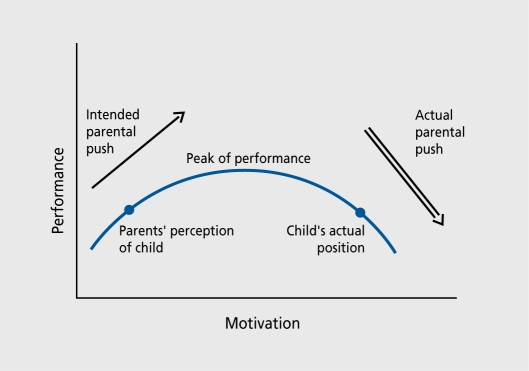
DANGER AND HARM ARE AVOIDED BY STRATEGIC DECISIONS MADE AT ALL THREE LEVELS OF THE TRIUNE FOREBRAIN: rational (neomammalian), emotional (paleomammalian), and instinctive (reptilian). This applies also to potential harm from conspecifics, which leads to a choice between escalating and de-escalating strategies. Anxiety is a component of de-escalating strategies mediated by the paleomammalian and reptilian forebrains. When the neomammalian (rational) brain fails to deal with the threat of conspecific danger, these more primitive de-escalating strategies may be activated and may present as anxiety disorders. The capacity for concealment of anxiety and other forms of negative affect has also evolved, and excessive concealment may lead to psychopaihology by breaking the negative feedback loop of excessive motivation, leading to impaired performance, leading to signals of distress, and leading to reduced exhortation to succeed on the part of parents and teachers; this situation is illustrated by a model based on the Yerkes-Dodson law.
Overview
The claims and statistics of this paper haven’t been checked yet.
Free: it reads the open-access text and checks the first 5 claims that cite a source we can check. Create a free account to check every claim.
Integrity signals
Registry
Cites
Statistics
Figures
Verification
Claims the paper makes
The claims and statistics of this paper haven’t been checked yet.
Free: it reads the open-access text and checks the first 5 claims that cite a source we can check. Create a free account to check every claim.
Claims other papers make about this one
Each is checked against this paper’s own text: does it say what the citing paper says it does?
In the citing paper
“low-level anxiety has been shown to benefit preparation and performance for stressful events (eg, public speaking) and can help us avoid potentially dangerous situations (Jamieson et al, 2013;Lupien and Mcewen, 1997;Price, 2003).”
From The human BNST: functional role in anxiety and addiction (2016) · cites this paper as Price, 2003
Self-check
Percentages, sums and reported differences re-computed from the paper’s own numbers.
The self-check needs the paper’s full text.
Citations
Cites
The relation of strength of stimulus to rapidity of habit formation
Yerkes, R. M., & Dodson, J. D. (1908) · Journal of Comparative Neurology and Psychology · doi:10.1002/cne.920180503 · Cited by 6,911
The principles of psychology, Vol I.
James, W. (1890) · doi:10.1037/10538-000 · Cited by 4,514
Fears, phobias, and preparedness: toward an evolved module of fear and fear learning
Öhman, A., & Mineka, S. (2001) · Psychological Review · doi:10.1037/0033-295x.108.3.483 · Cited by 3,147
Comorbidity of anxiety and unipolar mood disorders
Mineka, S., Watson, D., & Clark, L. A. (1998) · Annual Review of Psychology · doi:10.1146/annurev.psych.49.1.377 · Cited by 1,573 · cited 2×
“This synergistic action of depression and anxiety is compatible with the finding of extensive comorbidity between anxiety states and depressive disorders,22-25 and with the finding that the genetic predisposition to major depression is indistinguishable from the predisposition to GAD.22”
ResultEgalitarian Behavior and Reverse Dominance Hierarchy [and Comments and Reply]
Boehm, C., Barclay, H. B., Dentan, R. K., Dupre, M.-C., Hill, J. D., Kent, S., Knauft, B. M., Otterbein, K. F., & Rayner, S. (1993) · Current Anthropology · doi:10.1086/204166 · Cited by 675
Fear and fitness: An evolutionary analysis of anxiety disorders
Marks, I. F., & Nesse, R. M. (1994) · Ethology and Sociobiology · doi:10.1016/0162-3095(94)90002-7 · Cited by 624
DE WAAL, F. B. M., & Waal, F. B. M. D. (1989) · Harvard University Press eBooks · doi:10.4159/9780674033085 · Cited by 568
The Social Competition Hypothesis of Depression
Price, J., Sloman, L., Gardner, R., Gilbert, P., & Rohde, P. (1994) · British Journal of Psychiatry · doi:10.1192/bjp.164.3.309 · Cited by 556 · cited 1×
“If we consider the state of mind of the deposed animal after he has been beaten, but before he has reconciled, we can see the need for some reorganization of goals and attitudes: we have suggested that depressed mood may help the animal give up the goal of retaining his high rank, and reconcile him to his inferior soc…”
BackgroundSelf-citationComorbidity of mood and anxiety disorders
Kaufman, J., & Charney, D. (2000) · Depression and Anxiety · doi:10.1002/1520-6394(2000)12:1+<69::aid-da9>3.0.co;2-k · Cited by 473
Gilbert, P. (2001) · Psychiatric Clinics of North America · doi:10.1016/s0193-953x(05)70260-4 · Cited by 370
Research works printed but not linked: 34
- Stevens A. Price J. Evolutionary Psychiatry: A New Beginning 2nd éd. London, UK: Routledge; 2000
- McGuire MT. Troisi A. Darwinian Psychiatry. New York, NY: Oxford University Press; 1998
- Marks IM. Fears, Phobias and Rituals. New York, NY: Oxford University Press; 1987
- de Waal F. The reconciled hierarchy. In: Chance MRA, ed. Social Fabrics of the Mind. Hove, UK: Lawrence Erlbaum 1988;xx 297 312
- Aureli F. de Waal FMB. Why natural conflict resolution? In: Aureli F, de Waal FMB, eds. Natural Conflict Resolution. Berkely, Calif: University of California Press; 2000 1 10
- Gardner R. Price J. Sociophysiology and depression. In: Joiner T, Coyne JD, eds. Recent Advances in interpersonal Approaches to Depression. Washington, DC: American Psychological Association; 1996 247 268
- Whyte FW. Street Corner Society. 2nd ed. Chicago, III: University of Chicago Press; 1955
- Weissman MM. Markowitz JC. Klerman Gl. Comprehensive Guide to interpersonal Psychotherapy. New York, NY: Basic Books; 2000
- Davidson RJ. Ekman P. Afterword: how are emotions distinguished from moods, temperament and other related affective constructs. In: Eckman P, Davidson RJ, eds. The Nature of Emotion: Fundamental Questions. New York, NY: Oxford University Press; 1994 94 96
- MacLean PD. The Triune Brain in Evolution. New York, NY: Plenum Press; 1990
- Price JS. Gurdjieff and the triune brain. ASCAP Newsletter. 1998 11 19 21
- Price JS. The triune brain, escalation de-escalation strategies, and mood disorders. In: Cory G, Gardner R, eds. The Neuroethology of Paul MacLean: Convergences and Frontiers. Westport, Conn: Greenwood-Praeger; 2002
- Cornford FM. The Republic of Plato. Translated with introduction and notes. London, UK: Turnstone Books; 1976
- Huntingford FA. Taylor AC. Sneddon LU. Neat FC. Prowess and the resolution of animal fights. In: Espmark Y, Amundsen T, Rosenqvist G, eds. Animal Signals: Signalling and Signal Design in Animal Communication. Trondheim, Norway: Tapir Academic Press 2000 259 276
- Krebs JR. Davies NB. An Introduction to Behavioural Ecology, 3rd ed. Oxford, UK: Blackwell Scientific Publications; 1993
- Clutton-Brock TH. Guiness FE. Albob SD. Red Deer: Behaviour and Ecology of Two Sexes. Edinburgh, UK: Edinburgh University Press; 1982
- Maynard Smith J. Evolution and the Theory of Games. Cambridge, UK: Cambridge University Press; 1982
- Gilbert P. Depression: The Evolution of Powerlessness. Hove, UK: Lawrence Erlbaum; 1992
- Bowlby J. Attachment and Loss. Vol 1. Attachment. London, UK: Hogarth Press; 1969
- Bowlby J. Attachment and Loss. Vol 2. Separation, Anxiety and Anger. London, UK: Hogarth Press; 1973 xx
- Bowlby J. Attachment and Loss. Vol 3. Loss: Sadness and Depression. London, UK: Hogarth Press; 1980
- De Waal FBM. Harcourt AH. Coalitions and alliances: a history of ethological research. In: Harcourt AH, de Waal FBM, eds. Coalitions and Alliances in Humans and Other Animals. Oxford, UK: Oxford University Press; 1992 1 19
- Stevens A. Price JS. Prophets, Cults and Madness. London, UK: Duckworth; 2000
- Howell S. “To be angry is not to be human, but to be fearful is”: Chewong concepts of human nature. In: Howell S, Willis R, eds. Societies at Peace: Anthropological Perspectives. London, UK: Routledge; 1989 36 45 59
- Gray P. Psychology. New York, NY: Worth Publishers; 1991
- Price JS. Developmental features of depression. ASCAP Bull. 2002 3 16 20
- Selye H. Stress Without Distress. London, UK: Hodder & Stoughton; 1974
- Seyfarth RM. Vocal communication and its relation to language. In: Smuts BB, Cheney DL, Seyfarth RM, Wrangham RW, Struhsaker TT, eds. Primate Societies. Chicago, III: University of Chicago Press; 1986 440 451
- Cheney DL. Wrangham W. Prédation. In: Smuts BB, Cheney DL, Seyfarth RM, Wrangham RW, Struhsaker TT, eds. Primate Societies. Chicago, III: University of Chicago Press; 1986 227 239
- Cheney DL. Seyfarth RM. How Monkeys See the V/orld: Inside the Mind of Another Species. Chicago, III: University of Chicago Press, 1990
- DeVore I. Hall KRL. Baboon ecology. In: DeVore I, ed. Primate Behavior: Field Studies of Monkeys and Apes. New York, NY: Hold, Reinhart & Winston; 1965 20 52
- Dowling S. The ontogeny and dynamics of anxiety in childhood. In: Roose SP, Glick RA, eds. Anxiety as Symptom and Signal. Hillsdale, NJ: Analytic Press 1995;xx 75 86
- Glick RA. Freudian and post-Freudian theories of anxiety. In: Roose SP, Glick RA, eds. Anxiety as Symptom and Signal. Hillsdale, NJ: Analytic Press; 1995 1 16
- Sober E. Wilson DS. Unto Others: The Evolution and Psychology of Unselfish Behavior. Cambridge, Mass: Harvard University Press; 1998
Cited by
The human BNST: functional role in anxiety and addiction
Avery, S. N., Clauss, J. A., & Blackford, J. U. (2016) · Neuropsychopharmacology · doi:10.1038/npp.2015.185 · Cited by 331
Approach-Avoidance Decisions Under Threat: The Role of Autonomic Psychophysiological States
Livermore, J. J. A., Klaassen, F. H., Bramson, B., Hulsman, A. M., Meijer, S. W., Held, L. K., Klumpers, F., de Voogd, L. D., & Roelofs, K. (2021) · Frontiers in Neuroscience · doi:10.3389/fnins.2021.621517 · Cited by 112
Bystritsky, A., & Kronemyer, D. (2014) · Psychiatric Clinics of North America · doi:10.1016/j.psc.2014.08.002 · Cited by 134
Amendola, S., von Wyl, A., Volken, T., Zysset, A. E., Huber, M., & Dratva, J. (2021) · Frontiers in Psychology · doi:10.3389/fpsyg.2021.643171 · Cited by 73
A new comprehensive evolutionary model of depression and anxiety
Sloman, L. (2007) · Journal of Affective Disorders · doi:10.1016/j.jad.2007.07.008 · Cited by 58
Nucleus accumbens neurochemistry in human anxiety: A 7 T 1H-MRS study
Strasser, A., Xin, L., Gruetter, R., & Sandi, C. (2018) · European Neuropsychopharmacology · doi:10.1016/j.euroneuro.2018.12.015 · Cited by 53
Nesher, E., Gross, M., Lisson, S., Tikhonov, T., Yadid, G., & Pinhasov, A. (2012) · Behavioural Brain Research · doi:10.1016/j.bbr.2012.08.040 · Cited by 52
Territory, Rank and Mental Health: The History of an Idea
Price, J. S., Gardner, R., Wilson, D. R., Sloman, L., Rohde, P., & Erickson, M. (2007) · Evolutionary Psychology · doi:10.1177/147470490700500305 · Cited by 53
“former rival (Price, 2003; Sloman, Farvolden, Gilbert, and Price, 2006), although regretfully chimpanzees are rather better at reconciliation than humans.”
BackgroundSelf-citationAnticipated partner infidelity and men’s intimate partner violence: The mediating role of anxiety.
Arnocky, S., Sunderani, S., Gomes, W., & Vaillancourt, T. (2015) · Evolutionary Behavioral Sciences · doi:10.1037/ebs0000021 · Cited by 42
“…of worry, apprehension, and physiological hyperarousal, which characterize anxiety (Barlow, 2002), may have evolved to identify adaptive challenges in men and women alike (Buss, 1990; Hofer, 1995; Hofmann, Moscovitch, & Heinrichs, 2002; Marks & Nesse, 1994; Price, 2003; Stein & Bouwer, 1997).”
BackgroundSeng, E. K., Prieto, P., Boucher, G., & Vives‐Mestres, M. (2018) · Headache: The Journal of Head and Face Pain · doi:10.1111/head.13422 · Cited by 42
Trypophobia: What Do We Know So Far? A Case Report and Comprehensive Review of the Literature
Martínez-Aguayo, J. C., Lanfranco, R. C., Arancibia, M., Elisa Sepúlveda, A., & Madrid, E. (2018) · Frontiers in Psychiatry · doi:10.3389/fpsyt.2018.00015 · Cited by 33
The interactive functioning of anxiety and depression in agonistic encounters and reconciliation
Sloman, L., Farvolden, P., Gilbert, P., & Price, J. (2006) · Journal of Affective Disorders · doi:10.1016/j.jad.2005.12.001 · Cited by 35
Self-citationAnxiety Behavior in Pigs (Sus scrofa) Decreases Through Affiliation and May Anticipate Threat
Norscia, I., Collarini, E., & Cordoni, G. (2021) · Frontiers in Veterinary Science · doi:10.3389/fvets.2021.630164 · Cited by 32
“Affiliation can be promoted by an increase of stress-related anxiety (possibly mediated by oxytocin) and produce a calming effect (114, 115).”
BackgroundUsing anxiolytics in epilepsy: neurobiological, neuropharmacological and clinical aspects
Mula, M. (2016) · Epileptic Disorders · doi:10.1684/epd.2016.0837 · Cited by 25
“From an evolutionary perspective, anxiety represents a normal adaptive response to threat or stress and is characterised by a set of preformed behavioural patterns in response to visual, auditory, olfactory, or somatosensory stimuli (Price 2003).”
BackgroundLavi, N., Rudge, A., & Warren, G. M. (2024) · Current Anthropology · doi:10.1086/728528 · Cited by 22
“Some attempt to demonstrate that hunter-gatherers can provide a cure based on the supposed mismatch between the number of people whose news we are adapted to process (as many as in a small hunter-gatherer band) and the access to the “ bad news ” of 6 billion people that we now have (Price 2003).”
An Evolutionary Perspective on Anxiety and Anxiety Disorders
Scott, J. (2013) · InTech eBooks · doi:10.5772/52902 · Cited by 20
“…lot less about camouflage, colour vision and preda‐ tor-prey relations, I wrote on this topic ten years ago, and since what I said than can be read free on the inter‐ net (Price, 2003) I will try not to repeat myself, but rather emphasise certain points and at‐ tempt to cover more recent thinking.”
Wu, M., Mennin, D. S., Ly, M. J., Karim, H. T., Banihashemi, L., Tudorascu, D. L., Aizenstein, H. J., & Andreescu, C. (2019) · Journal of Affective Disorders · doi:10.1016/j.jad.2019.07.022 · Cited by 21
Pharmacological treatment of anxiety disorders in adults with epilepsy
Mula, M. (2018) · Expert Opinion on Pharmacotherapy · doi:10.1080/14656566.2018.1527905 · Cited by 12
The Emerging Role of Brain Mitochondria in Fear and Anxiety
Chioino, A., & Sandi, C. (2024) · Current topics in behavioral neurosciences · doi:10.1007/7854_2024_537 · Cited by 13
Breathwork for Chronic Stress and Mental Health: Does Choosing a Specific Technique Matter?
Siebieszuk, A., Płoński, A. F., & Baranowski, M. (2025) · Medical Sciences · doi:10.3390/medsci13030127 · Cited by 16
Oosterveer, D. M., Stokman-Meiland, D. C. M., de Rooij, A., Arwert, H. J., Meesters, J. J. L., & Vlieland, T. P. M. V. (2025) · Topics in Stroke Rehabilitation · doi:10.1080/10749357.2025.2524994 · Cited by 6
“12 Although anxiety has a negative impact and is common, anxiety might be underdiagnosed or undertreated, as nearly half of community-dwelling patients with stroke reported an unmet need for cognition or mood-related treatment.”
Nelles, P., Singewald, N., Sperner‐Unterweger, B., & Hüfner, K. (2025) · Medical Hypotheses · doi:10.1016/j.mehy.2025.111580 · Cited by 9
Carvalho, S. A., Pinto, H., Carreiras, D., Palmeira, L., Pereira, M., & Trindade, I. A. (2024) · Frontiers in Psychology · doi:10.3389/fpsyg.2024.1378213 · Cited by 9
“While PTSD and anxiety, by their evolutionary programming (see Price, 2003), might involve overstimulation of threat/protection-focused systems (including psychological processes that activate “better safe than sorry” behavioral rules inherent in psychological inflexibility), depression is…”
BackgroundChinese Music Therapy and Clinical Music Education to treat Anxiety Disorders: The PLUS-Model
Mastnak, W. (2022) · MODERN APPLIED MEDICAL RESEARCH · doi:10.36099/mamr.210222 · Cited by 5
Dunham, C. M., Burger, A. L., Hileman, B. M., & Chance, E. A. (2018) · BMC Research Notes · doi:10.1186/s13104-018-3756-0 · Cited by 4
“Arousal, attention, and stress have an inverted U-shaped relationship with cognitive-motor performance, known as the Yerkes–Dodson law [35, 36].”
BackgroundCPNE3 moderates the association between anxiety and working memory
Chen, C., Wang, Z., Chen, C., Xue, G., Lu, S., Liu, H., Dong, Q., & Zhang, M. (2021) · Scientific Reports · doi:10.1038/s41598-021-86263-6 · Cited by 6
The Circadian Clock and the Homeostatic Hourglass: Two Timepieces Controlling Sleep and Wakefulness
Chellappa, S. L., & Cajochen, C. (2009) · Springer eBooks · doi:10.1007/978-1-4419-1262-6_9 · Cited by 7
Ren, J., Lian, X.-Y., Ye, W.-Q., Wen, Y., Lu, C., & Cao, X. (2025) · Frontiers in Neuroscience · doi:10.3389/fnins.2025.1599818 · Cited by 5
“However, pathological anxiety is a prolonged, maladaptive, and exacerbated response to non-threatening situations and greatly affects the quality of life (Price, 2022).”
Stress, Anxiety and Depression
Baloh, R. W. (2022) · Springer eBooks · doi:10.1007/978-3-031-13924-6_7 · Cited by 5
Bad Feelings, Best Explanations: In Defence of the Propitiousness Theory of the Low Mood System
Turner, J. (2024) · Erkenntnis · doi:10.1007/s10670-023-00773-5 · Cited by 6
“…we should adopt the framework used by evolutionary theorists working on other affective systems (Curtis et al., 2011; Kavaliers & Choleris, 2001; Price, 2003), according to which a theory of the proper function of an affective system should: (i) account for the reliable, distal causes and…”
InfluentialStress and Disordered Eating Patterns
Tsofliou, F., Casey, C., & Hughes, C. (2022) · Springer eBooks · doi:10.1007/978-3-030-67929-3_3-1 · Cited by 3
Mclean, L. (2023) · Open Access Victoria University of Wellington | Te Herenga Waka (Figshare) · doi:10.26686/wgtn.22065410 · Cited by 5
Stress and Disordered Eating Patterns
Tsofliou, F., Casey, C., & Hughes, C. (2023) · Springer eBooks · doi:10.1007/978-3-031-16691-4_3 · Cited by 3
Gigliotta, A., Trontti, K., Väänänen, J., & Hovatta, I. (2023) · Frontiers in Genetics · doi:10.3389/fgene.2023.1173376 · Cited by 2
“Anxiety is an evolutionarily conserved response and some aspects of it can therefore be measured in mice (Price, 2003; Campos et al., 2013).”
BackgroundEvolutionary Threat Assessment Systems Theory
Flannelly, K. J. (2017) · Religion, spirituality and health: a social scientific approach · doi:10.1007/978-3-319-52488-7_14 · Cited by 1
Polli, F. S. (2014) · Americanae (AECID Library)
Blushing and gaze avoidance in social anxiety disorder : a structural neuroanatomical investigation
der Merwe, V., & Thandiwe, N. (2014) · Open University of Cape Town (University of Cape Town)
Anxiety…from scratch: emotional response to tense situations
Norscia, I., Palagi, E., Jolly, A., Tatterall, I., & Huffman, M. (2016) · Cambridge University Press eBooks · doi:10.1017/cbo9781139060059.009
Analysis of the Role and Process of Emotion Regulation in Relation with Generalized Anxiety Disorder
Vayalapalli, A., & Vayalapalli, A. (2018) · International Journal of Neuroscience and Behavioral Science · doi:10.13189/ijnbs.2018.060302
“Both fear and anxiety are “an organism’s defensive response” [12] towards potential “sources of danger” and serve an “evolutionary purpose” [21] because they help increase survival chances in adverse conditions.”
BackgroundThe Evolutionary Roots of AnxietyPreprint
Mermelstein, J. J. (2022) · PsyArXiv (OSF Preprints) · doi:10.31234/osf.io/dp3jr · Cited by 1
Moral cognition about harm in anxiety disordersPreprint
Patil, I., Larsen, E. M., Kichic, R., & Gleichgerrcht, E. L. (2018) · PsyArXiv (OSF Preprints) · doi:10.31234/osf.io/g5p7v
Pattnaik, J. I., Panda, U. K., & Ravan, J. R. (2022) · Springer eBooks · doi:10.1007/978-3-031-10278-3_17
WITHDRAWNPreprint
Matar, M., Heeren, A., & 2023, C. G. (2024) · PsyArXiv (OSF Preprints) · doi:10.31234/osf.io/gv7am
Psychobiological aspects of worry
Júnior, F. W. N. H., Lopes, F. D. A., & Fernández‐Calvo, B. (2025) · Psicologia USP · doi:10.1590/0103-6564e230028
Monopoli, W. J., Mooney, A. C., Weber, N. N., Biely, S., Grant, A. A., & Houston, R. J. (2025) · Journal of Psychopathology and Behavioral Assessment · doi:10.1007/s10862-025-10258-0
“…result from challenges in goal attainment (Gross & Levenson, 1995) and thus drive action, whereas sadness and worry may result from experience of loss (Huron & Lench, 2018) and perception of threat (Price, 2003), driving other corresponding coping behaviors such as help seeking and problem solving.”
Low mood, not anxiety, connected with micro facial expression recognition
Wezowski, K., & Penton‐Voak, I. S. (2025) · Scientific Reports · doi:10.1038/s41598-025-26921-1 · Cited by 1
Garcia, S., Lopez, S. A., Longo, K. D., Lombard, J., Geher, G., & Eisenberg, E. (2026) · Social Sciences · doi:10.3390/socsci15010052
“Using an evolutionary framework, it is important to consider that modern humans have advanced beyond the ancestral environment; We have long diverged from hunter-gatherer societies typified by small bands of roughly 50 adults (Price 2003).”
War Anxiety and Resource-Holding Potential
Lagrange, H. (2026) · IntechOpen eBooks · doi:10.5772/intechopen.1014330
Mental and physical quality of life among patients with scoliosis in Jordan: a cross-sectional study
Obeidat, S., Nazzal, M. S., Audat, Z. A., Ismael, N., Mansi, M. H., Hawamdeh, M., & Kanaan, S. F. (2026) · International Journal of Adolescent Medicine and Health · doi:10.1515/ijamh-2025-0091
“Conceptually, anxiety can be adaptive or maladaptive; when anxiety is proportionate and regulated, it may increase awareness about the condition, planning, and problem-focused coping [43].”
Cianchetti, C., Carta, M. G., & Perra, A. (2026) · Clinical Practice and Epidemiology in Mental Health · doi:10.2174/0117450179455271260220082810
Metadata
- Authors
- Price, J. S.
- Affiliations
- Brighton General Hospital (GB)
- Corresponding author
- Price, John S.
- Venue
- Dialogues in Clinical Neuroscience
- Publisher
- Informa UK Limited
- Published
- 2003-09-30
- Volume
- 5
- Issue
- 3
- Pages
- 223-236
- ISSN
- 1294-8322 (ISSN-L)
- 1958-5969
- PMC
- PMC3181631
- OpenAlex
- W4297699155
- Cited by
- 51
- References
- 48
- Citations by year
- 2026: 4 · 2025: 7 · 2024: 5 · 2023: 3 · 2022: 5 · 2021: 4 · 2019: 1 · 2018: 7 · 2017: 1 · 2016: 3 · 2015: 1 · 2014: 4 · 2013: 1 · 2012: 1
- FWCI
- 0.47
- Type
- journal article
- Language
- en
- Open access
- diamond
- doi.org
- Licence
- Locations
- Dialogues in Clinical Neuroscience (publishedVersion, cc-by-nc-nd)
- Europe PMC (PubMed Central) (publishedVersion, cc-by-nc-nd)
- PubMed Central (publishedVersion, cc-by-nc-nd)
- PubMed (publishedVersion)
- PubMed
- Topics
- Social Sciences › Psychology › Experimental and Cognitive Psychology › Anxiety, Depression, Psychometrics, Treatment, Cognitive Processes
- Social Sciences › Psychology › Clinical Psychology › Psychoanalysis and Psychopathology Research
- Social Sciences › Psychology › Clinical Psychology › Child and Adolescent Psychosocial and Emotional Development
- Keywords
- anxiety disorders, evolutionary psychology, threat avoidance, de-escalation strategies, psychopathology, Yerkes-Dodson law, motivation
About these checks
Registry, retraction, Cites and statistics results are computed, not judged, with one exception: a printed reference that no index lists is read once by a model before it counts as a citation error. Claims are extracted by a model and kept only when their quote appears verbatim in the text; each cited source is then checked, with a model’s help, for whether it says what the claim relies on. Those verdicts can be wrong — read the claim’s quote and the cited source before relying on one.
Statistics and arithmetic are recomputed, not judged.
Confidence bands are shown only for fields calibrated on our annotated test set. None is calibrated yet, so no band is shown.
What counts as a claim ›How we measure confidence ›How we check this ›
Are you an author, or do you see a problem with this page? Request a review
Data sources
Bibliographic data: Semantic Scholar, OpenAlex, Crossref.
Contains information from the Semantic Scholar Academic Graph Datasets, made available under the ODC Attribution License (ODC-BY 1.0).
Semantic Scholar’s data is described in: Kinney, R., et al. (2023). The Semantic Scholar Open Data Platform. arXiv:2301.10140.
