

Lifetime stress experience: transgenerational epigenetics and germ cell programming
Open accessThe DOI matches its Crossref record; 54 of the 54 references it cites were found in a registry or an index.
Abstract
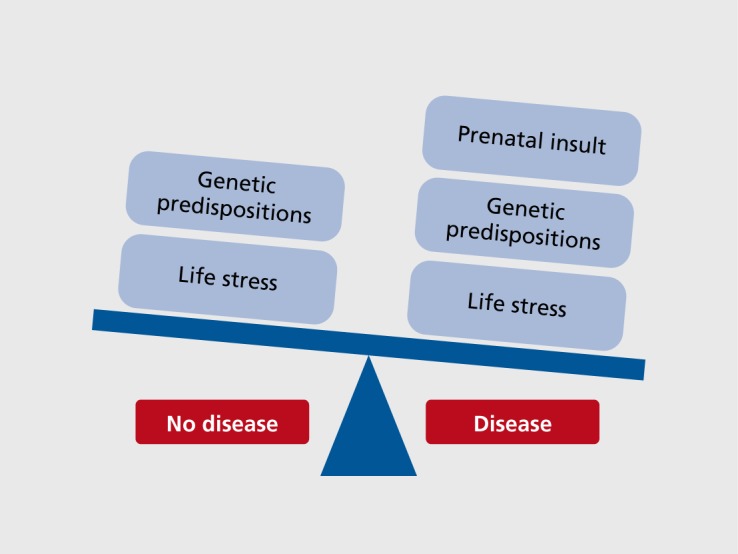
The transgenerational epigenetic programming involved in the passage of environmental exposures to stressful periods from one generation to the next has been examined in human populations, and mechanistically in animal models. Epidemiological studies suggest that gestational exposures to environmental factors including stress are strongly associated with an increased risk of neurodevelopmental disorders, including attention deficit-hyperactivity disorder, schizophrenia, and autism spectrum disorders. Both maternal and paternal life experiences with stress can be passed on to offspring directly during pregnancy or through epigenetic marks in the germ cell. Animal models of parental stress have examined relevant offspring phenotypes and transgenerational outcomes, and provided unique insight into the germ cell epigenetic changes associated with disruptions in neurodevelopment. Understanding germline susceptibility to exogenous signals during stress exposure and the identification of the types of epigenetic marks is critical for defining mechanisms underlying disease risk.
Overview
The claims and statistics of this paper haven’t been checked yet.
Free: it reads the open-access text and checks the first 5 claims that cite a source we can check. Create a free account to check every claim.
Integrity signals
Registry
Cites
Statistics
Figures
Verification
Claims the paper makes
The claims and statistics of this paper haven’t been checked yet.
Free: it reads the open-access text and checks the first 5 claims that cite a source we can check. Create a free account to check every claim.
Claims other papers make about this one
Each is checked against this paper’s own text: does it say what the citing paper says it does?
The source backs part of the claim, not all of it — or backs it for a different population, condition or comparison.
In the citing paper
“Preclinical studies suggest a potential intergenerational transmission of epigenetic information as an engram of environmental experiences via multiple mechanisms conferred by paternal sperm and maternal germline to shape endocrine programming, brain development and the behavioral phenotype in the offspring”
From The applied implications of epigenetics in anxiety, affective and stress-related disorders - A review and synthesis on psychosocial stress, psychotherapy and prevention (2020) · cites this paper as Bale, 2014
Experimental — accuracy not yet measuredThe cited source says what the claim attributes to it.
In the citing paper
“Research on possible intergenerational transmission of stress effects through epigenetic marks in sperm has been conducted in rodents, and includes preconception exposures at various developmental stages to stressful and adverse social experiences 149,175,176,179,181,203,204”
From Intergenerational transmission of trauma effects: putative role of epigenetic mechanisms (2018) · cites this paper as [149]
Self-check
Percentages, sums and reported differences re-computed from the paper’s own numbers.
The self-check needs the paper’s full text.
Citations
Cites
Persistent epigenetic differences associated with prenatal exposure to famine in humans
Heijmans, B. T., Tobi, E. W., Stein, A. D., Putter, H., Blauw, G. J., Susser, E. S., Slagboom, P. E., & Lumey, L. H. (2008) · Proceedings of the National Academy of Sciences · doi:10.1073/pnas.0806560105 · Cited by 3,082
Epigenetic Transgenerational Actions of Endocrine Disruptors and Male Fertility
Anway, M. D., Cupp, A. S., Uzumcu, M., & Skinner, M. K. (2005) · Science · doi:10.1126/science.1108190 · Cited by 2,563 · cited 1×
“exposure, dietary manipulations, endocrine disrupters, and conditioned fear.(35-43)”
BackgroundSocioeconomic status and the brain: mechanistic insights from human and animal research
Hackman, D. A., Farah, M. J., & Meaney, M. J. (2010) · Nature Reviews Neuroscience · doi:10.1038/nrn2897 · Cited by 1,409
Parental olfactory experience influences behavior and neural structure in subsequent generations
Dias, B. G., & Ressler, K. J. (2014) · Nature Neuroscience · doi:10.1038/nn.3594 · Cited by 1,338 · cited 1×
“exposure, dietary manipulations, endocrine disrupters, and conditioned fear.(35-43)”
BackgroundChronic high-fat diet in fathers programs β-cell dysfunction in female rat offspring
Ng, S.-F., Lin, R. C. Y., Laybutt, D. R., Barres, R., Owens, J. A., & Morris, M. J. (2010) · Nature · doi:10.1038/nature09491 · Cited by 1,327 · cited 1×
“exposure, dietary manipulations, endocrine disrupters, and conditioned fear.(35-43)”
BackgroundPIWI-interacting small RNAs: the vanguard of genome defence
Siomi, M. C., Sato, K., Pezic, D., & Aravin, A. A. (2011) · Nature Reviews Molecular Cell Biology · doi:10.1038/nrm3089 · Cited by 1,319
Implication of sperm RNAs in transgenerational inheritance of the effects of early trauma in mice
Gapp, K., Jawaid, A., Sarkies, P., Bohacek, J., Pelczar, P., Prados, J., Farinelli, L., Miska, E., & Mansuy, I. M. (2014) · Nature Neuroscience · doi:10.1038/nn.3695 · Cited by 1,306 · cited 1×
“exposure, dietary manipulations, endocrine disrupters, and conditioned fear.(35-43)”
BackgroundCarone, B. R., Fauquier, L., Habib, N., Shea, J. M., Hart, C. E., Li, R., Bock, C., Li, C., Gu, H., Zamore, P. D., et al. (2010) · Cell · doi:10.1016/j.cell.2010.12.008 · Cited by 1,159
Epigenetic transmission of the impact of early stress across generations
Franklin, T. B., Russig, H., Weiss, I. C., Gräff, J., Linder, N., Michalon, A., Vizi, S., & Mansuy, I. M. (2010) · Biological Psychiatry · doi:10.1016/j.biopsych.2010.05.036 · Cited by 1,125
Lemaire, V., Koehl, M., Le Moal, M., & Abrous, D. N. (2000) · Proceedings of the National Academy of Sciences · doi:10.1073/pnas.97.20.11032 · Cited by 1,044
Cited by
Items 101–128 of 128
Chow, T., Meng, Q., Xiao, J., O’Sharkey, K., Liew, Z., & Ritz, B. R. (2025) · Autism Research · doi:10.1002/aur.70074 · Cited by 2
“In murine models, conditioned fear or stress during in utero development of the parental generation has been reported to lead to altered behavior in the offspring generation (Bale 2014).”
Epigenetic Mechanisms and Inheritance of Acquired Susceptibility to Disease
Miranda, R. C., Salem, N. A., Fincher, A. S., Mahnke, A. H., & Burrowes, S. G. (2016) · Elsevier eBooks · doi:10.1016/b978-0-12-803239-8.00030-2 · Cited by 1
Nature or Nurture – Will Epigenomics Solve the Dilemma?
Płonka, B. K. (2016) · Studia Humana · doi:10.1515/sh-2016-0007 · Cited by 1
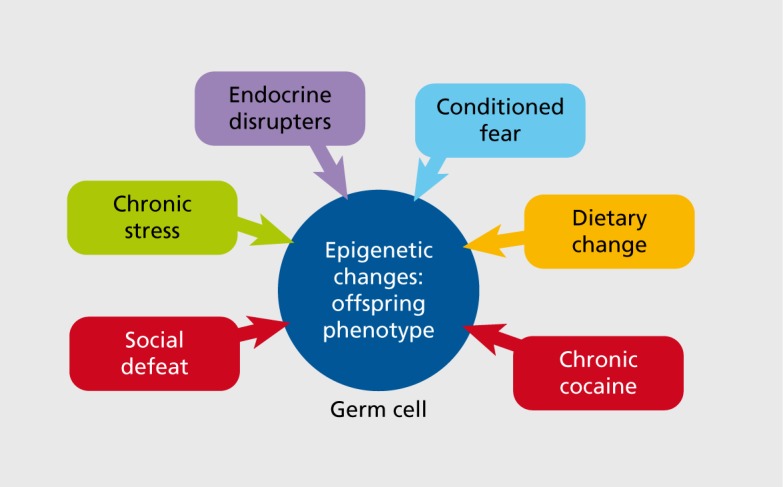
“Epigenetic changes have been observed in paternal germ cell programming due to severe social defeat, chronic stress, traumatic experience, conditioned fear, cocaine exposure or dietary change in mice [7, 164].”
BackgroundFeatures of sexual development of girls whose mothers experienced a vital stress before pregnancy
Temirkhanova, K. T., Tsykunov, S. G., & Pyatibrat, A. O. (2017) · Medico-Biological and Socio-Psychological Problems of Safety in Emergency Situations · doi:10.25016/2541-7487-2017-0-1-54-61 · Cited by 1
“Большое количество из этих работ посвящены эпигенетическому наследованию [2, 10, 11, 17, 24, 26].”
Therapeutic Approaches to Imprinting Diseases
Hattori, H., Hiura, H., Kobayashi, N., Takahashi, S., Okae, H., & Arima, T. (2018) · Elsevier eBooks · doi:10.1016/b978-0-12-812215-0.00028-5 · Cited by 1
Does Poverty and Emotional Trauma in Children Affect their Mental Health?
Nichol, R. (2018) · Techniques in Neurosurgery & Neurology · doi:10.31031/tnn.2018.01.000516 · Cited by 1
“Hopefully in future the emphasis will shift from not only alleviating poverty, but also to the utilization of measures to protect the developing brains of young children in line with (WHO) UNICEF’s Millennium Developmental Goals [30-38].”
BackgroundA Review of Pre-Clinical Studies for the Treatment of Neonatal Brain Injury
Kolb, B. E., & Williams, P. T. J. A. (2020) · Neurology and Neurobiology · doi:10.31487/j.nnb.2020.01.07
“In other words, experiences can influence the expression of genes [3, 4].”
BackgroundHarker, A. (2015) · Open ULeth Scholarship (OPUS) (University of Lethbridge) · Cited by 1
CHERNOBYL AND FUKUSHIMA NUCLEAR ACCIDENTS
Глазко, В. И., Zybailov, B. L., & Glazko, T. T. (2016) · Sel skokhozyaistvennaya Biologiya · doi:10.15389/agrobiology.2016.2.141eng · Cited by 1
Neuroepigenomics and Human Disease
Greally, J. M., & Nestler, E. J. (2016) · Elsevier eBooks · doi:10.1016/b978-0-12-800105-9.00005-6
Rozanov, V. A. (2017) · Elsevier eBooks · doi:10.1016/b978-0-12-805199-3.00005-1
Mejía-Lancheros, C., Mehegan, J., Segurado, R., Murrin, C. M., & Kelleher, C. C. (2017) · SSM - Population Health · doi:10.1016/j.ssmph.2017.11.011
“…can produce long-term diseases and changes or variations in the genes expression that not only prompt both punctual outset and cumulative health disorders in the exposed individuals but also in their future generations (transgenerational stress imprinting) (Bale, 2014; Zucchi, Yao, & Metz, 2012).”
BackgroundKittel‐Schneider, S. (2018) · Springer eBooks · doi:10.1007/978-3-662-45995-9_18-1
Inheritance of epigenome variants across generations during evolution
Varriale, A. (2019) · Elsevier eBooks · doi:10.1016/b978-0-12-816363-4.00016-x
Effect of lifestyle and paternal feeding on the offspring’s metabolic programming
Hachul, A. C. L., de Miranda, D. A., Nakakura, F. C. A., Boldarine, V. T., & Oyama, L. M. (2021) · Nutrire · doi:10.1186/s41110-021-00143-7
Wu, Y. (2021) · International Symposium on Artificial Intelligence for Medicine Sciences (ISAIMS) · doi:10.1145/3500931.3500961
“Both maternal and paternal life experiences with stress or shock can be passed on to offspring directly during pregnancy or through epigenetic marks in the germ cell [4].”
BackgroundJazwiec, P. A., & Sloboda, D. M. (2022) · Cambridge University Press eBooks · doi:10.1017/9781009272254.013 · Cited by 3
Impact of social determinants of health on DNA methylation
Herrera‐Moreno, J. F., Rojas‐García, A. E., Medina‐Díaz, I. M., Bernal-Hernández, Y. Y., González-Arias, C. A., Barrón-Vivanco, B. S., & Ramos, K. S. (2022) · Elsevier eBooks · doi:10.1016/b978-0-12-824010-6.00017-4
Vyushina, A. V., Притворова, А. В., Пивина, С. Г., & Ordyan, N. E. (2024) · Vavilov Journal of Genetics and Breeding · doi:10.18699/vjgb-24-44
Johns, D. A., Quirk, S. E., Pasco, J. A., Hyde, N. K., & Williams, L. J. (2024) · BMJ Open · doi:10.1136/bmjopen-2023-082958
“11 Psychiatric disorders are one of such exposures that have been increasingly investigated.”
BackgroundCantão, I. H., Campagnoli, G. M., & Stumpp, T. (2025) · International Journal of Molecular Sciences · doi:10.3390/ijms262110589
Vera-Chang, M. N., Danforth, J. M., Stuart, M., Goodarzi, A. A., Brand, M., & Richardson, R. B. (2024) · Figshare · doi:10.6084/m9.figshare.26633361
Vernick, J., Squair, C., & Overall, K. L. (2026) · Journal of Veterinary Behavior · doi:10.1016/j.jveb.2026.02.005
Perinatal Social Work in Neonatal İntensive Care Units (NICU)
ELBİSTANLI, E. A., & ATIŞ, M. (2026) · Sosyolojik Düşün · doi:10.37991/sosdus.1884993
Vera-Chang, M. N., Danforth, J. M., Stuart, M., Brand, M., Goodarzi, A. A., & Richardson, R. B. (2026) · Environmental Epigenetics · doi:10.1093/eep/dvag020
“Some epigenetic responses and their biological outcomes are partially reversible, but others persist, even for decades and generations [ 13 ].”
Császár-Nagy, N., & Bókkon, I. (2026) · International Journal of Molecular Sciences · doi:10.3390/ijms27167177
“Within this context, prenatal and developmental influences may be viewed as factors that are consistent with, compatible with, or potentially contributory to later stress vulnerability and chronic illness susceptibility [56,59,109,110].”
InfluentialShape-shifting proteins and the subtlety in their form and function
Kulkarni, P., Bhattacharya, S., Mohanty, A. R., Ramisetty, S. K., Pisick, E., Orban, J. P., Uversky, V. N., Weninger, K., Huang, S., Chou, T., et al. (2026) · iScience · doi:10.1016/j.isci.2026.117386
Metadata
- Authors
- Bale, T. L.
- Affiliations
- University of Pennsylvania (US)
- Corresponding author
- Bale, Tracy L.
- ORCID
- Bale, Tracy L.
- Venue
- Dialogues in Clinical Neuroscience
- Publisher
- Informa UK Limited
- Published
- 2014-09-30
- Volume
- 16
- Issue
- 3
- Pages
- 297-305
- ISSN
- 1294-8322 (ISSN-L)
- 1958-5969
- PMC
- PMC4214173
- OpenAlex
- W2179636527
- Semantic Scholar
- f09229492a0c492f9d271dd5fa8931ff96f3853c
- Cited by
- 129
- References
- 54
- Citations by year
- 2026: 6 · 2025: 5 · 2024: 9 · 2023: 5 · 2022: 15 · 2021: 9 · 2020: 11 · 2019: 8 · 2018: 16 · 2017: 12 · 2016: 15 · 2015: 18
- FWCI
- 6.15
- Type
- journal article
- Language
- en
- Open access
- diamond
- doi.org
- Licence
- Locations
- Dialogues in Clinical Neuroscience (publishedVersion, cc-by-nc-nd)
- PubMed Central (publishedVersion, cc-by-nc-nd)
- PubMed (publishedVersion)
- Funders
- National Institutes of Health (5r01mh091258-05)
- National Institute of Mental Health (P50MH099910, MH087597, MH 091258, MH099910, R01 MH-091258, R01MH087597)
- Topics
- Life Sciences › Biochemistry, Genetics and Molecular Biology › Molecular Biology › Epigenetics and DNA Methylation
- Health Sciences › Medicine › Pediatrics, Perinatology and Child Health › Birth, Development, and Health
- Health Sciences › Medicine › Public Health, Environmental and Occupational Health › Maternal Mental Health During Pregnancy and Postpartum
- Keywords
- transgenerational epigenetic inheritance, parental stress, prenatal stress, environmental exposure, neurodevelopmental disorders, attention deficit hyperactivity disorder, schizophrenia, autism spectrum disorder, epigenetic modifications
- MeSH terms
- Animals, Developmental Disabilities, Disease Models, Animal, Female, Germ Cells, Humans, Male, Pregnancy, Prenatal Exposure Delayed Effects, Stress, Psychological, Epigenesis, Genetic
About these checks
Registry, retraction, Cites and statistics results are computed, not judged, with one exception: a printed reference that no index lists is read once by a model before it counts as a citation error. Claims are extracted by a model and kept only when their quote appears verbatim in the text; each cited source is then checked, with a model’s help, for whether it says what the claim relies on. Those verdicts can be wrong — read the claim’s quote and the cited source before relying on one.
Statistics and arithmetic are recomputed, not judged.
Confidence bands are shown only for fields calibrated on our annotated test set. None is calibrated yet, so no band is shown.
What counts as a claim ›How we measure confidence ›How we check this ›
Are you an author, or do you see a problem with this page? Request a review
Data sources
Bibliographic data: Semantic Scholar, OpenAlex, Crossref.
Contains information from the Semantic Scholar Academic Graph Datasets, made available under the ODC Attribution License (ODC-BY 1.0).
Semantic Scholar’s data is described in: Kinney, R., et al. (2023). The Semantic Scholar Open Data Platform. arXiv:2301.10140.
