

The DOI matches its Crossref record; 41 of the 44 references it cites were found in a registry or an index.
Long-term Psychological and Occupational Effects of Providing Hospital Healthcare during SARS Outbreak
Open accessAbstract
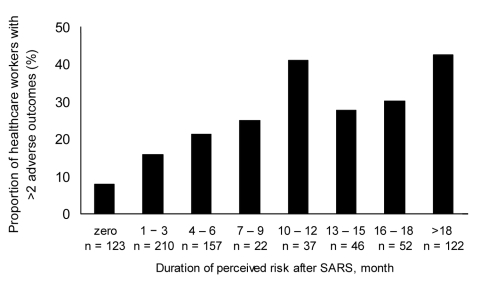
Healthcare workers (HCWs) found the 2003 outbreak of severe acute respiratory syndrome (SARS) to be stressful, but the long-term impact is not known.From 13 to 26 months after the SARS outbreak, 769 HCWs at 9 Toronto hospitals that treated SARS patients and 4 Hamilton hospitals that did not treat SARS patients completed a survey of several adverse outcomes.Toronto HCWs reported significantly higher levels of burnout (p = 0.019), psychological distress (p<0.001), and posttraumatic stress (p<0.001).Toronto workers were more likely to have reduced patient contact and work hours and to report behavioral consequences of stress.Variance in adverse outcomes was explained by a protective effect of the perceived adequacy of training and support and by a provocative effect of maladaptive coping style and other individual factors.The results reinforce the value of effective staff support and training in preparation for future outbreaks.S evere acute respiratory syndrome (SARS) emerged from Guangdong Province, People's Republic of China, in November 2002 and spread rapidly; transmission occurred primarily in hospitals, often to healthcare workers (HCWs).Although initially virtually no literature was available to guide expectations of how an emerging infection would affect the psychological well-being of hospital staff (1), by the summer of 2003 the acute psychological impact of SARS had been widely studied.Significant emotional distress was present in 18%-57% of HCWs (2-6) and was associated with quarantine (7), fear of contagion (6,8,9), concern for family (5,9,10), job stress (6,9), interpersonal isolation (6,9), perceived stigma (6,7,11), conscription of nonspecialists into infectious disease work (12), and attachment insecurity (10).Working in SARS-affected hospitals could have been traumatic for some HCWs (i.e., an event that "threatens an individual's life or physical integrity and involves a subjective response of fear, helplessness, or horror" [13]).Before the SARS coronavirus was identified (14-17), SARS was an infection of unknown cause, unknown mode of transmission, global spread, and high mortality, characteristics that generally increase perceived risk (18).However, although the SARS outbreak was acutely stressful, the longer term impact of SARS on HCWs is unknown.Understanding the enduring occupational and psychological effects of working during this SARS outbreak is important because it involves the well-being of large numbers of HCWs.Additionally, this information has wider relevance to health systems in planning for emerging infections, including pandemic influenza (http://www.who.int/csr/disease/influenza/inforesources/en) and the potential for bioterrorism (19).
Overview
The claims and statistics of this paper haven’t been checked yet.
Run the check — free, no account needed. It reads the open-access text and checks the sources it cites.
Integrity signals
Registry
Cites
Statistics
Figures
Verification
Claims the paper makes
The claims and statistics of this paper haven’t been checked yet.
Run the check — free, no account needed. It reads the open-access text and checks the sources it cites.
Claims other papers make about this one
Each is checked against this paper’s own text: does it say what the citing paper says it does?
In the citing paper
“Following the outbreak of severe acute respiratory syndrome in 2003, health-care workers reported chronic stress effects for months to years.4”
From COVID-19: a heavy toll on health-care workers (2021) · cites this paper as [4]
In the citing paper
“Such an extraordinary event will have long-term effects on mental health according to previous studies of epidemics and quarantine (Maunder et al., 2006; Brooks S. K. et al., 2020; Kisely et al., 2020).”
From Traumatic Stress in Healthcare Workers during COVID-19 Pandemic: A Review of the Immediate Impact (2020) · cites this paper as Maunder et al., 2006
Self-check
Percentages, sums and reported differences re-computed from the paper’s own numbers.
The self-check needs the paper’s full text.
Citations
Cites
KESSLER, R. C., ANDREWS, G., COLPE, L. J., HIRIPI, E., MROCZEK, D. K., NORMAND, S.-L. T., WALTERS, E. E., & ZASLAVSKY, A. M. (2002) · Psychological Medicine · doi:10.1017/s0033291702006074 · Cited by 10,327 · cited 1×
“This survey measured demographic and job data as well as traumatic stress response (15-item Impact of Events Scale [IES] [20,21]), nonspecific psychological distress (Kessler Psychological Distress Scale [K10] [22]), and professional burnout (emotional exhaustion scale of the Maslach Burnout Inventory [MBI-EE] [23–25]…”
MethodSlovic, P. (1987) · Science · doi:10.1126/science.3563507 · Cited by 9,271 · cited 1×
“Before the SARS coronavirus was identified (14) (15) (16) (17) , SARS was an infection of unknown cause, unknown mode of transmission, global spread, and high mortality, characteristics that generally increase perceived risk (18) .”
BackgroundAttachment and Loss. Vol. 1. Attachment
Rever, G. W. (1972) · Psychosomatic Medicine · doi:10.1097/00006842-197211000-00011 · Cited by 8,446 · cited 1×
“Attachment anxiety is a common, relatively enduring, and stable interpersonal style within close relationships (37), which is known to be associated with sensitivity to stress under many conditions (38,39).”
Impact of Event Scale: A Measure of Subjective Stress
Horowitz, M., Wilner, N., & Alvarez, W. (1979) · Psychosomatic Medicine · doi:10.1097/00006842-197905000-00004 · Cited by 7,813
Hospital Nurse Staffing and Patient Mortality, Nurse Burnout, and Job Dissatisfaction
Aiken, L. H. (2002) · JAMA · doi:10.1001/jama.288.16.1987 · Cited by 5,226
Identification of a novel coronavirus in patients with severe acute respiratory syndrome
Drosten, C., Günther, S., Preiser, W., van der Werf, S., Brodt, H.-R., Becker, S., Rabenau, H., Panning, M., Kolesnikova, L., Fouchier, R. A. M., et al. (2003) · New England Journal of Medicine · doi:10.1056/nejmoa030747 · Cited by 4,574 · cited 1×
“Before the SARS coronavirus was identified (14) (15) (16) (17) , SARS was an infection of unknown cause, unknown mode of transmission, global spread, and high mortality, characteristics that generally increase perceived risk (18) .”
BackgroundAn Item-Response Theory Analysis of Self-Report Measures of Adult Attachment
Fraley, R. C., Waller, N. G., & Brennan, K. A. (2000) · Journal of Personality and Social Psychology · doi:10.1037/0022-3514.78.2.350 · Cited by 3,385 · cited 1×
“Attachment insecurity was measured with the anxiety and attachment avoidance scales of the Experiences in Close Relationships-Revised questionnaire (28).”
MethodCoronavirus as a possible cause of severe acute respiratory syndrome
Peiris, M. J. S., Lai, S., Poon, L. L. M., Guan, Y., Yam, L., Lim, W., Nicholls, J. M., Yee, W., Yan, W., Cheung, M., et al. (2003) · The Lancet · doi:10.1016/s0140-6736(03)13077-2 · Cited by 2,916 · cited 1×
“Before the SARS coronavirus was identified (14) (15) (16) (17) , SARS was an infection of unknown cause, unknown mode of transmission, global spread, and high mortality, characteristics that generally increase perceived risk (18) .”
BackgroundCharacterization of a Novel Coronavirus Associated with Severe Acute Respiratory Syndrome
Rota, P. A., Oberste, M. S., Monroe, S. S., Nix, W. A., Campagnoli, R. P., Icenogle, J. P., Peñaranda, S., Bankamp, B., Maher, K., Chen, M., et al. (2003) · Science · doi:10.1126/science.1085952 · Cited by 2,477 · cited 1×
“Before the SARS coronavirus was identified (14) (15) (16) (17) , SARS was an infection of unknown cause, unknown mode of transmission, global spread, and high mortality, characteristics that generally increase perceived risk (18) .”
BackgroundChampion, D. F., & Westbrook, B. W. (1984) · Measurement and Evaluation in Counseling and Development · doi:10.1080/07481756.1984.12022754 · Cited by 2,389
Cited by
Sorted by citations
Items 701–800 of 999
Piccolo, L. D., Raffaelli, R., Garzon, S., Bosco, M., Casarin, J., Ciccarone, F., Dionisi, V., Ginami, M., Laganà, A. S., Mazzoni, G., et al. (2020) · Italian Journal of Gynaecology and Obstetrics · doi:10.36129/jog.32.04.07 · Cited by 5
Garg, S., Yadav, M., Chauhan, A., Verma, D., & Bansal, K. (2020) · Industrial Psychiatry Journal · doi:10.4103/ipj.ipj_220_20 · Cited by 5
“Industrial Psychiatry Journal Volume 29 | Issue 2 | July-December 2020 243 nurses provide high-quality care and they have to stand in for family members at bedside level for 24 h to provide end life care[23,27] due to which nurses are propelled in a state of anxiety after a prolonged and sustained period of exposure t…”
BackgroundNkodila, A. N., Mbendi, C., Tukadila, H. A. K., Managa, G. L., Lukanu, P. N., & Longo‐Mbenza, B. (2021) · Risk Management and Healthcare Policy · doi:10.2147/rmhp.s300505 · Cited by 5
“In addition, the long-term adverse health outcomes for SARS survivors could be a risk factor for psychiatric morbidity.(25) Therefore, we hypothesized that the COVID-19 pandemic is associated with an increased risk of developing psychiatric disorders, and we conducted this population-based survey to test this hypothes…”
BackgroundThe Effects of Pandemics on Mental Health
Antičević, V. (2021) · Drustvena istrazivanja · doi:10.5559/di.30.2.12 · Cited by 6
Pandemics at Work: Convergence of Epidemiology and Ethics
Thornton, M., & Martin, W. M. (2021) · Business Ethics Quarterly · doi:10.1017/beq.2021.32 · Cited by 5
Samara, M. T., Peppou, L. Ε., Giannouchos, T. V., Nimatoudis, I., Papageorgiou, C., Economou, M. P., & Souliotis, K. N. (2021) · Psychiatriki · doi:10.22365/jpsych.2021.044 · Cited by 5
Qiao, S., Sun, S., Tam, C. C., Li, X., Zhou, Y., & Shen, Z. (2022) · Journal of the Association of Nurses in AIDS Care · doi:10.1097/jnc.0000000000000318 · Cited by 5
“Measurement models were trimmed by adding bivariate arrows between uniqueness terms according to modification indices (.10; Meyers et al., 2016) if two itemswere conceptually correlated (e.g., itemswere from the same latent construct).”
MethodInfluentialMeena, J., Dhiman, S., Sharma, R., Kumari, K., Singhal, S., Kulshrestha, V., Vatsa, R., & Vanamail, P. (2022) · Cureus · doi:10.7759/cureus.24040 · Cited by 6
“As suggested by previous studies [4,5], healthcare workers (HCWs), who are at the forefront of the fight against COVID-19, are always at a risk of mental health crises during an infectious disease outbreak.”
BackgroundNowicki, G., Ślusarska, B. J., Zboina, B., Jędrzejewska, A., & Kotus, M. (2022) · International Journal of Environmental Research and Public Health · doi:10.3390/ijerph19127073 · Cited by 4
Ross, M. M., Sagrera, C., McPherson, P., Smith, D. G., Bhuiyan, M. A. N., Tinsley, M., Goeders, N. E., Patterson, J. C., & Murnane, K. S. (2022) · Ethics Medicine and Public Health · doi:10.1016/j.jemep.2022.100860 · Cited by 9
Hwaij, R., Ghrayeb, F. A., Marzo, R. R., & AlRifai, A. (2022) · Medical Research Archives · doi:10.18103/mra.v10i10.3125 · Cited by 5
Wang, Q., He, P.-Q., Tian, Y., Yimin, Z., Qin, Y., Qiu, X., Liu, Y., Xu, X., Hu, W., & Shi, Z. (2023) · Nursing Open · doi:10.1002/nop2.1623 · Cited by 5
“The current findings were consistent with previous studies where the exposed HCWs reported increased levels of anxiety, depression and hostility (Chou et al., 2020; Liu, Yang, et al., 2020; Maunder et al., 2006; Park & Park, 2020).”
ResultRenzi, E., Imeshtari, V., Masud, D., Baccolini, V., Migliara, G., Gasperini, G., Vito, C. D., Marzuillo, C., Villari, P., & Massimi, A. (2023) · Frontiers in Psychiatry · doi:10.3389/fpsyt.2023.1083693 · Cited by 5
Saeri, M., Vaezi, A., Tavakolifard, N., & Javanmard, S. H. (2023) · Advanced Biomedical Research · doi:10.4103/abr.abr_439_22 · Cited by 5
“[38,39] In our study, nurses earned a higher score for psychological symptoms but were not statistically different from doctors.”
BackgroundPérez‐Escobar, J. A., Carreno, D. F., Pérez-Escobar, R., & Eisenbeck, N. (2024) · Sexuality Research and Social Policy · doi:10.1007/s13178-024-00963-y · Cited by 6
“…decreased mental health during a health crisis is being a healthcare worker, as evidenced in the previous SARS 2003 epidemic (Maunder, 2003 , 2004 ; Maunder et al., 2004 , 2006 , 2008 ; Nickell et al., 2004 ; Sim & Chua, 2004 ; Lancee et al., 2008 ; Thomas & Wai, 2010 ) and the SARS-COV-2 pandemic…”
Nursing leadership in disaster preparedness and response lessons learned and future directions
Thrwi, A. M., Hazmi, A. M. A., Kalfout, A. M., Kariri, H. M., Aldabyan, T. Y., & Alsalah, Z. H. (2024) · International Journal of Community Medicine and Public Health · doi:10.18203/2394-6040.ijcmph20241989 · Cited by 5
The Pandemic Academy: Reflections of Infectious Diseases Fellows During COVID-19
Beh, D., Ng, D. H. L., Ong, S. W. X., Sutjipto, S., Lee, P. H., Oon, J. E. L., Wong, C. S., & Archuleta, S. (2020) · Open Forum Infectious Diseases · doi:10.1093/ofid/ofaa256 · Cited by 5
“During SARS in 2003, it was widely reported that health care workers experienced heightened levels of anxiety, burnout, and post-traumatic stress disorder in its wake [13].”
BackgroundMental Health on the Frontlines: Before, During, and After COVID-19.
Bernstein, S. A., & Gold, J. A. (2020) · PubMed Central · Cited by 5
Krausova, B., Gnanapragasam, S., Demetriou, L., Beck, A., Pires-Yfantouda, R., Docherty, M. J., & Sevdalis, N. (2021) · Implementation Science Communications · doi:10.1186/s43058-021-00128-7 · Cited by 5
Health-Promoting Leadership During an Infectious Disease Outbreak
Booth, L. C., Schwalb, M. E., Kim, P. Y., & Adler, A. B. (2021) · The Journal of Nervous and Mental Disease · doi:10.1097/nmd.0000000000001305 · Cited by 7
Gao, X., Wang, Z., Kong, C., Fan, H., Zhang, J., Wang, J., Tan, L., & Wang, J. (2021) · Disaster Medicine and Public Health Preparedness · doi:10.1017/dmp.2021.132 · Cited by 5
Ünal, Y., Çakır, E., & Tekeli‐Yeşil, S. (2021) · Journal of Public Health · doi:10.1007/s10389-021-01656-1 · Cited by 5
“2020), acute or posttraumatic stress, and sleep disturbances (Ho et al. 2005; Maunder et al. 2006; Magnavita et al. 2020).”
BackgroundResultInfluentialKalyanaraman, M., Sankar, A., Timpo, E., McQueen, D., Morparia, K., Bergel, M., & Rosenblatt, J. (2021) · Journal of Intensive Care Medicine · doi:10.1177/08850666211059385 · Cited by 5
Foxwell, A. M. (2022) · Springer eBooks · doi:10.1007/978-3-030-82113-5_3 · Cited by 5
Esteban‐Sepúlveda, S., Terradas, R., Ribeiro, T. C., Pagès, E. G., Sangrà, P. S., & Lacueva‐Pérez, L. (2022) · Enfermería Clínica (English Edition) · doi:10.1016/j.enfcle.2021.12.003 · Cited by 6
Factors and optimizations of healthcare workers' perception in alternative care facilities
Wang, H., Luo, P., Wu, Y., & Zeng, X. (2022) · Frontiers in Public Health · doi:10.3389/fpubh.2022.891503 · Cited by 5
Zhou, P., Du, N., Xiao, Y., Li, Y., Li, C., & Geng, T. (2022) · BMJ Open · doi:10.1136/bmjopen-2022-062664 · Cited by 5
Evaluation of psychological impact of COVID-19 on anesthesiology residents in the United States
Guran, E., Yan, M., Ho, D., & Vandse, R. (2022) · Heliyon · doi:10.1016/j.heliyon.2022.e11815 · Cited by 5
Kislyakov, P. A., Shmeleva, E. A., Karaseva, T. V., Silaeva, O., & Prijatkin, D. A. (2022) · Siberian Journal of Life Sciences and Agriculture · doi:10.12731/2658-6649-2022-14-6-226-262 · Cited by 7
Hu, M. Y., Xu, Y., Bu, D., Luo, K., Liying, C., & Mao, C. (2023) · Frontiers in Psychology · doi:10.3389/fpsyg.2023.1125847 · Cited by 5
“According to some studies on the impact of the SARS outbreak on social psychology, approximately 20% of people were depressed, and the incidence rate of depression among nurses was 45% (Maunder et al., 2006), which was like the incidence rate of depression in this study.”
BackgroundMental Health Issues of the Medical Workforce during COVID-19: A Review
Domenicano, I. (2020) · Journal of Psychological Research · doi:10.30564/jpr.v2i3.2073 · Cited by 5
“Moreover, given the data from the previous studies about SARS and MERS, it is most likely that similar reactions to those observed during the previous outbreaks will be seen in the current crisis as well.”
BackgroundInfluentialBehavioral Reactions and Psychological Responses to 2019-nCoV: A Narrative Review
Ranaei, V., Pilevar, Z., & Aghamolaei, T. (2020) · Iranian Journal of Psychiatry and Behavioral Sciences · doi:10.5812/ijpbs.104727 · Cited by 5
Covid-19 related anxiety levels ın physicians: a preliminary study
Sancak, B. (2020) · Dusunen Adam The Journal of Psychiatry and Neurological Sciences · doi:10.14744/dajpns.2020.00105 · Cited by 5
“7%, and even non-infected healthcare staff continued to experience mental problems over the following years (23,24).”
BackgroundSurvey on Public Psychological Intervention Demand and Influence Factors Analysis
Su, F. P., Fan, B., Song, N., Dong, X., Wang, Y., Li, J., Xue, B., & Qiao, X. (2021) · International Journal of Environmental Research and Public Health · doi:10.3390/ijerph18094808 · Cited by 5
Withiel, T., Barson, E., Ng, I., Segal, R., Williams, D. L., Krieser, R. B., Lee, K., Mezzavia, P. M., Sindoni, T., Chen, Y., et al. (2021) · JMIR Perioperative Medicine · doi:10.2196/27166 · Cited by 6
“Questions were adapted from existing literature [12,16,17].”
Working Under Pandemic Conditions
Weigelt, O., Marcus, B., Felfe, J., Kluge, A., & Ontrup, G. (2021) · Zeitschrift für Arbeits- und Organisationspsychologie A&O · doi:10.1026/0932-4089/a000376 · Cited by 5
The COVID-19 Healthcare Personnel Study (CHPS): Overview, Methods, and Preliminary Findings
DiMaggio, C., Abramson, D., Susser, E., Hoven, C. W., Chen, Q., Andrews, H. F., Herman, D., Kreniske, J., Ryan, M., Susser, I., et al. (2021) · Journal of Neurosurgical Anesthesiology · doi:10.1097/ana.0000000000000813 · Cited by 5
Supporting the emotional wellbeing of midwives in a pandemic: Guidance for RCM
Hunter, B. J., Renfrew, M. J., Downe, S. M., Cheyne, H., Dykes, F., Lavender, T., Page, L., Sandall, J., & Spiby, H. (2020) · Discovery Research Portal (University of Dundee) · Cited by 5
Sumner, R. C., & Kinsella, E. L. (2020) · PsyArXiv (OSF Preprints) · doi:10.31234/osf.io/4tp35 · Cited by 7
Well-being and empowerment perceptions in a sudden shift to working from home
Jackson, D. J. R., Jones, A., Michaelides, G., & Dewberry, C. (2024) · Journal of Vocational Behavior · doi:10.1016/j.jvb.2024.104000 · Cited by 12
Hartley, H., Dunning, A., Murray, J., Simms‐Ellis, R., Unsworth, K. L., Grange, A., Dunn, M., Marran, J., Joseph, O., Essler, P., et al. (2025) · Health and Social Care Delivery Research · doi:10.3310/ewpe7103 · Cited by 6
“Maunder et al. 14 found that the trajectory of healthcare workers’ recovery after the SARS crisis was primarily determined by perceptions of organisational support (training, protection and moral support) and maladaptive relationships with co-workers (anger, blame, self-blame and attachment anxiety).”
Short- and long-term psychiatric complications of COVID-19
Ahmed, G. K., Ramadan, H. K., & Khedr, E. M. (2025) · The Egyptian Journal of Neurology Psychiatry and Neurosurgery · doi:10.1186/s41983-025-00972-7 · Cited by 5
“A study of healthcare professionals who operated during the severe acute respiratory syndrome (SARS) crisis revealed that reported sufficiency of experience and education served as a protective factor for mental illness issues [46].”
The interplay between burnout risk and attachment styles among palliative care practitioners
Lenzo, V., Sardella, A., Branca, G. M., Bordino, V., Aragona, M., Garipoli, C., Schimmenti, A., & Quattropani, M. C. A. (2021) · Psychodynamic Practice · doi:10.1080/14753634.2021.1922305 · Cited by 5
“Surprisingly, the most of studies investigating the relationship between attachment styles and burnout using the MBI have taken into account only emotional exhaustion (Falvo, Favara, Di Bernardo, Boccato, & Capozza, 2012; Halpern et al., 2012; Maunder et al., 2006).”
Mohammadzadeh, F., Noghabi, A. D., Bazeli, J., Karimi, H., & Aalami, H. (2021) · Quarterly of Horizon of Medical Sciences · doi:10.32598/hms.27.2.3289.1 · Cited by 6
Factors associated to emotional impact of Covid-19 pandemic on health professional
Cabedo, E., Prieto, J., Quiles, L., Arnáez, S., Rivas, M., Riveiro, Y., Aguilar, E. J., & Renovell, M. (2022) · Behavioral Psychology/Psicología Conductual · doi:10.51668/bp.8322104s · Cited by 5
Nehme, M., Vieux, L., Courvoisier, D. S., Braillard, O., Spechbach, H., Jacquérioz, F., Salamun, J., Assal, F., Lador, F., Coen, M., et al. (2022) · Preventive Medicine Reports · doi:10.1016/j.pmedr.2022.101899 · Cited by 5
“…general population (Nehme et al., 2021; Nehme et al., 2020; Lopez-Leon et al., 2021) is potentially applicable to healthcare workers, with the additional pandemic-related toll and work-related strains on their mental and physical health, as suggested in previous pandemics (Maunder et al., 2006).”
Akbolat, M., Durmuş, A., Ünal, Ö., & Ezen, M. (2022) · Work · doi:10.3233/wor-205197 · Cited by 4
Balice‐Bourgois, C., Bonetti, L., Tolotti, A., Liptrott, S. J., Villa, M., Luca, C. E., Steiner, L. M., Biegger, A., Goncalves, S., Moser, L., et al. (2022) · International Journal of Environmental Research and Public Health · doi:10.3390/ijerph191912838 · Cited by 4
Helper Syndrome and Pathological Altruism in nurses – a study in times of the COVID-19 pandemic
Maringgele, V., Scherr, M., Aichhorn, W., & Kaiser, A. K. (2023) · Frontiers in Psychology · doi:10.3389/fpsyg.2023.1150150 · Cited by 4
Riviere, L. A., Kim, P. Y., Baker, M. D., & Beymer, M. R. (2023) · Military Medicine · doi:10.1093/milmed/usad395 · Cited by 4
Post-traumatic stress symptoms in mental healthcare workers during the COVID-19 outbreak
Human, A. K., Vahed, N., & Marais, B. (2023) · South African Journal of Psychiatry · doi:10.4102/sajpsychiatry.v29i0.2098 · Cited by 5
“6 This is suggestive that epidemic experiences could be considered traumatic for HCWs across departments.”
BackgroundTaylor, R. M., Hughes, L., Fern, L. A., Hogg, J., & Petrella, A. R. (2023) · Journal of research in nursing · doi:10.1177/17449871231206916 · Cited by 5
“However, regardless of the amount of change experienced, poorly managed redeployment has been associated with adverse outcomes (Maunder et al., 2006, Nickell et al., 2004).”
BackgroundAssociation of Negative Life Events and Psychological Well-being among Paramedical Staff
Bajwa, R. S., Yunus, A., Fadhel, F. H., Iqbal, F., Sufyan, N. S., & Mushtaq, S. K. (2023) · MIGRATION LETTERS · doi:10.59670/ml.v21i1.5170 · Cited by 4
“These combined stressors have the potential to not only affect their psychological equilibrium but also impede their ability to render effective patient care (Maunder et al., 2006).”
BackgroundDouplat, M., Curtet, M., Termoz, A., Subtil, F., Elsensohn, M. H., Mazza, S., Jacquin, L., Clement, B., Fassier, J., Nohales, L., et al. (2024) · Stress and Health · doi:10.1002/smi.3478 · Cited by 5
Harris, C. A., O’Neal, P., & Taylor, M. (2024) · Disaster Medicine and Public Health Preparedness · doi:10.1017/dmp.2024.274 · Cited by 4
“12 – 14 Therefore, the gap in public health preparedness education leaves our future public health professionals unprepared to face the realities of a disaster, where interdisciplinary collaboration is essential.”
Gutmanis, I., Coleman, B. L., Maunder, R., Fischer, K., Zhu, V., & McGeer, A. (2024) · International Journal of Environmental Research and Public Health · doi:10.3390/ijerph21111448 · Cited by 4
Self-citationE‐Learning in Dental Medicine: A Key to More Equality?
Hartmann, A., Steinhoff, S., Al‐Nawas, B., Heimes, D., & Kämmerer, P. W. (2025) · European Journal Of Dental Education · doi:10.1111/eje.13080 · Cited by 4
“Data analyses were conducted using R's statistical software packages, including lavaan, lme4, lmerTest, MuMIn and sem-Tools [10, 19–21].”
Healthcare worker protection against epidemic viral respiratory disease
Scantling‐Birch, Y., Newton, R., Naveed, H., Rajak, S. N., & Bhutta, M. F. (2021) · Postgraduate Medical Journal · doi:10.1136/postgradmedj-2020-139555 · Cited by 4
Development of an Anesthesiology Disaster Response Plan
Staben, M., Raiten, J. M., Lane-Fall, M. B., & Scott, M. J. (2021) · Anesthesiology Clinics · doi:10.1016/j.anclin.2021.02.001 · Cited by 4
“A study comparing negative psychological outcomes among workers who took care of patients with severe acute respiratory syndrome (SARS) in Toronto, Canada, demonstrated significantly higher levels of burnout, psychological distress, and posttraumatic stress than their peers at hospitals that did not accept such patien…”
Sánchez-Galán, J. E., Ureña, G., Escovar, L. F., Fábrega, J., Coles, A., & Kurt, Z. (2021) · Journal of environmental chemical engineering · doi:10.1016/j.jece.2021.105881 · Cited by 4
“For instance, many political, sociological and psychological problems that became evident after the SARS epidemic [40, 51,71] have now been reported now for COVID-19 pandemic [86,111].”
CHALLENGES FACED BY CORONA WARRIORS DURING COVID-19 PANDEMIC: A REVIEW
Kumar, M., Talati, S., Arora, P., & Gill, M. (2021) · International Journal of Medical and Biomedical Studies · doi:10.32553/ijmbs.v5i9.2204 · Cited by 4
Choudhary, A., Ranjan, J. K., Sharma, P., & Asthana, H. S. (2022) · Contributions to economics · doi:10.1007/978-3-030-89996-7_15 · Cited by 4
Bronheim, R. S., Kebaish, K. M., Jain, A., Neuman, B. J., & Skolasky, R. L. (2022) · North American Spine Society Journal (NASSJ) · doi:10.1016/j.xnsj.2022.100103 · Cited by 4
Rolland, F. (2022) · Annales Médico-psychologiques revue psychiatrique · doi:10.1016/j.amp.2022.05.004 · Cited by 4
Li, H., Cui, Y., Efstathiou, N., Li, B., & Guo, P. (2022) · PLoS ONE · doi:10.1371/journal.pone.0273429 · Cited by 5
“In a cohort of healthcare workers caring for severe acute respiratory syndrome (SARS) patients, significantly higher levels of burnout, psychological distress and posttraumatic stress were reported after the outbreak ended [28].”
BackgroundGabra, M. A., Moez, K. A. E., Hegazy, M. N., & Hendi, A. E. (2022) · Middle East Current Psychiatry · doi:10.1186/s43045-022-00233-w · Cited by 5
“pre-existing psychological or physical illness [17], and fear of infecting or having an infected family member [18].”
BackgroundCOVID-19 Pandemic-Specific PTSD: Risk and Protective Factors Among University Students
Feiler, T., Vanacore, S. M., & Dolbier, C. (2022) · Journal of loss & trauma · doi:10.1080/15325024.2022.2132670 · Cited by 3
“We modified five items to assess COVID fear (Chong et al., 2004) and three items to assess COVID-19 stigma (Maunder et al., 2006; 1¼ strongly disagree to 5¼ strongly agree).”
MethodKim, K. D., & Yi, Y. H. (2022) · Journal of Korean Critical Care Nursing · doi:10.34250/jkccn.2022.15.3.101 · Cited by 5
Psychological Distress among Pharmacists during Second Wave of Pandemic: A Cross-Sectional Study
Dhakal, K., Nepal, S., & Sapkota, P. (2022) · Advances in Pharmacological and Pharmaceutical Sciences · doi:10.1155/2022/3606351 · Cited by 4
Azizi, T. H., Nayeri, N. D., Jackson, A. C., & Bahramnezhad, F. (2023) · Nursing Open · doi:10.1002/nop2.1627 · Cited by 3
“Since the adverse effects of the pandemic on HCWs (e.g., burnout) are long term, organizations must implement programs to reduce burnout and promote resilience during and after the pandemic subsides when the health system is relatively stable (Maunder et al., 2006).”
BackgroundFeizipour, H., Goli, R., Gharebaghi, N., & Kiani, A. (2023) · Nursing and Midwifery Journal · doi:10.52547/unmf.20.10.830 · Cited by 4
The Art of Health Promotion: linking research to practice
Johnson, S. S. (2018) · American Journal of Health Promotion · doi:10.1177/0890117118776735 · Cited by 5
Preparedness of ICU networks for pandemics
Florio, G., Zanella, A., & Pesenti, A. M. (2020) · Current Opinion in Critical Care · doi:10.1097/mcc.0000000000000792 · Cited by 4
COVID-19 pandemic and the healthcare workers- The call of duty
Muhammad, S., KUMAR, G., Kumar, N., & Tabassum, R. (2021) · Journal of Research in Pharmacy · doi:10.29228/jrp.90 · Cited by 4
“World Health Organization (WHO) in its guideline has recommended that the HCWs should take proper rest and and diet and in this study it was observed that about two-third of the respondents were properly following the recommended WHO guidelines [9, 10] and this will improve physical and mental state of HCWs.”
Hoque, A. M., Hoque, A. M., Buckus, S., Hoque, M., Alam, A. B. M. M. U., Hoque, M., & Singh, N. (2021) · Psychological Disorders and Research · doi:10.31487/j.pdr.2021.01.01 · Cited by 3
“These factors are likely to increase the incidence of psychological problems of HCWs especially at the lowest level of health facility in SA, such as fear, anxiety, depression, stress and insomnia, which are known to affect negatively on individual’s work efficiency and long-term well-being [8, 9].”
BackgroundKong, C., Tan, L., Gao, X., Fan, H., Zhang, J., Wang, Z., & Wang, J. (2021) · Journal of Psychosocial Nursing and Mental Health Services · doi:10.3928/02793695-20210527-03 · Cited by 4
Yang, B., Yen, C., Lin, S., Huang, C., Wu, J.-L., Cheng, Y., Hsieh, C., & Hsiao, F. (2021) · Journal of Nursing Management · doi:10.1111/jonm.13527 · Cited by 4
Aljohani, K. A., Aljohani, M. S., Natividad, M. J. B., Gracia, P. R. B., & Qazanli, I. I. (2021) · Sudan Journal of Medical Sciences · doi:10.18502/sjms.v16i4.9952 · Cited by 4
“In detail, nurses who care for patients with EIDs as part of their duties suffer from several negative psychological consequences including depression, anxiety, and post-traumatic stress response [5, 8].”
BackgroundCOVID-19 et trouble de stress post-traumatique (TSPT) chez les professionnels de santé
Underner, M., Perriot, J., Peiffer, G., & Jaafari, N. (2021) · Revue des Maladies Respiratoires · doi:10.1016/j.rmr.2020.11.014 · Cited by 4
“[3], un seul préentait un minime épanchement pleural bilatéral visible niquement à la TDM de haute résolution.”
Li, J., Xu, J., Zhou, H., You, H., Wang, X., Li, Y., Liang, Y., Li, S., Ma, L., Zeng, J., et al. (2020) · doi:10.2471/blt.20.255471 · Cited by 4
“Increased workload, fear of infection due to patient care, inadequate training and equipment, and lack of support were risk factors for poor mental and physical health [18-22].”
BackgroundAragonès, E., Rodoreda, S., Guitart, M., Garcia, E., Berenguera, A., Martín, F., Rambla, C., Aragonès, G., Calvo, A., Mas, A., et al. (2023) · BMC Primary Care · doi:10.1186/s12875-023-02187-2
“The psychological vulnerability of healthcare workers has also been underscored, and moreover, exhaustion and the psychological consequences of this experience may appear at any time and be long-lasting [14].”
Unmasking Distress: An Analysis of COVID-19’s Mental Health Impact on Nurses in South Africa
Haine, P., Kagee, A., Coetzee, B., Vuuren, M. J. V., & Shongwe, L. (2025) · Western Journal of Nursing Research · doi:10.1177/01939459251316049 · Cited by 3
“27 For example, research by Lee et al. found that HCWs continued to experience significantly elevated levels of stress, depression, anxiety, and posttraumatic symptoms even 1 year after the SARS outbreak, in comparison to non-healthcare professionals.”
Liu, Y., Xie, Z., Li, H., Song, Y., Chen, C., Li, Y., Li, S., Leng, Z., & Chen, H. (2025) · Journal of Psychiatric Research · doi:10.1016/j.jpsychires.2025.09.053 · Cited by 3
Hostiuc, S., & Gherghiceanu, F. (2026) · Medicina · doi:10.3390/medicina62020305 · Cited by 6
“Previous coronavirus outbreaks provided important precedents: healthcare workers involved in the 2003 SARS outbreak demonstrated acute PTSD rates of 10–20%, with long-term follow-up studies revealing persistent symptoms in 5–18% of affected staff up to four years post-outbreak [146,147].”
Lynch, A., Britt, T. W., Shuffler, M. L., McCallus, R. L., & Hirsh, E. (2026) · Stress and Health · doi:10.1002/smi.70160 · Cited by 4
“In developing a checklist of work demands for the present study, our research team conducted discussions with EMCs and also consulted prior research on the topic (Brooks et al. 2018; Maunder et al. 2006; Tam et al. 2004).”
Predictive Modeling of Healthcare Professional’s Stress Based on XGBoost Model
Gupta, P., Maji, S., & Mehra, R. (2021) · IEEE India Conference · doi:10.1109/indicon52576.2021.9691725 · Cited by 3
Mental Health Impacts on Other Essential Workers
Horney, J. A. (2023) · Emerald Group Publishing Limited eBooks · doi:10.1108/978-1-80262-115-020231013 · Cited by 3
Pahrol, M. A., Ismail, R., Mohamad, N., Lim, Y. C., Robat, R. M., Rajendiran, S., Thahir, S. S. A., Shakor, A. S. A., Ramly, N., & Shaharudin, R. (2023) · Frontiers in Public Health · doi:10.3389/fpubh.2023.1028443 · Cited by 4
Guo, Z., Wu, K., Shan, H., Kim, Y., & He, Q. (2023) · BMC Nursing · doi:10.1186/s12912-023-01270-4 · Cited by 4
“A study on the long-term effects of SARS patients’ care reported that healthcare providers felt high levels of Post-traumatic stress disorder, even 13–26 months later [38].”
BackgroundAlrjoub, W., Alarjeh, G., Ammar, K., Shamieh, A., Harding, R., Booth, C. M., Sullivan, R. J., Al-Ruzzieh, M. A., Mansour, A. H., & Shamieh, O. M. (2023) · Frontiers in Public Health · doi:10.3389/fpubh.2023.1288483 · Cited by 3
Post-traumatic stress disorder in hospital doctors after the COVID-19 pandemic
Rollin, L., Guérin, O., Petit, A., Bourdon, L., Guillemette, S., Gislard, A., Clin, B., Bachelet, L., Rouget-Mejjad, I., Rouger, F., et al. (2024) · Occupational Medicine · doi:10.1093/occmed/kqad125 · Cited by 3
Pandemic scars: long-term impact of COVID-19 on work stress among healthcare workers in China
Qian, H., Lin, S., Zhang, L., Song, S., & Liu, N. (2024) · Journal of Health Organization and Management · doi:10.1108/jhom-11-2023-0346 · Cited by 3
Balancing Duty and Risk: A Critical Analysis of Frontline Medical Workers During Health Emergencies
Ahmari, A. S. M. A., Alqahtani, A. S., Asiri, F. H., Samiti, F. A. S., & Alqahtani, K. A. (2024) · Journal of Ecohumanism · doi:10.62754/joe.v3i8.5520 · Cited by 3
Nguyen, H. T., Duong, B. T., Vu, T. T., Lin, S., Susilawati, T. N., Nguyễn, B. T., & Duong, M. C. (2025) · BMC Health Services Research · doi:10.1186/s12913-025-12702-z · Cited by 3
“Lessons learnt from the SARS outbreak in Canada highlight that HCWs continued to endure high levels of burnout, psychological distress, and post-traumatic stress for an extended period of 13 to 26 months after the end of the outbreak [20].”
Faria, S., Fonseca, S. M., Marques, A. J., & Queirós, C. M. L. (2025) · Healthcare · doi:10.3390/healthcare13121434 · Cited by 8
“These studies also considered how frontline workers were exposed to greater risks and developed more severe symptoms, which is in line with what had already happened during the SARS outbreak [39].”
Work circumstances, job loss, and wellbeing during New Zealand’s Covid-19 Alert Level 4 lockdown
Habibi, H., Prickett, K. C., Fletcher, M., & Chapple, S. (2021) · New Zealand Economic Papers · doi:10.1080/00779954.2020.1871064 · Cited by 3
“The literature also suggests that those whose work circumstances change experience distress and poorer well-being (De Boer et al., 2011; Maunder et al., 2006; Wu et al., 2009).”
BackgroundReimagining Relationship-Based Health Care in a Post-COVID World
Hutchison, K., Sweeney, J., Bechtel, C., & Park, B. (2021) · Journal of Patient Experience · doi:10.1177/2374373521998622 · Cited by 3
“Prior outbreaks have resulted in spikes in provider burnout and stress (13,14), and the current financial picture suggests health systems will be asked to do more with less.”
BackgroundFazaeli, S., Yousefi, M., Jamali, J., Ebrahimi, Z., & esmaeili, M. H. (2021) · Iranian Red Crescent Medical Journal · doi:10.32592/ircmj.2021.23.5.366 · Cited by 3
“Moreover, support and education play significant roles in reducing the negative effects on the mental health of the employees (2).”
BackgroundPsychological Resilience towards COVID-19 amongst Emergency Medical Professionals in Pune (India)
Rishipathak, P., Vijayraghavan, S., & Hinduja, A. (2021) · Journal of Pharmaceutical Research International · doi:10.9734/jpri/2021/v33i42a32379 · Cited by 3
“To deal with the difficult situation effectively, Emergency Medical Professionals would require a high degree of psychological resilience [1,14].”
COVID-19 psychological impact during the Italian lockdown: A study on healthcare professional
Destro, C. L., & Gasparini, C. (2021) · Journal of Workplace Behavioral Health · doi:10.1080/15555240.2021.1930022 · Cited by 3
“However, as previously demonstrated (e.g., Maunder et al., 2006), healthcare employees exposed to the virus were still experiencing higher stress and burnout levels two years after the SARS pandemic.”
MethodInfluential
Metadata
- Authors
- Maunder, R., Lancee, W., Balderson, K., Bennett, J., Borgundvaag, B., Evans, S., Fernandes, C., Goldbloom, D., Gupta, M., Hunter, J., McGillis Hall, L., Nagle, L., Pain, C., Peczeniuk, S., Raymond, G., Read, N., Rourke, S., Steinberg, R., Stewart, T., VanDeVelde-Coke, S., Veldhorst, G., & Wasylenki, D.
- Affiliations
- Mount Sinai Hospital (CA)
- Scarborough Health Network (CA)
- Sunnybrook Health Science Centre (CA)
- University of Toronto (CA)
- St. Michael's Hospital (CA)
- Corresponding author
- Maunder, Robert
- Lancee, William
- Bennett, Jocelyn
- Borgundvaag, Bjug
- Goldbloom, David
- Hunter, Jonathan
- Pain, Clare
- Steinberg, Rosalie
- Stewart, Thomas
- ORCID
- Venue
- Emerging Infectious Diseases
- Published
- 2006
- Volume
- 12
- Issue
- 12
- Pages
- 1924-1932
- ISSN
- 1080-6040 (ISSN-L)
- PMC
- PMC3291360
- OpenAlex
- W1985834457
- Cited by
- 1,109
- References
- 44
- Citations by year
- 2026: 16 · 2025: 33 · 2024: 47 · 2023: 121 · 2022: 223 · 2021: 335 · 2020: 259 · 2019: 12 · 2018: 8 · 2017: 5 · 2016: 6 · 2015: 4 · 2014: 1 · 2013: 5
- FWCI
- 6.15
- Type
- journal article
- Language
- en
- Open access
- diamond
- doi.org
- Licence
- cc-by
- Locations
- Emerging infectious diseases (publishedVersion, cc-by)
- Europe PMC (PubMed Central) (publishedVersion, cc-by)
- PubMed Central (publishedVersion, cc-by)
- PubMed (publishedVersion)
- DOAJ (DOAJ: Directory of Open Access Journals) (submittedVersion)
- Funders
- Canadian Institutes of Health Research (67807)
- Topics
- Social Sciences › Psychology › Clinical Psychology › COVID-19 and Mental Health
- Health Sciences › Health Professions › General Health Professions › Healthcare professionals’ stress and burnout
- Health Sciences › Medicine › Public Health, Environmental and Occupational Health › Occupational Health and Burnout
- Keywords
- SARS, healthcare workers, burnout, psychological distress, post-traumatic stress, occupational stress, coping styles, staff training and support, hospital staff well-being, stigma, working time reduction, insecure attachment, risk perception, 2003 SARS outbreak
- MeSH terms
- Adult, Data Collection, Disease Outbreaks, Female, Humans, Male, Ontario, Personnel, Hospital, Regression Analysis, Severe Acute Respiratory Syndrome, Severe acute respiratory syndrome-related coronavirus
About these checks
Registry, retraction, Cites and statistics results are computed, not judged, with one exception: a printed reference that no index lists is read once by a model before it counts as a citation error. Claims are extracted by a model and kept only when their quote appears verbatim in the text; each cited source is then checked, with a model’s help, for whether it says what the claim relies on. Those verdicts can be wrong — read the claim’s quote and the cited source before relying on one.
Statistics and arithmetic are recomputed, not judged.
Confidence bands are shown only for fields calibrated on our annotated test set. None is calibrated yet, so no band is shown.
What counts as a claim ›How we measure confidence ›How we check this ›
Are you an author, or do you see a problem with this page? Request a review
