

The DOI matches its Crossref record; 48 of the 48 references it cites were found in a registry or an index.
APR-246 induces early cell death by ferroptosis in acute myeloid leukemia
Open accessAbstract
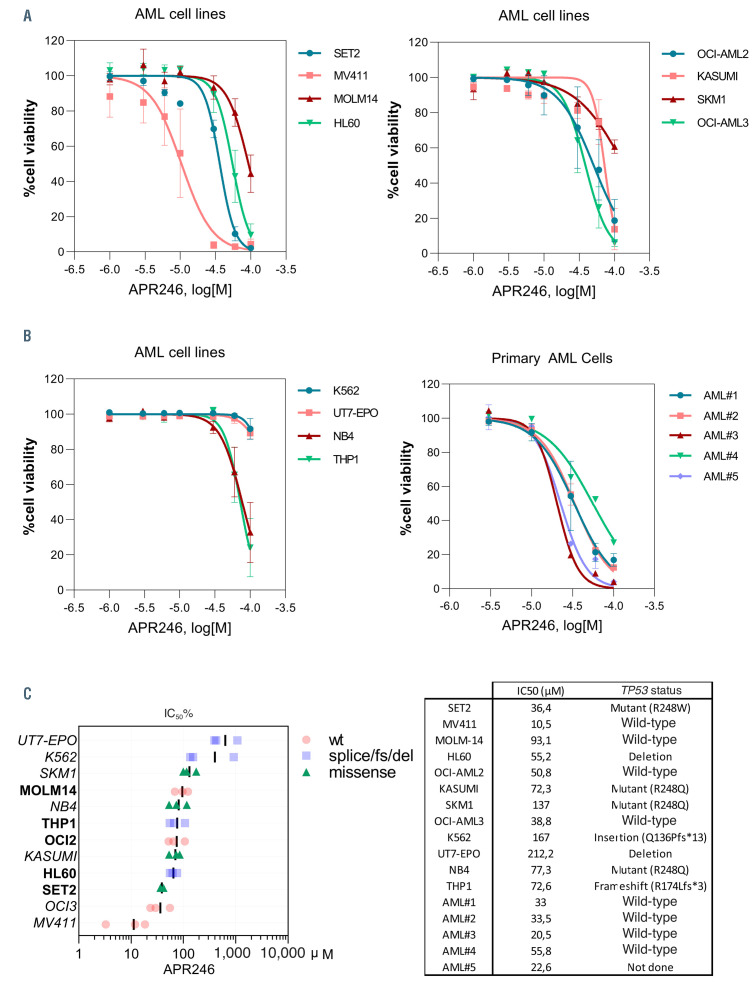
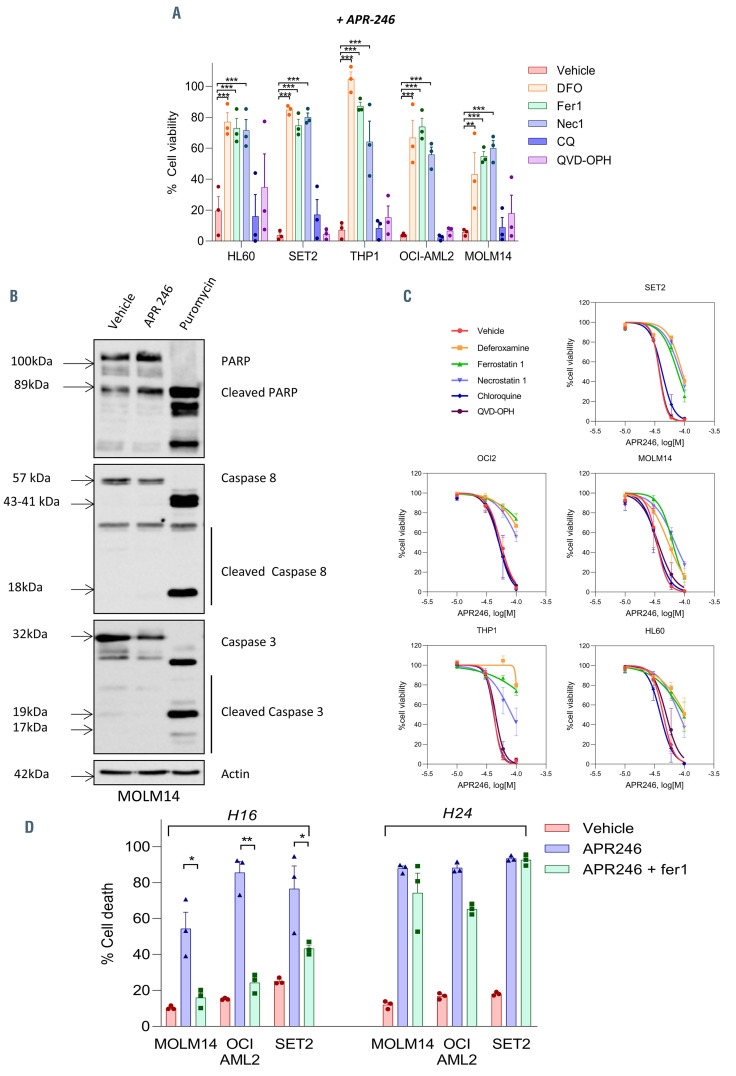
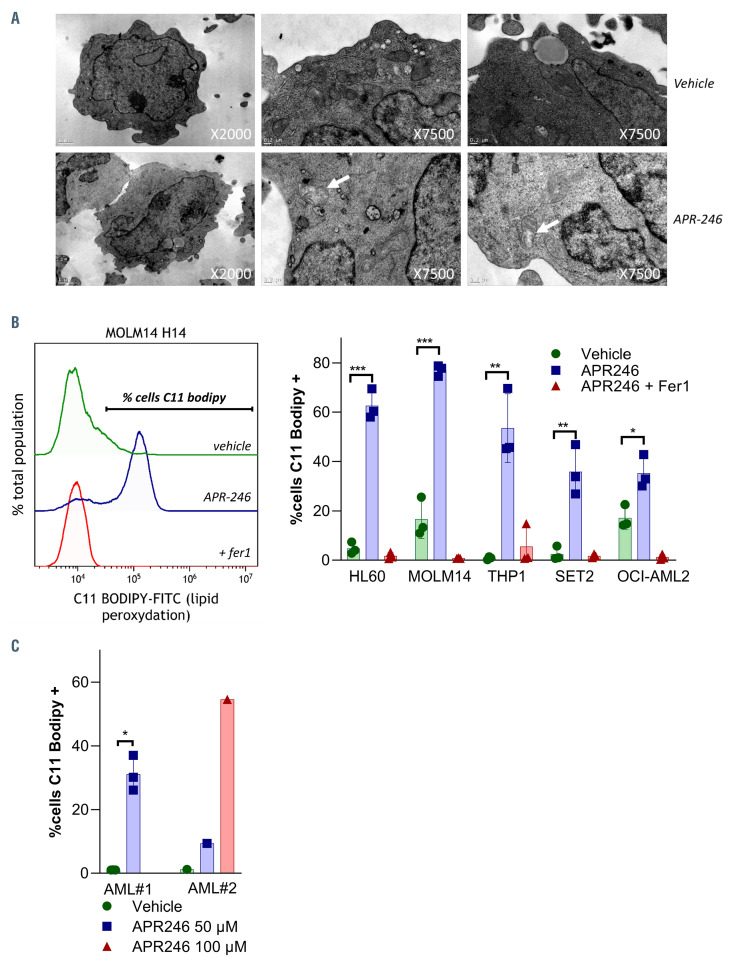
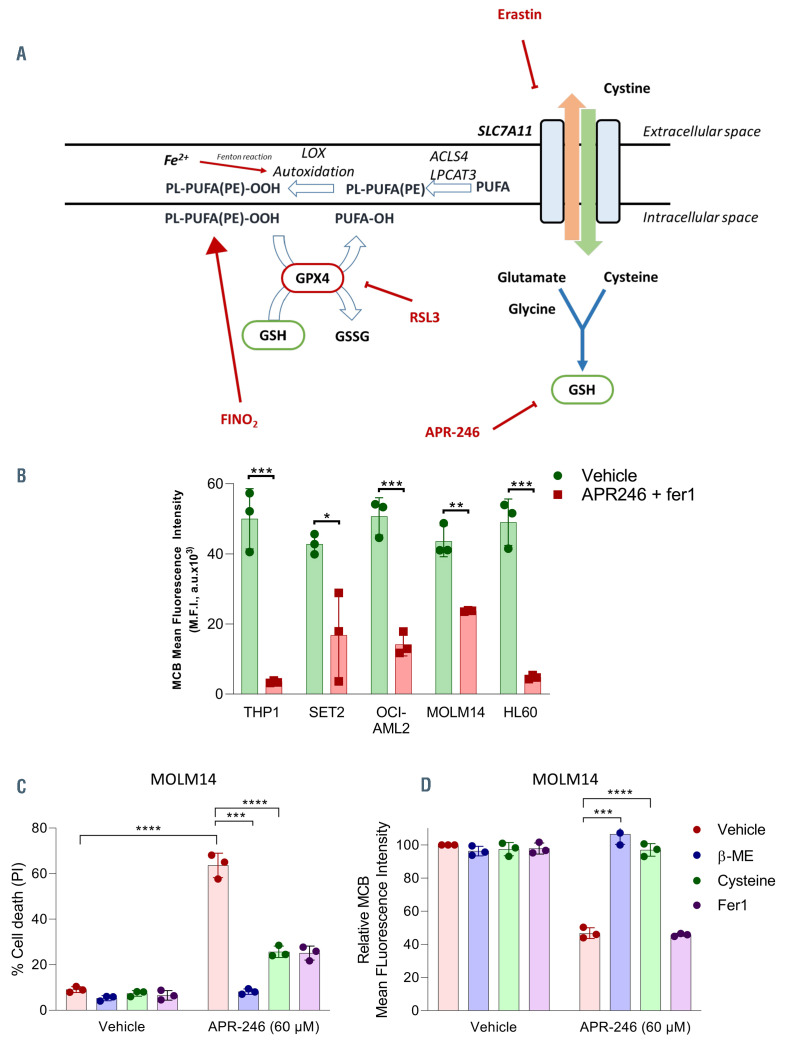
APR-246 is a promising new therapeutic agent that targets p53 mutated proteins in myelodysplastic syndromes and in acute myeloid leukemia (AML). APR-246 reactivates the transcriptional activity of p53 mutants by facilitating their binding to DNA target sites. Recent studies in solid cancers have found that APR-246 can also induce p53-independent cell death. In this study, we demonstrate that AML cell death occurring early after APR-246 exposure is suppressed by iron chelators, lipophilic antioxidants and inhibitors of lipid peroxidation, and correlates with the accumulation of markers of lipid peroxidation, thus fulfilling the definition of ferroptosis, a recently described cell death process. The capacity of AML cells to detoxify lipid peroxides by increasing their cystine uptake to maintain major antioxidant molecule glutathione biosynthesis after exposure to APR-246 may be a key determinant of sensitivity to this compound. The association of APR-246 with induction of ferroptosis (either by pharmacological compounds, or genetic inactivation of SLC7A11 or GPX4) had a synergistic effect on the promotion of cell death, both in vivo and ex vivo.
Overview
The claims and statistics of this paper haven’t been checked yet.
Run the check — free, no account needed. It reads the open-access text and checks the sources it cites.
Integrity signals
Registry
Cites
Statistics
Figures
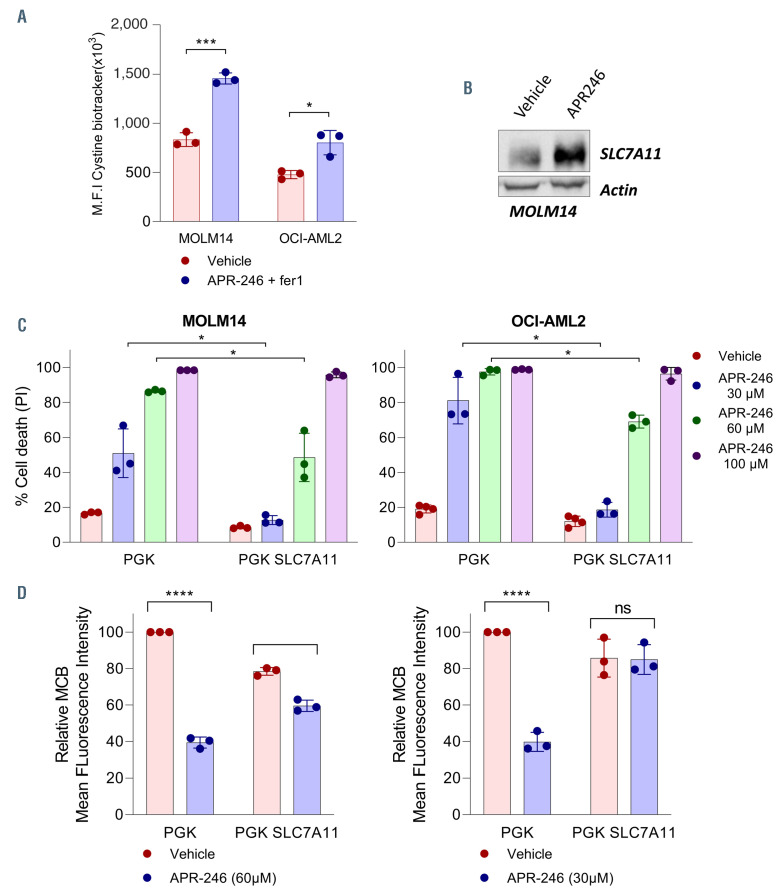
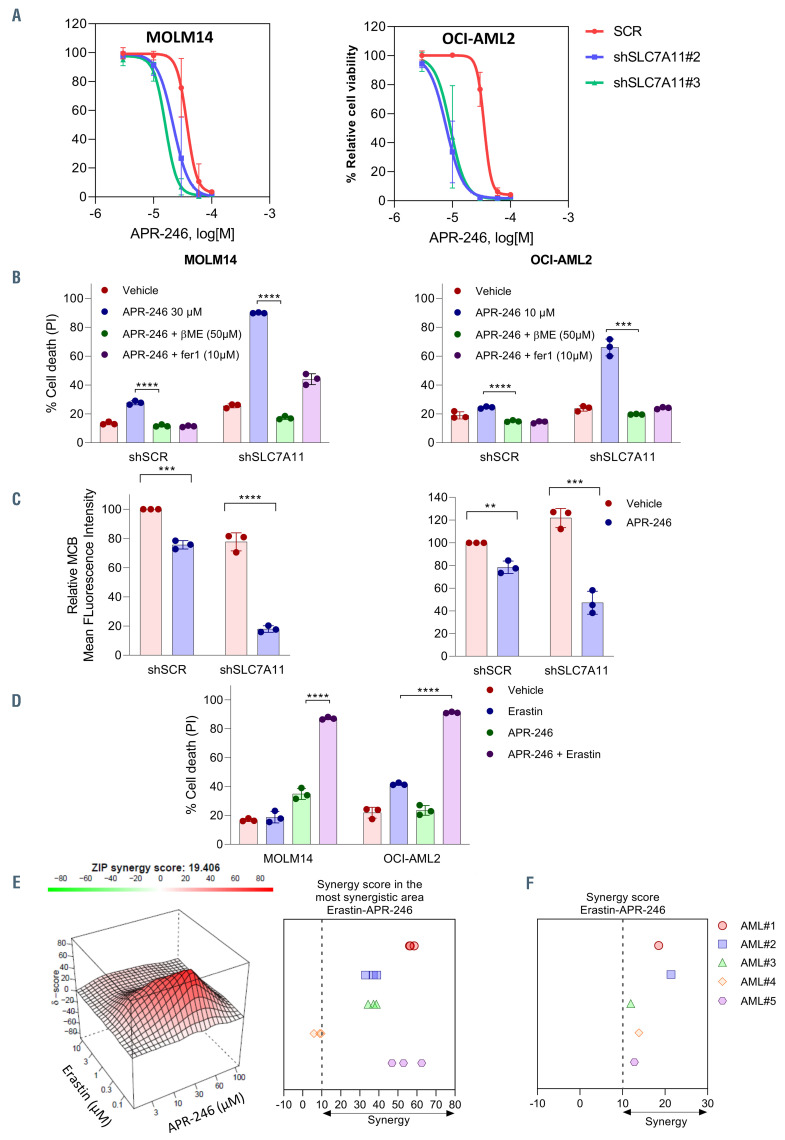
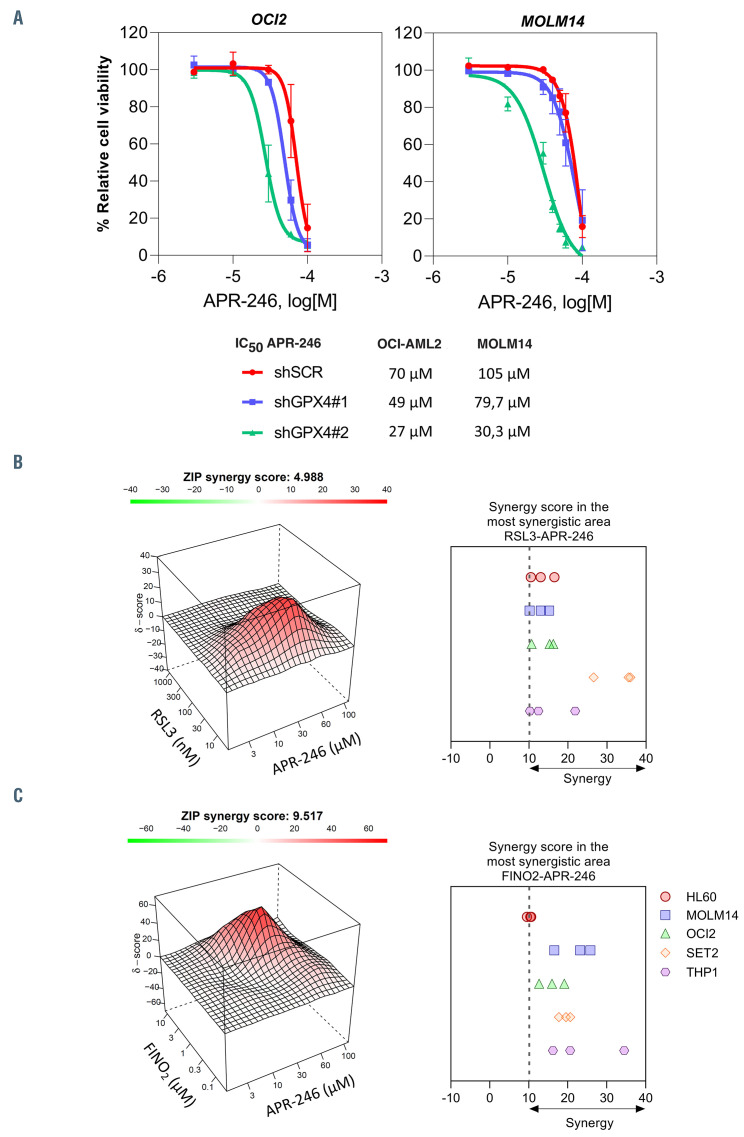
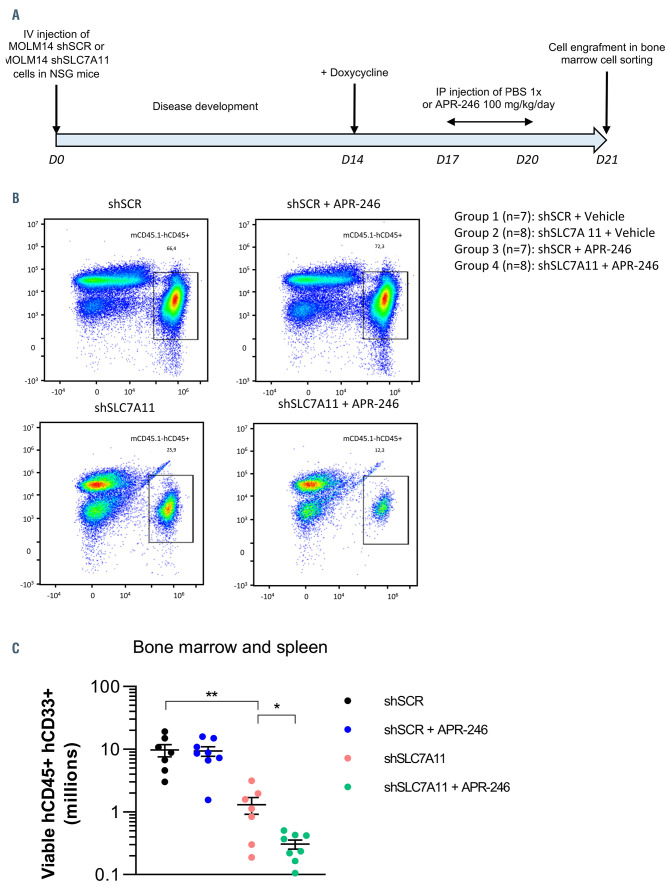
Verification
Claims the paper makes
The claims and statistics of this paper haven’t been checked yet.
Run the check — free, no account needed. It reads the open-access text and checks the sources it cites.
Claims other papers make about this one
Each is checked against this paper’s own text: does it say what the citing paper says it does?
The source backs part of the claim, not all of it — or backs it for a different population, condition or comparison.
In the citing paper
“This model is in keeping with our prior work, and confirmed by others (7, 8, 20), demonstrating that inhibiting cystine uptake with erastin or sulfasalazine synergizes with eprenetapopt both in vitro and in vivo.”
From Eprenetapopt triggers ferroptosis, inhibits NFS1 cysteine desulfurase, and synergizes with serine and glycine dietary restriction (2022) · cites this paper as [20]
Experimental — accuracy not yet measuredThe source backs part of the claim, not all of it — or backs it for a different population, condition or comparison.
In the citing paper
“More recently, a critical mechanism of APR‐246 for cell death in AML models is via ferroptosis, where mTP53 mutant cells may be preferentially sensitive.”
From Long‐term follow‐up and combined Phase 2 results of eprenetapopt and azacitidine in patients with TP53 mutant MDS/AML (2025) · cites this paper as [24]
Experimental — accuracy not yet measuredThe cited source says what the claim attributes to it.
In the citing paper
“This is in keeping with recent findings suggesting that eprenetapopt induces ferroptosis in AML models (20).”
From Eprenetapopt triggers ferroptosis, inhibits NFS1 cysteine desulfurase, and synergizes with serine and glycine dietary restriction (2022) · cites this paper as [20]
The cited source says what the claim attributes to it.
In the citing paper
“preclinical evidence demonstrated that eprenetapopt has p53-independent anticancer activity (20)”
From Eprenetapopt triggers ferroptosis, inhibits NFS1 cysteine desulfurase, and synergizes with serine and glycine dietary restriction (2022) · cites this paper as [20]
The cited source says what the claim attributes to it.
In the citing paper
“our findings are contrary to reports concluding that eprenetapopt induces apoptosis through mut-p53 reactivation (5, 24) and instead supports eprenetapopt as a ferroptosis inducer (20).”
From Eprenetapopt triggers ferroptosis, inhibits NFS1 cysteine desulfurase, and synergizes with serine and glycine dietary restriction (2022) · cites this paper as [20]
The cited source says what the claim attributes to it.
In the citing paper
“As ferroptosis induction can induce p53‐independent cell death preferentially in AML cells that lack the ability to prevent lipid peroxide accumulation”
From Long‐term follow‐up and combined Phase 2 results of eprenetapopt and azacitidine in patients with TP53 mutant MDS/AML (2025) · cites this paper as [24]
Self-check
Percentages, sums and reported differences re-computed from the paper’s own numbers.
The self-check needs the paper’s full text.
Citations
Cites
Ferroptosis: An Iron-Dependent Form of Nonapoptotic Cell Death
Dixon, S. J., Lemberg, K. M., Lamprecht, M. R., Skouta, R., Zaitsev, E. M., Gleason, C. E., Patel, D. N., Bauer, A. J., Cantley, A. M., Yang, W. S., et al. (2012) · Cell · doi:10.1016/j.cell.2012.03.042 · Cited by 18,691
Regulation of Ferroptotic Cancer Cell Death by GPX4
Yang, W. S., SriRamaratnam, R., Welsch, M. E., Shimada, K., Skouta, R., Viswanathan, V. S., Cheah, J. H., Clemons, P. A., Shamji, A. F., Clish, C. B., et al. (2014) · Cell · doi:10.1016/j.cell.2013.12.010 · Cited by 7,713
Ferroptosis: A Regulated Cell Death Nexus Linking Metabolism, Redox Biology, and Disease
Stockwell, B. R., Friedmann Angeli, J. P., Bayir, H., Bush, A. I., Conrad, M., Dixon, S. J., Fulda, S., Gascón, S., Hatzios, S. K., Kagan, V. E., et al. (2017) · Cell · doi:10.1016/j.cell.2017.09.021 · Cited by 7,695
Döhner, H., Estey, E. H., Grimwade, D. J., Amadori, S., Appelbaum, F. R., Büchner, T., Dombret, H., Ebert, B. L., Fenaux, P., Larson, R. A., et al. (2016) · Blood · doi:10.1182/blood-2016-08-733196 · Cited by 5,938
Inactivation of the ferroptosis regulator Gpx4 triggers acute renal failure in mice
Friedmann Angeli, J. P., Schneider, M., Proneth, B., Tyurina, Y. Y., Tyurin, V. A., Hammond, V. J., Herbach, N., Aichler, M., Walch, A., Eggenhofer, E., et al. (2014) · Nature Cell Biology · doi:10.1038/ncb3064 · Cited by 3,732
Mixed Lineage Kinase Domain-like Protein Mediates Necrosis Signaling Downstream of RIP3 Kinase
Sun, L., Wang, H., Wang, Z., He, S., Chen, S., Liao, D., Wang, L., Yan, J., Liu, W., Lei, X., et al. (2012) · Cell · doi:10.1016/j.cell.2011.11.031 · Cited by 2,698
Midostaurin plus Chemotherapy for Acute Myeloid Leukemia with a FLT3 Mutation
Stone, R. M., Mandrekar, S. J., Sanford, B. L., Laumann, K., Geyer, S., Bloomfield, C. D., Thiede, C., Prior, T. W., Döhner, K., Marcucci, G., et al. (2017) · New England Journal of Medicine · doi:10.1056/nejmoa1614359 · Cited by 2,250
Dixon, S. J., Patel, D. N., Welsch, M., Skouta, R., Lee, E. D., Hayano, M., Thomas, A. G., Gleason, C. E., Tatonetti, N. P., Slusher, B. S., et al. (2014) · eLife · doi:10.7554/elife.02523 · Cited by 2,088
DiNardo, C. D., Pratz, K., Pullarkat, V., Jonas, B. A., Arellano, M., Becker, P. S., Frankfurt, O., Konopleva, M., Wei, A. H., Kantarjian, H. M., et al. (2019) · Blood · doi:10.1182/blood-2018-08-868752 · Cited by 1,825
Enasidenib in mutant IDH2 relapsed or refractory acute myeloid leukemia
Stein, E. M., DiNardo, C. D., Pollyea, D. A., Fathi, A. T., Roboz, G. J., Altman, J. K., Stone, R. M., DeAngelo, D. J., Levine, R. L., Flinn, I. W., et al. (2017) · Blood · doi:10.1182/blood-2017-04-779405 · Cited by 1,516
Cited by
Sorted by citations
Targeting p53 pathways: mechanisms, structures, and advances in therapy
Wang, H., Guo, M., Wei, H., & Chen, Y. (2023) · Signal Transduction and Targeted Therapy · doi:10.1038/s41392-023-01347-1 · Cited by 1,016
Tong, X., Tang, R., Xiao, M., Xu, J., Wang, W., Zhang, B., Liu, J., Yu, X., & Shi, S. (2022) · Journal of Hematology & Oncology · doi:10.1186/s13045-022-01392-3 · Cited by 883
p53 in ferroptosis regulation: The new weapon for the old guardian
Liu, Y., & Gu, W. (2022) · Cell Death & Differentiation · doi:10.1038/s41418-022-00943-y · Cited by 540
Mutant p53 in cancer: from molecular mechanism to therapeutic modulation
Chen, X., Zhang, T., Su, W., Dou, Z., Zhao, D., Jin, X., Lei, H., Wang, J., Xie, X., Cheng, B., et al. (2022) · Cell Death & Disease · doi:10.1038/s41419-022-05408-1 · Cited by 494
Ferroptosis as a potential target for cancer therapy
Chen, Z., Wang, W., Razak, S. R. A., Han, T., Ahmad, N. H., & Li, X. (2023) · Cell Death and Disease · doi:10.1038/s41419-023-05930-w · Cited by 223
Metadata
- Authors
- Birsen, R., Larrue, C., Decroocq, J., Johnson, N., Guiraud, N., Gotanegre, M., Cantero-Aguilar, L., Grignano, E., Huynh, T., Fontenay, M., Kosmider, O., Mayeux, P., Chapuis, N., Sarry, J. E., Tamburini, J., & Bouscary, D.
- Affiliations
- Centre National de la Recherche Scientifique (FR)
- Inserm (FR)
- Corresponding author
- Birsen, Rudy
- Bouscary, Didier
- ORCID
- Venue
- Haematologica
- Published
- 2021-01-07
- Volume
- 107
- Issue
- 2
- Pages
- 403-416
- ISSN
- 0390-6078 (ISSN-L)
- 1592-8721
- PMC
- PMC8804578
- OpenAlex
- W3120795654
- Cited by
- 182
- References
- 48
- Citations by year
- 2026: 21 · 2025: 30 · 2024: 32 · 2023: 42 · 2022: 42 · 2021: 14
- FWCI
- 21.10
- Type
- journal article
- Language
- en
- Open access
- gold
- doi.org
- Licence
- Locations
- Haematologica (publishedVersion, cc-by-nc)
- PubMed Central (publishedVersion, cc-by-nc)
- PubMed (publishedVersion)
- DOAJ (DOAJ: Directory of Open Access Journals) (submittedVersion)
- Funders
- Institut National Du Cancer
- Topics
- Life Sciences › Biochemistry, Genetics and Molecular Biology › Cancer Research › Ferroptosis and cancer prognosis
- Health Sciences › Medicine › Hematology › Acute Myeloid Leukemia Research
- Health Sciences › Medicine › Oncology › Cancer-related Molecular Pathways
- Keywords
- APR-246, ferroptosis, acute myeloid leukemia, TP53 mutation, lipid peroxidation, iron chelators, cystine uptake, glutathione synthesis, SLC7A11, GPX4, lipophilic antioxidants, drug sensitivity, synergistic cell death
- MeSH terms
- Ferroptosis, Humans, Quinuclidines, Leukemia, Myeloid, Acute, Cell Death
About these checks
Registry, retraction, Cites and statistics results are computed, not judged, with one exception: a printed reference that no index lists is read once by a model before it counts as a citation error. Claims are extracted by a model and kept only when their quote appears verbatim in the text; each cited source is then checked, with a model’s help, for whether it says what the claim relies on. Those verdicts can be wrong — read the claim’s quote and the cited source before relying on one.
Statistics and arithmetic are recomputed, not judged.
Confidence bands are shown only for fields calibrated on our annotated test set. None is calibrated yet, so no band is shown.
What counts as a claim ›How we measure confidence ›How we check this ›
Are you an author, or do you see a problem with this page? Request a review
