

Organoids-on-a-chip: microfluidic technology enables culture of organoids with enhanced tissue function and potential for disease modeling
Open accessThe DOI matches its Crossref record; 138 of the 138 references it cites were found in a registry or an index.
Abstract
Organoids are stem-cell derived tissue structures mimicking specific structural and functional characteristics of human organs. Despite significant advancements in the field over the last decade, challenges like limited long-term functional culture and lack of maturation are hampering the implementation of organoids in biomedical research. Culture of organoids in microfluidic chips is being used to tackle these challenges through dynamic and precise control over the organoid microenvironment. This review highlights the significant breakthroughs that have been made in the innovative field of “organoids-on-chip,” demonstrating how these have contributed to advancing organoid models. We focus on the incorporation of organoids representative for various tissues into chips and discuss the latest findings in multi-organoids-on-chip approaches. Additionally, we examine current limitations and challenges of the field towards the development of reproducible organoids-on-chip systems. Finally, we discuss the potential of organoids-on-chip technology for both in vitro and in vivo applications.
Overview
The claims and statistics of this paper haven’t been checked yet.
Free: it reads the open-access text and checks the first 5 claims that cite a source we can check. Create a free account to check every claim.
Integrity signals
Registry
Cites
Statistics
Figures
Verification
Claims the paper makes
The claims and statistics of this paper haven’t been checked yet.
Free: it reads the open-access text and checks the first 5 claims that cite a source we can check. Create a free account to check every claim.
Self-check
Percentages, sums and reported differences re-computed from the paper’s own numbers.
The self-check needs the paper’s full text.
Citations
Cites
Cerebral organoids model human brain development and microcephaly
Lancaster, M. A., Renner, M., Martin, C.-A., Wenzel, D., Bicknell, L. S., Hurles, M. E., Homfray, T., Penninger, J. M., Jackson, A. P., & Knoblich, J. A. (2013) · Nature · doi:10.1038/nature12517 · Cited by 5,372
Reconstituting organ-level lung functions on a chip
Huh, D., Matthews, B. D., Mammoto, A., Montoya-Zavala, M., Hsin, H. Y., & Ingber, D. E. (2010) · Science · doi:10.1126/science.1188302 · Cited by 4,250 · cited 1×
“The complex and dynamic microenvironment involved in in vivo organ development, homeostasis and disease can be recapitulated through the incorporation of relevant biochemical and biomechanical cues (Schepers et al., 2016; Huh et al., 2010).”
Bhatia, S. N., & Ingber, D. E. (2014) · Nature Biotechnology · doi:10.1038/nbt.2989 · Cited by 3,305
Modeling Development and Disease with Organoids
Clevers, H. (2016) · Cell · doi:10.1016/j.cell.2016.05.082 · Cited by 3,196 · cited 1×
“They exhibit structural, morphological, and functional characteristics that resemble human organs (Clevers, 2016; Lancaster and Knoblich, 2014b), enabling their use in fundamental and applied Despite the advancements that have been made in organoid culture throughout the last years, there are…”
Organogenesis in a dish: Modeling development and disease using organoid technologies
Lancaster, M. A., & Knoblich, J. A. (2014) · Science · doi:10.1126/science.1247125 · Cited by 2,931 · cited 1×
“They exhibit structural, morphological, and functional characteristics that resemble human organs (Clevers, 2016; Lancaster and Knoblich, 2014b), enabling their use in fundamental and applied Despite the advancements that have been made in organoid culture throughout the last years, there are…”
Brain-Region-Specific Organoids Using Mini-bioreactors for Modeling ZIKV Exposure
Qian, X., Nguyen, H. N., Song, M. M., Hadiono, C., Ogden, S. C., Hammack, C., Yao, B., Hamersky, G. R., Jacob, F., Zhong, C., et al. (2016) · Cell · doi:10.1016/j.cell.2016.04.032 · Cited by 2,127
Generation of cerebral organoids from human pluripotent stem cells
Lancaster, M. A., & Knoblich, J. A. (2014) · Nature Protocols · doi:10.1038/nprot.2014.158 · Cited by 1,823 · cited 1×
“However, the extended cultivation and maturation of cerebral organoids is hindered due to insuf fi cient nutrient and oxygen supply often resulting in necrotic core formation (Qian et al., 2016; Lancaster et al., 2013; Lancaster and Knoblich, 2014a).”
Mechanical forces direct stem cell behaviour in development and regeneration
Vining, K. H., & Mooney, D. J. (2017) · Nature Reviews Molecular Cell Biology · doi:10.1038/nrm.2017.108 · Cited by 1,656 · cited 1×
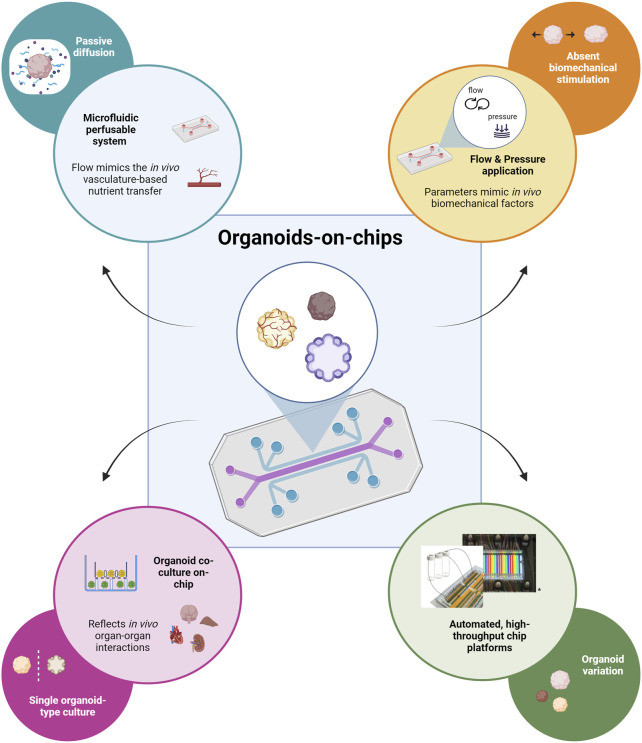
“Mechanical forces hold a crucial role in developmental and physiological processes and can be recapitulated by chip platforms through application of fl ow and pressure (Figure 2, top right; Vining and Mooney, 2017).”
Kidney organoids from human iPS cells contain multiple lineages and model human nephrogenesis
Takasato, M., Er, P. X., Chiu, H. S., Maier, B., Baillie, G. J., Ferguson, C., Parton, R. G., Wolvetang, E. J., Roost, M. S., Chuva de Sousa Lopes, S. M., et al. (2015) · Nature · doi:10.1038/nature15695 · Cited by 1,627
Three-dimensional bioprinting of thick vascularized tissues
Kolesky, D. B., Homan, K. A., Skylar-Scott, M. A., & Lewis, J. A. (2016) · Proceedings of the National Academy of Sciences · doi:10.1073/pnas.1521342113 · Cited by 1,492 · cited 1×
“The integration of a perfusable micro fl uidic system to mimic vasculature function can overcome the diffusion limitations (Figure 2, top left; Kim et al., 2013; Kolesky et al., 2016).”
Cited by
Hydrogel Microspheres Empowering Organ‐on‐a‐Chip Systems: Innovations and Applications
Liu, J., Du, C., Chen, J., Tang, B., Liu, S., Tan, J., Luo, X., Zhan, J., Liu, J., Chen, Z., et al. (2025) · Small · doi:10.1002/smll.202504563 · Cited by 44
Advancements in Organoid‐Based Drug Discovery: Revolutionizing Precision Medicine and Pharmacology
Singh, D., Thakur, A., Rakesh, & Kumar, A. A. (2025) · Drug Development Research · doi:10.1002/ddr.70121 · Cited by 30
“Furthermore, the development of microfluidic systems that simulate blood flow through organoid cultures has allowed for more accurate modeling of drug kinetics and metabolism, offering a potential solution for overcoming this limitation (Papamichail et al. 2025).”
Safety Assessment of Stem Cell-Based Therapies: Current Standards and Advancing Frameworks
Leonov, G. E., Grinchevskaya, L. R., Makhnach, O. V., Samburova, M. V., Goldshtein, D. V., & Salikhova, D. I. (2025) · Cells · doi:10.3390/cells14211660 · Cited by 33
Vascularised Brain Organoids: Engineering Strategies and Neurobiological Applications
Song, Y., Jo, H., Jeong, S., Kim, I., & Lee, S. S. (2026) · Cell Proliferation · doi:10.1111/cpr.70161 · Cited by 27
“Incorporating immune cells, perivascular components, and modelling systemic interactions—such as gut-brain or neuroimmune axes—could significantly enhance the physiological relevance of vBOs and broaden their applicability to neurovascular disease modelling [115, 134, 135].”
Organoid research: new concepts and new technologies
Zhang, J., Wu, Y., Shen, T., Mao, Y., Dou, H., Lin, Y., Geng, Z., Li, Z., & Su, J. (2026) · Burns & Trauma · doi:10.1093/burnst/tkag015 · Cited by 26
“The system typically consist s of individually contactable, perfused, (sub)millimetre-scale chambers that can integrate and culture different types of cells and dynamically regulate the culture environment[135].”
Organoids in drug development: from predictive models to regulatory integration
Song, X., Chen, X., Chen, Q., Wang, H., Zhang, T., Liao, M. Z., Liu, C., Yu, H., Hao, Y., Gu, G., et al. (2026) · Drug Discovery Today · doi:10.1016/j.drudis.2026.104608 · Cited by 21
Roy, N., & Cucullo, L. (2026) · Biosensors · doi:10.3390/bios16030155 · Cited by 22
“Multi-material composites and stimuli-responsive polymers enable dynamic tuning of stiffness or porosity [34,35,42,43].”
InfluentialAdvances and Challenges in Drug Screening for Cancer Therapy: A Comprehensive Review
Motohashi, S., Katsuta, E., & Ban, D. (2025) · Bioengineering · doi:10.3390/bioengineering12121315 · Cited by 21
“…platforms: immune-enhanced PDO incorporating autologous immune cells or stromal components [137–139]; organ-on-a-chip hybrids that combine 3D structure with microfluidic perfusion [140]; and humanized PDX embedding patient-specific immune systems to evaluate immunotherapy responses [141,142].”
Organoids for disease modeling and treatment: state-of-the-art
Xu, M., Kong, D., Sun, S., Wang, Y., Su, G., Zhang, S., Yan, J., Han, Z., Li, J., & Zhang, L. (2026) · Experimental Hematology and Oncology · doi:10.1186/s40164-026-00743-x · Cited by 16
“For example, organ chip for dynamic parameter monitoring in different layers of organoids and the design of matrices for spatiotemporal shape-guided morphogenesis, respectively [115, 241].”
Targeting immune cell migration as therapy for inflammatory disease: a review
Song, B., Guo, W., He, Y., Yao, X., Sun, J., & Wang, S. (2025) · Frontiers in Immunology · doi:10.3389/fimmu.2025.1650760 · Cited by 16
Shen, Y., & Kokaia, Z. (2025) · Cells · doi:10.3390/cells14141074 · Cited by 13
Yang, H., Niu, S., Guo, M., Liu, C., & Xue, Y. (2025) · Environmental Pollution · doi:10.1016/j.envpol.2025.127328 · Cited by 10
Płaskonka, D. M., Barczyk, D., Repetowski, P., Warszyńska, M., & Dąbrowski, J. M. (2025) · Pharmaceuticals · doi:10.3390/ph19010065 · Cited by 13
“Despite their predictive value, 3D models present challenges, including variability between organoid batches and the technical complexity of OoC systems [102].”
Mishra, S., Mondal, G., & Kumarasamy, M. (2025) · Organoids · doi:10.3390/organoids4020013 · Cited by 10
Adopting novel alternative methods (NAMs) for biomedical research—What is the right approach?
Svendsen, C. N. (2025) · Cell stem cell · doi:10.1016/j.stem.2025.08.014 · Cited by 9
Usman, M., Ashebir, S. E., Okey-Mbata, C., Yun, Y., & Kim, S. (2025) · Applied Sciences · doi:10.3390/app152111316 · Cited by 9
Bisconti, F., Abreu, H., Nguyen, T. D., Stolfi, F., Corbezzolo, N., Gigli, G., Raineri, D., Cappellano, G., Polini, A., Gervaso, F., et al. (2025) · Frontiers in Immunology · doi:10.3389/fimmu.2025.1712796 · Cited by 10
Tumor-on-chip’s alliance with molecular pathology against metastatic disease
Carlo, E. D. (2026) · Journal of Biomedical Science · doi:10.1186/s12929-025-01209-8 · Cited by 11
“Microfluidic arrays can be parallelized for multiple patients or drug combinations [86].”
Integrating organoids and organ-on-a-chip in dental research
Zhong, C., Wang, S., Yan, K., Zhao, Y., Yang, H., & Yu, J. (2026) · Biomaterials · doi:10.1016/j.biomaterials.2026.124065 · Cited by 10
Mastering Organoid Growth: A Complete Guide to Overcoming Methodological Challenges
Jiao, C., Karakaya, O. F., Dadgar, N., Wehrle, C. J., Massoud, Z., Hong, H., Fairchild, R. L., Leipzig, N. D., Aucejo, F., Ma, W. W., et al. (2026) · MedComm · doi:10.1002/mco2.70571 · Cited by 12
“Papamichail et al. observed that liver organoids cultured inside microfluidic chips displayed more pronounced cell polarity, distinct bile canaliculi, and higher metabolic stability than those grown in static wells [ 151 ].”
Advanced Brain‐on‐a‐Chip for Wetware Computing: A Review
Li, S., Liu, Y., Hua, S., Wang, Y., Sun, S., Jiang, L., Lu, C., Liu, J., Shi, H., Wu, P., et al. (2025) · Advanced Science · doi:10.1002/advs.202508120 · Cited by 10
Yang, S., Zhang, T., Ge, Y., Niu, Y., Chen, M., Yin, L., Pu, Y., Chen, Z., Gu, Z., & Liang, G. (2026) · The Innovation · doi:10.1016/j.xinn.2025.101252 · Cited by 19
“41 Yang et al. established vascularized tumor organoid-on-a-chip models derived from multiple patients to recapitulate tumor-vascular interactions, preserving the structural and functional heterogeneity of clinical tumor vasculature.”
Kim, S., Lee, T., Ryu, M., Park, Y., & Moon, S. (2026) · Journal of Applied Toxicology · doi:10.1002/jat.70059 · Cited by 10
“Although these systems present dissimilar complexity levels and maturity stages, their combined existence creates an un-matched platform for biological relevance (Goldrick et al. 2023; Papamichail et al. 2025).”
Integrating Human Intestinal Organoids into FDA's New Approach Methodologies for Drug Discovery
Patra, D., Sayed, I. M., Mukherjee, S., Piplani, H., Habtezion, A., Rosen, M. J., & Wu, J. C. (2026) · Advanced Science · doi:10.1002/advs.202522276 · Cited by 9
Bridging population and cell: modelling complex diseases with human induced pluripotent stem cells
van Zanten, E., Loehrer, E. A., van Meurs, J. B. J., Narcisi, R., Gribnau, J. H., Poot, R. A., & Adams, H. H. H. (2026) · European Journal of Human Genetics · doi:10.1038/s41431-026-02071-4 · Cited by 8
Park, Y., Kang, D. H., & Chung, C. (2025) · Lung Cancer · doi:10.1016/j.lungcan.2025.108726 · Cited by 8
Stem Cells to Organoids: Pioneering the Future of Regenerative Therapies
Kumar, D., Gupta, S., Gupta, V., Tanwar, R., Rani, P., & Bansal, V. (2025) · Stem Cell Reviews and Reports · doi:10.1007/s12015-025-10985-7 · Cited by 9
Hidden in Plain Sight: Alphavirus Persistence and Its Potential for Driving Chronic Pathogenesis
Guzman, M. D. M. V., Yao, Z., Li, M. M. H., & Noval, M. G. (2025) · Viruses · doi:10.3390/v18010030 · Cited by 8
“In contrast, 3D organoid and microfluidic organoid-on-a-chip systems [190] are emerging as transformative tools for long-term modeling of human tissues, offering contexts that more faithfully replicate the structural, functional, and anatomical complexity of human systems (reviewed in [191–193]).”
Tumor organoids on-a-chip and the role of AI in predictive oncology and personalized cancer medicine
Mirlohi, M. S., Hamdi, E., Karimi, M. H., Salami, S., Aref, A. R., Kohan, H. G., Ghayoor, A., Seyfoori, A., & Akbari, M. (2026) · Biofabrication · doi:10.1088/1758-5090/ae3644 · Cited by 7
“…perfusion dynamics, tissue stiffness and drug-response curves, these systems generate integrated, multiscale data streams that faithfully capture tumor heterogeneity, microenvironmental complexity and the temporal dynamics of therapeutic response in ways traditional models cannot [33–35].”
Dutta, G., Mishra, P., Mishra, S. P., & Badhai, J. (2026) · Onco · doi:10.3390/onco6030031 · Cited by 7
“Traditional reductionist models often fail to capture these interactions, whereas systems-level models ranging from computational simulations to organ-on-chip technologies enable the study of inter-organ communication and its role in disease progression [290–292].”
Advances and applications of organoid-on-a-chip in disease modeling
Yang, Y., Sheng, J., Sheng, F., Liang, X., Ma, C., Chen, R., Wang, S., & Qian, X. (2025) · The Analyst · doi:10.1039/d5an00514k · Cited by 8
Biomimetic oral drug delivery: Translating nature’s design into therapeutic innovation
Madny, M. A., & Yadav, K. S. (2025) · Colloids and Surfaces B Biointerfaces · doi:10.1016/j.colsurfb.2025.115348 · Cited by 5
Angelopoulos, I. (2025) · Annals of Biomedical Engineering · doi:10.1007/s10439-025-03907-8 · Cited by 5
Vascularized Organoid-on-Chip Platforms: Expanding the Bioengineering Frontiers with Microfluidics
Konwarh, R. (2025) · Biomaterials Connect · doi:10.69709/biomatc.2025.155652 · Cited by 4
Application and prospects of organoid-on-a-chip in research on the intestinal mucosal barrier
Qian, K., Wang, Y., Li, R. Q., Zhuang, M., Zhao, Z., Meng, C., Zhou, J., Wang, W., & Sun, Y. J. (2026) · Burns & Trauma · doi:10.1093/burnst/tkag029 · Cited by 4
“Chip architecture and membrane properties affect oxygen and nutrient exchange, cell adhesion, and interfacial signaling [ 150– 152].”
From hype to hope: reanimating phage therapy through evidence-based multidisciplinarity
Fabijan, A. P., & Abedon, S. T. (2026) · Nature Communications · doi:10.1038/s41467-026-72590-7 · Cited by 4
Lee, E., Chary, A., Gerelkhuu, Z., Weber, P., Virmani, I., Brugger, B. A., Ribeiro, I. R. S., Brun, E., Lacconi, V., Bang, H., et al. (2026) · Nano Convergence · doi:10.1186/s40580-026-00566-w · Cited by 5
“By controlling Single-organ chips have been developed for liver, kidney, lung, brain, placenta, intestine, and other tissues [28, 29, 80, 83].”
Apostolidi, A., Stergiopoulos, G., Bellou, S., Μάρκου, Μ., Fotsis, T., Murphy, C., & Bagli, E. (2025) · Pharmaceuticals · doi:10.3390/ph18091374 · Cited by 3
“…consortia, such as the IQ Consortium, the Organoids for Drug Screening initiative, and platforms like the MPs Development and Qualification Consortium, are driving the development of harmonized reporting standards, shared data repositories and open-source device designs [134,135].”
Advanced strategies in organoid/organ-on-a-chip for female reproductive diseases
Zhou, Y., Chen, M., Wang, F., Xu, C., Wen, Y., He, Z., & Zhu, Y. (2025) · Biofabrication · doi:10.1088/1758-5090/ae2b10 · Cited by 3
“These systems enable the study of organoids under conditions that more accurately reflect biological processes, offering substantial potential for applications in disease modeling [31], precision medicine [32], regenerative medicine [33], and biomaterial testing [34].”
Smith, D. W., Pérez, M. G., Garner, M. E., Anderson, W. M., Britton, C., Correa, M. A. D., & Calvani, N. E. D. (2025) · International Journal for Parasitology · doi:10.1016/j.ijpara.2025.12.004 · Cited by 4
“…organoid types or incorporate additional cell types (e.g. immune, stromal, or endothelial cells), offering a more complete approximation of tissue-or system-level complexity, albeit with increased cost and technical demands (Marx et al., 2021; Zhu et al., 2023; Papamichail et al., 2025) (Fig.”
Shear stress optimization and smart control strategies toward AI-integrated tissue culture systems
Kim, H., & Kim, J. (2026) · Biomedical Materials · doi:10.1088/1748-605x/ae3e48 · Cited by 3
“In contrast, dynamic culture approaches— including bioreactors, microfluidic systems, and organ-on-a-chip platforms—enable precise regulation of fluid flow and mechanical stimulation [48, 49].”
InfluentialOrganoid-Immune Co-Cultures: A Next-Generation approach to disease modeling
Najafi, F., Zoghi, N. A., Khalili, H., Najafi, N., Yazdi, M. H., & Sisakht, M. M. (2026) · Molecular Biology Reports · doi:10.1007/s11033-026-11450-5 · Cited by 4
Modelling Cardiovascular Diseases Using Human Microphysiological Systems
Ribeiro, Q., Lopes, E., Ferreira, I. S., Simões, C. G., Vital, C. M., Inácio, J. M., Belo, J. A., Rybak‐Wolf, A., Marques, A. R. A., & Vieira, O. V. (2026) · BioChip Journal · doi:10.1007/s13206-025-00247-6 · Cited by 5
Engineering the Healing Process: Advanced In Vitro Wound Models and Technologies
Renò, F., Migliario, M., & Sabbatini, M. (2026) · Biomedicines · doi:10.3390/biomedicines14040754 · Cited by 6
“This enables them to recapitulate complex properties, including cellular heterogeneity, tissue– tissue interfaces, and organ-level functions, while simultaneously allowing for precise manipulation, genetic editing, and high-resolution analysis [77,106,107].”
Organoids: generation strategies, applications, and future challenges
Yin, H., Zhu, G., Hai-zhan, W., Yang, B., Wang, Z., & Xie, H. (2026) · Stem Cell Research & Therapy · doi:10.1186/s13287-026-05045-x · Cited by 4
Cabrera, M. D., & del Valle, A. C. (2025) · Frontiers in Lab on a Chip Technologies · doi:10.3389/frlct.2025.1669220 · Cited by 3
Ex vivo mucosal cultures: an emerging player in vaccine development
Chilakamarri, N., Sallard, E., & Aydin, M. (2026) · Frontiers in Cellular and Infection Microbiology · doi:10.3389/fcimb.2025.1739617 · Cited by 3
Gu, Q., Yao, J. Y., Sheng, J., & Liu, D. (2026) · International Journal of Molecular Sciences · doi:10.3390/ijms27020736 · Cited by 2
“Brain organoids and microfluidic NVU-on-chip systems further permit spatiotemporal modeling of ischemia– reperfusion injury and intercellular GPCR-mediated communication under human-specific conditions [147].”
Biointelligent Reframing of Colorectal Cancer: From Somatic Mutation to Systemic Coherence
Esawy, M. A., & Reyed, R. M. (2026) · Advances in computational intelligence and robotics book series · doi:10.4018/979-8-3373-3121-8.ch003 · Cited by 2
Mirlohi, M. S., Akar, S., Yazdani, K., Sardroud, H. A., Fardindoost, S., Taemeh, M. A., Achuthan, M., Singh, S., Tibbits, G. F., Hadjati, J., et al. (2026) · Advanced Drug Delivery Reviews · doi:10.1016/j.addr.2026.115865 · Cited by 4
In Vitro Platforms in Bone Tissue Engineering: From Biological Foundations to Advanced Models
Nguyen, Q.-C., Murti, B. T., Dong, G., Huang, S., Putri, A. D., Chen, Y., Chen, C., & Yang, P. (2026) · ACS Biomaterials Science & Engineering · doi:10.1021/acsbiomaterials.5c01737 · Cited by 2
Yang, J., Cheng, C., Luo, W., He, X., Li, Y., Hu, X., Cai, S., Zou, H., Mo, S., & Peng, J. (2026) · MedComm · doi:10.1002/mco2.70741 · Cited by 4
“Furthermore, without a functional circulation and lymphatic system, these models fail to capture the dynamic recruitment and infiltration of immune cells from peripheral tissues [ 195 ].”
Ma, C., Koh, D., Nishimura, T., Takata, Y., Kameda, Y., Negoro, R., Ishiguro, N., Shibuta, M., Namatame, I., Tetsuka, K., et al. (2026) · Advanced Drug Delivery Reviews · doi:10.1016/j.addr.2026.115887 · Cited by 3
Shibuta, M., Tetsuka, K., Kawabe, T., Namatame, I., Asano, H., Heijmans, J., Wevers, N. R., & Sasaki-Iwaoka, H. (2026) · SLAS TECHNOLOGY · doi:10.1016/j.slast.2026.100434 · Cited by 2
赵瑞力, Cheng, H., Mei, S., Li, H., Zhang, L., & Ya, L. (2026) · Letters in Drug Design & Discovery · doi:10.1016/j.lddd.2026.100424 · Cited by 2
Saini, R., Thakur, B., Basaba, B. K., & Satapathy, M. K. (2026) · Organoids · doi:10.3390/organoids5030020 · Cited by 2
“More recently, microfluidic organoid-on-a-chip platforms have enabled dynamic perfusion, controlled biochemical gradients, and real-time monitoring of organoid behavior, further improving the fidelity of in vitro tissue modeling [24].”
The Application of Microfluidics in Traditional Chinese Medicine Research
Zhu, S., Ke, X., Li, Y., Shu, Z., Zheng, J., Xue, Z., Qi, W., & Xu, B. (2025) · Biosensors · doi:10.3390/bios15120770 · Cited by 1
“A HUMIMIC-based multi-organoid chip integrating kidney tubuloids and liver organoids achieved 2.6-fold-higher therapeutic EV accumulation in injured kidney spheroids and a 2.1-fold increase in liver uptake, illustrating system-level efficacy and biodistribution analysis [73].”
InfluentialIn vitro blood-brain barrier models for the study of brain shuttle peptide transport
Martins, A. F., Santa-Maria, A. R., Kucsápszky, N., Góes, L. S. B. D. B., Molnár, K. C., Fortes, S. S. G., Carrilho, E., Deli, M. A., & Walter, F. R. (2026) · Advances in pharmacology · doi:10.1016/bs.apha.2026.01.003 · Cited by 2
Li, H., Yan, J., Liu, Y., Tao, X., Guo, K., & Zhang, J. (2026) · Frontiers in Bioengineering and Biotechnology · doi:10.3389/fbioe.2026.1797270 · Cited by 2
“These emerging approaches are expected to improve construction efficiency, reproducibility, and model diversity, thereby supporting the development of more complex in vitro systems (Papamichail et al., 2025; Brassard et al., 2021).”
Vijakumaran, U., Anjum, A., Devaraju, P., Razak, N. H. A., Daud, M. F., & Idris, I. M. (2026) · Frontiers in Cell and Developmental Biology · doi:10.3389/fcell.2026.1809928 · Cited by 2
Nano- and Microplastics in the Cardiovascular System: Current Insights and Biological Implications
Cristina, M., Belli, M., Baroni, A., Moulton, C., Carinci, E., Gatti, M., Tasciotti, E., Russo, M. A., Russo, P., & Sansone, L. (2026) · Nanomaterials · doi:10.3390/nano16100589 · Cited by 1
Vascularized tumor organoids as models for interpreting therapeutic response
Huang, S., Han, S., & Wang, K. (2026) · Vascular Pharmacology · doi:10.1016/j.vph.2026.107673 · Cited by 1
Sriramulu, H., Woo, H., Kaul, A., & Musah, S. (2026) · Current Opinion in Genetics & Development · doi:10.1016/j.gde.2026.102512 · Cited by 1
Emerging Regenerative Medicine for Spinal Cord Injury: Spinal Cord Organoids-on-a-Chip
Khan, M., Choi, H., Ahmad, S., Lee, S., Park, J., & Han, I. (2026) · International Journal of Molecular Sciences · doi:10.3390/ijms27157060 · Cited by 1
“…or local delivery of glutamate neurotoxin to organoids in a microfluidic system produces electrophysiological changes, such as decreased spontaneous firing, reduced synchrony, and lower spike rates recorded by MEA (Figure 3), which can then be monitored during treatment administration [16].”
InfluentialOrgan-on-a-chip in oral medicine: Emerging approaches and applications
Liu, F., Wang, T., Song, Y., & Guo, Y. (2026) · Dental Materials · doi:10.1016/j.dental.2026.01.009 · Cited by 1
Organoids in polycystic ovary syndrome: Emerging platforms and future directions
Singh, I., Pant, A., & Maurya, P. K. (2026) · Reproductive Biology · doi:10.1016/j.repbio.2026.101217 · Cited by 2
Kwak, E., Kim, H., & Kim, E. (2026) · International Journal of Molecular Sciences · doi:10.3390/ijms27093790 · Cited by 1
“OOC platforms integrate organoid cultures with microfluidic systems, enabling more precise control of biochemical gradients, fluid flow, and cell–cell interactions than conventional static organoid culture [189].”
Borau, C., Chisholm, R., & Richmond, P. (2026) · Array · doi:10.1016/j.array.2026.101107 · Cited by 1
Ishan, M., JImenez-Macias, J. L., & Read, R. D. (2026) · Frontiers in Oncology · doi:10.3389/fonc.2026.1803705 · Cited by 1
Kim, M. Y., Harriot, A. D., & Kim, D. (2026) · Advanced Drug Delivery Reviews · doi:10.1016/j.addr.2026.115896 · Cited by 1
Bridging the validation gap: organoids as functional decision systems in drug repurposing
Gulisano, M. (2026) · Pharmacological Research · doi:10.1016/j.phrs.2026.108360 · Cited by 1
Zhang, S., Liang, D., Lei, Y., Luo, Y., & Shi, R. (2026) · Frontiers in Bioengineering and Biotechnology · doi:10.3389/fbioe.2026.1898243 · Cited by 2
“Organoids-on-chip further enhance tissue function by using microfluidic systems to create more physiologically relevant culture environments (Papamichail et al., 2025).”
Tiwari, V., Choe, J., Vora, A., Kataki, I., Roujouleh, S. A. L., Allenspach, K., Swanson-Mungerson, M. A., Volin, M. V., & Sundaresan, S. (2026) · Cells · doi:10.3390/cells15171514 · Cited by 1
“Similarly, tissue–tissue interfaces—including epithelial–endothelial barriers, air–liquid interfaces, and stratified mucosal surfaces—enable investigation of intercellular communication, viral transmission, barrier disruption, and immune-mediated tissue injury [40].”
Modular Strategies for Nephron Replacement and Clinical Translation
Stepanova, N., & Tamazenko, Y. (2025) · Kidney and Dialysis · doi:10.3390/kidneydial5030041
“Organoid-derived proximal segments also exhibit brush border markers, SGLT2 expression, and uptake of low-molecular-weight proteins [17,57,58].”
InfluentialHuman Stem Cells in Disease Modelling and Treatment: Bridging the Gap Between Bench and Bedside
Reyes, Á. P., & Calado, S. M. (2025) · Biomedicines · doi:10.3390/biomedicines13092313
“Such immaturity affects not only their structural and functional fidelity but also their ability to respond to stimuli in a manner comparable to adult tissues [22].”
From pathways to platforms: Scaffold-based strategies to promote neuronal migration in brain repair
Kuboyama, K., Muraoka, T., & Sawamoto, K. (2025) · Cell Biomaterials · doi:10.1016/j.celbio.2025.100245
Tümör-Bağışıklık Hücre Etkileşimlerini Araştırmak İçin Biyomühendisliksel Yöntemler
Topal, T., & Uzun, Z. E. (2025) · Gazi Üniversitesi Fen Fakültesi Dergisi · doi:10.63716/guffd.1768168
Mun, H., & Yoo, M. H. (2025) · Organoid · doi:10.51335/organoid.2025.5.e9
“In contrast to static culture systems, which often suffer from uneven nutrient delivery and limited gas exchange, microfluidic platforms provide continuous perfusion, thereby improving cellular viability, differentiation efficiency, and tissue maturation [57].”
From initiation to maturation: Mesenchymal stem cells as key facilitators in organoid development
Yi, S., Wen, J., Wang, T., Yu, W., Liao, Y., Liu, Z., & Wang, H. (2026) · Cells and Development · doi:10.1016/j.cdev.2026.204071
Veerman, D., Cuartas-Vélez, C., Gensheimer, T., Dorp, T. V., van der Meer, A. D., & Bosschaart, N. (2026) · Lab on a Chip · doi:10.1039/d5lc00927h
Self-citationAdvances in esophageal organoids: from construction to applications
An, J., Wen, W., Li, H., Wang, P., Liu, Y., & Liang, G. (2026) · Journal of Tissue Engineering · doi:10.1177/20417314261429669
“138 Future developments should aim to produce more valuable chips integrating immune cells and vascular networks for enhancing the predictive value of these chips in mechanism studies and therapeutic screening.”
Organoid Perturbations as Tools to Explore Cellular Function and Plasticity
Kohl, K. E., & Busslinger, G. A. (2026) · Annual Review of Genomics and Human Genetics · doi:10.1146/annurev-genom-120324-024252 · Cited by 1
An Accessible Microfluidic Platform for the Generation of Polarized Brain Organoids
Pérez‐Calixto, D., Valle, M. A. V., Pérez‐Calixto, M., Peto‐Gutiérrez, C., Velasco, I., Vázquez‐Victorio, G., & Escobedo-Ávila, I. (2026) · Advanced Materials Technologies · doi:10.1002/admt.202502558
Plying potency assays for immunotherapy of solid tumors
Burns, J. S., Gjeta, R., Lesný, P., & Vives, J. (2026) · Frontiers in Immunology · doi:10.3389/fimmu.2026.1770222
Kim, D., Lee, S., Kim, S., Noh, Y., Yeom, E., & Ahn, S. I. (2026) · Lab on a Chip · doi:10.1039/d5lc01180a
Tumor heterogeneity as a driver of drug resistance and its implications for personalized therapy
Da, E., Zhu, R., Xi, B., Zhang, L., & Tang, G. (2026) · Cancer Drug Resistance · doi:10.20517/cdr.2025.216 · Cited by 1
In Vitro Models of Neurodegenerative Diseases
Saleh, A., & Becker, E. B. E. (2026) · Contemporary clinical neuroscience · doi:10.1007/978-3-032-18296-8_6
Precision Oncology at a Crossroads: How Organoid Platforms Are Reshaping the Field
Lee, S., Kim, A., Kim, R. H., You, S., Kim, H. S., Chung, S. H., Lee, S., Kim, I. K., Yahng, S., & Kim, H. J. (2026) · Organoids · doi:10.3390/organoids5020016
“…in con-https ventional 2D and Transwell platforms, recent 3D organoid-based approaches provide additional advantages by enabling spatially organized multicellular interactions, extracellular matrix-dependent signaling, and more physiologically relevant mechanical microenvironments [18–21].”
Preetam, S., Mishra, R., Thapliyal, S., Mondal, S., Rustagi, S., Govindarajan, R. K., Pandit, S., Bora, J., Talukdar, N., Rabbee, M. F., et al. (2026) · Journal of Materials Chemistry B · doi:10.1039/d6tb00381h
Multi-analytical workflow for studying host-microbiome interactions in organoid-on-a-chip systems
Liu, C., Jing, S., Bian, S., Vankelecom, H. E. J., Zhao, S., Zhou, L., Zhao, Z., Jiang, C., Li, C.-Z., & Ge, Y. (2026) · TrAC Trends in Analytical Chemistry · doi:10.1016/j.trac.2026.118967
Application of In vitro Reconstructed 3D Biomimetic Tumor Microenvironment Models in Cancer Research
Yinuo, M., Zhiyuan, L., Yili, S., & Jia, L. (2026) · Archives of Cancer Science and Therapy · doi:10.29328/journal.acst.1001051
Zeraatkar, M., Ehrlich, D., Hernandez, S., Schweiger, H., de Melo, M. P., Wachtel, E., Ozcakir, D., Seiler, S. T., Voitiuk, K., Rosen, Y., et al. (2026) · bioRxiv (Cold Spring Harbor Laboratory) · doi:10.64898/2026.06.16.732526
“Organoid culture in microfluidic chips is emerging as a powerful approach to address these limitations through precise and dynamic control over the organoid microenvironment [29, 15].”
Yeadon, S., Salazar‐Villacorta, A., Kurian, M. A., & Barral, S. (2026) · Frontiers in Neurology · doi:10.3389/fneur.2026.1810863
“Integrating microfluidic technology into 3D models enables precise spatiotemporal regulation of the microenvironment, including oxygen tension, mechanical forces, and biochemical gradients (280–282).”
Hosseini, F., Madani, F., Aghaei, G., Ilka, R., Mirzaei, M., Alemzadeh, S. A., Pourdakan, O., Naseripour, M., Falavarjani, K. G., Shahsavarani, H., et al. (2026) · Materials Today Advances · doi:10.1016/j.mtadv.2026.100870
Kao, W., Wang, L., & Tsai, F. (2026) · Biology of the Cell · doi:10.1111/boc.70072
High-throughput quantitative deep phenotyping of organoids with conserved morphological dynamics
Galan, E. A., Wang, W., Zhu, Y., Wang, Z., Yuan, T., Wang, J., Feldman, A., Zhou, X., Zhang, Z., Sang, G., et al. (2026) · Device · doi:10.1016/j.device.2026.101211
Li, W., Wang, Y., Cui, Y., Ma, X., Zhu, Q., Chen, H., Gan, F., Wu, Q., Lu, Z., Sun, Y., et al. (2026) · International Journal of Bioprinting · doi:10.36922/ijb026230236
Wu, G., Hu, X., Sun, L., Miao, Y., Wang, J., Li, F., & Ling, D. (2026) · Carbon · doi:10.1016/j.carbon.2026.121856
Patient-derived resources for decoding and targeting brain metastases ecosystems
Valiente, M., Aydoğan, L. E., Feigin, N., Gahn, C., Hernández-Oliver, C., Milling, F., Oktem, E., Ortega-Sabater, C., Priego, N., Ricci, A. A., et al. (2026) · EMBO Molecular Medicine · doi:10.1038/s44321-026-00472-y
“Integration of micro fl uidic organ-on-chip (Papamichail et al, 2025) and patient-derived immune cells that can circulate and in fi ltrate the tumor tissue will further enable new research directions exploring cross-organ communication, an emerging topic in BrM (Massara et al, 2025).”
Wang, X. W., Wang, Y., Wang, C., Zhang, T., Yang, S., & Liang, G. (2026) · Respiratory Research · doi:10.1186/s12931-026-03777-1
“Their results suggest that mechanical stress can increase fibroblast activation and ECM deposition [57].”
Metadata
- Authors
- Papamichail, L., Koch, L. S., Veerman, D., Broersen, K., & van der Meer, A. D.
- Affiliations
- Erasmus MC (NL)
- University of Twente (NL)
- Corresponding author
- Koch, Lena S.
- Broersen, Kerensa
- Venue
- Frontiers in Bioengineering and Biotechnology
- Publisher
- Frontiers Media SA
- Published
- 2025-03-11
- Volume
- 13
- Pages
- 1515340-1515340
- ISSN
- 2296-4185 (ISSN-L)
- PMC
- PMC11933005
- OpenAlex
- W4408314573
- Cited by
- 120
- References
- 137
- Citations by year
- 2026: 90 · 2025: 30
- FWCI
- 9.66
- Type
- journal article
- Language
- en
- Open access
- gold
- doi.org
- Licence
- Locations
- Frontiers in Bioengineering and Biotechnology (publishedVersion, cc-by)
- Europe PMC (PubMed Central) (publishedVersion, cc-by)
- PubMed Central (publishedVersion, cc-by)
- PubMed (publishedVersion)
- University of Twente Research Information (publishedVersion, cc-by)
- DOAJ (DOAJ: Directory of Open Access Journals) (submittedVersion, cc-by-sa)
- Funders
- Nederlandse Organisatie voor Wetenschappelijk Onderzoek (024.003.001 19424 18958)
- ZonMw
- Topics
- Physical Sciences › Engineering › Biomedical Engineering › 3D Printing in Biomedical Research
- Physical Sciences › Engineering › Biomedical Engineering › Microfluidic and Capillary Electrophoresis Applications
- Health Sciences › Medicine › Surgery › Tissue Engineering and Regenerative Medicine
- Keywords
- microfluidic organoids, organoid culture, organoid maturation
About these checks
Registry, retraction, Cites and statistics results are computed, not judged, with one exception: a printed reference that no index lists is read once by a model before it counts as a citation error. Claims are extracted by a model and kept only when their quote appears verbatim in the text; each cited source is then checked, with a model’s help, for whether it says what the claim relies on. Those verdicts can be wrong — read the claim’s quote and the cited source before relying on one.
Statistics and arithmetic are recomputed, not judged.
Confidence bands are shown only for fields calibrated on our annotated test set. None is calibrated yet, so no band is shown.
What counts as a claim ›How we measure confidence ›How we check this ›
Are you an author, or do you see a problem with this page? Request a review
Data sources
Bibliographic data: Semantic Scholar, OpenAlex, Crossref.
Contains information from the Semantic Scholar Academic Graph Datasets, made available under the ODC Attribution License (ODC-BY 1.0).
Semantic Scholar’s data is described in: Kinney, R., et al. (2023). The Semantic Scholar Open Data Platform. arXiv:2301.10140.
