

The complex, dynamic SpliceOme of the small GTPase transcripts altered by technique, sex, genetics, tissue specificity, and RNA base editing
Open accessThe DOI matches its Crossref record; 114 of the 114 references it cites were found in a registry or an index; none of the 41 sources its claims cite is checked for support yet.
Abstract
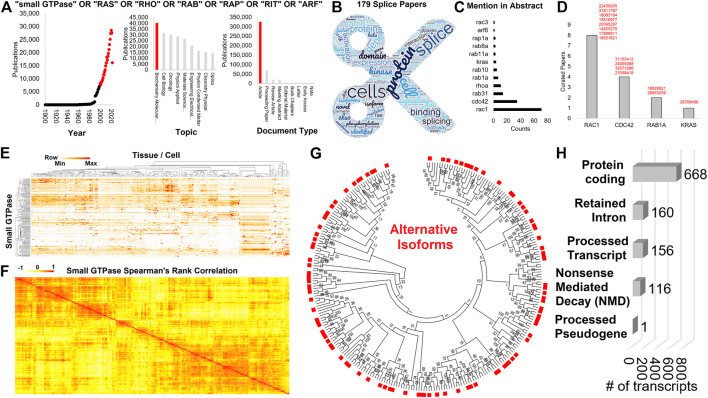
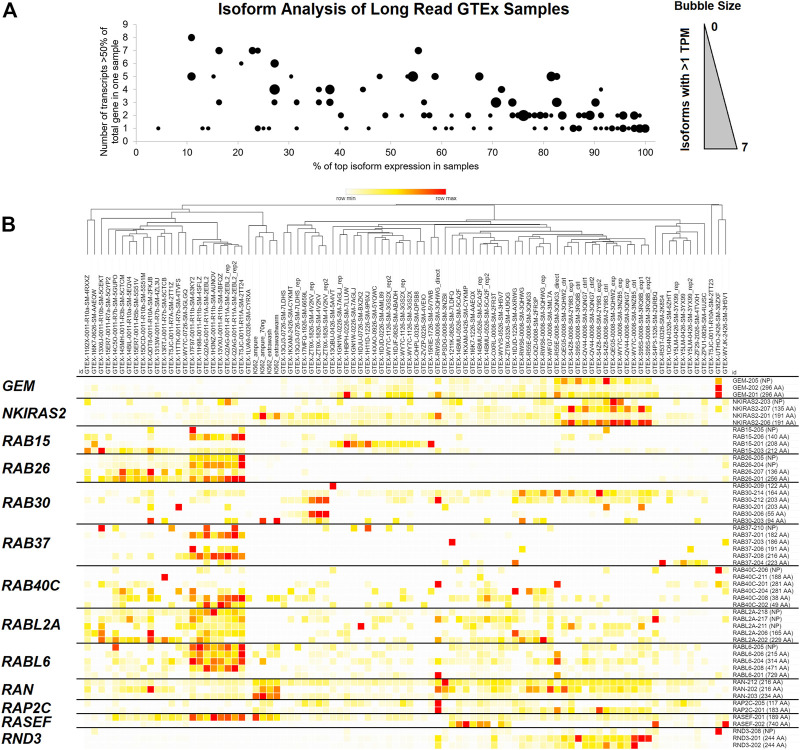
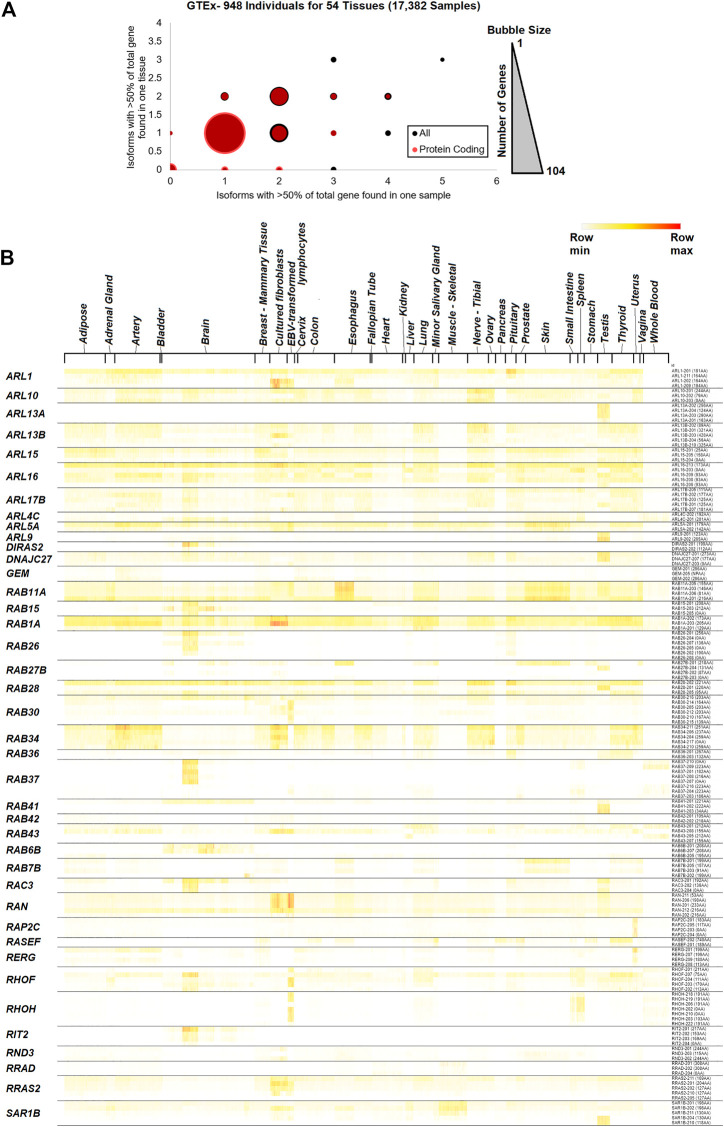
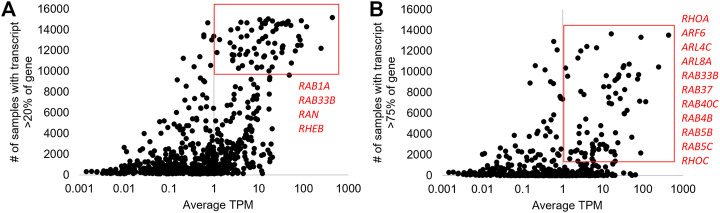
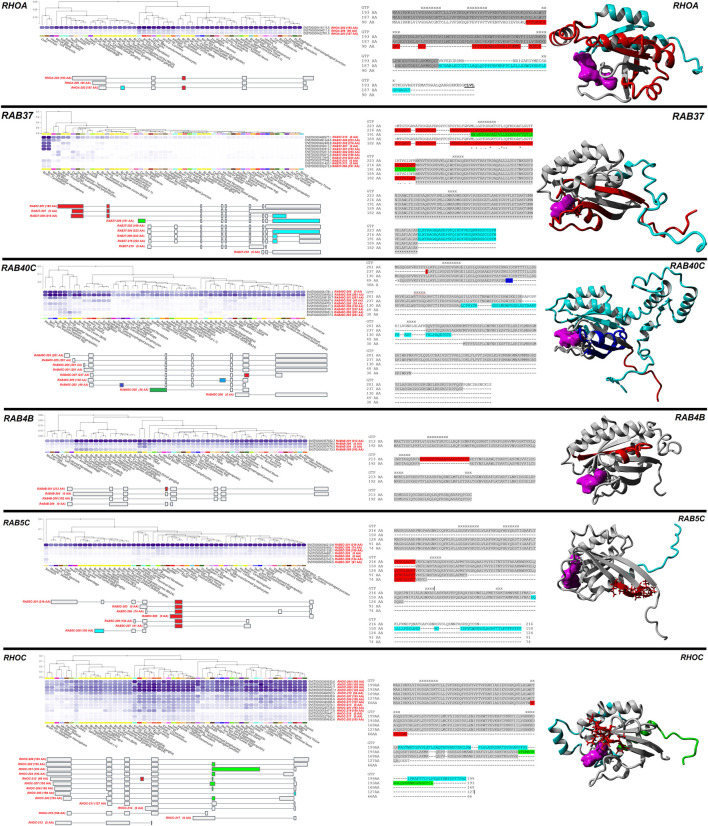
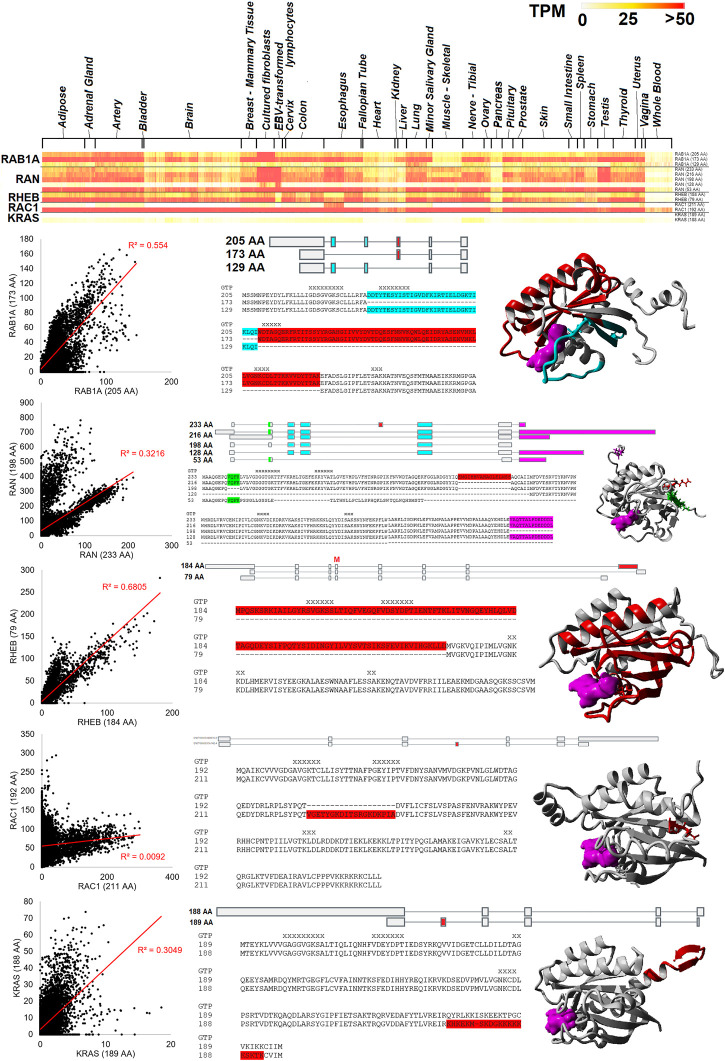
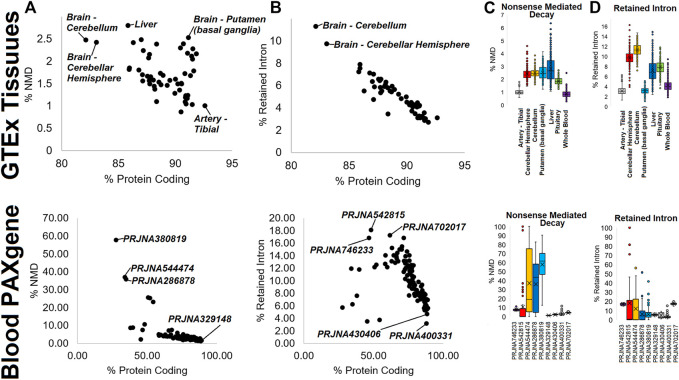
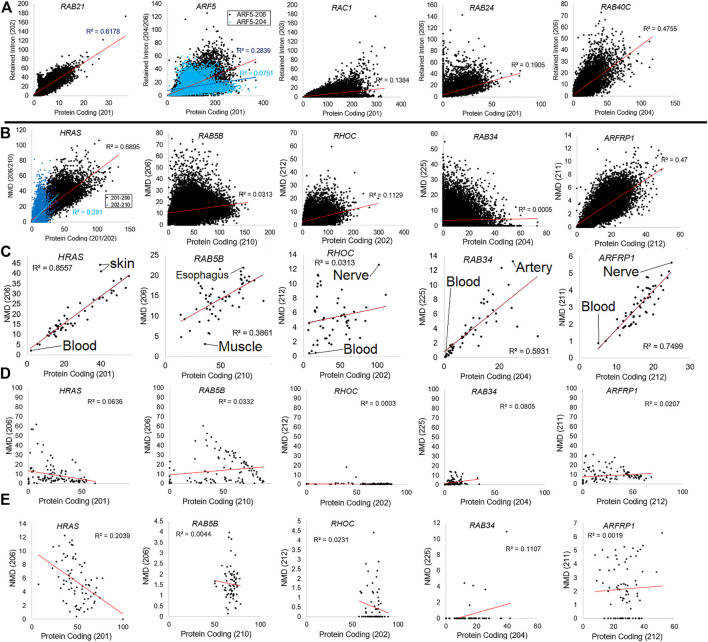
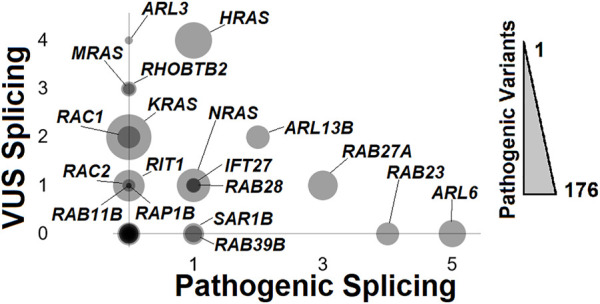
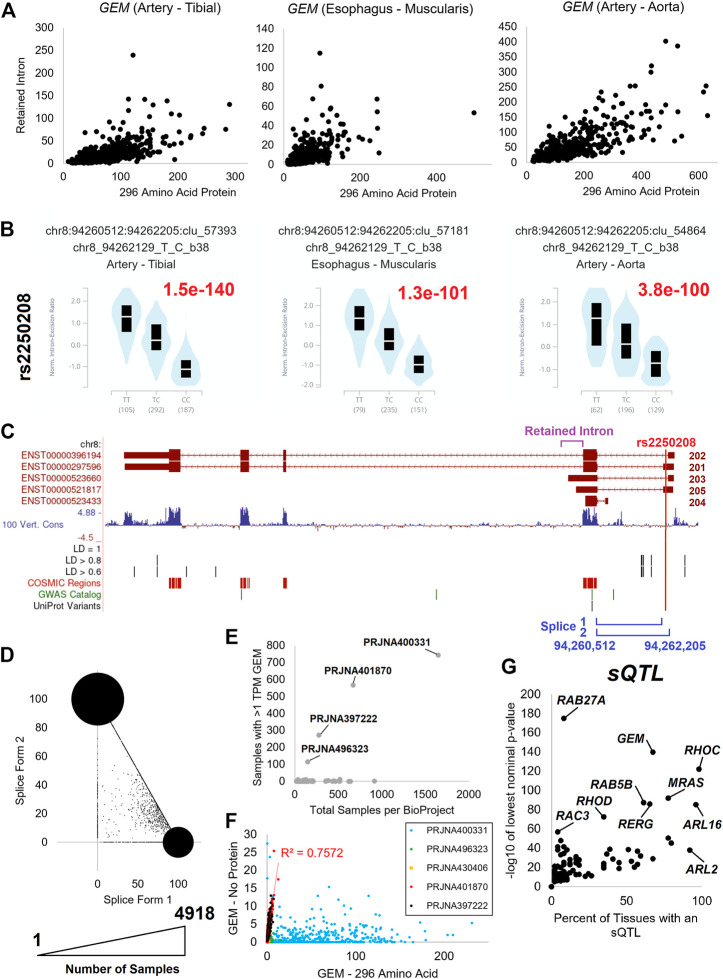
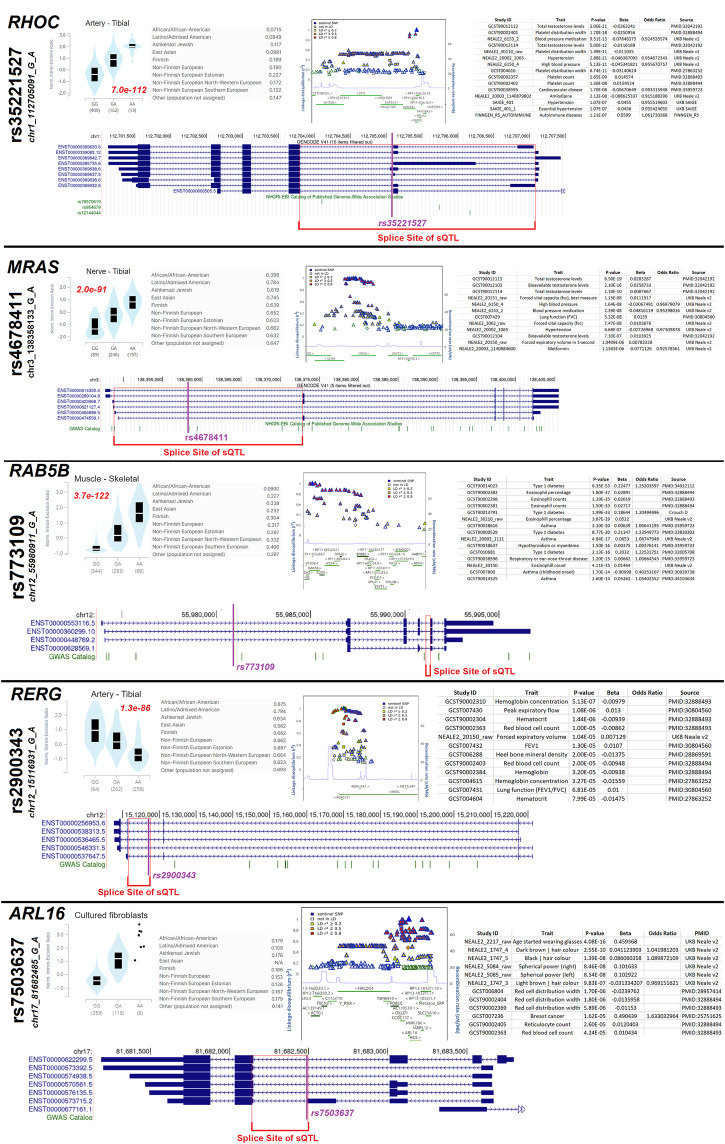
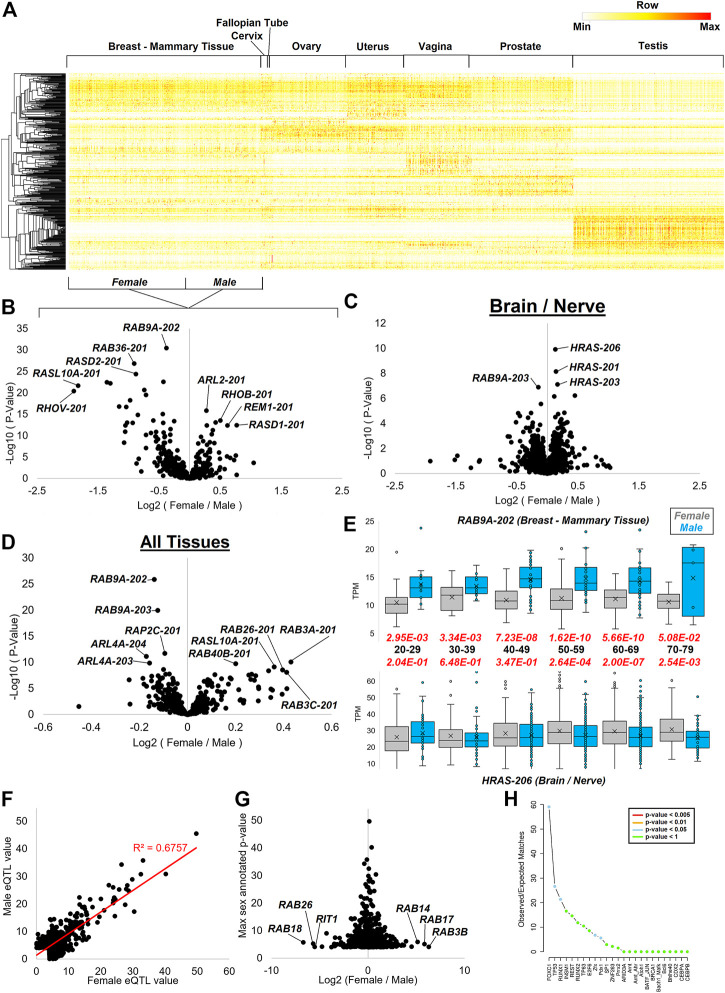
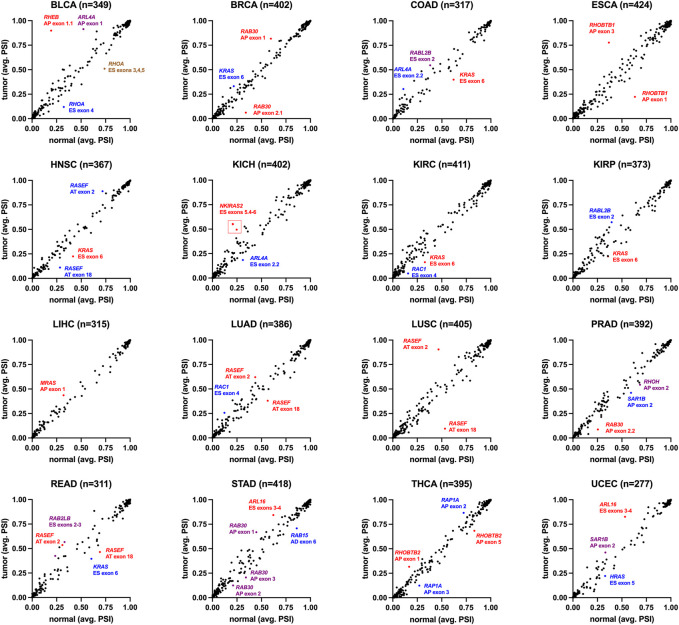
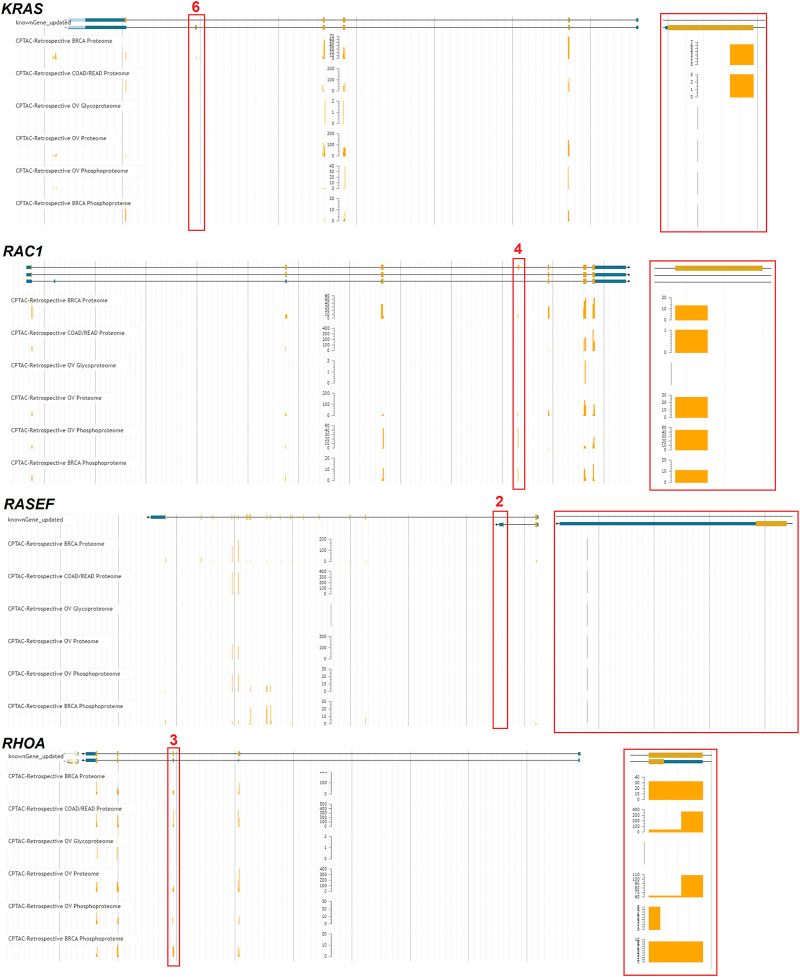
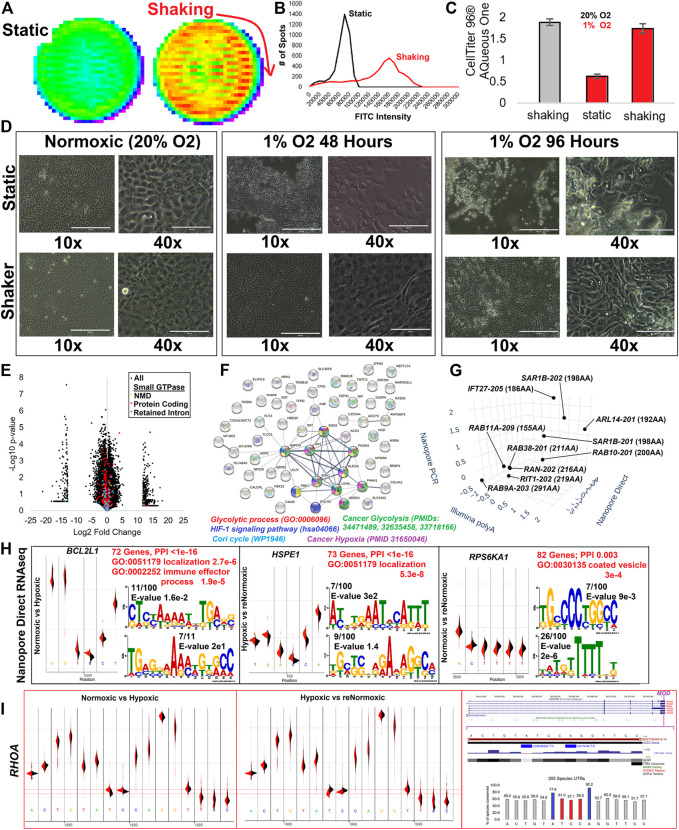
The small GTPase family is well-studied in cancer and cellular physiology. With 162 annotated human genes, the family has a broad expression throughout cells of the body. Members of the family have multiple exons that require splicing. Yet, the role of splicing within the family has been underexplored. We have studied the splicing dynamics of small GTPases throughout 41,671 samples by integrating Nanopore and Illumina sequencing techniques. Within this work, we have made several discoveries. 1). Using the GTEx long read data of 92 samples, each small GTPase gene averages two transcripts, with 83 genes (51%) expressing two or more isoforms. 2). Cross-tissue analysis of GTEx from 17,382 samples shows 41 genes (25%) expressing two or more protein-coding isoforms. These include protein-changing transcripts in genes such as RHOA, RAB37, RAB40C, RAB4B, RAB5C, RHOC, RAB1A, RAN, RHEB, RAC1, and KRAS. 3). The isolation and library technique of the RNAseq influences the abundance of non-sense-mediated decay and retained intron transcripts of small GTPases, which are observed more often in genes than appreciated. 4). Analysis of 16,243 samples of “Blood PAXgene” identified seven genes (3.7%; RHOA, RAB40C, RAB4B, RAB37, RAB5B, RAB5C, RHOC) with two or more transcripts expressed as the major isoform (75% of the total gene), suggesting a role of genetics in altering splicing. 5). Rare (ARL6, RAB23, ARL13B, HRAS, NRAS) and common variants (GEM, RHOC, MRAS, RAB5B, RERG, ARL16) can influence splicing and have an impact on phenotypes and diseases. 6). Multiple genes (RAB9A, RAP2C, ARL4A, RAB3A, RAB26, RAB3C, RASL10A, RAB40B, and HRAS) have sex differences in transcript expression. 7). Several exons are included or excluded for small GTPase genes (RASEF, KRAS, RAC1, RHEB, ARL4A, RHOA, RAB30, RHOBTB1, ARL16, RAP1A) in one or more forms of cancer. 8). Ten transcripts are altered in hypoxia (SAR1B, IFT27, ARL14, RAB11A, RAB10, RAB38, RAN, RIT1, RAB9A) with RHOA identified to have a transient 3′UTR RNA base editing at a conserved site found in all of its transcripts. Overall, we show a remarkable and dynamic role of splicing within the small GTPase family that requires future explorations.
Overview
CoChat Summary
TL;DR
This study integrates long- and short-read transcriptomic datasets totaling 41,671 samples to characterize alternative splicing across 162 human small GTPase genes. It reports widespread protein-altering isoforms and shows that splicing is influenced by tissue, sex, genetics, RNA library preparation, cancer, and hypoxia, including transient RHOA 3′UTR RNA base editing.
Key findings
Using GTEx long-read data from 92 samples, each small GTPase gene averaged two transcripts, with 83 genes (51%) expressing two or more isoforms. Cross-tissue GTEx analysis of 17,382 samples found 41 genes (25%) expressing two or more protein-coding isoforms, including RHOA, RAB37, RAB40C, RAB4B, RAB5C, RHOC, RAB1A, RAN, RHEB, RAC1, and KRAS. In 16,243 Blood PAXgene samples, seven genes (3.7%; RHOA, RAB40C, RAB4B, RAB37, RAB5B, RAB5C, RHOC) had two or more transcripts as the major isoform (75% of total gene), suggesting genetic influence; rare (ARL6, RAB23, ARL13B, HRAS, NRAS) and common (GEM, RHOC, MRAS, RAB5B, RERG, ARL16) variants can influence splicing. Sex differences in transcript expression were found for multiple genes (RAB9A, RAP2C, ARL4A, RAB3A, RAB26, RAB3C, RASL10A, RAB40B, HRAS); cancer-associated exon inclusion/exclusion involved RASEF, KRAS, RAC1, RHEB, ARL4A, RHOA, RAB30, RHOBTB1, ARL16, RAP1A; and hypoxia altered ten transcripts, including SAR1B, IFT27, ARL14, RAB11A, RAB10, RAB38, RAN, RIT1, RAB9A, with RHOA showing transient 3′UTR RNA base editing at a conserved site.
Methods
Integrated 41,671 samples: 92 GTEx long-read Nanopore samples, 17,382 GTEx Illumina samples, 16,243 Blood PAXgene SRA samples, 7,934 TCGA case/control matched samples across 16 cancer types, and 20 hypoxia-exposed cell-culture samples analyzed with three RNAseq technologies. Used UniProt/HPA/Gencode annotations, GTEx v8 transcript TPM, sQTL and sex-biased eQTL data, ClinVar, TCGA SpliceSeq, Salmon quantification of SRA data, and Nanopore direct RNA and PCR-cDNA sequencing. For hypoxia, RPTEC-TERT1 cells were grown under shear stress and 1% O2 for 48 h (or reoxygenated), with albumin uptake, cell attachment, Illumina polyA RNAseq, and Nanopore direct/PCR-cDNA RNAseq; analyses included differential expression, sQTL/sbeQTL mapping, SNP2TFBS, and protein modeling.
Limitations
The paper states that the biological function of most alternative small GTPase proteins is poorly characterized, that future work is needed to define why NMD transcripts can be elevated within individuals, and that a broader analysis of NMD escape within the family is needed. It also states that biomarker potential of blood isoforms will require growth of transcriptomic databases with more clinical annotations, and that some discoveries (e.g., RASEF) require further analysis. Evident from the text: most results are descriptive/correlational across heterogeneous public datasets; Blood PAXgene samples span varied pathologies and RNA isolation/library methods, and the hypoxia/RNA-modification findings come from a single RPTEC-TERT1 cell model without functional validation of most isoforms.
Model-written summary. Check it against the paper before relying on it.
Integrity signals
Registry
Cites
Statistics
Figures
Verification
Claims the paper makes
0 Valid · 2 Not valid · 26 Not checked · 104 Own results and interpretations
A result the paper reports from its own data — it cites no other source for it, so there is none to check. The quote shows it is in the paper.
In the paper
“GEM has two isoforms that result in a 296 amino acid (AA) protein and one that does not code for a protein. NKIRAS2 has two isoforms for a 191 AA protein, one for a 135 AA, and one that does not code for a protein. RAB15 has 140, 208, and 212 AA coding transcripts; RAB26 has 136 and 256 AA coding transcripts; RAB30 has 55, 94, 122, 164, and 203 AA coding transcripts; RAB37 has 182, 186, 191, 216,”
§ The complex, dynamic SpliceOme of the small GTPase transcripts altered by technique, sex, genetics, tissue specificity, and RNA base editing > Results and discussions > GTEx multiple tissue small GTPase splicing
plain- Asserted: passes — The authors put it forward as true.
- Checkable: passes — It can be checked against evidence.
- Load-bearing: passes — The paper’s conclusions depend on it.
- Based: passes — The paper gives a reason why it holds.
In the paper
“Still, it shows some samples with high NMD transcripts”
§ The complex, dynamic SpliceOme of the small GTPase transcripts altered by technique, sex, genetics, tissue specificity, and RNA base editing > Results and discussions > Biotype annotation of small GTPase splicing
What the sources say
- Not checked yetcites Prokop et al., 2021 matched to “High-density blood transcriptomics reveals precision immune signatures of SARS-CoV-2 infection in hospitalized individuals” (2021) source
plain- Asserted: passes — The authors put it forward as true.
- Checkable: passes — It can be checked against evidence.
- Load-bearing: unclear — It is unclear whether the paper’s conclusions depend on it.
- Based: passes — The paper gives a reason why it holds.
A result the paper reports from its own data — it cites no other source for it, so there is none to check. The quote shows it is in the paper.
In the paper
“The isolation and library technique of the RNAseq influences the abundance of non-sense-mediated decay and retained intron transcripts of small GTPases, which are observed more often in genes than appreciated.”
§ The complex, dynamic SpliceOme of the small GTPase transcripts altered by technique, sex, genetics, tissue specificity, and RNA base editing > Abstract
plainstates a cause- Asserted: passes — The authors put it forward as true.
- Checkable: passes — It can be checked against evidence.
- Load-bearing: passes — The paper’s conclusions depend on it.
- Based: passes — The paper gives a reason why it holds.
A result the paper reports from its own data — it cites no other source for it, so there is none to check. The quote shows it is in the paper.
In the paper
“Many of the blood samples with the highest levels of NMD transcripts throughout this study had bacterial or viral infections”
§ The complex, dynamic SpliceOme of the small GTPase transcripts altered by technique, sex, genetics, tissue specificity, and RNA base editing > Results and discussions > Biotype annotation of small GTPase splicing
plainstates an association- Asserted: passes — The authors put it forward as true.
- Checkable: passes — It can be checked against evidence.
- Load-bearing: passes — The paper’s conclusions depend on it.
- Based: passes — The paper gives a reason why it holds.
A result the paper states — it cites no source for it, so there is none to check. The quote shows it is in the paper.
In the paper
“Finally, the variant rs7503637 is associated with an sQTL for ARL16 that is found in most populations with a complex LD block.”
§ The complex, dynamic SpliceOme of the small GTPase transcripts altered by technique, sex, genetics, tissue specificity, and RNA base editing > Results and discussions > Genetic variants impacting small GTPase splicing
plainstates an association- Asserted: passes — The authors put it forward as true.
- Checkable: passes — It can be checked against evidence.
- Load-bearing: unclear — It is unclear whether the paper’s conclusions depend on it.
- Based: passes — The paper gives a reason why it holds.
55 more claims
Create a free account to see all 132 claims and to verify the 41 references still open.
- It may state two separate claims as one. 60
- The quote only partly states this claim. 4
- Probably not a substantial claim. 25
Self-check
Percentages, sums and reported differences re-computed from the paper’s own numbers.
Each contradiction between two passages listed here was confirmed by an independent check.
Rated minor: it would not touch a result — a value no result rests on, a p-value that stays on the same side of the significance level, or a conflict that is clerical, resolved elsewhere in the paper, or outside its own findings.
In the paper
“identified seven genes (3.7%; RHOA, RAB40C, RAB4B, RAB37, RAB5B, RAB5C, RHOC)”
§ The complex, dynamic SpliceOme of the small GTPase transcripts altered by technique, sex, genetics, tissue specificity, and RNA base editing > Abstract
Reported 3.7 · recomputed 4.320988
Rated minor: it would not touch a result — a value no result rests on, a p-value that stays on the same side of the significance level, or a conflict that is clerical, resolved elsewhere in the paper, or outside its own findings.
In the paper
§ The complex, dynamic SpliceOme of the small GTPase transcripts altered by technique, sex, genetics, tissue specificity, and RNA base editing > Results and discussions > RNA modifications and isoform dynamics in hypoxia
“The bottom of the panel shows the conservation of bases based on 205 species sequences”
§ The complex, dynamic SpliceOme of the small GTPase transcripts altered by technique, sex, genetics, tissue specificity, and RNA base editing > Results and discussions > RNA modifications and isoform dynamics in hypoxia
“The nucleic acids near the voltage shift are relatively conserved (>50%) in 206 vertebrate species analyzed”
Rated minor: it would not touch a result — a value no result rests on, a p-value that stays on the same side of the significance level, or a conflict that is clerical, resolved elsewhere in the paper, or outside its own findings.
In the paper
§ The complex, dynamic SpliceOme of the small GTPase transcripts altered by technique, sex, genetics, tissue specificity, and RNA base editing > Results and discussions > Blood-based dynamics of small GTPase splicing
“the four genes with more than one isoform are labeled in red.”
§ The complex, dynamic SpliceOme of the small GTPase transcripts altered by technique, sex, genetics, tissue specificity, and RNA base editing > Results and discussions > Blood-based dynamics of small GTPase splicing
“Two genes have multiple transcripts that result in the same protein sequence (RAB6A-201/202- 208AA; RAB9A-202/203- 201AA), and one gene has a protein-coding and non-coding transcript (RAB4A-201- 218AA, RAB4A-202- no protein). Four genes have two different protein-coding isoforms including RAB1A (RAB1A-203- 205AA, RAB1A-202- 173AA), RAB33B (RAB33B-203- 277AA, RAB33B-201- 229AA), RAN (RAN-206- 198AA, RAN-211- 53AA), and RHEB (RHEB-201- 184AA, RHEB-204- 79AA).”
Cited works that were retracted
Works this paper cites that were later retracted, from the retraction notices publishers deposit. Major when the notice came out before this paper was published.
Rated major: it would touch a result — a value a result rests on, reported and recomputed p-values on opposite sides of the significance level, two passages that conflict with no sign which is right, or a cited work retracted before this paper was published.
In the paper
“The interaction of RHOA and hypoxia through the potential modification of the 3′UTR is an exciting observation in that RHOA is increased in activation within hypoxia (Chi et al., 2010; Resta et al., 2010; Gilkes et al., 2014).”
Cited work 10.1073/pnas.1321510111 · retracted 2022-09-02 · notice 10.1073/pnas.2213288119 · this paper published 2022-11-17
Citations
Cites
1 retracted
Gilkes, D. M., Xiang, L., Lee, S. J., Chaturvedi, P., Hubbi, M. E., Wirtz, D., & Semenza, G. L. (2014) · Proceedings of the National Academy of Sciences · doi:10.1073/pnas.1321510111 · Cited by 184 · cited 1×
“The interaction of RHOA and hypoxia through the potential modification of the 3′UTR is an exciting observation in that RHOA is increased in activation within hypoxia (Chi et al., 2010; Resta et al., 2010; Gilkes et al., 2014).”
BackgroundRetractedThompson, J. D., Higgins, D. G., & Gibson, T. J. (1994) · Nucleic Acids Research · doi:10.1093/nar/22.22.4673 · Cited by 64,617
limma powers differential expression analyses for RNA-sequencing and microarray studies
Ritchie, M. E., Phipson, B., Wu, D., Hu, Y., Law, C. W., Shi, W., & Smyth, G. K. (2015) · Nucleic Acids Research · doi:10.1093/nar/gkv007 · Cited by 40,458
Salmon provides fast and bias-aware quantification of transcript expression
Patro, R., Duggal, G., Love, M. I., Irizarry, R. A., & Kingsford, C. (2017) · Nature Methods · doi:10.1038/nmeth.4197 · Cited by 12,700
The mutational constraint spectrum quantified from variation in 141,456 humans
Karczewski, K. J., Francioli, L. C., Tiao, G., Cummings, B. B., Alföldi, J., Wang, Q., Collins, R. L., Laricchia, K. M., Ganna, A., Birnbaum, D. P., et al. (2020) · Nature · doi:10.1038/s41586-020-2308-7 · Cited by 9,434
Shrestha, S., & Offer, S. M. (2016) · Medical Epigenetics · doi:10.1159/000444713 · Cited by 8,914
The rapid generation of mutation data matrices from protein sequences
Jones, D. T., Taylor, W. R., & Thornton, J. M. (1992) · Bioinformatics · doi:10.1093/bioinformatics/8.3.275 · Cited by 6,947
The GTEx Consortium atlas of genetic regulatory effects across human tissues
The GTEx Consortium, Aguet, F., Anand, S., Ardlie, K. G., Gabriel, S., Getz, G. A., Graubert, A., Hadley, K., Handsaker, R. E., Huang, K. H., et al. (2020) · Science · doi:10.1126/science.aaz1776 · Cited by 5,547
Self-citationThe GTPase superfamily: conserved structure and molecular mechanism
Bourne, H. R., Sanders, D. A., & McCormick, F. (1991) · Nature · doi:10.1038/349117a0 · Cited by 3,392
GENCODE reference annotation for the human and mouse genomes
Frankish, A., Diekhans, M., Ferreira, A.-M., Johnson, R., Jungreis, I., Loveland, J., Mudge, J. M., Sisu, C., Wright, J., Armstrong, J., et al. (2019) · Nucleic Acids Research · doi:10.1093/nar/gky955 · Cited by 3,040
Cited by
Gene Therapy for Genetic Syndromes: Understanding the Current State to Guide Future Care
Henderson, M. L., Zieba, J. K., Li, X., Campbell, D. B., Williams, M. R., Vogt, D. L., Bupp, C. P., Edgerly, Y. M., Rajasekaran, S., Hartog, N., et al. (2024) · BioTech · doi:10.3390/biotech13010001 · Cited by 41
Self-citationMolecular dynamics simulations for the structure-based drug design: targeting small-GTPases proteins
Parise, A., Cresca, S., & Magistrato, A. (2024) · Expert Opinion on Drug Discovery · doi:10.1080/17460441.2024.2387856 · Cited by 28
Yu, J., Yu, C., Jiang, K., Guanglin, Y., Yang, S., Tan, S., Li, T., Liang, H., He, Q., Wei, F., et al. (2024) · BMC Urology · doi:10.1186/s12894-024-01540-6 · Cited by 21
Zhang, L., Fritah, S., Nazarov, P. V., Kaoma, T., & Dyck, E. V. (2023) · International Journal of Molecular Sciences · doi:10.3390/ijms24129825 · Cited by 16
MRAS: Master Regulator Analysis of Alternative Splicing
Zhou, L., Huang, Y., Zhao, Y., Guo, D. H., Xiao, W., Xu, R., Lv, X., Wu, S., Jing, S., & Liu, Z. (2025) · Advanced Science · doi:10.1002/advs.202414493 · Cited by 5
Metadata
- Authors
- Das, A. S., Sherry, E. C., Vaughan, R. M., Henderson, M. L., Zieba, J., Uhl, K. L., Koehn, O., Bupp, C. P., Rajasekaran, S., Li, X., Chhetri, S. B., Nissim, S., Williams, C. L., & Prokop, J. W.
- Affiliations
- Washington and Jefferson College (US)
- Grand Valley State University (US)
- Michigan State University (US)
- Calvin University (US)
- Medical College of Wisconsin (US)
- Spectrum Health (US)
- Johns Hopkins University (US)
- Brigham and Women's Hospital (US)
- Corresponding author
- Prokop, Jeremy W.
- ORCID
- Venue
- Frontiers in Cell and Developmental Biology
- Publisher
- Frontiers Media SA
- Published
- 2022-11-17
- Volume
- 10
- Pages
- 1033695-1033695
- ISSN
- 2296-634X (ISSN-L)
- PMC
- PMC9714508
- OpenAlex
- W4309604651
- Cited by
- 9
- References
- 114
- Citations by year
- 2025: 3 · 2024: 5 · 2023: 1
- FWCI
- 0.59
- Type
- journal article
- Language
- en
- Open access
- gold
- doi.org
- Licence
- Locations
- Frontiers in Cell and Developmental Biology (publishedVersion, cc-by)
- PubMed Central (publishedVersion, cc-by)
- PubMed (publishedVersion)
- DOAJ (DOAJ: Directory of Open Access Journals) (submittedVersion)
- Funders
- National Institutes of Health (K01ES025435 K00CA245821)
- Gerber Foundation
- Topics
- Life Sciences › Biochemistry, Genetics and Molecular Biology › Molecular Biology › RNA Research and Splicing
- Life Sciences › Biochemistry, Genetics and Molecular Biology › Molecular Biology › Genomics and Phylogenetic Studies
- Life Sciences › Biochemistry, Genetics and Molecular Biology › Molecular Biology › RNA regulation and disease
- Keywords
- small GTPases, alternative splicing, splice variants, transcriptome, sex differences in gene expression, sex chromosomes, sex-linked genes, sex-biased gene expression, ras gene, Rab GTPases, Rho GTPases, Rheb, Ran GTPase, Rab37, Rab5b, RAB5C, ARL13B
About these checks
Registry, retraction, Cites and statistics results are computed, not judged, with one exception: a printed reference that no index lists is read once by a model before it counts as a citation error. Claims are extracted by a model and kept only when their quote appears verbatim in the text; each cited source is then checked, with a model’s help, for whether it says what the claim relies on. Those verdicts can be wrong — read the claim’s quote and the cited source before relying on one.
A language model drew the claims from the paper on 2026-11-24, under version 3 of the claim definition (model deepseek-v4.1-flash, prompt extract-v3).
A second model labelled each claim on 2026-11-24 (model jev-1.13-20260917, definition revision gold-guideline-v0.2).
Statistics and arithmetic are recomputed, not judged.
Confidence bands are shown only for fields calibrated on our annotated test set. None is calibrated yet, so no band is shown.
What counts as a claim ›How we measure confidence ›How we check this ›
Are you an author, or do you see a problem with this page? Request a review
How to cite
Cite CoChat for the checks on this page, and the paper for its own findings.
- This page
- CoChat. (2026). Citation check: The complex, dynamic SpliceOme of the small GTPase transcripts altered by technique, sex, genetics, tissue specificity, and RNA base editing. https://app.cochat.ai/papers/10.3389/fcell.2022.1033695
- The paper
- Das, A. S., Sherry, E. C., Vaughan, R. M., Henderson, M. L., Zieba, J., Uhl, K. L., Koehn, O., Bupp, C. P., Rajasekaran, S., Li, X., Chhetri, S. B., Nissim, S., Williams, C. L., & Prokop, J. W. (2022). The complex, dynamic SpliceOme of the small GTPase transcripts altered by technique, sex, genetics, tissue specificity, and RNA base editing. Frontiers in Cell and Developmental Biology. https://doi.org/10.3389/fcell.2022.1033695
Data sources
Bibliographic data: Semantic Scholar, OpenAlex, Crossref.
Contains information from the Semantic Scholar Academic Graph Datasets, made available under the ODC Attribution License (ODC-BY 1.0).
Semantic Scholar’s data is described in: Kinney, R., et al. (2023). The Semantic Scholar Open Data Platform. arXiv:2301.10140.
