

The complex, dynamic SpliceOme of the small GTPase transcripts altered by technique, sex, genetics, tissue specificity, and RNA base editing
Open accessThe DOI matches its Crossref record; 114 of the 114 references it cites were found in a registry or an index; none of the 41 sources its claims cite is checked for support yet.
Abstract
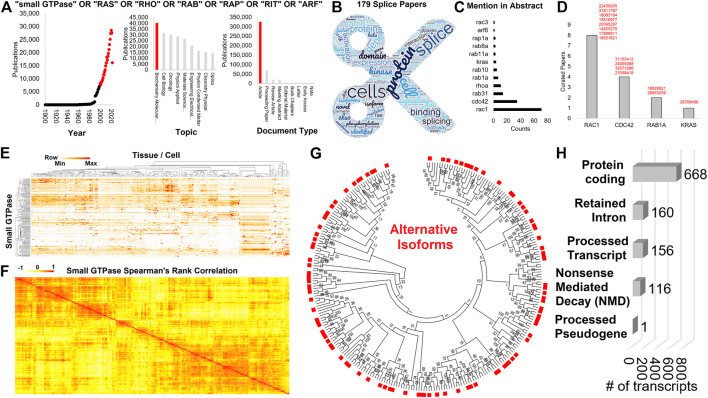
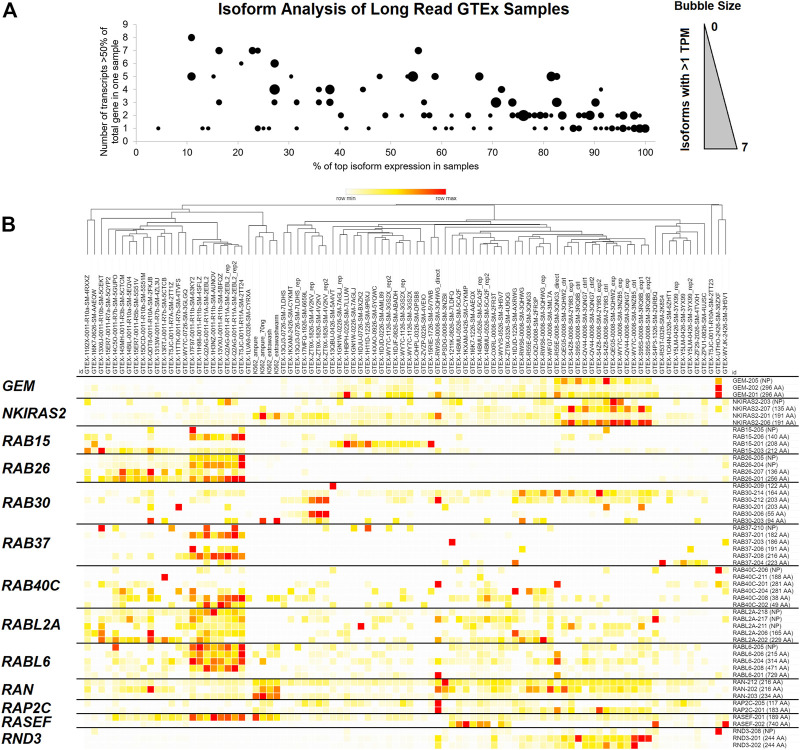
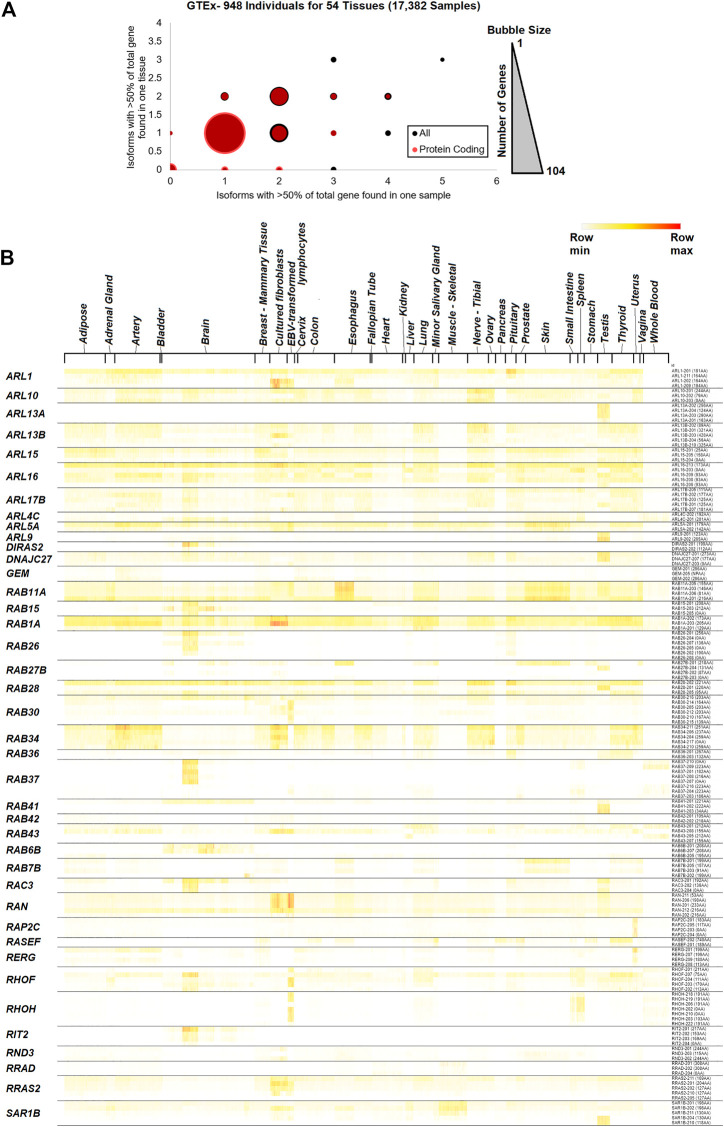
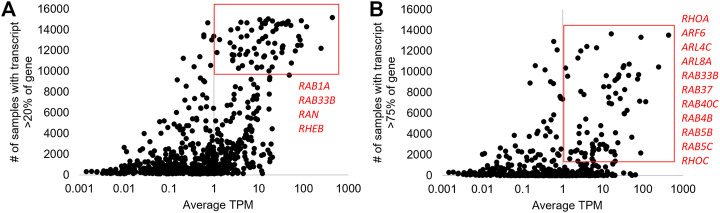
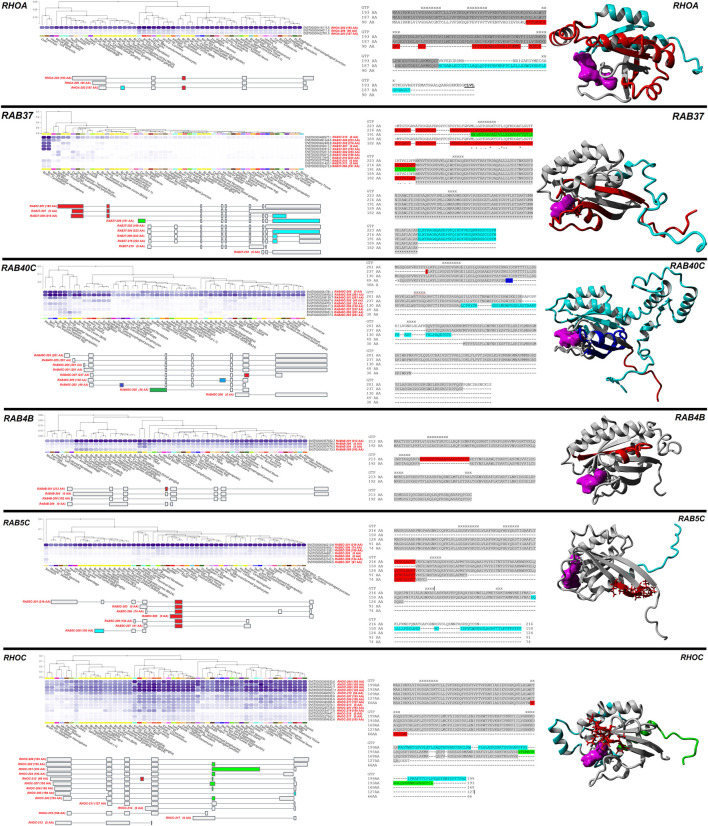
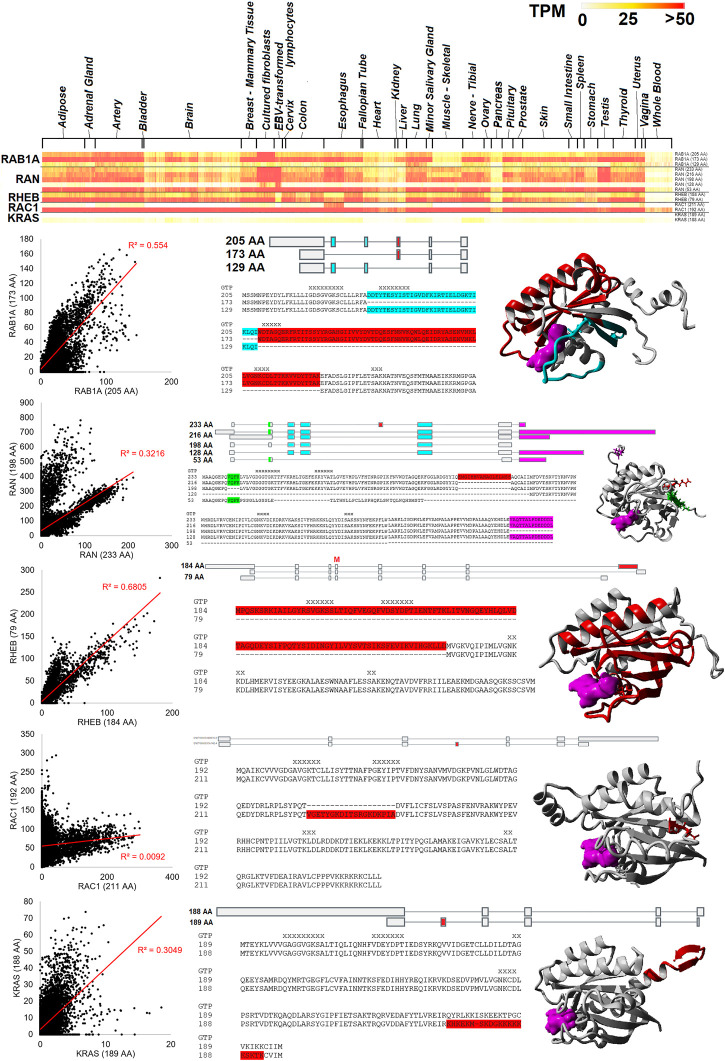
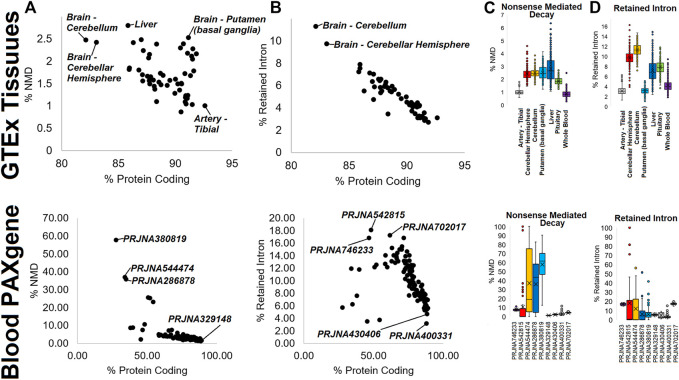
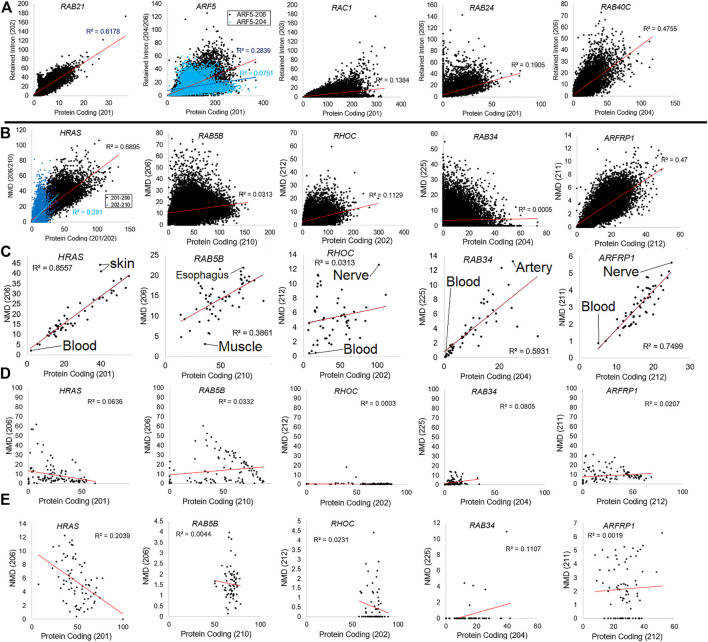
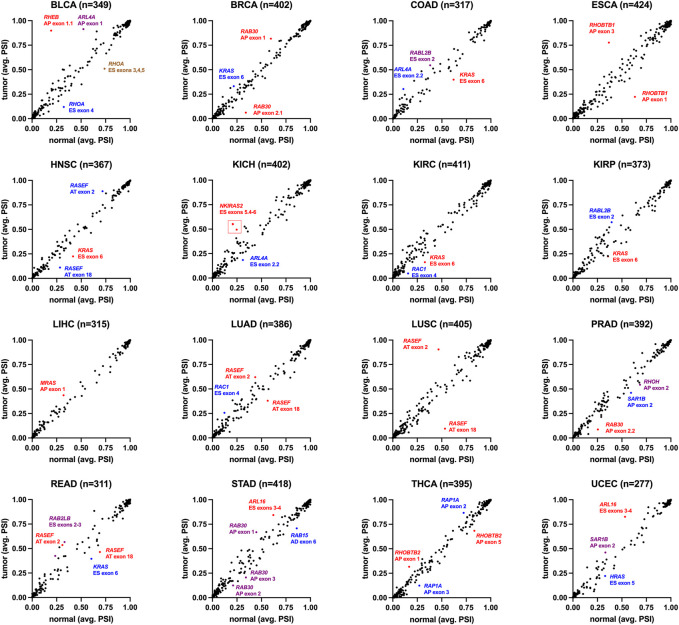
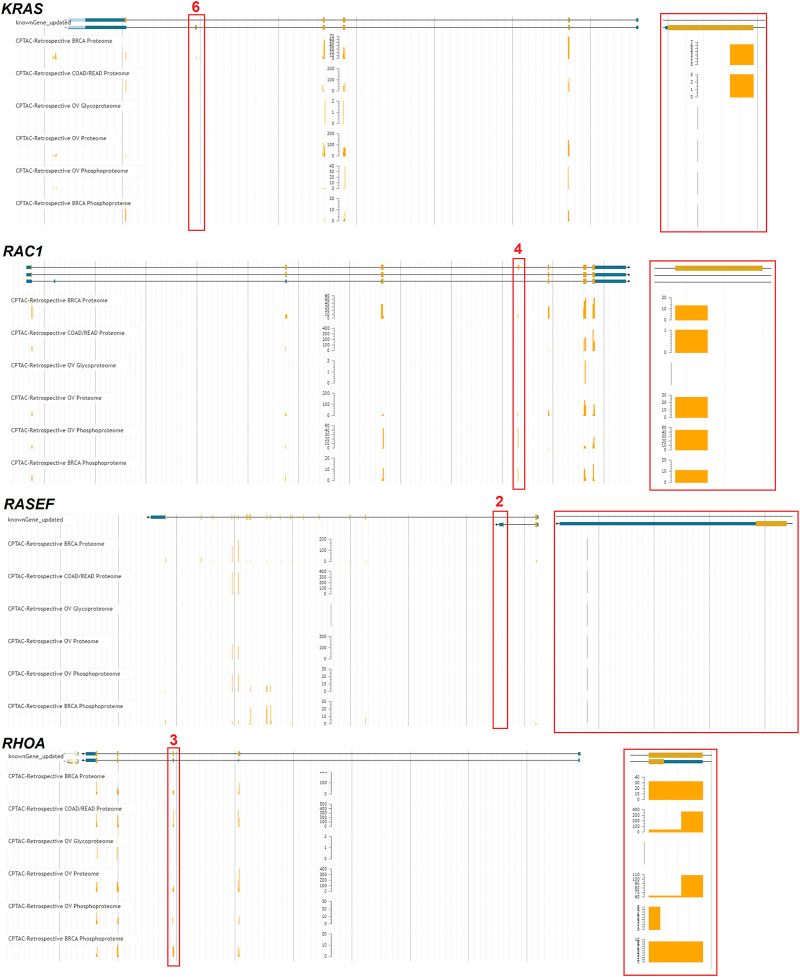
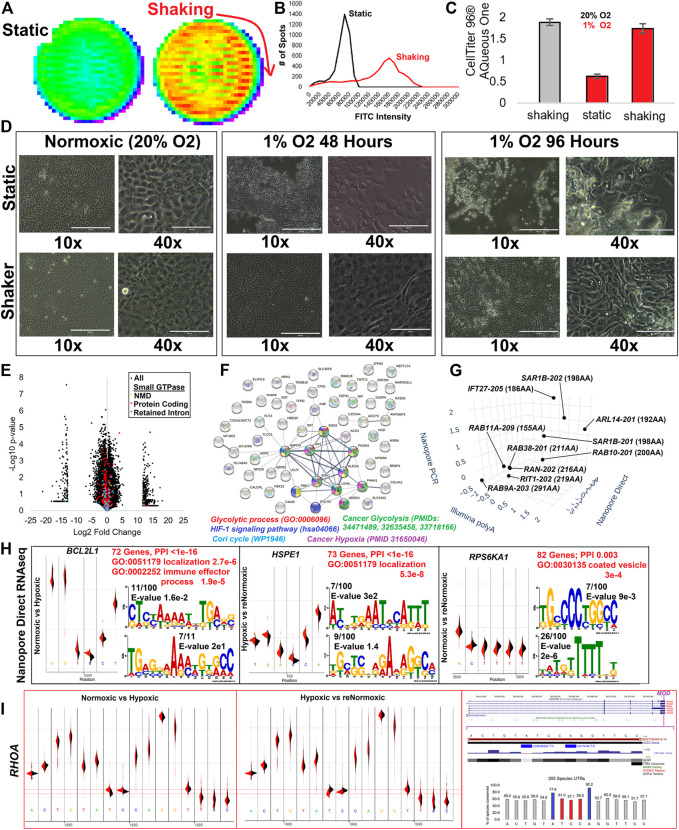
The small GTPase family is well-studied in cancer and cellular physiology. With 162 annotated human genes, the family has a broad expression throughout cells of the body. Members of the family have multiple exons that require splicing. Yet, the role of splicing within the family has been underexplored. We have studied the splicing dynamics of small GTPases throughout 41,671 samples by integrating Nanopore and Illumina sequencing techniques. Within this work, we have made several discoveries. 1). Using the GTEx long read data of 92 samples, each small GTPase gene averages two transcripts, with 83 genes (51%) expressing two or more isoforms. 2). Cross-tissue analysis of GTEx from 17,382 samples shows 41 genes (25%) expressing two or more protein-coding isoforms. These include protein-changing transcripts in genes such as RHOA, RAB37, RAB40C, RAB4B, RAB5C, RHOC, RAB1A, RAN, RHEB, RAC1, and KRAS. 3). The isolation and library technique of the RNAseq influences the abundance of non-sense-mediated decay and retained intron transcripts of small GTPases, which are observed more often in genes than appreciated. 4). Analysis of 16,243 samples of “Blood PAXgene” identified seven genes (3.7%; RHOA, RAB40C, RAB4B, RAB37, RAB5B, RAB5C, RHOC) with two or more transcripts expressed as the major isoform (75% of the total gene), suggesting a role of genetics in altering splicing. 5). Rare (ARL6, RAB23, ARL13B, HRAS, NRAS) and common variants (GEM, RHOC, MRAS, RAB5B, RERG, ARL16) can influence splicing and have an impact on phenotypes and diseases. 6). Multiple genes (RAB9A, RAP2C, ARL4A, RAB3A, RAB26, RAB3C, RASL10A, RAB40B, and HRAS) have sex differences in transcript expression. 7). Several exons are included or excluded for small GTPase genes (RASEF, KRAS, RAC1, RHEB, ARL4A, RHOA, RAB30, RHOBTB1, ARL16, RAP1A) in one or more forms of cancer. 8). Ten transcripts are altered in hypoxia (SAR1B, IFT27, ARL14, RAB11A, RAB10, RAB38, RAN, RIT1, RAB9A) with RHOA identified to have a transient 3′UTR RNA base editing at a conserved site found in all of its transcripts. Overall, we show a remarkable and dynamic role of splicing within the small GTPase family that requires future explorations.
Overview
CoChat Summary
TL;DR
This study integrates long- and short-read transcriptomic datasets totaling 41,671 samples to characterize alternative splicing across 162 human small GTPase genes. It reports widespread protein-altering isoforms and shows that splicing is influenced by tissue, sex, genetics, RNA library preparation, cancer, and hypoxia, including transient RHOA 3′UTR RNA base editing.
Key findings
Using GTEx long-read data from 92 samples, each small GTPase gene averaged two transcripts, with 83 genes (51%) expressing two or more isoforms. Cross-tissue GTEx analysis of 17,382 samples found 41 genes (25%) expressing two or more protein-coding isoforms, including RHOA, RAB37, RAB40C, RAB4B, RAB5C, RHOC, RAB1A, RAN, RHEB, RAC1, and KRAS. In 16,243 Blood PAXgene samples, seven genes (3.7%; RHOA, RAB40C, RAB4B, RAB37, RAB5B, RAB5C, RHOC) had two or more transcripts as the major isoform (75% of total gene), suggesting genetic influence; rare (ARL6, RAB23, ARL13B, HRAS, NRAS) and common (GEM, RHOC, MRAS, RAB5B, RERG, ARL16) variants can influence splicing. Sex differences in transcript expression were found for multiple genes (RAB9A, RAP2C, ARL4A, RAB3A, RAB26, RAB3C, RASL10A, RAB40B, HRAS); cancer-associated exon inclusion/exclusion involved RASEF, KRAS, RAC1, RHEB, ARL4A, RHOA, RAB30, RHOBTB1, ARL16, RAP1A; and hypoxia altered ten transcripts, including SAR1B, IFT27, ARL14, RAB11A, RAB10, RAB38, RAN, RIT1, RAB9A, with RHOA showing transient 3′UTR RNA base editing at a conserved site.
Methods
Integrated 41,671 samples: 92 GTEx long-read Nanopore samples, 17,382 GTEx Illumina samples, 16,243 Blood PAXgene SRA samples, 7,934 TCGA case/control matched samples across 16 cancer types, and 20 hypoxia-exposed cell-culture samples analyzed with three RNAseq technologies. Used UniProt/HPA/Gencode annotations, GTEx v8 transcript TPM, sQTL and sex-biased eQTL data, ClinVar, TCGA SpliceSeq, Salmon quantification of SRA data, and Nanopore direct RNA and PCR-cDNA sequencing. For hypoxia, RPTEC-TERT1 cells were grown under shear stress and 1% O2 for 48 h (or reoxygenated), with albumin uptake, cell attachment, Illumina polyA RNAseq, and Nanopore direct/PCR-cDNA RNAseq; analyses included differential expression, sQTL/sbeQTL mapping, SNP2TFBS, and protein modeling.
Limitations
The paper states that the biological function of most alternative small GTPase proteins is poorly characterized, that future work is needed to define why NMD transcripts can be elevated within individuals, and that a broader analysis of NMD escape within the family is needed. It also states that biomarker potential of blood isoforms will require growth of transcriptomic databases with more clinical annotations, and that some discoveries (e.g., RASEF) require further analysis. Evident from the text: most results are descriptive/correlational across heterogeneous public datasets; Blood PAXgene samples span varied pathologies and RNA isolation/library methods, and the hypoxia/RNA-modification findings come from a single RPTEC-TERT1 cell model without functional validation of most isoforms.
Model-written summary. Check it against the paper before relying on it.
Integrity signals
Registry
Cites
Statistics
Figures
Verification
Claims the paper makes
0 Valid · 2 Not valid · 26 Not checked · 104 Own results and interpretations
A result the paper reports from its own data — it cites no other source for it, so there is none to check. The quote shows it is in the paper.
In the paper
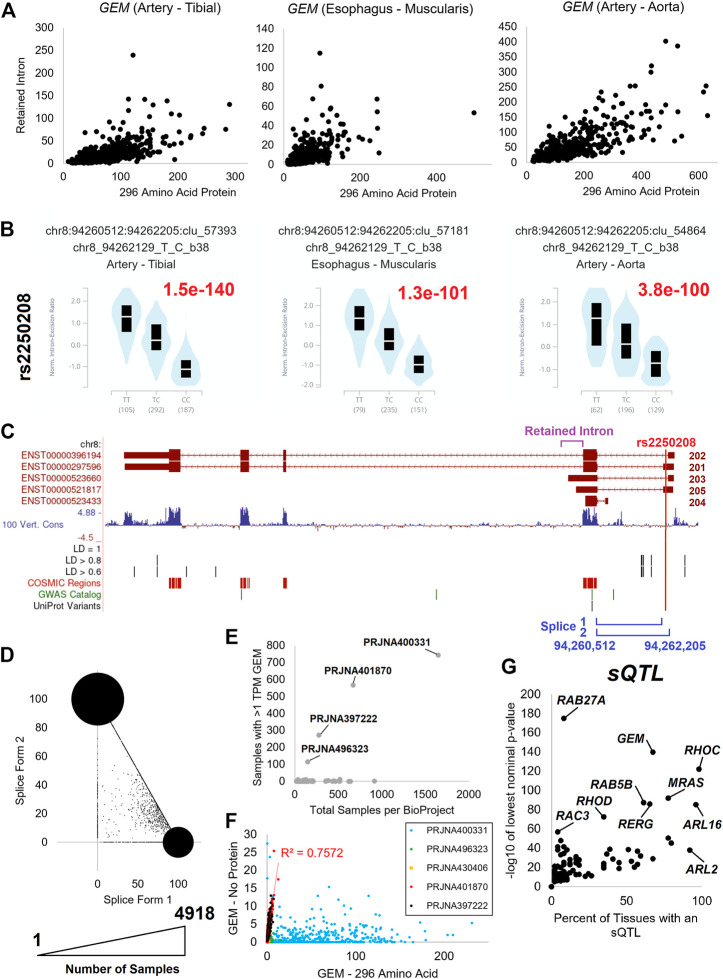
“GEM has two isoforms that result in a 296 amino acid (AA) protein and one that does not code for a protein. NKIRAS2 has two isoforms for a 191 AA protein, one for a 135 AA, and one that does not code for a protein. RAB15 has 140, 208, and 212 AA coding transcripts; RAB26 has 136 and 256 AA coding transcripts; RAB30 has 55, 94, 122, 164, and 203 AA coding transcripts; RAB37 has 182, 186, 191, 216,”
§ The complex, dynamic SpliceOme of the small GTPase transcripts altered by technique, sex, genetics, tissue specificity, and RNA base editing > Results and discussions > GTEx multiple tissue small GTPase splicing
plain- Asserted: passes — The authors put it forward as true.
- Checkable: passes — It can be checked against evidence.
- Load-bearing: passes — The paper’s conclusions depend on it.
- Based: passes — The paper gives a reason why it holds.
In the paper
“Still, it shows some samples with high NMD transcripts”
§ The complex, dynamic SpliceOme of the small GTPase transcripts altered by technique, sex, genetics, tissue specificity, and RNA base editing > Results and discussions > Biotype annotation of small GTPase splicing
What the sources say
- Not checked yetcites Prokop et al., 2021 matched to “High-density blood transcriptomics reveals precision immune signatures of SARS-CoV-2 infection in hospitalized individuals” (2021) source
plain- Asserted: passes — The authors put it forward as true.
- Checkable: passes — It can be checked against evidence.
- Load-bearing: unclear — It is unclear whether the paper’s conclusions depend on it.
- Based: passes — The paper gives a reason why it holds.
A result the paper reports from its own data — it cites no other source for it, so there is none to check. The quote shows it is in the paper.
In the paper
“The isolation and library technique of the RNAseq influences the abundance of non-sense-mediated decay and retained intron transcripts of small GTPases, which are observed more often in genes than appreciated.”
§ The complex, dynamic SpliceOme of the small GTPase transcripts altered by technique, sex, genetics, tissue specificity, and RNA base editing > Abstract
plainstates a cause- Asserted: passes — The authors put it forward as true.
- Checkable: passes — It can be checked against evidence.
- Load-bearing: passes — The paper’s conclusions depend on it.
- Based: passes — The paper gives a reason why it holds.
A result the paper reports from its own data — it cites no other source for it, so there is none to check. The quote shows it is in the paper.
In the paper
“Many of the blood samples with the highest levels of NMD transcripts throughout this study had bacterial or viral infections”
§ The complex, dynamic SpliceOme of the small GTPase transcripts altered by technique, sex, genetics, tissue specificity, and RNA base editing > Results and discussions > Biotype annotation of small GTPase splicing
plainstates an association- Asserted: passes — The authors put it forward as true.
- Checkable: passes — It can be checked against evidence.
- Load-bearing: passes — The paper’s conclusions depend on it.
- Based: passes — The paper gives a reason why it holds.
A result the paper states — it cites no source for it, so there is none to check. The quote shows it is in the paper.
In the paper
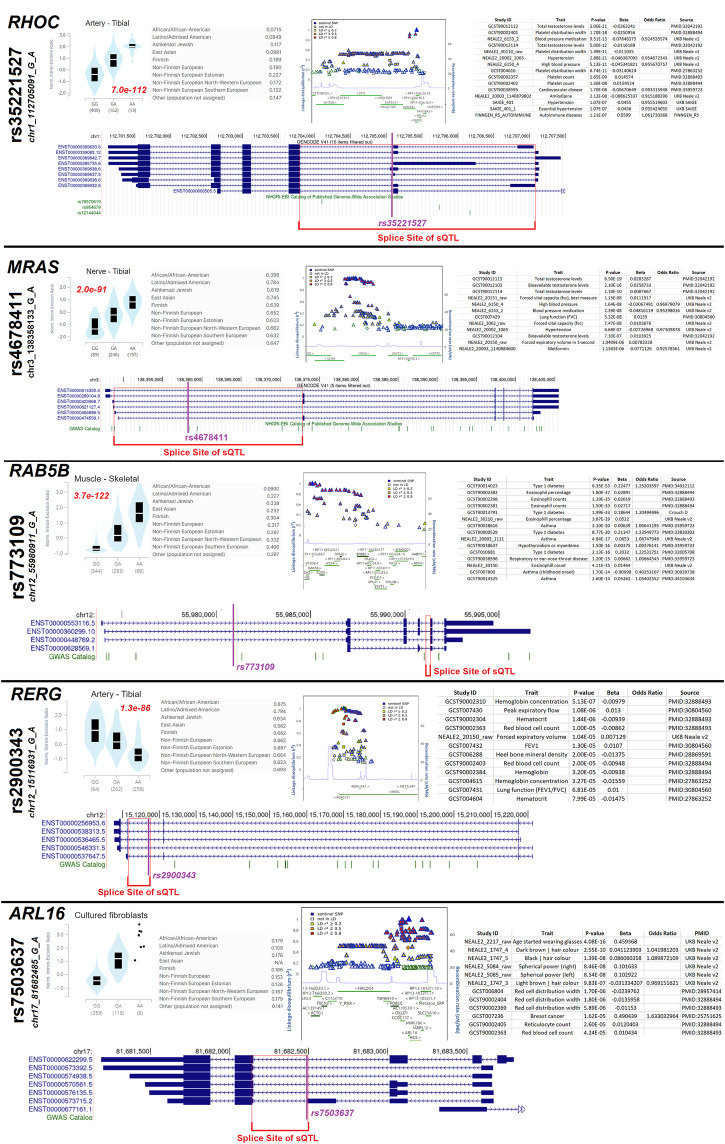
“Finally, the variant rs7503637 is associated with an sQTL for ARL16 that is found in most populations with a complex LD block.”
§ The complex, dynamic SpliceOme of the small GTPase transcripts altered by technique, sex, genetics, tissue specificity, and RNA base editing > Results and discussions > Genetic variants impacting small GTPase splicing
plainstates an association- Asserted: passes — The authors put it forward as true.
- Checkable: passes — It can be checked against evidence.
- Load-bearing: unclear — It is unclear whether the paper’s conclusions depend on it.
- Based: passes — The paper gives a reason why it holds.
55 more claims
Create a free account to see all 132 claims and to verify the 41 references still open.
- It may state two separate claims as one. 60
- The quote only partly states this claim. 4
- Probably not a substantial claim. 25
Self-check
Percentages, sums and reported differences re-computed from the paper’s own numbers.
Each contradiction between two passages listed here was confirmed by an independent check.
Rated minor: it would not touch a result — a value no result rests on, a p-value that stays on the same side of the significance level, or a conflict that is clerical, resolved elsewhere in the paper, or outside its own findings.
In the paper
“identified seven genes (3.7%; RHOA, RAB40C, RAB4B, RAB37, RAB5B, RAB5C, RHOC)”
§ The complex, dynamic SpliceOme of the small GTPase transcripts altered by technique, sex, genetics, tissue specificity, and RNA base editing > Abstract
Reported 3.7 · recomputed 4.320988
Rated minor: it would not touch a result — a value no result rests on, a p-value that stays on the same side of the significance level, or a conflict that is clerical, resolved elsewhere in the paper, or outside its own findings.
In the paper
§ The complex, dynamic SpliceOme of the small GTPase transcripts altered by technique, sex, genetics, tissue specificity, and RNA base editing > Results and discussions > RNA modifications and isoform dynamics in hypoxia
“The bottom of the panel shows the conservation of bases based on 205 species sequences”
§ The complex, dynamic SpliceOme of the small GTPase transcripts altered by technique, sex, genetics, tissue specificity, and RNA base editing > Results and discussions > RNA modifications and isoform dynamics in hypoxia
“The nucleic acids near the voltage shift are relatively conserved (>50%) in 206 vertebrate species analyzed”
Rated minor: it would not touch a result — a value no result rests on, a p-value that stays on the same side of the significance level, or a conflict that is clerical, resolved elsewhere in the paper, or outside its own findings.
In the paper
§ The complex, dynamic SpliceOme of the small GTPase transcripts altered by technique, sex, genetics, tissue specificity, and RNA base editing > Results and discussions > Blood-based dynamics of small GTPase splicing
“the four genes with more than one isoform are labeled in red.”
§ The complex, dynamic SpliceOme of the small GTPase transcripts altered by technique, sex, genetics, tissue specificity, and RNA base editing > Results and discussions > Blood-based dynamics of small GTPase splicing
“Two genes have multiple transcripts that result in the same protein sequence (RAB6A-201/202- 208AA; RAB9A-202/203- 201AA), and one gene has a protein-coding and non-coding transcript (RAB4A-201- 218AA, RAB4A-202- no protein). Four genes have two different protein-coding isoforms including RAB1A (RAB1A-203- 205AA, RAB1A-202- 173AA), RAB33B (RAB33B-203- 277AA, RAB33B-201- 229AA), RAN (RAN-206- 198AA, RAN-211- 53AA), and RHEB (RHEB-201- 184AA, RHEB-204- 79AA).”
Cited works that were retracted
Works this paper cites that were later retracted, from the retraction notices publishers deposit. Major when the notice came out before this paper was published.
Rated major: it would touch a result — a value a result rests on, reported and recomputed p-values on opposite sides of the significance level, two passages that conflict with no sign which is right, or a cited work retracted before this paper was published.
In the paper
“The interaction of RHOA and hypoxia through the potential modification of the 3′UTR is an exciting observation in that RHOA is increased in activation within hypoxia (Chi et al., 2010; Resta et al., 2010; Gilkes et al., 2014).”
Cited work 10.1073/pnas.1321510111 · retracted 2022-09-02 · notice 10.1073/pnas.2213288119 · this paper published 2022-11-17
Citations
Cites
1 retracted
Gilkes, D. M., Xiang, L., Lee, S. J., Chaturvedi, P., Hubbi, M. E., Wirtz, D., & Semenza, G. L. (2014) · Proceedings of the National Academy of Sciences · doi:10.1073/pnas.1321510111 · Cited by 184 · cited 1×
“The interaction of RHOA and hypoxia through the potential modification of the 3′UTR is an exciting observation in that RHOA is increased in activation within hypoxia (Chi et al., 2010; Resta et al., 2010; Gilkes et al., 2014).”
BackgroundRetractedThompson, J. D., Higgins, D. G., & Gibson, T. J. (1994) · Nucleic Acids Research · doi:10.1093/nar/22.22.4673 · Cited by 64,617
limma powers differential expression analyses for RNA-sequencing and microarray studies
Ritchie, M. E., Phipson, B., Wu, D., Hu, Y., Law, C. W., Shi, W., & Smyth, G. K. (2015) · Nucleic Acids Research · doi:10.1093/nar/gkv007 · Cited by 40,458
Salmon provides fast and bias-aware quantification of transcript expression
Patro, R., Duggal, G., Love, M. I., Irizarry, R. A., & Kingsford, C. (2017) · Nature Methods · doi:10.1038/nmeth.4197 · Cited by 12,700
The mutational constraint spectrum quantified from variation in 141,456 humans
Karczewski, K. J., Francioli, L. C., Tiao, G., Cummings, B. B., Alföldi, J., Wang, Q., Collins, R. L., Laricchia, K. M., Ganna, A., Birnbaum, D. P., et al. (2020) · Nature · doi:10.1038/s41586-020-2308-7 · Cited by 9,434
Shrestha, S., & Offer, S. M. (2016) · Medical Epigenetics · doi:10.1159/000444713 · Cited by 8,914
The rapid generation of mutation data matrices from protein sequences
Jones, D. T., Taylor, W. R., & Thornton, J. M. (1992) · Bioinformatics · doi:10.1093/bioinformatics/8.3.275 · Cited by 6,947
The GTEx Consortium atlas of genetic regulatory effects across human tissues
The GTEx Consortium, Aguet, F., Anand, S., Ardlie, K. G., Gabriel, S., Getz, G. A., Graubert, A., Hadley, K., Handsaker, R. E., Huang, K. H., et al. (2020) · Science · doi:10.1126/science.aaz1776 · Cited by 5,547
Self-citationThe GTPase superfamily: conserved structure and molecular mechanism
Bourne, H. R., Sanders, D. A., & McCormick, F. (1991) · Nature · doi:10.1038/349117a0 · Cited by 3,392
GENCODE reference annotation for the human and mouse genomes
Frankish, A., Diekhans, M., Ferreira, A.-M., Johnson, R., Jungreis, I., Loveland, J., Mudge, J. M., Sisu, C., Wright, J., Armstrong, J., et al. (2019) · Nucleic Acids Research · doi:10.1093/nar/gky955 · Cited by 3,040
ClinVar: public archive of interpretations of clinically relevant variants
Landrum, M. J., Lee, J. M., Benson, M., Brown, G., Chao, C., Chitipiralla, S., Gu, B., Hart, J., Hoffman, D., Hoover, J., et al. (2016) · Nucleic Acids Research · doi:10.1093/nar/gkv1222 · Cited by 2,758
Increasing the precision of comparative models with YASARA NOVA—a self‐parameterizing force field
Krieger, E., Koraimann, G., & Vriend, G. (2002) · Proteins: Structure, Function, and Bioinformatics · doi:10.1002/prot.10104 · Cited by 1,514
Function of alternative splicing
Stamm, S., Ben-Ari, S., Rafalska, I., Tang, Y., Zhang, Z., Toiber, D., Thanaraj, T. A., & Soreq, H. (2005) · Gene · doi:10.1016/j.gene.2004.10.022 · Cited by 1,377
Understanding alternative splicing: towards a cellular code
Matlin, A. J., Clark, F., & Smith, C. W. J. (2005) · Nature Reviews Molecular Cell Biology · doi:10.1038/nrm1645 · Cited by 1,305
A genomic view of alternative splicing
Modrek, B., & Lee, C. (2002) · Nature Genetics · doi:10.1038/ng0102-13 · Cited by 1,302
The Nonsense-Mediated Decay RNA Surveillance Pathway
Chang, Y.-F., Imam, J. S., & Wilkinson, M. F. (2007) · Annual Review of Biochemistry · doi:10.1146/annurev.biochem.76.050106.093909 · Cited by 1,283
Nonsense-mediated mRNA decay: splicing, translation and mRNP dynamics
Maquat, L. E. (2004) · Nature Reviews Molecular Cell Biology · doi:10.1038/nrm1310 · Cited by 1,214 · cited 1×
“NMD is due to the inclusion of a premature stop codon followed by several spliced exons after the stop, where these products are widely believed to be degraded to prevent the production of abnormal protein products (Maquat, 2004).”
BackgroundLewis, B. P., Green, R. E., & Brenner, S. E. (2003) · Proceedings of the National Academy of Sciences · doi:10.1073/pnas.0136770100 · Cited by 1,067
Rauen, K. A. (2013) · Annual Review of Genomics and Human Genetics · doi:10.1146/annurev-genom-091212-153523 · Cited by 879
Bar-Sagi, D., & Hall, A. (2000) · Cell · doi:10.1016/s0092-8674(00)00115-x · Cited by 779
Rho GTPases in cancer cell biology
Vega, F. M., & Ridley, A. J. (2008) · FEBS Letters · doi:10.1016/j.febslet.2008.04.039 · Cited by 779
The impact of sex on gene expression across human tissues
Oliva, M., Muñoz-Aguirre, M., Kim-Hellmuth, S., Wucher, V., Gewirtz, A. D. H., Cotter, D. J., Parsana, P., Kasela, S., Balliu, B., Viñuela, A., et al. (2020) · Science · doi:10.1126/science.aba3066 · Cited by 670
Self-citationAnalysis of the Small GTPase Gene Superfamily of Arabidopsis
Vernoud, V., Horton, A. C., Yang, Z., & Nielsen, E. (2003) · Plant Physiology · doi:10.1104/pp.013052 · Cited by 643
Ghoussaini, M., Mountjoy, E., Carmona, M., Peat, G., Schmidt, E. M., Hercules, A., Fumis, L., Miranda, A., Carvalho-Silva, D., Buniello, A., et al. (2021) · Nucleic Acids Research · doi:10.1093/nar/gkaa840 · Cited by 615
Nonsense-mediated decay approaches the clinic
Holbrook, J. A., Neu-Yilik, G., Hentze, M. W., & Kulozik, A. E. (2004) · Nature Genetics · doi:10.1038/ng1403 · Cited by 596
Human RAS Superfamily Proteins and Related GTPases
Colicelli, J. (2004) · Science's STKE · doi:10.1126/stke.2502004re13 · Cited by 582
The UCSC Genome Browser database: 2021 update
Navarro Gonzalez, J., Zweig, A. S., Speir, M. L., Schmelter, D., Rosenbloom, K. R., Raney, B. J., Powell, C. C., Nassar, L. R., Maulding, N. D., Lee, C. M., et al. (2021) · Nucleic Acids Research · doi:10.1093/nar/gkaa1070 · Cited by 547
The rules and impact of nonsense-mediated mRNA decay in human cancers
Lindeboom, R. G. H., Supek, F., & Lehner, B. (2016) · Nature Genetics · doi:10.1038/ng.3664 · Cited by 545
Gulhati, P., Bowen, K. A., Liu, J., Stevens, P. D., Rychahou, P. G., Chen, M., Lee, E. Y., Weiss, H. L., O'Connor, K. L., Gao, T., et al. (2011) · Cancer Research · doi:10.1158/0008-5472.can-10-4058 · Cited by 543
Alternative splicing and disease
Tazi, J., Bakkour, N., & Stamm, S. (2009) · Biochimica et Biophysica Acta (BBA) - Molecular Basis of Disease · doi:10.1016/j.bbadis.2008.09.017 · Cited by 540
Rho GTPase signaling complexes in cell migration and invasion
Lawson, C. D., & Ridley, A. J. (2018) · Journal of Cell Biology · doi:10.1083/jcb.201612069 · Cited by 539
The role of Rab3A in neurotransmitter release
Geppert, M., Bolshakov, V. Y., Siegelbaum, S. A., Takei, K., De Camilli, P., Hammer, R. E., & Südhof, T. C. (1994) · Nature · doi:10.1038/369493a0 · Cited by 479
Mechanism of alternative splicing and its regulation
WANG, Y., LIU, J., HUANG, B., XU, Y.-M., LI, J., HUANG, L.-F., LIN, J., ZHANG, J., MIN, Q.-H., YANG, W.-M., et al. (2015) · Biomedical Reports · doi:10.3892/br.2014.407 · Cited by 475
Evolution of the Rho Family of Ras-Like GTPases in Eukaryotes
Boureux, A., Vignal, E., Faure, S., & Fort, P. (2007) · Molecular Biology and Evolution · doi:10.1093/molbev/msl145 · Cited by 447
The small GTP-binding protein Rab3A regulates a late step in synaptic vesicle fusion
Geppert, M., Goda, Y., Stevens, C. F., & Südhof, T. C. (1997) · Nature · doi:10.1038/42954 · Cited by 420
The Ras branch of small Gtpases: Ras family members don’t fall far from the tree
Reuther, G. W., & Der, C. J. (2000) · Current Opinion in Cell Biology · doi:10.1016/s0955-0674(99)00071-x · Cited by 413
Recent advances in RASopathies
Aoki, Y., Niihori, T., Inoue, S.-I., & Matsubara, Y. (2016) · Journal of Human Genetics · doi:10.1038/jhg.2015.114 · Cited by 373
TCGASpliceSeq a compendium of alternative mRNA splicing in cancer
Ryan, M., Wong, W. C., Brown, R., Akbani, R., Su, X., Broom, B., Melott, J., & Weinstein, J. (2016) · Nucleic Acids Research · doi:10.1093/nar/gkv1288 · Cited by 356
GTPase Networks in Membrane Traffic
Mizuno-Yamasaki, E., Rivera-Molina, F., & Novick, P. (2012) · Annual Review of Biochemistry · doi:10.1146/annurev-biochem-052810-093700 · Cited by 351
SNiPA: an interactive, genetic variant-centered annotation browser
Arnold, M., Raffler, J., Pfeufer, A., Suhre, K., & Kastenmüller, G. (2015) · Bioinformatics · doi:10.1093/bioinformatics/btu779 · Cited by 308
Bruno, I. G., Karam, R., Huang, L., Bhardwaj, A., Lou, C. H., Shum, E. Y., Song, H.-W., Corbett, M. A., Gifford, W. D., Gecz, J., et al. (2011) · Molecular Cell · doi:10.1016/j.molcel.2011.04.018 · Cited by 295
Cloning of a novel human Rac1b splice variant with increased expression in colorectal tumors
Jordan, P., Brazão, R., Boavida, M. G., Gespach, C., & Chastre, E. (1999) · Oncogene · doi:10.1038/sj.onc.1203233 · Cited by 253
Evidence for the involvement of Rab3A in Ca(2+)-dependent exocytosis from adrenal chromaffin cells.
Holz, R. W., Brondyk, W. H., Senter, R. A., Kuizon, L., & Macara, I. G. (1994) · Journal of Biological Chemistry · doi:10.1016/s0021-9258(17)34051-6 · Cited by 221
Kumar, S., Ambrosini, G., & Bucher, P. (2017) · Nucleic Acids Research · doi:10.1093/nar/gkw1064 · Cited by 216
Deciphering the transcriptional complex critical for RhoA gene expression and cancer metastasis
Chan, C.-H., Lee, S.-W., Li, C.-F., Wang, J., Yang, W.-L., Wu, C.-Y., Wu, J., Nakayama, K. I., Kang, H.-Y., Huang, H.-Y., et al. (2010) · Nature Cell Biology · doi:10.1038/ncb2047 · Cited by 209 · cited 1×
“As RHOA is a master regulator of tumor cell invasion and metastasis (Chan et al., 2010; Gulhati et al., 2011; Struckhoff et al., 2011), the discovery of the 3′UTR hypoxiainduced RNA base editing to RHOA represents an incredible potential future endeavor for small GTPase transcript biology.”
BackgroundThe Rac GTPase in Cancer: From Old Concepts to New Paradigms
Kazanietz, M. G., & Caloca, M. J. (2017) · Cancer Research · doi:10.1158/0008-5472.can-17-1456 · Cited by 195
Sex-Specific Differences in Glioblastoma
Carrano, A., Juarez, J. J., Incontri, D., Ibarra, A., & Guerrero Cazares, H. (2021) · Cells · doi:10.3390/cells10071783 · Cited by 185
Autism traits in the RASopathies
Adviento, B., Corbin, I. L., Widjaja, F., Desachy, G., Enrique, N., Rosser, T., Risi, S., Marco, E. J., Hendren, R. L., Bearden, C. E., et al. (2014) · Journal of Medical Genetics · doi:10.1136/jmedgenet-2013-101951 · Cited by 174 · cited 1×
“Many RASopathies also have complex developmental delay and autistic spectrum disorder (ASD), highlighting the role of small GTPase genes in brain development (Ba et al., 2013; Adviento et al., 2014).”
BackgroundPoli, M. C., Ebstein, F., Nicholas, S. K., de Guzman, M. M., Forbes, L. R., Chinn, I. K., Mace, E. M., Vogel, T. P., Carisey, A. F., Benavides, F., et al. (2018) · The American Journal of Human Genetics · doi:10.1016/j.ajhg.2018.04.010 · Cited by 168
Localization Versus Function of Rab3 Proteins
Schlüter, O. M., Khvotchev, M., Jahn, R., & Südhof, T. C. (2002) · Journal of Biological Chemistry · doi:10.1074/jbc.m203704200 · Cited by 162
Nonsense-mediated RNA decay in the brain: Emerging modulator of neural development and disease
Jaffrey, S. R., & Wilkinson, M. F. (2018) · Nature Reviews Neuroscience · doi:10.1038/s41583-018-0079-z · Cited by 160
Evolution of a molecular switch: universal bacterial GTPases regulate ribosome function
Caldon, C. E., Yoong, P., & March, P. E. (2001) · Molecular Microbiology · doi:10.1046/j.1365-2958.2001.02536.x · Cited by 155
Fischer von Mollard, G., Stahl, B., Khokhlatchev, A., Südhof, T. C., & Jahn, R. (1994) · Journal of Biological Chemistry · doi:10.1016/s0021-9258(19)78076-4 · Cited by 154
Efficient and accurate detection of splice junctions from RNA-seq with Portcullis
Mapleson, D., Venturini, L., Kaithakottil, G., & Swarbreck, D. (2018) · GigaScience · doi:10.1093/gigascience/giy131 · Cited by 146
Small GTPases and the evolution of the eukaryotic cell
Jékely, G. (2003) · BioEssays · doi:10.1002/bies.10353 · Cited by 137 · cited 2×
“The family is deeply conserved throughout eukaryotes (Jékely, 2003; Boureux et al., 2007), with multiple functional subfamily members in plants (Vernoud et al., 2003), Bivalvia genomes (Li et al., 2015), and trypanosomes (Field, 2005).”
BackgroundDyle, M. C., Kolakada, D., Cortazar, M. A., & Jagannathan, S. (2020) · WIREs RNA · doi:10.1002/wrna.1560 · Cited by 132
Rho GTPase signaling at the synapse: Implications for intellectual disability
Ba, W., van der Raadt, J., & Kasri, N. N. (2013) · Experimental Cell Research · doi:10.1016/j.yexcr.2013.05.033 · Cited by 127
Pathogenetics of the RASopathies
Tidyman, W. E., & Rauen, K. A. (2016) · Human Molecular Genetics · doi:10.1093/hmg/ddw191 · Cited by 122
Roles of hnRNP A1, SR Proteins, and p68 Helicase in c-H-ras Alternative Splicing Regulation
Guil, S., Gattoni, R., Carrascal, M., Abián, J., Stévenin, J., & Bach-Elias, M. (2003) · Molecular and Cellular Biology · doi:10.1128/mcb.23.8.2927-2941.2003 · Cited by 116
Escape from nonsense-mediated decay associates with anti-tumor immunogenicity
Litchfield, K., Reading, J. L., Lim, E. L., Xu, H., Liu, P., Bakir, M. A., Wong, Y. N. S., Rowan, A., Funt, S. A., Merghoub, T., et al. (2020) · Nature Communications · doi:10.1038/s41467-020-17526-5 · Cited by 113
Creation of a Genetic Calcium Channel Blocker by Targeted Gem Gene Transfer in the Heart
Murata, M., Cingolani, E., McDonald, A. D., Donahue, J. K., & Marbán, E. (2004) · Circulation Research · doi:10.1161/01.res.0000138449.85324.c5 · Cited by 105
Sex differences in autophagy-mediated diseases: toward precision medicine
Shang, D., Wang, L., Klionsky, D. J., Cheng, H., & Zhou, R. (2021) · Autophagy · doi:10.1080/15548627.2020.1752511 · Cited by 93
Nishimura, A., & Linder, M. E. (2013) · Molecular and Cellular Biology · doi:10.1128/mcb.01398-12 · Cited by 88
Drugging the Small GTPase Pathways in Cancer Treatment: Promises and Challenges
Prieto‐Domínguez, N., Parnell, C., & Teng, Y. (2019) · Cells · doi:10.3390/cells8030255 · Cited by 88
Abubaker, J., Bavi, P., Al‐Haqawi, W., Sultana, M., Al‐Harbi, S., Al‐Sanea, N., Abduljabbar, A., Ashari, L. H., Alhomoud, S., Al‐Dayel, F., et al. (2009) · The Journal of Pathology · doi:10.1002/path.2625 · Cited by 86
Expression of the H-ras proto-oncogene is controlled by alternative splicing
Cohen, J. B., Broz, S. D., & Levinson, A. D. (1989) · Cell · doi:10.1016/0092-8674(89)90427-3 · Cited by 84
Hypoxic regulation of mesenchymal stem cell migration: The role of RhoA and HIF-1α
Raheja, L. F., Genetos, D. C., Wong, A., & Yellowley, C. E. (2011) · Cell Biology International · doi:10.1042/cbi20100733 · Cited by 80
McKinnon, C. M., & Mellor, H. (2017) · BMC Cancer · doi:10.1186/s12885-017-3138-3 · Cited by 73
Hauer, C., Sieber, J., Schwarzl, T., Hollerer, I., Curk, T., Alleaume, A.-M., Hentze, M. W., & Kulozik, A. E. (2016) · Cell Reports · doi:10.1016/j.celrep.2016.06.096 · Cited by 70
Chi, A. Y., Waypa, G. B., Mungai, P. T., & Schumacker, P. T. (2010) · Antioxidants & Redox Signaling · doi:10.1089/ars.2009.2861 · Cited by 68
Epigenetic Regulation Identifies RASEF as a Tumor-Suppressor Gene in Uveal Melanoma
Maat, W., Beiboer, S. H. W., Jager, M. J., Luyten, G. P. M., Gruis, N. A., & van der Velden, P. A. (2008) · Investigative Ophthalmology & Visual Science · doi:10.1167/iovs.07-1135 · Cited by 68
RhoA can lead the way in tumor cell invasion and metastasis
Struckhoff, A. (2011) · Frontiers in Bioscience · doi:10.2741/3830 · Cited by 64
Mutations in RABL3 alter KRAS prenylation and are associated with hereditary pancreatic cancer
Nissim, S., Leshchiner, I., Mancias, J. D., Greenblatt, M. B., Maertens, O., Cassa, C. A., Rosenfeld, J. A., Cox, A. G., Hedgepeth, J., Wucherpfennig, J. I., et al. (2019) · Nature Genetics · doi:10.1038/s41588-019-0475-y · Cited by 58
Self-citationChakrabarti, M., Jang, H., & Nussinov, R. (2016) · The Journal of Physical Chemistry B · doi:10.1021/acs.jpcb.5b11110 · Cited by 53
Dual lipidation of the brain-specific Cdc42 isoform regulates its functional properties
Wirth, A., Chen, C., Wu, Y., Gorinski, N., Filippov, M. A., Pandey, G. N., & Ponimaskin, E. G. (2013) · Biochemical Journal · doi:10.1042/bj20130788 · Cited by 51
The Gem GTP-binding protein promotes morphological differentiation in neuroblastoma
Leone, A., Mitsiades, N., Ward, Y., Spinelli, B., Poulaki, V., Tsokos, M., & Kelly, K. (2001) · Oncogene · doi:10.1038/sj.onc.1204420 · Cited by 51
RAC1B: A Rho GTPase with versatile functions in malignant transformation and tumor progression
Melzer, C., Hass, R., Lehnert, H., & Ungefroren, H. (2019) · Cells · doi:10.3390/cells8010021 · Cited by 47
Rab9A is required for delivery of cargo from recycling endosomes to melanosomes
Mahanty, S., Ravichandran, K., Chitirala, P., Prabha, J., Jani, R. A., & Setty, S. R. G. (2016) · Pigment Cell & Melanoma Research · doi:10.1111/pcmr.12434 · Cited by 43
PLOWMAN, S., ARENDS, M., BROWNSTEIN, D., LUO, F., DEVENNEY, P., ROSE, L., RITCHIE, A., BERRY, R., HARRISON, D., & HOOPER, M. (2006) · Experimental Cell Research · doi:10.1016/j.yexcr.2005.10.004 · Cited by 40
Prokop, J. W., Hartog, N. L., Chesla, D., Faber, W., Love, C. P., Karam, R., Abualkheir, N., Feldmann, B., Teng, L., McBride, T., et al. (2021) · Frontiers in Immunology · doi:10.3389/fimmu.2021.694243 · Cited by 38
Self-citationSignalling the genome: the Ras-like small GTPase family of trypanosomatids
Field, M. C. (2005) · Trends in Parasitology · doi:10.1016/j.pt.2005.08.008 · Cited by 38
Bilinovich, S. M., Uhl, K. L., Lewis, K., Soehnlen, X., Williams, M. R., Vogt, D. L., Prokop, J. W., & Campbell, D. B. (2020) · Developmental Neuroscience · doi:10.1159/000513536 · Cited by 35
Self-citationResta, T. C., Broughton, B. R. S., & Jernigan, N. L. (2010) · Advances in Experimental Medicine and Biology · doi:10.1007/978-1-60761-500-2_23 · Cited by 31
The two splice variant forms of Cdc42 exert distinct and essential functions in neurogenesis
Endo, M., Druso, J. E., & Cerione, R. A. (2020) · Journal of Biological Chemistry · doi:10.1074/jbc.ra119.011837 · Cited by 30
RASEF is a Novel Diagnostic Biomarker and a Therapeutic Target for Lung Cancer
Oshita, H., Nishino, R., Takano, A., Fujitomo, T., Aragaki, M., Kato, T., Akiyama, H., Tsuchiya, E., Kohno, N., Nakamura, Y., et al. (2013) · Molecular Cancer Research · doi:10.1158/1541-7786.mcr-12-0685-t · Cited by 30
Down-regulation of K-ras and H-ras in human brain gliomas
Lymbouridou, R., Soufla, G., Chatzinikola, A. M., Vakis, A. F., & Spandidos, D. A. (2009) · European Journal of Cancer · doi:10.1016/j.ejca.2008.12.028 · Cited by 26
Prokop, J. W., Shankar, R., Gupta, R., Leimanis, M. L., Nedveck, D., Uhl, K., Chen, B., Hartog, N. L., Van Veen, J., Sisco, J. S., et al. (2020) · Physiological Genomics · doi:10.1152/physiolgenomics.00045.2020 · Cited by 25
Self-citationMicroRNA 125 represses nonsense-mediated mRNA decay by regulating SMG1 expression
Wang, G., Jiang, B., Jia, C., Chai, B., & Liang, A. (2013) · Biochemical and Biophysical Research Communications · doi:10.1016/j.bbrc.2013.03.129 · Cited by 25
Park, J., Jeong, W.-J., Kim, M., Min, D., & Choi, K. (2016) · Journal of Cell Science · doi:10.1242/jcs.184366 · Cited by 24
The Rho GTPase Family Genes in Bivalvia Genomes: Sequence, Evolution and Expression Analysis
Li, X., Wang, R., Xun, X., Jiao, W., Zhang, M., Wang, S., Wang, S., Zhang, L., Huang, X., Hu, X., et al. (2015) · PLoS ONE · doi:10.1371/journal.pone.0143932 · Cited by 21
Self-citationLee, J., Lamarche‐Vane, N., & Richard, S. (2022) · WIREs RNA · doi:10.1002/wrna.1678 · Cited by 20
Splice variants of RAS-translational significance
Rásó, E. (2020) · Cancer and Metastasis Reviews · doi:10.1007/s10555-020-09920-8 · Cited by 19
Keele, G. R., Prokop, J. W., He, H., Holl, K., Littrell, J. C., Deal, A. W., Kim, Y., Kyle, P. B., Attipoe, E. M., Johnson, A. C., et al. (2021) · Scientific Reports · doi:10.1038/s41598-021-81550-8 · Cited by 19
Self-citationDeletion of Rap1b , but not Rap1a or Epac1 , Reduces Protein Kinase A–Mediated Thyroid Cancer
Huk, D. J., Ashtekar, A., Magner, A., La Perle, K., & Kirschner, L. S. (2018) · Thyroid · doi:10.1089/thy.2017.0528 · Cited by 19
RAB9A Plays an Oncogenic Role in Human Liver Cancer Cells
Sun, P., Li, L., & Li, Z. (2020) · BioMed Research International · doi:10.1155/2020/5691671 · Cited by 17
Gem Protein Signaling and Regulation
Ward, Y., & Kelly, K. (2006) · Methods in enzymology on CD-ROM/Methods in enzymology · doi:10.1016/s0076-6879(05)07038-2 · Cited by 16
Gupta, R., Leimanis, M. L., Adams, M., Bachmann, A. S., Uhl, K. L., Bupp, C. P., Hartog, N., Kort, E. J., Olivero, R. M., Comstock, S. S., et al. (2021) · American Journal of Physiology-Lung Cellular and Molecular Physiology · doi:10.1152/ajplung.00440.2020 · Cited by 15
Self-citationBauss, J. M., Morris, M., Shankar, R., Olivero, R. M., Buck, L., Stenger, C. L., Hinds, D., Mills, J., Eby, A., Zagorski, J. W., et al. (2021) · Frontiers in Immunology · doi:10.3389/fimmu.2021.790041 · Cited by 15
Self-citationLKB1 mutations and their correlation with LKB1 and Rheb expression in bladder cancer
Tigli, H., Seven, D., Tunç, M., Şanlı, Ö., Başaran, Ş., Ulutin, T., & Buyru, N. (2012) · Molecular Carcinogenesis · doi:10.1002/mc.21902 · Cited by 14
Miyamoto, S., Nagamura, Y., Nakabo, A., Okabe, A., Yanagihara, K., Fukami, K., Sakai, R., & Yamaguchi, H. (2017) · Biochemical and Biophysical Research Communications · doi:10.1016/j.bbrc.2017.12.067 · Cited by 10
Zhu, Y. L., Shi, F., Wang, M., & Ding, J. (2020) · Technology in Cancer Research & Treatment · doi:10.1177/1533033820915958 · Cited by 10
Distribution and regulation of rab3C, a small molecular weight GTP-binding protein
Su, Y. C., Kao, L. S., Chu, Y. Y., Liang, Y., Tsai, M. H., & Chern, Y. (1994) · Biochemical and Biophysical Research Communications · doi:10.1006/bbrc.1994.1586 · Cited by 10
Computational and experimental analysis of genetic variants
Prokop, J. W., Jdanov, V., Savage, L., Morris, M., Lamb, N., VanSickle, E., Stenger, C. L., Rajasekaran, S., & Bupp, C. P. (2022) · Comprehensive Physiology · doi:10.1002/cphy.c210012 · Cited by 9
Self-citationDuggan, M. C., Regan-Fendt, K., Olaverria Salavaggione, G. N., Howard, J. H., Stiff, A. R., Sabella, J., Latchana, N., Markowitz, J., Gru, A., Tridandapani, S., et al. (2019) · Melanoma Research · doi:10.1097/cmr.0000000000000623 · Cited by 7
Prognostic role of NRAS isoforms in Chinese melanoma patients
Yan, J., Xu, L., Yu, J., Wu, X., Dai, J., Xu, T., Yu, H., Guo, J., & Kong, Y. (2019) · Melanoma Research · doi:10.1097/cmr.0000000000000557 · Cited by 6
RASEF expression correlates with hormone receptor status in breast cancer
Shibata, M., Kanda, M., Shimizu, D., Tanaka, H., Umeda, S., Miwa, T., Hayashi, M., Inaishi, T., Miyajima, N., Adachi, Y., et al. (2018) · Oncology Letters · doi:10.3892/ol.2018.9542 · Cited by 6
Schöppner, P., Csaba, G., Braun, T., Daake, M., Richter, B., Lange, O. F., Zacharias, M., Zimmer, R., & Haslbeck, M. (2016) · Journal of Molecular Biology · doi:10.1016/j.jmb.2016.02.028 · Cited by 5
A 25-bp ancient spliceosomal intron in the TvRab1a gene of Trichomonas vaginalis
Deng, X., Xu, M., Xu, X., Ba‐Thein, W., Zhang, R., & Fu, Y.-C. (2008) · The International Journal of Biochemistry & Cell Biology · doi:10.1016/j.biocel.2008.09.014 · Cited by 5
Yang, H., Zhang, H., Yang, Y., Wang, X., Deng, T., Liu, R., Ning, T., Bai, M., Li, H., Zhu, K., et al. (2022) · Theranostics · doi:10.7150/thno.71495 · Cited by 5
High RASEF expression is associated with a significantly better prognosis in colorectal cancer.
Yu, X., Fang, Z., Li, G., Zhang, S., Liu, M., & Wang, Y. (2018) · Europe PMC (PubMed Central) · Cited by 4
Monitoring RhoGDI Extraction of Lipid-Modified Rho GTPases from Membranes Using Click Chemistry
Nishimura, A., & Linder, M. E. (2019) · Methods in molecular biology · doi:10.1007/978-1-4939-9532-5_22 · Cited by 4
Yu, X., 房振环, 李国栋, Zhang, S., Ming, L., & Wang, Y. (2019) · PubMed Central · Cited by 2
Dong (2018) · doi:10.1155/2018/2760918
(2006) · doi:10.1074/jbc.m604363200
Cited by
Gene Therapy for Genetic Syndromes: Understanding the Current State to Guide Future Care
Henderson, M. L., Zieba, J. K., Li, X., Campbell, D. B., Williams, M. R., Vogt, D. L., Bupp, C. P., Edgerly, Y. M., Rajasekaran, S., Hartog, N., et al. (2024) · BioTech · doi:10.3390/biotech13010001 · Cited by 41
Self-citationMolecular dynamics simulations for the structure-based drug design: targeting small-GTPases proteins
Parise, A., Cresca, S., & Magistrato, A. (2024) · Expert Opinion on Drug Discovery · doi:10.1080/17460441.2024.2387856 · Cited by 28
Yu, J., Yu, C., Jiang, K., Guanglin, Y., Yang, S., Tan, S., Li, T., Liang, H., He, Q., Wei, F., et al. (2024) · BMC Urology · doi:10.1186/s12894-024-01540-6 · Cited by 21
Zhang, L., Fritah, S., Nazarov, P. V., Kaoma, T., & Dyck, E. V. (2023) · International Journal of Molecular Sciences · doi:10.3390/ijms24129825 · Cited by 16
MRAS: Master Regulator Analysis of Alternative Splicing
Zhou, L., Huang, Y., Zhao, Y., Guo, D. H., Xiao, W., Xu, R., Lv, X., Wu, S., Jing, S., & Liu, Z. (2025) · Advanced Science · doi:10.1002/advs.202414493 · Cited by 5
Metadata
- Authors
- Das, A. S., Sherry, E. C., Vaughan, R. M., Henderson, M. L., Zieba, J., Uhl, K. L., Koehn, O., Bupp, C. P., Rajasekaran, S., Li, X., Chhetri, S. B., Nissim, S., Williams, C. L., & Prokop, J. W.
- Affiliations
- Washington and Jefferson College (US)
- Grand Valley State University (US)
- Michigan State University (US)
- Calvin University (US)
- Medical College of Wisconsin (US)
- Spectrum Health (US)
- Johns Hopkins University (US)
- Brigham and Women's Hospital (US)
- Corresponding author
- Prokop, Jeremy W.
- ORCID
- Venue
- Frontiers in Cell and Developmental Biology
- Publisher
- Frontiers Media SA
- Published
- 2022-11-17
- Volume
- 10
- Pages
- 1033695-1033695
- ISSN
- 2296-634X (ISSN-L)
- PMC
- PMC9714508
- OpenAlex
- W4309604651
- Cited by
- 9
- References
- 114
- Citations by year
- 2025: 3 · 2024: 5 · 2023: 1
- FWCI
- 0.59
- Type
- journal article
- Language
- en
- Open access
- gold
- doi.org
- Licence
- Locations
- Frontiers in Cell and Developmental Biology (publishedVersion, cc-by)
- PubMed Central (publishedVersion, cc-by)
- PubMed (publishedVersion)
- DOAJ (DOAJ: Directory of Open Access Journals) (submittedVersion)
- Funders
- National Institutes of Health (K01ES025435 K00CA245821)
- Gerber Foundation
- Topics
- Life Sciences › Biochemistry, Genetics and Molecular Biology › Molecular Biology › RNA Research and Splicing
- Life Sciences › Biochemistry, Genetics and Molecular Biology › Molecular Biology › Genomics and Phylogenetic Studies
- Life Sciences › Biochemistry, Genetics and Molecular Biology › Molecular Biology › RNA regulation and disease
- Keywords
- small GTPases, alternative splicing, splice variants, transcriptome, sex differences in gene expression, sex chromosomes, sex-linked genes, sex-biased gene expression, ras gene, Rab GTPases, Rho GTPases, Rheb, Ran GTPase, Rab37, Rab5b, RAB5C, ARL13B
About these checks
Registry, retraction, Cites and statistics results are computed, not judged, with one exception: a printed reference that no index lists is read once by a model before it counts as a citation error. Claims are extracted by a model and kept only when their quote appears verbatim in the text; each cited source is then checked, with a model’s help, for whether it says what the claim relies on. Those verdicts can be wrong — read the claim’s quote and the cited source before relying on one.
A language model drew the claims from the paper on 2026-11-24, under version 3 of the claim definition (model deepseek-v4.1-flash, prompt extract-v3).
A second model labelled each claim on 2026-11-24 (model jev-1.13-20260917, definition revision gold-guideline-v0.2).
Statistics and arithmetic are recomputed, not judged.
Confidence bands are shown only for fields calibrated on our annotated test set. None is calibrated yet, so no band is shown.
What counts as a claim ›How we measure confidence ›How we check this ›
Are you an author, or do you see a problem with this page? Request a review
Data sources
Bibliographic data: Semantic Scholar, OpenAlex, Crossref.
Contains information from the Semantic Scholar Academic Graph Datasets, made available under the ODC Attribution License (ODC-BY 1.0).
Semantic Scholar’s data is described in: Kinney, R., et al. (2023). The Semantic Scholar Open Data Platform. arXiv:2301.10140.
