

The DOI matches its Crossref record; 95 of the 95 references it cites were found in a registry or an index.
Advancements toward a systems level understanding of the human oral microbiome
Open accessAbstract
Oral microbes represent one of the most well studied microbial communities owing to the fact that they are a fundamental part of human development influencing health and disease, an easily accessible human microbiome, a highly structured and remarkably resilient biofilm as well as a model of bacteria-bacteria and bacteria-host interactions. In the last 80 years since oral plaque was first characterized for its functionally stable physiological properties such as the highly repeatable rapid pH decrease upon carbohydrate addition and subsequent recovery phase, the fundamental approaches to study the oral microbiome have cycled back and forth between community level investigations and characterizing individual model isolates. Since that time, many individual species have been well characterized and the development of the early plaque community, which involves many cell-cell binding interactions, has been carefully described. With high throughput sequencing enabling the enormous diversity of the oral cavity to be realized, a number of new challenges to progress were revealed. The large number of uncultivated oral species, the high interpersonal variability of taxonomic carriage and the possibility of multiple pathways to dysbiosis pose as major hurdles to obtain a systems level understanding from the community to the gene level. It is now possible however to start connecting the insights gained from single species with community wide approaches. This review will discuss some of the recent insights into the oral microbiome at a fundamental level, existing knowledge gaps, as well as challenges that have surfaced and the approaches to address them.
Overview
The claims and statistics of this paper haven’t been checked yet.
Run the check — free, no account needed. It reads the open-access text and checks the sources it cites.
Integrity signals
Registry
Cites
Statistics
Figures
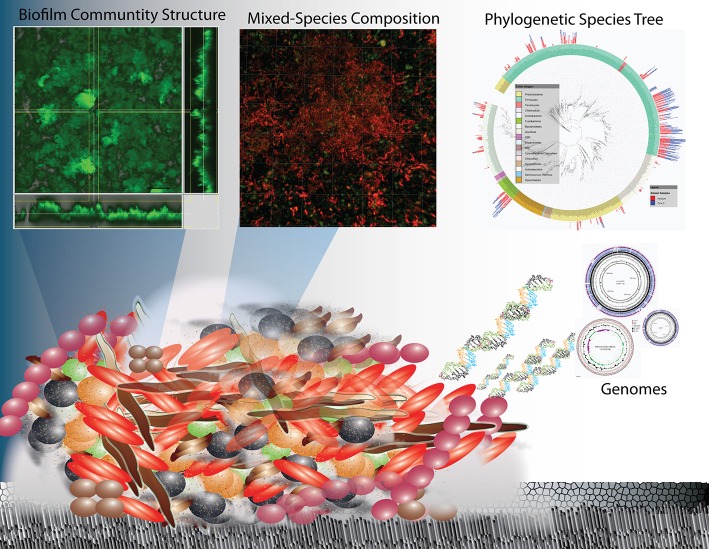
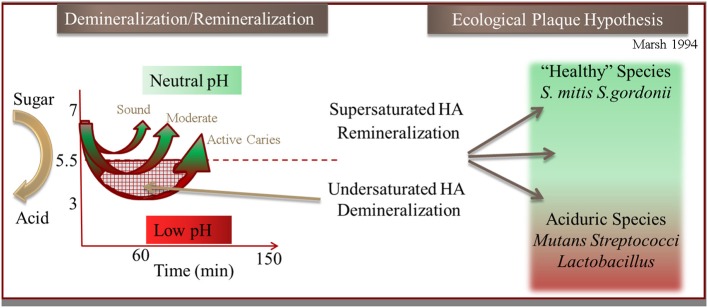
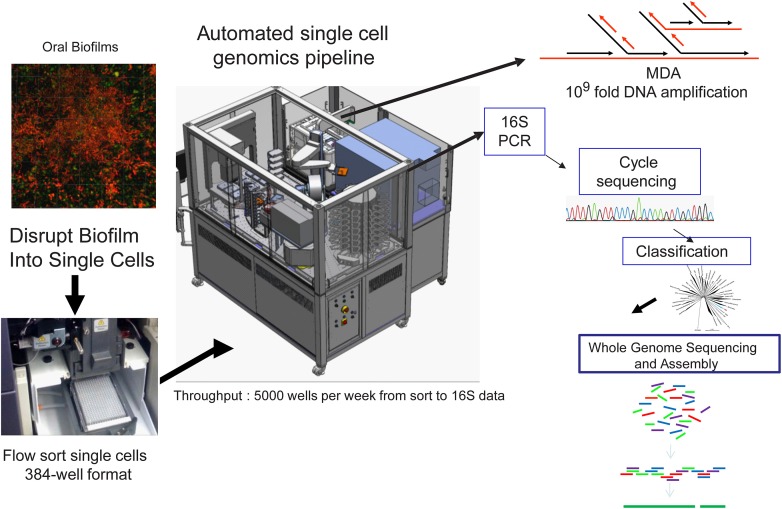
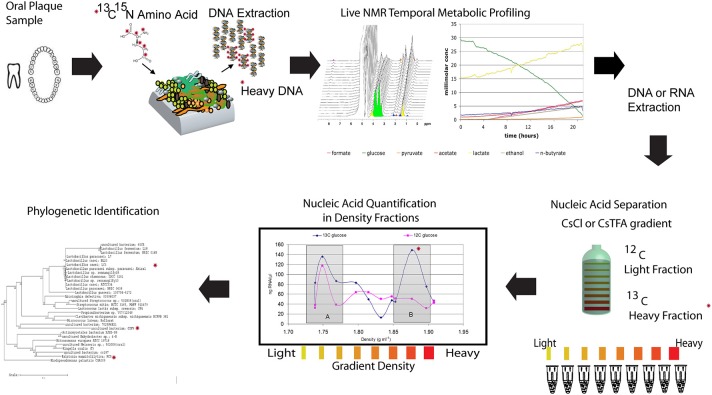
Verification
Claims the paper makes
The claims and statistics of this paper haven’t been checked yet.
Run the check — free, no account needed. It reads the open-access text and checks the sources it cites.
Claims other papers make about this one
Each is checked against this paper’s own text: does it say what the citing paper says it does?
In the citing paper
“Local variation in site-specific “core” microbial members speaks to the heterogeneity of influences bacterial communities experience, including host factors such as age, diet, geography and oral health[180–182].”
From Enterosalivary nitrate metabolism and the microbiome: Intersection of microbial metabolism, nitric oxide and diet in cardiac and pulmonary vascular health (2017) · cites this paper as [180]
Self-check
Percentages, sums and reported differences re-computed from the paper’s own numbers.
The self-check needs the paper’s full text.
Citations
Cites
SPAdes: A New Genome Assembly Algorithm and Its Applications to Single-Cell Sequencing
Bankevich, A., Nurk, S., Antipov, D., Gurevich, A. A., Dvorkin, M. V., Kulikov, A. S., Lesin, V. M., Nikolenko, S., Pham, S., Prjibelski, A. D., et al. (2012) · Journal of Computational Biology · doi:10.1089/cmb.2012.0021 · Cited by 26,312
Structure, function and diversity of the healthy human microbiome
The Human Microbiome Project Consortium (2012) · Nature · doi:10.1038/nature11234 · Cited by 11,726
Turnbaugh, P. J., Ley, R. E., Hamady, M., Fraser-Liggett, C. M., Knight, R., & Gordon, J. I. (2007) · Nature · doi:10.1038/nature06244 · Cited by 6,091
Prokaryotes: The unseen majority
Whitman, W. B., Coleman, D. C., & Wiebe, W. J. (1998) · Proceedings of the National Academy of Sciences · doi:10.1073/pnas.95.12.6578 · Cited by 4,871
Environmental genome shotgun sequencing of the sargasso sea
Venter, J. C., Remington, K., Heidelberg, J. F., Halpern, A. L., Rusch, D., Eisen, J. A., Wu, D., Paulsen, I., Nelson, K. E., Nelson, W., et al. (2004) · Science · doi:10.1126/science.1093857 · Cited by 4,376
Role of Streptococcus mutans in human dental decay
Loesche, W. J. (1986) · Microbiological Reviews · doi:10.1128/mr.50.4.353-380.1986 · Cited by 3,364
Dewhirst, F. E., Chen, T., Izard, J., Paster, B. J., Tanner, A. C. R., Yu, W.-H., Lakshmanan, A., & Wade, W. G. (2010) · Journal of Bacteriology · doi:10.1128/jb.00542-10 · Cited by 3,352
A framework for human microbiome research
The Human Microbiome Project Consortium (2012) · Nature · doi:10.1038/nature11209 · Cited by 2,650
Insights into the phylogeny and coding potential of microbial dark matter
Rinke, C., Schwientek, P., Sczyrba, A., Ivanova, N. N., Anderson, I. J., Cheng, J.-F., Darling, A., Malfatti, S., Swan, B. K., Gies, E. A., et al. (2013) · Nature · doi:10.1038/nature12352 · Cited by 2,394
Rusch, D. B., Halpern, A. L., Sutton, G. G., Heidelberg, K. B., Williamson, S. J., Yooseph, S., Wu, D., Eisen, J. A., Hoffman, J., Remington, K., et al. (2007) · PLoS Biology · doi:10.1371/journal.pbio.0050077 · Cited by 2,044
Cited by
Sorted by citations
Oral microbiome: Unveiling the fundamentals
Deo, P., & Deshmukh, R. (2019) · Journal of Oral and Maxillofacial Pathology · doi:10.4103/jomfp.jomfp_304_18 · Cited by 1,121
Sharma, N., Bhatia, S., Sodhi, A. S., & Batra, N. (2018) · AIMS Microbiology · doi:10.3934/microbiol.2018.1.42 · Cited by 275
Biofilms in Endodontics—Current Status and Future Directions
Neelakantan, P., Romero, M., Vera, J., Daood, U., Khan, A. U., Yan, A., & Cheung, G. S. P. (2017) · International Journal of Molecular Sciences · doi:10.3390/ijms18081748 · Cited by 254
Koch, C. D., Gladwin, M. T., Freeman, B. A., Lundberg, J. O., Weitzberg, E., & Morris, A. (2017) · Free Radical Biology and Medicine · doi:10.1016/j.freeradbiomed.2016.12.015 · Cited by 186
The Oral Microbiome of Children: Development, Disease, and Implications Beyond Oral Health
Gomez, A., & Nelson, K. E. (2017) · Microbial Ecology · doi:10.1007/s00248-016-0854-1 · Cited by 175
Metadata
- Authors
- McLean, J. S.
- Affiliations
- J. Craig Venter Institute (US)
- Corresponding author
- McLean, Jeffrey S.
- ORCID
- McLean, Jeffrey S.
- Venue
- Frontiers in Cellular and Infection Microbiology
- Publisher
- Frontiers Media SA
- Published
- 2014-07-29
- Volume
- 4
- Pages
- 98-98
- ISSN
- 2235-2988 (ISSN-L)
- PMC
- PMC4114298
- OpenAlex
- W2040159150
- Cited by
- 108
- References
- 95
- Citations by year
- 2026: 11 · 2025: 8 · 2024: 5 · 2023: 20 · 2022: 6 · 2021: 6 · 2020: 9 · 2019: 6 · 2018: 12 · 2017: 8 · 2016: 6 · 2015: 10 · 2014: 1
- FWCI
- 11.13
- Type
- journal article
- Language
- en
- Open access
- gold
- doi.org
- Licence
- cc-by
- Locations
- Frontiers in Cellular and Infection Microbiology (publishedVersion, cc-by)
- PubMed Central (publishedVersion, cc-by)
- PubMed (publishedVersion)
- DOAJ (DOAJ: Directory of Open Access Journals) (submittedVersion, cc-by-sa)
- Funders
- National Institutes of Health (5r01de020102-10)
- National Institute of Dental and Craniofacial Research (R01-DE020102)
- Topics
- Health Sciences › Dentistry › Periodontics › Oral microbiology and periodontitis research
- Life Sciences › Biochemistry, Genetics and Molecular Biology › Molecular Biology › Gut microbiota and health
- Life Sciences › Biochemistry, Genetics and Molecular Biology › Molecular Biology › Bacterial biofilms and quorum sensing
- Keywords
- oral microbiota, dental plaque, biofilm, dysbiosis, interpersonal variability, host-bacteria interactions, bacterial-bacterial interactions
- MeSH terms
- Bacteria, Dental Plaque, Humans, Hydrogen-Ion Concentration, Mouth, Phylogeny, Tooth Demineralization, Bacterial Physiological Phenomena, Biofilms, Host-Pathogen Interactions, Metagenome, Metagenomics, Microbial Interactions, Microbiota, Datasets as Topic
About these checks
Registry, retraction, Cites and statistics results are computed, not judged, with one exception: a printed reference that no index lists is read once by a model before it counts as a citation error. Claims are extracted by a model and kept only when their quote appears verbatim in the text; each cited source is then checked, with a model’s help, for whether it says what the claim relies on. Those verdicts can be wrong — read the claim’s quote and the cited source before relying on one.
Statistics and arithmetic are recomputed, not judged.
Confidence bands are shown only for fields calibrated on our annotated test set. None is calibrated yet, so no band is shown.
What counts as a claim ›How we measure confidence ›How we check this ›
Are you an author, or do you see a problem with this page? Request a review
