

The DOI matches its Crossref record; 198 of the 199 references it cites were found in a registry or an index.
Epigenetic Programming and Fetal Metabolic Programming
Open accessAbstract
Fetal metabolic programming caused by the adverse intrauterine environment can induce metabolic syndrome in adult offspring. Adverse intrauterine environment introduces fetal long-term relatively irreversible changes in organs and metabolism, and thus causes fetal metabolic programming leading metabolic syndrome in adult offspring. Fetal metabolic programming of obesity and insulin resistance plays a key role in this process. The mechanism of fetal metabolic programming is still not very clear. It is suggested that epigenetic programming, also induced by the adverse intrauterine environment, is a critical underlying mechanism of fetal metabolic programming. Fetal epigenetic programming affects gene expression changes and cellular function through epigenetic modifications without DNA nucleotide sequence changes. Epigenetic modifications can be relatively stably retained and transmitted through mitosis and generations, and thereby induce the development of metabolic syndrome in adult offspring. This manuscript provides an overview of the critical role of epigenetic programming in fetal metabolic programming.
Overview
The claims and statistics of this paper haven’t been checked yet.
Run the check — free, no account needed. It reads the open-access text and checks the sources it cites.
Integrity signals
Registry
Cites
Statistics
Figures
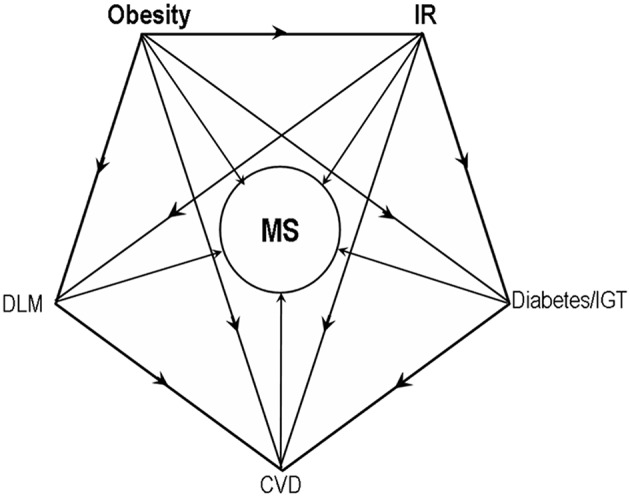
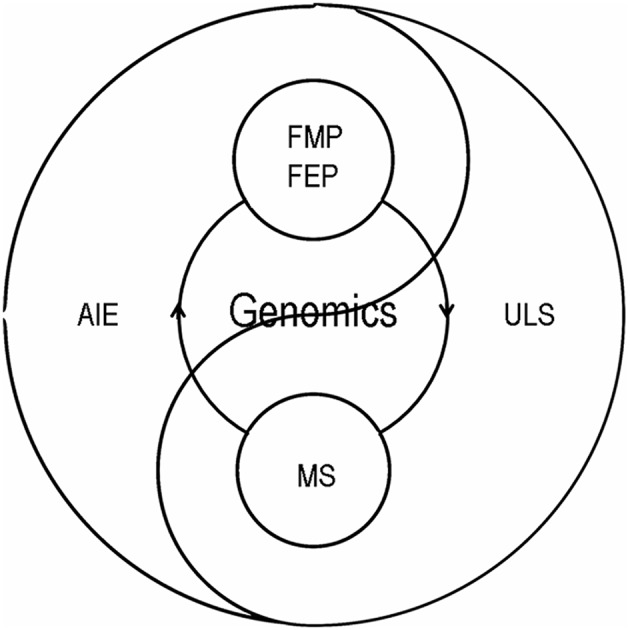
Verification
Claims the paper makes
The claims and statistics of this paper haven’t been checked yet.
Run the check — free, no account needed. It reads the open-access text and checks the sources it cites.
Claims other papers make about this one
Each is checked against this paper’s own text: does it say what the citing paper says it does?
The source backs part of the claim, not all of it — or backs it for a different population, condition or comparison.
In the citing paper
“Such changes may also modify placental nutrient transport, promote compensatory nutrient delivery and predispose offspring to metabolic disorders later in life [18,173,174].”
From Maternal Overnutrition and Fetal Programming: Long-Term Metabolic, Cognitive, and Epigenetic Consequences (2026) · cites this paper as [18]
Experimental — accuracy not yet measured
Self-check
Percentages, sums and reported differences re-computed from the paper’s own numbers.
The self-check needs the paper’s full text.
Citations
Cites
2 retracted
Warne, J. P., Alemi, F., Reed, A. S., Varonin, J. M., Chan, H., Piper, M., Mullin, M. E., Myers, M. G., Corvera, C., & Xu, A. W. (2011) · Cell Metabolism · doi:10.1016/j.cmet.2011.11.001 · Cited by 43
RetractedWarne, J. P., Alemi, F., Reed, A. S., Varonin, J. M., Chan, H., Piper, M. L., Mullin, M. E., Myers, M. G., Corvera, C. U., & Xu, A. W. (2015) · Cell Metabolism · doi:10.1016/j.cmet.2015.03.008 · Cited by 3
RetractedEffect of In Utero and Early-Life Conditions on Adult Health and Disease
Gluckman, P. D., Hanson, M. A., Cooper, C., & Thornburg, K. L. (2008) · New England Journal of Medicine · doi:10.1056/nejmra0708473 · Cited by 3,898
Persistent epigenetic differences associated with prenatal exposure to famine in humans
Heijmans, B. T., Tobi, E. W., Stein, A. D., Putter, H., Blauw, G. J., Susser, E. S., Slagboom, P. E., & Lumey, L. H. (2008) · Proceedings of the National Academy of Sciences · doi:10.1073/pnas.0806560105 · Cited by 3,082
Elective induction versus spontaneous labor after sonographic diagnosis of fetal macrosomia.
Combs, C. A., Singh, N. B., & Khoury, J. C. (1993) · PubMed · Cited by 2,463
In utero programming of chronic disease
BARKER, D. J. P. (1998) · Clinical Science · doi:10.1042/cs0950115 · Cited by 1,765
Obesity in Young Men after Famine Exposure in Utero and Early Infancy
Ravelli, G.-P., Stein, Z. A., & Susser, M. W. (1976) · New England Journal of Medicine · doi:10.1056/nejm197608122950701 · Cited by 1,647
Transgenerational epigenetic programming via sperm microRNA recapitulates effects of paternal stress
Rodgers, A. B., Morgan, C. P., Leu, N. A., & Bale, T. L. (2015) · Proceedings of the National Academy of Sciences · doi:10.1073/pnas.1508347112 · Cited by 751
Fetuses of obese mothers develop insulin resistance in utero
Catalano, P. M., Presley, L., Minium, J., & Hauguel-de Mouzon, S. (2009) · Diabetes Care · doi:10.2337/dc08-2077 · Cited by 655
DNA methylation signatures link prenatal famine exposure to growth and metabolism
Tobi, E. W., Goeman, J. J., Monajemi, R., Gu, H., Putter, H., Zhang, Y., Slieker, R. C., Stok, A. P., Thijssen, P. E., Müller, F., et al. (2014) · Nature Communications · doi:10.1038/ncomms6592 · Cited by 630
Cited by
Sorted by citations
Metabolic regulation of kisspeptin — the link between energy balance and reproduction
Navarro, V. M. (2020) · Nature Reviews Endocrinology · doi:10.1038/s41574-020-0363-7 · Cited by 240
Short Chain Fatty Acid Metabolism in Relation to Gut Microbiota and Genetic Variability
Meyers, G. R., Samouda, H., & Bohn, T. (2022) · Nutrients · doi:10.3390/nu14245361 · Cited by 208
Obesity‐related glomerulopathy: Current approaches and future perspectives
Martínez‐Montoro, J. I., Morales, E., Cornejo-Pareja, I. M., Tinahones, F. J., & Fernández‐García, J. C. (2022) · Obesity Reviews · doi:10.1111/obr.13450 · Cited by 132
Delivery technologies for in utero gene therapy
Palanki, R., Peranteau, W. H., & Mitchell, M. J. (2021) · Advanced Drug Delivery Reviews · doi:10.1016/j.addr.2020.11.002 · Cited by 64
The effects of assisted reproduction technologies on metabolic health and disease†
Heber, M. F., & Ptak, G. (2020) · Biology of Reproduction · doi:10.1093/biolre/ioaa224 · Cited by 61
Metadata
- Authors
- Zhu, Z., Cao, F., & Li, X.
- Affiliations
- Soochow University (CN)
- Nanjing Medical University (CN)
- Corresponding author
- Li, Xiaozhong
- Venue
- Frontiers in Endocrinology
- Publisher
- Frontiers Media SA
- Published
- 2019-12-03
- Volume
- 10
- Pages
- 764-764
- ISSN
- 1664-2392 (ISSN-L)
- PMC
- PMC6901800
- OpenAlex
- W2981958174
- Cited by
- 158
- References
- 199
- Citations by year
- 2026: 27 · 2025: 24 · 2024: 24 · 2023: 23 · 2022: 21 · 2021: 22 · 2020: 17
- FWCI
- 3.16
- Type
- journal article
- Language
- en
- Open access
- gold
- doi.org
- Licence
- Locations
- Frontiers in Endocrinology (publishedVersion, cc-by)
- Europe PMC (PubMed Central) (publishedVersion, cc-by)
- PubMed Central (publishedVersion, cc-by)
- PubMed (publishedVersion)
- DOAJ (DOAJ: Directory of Open Access Journals) (submittedVersion, cc-by-sa)
- Funders
- Jiangsu Commission of Health
- Topics
- Health Sciences › Medicine › Pediatrics, Perinatology and Child Health › Birth, Development, and Health
- Life Sciences › Biochemistry, Genetics and Molecular Biology › Molecular Biology › Epigenetics and DNA Methylation
- Life Sciences › Biochemistry, Genetics and Molecular Biology › Genetics › Genetic Syndromes and Imprinting
- Keywords
- epigenetic programming, metabolic syndrome, adult offspring, obesity, insulin resistance, epigenetic modifications, transgenerational epigenetic inheritance, fetal development
About these checks
Registry, retraction, Cites and statistics results are computed, not judged, with one exception: a printed reference that no index lists is read once by a model before it counts as a citation error. Claims are extracted by a model and kept only when their quote appears verbatim in the text; each cited source is then checked, with a model’s help, for whether it says what the claim relies on. Those verdicts can be wrong — read the claim’s quote and the cited source before relying on one.
Statistics and arithmetic are recomputed, not judged.
Confidence bands are shown only for fields calibrated on our annotated test set. None is calibrated yet, so no band is shown.
What counts as a claim ›How we measure confidence ›How we check this ›
Are you an author, or do you see a problem with this page? Request a review
