

The DOI matches its Crossref record; 83 of the 83 references it cites were found in a registry or an index.
Exposure to Perfluoroalkyl Chemicals and Cardiovascular Disease: Experimental and Epidemiological Evidence
Open accessAbstract
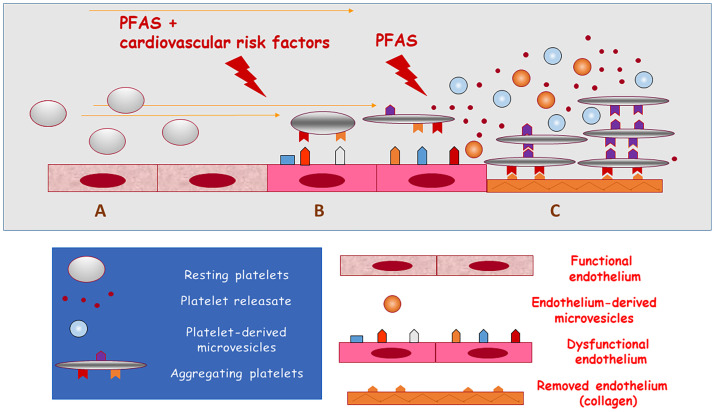
Polyfluoro- and perfluoro–alkyl substances (PFAS) are organic chemicals extensively used worldwide for industry and consumer products. Due to their chemical stability, PFAS represent a major cause of environmental pollution. PFAS accumulate in animal and human blood and tissues exerting their toxicity. We performed a review of the epidemiological studies exploring the relationship between exposure to PFAS and thromboembolic cardiovascular disease. An increase in cardiovascular disease or death related to PFAS exposure has been reported from cross-sectional and longitudinal observational studies with evidence concerning the relation with early vascular lesions and atherosclerosis. Several studies indicate an alteration in lipid and glucose metabolism disorders and increased blood pressure as a possible link with cardiovascular thromboembolic events. We also examined the recent evidence indicating that legacy and new PFAS can be incorporated in platelet cell membranes giving a solid rationale to the observed increase risk of cardiovascular events in the populations exposed to PFAS by directly promoting thrombus formation. Exposure to PFAS has been related to altered plasma membrane fluidity and associated with altered calcium signal and increased platelet response to agonists, both in vitro and ex vivo in subjects exposed to PFAS. All the functional responses are increased in platelets by incorporation of PFAS: adhesion, aggregation, microvesicles release and experimental thrombus formation. These findings offer mechanistic support the hypothesis that platelet-centred mechanisms may be implicated in the increase in cardiovascular events observed in populations chronically exposed to PFAS.
Overview
The claims and statistics of this paper haven’t been checked yet.
Run the check — free, no account needed. It reads the open-access text and checks the sources it cites.
Integrity signals
Registry
Cites
Statistics
Figures
Verification
Claims the paper makes
The claims and statistics of this paper haven’t been checked yet.
Run the check — free, no account needed. It reads the open-access text and checks the sources it cites.
Claims other papers make about this one
Each is checked against this paper’s own text: does it say what the citing paper says it does?
The source backs part of the claim, not all of it — or backs it for a different population, condition or comparison.
In the citing paper
“PFASs impact platelet function by altering plasma membrane dynamics and calcium signaling, leading to enhanced adhesion, aggregation, and thrombus formation—thus elevating pro-thrombotic risk, especially in individuals with pre-existing vascular conditions [71,72].”
From Exposure to Per- and Polyfluoroalkyl Substances (PFASs) in Healthcare: Environmental and Clinical Insights (2025) · cites this paper as [72]
Experimental — accuracy not yet measured
Self-check
Percentages, sums and reported differences re-computed from the paper’s own numbers.
The self-check needs the paper’s full text.
Citations
Cites
Olsen, G. W., Burris, J. M., Ehresman, D. J., Froehlich, J. W., Seacat, A. M., Butenhoff, J. L., & Zobel, L. R. (2007) · Environmental Health Perspectives · doi:10.1289/ehp.10009 · Cited by 2,049
Polyfluorinated Compounds: Past, Present, and Future
Lindstrom, A. B., Strynar, M. J., & Libelo, E. L. (2011) · Environmental Science & Technology · doi:10.1021/es2011622 · Cited by 1,628
Calafat, A. M., Wong, L.-Y., Kuklenyik, Z., Reidy, J. A., & Needham, L. L. (2007) · Environmental Health Perspectives · doi:10.1289/ehp.10598 · Cited by 1,247
Platelet biology and functions: new concepts and clinical perspectives
van der Meijden, P. E. J., & Heemskerk, J. W. M. (2018) · Nature Reviews Cardiology · doi:10.1038/s41569-018-0110-0 · Cited by 1,103
Barzen-Hanson, K. A., Roberts, S. C., Choyke, S., Oetjen, K., McAlees, A., Riddell, N., McCrindle, R., Ferguson, P. L., Higgins, C. P., & Field, J. A. (2017) · Environmental Science & Technology · doi:10.1021/acs.est.6b05843 · Cited by 873
Endocrine-disrupting chemicals: Implications for human health
Kahn, L. G., Philippat, C., Nakayama, S. F., Slama, R., & Trasande, L. (2020) · The Lancet Diabetes & Endocrinology · doi:10.1016/s2213-8587(20)30129-7 · Cited by 797
Wang, Z., Cousins, I. T., Scheringer, M., & Hungerbuehler, K. (2015) · Environment International · doi:10.1016/j.envint.2014.11.013 · Cited by 627
Nelson, J. W., Hatch, E. E., & Webster, T. F. (2010) · Environmental Health Perspectives · doi:10.1289/ehp.0901165 · Cited by 538
Steenland, K., Tinker, S., Frisbee, S. J., DUCATMAN, A. M., & Vaccarino, V. (2009) · American Journal of Epidemiology · doi:10.1093/aje/kwp279 · Cited by 381
The C8 Health Project: Design, Methods, and Participants
Frisbee, S. J., Brooks, A. P., Maher, A., Flensborg, P., Arnold, S., Fletcher, T., Steenland, K., Shankar, A., Knox, S. S., Pollard, C. R., et al. (2009) · Environmental Health Perspectives · doi:10.1289/ehp.0800379 · Cited by 375
Cited by
Sorted by citations
Li, X., Shen, X., Jiang, W., Xi, Y., & Song, L. (2024) · Ecotoxicology and Environmental Safety · doi:10.1016/j.ecoenv.2024.116420 · Cited by 606
Insight into the binding model of per- and polyfluoroalkyl substances to proteins and membranes
Zhao, L., Teng, M., Zhao, X., Li, Y., Sun, J., Zhao, W., Ruan, Y., Leung, K., & Wu, F. (2023) · Environment International · doi:10.1016/j.envint.2023.107951 · Cited by 236
Fischer, F. C., Ludtke, S., Thackray, C. P., Pickard, H. M., Haque, F., Dassuncao, C., Endo, S., Schaider, L. A., & Sunderland, E. M. (2024) · Environmental Science & Technology · doi:10.1021/acs.est.3c07415 · Cited by 187
Soil and water pollution and cardiovascular disease
Münzel, T. F., Hahad, O., Lelieveld, J., Aschner, M., Nieuwenhuijsen, M. J., Landrigan, P. J., & Daiber, A. (2024) · Nature Reviews Cardiology · doi:10.1038/s41569-024-01068-0 · Cited by 163
Liu, B., Zhu, L., Wang, M., & Sun, Q. (2023) · Environmental Health Perspectives · doi:10.1289/ehp11840 · Cited by 129
PFAS Exposures and the Human Metabolome: A Systematic Review of Epidemiological Studies
India-Aldana, S., Yao, M., Midya, V., Colicino, E., Chatzi, L., Chu, J., Gennings, C., Jones, D. P., Loos, R. J. F., Setiawan, V. W., et al. (2023) · Current Pollution Reports · doi:10.1007/s40726-023-00269-4 · Cited by 114
Wen, Z.-J., Wei, Y.-J., Zhang, Y., & Zhang, Y. (2023) · Archives of Toxicology · doi:10.1007/s00204-023-03477-5 · Cited by 116
Impact of contaminants on microbiota: linking the gut–brain axis with neurotoxicity
Balaguer-Trias, J., Deepika, D., Schuhmacher, M., & Kumar, V. (2022) · International Journal of Environmental Research and Public Health · doi:10.3390/ijerph19031368 · Cited by 88
Qi, Q., Niture, S. K., Gadi, S. V., Arthur, E., Moore, J. T., Levine, K. E., & Kumar, D. (2022) · Environmental Toxicology · doi:10.1002/tox.23680 · Cited by 79
Preston, E. V., Hivert, M.-F., Fleisch, A. F., Calafat, A. M., Sagiv, S. K., Perng, W., Rifas-Shiman, S. L., Chavarro, J. E., Oken, E., Zota, A. R., et al. (2022) · Environment International · doi:10.1016/j.envint.2022.107335 · Cited by 78
Exposure to per- and polyfluoroalkyl substances (PFAS) and type 2 diabetes risk
Roth, K., & Petriello, M. C. (2022) · Frontiers in Endocrinology · doi:10.3389/fendo.2022.965384 · Cited by 78
Impact of Microplastics on Human Health: Risks, Diseases, and Affected Body Systems
Abbas, G., Ahmed, U., & Ahmad, M. A. (2025) · Microplastics · doi:10.3390/microplastics4020023 · Cited by 88
Jain, R. B., & DUCATMAN, A. M. (2022) · The Science of The Total Environment · doi:10.1016/j.scitotenv.2022.156891 · Cited by 65
Dunder, L., Salihovic, S., Lind, P. M., Elmståhl, S., & Lind, L. (2023) · Environment International · doi:10.1016/j.envint.2023.107979 · Cited by 60
Yu, G., Wang, J., Liu, Y., Luo, T., Meng, X., Zhang, R., Huang, B., Sun, Y., & Zhang, J. (2023) · Environment International · doi:10.1016/j.envint.2023.107851 · Cited by 59
Pan, K., Yu, J., Long, X., Yang, L., Huang, Z., & Yu, J. (2023) · Environmental Research · doi:10.1016/j.envres.2023.116362 · Cited by 56
Wu, M., Zhu, Z., Wan, R., & Xu, J. (2024) · Environmental Pollution · doi:10.1016/j.envpol.2024.123615 · Cited by 53
Deng, P., Durham, J., Liu, J., Zhang, X., Wang, C., Li, D., Gwag, T., Ma, M., & Hennig, B. (2022) · Environmental Health Perspectives · doi:10.1289/ehp11360 · Cited by 49
Yang, T., Jovanovic, N., Chong, F., Worcester, M., Sakhi, A. K., Thomsen, C., Garlantézec, R., Chevrier, C., Jensen, G. K., Cingotti, N., et al. (2023) · Current Environmental Health Reports · doi:10.1007/s40572-023-00394-8 · Cited by 46
A review on structural mechanisms of protein-persistent organic pollutant (POP) interactions
Nagar, N., Saxena, H., Pathak, A., Mishra, A., & Poluri, K. M. (2023) · Chemosphere · doi:10.1016/j.chemosphere.2023.138877 · Cited by 43
Zang, L., Liu, X., Xie, X., Zhou, X., Pan, Y., & Dai, J. (2023) · Environmental Pollution · doi:10.1016/j.envpol.2023.121504 · Cited by 42
Dong, Z., Wang, J., Qiu, T., Wu, J., An, Y., Shi, X., Sun, X., Jiang, L., Liu, X., Yang, G., et al. (2022) · Science of The Total Environment · doi:10.1016/j.scitotenv.2022.153933 · Cited by 41
Low-Temperature Mineralization of Fluorotelomers with Diverse Polar Head Groups
Monsky, R. J., Li, Y., Houk, K. N., & Dichtel, W. R. (2024) · Journal of the American Chemical Society · doi:10.1021/jacs.4c03117 · Cited by 40
Scimeca, M., Palumbo, V., Giacobbi, E., Servadei, F., Casciardi, S., Cornella, E., Cerbara, F., Rotondaro, G., Seghetti, C., Scioli, M. P., et al. (2024) · Heliyon · doi:10.1016/j.heliyon.2024.e38047 · Cited by 42
Hamed, M., Vats, A., Lim, I. E., Sapkota, B., & Abdelmoneim, A. (2024) · Environmental Pollution · doi:10.1016/j.envpol.2024.123912 · Cited by 39
Li, H., Chen, J., Lu, J., Yang, J., Tan, Z., Li, L., Xiao, F., An, Z., Ma, C., Liu, Y., et al. (2023) · Chemosphere · doi:10.1016/j.chemosphere.2022.137464 · Cited by 35
Camdzic, M., Aga, D. S., & Atilla‐Gokcumen, G. E. (2022) · Chemical Research in Toxicology · doi:10.1021/acs.chemrestox.2c00078 · Cited by 38
Bailey, J. M., Wang, L., McDonald, J. M., Gray, J. S., Petrie, J. G., Martin, E. T., Savitz, D. A., Karrer, T. A., Fisher, K. A., Geiger, M. J., et al. (2023) · Journal of Exposure Science & Environmental Epidemiology · doi:10.1038/s41370-023-00564-8 · Cited by 35
Al‐Maqtari, Q. A., Mahdi, A. A., Othman, N., Noman, A. E., Alsubhi, L. M., AL‐Ansi, W., Asharuddin, S. M., Talib, M. K. M., Supramanium, S., & Al-Gheethi, A. A. S. (2025) · Results in Engineering · doi:10.1016/j.rineng.2025.107169 · Cited by 33
Tiburtini, G. A., Bertarini, L., Bersani, M., Dragani, T. A., Rolando, B., Binello, A. E., Barge, A., & Spyrakis, F. (2024) · Archives of Toxicology · doi:10.1007/s00204-024-03797-0 · Cited by 33
Hall, A. M., & Braun, J. M. (2023) · American Journal of Lifestyle Medicine · doi:10.1177/15598276231162802 · Cited by 29
Wang, Z., Zhou, Y., Xiao, X., Liu, A., Wang, S., Preston, R. J. S., Zaytseva, Y. Y., He, G., Xiao, W., Hennig, B., et al. (2023) · Environmental Pollution · doi:10.1016/j.envpol.2023.122756 · Cited by 31
Association of Combined Metals and PFAS with Cardiovascular Disease Risk
Boafo, Y. S., Mostafa, S. A., & Obeng-Gyasi, E. (2023) · Toxics · doi:10.3390/toxics11120979 · Cited by 30
Starling, M. C. V. M., Rodrigues, D. A. D. S., Miranda, G. A., Jo, S., Amorim, C. C., Ankley, G. T., & Simcik, M. F. (2024) · The Science of The Total Environment · doi:10.1016/j.scitotenv.2024.174586 · Cited by 31
Lin, N., Zhang, Y., Su, S., Feng, Y., Wang, B., & Li, Z. (2023) · Journal of Hazardous Materials · doi:10.1016/j.jhazmat.2023.132185 · Cited by 26
Thyroid hormone receptor beta: Relevance in human health and diseases
Rehman, G., Kumari, N., Bano, F., & Tyagi, R. K. (2023) · Endocrine and Metabolic Science · doi:10.1016/j.endmts.2023.100144 · Cited by 31
Du, X., Xu, X., Dong, X.-X., Liang, X., Wu, Y., Du, Z., Pan, C.-W., Liang, G., Li, Y.-Z., Zheng, Y.-J., et al. (2025) · Environmental Science & Technology · doi:10.1021/acs.est.5c01138 · Cited by 24
Yadav, A., Vuković, L., & Narayan, M. (2024) · Journal of the American Chemical Society · doi:10.1021/jacs.4c02934 · Cited by 27
Larebeke, N. V., Cox, B., Rémy, S., Voorspoels, S., Hond, E. D., Colles, A., Leermakers, M., Schoeters, G. E. R., & Verheyen, V. J. (2025) · Environmental Health · doi:10.1186/s12940-025-01188-1 · Cited by 23
Ward-Caviness, C. K., Moyer, J., Weaver, A. M., Devlin, R. B., & Díaz-Sánchez, D. (2022) · Environmental Epidemiology · doi:10.1097/ee9.0000000000000217 · Cited by 22
Lewis, N., Abdulkadir, A. S., Kandel, S., Rosby, R., & Hossain, E. (2024) · Physiologia · doi:10.3390/physiologia4040035 · Cited by 24
Effect of prenatal perfluoroheptanoic acid exposure on spermatogenesis in offspring mice
Zhou, Y., Sun, W., Tang, Q., Lu, Y., Li, M., Wang, J., Han, X., Wu, D., & Wu, W. (2023) · Ecotoxicology and Environmental Safety · doi:10.1016/j.ecoenv.2023.115072 · Cited by 21
Threats of per- and poly-fluoroalkyl pollutants to susceptible populations
Mao, X., Liu, Y., Wei, Y., Li, X., Liu, Y., Su, G., Wang, X., Jia, J., & Yan, B. (2024) · The Science of The Total Environment · doi:10.1016/j.scitotenv.2024.171188 · Cited by 21
Hall, A. M., Ashley‐Martin, J., Liang, C. L., Papandonatos, G. D., Arbuckle, T. E., Borghese, M. M., Buckley, J. P., Cecil, K. M., Chen, A., Dodds, L. A., et al. (2024) · Environment International · doi:10.1016/j.envint.2024.109094 · Cited by 21
Pan, Y., Du, Z., Ma, Y., Cheng, C., He, S.-Y. R., Zhang, M., Baral, K., Xu, L., Xu, M., & Zhao, M. (2025) · Lipids in Health and Disease · doi:10.1186/s12944-025-02638-y · Cited by 21
Beccacece, L., Costa, F., Pascali, J. P., & Giorgi, F. M. (2023) · Toxics · doi:10.3390/toxics11070567 · Cited by 18
Incidence of Perfluoroalkyl Substances in Commercial Eggs and Their Impact on Consumer’s Safety
Nobile, M., Arioli, F., Curci, D., Ancillotti, C., Scanavini, G., Chiesa, L. M., & Panseri, S. (2023) · Foods · doi:10.3390/foods12203846 · Cited by 20
Ruggles, A., & Benakis, C. (2024) · Cells · doi:10.3390/cells13100803 · Cited by 19
Satbhai, K. M., Marques, E., Ranjan, R., & Timme‐Laragy, A. R. (2025) · Journal of Hazardous Materials · doi:10.1016/j.jhazmat.2025.137515 · Cited by 16
Sun, Y. (2023) · Population and Environment · doi:10.1007/s11111-023-00442-3 · Cited by 17
Pollard, S., Silva, A. O. D., & Simmons, D. B. D. (2024) · The Science of The Total Environment · doi:10.1016/j.scitotenv.2024.172389 · Cited by 16
Ford, L. C., Lin, H., Zhou, Y., Wright, F. A., Gombar, V. K., Sedykh, A., Shah, R., Chiu, W. A., & Rusyn, I. (2024) · Human Genomics · doi:10.1186/s40246-024-00665-x · Cited by 17
Zhu, L., Liu, B., Hu, Y., Wang, M., Furtado, J. D., Rimm, E. B., Grandjean, P., & Sun, Q. (2024) · Environmental Health · doi:10.1186/s12940-024-01147-2 · Cited by 17
Ezeorba, T. P. C., Okeke, E. S., Nwankwo, C. E. I., Emencheta, S. C., Enochoghene, A. E., Okeke, V. C., & Ozougwu, V. E. (2024) · Chemosphere · doi:10.1016/j.chemosphere.2024.143168 · Cited by 17
Duru, C. I., Kang, D. H., & Sherchan, S. P. (2024) · Science of The Total Environment · doi:10.1016/j.scitotenv.2024.177152 · Cited by 16
Yang, J., Wang, T., Li, K., & Wāng, Y. (2025) · Journal of Advanced Research · doi:10.1016/j.jare.2024.04.022 · Cited by 15
Microplastics, Nanoplastics and Heart Contamination: The Hidden Threat
Iannuzzi, G. L., D’Alto, M., Bosso, G., Montella, A. P., D’Oria, V., Pellegrino, L., Boccaforno, G., Masi, A., Orlando, A., Franco, R., et al. (2025) · Journal of Clinical Medicine · doi:10.3390/jcm14217618 · Cited by 18
Yang, Z., Roth, K., Ding, J., Kassotis, C. D., Mor, G., & Petriello, M. C. (2022) · Toxicology and Applied Pharmacology · doi:10.1016/j.taap.2022.116284 · Cited by 16
Xu, N., Lin, H., Lin, J., Cheng, J., Wang, P., & Lin, L. (2023) · Analytical Chemistry · doi:10.1021/acs.analchem.3c03892 · Cited by 15
Wei, Z., Wei, K., Yang, M., Ying, M., Yin, Z., Wang, N., & Zhang, L. (2024) · Ecotoxicology and Environmental Safety · doi:10.1016/j.ecoenv.2024.117395 · Cited by 16
The role of per‐ and polyfluoroalkyl substances in cognitive impairment and dementia
Gardener, H. E., Levin, B. E., Kannan, K., & Rundek, T. (2025) · Alzheimer s & Dementia · doi:10.1002/alz.70226 · Cited by 17
Associations between dietary profiles and perfluoroalkyl acids in Inuit youth and adults
Aker, A. M., Ayotte, P., Caron-Beaudoin, É., Silva, A. O. D., Ricard, S., & Lemire, M. (2022) · The Science of The Total Environment · doi:10.1016/j.scitotenv.2022.159557 · Cited by 15
Gump, B. B., Hill, D., Robinson, M., Kannan, K., Heffernan, K. S., Atallah-Yunes, N. H., Brann, L. S., Parsons, P. J., Palmer, C. D., MacKenzie, J. A., et al. (2023) · Environmental Research · doi:10.1016/j.envres.2023.116758 · Cited by 17
Vascular endothelium as a target for perfluroalkyl substances (PFAs)
Wittkopp, S., Wu, F., Windheim, J., Robinson, M., Kannan, K., Katz, S. D., Chen, Y., & Newman, J. D. (2022) · Environmental Research · doi:10.1016/j.envres.2022.113339 · Cited by 14
Briassoulis, G., Ilia, S., & Briassouli, E. (2025) · Life · doi:10.3390/life15071057 · Cited by 15
Lin, C., Wang, C., Sung, F., & Su, T. (2022) · Ecotoxicology and Environmental Safety · doi:10.1016/j.ecoenv.2022.113457 · Cited by 13
Mao, Z., Chen, Y., Li, H., Lu, Q., & Zhou, K. (2024) · Toxics · doi:10.3390/toxics12100693 · Cited by 13
Huo, T., Li, Y., Kumar, S., Andreescu, S., Huang, Y., & Du, H. (2025) · RSC Advances · doi:10.1039/d5ra05114b · Cited by 12
Runkel, A. A., Stajnko, A., Tratnik, J. S., Mazej, D., Horvat, M., Příbylová, P., & Kosjek, T. (2023) · Chemosphere · doi:10.1016/j.chemosphere.2023.138096 · Cited by 14
Visceral, Neural, and Immunotoxicity of Per- and Polyfluoroalkyl Substances: A Mini Review
Martano, P., Mahdi, S., Zhou, T., Barazandegan, Y., Iha, R., Do, H., Burken, J. G., Nam, P. K.-S., Yang, Q., & Mu, R. (2025) · Toxics · doi:10.3390/toxics13080658 · Cited by 12
Lazarevic, N., Smurthwaite, K. S., D’Este, C. A., Lucas, R. M., Armstrong, B. K., Clements, A., Trevenar, S. M., Gad, I., Hosking, R., Law, H. D., et al. (2023) · Environmental Research · doi:10.1016/j.envres.2023.115621 · Cited by 12
Judson, R., Smith, D., DeVito, M. J., Wambaugh, J. F., Wetmore, B. A., Friedman, K. P., Patlewicz, G. Y., Thomas, R. S., Sayre, R. R., Olker, J. H., et al. (2024) · Toxics · doi:10.3390/toxics12040271 · Cited by 14
Zhong, X., Chen, J., Zhang, Z., Zhu, Q., Ji, D., Ke, W., Niu, C., Wang, C., Zhao, N. J., Chen, W., et al. (2024) · Environmental Health Perspectives · doi:10.1289/ehp13214 · Cited by 11
Zong, S., Wang, L., Wang, S., Wang, Y., Jiang, Y., Sun, L., Zong, Y., & Li, X. (2024) · Frontiers in Public Health · doi:10.3389/fpubh.2024.1418134 · Cited by 12
Patlewicz, G. Y., Judson, R., Friedman, K. P., Wetmore, B. A., DeVito, M. J., Harrill, J., Carstens, K. E., Houck, K. A., Wambaugh, J. F., Padilla, S., et al. (2025) · Journal of Toxicology and Environmental Health Part B · doi:10.1080/10937404.2025.2521615 · Cited by 13
Baldwin, W. S., Davis, T. T., & Eccles, J. A. (2023) · Biomarkers in disease · doi:10.1007/978-3-031-07392-2_67 · Cited by 11
Chang, M. C., Chung, S. M., & Kwak, S. G. (2023) · Reviews on Environmental Health · doi:10.1515/reveh-2023-0021 · Cited by 10
Girardi, P., Lupo, A., Mastromatteo, L. Y., & Scrimin, S. (2022) · Environmental Science and Pollution Research · doi:10.1007/s11356-022-20085-5 · Cited by 10
Thompson, M., Eatman, J. A., Dunlop, A. L., Barr, D. B., Kannan, K., Corwin, E. J., Ryan, P. B., Panuwet, P., Yakimavets, V., Taibl, K. R., et al. (2024) · Chemosphere · doi:10.1016/j.chemosphere.2024.142052 · Cited by 9
Karakuş, F., & Kuzu, B. (2024) · Toxicology Research · doi:10.1093/toxres/tfae206 · Cited by 10
Integrated PBPK modelling for PFOA exposure and risk assessment
Karakoltzidis, A., Karakitsios, S., Gabriel, C., & Sarigiannis, D. A. (2025) · Environmental Research · doi:10.1016/j.envres.2025.121947 · Cited by 9
Bashir, T., & Obeng-Gyasi, E. (2023) · International Journal of Environmental Research and Public Health · doi:10.3390/ijerph20105808 · Cited by 9
Wu, Y., Qiu, Y., Wu, Y., Li, H., Yang, H., Deng, Q., He, B., Yan, F., Li, Y., & Chen, F. (2024) · BMC Oral Health · doi:10.1186/s12903-024-03863-0 · Cited by 9
Tsai, H.-H. D., Ford, L. C., Chen, Z., Dickey, A. N., Wright, F. A., & Rusyn, I. (2024) · ALTEX · doi:10.14573/altex.2311031 · Cited by 9
McAdam, J., Jones, L., Romeiko, X. X., & Bell, E. (2024) · Water Emerging Contaminants & Nanoplastics · doi:10.20517/wecn.2024.05 · Cited by 11
Key characteristics of carcinogens meet hallmarks for prevention-cutting the Gordian knot
Senga, S. S., Bisson, W. H., & Colacci, A. (2024) · Frontiers in Oncology · doi:10.3389/fonc.2024.1420687 · Cited by 8
Zhou, L., Anderson, E. M., Harari, F., Fletcher, T., Nielsen, C., Blomberg, A. J., Jakobsson, K., Xu, Y., & Li, Y. (2025) · Environmental Research · doi:10.1016/j.envres.2025.122765 · Cited by 8
PFOS-induced black liver and hepatic aging in mice: A new paradigm in environmental hepatotoxicology
Stevenson, C. K., Wang, J., & Du, C. (2025) · Environment International · doi:10.1016/j.envint.2025.109999 · Cited by 9
The lung-brain axis: elucidating the mechanisms of pulmonary-driven neurological disorders
Wang, L., Wang, F., Wang, X., Chen, X., Li, C., Shan, K., Zhou, H., Wu, G., Xu, Z., Kong, X., et al. (2026) · Journal of Neuroinflammation · doi:10.1186/s12974-026-03721-6 · Cited by 10
Vajeethaveesin, N., Kanitwithayanun, J., Suriyo, T., Chujan, S., & Satayavivad, J. (2025) · Archives of Toxicology · doi:10.1007/s00204-025-04047-7 · Cited by 8
Li, Z., Wang, G., Hong, X., Brady, T. M., Pearson, C., Buckley, J. P., Wang, X., & Zhang, M. (2025) · Journal of the American Heart Association · doi:10.1161/jaha.124.039949 · Cited by 9
Zhang, H., Zhang, H., Zhang, R., Zhao, D., Zhu, B., Qi, X., Chen, L., Chen, J., Wang, J., Zheng, Y., et al. (2025) · Marine Drugs · doi:10.3390/md23090359 · Cited by 8
Male Lower Urinary Tract Dysfunction: An Underrepresented Endpoint in Toxicology Research
Peterson, N. T., & Vezina, C. M. (2022) · Toxics · doi:10.3390/toxics10020089 · Cited by 7
Reimann, B., Rémy, S., Koppen, G., Schoeters, G. E. R., Hond, E. D., Nelen, V., Franken, C., Covaci, A., Bruckers, L. M., Baeyens, W., et al. (2024) · International Journal of Hygiene and Environmental Health · doi:10.1016/j.ijheh.2024.114346 · Cited by 6
Porfirio, K., Yadav, P., Dangudubiyyam, S. V., Hofmann, A., Mishra, J. S., & Kumar, S. (2024) · Cardiology and Cardiovascular Medicine · doi:10.26502/fccm.92920388 · Cited by 7
Đelmaš, A. Đ., Šeba, T., Gligorijević, N., Pavlović, M., Gruden, M., Nikolic, M. R., Milčić, K., & Milčić, M. K. (2025) · International Journal of Biological Macromolecules · doi:10.1016/j.ijbiomac.2025.141425 · Cited by 8
Dangudubiyyam, S. V., Bosse, B., Yadav, P., Song, R., Hofmann, A., Mishra, J. S., & Kumar, S. (2023) · International Journal of Molecular Sciences · doi:10.3390/ijms241814180 · Cited by 7
Assessment of PFAS levels in drinking water: A case study from Poznań County (Poland)
Sikora, D., Poniedziałek, B., & Rzymski, P. (2025) · Chemosphere · doi:10.1016/j.chemosphere.2025.144326 · Cited by 7
Effect of Per and Poly-Fluoroalkyl Substances on Pregnancy and Child Development
Kilari, T., Suresh, A. S., Begum, R. F., Singh, A., Venkkatesh, P., & Vellapandian, C. (2024) · Current Pediatric Reviews · doi:10.2174/0115733963267526231120110100 · Cited by 6
Xu, D., Xiang, J., Qin, R., Chen, Z., Wang, X., Xu, P., Pan, Y., Zhang, X., Wang, Y., Cheng, P., et al. (2025) · Journal of Hazardous Materials · doi:10.1016/j.jhazmat.2025.139882 · Cited by 5
Metadata
- Authors
- Meneguzzi, A., Fava, C., Castelli, M., & Minuz, P.
- Affiliations
- University of Verona (IT)
- Corresponding author
- Minuz, Pietro
- Venue
- Frontiers in Endocrinology
- Publisher
- Frontiers Media SA
- Published
- 2021-07-09
- Volume
- 12
- Pages
- 706352-706352
- ISSN
- 1664-2392 (ISSN-L)
- PMC
- PMC8298860
- OpenAlex
- W3179412230
- Cited by
- 174
- References
- 83
- Citations by year
- 2026: 23 · 2025: 43 · 2024: 58 · 2023: 31 · 2022: 19
- FWCI
- 2.67
- Type
- journal article
- Language
- en
- Open access
- gold
- doi.org
- Licence
- Locations
- Frontiers in Endocrinology (publishedVersion, cc-by)
- PubMed Central (publishedVersion, cc-by)
- PubMed (publishedVersion)
- DOAJ (DOAJ: Directory of Open Access Journals) (submittedVersion, cc-by-sa)
- Topics
- Physical Sciences › Environmental Science › Environmental Chemistry › Per- and polyfluoroalkyl substances research
- Physical Sciences › Chemistry › Organic Chemistry › Fluorine in Organic Chemistry
- Physical Sciences › Materials Science › Polymers and Plastics › Synthesis and properties of polymers
- Keywords
- perfluorinated compounds, PFAS exposure, cardiovascular disease, thromboembolism, platelets, atherosclerosis, glycolipid metabolism, blood pressure, thrombus formation, platelet microparticles, plasma membrane fluidity, calcium signaling, environmental pollution
- MeSH terms
- Blood Platelets, Cardiovascular Diseases, Environmental Pollutants, Fluorocarbons, Humans, Thrombosis
About these checks
Registry, retraction, Cites and statistics results are computed, not judged, with one exception: a printed reference that no index lists is read once by a model before it counts as a citation error. Claims are extracted by a model and kept only when their quote appears verbatim in the text; each cited source is then checked, with a model’s help, for whether it says what the claim relies on. Those verdicts can be wrong — read the claim’s quote and the cited source before relying on one.
Statistics and arithmetic are recomputed, not judged.
Confidence bands are shown only for fields calibrated on our annotated test set. None is calibrated yet, so no band is shown.
What counts as a claim ›How we measure confidence ›How we check this ›
Are you an author, or do you see a problem with this page? Request a review
