

The mechanism and efficacy of GLP-1 receptor agonists in the treatment of Alzheimer’s disease
Open accessThe DOI matches its Crossref record; 245 of the 245 references it cites were found in a registry or an index.
Abstract
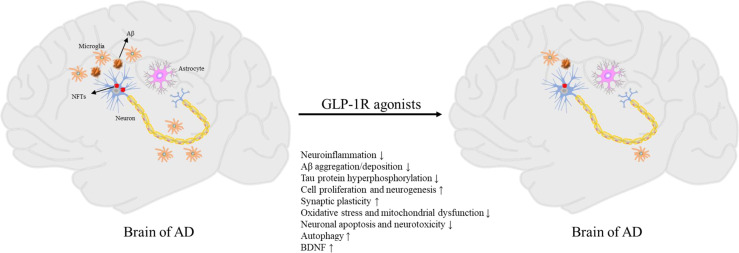
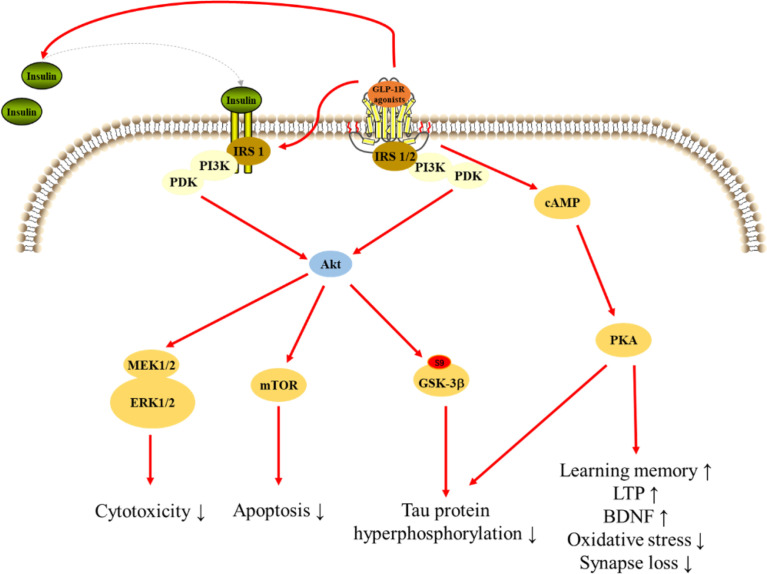
Since type 2 diabetes mellitus (T2DM) is a risk factor for Alzheimer’s disease (AD) and both have the same pathogenesis (e.g., insulin resistance), drugs used to treat T2DM have been gradually found to reduce the progression of AD in AD models. Of these drugs, glucagon-like peptide 1 receptor (GLP-1R) agonists are more effective and have fewer side effects. GLP-1R agonists have reducing neuroinflammation and oxidative stress, neurotrophic effects, decreasing Aβ deposition and tau hyperphosphorylation in AD models, which may be a potential drug for the treatment of AD. However, this needs to be verified by further clinical trials. This study aims to summarize the current information on the mechanisms and effects of GLP-1R agonists in AD.
Overview
The claims and statistics of this paper haven’t been checked yet.
Free: it reads the open-access text and checks the first 5 claims that cite a source we can check. Create a free account to check every claim.
Integrity signals
Registry
Cites
Statistics
Figures
Verification
Claims the paper makes
The claims and statistics of this paper haven’t been checked yet.
Free: it reads the open-access text and checks the first 5 claims that cite a source we can check. Create a free account to check every claim.
Claims other papers make about this one
Each is checked against this paper’s own text: does it say what the citing paper says it does?
The source backs part of the claim, not all of it — or backs it for a different population, condition or comparison.
In the citing paper
“in the treatment of Alzheimer’s diseases (AD) and Parkinson’s diseases (PD), GLP-1RAs have shown potential in slowing disease progression”
From Glucagon-like peptide-1 receptor: mechanisms and advances in therapy (2024) · cites this paper as [13]
Experimental — accuracy not yet measuredThe source backs part of the claim, not all of it — or backs it for a different population, condition or comparison.
In the citing paper
“while their anti-inflammatory properties offer new hope for conditions such as osteoarthritis (OA), rheumatoid arthritis (RA) and cardiovascular diseases.13–15”
From Glucagon-like peptide-1 receptor: mechanisms and advances in therapy (2024) · cites this paper as [13]
Experimental — accuracy not yet measuredThe cited source says what the claim attributes to it.
In the citing paper
“GLP-1RAs also enhance autophagy, a process of cellular clearance of damaged and outdated components.13,312”
From Glucagon-like peptide-1 receptor: mechanisms and advances in therapy (2024) · cites this paper as [13]
Self-check
Percentages, sums and reported differences re-computed from the paper’s own numbers.
The self-check needs the paper’s full text.
Citations
Cites
1 retracted
Paladugu, L., Gharaibeh, A., Kolli, N., Learman, C., Hall, T. C., Li, L., Rossignol, J., Maiti, P., & Dunbar, G. L. (2021) · International Journal of Molecular Sciences · doi:10.3390/ijms22020860 · Cited by 80
RetractedScheltens, P., De Strooper, B., Kivipelto, M., Holstege, H., Chételat, G., Teunissen, C. E., Cummings, J., & van der Flier, W. M. (2021) · The Lancet · doi:10.1016/s0140-6736(20)32205-4 · Cited by 5,465
Comprehensive Review on Alzheimer’s Disease: Causes and Treatment
Breijyeh, Z., & Karaman, R. (2020) · Molecules · doi:10.3390/molecules25245789 · Cited by 2,789 · cited 1×
“However, all these treatments are symptomatic and cannot prevent or reverse AD pathology (81).”
BackgroundLane, C. A., Hardy, J., & Schott, J. M. (2018) · European Journal of Neurology · doi:10.1111/ene.13439 · Cited by 2,616
Mechanisms of Action and Therapeutic Application of Glucagon-like Peptide-1
Drucker, D. J. (2018) · Cell Metabolism · doi:10.1016/j.cmet.2018.03.001 · Cited by 2,170
Oxidative stress, dysfunctional glucose metabolism and Alzheimer disease
Butterfield, D. A., & Halliwell, B. (2019) · Nature Reviews Neuroscience · doi:10.1038/s41583-019-0132-6 · Cited by 1,954 · cited 2×
“Oxidative stress is a serious imbalance between the production of reactive oxygen species (ROS) and reactive nitrogen species (RNS) and antioxidant defenses (65).”
BackgroundMicroglia in Alzheimer’s disease
Hansen, D. V., Hanson, J. E., & Sheng, M. (2018) · Journal of Cell Biology · doi:10.1083/jcb.201709069 · Cited by 1,935 · cited 1×
“During acute inflammation caused by Ab build-up, microglia phagocytose Ab and protect neurons from Ab toxicity (47).”
BackgroundGlucagon-like peptide-1 7–36: a physiological incretin in man
Kreymann, B., Ghatei, M. A., Williams, G., & Bloom, S. R. (1987) · The Lancet · doi:10.1016/s0140-6736(87)91194-9 · Cited by 1,928
The cholinergic system in the pathophysiology and treatment of Alzheimer’s disease
Hampel, H., Mesulam, M.-M., Cuello, A. C., Farlow, M. R., Giacobini, E., Grossberg, G. T., Khachaturian, A. S., Vergallo, A., Cavedo, E., Snyder, P. J., et al. (2018) · Brain · doi:10.1093/brain/awy132 · Cited by 1,918
Glucagon-like peptide 1 (GLP-1)
Müller, T. D., Finan, B., Bloom, S. R., D'Alessio, D., Drucker, D. J., Flatt, P. R., Fritsche, A., Gribble, F., Grill, H. J., Habener, J. F., et al. (2019) · Molecular Metabolism · doi:10.1016/j.molmet.2019.09.010 · Cited by 1,868 · cited 6×
“In humans, nearly all circulating GLP-1 is one of the latter two forms (89).”
BackgroundInfluential
Cited by
Items 101–148 of 148
Giménez, V. M. M., Menéndez, S. G., Sanz, R. L., Schiavone, M., Ferder, L., Inserra, F., & Manucha, W. A. (2025) · World Journal of Experimental Medicine · doi:10.5493/wjem.v15.i3.106743 · Cited by 1
Zhao, W., Niu, X., Zhou, X., Shi, R., & Zhou, X. (2025) · Elsevier eBooks · doi:10.1016/b978-0-443-33885-4.00007-x · Cited by 1
Impairment of astrocyte homeostasis and lysosomal function in Alzheimer’s disease pathogenesis
Collier, J. M., McFarland, M., Krishna, S., Kurella, P., Pinon, C. C., & Sun, D. (2025) · Aging and Disease · doi:10.14336/ad.2025.0694 · Cited by 1
Receptor targets in Alzheimer's disease drug discovery
Stanley, B., Wallach, J. V., & Adejare, A. (2025) · Elsevier eBooks · doi:10.1016/b978-0-443-30008-0.00013-2 · Cited by 1
Pavlova, A. K., Stavrovskaya, A. V., Воронков, Д. Н., Olshansky, A. S., Александрович, П. И., Romanenko, A. S., Sukhorukov, V. S., & Illarioshkin, S. N. (2025) · Neurology neuropsychiatry Psychosomatics · doi:10.14412/20742711-2025-6-54-60 · Cited by 1
Pharmacological Precision Medicine to Treat Dementia
Lee, K., Lin, P., Wu, M.-J., & Sung, P. (2026) · Springer eBooks · doi:10.1007/978-981-95-5222-1_9 · Cited by 1
GLP ‐ 1RAs versus metformin and Parkinson's risk in type 2 diabetes
Sun, M., Wang, X., Lu, Z., Yang, Y., Lv, S., Miao, M., Chen, W., Wu, S., & Zhang, J. (2026) · Diabetes Obesity and Metabolism · doi:10.1111/dom.70459 · Cited by 1
Exendin-4 enhances GLP-1 signaling and reduces anxiety-like behaviors in male heroin withdrawal mice
Xiang, Y., Yan, X., Li, R.-R., Li, C., Yin, D., Luo, C.-C., Xiong, Y.-Q., Hong, Y., Li, Y.-X., & Xia, B.-J. (2026) · PLoS ONE · doi:10.1371/journal.pone.0343995 · Cited by 1
Belavadi, S., & Kadiri, S. K. (2026) · European Journal of Pharmacology · doi:10.1016/j.ejphar.2026.178913 · Cited by 1
Is amyloid beta peptide a driver of inflammaging?
Kechko, O. I., Moskalev, A. A., Franceschi, C., Mitkevich, V. A., & Makarov, A. А. (2026) · Ageing Research Reviews · doi:10.1016/j.arr.2026.103280 · Cited by 1
Nielsen, T. A. (2023) · VBN Forskningsportal (Aalborg Universitet) · doi:10.54337/aau588597746
Efeitos da liraglutida, análogo de GLP-1, no tratamento da doença de Alzheimer
Pompermayer, R. G., Baccarin, C. S., Bortoluci, R. G., Mendonça, W. D. R., & Gyotoku, L. C. (2023) · Revista Interdisciplinar de Saúde e Educação · doi:10.56344/2675-4827.v4n3a2023.4
Huang, Z. (2024) · medRxiv · doi:10.1101/2024.05.07.24306979
Trang, B. K., Chesi, A., Toikumo, S., Pippin, J. A., Pahl, M. C., O’Brien, J. M., Amundadottir, L. T., Brown, K. M., Yang, W., Welles, J. E., et al. (2024) · medRxiv · doi:10.1101/2024.07.18.24310649
Abdelhay, B., Aksissou, M., Elkhattabi, L., & Fait, S. (2024) · Médecine des Maladies Métaboliques · doi:10.1016/j.mmm.2024.09.010
Current and potential use of GLP-1R agonists: beyond type 2 diabetes
Camacho-Luis, A., González-Romero, Á., Zambrano-Galván, G., & Reyes-Romero, M. A. (2024) · Revista Mexicana de Endocrinología Metabolismo y Nutrición · doi:10.24875/rme.23000053
GLP-1 RECEPTOR AGONISTS IN THE TREATMENT OF NEURODEGENERATIVE DISEASES
Secco, P. V. G., Lira, T. M. T., Rosa, H. K. D. A., Leite, L. M. G. V., Barbosa, L. A., Sobrinho, F. A. F. D. A., Nabeiro, J. M. X., da Silva, N. G. F., Silva, J. L., dos Santos, M. T. P., et al. (2025) · International Journal of Health Science · doi:10.22533/at.ed.1595172511043
Unraveling Alzheimer's: A holistic approach to diagnosis, stages and intervention
Dasari, R. D. R., Bhukya, G., Varadammagari, S. V. S., Gujjala, A. G. A., Mugannagari, P. M. P., Pasala, P. K., Reddy, K. S., & Vattikuti, U. M. R. (2025) · International Journal of Science and Research Archive · doi:10.30574/ijsra.2025.15.1.1078
Zulfiqar, A., Bashir, S., & Ahmed, T. (2025) · Bangladesh Journal of Pharmacology · doi:10.3329/bjp.v20i2.80955
NOVAS APLICAÇÕES DOS ANÁLOGOS DE GLP-1 NA PROTEÇÃO CARDÍACA E NEUROLÓGICA
Salotti, C. K. D. O., Fregulia, M. E., Ferreira, B. F., Barbosa, L. M., Silva, G. D. S., Louzada, C. T. N., Rocha, M. B. L., & Boldino, O. L. (2025) · Asclepius International Journal of Scientific Health Science · doi:10.70779/aijshs.v4i11.395
The Potential Role of GLP-1 Receptor Agonists for the Treatment of Alzheimer’s Disease
Oyang, T. (2025) · American journal of student research. · doi:10.70251/hyjr2348.36594600
Drug-repositioning strategies of antidiabetic drugs for Alzheimer's disease
Balaji, B., & Skariyachan, S. (2025) · Elsevier eBooks · doi:10.1016/b978-0-443-40559-4.00010-6
Hsa_circ_0015335 as a potential biomarker for cognitive decline in type 2 diabetes mellitus
Wang, S., Xi, G., Hang, J., Deng, J., Wang, P., Li, Y., Hu, K., Li, L., Shi, Y., & Wang, X. (2025) · Journal of Alzheimer s Disease · doi:10.1177/13872877251405447
Drozd, Z., Dudziak, N., Niemiec, B., Piosik, S., Olesiński, B., Piasecki, Ł., Guzowicz, Z., Gągałka, P., & Kamińska, M. (2025) · Journal of Education Health and Sport · doi:10.12775/jehs.2025.86.66890
Expression of brain-derived neurotrophic factor in Alzheimer's disease
Bišof, K. (2023) · Repozitorij Farmaceutsko-biokemijskog fakulteta (Sveučilišta u Zagrebu)
Hawkins, A., & McCoy, R. G. (2026) · Diabetes Obesity and Cardiometabolic CARE · doi:10.2337/doc25-0020
Oliveira, M. V. (2025) · Portuguese National Funding Agency for Science, Research and Technology (RCAAP Project by FCT)
GLP-1 Receptor Agonists: Emerging Indications, Limitations, and Future Directions
Kaur, S., Hevia, L. C., Lee, D., Mesdaq, H., Wong, J., Diallo, F., Anil, S., Gharibyar, N., & Gharibyar, S. (2026) · Pharmacology & Pharmacy · doi:10.4236/pp.2026.172003
Gong, H., Liu, J., Wang, Y., Lin, X., Wu, G., Ou, Y., Zhou, M., le Yang, Peng, J., Ye, X., et al. (2026) · Tissue and Cell · doi:10.1016/j.tice.2026.103495
Body-wide multi-omic counteraction of aging with GLP-1R agonism
Huang, J., Kwok, A. J., Li, J. C. Y., Chiu, C. L. H., Ip, B. Y. M., Tung, L. Y., Chan, R. C. H., Chan, D. C. W., Wang, Z., Zheng, X., et al. (2026) · Cell Metabolism · doi:10.1016/j.cmet.2026.03.016
SAGE-DM—Senescence-Associated Gluco-Endocrinopathy Diabetes Mellitus: comprehensive review
Szklarz, M., Wołos-Kłosowicz, K., Modzelewska, J., Górny, J. M., Modzelewski, R., & Matuszewski, W. (2026) · European journal of medical research · doi:10.1186/s40001-026-04445-2
Pernal, M., Roguska, Z., Poniewozik, P., Grabowski, K., Dziuba, N., Sim, A., Mioduszewska, J., Rot, P., Poniewozik, P., & Zuzak, A. P. (2026) · Quality in Sport · doi:10.12775/qs.2026.54.70410
The Impact Of Neuroinflammation on the advancement of Neurodegenerative Disorders
J.Ramganesh, J. R., jeya, S. A., & V.Abirami, V. A. (2026) · INTERNATIONAL JOURNAL OF CREATIVE RESEARCH THOUGHTS · doi:10.56975/ijcrt.v14i4.306299
Shao, Y., Yin, Y., Cheng, Y., McGeary, J. E., Taveira, T. H., Tsuang, D. W., Logue, M. W., Ayandeh, S., Ahmed, A., ZAMRINI, E. Y., et al. (2026) · Medical Sciences · doi:10.64898/2026.06.02.26354752
Răducu, L., Georgescu, D. E., Balcangiu‐Stroescu, A.-E., Chiperi, L. V., Văcăroiu, I. A., Bălan, D.-G., Georgescu, M. T., Mihai, D. A., Ignat, L. A., & Tipa, R. O. (2024) · OSF Preprints (OSF Preprints)
Glucose-Lowering Therapies, New Expectations for Brain Health: Emerging Promise and Uncertainty
Kim, S. K. (2026) · Journal of Korean Diabetes · doi:10.4093/jkd.2026.27.2.51
Choudhary, G., Vashisht, K., Sharma, V., Ashawat, M. S., & Kushawaha, S. K. (2026) · Metabolic Brain Disease · doi:10.1007/s11011-026-01942-5
Liao, J., Chen, Y., Lu, Y., Qu, F., Xie, X., Yang, Z., & Wen, W. (2026) · Behavioural Neurology · doi:10.1155/bn/6222269
Neuroinflammation and its role in neurodegenerative diseases
Siva, N. D., Natarajan, P., Ganesh, H., Kannan, R., & Indhuja, R. (2026) · Asian Journal of Pharmacy and Pharmacology · doi:10.31024/ajpp.2026.12.1.2
Tekieli, B., Cyran, W. K., Matsiusheuskaya, T., Cionżyńska, W., Machnik, K., Gaweł, B., Justkowska-Gebauer, A., Olesiński, M., Chudyba, E., & Górecki, M. (2026) · International Journal of Innovative Technologies in Social Science · doi:10.31435/ijitss.3(51).2026.6110
Bigda, P., Rafałowska, Z., Rutz, S., Wojtala, A., Kret, J., Wyrostkiewicz, A., Sadkowski, A., Gdula, J., Zielińska, L., Szpunar, M., et al. (2026) · International Journal of Innovative Technologies in Social Science · doi:10.31435/ijitss.3(51).2026.6153
Otto, B., Zantvoord, J. B., Siskind, D. J., & Vermeulen, J. M. (2026) · Progress in Neuro-Psychopharmacology and Biological Psychiatry · doi:10.1016/j.pnpbp.2026.111978
Raina, G. S., Mehan, S., & Gupta, G. D. (2026) · Naunyn-Schmiedeberg s Archives of Pharmacology · doi:10.1007/s00210-026-06009-x
Reczka, K., Zalewska, Z., Szymkowiak, J., & Woźniak, M. (2026) · International Journal of Innovative Technologies in Social Science · doi:10.31435/ijitss.4(52).2026.6289
Sheng, G., Li, R., Huan, R., Zhang, L., Li, J., & Cai, J. (2026) · Experimental Neurology · doi:10.1016/j.expneurol.2026.116103
Khaled, M. A. Q. R. (2025) · Marmara University Open Access System
The Growing Role of Glucagon-Like Peptide-1 Receptor Agonists in Neuropsychiatry
Tunç, A. E. B., Park, M., Kansara, R., Paul, S., Grysman, N., & Grossberg, G. T. (2026) · Clinical Pharmacology Advances and Applications · doi:10.2147/cpaa.s580850
Metadata
- Authors
- Du, H., Meng, X., Yao, Y., & Xu, J.
- Affiliations
- Harbin Medical University (CN)
- Tongji Hospital (CN)
- Corresponding author
- Xu, Jun
- Venue
- Frontiers in Endocrinology
- Publisher
- Frontiers Media SA
- Published
- 2022-11-17
- Volume
- 13
- Pages
- 1033479-1033479
- ISSN
- 1664-2392 (ISSN-L)
- PMC
- PMC9714676
- OpenAlex
- W4309614066
- Cited by
- 125
- References
- 245
- Citations by year
- 2026: 28 · 2025: 54 · 2024: 33 · 2023: 10
- FWCI
- 3.34
- Type
- journal article
- Language
- en
- Open access
- gold
- doi.org
- Licence
- Locations
- Frontiers in Endocrinology (publishedVersion, cc-by)
- PubMed Central (publishedVersion, cc-by)
- PubMed (publishedVersion)
- DOAJ (DOAJ: Directory of Open Access Journals) (submittedVersion, cc-by-sa)
- Funders
- Ministry of Education of the People's Republic of China
- Topics
- Life Sciences › Neuroscience › Cellular and Molecular Neuroscience › Alzheimer's disease research and treatments
- Health Sciences › Medicine › Psychiatry and Mental health › Dementia and Cognitive Impairment Research
- Health Sciences › Medicine › Endocrinology, Diabetes and Metabolism › Diabetes Treatment and Management
- Keywords
- Alzheimer's disease, GLP-1 receptor agonists, glucagon-like peptide-1, type 2 diabetes, insulin resistance, neuroinflammation, oxidative stress, neurotrophic effects, amyloid-beta deposition, tau hyperphosphorylation, drug repurposing
- MeSH terms
- Glucagon-Like Peptide-1 Receptor, Alzheimer Disease, Diabetes Mellitus, Type 2, Humans, Insulin Resistance, Drug-Related Side Effects and Adverse Reactions
About these checks
Registry, retraction, Cites and statistics results are computed, not judged, with one exception: a printed reference that no index lists is read once by a model before it counts as a citation error. Claims are extracted by a model and kept only when their quote appears verbatim in the text; each cited source is then checked, with a model’s help, for whether it says what the claim relies on. Those verdicts can be wrong — read the claim’s quote and the cited source before relying on one.
Statistics and arithmetic are recomputed, not judged.
Confidence bands are shown only for fields calibrated on our annotated test set. None is calibrated yet, so no band is shown.
What counts as a claim ›How we measure confidence ›How we check this ›
Are you an author, or do you see a problem with this page? Request a review
Data sources
Bibliographic data: Semantic Scholar, OpenAlex, Crossref.
Contains information from the Semantic Scholar Academic Graph Datasets, made available under the ODC Attribution License (ODC-BY 1.0).
Semantic Scholar’s data is described in: Kinney, R., et al. (2023). The Semantic Scholar Open Data Platform. arXiv:2301.10140.
