

Zinc homeostasis and redox alterations in obesity
Open accessThe DOI matches its Crossref record; 284 of the 286 references it cites were found in a registry or an index.
Abstract
Impairment of both cellular zinc and redox homeostasis is a feature of several chronic diseases, including obesity. A significant two-way interaction exists between redox metabolism and the relatively redox-inert zinc ion. Redox metabolism critically influences zinc homeostasis and controls its cellular availability for various cellular functions by regulating zinc exchange from/to zinc-binding proteins. Zinc can regulate redox metabolism and exhibits multiple pro-antioxidant properties. On the other hand, even minor disturbances in zinc status and zinc homeostasis affect systemic and cellular redox homeostasis. At the cellular level, zinc homeostasis is regulated by a multi-layered machinery consisting of zinc-binding molecules, zinc sensors, and two selective families of zinc transporters, the Zinc Transporter (ZnT) and Zrt, Irt-like protein (ZIP). In the present review, we summarize the current state of knowledge on the role of the mutual interaction between zinc and redox homeostasis in physiology and pathophysiology, pointing to the role of zinc in the alterations responsible for redox stress in obesity. Since zinc transporters primarily control zinc homeostasis, we describe how changes in the expression and activity of these zinc-regulating proteins are associated with obesity.
Overview
The claims and statistics of this paper haven’t been checked yet.
Free: it reads the open-access text and checks the first 5 claims that cite a source we can check. Create a free account to check every claim.
Integrity signals
Registry
Cites
Statistics
Figures
Verification
Claims the paper makes
The claims and statistics of this paper haven’t been checked yet.
Free: it reads the open-access text and checks the first 5 claims that cite a source we can check. Create a free account to check every claim.
Claims other papers make about this one
Each is checked against this paper’s own text: does it say what the citing paper says it does?
In the citing paper
“Zinc has anti-oxidative stress and anti-inflammatory functions, and a lack of zinc is related to insulin resistance, hyperleptinemia, and chronic low-grade inflammation [95].”
From Nutrition and Physical Activity in Optimizing Weight Loss and Lean Mass Preservation in the Incretin-Based Medications Era: A Narrative Review (2025) · cites this paper as [95]
Self-check
Percentages, sums and reported differences re-computed from the paper’s own numbers.
The self-check needs the paper’s full text.
Citations
Cites
Free radicals and antioxidants in normal physiological functions and human disease
Valko, M., Leibfritz, D., Moncol, J., Cronin, M. T. D., Mazur, M., & Telser, J. (2007) · The International Journal of Biochemistry & Cell Biology · doi:10.1016/j.biocel.2006.07.001 · Cited by 14,269
Role of Insulin Resistance in Human Disease
Reaven, G. M. (1988) · Diabetes · doi:10.2337/diab.37.12.1595 · Cited by 12,154 · cited 1×
“Resistance to the cellular effects of insulin is a signi fi cant contributor to obesity (125) and gradually leads to a failure of pancreatic b -cell function, which inevitably results in impaired insulin secretion due to a progressive loss of insulin sensitivity of peripheral target tissues.”
BackgroundObesity is associated with macrophage accumulation in adipose tissue
Weisberg, S. P., McCann, D., Desai, M., Rosenbaum, M., Leibel, R. L., & Ferrante, A. W. (2003) · Journal of Clinical Investigation · doi:10.1172/jci200319246 · Cited by 10,041 · cited 2×
“…secretes huge amounts of cytokines and chemokines, collectively de fi ned adipochemokines or adipokines, such as leptin, that promote in fi ltration of adipose tissue by macrophages with subsequent overproduction of RO(N)S and in fl ammatory cytokines, leading to adipose tissue in fl ammation (21, 22).”
BackgroundInflammation and metabolic disorders
Hotamisligil, G. S. (2006) · Nature · doi:10.1038/nature05485 · Cited by 9,199
Biochemistry and molecular cell biology of diabetic complications
Brownlee, M. (2001) · Nature · doi:10.1038/414813a · Cited by 9,107
Serum Immunoreactive-Leptin Concentrations in Normal-Weight and Obese Humans
Considine, R. V., Sinha, M. K., Heiman, M. L., Kriauciunas, A., Stephens, T. W., Nyce, M. R., Ohannesian, J. P., Marco, C. C., McKee, L. J., Bauer, T. L., et al. (1996) · New England Journal of Medicine · doi:10.1056/nejm199602013340503 · Cited by 6,326
Increased oxidative stress in obesity and its impact on metabolic syndrome
Furukawa, S., Fujita, T., Shimabukuro, M., Iwaki, M., Yamada, Y., Nakajima, Y., Nakayama, O., Makishima, M., Matsuda, M., & Shimomura, I. (2004) · Journal of Clinical Investigation · doi:10.1172/jci21625 · Cited by 5,508 · cited 2×
“Similarly, accumulated lipids are themselves targets of oxidation, causing an increase in lipid peroxidation (19).”
BackgroundMechanisms linking obesity to insulin resistance and type 2 diabetes
Kahn, S. E., Hull, R. L., & Utzschneider, K. M. (2006) · Nature · doi:10.1038/nature05482 · Cited by 5,448 · cited 1×
“…attempt to compensate for decreased sensitivity to insulin action by increasing the rate of insulin synthesis and release through hypertrophic and hyperplastic processes in pancreatic b -islets to improve glucose sensing until the compensatory potential of the pancreas is exhausted (126, 127).”
BackgroundReactive oxygen species (ROS) as pleiotropic physiological signalling agents
Sies, H., & Jones, D. P. (2020) · Nature Reviews Molecular Cell Biology · doi:10.1038/s41580-020-0230-3 · Cited by 5,335 · cited 2×
“This is particularly interesting as there is growing evidence that redox signaling is critical for various cellular functions (6, 193).”
BackgroundRole of nrf2 in oxidative stress and toxicity
Ma, Q. (2013) · Annual Review of Pharmacology and Toxicology · doi:10.1146/annurev-pharmtox-011112-140320 · Cited by 4,903
Research works printed but not linked: 1
- Institute of Medicine (US) Panel on Micronutrients. Dietary reference intakes for vitamin A, vitamin K, arsenic, boron, chromium, copper, iodine, iron, manganese, molybdenum, nickel, silicon, vanadium, and zinc Vol. 12.. Washington (DC: National Academies Press (US (2001). Available at: https://www.ncbi.nlm.nih.gov/books/NBK222317/. 25057538
Cited by
Zinc and Diabetes: A Connection between Micronutrient and Metabolism
Ahmad, R., Shaju, R., Atfi, A., & Razzaque, M. S. (2024) · Cells · doi:10.3390/cells13161359 · Cited by 77
Zhang, Q., Zhang, Y., Chen, H., Sun, L., Zhang, B., Yue, D., Wang, C., & Zhang, Z.-F. (2024) · Scientific Reports · doi:10.1038/s41598-024-57664-0 · Cited by 56
“They form stable complexes with thiols (sulfur-containing molecules) and proteins, thereby affecting the cellular redox balance 35 .”
BackgroundBarana, L., De Fano, M., Cavallo, M., Manco, M., Prete, D., Fanelli, C. G., Porcellati, F., & Pippi, R. (2025) · Nutrients · doi:10.3390/nu18010131 · Cited by 13
The role of zinc in the premature brain: functions, outcomes and future research perspectives
Chamakioti, M., Brion, L. P., Viswanathan, P., Lair, C. S., & Angelis, D. (2024) · Frontiers in Pediatrics · doi:10.3389/fped.2024.1496846 · Cited by 14
Relationship of SOD-1 Activity in Metabolic Syndrome and/or Frailty in Elderly Individuals
Dzięgielewska-Gęsiak, S., Wysocka, E., Fatyga, E., & Muc‐Wierzgoń, M. (2024) · Metabolites · doi:10.3390/metabo14090514 · Cited by 10
“It was observed that there was reduced SOD-1 activity and zinc concentration in obese men compared to a group of healthy, normal BMI persons [47].”
ResultLi, Y., Lu, Y., Lin, X., & Zhao, L. (2026) · Annals of Medicine · doi:10.1080/07853890.2025.2611191 · Cited by 12
“…regulation mechanisms at the cellular level), which will aid in deepening the understanding of zinc’s role in metabolism and redox processes [300,301]; establishing standardized platforms through multi-center collaboration (using unified protocols and shared reference materials for…”
Espriu-Corella, S. M., Serrano‐Sandoval, S. N., & Antunes‐Ricardo, M. (2024) · Food Chemistry · doi:10.1016/j.foodchem.2024.141342 · Cited by 9
Comprehensive Roles of ZIP and ZnT Zinc Transporters in Metabolic Inflammation
Barman, S., Pradeep, S. R., & Srinivasan, K. (2026) · Targets · doi:10.3390/targets4010005 · Cited by 9
“This disruption may enhance microbial product translocation into systemic circulation, causing inflammation and metabolic abnormalities which may further lead to different pathological conditions such as metaflammation, IBD, obesity, and T2D [6,7,72,100].”
The interplay between trace element zinc and chronic liver diseases: Still water run deep
Zhang, X., Gong, Y., & Sun, C. (2025) · Journal of Functional Foods · doi:10.1016/j.jff.2025.106784 · Cited by 5
Šoškić, S., Gluvic, Z. M., Obradovic, M. M., Ilinčić, B., Čabarkapa, V., Stokić, E., & Isenović, E. R. (2025) · Scandinavian Journal of Clinical and Laboratory Investigation · doi:10.1080/00365513.2025.2460034 · Cited by 4
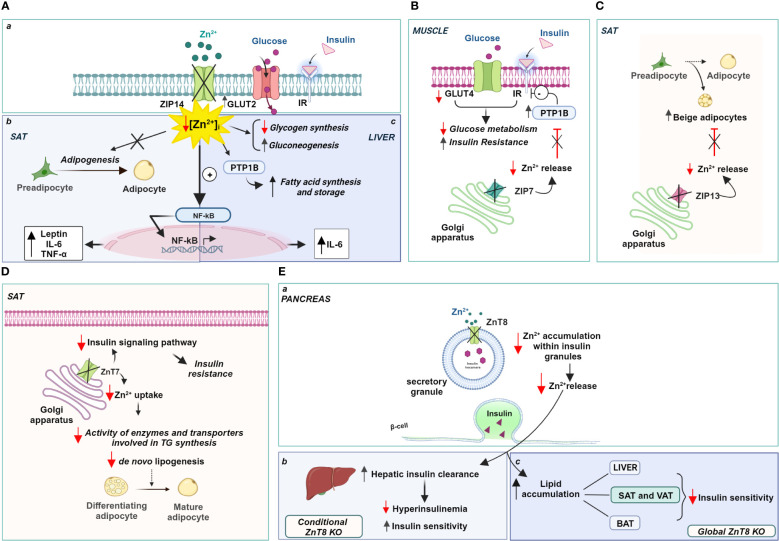
“Because zinc homeostasis is primarily controlled by zinc transporters, a possible explanation for the different zinc levels and distribution in obesity could be changes in the expression and activity of these zinc-regulating proteins [31].”
Molecular mechanisms of zinc in alleviating obesity: Recent updates (Review)
Yudhani, R. D., Pakha, D. N., Wiyono, N., & Wasita, B. (2024) · World Academy of Sciences Journal · doi:10.3892/wasj.2024.285 · Cited by 8
Temnik, M., Gurin, S., Balakin, A., Byshovets, R., Kalmukova, O., Vovk, T. B., Halenova, T., Raksha, N., Falalyeyeva, T. M., & Savchuk, О. (2025) · Frontiers in Pharmacology · doi:10.3389/fphar.2025.1543166 · Cited by 5
“Additionally, the observed improvement in lipid pro fi les (lower triglyceride and cholesterol levels) suggests that reducing oxidative stress contributes to better lipid metabolism, likely via the preservation of hepatic function and insulin sensitivity (Franco and Canzoniero, 2024).”
Unar, A., Afridi, H. I., Ali, A., Ali, N., & Qureshi, T. (2024) · Biological Trace Element Research · doi:10.1007/s12011-024-04281-7 · Cited by 4
Severe Dietary Zinc Deficiency Does Not Significantly Alter Energy Balance in Adult Mice
Murdoch, C. C., Weiss, A., Enriquez, K. T., Traina, K. A., Drury, S. L., Winn, N. C., Lantier, L., & Skaar, E. P. (2025) · Journal of Nutrition and Metabolism · doi:10.1155/jnme/6911386 · Cited by 2
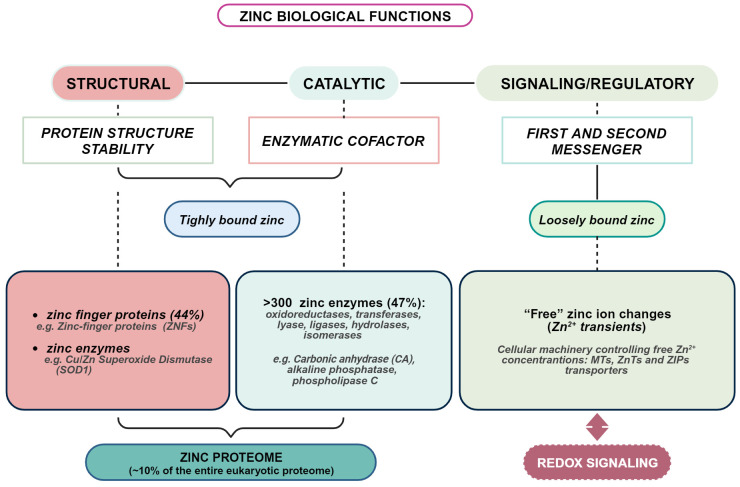
“Zn functions as a structural and catalytic cofactor for over 300 diferent enzymes, thereby enabling their catalytic Journal of Nutrition and Metabolism activity while also participating in signaling as free ions [2, 3, 8, 13].”
Ganamurali, N., & Sabarathinam, S. (2026) · Journal of Biochemical and Molecular Toxicology · doi:10.1002/jbt.70846 · Cited by 3
“This oxidative environment interferes with insulin signaling and prolongs the metabolic issues linked to obesity [3–5].”
Molecular Imaging of In Vivo Zinc Distribution Using Nuclear and Magnetic Resonance Imaging
Mu, C., Liu, X., Ali, U., Larson, P. E. Z., Ho, S. P., & Flavell, R. R. (2026) · Chemical & Biomedical Imaging · doi:10.1021/cbmi.5c00264 · Cited by 2
Onaolapo, A. Y., Okunola, O. B., Olofinnade, A. T., & Onaolapo, O. J. (2024) · Current Biotechnology · doi:10.2174/0122115501305679240612095751 · Cited by 5
Relationship between asprosin and certain biochemical parameters in obese patients
Humadi, N. S., & Saleh, N. A. (2025) · Regulatory Mechanisms in Biosystems · doi:10.15421/0225059 · Cited by 2
Sá, D., Mendonça, M. I., Sousa, F., Abreu, G., Ferreira, M., Henriques, E., Freitas, S., Rodrigues, M., Borges, S., Guerra, G., et al. (2025) · Genes · doi:10.3390/genes16091019 · Cited by 2
“Both genetic polymorphisms and environmental factors affecting zinc homeostasis may contribute to the development of obesity and related metabolic disorders [28].”
Portnova, G. V., Proskurnina, E. V., Liaukovich, K. M., Mikheev, I. V., Chermashentsev, G. R., Alshanskaia, E. I., & Martynova, O. (2026) · Journal of Molecular Neuroscience · doi:10.1007/s12031-026-02478-0 · Cited by 2
Kadir, L., & Pateda, S. M. (2001) · Tropical Journal of Natural Product Research · doi:10.17161/iallt.v33i1.8328
Nayyar, H., Bhatti, A., John, P. C. L., & Khan, G. A. (2026) · PeerJ · doi:10.7717/peerj.20184 · Cited by 2
“This may reflect compensatory mechanisms such as metallothionein upregulation, altered absorption, or redistribution from tissue stores ( Franco & Canzoniero, 2024 ; Stanojević et al., 2025 ; Sun et al., 2023 ).”
Sikoryn, O. Y., Skrypnyk, N. V., Romaniv, T. V., Кочержук, І., Еrstenyuk, H. M., Сікорин, У., & Artemenko, N. R. (2026) · PROBLEMS OF ENDOCRINE PATHOLOGY · doi:10.21856/j-pep.2026.1.03
Al-Kadi, A. (2026) · Obesity Research & Clinical Practice · doi:10.1016/j.orcp.2026.03.006
Vázquez-Vázquez, L. C., Nava-Cabrera, A., Soto‐Sánchez, J., Ramírez-Cruz, A., Cruz, M., Cossío-Torres, P. E., Layseca‐Espinosa, E., Vázquez‐Moreno, M. A., Hernández‐Mendoza, H., & Ríos-Lugo, M. J. (2026) · BioMetals · doi:10.1007/s10534-026-00839-1
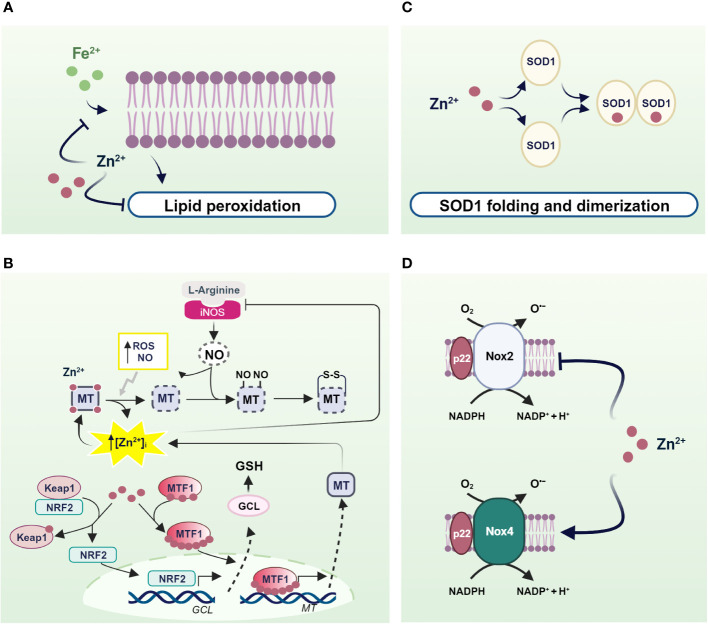
“Oxidative stress associated with obesity may disrupt Zn homeostasis by altering metallothioneins and Zn transporters (Franco and Canzoniero 2024).”
Zhou, Z., Chen, J. Q., Chen, Y., Fu, Y., Qi, P., Li, Y., & Ke, L. (2026) · Biological Trace Element Research · doi:10.1007/s12011-026-05242-y
Heavy Metals as Endocrine Disruptors: Their Relationship with Obesity
Koca, A. O., Keskin, M., & Cesur, M. (2026) · IntechOpen eBooks · doi:10.5772/intechopen.1016994
Zhong, J., Zhang, L., Wu, X., Xu, Z., Cheng, S., Long, T., Yang, T., & Hong, F. (2026) · European Journal of Nutrition · doi:10.1007/s00394-026-04067-8
Sailis, A. B. (2026) · Journal of Applied Toxicology · doi:10.1002/jat.70382
Adipositas und Spurenelemente – Zink als komplementärer Regulator des metabolischen Systems
Heider, S., Hauffe, R., Kleinridders, A., & Maares, M. (2026) · Adipositas - Ursachen Folgeerkrankungen Therapie · doi:10.1055/a-2910-3902
“Es ist allgemein anerkannt, dass Adipositas zu einer verminderten Pro-duktion von Superoxiddismutase, Katalase und Glutathionperoxi-dasen (GPX) führt [8].”
Bai, X., Zhou, K.-L., Hu, W.-H., Fu, L. S., Sun, S.-S., Yuan, Y.-M., Xu, K., & Liu, Y.-H. (2026) · Nutrients · doi:10.3390/nu18193121
“Zinc is an indispensable dietary trace micronutrient for human physiological homeostasis, functioning as a structural cofactor and transcriptional regulator for a broad spectrum of core antioxidant enzymes to maintain cellular redox equilibrium [11,12].”
Metadata
- Authors
- Franco, C., & Canzoniero, L. M. T.
- Affiliations
- University of Sannio (IT)
- Corresponding author
- Canzoniero, Lorella Maria Teresa
- Venue
- Frontiers in Endocrinology
- Publisher
- Frontiers Media SA
- Published
- 2024-01-08
- Volume
- 14
- Pages
- 1273177-1273177
- ISSN
- 1664-2392 (ISSN-L)
- PMC
- PMC10800374
- OpenAlex
- W4390664988
- Cited by
- 31
- References
- 286
- Citations by year
- 2026: 15 · 2025: 7 · 2024: 8
- FWCI
- 1.76
- Type
- journal article
- Language
- en
- Open access
- gold
- doi.org
- Licence
- Locations
- Frontiers in Endocrinology (publishedVersion, cc-by)
- PubMed Central (publishedVersion, cc-by)
- PubMed (publishedVersion)
- DOAJ (DOAJ: Directory of Open Access Journals) (submittedVersion, cc-by-sa)
- Topics
- Health Sciences › Nursing › Nutrition and Dietetics › Trace Elements in Health
- Physical Sciences › Environmental Science › Health, Toxicology and Mutagenesis › Heavy Metal Exposure and Toxicity
- Health Sciences › Medicine › Hematology › Iron Metabolism and Disorders
- Keywords
- zinc homeostasis, redox homeostasis, obesity, zinc transporters, ZIP family, zinc-binding proteins, redox stress
- MeSH terms
- Antioxidants, Homeostasis, Humans, Obesity, Oxidation-Reduction, Zinc
About these checks
Registry, retraction, Cites and statistics results are computed, not judged, with one exception: a printed reference that no index lists is read once by a model before it counts as a citation error. Claims are extracted by a model and kept only when their quote appears verbatim in the text; each cited source is then checked, with a model’s help, for whether it says what the claim relies on. Those verdicts can be wrong — read the claim’s quote and the cited source before relying on one.
Statistics and arithmetic are recomputed, not judged.
Confidence bands are shown only for fields calibrated on our annotated test set. None is calibrated yet, so no band is shown.
What counts as a claim ›How we measure confidence ›How we check this ›
Are you an author, or do you see a problem with this page? Request a review
Data sources
Bibliographic data: Semantic Scholar, OpenAlex, Crossref.
Contains information from the Semantic Scholar Academic Graph Datasets, made available under the ODC Attribution License (ODC-BY 1.0).
Semantic Scholar’s data is described in: Kinney, R., et al. (2023). The Semantic Scholar Open Data Platform. arXiv:2301.10140.
