

A comparative analysis of energy expenditure and substrate metabolism in male university students with overweight/obesity: Tabata vs HIIT and MICT
Open accessThe DOI matches its Crossref record; 41 of the 41 references it cites were found in a registry or an index.
Abstract
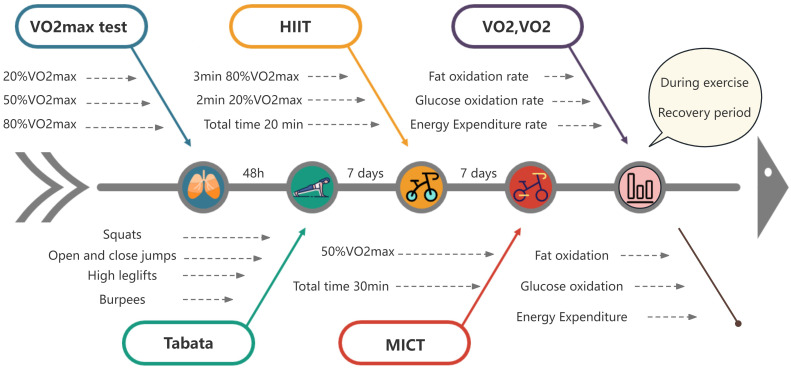
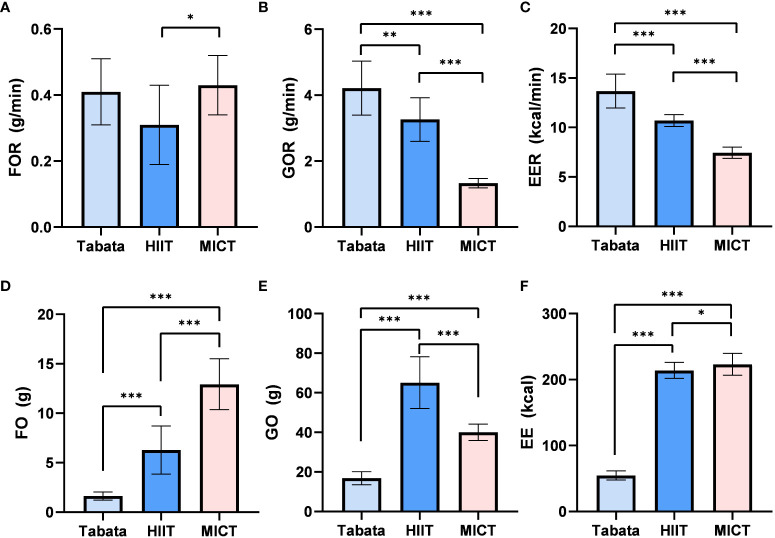
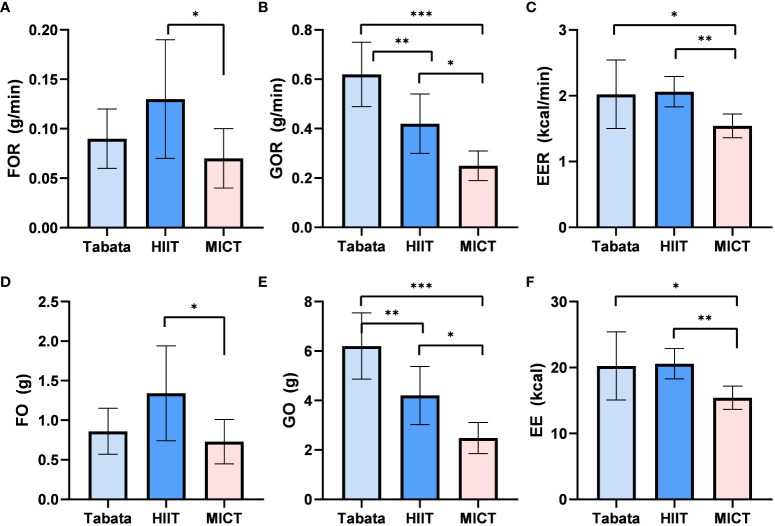
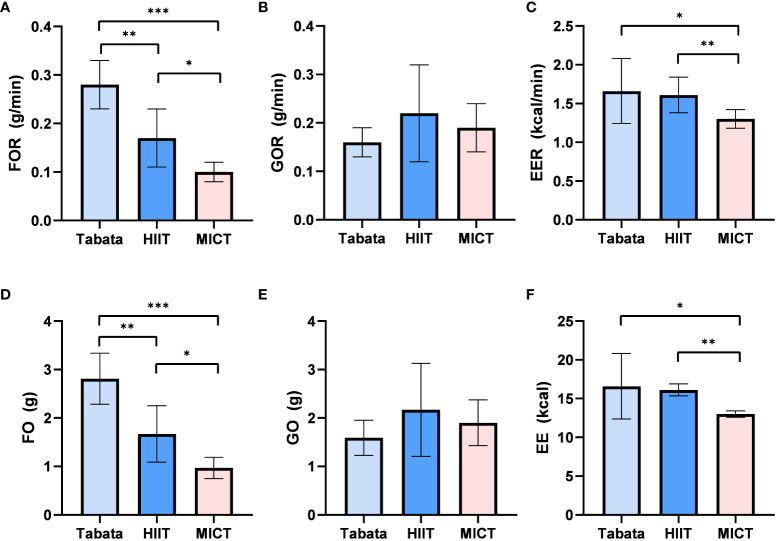
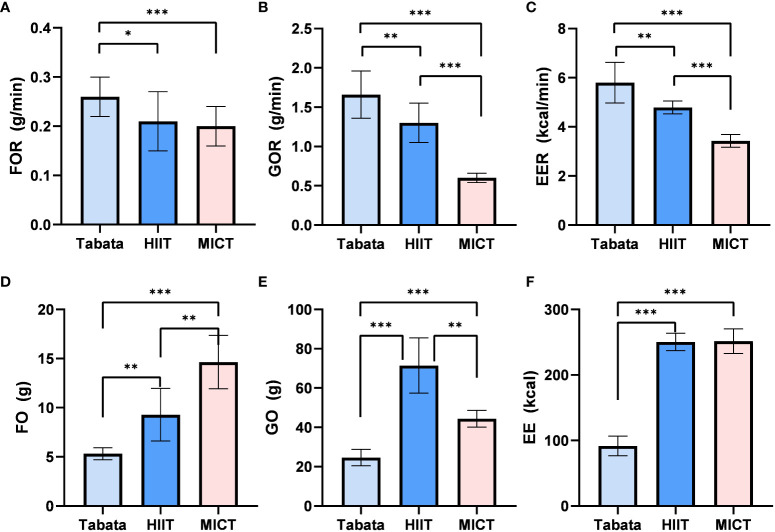
Introduction: Exploring the energy expenditure and substrate metabolism data during exercise, 10-minute recovery, and 20-minute recovery phases in Tabata, HIIT(High-Intensity Interval Training), and MICT(Moderate-Intensity Continuous Training). This study explores the scientific aspects of weight reduction strategies, examining energy expenditure and substrate metabolism from various training perspectives. The aim is to establish a theoretical foundation for tailoring targeted exercise plans for individuals within the population with overweight/obesity. Methods: This study used an experimental design with fifteen male university students with overweight/obesity. Participants underwent random testing with Tabata, HIIT, and MICT. Tabata involved eight sets of 20 seconds exercise and 10 seconds rest, totaling 4 minutes. HIIT included four sets of power cycling: 3 minutes at 80% VO 2max intensity followed by 2 minutes at 20% VO 2max . MICT comprised 30 minutes of exercise at 50% VO 2max intensity. Gas metabolism indices were continuously measured. Subsequently, fat and glucose oxidation rates, along with energy expenditure, were calculated for each exercise type. Results: During both the exercise and recovery phases, the Tabata group exhibited a significantly higher fat oxidation rate of (0.27 ± 0.03 g/min) compared to the HIIT group (0.20 ± 0.04 g/min, p<0.05) and the MICT group (0.20 ± 0.03g/min, p<0.001). No significant difference was observed between the HIIT and MICT groups (p=0.854). In terms of energy expenditure rate, the Tabata group maintained a substantially elevated level at 5.76 ± 0.74kcal/min compared to the HIIT group (4.81 ± 0.25kcal/min, p<0.01) and the MICT group (3.45 ± 0.25kcal/min, p<0.001). Additionally, the energy expenditure rate of the HIIT group surpassed that of the MICT group significantly (p<0.001). Conclusion: The study finds that male college students with overweight/obesity in both exercise and recovery, Tabata group has lower fat and glucose oxidation rates, and energy expenditure compared to HIIT and MICT groups. However, over the entire process, Tabata still exhibits significantly higher rates in these aspects than HIIT and MICT. Despite a shorter exercise duration, Tabata shows a noticeable “time-efficiency” advantage. Tabata can be used as an efficient short-term weight loss exercise program for male college students with overweight/obesity.
Overview
The claims and statistics of this paper haven’t been checked yet.
Free: it reads the open-access text and checks the first 5 claims that cite a source we can check. Create a free account to check every claim.
Integrity signals
Registry
Cites
Statistics
Figures
Verification
Claims the paper makes
The claims and statistics of this paper haven’t been checked yet.
Free: it reads the open-access text and checks the first 5 claims that cite a source we can check. Create a free account to check every claim.
Claims other papers make about this one
Each is checked against this paper’s own text: does it say what the citing paper says it does?
The source backs part of the claim, not all of it — or backs it for a different population, condition or comparison.
In the citing paper
“High-intensity exercise depletes muscle glycogen stores more extensively, necessitating increased oxygen uptake during recovery for glycogen resynthesis [27].”
From Isocaloric High-Intensity Interval and Circuit Training Increases Excess Post-Exercise Oxygen Consumption and Lipid Oxidation Compared to Moderate-Intensity Continuous Training (2025) · cites this paper as [27]
Experimental — accuracy not yet measured
Self-check
Percentages, sums and reported differences re-computed from the paper’s own numbers.
The self-check needs the paper’s full text.
Citations
Cites
Psychophysical bases of perceived exertion
BORG, G. A. V. (1982) · Medicine & Science in Sports & Exercise · doi:10.1249/00005768-198205000-00012 · Cited by 16,580
An effect size primer: A guide for clinicians and researchers.
Ferguson, C. J. (2009) · Professional Psychology: Research and Practice · doi:10.1037/a0015808 · Cited by 3,467
Calculation of substrate oxidation rates in vivo from gaseous exchange.
Frayn, K. N. (1983) · Journal of Applied Physiology · doi:10.1152/jappl.1983.55.2.628 · Cited by 2,365
Billat, L. V. (2001) · Sports Medicine · doi:10.2165/00007256-200131010-00002 · Cited by 663
Trapp, E. G., Chisholm, D. J., Freund, J., & Boutcher, S. H. (2008) · International Journal of Obesity · doi:10.1038/sj.ijo.0803781 · Cited by 533
Short-chain fatty acids as potential regulators of skeletal muscle metabolism and function
Frampton, J., Murphy, K. G., Frost, G., & Chambers, E. S. (2020) · Nature Metabolism · doi:10.1038/s42255-020-0188-7 · Cited by 516
High-intensity training versus traditional exercise interventions for promoting health
NYBO, L., SUNDSTRUP, E., JAKOBSEN, M. D., MOHR, M., HORNSTRUP, T., SIMONSEN, L., BÜLOW, J., RANDERS, M. B., NIELSEN, J. J., AAGAARD, P., et al. (2010) · Medicine & Science in Sports & Exercise · doi:10.1249/mss.0b013e3181d99203 · Cited by 403
Yang, Z., Scott, C. A., Mao, C., Tang, J., & Farmer, A. J. (2014) · Sports Medicine · doi:10.1007/s40279-013-0128-8 · Cited by 346
Keating, S. E., Johnson, N. A., Mielke, G. I., & Coombes, J. S. (2017) · Obesity Reviews · doi:10.1111/obr.12536 · Cited by 344 · cited 1×
“Although some studies suggest that HIIT is more effective for weight loss than MICT, due to differences in research methods and training programs, it is premature to conclude that HIIT is superior to MICT for weight loss (16, 17).”
ResultA Review of Obesity, Physical Activity, and Cardiovascular Disease
Elagizi, A., Kachur, S., Carbone, S., Lavie, C. J., & Blair, S. N. (2020) · Current Obesity Reports · doi:10.1007/s13679-020-00403-z · Cited by 310
Exercise for the management of type 2 diabetes: a review of the evidence
Zanuso, S., Jimenez, A., Pugliese, G., Corigliano, G., & Balducci, S. (2010) · Acta Diabetologica · doi:10.1007/s00592-009-0126-3 · Cited by 282
Nutrition and Supplement Update for the Endurance Athlete: Review and Recommendations
Vitale, K., & Getzin, A. (2019) · Nutrients · doi:10.3390/nu11061289 · Cited by 269
Ciolac, E. G., Bocchi, E. A., Bortolotto, L. A., Carvalho, V. O., Greve, J. M., & Guimarães, G. V. (2010) · Hypertension Research · doi:10.1038/hr.2010.72 · Cited by 242
Tabata, I. (2019) · The Journal of Physiological Sciences · doi:10.1007/s12576-019-00676-7 · Cited by 217 · cited 1×
“Originating in Japan, Tabata involves 20 seconds of exercise, 10 seconds of rest, repeated for eight sets, totaling a 4-minute interval training session (10, 11).”
MethodWewege, M. A., Thom, J. M., Rye, K.-A., & Parmenter, B. J. (2018) · Atherosclerosis · doi:10.1016/j.atherosclerosis.2018.05.002 · Cited by 210
Guo, Z., Li, M., Cai, J., Gong, W., Liu, Y., & Liu, Z. (2023) · International Journal of Environmental Research and Public Health · doi:10.3390/ijerph20064741 · Cited by 163
Skeletal muscle energy metabolism in obesity
Mengeste, A. M., Rustan, A. C., & Lund, J. (2021) · Obesity · doi:10.1002/oby.23227 · Cited by 141
Martins, C., Kazakova, I., Ludviksen, M., Mehus, I., Wisloff, U., Kulseng, B., Morgan, L., & King, N. (2016) · International Journal of Sport Nutrition and Exercise Metabolism · doi:10.1123/ijsnem.2015-0078 · Cited by 128
Chipkin, S. R., Klugh, S. A., & Chasan-Taber, L. (2001) · Cardiology Clinics · doi:10.1016/s0733-8651(05)70231-9 · Cited by 123
Kolnes, K. J., Petersen, M. H., Lien-Iversen, T., Højlund, K., & Jensen, J. (2021) · Frontiers in Physiology · doi:10.3389/fphys.2021.737709 · Cited by 112
Increased neuroendocrine response to a repeated bout of endurance exercise
RONSEN, O., HAUG, E., KLARLUND PEDERSEN, B., & BAHR, R. (2001) · Medicine & Science in Sports & Exercise · doi:10.1097/00005768-200104000-00010 · Cited by 101 · cited 1×
“The study suggests (22) that the duration of exercise signi fi cantly in fl uences the body ’ s ratio of glucose to lipid energy provisioning.”
BackgroundMoniz, S. C., Islam, H., & Hazell, T. J. (2020) · Scandinavian Journal of Medicine & Science in Sports · doi:10.1111/sms.13610 · Cited by 78
Trombold, J. R., Christmas, K. M., Machin, D. R., Kim, I.-Y., & Coyle, E. F. (2013) · Journal of Applied Physiology · doi:10.1152/japplphysiol.01028.2012 · Cited by 77
Lu, Y., Wiltshire, H., Baker, J. S., Wang, Q., & Ying, S. (2023) · Frontiers in Physiology · doi:10.3389/fphys.2023.1095315 · Cited by 75
High-intensity exercise attenuates postprandial lipaemia and markers of oxidative stress
Gabriel, B., Ratkevicius, A., Gray, P., Frenneaux, M. P., & Gray, S. R. (2012) · Clinical Science · doi:10.1042/cs20110600 · Cited by 72
Panissa, V. L. G., Fukuda, D. H., Staibano, V., Marques, M., & Franchini, E. (2021) · Obesity Reviews · doi:10.1111/obr.13099 · Cited by 59
Brun, J.-F., Myzia, J., Varlet-Marie, E., Raynaud de Mauverger, E., & Mercier, J. (2022) · Nutrients · doi:10.3390/nu14081605 · Cited by 48
Schaun, G. Z., Alberton, C. L., Ribeiro, D. O., & Pinto, S. S. (2017) · European Journal of Applied Physiology · doi:10.1007/s00421-017-3636-7 · Cited by 45
Lee, K.-J., Noh, B., & An, K.-O. (2021) · International Journal of Environmental Research and Public Health · doi:10.3390/ijerph181910305 · Cited by 43
Yin, M., Chen, Z., Nassis, G. P., Liu, H., Li, H., Deng, J., & Li, Y. (2023) · Journal of Exercise Science & Fitness · doi:10.1016/j.jesf.2023.08.001 · Cited by 40
Maylor, B. D., Zakrzewski-Fruer, J. K., Orton, C. J., & Bailey, D. P. (2018) · Journal of science and medicine in sport · doi:10.1016/j.jsams.2018.05.022 · Cited by 38
Prins, P. J., Noakes, T. D., Buga, A., D’Agostino, D. P., Volek, J. S., Buxton, J. D., Heckman, K., Jones, D. W., Tobias, N. E., Grose, H. M., et al. (2023) · Frontiers in Nutrition · doi:10.3389/fnut.2023.1084021 · Cited by 38
An Exercise Protocol Designed to Control Energy Expenditure for Long-Term Space Missions
Matsuo, T., Ohkawara, K., Seino, S., Shimojo, N., Yamada, S., Ohshima, H., Tanaka, K., & Mukai, C. N. (2012) · Aviation Space and Environmental Medicine · doi:10.3357/asem.3298.2012 · Cited by 35
Low carbohydrate high fat ketogenic diets on the exercise crossover point and glucose homeostasis
Noakes, T. D., Prins, P. J., Volek, J. S., D’Agostino, D. P., & Koutnik, A. P. (2023) · Frontiers in Physiology · doi:10.3389/fphys.2023.1150265 · Cited by 33 · cited 2×
“For instance, in 1 minute of exercise at 150% VO 2max intensity, muscle glycogen levels can decrease by 20% (24).”
BackgroundEffect of high-intensity interval exercise on basal triglyceride metabolism in non-obese men
Bellou, E., Magkos, F., Kouka, T., Bouchalaki, E., Sklaveniti, D., Maraki, M. I., Tsekouras, Y. E., Panagiotakos, D. B., Kavouras, S. A., & Sidossis, L. S. (2013) · Applied Physiology, Nutrition, and Metabolism · doi:10.1139/apnm-2012-0468 · Cited by 29
Gilson, N. D., Andersson, D., Papinczak, Z. E., Rutherford, Z. H., John, J., Coombes, J. S., & Brown, W. J. (2023) · Scandinavian Journal of Medicine and Science in Sports · doi:10.1111/sms.14349 · Cited by 29
Cadenas‐Sánchez, C., Fernández‐Rodríguez, R., Martínez‐Vizcaíno, V., González, N. D. L. R., Lavie, C. J., Galán-Mercant, A., & Jiménez‐Pavón, D. (2023) · European Journal of Preventive Cardiology · doi:10.1093/eurjpc/zwad309 · Cited by 29
Valkenborghs, S. R., van Vliet, P., Nilsson, M., Zalewska, K., Visser, M. M., Erickson, K. I., & Callister, R. (2019) · Physiotherapy Research International · doi:10.1002/pri.1775 · Cited by 20
Moon, J., Oh, M., Kim, S., Lee, K., Lee, J., Song, Y., & Jeon, J. Y. (2023) · Sensors · doi:10.3390/s23229235 · Cited by 14
McCarthy, S. F., Jarosz, C., Ferguson, E. J., Kenno, K. A., & Hazell, T. J. (2023) · European Journal of Applied Physiology · doi:10.1007/s00421-023-05334-w · Cited by 13
Effects of Mode and Duration of Exercises on Fat Mass of Obese Population
Hassan, B., Farooqui, S. I., Usman, M., Farhad, A., & Adnan, Q. U. A. (2020) · Journal of College of Physicians And Surgeons Pakistan · doi:10.29271/jcpsp.2020.04.412 · Cited by 4
Research works printed but not linked: 1
- Keating SE Johnson NA Mielke GI Coombes JS. A systematic review and meta-analysis of interval training versus moderate-intensity continuous training on body adiposity. Obes Rev. (2017) 18(8): 943–64. doi: 10.1111/obr.12536 28513103 · DOI · Paper page
Cited by
Liu, X., Xu, M., Wang, H., & Zhu, L. (2025) · Nutrients · doi:10.3390/nu17162695 · Cited by 42
“Research shows that high-intensity interval training can significantly increase energy expenditure and fat metabolism [76,77].”
Self-citationLv, Y., Dong, X., Sun, T., Jiang, S., Gao, Y., Liang, J., Hu, S., Yu, H., & Hou, X. (2024) · Scientific Reports · doi:10.1038/s41598-024-81538-0 · Cited by 10
Faleiro, V., Gurgel, A. V., Guimarães, T. T., Figueiredo, T. C., Teixeira, F. G., Jotta, B., Monteiro, E. R., Meirelles, A. G., Caldas, C. C. A., de Almeida, M. T., et al. (2025) · Sports · doi:10.3390/sports13100355 · Cited by 4
“High-intensity exercise depletes muscle glycogen stores more extensively, necessitating increased oxygen uptake during recovery for glycogen resynthesis [27].”
Liang, W., Yan, X., Zhao, L., Xu, S., Liu, C., & Huang, W. (2025) · BMC Public Health · doi:10.1186/s12889-025-25802-6 · Cited by 2
“As the total sprint volume increases, the cumulative time spent in active recovery also increases, which may synergistically enhance Excess Post-exercise Oxygen Consumption (EPOC) and upregulate fat oxidation pathways for a prolonged period post-exercise [61, 62].”
Ye, C., Fu, H., Zhou, X., & Zhang, Z. (2026) · Frontiers in Physiology · doi:10.3389/fphys.2025.1732253 · Cited by 2
“In obese adults, HIIT has been proven to achieve fat loss and cardiorespiratory fitness (CRF) improvement effects that are no less than or even better than MICT (Maillard et al., 2018; Deng and Wang, 2024).”
Metadata
- Authors
- Wang, Y., Fan, C., Cheng, L., Wang, Y., Peng, D., Li, F., Han, Y., & Wang, H.
- Affiliations
- Guangxi Normal University (CN)
- Hebei University of Environmental Engineering (CN)
- Corresponding author
- Wang, Hongli
- Venue
- Frontiers in Endocrinology
- Publisher
- Frontiers Media SA
- Published
- 2024-02-27
- Volume
- 15
- Pages
- 1323093-1323093
- ISSN
- 1664-2392 (ISSN-L)
- PMC
- PMC10927983
- OpenAlex
- W4392196663
- Cited by
- 16
- References
- 41
- Citations by year
- 2026: 9 · 2025: 5 · 2024: 2
- FWCI
- 7.89
- Type
- journal article
- Language
- en
- Open access
- gold
- doi.org
- Licence
- Locations
- Frontiers in Endocrinology (publishedVersion, cc-by)
- PubMed Central (publishedVersion, cc-by)
- PubMed (publishedVersion)
- DOAJ (DOAJ: Directory of Open Access Journals) (submittedVersion)
- Topics
- Health Sciences › Medicine › Physiology (medical) › Cardiovascular and exercise physiology
- Health Sciences › Medicine › Orthopedics and Sports Medicine › Sports Performance and Training
- Health Sciences › Nursing › Nutrition and Dietetics › Muscle metabolism and nutrition
- Keywords
- Tabata, high-intensity interval training, moderate-intensity continuous training, energy expenditure, substrate metabolism, fat oxidation, glucose oxidation, overweight, obesity, weight loss, post-exercise recovery, university students, males
- MeSH terms
- High-Intensity Interval Training, Energy Metabolism, Glucose, Humans, Male, Obesity, Universities, Overweight
About these checks
Registry, retraction, Cites and statistics results are computed, not judged, with one exception: a printed reference that no index lists is read once by a model before it counts as a citation error. Claims are extracted by a model and kept only when their quote appears verbatim in the text; each cited source is then checked, with a model’s help, for whether it says what the claim relies on. Those verdicts can be wrong — read the claim’s quote and the cited source before relying on one.
Statistics and arithmetic are recomputed, not judged.
Confidence bands are shown only for fields calibrated on our annotated test set. None is calibrated yet, so no band is shown.
What counts as a claim ›How we measure confidence ›How we check this ›
Are you an author, or do you see a problem with this page? Request a review
Data sources
Bibliographic data: Semantic Scholar, OpenAlex, Crossref.
Contains information from the Semantic Scholar Academic Graph Datasets, made available under the ODC Attribution License (ODC-BY 1.0).
Semantic Scholar’s data is described in: Kinney, R., et al. (2023). The Semantic Scholar Open Data Platform. arXiv:2301.10140.
