

Mechanisms of action and therapeutic applications of GLP-1 and dual GIP/GLP-1 receptor agonists
Open accessThe DOI matches its Crossref record; 276 of the 279 references it cites were found in a registry or an index.
Abstract
Glucose-dependent insulinotropic polypeptide (GIP) and glucagon-like peptide-1 (GLP-1) are two incretins that bind to their respective receptors and activate the downstream signaling in various tissues and organs. Both GIP and GLP-1 play roles in regulating food intake by stimulating neurons in the brain’s satiety center. They also stimulate insulin secretion in pancreatic β-cells, but their effects on glucagon production in pancreatic α-cells differ, with GIP having a glucagonotropic effect during hypoglycemia and GLP-1 exhibiting glucagonostatic effect during hyperglycemia. Additionally, GIP directly stimulates lipogenesis, while GLP-1 indirectly promotes lipolysis, collectively maintaining healthy adipocytes, reducing ectopic fat distribution, and increasing the production and secretion of adiponectin from adipocytes. Together, these two incretins contribute to metabolic homeostasis, preventing both hyperglycemia and hypoglycemia, mitigating dyslipidemia, and reducing the risk of cardiovascular diseases in individuals with type 2 diabetes and obesity. Several GLP-1 and dual GIP/GLP-1 receptor agonists have been developed to harness these pharmacological effects in the treatment of type 2 diabetes, with some demonstrating robust effectiveness in weight management and prevention of cardiovascular diseases. Elucidating the underlying cellular and molecular mechanisms could potentially usher in the development of new generations of incretin mimetics with enhanced efficacy and fewer adverse effects. The treatment guidelines are evolving based on clinical trial outcomes, shaping the management of metabolic and cardiovascular diseases.
Overview
The claims and statistics of this paper haven’t been checked yet.
Free: it reads the open-access text and checks the first 5 claims that cite a source we can check. Create a free account to check every claim.
Integrity signals
Registry
Cites
Statistics
Figures
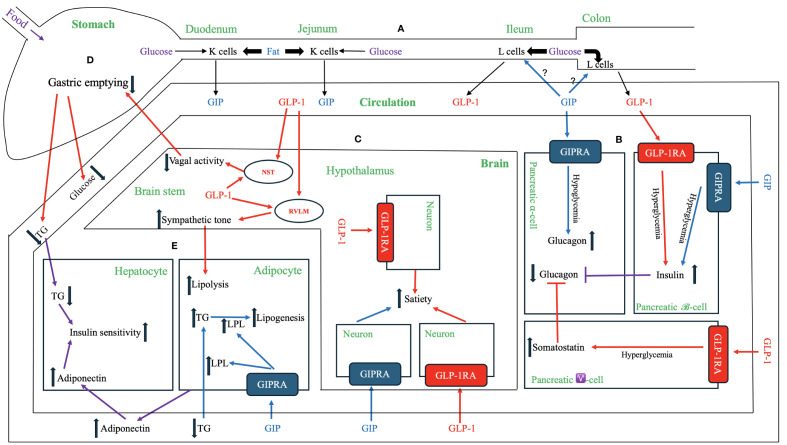
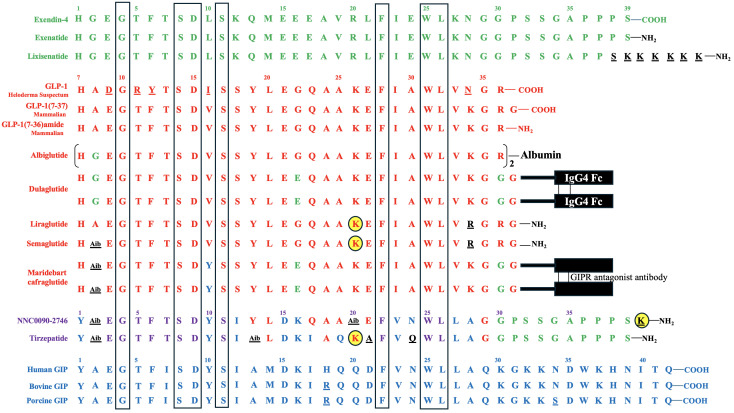
Verification
Claims the paper makes
The claims and statistics of this paper haven’t been checked yet.
Free: it reads the open-access text and checks the first 5 claims that cite a source we can check. Create a free account to check every claim.
Claims other papers make about this one
Each is checked against this paper’s own text: does it say what the citing paper says it does?
The source backs part of the claim, not all of it — or backs it for a different population, condition or comparison.
In the citing paper
“In addition, GLP-1 inhibits gastric emptying and reduces bowel motility through a vagally mediated gastric braking mechanism [29,30].”
From Adherence and Persistence with GLP-1-Based Therapies: International Real-World Evidence and the Role of Nutritional and Lifestyle Support—A Narrative Review (2026) · cites this paper as [29]
Experimental — accuracy not yet measuredThe source backs part of the claim, not all of it — or backs it for a different population, condition or comparison.
In the citing paper
“Furthermore, GLP-1 enhances glucose-dependent insulin secretion from pancreatic beta cells and suppresses glucagon secretion from alpha cells, thereby reducing hepatic glucose output [29,30].”
From Adherence and Persistence with GLP-1-Based Therapies: International Real-World Evidence and the Role of Nutritional and Lifestyle Support—A Narrative Review (2026) · cites this paper as [29]
Experimental — accuracy not yet measuredThe cited source says what the claim attributes to it.
In the citing paper
“Therapeutic GLP-1 RAs are resistant to this enzymatic degradation, providing supraphysiological levels of receptor activation over extended periods [29,30].”
From Adherence and Persistence with GLP-1-Based Therapies: International Real-World Evidence and the Role of Nutritional and Lifestyle Support—A Narrative Review (2026) · cites this paper as [29]
Self-check
Percentages, sums and reported differences re-computed from the paper’s own numbers.
The self-check needs the paper’s full text.
Citations
Cites
Items 201–276 of 276
Urva, S., Coskun, T., Loghin, C., Cui, X., Beebe, E., O'Farrell, L., Briere, D. A., Benson, C., Nauck, M. A., & Haupt, A. (2020) · Diabetes, Obesity and Metabolism · doi:10.1111/dom.14110 · Cited by 143
TCF1 links GIPR signaling to the control of beta cell function and survival
Campbell, J. E., Ussher, J. R., Mulvihill, E. E., Kolic, J., Baggio, L. L., Cao, X., Liu, Y., Lamont, B. J., Morii, T., Streutker, C. J., et al. (2016) · Nature Medicine · doi:10.1038/nm.3997 · Cited by 142 · cited 1×
“In the brain, the two incretins are not redundant and may complement each other in regulating orexigenic and anorexigenic pathways (148).”
BackgroundThe pathogenesis of NIDDM involves a defective expression of the GIP receptor
Holst, J. J., Gromada, J., & Nauck, M. A. (1997) · Diabetologia · doi:10.1007/s001250050779 · Cited by 139 · cited 1×
“When exposed to a hyperglycemic milieu, the GIPR was found to downregulate in a study of pancreatic islet cells (59) and the patients with T2DM might express a small amount of GIPR or defective GIPR (60, 61).”
BackgroundNauck, M. A., El-Ouaghlidi, A., Gabrys, B., Hücking, K., Holst, J. J., Deacon, C. F., Gallwitz, B., Schmidt, W. E., & Meier, J. J. (2004) · Regulatory Peptides · doi:10.1016/j.regpep.2004.06.020 · Cited by 137
Receptor‐mediated activation of gastric vagal afferents by glucagon‐like peptide‐1 in the rat
Bucinskaite, V., Tolessa, T., Pedersen, J., Rydqvist, B., Zerihun, L., Holst, J. J., & Hellström, P. M. (2009) · Neurogastroenterology & Motility · doi:10.1111/j.1365-2982.2009.01317.x · Cited by 135
Asmar, M., Asmar, A., Simonsen, L., Gasbjerg, L. S., Sparre-Ulrich, A. H., Rosenkilde, M. M., Hartmann, B., Dela, F., Holst, J. J., & Bülow, J. (2017) · Diabetes · doi:10.2337/db17-0480 · Cited by 132
Gastric inhibitory polypeptide does not inhibit gastric emptying in humans
Meier, J. J., Goetze, O., Anstipp, J., Hagemann, D., Holst, J. J., Schmidt, W. E., Gallwitz, B., & Nauck, M. A. (2004) · American Journal of Physiology-Endocrinology and Metabolism · doi:10.1152/ajpendo.00499.2003 · Cited by 126
Aroda, V. R., Aberle, J., Bardtrum, L., Christiansen, E., Knop, F. K., Gabery, S., Pedersen, S. D., & Buse, J. B. (2023) · The Lancet · doi:10.1016/s0140-6736(23)01127-3 · Cited by 126
Nunn, E., Jaiswal, N., Gavin, M., Uehara, K., Stefkovich, M., Drareni, K., Calhoun, R., Lee, M., Holman, C. D., Baur, J. A., et al. (2024) · Molecular Metabolism · doi:10.1016/j.molmet.2024.101880 · Cited by 126
A Gastric Inhibitory Polypeptide. I. The Amino Acid Composition and the Tryptic Peptides
Brown, J. C. (1971) · Canadian Journal of Biochemistry · doi:10.1139/o71-037 · Cited by 123 · cited 1×
“The fi rst incretin, GIP, was puri fi ed from canine intestinal extracts in the late 1960s (8) and initially named gastric inhibitory polypeptide (9) because the peptide inhibited gastrin-stimulated H + secretion (10).”
BackgroundNyberg, J., Jacobsson, C., Anderson, M. F., & Eriksson, P. S. (2007) · Journal of Neuroscience Research · doi:10.1002/jnr.21349 · Cited by 117
Lafrance, L., Rabasa-Lhoret, R., Poisson, D., Ducros, F., & Chiasson, J.-L. (1998) · Diabetic Medicine · doi:10.1002/(sici)1096-9136(1998110)15:11<972::aid-dia704>3.0.co;2-2 · Cited by 116
Nørregaard, P. K., Deryabina, M. A., Tofteng Shelton, P., Fog, J. U., Daugaard, J. R., Eriksson, P., Larsen, L. F., & Jessen, L. (2018) · Diabetes, Obesity and Metabolism · doi:10.1111/dom.13034 · Cited by 116
Central administration of GLP-1 and GIP decreases feeding in mice
NamKoong, C., Kim, M. S., Jang, B.-T., Lee, Y. H., Cho, Y.-M., & Choi, H. J. (2017) · Biochemical and Biophysical Research Communications · doi:10.1016/j.bbrc.2017.06.031 · Cited by 114 · cited 1×
“Studies in mice suggest that GIP may potentiate the GLP-1-induced reduction offood intake and body weight by enhancing POMC expression and neuronal activation within distinct neuron populations in the hypothalamus (149).”
BackgroundDiabetic Agents, From Metformin to SGLT2 Inhibitors and GLP1 Receptor Agonists
Wilcox, T., De Block, C., Schwartzbard, A. Z., & Newman, J. D. (2020) · Journal of the American College of Cardiology · doi:10.1016/j.jacc.2020.02.056 · Cited by 112
Reusch, J., Stewart, M. W., Perkins, C. M., Cirkel, D. T., Ye, J., Perry, C. R., Reinhardt, R. R., & Bode, B. W. (2014) · Diabetes, Obesity and Metabolism · doi:10.1111/dom.12382 · Cited by 110
New horizons. A new paradigm for treating to target with second-generation obesity medications
Garvey, W. T. (2022) · The Journal of Clinical Endocrinology & Metabolism · doi:10.1210/clinem/dgab848 · Cited by 110 · cited 1×
“…has been suggested that agents capable of achieving an average weight reduction of about 15% in individuals with obesity represent a new generation of anti-obesity medications, as this level of weight loss is suf fi cient to combat or prevent a broader range of obesity-related complications (238).”
BackgroundGs/Gq signaling switch in β cells defines incretin effectiveness in diabetes
Oduori, O. S., Murao, N., Shimomura, K., Takahashi, H., Zhang, Q., Dou, H., Sakai, S., Minami, K., Chanclon, B., Guida, C., et al. (2020) · Journal of Clinical Investigation · doi:10.1172/jci140046 · Cited by 106
Thorkildsen, C., Neve, S., Larsen, B. D., Meier, E., & Petersen, J. S. (2003) · Journal of Pharmacology and Experimental Therapeutics · doi:10.1124/jpet.103.051987 · Cited by 104
Mohammad, S., Patel, R. T., Bruno, J., Panhwar, M. S., Wen, J., & McGraw, T. E. (2014) · Molecular and Cellular Biology · doi:10.1128/mcb.00256-14 · Cited by 104
Widenmaier, S. B., Kim, S.-J., Yang, G. K., De Los Reyes, T., Nian, C., Asadi, A., Seino, Y., Kieffer, T. J., Kwok, Y. N., & McIntosh, C. H. S. (2010) · PLoS ONE · doi:10.1371/journal.pone.0009590 · Cited by 102
The isolation and sequencing of human gastric inhibitory peptide (GIP)
Moody, A. J., Thim, L., & Valverde, I. (1984) · FEBS Letters · doi:10.1016/0014-5793(84)81114-x · Cited by 101
The role of somatostatin in GLP-1-induced inhibition of glucagon secretion in mice
Ørgaard, A., & Holst, J. J. (2017) · Diabetologia · doi:10.1007/s00125-017-4315-2 · Cited by 101
Overgaard, R. V., Hertz, C. L., Ingwersen, S. H., Navarria, A., & Drucker, D. J. (2021) · Cell Reports Medicine · doi:10.1016/j.xcrm.2021.100387 · Cited by 99
Maida, A., Hansotia, T., Longuet, C., Seino, Y., & Drucker, D. J. (2009) · Gastroenterology · doi:10.1053/j.gastro.2009.09.004 · Cited by 98
Nishizawa, M., Nakabayashi, H., Uchida, K., Nakagaw, A., & Niijima, A. (1996) · Journal of the Autonomic Nervous System · doi:10.1016/s0165-1838(96)00071-9 · Cited by 98
Effects of gastric inhibitory polypeptide on glucose and lipid metabolism of isolated rat adipocytes
Hauner, H., Glatting, G., Kaminska, D., & Pfeiffer, E. F. (1988) · Annals of Nutrition and Metabolism · doi:10.1159/000177467 · Cited by 98 · cited 1×
“Moreover, GIP has been found to boost glucose uptake by improving insulin sensitivity in adipocytes (176, 177), while tirzepatide has been demonstrated to enhance insulin sensitivity and promote glucose disposal in white adipose tissue in Glp-1r-null mice (178), further supporting a direct effect…”
BackgroundVolz, A., Göke, R., Lankat-Buttgereit, B., Fehmann, H.-C., Bode, H. P., & Göke, B. (1995) · FEBS Letters · doi:10.1016/0014-5793(95)01006-z · Cited by 96
Novikoff, A., O'Brien, S. L., Bernecker, M., Grandl, G., Kleinert, M., Knerr, P. J., Stemmer, K., Klingenspor, M., Zeigerer, A., DiMarchi, R., et al. (2021) · Molecular Metabolism · doi:10.1016/j.molmet.2021.101181 · Cited by 95
Postprandial GLP-1, Norepinephrine, and Reactive Hypoglycemia in Dumping Syndrome
Gebhard, B., Holst, J. J., Biegelmayer, C., & Miholic, J. (2001) · Digestive Diseases and Sciences · doi:10.1023/a:1010635131228 · Cited by 92 · cited 1×
“Intriguingly, in patients with dumping syndrome, postprandial serum catecholamine rises correspond with increased serum GLP-1 levels (184).”
BackgroundYang, W., Chen, L., Ji, Q., Liu, X., Ma, J., Tandon, N., Bhattacharyya, A., Kumar, A., Kim, K. ‐., Yoon, K. ‐., et al. (2011) · Diabetes, Obesity and Metabolism · doi:10.1111/j.1463-1326.2010.01323.x · Cited by 91
Lynn, F. C., Thompson, S. A., Pospisilik, J. A., Ehses, J. A., Hinke, S. A., Pamir, N., McIntosh, C. H. S., & Pederson, R. A. (2003) · The FASEB Journal · doi:10.1096/fj.02-0243fje · Cited by 91
Lu, S.-C., Chen, M., Atangan, L., Killion, E. A., Komorowski, R., Cheng, Y., Netirojjanakul, C., Falsey, J. R., Stolina, M., Dwyer, D., et al. (2021) · Cell Reports Medicine · doi:10.1016/j.xcrm.2021.100263 · Cited by 91
Varol, C., Zvibel, I., Spektor, L., Mantelmacher, F. D., Vugman, M., Thurm, T., Khatib, M., Elmaliah, E., Halpern, Z., & Fishman, S. (2014) · The Journal of Immunology · doi:10.4049/jimmunol.1401149 · Cited by 89
McLean, B. A., Wong, C. K., Kaur, K. D., Seeley, R. J., & Drucker, D. J. (2021) · JCI Insight · doi:10.1172/jci.insight.153732 · Cited by 84
Vilsbøll, T., Agersø, H., Lauritsen, T. L. B., Deacon, C. F., Aaboe, K., Madsbad, S., Krarup, T., & Holst, J. J. (2006) · Regulatory Peptides · doi:10.1016/j.regpep.2006.07.007 · Cited by 83
Ebert, R., Nauck, M., & Creutzfeldt, W. (1991) · Hormone and Metabolic Research · doi:10.1055/s-2007-1003745 · Cited by 79
Guja, C., Frías, J. P., Somogyi, A., Jabbour, S., Wang, H., Hardy, E., & Rosenstock, J. (2018) · Diabetes, Obesity and Metabolism · doi:10.1111/dom.13266 · Cited by 78
Schmitt, C., Portron, A., Jadidi, S., Sarkar, N., & DiMarchi, R. (2017) · Diabetes, Obesity and Metabolism · doi:10.1111/dom.13024 · Cited by 74
Damholt, A. B. (1998) · Endocrinology · doi:10.1210/en.139.4.2085 · Cited by 72
Thondam, S. K., Daousi, C., Wilding, J. P. H., Holst, J. J., Ameen, G. I., Yang, C., Whitmore, C., Mora, S., & Cuthbertson, D. J. (2017) · American Journal of Physiology-Endocrinology and Metabolism · doi:10.1152/ajpendo.00347.2016 · Cited by 71
Bonora, E., Frias, J. P., Tinahones, F. J., Van, J., Malik, R. E., Yu, Z., Mody, R., Bethel, A., Kwan, A. Y. M., & Cox, D. A. (2021) · Diabetes, Obesity and Metabolism · doi:10.1111/dom.14465 · Cited by 67
Differential processing of pro-glucose-dependent insulinotropic polypeptide in gut
Fujita, Y., Asadi, A., Yang, G. K., Kwok, Y. N., & Kieffer, T. J. (2010) · American Journal of Physiology-Gastrointestinal and Liver Physiology · doi:10.1152/ajpgi.00024.2010 · Cited by 66
Seino, S., Welsh, M., Bell, G. I., Chan, S. J., & Steiner, D. F. (1986) · FEBS Letters · doi:10.1016/0014-5793(86)81429-6 · Cited by 64
de Lemos, J. A., Linetzky, B., le Roux, C. W., Laffin, L. J., Vongpatanasin, W., Fan, L., Hemmingway, A., Ahmad, N. N., Bunck, M. C., & Stefanski, A. (2024) · Hypertension · doi:10.1161/hypertensionaha.123.22022 · Cited by 64
Kubota, A., Yamada, Y., Hayami, T., Yasuda, K., Someya, Y., Ihara, Y., Kagimoto, S., Watanabe, R., Taminato, T., Tsuda, K., et al. (1996) · Diabetes · doi:10.2337/diab.45.12.1701 · Cited by 62
Bergmann, N. C., Gasbjerg, L. S., Heimbürger, S. M., Krogh, L. S. L., Dela, F., Hartmann, B., Holst, J. J., Jessen, L., Christensen, M. B., Vilsbøll, T., et al. (2020) · Diabetes Care · doi:10.2337/dc19-0578 · Cited by 62
Hannon, T. S., & Arslanian, S. A. (2023) · New England Journal of Medicine · doi:10.1056/nejmcp2102062 · Cited by 61
Liu, Q. K. (2021) · Journal of Clinical Lipidology · doi:10.1016/j.jacl.2021.05.007 · Cited by 60
Self-citationSimental‐Mendía, L. E., Sánchez‐García, A., Linden‐Torres, E., & Simental‐Mendía, M. (2021) · British Journal of Clinical Pharmacology · doi:10.1111/bcp.14855 · Cited by 59
Gallwitz, B., Vaag, A., Falahati, A., & Madsbad, S. (2009) · International Journal of Clinical Practice · doi:10.1111/j.1742-1241.2009.02265.x · Cited by 58 · cited 1×
“Consequently, chronic treatment with GLP-1RAs or tirzepatide improves both systolic and diastolic blood pressures, often occurring before signi fi cant weight loss is observed (209, 210).”
BackgroundGIP increases insulin receptor affinity and cellular sensitivity in adipocytes
Starich, G. H., Bar, R. S., & Mazzaferri, E. L. (1985) · American Journal of Physiology-Endocrinology and Metabolism · doi:10.1152/ajpendo.1985.249.6.e603 · Cited by 56
Henry, R. R., Buse, J. B., Sesti, G., Davies, M. J., Jensen, K. H., Brett, J., & Pratley, R. E. (2011) · Endocrine Practice · doi:10.4158/ep.17.6.906 · Cited by 53
Exposure-response analysis for evaluation of semaglutide dose levels in type 2 diabetes
Petri, K. C. C., Ingwersen, S. H., Flint, A., Zacho, J., & Overgaard, R. V. (2018) · Diabetes, Obesity and Metabolism · doi:10.1111/dom.13358 · Cited by 53
Lee, C. J., Mao, H., Thieu, V. T., Landó, L. F., & Thomas, M. K. (2023) · Journal of the Endocrine Society · doi:10.1210/jendso/bvad056 · Cited by 47 · cited 1×
“In a post hoc analysis of the SURPASS-1 trial involving patients with T2DM, the percentage increase in adiponectin levels from baseline ranged from 16% to 23% with tirzepatide compared to a decrease of 0.2% with placebo at week 40 (190).”
MethodInfluentialPortron, A., Jadidi, S., Sarkar, N., DiMarchi, R., & Schmitt, C. (2017) · Diabetes, Obesity and Metabolism · doi:10.1111/dom.13025 · Cited by 46
Carlquist, M., Maletti, M., Jörnvall, H., & Mutt, V. (1984) · European Journal of Biochemistry · doi:10.1111/j.1432-1033.1984.tb08595.x · Cited by 44
Fair Allocation of GLP-1 and Dual GLP-1–GIP Receptor Agonists
Emanuel, E. J., Dellgren, J. L., McCoy, M. S., & Persad, G. (2024) · New England Journal of Medicine · doi:10.1056/nejmp2400978 · Cited by 44
Glucose-dependent Insulinotropic Polypeptide Augmentation of Insulin Physiology or Pharmacology?
Sarson, D. L., Wood, S. M., Kansal, P. C., & Bloom, S. R. (1984) · Diabetes · doi:10.2337/diab.33.4.389 · Cited by 43
Anvari, M., Paterson, C. A., Daniel, E. E., & McDonald, T. J. (1998) · Digestive Diseases and Sciences · doi:10.1023/a:1018863716749 · Cited by 41
(2020) · Diabetic Medicine · doi:10.1002/(issn)1096-9136 · Cited by 36
Gjesing, A. P., Ekstrøm, C. T., Eiberg, H., Urhammer, S. A., Holst, J. J., Pedersen, O. B., & Hansen, T. F. (2012) · Diabetologia · doi:10.1007/s00125-012-2484-6 · Cited by 33
The antiemetic actions of GIP receptor agonism
Borner, T., Jonghe, B. C. D., & Hayes, M. R. (2024) · American Journal of Physiology-Endocrinology and Metabolism · doi:10.1152/ajpendo.00330.2023 · Cited by 28 · cited 1×
“Instead, GIP may counteract nausea and vomiting via direct modulation of the area postrema/NST emesis circuitry (169) and exert protective effects on unfavorable altered gut motility (44).”
BackgroundGóralska, J., Raźny, U., Polus, A., Dziewońska, A., Gruca, A., Zdzienicka, A., Dembinska-Kiec, A., Solnica, B., Micek, A., Kapusta, M., et al. (2020) · Nutrients · doi:10.3390/nu12020476 · Cited by 26
Xiong, X., Lu, W., Qin, X., Luo, Q., & Zhou, W. (2020) · Biomedicine & Pharmacotherapy · doi:10.1016/j.biopha.2020.110218 · Cited by 22
Pownall, H. J., Schwartz, A. V., Bray, G. A., Berkowitz, R. I., Lewis, C. E., Boyko, E. J., Jakicic, J. M., Chen, H., Heshka, S., Gregg, E. W., et al. (2016) · Obesity · doi:10.1002/oby.21577 · Cited by 21
Dahlqvist, S., Ahlén, E., Filipsson, K., Gustafsson, T., Hirsch, I. B., Tuomilehto, J., Imberg, H., Ahrén, B., Attvall, S., & Lind, M. (2018) · BMJ Open Diabetes Research & Care · doi:10.1136/bmjdrc-2017-000464 · Cited by 21
Kim, D.-M., Chu, S.-H., Kim, S., Park, Y.-W., & Kim, S.-S. (2009) · BMB Reports · doi:10.5483/bmbrep.2009.42.4.212 · Cited by 18
CagriSema and the link between obesity and type 2 diabetes
Apovian, C. M., & McDonnell, M. E. (2023) · The Lancet · doi:10.1016/s0140-6736(23)01291-6 · Cited by 18
SELECTing Treatments for Cardiovascular Disease — Obesity in the Spotlight
Khera, A., & Powell‐Wiley, T. M. (2023) · New England Journal of Medicine · doi:10.1056/nejme2312646 · Cited by 14
Apelin Resistance Contributes to Muscle Loss during Cancer Cachexia in Mice
Cecconi, A. D. R., Barone, M., Forti, M., Lunardi, M., Cagnotto, A., Salmona, M., Olivari, D., Zentilin, L., Resovi, A., Persichitti, P., et al. (2022) · Cancers · doi:10.3390/cancers14071814 · Cited by 13
Gastrointestinal Hormones and Insulin Secretion
Creutzfeldt, W. (1973) · New England Journal of Medicine · doi:10.1056/nejm197306072882312 · Cited by 11 · cited 9×
“…injectable liraglutide (marketed as Victoza ® for T2DM and Saxenda ® for obesity) and once weekly injectable semaglutide (marketed as Ozempic ® for T2DM and Wegovy ® for obesity) are two additional GLP-1 analogues, sharing 97% and 94% amino acid homology to GLP-1, respectively [Figure 2, Table 1].”
BackgroundMethodInfluentialLiraglutide for Adolescents with Obesity. Reply.
Kelly, A. S., & Hale, P. M. (2020) · PubMed · doi:10.1056/nejmc2023284 · Cited by 6
Smits, M. M., ten Kulve, J. S., van Bloemendaal, L., Tonneijck, L., Muskiet, M. H. A., Kramer, M. H. H., IJzerman, R. G., & van Raalte, D. H. (2019) · Nutrition · doi:10.1016/j.nut.2019.06.005 · Cited by 5
JCL Roundtable. Obesity, Diabetes, and Liver Disease in Relation to Cardiovascular Risk
Wyne, K. L., Litwin, S. E., Cusi, K. J., & Guyton, J. R. (2022) · Journal of clinical lipidology · doi:10.1016/j.jacl.2022.03.007 · Cited by 2 · cited 1×
“Unlike GLP-1RAs, particularly dulaglutide (254), SGLT-2 inhibitors have not demonstrated cardiovascular bene fi ts in primary prevention among individuals with multiple cardiovascular risk factors (261).”
BackgroundMerchenthaler (1999) · doi:10.1002/(sici)1096-9861(19990111)403:2<261::aid-cne8>3.0.co;2-5
Cited by
Moiz, A., Filion, K. B., Tsoukas, M. A., Yu, O. H. Y., Peters, T. M., & Eisenberg, M. J. (2025) · EClinicalMedicine · doi:10.1016/j.eclinm.2025.103363 · Cited by 157
“39”
Stefanakis, K., Kokkorakis, M., & Mantzoros, C. S. (2024) · Metabolism · doi:10.1016/j.metabol.2024.156057 · Cited by 142
Emerging Frontiers in GLP-1 Therapeutics: A Comprehensive Evidence Base (2025)
Patel, S., & Niazi, S. K. (2025) · Pharmaceutics · doi:10.3390/pharmaceutics17081036 · Cited by 54
Movahednasab, M., Dianat‐Moghadam, H., Khodadad, S., Nedaeinia, R., Safabakhsh, S., Ferns, G. A., & Salehi, R. (2025) · Diabetology & Metabolic Syndrome · doi:10.1186/s13098-025-01623-w · Cited by 47
Urkon, M., Ferencz, E., Szász, J. A., Szabó, M. I. M., Orbán-Kis, K., Szatmári, S., & Nagy, E. E. (2025) · Pharmaceuticals · doi:10.3390/ph18050614 · Cited by 45
“Therefore, unimolecular dual GLP-1/GIP receptor agonists have been developed and clinically tested for the management of T2DM and obesity [124,125].”
Metadata
- Authors
- Liu, Q. K.
- Affiliations
- Montgomery General Hospital (US)
- Corresponding author
- Liu, Qiyuan Keith
- Venue
- Frontiers in Endocrinology
- Publisher
- Frontiers Media SA
- Published
- 2024-07-24
- Volume
- 15
- Pages
- 1431292-1431292
- ISSN
- 1664-2392 (ISSN-L)
- PMC
- PMC11304055
- OpenAlex
- W4400956092
- Cited by
- 265
- References
- 279
- Citations by year
- 2026: 156 · 2025: 107 · 2024: 2
- FWCI
- 15.55
- Type
- journal article
- Language
- en
- Open access
- gold
- doi.org
- Licence
- Locations
- Frontiers in Endocrinology (publishedVersion, cc-by)
- PubMed Central (publishedVersion, cc-by)
- PubMed (publishedVersion)
- DOAJ (DOAJ: Directory of Open Access Journals) (submittedVersion, cc-by-sa)
- Topics
- Health Sciences › Medicine › Endocrinology, Diabetes and Metabolism › Diabetes Treatment and Management
- Life Sciences › Neuroscience › Endocrine and Autonomic Systems › Regulation of Appetite and Obesity
- Health Sciences › Medicine › Endocrinology, Diabetes and Metabolism › Adipokines, Inflammation, and Metabolic Diseases
- Keywords
- glucagon-like peptide-1, glucose-dependent insulinotropic polypeptide, GIP/GLP-1 receptor agonist, incretin mimetics, type 2 diabetes, obesity, insulin secretion, satiety, lipogenesis, lipolysis, adiponectin, cardiovascular disease prevention, weight management, dyslipidemia, metabolic homeostasis
- MeSH terms
- Glucagon-Like Peptide-1 Receptor, Glucagon-Like Peptide-1 Receptor Agonists, Animals, Diabetes Mellitus, Type 2, Gastric Inhibitory Polypeptide, Humans, Hypoglycemic Agents, Receptors, Gastrointestinal Hormone, Glucagon-Like Peptide 1, Incretins
About these checks
Registry, retraction, Cites and statistics results are computed, not judged, with one exception: a printed reference that no index lists is read once by a model before it counts as a citation error. Claims are extracted by a model and kept only when their quote appears verbatim in the text; each cited source is then checked, with a model’s help, for whether it says what the claim relies on. Those verdicts can be wrong — read the claim’s quote and the cited source before relying on one.
Statistics and arithmetic are recomputed, not judged.
Confidence bands are shown only for fields calibrated on our annotated test set. None is calibrated yet, so no band is shown.
What counts as a claim ›How we measure confidence ›How we check this ›
Are you an author, or do you see a problem with this page? Request a review
Data sources
Bibliographic data: Semantic Scholar, OpenAlex, Crossref.
Contains information from the Semantic Scholar Academic Graph Datasets, made available under the ODC Attribution License (ODC-BY 1.0).
Semantic Scholar’s data is described in: Kinney, R., et al. (2023). The Semantic Scholar Open Data Platform. arXiv:2301.10140.
