

Mechanisms of action and therapeutic applications of GLP-1 and dual GIP/GLP-1 receptor agonists
Open accessThe DOI matches its Crossref record; 276 of the 279 references it cites were found in a registry or an index.
Abstract
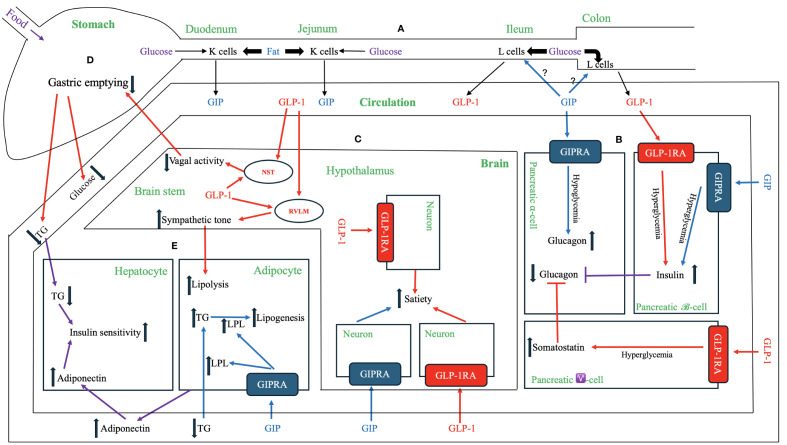
Glucose-dependent insulinotropic polypeptide (GIP) and glucagon-like peptide-1 (GLP-1) are two incretins that bind to their respective receptors and activate the downstream signaling in various tissues and organs. Both GIP and GLP-1 play roles in regulating food intake by stimulating neurons in the brain’s satiety center. They also stimulate insulin secretion in pancreatic β-cells, but their effects on glucagon production in pancreatic α-cells differ, with GIP having a glucagonotropic effect during hypoglycemia and GLP-1 exhibiting glucagonostatic effect during hyperglycemia. Additionally, GIP directly stimulates lipogenesis, while GLP-1 indirectly promotes lipolysis, collectively maintaining healthy adipocytes, reducing ectopic fat distribution, and increasing the production and secretion of adiponectin from adipocytes. Together, these two incretins contribute to metabolic homeostasis, preventing both hyperglycemia and hypoglycemia, mitigating dyslipidemia, and reducing the risk of cardiovascular diseases in individuals with type 2 diabetes and obesity. Several GLP-1 and dual GIP/GLP-1 receptor agonists have been developed to harness these pharmacological effects in the treatment of type 2 diabetes, with some demonstrating robust effectiveness in weight management and prevention of cardiovascular diseases. Elucidating the underlying cellular and molecular mechanisms could potentially usher in the development of new generations of incretin mimetics with enhanced efficacy and fewer adverse effects. The treatment guidelines are evolving based on clinical trial outcomes, shaping the management of metabolic and cardiovascular diseases.
Overview
The claims and statistics of this paper haven’t been checked yet.
Free: it reads the open-access text and checks the first 5 claims that cite a source we can check. Create a free account to check every claim.
Integrity signals
Registry
Cites
Statistics
Figures
Verification
Claims the paper makes
The claims and statistics of this paper haven’t been checked yet.
Free: it reads the open-access text and checks the first 5 claims that cite a source we can check. Create a free account to check every claim.
Claims other papers make about this one
Each is checked against this paper’s own text: does it say what the citing paper says it does?
The source backs part of the claim, not all of it — or backs it for a different population, condition or comparison.
In the citing paper
“In addition, GLP-1 inhibits gastric emptying and reduces bowel motility through a vagally mediated gastric braking mechanism [29,30].”
From Adherence and Persistence with GLP-1-Based Therapies: International Real-World Evidence and the Role of Nutritional and Lifestyle Support—A Narrative Review (2026) · cites this paper as [29]
Experimental — accuracy not yet measuredThe source backs part of the claim, not all of it — or backs it for a different population, condition or comparison.
In the citing paper
“Furthermore, GLP-1 enhances glucose-dependent insulin secretion from pancreatic beta cells and suppresses glucagon secretion from alpha cells, thereby reducing hepatic glucose output [29,30].”
From Adherence and Persistence with GLP-1-Based Therapies: International Real-World Evidence and the Role of Nutritional and Lifestyle Support—A Narrative Review (2026) · cites this paper as [29]
Experimental — accuracy not yet measuredThe cited source says what the claim attributes to it.
In the citing paper
“Therapeutic GLP-1 RAs are resistant to this enzymatic degradation, providing supraphysiological levels of receptor activation over extended periods [29,30].”
From Adherence and Persistence with GLP-1-Based Therapies: International Real-World Evidence and the Role of Nutritional and Lifestyle Support—A Narrative Review (2026) · cites this paper as [29]
Self-check
Percentages, sums and reported differences re-computed from the paper’s own numbers.
The self-check needs the paper’s full text.
Citations
Cites
Liraglutide and Cardiovascular Outcomes in Type 2 Diabetes
Marso, S. P., Daniels, G. H., Brown-Frandsen, K., Kristensen, P., Mann, J. F. E., Nauck, M. A., Nissen, S. E., Pocock, S., Poulter, N. R., Ravn, L. S., et al. (2016) · New England Journal of Medicine · doi:10.1056/nejmoa1603827 · Cited by 7,629
Semaglutide and Cardiovascular Outcomes in Patients with Type 2 Diabetes
Marso, S. P., Bain, S. C., Consoli, A., Eliaschewitz, F. G., Jódar, E., Leiter, L. A., Lingvay, I., Rosenstock, J., Seufert, J., Warren, M. L., et al. (2016) · New England Journal of Medicine · doi:10.1056/nejmoa1607141 · Cited by 6,900 · cited 1×
“…lixisenatide (250), the EXSCEL trial of exenatide ER (251), the LEARDER trial of liraglutide (252), the SUSTAIN-6 trial of subcutaneous semaglutide (253), the HARMONY trial of albiglutide (228), the REWIND trial of dulaglutide (254), the PIONEER trial of oral semaglutide (255), and the SELECT…”
BackgroundOnce-Weekly Semaglutide in Adults with Overweight or Obesity
Wilding, J. P. H., Batterham, R. L., Calanna, S., Davies, M., Van Gaal, L. F., Lingvay, I., McGowan, B. M., Rosenstock, J., Tran, M. T. D., Wadden, T. A., et al. (2021) · New England Journal of Medicine · doi:10.1056/nejmoa2032183 · Cited by 5,205
(2019) · doi:10.1161/cir.0000000000000677 · Cited by 4,501
β-Cell Deficit and Increased β-Cell Apoptosis in Humans With Type 2 Diabetes
Butler, A. E., Janson, J., Bonner-Weir, S., Ritzel, R., Rizza, R. A., & Butler, P. C. (2003) · Diabetes · doi:10.2337/diabetes.52.1.102 · Cited by 4,011
Tirzepatide Once Weekly for the Treatment of Obesity
Jastreboff, A. M., Aronne, L. J., Ahmad, N. N., Wharton, S., Connery, L., Alves, B., Kiyosue, A., Zhang, S., Liu, B., Bunck, M. C., et al. (2022) · New England Journal of Medicine · doi:10.1056/nejmoa2206038 · Cited by 3,838
Biology of Incretins: GLP-1 and GIP
Baggio, L. L., & Drucker, D. J. (2007) · Gastroenterology · doi:10.1053/j.gastro.2007.03.054 · Cited by 3,639 · cited 1×
“…of the postprandial insulin responses in healthy individuals and may be substantially reduced to 20% – 30% in individuals with type 2 diabetes mellitus (T2DM) (6, 7), a complex disorder arising from inadequate compensation of insulin secretion by pancreas to counter peripheral insulin resistance.”
BackgroundWeyer, C., Funahashi, T., Tanaka, S., Hotta, K., Matsuzawa, Y., Pratley, R. E., & Tataranni, P. A. (2001) · The Journal of Clinical Endocrinology & Metabolism · doi:10.1210/jcem.86.5.7463 · Cited by 3,541
Semaglutide and Cardiovascular Outcomes in Obesity without Diabetes
Lincoff, A. M., Brown-Frandsen, K., Colhoun, H. M., Deanfield, J., Emerson, S. S., Esbjerg, S., Hardt-Lindberg, S., Hovingh, G. K., Kahn, S. E., Kushner, R. F., et al. (2023) · New England Journal of Medicine · doi:10.1056/nejmoa2307563 · Cited by 3,236
Cited by
Moiz, A., Filion, K. B., Tsoukas, M. A., Yu, O. H. Y., Peters, T. M., & Eisenberg, M. J. (2025) · EClinicalMedicine · doi:10.1016/j.eclinm.2025.103363 · Cited by 157
“39”
Stefanakis, K., Kokkorakis, M., & Mantzoros, C. S. (2024) · Metabolism · doi:10.1016/j.metabol.2024.156057 · Cited by 142
Emerging Frontiers in GLP-1 Therapeutics: A Comprehensive Evidence Base (2025)
Patel, S., & Niazi, S. K. (2025) · Pharmaceutics · doi:10.3390/pharmaceutics17081036 · Cited by 54
Movahednasab, M., Dianat‐Moghadam, H., Khodadad, S., Nedaeinia, R., Safabakhsh, S., Ferns, G. A., & Salehi, R. (2025) · Diabetology & Metabolic Syndrome · doi:10.1186/s13098-025-01623-w · Cited by 47
Urkon, M., Ferencz, E., Szász, J. A., Szabó, M. I. M., Orbán-Kis, K., Szatmári, S., & Nagy, E. E. (2025) · Pharmaceuticals · doi:10.3390/ph18050614 · Cited by 45
“Therefore, unimolecular dual GLP-1/GIP receptor agonists have been developed and clinically tested for the management of T2DM and obesity [124,125].”
Type 2 Diabetes and the Multifaceted Gut-X Axes
Guo, H., Pan, L.-T., Wu, Q., Wang, L., Huang, Z., Wang, J., Wang, L., Fang, X., Dong, S., Zhu, Y., et al. (2025) · Nutrients · doi:10.3390/nu17162708 · Cited by 44
Ramírez-Mejía, M. M., Ponciano‐Rodríguez, G., Eslam, M., & Méndez-Sánchez, N. (2025) · Therapeutic Advances in Endocrinology and Metabolism · doi:10.1177/20420188251406456 · Cited by 45
“36–38 In nervous system.”
Arredouani, A. (2025) · Pharmacology & Therapeutics · doi:10.1016/j.pharmthera.2025.108824 · Cited by 36
Liu, Z., Yu, S., Jin, X., Sheng, L., Rouzi, M. R. Y., Gao, J., Lü, J., & Lei, T. (2025) · Drug Design Development and Therapy · doi:10.2147/dddt.s559919 · Cited by 35
“228 In summary, despite the notable therapeutic benefits of GLP-1RAs and GLP-1/GIP dual receptor agonists in managing metabolic disorders, their safety profiles during pregnancy require a more comprehensive investigation.”
Yamanouchi, D. (2025) · International Journal of Molecular Sciences · doi:10.3390/ijms27010027 · Cited by 42
“Their receptors are widely distributed across pancreatic islets, adipose tissue, the gastrointestinal tract, the cardiovascular system, bone, and the central nervous system, allowing each hormone to influence a broad array of metabolic processes beyond insulin secretion [11,12].”
Rinella, M. E., & Sookoian, S. C. (2026) · Nature Reviews Gastroenterology & Hepatology · doi:10.1038/s41575-026-01187-8 · Cited by 34
“GIP agonism might further enhance insulin secretion and increase satiety in humans 71,72 , and might also contribute to improved gastrointestinal tolerability observed in clinical studies of dual agonists, with direct mechanistic support from a preclinical model 73 .”
Glycerolipid Cycling in Thermogenesis, Energy Homeostasis, Signaling, and Diseases
Poursharifi, P., Madiraju, S. R. M., Oppong, A. K., Kajimura, S., Nolan, C. J., Blondin, D. P., & Prentki, M. (2025) · Physiological Reviews · doi:10.1152/physrev.00024.2024 · Cited by 32
Nishida, K., Chrétien, B., Dolladille, C., Ebina, T., Aleksić, B., Cabé, N., Savey, V., Onoue, T., & Yatsuya, H. (2025) · Clinical Nutrition · doi:10.1016/j.clnu.2025.06.011 · Cited by 39
Price, S., & Nankervis, A. J. (2025) · Archives of Gynecology and Obstetrics · doi:10.1007/s00404-024-07849-9 · Cited by 32
“GIP also directly stimulates lipogenesis, while GLP-1 indirectly promotes lipolysis [41].”
Semaglutide: a key medication for managing cardiovascular-kidney-metabolic syndrome
MacIsaac, R. J. (2025) · Future Cardiology · doi:10.1080/14796678.2025.2511412 · Cited by 31
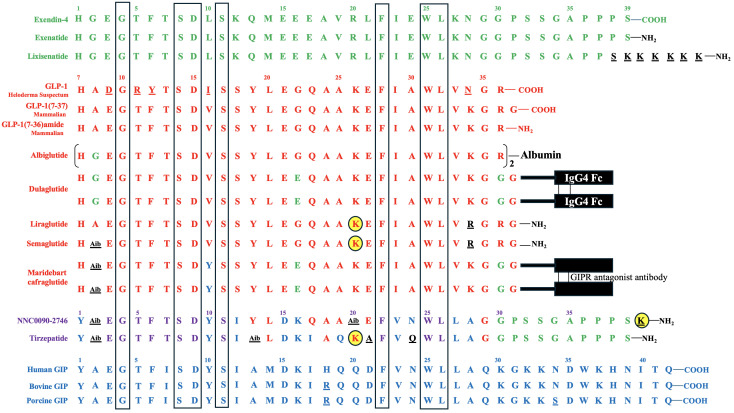
“Size and structure Liraglutide, semaglutide and dulaglutide are based on the human GLP-1 sequence, while exenatide and efpeglenatide are based on the non-human exendin sequence [207,208].”
GLP-1 Receptor Agonists in Mood Disorders: A Psychiatric Perspective
Carmellini, P., Cuomo, A., Rescalli, M. B., & Fagiolini, A. M. (2025) · Life · doi:10.3390/life15091422 · Cited by 31
“Additionally, the magnitude of peripheral metabolic effects, like insulin secretion, glucagon suppression, and modulation of gut hormones, can also be influenced by a patient’s existing metabolic status and degree of insulin resistance [29,30].”
Pharmacologic treatment of obesity in adults: Standards of care in overweight and obesity
C, K. A. C. M. V. R. L. J. K. A. G. A. A. A. B. B. (2025) · BMJ Open Diabetes Research & Care · doi:10.1136/bmjdrc-2025-005729 · Cited by 37
Kałas, M., Stępniewska, E., Gniedziejko, M., Leszczyński-Czeczatka, J., & Siemiński, M. (2025) · Journal of Clinical Medicine · doi:10.3390/jcm14093122 · Cited by 24
“The influence of GLP-1 ARs on food intake by stimulating satiety center in the brain has been well documented [73].”
Yamanouchi, D. (2025) · doi:10.20944/preprints202511.1408.v2 · Cited by 23
The role of GIPR in food intake control
James-Okoro, P.-P., Lewis, J. E., Gribble, F. M., & Reimann, F. (2025) · Frontiers in Endocrinology · doi:10.3389/fendo.2025.1532076 · Cited by 23
“Unimolecular GLP1R/GIPR dual agonists not only amplify the metabolic bene fi ts of GLP-1 therapies but may also reduce common side effects, offering an effective strategy for managing obesity and T2D-related conditions (57, 58).”
Incretin-Based Therapies Through the Decades: Molecular Innovations and Clinical Impact
Lee, A. A., Khotina, V. A., Kashirskikh, D. A., Voronko, O. E., Gasanov, V. A. O., & Vasiliev, A. V. (2025) · Medical Sciences · doi:10.3390/medsci13040269 · Cited by 26
Sallam, M., Snygg, J., Ghandour, S. E., & Sallam, M. (2025) · Obesities · doi:10.3390/obesities5020026 · Cited by 21
Chang, Y., Hsieh, M., Ju, P., & Chang, C. (2025) · Diabetes Obesity and Metabolism · doi:10.1111/dom.70175 · Cited by 23
“36, 37 However, this observation should be interpreted with caution due to the potential for reduced statistical power in Cumulative incidence of depression.”
Viana, D. P. D. C., Invitti, A. L., & Schor, E. (2025) · International Journal of Molecular Sciences · doi:10.3390/ijms262110741 · Cited by 26
Infante, M., Silvestri, F., Padilla, N., Pacifici, F., Pastore, D., Pinheiro, M. M., Caprio, M., Tesauro, M., Fabbri, A., Novelli, G., et al. (2025) · Journal of Clinical Medicine · doi:10.3390/jcm14041303 · Cited by 20
“Both endogenous GIP and GLP-1 have very short half-lives, which are measured in minutes [75].”
Sawicka‐Gutaj, N., Gruszczyński, D., Nijakowski, K., Derwich-Rudowicz, A., Krenz, M., Kumar, A. A., Lu, P.-Y., & Ruchała, M. (2026) · International Journal of Obesity · doi:10.1038/s41366-026-02088-1 · Cited by 24
“It plays a pivotal role in energy balance and postprandial metabolism by enhancing glucose-dependent insulin secretion, suppressing glucagon release, delaying gastric emptying, and promoting satiety through central mechanisms [8, 9].”
The role of gut–islet axis in pancreatic islet function and glucose homeostasis
Chen, Q., Gao, Y., Li, F., & Li, Y. (2025) · Diabetes Obesity and Metabolism · doi:10.1111/dom.16225 · Cited by 22
“52,53 Although physiologically GIP also exhibits glucose-dependent insulinotropic effects, unlike GLP-1, the stimulatory activity of GIP is almost entirely lost in T2DM, 43,54 instead promoting glucagon secretion, further exacerbating glycaemic management in diabetic patients.”
Pharmacologic Treatment of Obesity in Adults: Standards of Care in Overweight and Obesity
Gudzune, K. A., Apovian, C. M., Aroda, V. R., Aronne, L. J., Balapattabi, K., Bennett, A. K., ChallaSivaKanaka, S., ElSayed, N. A., Fitch, A., Fitzpatrick, S. L., et al. (2026) · Diabetes Obesity and Cardiometabolic CARE · doi:10.2337/doci25-0008 · Cited by 27
Abu-Nejim, H., & Becker, R. C. (2025) · Current Atherosclerosis Reports · doi:10.1007/s11883-025-01350-7 · Cited by 16
“GLP-1R agonist therapy and GLP-1R agonist and gastrointestinal peptide (GIP) therapy [165, 166], nterest has emerged in the combined use of cagrilintide—a long-acting amylin analogue that, as monotherapy, produces clinically meaningful weight loss and is well tolerated—with a GLP-1R agonist.”
Green, C., Zaman, V., Blumenstock, K., Banik, N. L., & Haque, A. (2025) · Biomedicines · doi:10.3390/biomedicines13010132 · Cited by 13
“This process is very important for patients with T2DM, as this allows for GIP levels to decrease, which will lower insulin resistance and blood glucose levels, increase the productivity of GLP-1, improve β cell function, and even decrease body weight [48–51].”
Exploring the multifaceted roles of GLP-1 receptor agonists; a comprehensive review
Hammad, B. F., Zafar, N., Ullah, M., Faisal, S. J., Iftikhar, F., Waheed, H., Muzaffar, M. W., Ahmed, K., Ashraf, F., Zahid, K., et al. (2025) · Frontiers in Clinical Diabetes and Healthcare · doi:10.3389/fcdhc.2025.1590530 · Cited by 14
Nowacka, A., Śniegocki, M., & Ziółkowska, E. (2025) · International Journal of Molecular Sciences · doi:10.3390/ijms26167812 · Cited by 14
Adipocentric Strategy for the Treatment of Type 2 Diabetes Mellitus
Martínez, J. J. G. (2025) · Journal of Clinical Medicine · doi:10.3390/jcm14030678 · Cited by 16
Incretins and MASLD: at the Crossroads of Endocrine and Hepatic Disorders
Farrugia, M. A., Pini, E., Tran, A., Chevalier, N., Anty, R., & Gual, P. (2025) · Current Obesity Reports · doi:10.1007/s13679-025-00646-8 · Cited by 13
“To illustrate this, semaglu-tide, which has 94% sequence homology with native GLP-1, is conjugated to an acylated fatty acid via a spacer on lysine residue 26 [19, 20].”
Concepción‐Zavaleta, M. J., Fuentes‐Mendoza, J. M., Yovera, J. G. G., Ruvalcaba-Barbosa, G. Y., Cura-Rodríguez, L. D., González-Rodríguez, J. S., Urteaga, L. A. C., Pérez-Reyes, A. I., Aldave, J. E. Q., & Paz‐Ibarra, J. (2025) · World Journal of Gastroenterology · doi:10.3748/wjg.v31.i37.111435 · Cited by 18
Kapantais, D., & Tsoutsanis, P. (2025) · Journal of Clinical Medicine · doi:10.3390/jcm14248792 · Cited by 11
“Overall, the coordinated activity of these two incretin hormones supports metabolic balance by preventing both hyperglycaemia and hypoglycaemia, improving lipid profiles, and lowering cardiovascular risk in individuals with type 2 diabetes and obesity [3,4].”
Zupec, J. F., Munger, R., Scaletta, A., & Quinn, D. H. (2025) · Nutrition in Clinical Practice · doi:10.1002/ncp.11279 · Cited by 9
Gholami, M., Balajam, N. Z., Rakhsha, S. S., Sajjadi‐Jazi, S. M., Shafiee, G., & Heshmat, R. (2025) · Journal of Diabetes & Metabolic Disorders · doi:10.1007/s40200-025-01604-w · Cited by 9
Efficacy and safety of incretin co-agonists: Transformative advances in cardiometabolic healthcare
Bhat, S., Fernandez, C. J., Lakshmi, V., & Pappachan, J. M. (2025) · World Journal of Cardiology · doi:10.4330/wjc.v17.i8.107991 · Cited by 9
Drug-induced regeneration of pancreatic beta cells: An approach to cellular therapeutic targets
Parsi, P., Saharkhiz, S., Farani, M. R., Bakhtiyari, S., & Alipourfard, I. (2025) · Cell Regeneration · doi:10.1186/s13619-025-00255-9 · Cited by 9
“The FDA approved Bydureon, the first once-weekly GLP-1 receptor agonist injection for adults with TD2, in 2012 (Liu 2024; Brunton and Davidson 2016).”
InfluentialDNA‐mediated UCP1 overexpression in adipose tissue: A promising anti‐obesity gene therapy
Zhao, Z., Hu, L., Song, B., Wu, Q., Lin, J., Liu, Q., Liu, S., Li, J., Wang, M., Li, J., et al. (2025) · Clinical and Translational Medicine · doi:10.1002/ctm2.70491 · Cited by 9
“30,31 Therefore, identifying therapeutic strategies that enhance energy expenditure may provide valuable insights for developing innovative obesity therapies.”
Self-citationKowalska, M. K., El‐Mallul, A., Hudecka, W., Lubojańska, J. E., Lubojański, P. J., Orłowska, S. M., & Bednarczyk, Ł. (2026) · International Journal of Molecular Sciences · doi:10.3390/ijms27041886 · Cited by 10
Koufakis, T., Kokkinos, A. D., & le Roux, C. W. (2026) · Diabetes Obesity and Metabolism · doi:10.1111/dom.70723 · Cited by 9
“…to extend these effects by engaging both GLP-1 and glucose-dependent insulinotropic polypeptide pathways, with emerging evidence suggesting non-identical receptor distribution, cell-specific signalling and complementary neural actions that may help explain their greater clinical efficacy [46].”
Nutritional Approaches to Enhance GLP-1 Analogue Therapy in Obesity: A Narrative Review
Dias, D. D., Vasconcelos, A. R., Souza, A. C. R., Menezes, C. D., Silva, I. S. T. E., & Name, J. J. (2025) · Obesities · doi:10.3390/obesities5040088 · Cited by 8
“GIP, an incretin hormone secreted by K-cells of the upper small intestine, complements GLP-1 in stimulating glucose-dependent insulin release, while also contributing to adipose tissue regulation [42–45].”
Alluri, A. A., Guntupalli, Y., Suvarna, S. S., Prystupa, Y., Khetan, S. P., Vejandla, B., & Swathi, N. L. (2025) · Journal of Basic and Clinical Physiology and Pharmacology · doi:10.1515/jbcpp-2025-0031 · Cited by 12
Udaikumar, J., Nimmagadda, R., Lella, V. V., Achuta, K. M., Kuppili, S., Avula, S. R., & Sarwar, R. (2025) · Pharmacoepidemiology · doi:10.3390/pharma4030014 · Cited by 8
Wu, C., Su, C., Chang, Y., Lee, P., & Su, Y. (2025) · Diabetes & Metabolism · doi:10.1016/j.diabet.2025.101695 · Cited by 10
He, X., Zhao, Z., Sun, Y., & Jiang, X. (2025) · European Journal of Medicinal Chemistry · doi:10.1016/j.ejmech.2025.118163 · Cited by 8
Impact of Artificial Sweeteners on Inflammation Markers: A Systematic Review of Animal Studies
Raoul, P. C., Romano, M., Galli, F. S., Cintoni, M., Capristo, E., Mora, V., Mele, M. C., Gasbarrini, A., & Rinninella, E. (2025) · Nutrients · doi:10.3390/nu17203251 · Cited by 9
“…C57BL/6J Mice male 187.67 ± 15.14 g 6–8 weeks old ASP Li, 2020 [39] Wistar rats n.r. n.r. 4 weeks old SUC Lin, 2021 [26] C57BL/6 Mice male n.r. 8 weeks old Ace-K Liu, 2024 [46] BALB/c Mice male n.r. n.r. ASP Lü, 2022 [45] C57BL/ [16] C57BL/6 Mice male 180 ± 20 g 2 months ASP, SUC Rosales-Gómez,…”
InfluentialChaudhry, A., Thompson, D. M., & Chanoine, J. (2025) · Diabetes Obesity and Metabolism · doi:10.1111/dom.70240 · Cited by 11
“51 Dual agonists may also offer superior cardiovascular protection and therefore be particularly suitable for MIDD patients, although head-to-head comparison trials remain to be completed.”
Byun, S., Sotzen, M. R., Knappenberger, M. A., Bento, M. T., Asker, M., Olekanma, D. I., & Skibicka, K. P. (2025) · Comprehensive physiology · doi:10.1002/cph4.70083 · Cited by 8
“…and lowered insulin and C-peptide therefore highlights the context-and sex-dependent nature of incretin regulation, where GLP-1RAs may exert variable effects on alpha-cell function depending on metabolic states and disease conditions (Nakashima et al. 2018; Saikia et al. 2021; Liu 2024).”
Comparative Safety of GLP-1 Receptor Agonists Across Gastrointestinal, Renal and Pancreatic Systems
Shokr, H., Mekkawy, M. A., & Hindi, A. M. K. (2026) · Pharmaceuticals · doi:10.3390/ph19010136 · Cited by 10
“Originally developed to treat type 2 diabetes mellitus (T2DM), these agents have rapidly evolved into cornerstone therapies, playing a pivotal role in addressing the global rise in obesity and related metabolic disorder [1].”
Reytor-González, C., Campuzano-Donoso, M., Sarno, G., Montalván, M., Horowitz, R., Rossetti, G., Pilone, V., Barrea, L., Muscogiuri, G., Schiavo, L., et al. (2026) · Nutrients · doi:10.3390/nu18040553 · Cited by 8
Yang, Z., Xu, Y., Du, H., Liu, W., Chen, H., Liu, D., Zhang, L., & Wang, C. (2026) · Diabetes Obesity and Metabolism · doi:10.1111/dom.70966 · Cited by 9
“…the COM group may be attributed to the synergistic effects of GLP-1 and GIP, which enhance glucose-dependent insulin secretion, improve insulin sensitivity in adipose tissue and may favourably influence lipid metabolism by slowing gastric emptying and reducing intestinal lipid absorption [26–28].”
Jogani, V. G., Elfadil, O. M., Varayil, J. E., & Mundi, M. S. (2025) · Current Opinion in Critical Care · doi:10.1097/mcc.0000000000001294 · Cited by 11
GLP1-RA and SGLT2-i: Implementation and Insulin Deescalation Strategies
Palani, A., Patel, S., Patel, S., Srivastava, S., Patel, J., Salehin, S., Birnbaum, Y., & Allencherril, J. (2025) · Cardiovascular Drugs and Therapy · doi:10.1007/s10557-025-07744-8 · Cited by 8
López-Gambero, A. J., Vargas, A., Fernández‐Arjona, M. D. M., Rubio, L., de Ceglia, M., Vera-Fernández, C., Campillo-Calatayud, A., Rivera, P., de Fonseca, F. R., Barrios, V., et al. (2025) · Metabolism · doi:10.1016/j.metabol.2025.156355 · Cited by 7
The Impact of Environmental Factors on the Secretion of Gastrointestinal Hormones
Smarkusz-Zarzecka, J., Ostrowska, L., & Radziszewska, M. (2025) · Nutrients · doi:10.3390/nu17152544 · Cited by 8
“GIP is predominantly secreted in response to food intake [31,32].”
Rasmussen, S. T., & Ilyas, A. M. (2025) · Journal of Orthopaedics · doi:10.1016/j.jor.2025.08.016 · Cited by 7
Gastrointestinal Symptoms in Obesity Therapy: Mechanisms, Epidemiology, and Management Strategies
Witaszek, T., Biesiada, A. M., Iskra-Trifunović, J., Babicki, M., Mastalerz–Migas, A., & Kłoda, K. (2025) · Biomedicines · doi:10.3390/biomedicines13102362 · Cited by 8
“The development of tachyphylaxis to the gastric emptying effect over time may partly explain why the risk of GERD decreases with longer treatment duration [30].”
InfluentialGenetic Assessment and Clinical Correlates in Severe Hypertriglyceridemia: A Systematic Review
Luca, C. D., Ciciola, P., D’Errico, G., Taranto, M. D. D., Fortunato, G., Gross, C., Garn, J., Iannuzzo, G., Minno, M. N. D. D., & Calcaterra, I. L. (2025) · Genes · doi:10.3390/genes16111377 · Cited by 9
Abdul‐Hafez, H. A., Awashra, A., Bdir, S., Saife, S., Salah, Q., Barbarawi, M., Swaileh, T., Emara, A., Elgendy, M. S., & Shubietah, A. R. M. (2026) · Endocrinology Diabetes & Metabolism · doi:10.1002/edm2.70152 · Cited by 9
“In vitro, tirzepatide induces supra-additive β-cell cAMP and insulin secretion compared with GLP-1 or GIP alone [13, 14].”
InfluentialShokravi, A., Seth, J., & Mancini, G. J. (2026) · Cardiovascular Diabetology · doi:10.1186/s12933-026-03113-3 · Cited by 8
“Importantly, GLP-1RAs are not identical; short-acting exendin-based agents such as lixisenatide have distinct pharmacokinetic profiles from long-acting analogues such as semaglutide or dulaglutide, which translate into differences in efficacy and side-effect profiles [25].”
Abegaz, T. M., Ahmed, M. B., Bhagavathula, A. S., & Frietze, G. A. (2026) · Frontiers in Psychiatry · doi:10.3389/fpsyt.2026.1766770 · Cited by 7
Zambrano-Villacres, R., Campuzano-Donoso, M., Reytor-González, C., Rossetti, G., Cobellis, L., Cobellis, F., Pilone, V., Simancas‐Racines, D., & Schiavo, L. (2026) · Nutrients · doi:10.3390/nu18111751 · Cited by 9
“Data suggest that GIP signaling may support adipose tissue remodeling and metabolic flexibility, although its precise contribution to weight loss relative to GLP-1 remains an area of ongoing investigation [38,58].”
InfluentialFabi, S. G., Yoo, J. Y., Kaufman-Janette, J. A., Dayan, S., Boyd, C., Sangha, S., & Ashourian, N. (2026) · Dermatologic Surgery · doi:10.1097/dss.0000000000005166 · Cited by 10
Role of Glucagon-Like Peptide-1 Receptor Agonists in People With Infertility and Pregnancy
Finkle, J., & Brost, B. C. (2025) · Obstetrics and Gynecology · doi:10.1097/aog.0000000000005825 · Cited by 7
A System-Based Review on Effects of Glucagon-Like Peptide-1 Receptor Agonists: Benefits vs Risks
Fadel, L. P., Thao, G., Chitre, T., Rojas, E. D., Fricko, M. N., Domingo, V., Budginas, B., Guerrero, L. C., Ghatas, M., Arani, N. T., et al. (2025) · Cureus · doi:10.7759/cureus.78575 · Cited by 13
The critical role of GLP-1 signaling pathways in the pathology of Parkinson's disease and diabetes
Chen, J., Dong, X., Lin, Y., & Lv, C. (2025) · Pathology - Research and Practice · doi:10.1016/j.prp.2025.155985 · Cited by 7
Diabetic cardiomyopathy and COVID-19: intersecting pathways and amplified cardiovascular risk
Prakash, S., Choudhury, P., & Bisht, S. (2025) · Frontiers in Pharmacology · doi:10.3389/fphar.2025.1683159 · Cited by 7
“GLP-1 receptor agonists (liraglutide, semaglutide, dulaglutide) complement these bene fi ts by enhancing glucose-dependent insulin secretion, suppressing glucagon, slowing gastric emptying, and reducing major adverse cardiovascular events (MACE) (Liu, 2024).”
Lama, K., Bhutia, G. T., Deka, R., Beeraka, N. M., & Gupta, S. K. (2025) · International Immunopharmacology · doi:10.1016/j.intimp.2025.115467 · Cited by 6
Demidova, T. Y., & Izmaylova, M. Y. (2025) · FOCUS Endocrinology · doi:10.62751/2713-0177-2025-6-3-03 · Cited by 8
Toraih, E. A., Alenezy, A. K., Hussein, M. H., Hashmat, S., Mummadi, S., Alrawili, N. F., Abdelmaksoud, A., & Fawzy, M. S. (2025) · Biomedicines · doi:10.3390/biomedicines13051049 · Cited by 8
“The modest lipophilicity differences likely play a contributory rather than a dominant role in the observed clinical difference [40].”
Emanuelsson, F., Nordestgaard, B. G., & Benn, M. (2025) · European Heart Journal · doi:10.1093/eurheartj/ehaf779 · Cited by 6
Drewa, J., Lazar-Juszczak, K., Adamowicz, J., & Juszczak, K. (2025) · Cancers · doi:10.3390/cancers17091576 · Cited by 7
“So far, two GLP-1 receptor agonists showing DPP-4 resistance have been developed (albiglutide and dulaglutide) [30].”
Beyond glycemic control: the neuroprotective potential of tirzepatide
Hristov, M., Cheema, G., Ali, H., & Andreeva-Gateva, P. A. (2025) · Pharmacia · doi:10.3897/pharmacia.72.e155150 · Cited by 7
Shen, B., Wang, W., Guo, Y., Chen, Z., Liu, C., Huang, J., & Li, Y. (2025) · Diabetology & Metabolic Syndrome · doi:10.1186/s13098-025-01878-3 · Cited by 5
“The emergence of these novel agonists not only opens new avenues for the treatment of obesity and diabetes but also provides clear directional guidance for future drug development, preclinical, and clinical research [43–45].”
Cosmetic Considerations of Semaglutide
Baggett, A. D., Saadi, C. C., Saadi, R. A., & Patel, V. (2025) · Cosmetics · doi:10.3390/cosmetics12050221 · Cited by 6
Ameer, F., Villacres, N. Y., Bustos, D., Shah, P., Appah, N., Luzaya, G. N., Corradi, F., Bakare, I. S., Trujillo, J. V., Mylavarapu, M., et al. (2025) · Journal of Diabetes & Metabolic Disorders · doi:10.1007/s40200-025-01770-x · Cited by 5
“Additionally, these somatic symptoms may interfere with emotional well-being, promoting the onset of depressive and anxious symptoms [66].”
Hydrogel Microparticle Encapsulation Enhances In Vivo Peptide Delivery of Recombinant Probiotics
Gao, S., Liang, K., Fan, Z., Ao, Y., Liu, W., Li, W., Zhang, Y., & Du, Y. (2025) · Advanced Functional Materials · doi:10.1002/adfm.202412859 · Cited by 5
Mitochondrial Adaptations in Skeletal Muscle Following Incretin‐Based Therapies: In Vitro
Old, V. J., Davies, M. J., Denniff, M. J., Choudhary, P., Eastley, N. C., Ashford, R. U., & Watson, E. (2026) · Journal of Cachexia Sarcopenia and Muscle · doi:10.1002/jcsm.70254 · Cited by 6
Facial nodules following filler injections after initiating compounded tirzepatide use
Moore, L., Hurley, K. K., & Moore, A. Y. (2026) · JAAD Case Reports · doi:10.1016/j.jdcr.2026.03.042 · Cited by 5
Anti-diabetic Drugs and Cancer: Integrated Mechanisms of Tumor Suppression and Clinical Translation
Asadalizadeh, M., Rahbar, M. K. M., Mahmoudie, T., Abbasi, M., Akbari, M., Shakiba, D., Shabestari, A. M., & Ebrahimifar, M. (2026) · Indian Journal of Clinical Biochemistry · doi:10.1007/s12291-026-01411-x · Cited by 7
Jang, Y. E., Kwon, M., Kwon, C. W., Kim, S. G., Hwang, J. S., George, N. P., Paik, S. R., Misra, S., Basith, S., Sheen, S. S., et al. (2026) · Pharmaceutics · doi:10.3390/pharmaceutics18050537 · Cited by 7
“No-tably, glucagon-like peptide-1 receptor agonists (GLP-1RAs), including liraglutide and semaglutide, have revolutionized the treatment of type 2 diabetes and obesity [12,13].”
GLP-1 Receptor Agonists in Periodontology: Mechanisms, Clinical Evidence, and Implications for Care
Șufaru, I.-G., Vasiliu, B. C., Hăncianu, M., Stratul, Ş., Tatarciuc, M., Iovan, G., Tatarciuc, D., Rudnic, I., Hanu, D., Paduraru, S., et al. (2026) · Biomolecules · doi:10.3390/biom16060857 · Cited by 7
“Tirzepatide also requires separate consideration because it is a dual glucose-dependent insulinotropic polypeptide (GIP)/GLP-1 receptor agonist rather than a pure GLP-1RA [35].”
Koufakis, T., Patoulias, D., Apostolopoulou, M., Georgianos, P. I., & Popovic, D. S. (2025) · Expert Review of Clinical Pharmacology · doi:10.1080/17512433.2025.2559907 · Cited by 5
Sánchez-Feliciano, A., Currier, J. K., Barbieri, J. S., & Charrow, A. P. (2025) · Current Dermatology Reports · doi:10.1007/s13671-025-00481-z · Cited by 4
“Dual GIP/GLP-1 receptor agonists, such as tirzepatide, have demonstrated superior relative effective - ness for both glucose control and weight loss due to their dual effects (Table 1 ) [ 21].”
Banji, D., Alshahrani, S., Alfarhan, M., & Banji, O. J. F. (2025) · Saudi Pharmaceutical Journal · doi:10.1007/s44446-025-00050-2 · Cited by 4
“Research indicates that tirzepatide enhances lipid clearance through its actions on GIP receptors (Liu 2024).”
Protein lactylation influences atherosclerotic plaque stability by regulating macrophage functions
Liu, W., Chen, R., Jia, Z., Han, S., & Jin, Q. (2026) · Frontiers in Immunology · doi:10.3389/fimmu.2026.1789108 · Cited by 4
“Furthermore, sodium-glucose cotransporter 2 (SGLT2) inhibitors (67) and glucagon-like peptide-1 receptor (GLP-1R) agonists (68) signi fi cantly improve systemic metabolic status.”
Kallieri, M., Hillas, G., Loukides, S., Κostikas, Κ., & Gogali, A. (2026) · Journal of Clinical Medicine · doi:10.3390/jcm15052082 · Cited by 4
“GLP-1RAs also promote satiety, reduce caloric intake, and facilitate weight loss, making them effective treatments for both T2D and obesity [130].”
InfluentialMarin, R. C., Vesa, C. M., Ţiţ, D. M., Radu, A.-F., & Bungau, G. S. (2026) · International Journal of Molecular Sciences · doi:10.3390/ijms27072988 · Cited by 4
“Given its dual receptor activity, tirzepatide raises important questions regarding how simultaneous GIP and GLP-1 receptor engagement may influence biological processes beyond glycemic control, including pathways related to inflammation, adipose tissue biology, and cardiovascular modulation [1].”
Dan, K., Sanada, J., Kimura, T., Iwamoto, Y., Sugisaki, T., Iwamoto, H., Fushimi, Y., Nogami, Y., Shirakiya, Y., Shimoda, M., et al. (2026) · Scientific Reports · doi:10.1038/s41598-026-42437-8 · Cited by 5
“For instance, adipocytes lack the expression of GLP-1R, whereas GIP-R is abundantly expressed in these cells, enabling GIP to exert direct effects on adipose tissue 33 .”
Tahlan, S., Singh, S., Dey, H., Kaira, M., & Pandey, K. C. (2026) · Future Medicinal Chemistry · doi:10.1080/17568919.2026.2658007 · Cited by 4
Newer and novel antidiabetic drug classes across the cardiovascular–kidney–metabolic continuum
Stefanakis, K., Karakasis, P., Vasdeki, D., Popovic, D. S., Patoulias, D., Rizzo, M., & Mantzoros, C. S. (2026) · Endocrine Reviews · doi:10.1210/endrev/bnag022 · Cited by 6
New Approaches to the Treatment of Severe Obesity—Prehabilitation as the Key to Success
Budny, A., Janczy, A., & Mika, A. (2025) · Current Nutrition Reports · doi:10.1007/s13668-025-00652-1 · Cited by 4
“3 Gluco-regulatory actions of GIP and GLP-1 proposed based on preclinical and clinical studies [111, 114–118] Current Nutrition Reports (2025) 14:64 64 Page 12 of 22 [116, 119].”
The mechanistic role of tirzepatide in atherosclerosis: A review
Al-Kuraishy, H. M., Sulaiman, G. M., Mohammed, H. A., Saad, H. M., Waheed, H. J., Jabir, M. S., Al-Gareeb, A. I., & Albuhadily, A. K. (2025) · International Journal of Biological Macromolecules · doi:10.1016/j.ijbiomac.2025.147734 · Cited by 5
Metabolic Dysfunction Associated to Steatotic Liver Disease: A Review
Torres, J. V. D., Guerrero, V. R. V., Gómez, J. P. V., Miranda, F. J. P., Álvarez, L. R. O., Insignares, J. D. L., Mares, M., Ortiz, H. M. R., & Mendoza‐Torres, E. (2025) · Metabolic Syndrome and Related Disorders · doi:10.1177/15578518251382048 · Cited by 4
“68 A multicenter, phase 2 trial is currently underway with MASH patients and moderate or severe fi brosis treated with tirzepatide.”
Anatriello, A., Liguori, V., Cagnotta, C., Pentella, C., Scavone, C., Capuano, A., & Rinaldi, B. (2026) · Frontiers in pharmacology · doi:10.3389/fphar.2026.1808359 · Cited by 3
“…and obesity or overweight patients in the presence of at least one weight-related comorbid condition (Ruggiero et al., 2024; Cimmaruta et al., 2016; Liu, 2024; Mariam and Niazi, 2024; European Medicines Agency EMA, 2025a; European Medicines Agency EMa, 2025b; European Medicines Agency EMA, 2025c;…”
Dziewierz, A., & Siudak, Z. (2026) · Nutrients · doi:10.3390/nu18111761 · Cited by 3
“Therapeutic GLP-1 RAs are resistant to this enzymatic degradation, providing supraphysiological levels of receptor activation over extended periods [29,30].”
InfluentialThe Link Between Immune Aging and Type 2 Diabetes: A Review of Mechanisms and Implications
Chakrabarti, S. K., & Chattopadhyay, D. (2025) · Exploratory Research and Hypothesis in Medicine · doi:10.14218/erhm.2025.00018 · Cited by 6
Metadata
- Authors
- Liu, Q. K.
- Affiliations
- Montgomery General Hospital (US)
- Corresponding author
- Liu, Qiyuan Keith
- Venue
- Frontiers in Endocrinology
- Publisher
- Frontiers Media SA
- Published
- 2024-07-24
- Volume
- 15
- Pages
- 1431292-1431292
- ISSN
- 1664-2392 (ISSN-L)
- PMC
- PMC11304055
- OpenAlex
- W4400956092
- Cited by
- 265
- References
- 279
- Citations by year
- 2026: 156 · 2025: 107 · 2024: 2
- FWCI
- 15.55
- Type
- journal article
- Language
- en
- Open access
- gold
- doi.org
- Licence
- Locations
- Frontiers in Endocrinology (publishedVersion, cc-by)
- PubMed Central (publishedVersion, cc-by)
- PubMed (publishedVersion)
- DOAJ (DOAJ: Directory of Open Access Journals) (submittedVersion, cc-by-sa)
- Topics
- Health Sciences › Medicine › Endocrinology, Diabetes and Metabolism › Diabetes Treatment and Management
- Life Sciences › Neuroscience › Endocrine and Autonomic Systems › Regulation of Appetite and Obesity
- Health Sciences › Medicine › Endocrinology, Diabetes and Metabolism › Adipokines, Inflammation, and Metabolic Diseases
- Keywords
- glucagon-like peptide-1, glucose-dependent insulinotropic polypeptide, GIP/GLP-1 receptor agonist, incretin mimetics, type 2 diabetes, obesity, insulin secretion, satiety, lipogenesis, lipolysis, adiponectin, cardiovascular disease prevention, weight management, dyslipidemia, metabolic homeostasis
- MeSH terms
- Glucagon-Like Peptide-1 Receptor, Glucagon-Like Peptide-1 Receptor Agonists, Animals, Diabetes Mellitus, Type 2, Gastric Inhibitory Polypeptide, Humans, Hypoglycemic Agents, Receptors, Gastrointestinal Hormone, Glucagon-Like Peptide 1, Incretins
About these checks
Registry, retraction, Cites and statistics results are computed, not judged, with one exception: a printed reference that no index lists is read once by a model before it counts as a citation error. Claims are extracted by a model and kept only when their quote appears verbatim in the text; each cited source is then checked, with a model’s help, for whether it says what the claim relies on. Those verdicts can be wrong — read the claim’s quote and the cited source before relying on one.
Statistics and arithmetic are recomputed, not judged.
Confidence bands are shown only for fields calibrated on our annotated test set. None is calibrated yet, so no band is shown.
What counts as a claim ›How we measure confidence ›How we check this ›
Are you an author, or do you see a problem with this page? Request a review
Data sources
Bibliographic data: Semantic Scholar, OpenAlex, Crossref.
Contains information from the Semantic Scholar Academic Graph Datasets, made available under the ODC Attribution License (ODC-BY 1.0).
Semantic Scholar’s data is described in: Kinney, R., et al. (2023). The Semantic Scholar Open Data Platform. arXiv:2301.10140.
