

Personalized nutrition in type 2 diabetes remission: application of digital twin technology for predictive glycemic control
Open accessThe DOI matches its Crossref record; 31 of the 32 references it cites were found in a registry or an index; 48 of the 73 sources its claims cite were checked for support.
Abstract
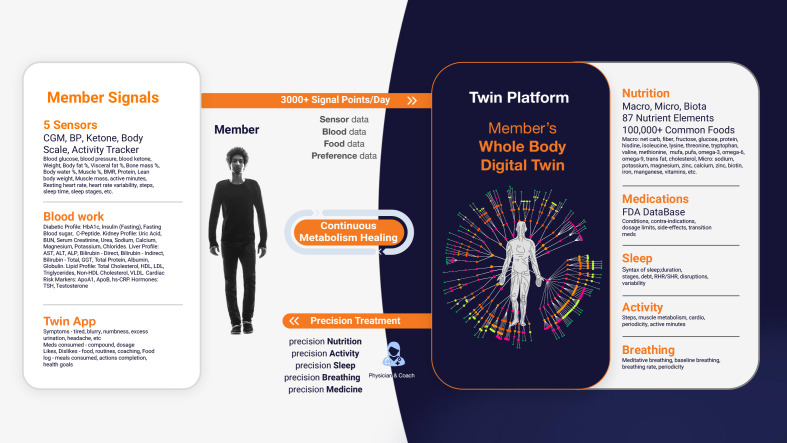
Background: Type 2 Diabetes (T2D) is a complex condition marked by insulin resistance and beta-cell dysfunction. Traditional dietary interventions, such as low-calorie or low-carbohydrate diets, typically overlook individual variability in postprandial glycemic responses (PPGRs), which can lead to suboptimal management of the disease. Recent advancements suggest that personalized nutrition, tailored to individual metabolic profiles, may enhance the effectiveness of T2D management. Objective: This study aims to present the development and application of a Digital Twin (DT) technology-a machine learning (ML)-powered platform designed to predict and modulate PPGRs in T2D patients. By integrating continuous glucose monitoring (CGM), dietary data, and other physiological inputs, the DT provides individualized dietary recommendations to improve insulin sensitivity, reduce hyperinsulinemia, and support the remission of T2D. Methods: We developed a sophisticated DT platform that synthesizes real-time data from CGM, dietary logs, and other biometric inputs to create personalized metabolic models for T2D patients. The intervention is delivered via a mobile application, which dynamically adjusts dietary recommendations based on predicted PPGRs. This methodology is validated through a randomized controlled trial (RCT) assessing its impact on various metabolic markers, including HbA1c, metabolic-associated fatty liver disease (MAFLD), blood pressure, body weight, ASCVD risk, albuminuria, and diabetic retinopathy. Results: Preliminary data from the ongoing RCT and real-world study demonstrate the DT's capacity to generate significant improvements in glycemic control and metabolic health. The DT-driven personalized nutrition plan has been associated with reductions in HbA1c, enhanced beta-cell function, and normalization of hyperinsulinemia, supporting sustained T2D remission. Additionally, the DT's predictions have contributed to improvements in MAFLD markers, blood pressure, and cardiovascular risk factors, highlighting its potential as a comprehensive management tool. Conclusion: The DT technology represents a novel and scalable approach to personalized nutrition in T2D management. By addressing individual variability in PPGRs, this method offers a promising alternative to conventional dietary interventions, with the potential to improve long-term outcomes and reduce the global burden of T2D.
Overview
CoChat Summary
TL;DR
This methods article describes a machine-learning Digital Twin (DT) platform that integrates CGM, dietary, activity, sleep, medication, and laboratory data to predict personalized postprandial glycemic responses and guide nutrition in type 2 diabetes. It reports model performance and summarizes ongoing RCT and real-world outcomes showing improved HbA1c, remission, liver, cardiovascular, and weight measures.
Key findings
- The DT PPGR prediction model achieved an RMSE of 24.96 mg/dL, MAE of 17.21 mg/dL, R² >0.85, and AUC-ROC >0.85; MSE was between 45 and 55, with 91% of predictions falling within 40 points of actual values.
- In the ongoing open-label RCT at 1 year, the DT group’s mean HbA1c improved from 9.0 ± 1.9 to 6.1 ± 0.7 (P<0.001), while standard care changed from 8.5 ± 1.9 to 8.2 ± 1.6 (P=0.051); 94% of the DT group discontinued all T2D medications and 72.7% achieved remission, compared with none in standard care.
- Liver and metabolic outcomes improved in the DT group: normal NAFLD-LFS rose from 11.8% to 67.4% versus 16% to 9.9% in standard care (P<.00001); normal FLI rose from 13.6% to 54.3% versus 15.9% to 13.4% (P=0.0003); MRI-PDFF liver fat was 5.5 ± 4.7% versus 10.9 ± 6.8% (P<.001), and 83.2% versus 34% achieved liver fat <6%.
- Weight and cardiovascular measures also improved: 73.8% of DT patients lost ≥5% weight and 41.6% lost ≥10%; mean weight reduction was 7.4 ± 5.9 kg versus 0.4 ± 3.6 kg (P<0.001), SBP fell from 140.2 ± 15.8 to 127.1 ± 8.3 mmHg (P=0.02), DBP from 94.7 ± 11.7 to 86.8 ± 6.4 mmHg (P=0.014), and 60% achieved hypertension remission. At 18 months, 64.3% of DT participants who achieved remission at 12 months maintained it.
Methods
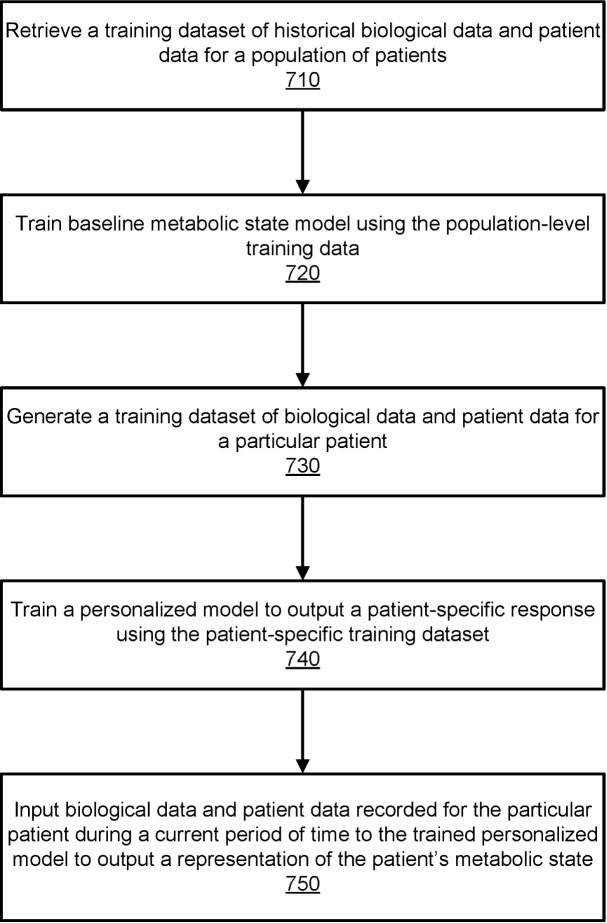
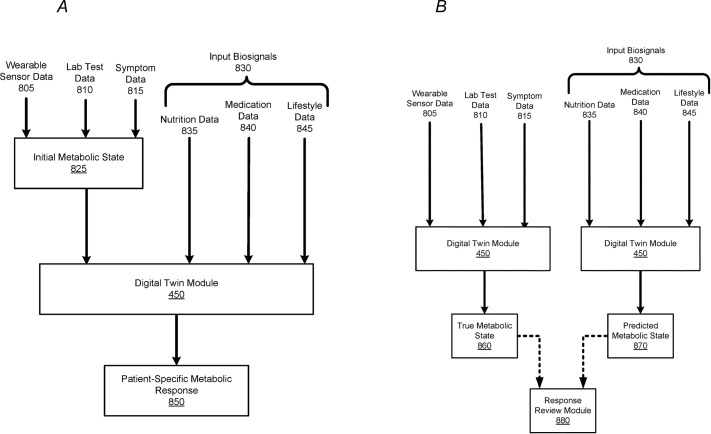
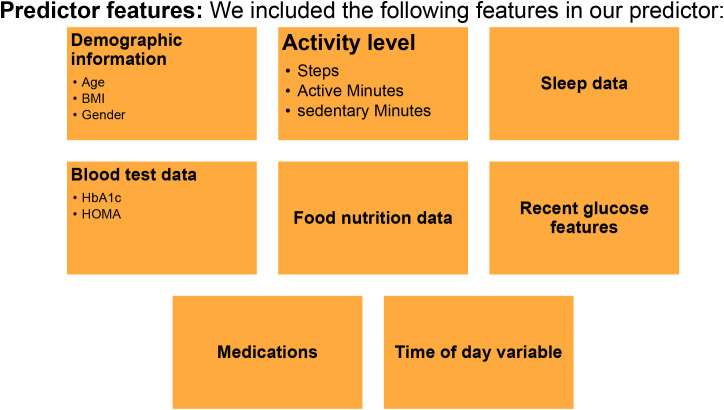
- This is a methods article describing the DT platform: it uses CatBoostRegressor and Random Forest, and later a hybrid Gradient Boosting Machine plus LSTM architecture, to predict PPGRs from 37 input variables including meal composition, CGM trends, medications, sleep, activity, and laboratory data.
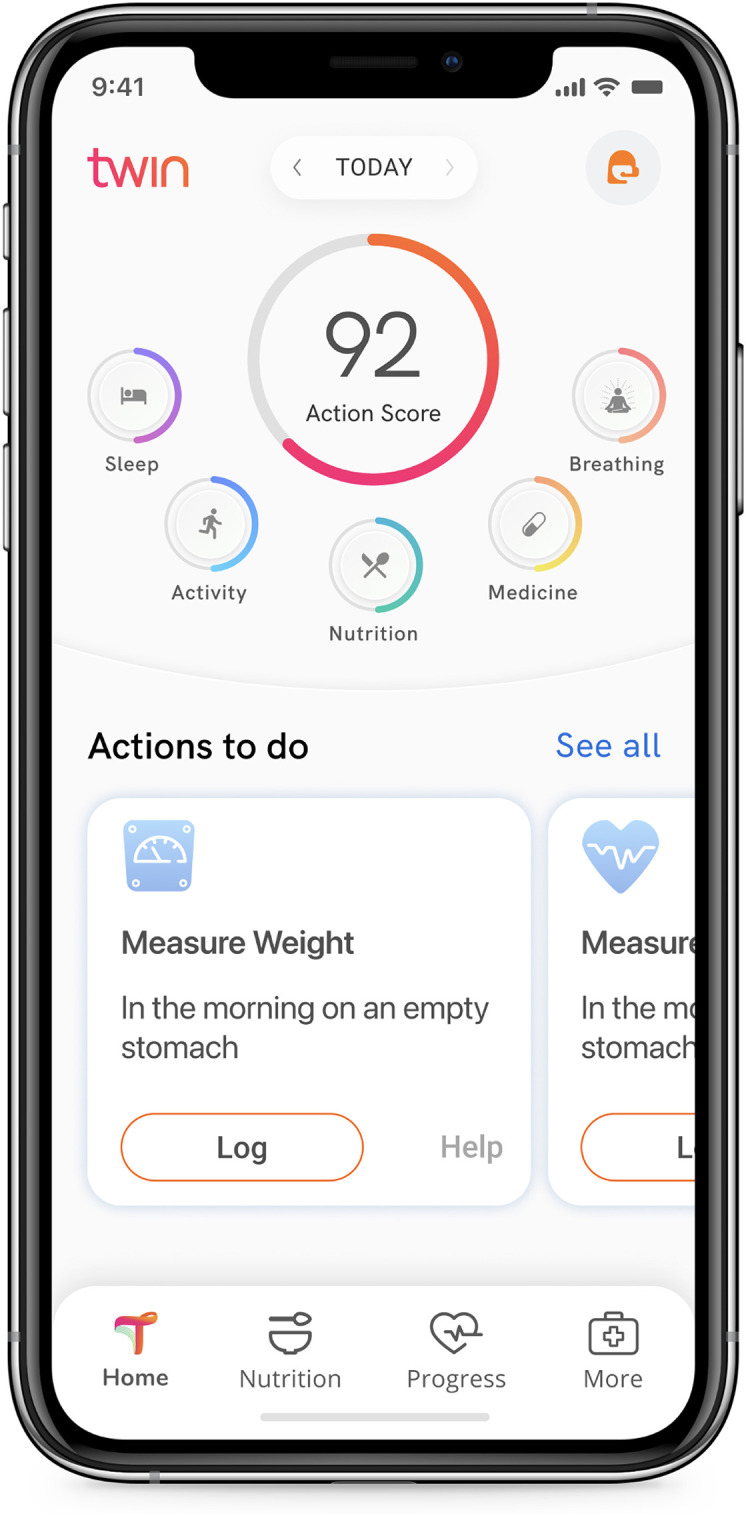
- The intervention is delivered through the Whole Body Digital Twin mobile app, with real-time dietary recommendations, food classification into Green/Orange/Red For You, telehealth support, and continuous CGM/wearable monitoring.
- Validation is summarized from an ongoing open-label RCT: participants aged 18–70 with T2D ≤8 years were randomized 3:1 to DT (n=250) or standard care (n=86); 17 DT participants withdrew before intervention, leaving 233 DT and 86 SC for intent-to-treat analysis. Primary outcomes were HbA1c and T2D medication dosage over two years; remission was defined as HbA1c <6.5% without glucose-lowering medications for at least 3 months. Model evaluation used k-fold cross-validation (k=5), an 80-20 split, grid search, and metrics including MSE, RMSE, MAE, R², and AUC-ROC.
Limitations
- Stated: the DT technology relies on accurate and complete data input, and may be affected by language barriers, user proficiency, patient compliance with food logging and device usage, incomplete tracking, and technical issues such as calibration errors in wearables or CGMs.
- Stated: generalizability to diverse populations with varying dietary habits, socioeconomic conditions, and technology access is a concern; regulatory compliance with evolving data privacy laws such as HIPAA and GDPR may require continuous adaptation; self-reported adherence may introduce bias.
- Evident from the text: the article is a methods/overview summary of an ongoing open-label RCT and real-world studies, with many outcomes cited from separate publications rather than fully reported here; the open-label design and reliance on preliminary/ongoing data limit causal certainty, and the remission sample size was noted as smaller than that for HbA1c reduction.
Model-written summary. Check it against the paper before relying on it.
Integrity signals
Registry
Cites
Statistics
Figures
Verification
Claims the paper makes
45 Valid · 0 Not valid · 22 Not checked · 32 Own results and interpretations
Every source the paper cites for this claim was checked and supports it.
In the paper
“DT-enabled personalized nutrition significantly lowers A1C levels in patients with T2D.”
§ Personalized nutrition in type 2 diabetes remission: application of digital twin technology for predictive glycemic control > Results > Statistical analysis
What the sources say
- Supportedcites [18] Joshi S Shamanna P Dharmalingam M Vadavi A Keshavamurthy A Shah L. Digital twin-enabled personalized nutrition improves metabolic dysfunction-associated fatty liver disease in type 2 diabetes: results of a 1-year randomized controlled study. Endocr Pract. (2023) 29: 960–70. doi: 10.1016/j.eprac.2023.08.016 37778441 source
The Metabolic Parameters section reports that mean HbA1c in the DT group fell significantly from 9.0 at baseline to 6.1 at one year (p<0.001), while the standard-care group did not show a significant change. This directly supports the claim for patients with T2D. (LLM, conf=0.94)
plainstates a causen = 319- Asserted: passes — The authors put it forward as true.
- Checkable: passes — It can be checked against evidence.
- Load-bearing: passes — The paper’s conclusions depend on it.
- Based: passes — The paper gives a reason why it holds.
- Supported
Every source the paper cites for this claim was checked and supports it.
In the paper
“In comparison, Livongo reported a 1.1% reduction in HbA1c at 6 months (29) and One Drop achieved a 1.36% HbA1c reduction at a median follow-up of approximately 4 months (31), both primarily through behavioral coaching.”
§ Personalized nutrition in type 2 diabetes remission: application of digital twin technology for predictive glycemic control > Discussion
What the sources say
- Supportedcites [29] Amante DJ Harlan DM Lemon SC McManus DD Olaitan OO Pagoto SL. Evaluation of a diabetes remote monitoring program facilitated by connected glucose meters for patients with poorly controlled type 2 diabetes: randomized crossover trial. JMIR Diabetes. (2021) 6: e25574. doi: 10.2196/25574 33704077 PMC7995078 source
The Results table (“Change in HbA1c”) reports a mean HbA1c change of −1.1 percentage points from baseline at six months for participants who received the Livongo intervention first. The cited clause reports that within-group reduction, not a comparison with usual care. (LLM, conf=0.94)
plainstates a cause- Asserted: passes — The authors put it forward as true.
- Checkable: passes — It can be checked against evidence.
- Load-bearing: passes — The paper’s conclusions depend on it.
- Based: passes — The paper gives a reason why it holds.
- Supported
Every source the paper cites for this claim was checked and supports it.
In the paper
“In comparison, Livongo reported a 1.1% reduction in HbA1c at 6 months (29) and One Drop achieved a 1.36% HbA1c reduction at a median follow-up of approximately 4 months (31), both primarily through behavioral coaching.”
§ Personalized nutrition in type 2 diabetes remission: application of digital twin technology for predictive glycemic control > Discussion
What the sources say
- Supportedcites [31] Osborn CY van Ginkel JR Marrero DG Rodbard D Huddleston B Dachis J. One drop | Mobile on iPhone and apple watch: an evaluation of hbA1c improvement associated with tracking self-care. JMIR Mhealth Uhealth. (2017) 5: e179. doi: 10.2196/mhealth.8781 29187344 PMC5729227 source
The Discussion reports that HbA1c decreased by 1.36% among One Drop | Mobile users in a median of approximately four months. This directly supports the quoted claim; the study describes an observed change, not a causal effect. (LLM, conf=0.94)
plainstates a cause- Asserted: passes — The authors put it forward as true.
- Checkable: passes — It can be checked against evidence.
- Load-bearing: unclear — It is unclear whether the paper’s conclusions depend on it.
- Based: passes — The paper gives a reason why it holds.
- Supported
Every source the paper cites for this claim was checked and supports it.
In the paper
“The DT technology has also demonstrated significant success in improving Metabolic Dysfunction-Associated Fatty Liver Disease (MAFLD).”
§ Personalized nutrition in type 2 diabetes remission: application of digital twin technology for predictive glycemic control > Results > Statistical analysis
What the sources say
- Supportedcites [18] Joshi S Shamanna P Dharmalingam M Vadavi A Keshavamurthy A Shah L. Digital twin-enabled personalized nutrition improves metabolic dysfunction-associated fatty liver disease in type 2 diabetes: results of a 1-year randomized controlled study. Endocr Pract. (2023) 29: 960–70. doi: 10.1016/j.eprac.2023.08.016 37778441 source
The Conclusions report significantly improved MAFLD measures in patients with type 2 diabetes receiving digital twin–enabled personalized nutrition compared with standard care. The Discussion also reports a significant between-group difference in MRI-measured liver fat at one year. The evidence concerns this combined intervention in patients with type 2 diabetes, rather than digital twin technology alone. (LLM, conf=0.92)
boostedstates a causen = 319- Asserted: passes — The authors put it forward as true.
- Checkable: passes — It can be checked against evidence.
- Load-bearing: passes — The paper’s conclusions depend on it.
- Based: passes — The paper gives a reason why it holds.
- Supported
The sources with a verdict support this claim; the rest weren’t checked yet, have no full text we could read, or their verdicts aren’t rated yet.
In the paper
“DT technology has shown significant cardiovascular benefits as well.”
§ Personalized nutrition in type 2 diabetes remission: application of digital twin technology for predictive glycemic control > Results > Statistical analysis
What the sources say
- Not checked — no full text of the sourcecites [19] Paramesh S Mohammed J Mohamed M Poon T Thajudeen M Keshavamurthy A. Remission of hypertension at six months of whole body digital twin technology. J Hypertension. (2023) 41: e122. doi: 10.1097/01.hjh.0000940000.06022.66 source
- Supportedcites [21] Shamanna P Dharmalingam M Vadavi A Keshavamurthy A Thajudeen M Bhonsley S. 1706999 the impact of digital twin technology on hbA1c reduction and ASCVD risk in participants enrolled for type 2 diabetes remission: outcomes of RCCT at 1 year. Endocr Pract. (2024) 30: S78. doi: 10.1016/j.eprac.2024.03.278 source
The Abstract reports a significant reduction in estimated 10-year ASCVD risk in the digital-twin group compared with standard care and concludes that the technology reduced ASCVD risk. The cardiovascular benefit documented here is a change in estimated risk, not a measured reduction in cardiovascular events. (LLM, conf=0.88)
boostedstates a causen = 12- Asserted: passes — The authors put it forward as true.
- Checkable: passes — It can be checked against evidence.
- Load-bearing: unclear — It is unclear whether the paper’s conclusions depend on it.
- Based: passes — The paper gives a reason why it holds.
29 more claims · 16 with their cited sources checked
Create a free account to see all 99 claims and every source verdict.
- It may state two separate claims as one. 55
- Probably not a substantial claim. 25
Claims other papers make about this one
Each is checked against this paper’s own text: does it say what the citing paper says it does?
In the citing paper
“Early clinical and real‑world studies show that AI‑driven personalized nutrition and image recognition-based food‑logging apps can reduce postprandial glycemic excursions, improve glycemic variability, and reduce the burden of manual dietary recording. These can enhance empowerment and self-efficacy in people with T2D [52, 53].”
From Digital Management of Early-Onset Type 2 Diabetes: Empowerment, Challenges, and Future Outlook (2026) · cites this paper as [52]
Self-check
Percentages, sums and reported differences re-computed from the paper’s own numbers.
Rated major: it would touch a result — a value a result rests on, reported and recomputed p-values on opposite sides of the significance level, two passages that conflict with no sign which is right, or a cited work retracted before this paper was published.
In the paper
“our model achieved an MSE between 45 and 55, demonstrating strong predictive performance. Similarly, RMSE, calculated as √(1/N Σ(yi - ŷi)²), provides an overall measure of prediction quality and is sensitive to large errors. An RMSE of 24.96 mg/dL”
§ Personalized nutrition in type 2 diabetes remission: application of digital twin technology for predictive glycemic control > Methods > Model performance metrics
Reported 55 · recomputed 623.0016
Citations
Cites
(2023) · IEEE Access · doi:10.1109/access.6287639 · Cited by 3,237 · cited 2×
“In response to the limitations of conventional strategies, we developed and implemented Digital Twin (DT) technology (15 – 17).”
Digital twin: Enabling technologies, challenges and open research
Fuller, A., Fan, Z., Day, C., & Barlow, C. (2020) · IEEE Access · doi:10.1109/access.2020.2998358 · Cited by 2,965
Personalized nutrition by prediction of glycemic responses
Zeevi, D., Korem, T., Zmora, N., Israeli, D., Rothschild, D., Weinberger, A., Ben-Yacov, O., Lador, D., Avnit-Sagi, T., Lotan-Pompan, M., et al. (2015) · Cell · doi:10.1016/j.cell.2015.11.001 · Cited by 2,929
Human postprandial responses to food and potential for precision nutrition
Berry, S. E., Valdes, A. M., Drew, D. A., Asnicar, F., Mazidi, M., Wolf, J., Capdevila, J., Hadjigeorgiou, G., Davies, R., Al Khatib, H., et al. (2020) · Nature Medicine · doi:10.1038/s41591-020-0934-0 · Cited by 932
Update on the treatment of type 2 diabetes mellitus
Marín-Peñalver, J. J., Martín-Timón, I., Sevillano-Collantes, C., & Cañizo-Gómez, F. J. D. (2016) · World Journal of Diabetes · doi:10.4239/wjd.v7.i17.354 · Cited by 647
Consensus report: definition and interpretation of remission in type 2 diabetes
Riddle, M. C., Cefalu, W. T., Evans, P. H., Gerstein, H. C., Nauck, M. A., Oh, W. K., Rothberg, A. E., le Roux, C. W., Rubino, F., Schauer, P., et al. (2021) · Diabetes Care · doi:10.2337/dci21-0034 · Cited by 464
Goldenberg, J. Z., Day, A., Brinkworth, G. D., Sato, J., Yamada, S., Jönsson, T., Beardsley, J., Johnson, J. A., Thabane, L., & Johnston, B. C. (2021) · BMJ · doi:10.1136/bmj.m4743 · Cited by 428
Celis-Morales, C., Livingstone, K. M., Marsaux, C. F. M., Macready, A. L., Fallaize, R., O’Donovan, C. B., Woolhead, C., Forster, H., Walsh, M. C., Navas-Carretero, S., et al. (2016) · International Journal of Epidemiology · doi:10.1093/ije/dyw186 · Cited by 399 · cited 2×
“Data were self-reported or collected remotely, introducing potential measurement errors (14).”
Mendes-Soares, H., Raveh-Sadka, T., Azulay, S., Edens, K., Ben-Shlomo, Y., Cohen, Y., Ofek, T., Bachrach, D., Stevens, J., Colibaseanu, D., et al. (2019) · JAMA Network Open · doi:10.1001/jamanetworkopen.2018.8102 · Cited by 212
Lima, J. E. B. F., Moreira, N. C. S., & Sakamoto-Hojo, E. T. (2022) · Mutation Research/Genetic Toxicology and Environmental Mutagenesis · doi:10.1016/j.mrgentox.2021.503437 · Cited by 203
Cited by
Nourazarain, A., & Vaziri, Y. (2025) · Genes & Nutrition · doi:10.1186/s12263-025-00790-9 · Cited by 92
“These innovations enable continuous, real-time assessment of metabolic status, immediate feedback on dietary choices, and dynamic optimization of nutritional interventions based on individual responses and changing physiological conditions [224, 225].”
Arshad, M. T., Ali, M. K. M., Maqsood, S., Ikram, A., Ahmed, F., Aljameel, A. I., AL-Farga, A. M., & Hossain, M. S. (2025) · Food Science & Nutrition · doi:10.1002/fsn3.71006 · Cited by 58
“Novel digital health technologies, such as wearable sensors, AI apps, and CGMs, improve personalized nutrition by offering instantaneous feedback on the effect of food choices (Sempionatto et al. 2021; Shamanna et al. 2024).”
Quan, W., Zhou, J., Wang, J., Huang, J., & Du, L. (2025) · Nutrients · doi:10.3390/nu18010045 · Cited by 31
“…a randomized controlled trial (RCT) demonstrated that, compared with standard type 2 diabetes care using traditional dietary interventions, personalized dietary interventions driven by ML and IoT significantly reduced levels of HbA1c, blood pressure, albuminuria, body weight, and BMI levels [113].”
Digital twin paradigm in diabetes prediction and management
Olawade, D. B., Owhonda, R. C., Alabi, J. O., Egbon, E., Daniel, R. I. A., & Bello, O. J. (2025) · Diabetes Research and Clinical Practice · doi:10.1016/j.diabres.2025.113075 · Cited by 25
Mechanism of actions of probiotics on type 2 diabetes: Development and complications
Ağagündüz, D., Çelik, E., Cemali, Ö., Yeşildemir, Ö., Demirci, K. Ş., Akkuş, G., Esatbeyoglu, T., & Özoğul, F. (2025) · Biomedicine & Pharmacotherapy · doi:10.1016/j.biopha.2025.118421 · Cited by 21
Mitigation of Metabolic Diseases Through Personalized Nutrition: A Critical In‐Depth Review
Arshad, M. T., Ali, M. K. M., Awlqadr, F. H., Maqsood, S., Ikram, A., Hossain, M. S., Abdullahi, M. A., & Rashed, M. M. (2026) · Food Science & Nutrition · doi:10.1002/fsn3.71387 · Cited by 11
“By integrating continuous glucose monitoring (CGM), dietary data, and other physiological inputs, the DT provides individualized dietary recommendations aimed at improving insulin sensitivity, reducing hyperinsulinemia, and supporting the remission of T2D (Shamanna et al. 2024).”
Chen, Y., Yang, M., & Hua, Q. (2025) · Pharmacological Research · doi:10.1016/j.phrs.2025.107734 · Cited by 9
Cáceres-Gutiérrez, D. A., Bonilla-Bonilla, D. M., Liscano, Y., & Díaz-Vallejo, J. A. (2025) · Journal of Personalized Medicine · doi:10.3390/jpm15110504 · Cited by 13
“Perhaps the most compelling finding from the reviewed literature is the reported potential for disease reversal; one notable randomized controlled trial reported T2D remission in 76.5% of its participants [17].”
InfluentialCardiometabolic risk reduction with digital twinning in patients with type 2 diabetes
Seyedi, S. A., Gonzalez-Rivas, J. P., Mellacheruvu, P., Mellacheruvu, A., Aledavood, S. P., Esteghamati, A., & Mechanick, J. I. (2025) · Cardiovascular Diabetology – Endocrinology Reports · doi:10.1186/s40842-025-00242-8 · Cited by 10
“In contrast, all participants in the SC group continued their T2D medication, and no cases of T2D remission were observed [23].”
InfluentialEditorial: Continuous glucose monitoring: beyond diabetes management
Xiao, J. (2025) · Frontiers in Endocrinology · doi:10.3389/fendo.2025.1678600 · Cited by 6
Wang, Y., Wen, Y., Wu, X., et al. (2025) · Journal of improved oil and gas recovery technology. · doi:10.53469/wjimt.2025.08(01).05 · Cited by 6
AI-driven aging digital twins: A roadmap for clinical translation in precision geriatrics
Li, C., Zuo, K., Duan, R., Ouyang, X., Zhang, L. Y., Zeng, L., & Ge, L. (2025) · Ageing Research Reviews · doi:10.1016/j.arr.2025.102931 · Cited by 6
Xie, M., Hu, Y., Xu, H., Li, X., Dong, Y., Wang, R., Guo, J., He, J., Chen, H., Guo, J., et al. (2026) · American Journal of Clinical Nutrition · doi:10.1016/j.ajcnut.2026.101322 · Cited by 10
Self-Explaining Neural Networks for Food Recognition and Dietary Analysis
Revesai, Z., & Kogeda, O. P. (2025) · BioMedInformatics · doi:10.3390/biomedinformatics5030036 · Cited by 5
“Modern deep learning architectures have demonstrated remarkable success in capturing these intricate patterns, particularly in processing heterogeneous nutritional data sources [19,20].”
Ma, Y., Chen, D., & Xie, J. (2026) · Biomedicines · doi:10.3390/biomedicines14010223 · Cited by 11
“In T2D management, this approach has led to remission in 72.7% of patients [38].”
InfluentialElmotia, K., Abouyaala, O., Bougrine, S., & Ouahidi, M. L. (2025) · Primary care diabetes · doi:10.1016/j.pcd.2025.05.004 · Cited by 6
Künstliche Intelligenz als „decision support system“: Möglichkeiten von und für digitale Zwillinge
Ehrmann, D., Kulzer, B., SCHMITT, A. J., Klinker, L. Y., & Hermanns, N. (2025) · Die Diabetologie · doi:10.1007/s11428-025-01348-4 · Cited by 2
Samajdar, S. S., Biswas, N., Modi, A., et al. (2025) · SBV Journal of Basic Clinical and Applied Health Science · doi:10.4103/sbvj.sbvj_64_25 · Cited by 2
Self-citationAI-Driven Telemedicine and mHealth Applications Integrating Digital Twin-Based Healthcare
Chetlapalli, H., Kodadi, S., Deevi, D. P., Allur, N. S., Dondapati, K., & Perumal, T. (2025) · IGI Global eBooks · doi:10.4018/979-8-3373-2028-1.ch020 · Cited by 2
Kiran, M., Xie, Y., Ball, G., Schutte, R., Anjum, N., & Pierscionek, B. K. (2026) · Frontiers in Digital Health · doi:10.3389/fdgth.2026.1710829 · Cited by 3
“Research is currently being conducted on DTs to explore the possibility of generating dynamic models and simulations of human physiology, with the goal of enhancing patient care and treatment options [17–19].”
Gao, Q., Li, Y., & Wang, L. (2026) · Food Reviews International · doi:10.1080/87559129.2026.2642794 · Cited by 3
“[144] Personalized diet plans based on microbiome profiles have demonstrated improved glycemic control compared to conventional dietary guidelines.”
Clister, D., Chandra, Q. M., Tan, M.-S., Gunawan, M. C., Bibi, A., Ahmed, A., Bastian, M., Meesakul, P., Cao, S., Kim, B., et al. (2026) · Journal of Nutrition · doi:10.1016/j.tjnut.2026.101596 · Cited by 1
Digital Twin Applications in Diabetes Management: Scoping Review
Rad, F. S., Jafarpour, M., Bitaraf, E., Khaleghdadi, K., & Li, J. (2026) · JMIR Diabetes · doi:10.2196/83059 · Cited by 4
“%) studies, often leveraging tools, such as the UVa/PADOVA simulator or ReplayBG, to validate insulin control and metabolic models [3,8,10,24-27,29 ,30 ].”
InfluentialFrom metabolites to membrane vesicles: Unifying gut microbial signals in obesity, t2dm, and MASLD
Barathan, M., Venkatraman, G., & Abdul‐Rahman, P. S. (2026) · World Journal of Microbiology and Biotechnology · doi:10.1007/s11274-026-05249-6 · Cited by 1
“Digital gut twins are able to simulate the in-silico responses of an individual’s microbiome and metabolome to specific fibers, postbiotics, and designed consortia (Shamanna et al. 2024a, b ; Sarani et al. 2026).”
Yang, Y., Park, Y. M., & Jin, H. Y. (2026) · Journal of Korean Academy of Nursing · doi:10.4040/jkan.26036
“Such data integration reflects the principles of emerging digital twin platforms [34].”
Sun, Y., Yang, R., Xin, Q., Luo, X., Zhou, Y., Fu, Z., Li, J., Gu, Z., Liu, J., Wang, Q., et al. (2026) · Frontiers in Endocrinology · doi:10.3389/fendo.2026.1919404
“According to retrospective real-world data, the treatment effect reported is substantial: the HbA1c level dropped by nearly three percentage points, 94% of patients were able to stop relying on antihypertensive drugs, and 72.7% of patients achieved remission of T2DM within one year (24).”
InfluentialData, Process, and Data-Driven Representations of Digital Twins in Diabetes: Scoping Review
Cinar, B., van den Boom, L., & Maleshkova, M. (2026) · JMIR Diabetes · doi:10.2196/91729
Samajdar, S. S., Parikh, R. M., Husain, N., Bhaduri, G., Chawla, M. S., Mehta, R. J., Kalia, A., Mulwani, N., Rastogi, A., Tyagi, S., et al. (2026) · International Journal of Diabetes and Technology · doi:10.4103/ijdt.ijdt_14_26
Self-citationMai, A., Luan, Y., Loy, S. L., Qin, C., Ji, H., Obeng, A., Oladuti, M., Ejima, K., Mok, K. T., Kaur, S., et al. (2026) · Frontiers in Digital Health · doi:10.3389/fdgth.2026.1805704 · Cited by 4
“…diet, CGM, medications, and physical activity, will be essential for next-generation AI-based precision nutrition models that extend this paradigm, ensuring that digital twin predictions remain accurate, transportable, and equitable when deployed beyond tightly monitored program settings (281).”
Xie, M., Dong, Y., Guo, J., He, J., Wang, R., Martinez, J. A., & Zhu, R. (2026) · Journal of Nutrition · doi:10.1016/j.tjnut.2026.101852
Human-centric transformation of food systems in the Industry 5.0 era
Hassoun, A. (2026) · Elsevier eBooks · doi:10.1016/b978-0-443-36591-1.00006-9
De la cama de Procusto a la medicina de precisión en la diabetes mellitus tipo 2
Franch‐Nadal, J., & Fernández‐Camins, B. (2026) · Diabetes práctica · doi:10.52102/diabet/pract.2025.3.art1
Artificial Intelligence in Diabetes Management: A New Frontier in Precision Medicine
Gaur, A., Paul, M., Singh, N., & Pant, G. (2026) · Emerald Group Publishing Limited eBooks · doi:10.1108/978-1-80592-911-620261015
Digital Management of Early-Onset Type 2 Diabetes: Empowerment, Challenges, and Future Outlook
Guo, L.-J., Low, K.-S., Tae, S.-K., & Lim, L.-L. (2026) · Current Diabetes Reports · doi:10.1007/s11892-026-01633-6
“These can enhance empowerment and self-efficacy in people with T2D [ 52, 53].”
Unde, H., Mane, V. M., & Ghorpade, T. H. (2026) · doi:10.1109/ic3et64989.2026.11467201
Farley, B., Radetich, E., D’Alessandro, J. S., & Bulaj, G. W. (2025) · Healthcare · doi:10.3390/healthcare13243220 · Cited by 2
“Advances in personalized AI health agents offer more tools to optimize real-world and just-in-time adaptive interventions for prevention and management of chronic conditions, including diabetes and CVDs [98,103,104].”
Deep Learning Diabetes Monitoring and Prevention: Personalized Health Assistant Contribution
Ribeiro, D., Gonçalves, C., Silveira, C., Caetano, F., & Vieira, P. (2026) · IGI Global eBooks · doi:10.4018/979-8-3373-3531-5.ch006
Yang, Z., He, J., Song, Y., & Meng, Q. (2026) · Frontiers in Endocrinology · doi:10.3389/fendo.2026.1912965
Jaba Ranchana, A., Deepika, C. H., & P, S. V. R. (2025) · International Conference on Ubiquitous Computing and Intelligent Information Systems (ICUIS) · doi:10.1109/icuis67429.2025.11380659
“Shamanna et al. [3], explored the digital twin technology in predicting the glycemic regulation in remission diabetes type 2.”
Wang, Y., Liu, J., Jing, P., Wu, Z., Wang, Y., & Liu, Y. (2026) · Expert Systems with Applications · doi:10.1016/j.eswa.2026.133512
Applications of artificial intelligence in personalized nutrition interventions
Zhang, Y., Feng, M., Xue, Q., Ma, R., & Liu, F. (2026) · Frontiers in Nutrition · doi:10.3389/fnut.2026.1974199
Nakamura, K., Shinoda, G., Noda, A., Ishikuro, M., Obara, T., Matsubara, T., Ishii, H., Onishi, M., & Ohyama, Y. (2026) · Frontiers in Artificial Intelligence · doi:10.3389/frai.2026.1927993
“…integrating multidimensional data (continuous glucose monitoring, diet, step counts) dynamically predicted glycemic response and, in a one-year randomized controlled trial, achieved marked reductions in HbA1c, high remission rates, and improved cardiovascular risk factors (Shamanna et al., 2024).”
The Role of Technology in Tackling Global Health Challenges
Saatchi, A. G. (2026) · IGI Global eBooks · doi:10.4018/979-8-3373-3341-0.ch001
Song, J., Tao, W., Zhou, D., 李轩宾, Peng, S., Li, C., & Yuan, J. (2026) · Medicine · doi:10.1097/md.0000000000049815 · Cited by 1
“[54] These systems combine CGM, insulin pumps, and control algorithms to automatically adjust insulin delivery in a closed loop and have contributed to improved treatment outcomes in patients with diabetes.”
Xu, J.-L., Luo, C., Duan, C., Xu, S.-Y., Wu, Z.-Q., Ye, L., Li, Z.-P., Wang, M.-S., Yu, X.-M., & He, D. (2026) · World Journal of Diabetes · doi:10.4239/wjd.119712
Xiaoyu, Z., Yang, H., Lv, S., Gai, P., Zhang, W., & Zuo, L. (2026) · Advanced Sustainable Systems · doi:10.1002/adsu.70590
“Clinically, this approach has been shown to significantly improve glycemic control and increase remission rates in type 2 diabetes, validating the role of digital twins in enabling precision nutrition and reversing metabolic disease [185, 186].”
Enhanced Diabetes Management with Digital Twins: A Scoping Review (Preprint)Preprint
Cinar, B., van den Boom, L., & Maleshkova, M. (2026) · doi:10.2196/preprints.91729
Ahmed, A. Y. (2026) · Scientia. Technology, science and society. · doi:10.59324/stss.2026.3(1).08 · Cited by 2
AI Enabled Digital Twin Approaches in Nutrition and Dietetics: Evidence, Potential, and Limitations
Canyolu, B. A., & Şen, N. (2026) · İstanbul Gelişim Üniversitesi Sağlık Bilimleri Dergisi · doi:10.38079/igusabder.1829028
Li, J., Dw, Z., Zhu, W., Zhang, H., Liu, C., Zhang, F., Yan, M., & Fan, K. (2026) · Frontiers in Endocrinology · doi:10.3389/fendo.2026.1910587
Qian, Y., Nie, K., Zhu, Y., et al. (2026) · China Agricultural Economic Review · doi:10.1108/caer-12-2024-0474
Metadata
- Authors
- Shamanna, P., Joshi, S., Thajudeen, M., Shah, L., Poon, T., Mohamed, M., & Mohammed, J.
- Affiliations
- Bangalore Diabetes Centre (IN)
- Lilavati Hospital & Research Centre (IN)
- Corresponding author
- Shamanna, Paramesh
- Venue
- Frontiers in Endocrinology
- Publisher
- Frontiers Media SA
- Published
- 2024-11-20
- Volume
- 15
- Pages
- 1485464-1485464
- ISSN
- 1664-2392 (ISSN-L)
- PMC
- PMC11615876
- OpenAlex
- W4404538085
- Cited by
- 56
- References
- 30
- Citations by year
- 2026: 37 · 2025: 19
- FWCI
- 18.32
- Type
- journal article
- Language
- en
- Open access
- gold
- doi.org
- Licence
- Locations
- Frontiers in Endocrinology (publishedVersion, cc-by)
- PubMed Central (publishedVersion, cc-by)
- PubMed (publishedVersion)
- DOAJ (DOAJ: Directory of Open Access Journals) (submittedVersion, cc-by-sa)
- Topics
- Health Sciences › Medicine › Endocrinology, Diabetes and Metabolism › Diabetes Management and Research
- Life Sciences › Biochemistry, Genetics and Molecular Biology › Genetics › Nutrition, Genetics, and Disease
- Health Sciences › Health Professions › General Health Professions › Mobile Health and mHealth Applications
- Keywords
- type 2 diabetes remission, personalized nutrition, digital twin, postprandial glycemic response, continuous glucose monitoring, dietary recommendations, glycemic control, hyperinsulinemia, beta-cell function, insulin sensitivity, metabolic-associated fatty liver disease, cardiovascular risk, mobile health apps, HbA1c
- MeSH terms
- Machine Learning, Digital Technology, Glycemic Control, Blood Glucose, Diabetes Mellitus, Type 2, Female, Humans, Male, Middle Aged, Remission Induction, Blood Glucose Self-Monitoring, Postprandial Period, Precision Medicine
About these checks
Registry, retraction, Cites and statistics results are computed, not judged, with one exception: a printed reference that no index lists is read once by a model before it counts as a citation error. Claims are extracted by a model and kept only when their quote appears verbatim in the text; each cited source is then checked, with a model’s help, for whether it says what the claim relies on. Those verdicts can be wrong — read the claim’s quote and the cited source before relying on one.
The claim verdicts this report counts are experimental: their accuracy is not yet measured.
A language model drew the claims from the paper on 2026-10-10, under version 3 of the claim definition (model deepseek-v4.1-flash, prompt extract-v3).
A second model labelled each claim on 2026-10-10 (model jev-1.13-20260917, definition revision gold-guideline-v0.2).
Cited sources are checked with a language model’s help (gpt-6-sol).
Statistics and arithmetic are recomputed, not judged.
Confidence bands are shown only for fields calibrated on our annotated test set. None is calibrated yet, so no band is shown.
What counts as a claim ›How we measure confidence ›How we check this ›
Are you an author, or do you see a problem with this page? Request a review
Data sources
Bibliographic data: Semantic Scholar, OpenAlex, Crossref.
Contains information from the Semantic Scholar Academic Graph Datasets, made available under the ODC Attribution License (ODC-BY 1.0).
Semantic Scholar’s data is described in: Kinney, R., et al. (2023). The Semantic Scholar Open Data Platform. arXiv:2301.10140.
