

Emerging applications of gene editing technologies for the development of climate-resilient crops
Open accessThe DOI matches its Crossref record; 298 of the 303 references it cites were found in a registry or an index; 168 of the 282 sources its claims cite were checked for support.
Abstract
Climate change threatens global crop yield and food security due to rising temperatures, erratic rainfall, and increased abiotic stresses like drought, heat, and salinity. Gene editing technologies, including CRISPR/Cas9, base editors, and prime editors, offer precise tools for enhancing crop resilience. This review explores the mechanisms of these technologies and their applications in developing climate-resilient crops to address future challenges. While CRISPR/enables targeted modifications of plant DNA, the base editors allow for direct base conversion without inducing double-stranded breaks, and the prime editors enable precise insertions, deletions, and substitutions. By understanding and manipulating key regulator genes involved in stress responses, such as DREB, HSP, SOS, ERECTA, HsfA1, and NHX; crop tolerance can be enhanced against drought, heat, and salt stress. Gene editing can improve traits related to root development, water use efficiency, stress response pathways, heat shock response, photosynthesis, membrane stability, ion homeostasis, osmotic adjustment, and oxidative stress response. Advancements in gene editing technologies, integration with genomics, phenomics, artificial intelligence (AI)/machine learning (ML) hold great promise. However, challenges such as off-target effects, delivery methods, and regulatory barriers must be addressed. This review highlights the potential of gene editing to develop climate-resilient crops, contributing to food security and sustainable agriculture.
Overview
CoChat Summary
TL;DR
This review argues that CRISPR/Cas9, base editors, and prime editors can accelerate development of climate-resilient crops by targeting stress-response regulators and pathways. It highlights promising crop applications but emphasizes persistent challenges in off-target effects, delivery, trait stacking, and regulation.
Key findings
- Gene editing can target key stress-related regulators such as DREB, HSP, SOS, ERECTA, HsfA1, and NHX to improve drought, heat, and salt tolerance, with reported examples including TaDREB3 editing in wheat, OsbZIP46 knockout in rice, HsfA1 modification in tomato, and ERECTA editing in Arabidopsis.
- Base editors enable C-to-T and A-to-G conversions without double-strand breaks; TadA-8e-derived CBEs and mTCBE variants reportedly achieved editing efficiencies up to 81% in rice, while ABEmax mediated A:T to G:C conversions at rice loci such as OsACC, OsMPK6, OsSERK2, and OsWRKY45 with reported frequencies of 17.6%, 32.1%, and 62.3%.
- Prime editing enables insertions, deletions, and substitutions without donor DNA; PE6c gave over threefold increases in rice, T5 exonuclease addition gave up to 2.9-fold increases across plant cells, and ePPEplus in wheat boosted editing efficiency 33-fold and allowed multiplex editing of up to eight genes.
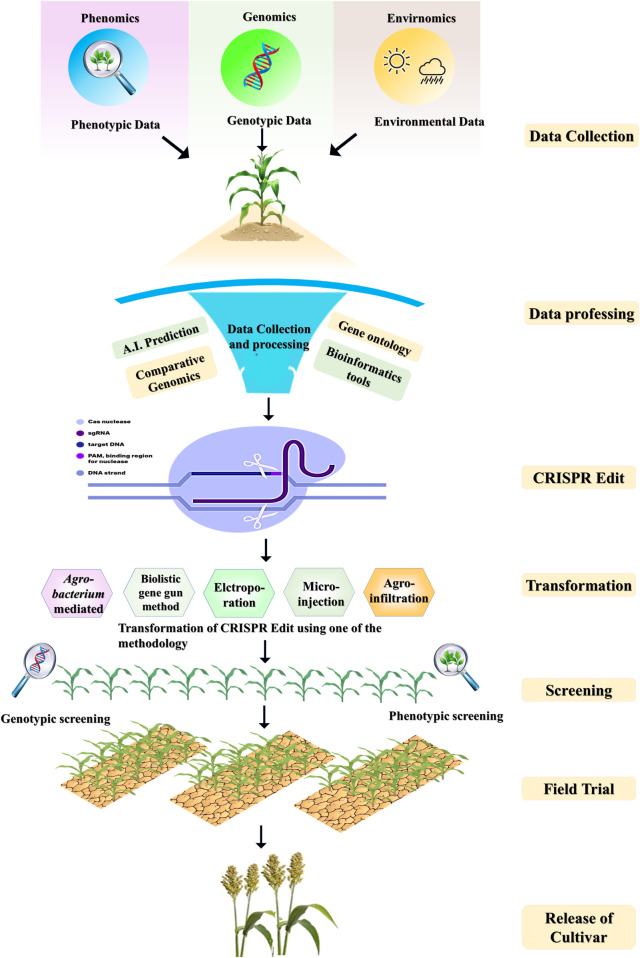
- Emerging systems include Fanzor, TnpB, and CRISPR-associated transposases (CASTs), while AI/phenomics integration is proposed to improve target prediction, off-target prediction, and breeding efficiency.
Methods
- Design: narrative review of gene editing technologies and their applications for climate-resilient crops.
- Data or sample: no primary experimental sample; the paper synthesizes published literature on CRISPR/Cas9, base editors, prime editors, emerging editors, stress-regulator genes, delivery methods, and regulatory frameworks.
- Main analysis: qualitative synthesis of mechanisms, crop examples, trait targets, and implementation challenges, with tables summarizing positive regulator genes and regulatory aspects.
Limitations
- Stated: off-target effects, delivery methods, regulatory barriers, low base-editing efficiency, large editing windows, genotoxic effects, prime-editing delivery and optimization challenges, possible negative yield impacts of editing negative regulators under non-stress conditions, and trait-stacking risks such as negative genetic interactions and need for field trials.
- Stated: regulatory frameworks vary globally, and the absence of a universal regulatory framework affects research, cultivation, and marketing of gene-edited products.
- Evident from the text: as a narrative review, it does not report a systematic search strategy, inclusion criteria, or quantitative meta-analysis, and it relies on cited studies rather than primary experimental validation.
Model-written summary. Check it against the paper before relying on it.
Integrity signals
Registry
Cites
Statistics
Figures
Verification
Claims the paper makes
115 Valid · 35 Not valid · 71 Not checked · 71 Own results and interpretations
Some cited sources support this claim and some don’t — read each source’s verdict below.
In the paper
“Using CRISPR/Cas9 gene editing technologies, barley abiotic stress tolerance has been enhanced by targeting specific genes associated with drought and salinity resistance (Karunarathne et al., 2023; Yadav et al., 2023).”
§ Emerging applications of gene editing technologies for the development of climate-resilient crops > Gene editing technologies > Prospects of multiple traits development in climate resilience
What the sources say
- Disputedcites Karunarathne et al., 2023 matched to “Genetic resources and precise gene editing for targeted improvement of barley abiotic stress tolerance” (2023) sourceExperimental — accuracy not yet measured
Section 4.2 says the barley genes used to achieve drought tolerance were overexpressed, but not through CRISPR/Cas9. It also reports that CRISPR-generated HvHVP10 knockout lines had decreased, not enhanced, salt tolerance. The review discusses CRISPR as a potential strategy, but these passages contradict the claimed improvements. (LLM, conf=0.88)
Checked by a reasoning model — may be wrong.
- Partly supportedcites Yadav et al., 2023 matched to “Genome editing and improvement of abiotic stress tolerance in crop plants” (2023) sourceExperimental — accuracy not yet measured
The Salinity Stress section (3.4; page unavailable) identifies barley HvITPK1 as a CRISPR/Cas9 target that may increase salt tolerance. The Drought Stress section (3.1; page unavailable) discusses edited genes in other crops, but does not establish enhanced drought tolerance in barley. The claim also states the barley improvement as accomplished, whereas the barley passage describes it as a possibility. (LLM, conf=0.87)
plainstates a cause- Asserted: passes — The authors put it forward as true.
- Checkable: passes — It can be checked against evidence.
- Load-bearing: passes — The paper’s conclusions depend on it.
- Based: passes — The paper gives a reason why it holds.
- Disputed
At least one cited source doesn’t support this claim or points to a different paper, and none confirmed it — see the verdicts below.
In the paper
“An enhancement of drought tolerance is reported through CRISPR/Cas9 editing of the TaDREB3 gene in Triticum aestivum (Kim et al., 2018) and knocking out the OsbZIP46 gene in Oryza sativa (Tang J. et al., 2019).”
§ Emerging applications of gene editing technologies for the development of climate-resilient crops > Gene editing technologies > Key positive regulators in climate resilience
What the sources say
- Disputedcites Kim et al., 2018 matched to “CRISPR/cas9 genome editing in wheat” (2018) sourceExperimental — accuracy not yet measured
The Introduction says this study edited TaDREB2 and TaERF3 in wheat protoplasts, not TaDREB3. The dehydration-treatment section reports increased expression of those genes under drought, while the Discussion says further work with stable transformations is needed; it does not report enhanced drought tolerance from the editing. (LLM, conf=0.90)
Checked by a reasoning model — may be wrong.
plainstates a cause- Asserted: passes — The authors put it forward as true.
- Checkable: passes — It can be checked against evidence.
- Load-bearing: passes — The paper’s conclusions depend on it.
- Based: passes — The paper gives a reason why it holds.
- Disputed
At least one cited source doesn’t support this claim or points to a different paper, and none confirmed it — see the verdicts below.
In the paper
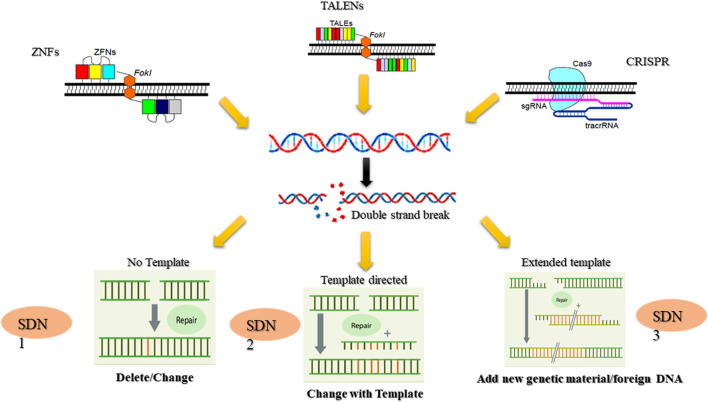
“However, SDN2 is limited for larger insertions due to its reliance on microhomology-mediated end joining (Verma et al., 2020).”
§ Emerging applications of gene editing technologies for the development of climate-resilient crops > Gene editing technologies > Regulatory aspects and biosafety concerns
What the sources say
- Disputedcites Verma et al., 2020 matched to “Structural aspects of DNA repair and recombination in crop improvement” (2020) sourceExperimental — accuracy not yet measured
In “Modification of Genome Editing Techniques” (page not supplied), the paper says SDN2 relies on homologous recombination, not microhomology-mediated end joining, and identifies low homologous-recombination frequency as its main limitation. The “DSB Repair” section discusses microhomology-mediated end joining as a separate repair pathway. (LLM, conf=0.93)
Checked by a reasoning model — may be wrong.
plainstates a cause- Asserted: passes — The authors put it forward as true.
- Checkable: passes — It can be checked against evidence.
- Load-bearing: unclear — It is unclear whether the paper’s conclusions depend on it.
- Based: passes — The paper gives a reason why it holds.
- Disputed
At least one cited source doesn’t support this claim or points to a different paper, and none confirmed it — see the verdicts below.
In the paper
“One prominent example is the study focusing on the GhA08G1120 (GH3.5) gene in cotton. Researchers demonstrated that suppressing this gene resulted in enhanced drought and salt stress tolerance (Kirungu et al., 2019).”
§ Emerging applications of gene editing technologies for the development of climate-resilient crops > Gene editing technologies > Novel trait development for climate resilience in crops
What the sources say
- Disputedcites Kirungu et al., 2019 matched to “Functional characterization of gh_a08g1120 (gh3.5) gene reveal their significant role in enhancing drought and salt stress tolerance in cotton” (2019) sourceExperimental — accuracy not yet measured
The Discussion says that knocking down Gh_A08G1120 compromised cotton’s ability to tolerate drought and salt stress—the opposite of the claim. The Results likewise say silencing significantly reduced stress tolerance. Page numbers are not provided in our copy. (LLM, conf=0.95)
Checked by a reasoning model — may be wrong.
boostedstates a cause- Asserted: passes — The authors put it forward as true.
- Checkable: passes — It can be checked against evidence.
- Load-bearing: passes — The paper’s conclusions depend on it.
- Based: passes — The paper gives a reason why it holds.
- Disputed
The cited sources support only part of this claim — read each source’s verdict below.
In the paper
“Moreover, base editing technologies have demonstrated high efficiency and specificity in various crops, including rice and Arabidopsis, allowing for the precise development of desirable traits compared to conventional breeding techniques (Ren et al., 2021; Lyzenga et al., 2021).”
§ Emerging applications of gene editing technologies for the development of climate-resilient crops > Gene editing technologies > Base editors
What the sources say
- Partly supportedcites Ren et al., 2021 matched to “Improved plant cytosine base editors with high editing activity, purity, and specificity” (2021) sourceExperimental — accuracy not yet measured
The Results report high editing efficiency in Arabidopsis protoplasts, and the Abstract identifies editors with high efficiency and specificity based on testing that includes rice. The Discussion describes rice trait-engineering examples. The paper does not establish high specificity in Arabidopsis or compare trait development with conventional breeding. Page numbers were not provided in our copy. (LLM, conf=0.88)
- Partly supportedcites Lyzenga et al., 2021 matched to “Advanced domestication: harnessing the precision of gene editing in crop breeding” (2021) sourceExperimental — accuracy not yet measured
The ‘Advances in CRISPR technology’ section (page unavailable) describes base editing as targeted single-nucleotide conversion and says it has been deployed in rice and other crops. It does not establish high efficiency and specificity for base editing in those crops, or report base editing in Arabidopsis. The crop-improvement discussion supports its potential to produce desirable alleles, but not the full claim as stated. (LLM, conf=0.86)
boostedstates a cause- Asserted: passes — The authors put it forward as true.
- Checkable: passes — It can be checked against evidence.
- Load-bearing: passes — The paper’s conclusions depend on it.
- Based: passes — The paper gives a reason why it holds.
- Partly supported
143 more claims · 79 with their cited sources checked
Create a free account to see all 292 claims and to verify the 23 references still open.
- It may state two separate claims as one. 99
- Probably not a substantial claim. 64
Self-check
Percentages, sums and reported differences re-computed from the paper’s own numbers.
Each contradiction between two passages listed here was confirmed by an independent check.
Rated minor: it would not touch a result — a value no result rests on, a p-value that stays on the same side of the significance level, or a conflict that is clerical, resolved elsewhere in the paper, or outside its own findings.
In the paper
§ Emerging applications of gene editing technologies for the development of climate-resilient crops > Gene editing technologies > Base editors
“a catalytically inactive Cas9 protein is fused to an active deaminase enzyme.”
§ Emerging applications of gene editing technologies for the development of climate-resilient crops > Gene editing technologies > Base editors
“Once bound, the Cas9 creates a single-strand break, allowing the deaminase to access the target base.”
Rated minor: it would not touch a result — a value no result rests on, a p-value that stays on the same side of the significance level, or a conflict that is clerical, resolved elsewhere in the paper, or outside its own findings.
In the paper
§ Emerging applications of gene editing technologies for the development of climate-resilient crops > Gene editing technologies > Base editors
“The alteration of GmAITR genes, leading togmaitr36 double and gmaitr23456 quintuple mutants in soybean using CRISPR/Cas9, has shown enhanced salinity tolerance, highlighting base editing’s potential to improve abiotic stress responses (Wang J. et al., 2021).”
§ Emerging applications of gene editing technologies for the development of climate-resilient crops > Gene editing technologies > Novel trait development for climate resilience in crops
“One study highlighted that using CRISPR/Cas9 to mutate GmAIT genes in soybeans improved salinity tolerance (Wang T. et al., 2021).”
Rated minor: it would not touch a result — a value no result rests on, a p-value that stays on the same side of the significance level, or a conflict that is clerical, resolved elsewhere in the paper, or outside its own findings.
In the paper
§ Emerging applications of gene editing technologies for the development of climate-resilient crops > Gene editing technologies > Base editors
“at loci such as OsACC, OsMPK6, OsSERK2, and OsWRKY45 in rice”
§ Emerging applications of gene editing technologies for the development of climate-resilient crops > Gene editing technologies > Base editors
“with editing frequencies of 17.6%, 32.1%, and 62.3%, respectively”
Cited works that were retracted
Works this paper cites that were later retracted, from the retraction notices publishers deposit. Major when the notice came out before this paper was published.
A note, not an issue: for example, a cited work that was retracted only after this paper was published, which its authors could not have known.
In the paper
“Targeting ABA signaling genes, such as PYL receptors, has improved drought tolerance across various species (Kumar, 2023).”
Cited work 10.1007/s12652-021-03612-z · retracted 2026-03-09 · notice 10.1007/s12652-026-05063-w · this paper published 2025-03-10
Citations
Cites
1 retracted
Kumar, Y., Koul, A., Singla, R., & Ijaz, M. F. (2023) · Journal of Ambient Intelligence and Humanized Computing · doi:10.1007/s12652-021-03612-z · Cited by 1,040 · cited 3×
“Targeting ABA signaling genes, such as PYL receptors, has improved drought tolerance across various species (Kumar, 2023).”
InfluentialRetractedA Programmable Dual-RNA–Guided DNA Endonuclease in Adaptive Bacterial Immunity
Jinek, M., Chylinski, K., Fonfara, I., Hauer, M., Doudna, J. A., & Charpentier, E. (2012) · Science · doi:10.1126/science.1225829 · Cited by 17,116
The new frontier of genome engineering with CRISPR-Cas9
Doudna, J. A., & Charpentier, E. (2014) · Science · doi:10.1126/science.1258096 · Cited by 7,062
Programmable editing of a target base in genomic DNA without double-stranded DNA cleavage
Komor, A. C., Kim, Y. B., Packer, M. S., Zuris, J. A., & Liu, D. R. (2016) · Nature · doi:10.1038/nature17946 · Cited by 5,437 · cited 2×
“First-generation base editors had limitations such as low ef fi ciency and base excision repair (BER) activity that reversed edits (Komor et al., 2016).”
InfluentialDNA targeting specificity of RNA-guided Cas9 nucleases
Hsu, P. D., Scott, D. A., Weinstein, J. A., Ran, F. A., Konermann, S., Agarwala, V., Li, Y., Fine, E. J., Wu, X., Shalem, O., et al. (2013) · Nature Biotechnology · doi:10.1038/nbt.2647 · Cited by 4,741
Guo (2020) · doi:10.1186/s40779-020-00240-0 · Cited by 4,735 · cited 1×
“Research in Solanum lycopersicum and Zea mays has highlighted the critical roles of HsfA1 and related genes (ZmHsf05, ZmHsf12) in activating heat stress-inducible genes and heat shock proteins, thereby improving thermotolerance (Guo et al., 2020).”
CRISPR-Cas12a target binding unleashes indiscriminate single-stranded DNase activity
Chen, J. S., Ma, E., Harrington, L. B., Da Costa, M., Tian, X., Palefsky, J. M., & Doudna, J. A. (2018) · Science · doi:10.1126/science.aar6245 · Cited by 4,507
Programmable base editing of A•T to G•C in genomic DNA without DNA cleavage
Gaudelli, N. M., Komor, A. C., Rees, H. A., Packer, M. S., Badran, A. H., Bryson, D. I., & Liu, D. R. (2017) · Nature · doi:10.1038/nature24644 · Cited by 4,184
In vivo genome editing using Staphylococcus aureus Cas9
Ran, F. A., Cong, L., Yan, W. X., Scott, D. A., Gootenberg, J. S., Kriz, A. J., Zetsche, B., Shalem, O., Wu, X., Makarova, K. S., et al. (2015) · Nature · doi:10.1038/nature14299 · Cited by 2,687
High-fidelity CRISPR-Cas9 nucleases with no detectable genome-wide off-target effects
Kleinstiver, B. P., Pattanayak, V., Prew, M. S., Tsai, S. Q., Nguyen, N. T., Zheng, Z., & Joung, J. K. (2016) · Nature · doi:10.1038/nature16526 · Cited by 2,673
Research works printed but not linked: 5
- Kim D. Alptekin B. Budak H. Akpinar B. A. (2018). CRISPR/Cas9-mediated targeting of TaDREB3 improves drought tolerance in wheat. Plant Biotechnol. J. 16 (7), 1380– 1389.
- Neugebauer M. E. Hsu A. Arbab M. Krasnow N. A. McElroy A. N. Pandey S. (2022). Evaluation and minimization of Cas9-independent off-target DNA editing by cytosine base editors. Nat. Biotechnol. 38, 620– 628. 10.1038/s41587-020-0414-6 PMC7335424 32042165 · DOI · Paper page
- Paixão L. E. D. (2019). Terapia gênica no tratamento de doenças.
- Tang J. Chu C. Feng Q. (2019a). CRISPR/Cas9-mediated knockout of the rice transcription factor OsbZIP46 confers enhanced drought tolerance and ABA sensitivity. Plant Sci. 287, 110188. 10.3389/fpls.2019.00168 31481229 · doi:10.3389/fpls.2019.00168 · Paper page
- Wen W. Li D. Shen Y. Li W. Chen H. Li X. (2019b). CRISPR/Cas9-mediated ERECTA gene editing enhances drought tolerance and water use efficiency in Arabidopsis. Plant Sci. 285, 38– 45. 10.1186/s12870-019-2008-3 · doi:10.1186/s12870-019-2008-3 · Paper page
Cited by
Advances in CRISPR/Cas9 genome editing for crop improvement and global food security
Haider, S., Singh, A. P., Panthi, B., Sindhu, S. R., Safa, N. T., Malik, S., & Rahimi, M. (2026) · Current Plant Biology · doi:10.1016/j.cpb.2026.100593 · Cited by 32
Kumar, U., Dwivedi, D., & Das, U. (2025) · Biotechnology Journal · doi:10.1002/biot.70148 · Cited by 23
Bashir, S., Zargar, S. M., & Husaini, A. M. (2025) · Molecular Biology Reports · doi:10.1007/s11033-025-11253-0 · Cited by 13
Khakimov, B., Aru, V., Czaja, T. P., & Engelsen, S. B. (2025) · Trends in Food Science & Technology · doi:10.1016/j.tifs.2025.104997 · Cited by 10
Wazeer, H., Zeidan, A., Allevi, J., Pagano, A., Dueñas, C., Marocco, A., Stagnati, L., Doria, E., & Macovei, A. (2025) · Frontiers in Plant Science · doi:10.3389/fpls.2025.1717255 · Cited by 7
Kumar, R. R., Goswami, S., Vinutha, T., et al. (2025) · Journal of Food Science · doi:10.1111/1750-3841.70689 · Cited by 7
Senousy, M. A., Eid, A. H., Zaki, M. B., Abd‐Elmawla, M. A., Ghaiad, H. R., El‐Shiekh, R. A., Ahmed, S., & Khalifa, H. O. (2026) · Frontiers in Pharmacology · doi:10.3389/fphar.2026.1794983 · Cited by 10
“…tackling genetic neurodegenerative disorders such as HD. Precision editing tools such as CRISPR/ Cas9, base editing, and the more refined PRIME editing system are being explored to correct or silence the mutated gene directly, aiming to suppress mHTT synthesis at its source (Chavhan et al., 2025).”
Thakur, N. R., Ingle, K. P., Chavan, S., Jadhav, Y., Baraskar, S. S., Nikalje, G. C., Pandey, S., Papade, J. N., Dhare, S. L., Ceasar, S. A., et al. (2026) · Plant Stress · doi:10.1016/j.stress.2026.101322 · Cited by 10
Kumar, A., Bhaskar, M., Kushwaha, A., Rawat, A., & Rani, R. (2026) · Plant Gene · doi:10.1016/j.plgene.2026.100571 · Cited by 7
The emerging impact of CRISPR and gene editing on global crop improvement
Mansi, M., & Danai, P. (2026) · Transgenic Research · doi:10.1007/s11248-026-00484-x · Cited by 14
“Their further advancement and improvement could help address global agricultural issues like raising crop yields, boosting nutritional value, and boosting resistance to environmental stressors (Chavhan et al. 2025).”
Nanotechnology-driven approaches for the management of Huntington's disease
Shahrukh, M., Jiba, U., Khan, M. A., Amin, S., Ahmad, F. J., & Hasan, N. (2025) · Journal of Drug Delivery Science and Technology · doi:10.1016/j.jddst.2025.107318 · Cited by 4
Sun, X., Wu, F., Ma, Z., Liang, G., Chen, S., Hu, X., Fan, S., & Zhao, Y. (2026) · BMC Plant Biology · doi:10.1186/s12870-026-08295-2 · Cited by 4
“Genes such as OsLEA3 contribute to osmotic regulation, enhancing water retention and abscisic acid sensitivity [9, 54].”
RNA-Centric Stress Adaptation in Plants: Non-Coding RNAs and AI/ML-Driven Insights
Quadri, S. N., Siddiqui, B., Tiwari, S., & Abdin, M. Z. (2026) · Russian Journal of Plant Physiology · doi:10.1134/s1021443725606378 · Cited by 2
Topic: boron toxicity in semi-arid crops: the overlooked metalloid in abiotic stress
Mishra, A. K., & Tiwari, S. (2026) · Physiology and Molecular Biology of Plants · doi:10.1007/s12298-026-01721-7 · Cited by 5
“…systems can be strategically employed to edit boron transporters (e.g., BOR1, NIP5;1) and regulatory genes to optimize B uptake, translocation, and compartmentalization, thereby reducing toxic accumulation under B-rich soils (Nascimento et al. 2023; Kumar et al. 2023; Chavhan et al. 2025).”
Katam, C. S., Maqsood, H., Bucci, B., & Chen, S. (2026) · Food and Energy Security · doi:10.1002/fes3.70252 · Cited by 3
The Role of Molecular Tools in Microalgal Strain Improvement: Current Status and Future Perspectives
Molla, A., & Abebe, G. M. (2025) · Advances in Bioscience and Bioengineering · doi:10.11648/j.abb.20251303.13 · Cited by 3
CRISPR/Cas Gene Editing and Improvement of Abiotic Stress Tolerance in Cereals
Maharajan, T., Krishna, T. P. A., & Ceasar, S. A. (2026) · Sustainability Sciences in Asia and Africa · doi:10.1007/978-981-95-6722-5_6 · Cited by 2
CRISPR/Cas system and AI tools for effective gene editing in vegetable crops: a systematic review
Kumar, M., Chaudhary, V., Chaudhary, V., Kumar, R., Sirohi, U., Singh, R., Singh, D., & Teotia, S. (2026) · Discover Applied Sciences · doi:10.1007/s42452-026-08305-w · Cited by 2
Crops exposed to extreme conditions: perspectives of gene editing to improve stress tolerance
Szabados, L., Kant, K., Rabilu, S. A., Rashid, A., & Zsigmond, L. (2026) · Plant Cell Reports · doi:10.1007/s00299-026-03891-w · Cited by 3
“These approaches provide powerful tools for precise genome modification to modify regulatory processes associated with responses to environmental stresses (Nadakuduti and Enciso-Rodríguez 2021; Li et al. 2024a; Chavhan et al. 2025).”
Beyond GMOs: transgene-free gene-edited crops for global food security
Ahmad, A., Faheem, M., Ijaz, A., Niamat, A., Huda, N. U., Munir, A., Siddique, S., Asaf, S., Khan, H., Munawar, N., et al. (2026) · Frontiers in Plant Science · doi:10.3389/fpls.2026.1738485 · Cited by 2
“If scalable DNA-free prime editing becomes practical in plants, it would represent a breakthrough in precision breeding and regulation-friendly crop improvement (Chavhan et al., 2025).”
Ullah, S., Iqbal, R., Ghafoor, A., Batool, S. A., Bashir, T., & Mehmood, A. (2025) · Futuristic Biotechnology · doi:10.54393/fbt.v5i3.189 · Cited by 4
Weeds provide genomic resources for climate-adapted crops
Kehinde, B. O., Huang, Y., Qian, Q., et al. (2025) · 中国科学通报:英文版 · doi:10.1016/j.scib.2025.10.047
Nguyen, T., Viholainen, E., Vaeta, P. P., Cheikhyoussef, A., Dayoub, M., & Raheem, D. (2026) · Climate · doi:10.3390/cli14020061
“For example, genome editing—an advanced technology—can enhance traits in traditional crops, making them more resilient to climate change [81].”
Integrated Breeding and Biotechnological Strategies for Climate-Resilient Crop Development
Elankumaran, M., Singh, C., Saravanan, K., & Devi, L. A. (2026) · Crop Breeding Genetics and Genomics · doi:10.20900/cbgg20260006
Zheng, S., Tie, H., Wang, Q., et al. (2026) · Journal of Plant Physiology · doi:10.1016/j.jplph.2026.154746
Using Nanotechnology for Stress Tolerance in Crops
Ozturk, H. (2026) · Springer eBooks · doi:10.1007/978-981-96-4489-6_17-1
Plant Growth and Development in the Changing Environment
Kothari, M., Singh, T., Sharma, D., Pandey, N., & Guru, S. (2026) · Springer eBooks · doi:10.1007/978-981-95-7354-7_4
Genome editing approaches using CRISPR/Cas for sustainable management of Fusarium wilt in crops
Sihag, A., Raj, S. N., Manju, K. G., Sanjana, Lakshmi, S., Prasad, M. N. N., Kotian, S. S., Shetty, S. S., Lakshmi, N. V., Ashok, P., et al. (2026) · Current Plant Biology · doi:10.1016/j.cpb.2026.100633
XiuJuan, W., Faisal, M., Muhammad, S., Aslam, A., Razzaq, M. K., Masroor, A., Sun, Y., Quronfulah, A. S., AL-Malki, M. A.-R., & Osman, H. E. S. (2026) · PeerJ · doi:10.7717/peerj.21450 · Cited by 2
Zhu, L., Huang, J., & Xie, C. (2026) · Frontiers in Plant Science · doi:10.3389/fpls.2026.1770472 · Cited by 1
Manhou, K., Moussadek, R., Dakak, H., Zouahri, A., Ghanimi, A., Lhaj, M. O., Sanad, H., & Hmouni, D. (2026) · Frontiers in Sustainable Food Systems · doi:10.3389/fsufs.2026.1904881 · Cited by 1
Recent advancements toward augmentative biological control in pest-resilient cropping systems
Riaz, M. A., Humza, M., Javed, M. W., et al. (2026) · Frontiers in Agronomy · doi:10.3389/fagro.2026.1824199
Engineering Resilience in Chickpea: Omics and Microbiome Approaches for Abiotic Stress Tolerance
Chaudhary, S., Mehdi, M. M., & Prakash, S. (2026) · Journal of Plant Diseases and Protection · doi:10.1007/s10343-026-01386-y
“In addition, microbial production of ACC deaminase can reduce stress-induced ethylene accumulation, thereby promoting root growth and improving plant recovery under water-deficit and saline conditions (Chavhan et al. 2025; Thilakarathne et al. 2025).”
Applications of Gene Editing in Major Crops
Mary, M. V., Kiruthika, S., Kavitha, S., & Pooja, C. (2026) · IGI Global eBooks · doi:10.4018/979-8-3373-9534-0.ch002
The Role of Gene Editing in Sustainable Agriculture
Das, N., Kumar, A., Rohit, K. C., & Sachan, S. (2026) · IGI Global eBooks · doi:10.4018/979-8-2600-3575-7.ch006
Unraveling genetic compensation to engineer plant agricultural traits
Seo, M., Kim, C., & Kwon, C. (2026) · Horticulture Environment and Biotechnology · doi:10.1007/s13580-026-00846-8
Convergence of gene editing and AI: The future of gene editing in plants
Aziz, M. A., & Masmoudi, K. (2026) · Elsevier eBooks · doi:10.1016/b978-0-443-44079-3.00010-3
Artificial intelligence and CRISPR technologies for enhancing food security
Roy, N., Singh, S., & Gaur, H. S. (2026) · Elsevier eBooks · doi:10.1016/b978-0-443-44079-3.00026-7
Naz, M., Bu, X., Hu, L., & Naz, M. (2026) · Current Plant Biology · doi:10.1016/j.cpb.2026.100661
Bulle, M., Kondi, R. K. R., Rahman, M. M., Sharma, M., Rana, P., Chaudhary, C., & Subudhi, P. K. (2026) · International Journal of Biological Macromolecules · doi:10.1016/j.ijbiomac.2026.154254
Biotechnology and the Environment in Africa
Kelbessa, W. (2026) · Ethics Policy & Environment · doi:10.1080/21550085.2026.2725240
Harnessing plant susceptibility genes into strategies for enhanced disease resistance
Chen, C., Shi, Y., Miao, H., et al. (2026) · New plant protection. · doi:10.1002/npp2.70057
CRISPR/Cas9 in soybean research: a measured leap toward genetic refinement
Sahu, S., Rajendran, P., Ghumde, S. A., Prakash, D., Dixit, S., Pawar, D., Nagaraju, D., Vinutha, T., Adavi, S. B., Sivalingam, P. N., et al. (2026) · Frontiers in Genome Editing · doi:10.3389/fgeed.2026.1821910
“Chavhan et al. (2025) confirmed that GmAITR mutants displayed improved K + /Na + ratios and enhanced salinity resilience, which established GmAITRs as negative regulators of salt stress response.”
Metadata
- Authors
- Chavhan, R. L., Jaybhaye, S. G., Hinge, V. R., Deshmukh, A. S., Shaikh, U. S., Jadhav, P. K., Kadam, U. S., & Hong, J. C.
- Affiliations
- Marathwada Agricultural University (IN)
- Gyeongsang National University (KR)
- Corresponding author
- Kadam, U. S.
- Hong, J. C.
- Venue
- Frontiers in Genome Editing
- Publisher
- Frontiers Media SA
- Published
- 2025-03-10
- Volume
- 7
- Pages
- 1524767-1524767
- ISSN
- 2673-3439 (ISSN-L)
- PMC
- PMC11931038
- OpenAlex
- W4408273668
- Cited by
- 55
- References
- 292
- Citations by year
- 2026: 42 · 2025: 12
- FWCI
- 4.10
- Type
- journal article
- Language
- en
- Open access
- gold
- doi.org
- Licence
- Locations
- Frontiers in Genome Editing (publishedVersion, cc-by)
- Europe PMC (PubMed Central) (publishedVersion, cc-by)
- PubMed Central (publishedVersion, cc-by)
- PubMed (publishedVersion)
- DOAJ (DOAJ: Directory of Open Access Journals) (submittedVersion, cc-by-sa)
- Topics
- Life Sciences › Biochemistry, Genetics and Molecular Biology › Molecular Biology › CRISPR and Genetic Engineering
- Life Sciences › Agricultural and Biological Sciences › Plant Science › Plant Stress Responses and Tolerance
- Life Sciences › Agricultural and Biological Sciences › Plant Science › Genetically Modified Organisms Research
- Keywords
- genome editing, climate-resilient crops, CRISPR/Cas9, base editing, prime editing, drought tolerance, heat stress, salt stress, abiotic stress, DREB transcription factors, heat shock proteins, SOS pathway, ERECTA, NHX, root development, water use efficiency, photosynthesis, membrane stability, ion homeostasis, osmotic adjustment, oxidative stress response, food security, off-target effects, gene editing regulation
About these checks
Registry, retraction, Cites and statistics results are computed, not judged, with one exception: a printed reference that no index lists is read once by a model before it counts as a citation error. Claims are extracted by a model and kept only when their quote appears verbatim in the text; each cited source is then checked, with a model’s help, for whether it says what the claim relies on. Those verdicts can be wrong — read the claim’s quote and the cited source before relying on one.
The claim verdicts this report counts are experimental: their accuracy is not yet measured.
A language model drew the claims from the paper on 2026-10-10, under version 3 of the claim definition (model deepseek-v4.1-flash, prompt extract-v3).
A second model labelled each claim on 2026-10-10 (model jev-1.13-20260917, definition revision gold-guideline-v0.2).
Cited sources are checked with a language model’s help (gpt-6-sol).
Statistics and arithmetic are recomputed, not judged.
Confidence bands are shown only for fields calibrated on our annotated test set. None is calibrated yet, so no band is shown.
What counts as a claim ›How we measure confidence ›How we check this ›
Are you an author, or do you see a problem with this page? Request a review
Data sources
Bibliographic data: Semantic Scholar, OpenAlex, Crossref.
Contains information from the Semantic Scholar Academic Graph Datasets, made available under the ODC Attribution License (ODC-BY 1.0).
Semantic Scholar’s data is described in: Kinney, R., et al. (2023). The Semantic Scholar Open Data Platform. arXiv:2301.10140.
