

The DOI matches its Crossref record; 2 of the 2 references it cites were found in a registry or an index.
Helminth Allergens, Parasite-Specific IgE, and Its Protective Role in Human Immunity
Overview
The claims and statistics of this paper haven’t been checked yet.
Run the check — free, no account needed. It reads the open-access text and checks the sources it cites.
Integrity signals
Registry
Cites
Statistics
Figures
Verification
Claims the paper makes
The claims and statistics of this paper haven’t been checked yet.
Run the check — free, no account needed. It reads the open-access text and checks the sources it cites.
Claims other papers make about this one
Each is checked against this paper’s own text: does it say what the citing paper says it does?
In the citing paper
“Other parasite-derived or parasite-associated allergen families may also contribute to cross-reactivity. These include paramyosins, nematode polyproteins, trypsin inhibitors, lipocalins, glutathione S-transferases, cyclophilins, chitinases, enolases, and heat shock proteins (Boumis et al. 2011; Dramburg et al. 2023; Fitzsimmons et al. 2014; Kennedy 2000; Kennedy 2011; Ortona et al. 2002; Santiago”
From Parasites and allergies: a complex bidirectional relationship from evolutionary origins to modern therapeutics (2026) · cites this paper as Fitzsimmons et al. 2014
In the citing paper
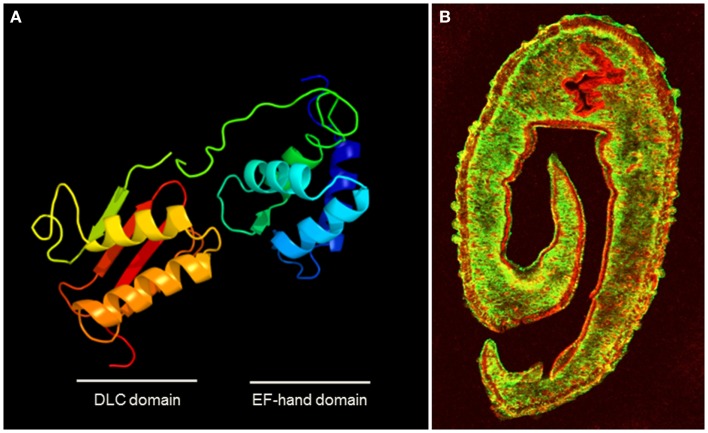
“Such epitopes may be conserved because they are located within functionally important protein domains or structurally constrained regions that have been preserved during evolution”
From Parasites and allergies: a complex bidirectional relationship from evolutionary origins to modern therapeutics (2026) · cites this paper as Fitzsimmons et al. 2014
Self-check
Percentages, sums and reported differences re-computed from the paper’s own numbers.
The self-check needs the paper’s full text.
Citations
Cites
Diversity and dialogue in immunity to helminths
Allen, J. E., & Maizels, R. M. (2011) · Nature reviews. Immunology · doi:10.1038/nri2992 · Cited by 831
Systematic review and meta-analysis of psychological therapies for children with chronic pain
Fisher, E., Heathcote, L., Palermo, T. M., de C Williams, A. C., Lau, J., & Eccleston, C. (2014) · Journal of Pediatric Psychology · doi:10.1093/jpepsy/jsu008 · Cited by 710
Research works printed but not linked: 130
- [2]Artis D Maizels RM Finkelman FD Forum: immunology: allergy challenged. Nature (2012) 484(7395): 458– 9 10.1038/484458a 22538601 · DOI
- [3]Johansson SG Hourihane JO Bousquet J Bruijnzeel-Koomen C Dreborg S Haahtela T A revised nomenclature for allergy. An EAACI position statement from the EAACI nomenclature task force. Allergy (2001) 56: 813– 24 10.1111/j.1398-9995.2001.00002.x-i1 11551246 · DOI
- [4]Steinke JW Rich SS Borish L Genetics of allergic disease. J Allergy Clin Immunol (2008) 121(2 Suppl): S384– 7 10.1016/j.jaci.2007.07.029 18241687 · DOI
- [5]Potaczek DP Nishiyama C Sanak M Szczeklik A Okumura K Genetic variability of the high-affinity IgE receptor alpha-subunit (FcepsilonRIalpha). Immunol Res (2009) 45: 75– 84 10.1007/s12026-008-8042-0 18726713 · DOI
- [6]Zhu N Gong Y Chen X Zhang J Long F He J Association between the polymorphisms of interleukin-4, the interleukin-4 receptor gene and asthma. Chin Med J (Engl) (2013) 126: 2943– 51 23924473
- [7]Casaca VI Illi S Klucker E Ballenberger N Schedel M von Mutius E STAT6 polymorphisms are associated with neonatal regulatory T cells and cytokines and atopic diseases at 3 years. Allergy (2013) 68: 1249– 58 10.1111/all.12220 24053457 · DOI
- [8]McSorley HJ Maizels RM Helminth infections and host immune regulation. Clin Microbiol Rev (2012) 25(4): 585– 608 10.1128/CMR.05040-11 23034321 PMC3485755 · DOI · Paper page
- [9]Palm NW Rosenstein RK Medzhitov R Allergic host defences. Nature (2012) 484: 465– 72 10.1038/nature11047 22538607 PMC3596087 · DOI · Paper page
- [10]Profet M The function of allergy: immunological defense against toxins. Q Rev Biol (1991) 66: 23– 62 10.1086/417049 2052671 · DOI · Paper page
- [12]Blank U Falcone FH Nilsson G The history of mast cell and basophil research – some lessons learnt from the last century. Allergy (2013) 68: 1093– 101 10.1111/all.12197 23991682 · DOI
- [13]Paveley RA Aynsley SA Cook PC Turner JD Mountford AP Fluorescent imaging of antigen released by a skin-invading helminth reveals differential uptake and activation profiles by antigen presenting cells. PLoS Negl Trop Dis (2009) 3: e528 10.1371/journal.pntd.0000528 19829705 PMC2759291 · DOI
- [14]Obata-Ninomiya K Ishiwata K Tsutsui H Nei Y Yoshikawa S Kawano Y The skin is an important bulwark of acquired immunity against intestinal helminths. J Exp Med (2013) 210: 2583– 95 10.1084/jem.20130761 24166714 PMC3832932 · DOI
- [15]Degen WGJ Daal N van Rothwell L Kaiser P Schijns VEJC Th1/Th2 polarization by viral and helminth infection in birds. Vet Microbiol (2005) 105: 163– 7 10.1016/j.vetmic.2004.12.001 15708812 · DOI
- [16]Rihet P Demeure CE Bourgois A Prata A Dessein AJ Evidence for an association between human resistance to Schistosoma mansoni and high anti-larval IgE levels. Eur J Immunol (1991) 21: 2679– 86 10.1002/eji.1830211106 1936116 · DOI
- [17]Hagan P Blumenthal UJ Dunn D Simpson AJ Wilkins HA Human IgE, IgG4 and resistance to reinfection with Schistosoma haematobium. Nature (1991) 349: 243– 5 10.1038/349243a0 1898985 · DOI
- [18]Dunne DW Butterworth AE Fulford AJ Kariuki HC Langley JG Ouma JH Immunity after treatment of human schistosomiasis: association between IgE antibodies to adult worm antigens and resistance to reinfection. Eur J Immunol (1992) 22: 1483– 94 10.1002/eji.1830220622 1601036 · DOI
- [19]Dunne DW Webster M Smith P Langley JG Richardson BA Fulford AJ The isolation of a 22 kDa band after SDS-PAGE of Schistosoma mansoni adult worms and its use to demonstrate that IgE responses against the antigen(s) it contains are associated with human resistance to reinfection. Parasite Immunol (1997) 19: 79– 89 10.1046/j.1365-3024.1997.d01-186.x 9076810 · DOI
- [20]Jiz M Friedman JF Leenstra T Jarilla B Pablo A Langdon G Immunoglobulin E (IgE) responses to paramyosin predict resistance to reinfection with Schistosoma japonicum and are attenuated by IgG4. Infect Immun (2009) 77: 2051– 8 10.1128/IAI.00012-09 19273558 PMC2681753 · DOI
- [21]Pinot de Moira A Fulford AJC Kabatereine NB Ouma JH Booth M Analysis of complex patterns of human exposure and immunity to Schistosomiasis mansoni: the influence of age, sex, ethnicity and IgE. PLoS Negl Trop Dis (2010) 4: e820 10.1371/journal.pntd.0000820 20856909 PMC2939029 · DOI
- [22]Fitzsimmons CM Jones FM Pinot de Moira A Protasio AV Khalife J Dickinson HA Progressive cross-reactivity in IgE responses: an explanation for the slow development of human immunity to schistosomiasis? Infect Immun (2012) 80: 4264– 70 10.1128/IAI.00641-12 23006852 PMC3497412 · DOI
- [23]Pritchard DI Quinnell RJ Walsh EA Immunity in humans to Necator americanus: IgE, parasite weight and fecundity. Parasite Immunol (1995) 17: 71– 5 10.1111/j.1365-3024.1995.tb00968.x 7761110 · DOI
- [24]Bethony J Loukas A Smout M Brooker S Mendez S Plieskatt J Antibodies against a secreted protein from hookworm larvae reduce the intensity of hookworm infection in humans and vaccinated laboratory animals. FASEB J (2005) 19: 1743– 5 16037096
- [25]Faulkner H Turner J Kamgno J Pion SD Boussinesq M Bradley JE Age- and infection intensity-dependent cytokine and antibody production in human trichuriasis: the importance of IgE. J Infect Dis (2002) 185: 665– 72 10.1086/339005 11865424 · DOI
- [26]McSharry C Xia Y Holland CV Kennedy MW Natural immunity to Ascaris lumbricoides associated with immunoglobulin E antibody to ABA-1 allergen and inflammation indicators in children. Infect Immun (1999) 67: 484– 9 9916049 PMC96345
- [27]Turner JD Faulkner H Kamgno J Kennedy MW Behnke J Boussinesq M Allergen-specific IgE and IgG4 are markers of resistance and susceptibility in a human intestinal nematode infection. Microbes Infect Inst Pasteur (2005) 7: 990– 6 10.1016/j.micinf.2005.03.036 15961339 · DOI
- [28]Falcone FH Telford G Hooi D Brown AP Seabra R Feary J Antigen-driven basophil activation is indicative of early Necator americanus infection in IgE-seronegative patients. J Allergy Clin Immunol (2009) 124: 1343.e–50.e 10.1016/j.jaci.2009.07.039 19800679 · DOI
- [29]Pearce N Aït-Khaled N Beasley R Mallol J Keil U Mitchell E Worldwide trends in the prevalence of asthma symptoms: phase III of the International Study of Asthma and Allergies in Childhood (ISAAC). Thorax (2007) 62: 758– 66 10.1136/thx.2006.070169 17504817 PMC2117323 · DOI
- [30]Rook GAW Review series on helminths, immune modulation and the hygiene hypothesis: the broader implications of the hygiene hypothesis. Immunology (2009) 126: 3– 11 10.1111/j.1365-2567.2008.03007.x 19120493 PMC2632706 · DOI · Paper page
- [31]van den Biggelaar AH van Ree R Rodrigues LC Lell B Deelder AM Kremsner PG Decreased atopy in children infected with Schistosoma haematobium: a role for parasite-induced interleukin-10. Lancet (2000) 356: 1723– 7 10.1016/S0140-6736(00)03206-2 11095260 · DOI
- [32]Cooper PJ Chico ME Rodrigues LC Ordonez M Strachan D Griffin GE Reduced risk of atopy among school-age children infected with geohelminth parasites in a rural area of the tropics. J Allergy Clin Immunol (2003) 111: 995– 1000 10.1067/mai.2003.1348 12743563 · DOI
- [33]Rodrigues LC Newcombe PJ Cunha SS Alcantara-Neves NM Genser B Cruz AA Early infection with Trichuris trichiura and allergen skin test reactivity in later childhood. Clin Exp Allergy (2008) 38: 1769– 77 10.1111/j.1365-2222.2008.03027.x 18547322 · DOI · Paper page
- [34]Leonardi-Bee J Pritchard D Britton J Asthma and current intestinal parasite infection: systematic review and meta-analysis. Am J Respir Crit Care Med (2006) 174: 514– 23 10.1164/rccm.200603-331OC 16778161 · DOI · Paper page
- [35]Scrivener S Yemaneberhan H Zebenigus M Tilahun D Girma S Ali S Independent effects of intestinal parasite infection and domestic allergen exposure on risk of wheeze in Ethiopia: a nested case-control study. Lancet (2001) 358: 1493– 9 10.1016/S0140-6736(01)06579-5 11705561 · DOI
- [36]Flohr C Tuyen LN Quinnell RJ Lewis S Minh TT Campbell J Reduced helminth burden increases allergen skin sensitization but not clinical allergy: a randomized, double-blind, placebo-controlled trial in Vietnam. Clin Exp Allergy (2010) 40: 131– 42 10.1111/j.1365-2222.2009.03346.x 19758373 · DOI · Paper page
- [37]Feary JR Venn AJ Mortimer K Brown AP Hooi D Falcone FH Experimental hookworm infection: a randomized placebo-controlled trial in asthma. Clin Exp Allergy (2010) 40: 299– 306 10.1111/j.1365-2222.2009.03433.x 20030661 PMC2814083 · DOI · Paper page
- [38]Lynch NR Hagel I Perez M Di Prisco MC Lopez R Alvarez N Effect of anthelmintic treatment on the allergic reactivity of children in a tropical slum. J Allergy Clin Immunol (1993) 92: 404– 11 10.1016/0091-6749(93)90119-Z 8360391 · DOI
- [39]van den Biggelaar AHJ Rodrigues LC van Ree R van der Zee JS Hoeksma-Kruize YCM Souverijn JHM Long-term treatment of intestinal helminths increases mite skin-test reactivity in Gabonese schoolchildren. J Infect Dis (2004) 189: 892– 900 10.1086/381767 14976607 · DOI · Paper page
- [40]Flohr C Quinnell RJ Britton J Do helminth parasites protect against atopy and allergic disease? Clin Exp Allergy (2009) 39: 20– 32 10.1111/j.1365-2222.2008.03134.x 19128351 · DOI · Paper page
- [41]Wördemann M Diaz RJ Heredia LM Collado Madurga AM Ruiz Espinosa A Prado RC Association of atopy, asthma, allergic rhinoconjunctivitis, atopic dermatitis and intestinal helminth infections in Cuban children. Trop Med Int Health (2008) 13: 180– 6 10.1111/j.1365-3156.2007.01988.x 18304263 · DOI
- [42]Hagel I Cabrera M Hurtado MA Sanchez P Puccio F Di Prisco MC Infection by Ascaris lumbricoides and bronchial hyper reactivity: an outstanding association in Venezuelan school children from endemic areas. Acta Trop (2007) 103: 231– 41 10.1016/j.actatropica.2007.06.010 17698018 · DOI
- [43]Radauer C Bublin M Wagner S Mari A Breiteneder H Allergens are distributed into few protein families and possess a restricted number of biochemical functions. J Allergy Clin Immunol (2008) 121: 847.e–52.e 10.1016/j.jaci.2008.01.025 18395549 · DOI · Paper page
- [44]Moneo I Caballero ML Gómez F Ortega E Alonso MJ Isolation and characterization of a major allergen from the fish parasite Anisakis simplex. J Allergy Clin Immunol (2000) 106(Pt 1): 177– 82 10.1067/mai.2000.106732 10887322 · DOI
- [45]Pérez-Pérez J Fernández-Caldas E Marañón F Sastre J Bernal ML Rodríguez J Molecular cloning of paramyosin, a new allergen of Anisakis simplex. Int Arch Allergy Immunol (2000) 123: 120– 9 10.1159/000024442 11060483 · DOI
- [46]Asturias JA Eraso E Moneo I Martínez A Is tropomyosin an allergen in Anisakis? Allergy (2000) 55: 898– 9 10.1034/j.1398-9995.2000.00734.x 11003461 · DOI
- [47]Moneo I Caballero ML González-Muñoz M Rodríguez-Mahillo AI Rodríguez-Perez R Silva A Isolation of a heat-resistant allergen from the fish parasite Anisakis simplex. Parasitol Res (2005) 96: 285– 9 10.1007/s00436-005-1362-2 15895253 · DOI
- [48]Kobayashi Y Ishizaki S Shimakura K Nagashima Y Shiomi K Molecular cloning and expression of two new allergens from Anisakis simplex. Parasitol Res (2007) 100: 1233– 41 10.1007/s00436-006-0396-4 17180690 · DOI
- [49]Rodríguez E Anadón AM García-Bodas E Romarís F Iglesias R Gárate T Novel sequences and epitopes of diagnostic value derived from the Anisakis simplex Ani s 7 major allergen. Allergy (2008) 63: 219– 25 10.1111/j.1398-9995.2007.01564.x 18186812 · DOI
- [50]Rodriguez-Perez R Moneo I Rodriguez-Mahillo A Caballero ML Cloning and expression of Ani s 9, a new Anisakis simplex allergen. Mol Biochem Parasitol (2008) 159: 92– 7 10.1016/j.molbiopara.2008.02.008 18378015 · DOI
- [51]Caballero ML Umpierrez A Moneo I Rodriguez-Perez R Ani s 10, a new Anisakis simplex allergen: cloning and heterologous expression. Parasitol Int (2011) 60: 209– 12 10.1016/j.parint.2011.01.003 21310242 · DOI
- [52]Kobayashi Y Ohsaki K Ikeda K Kakemoto S Ishizaki S Shimakura K Identification of novel three allergens from Anisakis simplex by chemiluminescent immunoscreening of an expression cDNA library. Parasitol Int (2011) 60: 144– 50 10.1016/j.parint.2011.01.004 21262386 · DOI
- [53]López I Pardo MA A phage display system for the identification of novel Anisakis simplex antigens. J Immunol Methods (2011) 373: 247– 51 10.1016/j.jim.2011.08.009 21893063 · DOI
- [54]Arrieta I del Barrio M Vidarte L del Pozo V Pastor C Gonzalez-Cabrero J Molecular cloning and characterization of an IgE-reactive protein from Anisakis simplex: Ani s 1. Mol Biochem Parasitol (2000) 107: 263– 8 10.1016/S0166-6851(00)00192-4 10779602 · DOI
- [55]Webster M Correa-Oliveira R Gazzinelli G Viana IR Fraga LA Silveira AM Factors affecting high and low human IgE responses to schistosome worm antigens in an area of Brazil endemic for Schistosoma mansoni and hookworm. Am J Trop Med Hyg (1997) 57: 487– 94 9347969
- [56]Fitzsimmons CM McBeath R Joseph S Jones FM Walter K Hoffmann KF Factors affecting human IgE and IgG responses to allergen-like Schistosoma mansoni antigens: molecular structure and patterns of in vivo exposure. Int Arch Allergy Immunol (2007) 142: 40– 50 10.1159/000095997 17019080 · DOI
- [57]Webster M Fulford AJ Braun G Ouma JH Kariuki HC Havercroft JC Human immunoglobulin E responses to a recombinant 22.6-kilodalton antigen from Schistosoma mansoni adult worms are associated with low intensities of reinfection after treatment. Infect Immun (1996) 64: 4042– 6 8926066 PMC174334
- [58]de Oliveira Fraga LA Lamb EW Moreno EC Chatterjee M Dvorák J Delcroix M Rapid induction of IgE responses to a worm cysteine protease during murine pre-patent schistosome infection. BMC Immunol (2010) 11: 56 10.1186/1471-2172-11-56 21078176 PMC2993659 · DOI
- [59]Schramm G Hamilton JV Balog CI Wuhrer M Gronow A Beckmann S Molecular characterisation of kappa-5, a major antigenic glycoprotein from Schistosoma mansoni eggs. Mol Biochem Parasitol (2009) 166: 4– 14 10.1016/j.molbiopara.2009.02.003 19428667 · DOI
- [60]Zhan B Santiago H Keegan B Gillespie P Xue J Bethony J Fusion of Na-ASP-2 with human immunoglobulin Fcγ abrogates histamine release from basophils sensitized with anti-Na-ASP-2 IgE. Parasite Immunol (2012) 34: 404– 11 10.1111/j.1365-3024.2012.01371.x 22651670 · DOI
- [61]Pritchard DI Brown A Kasper G McElroy P Loukas A Hewitt C A hookworm allergen which strongly resembles calreticulin. Parasite Immunol (1999) 21: 439– 50 10.1046/j.1365-3024.1999.00238.x 10476053 · DOI
- [62]Christie JF Dunbar B Kennedy MW The ABA-1 allergen of the nematode Ascaris suum: epitope stability, mass spectrometry, and N-terminal sequence comparison with its homologue in Toxocara canis. Clin Exp Immunol (1993) 92: 125– 32 10.1111/j.1365-2249.1993.tb05958.x 7682160 PMC1554889 · DOI
- [63]Acevedo N Sánchez J Erler A Mercado D Briza P Kennedy M IgE cross-reactivity between Ascaris and domestic mite allergens: the role of tropomyosin and the nematode polyprotein ABA-1. Allergy (2009) 64: 1635– 43 10.1111/j.1398-9995.2009.02084.x 19624559 · DOI
- [64]Acevedo N Mohr J Zakzuk J Samonig M Briza P Erler A Proteomic and Immunochemical characterization of glutathione transferase as a new allergen of the nematode Ascaris lumbricoides. PLoS One (2013) 8: e78353 10.1371/journal.pone.0078353 24223794 PMC3817249 · DOI
- [65]Vuitton DA Echinococcosis and allergy. Clin Rev Allergy Immunol (2004) 26: 93– 104 10.1007/s12016-004-0004-2 15146106 · DOI
- [66]Khabiri AR Bagheri F Assmar M Siavashi MR Analysis of specific IgE and IgG subclass antibodies for diagnosis of Echinococcus granulosus. Parasite Immunol (2006) 28: 357– 62 10.1111/j.1365-3024.2006.00837.x 16879307 · DOI
- [67]Ortona E Vaccari S Margutti P Delunardo F Rigano R Profumo E Immunological characterization of Echinococcus granulosus cyclophilin, an allergen reactive with IgE and IgG4 from patients with cystic echinococcosis. Clin Exp Immunol (2002) 128: 124– 30 10.1046/j.1365-2249.2002.01807.x 11982600 PMC1906366 · DOI · Paper page
- [68]Ortona E Margutti P Delunardo F Vaccari S Riganò R Profumo E Molecular and immunological characterization of the C-terminal region of a new Echinococcus granulosus Heat Shock Protein 70. Parasite Immunol (2003) 25: 119– 26 10.1046/j.1365-3024.2003.00617.x 12911519 · DOI
- [69]Ortona E Margutti P Vaccari S Riganò R Profumo E Buttari B Elongation factor 1 beta/delta of Echinococcus granulosus and allergic manifestations in human cystic echinococcosis. Clin Exp Immunol (2001) 125: 110– 6 10.1046/j.1365-2249.2001.01569.x 11472433 PMC1906106 · DOI
- [70]Sereda MJ Hartmann S Büttner DW Volkmer R Hovestädt M Brattig N Characterization of the allergen filarial tropomyosin with an invertebrate specific monoclonal antibody. Acta Trop (2010) 116: 61– 7 10.1016/j.actatropica.2010.05.010 20525500 · DOI
- [71]Rathaur S Fischer P Domagalski M Walter RD Liebau E Brugia malayi and Wuchereria bancrofti: gene comparison and recombinant expression of pi-class related glutathione S-transferases. Exp Parasitol (2003) 103: 177– 81 10.1016/S0014-4894(03)00093-6 12880597 · DOI
- [72]Krushna NSA Shiny C Dharanya S Sindhu A Aishwarya S Narayanan RB Immunolocalization and serum antibody responses to Brugia malayi pepsin inhibitor homolog (Bm-33). Microbiol Immunol (2009) 53: 173– 83 10.1111/j.1348-0421.2009.00114.x 19302528 · DOI
- [73]Mari A Rasi C Palazzo P Scala E Allergen databases: current status and perspectives. Curr Allergy Asthma Rep (2009) 9: 376– 83 10.1007/s11882-009-0055-9 19671381 · DOI
- [74]Marchler-Bauer A Zheng C Chitsaz F Derbyshire MK Geer LY Geer RC CDD: conserved domains and protein three-dimensional structure. Nucleic Acids Res (2013) 41: D348– 52 10.1093/nar/gks1243 23197659 PMC3531192 · DOI
- [75]Punta M Coggill PC Eberhardt RY Mistry J Tate J Boursnell C The Pfam protein families database. Nucleic Acids Res (2012) 40: D290– 301 10.1093/nar/gkr1065 22127870 PMC3245129 · DOI · Paper page
- [76]Jenkins RE Taylor MJ Gilvary NJ Bianco AE Tropomyosin implicated in host protective responses to microfilariae in onchocerciasis. Proc Natl Acad Sci U S A (1998) 95: 7550– 5 10.1073/pnas.95.13.7550 9636187 PMC22680 · DOI
- [77]Santiago HC Bennuru S Boyd A Eberhard M Nutman TB Structural and immunologic cross-reactivity among filarial and mite tropomyosin: implications for the hygiene hypothesis. J Allergy Clin Immunol (2011) 127: 479– 86 10.1016/j.jaci.2010.11.007 21185070 PMC3075728 · DOI
- [78]Santos ABR Rocha GM Oliver C Ferriani VPL Lima RC Palma MS Cross-reactive IgE antibody responses to tropomyosins from Ascaris lumbricoides and cockroach. J Allergy Clin Immunol (2008) 121: 1040.e–6.e 10.1016/j.jaci.2007.12.1147 18275995 · DOI
- [79]Valmonte GR Cauyan GA Ramos JDA IgE cross-reactivity between house dust mite allergens and Ascaris lumbricoides antigens. Asia Pac Allergy (2012) 2: 35– 44 10.5415/apallergy.2012.2.1.35 22348205 PMC3269600 · DOI
- [80]Nieuwenhuizen NE Lopata AL Anisakis – a food-borne parasite that triggers allergic host defences. Int J Parasitol (2013) 43: 1047– 57 10.1016/j.ijpara.2013.08.001 23994604 · DOI
- [81]Steel C Limberger RJ McReynolds LA Ottesen EA Nutman TB B cell responses to paramyosin. Isotypic analysis and epitope mapping of filarial paramyosin in patients with onchocerciasis. J Immunol (1990) 145: 3917– 23 1701001
- [82]Kucik CJ Martin GL Sortor BV Common intestinal parasites. Am Fam Physician (2004) 69: 1161– 8 15023017
- [83]Guarneri F Guarneri C Benvenga S Cross-reactivity of Anisakis simplex: possible role of Ani s 2 and Ani s 3. Int J Dermatol (2007) 46: 146– 50 17269964
- [84]Diemert DJ Pinto AG Freire J Jariwala A Santiago H Hamilton RG Generalized urticaria induced by the Na-ASP-2 hookworm vaccine: implications for the development of vaccines against helminths. J Allergy Clin Immunol (2012) 130: 169.e–76.e 10.1016/j.jaci.2012.04.027 22633322 · DOI
- [85]Tawe W Pearlman E Unnasch TR Lustigman S Angiogenic activity of Onchocerca volvulus recombinant proteins similar to vespid venom antigen 5. Mol Biochem Parasitol (2000) 109: 91– 9 10.1016/S0166-6851(00)00231-0 10960168 · DOI
- [86]Murray J Gregory WF Gomez-Escobar N Atmadja AK Maizels RM Expression and immune recognition of Brugia malayi VAL-1, a homologue of vespid venom allergens and Ancylostoma secreted proteins. Mol Biochem Parasitol (2001) 118: 89– 96 10.1016/S0166-6851(01)00374-7 11704277 · DOI
- [87]Chalmers IW McArdle AJ Coulson RM Wagner MA Schmid R Hirai H Developmentally regulated expression, alternative splicing and distinct sub-groupings in members of the Schistosoma mansoni venom allergen-like (SmVAL) gene family. BMC Genomics (2008) 9: 89 10.1186/1471-2164-9-89 18294395 PMC2270263 · DOI
- [88]Chen J Hu X He S Wang L Hu D Wang X Expression and immune response analysis of Schistosoma japonicum VAL-1, a homologue of vespid venom allergens. Parasitol Res (2010) 106: 1413– 8 10.1007/s00436-010-1817-y 20306204 · DOI
- [89]Tsai IJ Zarowiecki M Holroyd N Garciarrubio A Sanchez-Flores A Brooks KL The genomes of four tapeworm species reveal adaptations to parasitism. Nature (2013) 496: 57– 63 10.1038/nature12031 23485966 PMC3964345 · DOI
- [90]Farias LP Rodrigues D Cunna V Rofatto HK Faquim-Mauro EL Leite LCC Schistosoma mansoni venom allergen like proteins present differential allergic responses in a murine model of airway inflammation. PLoS Negl Trop Dis (2012) 6: e1510 10.1371/journal.pntd.0001510 22347513 PMC3274501 · DOI
- [91]Subpipattana P Grams R Vichasri-Grams S Analysis of a calcium-binding EF-hand protein family in Fasciola gigantica. Exp Parasitol (2012) 130: 364– 73 10.1016/j.exppara.2012.02.005 22366577 · DOI
- [92]Santiago HC LeeVan E Bennuru S Ribeiro-Gomes F Mueller E Wilson M Molecular mimicry between cockroach and helminth glutathione S-transferases promotes cross-reactivity and cross-sensitization. J Allergy Clin Immunol (2012) 130: 248.e–56.e 10.1016/j.jaci.2012.02.045 22541242 PMC3387355 · DOI
- [93]Kennedy MW The nematode polyprotein allergens/antigens. Parasitol Today (2000) 16: 373– 80 10.1016/S0169-4758(00)01743-9 10951596 · DOI
- [94]Paxton WA Yazdanbakhsh M Kurniawan A Partono F Maizels RM Selkirk ME Primary structure of and immunoglobulin E response to the repeat subunit of gp15/400 from human lymphatic filarial parasites. Infect Immun (1993) 61: 2827– 33 8514385 PMC280927
- [95]Orton SM Arasu P Hammerberg B A novel gene from Brugia sp. that encodes a cytotoxic fatty acid binding protein allergen recognized by canine monoclonal IgE and serum IgE from infected dogs. J Parasitol (2007) 93: 1378– 87 10.1645/GE-1217.1 18314684 · DOI
- [96]Fitzsimmons CM Dunne DW Survival of the fittest: allergology or parasitology? Trends Parasitol (2009) 25: 447– 51 10.1016/j.pt.2009.07.004 19744885 · DOI · Paper page
- [97]Shani N Shani Z Shoseyov O Mruwat R Shoseyov D Oxidized cellulose binding to allergens with a carbohydrate-binding module attenuates allergic reactions. J Immunol (2011) 186: 1240– 7 10.4049/jimmunol.1000640 21169552 · DOI
- [98]Tarigan S Huntley JF Failure to protect goats following vaccination with soluble proteins of Sarcoptes scabiei: evidence for a role for IgE antibody in protection. Vet Parasitol (2005) 133: 101– 9 10.1016/j.vetpar.2005.03.044 16118041 · DOI
- [99]Traidl-Hoffmann C Jakob T Behrendt H Determinants of allergenicity. J Allergy Clin Immunol (2009) 123(3): 558– 66 10.1016/j.jaci.2008.12.003 19152966 · DOI
- [100]Bredehorst R David K What establishes a protein as an allergen? J Chromatogr B Biomed Sci Appl (2001) 756: 33– 40 10.1016/S0378-4347(01)00069-X 11419725 · DOI
- [101]Furmonaviciene R Sutton BJ Glaser F Laughton CA Jones N Sewell HF An attempt to define allergen-specific molecular surface features: a bioinformatic approach. Bioinformatics (2005) 21: 4201– 4 10.1093/bioinformatics/bti700 16204345 · DOI
- [102]Beezhold DH Kostyal DA Sussman GL IgE epitope analysis of the hevein preprotein; a major latex allergen. Clin Exp Immunol (1997) 108: 114– 21 10.1046/j.1365-2249.1997.d01-983.x 9097919 PMC1904631 · DOI
- [103]Bublin M Radauer C Knulst A Wagner S Scheiner O Mackie AR Effects of gastrointestinal digestion and heating on the allergenicity of the kiwi allergens Act d 1, actinidin, and Act d 2, a thaumatin-like protein. Mol Nutr Food Res (2008) 52: 1130– 9 10.1002/mnfr.200700167 18655003 · DOI
- [104]Díaz-Perales A Blanco C Sánchez-Monge R Varela J Carrillo T Salcedo G Analysis of avocado allergen (Prs a 1) IgE-binding peptides generated by simulated gastric fluid digestion. J Allergy Clin Immunol (2003) 112: 1002– 7 10.1016/j.jaci.2003.07.006 14610495 · DOI
- [105]Pastorello EA Farioli L Pravettoni V Ortolani C Fortunato D Giuffrida MG Identification of grape and wine allergens as an endochitinase 4, a lipid-transfer protein, and a thaumatin. J Allergy Clin Immunol (2003) 111: 350– 9 10.1067/mai.2003.35 12589356 · DOI
- [106]O’Neil SE Heinrich TK Hales BJ Hazell LA Holt DC Fischer K The chitinase allergens Der p 15 and Der p 18 from Dermatophagoides pteronyssinus. Clin Exp Allergy (2006) 36: 831– 9 10.1111/j.1365-2222.2006.02497.x 16776685 · DOI
- [107]Sánchez-Monge R Blanco C Perales AD Collada C Carrillo T Aragoncillo C Class I chitinases, the panallergens responsible for the latex-fruit syndrome, are induced by ethylene treatment and inactivated by heating. J Allergy Clin Immunol (2000) 106: 190– 5 10.1067/mai.2000.107599 10887324 · DOI
- [108]Audicana MT Ansotegui IJ de Corres LF Kennedy MW Anisakis simplex: dangerous – dead and alive? Trends Parasitol (2002) 18: 20– 5 10.1016/S1471-4922(01)02152-3 11850010 · DOI
- [109]Audicana MT Kennedy MW Anisakis simplex: from obscure infectious worm to inducer of immune hypersensitivity. Clin Microbiol Rev (2008) 21: 360– 79 10.1128/CMR.00012-07 18400801 PMC2292572 · DOI
- [110]Herbert CA King CM Ring PC Holgate ST Stewart GA Thompson PJ Augmentation of permeability in the bronchial epithelium by the house dust mite allergen Der p1. Am J Respir Cell Mol Biol (1995) 12: 369– 78 10.1165/ajrcmb.12.4.7695916 7695916 · DOI
- [111]Wan H Winton HL Soeller C Tovey ER Gruenert DC Thompson PJ Der p 1 facilitates transepithelial allergen delivery by disruption of tight junctions. J Clin Invest (1999) 104: 123– 33 10.1172/JCI5844 10393706 PMC408401 · DOI · Paper page
- [112]Falcone FH Loukas A Quinnell RJ Pritchard DI The innate allergenicity of helminth parasites. Clin Rev Allergy Immunol (2004) 26: 61– 72 10.1385/CRIAI:26:1:61 14755076 · DOI
- [113]Jenkins JA Breiteneder H Mills ENC Evolutionary distance from human homologs reflects allergenicity of animal food proteins. J Allergy Clin Immunol (2007) 120: 1399– 405 10.1016/j.jaci.2007.08.019 17935767 · DOI
- [114]Santiago H da C Bennuru S Ribeiro JMC Nutman TB Structural differences between human proteins and aero- and microbial allergens define allergenicity. PLoS One (2012) 7: e40552 10.1371/journal.pone.0040552 22815762 PMC3399830 · DOI
- [115]Emanuelsson C Spangfort MD Allergens as eukaryotic proteins lacking bacterial homologues. Mol Immunol (2007) 44: 3256– 60 10.1016/j.molimm.2007.01.019 17382394 · DOI
- [116]Arnon R Van Regenmortel MH Structural basis of antigenic specificity and design of new vaccines. FASEB J (1992) 6: 3265– 74 1385242
- [117]Valenta R Ball T Focke M Linhart B Mothes N Niederberger V Immunotherapy of allergic disease. Adv Immunol (2004) 82: 105– 53 10.1016/S0065-2776(04)82003-0 14975256 · DOI
- [118]Fulford AJ Butterworth AE Ouma JH Sturrock RF A statistical approach to schistosome population dynamics and estimation of the life-span of Schistosoma mansoni in man. Parasitology (1995) 110: 307– 16 10.1017/S0031182000080896 7724238 · DOI
- [119]Fitzsimmons CM Jones FM Stearn A Chalmers IW Hoffmann KF Wawrzyniak J The Schistosoma mansoni tegumental-allergen-like (TAL) protein family: influence of developmental expression on human IgE responses. PLoS Negl Trop Dis (2012) 6: e1593 10.1371/journal.pntd.0001593 22509417 PMC3317908 · DOI
- [120]Hawdon JM Hotez PJ Hookworm: developmental biology of the infectious process. Curr Opin Genet Dev (1996) 6: 618– 23 10.1016/S0959-437X(96)80092-X 8939719 · DOI
- [121]Hamann KJ Barker RL Loegering DA Gleich GJ Comparative toxicity of purified human eosinophil granule proteins for newborn larvae of Trichinella spiralis. J Parasitol (1987) 73: 523– 9 10.2307/3282130 3598802 · DOI
- [122]Tschopp CM Spiegl N Didichenko S Lutmann W Julius P Virchow JC Granzyme B, a novel mediator of allergic inflammation: its induction and release in blood basophils and human asthma. Blood (2006) 108: 2290– 9 10.1182/blood-2006-03-010348 16794249 · DOI
- [123]Bell A Antimalarial peptides: the long and the short of it. Curr Pharm Des (2011) 17: 2719– 31 10.2174/138161211797416057 21728986 · DOI
- [124]Tanaka T Rahman MM Battur B Boldbaatar D Liao M Umemiya-Shirafuji R Parasiticidal activity of human alpha-defensin-5 against Toxoplasma gondii. In vitro Cell Dev Biol Anim (2010) 46: 560– 5 10.1007/s11626-009-9271-9 20135360 · DOI
- [125]Tsuji N Battsetseg B Boldbaatar D Miyoshi T Xuan X Oliver JH Babesial vector tick defensin against Babesia sp. parasites. Infect Immun (2007) 75: 3633– 40 10.1128/IAI.00256-07 17485458 PMC1932947 · DOI
- [126]Madison MN Kleshchenko YY Nde PN Simmons KJ Lima MF Villalta F Human defensin alpha-1 causes Trypanosoma cruzi membrane pore formation and induces DNA fragmentation, which leads to trypanosome destruction. Infect Immun (2007) 75: 4780– 91 10.1128/IAI.00557-07 17635867 PMC2044533 · DOI
- [127]Magalhaes T Oliveira IF Melo-Santos MAV Oliveira CMF Lima CA Ayres CFJ Expression of defensin, cecropin, and transferrin in Aedes aegypti (Diptera: Culicidae) infected with Wuchereria bancrofti (Spirurida: Onchocercidae), and the abnormal development of nematodes in the mosquito. Exp Parasitol (2008) 120: 364– 71 10.1016/j.exppara.2008.09.003 18809401 · DOI
- [128]Larenas-Linnemann D Cox LS European allergen extract units and potency: review of available information. Ann Allergy Asthma Immunol (2008) 100: 137– 45 10.1016/S1081-1206(10)60422-X 18320915 · DOI
- [129]Lidholm J Ballmer-Weber BK Mari A Vieths S Component-resolved diagnostics in food allergy. Curr Opin Allergy Clin Immunol (2006) 6: 234– 40 10.1097/01.all.0000225166.90768.d6 16670520 · DOI
- [130]Ferrer M Sanz ML Sastre J Bartra J del Cuvillo A Montoro J Molecular diagnosis in allergology: application of the microarray technique. J Investig Allergol Clin Immunol (2009) 19(Suppl 1): 19– 24 19476050
- [131]Wolthers OD Component-resolved diagnosis in pediatrics. ISRN Pediatr (2012) 2012: 806920 10.5402/2012/806920 22919510 PMC3420125 · DOI
- [132]Kelley LA Sternberg MJ Protein structure prediction on the Web: a case study using the Phyre server. Nat Protoc (2009) 4: 363– 371 10.1038/nprot.2009.2 19247286 · DOI
Cited by
Sorted by citations
Breastfeeding and risk of parasitic infection-a review
Kutty, P. K. (2014) · Asian Pacific Journal of Tropical Biomedicine · doi:10.12980/apjtb.4.201414b355 · Cited by 19
Packi, K., Świerczewski, D., Klimczak, S., Ochab, D., Gałęziewska, J., Gromek, P., Kruczkowska, W., Płuciennik, E., Kałuzińska-Kołat, Ż., & Kołat, D. (2026) · Antonie van Leeuwenhoek · doi:10.1007/s10482-026-02425-4
Metadata
- Authors
- Fitzsimmons, C. M., Falcone, F. H., & Dunne, D. W.
- Venue
- Frontiers in Immunology
- Publisher
- Frontiers Media SA
- Published
- 2014
- Volume
- 5
- ISSN
- 1664-3224
- PMC
- PMC3924148
- Cited by
- 157
- References
- 2
About these checks
Registry, retraction, Cites and statistics results are computed, not judged, with one exception: a printed reference that no index lists is read once by a model before it counts as a citation error. Claims are extracted by a model and kept only when their quote appears verbatim in the text; each cited source is then checked, with a model’s help, for whether it says what the claim relies on. Those verdicts can be wrong — read the claim’s quote and the cited source before relying on one.
Statistics and arithmetic are recomputed, not judged.
Confidence bands are shown only for fields calibrated on our annotated test set. None is calibrated yet, so no band is shown.
What counts as a claim ›How we measure confidence ›How we check this ›
Are you an author, or do you see a problem with this page? Request a review
How to cite
Cite CoChat for the checks on this page, and the paper for its own findings.
- This page
- CoChat. (2026). Citation check: Helminth Allergens, Parasite-Specific IgE, and Its Protective Role in Human Immunity. https://app.cochat.ai/papers/10.3389/fimmu.2014.00061
- The paper
- Fitzsimmons, C. M., Falcone, F. H., & Dunne, D. W. (2014). Helminth Allergens, Parasite-Specific IgE, and Its Protective Role in Human Immunity. Frontiers in Immunology. https://doi.org/10.3389/fimmu.2014.00061
