

The DOI matches its Crossref record; 120 of the 123 references it cites were found in a registry or an index.
Endothelial to Mesenchymal Transition Represents a Key Link in the Interaction between Inflammation and Endothelial Dysfunction
Open accessAbstract
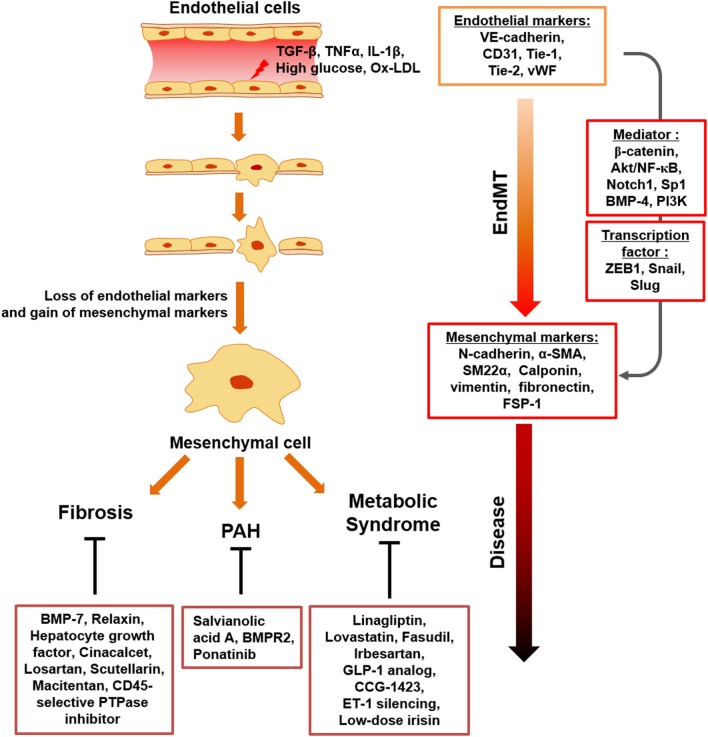
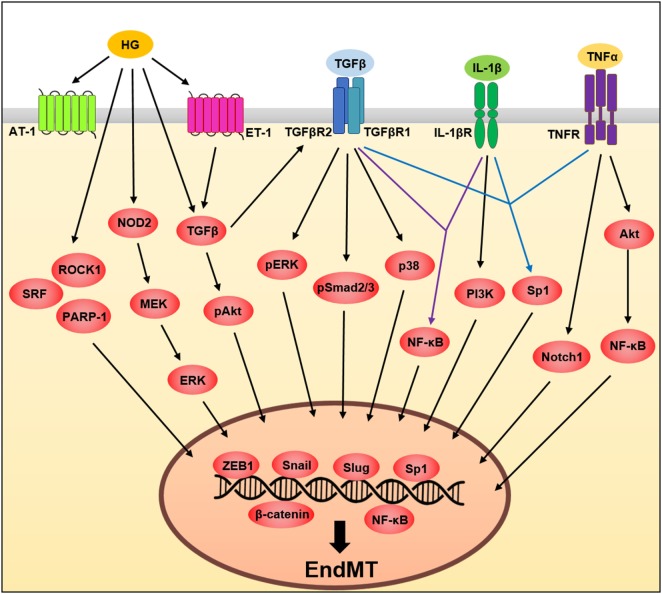
Endothelial cells that line the inner walls of blood vessels are in direct contact with blood and display remarkable heterogeneity in their response to exogenous stimuli. These endothelial cells have unique location-dependent properties determined by the corresponding vascular beds and play an important role in regulating the homeostasis of the vascular system. Evidence suggests that vascular endothelial cells exposed to various environments undergo dynamic phenotypic switching, a key biological program in the context of endothelial heterogeneity, but that might result in endothelial cell dysfunction and, in turn, cause a variety of human diseases. Emerging studies show the importance of endothelial to mesenchymal transition (EndMT) in endothelial dysfunction during inflammation. EndMT is a complex biological process in which endothelial cells lose their endothelial characteristics, acquire mesenchymal phenotypes, and express mesenchymal cell markers such as alpha smooth muscle actin and fibroblast specific protein 1. EndMT is induced by inflammatory responses, leading to pathological states, including tissue fibrosis, pulmonary arterial hypertension, and atherosclerosis, via dysfunction of the vascular system. Although the mechanisms associated with inflammation-induced EndMT have been identified, unraveling the specific role of this phenotypic switching in vascular dysfunction remains a challenge. Here, we review the current understanding on the interactions between inflammatory processes, EndMT, and endothelial dysfunction, with a focus on the mechanisms that regulate essential signaling pathways. Identification of such mechanisms will guide future research and could provide novel therapeutic targets for the treatment of vascular diseases.
Overview
The claims and statistics of this paper haven’t been checked yet.
Run the check — free, no account needed. It reads the open-access text and checks the sources it cites.
Integrity signals
Registry
Cites
Statistics
Figures
Verification
Claims the paper makes
The claims and statistics of this paper haven’t been checked yet.
Run the check — free, no account needed. It reads the open-access text and checks the sources it cites.
Claims other papers make about this one
Each is checked against this paper’s own text: does it say what the citing paper says it does?
In the citing paper
“In human and animal models, sleep disturbances pre- and post-surgery have been shown to be associated with prolonged postoperative recovery time and increased pain (reviewed in Refs. 110, 229, 571), one of the cardinal signs of inflammation.”
From The Sleep-Immune Crosstalk in Health and Disease (2019) · cites this paper as [110]
Self-check
Percentages, sums and reported differences re-computed from the paper’s own numbers.
The self-check needs the paper’s full text.
Citations
Cites
Chen, X., Xiu, M., Xing, J., Yu, S., Min, D., & Guo, F. (2017) · Cellular Physiology and Biochemistry · doi:10.1159/000479439 · Cited by 5,760
Cellular and molecular mechanisms of fibrosis
Wynn, T. (2008) · The Journal of Pathology · doi:10.1002/path.2277 · Cited by 4,495
Endothelial Cell Dysfunction and the Pathobiology of Atherosclerosis
Gimbrone, M. A., & García‐Cardeña, G. (2016) · Circulation Research · doi:10.1161/circresaha.115.306301 · Cited by 3,694
The NLRP3 inflammasome instigates obesity-induced inflammation and insulin resistance
Vandanmagsar, B., Youm, Y.-H., Ravussin, A., Galgani, J. E., Stadler, K., Mynatt, R. L., Ravussin, E., Stephens, J. M., & Dixit, V. D. (2011) · Nature Medicine · doi:10.1038/nm.2279 · Cited by 2,655
A novel heterodimeric cysteine protease is required for interleukin-1βprocessing in monocytes
Thornberry, N. A., Bull, H. G., Calaycay, J. R., Chapman, K. T., Howard, A. D., Kostura, M. J., Miller, D. K., Molineaux, S. M., Weidner, J. R., Aunins, J. G., et al. (1992) · Nature · doi:10.1038/356768a0 · Cited by 2,613
Inflammatory links between obesity and metabolic disease
Lumeng, C. N., & Saltiel, A. R. (2011) · Journal of Clinical Investigation · doi:10.1172/jci57132 · Cited by 2,319
Endothelial-to-mesenchymal transition contributes to cardiac fibrosis
Zeisberg, E. M., Tarnavski, O., Zeisberg, M., Dorfman, A. L., McMullen, J. R., Gustafsson, E., Chandraker, A. K., Yuan, X., Pu, W. T., Roberts, A. B., et al. (2007) · Nature Medicine · doi:10.1038/nm1613 · Cited by 2,251
Dinarello, C. A. (2000) · CHEST Journal · doi:10.1378/chest.118.2.503 · Cited by 2,047
Phenotypic Heterogeneity of the Endothelium
Aird, W. C. (2007) · Circulation Research · doi:10.1161/01.res.0000255691.76142.4a · Cited by 1,830
Signaling mechanisms of the epithelial-mesenchymal transition
Gonzalez, D. M., & Medici, D. (2014) · Science Signaling · doi:10.1126/scisignal.2005189 · Cited by 1,721
Cited by
Sorted by citations
The Sleep-Immune Crosstalk in Health and Disease
Besedovsky, L., Lange, T., & Haack, M. (2019) · Physiological Reviews · doi:10.1152/physrev.00010.2018 · Cited by 1,479
“(109, 244, 336, 485, 572), as well as immunodeficiency due to impaired DC, T, and B cell functions (80, 199, 422), which in turn can promote failure of tumor and pathogen defense (123, 426) (reviewed in Ref.”
BackgroundXu, S., Ilyas, I., Little, P. J., Li, H., Kamato, D., Zheng, X., Luo, S., Li, Z., Liu, P., Han, J., et al. (2021) · Pharmacological Reviews · doi:10.1124/pharmrev.120.000096 · Cited by 1,205
Endothelial to Mesenchymal Transition: Role in Physiology and in the Pathogenesis of Human Diseases
Piera-Velázquez, S., & Jiménez, S. A. (2019) · Physiological Reviews · doi:10.1152/physrev.00021.2018 · Cited by 688
Microanatomy of the Human Atherosclerotic Plaque by Single-Cell Transcriptomics
Depuydt, M. A. C., Prange, K. H. M., Slenders, L., Örd, T., Elbersen, D., Boltjes, A., de Jager, S. C. A., Asselbergs, F. W., de Borst, G. J., Aavik, E., et al. (2020) · Circulation Research · doi:10.1161/circresaha.120.316770 · Cited by 608
Yang, D., Wang, M., Zhang, C., & Wang, Y. (2024) · Frontiers in Endocrinology · doi:10.3389/fendo.2024.1359255 · Cited by 356
Metadata
- Authors
- Cho, J. G., Lee, A., Chang, W., Lee, M.-S., & Kim, J.
- Affiliations
- Sookmyung Women's University (KR)
- Pusan National University (KR)
- Corresponding author
- Kim, Jongmin
- Venue
- Frontiers in Immunology
- Publisher
- Frontiers Media SA
- Published
- 2018-02-20
- Volume
- 9
- Pages
- 294-294
- ISSN
- 1664-3224 (ISSN-L)
- PMC
- PMC5826197
- OpenAlex
- W2793749910
- Cited by
- 284
- References
- 123
- Citations by year
- 2026: 25 · 2025: 38 · 2024: 33 · 2023: 40 · 2022: 29 · 2021: 36 · 2020: 49 · 2019: 26 · 2018: 7
- FWCI
- 2.89
- Type
- journal article
- Language
- en
- Open access
- gold
- doi.org
- Locations
- Frontiers in Immunology (publishedVersion, cc-by)
- Europe PMC (PubMed Central) (publishedVersion, cc-by)
- PubMed Central (publishedVersion, cc-by)
- PubMed (publishedVersion)
- DOAJ (DOAJ: Directory of Open Access Journals) (submittedVersion, cc-by-sa)
- Funders
- National Research Foundation (NRF-2016R1A5A1011974)
- National Research Foundation of Korea (NRF-2016R1A5A1011974, NRF-2016R1C1B2006591, 2016R1A5A1011974)
- Topics
- Life Sciences › Biochemistry, Genetics and Molecular Biology › Molecular Biology › TGF-β signaling in diseases
- Health Sciences › Medicine › Physiology (medical) › Nitric Oxide and Endothelin Effects
- Health Sciences › Medicine › Oncology › Cancer Cells and Metastasis
- Keywords
- endothelial-to-mesenchymal transition, endothelial dysfunction, inflammation, endothelial heterogeneity, fibrosis, pulmonary arterial hypertension, atherosclerosis, vascular dysfunction, signaling pathways, therapeutic target
- MeSH terms
- Humans, Inflammation, Vascular Diseases, Endothelial Cells, Cell Transdifferentiation
About these checks
Registry, retraction, Cites and statistics results are computed, not judged, with one exception: a printed reference that no index lists is read once by a model before it counts as a citation error. Claims are extracted by a model and kept only when their quote appears verbatim in the text; each cited source is then checked, with a model’s help, for whether it says what the claim relies on. Those verdicts can be wrong — read the claim’s quote and the cited source before relying on one.
Statistics and arithmetic are recomputed, not judged.
Confidence bands are shown only for fields calibrated on our annotated test set. None is calibrated yet, so no band is shown.
What counts as a claim ›How we measure confidence ›How we check this ›
Are you an author, or do you see a problem with this page? Request a review
