

The DOI matches its Crossref record; 117 of the 117 references it cites were found in a registry or an index.
Drug Repurposing Approaches for the Treatment of Influenza Viral Infection: Reviving Old Drugs to Fight Against a Long-Lived Enemy
Open accessAbstract
Influenza viruses still constitute a real public health problem today. To cope with the emergence of new circulating strains, but also the emergence of resistant strains to classic antivirals, it is necessary to develop new antiviral approaches. This review summarizes the state-of-the-art of current antiviral options against influenza infection, with particular focus on the recent advances of anti-influenza drug repurposing strategies and their potential therapeutic, regulatory and economic benefits. The review will illustrate the multiple ways to reposition molecules for the treatment of influenza, from adventitious discovery to in silico-based screening. These novel antiviral molecules, many of which targeting the host cell, in combination with conventional antiviral agents targeting the virus, will ideally enter the clinics and reinforce the therapeutic arsenal to combat influenza virus infections.
Overview
The claims and statistics of this paper haven’t been checked yet.
Run the check — free, no account needed. It reads the open-access text and checks the sources it cites.
Integrity signals
Registry
Cites
Statistics
Figures
Verification
Claims the paper makes
The claims and statistics of this paper haven’t been checked yet.
Run the check — free, no account needed. It reads the open-access text and checks the sources it cites.
Claims other papers make about this one
Each is checked against this paper’s own text: does it say what the citing paper says it does?
In the citing paper
“Historically, drug combinations have been utilized efficiently to treat various bacterial and viral infections and to fight cancer [18–21].”
From Aprepitant, an antiemetic agent, interferes with metal ion homeostasis of Candida auris and displays potent synergistic interactions with azole drugs (2020) · cites this paper as [20]
Self-check
Percentages, sums and reported differences re-computed from the paper’s own numbers.
The self-check needs the paper’s full text.
Citations
Cites
Drug repurposing: progress, challenges and recommendations
Pushpakom, S., Iorio, F., Eyers, P. A., Escott, K. J., Hopper, S., Wells, A., Doig, A., Guilliams, T., Latimer, J., McNamee, C., et al. (2019) · Nature Reviews Drug Discovery · doi:10.1038/nrd.2018.168 · Cited by 4,718 · cited 5×
“Drug repurposing, also termed drug repositioning, defines the process of identifying and validating a new therapeutic indication for an existing or developmental drug (38, 42, 43).”
BackgroundInfluentialNetwork pharmacology: the next paradigm in drug discovery
Hopkins, A. L. (2008) · Nature Chemical Biology · doi:10.1038/nchembio.118 · Cited by 4,622 · cited 1×
“The molecule is therefore said to present polypharmacologyrelated features, meaning the capacity to act on multiple targets (48, 49).”
BackgroundDrug repositioning: identifying and developing new uses for existing drugs
Ashburn, T. T., & Thor, K. B. (2004) · Nature Reviews Drug Discovery · doi:10.1038/nrd1468 · Cited by 3,237 · cited 3×
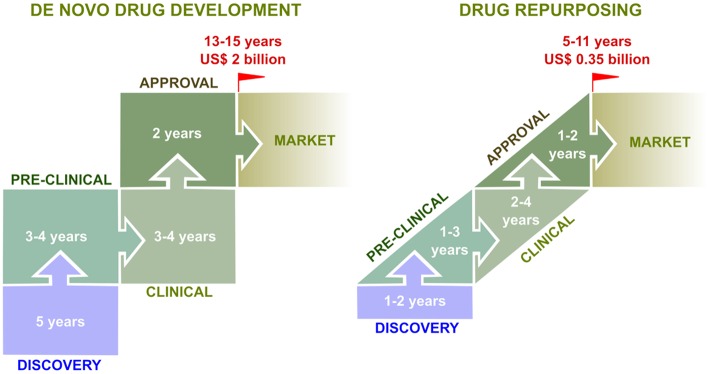
“Finding new indications for already-existing drugs has many benefits, mainly by improving cost-effectiveness, reducing risks, and shortening time to market (37, 41).”
BackgroundEstimates of global seasonal influenza-associated respiratory mortality: a modelling study
Iuliano, A. D., Roguski, K. M., Chang, H. H., Muscatello, D. J., Palekar, R. S., Tempia, S., Cohen, C., Gran, J. M., Schanzer, D. L., Cowling, B. J., et al. (2017) · The Lancet · doi:10.1016/s0140-6736(17)33293-2 · Cited by 3,034 · cited 1×
“Indeed, human influenza type A and B viruses are responsible for annual flu epidemics marked by up to 1 billion infections, 3-5 million severe cases and 300,000-650,000 deaths worldwide, with an huge economic burden in terms of medical visits, hospitalizations, work/school absenteeism. and productivity loss (1) (2) (3…”
BackgroundRational design of potent sialidase-based inhibitors of influenza virus replication
von Itzstein, M., Wu, W.-Y., Kok, G. B., Pegg, M. S., Dyason, J. C., Jin, B., Van Phan, T., Smythe, M. L., White, H. F., Oliver, S. W., et al. (1993) · Nature · doi:10.1038/363418a0 · Cited by 1,862
DrugBank 3.0: a comprehensive resource for 'Omics' research on drugs
Knox, C., Law, V., Jewison, T., Liu, P., Ly, S., Frolkis, A., Pon, A., Banco, K., Mak, C., Neveu, V., et al. (2010) · Nucleic Acids Research · doi:10.1093/nar/gkq1126 · Cited by 1,832 · cited 1×
“Besides the inclusion of constantly emerging "omics" (e.g., transcriptomic, proteomic, metabolomic) data to expand our current knowledge of drug/disease-associated mechanisms, in silico data mining and modeling tools have pushed our capacity to analyze data to the next level (58) (59) (60) .”
BackgroundHow were new medicines discovered?
Swinney, D. C., & Anthony, J. (2011) · Nature Reviews Drug Discovery · doi:10.1038/nrd3480 · Cited by 1,812 · cited 2×
“In that regard, many well-annotated collections of smallmolecule libraries could be readily made available through different collaborative and/or commercial partnerships in order to accelerate drug repurposing through hypothesis biased or unbiased phenotypic screening [reviewed in (54) (55) (56) (57) ].”
BackgroundThe anti-inflammatory agents aspirin and salicylate inhibit the activity of IκB kinase-β
Yin, M.-J., Yamamoto, Y., & Gaynor, R. B. (1998) · Nature · doi:10.1038/23948 · Cited by 1,596
Krammer, F., Smith, G. J. D., Fouchier, R. A. M., Peiris, M. J. S., Kedzierska, K., Doherty, P. C., Palese, P., Shaw, M. L., Treanor, J. J., Webster, R. G., et al. (2018) · Nature Reviews Disease Primers · doi:10.1038/s41572-018-0002-y · Cited by 1,591
Neuraminidase Inhibitors for Influenza
Moscona, A. (2005) · New England Journal of Medicine · doi:10.1056/nejmra050740 · Cited by 1,103 · cited 1×
“By binding to the broadly conserved active site of the NA, NA inhibitors interfere with the sialidase enzymatic activity of the viral protein, which is essential for the release of newly formed progeny viruses from the infected cell, hence preventing the spread of infection to the rest of the respiratory tissue (14).”
Background
Cited by
Sorted by citations
Discovery and development of safe-in-man broad-spectrum antiviral agents
Andersen, P. I., Ianevski, A., Lysvand, H., Vitkauskienė, A., Oksenych, V., Bjørås, M., Telling, K., Lutsar, I., Dumpis, U., Irie, Y., et al. (2020) · International Journal of Infectious Diseases · doi:10.1016/j.ijid.2020.02.018 · Cited by 274
“…opportunities, including a substantially higher probability of success to market as compared with developing new virus-specific drugs and vaccines, and a significantly reduced cost and timeline to clinical availability (Ianevski et al., 2019; Pizzorno et al., 2019; Zheng et al., 2018).”
Host-Directed Antiviral Therapy
Kumar, N., Sharma, S., Kumar, R., Tripathi, B. N., Barua, S., Ly, H., & Rouse, B. T. (2020) · Clinical Microbiology Reviews · doi:10.1128/cmr.00168-19 · Cited by 289
“multiple host factors and pathways that are supportive of virus replication (299, 300).”
BackgroundAntiviral Approaches against Influenza Virus
Kumari, R., Sharma, S. D., Kumar, A., Ende, Z. S., Mishina, M., Wang, Y., Falls, Z., Samudrala, R., Pohl, J., Knight, P. R., et al. (2023) · Clinical Microbiology Reviews · doi:10.1128/cmr.00040-22 · Cited by 176
“It was demonstrated in vitro and in vivo in a mouse model that Diltiazem modulates host antiviral genes in vitro and in vivo in a mouse model, and cotreatment with Oseltamivir enhanced the antiviral efficacy (362).”
BackgroundInhibitors of VPS34 and fatty-acid metabolism suppress SARS-CoV-2 replication
Williams, C. G., Jureka, A. S., Silvas, J. A., Nicolini, A. M., Chvatal, S. A., Carlson-Stevermer, J., Oki, J., Holden, K., & Basler, C. F. (2021) · Cell Reports · doi:10.1016/j.celrep.2021.109479 · Cited by 143
“Repurposing drugs developed for other diseases and conditions may provide a shortcut to antiviral development (Garcı́a-Serradilla et al., 2019; Li and De Clercq, 2020; Pizzorno et al., 2019; Saini et al., 2020).”
Potential Antiviral Options against SARS-CoV-2 Infection
Ianevski, A., Yao, R., Fenstad, M. H., Biza, S., Žusinaite, E., Reisberg, T., Lysvand, H., Løseth, K., Landsem, V. M., Malmring, J. F., et al. (2020) · Viruses · doi:10.3390/v12060642 · Cited by 104
Metadata
- Authors
- Pizzorno, A., Padey, B., Terrier, O., & Rosa-Calatrava, M.
- Affiliations
- Lyon 1 Université (FR)
- Corresponding author
- Terrier, Olivier
- Venue
- Frontiers in Immunology
- Publisher
- Frontiers Media SA
- Published
- 2019-03-19
- Volume
- 10
- Pages
- 531-531
- ISSN
- 1664-3224 (ISSN-L)
- PMC
- PMC6434107
- OpenAlex
- W2923800168
- Cited by
- 122
- References
- 117
- Citations by year
- 2026: 2 · 2025: 13 · 2024: 12 · 2023: 11 · 2022: 17 · 2021: 24 · 2020: 38 · 2019: 5
- FWCI
- 3.06
- Type
- journal article
- Language
- en
- Open access
- gold
- doi.org
- Licence
- Locations
- Frontiers in Immunology (publishedVersion, cc-by)
- Europe PMC (PubMed Central) (publishedVersion, cc-by)
- PubMed Central (publishedVersion, cc-by)
- PubMed (publishedVersion)
- HAL (submittedVersion, other-oa)
- DOAJ (DOAJ: Directory of Open Access Journals) (submittedVersion, cc-by-sa)
- Funders
- Région Auvergne-Rhône-Alpes
- Topics
- Health Sciences › Medicine › Epidemiology › Influenza Virus Research Studies
- Health Sciences › Medicine › Epidemiology › Respiratory viral infections research
- Life Sciences › Pharmacology, Toxicology and Pharmaceutics › Drug Discovery › Computational Drug Discovery Methods
- Keywords
- drug repurposing, influenza virus, antiviral agents, host-targeted antivirals, antiviral resistance, virtual screening, antiviral drug discovery
- MeSH terms
- Animals, Antiviral Agents, Humans, Influenza, Human, Orthomyxoviridae, Orthomyxoviridae Infections, Drug Repositioning
About these checks
Registry, retraction, Cites and statistics results are computed, not judged, with one exception: a printed reference that no index lists is read once by a model before it counts as a citation error. Claims are extracted by a model and kept only when their quote appears verbatim in the text; each cited source is then checked, with a model’s help, for whether it says what the claim relies on. Those verdicts can be wrong — read the claim’s quote and the cited source before relying on one.
Statistics and arithmetic are recomputed, not judged.
Confidence bands are shown only for fields calibrated on our annotated test set. None is calibrated yet, so no band is shown.
What counts as a claim ›How we measure confidence ›How we check this ›
Are you an author, or do you see a problem with this page? Request a review
