

The DOI matches its Crossref record; 238 of the 238 references it cites were found in a registry or an index.
Cell Fate Reprogramming in the Era of Cancer Immunotherapy
Open accessAbstract
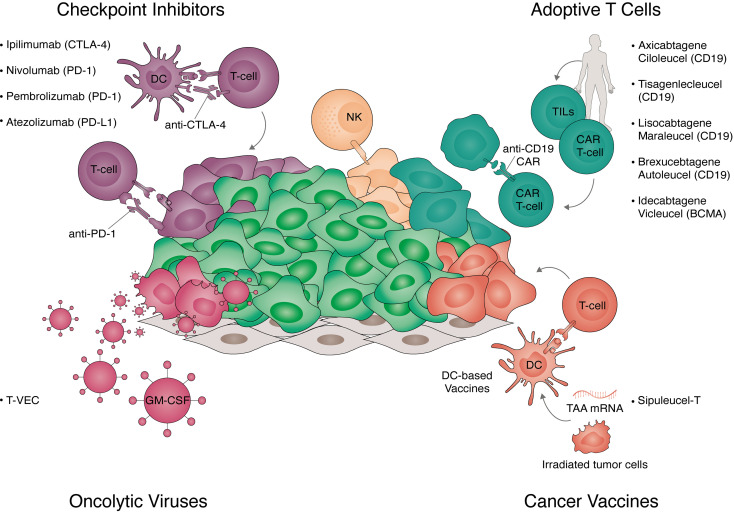
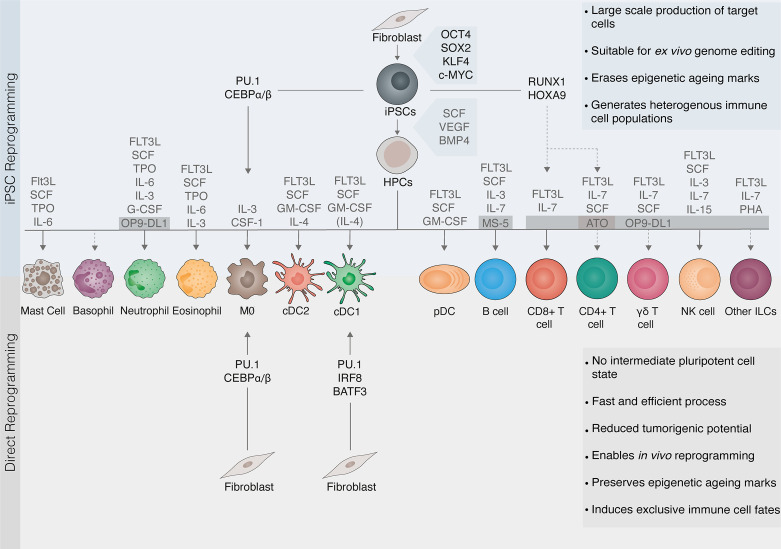
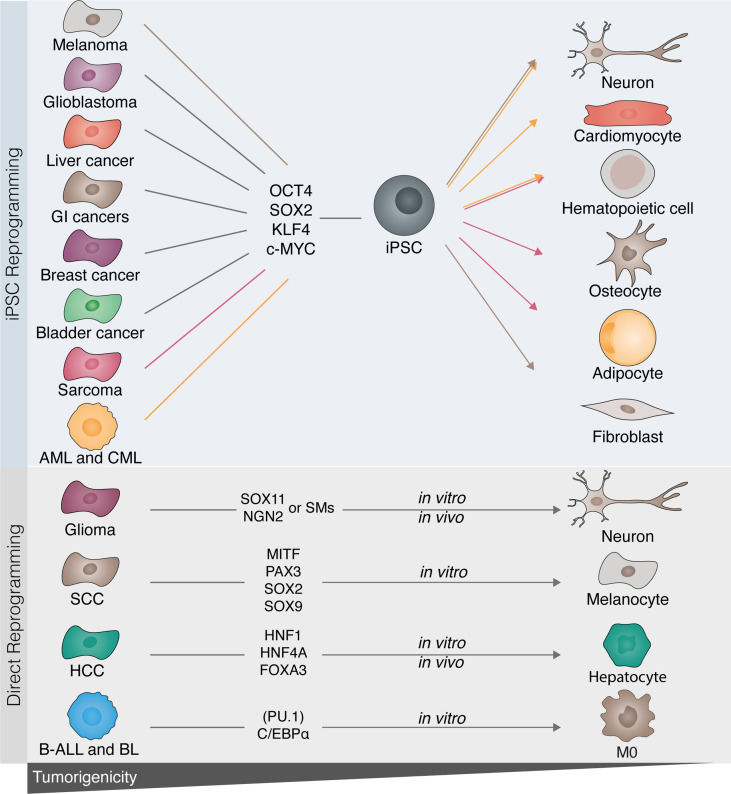
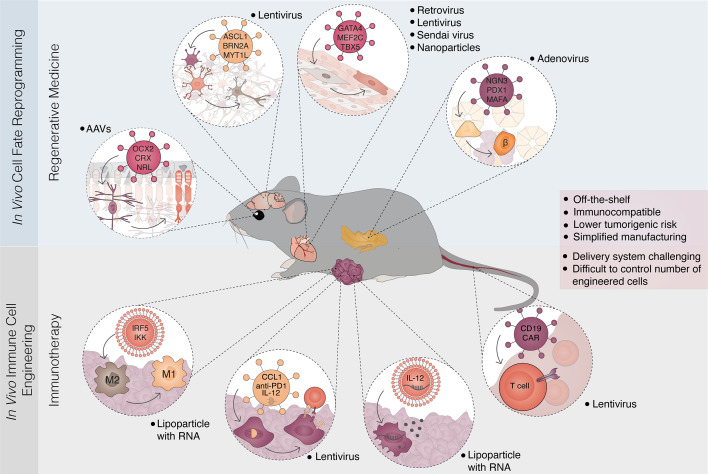
Advances in understanding how cancer cells interact with the immune system allowed the development of immunotherapeutic strategies, harnessing patients’ immune system to fight cancer. Dendritic cell-based vaccines are being explored to reactivate anti-tumor adaptive immunity. Immune checkpoint inhibitors and chimeric antigen receptor T-cells (CAR T) were however the main approaches that catapulted the therapeutic success of immunotherapy. Despite their success across a broad range of human cancers, many challenges remain for basic understanding and clinical progress as only a minority of patients benefit from immunotherapy. In addition, cellular immunotherapies face important limitations imposed by the availability and quality of immune cells isolated from donors. Cell fate reprogramming is offering interesting alternatives to meet these challenges. Induced pluripotent stem cell (iPSC) technology not only enables studying immune cell specification but also serves as a platform for the differentiation of a myriad of clinically useful immune cells including T-cells, NK cells, or monocytes at scale. Moreover, the utilization of iPSCs allows introduction of genetic modifications and generation of T/NK cells with enhanced anti-tumor properties. Immune cells, such as macrophages and dendritic cells, can also be generated by direct cellular reprogramming employing lineage-specific master regulators bypassing the pluripotent stage. Thus, the cellular reprogramming toolbox is now providing the means to address the potential of patient-tailored immune cell types for cancer immunotherapy. In parallel, development of viral vectors for gene delivery has opened the door for in vivo reprogramming in regenerative medicine, an elegant strategy circumventing the current limitations of in vitro cell manipulation. An analogous paradigm has been recently developed in cancer immunotherapy by the generation of CAR T-cells in vivo. These new ideas on endogenous reprogramming, cross-fertilized from the fields of regenerative medicine and gene therapy, are opening exciting avenues for direct modulation of immune or tumor cells in situ, widening our strategies to remove cancer immunotherapy roadblocks. Here, we review current strategies for cancer immunotherapy, summarize technologies for generation of immune cells by cell fate reprogramming as well as highlight the future potential of inducing these unique cell identities in vivo, providing new and exciting tools for the fast-paced field of cancer immunotherapy.
Overview
The claims and statistics of this paper haven’t been checked yet.
Run the check — free, no account needed. It reads the open-access text and checks the sources it cites.
Integrity signals
Registry
Cites
Statistics
Figures
Verification
Claims the paper makes
The claims and statistics of this paper haven’t been checked yet.
Run the check — free, no account needed. It reads the open-access text and checks the sources it cites.
Claims other papers make about this one
Each is checked against this paper’s own text: does it say what the citing paper says it does?
In the citing paper
“Secondly, while ACT demonstrates high efficacy, it also comes with notable toxicity risks, particularly concerning cytokine release syndrome (CRS).”
From Current and Future Trends of Colorectal Cancer Treatment: Exploring Advances in Immunotherapy (2024) · cites this paper as [133]
In the citing paper
“Lastly, there are challenges associated with delivering tumor-specific lymphocytes efficiently to the tumor site [133].”
From Current and Future Trends of Colorectal Cancer Treatment: Exploring Advances in Immunotherapy (2024) · cites this paper as [133]
In the citing paper
“However, the application of ACT in solid tumors encounters significant limitations and challenges, primarily stemming from the availability and quality of isolated immune cells.”
From Current and Future Trends of Colorectal Cancer Treatment: Exploring Advances in Immunotherapy (2024) · cites this paper as [133]
In the citing paper
“Furthermore, TL has emerged as a potential predictive biomarker for the clinical outcome of anti-EGFR monoclonal antibody therapy in patients with KRAS wild-type metastatic CRC.”
From Current and Future Trends of Colorectal Cancer Treatment: Exploring Advances in Immunotherapy (2024) · cites this paper as [133]
Self-check
Percentages, sums and reported differences re-computed from the paper’s own numbers.
The self-check needs the paper’s full text.
Citations
Cites
1 retracted
Yuan, J., Zhang, F., Hallahan, D. E., Zhang, Z., He, L., Wu, L., You, M., & Yang, Q. (2018) · Journal of Experimental & Clinical Cancer Research · doi:10.1186/s13046-018-0857-5 · Cited by 14
RetractedPD-1 and PD-L1 Immune Checkpoint Blockade to Treat Breast Cancer
Hartkopf, A. D., Taran, F., Wallwiener, M., Walter, C. B., Krämer, B., Grischke, E., & Brucker, S. Y. (2016) · Breast Care · doi:10.1159/000453569 · Cited by 30,989
Takahashi, K., & Yamanaka, S. (2006) · Cell · doi:10.1016/j.cell.2006.07.024 · Cited by 26,673
Induction of Pluripotent Stem Cells from Adult Human Fibroblasts by Defined Factors
Takahashi, K., Tanabe, K., Ohnuki, M., Narita, M., Ichisaka, T., Tomoda, K., & Yamanaka, S. (2007) · Cell · doi:10.1016/j.cell.2007.11.019 · Cited by 20,221
Safety, activity, and immune correlates of anti–PD-1 antibody in cancer
Topalian, S. L., Hodi, F. S., Brahmer, J. R., Gettinger, S. N., Smith, D. C., McDermott, D. F., Powderly, J. D., Carvajal, R. D., Sosman, J. A., Atkins, M. B., et al. (2012) · New England Journal of Medicine · doi:10.1056/nejmoa1200690 · Cited by 12,628
Oncology meets immunology: the cancer-immunity cycle.
Chen, D. S., & Mellman, I. (2013) · Immunity · doi:10.1016/j.immuni.2013.07.012 · Cited by 6,929
Cancer immunotherapy using checkpoint blockade
Ribas, A., & Wolchok, J. D. (2018) · Science · doi:10.1126/science.aar4060 · Cited by 6,791
Mismatch repair deficiency predicts response of solid tumors to PD-1 blockade
Le, D. T., Durham, J. N., Smith, K. N., Wang, H., Bartlett, B. R., Aulakh, L. K., Lu, S., Kemberling, H., Wilt, C., Luber, B. S., et al. (2017) · Science · doi:10.1126/science.aan6733 · Cited by 6,645
Understanding the tumor immune microenvironment (TIME) for effective therapy
Binnewies, M., Roberts, E. W., Kersten, K., Chan, V., Fearon, D. F., Merad, M., Coussens, L. M., Gabrilovich, D. I., Ostrand-Rosenberg, S., Hedrick, C. C., et al. (2018) · Nature Medicine · doi:10.1038/s41591-018-0014-x · Cited by 6,145
Nivolumab versus Everolimus in Advanced Renal-Cell Carcinoma
Motzer, R. J., Escudier, B., McDermott, D. F., George, S., Hammers, H. J., Srinivas, S., Tykodi, S. S., Sosman, J. A., Procopio, G., Plimack, E. R., et al. (2015) · New England Journal of Medicine · doi:10.1056/nejmoa1510665 · Cited by 5,807
Cited by
Sorted by citations
Hypoxia-induced cancer cell reprogramming: a review on how cancer stem cells arise
Abd, G. M., Laird, M. C., Ku, J. C., & Li, Y. (2023) · Frontiers in Oncology · doi:10.3389/fonc.2023.1227884 · Cited by 41
Current and Future Trends of Colorectal Cancer Treatment: Exploring Advances in Immunotherapy
Nikolouzakis, T. K., Chrysos, E., Docea, A. O., Fragkiadaki, P., Souglakos, J., Tsiaoussis, J., & Tsatsakis, A. (2024) · Cancers · doi:10.3390/cancers16111995 · Cited by 37
Advances in adoptive cellular therapy for colorectal cancer: A narrative review
Yi, X., & Hu, W. (2022) · Annals of Translational Medicine · doi:10.21037/atm-22-6196 · Cited by 14
Metadata
- Authors
- Zimmermannova, O., Caiado, I., Ferreira, A. G., & Pereira, C.-F.
- Affiliations
- Lund University (SE)
- Corresponding author
- Pereira, Carlos-Filipe
- Venue
- Frontiers in Immunology
- Publisher
- Frontiers Media SA
- Published
- 2021-07-21
- Volume
- 12
- Pages
- 714822-714822
- ISSN
- 1664-3224 (ISSN-L)
- PMC
- PMC8336566
- OpenAlex
- W3184553415
- Cited by
- 56
- References
- 238
- Citations by year
- 2026: 8 · 2025: 8 · 2024: 12 · 2023: 13 · 2022: 15
- FWCI
- 1.10
- Type
- journal article
- Language
- en
- Open access
- gold
- doi.org
- Licence
- Locations
- Frontiers in Immunology (publishedVersion, cc-by)
- PubMed Central (publishedVersion, cc-by)
- PubMed (publishedVersion)
- DOAJ (DOAJ: Directory of Open Access Journals) (submittedVersion, cc-by-sa)
- Estudo Geral (Universidad de Coimbra) (submittedVersion, other-oa)
- Portuguese National Funding Agency for Science, Research and Technology (RCAAP Project by FCT) (submittedVersion, cc-by)
- Lund University Publications (Lund University) (submittedVersion)
- Funders
- Cancerfonden (200939 PjF)
- Vetenskapsrådet
- European Research Council
- Novo Nordisk Fonden
- Fundação para a Ciência e a Tecnologia (PTDC/MED-IMU/4520/2020, SFRH/BD/130845/2017)
- Knut och Alice Wallenbergs Stiftelse
- Topics
- Life Sciences › Biochemistry, Genetics and Molecular Biology › Molecular Biology › Pluripotent Stem Cells Research
- Life Sciences › Immunology and Microbiology › Immunology › Immunotherapy and Immune Responses
- Life Sciences › Immunology and Microbiology › Immunology › T-cell and B-cell Immunology
- Keywords
- cellular reprogramming, cancer immunotherapy, induced pluripotent stem cells, immune cell differentiation, T cells, natural killer cells, macrophages, dendritic cells, in vivo reprogramming, viral vectors, gene delivery, chimeric antigen receptor T cells, immune checkpoint inhibitors, dendritic cell vaccine, cellular immunotherapy
- MeSH terms
- Cellular Reprogramming Techniques, Antineoplastic Agents, Immunological, Animals, Combined Modality Therapy, Genetic Engineering, Humans, Immunotherapy, Neoplasms, Genetic Therapy, Immunotherapy, Adoptive, Disease Management, Cancer Vaccines, Molecular Targeted Therapy, Cellular Reprogramming
About these checks
Registry, retraction, Cites and statistics results are computed, not judged, with one exception: a printed reference that no index lists is read once by a model before it counts as a citation error. Claims are extracted by a model and kept only when their quote appears verbatim in the text; each cited source is then checked, with a model’s help, for whether it says what the claim relies on. Those verdicts can be wrong — read the claim’s quote and the cited source before relying on one.
Statistics and arithmetic are recomputed, not judged.
Confidence bands are shown only for fields calibrated on our annotated test set. None is calibrated yet, so no band is shown.
What counts as a claim ›How we measure confidence ›How we check this ›
Are you an author, or do you see a problem with this page? Request a review
