

Fecal microbiota transplantation and short-chain fatty acids reduce sepsis mortality by remodeling antibiotic-induced gut microbiota disturbances
Open accessThe DOI matches its Crossref record; 62 of the 62 references it cites were found in a registry or an index.
Abstract
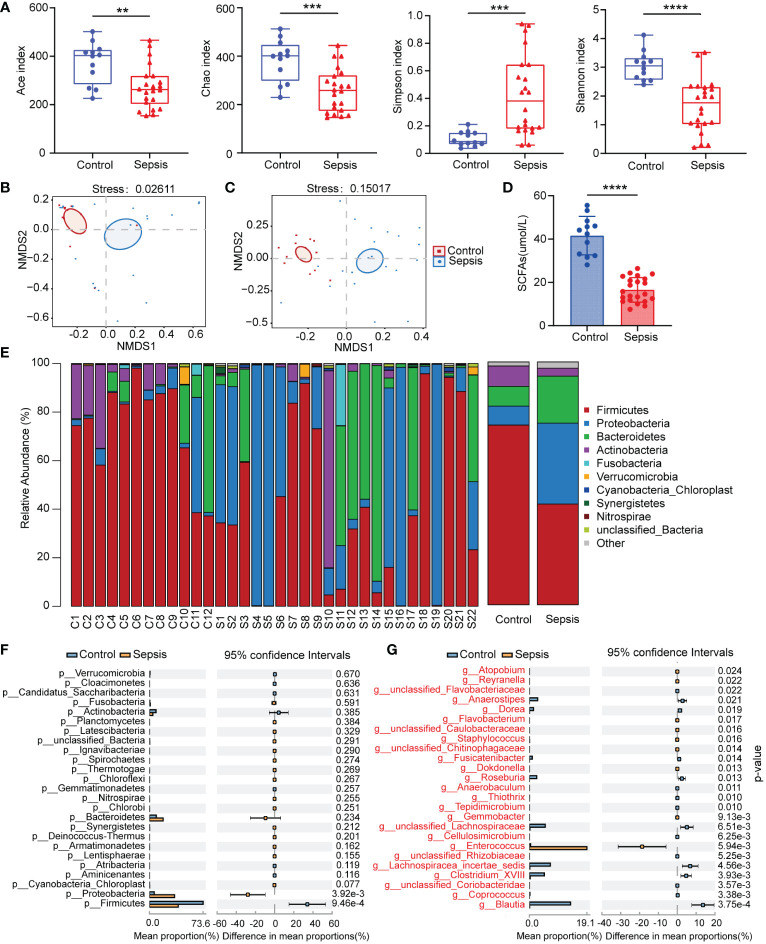
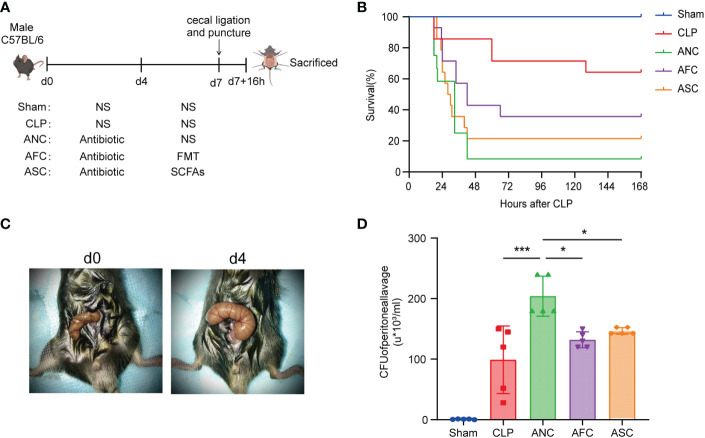
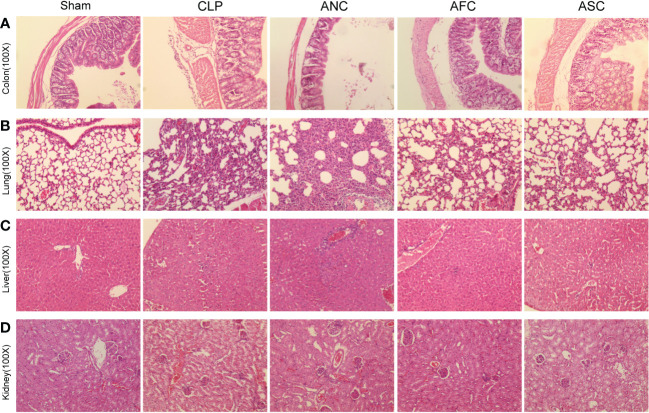
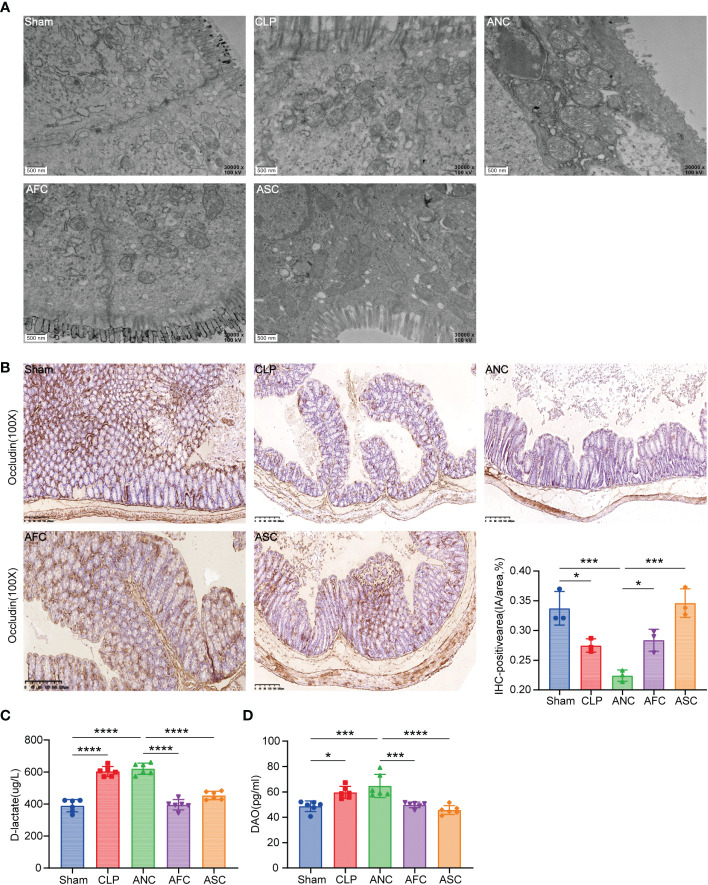
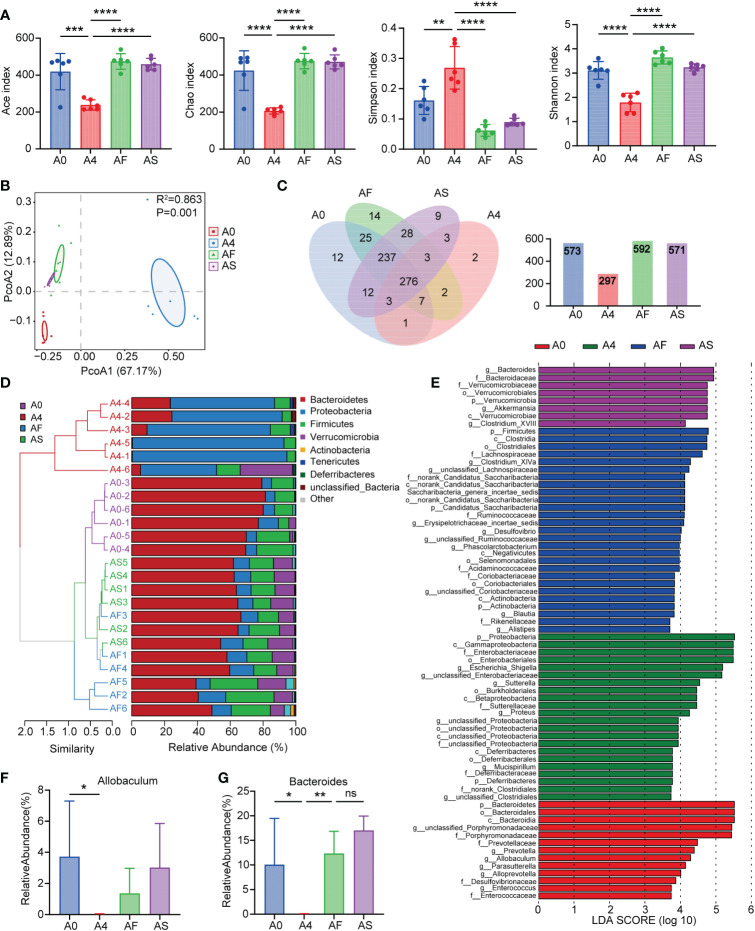
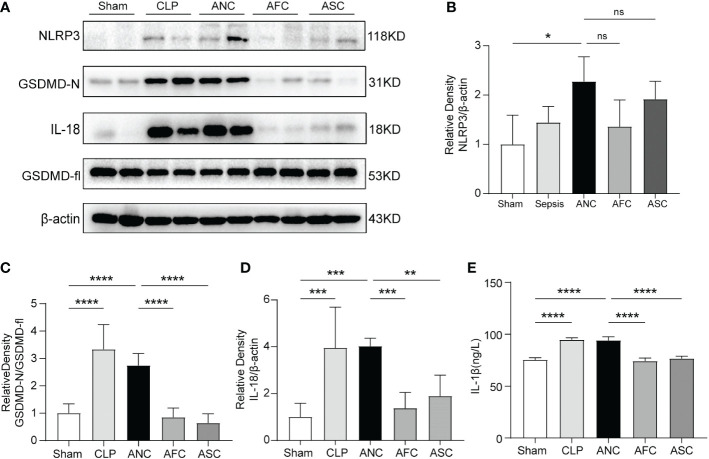
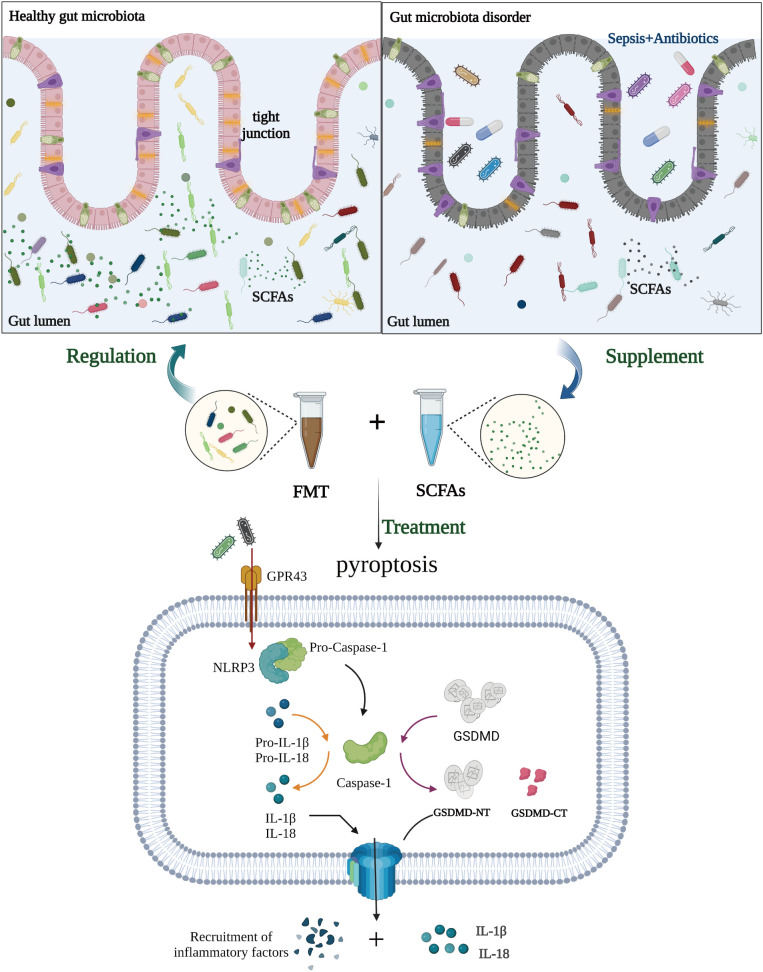
Objective: Sepsis is the leading cause of death in critically ill patients. The gastrointestinal tract has long been thought to play an important role in the pathophysiology of sepsis. Antibiotic therapy can reduce a patient’s commensal bacterial population and raise their risk of developing subsequent illnesses, where gut microbiota dysbiosis may be a key factor. Methods: In this study, we analyzed the 16S rRNA of fecal samples from both healthy people and patients with sepsis to determine if alterations in gut bacteria are associated with sepsis. Then, we developed a mouse model of sepsis using cecal ligation and puncture (CLP) in order to examine the effects of fecal microbiota transplantation (FMT) and short-chain fatty acids (SCFAs) on survival rate, systemic inflammatory response, gut microbiota, and mucosal barrier function. Results: Sepsis patients’ gut microbiota composition significantly differed from that of healthy people. At the phylum level, the amount of Proteobacteria in the intestinal flora of sepsis patients was much larger than that of the control group, whereas the number of Firmicutes was significantly lower. Mice with gut microbiota disorders (ANC group) were found to have an elevated risk of death, inflammation, and organ failure as compared to CLP mice. However, all of these could be reversed by FMT and SCFAs. FMT and SCFAs could regulate the abundance of bacteria such as Firmicutes, Proteobacteria, Escherichia Shigella, and Lactobacillus, restoring them to levels comparable to those of healthy mice. In addition, they increased the expression of the Occludin protein in the colon of mice with sepsis, downregulated the expression of the NLRP3 and GSDMD-N proteins, and reduced the release of the inflammatory factors IL-1β and IL-18 to inhibit cell pyroptosis, ultimately playing a protective role in sepsis. Disccusion: FMT and SCFAs provide a microbe-related survival benefit in a mouse model of sepsis, suggesting that they may be a viable treatment for sepsis.
Overview
The claims and statistics of this paper haven’t been checked yet.
Free: it reads the open-access text and checks the first 5 claims that cite a source we can check. Create a free account to check every claim.
Integrity signals
Registry
Cites
Statistics
Figures
Verification
Claims the paper makes
The claims and statistics of this paper haven’t been checked yet.
Free: it reads the open-access text and checks the first 5 claims that cite a source we can check. Create a free account to check every claim.
Claims other papers make about this one
Each is checked against this paper’s own text: does it say what the citing paper says it does?
The source backs part of the claim, not all of it — or backs it for a different population, condition or comparison.
In the citing paper
“broad-spectrum antibiotics – the strongest iatrogenic driver”
From Progress on the correlation between sepsis and gut microbiota: a narrative review (2026) · cites this paper as Lou et al., 2022
Experimental — accuracy not yet measuredThe cited source says what the claim attributes to it.
In the citing paper
“Gut microbiota plays a key role in sepsis pathogenesis, but evidence is often mixed.”
From Progress on the correlation between sepsis and gut microbiota: a narrative review (2026) · cites this paper as Lou et al., 2022
The cited source says what the claim attributes to it.
In the citing paper
“In animal sepsis models, SCFAs reduce mortality (Lou et al., 2022).”
From Progress on the correlation between sepsis and gut microbiota: a narrative review (2026) · cites this paper as Lou et al., 2022
Self-check
Percentages, sums and reported differences re-computed from the paper’s own numbers.
The self-check needs the paper’s full text.
Citations
Cites
The third international consensus definitions for sepsis and septic shock (Sepsis-3).
Singer, M., Deutschman, C. S., Seymour, C. W., Shankar-Hari, M., Annane, D., Bauer, M., Bellomo, R., Bernard, G. R., Chiche, J.-D., Coopersmith, C. M., et al. (2016) · JAMA · doi:10.1001/jama.2016.0287 · Cited by 28,250
Rudd, K. E., Johnson, S. C., Agesa, K. M., Shackelford, K. A., Tsoi, D., Kievlan, D. R., Colombara, D. V., Ikuta, K. S., Kissoon, N., Finfer, S., et al. (2020) · The Lancet · doi:10.1016/s0140-6736(19)32989-7 · Cited by 7,971
From Dietary Fiber to Host Physiology: Short-Chain Fatty Acids as Key Bacterial Metabolites
Koh, A., De Vadder, F., Kovatcheva-Datchary, P., & Bäckhed, F. (2016) · Cell · doi:10.1016/j.cell.2016.05.041 · Cited by 7,070
The Microbial Metabolites, Short-Chain Fatty Acids, Regulate Colonic T reg Cell Homeostasis
Smith, P. M., Howitt, M. R., Panikov, N., Michaud, M., Gallini, C. A., Bohlooly-Y, M., Glickman, J. N., & Garrett, W. S. (2013) · Science · doi:10.1126/science.1241165 · Cited by 5,413
Surviving sepsis campaign: international guidelines for management of sepsis and septic shock 2021
Evans, L., Rhodes, A., Alhazzani, W., Antonelli, M., Coopersmith, C. M., French, C., Machado, F. R., Mcintyre, L., Ostermann, M., Prescott, H. C., et al. (2021) · Intensive Care Medicine · doi:10.1007/s00134-021-06506-y · Cited by 5,082
Seymour, C. W., Liu, V. X., Iwashyna, T. J., Brunkhorst, F. M., Rea, T. D., Scherag, A., Rubenfeld, G., Kahn, J. M., Shankar-Hari, M., Singer, M., et al. (2016) · JAMA · doi:10.1001/jama.2016.0288 · Cited by 3,939
The gut microbiota--masters of host development and physiology
Sommer, F., & Bäckhed, F. (2013) · Nature Reviews Microbiology · doi:10.1038/nrmicro2974 · Cited by 3,681
International Study of the Prevalence and Outcomes of Infection in Intensive Care Units
Vincent, J.-L. (2009) · JAMA · doi:10.1001/jama.2009.1754 · Cited by 3,618
Pyroptosis: Gasdermin-Mediated Programmed Necrotic Cell Death
Shi, J., Gao, W., & Shao, F. (2017) · Trends in Biochemical Sciences · doi:10.1016/j.tibs.2016.10.004 · Cited by 3,088
Dao, M. C., Everard, A., Aron-Wisnewsky, J., Sokolovska, N., Prifti, E., Verger, E. O., Kayser, B. D., Levenez, F., Chilloux, J., Hoyles, L., et al. (2016) · Gut · doi:10.1136/gutjnl-2014-308778 · Cited by 1,931
Cited by
The Gut–Kidney Axis in Chronic Kidney Diseases
Tsuji, K., Uchida, N., Nakanoh, H., Fukushima, K., Haraguchi, S., Kitamura, S., & Wada, J. (2024) · Diagnostics · doi:10.3390/diagnostics15010021 · Cited by 162
Karnwal, A., Jassim, A. Y., Mohammed, A. A., Al-Tawaha, A. R., Selvaraj, M., & Malik, T. (2025) · Frontiers in Microbiology · doi:10.3389/fmicb.2025.1517772 · Cited by 137
Gut microbiota in health and disease: advances and future prospects
Zhang, Y., Wang, H., Sang, Y., Liu, M., Wáng, Q., Yang, H., & Li, X. (2024) · MedComm · doi:10.1002/mco2.70012 · Cited by 80
The Gut Microbiome in Sepsis: From Dysbiosis to Personalized Therapy
Piccioni, A., Spagnuolo, F., Candelli, M., Voza, A., Covino, M., Gasbarrini, A., & Franceschi, F. (2024) · Journal of Clinical Medicine · doi:10.3390/jcm13206082 · Cited by 63
Gut microbiota: a promising new target in immune tolerance
Almansour, N., Al‐Rashed, F., Choudhry, K., Alqaderi, H. E., Sindhu, S. T. A. K., Al‐Mulla, F., & Ahmad, R. (2025) · Frontiers in Immunology · doi:10.3389/fimmu.2025.1607388 · Cited by 59
Effects of the gut microbiota and its metabolite short-chain fatty acids on endometriosis
Liu, M., Peng, R., Tian, C., Shi, J., Ma, J., Shi, R., Xiao, Q., Zhao, R., & Guan, H. (2024) · Frontiers in Cellular and Infection Microbiology · doi:10.3389/fcimb.2024.1373004 · Cited by 55
Tang, Y., Chen, L., Yang, J., Zhang, S., Jin, J., & Yao, W. (2024) · Frontiers in Cellular and Infection Microbiology · doi:10.3389/fcimb.2024.1392376 · Cited by 47
Oami, T., Shimazui, T., Yumoto, T., Otani, S., Hayashi, Y., & Coopersmith, C. M. (2025) · Journal of Intensive Care · doi:10.1186/s40560-025-00786-y · Cited by 45
Xuan, W., Xu, W., Zheng, L., Jia, H., Zhang, X., Zhang, X., & Cao, B. (2024) · Cellular and Molecular Life Sciences · doi:10.1007/s00018-024-05474-y · Cited by 39
Postbiotics as potential new therapeutic agents for sepsis
Lou, X., Xue, J., Shao, R., Mo, C., Wang, F., & Chen, G. (2023) · Burns & Trauma · doi:10.1093/burnst/tkad022 · Cited by 38
Self-citationZhou, P., Zou, Z., Wu, W., Zhang, H., Wang, S., Tu, X., Huang, W., Chen, C., Zhu, S., Weng, Q., et al. (2023) · BMC Microbiology · doi:10.1186/s12866-023-03078-3 · Cited by 38
Gut Microbiome-Based Therapeutics in Critically Ill Adult Patients—A Narrative Review
He, S., Lin, F., Hu, X., & Pan, P. (2023) · Nutrients · doi:10.3390/nu15224734 · Cited by 37
Gut-lung immunometabolic crosstalk in sepsis: from microbiota to respiratory failure
Li, Q., Song, X.-C., Li, K., & Wang, J. (2025) · Frontiers in Medicine · doi:10.3389/fmed.2025.1685044 · Cited by 34
Pu, W., Wang, S., Wang, D., Li, Y., Yip, R. C. S., & Chen, H. (2024) · International Journal of Biological Macromolecules · doi:10.1016/j.ijbiomac.2024.133195 · Cited by 31
Zha, D., Gao, P. H., & Wu, X. (2025) · International Journal of Medical Sciences · doi:10.7150/ijms.114382 · Cited by 27
The Role of Intestinal Microbiota and Immune System Interactions in Autoimmune Diseases
Yurtseven, B., Aydemir, E., & Ayaz, F. (2025) · ImmunoTargets and Therapy · doi:10.2147/itt.s569016 · Cited by 26
Molecular Pathways in Sepsis Pathogenesis: Recent Advances and Therapeutic Avenues
Addissouky, T. A., Sayed, I. E. T. E., Ali, M. M. A., Wang, Y., Baz, A. E., Khalil, A. A., & Elarabany, N. (2023) · Journal of Cellular Immunology · doi:10.33696/immunology.5.183 · Cited by 26
Protein modification by short-chain fatty acid metabolites in sepsis: a comprehensive review
Zhang, L., Shi, X., Qiu, H., Liu, S., Yang, T., Li, X., & Liu, X. (2023) · Frontiers in Immunology · doi:10.3389/fimmu.2023.1171834 · Cited by 25
Qian, S., Su, Z., Lin, J., Hou, Q., Wang, X., Li, Y., Wang, J., Huang, C., Wang, Z., Cubero, F. J., et al. (2025) · Cell Communication and Signaling · doi:10.1186/s12964-025-02224-w · Cited by 24
“These actions reduce septic mice mortality [59, 61].”
Targeting the immuno-inflammatory-microbial network: a key strategy for sepsis treatment
Xu, Y., Wang, J., Yuan, R. R., Qin, Z., Long, K., & Gao, P. (2025) · Frontiers in Immunology · doi:10.3389/fimmu.2025.1575516 · Cited by 24
Xiao, Y., He, F., Zhu, Y., Zhou, J., Dai, Z., Wang, H., Xia, Z., Tu, Z., & Leong, K. W. (2023) · Advanced Science · doi:10.1002/advs.202305273 · Cited by 24
Analysis of the dynamic changes in gut microbiota in patients with different severity in sepsis
Liu, Y., Guo, Y., Hu, S. J., Wang, Y., Zhang, L., Yu, L., & Geng, F. (2023) · BMC Infectious Diseases · doi:10.1186/s12879-023-08608-y · Cited by 23
Progress in the study of the correlation between sepsis and intestinal microecology
Tao, Y.-L., Wang, J.-R., Liu, M., Liu, Y., Zhang, J., Zhou, Y., Li, S., & Zhu, S.-F. (2024) · Frontiers in Cellular and Infection Microbiology · doi:10.3389/fcimb.2024.1357178 · Cited by 22
Kenneth, M. J., Wu, C.-C., Fang, C., Hsu, T.-K., Lin, I., Huang, S.-W., Chiu, Y., & Hsu, B. (2025) · Antibiotics · doi:10.3390/antibiotics14030264 · Cited by 21
Zhu, Y., Cidan, Y., Sun, G., Li, X., Shahid, M. A., Zhaxi, L., Suolang, Z., Suo, L., & Basang, W. (2023) · Frontiers in Veterinary Science · doi:10.3389/fvets.2023.1193558 · Cited by 19
Interaction between gut-heart axis in sepsis-induced cardiomyopathy
Zhou, Z.-K., Yu, M., Shou, S., Chai, Y., & Liu, Y. (2025) · Pharmacological Research · doi:10.1016/j.phrs.2025.107806 · Cited by 18
Gut microbiota in preterm infants with late-onset sepsis and pneumonia: a pilot case-control study
Ma, Y., Peng, X., Zhang, J., Zhu, Y., Huang, R., Li, G., Wu, Y., Zhou, C., You, J., Fang, S., et al. (2024) · BMC Microbiology · doi:10.1186/s12866-024-03419-w · Cited by 16
Novel mechanisms of intestinal flora regulation in high-altitude hypoxia
Yan, F., Yuan, W., Wu, S., Yang, Y.-H., & Cui, D. (2024) · Heliyon · doi:10.1016/j.heliyon.2024.e38220 · Cited by 16
Self-citationGao, Y., Liu, L., Cui, Y., Zhang, J., & Wu, X. (2024) · Frontiers in Immunology · doi:10.3389/fimmu.2024.1266579 · Cited by 16
Zhang, X., Huang, K., Wu, Z., Ding, R., Han, J., Zhang, Y., Lu, Y., Lu, Y., & Si, Y. (2025) · Pharmacology & Therapeutics · doi:10.1016/j.pharmthera.2025.108971 · Cited by 14
Gut microbiota: A novel target for sepsis treatment
Shang, W., Zhang, S., Yang, L., Liu, J., & Chen, D. (2025) · Chinese Medical Journal · doi:10.1097/cm9.0000000000003630 · Cited by 14
Contributions of the microbiota to the systemic inflammatory response
Muske, J., & Knoop, K. A. (2023) · Microbiota and Host · doi:10.1530/mah-23-0018 · Cited by 13
Multi-omics analysis reveals mechanisms of FMT in Enhancing antidepressant effects of SSRIs
Jiang, Y., Shi, L., Qu, Y., Ou, M., Du, Z., Zhou, Z., Zhou, H., & Zhu, H. (2025) · Brain Behavior and Immunity · doi:10.1016/j.bbi.2025.02.011 · Cited by 11
Li, Q., Tian, P., Guo, M., Liu, X., Su, T., Tang, M., Meng, B., Yu, L., Yang, Y., Liu, Y., et al. (2024) · ACS Infectious Diseases · doi:10.1021/acsinfecdis.3c00669 · Cited by 11
Self-citationWei, P., Gao, S., & Han, G. (2025) · Biomedicines · doi:10.3390/biomedicines13030639 · Cited by 10
DECIPHERING GUT MICROBIOTA IN PATIENTS WITH SEVERE SEPSIS AND SEPTIC SHOCK
Lee, S. J., Kim, D., Ann, H. W., Han, M., Lee, J. A., Lee, Y., Ahn, S., Seo, H. W., Kim, J. H., Ahn, J. Y., et al. (2023) · Shock · doi:10.1097/shk.0000000000002241 · Cited by 9
Sun, Y., Song, J., Lan, X., Ma, F., Jiang, M., & Jiang, C. (2023) · Infection and Drug Resistance · doi:10.2147/idr.s420689 · Cited by 9
Causal associations between gut microbiota and sepsis: A two‐sample Mendelian randomization study
You, J., Bi, X., Zhang, K., Xie, D., Chai, Y., Wen, S., Xian, Y., Fan, M., Xu, W., Li, M., et al. (2023) · European Journal of Clinical Investigation · doi:10.1111/eci.14064 · Cited by 9
Pérez, S. E. M., Lah, H. A. L. A., García, N. H., Carreño, U. A. R., & Pérez, I. M. M. (2025) · Gastrointestinal Disorders · doi:10.3390/gidisord7010005 · Cited by 8
Comparative analysis of gut microbiota in free range and house fed yaks from Linzhou County
Wang, H., Ali, M., Zhu, Y., Chen, X., Lu, D., Liu, Y., Li, K., & Zhang, C. (2025) · Scientific Reports · doi:10.1038/s41598-025-95357-4 · Cited by 8
Narrative review on microbiota and sepsis: the host’s betrayal?
Guarino, M., Ciaula, A. D., Portincasa, P., & GIORGIO, R. D. (2025) · Internal and Emergency Medicine · doi:10.1007/s11739-025-04215-8 · Cited by 7
Liu, Y., Wang, S., Xiang, X., Du, Y., Xue, Q., Niu, Y., Peng, W., Ye, L., & Zhou, Q. (2026) · International Journal of Biological Sciences · doi:10.7150/ijbs.126977 · Cited by 7
Tian, Y., Sun, M., Luo, L., Lou, F., Zhou, P., Chen, J., Lv, H., Zhang, F., Zhang, M., & Wang, B. (2025) · Scientific Reports · doi:10.1038/s41598-025-13322-7 · Cited by 7
Xiong, J., Liu, G., Jia, T., Yang, Q., Zhu, C., & Wang, S. (2025) · Journal of Molecular and Cellular Cardiology · doi:10.1016/j.yjmcc.2025.10.005 · Cited by 6
Zhao, Z., & Bw, W. (2026) · Frontiers in Microbiology · doi:10.3389/fmicb.2025.1699748 · Cited by 6
Effects of Shenfu injection on intestinal microbiota and inflammation in sepsis mice
Li, N., Fan, Y., Wang, Y., Geng, F., Liu, Y., Liu, Q., Guo, Y., & Long, D. (2025) · Frontiers in Cellular and Infection Microbiology · doi:10.3389/fcimb.2025.1599903 · Cited by 5
The Gut Microbiome and Short-Chain Fatty Acid Metabolites in Sepsis
Adame, M. D., Stringer, K. A., & Dickson, R. P. (2026) · Clinics in Chest Medicine · doi:10.1016/j.ccm.2025.11.006 · Cited by 5
The gut microbiome in colorectal anastomotic leakage: from mechanisms to precision
Sun, S., Long, F., Su, B., Chen, J., Luo, Y., Zhong, Y., & 张光军 (2026) · Frontiers in Medicine · doi:10.3389/fmed.2026.1781458 · Cited by 5
How the gut microbiome affects the immunotherapy response in hepatocellular carcinoma
Wu, M., Zhang, Y., & Yu, J. J. (2026) · Cancer Biology and Medicine · doi:10.20892/j.issn.2095-3941.2025.0761 · Cited by 5
Hu, J., Yao, Q., & Zhao, L. (2024) · Heliyon · doi:10.1016/j.heliyon.2024.e37921 · Cited by 4
Jin, H., Sun, H., Wang, Q., & Yang, J. (2025) · Archives of Microbiology · doi:10.1007/s00203-025-04410-3 · Cited by 3
Chancharoenthana, W., Kamolratanakul, S., Pinitchun, C., Vorapreechapanich, A., Wannigama, D. L., Somboonna, N., Cheibchalard, T., Settachaimongkon, S., Schultz, M. J., & Leelahavanichkul, A. (2025) · Scientific Reports · doi:10.1038/s41598-025-33032-4 · Cited by 3
Wang, M.-T., Wang, D., Qi, Y., Chen, Q., Qin, X., Wang, T., Lü, W., & Cao, Y. (2026) · Korean Journal of Physiology and Pharmacology · doi:10.4196/kjpp.25.304 · Cited by 3
Huang, M., Qian, W., Lin, D., Zeng, Y., Zhou, Y., Zhang, S., 罗雅玲, Li, Z., & Du, X. (2026) · Frontiers in Medicine · doi:10.3389/fmed.2026.1821690 · Cited by 3
Postbiotics as Modulators of Gut Microbiota: Therapeutic Potential and Health Implications
Ranjbar, S., Asadollahi, A., Ghanimati, F., Sedaghat, F. R., & Kafil, H. S. (2026) · Nutrition and Dietary Supplements · doi:10.2147/nds.s603490 · Cited by 4
Next-generation probiotics and animal health
Narzary, Y. (2024) · Elsevier eBooks · doi:10.1016/b978-0-443-22348-8.00021-0 · Cited by 2
Zhuang, K., Xie, W., Cheng, C., Shu, X., Meng, W., & Zhang, D. (2025) · Food Bioscience · doi:10.1016/j.fbio.2025.106738 · Cited by 2
Zhang, B., He, C., Su, T., Qin, Z., Cheng, Q., Zhu, Z., Chen, M., & Yu, W. (2025) · Scientific Reports · doi:10.1038/s41598-025-98904-1 · Cited by 2
Wang, J., Huang, Y., Li, Z., Li, X., Chen, J., Wan, Y., & Liang, H. (2025) · Intensive Care Research · doi:10.1007/s44231-025-00087-w · Cited by 2
Chen, Y., Zhao, J., Zhao, J., Chen, Q., Dong, S., Jia, S., Zhao, Y., Hao, D., Yin, Y., Lin, S., et al. (2026) · Virulence · doi:10.1080/21505594.2026.2668764 · Cited by 2
Sepsis immunosuppression and gut microbiota dysbiosis
Guo, Y., Zhang, H. J., Cheng, L., & Liu, D. (2024) · Scientia Sinica Vitae · doi:10.1360/ssv-2024-0092 · Cited by 2
Progress on the correlation between sepsis and gut microbiota: a narrative review
Yuan, Y., Li, J., & Yang, C. (2026) · Frontiers in microbiology · doi:10.3389/fmicb.2026.1862891 · Cited by 1
“In animal sepsis models, SCFAs reduce mortality (Lou et al., 2022).”
InfluentialSang, S., Zhang, C., Lu, B., Zou, Y., Peng, C., Lai, Y., Yao, M., Chen, Y., & Chen, Q. (2025) · Journal of Functional Foods · doi:10.1016/j.jff.2025.106824 · Cited by 1
Shao, K., Li, J., Shen, X., Li, M., Wei, S., Wu, X., Li, Y., & Ge, Z. (2025) · Catheterization and Cardiovascular Interventions · doi:10.1002/ccd.31589 · Cited by 1
Mo, C., Shao, R., Shi, Z., Lou, X., Xue, J., Ning, D., Liu, Y., Jiang, W., Wei, X., Xiao, J., et al. (2026) · BMC Microbiology · doi:10.1186/s12866-026-04858-3 · Cited by 1
Self-citationDa Yuan Yin Regulates Gut Microbiota and Improves Intestinal Injury in Sepsis
Wang, L., Sha, Y., Hu, G., Qian, Y., & Guo, J. (2026) · Food Science & Nutrition · doi:10.1002/fsn3.71456 · Cited by 1
Wang, G., Chen, Y., Xiao, Y., Sun, M., Li, X., Akhtar, M., You, Y., Zhou, X., & Shi, D. (2026) · Poultry Science · doi:10.1016/j.psj.2026.107127 · Cited by 1
Bao, Y., Qi, L., Zou, G., Yang, X., Ma, Y., Li, Z., Du, X., & Zhao, P. (2026) · Cell Proliferation · doi:10.1111/cpr.70253 · Cited by 1
The dual role of the microbiome in sepsis: A complex interplay between pathogenicity and protection
Zhang, Y., Zhang, H., Song, L., Xing, F., Jing, M.-Z., Wang, C., Deng, X., Liao, Y., Xing, N., & Zhang, W. (2026) · Physics of Life Reviews · doi:10.1016/j.plrev.2026.07.001 · Cited by 1
Thakur, M., Mutyala, D., Amoliga, A., Ortega, M. C., & Batra, S. (2026) · Cellular and Molecular Immunology · doi:10.1038/s41423-026-01447-2 · Cited by 1
Wang, Y., Tong, J., Liu, W., Huo, C., & Luo, X. (2026) · Nutrients · doi:10.3390/nu18172790 · Cited by 1
Song, L., He, A., Jiang, W., Shi, K., Wang, J., Xu, L., Yu, J., & Zheng, R. (2026) · International Journal of Molecular Medicine · doi:10.3892/ijmm.2026.5974 · Cited by 1
Ayvazyan, S. R., Darvina, O. V., Turkadze, K. A., Gerasimov, S. G., & Николаевна, К. Н. (2026) · Frontiers in Immunology · doi:10.3389/fimmu.2026.1917541 · Cited by 1
Post-COVID Gut Dysbiosis and Its Role in Persistent Skin Disorders: A Gut–Skin Axis Perspective
Guermazi, D., & Guermazi, E. (2025) · COVID · doi:10.3390/covid5040048 · Cited by 1
Research Progress of Short-Chain Fatty Acids in Sepsis
史, 星. (2024) · Advances in Clinical Medicine · doi:10.12677/acm.2024.142490
Microbiota and COVID-19: A Novel Diagnostic Approach to Health and Diseases
Venkatesan, D., Kaur, S., Iyer, M., Mohan, G., Rastmanesh, R., & Vellingiri, B. (2024) · Coronaviruses · doi:10.2174/0126667975291873240506111439
Fecal microbiota transplantation for the control of C. difficile infection in animals
Kuang, Y., Wang, L., Chen, X., Yao, J., & Cao, Y. (2024) · Elsevier eBooks · doi:10.1016/b978-0-443-22348-8.00020-9
Jatmiko, S. W., & Aisyah, R. (2025) · International Journal of Applied Pharmaceutics · doi:10.22159/ijap.2025.v17s2.02
Liu, Y., Guo, Y., Hu, S., Wang, Y., Zhang, L., Yu, L., & Geng, F. (2023) · Figshare · doi:10.6084/m9.figshare.24159297
Liu, Y., Guo, Y., Hu, S., Wang, Y., Zhang, L., Yu, L., & Geng, F. (2023) · Figshare · doi:10.6084/m9.figshare.24159291
Liu, Y., Guo, Y., Hu, S., Wang, Y., Zhang, L., Yu, L., & Geng, F. (2023) · Figshare · doi:10.6084/m9.figshare.24159294
Ma, Y., Peng, X., Zhang, J., Zhu, Y., Huang, R., Li, G., Wu, Y., Zhou, C., You, J., Fang, S., et al. (2024) · Figshare · doi:10.6084/m9.figshare.26752417
Ma, Y., Peng, X., Zhang, J., Zhu, Y., Huang, R., Li, G., Wu, Y., Zhou, C., You, J., Fang, S., et al. (2024) · Figshare · doi:10.6084/m9.figshare.26752420
Bhunia, S., Adhikari, N., Chakra, B. K., Ghosh, S., Jha, S. K., Debnath, I., Bhowmik, M., Mallick, S., Basak, P., Das, R., et al. (2025) · Medicine in Microecology · doi:10.1016/j.medmic.2025.100163
Microbiota intestinal y sepsis: avances y perspectivas actuales
Streitenberger, C. E. (2025) · TITULA
Strength of Omics in Uncovering Sepsis Mechanisms-A Perspective.
Dorobantu, S., Grigorescu, A., Fratea, A., Mirauta, B. A., NEGHINA, A., Bică, G., Neacsu, A., Dumitrescu, F., Streață, I., Netea, M. G., et al. (2025) · PubMed Central · doi:10.12865/chsj.51.04.01
Wang, M., Lyu, Y., Zhang, J., Wang, Y., Yang, Y., & Mao, Y.-H. (2026) · Nutrients · doi:10.3390/nu18101544 · Cited by 1
Self-citationFecal microbiota transplant and its usefulness in hepatic disorders: a systematic review
Mishra, A. K., Mishra, A., Vikal, A., Singh, H., Thajudeen, K. Y., Khan, G., & Ahmed, M. M. (2026) · Therapeutic Advances in Gastroenterology · doi:10.1177/17562848261452504
Cheney, C. V., Page, E. C., Yeung, D. T. O., & White, D. L. (2026) · Gut Pathogens · doi:10.1186/s13099-026-00855-z
Berikkhanov, Z. G. M., Pilipenko, M. O., Ermakova, E. D., Sukhanova, M. A., Ivanova, M. Y., Kotelnikov, A. G., Nikolaev, A., Razumovsky, V. S., Rakintsev, V. S., Shestakov, A. I., et al. (2026) · Journal of Clinical Medicine · doi:10.3390/jcm15135161
Zhang, T., Wang, Q., Qiu, W., Zhang, D. H., & Shang, Y. (2026) · Frontiers in Microbiology · doi:10.3389/fmicb.2026.1886655
Liu, T., Li, J., Li, W., Du, Y., Zhang, W., Qian, F., Wang, Z., Wang, X., Liu, L., & Yin, L. (2026) · Chemical Engineering Journal · doi:10.1016/j.cej.2026.179957
Immune cell death in sepsis: Linking resilience, dysbiosis, and EGFR signaling
Yip, Y.-Y., & Ho, K. M. (2026) · Journal of Critical Care · doi:10.1016/j.jcrc.2026.155698
Research advances on the gut-kidney axis theory in sepsis-associated acute kidney injury
Li, M., He, Y., Chen, L., Fang, P., Feng, F., Shuai, T., & Liu, L. (2026) · Frontiers in Pharmacology · doi:10.3389/fphar.2026.1878375
Short-Chain Fatty Acids in Sepsis: Mechanisms of Action and Therapeutic Advances
Wang, Z., Wen, X., Yuan, S., Zhang, J., & Xu, D. (2026) · Biomedicines · doi:10.3390/biomedicines14091992
Shan, Q., Yu, Y., Zhang, Y., Li, Y., Zhang, J., Zhang, L., Liu, Q., Fu, H., Qu, Z., Duan, J., et al. (2026) · Frontiers in Cellular and Infection Microbiology · doi:10.3389/fcimb.2026.1849929
Yang, H., Feng, L., Jiang, Z., Weng, J., Qiu, J., Deng, R., Wu, X., & Zeng, K. (2026) · Journal of the American Heart Association · doi:10.1161/jaha.125.046120
Metabolic phenotypes in sepsis: A conceptual framework for phenotype-informed nutrition
Biolo, G., Girolamo, F. G. D., Ivetac, A., Cannito, T., Bella, S. D., & Mearelli, F. (2026) · Clinical Nutrition · doi:10.1016/j.clnu.2026.106820
Wu, Y., Lu, J., Mo, Y., Xu, Y., Yan, X., Yan, C., & Wang, Y. (2026) · Frontiers in Immunology · doi:10.3389/fimmu.2026.1998563
Lou, J., Liu, H., Xiang, Z., Guo, R., Chen, Y., Li, J., & Le, X. (2026) · Infection · doi:10.1007/s15010-026-03013-4
Metadata
- Authors
- Lou, X., Xue, J., Shao, R., Yang, Y., Ning, D., Mo, C., Wang, F., & Chen, G.
- Affiliations
- Kunming University of Science and Technology (CN)
- First People's Hospital of Yunnan Province (CN)
- Corresponding author
- Chen, Guobing
- Venue
- Frontiers in Immunology
- Publisher
- Frontiers Media SA
- Published
- 2023-01-11
- Volume
- 13
- Pages
- 1063543-1063543
- ISSN
- 1664-3224 (ISSN-L)
- PMC
- PMC9874322
- OpenAlex
- W4315648768
- Cited by
- 87
- References
- 62
- Citations by year
- 2026: 24 · 2025: 29 · 2024: 19 · 2023: 15
- FWCI
- 7.73
- Type
- journal article
- Language
- en
- Open access
- gold
- doi.org
- Licence
- Locations
- Frontiers in Immunology (publishedVersion, cc-by)
- PubMed Central (publishedVersion, cc-by)
- PubMed (publishedVersion)
- DOAJ (DOAJ: Directory of Open Access Journals) (submittedVersion, cc-by-sa)
- Funders
- National Natural Science Foundation of China
- Topics
- Life Sciences › Biochemistry, Genetics and Molecular Biology › Molecular Biology › Gut microbiota and health
- Health Sciences › Medicine › Critical Care and Intensive Care Medicine › Sepsis Diagnosis and Treatment
- Health Sciences › Medicine › Infectious Diseases › Clostridium difficile and Clostridium perfringens research
- Keywords
- sepsis, fecal microbiota transplantation, short-chain fatty acids, gut dysbiosis, antibiotic-induced dysbiosis, cecal ligation and puncture, Proteobacteria, Firmicutes, occludin, intestinal barrier function, pyroptosis, NLRP3 inflammasome, gasdermin D, IL-1β, IL-18, sepsis mortality
- MeSH terms
- Gastrointestinal Microbiome, Fecal Microbiota Transplantation, Animals, Anti-Bacterial Agents, Fatty Acids, Volatile, RNA, Ribosomal, 16S, Sepsis, Mice
About these checks
Registry, retraction, Cites and statistics results are computed, not judged, with one exception: a printed reference that no index lists is read once by a model before it counts as a citation error. Claims are extracted by a model and kept only when their quote appears verbatim in the text; each cited source is then checked, with a model’s help, for whether it says what the claim relies on. Those verdicts can be wrong — read the claim’s quote and the cited source before relying on one.
Statistics and arithmetic are recomputed, not judged.
Confidence bands are shown only for fields calibrated on our annotated test set. None is calibrated yet, so no band is shown.
What counts as a claim ›How we measure confidence ›How we check this ›
Are you an author, or do you see a problem with this page? Request a review
Data sources
Bibliographic data: Semantic Scholar, OpenAlex, Crossref.
Contains information from the Semantic Scholar Academic Graph Datasets, made available under the ODC Attribution License (ODC-BY 1.0).
Semantic Scholar’s data is described in: Kinney, R., et al. (2023). The Semantic Scholar Open Data Platform. arXiv:2301.10140.
