

HIF-1α/BNIP3L induced cognitive deficits in a mouse model of sepsis-associated encephalopathy
Open accessThe DOI matches its Crossref record; 31 of the 32 references it cites were found in a registry or an index.
Abstract
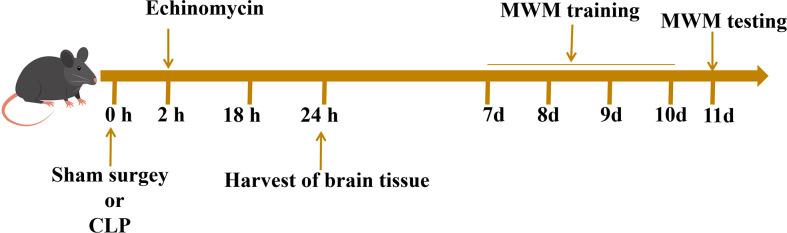
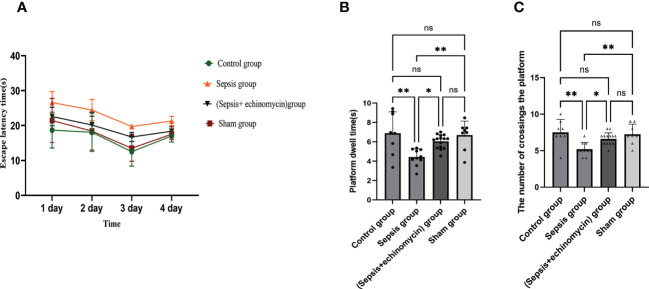
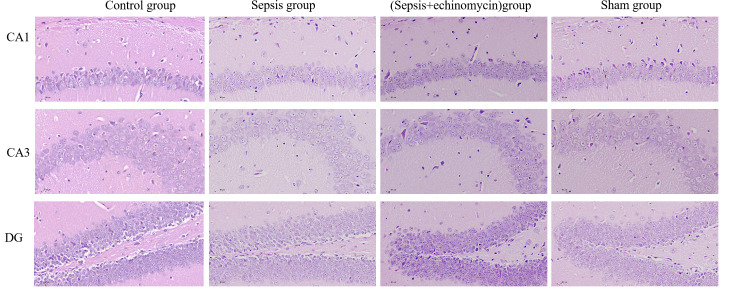
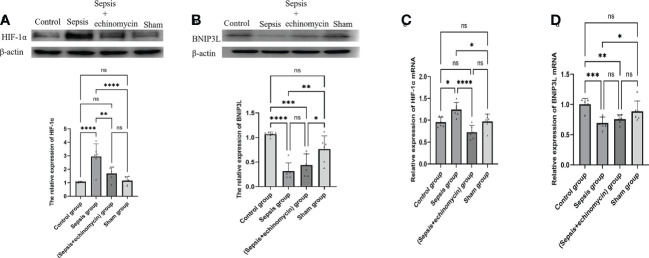
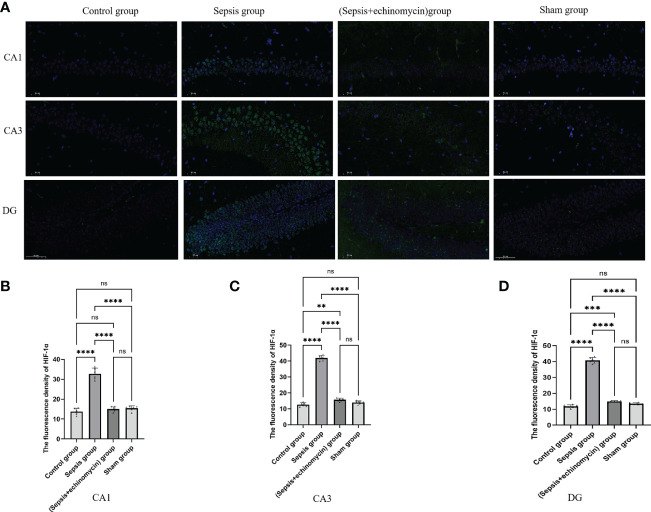
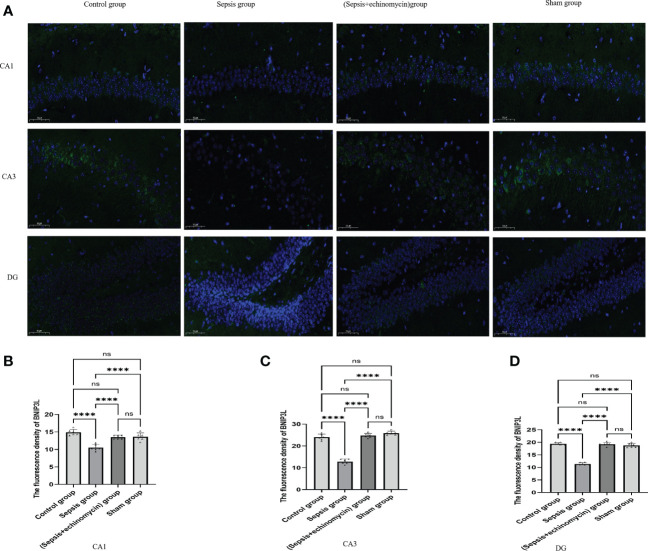
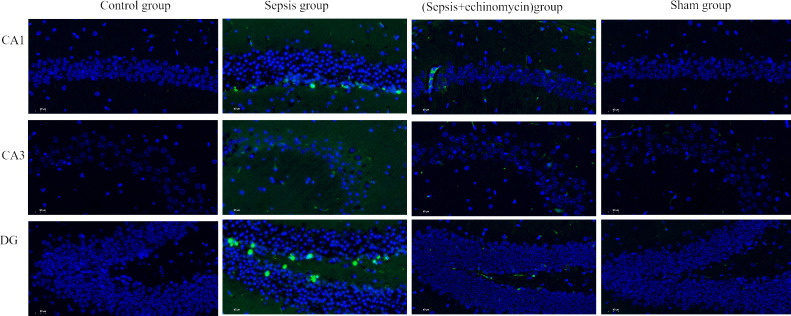
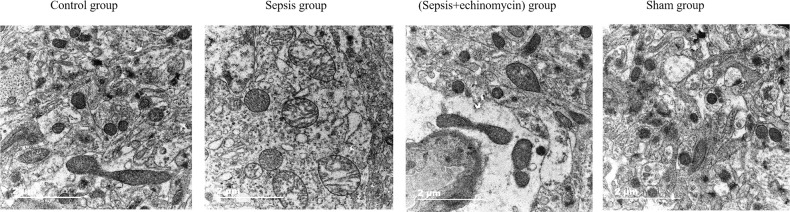
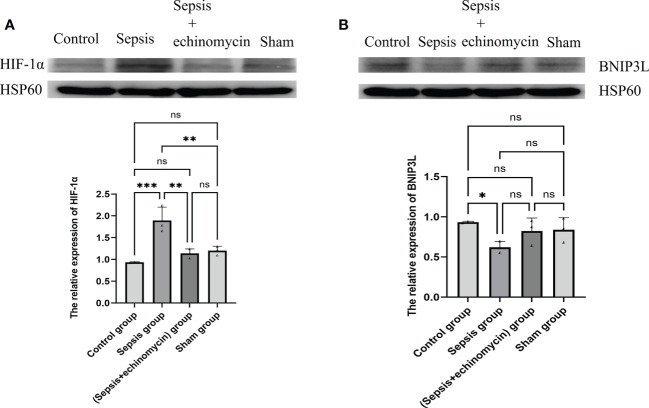
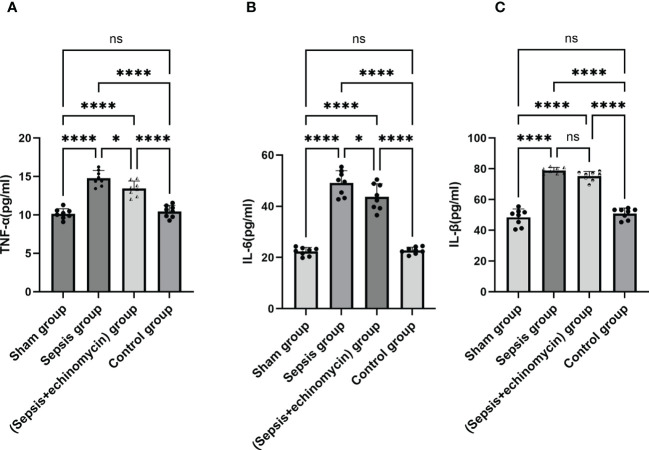
Objective: Sepsis Associated Encephalopathy (SAE) is a common complication in critically ill patients and perioperative period, but its pathogenesis is still unclear. This study aimed to explore the effect of the HIF-1α (hypoxia-inducible factor-1α)/BNIP3L (Bcl-2/adenovirus E1B 19-kDa interaction protein) signaling pathway on SAE. Methods: C57BL/6J male mice were divided into four groups, using a random number table method: control group, sham group, sepsis group, sepsis+HIF-1α activity inhibitor (echinomycin) group. Sepsis was induced by cecal ligation and puncture (CLP). At 24 h after surgery, brain tissue was sampled. HE was staining to observe changes in the hippocampus structure. Fluoroscopy observes changes in mitochondrial structure. Western blot, QT-PCR, and immunofluorescence were used to assess the amount of expression of HIF-1α and BNIP3L in the hippocampus and mitochondrion of hippocampus neurons. Observation of neuronal apoptosis by TUNEL staining. Seven days after surgery, mice were tested in a Morris water maze test to assess cognitive function after CLP. Results: Our results show that CLP-induced hippocampus-dependent cognitive deficits were accompanied with increased HIF 1a and decreased BNIP3L, increased protein levels of TNF-α, IL-6, and IL-β, and damage to mitochondrial structures and neuronal apoptosis in the hippocampus. In addition, administration of echinomycin rescues cognitive deficits, ameliorates HIF-1α and BNIP3L-mediated neuronal pyroptosis and damaged mitochondrial structures, and decreases the expression of TNF-α and IL-6 in the hippocampus. Conclusions: HIF-1α and the BNIP3L promote mitochondrial damage, and neuronal apoptosis and the expression of inflammatory factors may be the mechanism of SAE in critically ill patients and perioperative period
Overview
The claims and statistics of this paper haven’t been checked yet.
Free: it reads the open-access text and checks the first 5 claims that cite a source we can check. Create a free account to check every claim.
Integrity signals
Registry
Cites
Statistics
Figures
Verification
Claims the paper makes
The claims and statistics of this paper haven’t been checked yet.
Free: it reads the open-access text and checks the first 5 claims that cite a source we can check. Create a free account to check every claim.
Claims other papers make about this one
Each is checked against this paper’s own text: does it say what the citing paper says it does?
The cited source says what the claim attributes to it.
In the citing paper
“echinomycin improves mitochondrial structure and reduces inflammatory factors via the HIF-1α/BNIP3L axis [85]; ② Natural compounds (preclinical): Puerarin enhances BBB stability by blocking GSDMD cleavage; myricitrin alleviates neuroinflammation by modulating the Bax/Bcl-2 balance [86]; malvidin dually inhibits pyroptosis and apoptosis via the AMPKα/UCP2 axis [87].”
From Research Advances in the Pathogenesis of Sepsis-Associated Encephalopathy (2026) · cites this paper as [85]
Self-check
Percentages, sums and reported differences re-computed from the paper’s own numbers.
The self-check needs the paper’s full text.
Citations
Cites
1 retracted
Mitochondrial Autophagy Is an HIF-1-dependent Adaptive Metabolic Response to Hypoxia
Zhang, H., Bosch-Marce, M., Shimoda, L. A., Tan, Y. S., Baek, J. H., Wesley, J. B., Gonzalez, F. J., & Semenza, G. L. (2008) · Journal of Biological Chemistry · doi:10.1074/jbc.m800102200 · Cited by 1,601 · cited 1×
“and the above research confirmed that HIF 1a and BNIP3L play an important role in mitochondrial autophagy (28).”
BackgroundRetractedChen, Y., Wang, L., Kang, Q., Zhang, X., Yu, G., Wan, X., Wang, J., & Zhu, K. (2017) · Cellular Physiology and Biochemistry · doi:10.1159/000477308 · Cited by 10,679
Long-term cognitive impairment and functional disability among survivors of severe sepsis.
Iwashyna, T. J., Ely, E. W., Smith, D. M., & Langa, K. M. (2010) · JAMA · doi:10.1001/jama.2010.1553 · Cited by 2,582 · cited 2×
“Clinical studies had found that in about 70% of sepsis patients with cognitive dysfunction after sepsis progresses to encephalopathy in in critically ill patients and perioperative period (2), the patient’s hospital stay is prolonged, the cost of hospitalization increases, and the mortality rate is about 60% (3).”
BackgroundImmunodesign of experimental sepsis by cecal ligation and puncture
Rittirsch, D., Huber-Lang, M. S., Flierl, M. A., & Ward, P. A. (2009) · Nature Protocols · doi:10.1038/nprot.2008.214 · Cited by 2,209 · cited 1×
“The classical CLP model was applied in this experiment (11).”
MethodMitophagy-dependent necroptosis contributes to the pathogenesis of COPD
Mizumura, K., Cloonan, S. M., Nakahira, K., Bhashyam, A. R., Cervo, M., Kitada, T., Glass, K., Owen, C. A., Mahmood, A., Washko, G. R., et al. (2014) · Journal of Clinical Investigation · doi:10.1172/jci74985 · Cited by 611 · cited 1×
“The images were examined with a transmission electron microscope (JEM1200X, Shimadzu, Japan) (14).”
MethodThe Spectrum of Septic Encephalopathy: Definitions, Etiologies, and Mortalities
Eidelman, L. A. (1996) · JAMA · doi:10.1001/jama.1996.03530300054040 · Cited by 430 · cited 1×
“Sepsis-associated encephalopathy (SAE) is an acute diffuse dysfunction of the brain caused by infection (1).”
BackgroundHIF-1α-BNIP3-mediated mitophagy in tubular cells protects against renal ischemia/reperfusion injury
Fu, Z.-J., Wang, Z.-Y., Xu, L., Chen, X.-H., Li, X.-X., Liao, W.-T., Ma, H.-K., Jiang, M.-D., Xu, T.-T., Xu, J., et al. (2020) · Redox Biology · doi:10.1016/j.redox.2020.101671 · Cited by 382
Self-citationPotentially modifiable factors contributing to sepsis-associated encephalopathy
Sonneville, R., de Montmollin, E., Poujade, J., Garrouste-Orgeas, M., Souweine, B., Darmon, M., Mariotte, E., Argaud, L., Barbier, F., Goldgran-Toledano, D., et al. (2017) · Intensive Care Medicine · doi:10.1007/s00134-017-4807-z · Cited by 323 · cited 2×
“Clinical studies had found that in about 70% of sepsis patients with cognitive dysfunction after sepsis progresses to encephalopathy in in critically ill patients and perioperative period (2), the patient’s hospital stay is prolonged, the cost of hospitalization increases, and the mortality rate is about 60% (3).”
BackgroundBNIP3L/NIX-mediated mitophagy protects against ischemic brain injury independent of PARK2
Yuan, Y., Zheng, Y., Zhang, X., Chen, Y., Wu, X., Wu, J., Shen, Z., Jiang, L., Wang, L., Yang, W., et al. (2017) · Autophagy · doi:10.1080/15548627.2017.1357792 · Cited by 274 · cited 2×
“found that Bnip3l knockout (bnip3l) impaired mitophagy and cultivated cerebra I-R injury in mice, which can be recovered by BNIP3L expression (24).”
BackgroundZhang, Y., Liu, D., Hu, H., Zhang, P., Xie, R., & Cui, W. (2019) · Biomedicine & Pharmacotherapy · doi:10.1016/j.biopha.2019.109464 · Cited by 242
Self-citation
Cited by
Ma, Y., Song, R., & Duan, C. (2025) · Frontiers in Immunology · doi:10.3389/fimmu.2025.1542369 · Cited by 47
Fu, Q., Zhang, Y.-B., Shi, C.-X., Jiang, M., Lu, K., Fu, Z.-H., Ruan, J.-P., Wu, J., & Gu, X.-P. (2024) · Journal of Neuroinflammation · doi:10.1186/s12974-024-03084-w · Cited by 42
Self-citationSun, J., Fleishman, J. S., Liu, X., Wang, H., & Huo, L. (2024) · Biomedicine & Pharmacotherapy · doi:10.1016/j.biopha.2024.116453 · Cited by 40
Interleukin-6 related signaling pathways as the intersection between chronic diseases and sepsis
Yang, J., Yang, L., Wang, Y., Huai, L. F., Shi, B., Zhang, D., Xu, W., & Cui, D. (2025) · Molecular Medicine · doi:10.1186/s10020-025-01089-6 · Cited by 31
Acute and long-term cognitive impairment following sepsis: mechanism and prevention
Ji, M., Gao, Y.-Z., Shi, C., Wu, X., & Yang, J. (2023) · Expert Review of Neurotherapeutics · doi:10.1080/14737175.2023.2250917 · Cited by 24
“It was demonstrated that the increase in proBDNF-induced SAE by down-regulating peripheral CD4 + T cells [119].”
BackgroundInfluentialChen, Y., Tan, X., Zhang, W., Li, Y., Deng, X., Zeng, J., Huang, L., & Ma, X. (2024) · Phytotherapy Research · doi:10.1002/ptr.8103 · Cited by 19
“They are a class of proteins that interact with Bcl-2 protein and their activation can release Beclin-1 and participate in the formation of autophagy (Gok et al., 2023; Zhao et al., 2022).”
BackgroundSelf-citationCui, Y., Liu, J., Song, Y., Chen, C., Shen, Y., & Xie, K. (2025) · CNS Neuroscience & Therapeutics · doi:10.1111/cns.70305 · Cited by 18
“Our previous studies revealed that mitophagy dysfunction plays an important role in SAE-related cognitive impairments, but the underlying mechanism has not yet been fully clarified [6, 7].”
Self-citationThe lactate metabolism and protein lactylation in epilepsy
Kuang, X., Chen, S., & Ye, Q. (2025) · Frontiers in Cellular Neuroscience · doi:10.3389/fncel.2024.1464169 · Cited by 15
Paeonol prevents sepsis-associated encephalopathy via regulating the HIF1A pathway in microglia
Zhang, N., Ma, Y., Li, Y., Wang, Y., Zhang, L., Zheng, M., Yu, T., Zhang, R., Yang, K., Li, J., et al. (2024) · International Immunopharmacology · doi:10.1016/j.intimp.2024.113287 · Cited by 14
Self-citationWang, Y., Ni, P., Zhuang, D., Zhou, P., Zhu, F., Yin, D., Zhu, R., Mei, B., & Hu, S. (2024) · Journal of Neuroimmunology · doi:10.1016/j.jneuroim.2024.578367 · Cited by 13
Chen, X., Wang, X., Liu, Y., Guo, J., Yin, T., Chen, J., Chen, Y., Wang, K., Zhang, Y., Zhang, Z., et al. (2025) · International Journal of Surgery · doi:10.1097/js9.0000000000002762 · Cited by 12
“Recent studies have reported that the levels of hypoxia-inducible factor-1 α (HIF-1 α ) within the body may correlate with cognitive function impairment which supports the hypothesis that HIF-1 α may be associated with POD [ 14–16 ] .”
Self-citationWang, Y., Wu, W., Yan, X., Wu, C., Han, Q., Lu, T., Zhang, H., Jiao, L., Zhang, Y., Liu, B., et al. (2025) · Biochimica et Biophysica Acta (BBA) - Molecular Basis of Disease · doi:10.1016/j.bbadis.2025.167706 · Cited by 11
Self-citationFetal hypoxia exposure induces Hif1a activation and autophagy in adult ovarian granulosa cells
Zhang, L., Zhang, K., Zhao, X., Tao, H.-P., Jia, G., Fang, Y.-G., Hou, Y., & Yang, Q. (2024) · Biology of Reproduction · doi:10.1093/biolre/ioae141 · Cited by 10
He, X. J., Cao, Z., Chen, X., Hu, J., Li, J., Jia, X., Wu, J., & Xuechun, L. (2025) · Brain and Behavior · doi:10.1002/brb3.70413 · Cited by 9
“Studies have indicated that HIF-1 α contributes to cognitive deficits in septic mice by inducing mitochondrial dysfunction, neuronal cell death, and inflammatory processes (Zhao et al. 2022).”
Zhang, S., Hu, B., Fang, Y., Liu, M., Liu, Q., Chen, Y., & Zhou, J. (2026) · Frontiers in Immunology · doi:10.3389/fimmu.2025.1658103 · Cited by 8
Su, W., Xie, Z., Bai, X., Li, Z., & Liu, X. (2023) · Brain Sciences · doi:10.3390/brainsci13030478 · Cited by 7
Liu, X., Ding, H., Chen, M., Li, X., Xiao, Y. H., Han, Y., & Zeng, H. (2024) · Journal of Inflammation Research · doi:10.2147/jir.s481171 · Cited by 7
Zhang, H., Wu, Y., Qiu, M., Zheng, Y., Chen, L., Shi, X., Yang, J., Lin, Q., & Lin, J. (2024) · Food Bioscience · doi:10.1016/j.fbio.2024.105345 · Cited by 7
BCAA exaggerated acute and chronic ischemic heart disease through promotion of NLRP3 via Sirt1
Peng, Y., Duan, Y., Wang, D., Liu, J., Zhao, G., Ji, Z., Zhang, J., & Wei, B. (2025) · Biochemical Pharmacology · doi:10.1016/j.bcp.2025.117150 · Cited by 7
Zhang, J., Dong, X., Pang, Q., & Zhang, A. (2024) · Mediators of Inflammation · doi:10.1155/mi/2662362 · Cited by 6
Shi, X., Xu, L., Jing, L., Wang, Z., Zhao, L., & Zhao, X. (2024) · Frontiers in Microbiology · doi:10.3389/fmicb.2024.1509726 · Cited by 6
Self-citationHIF-1A regulates cognitive deficits of post-stroke depressive rats
Yu, Y., Tan, Y., Liao, X.-S., Liang, Y., Lai, H., Li, X., Wang, C., Wu, S., Feng, D., & Liu, C. (2023) · Behavioural Brain Research · doi:10.1016/j.bbr.2023.114685 · Cited by 4
Xiao, Z., Cheng, X., & Bai, Y. (2025) · Journal of Inflammation Research · doi:10.2147/jir.s507274 · Cited by 3
LPS disrupts erythroid-myeloid balance in zebrafish via Jak2/Stat3-Hif1a signaling
Yu, H., Chen, M.-Y., Zhang, S., Tong, F.-C., Fan-ping, W., Wang, L., Zhang, J.-L., Guo, J.-J., Zhang, B.-Y., Tian, J.-Q., et al. (2025) · Fish & Shellfish Immunology · doi:10.1016/j.fsi.2025.110874 · Cited by 3
Meng, L., Liu, J., Wang, P., Yin, L., Ma, X., Yang, X., Li, Y., Gong, K., & Liu, W. (2026) · Respiratory Medicine · doi:10.1016/j.rmed.2026.108658 · Cited by 4
Self-citationEncephalopathy: Cause, Pathogenesis, and Treatment
Lv, S., Zhong, X., Shang, R., Kong, L., Huang, Y., Ma, Y., Teng, J., & Wei, S. (2026) · MedComm · doi:10.1002/mco2.70802 · Cited by 2
“Key signaling pathways like the hypoxia-inducible factor-1 α (HIF-1 α )/BCL2/adenovirus E1B interacting protein 3-like pathways, which regulate processes such as cell survival, apoptosis, and autophagy, also contribute to mitochondrial damage and the progression of SAE [ 73 ].”
Neuroprotective effects of annexin A1 tripeptide in rats with sepsis‐associated encephalopathy
Cui, Q., Qin, N., Zhang, Y., Miao, Y., Xie, L., Ma, X., Zhang, Z., & Xie, P. (2024) · Biotechnology and Applied Biochemistry · doi:10.1002/bab.2569 · Cited by 2
Self-citationResearch Advances in the Pathogenesis of Sepsis-Associated Encephalopathy
Tan, H., Su, W., & Niu, Z. (2026) · International Journal of Molecular Sciences · doi:10.3390/ijms27125390 · Cited by 1
“…via the Nrf2/autophagy pathway [83,84]; echinomycin improves mitochondrial structure and reduces inflammatory factors via the HIF-1 α /BNIP3L axis [85]; 2 ⃝ Natural compounds (preclinical): Puerarin enhances BBB stability by blocking GSDMD cleavage; myricitrin alleviates neuroinflammation by…”
Shi, Z., Peng, Q., Sun, S., Xiong, M., Zhu, X. L., Wang, H., Liu, S., Li, Z., Wang, L., Li, G., et al. (2025) · International Immunopharmacology · doi:10.1016/j.intimp.2025.115275 · Cited by 1
Wang, Y., Xie, D., Ma, S., Wang, Y., Zhang, C., & Chen, Z. (2026) · Cells · doi:10.3390/cells15070585 · Cited by 1
STING Mediates Necroptosis in Hippocampal Neurons of Mice With Sepsis-Associated Encephalopathy
Guo, X., Cang, B., Bai, Y., Zhang, D., Wu, Y., Sun, T., & Zhang, X. (2026) · Journal of Integrative Neuroscience · doi:10.31083/jin50074 · Cited by 1
The Role of Hypoxia-Inducible Factor 1 Alpha in Acute-on-Chronic Liver Failure
Mücke, M. M., Bali, N. E., Schwarzkopf, K. M., Uschner, F. E., Kraus, N., Eberle, L., Mücke, V. T., Bein, J., Beyer, S., Wild, P. J., et al. (2024) · International Journal of Molecular Sciences · doi:10.3390/ijms25031542
“…of the sepsis phenotype, promoting the production of many inflammatory cytokines (e.g., TNF α , IL-1, IL-4, IL-6 and IL12), and HIF-1 α deletion in human macrophages reduces LPS-induced mortality and alleviates the clinical presentation of sepsis, including hypotension and hypothermia [12,28].”
BackgroundYu, X., Cheng, X., Lan, Y., Huang, Q., Chen, H., Pang, L., Fu, J., Zeng, W., & Wang, Z. (2024) · Research Square · doi:10.21203/rs.3.rs-4480515/v1
miR-137 regulates autophagy and apoptosis in duodenal ulcer by targeting BNIP3L
Pan, Z., Zhang, L., & Hu, J. (2024) · Medicine · doi:10.1097/md.0000000000040568
Wolfkind, I. B., Lance, S., Zweber, C., Sandell-Zanipatin, J.-R., Amar, O., Trinh, M., & Frezza, E. E. (2025) · ARC Journal of Neuroscience · doi:10.20431/2456-057x.0801005
Wang, Z., Wang, C., Fu, Z., Xu, L., Xu, J., Ma, H., Feng, X., Han, W., & Zhang, W. (2025) · SSRN Electronic Journal · doi:10.2139/ssrn.5385773
Fu, Q., Zhang, Y.-B., Shi, C.-X., Jiang, M., Lu, K., Zihui, F., Ruan, J.-P., Wu, J., & Gu, X.-P. (2024) · Figshare · doi:10.6084/m9.figshare.25621997
Self-citationFu, Q., Zhang, Y.-B., Shi, C.-X., Jiang, M., Lu, K., Zihui, F., Ruan, J.-P., Wu, J., & Gu, X.-P. (2024) · Figshare · doi:10.6084/m9.figshare.25622093
Self-citationFu, Q., Zhang, Y.-B., Shi, C.-X., Jiang, M., Lu, K., Zihui, F., Ruan, J.-P., Wu, J., & Gu, X.-P. (2024) · Figshare · doi:10.6084/m9.figshare.26707679
Self-citationFu, Q., Zhang, Y.-B., Shi, C.-X., Jiang, M., Lu, K., Zihui, F., Ruan, J.-P., Wu, J., & Gu, X.-P. (2024) · Figshare · doi:10.6084/m9.figshare.26707676
Self-citationHu, P., Xu, F., Zhang, W., Bai, L., Dai, F., Ye, Y., Wang, J., & Cheng, H. (2026) · PubMed Central · doi:10.22038/ijbms.2025.86988.18796
Peng, M., Tan, S., Li, A. D., Guo, Q., & Liu, L. (2026) · Inflammation · doi:10.1007/s10753-026-02481-y
“5G), KANK4 overexpression significantly downregulated CXCL16 expression, while TMEM260 knockdown significantly increased CXCL16 expression, indicating that of SAE reported in previous studies, further validating the reliability of our model 22, 23.”
Jin, F., Han, B., Zhang, Y., Zhang, S., & Li, G. (2026) · Behavioural Brain Research · doi:10.1016/j.bbr.2026.116301
Self-citationMeng, L., Yao, D., Wang, S. Q., Yang, X., Chen, K., Wang, X., Liu, F., Li, Y., Liu, Z., Yuan, W., et al. (2026) · Free Radical Biology and Medicine · doi:10.1016/j.freeradbiomed.2026.10.041
Wu, Y., Lu, J., Mo, Y., Xu, Y., Yan, X., Yan, C., & Wang, Y. (2026) · Frontiers in Immunology · doi:10.3389/fimmu.2026.1998563
Metadata
- Authors
- Zhao, L., Song, Y., Zhang, Y., Liu, H., Shen, Y., Fan, Y., Li, Y., & Xie, K.
- Affiliations
- Tianjin Medical University General Hospital (CN)
- Corresponding author
- Li, Yun
- Xie, Keliang
- Venue
- Frontiers in Immunology
- Publisher
- Frontiers Media SA
- Published
- 2022-12-07
- Volume
- 13
- Pages
- 1095427-1095427
- ISSN
- 1664-3224 (ISSN-L)
- PMC
- PMC9768421
- OpenAlex
- W4311846919
- Cited by
- 39
- References
- 32
- Citations by year
- 2026: 7 · 2025: 12 · 2024: 17 · 2023: 3
- FWCI
- 5.96
- Type
- journal article
- Language
- en
- Open access
- gold
- doi.org
- Licence
- Locations
- Frontiers in Immunology (publishedVersion, cc-by)
- PubMed Central (publishedVersion, cc-by)
- PubMed (publishedVersion)
- DOAJ (DOAJ: Directory of Open Access Journals) (submittedVersion, cc-by-sa)
- Funders
- National Natural Science Foundation of China (81772043, 18YFZCSY00560, 81971879, 2022MS08002, 202202326)
- Natural Science Foundation of Inner Mongolia (202202326, 18YFZCSY00560, 81772043, 81971879, 2022MS08002)
- Key Research and Development Plan of Tianjin
- Topics
- Health Sciences › Medicine › Critical Care and Intensive Care Medicine › Sepsis Diagnosis and Treatment
- Life Sciences › Neuroscience › Developmental Neuroscience › Anesthesia and Neurotoxicity Research
- Life Sciences › Neuroscience › Neurology › Neurological Disease Mechanisms and Treatments
- Keywords
- sepsis-associated encephalopathy, HIF-1α, BNIP3L, echinomycin, cecal ligation and puncture, hippocampus, cognitive impairment, mitochondrial damage, neuronal apoptosis, pyroptosis, neuroinflammation, TNF-α, interleukin-6, IL-β, critically ill patients
- MeSH terms
- Animals, Cognition, Echinomycin, Male, Mice, Inbred C57BL, Tumor Necrosis Factor-alpha, Interleukin-6, Critical Illness, Sepsis, Mice, Hypoxia-Inducible Factor 1, alpha Subunit, Sepsis-Associated Encephalopathy
About these checks
Registry, retraction, Cites and statistics results are computed, not judged, with one exception: a printed reference that no index lists is read once by a model before it counts as a citation error. Claims are extracted by a model and kept only when their quote appears verbatim in the text; each cited source is then checked, with a model’s help, for whether it says what the claim relies on. Those verdicts can be wrong — read the claim’s quote and the cited source before relying on one.
Statistics and arithmetic are recomputed, not judged.
Confidence bands are shown only for fields calibrated on our annotated test set. None is calibrated yet, so no band is shown.
What counts as a claim ›How we measure confidence ›How we check this ›
Are you an author, or do you see a problem with this page? Request a review
Data sources
Bibliographic data: Semantic Scholar, OpenAlex, Crossref.
Contains information from the Semantic Scholar Academic Graph Datasets, made available under the ODC Attribution License (ODC-BY 1.0).
Semantic Scholar’s data is described in: Kinney, R., et al. (2023). The Semantic Scholar Open Data Platform. arXiv:2301.10140.
