

The DOI matches its Crossref record; 222 of the 222 references it cites were found in a registry or an index.
Gut microbiota-driven neuroinflammation in Alzheimer's disease: from mechanisms to therapeutic opportunities
Open accessAbstract
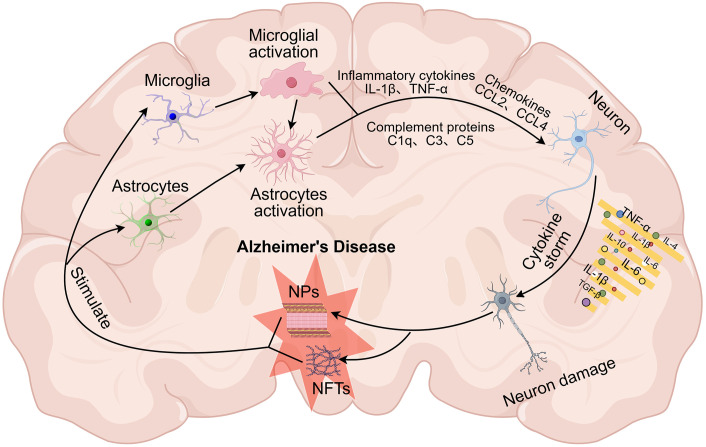
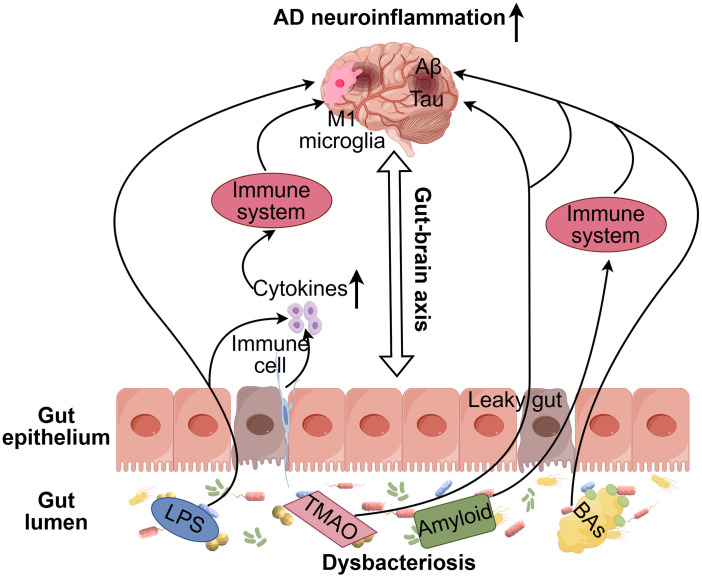
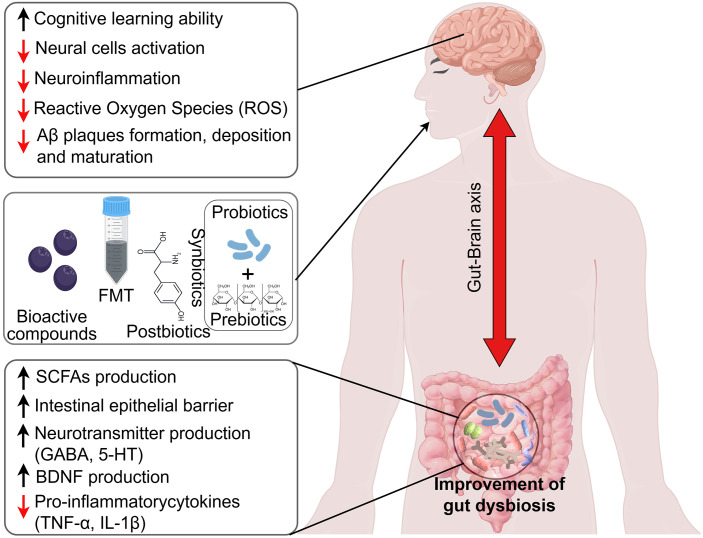
Alzheimer’s disease (AD) is a progressive neurodegenerative disorder characterized by amyloid-beta (Aβ) plaques, tau hyperphosphorylation, and chronic neuroinflammation. While neuroinflammation—mediated by microglial and astrocyte activation—has long been considered a secondary response to Aβ pathology, emerging evidence positions it as a primary driver of cognitive decline. Notably, the gut microbiota, through the microbiota-gut-brain axis (MGBA), is crucial in modulating neuroinflammation. Dysbiosis disrupts gut barrier integrity, promotes systemic inflammation, and exacerbates neuroinflammatory responses, thereby accelerating AD progression. Recent advances reveal that gut microbiota-derived metabolites (e.g., short-chain fatty acids, lipopolysaccharides) directly influence microglial activation and Aβ aggregation. These findings have opened new therapeutic possibilities, with microbiota-targeted approaches such as probiotics, prebiotics, and fecal microbiota transplantation demonstrating promising neuroprotective effects in preclinical studies by reducing neuroinflammation and preserving cognitive function. However, translating these findings into clinical applications requires further validation through randomized controlled trials. This review summarizes the current understanding of gut microbiota-driven neuroinflammation in AD, from molecular mechanisms to potential therapeutic strategies. Targeting the MGBA represents a paradigm shift in AD management, emphasizing the modulation of neuroinflammation and pathological progression through gut microbiota interventions. The discussion also addresses existing research challenges and outlines future directions to advance this promising field.
Overview
The claims and statistics of this paper haven’t been checked yet.
Run the check — free, no account needed. It reads the open-access text and checks the sources it cites.
Integrity signals
Registry
Cites
Statistics
Figures
Verification
Claims the paper makes
The claims and statistics of this paper haven’t been checked yet.
Run the check — free, no account needed. It reads the open-access text and checks the sources it cites.
Claims other papers make about this one
Each is checked against this paper’s own text: does it say what the citing paper says it does?
The cited source says what the claim attributes to it.
In the citing paper
“Germ-free mice have higher BBB permeability, which is restored by normal microbiota, indicating that gut microbes regulate BBB integrity.”
From Progress on the correlation between sepsis and gut microbiota: a narrative review (2026) · cites this paper as Lei et al., 2025
Self-check
Percentages, sums and reported differences re-computed from the paper’s own numbers.
The self-check needs the paper’s full text.
Citations
Cites
A human gut microbial gene catalogue established by metagenomic sequencing
MetaHIT Consortium, Qin, J., Li, R., Raes, J., Arumugam, M., Burgdorf, K. S., Manichanh, C., Nielsen, T., Pons, N., Levenez, F., et al. (2010) · Nature · doi:10.1038/nature08821 · Cited by 11,624
Self-citationNeurotoxic reactive astrocytes are induced by activated microglia
Liddelow, S. A., Guttenplan, K. A., Clarke, L. E., Bennett, F. C., Bohlen, C. J., Schirmer, L., Bennett, M. L., Münch, A. E., Chung, W.-S., Peterson, T. C., et al. (2017) · Nature · doi:10.1038/nature21029 · Cited by 7,971
Dietary Modulation of the Human Colonic Microbiota: Introducing the Concept of Prebiotics
Gibson, G. R., & Roberfroid, M. B. (1995) · Journal of Nutrition · doi:10.1093/jn/125.6.1401 · Cited by 7,659
Neuroinflammation in Alzheimer's disease
Heneka, M. T., Carson, M. J., Khoury, J. E., Landreth, G. E., Brosseron, F., Feinstein, D. L., Jacobs, A. H., Wyss-Coray, T., Vitorica, J., Ransohoff, R. M., et al. (2015) · The Lancet Neurology · doi:10.1016/s1474-4422(15)70016-5 · Cited by 6,226
Gibson, G. R., Hutkins, R., Sanders, M. E., Prescott, S. L., Reimer, R. A., Salminen, S. J., Scott, K., Stanton, C., Swanson, K. S., Cani, P. D., et al. (2017) · Nature Reviews Gastroenterology & Hepatology · doi:10.1038/nrgastro.2017.75 · Cited by 5,634
Cryan, J. F., O'Riordan, K. J., Cowan, C. S. M., Sandhu, K. V., Bastiaanssen, T. F. S., Boehme, M., Codagnone, M. G., Cussotto, S., Fulling, C., Golubeva, A. V., et al. (2019) · Physiological Reviews · doi:10.1152/physrev.00018.2018 · Cited by 5,286
Parada Venegas, D., De la Fuente, M. K., Landskron, G., González, M. J., Quera, R., Dijkstra, G., Harmsen, H. J. M., Faber, K. N., & Hermoso, M. A. (2019) · Frontiers in Immunology · doi:10.3389/fimmu.2019.00277 · Cited by 3,820
Formation of short chain fatty acids by the gut microbiota and their impact on human metabolism
Morrison, D. J., & Preston, T. (2016) · Gut Microbes · doi:10.1080/19490976.2015.1134082 · Cited by 3,781
Pathophysiology of type 2 diabetes mellitus
Galicia-Garcia, U., Benito-Vicente, A., Jebari, S., Larrea-Sebal, A., Siddiqi, H., Uribe, K. B., Ostolaza, H., & Martín, C. (2020) · International Journal of Molecular Sciences · doi:10.3390/ijms21176275 · Cited by 3,360
Complement and microglia mediate early synapse loss in Alzheimer mouse models
Hong, S., Beja-Glasser, V. F., Nfonoyim, B. M., Frouin, A., Li, S., Ramakrishnan, S., Merry, K. M., Shi, Q., Rosenthal, A., Barres, B. A., et al. (2016) · Science · doi:10.1126/science.aad8373 · Cited by 3,343
Cited by
Sorted by citations
Pathological mechanisms and treatment progression of Alzheimer’s disease
Zhang, J., Kong, G., Yang, J., Pang, L., & Li, X. (2025) · European journal of medical research · doi:10.1186/s40001-025-02886-9 · Cited by 111
The gut–brain axis in Alzheimer’s disease: how gut microbiota modulate microglial function
Wang, H., Yang, F., Gao, Z., Cheng, Z.-D., & Liang, X. (2025) · Frontiers in Aging · doi:10.3389/fragi.2025.1704047 · Cited by 22
Vaziri, Y., Olia, J. B. H., Avcı, Ç. B., & Nourazarian, A. (2025) · Molecular Brain · doi:10.1186/s13041-025-01263-1 · Cited by 16
Xu, X., Cheng, Y., Liu, X., Ding, W., Zhu, Z., Wu, L., Ling, Z., Gao, Y., & Jing, Y. (2026) · Current Research in Microbial Sciences · doi:10.1016/j.crmicr.2026.100574 · Cited by 16
Self-citationFawzy, M. N., & Fathy, M. K. (2026) · Journal of Molecular Neuroscience · doi:10.1007/s12031-026-02490-4 · Cited by 13
Metadata
- Authors
- Lei, W., Cheng, Y., Liu, X., Gao, J., Zhu, Z., Ding, W., Xu, X., Li, Y., Ling, Z., Jiang, R., & Chen, X.
- Affiliations
- First Affiliated Hospital Zhejiang University (CN)
- Wenzhou Medical University (CN)
- Nantong University (CN)
- Corresponding author
- Ling, Zongxin
- Jiang, Ruilai
- Chen, Xiaoying
- Venue
- Frontiers in Immunology
- Publisher
- Frontiers Media SA
- Published
- 2025-06-26
- Volume
- 16
- Pages
- 1582119-1582119
- ISSN
- 1664-3224 (ISSN-L)
- PMC
- PMC12241022
- OpenAlex
- W4411664782
- Cited by
- 68
- References
- 222
- Citations by year
- 2026: 60 · 2025: 8
- FWCI
- 6.02
- Type
- journal article
- Language
- en
- Open access
- gold
- doi.org
- Licence
- Locations
- Frontiers in Immunology (publishedVersion, cc-by)
- Europe PMC (PubMed Central) (publishedVersion, cc-by)
- PubMed Central (publishedVersion, cc-by)
- PubMed (publishedVersion)
- DOAJ (DOAJ: Directory of Open Access Journals) (submittedVersion, cc-by-sa)
- Funders
- National Natural Science Foundation of China
- State Key Laboratory for Diagnosis and Treatment of Infectious Diseases
- Fundamental Research Funds for the Central Universities (2022ZFJH003)
- Natural Science Foundation of Zhejiang Province (LQ24H090005)
- Topics
- Life Sciences › Biochemistry, Genetics and Molecular Biology › Molecular Biology › Gut microbiota and health
- Life Sciences › Neuroscience › Neurology › Neuroinflammation and Neurodegeneration Mechanisms
- Life Sciences › Neuroscience › Cellular and Molecular Neuroscience › Alzheimer's disease research and treatments
- Keywords
- Alzheimer's disease, gut microbiota, neuroinflammation, microbiota-gut-brain axis, dysbiosis, intestinal barrier integrity, short-chain fatty acids, lipopolysaccharide, microglial activation, amyloid-beta aggregation, tau hyperphosphorylation, probiotics, prebiotics, fecal microbiota transplantation, cognitive decline
- MeSH terms
- Gastrointestinal Microbiome, Fecal Microbiota Transplantation, Brain-Gut Axis, Neuroinflammatory Diseases, Alzheimer Disease, Animals, Brain, Humans, Probiotics, Dysbiosis
About these checks
Registry, retraction, Cites and statistics results are computed, not judged, with one exception: a printed reference that no index lists is read once by a model before it counts as a citation error. Claims are extracted by a model and kept only when their quote appears verbatim in the text; each cited source is then checked, with a model’s help, for whether it says what the claim relies on. Those verdicts can be wrong — read the claim’s quote and the cited source before relying on one.
Statistics and arithmetic are recomputed, not judged.
Confidence bands are shown only for fields calibrated on our annotated test set. None is calibrated yet, so no band is shown.
What counts as a claim ›How we measure confidence ›How we check this ›
Are you an author, or do you see a problem with this page? Request a review
