

The DOI matches its Crossref record; 222 of the 222 references it cites were found in a registry or an index.
Gut microbiota-driven neuroinflammation in Alzheimer's disease: from mechanisms to therapeutic opportunities
Open accessAbstract
Alzheimer’s disease (AD) is a progressive neurodegenerative disorder characterized by amyloid-beta (Aβ) plaques, tau hyperphosphorylation, and chronic neuroinflammation. While neuroinflammation—mediated by microglial and astrocyte activation—has long been considered a secondary response to Aβ pathology, emerging evidence positions it as a primary driver of cognitive decline. Notably, the gut microbiota, through the microbiota-gut-brain axis (MGBA), is crucial in modulating neuroinflammation. Dysbiosis disrupts gut barrier integrity, promotes systemic inflammation, and exacerbates neuroinflammatory responses, thereby accelerating AD progression. Recent advances reveal that gut microbiota-derived metabolites (e.g., short-chain fatty acids, lipopolysaccharides) directly influence microglial activation and Aβ aggregation. These findings have opened new therapeutic possibilities, with microbiota-targeted approaches such as probiotics, prebiotics, and fecal microbiota transplantation demonstrating promising neuroprotective effects in preclinical studies by reducing neuroinflammation and preserving cognitive function. However, translating these findings into clinical applications requires further validation through randomized controlled trials. This review summarizes the current understanding of gut microbiota-driven neuroinflammation in AD, from molecular mechanisms to potential therapeutic strategies. Targeting the MGBA represents a paradigm shift in AD management, emphasizing the modulation of neuroinflammation and pathological progression through gut microbiota interventions. The discussion also addresses existing research challenges and outlines future directions to advance this promising field.
Overview
The claims and statistics of this paper haven’t been checked yet.
Run the check — free, no account needed. It reads the open-access text and checks the sources it cites.
Integrity signals
Registry
Cites
Statistics
Figures
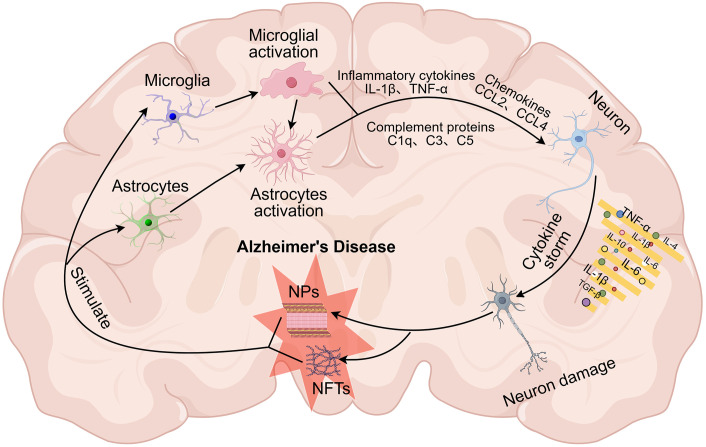
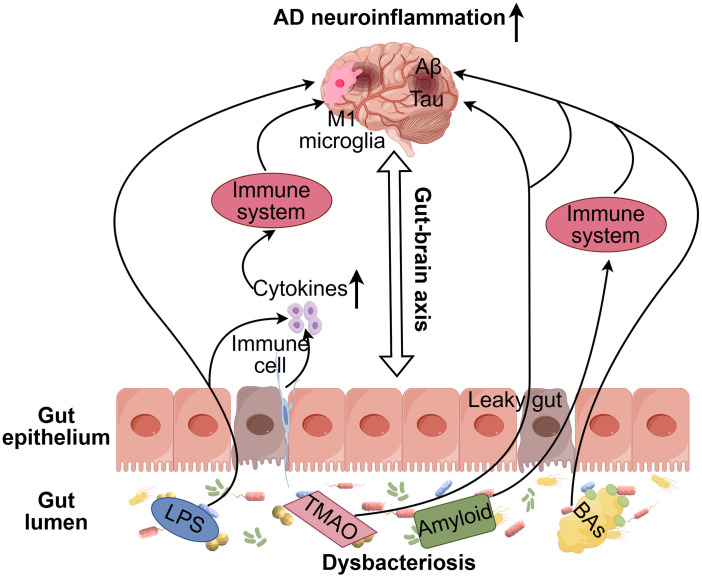
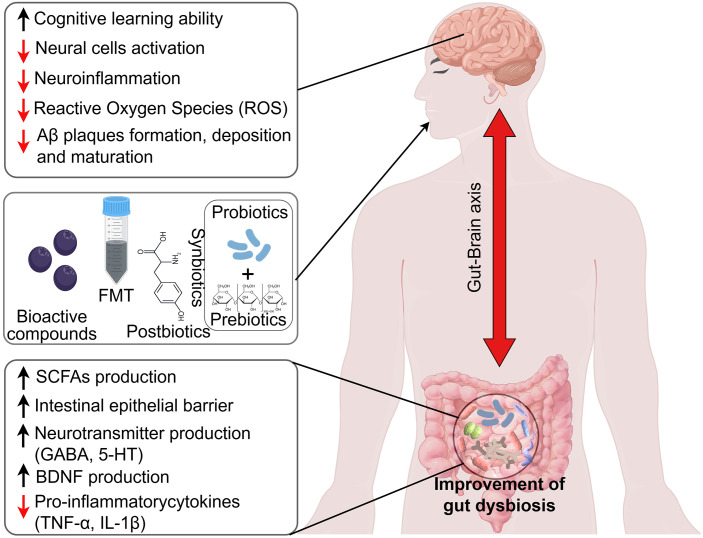
Verification
Claims the paper makes
The claims and statistics of this paper haven’t been checked yet.
Run the check — free, no account needed. It reads the open-access text and checks the sources it cites.
Claims other papers make about this one
Each is checked against this paper’s own text: does it say what the citing paper says it does?
The cited source says what the claim attributes to it.
In the citing paper
“Germ-free mice have higher BBB permeability, which is restored by normal microbiota, indicating that gut microbes regulate BBB integrity.”
From Progress on the correlation between sepsis and gut microbiota: a narrative review (2026) · cites this paper as Lei et al., 2025
Self-check
Percentages, sums and reported differences re-computed from the paper’s own numbers.
The self-check needs the paper’s full text.
Citations
Cites
A human gut microbial gene catalogue established by metagenomic sequencing
MetaHIT Consortium, Qin, J., Li, R., Raes, J., Arumugam, M., Burgdorf, K. S., Manichanh, C., Nielsen, T., Pons, N., Levenez, F., et al. (2010) · Nature · doi:10.1038/nature08821 · Cited by 11,624
Self-citationNeurotoxic reactive astrocytes are induced by activated microglia
Liddelow, S. A., Guttenplan, K. A., Clarke, L. E., Bennett, F. C., Bohlen, C. J., Schirmer, L., Bennett, M. L., Münch, A. E., Chung, W.-S., Peterson, T. C., et al. (2017) · Nature · doi:10.1038/nature21029 · Cited by 7,971
Dietary Modulation of the Human Colonic Microbiota: Introducing the Concept of Prebiotics
Gibson, G. R., & Roberfroid, M. B. (1995) · Journal of Nutrition · doi:10.1093/jn/125.6.1401 · Cited by 7,659
Neuroinflammation in Alzheimer's disease
Heneka, M. T., Carson, M. J., Khoury, J. E., Landreth, G. E., Brosseron, F., Feinstein, D. L., Jacobs, A. H., Wyss-Coray, T., Vitorica, J., Ransohoff, R. M., et al. (2015) · The Lancet Neurology · doi:10.1016/s1474-4422(15)70016-5 · Cited by 6,226
Gibson, G. R., Hutkins, R., Sanders, M. E., Prescott, S. L., Reimer, R. A., Salminen, S. J., Scott, K., Stanton, C., Swanson, K. S., Cani, P. D., et al. (2017) · Nature Reviews Gastroenterology & Hepatology · doi:10.1038/nrgastro.2017.75 · Cited by 5,634
Cryan, J. F., O'Riordan, K. J., Cowan, C. S. M., Sandhu, K. V., Bastiaanssen, T. F. S., Boehme, M., Codagnone, M. G., Cussotto, S., Fulling, C., Golubeva, A. V., et al. (2019) · Physiological Reviews · doi:10.1152/physrev.00018.2018 · Cited by 5,286
Parada Venegas, D., De la Fuente, M. K., Landskron, G., González, M. J., Quera, R., Dijkstra, G., Harmsen, H. J. M., Faber, K. N., & Hermoso, M. A. (2019) · Frontiers in Immunology · doi:10.3389/fimmu.2019.00277 · Cited by 3,820
Formation of short chain fatty acids by the gut microbiota and their impact on human metabolism
Morrison, D. J., & Preston, T. (2016) · Gut Microbes · doi:10.1080/19490976.2015.1134082 · Cited by 3,781
Pathophysiology of type 2 diabetes mellitus
Galicia-Garcia, U., Benito-Vicente, A., Jebari, S., Larrea-Sebal, A., Siddiqi, H., Uribe, K. B., Ostolaza, H., & Martín, C. (2020) · International Journal of Molecular Sciences · doi:10.3390/ijms21176275 · Cited by 3,360
Complement and microglia mediate early synapse loss in Alzheimer mouse models
Hong, S., Beja-Glasser, V. F., Nfonoyim, B. M., Frouin, A., Li, S., Ramakrishnan, S., Merry, K. M., Shi, Q., Rosenthal, A., Barres, B. A., et al. (2016) · Science · doi:10.1126/science.aad8373 · Cited by 3,343
The Classical Complement Cascade Mediates CNS Synapse Elimination
Stevens, B., Allen, N. J., Vazquez, L. E., Howell, G. R., Christopherson, K. S., Nouri, N., Micheva, K. D., Mehalow, A. K., Huberman, A. D., Stafford, B., et al. (2007) · Cell · doi:10.1016/j.cell.2007.10.036 · Cited by 3,313
Neuroinflammation and microglial activation in Alzheimer disease: where do we go from here?
Leng, F., & Edison, P. (2021) · Nature Reviews Neurology · doi:10.1038/s41582-020-00435-y · Cited by 3,179
A framework for human microbiome research
The Human Microbiome Project Consortium (2012) · Nature · doi:10.1038/nature11209 · Cited by 2,650
2024 Alzheimer's disease facts and figures
(2024) · Alzheimer's & Dementia · doi:10.1002/alz.13809 · Cited by 2,536
The gut microbiota influences blood-brain barrier permeability in mice
Braniste, V., Al-Asmakh, M., Kowal, C., Anuar, F., Abbaspour, A., Tóth, M., Korecka, A., Bakocevic, N., Ng, L. G., Kundu, P., et al. (2014) · Science Translational Medicine · doi:10.1126/scitranslmed.3009759 · Cited by 2,530
Altered fecal microbiota composition in patients with major depressive disorder
Jiang, H., Ling, Z., Zhang, Y., Mao, H., Ma, Z., Yin, Y., Wang, W., Tang, W., Tan, Z., Shi, J., et al. (2015) · Brain, Behavior, and Immunity · doi:10.1016/j.bbi.2015.03.016 · Cited by 2,275
Self-citationRole of the gut microbiota in immunity and inflammatory disease
Kamada, N., Seo, S.-U., Chen, G. Y., & Núñez, G. (2013) · Nature reviews. Immunology · doi:10.1038/nri3430 · Cited by 2,256
Inflammation as a central mechanism in Alzheimer's disease
Kinney, J. W., Bemiller, S. M., Murtishaw, A. S., Leisgang, A. M., Salazar, A. M., & Lamb, B. T. (2018) · Alzheimer's & Dementia: Translational Research & Clinical Interventions · doi:10.1016/j.trci.2018.06.014 · Cited by 2,253
Swanson, K. S., Gibson, G. R., Hutkins, R., Reimer, R. A., Reid, G., Verbeke, K., Scott, K. P., Holscher, H. D., Azad, M. B., Delzenne, N. M., et al. (2020) · Nature Reviews Gastroenterology & Hepatology · doi:10.1038/s41575-020-0344-2 · Cited by 2,196
Gut microbiome alterations in Alzheimer’s disease
Vogt, N. M., Kerby, R. L., Dill-McFarland, K. A., Harding, S. J., Merluzzi, A. P., Johnson, S. C., Carlsson, C. M., Asthana, S., Zetterberg, H., Blennow, K., et al. (2017) · Scientific Reports · doi:10.1038/s41598-017-13601-y · Cited by 2,137
Gut microbiota-derived metabolites as key actors in inflammatory bowel disease
Lavelle, A., & Sokol, H. (2020) · Nature Reviews Gastroenterology & Hepatology · doi:10.1038/s41575-019-0258-z · Cited by 2,015
RAGE and amyloid-β peptide neurotoxicity in Alzheimer's disease
Yan, S. D., Chen, X., Fu, J., Chen, M., Zhu, H., Roher, A., Slattery, T., Zhao, L., Nagashima, M., Morser, J., et al. (1996) · Nature · doi:10.1038/382685a0 · Cited by 2,012
Self-citationGut Microbial Metabolite TMAO Enhances Platelet Hyperreactivity and Thrombosis Risk
Zhu, W., Gregory, J. C., Org, E., Buffa, J. A., Gupta, N., Wang, Z., Li, L., Fu, X., Wu, Y., Mehrabian, M., et al. (2016) · Cell · doi:10.1016/j.cell.2016.02.011 · Cited by 1,968
Neuroinflammation in Alzheimer's disease: current evidence and future directions
Calsolaro, V., & Edison, P. (2016) · Alzheimer's & Dementia · doi:10.1016/j.jalz.2016.02.010 · Cited by 1,726
Role of neuroinflammation in neurodegeneration development
Zhang, W., Xiao, D., Mao, Q., & Xia, H. (2023) · Signal Transduction and Targeted Therapy · doi:10.1038/s41392-023-01486-5 · Cited by 1,668
Microglia in neurodegenerative diseases: mechanism and potential therapeutic targets
Gao, C., Jiang, J., Tan, Y., & Chen, S. (2023) · Signal Transduction and Targeted Therapy · doi:10.1038/s41392-023-01588-0 · Cited by 1,616
Neurotransmitter modulation by the gut microbiota
Strandwitz, P. (2018) · Brain Research · doi:10.1016/j.brainres.2018.03.015 · Cited by 1,527
Inhibition of Histone Deacetylase Activity by Butyrate
Davie, J. R. (2003) · The Journal of Nutrition · doi:10.1093/jn/133.7.2485s · Cited by 1,515
The central nervous system and the gut microbiome
Sharon, G., Sampson, T. R., Geschwind, D. H., & Mazmanian, S. K. (2016) · Cell · doi:10.1016/j.cell.2016.10.027 · Cited by 1,513
The pros, cons, and many unknowns of probiotics
Suez, J., Zmora, N., Segal, E., & Elinav, E. (2019) · Nature Medicine · doi:10.1038/s41591-019-0439-x · Cited by 1,398
Cattaneo, A., Cattane, N., Galluzzi, S., Provasi, S., Lopizzo, N., Festari, C., Ferrari, C., Guerra, U. P., Paghera, B., Muscio, C., et al. (2017) · Neurobiology of Aging · doi:10.1016/j.neurobiolaging.2016.08.019 · Cited by 1,382
Regulation of immune cell function by short‐chain fatty acids
Corrêa‐Oliveira, R., Fachi, J. L., Vieira, A., Sato, F. T., & Vinolo, M. A. R. (2016) · Clinical & Translational Immunology · doi:10.1038/cti.2016.17 · Cited by 1,346
Cerebral blood flow regulation and neurovascular dysfunction in Alzheimer disease
Kisler, K., Nelson, A. R., Montagne, A., & Zlokovic, B. V. (2017) · Nature Reviews Neuroscience · doi:10.1038/nrn.2017.48 · Cited by 1,243
Zhang, J., Zhang, Y., Wang, J., Xia, Y., Zhang, J., & Chen, L. (2024) · Signal Transduction and Targeted Therapy · doi:10.1038/s41392-024-01911-3 · Cited by 1,138
Control of brain development, function, and behavior by the microbiome
Sampson, T. R., & Mazmanian, S. K. (2015) · Cell Host & Microbe · doi:10.1016/j.chom.2015.04.011 · Cited by 1,093
The worldwide costs of dementia 2015 and comparisons with 2010
Wimo, A., Guerchet, M., Ali, G., Wu, Y., Prina, A. M., Winblad, B., Jönsson, L., Liu, Z., & Prince, M. (2017) · Alzheimer's & Dementia · doi:10.1016/j.jalz.2016.07.150 · Cited by 1,066
Effects of the probiotic Bifidobacterium infantis in the maternal separation model of depression
Desbonnet, L., Garrett, L., Clarke, G., Kiely, B., Cryan, J. F., & Dinan, T. G. (2010) · Neuroscience · doi:10.1016/j.neuroscience.2010.08.005 · Cited by 999
Burokas, A., Arboleya, S., Moloney, R. D., Peterson, V. L., Murphy, K., Clarke, G., Stanton, C., Dinan, T. G., & Cryan, J. F. (2017) · Biological Psychiatry · doi:10.1016/j.biopsych.2016.12.031 · Cited by 952
Bacterial infection causes stress-induced memory dysfunction in mice
Gareau, M. G., Wine, E., Rodrigues, D. M., Cho, J. H., Whary, M. T., Philpott, D. J., MacQueen, G., & Sherman, P. M. (2011) · Gut · doi:10.1136/gut.2009.202515 · Cited by 909 · cited 1×
“Additionally, probiotics can modulate the hypothalamic-pituitary-adrenal (HPA) axis and restore neuronal activation under stress, as seen in increased c-Fos and BDNF expression in the hippocampus (148).”
Brain-Gut-Microbiota Axis in Alzheimer’s Disease
Kowalski, K., & Mulak, A. (2019) · Journal of Neurogastroenterology and Motility · doi:10.5056/jnm18087 · Cited by 826
The role of short-chain fatty acids in immunity, inflammation and metabolism
Yao, Y., Cai, X. T., Fei, W., Ye, Y., Zhao, M., & Zheng, C. (2020) · Critical Reviews in Food Science and Nutrition · doi:10.1080/10408398.2020.1854675 · Cited by 793
Global, regional, and national burden of Alzheimer's disease and other dementias, 1990–2019
Li, X., Feng, X., Sun, X., Hou, N., Han, F., & Liu, Y. (2022) · Frontiers in Aging Neuroscience · doi:10.3389/fnagi.2022.937486 · Cited by 778
Yang, W., & Cong, Y. (2021) · Cellular and Molecular Immunology · doi:10.1038/s41423-021-00661-4 · Cited by 715
GLUT1 reductions exacerbate Alzheimer's disease vasculo-neuronal dysfunction and degeneration
Winkler, E. A., Nishida, Y., Sagare, A. P., Rege, S. V., Bell, R. D., Perlmutter, D., Sengillo, J. D., Hillman, S., Kong, P., Nelson, A. R., et al. (2015) · Nature Neuroscience · doi:10.1038/nn.3966 · Cited by 689
Liu, P., Wu, L., Peng, G., Han, Y., Tang, R., Ge, J., Zhang, L., Jia, L., Yue, S., Zhou, K., et al. (2019) · Brain, Behavior, and Immunity · doi:10.1016/j.bbi.2019.05.008 · Cited by 669
Gut Microbiota Promote Hematopoiesis to Control Bacterial Infection
Khosravi, A., Yáñez, A., Price, J. G., Chow, A. T., Mérad, M., Goodridge, H. S., & Mazmanian, S. K. (2014) · Cell Host & Microbe · doi:10.1016/j.chom.2014.02.006 · Cited by 668
Parada‐Venegas, D., la Fuente, M. K. D., Landskron, G., González, M. J., Quera, R., Dijkstra, G. D. H., Harmsen, H. J. M., Faber, K. N., & Hermoso, M. A. (2019) · Frontiers in Immunology · doi:10.3389/fimmu.2019.01486 · Cited by 664
Function and therapeutic value of astrocytes in neurological diseases
Lee, H.-G., Wheeler, M. A., & Quintana, F. J. (2022) · Nature Reviews Drug Discovery · doi:10.1038/s41573-022-00390-x · Cited by 662
Teleanu, R. I., Niculescu, A.-G., Roza, E., Vladâcenco, O. A., Grumezescu, A. M., & Teleanu, D. M. (2022) · International Journal of Molecular Sciences · doi:10.3390/ijms23115954 · Cited by 659
The Gut Microbiome and the Brain
Galland, L. (2014) · Journal of Medicinal Food · doi:10.1089/jmf.2014.7000 · Cited by 648
Enteric nervous system: sensory transduction, neural circuits and gastrointestinal motility
Spencer, N. J., & Hu, H. (2020) · Nature Reviews Gastroenterology & Hepatology · doi:10.1038/s41575-020-0271-2 · Cited by 634
Kim, M.-S., Kim, Y., Choi, H., Kim, W., Park, S., Lee, D., Kim, D. K., Kim, H. J., Choi, H., Hyun, D.-W., et al. (2020) · Gut · doi:10.1136/gutjnl-2018-317431 · Cited by 614
The gut microbiota is associated with immune cell dynamics in humans
Schluter, J., Peled, J. U., Taylor, B. P., Markey, K. A., Smith, M., Taur, Y., Niehus, R., Staffas, A., Dai, A., Fontana, E., et al. (2020) · Nature · doi:10.1038/s41586-020-2971-8 · Cited by 601
Complement C3 deficiency protects against neurodegeneration in aged plaque-rich APP/PS1 mice
Shi, Q., Chowdhury, S., Ma, R., Le, K. X., Hong, S., Caldarone, B. J., Stevens, B., & Lemere, C. A. (2017) · Science Translational Medicine · doi:10.1126/scitranslmed.aaf6295 · Cited by 593
Yao, C., Sakata, D., Esaki, Y., Li, Y., Matsuoka, T., Kuroiwa, K., Sugimoto, Y., & Narumiya, S. (2009) · Nature Medicine · doi:10.1038/nm.1968 · Cited by 580
Self-citationKim, C.-S., Cha, J., Sim, M., Jung, S., Chun, W. Y., Baik, H. W., & Shin, D.-M. (2020) · The Journals of Gerontology Series A · doi:10.1093/gerona/glaa090 · Cited by 572
Astrocytic and microglial cells as the modulators of neuroinflammation in Alzheimer’s disease
Singh, D. (2022) · Journal of Neuroinflammation · doi:10.1186/s12974-022-02565-0 · Cited by 569
McNulty, N. P., Yatsunenko, T., Hsiao, A., Faith, J. J., Muegge, B. D., Goodman, A. L., Henrissat, B., Oozeer, R., Cools-Portier, S., Gobert, G., et al. (2011) · Science Translational Medicine · doi:10.1126/scitranslmed.3002701 · Cited by 559
Neuroinflammation in Alzheimer’s Disease: Current Progress in Molecular Signaling and Therapeutics
Thakur, S., Dhapola, R., Sarma, P., Medhi, B., & Reddy, D. H. (2023) · Inflammation · doi:10.1007/s10753-022-01721-1 · Cited by 557
Hays, K. E., Pfaffinger, J. M., & Ryznar, R. J. (2024) · Gut Microbes · doi:10.1080/19490976.2024.2393270 · Cited by 541
Sun, J., Xu, J., Ling, Y., Wang, F., Gong, T., Yang, C., Ye, S., Ye, K., Wei, D., Song, Z., et al. (2019) · Translational Psychiatry · doi:10.1038/s41398-019-0525-3 · Cited by 532
Ghaisas, S., Maher, J. M., & Kanthasamy, A. G. (2015) · Pharmacology & Therapeutics · doi:10.1016/j.pharmthera.2015.11.012 · Cited by 532
Gill, P. A., van Zelm, M. C., Muir, J. G., & Gibson, P. R. (2018) · Alimentary Pharmacology & Therapeutics · doi:10.1111/apt.14689 · Cited by 520
Gut microbiota and dysbiosis in Alzheimer's disease: Implications for pathogenesis and treatment
Liu, S., Gao, J., Zhu, M., Liu, K., & Zhang, H.-L. (2020) · Molecular Neurobiology · doi:10.1007/s12035-020-02073-3 · Cited by 516
Self-citationThe microbiome: a key regulator of stress and neuroinflammation
Rea, K., Dinan, T. G., & Cryan, J. F. (2016) · Neurobiology of Stress · doi:10.1016/j.ynstr.2016.03.001 · Cited by 508
Role of gut microbiota and nutrients in amyloid formation and pathogenesis of Alzheimer disease
Pistollato, F., Sumalla Cano, S., Elio, I., Masias Vergara, M., Giampieri, F., & Battino, M. (2016) · Nutrition Reviews · doi:10.1093/nutrit/nuw023 · Cited by 496
Mild cognitive impairment has similar alterations as Alzheimer's disease in gut microbiota
Li, B., He, Y., Ma, J., Huang, P., Du, J., Cao, L. H., Wang, Y., Xiao, Q., Tang, H., & Chen, S. (2019) · Alzheimer s & Dementia · doi:10.1016/j.jalz.2019.07.002 · Cited by 484
Gut microbiota and the neuroendocrine system
Farzi, A., Fröhlich, E. E., & Holzer, P. (2018) · Neurotherapeutics · doi:10.1007/s13311-017-0600-5 · Cited by 478
The gut microbiota-derived metabolite trimethylamine N-oxide is elevated in Alzheimer’s disease
Vogt, N. M., Romano, K. A., Darst, B. F., Engelman, C. D., Johnson, S. C., Carlsson, C. M., Asthana, S., Blennow, K., Zetterberg, H., Bendlin, B. B., et al. (2018) · Alzheimer's Research & Therapy · doi:10.1186/s13195-018-0451-2 · Cited by 471
Bonfili, L., Cecarini, V., Berardi, S., Scarpona, S., Suchodolski, J. S., Nasuti, C., Fiorini, D., Boarelli, M. C., Rossi, G., & Eleuteri, A. M. (2017) · Scientific Reports · doi:10.1038/s41598-017-02587-2 · Cited by 453
Altered Gut Microbiota in a Mouse Model of Alzheimer’s Disease
Zhang, L., Wang, Y., Xiayu, X., Shi, C., Chen, W., Song, N., Fu, X., Zhou, R., Xu, Y.-F., Huang, L., et al. (2017) · Journal of Alzheimer s Disease · doi:10.3233/jad-170020 · Cited by 449
Stancu, I.-C., Cremers, N., Vanrusselt, H., Couturier, J., Vanoosthuyse, A., Kessels, S., Lodder, C., Brône, B., Huaux, F., Octave, J.-N., et al. (2019) · Acta Neuropathologica · doi:10.1007/s00401-018-01957-y · Cited by 447
Sharkey, K. A., & Mawe, G. M. (2022) · Physiological Reviews · doi:10.1152/physrev.00018.2022 · Cited by 447
Dysbiosis of gut microbiota and microbial metabolites in Parkinson's disease
Sun, M.-F., & Shen, Y.-Q. (2018) · Ageing Research Reviews · doi:10.1016/j.arr.2018.04.004 · Cited by 445
Factors Influencing the Gut Microbiota, Inflammation, and Type 2 Diabetes
Li, W., & Duffy, A. J. (2017) · Journal of Nutrition · doi:10.3945/jn.116.240754 · Cited by 433
Savignac, H. M., Kiely, B., Dinan, T. G., & Cryan, J. F. (2014) · Neurogastroenterology & Motility · doi:10.1111/nmo.12427 · Cited by 418
Tamtaji, O. R., Heidari‐Soureshjani, R., Mirhosseini, N. Z., Kouchaki, E., Bahmani, F., Aghadavod, E., Ebrahimi, M. T., & Asemi, Z. (2018) · Clinical Nutrition · doi:10.1016/j.clnu.2018.11.034 · Cited by 416
Haran, J. P., Bhattarai, S. K., Foley, S. E., Dutta, P., Ward, D. V., Bucci, V., & McCormick, B. A. (2019) · mBio · doi:10.1128/mbio.00632-19 · Cited by 412
Kobayashi, Y., Sugahara, H., Shimada, K., Mitsuyama, E., Kuhara, T., Yasuoka, A., Kondo, T., Abe, K., & Xiao, J. (2017) · Scientific Reports · doi:10.1038/s41598-017-13368-2 · Cited by 411
Probiotics modulate the microbiota-gut-brain axis and improve memory deficits in aged SAMP8 mice
Yang, X., Yu, D., Xue, L., Li, H., & Du, J. (2020) · Acta Pharmaceutica Sinica B · doi:10.1016/j.apsb.2019.07.001 · Cited by 407
Karlsen, A. S., Retterstøl, L., Laake, P., Paur, I., Kjølsrud-Bøhn, S., Sandvik, L., & Blomhoff, R. (2007) · Journal of Nutrition · doi:10.1093/jn/137.8.1951 · Cited by 399
Enteric nervous system development: migration, differentiation, and disease
Lake, J. I., & Heuckeroth, R. O. (2013) · American Journal of Physiology-Gastrointestinal and Liver Physiology · doi:10.1152/ajpgi.00452.2012 · Cited by 383
Zhan, X., Stamova, B. S., & Sharp, F. R. (2018) · Frontiers in Aging Neuroscience · doi:10.3389/fnagi.2018.00042 · Cited by 361
The evolution of the use of faecal microbiota transplantation and emerging therapeutic indications.
Allegretti, J. R., Mullish, B. H., Kelly, C., & Fischer, M. (2019) · The Lancet · doi:10.1016/s0140-6736(19)31266-8 · Cited by 358
Microbiota-derived short chain fatty acids modulate microglia and promote Aβ plaque deposition
Colombo, A. V., Sadler, R. K., Llovera, G., Singh, V., Roth, S., Heindl, S., Sebastian Monasor, L., Verhoeven, A., Peters, F., Parhizkar, S., et al. (2021) · eLife · doi:10.7554/elife.59826 · Cited by 354
Dan, Z., Mao, X., Liu, Q., Guo, M., Zhuang, Y., Liu, Z., Chen, K., Chen, J., Xu, R., Tang, J., et al. (2020) · Gut Microbes · doi:10.1080/19490976.2020.1747329 · Cited by 350
Self-citationThe impact of the microbiota-gut-brain axis on Alzheimer’s disease pathophysiology
Doifode, T., Giridharan, V. V., Generoso, J. S., Bhatti, G., Collodel, A., Schulz, P. E., Forlenza, O. V., & Barichello, T. (2021) · Pharmacological Research · doi:10.1016/j.phrs.2020.105314 · Cited by 347
Microglial NF-κB drives tau spreading and toxicity in a mouse model of tauopathy
Wang, C., Fan, L., Khawaja, R. R., Liu, B., Zhan, L., Kodama, L., Chin, M., Li, Y., Le, D., Zhou, Y., et al. (2022) · Nature Communications · doi:10.1038/s41467-022-29552-6 · Cited by 333
Self-citationCentral Nervous System Regenerative Failure: Role of Oligodendrocytes, Astrocytes, and MicrogliaPreprint
Silver, J., Schwab, M. E., & Popovich, P. G. (2014) · Cold Spring Harbor Perspectives in Biology · doi:10.1101/cshperspect.a020602 · Cited by 333
Microbiota in neuroinflammation and synaptic dysfunction: a focus on Alzheimer’s disease
Bairamian, D., Sha, S., Rolhion, N., Sokol, H., Dorothée, G., Lemere, C. A., & Krantic, S. M. (2022) · Molecular Neurodegeneration · doi:10.1186/s13024-022-00522-2 · Cited by 326
Wenzel, T. J., Gates, E. J., Ranger, A. L., & Klegeris, A. (2020) · Molecular and Cellular Neuroscience · doi:10.1016/j.mcn.2020.103493 · Cited by 320
Morris, G., Berk, M., Carvalho, A. F., Caso, J. R., Sanz, Y., Walder, K. R., & Maes, M. H. J. (2016) · Molecular Neurobiology · doi:10.1007/s12035-016-0004-2 · Cited by 318
The LPS receptor (CD14) links innate immunity with Alzheimer's disease
Fassbender, K., Walter, S., Kühl, S., Landmann, R., Ishii, K., Bertsch, T., Stalder, A. K., Muehlhauser, F., Liu, Y., Ulmer, A. J., et al. (2004) · The FASEB Journal · doi:10.1096/fj.03-0364fje · Cited by 307
Modulation of Gut Microbiota–Brain Axis by Probiotics, Prebiotics, and Diet
Liu, X., Cao, S., & Zhang, X. (2015) · Journal of Agricultural and Food Chemistry · doi:10.1021/acs.jafc.5b02404 · Cited by 304
Self-citationSun, J., Xu, J., Yang, B., Chen, K., Kong, Y., Fang, N., Gong, T., Wang, F., Ling, Z., & Liu, J. (2020) · Molecular Nutrition & Food Research · doi:10.1002/mnfr.201900636 · Cited by 302
Self-citationApolipoprotein E: Structural Insights and Links to Alzheimer Disease Pathogenesis
Chen, Y., Strickland, M. R., Soranno, A., & Holtzman, D. M. (2021) · Neuron · doi:10.1016/j.neuron.2020.10.008 · Cited by 298
Bacteroides fragilis Lipopolysaccharide and Inflammatory Signaling in Alzheimer’s Disease
Lukiw, W. J. (2016) · Frontiers in Microbiology · doi:10.3389/fmicb.2016.01544 · Cited by 294
Inflammatory bowel disease is associated with higher dementia risk: a nationwide longitudinal study
Zhang, B., Wang, H. E., Bai, Y.-M., Tsai, S.-J., Su, T.-P., Chen, T.-J., Wang, Y.-P., & Chen, M.-H. (2021) · Gut · doi:10.1136/gutjnl-2020-320789 · Cited by 292
Human gut microbiota: the links with dementia development
Alkasir, R., Li, J., Li, X., Jin, M., & Zhu, B. (2016) · Protein & Cell · doi:10.1007/s13238-016-0338-6 · Cited by 289
Chen, X., Hu, Y., Cao, Z., Liu, Q., & Cheng, Y. (2018) · Frontiers in Immunology · doi:10.3389/fimmu.2018.02122 · Cited by 288
Self-citationDiet and Mental Health: Review of the Recent Updates on Molecular Mechanisms
Godos, J., Currenti, W., Angelino, D., Mena, P. R., Castellano, S., Caraci, F., Galvano, F., Rio, D. D., Ferri, R., & Grosso, G. (2020) · Antioxidants · doi:10.3390/antiox9040346 · Cited by 274
Regulation of Gut Microbiota and Metabolic Endotoxemia with Dietary Factors
Fuke, N., Nagata, N., Suganuma, H., & Ota, T. (2019) · Nutrients · doi:10.3390/nu11102277 · Cited by 269
Azm, S. A. N., Djazayeri, A., Safa, M., Azami, K., Ahmadvand, B., Sabbaghziarani, F., Sharifzadeh, M. S., & Vafa, M. (2018) · Applied Physiology, Nutrition, and Metabolism · doi:10.1139/apnm-2017-0648 · Cited by 262
Microbiota Metabolites in Health and Disease
McCarville, J. L., Chen, G. Y., Cuevas, V. D., Troha, K., & Ayres, J. S. (2020) · Annual Review of Immunology · doi:10.1146/annurev-immunol-071219-125715 · Cited by 255
Structural and Functional Dysbiosis of Fecal Microbiota in Chinese Patients With Alzheimer's Disease
Ling, Z., Zhu, M., Yan, X., Cheng, Y., Shao, L., Liu, X., Jiang, R., & Wu, S. (2021) · Frontiers in Cell and Developmental Biology · doi:10.3389/fcell.2020.634069 · Cited by 252
Self-citationLiu, Q., Xi, Y., Wang, Q., Liu, J., Li, P., Meng, X., Liu, K., Chen, W., Liu, X., & Liu, Z. (2021) · Brain, Behavior, and Immunity · doi:10.1016/j.bbi.2021.04.005 · Cited by 241
Self-citationGut Microbiota and Their Neuroinflammatory Implications in Alzheimer’s Disease
Giau, V. V., Wu, S., Jamerlan, A., An, S. S. A., Kim, S., & Hulme, J. (2018) · Nutrients · doi:10.3390/nu10111765 · Cited by 239
Wendt, T., Tanji, N., Guo, J., Hudson, B. I., Bierhaus, A., Ramasamy, R., Arnold, B., Nawroth, P. P., Yan, S. F., D’Agati, V., et al. (2003) · Journal of the American Society of Nephrology · doi:10.1097/01.asn.0000065100.17349.ca · Cited by 239
Distrutti, E., O’Reilly, J.-A., McDonald, C., Cipriani, S., Renga, B., Lynch, M. A., & Fiorucci, S. (2014) · PLoS ONE · doi:10.1371/journal.pone.0106503 · Cited by 237
Macrophage subsets in atherosclerosis as defined by single‐cell technologies
Willemsen, L., & de Winther, M. P. J. (2020) · The Journal of Pathology · doi:10.1002/path.5392 · Cited by 237
Modulation of T cells by tryptophan metabolites in the kynurenine pathway
Stone, T. W., & Williams, R. O. (2023) · Trends in Pharmacological Sciences · doi:10.1016/j.tips.2023.04.006 · Cited by 233
Kim, N., Jeon, S. H., Ju, I. G., Gee, M. S., Do, J., Oh, M. S., & Lee, J. K. (2021) · Brain, Behavior, and Immunity · doi:10.1016/j.bbi.2021.09.002 · Cited by 231
Wang, D., Ho, L., Faith, J. J., Ono, K., Janle, E. M., Lachcik, P. J., Cooper, B. R., Jannasch, A., D’Arcy, B., Williams, B. A., et al. (2015) · Molecular Nutrition & Food Research · doi:10.1002/mnfr.201400544 · Cited by 231
Chen, D., Yang, X., Yang, J., Lai, G., Yong, T., Tang, X., Shuai, O., Zhou, G., Xie, Y., & Wu, Q. (2017) · Frontiers in Aging Neuroscience · doi:10.3389/fnagi.2017.00403 · Cited by 227
Oxidative Stress and Dementia in Alzheimer’s Patients: Effects of Synbiotic Supplementation
Ton, A. M. M., Campagnaro, B. P., Alves, G. A., Aires, R., Côco, L. Z., Arpini, C. M., Oliveira, T. G. E., Campos‐Toimil, M., Meyrelles, S. S., Pereira, T. D. M. C., et al. (2020) · Oxidative Medicine and Cellular Longevity · doi:10.1155/2020/2638703 · Cited by 227
Tau activates microglia via the PQBP1-cGAS-STING pathway to promote brain inflammation
Jin, M., Shiwaku, H., Tanaka, H., Obita, T., Ohuchi, S., Yoshioka, Y., Jin, X., Kondo, K., Fujita, K., Homma, H., et al. (2021) · Nature Communications · doi:10.1038/s41467-021-26851-2 · Cited by 223
Emerging principles of cytokine pharmacology and therapeutics
Saxton, R. A., Glassman, C. R., & García, K. C. (2022) · Nature Reviews Drug Discovery · doi:10.1038/s41573-022-00557-6 · Cited by 223
The links between the gut microbiome, aging, modern lifestyle and Alzheimer's disease
Askarova, S., Umbayev, B., Masoud, A.-R., Kaiyrlykyzy, A., Safarova, Y., Tsoy, A., Olzhayev, F., & Kushugulova, A. (2020) · Frontiers in Cellular and Infection Microbiology · doi:10.3389/fcimb.2020.00104 · Cited by 208
Microbe-host interactions: influence of the gut microbiota on the enteric nervous system
Hyland, N. P., & Cryan, J. F. (2016) · Developmental Biology · doi:10.1016/j.ydbio.2016.06.027 · Cited by 207
Shen, H., Guan, Q., Zhang, X., Yuan, C., Tan, Z., Zhai, L., Hao, Y., Gu, Y., & Han, C. (2020) · Progress in Neuro-Psychopharmacology and Biological Psychiatry · doi:10.1016/j.pnpbp.2020.109884 · Cited by 204
Health Benefits of Prebiotics, Probiotics, Synbiotics, and Postbiotics
Al-Habsi, N. A., Al‐Khalili, M., Haque, S. A., Elias, M., Olqi, N. A., & Uraimi, T. A. (2024) · Nutrients · doi:10.3390/nu16223955 · Cited by 204
Hazan, S. (2020) · Journal of International Medical Research · doi:10.1177/0300060520925930 · Cited by 200
d-glutamate and Gut Microbiota in Alzheimer’s Disease
Chang, C.-H., Lin, C.-H., & Lane, H.-Y. (2020) · International Journal of Molecular Sciences · doi:10.3390/ijms21082676 · Cited by 191
Luca, M., Di Mauro, M., Di Mauro, M., & Luca, A. (2019) · Oxidative Medicine and Cellular Longevity · doi:10.1155/2019/4730539 · Cited by 190
Reactive astrocytes: The nexus of pathological and clinical hallmarks of Alzheimer’s disease
Price, B. R., Johnson, L. A., & Norris, C. M. (2021) · Ageing Research Reviews · doi:10.1016/j.arr.2021.101335 · Cited by 184
Zeller, M. V., Dias, D., Sebastião, A. M., & Valente, C. A. (2021) · Journal of Alzheimer s Disease · doi:10.3233/jad-210268 · Cited by 179
Kahn, M. S., Kranjac, D., Alonzo, C. A., Haase, J. H., Cedillos, R. O., McLinden, K. A., Boehm, G. W., & Chumley, M. J. (2012) · Behavioural Brain Research · doi:10.1016/j.bbr.2012.01.010 · Cited by 177
Benarroch, E. E. (2007) · Neurology · doi:10.1212/01.wnl.0000281999.56102.b5 · Cited by 174
Boyd, R. J., Avramopoulos, D., Jantzie, L. L., & McCallion, A. S. (2022) · Journal of Neuroinflammation · doi:10.1186/s12974-022-02584-x · Cited by 168
Kim, H. S., Kim, S., Shin, S. J., Park, Y. H., Nam, Y., Lee, K. W., Lee, K. W., Kim, S., Yang, H. D., Yang, H. D., et al. (2021) · Translational Neurodegeneration · doi:10.1186/s40035-021-00273-y · Cited by 168
Resistant starch, microbiome, and precision modulation
Dobranowski, P., & Stintzi, A. (2021) · Gut Microbes · doi:10.1080/19490976.2021.1926842 · Cited by 168
Korecka, A., Dona, A. C., Lahiri, S., Tett, A., Al‐Asmakh, M., Braniste, V., D’Arienzo, R., Abbaspour, A., Reichardt, N., Fujii‐Kuriyama, Y., et al. (2016) · npj Biofilms and Microbiomes · doi:10.1038/npjbiofilms.2016.14 · Cited by 166
Fernando, W. M. A. D. B., Martins, I. J., Morici, M., Bharadwaj, P., Rainey-Smith, S. R., Lim, W. L. F., & Martins, R. N. (2020) · Journal of Alzheimer's Disease · doi:10.3233/jad-190120 · Cited by 164
Lee, H.-J., Lee, K.-E., Kim, J.-K., & Kim, D.-H. (2019) · Scientific Reports · doi:10.1038/s41598-019-48342-7 · Cited by 164
Park, S.-H., Lee, J. H., Shin, J., Kim, J.-S., Cha, B., Lee, S., Kwon, K. S., Shin, Y. W., & Choi, S. H. (2021) · Current Medical Research and Opinion · doi:10.1080/03007995.2021.1957807 · Cited by 157
Hsu, Y.-C., Huang, Y.-Y., Tsai, S., Kuo, Y., Lin, J., Ho, H.-H., Chen, J., Hsia, K.-C., & Sun, Y. (2023) · Nutrients · doi:10.3390/nu16010016 · Cited by 156
Short-chain fatty acids-producing probiotics: A novel source of psychobiotics
Cheng, Y., Liu, J., & Ling, Z. (2021) · Critical Reviews in Food Science and Nutrition · doi:10.1080/10408398.2021.1920884 · Cited by 156
Self-citationImpact of prebiotics on immune response: from the bench to the clinic
Pujari, R., & Banerjee, G. (2020) · Immunology and Cell Biology · doi:10.1111/imcb.12409 · Cited by 154
The endotoxin hypothesis of Alzheimer’s disease
Brown, G. C., & Heneka, M. T. (2024) · Molecular Neurodegeneration · doi:10.1186/s13024-024-00722-y · Cited by 148
Sun, J., Liu, S., Ling, Z., Wang, F., Ling, Y., Gong, T., Fang, N., Ye, S., Si, J., & Liu, J. (2019) · Journal of Agricultural and Food Chemistry · doi:10.1021/acs.jafc.8b07313 · Cited by 148
Self-citationSnapShot: Astrocytes in Health and Disease
Liddelow, S. A., & Barres, B. A. (2015) · Cell · doi:10.1016/j.cell.2015.08.029 · Cited by 148
Microglial inflammation and phagocytosis in Alzheimer's disease: Potential therapeutic targets
Nizami, S., Hall‐Roberts, H., Warrier, S., Cowley, S. A., & Di Daniel, E. (2019) · British Journal of Pharmacology · doi:10.1111/bph.14618 · Cited by 147
Neuroinflammation, gut microbiome, and Alzheimer's disease
Lin, L., Zheng, L. J., & Zhang, L. J. (2018) · Molecular Neurobiology · doi:10.1007/s12035-018-0983-2 · Cited by 147
Modoux, M., Rolhion, N., Lefèvre, J. H., Oeuvray, C., Nádvorník, P., Illéš, P., Emond, P., Parc, Y. R., Mani, S., Dvořák, Z., et al. (2022) · Gut Microbes · doi:10.1080/19490976.2022.2105637 · Cited by 147
Relevance of gutmicrobiota in cognition, behaviour and Alzheimer’s disease
de J.R. De-Paula, V., Forlenza, A. S., & Forlenza, O. V. (2018) · Pharmacological Research · doi:10.1016/j.phrs.2018.07.007 · Cited by 145
Promiscuous Cross-seeding between Bacterial Amyloids Promotes Interspecies Biofilms
Zhou, Y., Smith, D. R., Leong, B. J., Brännström, K., Almqvist, F., & Chapman, M. R. (2012) · Journal of Biological Chemistry · doi:10.1074/jbc.m112.383737 · Cited by 144
Emerging role of the host microbiome in neuropsychiatric disorders: overview and future directions
Hashimoto, K. (2023) · Molecular Psychiatry · doi:10.1038/s41380-023-02287-6 · Cited by 143
Ferreira, T. M. R., Leonel, A. J., de Melo, M. A. B., Santos, R. R. G., Cara, D. C., Cardoso, V. N., Correia, M. I. T. D., & Alvarez-Leite, J. I. (2012) · Lipids · doi:10.1007/s11745-012-3680-3 · Cited by 138
The gut microbiota in multiple sclerosis varies with disease activity
Thirion, F., Sellebjerg, F. T., Fan, Y., Lyu, L., Hansen, T. H., Pons, N., Levenez, F., Quinquis, B., Stankevič, E., Søndergaard, H. B., et al. (2023) · Genome Medicine · doi:10.1186/s13073-022-01148-1 · Cited by 133
Flavanols from Nature: A Phytochemistry and Biological Activity Review
Luo, Y., Jian, Y., Liu, Y., Jiang, S. H., Daniyal, M., & Wang, W. (2022) · Molecules · doi:10.3390/molecules27030719 · Cited by 131
Honarpisheh, P., Reynolds, C. R., Conesa, M. P. B., Moruno-Manchon, J. F., Putluri, N., Bhattacharjee, M. B., Urayama, A., McCullough, L. D., & Ganesh, B. P. (2020) · International Journal of Molecular Sciences · doi:10.3390/ijms21051711 · Cited by 129
Boehme, M., van de Wouw, M., Bastiaanssen, T. F. S., Olavarría-Ramírez, L., Lyons, K., Fouhy, F., Golubeva, A. V., Moloney, G. M., Minuto, C., Sandhu, K. V., et al. (2020) · Molecular Psychiatry · doi:10.1038/s41380-019-0425-1 · Cited by 128
Cerovic, M., Forloni, G., & Balducci, C. (2019) · Frontiers in Aging Neuroscience · doi:10.3389/fnagi.2019.00284 · Cited by 127
Fatty acids as modulators of neutrophil recruitment, function and survival
Rodrigues, H. G., Takeo Sato, F., Curi, R., & Vinolo, M. A. R. (2016) · European Journal of Pharmacology · doi:10.1016/j.ejphar.2015.03.098 · Cited by 124
Qian, X., Hai, W., Chen, S., Zhang, M., Jiang, X., & Tang, H. (2023) · Gut Microbes · doi:10.1080/19490976.2023.2282790 · Cited by 123
Microbiota modulation as preventative and therapeutic approach in Alzheimer’s disease
Bonfili, L., Cecarini, V., Gogoi, O., Gong, C., Cuccioloni, M., Angeletti, M., Rossi, G., & Eleuteri, A. M. (2020) · FEBS Journal · doi:10.1111/febs.15571 · Cited by 123
Developmental activities of the complement pathway in migrating neurons
Gorelik, A., Sapir, T., Haffner‐Krausz, R., Olender, T., Woodruff, T. M., & Reiner, O. (2017) · Nature Communications · doi:10.1038/ncomms15096 · Cited by 123
Classifying compounds as prebiotics — scientific perspectives and recommendations
Hutkins, R. W., Walter, J., Gibson, G. R., Bedu-Ferrari, C., Scott, K. P., Tancredi, D. J., Wijeyesekera, A., & Sanders, M. E. (2024) · Nature Reviews Gastroenterology & Hepatology · doi:10.1038/s41575-024-00981-6 · Cited by 120
Flanagan, E. C., Müller, M. M., Hornberger, M., & Vauzour, D. (2018) · Current Nutrition Reports · doi:10.1007/s13668-018-0226-1 · Cited by 119
Praveenraj, S. S., Sonali, S., Anand, N., Hediyal, T. A., Vichitra, C., Kalyan, M., Kanna, P. V., Chandana, K. A., Paneyala, S., Mahalakshmi, A. M., et al. (2022) · Molecular Neurobiology · doi:10.1007/s12035-022-02990-5 · Cited by 116
Probiotics ameliorate intestinal pathophysiology in a mouse model of Alzheimer’s disease
Kaur, H., Nagamoto‐Combs, K., Golovko, S. A., Golovko, M. Y., Klug, M. G., & Combs, C. K. (2020) · Neurobiology of Aging · doi:10.1016/j.neurobiolaging.2020.04.009 · Cited by 115
Bile acids as key modulators of the brain-Gut-Microbiota axis in alzheimer’s disease
Mulak, A. (2021) · Journal of Alzheimer s Disease · doi:10.3233/jad-210608 · Cited by 114
Yang, X., Diling, C., Yang, J. T., Ting, L., Guoyan, H., Hualun, L., Xiaocui, T., Lai, G., Shuai, O., Chaoqun, Z., et al. (2018) · Frontiers in Neurology · doi:10.3389/fneur.2018.00412 · Cited by 110
Xia, Y., Xiao, Y., Wang, Z.-H., Liu, X., Alam, A. M., Haran, J. P., McCormick, B. A., Shu, X., Wang, X., & Ye, K. (2023) · Nature Communications · doi:10.1038/s41467-023-41283-w · Cited by 108
Self-citationLou, M., Cao, A., Jin, C., Mi, K., Xiong, X., Zeng, Z., Pan, X., Qie, J., Qiu, S., Niu, Y., et al. (2021) · Gut · doi:10.1136/gutjnl-2021-325115 · Cited by 105
Self-citationBohlson, S. S., & Tenner, A. J. (2023) · Annual Review of Immunology · doi:10.1146/annurev-immunol-101921-035639 · Cited by 105
Alterations in the Gut-Microbial-Inflammasome-Brain Axis in a Mouse Model of Alzheimer’s Disease
Shukla, P. K., Delotterie, D. F., Xiao, J., Pierre, J. F., Rao, R., McDonald, M. P., & Khan, M. M. (2021) · Cells · doi:10.3390/cells10040779 · Cited by 105
Andersen, J. V., Skotte, N. H., Christensen, S. K., Polli, F. S., Shabani, M., Markussen, K. H., Haukedal, H., Westi, E. W., Diaz-delCastillo, M., Sun, R. C., et al. (2021) · Cell Death & Disease · doi:10.1038/s41419-021-04237-y · Cited by 104
Korsten, S. G. P. J., Vromans, H., Garssen, J., & Willemsen, L. E. M. (2023) · Nutrients · doi:10.3390/nu15122760 · Cited by 103
Westfall, S., Lomis, N., & Prakash, S. (2019) · PLoS ONE · doi:10.1371/journal.pone.0214985 · Cited by 100
How important are fatty acids in human health and can they be used in treating diseases?
Dicks, L. M. T. (2024) · Gut Microbes · doi:10.1080/19490976.2024.2420765 · Cited by 99
Mehrabadi, S., & Sadr, S. S. (2020) · Iranian Biomedical Journal · doi:10.29252/ibj.24.4.220 · Cited by 98
Kim, D. K., Park, J., Han, D., Yang, J., Kim, A., Woo, J., Kim, Y., & Mook-Jung, I. (2018) · Molecular Neurodegeneration · doi:10.1186/s13024-017-0234-4 · Cited by 95
Filamentous recombinant human Tau activates primary astrocytes via an integrin receptor complex
Wang, P., & Ye, Y. (2021) · Nature Communications · doi:10.1038/s41467-020-20322-w · Cited by 93
Li, Y., Liu, A., Chen, K., Li, L., Zhang, X., Zou, F., Zhang, X., & Meng, X. (2024) · Environment International · doi:10.1016/j.envint.2024.108479 · Cited by 93
Self-citationColpitts, S. L., Kasper, E. J., Keever, A., Liljenberg, C., Kirby, T. O., Mágori, K., Kasper, L. H., & Ochoa‐Repáraz, J. (2017) · Gut Microbes · doi:10.1080/19490976.2017.1353843 · Cited by 93
Xie, Z., Lu, H., Yang, S., Zeng, Y., Li, W., Wang, L., Luo, G., Fang, F., Zeng, T., & Cheng, W. (2020) · Frontiers in Pharmacology · doi:10.3389/fphar.2020.568423 · Cited by 92
Multiple roles of macrophage in skin
Nakai, K. (2021) · Journal of Dermatological Science · doi:10.1016/j.jdermsci.2021.08.008 · Cited by 89
Wu, Y., Wang, C., Wan, J., Yao, H., & Yuan, C. (2021) · International Journal of Molecular Sciences · doi:10.3390/ijms22136933 · Cited by 88
Xiao-hang, Q., Si-yue, C., & Tang, H. (2024) · Brain Behavior and Immunity · doi:10.1016/j.bbi.2024.03.031 · Cited by 88
Guo, B., Zhang, J., Zhang, W., Chen, F., & Liu, B. (2023) · Critical Reviews in Food Science and Nutrition · doi:10.1080/10408398.2023.2272769 · Cited by 88
Elangovan, S., Borody, T. J., & Holsinger, R. M. D. (2022) · Cells · doi:10.3390/cells12010119 · Cited by 87
Probiotics in Extraintestinal Diseases: Current Trends and New Directions
Kiousi, D. E., Karapetsas, A., Karolidou, K., Panayiotidis, M. I., Pappa, A., & Galanis, Α. (2019) · Nutrients · doi:10.3390/nu11040788 · Cited by 82
Wang, K., Yao, Y., Zhu, X., Zhang, K., Zhou, F., & Zhu, L. (2016) · Journal of Biochemical and Molecular Toxicology · doi:10.1002/jbt.21887 · Cited by 73
Tran, P. H. L., & Tran, T. T. D. (2021) · Biomolecules · doi:10.3390/biom11010102 · Cited by 73
The Importance of Complement-Mediated Immune Signaling in Alzheimer’s Disease Pathogenesis
Batista, A. F., Khan, K., Papavergi, M.-T., & Lemere, C. A. (2024) · International Journal of Molecular Sciences · doi:10.3390/ijms25020817 · Cited by 72
Bruyne, T. D., Steenput, B., Roth, L., Meyer, G. R. Y. D., dos Santos, C. N., Valentová, K., Dambrova, M., & Hermans, N. (2019) · Nutrients · doi:10.3390/nu11030578 · Cited by 68
Targeting the Microbiota in Pharmacology of Psychiatric Disorders
Pascale, A., Marchesi, N., Govoni, S., & Barbieri, A. (2020) · Pharmacological Research · doi:10.1016/j.phrs.2020.104856 · Cited by 67
Alzheimer's disease and symbiotic microbiota: an evolutionary medicine perspective
Fox, M. M., Knorr, D. A., & Haptonstall, K. P. (2019) · Annals of the New York Academy of Sciences · doi:10.1111/nyas.14129 · Cited by 67
The Influence of Intestinal Microbiota on BDNF Levels
Molska, M., Mruczyk, K., Cisek-Woźniak, A., Prokopowicz, W., Szydełko, P., Jakuszewska, Z., Marzec, K., & Trocholepsza, M. (2024) · Nutrients · doi:10.3390/nu16172891 · Cited by 64
Allegretti, J. R., Kassam, Z., Osman, M., Budree, S., Fischer, M., & Kelly, C. R. (2017) · Gastrointestinal Endoscopy · doi:10.1016/j.gie.2017.05.036 · Cited by 59
The complement system in neurodegenerative and inflammatory diseases of the central nervous system
Negro‐Demontel, M. L., Maleki, A. F., Reich, D. S., & Kemper, C. (2024) · Frontiers in Neurology · doi:10.3389/fneur.2024.1396520 · Cited by 55
Neutrophils and macrophages drive TNF-induced lethality via TRIF/CD14-mediated responses
Muendlein, H. I., Connolly, W. M., Cameron, J. J., Jetton, D., Magri, Z., Smirnova, I., Vannier, E. G., Li, X. J., Martinot, A. J., Batorsky, R., et al. (2022) · Science Immunology · doi:10.1126/sciimmunol.add0665 · Cited by 52
Connecting the Gut Microbiota and Neurodegenerative Diseases: the Role of Bile Acids
Wang, S., Xu, C., Liu, H., Wei, W., Zhou, X., Qian, H., Zhou, L., Zhang, H., Wu, L. M., Chen, Z., et al. (2023) · Molecular Neurobiology · doi:10.1007/s12035-023-03340-9 · Cited by 51
Anti-Inflammatory Effects of Flavonoids in Common Neurological Disorders Associated with Aging
Martínez‐Coria, H., Arrieta‐Cruz, I., Juárez, R. G., & López-Valdés, H. E. (2023) · International Journal of Molecular Sciences · doi:10.3390/ijms24054297 · Cited by 51
Yan, H. H., Walker, F. C., Ali, A., Han, H., Tan, L., Veillon, L. J., Lorenzi, P. L., Baldridge, M. T., & King, K. Y. (2022) · Blood Advances · doi:10.1182/bloodadvances.2021006816 · Cited by 50
Kobayashi, T., Suzuki, T., Kaji, R., Serata, M., Nagata, T., Ando, M., Iizuka, R., Tsujibe, S., Murakami, J., Kiyoshima‐Shibata, J., et al. (2011) · Immunopharmacology and Immunotoxicology · doi:10.3109/08923973.2010.617755 · Cited by 41
Mohammadshahi, M., Haghighat, N., Shayanpour, S., Haghighizadeh, M. H., Rahmdel, S., & Rajaei, M. (2021) · Indian Journal of Nephrology · doi:10.4103/ijn.ijn_341_19 · Cited by 39
Falcão, A. S., Carvalho, L. A. R., Lidónio, G. M. D. C., Vaz, A. R., Lucas, S. D., Moreira, R., & Brites, D. M. T. O. (2016) · ACS Chemical Neuroscience · doi:10.1021/acschemneuro.6b00250 · Cited by 38
O′Neill, E., Griffin, É. W., O'Sullivan, R., Murray, C., Ryan, L., Yssel, J. D., Harkin, A., & Cunningham, C. M. (2020) · Brain Behavior and Immunity · doi:10.1016/j.bbi.2020.12.002 · Cited by 38
Cited by
Sorted by citations
Pathological mechanisms and treatment progression of Alzheimer’s disease
Zhang, J., Kong, G., Yang, J., Pang, L., & Li, X. (2025) · European journal of medical research · doi:10.1186/s40001-025-02886-9 · Cited by 111
The gut–brain axis in Alzheimer’s disease: how gut microbiota modulate microglial function
Wang, H., Yang, F., Gao, Z., Cheng, Z.-D., & Liang, X. (2025) · Frontiers in Aging · doi:10.3389/fragi.2025.1704047 · Cited by 22
Vaziri, Y., Olia, J. B. H., Avcı, Ç. B., & Nourazarian, A. (2025) · Molecular Brain · doi:10.1186/s13041-025-01263-1 · Cited by 16
Xu, X., Cheng, Y., Liu, X., Ding, W., Zhu, Z., Wu, L., Ling, Z., Gao, Y., & Jing, Y. (2026) · Current Research in Microbial Sciences · doi:10.1016/j.crmicr.2026.100574 · Cited by 16
Self-citationFawzy, M. N., & Fathy, M. K. (2026) · Journal of Molecular Neuroscience · doi:10.1007/s12031-026-02490-4 · Cited by 13
Metadata
- Authors
- Lei, W., Cheng, Y., Liu, X., Gao, J., Zhu, Z., Ding, W., Xu, X., Li, Y., Ling, Z., Jiang, R., & Chen, X.
- Affiliations
- First Affiliated Hospital Zhejiang University (CN)
- Wenzhou Medical University (CN)
- Nantong University (CN)
- Corresponding author
- Ling, Zongxin
- Jiang, Ruilai
- Chen, Xiaoying
- Venue
- Frontiers in Immunology
- Publisher
- Frontiers Media SA
- Published
- 2025-06-26
- Volume
- 16
- Pages
- 1582119-1582119
- ISSN
- 1664-3224 (ISSN-L)
- PMC
- PMC12241022
- OpenAlex
- W4411664782
- Cited by
- 68
- References
- 222
- Citations by year
- 2026: 60 · 2025: 8
- FWCI
- 6.02
- Type
- journal article
- Language
- en
- Open access
- gold
- doi.org
- Licence
- Locations
- Frontiers in Immunology (publishedVersion, cc-by)
- Europe PMC (PubMed Central) (publishedVersion, cc-by)
- PubMed Central (publishedVersion, cc-by)
- PubMed (publishedVersion)
- DOAJ (DOAJ: Directory of Open Access Journals) (submittedVersion, cc-by-sa)
- Funders
- National Natural Science Foundation of China
- State Key Laboratory for Diagnosis and Treatment of Infectious Diseases
- Fundamental Research Funds for the Central Universities (2022ZFJH003)
- Natural Science Foundation of Zhejiang Province (LQ24H090005)
- Topics
- Life Sciences › Biochemistry, Genetics and Molecular Biology › Molecular Biology › Gut microbiota and health
- Life Sciences › Neuroscience › Neurology › Neuroinflammation and Neurodegeneration Mechanisms
- Life Sciences › Neuroscience › Cellular and Molecular Neuroscience › Alzheimer's disease research and treatments
- Keywords
- Alzheimer's disease, gut microbiota, neuroinflammation, microbiota-gut-brain axis, dysbiosis, intestinal barrier integrity, short-chain fatty acids, lipopolysaccharide, microglial activation, amyloid-beta aggregation, tau hyperphosphorylation, probiotics, prebiotics, fecal microbiota transplantation, cognitive decline
- MeSH terms
- Gastrointestinal Microbiome, Fecal Microbiota Transplantation, Brain-Gut Axis, Neuroinflammatory Diseases, Alzheimer Disease, Animals, Brain, Humans, Probiotics, Dysbiosis
About these checks
Registry, retraction, Cites and statistics results are computed, not judged, with one exception: a printed reference that no index lists is read once by a model before it counts as a citation error. Claims are extracted by a model and kept only when their quote appears verbatim in the text; each cited source is then checked, with a model’s help, for whether it says what the claim relies on. Those verdicts can be wrong — read the claim’s quote and the cited source before relying on one.
Statistics and arithmetic are recomputed, not judged.
Confidence bands are shown only for fields calibrated on our annotated test set. None is calibrated yet, so no band is shown.
What counts as a claim ›How we measure confidence ›How we check this ›
Are you an author, or do you see a problem with this page? Request a review
