

The DOI matches its Crossref record; 387 of the 389 references it cites were found in a registry or an index.
Unmet Medical Needs in Chronic, Non-communicable Inflammatory Skin Diseases
Open accessAbstract
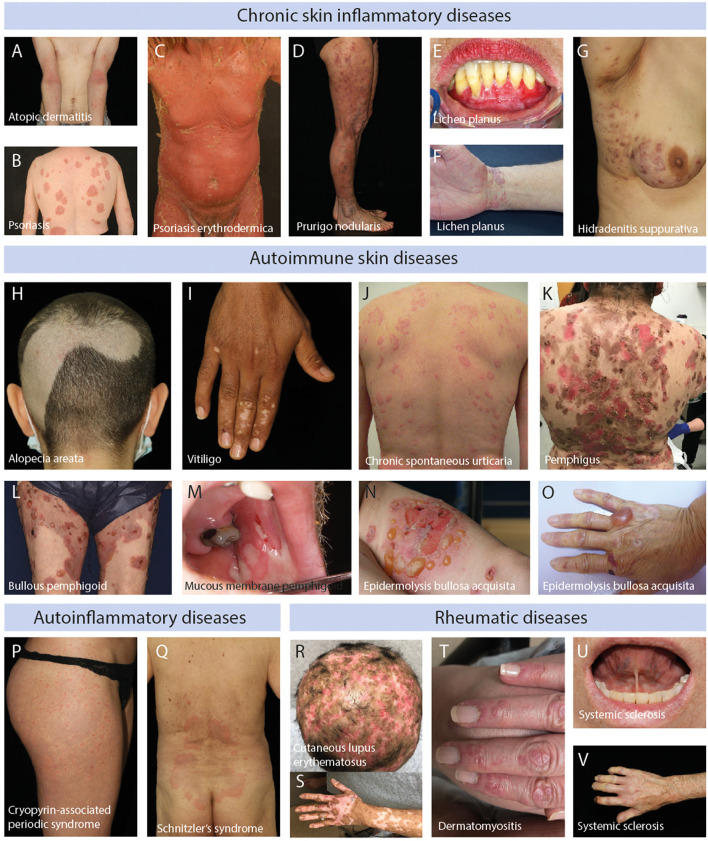
An estimated 20-25% of the population is affected by chronic, non-communicable inflammatory skin diseases. Chronic skin inflammation has many causes. Among the most frequent chronic inflammatory skin diseases are atopic dermatitis, psoriasis, urticaria, lichen planus, and hidradenitis suppurativa, driven by a complex interplay of genetics and environmental factors. Autoimmunity is another important cause of chronic skin inflammation. The autoimmune response may be mainly T cell driven, such as in alopecia areata or vitiligo, or B cell driven in chronic spontaneous urticaria, pemphigus and pemphigoid diseases. Rare causes of chronic skin inflammation are autoinflammatory diseases, or rheumatic diseases, such as cutaneous lupus erythematosus or dermatomyositis. Whilst we have seen a significant improvement in diagnosis and treatment, several challenges remain. Especially for rarer causes of chronic skin inflammation, early diagnosis is often missed because of low awareness and lack of diagnostics. Systemic immunosuppression is the treatment of choice for almost all of these diseases. Adverse events due to immunosuppression, insufficient therapeutic responses and relapses remain a challenge. For atopic dermatitis and psoriasis, a broad spectrum of innovative treatments has been developed. However, treatment responses cannot be predicted so far. Hence, development of (bio)markers allowing selection of specific medications for individual patients is needed. Given the encouraging developments during the past years, we envision that many of these challenges in the diagnosis and treatment of chronic inflammatory skin diseases will be thoroughly addressed in the future.
Overview
The claims and statistics of this paper haven’t been checked yet.
Run the check — free, no account needed. It reads the open-access text and checks the sources it cites.
Integrity signals
Registry
Cites
Statistics
Figures
Verification
Claims the paper makes
The claims and statistics of this paper haven’t been checked yet.
Run the check — free, no account needed. It reads the open-access text and checks the sources it cites.
Self-check
Percentages, sums and reported differences re-computed from the paper’s own numbers.
The self-check needs the paper’s full text.
Citations
Cites
The NLRP3 Inflammasome: an overview of mechanisms of activation and regulation
Kelley, N., Jeltema, D., Duan, Y., & He, Y. (2019) · International Journal of Molecular Sciences · doi:10.3390/ijms20133328 · Cited by 3,539
Atopic Dermatitis: Global Epidemiology and Risk Factors
Nutten, S. (2015) · Annals of Nutrition and Metabolism · doi:10.1159/000370220 · Cited by 3,124
Palmer, C. N. A., Irvine, A. D., Terron-Kwiatkowski, A., Zhao, Y., Liao, H., Lee, S. P., Goudie, D. R., Sandilands, A., Campbell, L. E., Smith, F. J. D., et al. (2006) · Nature Genetics · doi:10.1038/ng1767 · Cited by 2,978 · cited 1×
“Among European Caucasians, filaggrin mutations are associated with early-onset and severe AD (43).”
BackgroundGriffiths, C. E. M., Armstrong, A. W., Gudjonsson, J. E., & Barker, J. N. W. N. (2021) · The Lancet · doi:10.1016/s0140-6736(20)32549-6 · Cited by 2,643
Boehncke, W., & Schön, M. P. (2015) · The Lancet · doi:10.1016/s0140-6736(14)61909-7 · Cited by 2,609
Risk of myocardial infarction in patients with psoriasis
Gelfand, J. M., Neimann, A. L., Shin, D. B., Wang, X., Margolis, D. J., & Troxel, A. B. (2006) · JAMA · doi:10.1001/jama.296.14.1735 · Cited by 1,899
Kong, H. H., Oh, J., Deming, C., Conlan, S., Grice, E. A., Beatson, M. A., Nomicos, E., Polley, E. C., Komarow, H. D., Program, N. C. S., et al. (2012) · Genome Research · doi:10.1101/gr.131029.111 · Cited by 1,808 · cited 1×
“Patients with AD have a higher burden of Staphylococcus aureus which contributes to the inflammation (46).”
BackgroundHoffman, H. M., Mueller, J. L., Broide, D. H., Wanderer, A. A., & Kolodner, R. D. (2001) · Nature Genetics · doi:10.1038/ng756 · Cited by 1,679
Lundberg, I. E., Tjärnlund, A., Bottai, M., Werth, V. P., Pilkington, C., de Visser, M., Alfredsson, L. S., Amato, A. A., Barohn, R. J., Liang, M. H., et al. (2017) · Annals of the Rheumatic Diseases · doi:10.1136/annrheumdis-2017-211468 · Cited by 1,597
Zuberbier, T., Abdul Latiff, A. H., Abuzakouk, M., Aquilina, S., Asero, R., Baker, D., Ballmer‐Weber, B., Bangert, C., Ben‐Shoshan, M., Bernstein, J. A., et al. (2022) · Allergy · doi:10.1111/all.15090 · Cited by 1,263
Cited by
Sorted by citations
Bieber, K., Hundt, J. E., Yu, X., Ehlers, M., Petersen, F., Karsten, C. M., Köhl, J., Kridin, K., Kalies, K., Kasprick, A., et al. (2022) · Autoimmunity Reviews · doi:10.1016/j.autrev.2022.103236 · Cited by 135
Comprehensive Insight into Lichen Planus Immunopathogenesis
Vičić, M., Hlača, N., Kaštelan, M., Brajac, I., Tokmadžić, V. S., & Massari, L. P. (2023) · International Journal of Molecular Sciences · doi:10.3390/ijms24033038 · Cited by 123
“Skin LP is generally followed by severe pruritus, whose intensity corresponds to the affected surface but lacks visible scratches or secondary infections [5].”
BackgroundInfluentialHidradenitis suppurativa: new insights into disease mechanisms and an evolving treatment landscape
Krueger, J. G., Frew, J. W., Jemec, G. B. E., Kimball, A. B., Kirby, B., Bechara, F. G., Navrazhina, K., Prens, E. P., Reich, K., Cullen, E., et al. (2023) · British Journal of Dermatology · doi:10.1093/bjd/ljad345 · Cited by 115
Systematic Review of Deep Learning Image Analyses for the Diagnosis and Monitoring of Skin Disease
Choy, S. P., Kim, B. J., Paolino, A., Tan, W. R., Lim, S. M. L., Seo, J., Tan, S. P., Francis, L., Tsakok, T., Simpson, M., et al. (2023) · npj Digital Medicine · doi:10.1038/s41746-023-00914-8 · Cited by 105
Therapeutic strategies for oral lichen planus: State of the art and new insights
Didona, D., Caro, R. D. C., Santos, A. M. S., Solimani, F., & Hertl, M. (2022) · Frontiers in Medicine · doi:10.3389/fmed.2022.997190 · Cited by 101
“89% and it is more commonly diagnosed in the female population (1, 2).”
BackgroundInflammation and aging-related disease: A transdisciplinary inflammaging framework
Andonian, B. J., Hippensteel, J. A., Abuabara, K., Boyle, E. M., Colbert, J. F., Devinney, M. J., Faye, A. S., Kochar, B. D., Lee, J., Litke, R. R., et al. (2024) · GeroScience · doi:10.1007/s11357-024-01364-0 · Cited by 109
Tapinarof validates the aryl hydrocarbon receptor as a therapeutic target: A clinical review
Silverberg, J. I., Boguniewicz, M., Quintana, F. J., Clark, R. A., Gross, L., Hirano, I., Tallman, A. M., Brown, P. M., Fredericks, D., Rubenstein, D. S., et al. (2023) · Journal of Allergy and Clinical Immunology · doi:10.1016/j.jaci.2023.12.013 · Cited by 94
Platelet-Rich Plasma (PRP) in Dermatology: Cellular and Molecular Mechanisms of Action
Vladulescu, D., Scurtu, L. G., SIMIONESCU, A. A., Scurtu, F., Popescu, M. I., & Simionescu, O. (2023) · Biomedicines · doi:10.3390/biomedicines12010007 · Cited by 75
Sabat, R., Šimaitė, D., Gudjonsson, J. E., Brembach, T.-C., Witte, K., Krause, T., Kokolakis, G., Bartnik, E., Nikolaou, C., Rill, N., et al. (2022) · Journal of Allergy and Clinical Immunology · doi:10.1016/j.jaci.2022.10.034 · Cited by 69
Hidradenitis Suppurativa: A Perspective on Genetic Factors Involved in the Disease
Moltrasio, C., Tricarico, P. M., Romagnuolo, M., Marzano, A. V., & Crovella, S. (2022) · Biomedicines · doi:10.3390/biomedicines10082039 · Cited by 60
“Finally, no guidelines are currently available for different HS clinical phenotypes and its syndromic forms; thus, extensive, basic, and molecular research is still required to fully unravel the various mechanisms underlying this disease [36].”
BackgroundQu, F., Sun, Y., Bi, D., Peng, S., Li, M., Liu, H., Zhang, L., Tao, J., Liu, Y., & Zhu, J. (2023) · Advanced Healthcare Materials · doi:10.1002/adhm.202302314 · Cited by 60
Next Generation PDE4 Inhibitors that Selectively Target PDE4B/D Subtypes: A Narrative Review
Blauvelt, A., Langley, R. G. B., Gordon, K. B., Silverberg, J. I., Eyerich, K., Sommer, M. O. A., Felding, J., & Warren, R. B. (2023) · Dermatology and Therapy · doi:10.1007/s13555-023-01054-3 · Cited by 58
“Chronic inflammatory skin diseases, including atopic dermatitis (AD), psoriasis, and hidradenitis suppurativa, are estimated to affect 20–25% of the world’s population [1].”
BackgroundHeat Shock Protein 90 (Hsp90) and Hsp70 as Potential Therapeutic Targets in Autoimmune Skin Diseases
Tukaj, S., & Sitko, K. (2022) · Biomolecules · doi:10.3390/biom12081153 · Cited by 49
“, CD28/CD80-86/CTLA-4) are approved by the FDA or under clinical evaluation [46,47].”
BackgroundStimuli-responsive drug delivery systems for inflammatory skin conditions
Gade, L., Boyd, B. J., Malmsten, M., & Heinz, A. (2024) · Acta Biomaterialia · doi:10.1016/j.actbio.2024.08.037 · Cited by 48
Silverberg, J. I., Rosmarin, D. M., Chovatiya, R., Bieber, T. R. M., Schleicher, S., Beck, L. A., Gooderham, M., Chaudhry, S., Fanton, C. P., Yu, D., et al. (2024) · Nature Communications · doi:10.1038/s41467-024-53384-1 · Cited by 46
Sugimoto, E., Matsuda, H., Shibata, S., Mizuno, Y., Koyama, A., Li, L.-X., Taira, H., Ito, Y., Awaji, K., Yamashita, T., et al. (2023) · Journal of Clinical Medicine · doi:10.3390/jcm12083046 · Cited by 42
Olbrich, H., Kridin, K., Zirpel, H., Sadik, C. D., Terheyden, P. A. M., Thaçi, D., Ludwig, R. J., & Boch, K. (2023) · EBioMedicine · doi:10.1016/j.ebiom.2023.104639 · Cited by 35
Deciphering the links: Fragmented polystyrene as a driver of skin inflammation
Song, G. B., Nam, J., Ji, S., Woo, G., Park, S.-J., Kim, B., Hong, J., Choi, M. G., Kim, S., Lee, C., et al. (2024) · Journal of Hazardous Materials · doi:10.1016/j.jhazmat.2024.135815 · Cited by 38
Rispo, F., Atanasio, G. D. N., Demori, I., Costa, G., Marchese, E., del Rosario, S. P., Serrano‐Candelas, E., Palomino‐Schätzlein, M., Perata, E., Robino, F., et al. (2024) · Frontiers in Cell and Developmental Biology · doi:10.3389/fcell.2023.1305835 · Cited by 37
Deep learning models across the range of skin disease
Venkatesh, K. P., Raza, M. M., Nickel, G., Wang, S., & Kvedar, J. C. (2024) · npj Digital Medicine · doi:10.1038/s41746-024-01033-8 · Cited by 36
Carmona‐Rocha, E., Rusiñol, L., & Puig, L. (2025) · Pharmaceutics · doi:10.3390/pharmaceutics17010091 · Cited by 32
“Chronic immune-mediated inflammatory skin conditions, such as atopic dermatitis (AD), psoriasis, and hidradenitis suppurativa, are estimated to collectively affect approximately 20–25% of the global population [1].”
Rhee, S., Xia, C., Chandra, A., Hamon, M., Lee, G., Yang, C., Guo, Z., & Sun, B. (2024) · Bioengineering · doi:10.3390/bioengineering11111055 · Cited by 29
Shapiro, J., & Lyakhovitsky, A. (2024) · Clinics in Dermatology · doi:10.1016/j.clindermatol.2024.06.020 · Cited by 26
The relevance of complement in pemphigoid diseases: A critical appraisal
Papara, C., Karsten, C. M., Ujiie, H., Schmidt, E., Schmidt‐Jiménez, L. F., Baican, A. L., Freire, P. C., Izumi, K., Bieber, K., Peipp, M., et al. (2022) · Frontiers in Immunology · doi:10.3389/fimmu.2022.973702 · Cited by 26
Kridin, K., Mruwat, N., & Ludwig, R. J. (2022) · JAMA Dermatology · doi:10.1001/jamadermatol.2022.5182 · Cited by 26
Nanotechnology-Based Topical Delivery of Natural Products for the Management of Atopic Dermatitis
Marques, M. P., Varela, C. L., Mendonça, L., & Cabral, C. (2023) · Pharmaceutics · doi:10.3390/pharmaceutics15061724 · Cited by 26
“The first step in prevention is to avoid irritants and allergens [6].”
BackgroundInfluentialLee, W., & Kim, W. (2023) · Journal of Controlled Release · doi:10.1016/j.jconrel.2023.12.026 · Cited by 27
Brembach, T.-C., Sabat, R., Witte, K., Schwerdtle, T., & Wolk, K. (2023) · Frontiers in Immunology · doi:10.3389/fimmu.2023.1281685 · Cited by 23
Bergamot Byproducts: A Sustainable Source to Counteract Inflammation
Russo, C., Lombardo, G. E., Bruschetta, G., Rapisarda, A., Maugeri, A., & Navarra, M. (2024) · Nutrients · doi:10.3390/nu16020259 · Cited by 23
“In this case timely treatment is necessary because of the possible increase in inflammation, mediated by TNF-α , IL-17, IL-23 cytokines, throughout the organism with consequent systemic impairment of other organs [25].”
BackgroundMa, Y., Sun, T., Ren, K., Min, T., Xie, X., Wang, H., Xu, G., Dang, C., & Zhang, H. (2023) · Heliyon · doi:10.1016/j.heliyon.2023.e22568 · Cited by 22
“Despite the availability of various drug formulations and physical therapeutic strategies to alleviate the lesions, the occurrence of intolerable adverse reactions and inadequate response to therapy hinders the achievement of complete remission for these diseases [75].”
BackgroundPemphigus and pemphigoids: Clinical presentation, diagnosis and therapy
Didona, D., Schmidt, M. F., Maglie, R., & Solimani, F. (2023) · JDDG Journal der Deutschen Dermatologischen Gesellschaft · doi:10.1111/ddg.15174 · Cited by 22
Egu, D. T., Schmitt, T., Ernst, N., Ludwig, R. J., Fuchs, M. T., Hiermaier, M., Moztarzadeh, S., Morón, C. S., Schmidt, E., Beyersdorfer, V., et al. (2024) · Journal of Investigative Dermatology · doi:10.1016/j.jid.2024.03.040 · Cited by 21
Kridin, K., Bieber, K., Vorobyev, A., Moderegger, E. L., Hernandez, G., Schmidt, E., & Ludwig, R. J. (2024) · British Journal of Dermatology · doi:10.1093/bjd/ljae219 · Cited by 21
Insights into Liposomal and Gel-Based Formulations for Dermatological Treatments
Strazzabosco, G., Liboni, A., Pezzi, G., Alogna, A., & Bortolotti, D. (2025) · Gels · doi:10.3390/gels11040245 · Cited by 25
“However, despite their reduced incidence of side effects, their high costs and the requirement for intravenous or localized injection routes often prevent many patients from accessing these beneficial treatments [24].”
Sex-disaggregated population analysis in patients with hidradenitis suppurativa
Sabat, R., Tsaousi, A., Ghoreschi, K., Wolk, K., & Schneider‐Burrus, S. (2022) · Frontiers in Medicine · doi:10.3389/fmed.2022.1028943 · Cited by 20
The Development of Human Ex Vivo Models of Inflammatory Skin Conditions
Wang, E. H. C., Barresi‐Thornton, R., Chen, L.-C., Senna, M. M., Liao, I., Chen, Y., Zheng, Q., & Bouez, C. (2023) · International Journal of Molecular Sciences · doi:10.3390/ijms242417255 · Cited by 19
“These conditions encompass a diverse spectrum, and it is estimated that up to 25% of the adult population is afflicted by at least one ISD [1].”
BackgroundDetection of anti-desmoglein antibodies in oral lichen planus: What do we know so far
Didona, D., & Hertl, M. (2022) · Frontiers in Immunology · doi:10.3389/fimmu.2022.1001970 · Cited by 18
“Classically, two main subtypes of OLP are described, namely non-erosive and erosive OLP (1, 2).”
BackgroundBiology of Interleukin-17 and Novel Therapies for Hidradenitis Suppurativa
Sabat, R., Gudjonsson, J. E., Brembilla, N. C., van Straalen, K. R., & Wolk, K. (2023) · Journal of Interferon & Cytokine Research · doi:10.1089/jir.2023.0105 · Cited by 18
“Chronic skin diseases are not only very common; they also significantly reduce the quality of life of those affected (Ujiie et al., 2022).”
Decoding the Human Epidermal Complexity at Single-Cell Resolution
Polito, M. P., Marini, G., Palamenghi, M., & Enzo, E. (2023) · International Journal of Molecular Sciences · doi:10.3390/ijms24108544 · Cited by 18
“Driven by an intricate interplay of genetics and environmental factors, they are a crucial challenge of modern medicine [60,61].”
BackgroundMahmoud, O., Yosipovitch, G., & Attia, E. A. S. (2023) · Journal of Clinical Medicine · doi:10.3390/jcm12144675 · Cited by 17
“This is in addition to the added costs of implementing these lifestyle adjustments [1].”
BackgroundInfluentialFecal microbiota transplantation for the treatment of chronic inflammatory skin diseases
Wu, M., Chen, X., Lu, Q., & Yao, X. (2024) · Heliyon · doi:10.1016/j.heliyon.2024.e37432 · Cited by 17
Small molecule photosensitizers: Paving the way for improved photodynamic therapy in dermatology
Wu, T., Dou, W., Yang, C., Zhou, L., Wang, F., Li, H., Qian, X. H., & Xu, L. (2025) · Coordination Chemistry Reviews · doi:10.1016/j.ccr.2025.216839 · Cited by 16
Dual role of autoantibodies to heat shock proteins in autoimmune diseases
Tukaj, S. (2024) · Frontiers in Immunology · doi:10.3389/fimmu.2024.1421528 · Cited by 14
Kridin, K., Bieber, K., Vorobyev, A., Moderegger, E. L., Olbrich, H., Ludwig, M. A., Gershater, B., Hernandez, G., Zirpel, H., Thaçi, D., et al. (2024) · EBioMedicine · doi:10.1016/j.ebiom.2024.105485 · Cited by 15
Witte, K., Wolk, K., Witte‐Händel, E., Krause, T., Kokolakis, G., & Sabat, R. (2023) · Nutrients · doi:10.3390/nu15173797 · Cited by 14
“The limited treatment options and consideration that a relevant portion of HS patients refuse single-therapy elements or have relevant contraindications demonstrate the great need for novel and innovative therapeutics for HS treatment [1,76].”
BackgroundAn Overview of the Latest Metabolomics Studies on Atopic Eczema with New Directions for Study
Afghani, J., Traidl‐Hoffmann, C., Schmitt‐Kopplin, P., Reiger, M., & Mueller, C. (2022) · International Journal of Molecular Sciences · doi:10.3390/ijms23158791 · Cited by 13
Mousavi, S., Bieber, K., Zirpel, H., Vorobyev, A., Olbrich, H., Papara, C., Luca, D. A. D., Thaçi, D., Schmidt, E., Riemekasten, G., et al. (2025) · Frontiers in Endocrinology · doi:10.3389/fendo.2025.1516433 · Cited by 12
The Role of Skin Microbiota in Facial Dermatoses and Related Factors: A Narrative Review
Ferček, I., Ozretić, P., Zanze, L., Zoričić, Z., Dolački, L., Čivljak, R., & Lugović‐Mihić, L. (2025) · International Journal of Molecular Sciences · doi:10.3390/ijms26188857 · Cited by 14
“Gaining knowledge on the exact pathogenesis of such diseases remains a diagnostic and therapeutic challenge for clinicians, as well as an economic burden on healthcare systems, due to the costs associated with their management [2].”
Beibei, L., Mengying, W., Xiao, H., Yuzi, J., Lijin, M., Zhang, K., Shengjie, Y., & Li, L. (2024) · Journal of Oral Microbiology · doi:10.1080/20002297.2024.2374639 · Cited by 12
“Classically, OLP can be divided into two subtypes based on symptoms: erosive OLP (EOLP) and non-erosive OLP (NEOLP) [3,5].”
InfluentialTargeting Intracellular Pathways in Atopic Dermatitis with Small Molecule Therapeutics
Nițulescu, G., Olaru, O. T., Andrei, C., Nitulescu, G. M., & Zanfirescu, A. (2025) · Current Issues in Molecular Biology · doi:10.3390/cimb47080659 · Cited by 12
“In many cases, an autoimmune component plays a major role [1].”
Witte, K., Sabat, R., Witte‐Händel, E., Ghoreschi, K., & Wolk, K. (2022) · International Journal of Molecular Sciences · doi:10.3390/ijms23169057 · Cited by 11
“Since only a part of the patients respond to anti-TNF-α therapy with relevant symptom reduction, there is still an urgent need for novel therapy options [30].”
BackgroundThe human skin organ culture model as an optimal complementary tool for murine pemphigus models
Hartmann, V., Hariton, W. V. J., Rahimi, S., Hammers, C. M., Ludwig, R. J., Müller, E. J., & Hundt, J. E. (2023) · Laboratory Animals · doi:10.1177/00236772221145647 · Cited by 11
Sitko, K., Starke, M. D., & Tukaj, S. (2023) · Cell Stress and Chaperones · doi:10.1007/s12192-023-01387-0 · Cited by 9
“All these drugs and therapies, however; may cause various side effects, therefore, the development of new treatments for AD without or with limited side effects are needed (Ujiie et al. 2022).”
BackgroundInhibition of interferon gamma impairs induction of experimental epidermolysis bullosa acquisita
Groß, N., Marketon, J., Mousavi, S., Kalies, K., Ludwig, R. J., & Bieber, K. (2024) · Frontiers in Immunology · doi:10.3389/fimmu.2024.1343299 · Cited by 9
Cai, Z. R., Kim, J., Rezaei, S. J., Chen, M. L., Touma, F., Zhu, C., Onyeka, S., Fonjungo, F., Omiye, J. A., Krakowski, I., et al. (2025) · British Journal of Dermatology · doi:10.1093/bjd/ljaf250 · Cited by 8
“1,2 AI can serve as a powerful tool to improve der-matological care.”
Bitter Phytochemicals as Novel Candidates for Skin Disease Treatment
Grădinaru, T.-C., Vlad, A., & Gîlcă, M. (2023) · Current Issues in Molecular Biology · doi:10.3390/cimb46010020 · Cited by 6
“Inflammatory skin conditions hold a significant weight among them, since approximately one in four individuals will experience a chronic inflammatory skin disease at some point [3].”
BackgroundWolk, K., Schielein, M. C., Maul, J., Widmayer, F., Wanke, K., Fischmann, W., Nathan, P., & Sabat, R. (2024) · Frontiers in Medicine · doi:10.3389/fmed.2024.1384055 · Cited by 8
“If left untreated, CISDs lead to profound reduction in the quality of life (17, 18).”
BackgroundFilippo, L. D. D., Duarte, J. L., de Almeida, A. C. L., Tashiro, F. M., Peleje, I. R., & Chorilli, M. (2025) · Nanomedicine · doi:10.1080/17435889.2025.2506347 · Cited by 8
Leng, M., Qi, P., Li, R., Gong, F., & Wei, Z. (2025) · Frontiers in Immunology · doi:10.3389/fimmu.2025.1668840 · Cited by 8
Anitua, E., Tierno, R., Azkargorta, M., Elortza, F., & Alkhraisat, M. H. (2024) · Biomolecules · doi:10.3390/biom14070763 · Cited by 8
“These pathologies represent a major medical burden due to their high and increasing prevalence, potentially important effect on quality of life, absence of curative treatments, diagnostic challenges, co-morbidity, and significant economic impact [1].”
BackgroundSerum Biomarkers in Bullous Pemphigoid: A Systematic Review
Geng, R. S. Q., Wei, E., Wilken, B. F., Sibbald, R. G., & Sibbald, C. J. (2024) · Journal of Cutaneous Medicine and Surgery · doi:10.1177/12034754241266171 · Cited by 7
“10 Due to the chronic and often recalcitrant nature of BP, expanded treatment options, including targeted treatment, are needed for this challenging to treat population.”
BackgroundChang, W., Shi, J., Li, L., Zhang, P., Ren, Y., Yan, Y., & Ge, Y. (2024) · Medicine · doi:10.1097/md.0000000000039352 · Cited by 7
“[1,2] Approximately 1.4% OLP case progress to oral squamous cell carcinoma, classified as oral potentially malignant disorder (OPMD) by the World Health Organization (WHO).”
BackgroundInfluentialGershater, B., Bieber, K., Vorobyev, A., Ludwig, M. A., Zirpel, H., Luca, D. A. D., Thaçi, D., Kridin, K., & Ludwig, R. J. (2024) · Frontiers in Medicine · doi:10.3389/fmed.2024.1385491 · Cited by 7
Patient perspective on psoriasis: Psychosocial burden of psoriasis and its management in Malaysia
Affandi, A. M., & Thiruchelvam, K. (2024) · PLoS ONE · doi:10.1371/journal.pone.0305870 · Cited by 7
Ghorbanalipoor, S., Matsumoto, K., Groß, N., Heimberg, L., Krause, M., Veldkamp, W. R., Magens, M., Zanken, J., Neuschütz, K., Luca, D. A. D., et al. (2024) · Journal of Autoimmunity · doi:10.1016/j.jaut.2024.103302 · Cited by 7
“Furthermore, adverse events that develop in response to drug treatment, for example, immunosuppression associated with current treatments for chronic inflammatory diseases, contribute in part to overall morbidity and mortality [11 – 14].”
BackgroundMethodInfluentialSTAT2 /Caspase3 in the diagnosis and treatment of psoriasis
Fu, Z., He, Y., Gao, L., Tong, X., Zhou, L., & Zeng, J. (2023) · European Journal of Clinical Investigation · doi:10.1111/eci.13959 · Cited by 7
Entzündliche Dermatosen auf pigmentierter Haut
Ludwig, R. J., & von Stebut, E. (2023) · Die Dermatologie · doi:10.1007/s00105-022-05096-0 · Cited by 7
“Die betroffenen Patienten*innen sind sowohl durch die Hauterkrankung selbst als auch durch eine teilweise erhebliche Komorbidität sehr belastet [21].”
BackgroundEditorial: Autoimmune pre-disease
Hundt, J. E., Hoffmann, M. H., Amber, K. T., & Ludwig, R. J. (2023) · Frontiers in Immunology · doi:10.3389/fimmu.2023.1159396 · Cited by 7
“This would have a significant impact on affected individuals, as well as the healthcare system because the incidence of autoimmune and non-communicable inflammatory diseases is rising and there are still many unmet medical needs in the care of patients with these diagnoses (12, 13).”
BackgroundArtificial intelligence–enabled precision medicine for inflammatory skin diseases
Tang, A. S., Wei, M. L., Haemel, A., La, C., Sirota, M., & Lee, E. Y. (2026) · Journal of Investigative Dermatology · doi:10.1016/j.jid.2025.10.596 · Cited by 10
Zirpel, H., Ludwig, R. J., Olbrich, H., Kridin, K., Ständer, S., & Thaçi, D. (2024) · Journal of Dermatological Treatment · doi:10.1080/09546634.2024.2421429 · Cited by 7
“The chronic-recurrent inflammatory nature of AD with its comorbidities and potential treatment-related adverse events due to commonly used conventional treatment options poses a significant burden on affected patients (5).”
Pemphigoid disease model systems for clinical translation
Tigges, M., Dräger, S., Piccini, I., Bieber, K., Vorobyev, A., Edelkamp, J., Bertolini, M., & Ludwig, R. J. (2025) · Frontiers in Immunology · doi:10.3389/fimmu.2025.1537428 · Cited by 6
A translational approach to improve therapeutics in atopic dermatitis and beyond
Liu, D., Patel, D., Lau, M., Largen, J., Hu, B., He, H., & Guttman‐Yassky, E. (2025) · The Journal of Immunology · doi:10.1093/jimmun/vkaf049 · Cited by 7
Raap, U., Limberg, M. M., Kridin, K., & Ludwig, R. J. (2023) · Biomolecules · doi:10.3390/biom13030485 · Cited by 6
“This is mainly due to the limited and partially insufficient treatment options, as well as a significant, often treatment‐associated, (co)‐morbidity [7,8].”
BackgroundType XVII Collagen–Specific CD4+ T Cells Induce Bullous Pemphigoid by Producing IL-5
Yoshimoto, N., Muramatsu, K., Ito, T., Zheng, M., Izumi, K., Natsuga, K., Iwata, H., Hasegawa, Y., & Ujiie, H. (2024) · Journal of Investigative Dermatology · doi:10.1016/j.jid.2024.08.026 · Cited by 6
Güldorum, Y., Danısık, M. N., Zia, M. K., Aldemir, N., Ulağ, S., Bicer, L., Kaya, E., Şahin, A., Tinaz, G. B., & Gündüz, O. (2025) · Emergent Materials · doi:10.1007/s42247-025-01043-6 · Cited by 6
“Chronic, non-infectious inflammatory skin diseases, such as atopic dermatitis, psoriasis, urticaria, lichen planus, and hidrad-enitis suppurativa, affect 20–25% of the population [ 3, 4].”
Unmet needs in treating itch: reaching beyond eczema
Brooks, S. G., & Yosipovitch, G. (2024) · Journal of Dermatological Treatment · doi:10.1080/09546634.2024.2351487 · Cited by 5
“As such, broad-spectrum immunosuppressants, such as systemic corticosteroids, cyclosporine, methotrexate, and azathioprine are often used as a default treatment option for those conditions thought to have an immune component (7).”
InfluentialDigkas, T., Tefas, L. R., Porfire, A. S., Tomuță, I., & Beer, T. D. (2025) · International Journal of Pharmaceutics · doi:10.1016/j.ijpharm.2025.125964 · Cited by 6
Liakou, A. Ι., Routsi, E., Plisioti, K., Tziona, E., Koumaki, D., Kalamata, M., Bompou, E., Sokou, R., Ιωάννου, Π., Bonovas, S., et al. (2025) · Microorganisms · doi:10.3390/microorganisms13092129 · Cited by 5
Gürtler, A.-L., Maltschik, A. M., Yildiz, S. M. G., Vangelofski, K., Gade, L., Grohganz, H., Rades, T., & Heinz, A. (2024) · European Journal of Pharmaceutics and Biopharmaceutics · doi:10.1016/j.ejpb.2024.114423 · Cited by 5
Kim, G. H., Lee, S. Y., Oh, S., Jang, J.-W., Lee, J. H., Kim, H., Son, K. H., & Byun, K. (2024) · International Journal of Molecular Sciences · doi:10.3390/ijms252312522 · Cited by 6
Cutaneous Manifestations in Patients with Dermatomyositis, Are They Only Skin Deep?
McKee, S., Xenakis, J. J., Makin, H., Marshall, C., Winnette, R., Aggarwal, R., & Knight, S. (2024) · Dermatology and Therapy · doi:10.1007/s13555-024-01266-1 · Cited by 5
“It has been reported that the amount of cutaneous involvement that a patient has correlates directly with the impact on their QoL [4, 5].”
BackgroundGürtler, A.-L., Lang, J. C., Czyrski, G. S., Sirois, J. P., Melican, K., Rades, T., & Heinz, A. (2024) · Biomaterials Advances · doi:10.1016/j.bioadv.2024.214068 · Cited by 5
Cao, X., He, R., Xu, D., & Zhao, Y. (2025) · Bioactive Materials · doi:10.1016/j.bioactmat.2025.09.040 · Cited by 4
“[185 – 188].”
Systematizing PDE4 Inhibition in Psoriasis Treatment: Roflumilast Leads the Way
Ravindran, R., Muralidharan, P., & Govindarajan, A. (2025) · Journal of Young Pharmacists · doi:10.5530/jyp.20251506 · Cited by 6
Frau, F., Loustalot, P., Törnqvist, M., Temam, N., Cupe, J., Montmerle, M., & Augé, F. (2025) · Scientific Reports · doi:10.1038/s41598-024-78794-5 · Cited by 4
“Despite that, AD affects up to 30% of the paediatric population and 2–10% of adults 8 , there are still many unmet medical needs.”
Kim, S., Kim, N. H., Khaleel, Z. H., Sa, D. H., Choi, D., Ga, S., Kim, C. G., Jang, J., Kim, K., Kim, Y. J., et al. (2023) · Advanced Therapeutics · doi:10.1002/adtp.202300353 · Cited by 4
Predatory journals in dermatology: a bibliometric review
Shamsi, A., Wang, T., Raju, N. V., Ghamgosar, A., Davani, G. M., & Mansourzadeh, M. J. (2024) · Online Information Review · doi:10.1108/oir-04-2023-0161 · Cited by 4
Improving systemic therapy selection for inflammatory skin diseases: A clinical need survey
Brownstone, N. D., Farberg, A. S., Litchman, G. H., Quick, A. P., Siegel, J. J., Hurton, L. V., Goldberg, M. S., & Lio, P. (2024) · JAAD International · doi:10.1016/j.jdin.2024.03.019 · Cited by 4
Most Frequent Comorbidities in Patients With Lichen Planopilaris: A Cross-Sectional Study
Nejad, K. G., Ghadarjani, R., Eftekhari, H., & Sheykholeslami, S. (2023) · International Journal of Dermatology and Venereology · doi:10.1097/jd9.0000000000000306 · Cited by 4
“15 Brankov et al .”
Kola-Mustapha, A. T., Abdulrahman, M. O., & Ishola, I. O. (2023) · Scientific African · doi:10.1016/j.sciaf.2023.e01942 · Cited by 4
Hair Transplantation for Lichen Planopilaris: A Case Series of Five Patients
Osipowicz, K., Turkowski, P., Kowaléwski, C., Pach, J., Regulski, P. A., & Woźniak, K. (2025) · Journal of Clinical Medicine · doi:10.3390/jcm14176199 · Cited by 3
“…medical therapy can only slow down the progression of the disease, leaving patients with noticeable hair loss, which negatively affects their psychological well-being [3]; therefore, surgical treatment of the esthetic consequences of this condition remains an important and unmet medical need [4].”
Advances in Bioprinting to Model Immune‐Mediated Skin Diseases
Ulloa‐Fernández, A., Marković, M., Fernández‐Pérez, J., Stary, G., & Ovsianikov, A. (2025) · Advanced Healthcare Materials · doi:10.1002/adhm.202503806 · Cited by 3
Salman, S., Raccah, S., Rousseaud, A., Declercq, L., & Kerdine‐Römer, S. (2024) · Journal of Photochemistry and Photobiology · doi:10.1016/j.jpap.2024.100227 · Cited by 3
Ferček, I., Ozretić, P., Andrašević, A. T., Trajanoski, S., Ćesić, D., Jelić, M., Geber, G., Žaja, O., Paić, J., Lugović‐Mihić, L., et al. (2024) · Life · doi:10.3390/life14091091 · Cited by 3
“Using three addi-Life tional indices, we observed a trend toward reduced biodiversity in patients with atopic dermatitis, seborrheic dermatitis, and rosacea.”
MethodResultNeha, N., Joshi, R., Bhave, A., Bhagat, S. V., Veligandla, K. C., Rathod, R., & Kotak, B. (2023) · Cureus · doi:10.7759/cureus.45032 · Cited by 3
“Currently, the clinical significance of moisturizers is appropriately documented furthermore positioning plant-based natural moisturizers as a preferable first-line treatment [9,10].”
BackgroundThe epidemiology of inflammatory skin disease in older adults
West, D., Roberts, A. M., STROEBEL, B. M., & Abuabara, K. (2024) · JAAD International · doi:10.1016/j.jdin.2024.09.013 · Cited by 3
Cugno, G., Schneider‐Burrus, S., Kokolakis, G., Wilsmann‐Theis, D., Assaf, K., Mößner, R., Kromer, C., Bechara, F. G., Rached, N. A., Peitsch, W. K., et al. (2025) · Frontiers in Medicine · doi:10.3389/fmed.2025.1626345 · Cited by 2
Jiang, Q. L., Tang, Y.-X., & Zhou, G. (2025) · International Immunopharmacology · doi:10.1016/j.intimp.2025.115457 · Cited by 2
Truong, K., Luu, W., & Fernández‐Peñas, P. (2025) · Australasian Journal of Dermatology · doi:10.1111/ajd.14616 · Cited by 2
Gazerani, P. (2023) · Neuroglia · doi:10.3390/neuroglia4010002 · Cited by 3
“Cutaneous conditions that accompany itch include but are not limited to psoriasis, atopic dermatitis, and lichen planus [9].”
Background
Metadata
- Authors
- Ujiie, H., Rosmarin, D., Schön, M. P., Ständer, S., Boch, K., Metz, M., Maurer, M., Thaci, D., Schmidt, E., Cole, C., Amber, K. T., Didona, D., Hertl, M., Recke, A., Graßhoff, H., Hackel, A., Schumann, A., Riemekasten, G., Bieber, K., Sprow, G., Dan, J., Zillikens, D., Sezin, T., Christiano, A. M., Wolk, K., Sabat, R., Kridin, K., Werth, V. P., & Ludwig, R. J.
- Affiliations
- Hokkaido University (JP)
- Tufts Medical Center (US)
- Universitätsmedizin Göttingen (DE)
- University Hospital Münster (DE)
- University of Lübeck (DE)
- Humboldt-Universität zu Berlin (DE)
- Rush University Medical Center (US)
- Philipps University of Marburg (DE)
- Philadelphia VA Medical Center (US)
- Columbia University Irving Medical Center (US)
- Charité – Universitätsmedizin Berlin (DE)
- Bar-Ilan University (IL)
- Corresponding author
- Ludwig, Ralf J.
- ORCID
- Ujiie, Hideyuki
- Rosmarin, David
- Schön, Michael P.
- Ständer, Sonja
- Boch, Katharina
- Metz, Martin
- Maurer, Marcus
- Schmidt, Enno
- Cole, Connor
- Amber, Kyle T.
- Didona, Dario
- Hertl, Michael
- Recke, Andreas
- Graßhoff, Hanna
- Hackel, Alexander
- Riemekasten, Gabriela
- Bieber, Katja
- Dan, Joshua
- Zillikens, Detlef
- Sezin, Tanya
- Christiano, Angela M.
- Wolk, Kerstin
- Sabat, Robert
- Kridin, Khalaf
- Werth, Victoria P.
- Ludwig, Ralf J.
- Venue
- Frontiers in Medicine
- Publisher
- Frontiers Media SA
- Published
- 2022-06-09
- Volume
- 9
- Pages
- 875492-875492
- ISSN
- 2296-858X (ISSN-L)
- PMC
- PMC9218547
- OpenAlex
- W4285740668
- Cited by
- 158
- References
- 389
- Citations by year
- 2026: 20 · 2025: 40 · 2024: 49 · 2023: 37 · 2022: 12
- FWCI
- 6.14
- Type
- journal article
- Language
- en
- Open access
- gold
- doi.org
- Licence
- Locations
- Frontiers in Medicine (publishedVersion, cc-by)
- PubMed Central (publishedVersion, cc-by)
- PubMed (publishedVersion)
- DOAJ (DOAJ: Directory of Open Access Journals) (submittedVersion, cc-by-sa)
- Fraunhofer-Publica (Fraunhofer-Gesellschaft) (submittedVersion)
- GoeScholar The Publication Server of the Georg-August-Universität Göttingen (Georg-August-Universität Göttingen) (submittedVersion, cc-by)
- Funders
- Deutsche Forschungsgemeinschaft (EXC 2167, FOR 2497, FOR 2690, RI/1056-11,, SFB 1526)
- National Institutes of Health (R01AR071653, R01AR076766)
- Schweizerischer Nationalfonds zur Förderung der Wissenschaftlichen Forschung (CRSII5_202301/1)
- Topics
- Health Sciences › Medicine › Dermatology › Dermatology and Skin Diseases
- Life Sciences › Immunology and Microbiology › Immunology › Psoriasis: Treatment and Pathogenesis
- Health Sciences › Medicine › Rheumatology › Systemic Sclerosis and Related Diseases
- Keywords
- chronic inflammatory skin disease, unmet medical needs, atopic dermatitis, psoriasis, urticaria, lichen planus, hidradenitis suppurativa, alopecia areata, vitiligo, pemphigus, pemphigoid diseases, cutaneous lupus erythematosus, dermatomyositis, autoinflammatory disease, systemic immunosuppression, biomarkers, treatment response prediction, early diagnosis
About these checks
Registry, retraction, Cites and statistics results are computed, not judged, with one exception: a printed reference that no index lists is read once by a model before it counts as a citation error. Claims are extracted by a model and kept only when their quote appears verbatim in the text; each cited source is then checked, with a model’s help, for whether it says what the claim relies on. Those verdicts can be wrong — read the claim’s quote and the cited source before relying on one.
Statistics and arithmetic are recomputed, not judged.
Confidence bands are shown only for fields calibrated on our annotated test set. None is calibrated yet, so no band is shown.
What counts as a claim ›How we measure confidence ›How we check this ›
Are you an author, or do you see a problem with this page? Request a review
