

Artificial intelligence in healthcare: transforming patient safety with intelligent systems—A systematic review
Open accessThe DOI matches its Crossref record; 77 of the 79 references it cites were found in a registry or an index; 8 of the 14 sources its claims cite were checked for support.
Abstract
This systematic review found AI systems show promise in detecting adverse events, predicting medication errors, assessing fall risks, and preventing pressure injuries, while implementation barriers and standardization needs remain.
Overview
CoChat Summary
## TL;DR
This systematic review finds that AI and machine learning show promise for patient safety tasks such as adverse event detection, medication error prediction, fall-risk assessment, and pressure-injury prevention. The paper also emphasizes that real-world implementation remains limited and that standardization, regulation, and workflow integration are still needed.
## Key findings
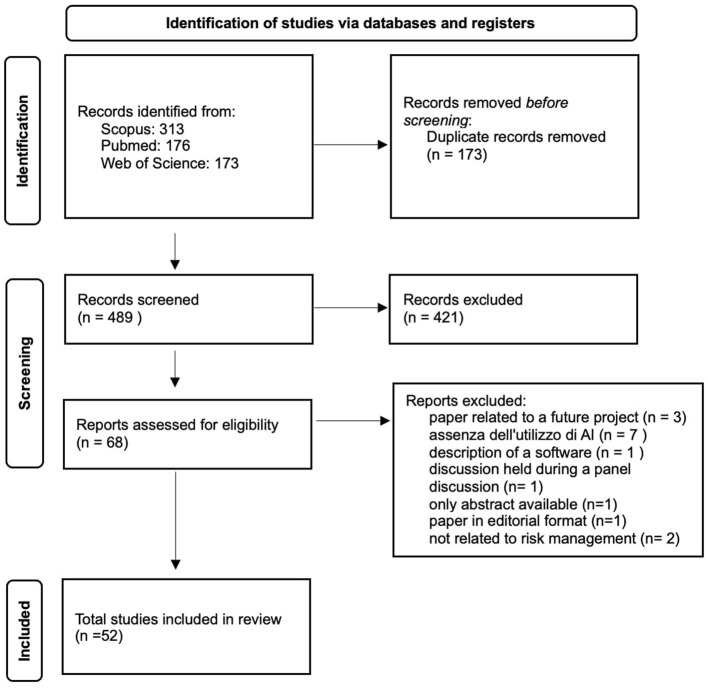
- The literature search across PubMed, Scopus, and Web of Science (February 2024) yielded 662 records; after deduplication 489 remained, 421 were excluded for not meeting inclusion criteria, 68 were initially included, and 16 more were later excluded.
- The review found that the most frequently discussed topics were adverse event detection, followed by fall risk, then pressure ulcers.
- Reported AI performance examples include a hybrid clinical decision support system that intercepted 74% of prescription orders requiring pharmacist intervention with 74% precision, and a medication-ordering model whose best gradient-boost decision trees achieved AUROC 0.7968 and AUPRC 0.0647.
- For fall and pressure-ulcer prediction, the paper reports models with strong discrimination in some studies, including a fall-risk model with 99.7% AUC and another with 98% prediction accuracy, and pressure-ulcer models with AUC 0.89, 0.92, and 0.94 in different studies.
- The review states that AI can improve incident reporting accuracy, automate classification, and identify high-risk incidents, but that socio-technical issues, implementation barriers, and lack of standardization still persist.
## Methods
- Systematic review conducted following PRISMA 2020 and PRISMA-DTA guidance.
- Literature search performed in February 2024 in PubMed, Scopus, and Web of Science, with screening and selection done using Rayyan.
- Included studies had to use AI in healthcare, be relevant to clinical risk management, report results from active experimentation, and address prevention of adverse events; studies outside medical-error-related risk management were excluded.
## Limitations
- The paper explicitly states that practical application of AI in real healthcare settings remains limited and requires ongoing refinement.
- It also states that standardization, uniform evaluation metrics, and regulatory standards are still needed; this is a stated limitation of the field, not just the review.
- Evident from the text: the review is heterogeneous and synthesizes diverse study designs and outcomes, so results are descriptive rather than pooled quantitatively.
Model-written summary. Check it against the paper before relying on it.
Integrity signals
Registry
Cites
Statistics
Figures
Verification
Claims the paper makes
5 Valid · 3 Not valid · 6 Not checked · 32 Own results and interpretations
At least one cited source doesn’t support this claim or points to a different paper, and none confirmed it — see the verdicts below.
In the paper
“Huang et al. (78) proposed a system known as Artificial Intelligence Clinical Assistant Decision Support System (AI-CDSS) for preventing thromboembolic events; however, the tool was found to be ineffective.”
§ Artificial intelligence in healthcare: transforming patient safety with intelligent systems—A systematic review > 3 Results The search across the three databases yielded 662 results (Figure 1). After removing duplicates, the number was reduced to 489 studies. We excluded 421 articles as they did not meet the five established inclusion criteria. In most cases, the excluded events pertained to contexts unrelated to clinical risk management, such as complications arising from the natural progression of diseases rather than preventable adverse events. Following an initial review of the articles, 68 studies were included in the database. An additional 16 studies were excluded. One of the articles (15) was excluded because it represents a future development project for a high-performance prediction, detection, and monitoring platform for managing risks against patient safety, without providing any results. Seven of the articles (16–22) were not included as they addressed clinical risk topics but did not reference the use of artificial intelligence. One of the excluded articles (23) was only available as an abstract. Three studies were not included because, although they discussed the use of artificial intelligence in clinical risk management, they only described the software without reporting results (22, 24, 25). One article was excluded as it was a report of a discussion from a roundtable on risk management in the use of medical devices (26). Another article was not included because it was an editorial and did not meet the inclusion criteria (27). Two articles were excluded as they were not relevant to risk management in the hospital environment (28, 29). > 3.3 Results for single topics
What the sources say
- Disputedcites [78] Huang X Zhou S Ma X Jiang S Xu Y You Y. Effectiveness of an artificial intelligence clinical assistant decision support system to improve the incidence of hospital-associated venous thromboembolism: a prospective, randomised controlled study. BMJ Open Quality. (2023) 12: 4. 10.1136/bmjoq-2023-002267 37832969 PMC10582876 sourceExperimental — accuracy not yet measured
The Results section (‘Distribution of VTE events during hospitalisation’; page not provided) reports significantly fewer VTE events with AI-CDSS: 27 versus 49, a 46% relative reduction (p=0.01). Although the Results also found no significant improvement in prophylaxis rates, the finding on thromboembolic events contradicts the claim that the tool was ineffective for preventing them. (LLM, conf=0.90)
Checked by a reasoning model — may be wrong.
plain- Asserted: passes — The authors put it forward as true.
- Checkable: passes — It can be checked against evidence.
- Load-bearing: unclear — It is unclear whether the paper’s conclusions depend on it.
- Based: passes — The paper gives a reason why it holds.
- Disputed
The cited sources that could be checked couldn’t confirm or dispute this claim.
In the paper
“Several software analyzed in this study have been designed and developed with features that can be considered medical devices, however, according to the literature reviewed, none of them have reached an official approval stage according to the EU MDR 2017/745 regulation or the US FDA.”
§ Artificial intelligence in healthcare: transforming patient safety with intelligent systems—A systematic review > 3 Results The search across the three databases yielded 662 results (Figure 1). After removing duplicates, the number was reduced to 489 studies. We excluded 421 articles as they did not meet the five established inclusion criteria. In most cases, the excluded events pertained to contexts unrelated to clinical risk management, such as complications arising from the natural progression of diseases rather than preventable adverse events. Following an initial review of the articles, 68 studies were included in the database. An additional 16 studies were excluded. One of the articles (15) was excluded because it represents a future development project for a high-performance prediction, detection, and monitoring platform for managing risks against patient safety, without providing any results. Seven of the articles (16–22) were not included as they addressed clinical risk topics but did not reference the use of artificial intelligence. One of the excluded articles (23) was only available as an abstract. Three studies were not included because, although they discussed the use of artificial intelligence in clinical risk management, they only described the software without reporting results (22, 24, 25). One article was excluded as it was a report of a discussion from a roundtable on risk management in the use of medical devices (26). Another article was not included because it was an editorial and did not meet the inclusion criteria (27). Two articles were excluded as they were not relevant to risk management in the hospital environment (28, 29). > 3.3 Results for single topics
What the sources say
- Could not verifycites [79] Choudhury A Asan O. Role of artificial intelligence in patient safety outcomes: systematic literature review. JMIR Med Inform. (2020) 8: e18599. 10.2196/18599 32706688 PMC7414411 sourceExperimental — accuracy not yet measured
The Discussion > Principal Findings addresses FDA standardization and validation of AI medical devices, but not whether the software analyzed in the citing study received approval. Searches for EU MDR 2017/745 and FDA approval found no passage establishing that none of those products had been approved. (LLM, conf=0.75)
plain- Asserted: passes — The authors put it forward as true.
- Checkable: passes — It can be checked against evidence.
- Load-bearing: unclear — It is unclear whether the paper’s conclusions depend on it.
- Based: passes — The paper gives a reason why it holds.
- Could not verify
Every source the paper cites for this claim was checked and supports it.
In the paper
“Several machine learning algorithms were used, with the random forest algorithm proving the best with an accuracy of 0.844 and precision of 0.839.”
§ Artificial intelligence in healthcare: transforming patient safety with intelligent systems—A systematic review > 3 Results The search across the three databases yielded 662 results (Figure 1). After removing duplicates, the number was reduced to 489 studies. We excluded 421 articles as they did not meet the five established inclusion criteria. In most cases, the excluded events pertained to contexts unrelated to clinical risk management, such as complications arising from the natural progression of diseases rather than preventable adverse events. Following an initial review of the articles, 68 studies were included in the database. An additional 16 studies were excluded. One of the articles (15) was excluded because it represents a future development project for a high-performance prediction, detection, and monitoring platform for managing risks against patient safety, without providing any results. Seven of the articles (16–22) were not included as they addressed clinical risk topics but did not reference the use of artificial intelligence. One of the excluded articles (23) was only available as an abstract. Three studies were not included because, although they discussed the use of artificial intelligence in clinical risk management, they only described the software without reporting results (22, 24, 25). One article was excluded as it was a report of a discussion from a roundtable on risk management in the use of medical devices (26). Another article was not included because it was an editorial and did not meet the inclusion criteria (27). Two articles were excluded as they were not relevant to risk management in the hospital environment (28, 29). > 3.3 Results for single topics
What the sources say
- Supportedcites [65] Wang H-H Huang C-C Talley PC Kuo K-M. Using healthcare resources wisely: a predictive support system regarding the severity of patient falls. J Healthc Eng. (2022) (2022) 2022: 3100618. 10.1155/2022/3100618 35958052 PMC9359836 source
The Abstract Results report that random forest performed well compared with the other learners, with test-dataset accuracy of 0.844 and precision of 0.839. The Discussion explicitly says it had the best predictive performance among the seven algorithms examined. (LLM, conf=0.94)
plain- Asserted: passes — The authors put it forward as true.
- Checkable: passes — It can be checked against evidence.
- Load-bearing: unclear — It is unclear whether the paper’s conclusions depend on it.
- Based: passes — The paper gives a reason why it holds.
- Supported
Every source the paper cites for this claim was checked and supports it.
In the paper
“Specifically, an 8% increase in predictability was observed in the 12-month study cohort compared to more advanced available methods.”
§ Artificial intelligence in healthcare: transforming patient safety with intelligent systems—A systematic review > 3 Results The search across the three databases yielded 662 results (Figure 1). After removing duplicates, the number was reduced to 489 studies. We excluded 421 articles as they did not meet the five established inclusion criteria. In most cases, the excluded events pertained to contexts unrelated to clinical risk management, such as complications arising from the natural progression of diseases rather than preventable adverse events. Following an initial review of the articles, 68 studies were included in the database. An additional 16 studies were excluded. One of the articles (15) was excluded because it represents a future development project for a high-performance prediction, detection, and monitoring platform for managing risks against patient safety, without providing any results. Seven of the articles (16–22) were not included as they addressed clinical risk topics but did not reference the use of artificial intelligence. One of the excluded articles (23) was only available as an abstract. Three studies were not included because, although they discussed the use of artificial intelligence in clinical risk management, they only described the software without reporting results (22, 24, 25). One article was excluded as it was a report of a discussion from a roundtable on risk management in the use of medical devices (26). Another article was not included because it was an editorial and did not meet the inclusion criteria (27). Two articles were excluded as they were not relevant to risk management in the hospital environment (28, 29). > 3.3 Results for single topics
What the sources say
- Supportedcites [76] Levis M Westgate CL Gui J Watts BV Shiner B. Natural language processing of clinical mental health notes may add predictive value to existing suicide risk models. Psychol Med. (2021) 51: 1382– 91. 10.1017/S0033291720000173 32063248 PMC8920410 source
The Conclusion reports an 8% predictive gain for the 12-month cohort above state-of-the-art standards. The paper identifies the relevant comparator as the REACH VET suicide-risk prediction model. (LLM, conf=0.92)
plainstates a cause- Asserted: passes — The authors put it forward as true.
- Checkable: passes — It can be checked against evidence.
- Load-bearing: unclear — It is unclear whether the paper’s conclusions depend on it.
- Based: passes — The paper gives a reason why it holds.
- Supported
Every source the paper cites for this claim was checked and supports it.
In the paper
“Decision trees using gradient boost achieved the highest AUROC (0.7968) and AUPRC (0.0647) among all models, showing promise for error surveillance, patient safety improvement, and targeted clinical review.”
§ Artificial intelligence in healthcare: transforming patient safety with intelligent systems—A systematic review > 3 Results The search across the three databases yielded 662 results (Figure 1). After removing duplicates, the number was reduced to 489 studies. We excluded 421 articles as they did not meet the five established inclusion criteria. In most cases, the excluded events pertained to contexts unrelated to clinical risk management, such as complications arising from the natural progression of diseases rather than preventable adverse events. Following an initial review of the articles, 68 studies were included in the database. An additional 16 studies were excluded. One of the articles (15) was excluded because it represents a future development project for a high-performance prediction, detection, and monitoring platform for managing risks against patient safety, without providing any results. Seven of the articles (16–22) were not included as they addressed clinical risk topics but did not reference the use of artificial intelligence. One of the excluded articles (23) was only available as an abstract. Three studies were not included because, although they discussed the use of artificial intelligence in clinical risk management, they only described the software without reporting results (22, 24, 25). One article was excluded as it was a report of a discussion from a roundtable on risk management in the use of medical devices (26). Another article was not included because it was an editorial and did not meet the inclusion criteria (27). Two articles were excluded as they were not relevant to risk management in the hospital environment (28, 29). > 3.3 Results for single topics
What the sources say
- Supportedcites [54] King CR Abraham J Fritz BA Cui Z Galanter W Chen Y. Predicting self-intercepted medication ordering errors using machine learning. PLoS ONE. (2021) 16: 7. 10.1371/journal.pone.0254358 34260662 PMC8279397 source
The Abstract reports that gradient boosted decision trees had the highest AUROC (0.7968) and AUPRC (0.0647) among the models compared. It also describes prediction models using order-entry information as promising for error surveillance, patient safety improvements, and targeted clinical review. (LLM, conf=0.95)
plain- Asserted: passes — The authors put it forward as true.
- Checkable: passes — It can be checked against evidence.
- Load-bearing: unclear — It is unclear whether the paper’s conclusions depend on it.
- Based: passes — The paper gives a reason why it holds.
- Supported
20 more claims
Create a free account to see all 46 claims and to verify the 2 references still open.
- Probably not a substantial claim. 11
- It may state two separate claims as one. 13
Claims other papers make about this one
Each is checked against this paper’s own text: does it say what the citing paper says it does?
In the citing paper
“Nevertheless, we draw a tentative conclusion that a minimal level of ML and data literacy should be included, consistent with the predominant expert view and patient-safety imperatives [31-34].”
From Role-Differentiated AI Competencies and Curriculum Implications for Health Professions Education: Qualitative Study (2026) · cites this paper as [34]
Citations
Cites
The PRISMA 2020 statement: An updated guideline for reporting systematic reviews
Page, M. J., McKenzie, J. E., Bossuyt, P. M., Boutron, I., Hoffmann, T. C., Mulrow, C. D., Shamseer, L., Tetzlaff, J. M., Akl, E. A., Brennan, S. E., et al. (2021) · BMJ · doi:10.1136/bmj.n71 · Cited by 108,283
To Err is Human: Building a Safer Health System
Hendee, W. R. (2001) · Journal of Vascular and Interventional Radiology · doi:10.1016/s1051-0443(01)70072-3 · Cited by 10,103
Role of artificial intelligence in patient safety outcomes: systematic literature review
Choudhury, A., & Asan, O. (2020) · JMIR Medical Informatics · doi:10.2196/18599 · Cited by 440
Schwendimann, R., Blatter, C., Dhaini, S., Simon, M., & Ausserhofer, D. (2018) · BMC Health Services Research · doi:10.1186/s12913-018-3335-z · Cited by 423
Grober, E. D., & Bohnen, J. M. A. (2005) · PubMed Central · Cited by 363
The potential of artificial intelligence to improve patient safety: a scoping review
Bates, D. W., Levine, D., Syrowatka, A., Kuznetsova, M., Craig, K. J. T., Rui, A., Jackson, G. P., & Rhee, K. (2021) · npj Digital Medicine · doi:10.1038/s41746-021-00423-6 · Cited by 323
Your Health Care May Kill You: Medical Errors
Anderson, J. G., & Abrahamson, K. A. (2017) · Studies in health technology and informatics · doi:10.3233/978-1-61499-742-9-13 · Cited by 276
Corny, J., Rajkumar, A., Martin, O., Dode, X., Lajonchère, J.-P., Billuart, O., Bézie, Y., & Buronfosse, A. (2020) · Journal of the American Medical Informatics Association · doi:10.1093/jamia/ocaa154 · Cited by 225
Bahl, M., Barzilay, R., Yedidia, A. B., Locascio, N. J., Yu, L., & Lehman, C. D. (2018) · Radiology · doi:10.1148/radiol.2017170549 · Cited by 180
Value of hospital resources for effective pressure injury prevention: a cost-effectiveness analysis
Padula, W. V., Pronovost, P. J., Makic, M. B. F., Wald, H. L., Moran, D., Mishra, M. K., & Meltzer, D. O. (2019) · BMJ Quality & Safety · doi:10.1136/bmjqs-2017-007505 · Cited by 172
Research works printed but not linked: 4
- Carver N Gupta V Hipskind JE. Medical errors. In: StatPearls [Internet]. Treasure Island (FL): StatPearls Publishing (2024). 28613514
- McCarthy J Hayes P. Some philosophical problems from the standpoint of artificial intelligence. In: Meltzer B Michie D, editors. Machine Intelligence. Edinburgh: Edinburgh University Press (1969). p. 463– 502.
- Joint Commission International. Accreditation Standards for Hospitals, 7th Edition. Oak Brook, IL: Joint Commission Resources, Inc. (2021).
- Si HJ Xu LR Chen LY Wang Q Zhou R Zhu AQ. Research on risk management optimization of artificial intelligence technology-assisted disinfection supply center. Arch Clin Psychiatry. (2023) 50: 269– 76. 10.15761/0101-60830000000739 · doi:10.15761/0101-60830000000739
Cited by
Alam, A., Shah, S. S., Rabbani, S. A., & El‐Tanani, M. (2025) · BioMedInformatics · doi:10.3390/biomedinformatics5040065 · Cited by 28
“These efficiencies reduce workload and improve response times for safety assessments [56].”
Zhang, X.-Y., Hu, M.-D., Maimaitijiang, D., Wang, T., & Wang, L. (2025) · World Journal of Gastroenterology · doi:10.3748/wjg.v31.i39.110971 · Cited by 10
El‐Khoury, M., & Albarashdi, S. H. (2025) · Social Sciences & Humanities Open · doi:10.1016/j.ssaho.2025.101492 · Cited by 19
Artificial intelligence-assisted nursing care: a concept analysis using Walker and Avant approach
Maleki, R. N., Shahbazi, S., Hoseinzadeh, M., Ghafourifard, M., Gougjehyaran, H. G., & Faravan, A. (2025) · BMC Nursing · doi:10.1186/s12912-025-03818-y · Cited by 12
“Future research should validate these findings empirically, refine measurement instruments, and address equitable AI access across diverse healthcare contexts.”
Lian, L., Luo, X., Chipusu, K., Ashraf, M. A., Wong, K. K. L., & Zhang, W. (2026) · Bioengineering · doi:10.3390/bioengineering13010113 · Cited by 19
Sardar, S., Dash, S., Roychowdhury, P., Solanki, J., Sikdar, P., Thangappan, J., & Dutta, S. (2026) · Briefings in Bioinformatics · doi:10.1093/bib/bbag269 · Cited by 13
“Automated monitoring systems must track performance metrics in real time and trigger retraining protocols when accuracy falls below predefined clinical thresholds [ 138].”
Consorti, G., Catarzi, L., Frosolini, A., Vaira, L. A., Committeri, U., & Cirignaco, G. (2026) · International Journal of Oral and Maxillofacial Surgery · doi:10.1016/j.ijom.2026.02.020 · Cited by 12
Chen, K., Rogers, K., Haberkorn, W. J., Lew, M., Kanegan, J., Nam, H., Chantra, J., Asch, S. M., & Lee, G. M. (2026) · BMJ Quality & Safety · doi:10.1136/bmjqs-2025-019495 · Cited by 9
Population health management through human phenotype ontology with policy for ecosystem improvement
Henry, J. A. (2025) · Frontiers in Artificial Intelligence · doi:10.3389/frai.2025.1496937 · Cited by 4
Empowering Care: Transforming Nursing Through Artificial Intelligence
Lukkahatai, N., Diño, M. J. S., & Saligan, L. N. (2025) · Artificial intelligence · doi:10.5772/intechopen.1010323 · Cited by 7
Saraboji, K., Gopalakrishnan, K., Sood, D., Kaur, A., Shivaram, S., Helgeson, S. A., Arunachalam, S. P., & Mitra, D. (2026) · AI in Medicine · doi:10.3390/aimed1020016 · Cited by 4
Park, D. J., Kim, M.-H., Cho, H.-J., Kim, J. S., Hwang, J. K., & Lee, J. (2025) · Diagnostics · doi:10.3390/diagnostics15232948 · Cited by 4
“While artificial intelligence (AI) research in medicine has largely focused on diagnostic imaging and large-scale population datasets, applications in inpatient pharmacological management remain limited [7,8].”
Atahan, M. O., Üner, Ç., Aydemir, M., Uzun, M. F., Yalın, M., & Gölgelioğlu, F. (2025) · Journal of Evaluation in Clinical Practice · doi:10.1111/jep.70238 · Cited by 3
Qin, Q., Pang, J., Li, J. H., et al. (2025) · Medical Physics · doi:10.1002/mp.17895 · Cited by 3
Semi, M. M. A., Hosen, A., Rony, M. K. K., Das, S., Kamal, M. B., Yeasmin, S., Utsho, M. R., & Ridoy, J. H. (2026) · Journal of Evaluation in Clinical Practice · doi:10.1111/jep.70408 · Cited by 5
Intelligent Workflow Automation Systems to Enhance Nursing Efficiency and Patient Safety
Damarched, M. K. (2026) · Journal of Drug Delivery and Therapeutics · doi:10.22270/jddt.v16i2.7554 · Cited by 7
Eva, K. W., Martin, S., Macala, C., & Shirzad, S. (2025) · npj Digital Medicine · doi:10.1038/s41746-025-02256-z · Cited by 2
Zhong, E. H., Spector, N. M., O’Hara, C., Livanos, N., & Castillo, J. D. (2025) · Journal of Nursing Regulation · doi:10.1016/j.jnr.2025.08.015 · Cited by 6
From Blame to Learning: The Evolution of the London Protocol for Patient Safety
Micco, F. D., Palma, G. D., Tambone, V., & Scendoni, R. (2025) · Healthcare · doi:10.3390/healthcare13162003 · Cited by 4
Self-citationBai, T., Jiang, K., Yu, Y., Qie, S., Wang, C., Wang, B., & Zhang, W. (2026) · Future Internet · doi:10.3390/fi18020095 · Cited by 2
“Systematic monitoring of adverse events in clinical trials and real-world applications is required to ensure error rates do not exceed acceptable human levels and that error-correction mechanisms are in place [114].”
Basharat, K., Sabir, D., Yiğit, Y., Kassem, A. A. O., & Majed, K. (2026) · F1000Research · doi:10.12688/f1000research.181463.1 · Cited by 1
Rajput, T. A., Jadhav, P., Bhujbal, S., Shaharwale, V., & Ghuge, P. (2026) · Intelligent Hospital · doi:10.1016/j.inhs.2026.100087 · Cited by 2
A review on artificial intelligence in pharmaceutical sciences: opportunities and challenges
Kumar, V., Kumar, U., Kumar, R., Tiwari, N., & Gupta, J. K. (2026) · Drug Development and Industrial Pharmacy · doi:10.1080/03639045.2026.2670435 · Cited by 3
Martinez‐Puertas, J., Frutos‐Rodríguez, N., Winderholler, A., Morales-Plaza, C., Martinez‐Ortigosa, A., & Rodríguez-Arrastia, M. J. (2026) · Journal of Clinical Nursing · doi:10.1111/jocn.70326 · Cited by 5
“AI is not perceived as a stand-alone solution, instead as a support resource whose effectiveness is mediated by organisational context, the quality of training and prevailing organisational culture (De Micco et al. 2025; Tursynbek et al. 2024).”
Advances in Closed-Loop Artificial Intelligence for Healthcare
Das, D., Adams, S. D., Corva, D. M., Bucknall, T. K., & Kouzani, A. Z. (2026) · Electronics · doi:10.3390/electronics15071396 · Cited by 3
AI-Based Predictive Risk and Environmental Management in Phosphate Mining (OCP, Morocco)
Haloui, I., Li, Y., Amzil, H., & Moumen, A. (2026) · Sustainability · doi:10.3390/su18062923 · Cited by 1
Developing AI Literacy for Nurse Leaders and Educators
Garcia-Dia, M. J. (2026) · Springer eBooks · doi:10.1007/978-3-032-12402-9_4 · Cited by 2
Glarcher, M., & Vaismoradi, M. (2026) · Risk Management and Healthcare Policy · doi:10.2147/rmhp.s572893 · Cited by 4
Park, Y., Han, Y., Kim, H., Ahn, S., Kron, F. W., & Lee, J. (2026) · JMIR Medical Education · doi:10.2196/97608
Keeping AI in check: how clinicians govern AI-generated knowledge in hearing care
Alkahtani, R., Talwar, S., Alsaleh, H., & Singhal, A. B. (2026) · Journal of Knowledge Management · doi:10.1108/jkm-03-2026-0590
Smart Healthcare Navigator: An AI-Based System for Optimizing Medical Decision-Making
Arshad, K., Choudhary, K., & Wani, N. A. (2026) · Lecture notes in networks and systems · doi:10.1007/978-3-032-30963-1_24
Χαλλουμής, C. C. Κ. (2026) · Advances in computational intelligence and robotics book series · doi:10.4018/979-8-3373-8944-8.ch002
Moving beyond one-size-fits-all education approaches for artificial intelligence in healthcare
Postill, G., Midroni, J., Moturu, A., Rosella, L. C., & Haque, N. (2026) · PLOS Digital Health · doi:10.1371/journal.pdig.0001408
Fertu, I. D., Elisei, A., Stolerașu, L., Țigănașu, A., Ștefan, C., Dinu, C. A., Matei, M., Nechita, A., Lupoae, M., & Iacob, A. (2026) · Integrated Pharmacy Research and Practice · doi:10.2147/iprp.s583805
AI-Driven Approaches for Adverse Event Detection: A Systematic Review of Current Evidence
Micco, F. D., Palma, G. D., Seveso, G., Giacomobono, F., Scendoni, R., & Tambone, V. (2026) · Safety · doi:10.3390/safety12020052 · Cited by 1
“The development of explainable AI solutions will be essential to build clinicians’ trust in automated systems [33], and high-quality annotated datasets will remain critical for training deep learning models and LLMs at scale.”
Self-citationSmart Systems Evolution Through the Integration of Artificial Intelligence and IoT
Raghu, N. (2026) · Advances in computational intelligence and robotics book series · doi:10.4018/979-8-3693-3510-9.ch013
Swetha, G., Veena, M. S., Krishnamurthy, T., Kumar, S., Shruthi, M., Vishwanatha, S., Rajeshwari, D., Raghu, N., Narayanan, K., & Arjun Kumar, G. B. (2026) · Advances in computational intelligence and robotics book series · doi:10.4018/979-8-3373-4202-3.ch006
Current Debates Around AI in Healthcare
Brown, R. D. (2026) · Springer eBooks · doi:10.1007/978-3-031-52643-5_127-1
The Pharmacy Profession and the Sustainable Development Goals
Peletidi, A. (2026) · Elsevier eBooks · doi:10.1016/b978-0-443-26472-6.00045-0
Artificial intelligence in clinical trials: a transformative force
Sultana, K. (2026) · Elsevier eBooks · doi:10.1016/b978-0-443-40572-3.00004-6
Popescu, A., Ionescu, M., & Stan, E. (2026) · Journal of Health Informatics and Digital Systems · doi:10.68159/g364748059
Swetha, G., Veena, M. S., Krishnamurthy, T., Kumar, S. D., Shruthi, M., Vishwanatha, S., Raghu, N., & Trupti, V. N. (2025) · IGI Global eBooks · doi:10.4018/979-8-3373-4455-3.ch011 · Cited by 1
Sobya, D., Devi, K. G., Sindhu, L., Kohila, G., & Nirmaladevi, A. (2025) · International Conference on Sustainable Communication Networks and Application (ICSCNA) · doi:10.1109/icscn67106.2025.11306394
O USO DA INTELIGÊNCIA ARTIFICIAL NO AUXÍLIO DA TRIAGEM DE ADULTOS EM SERVIÇOS DE EMERGÊNCIA
Júnior, L. D. G. M., de Lima, G. M., Tavares, J. O., Mendonça, L. R. A., & Narciso, T. S. (2025) · RECIMA21 - Revista Científica Multidisciplinar · doi:10.47820/recima21.v6i10.6821 · Cited by 1
Karcıoğlu, U. B. (2025) · Journal of Healthcare Management and Leadership · doi:10.35345/johmal.1670414 · Cited by 3
Koskiniemi, S., Jukarainen, L., Syyrilä, T., Manias, E., Hämeen‐Anttila, K., & Härkänen, M. (2025) · Journal of Advanced Nursing · doi:10.1111/jan.70220 · Cited by 4
“As new implications of AI are continually recognised in patient safety and risk management, its full utilisation will occur sometime in the future (De Micco et al. 2025).”
Pallewela, C., Senanayake, A., & Wijayagunawardene, V. (2025) · International Conference on Artificial Intelligence, Computer, Data Sciences and Applications (ACDSA) · doi:10.1109/acdsa65407.2025.11166399
“AI tools like MediSnap and Pill Identifier integrate with pharmacy workflows to reduce human error and support real-time drug verification [8].”
Metadata
- Authors
- De Micco, F., Di Palma, G., Ferorelli, D., De Benedictis, A., Tomassini, L., Tambone, V., Cingolani, M., & Scendoni, R.
- Affiliations
- University of Bari Aldo Moro (IT)
- Università di Camerino (IT)
- Università Campus Bio-Medico (IT)
- University of Macerata (IT)
- Venue
- Frontiers in Medicine
- Publisher
- Frontiers Media SA
- Published
- 2025-01-08
- Volume
- 11
- Pages
- 1522554-1522554
- ISSN
- 2296-858X (ISSN-L)
- PMC
- PMC11750995
- OpenAlex
- W4406188514
- Cited by
- 58
- References
- 79
- Citations by year
- 2026: 40 · 2025: 18
- FWCI
- 3.43
- Type
- journal article
- Language
- en
- Open access
- gold
- doi.org
- Licence
- Locations
- Frontiers in Medicine (publishedVersion, cc-by)
- PubMed Central (publishedVersion, cc-by)
- PubMed (publishedVersion)
- CINECA IRIS Institutional Research Information System (University of Bari Aldo Moro) (submittedVersion, cc-by)
- DOAJ (DOAJ: Directory of Open Access Journals) (submittedVersion, cc-by-sa)
- U-PAD Unimc - Open Digital Publications (University of Macerata) (submittedVersion, other-oa)
- Topics
- Health Sciences › Medicine › Health Informatics › Artificial Intelligence in Healthcare and Education
- Health Sciences › Medicine › Public Health, Environmental and Occupational Health › Patient Safety and Medication Errors
- Health Sciences › Health Professions › Health Information Management › Artificial Intelligence in Healthcare
- Keywords
- artificial intelligence in healthcare, patient safety, adverse events, medical errors, clinical risk management, incident reporting, fall risk assessment, pressure ulcer prevention, natural language processing, machine learning, socio-technical challenges, implementation barriers, regulatory standards
About these checks
Registry, retraction, Cites and statistics results are computed, not judged, with one exception: a printed reference that no index lists is read once by a model before it counts as a citation error. Claims are extracted by a model and kept only when their quote appears verbatim in the text; each cited source is then checked, with a model’s help, for whether it says what the claim relies on. Those verdicts can be wrong — read the claim’s quote and the cited source before relying on one.
The claim verdicts this report counts are experimental: their accuracy is not yet measured.
A language model drew the claims from the paper on 2026-10-10, under version 3 of the claim definition (model deepseek-v4.1-flash, prompt extract-v3).
A second model labelled each claim on 2026-10-10 (model jev-1.13-20260917, definition revision gold-guideline-v0.2).
Cited sources are checked with a language model’s help (gpt-6-sol).
Statistics and arithmetic are recomputed, not judged.
Confidence bands are shown only for fields calibrated on our annotated test set. None is calibrated yet, so no band is shown.
What counts as a claim ›How we measure confidence ›How we check this ›
Are you an author, or do you see a problem with this page? Request a review
Data sources
Bibliographic data: Semantic Scholar, OpenAlex, Crossref.
Contains information from the Semantic Scholar Academic Graph Datasets, made available under the ODC Attribution License (ODC-BY 1.0).
Semantic Scholar’s data is described in: Kinney, R., et al. (2023). The Semantic Scholar Open Data Platform. arXiv:2301.10140.
