

The DOI matches its Crossref record; 78 of the 78 references it cites were found in a registry or an index.
Sister Dehalobacter Genomes Reveal Specialization in Organohalide Respiration and Recent Strain Differentiation Likely Driven by Chlorinated Substrates
Abstract
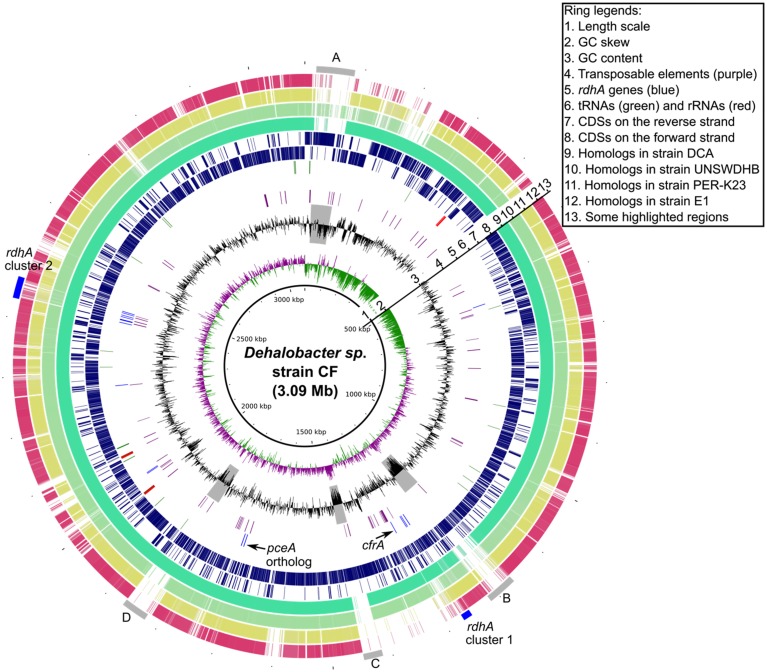
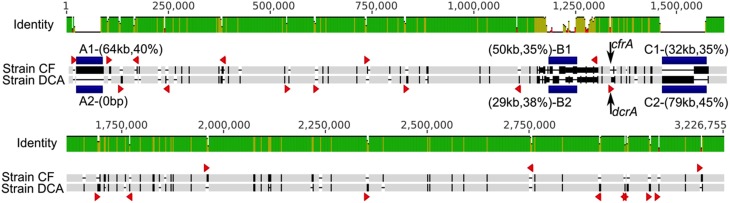
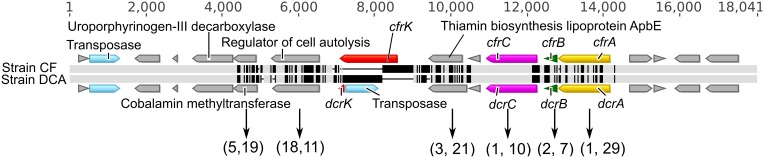
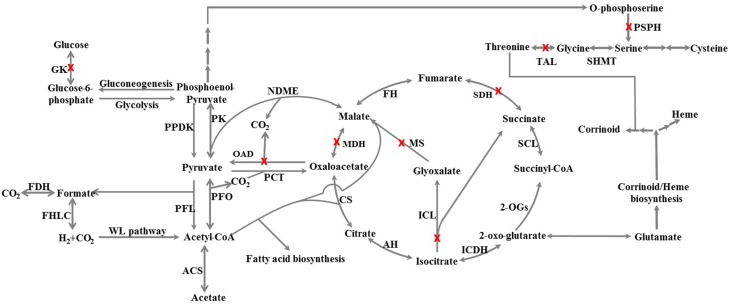
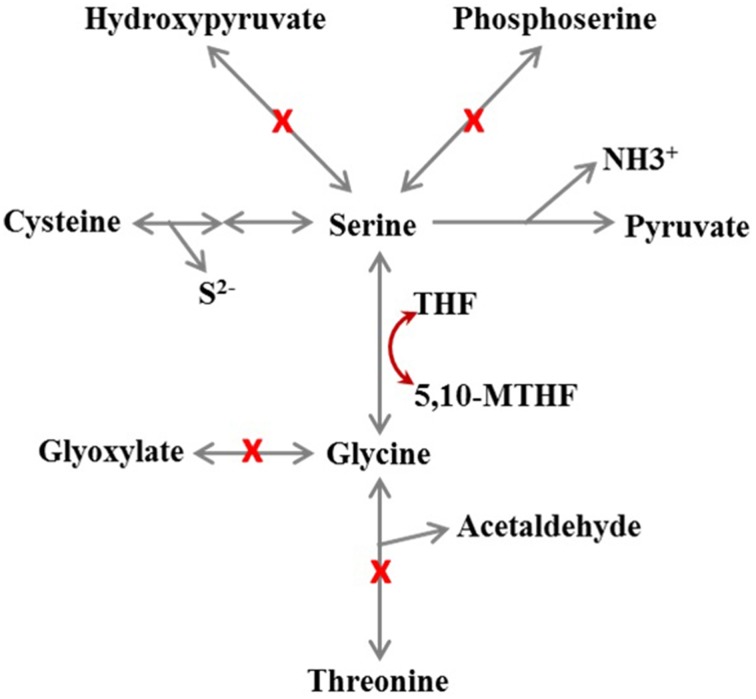
The genomes of two closely related Dehalobacter strains (strain CF and strain DCA) were assembled from the metagenome of an anaerobic enrichment culture that reductively dechlorinates chloroform (CF), 1,1,1-trichloroethane (1,1,1-TCA) and 1,1-dichloroethane (1,1-DCA). The 3.1 Mbp genomes of strain CF (that dechlorinates CF and 1,1,1-TCA) and strain DCA (that dechlorinates 1,1-DCA) each contain 17 putative reductive dehalogenase homologous (rdh) genes. These two genomes were systematically compared to three other available organohalide-respiring Dehalobacter genomes (Dehalobacter restrictus strain PER-K23, Dehalobacter sp. strain E1 and Dehalobacter sp. strain UNSWDHB), and to the genomes of Dehalococcoides mccartyi strain 195 and Desulfitobacterium hafniense strain Y51. This analysis compared 42 different metabolic and physiological categories. The genomes of strains CF and DCA share 90% overall average nucleotide identity and >99.8% identity over a 2.9 Mbp alignment that excludes large insertions, indicating that these genomes differentiated from a close common ancestor. This differentiation was likely driven by selection pressures around two orthologous reductive dehalogenase genes, cfrA and dcrA, that code for the enzymes that reduce CF or 1,1,1-TCA and 1,1-DCA. The many reductive dehalogenase genes found in the five Dehalobacter genomes cluster into two small conserved regions and were often associated with Crp/Fnr transcriptional regulators. Specialization is on-going on a strain-specific basis, as some strains but not others have lost essential genes in the Wood-Ljungdahl (strain E1) and corrinoid biosynthesis pathways (strains E1 and PER-K23). The gene encoding phosphoserine phosphatase, which catalyzes the last step of serine biosynthesis, is missing from all five Dehalobacter genomes, yet D. restrictus can grow without serine, suggesting an alternative or unrecognized biosynthesis route exists. In contrast to D. mccartyi, a complete heme biosynthesis pathway is present in the five Dehalobacter genomes. This pathway corresponds to a newly described alternative heme biosynthesis route first identified in Archaea. This analysis of organohalide-respiring Firmicutes and Chloroflexi reveals profound evolutionary differences despite very similar niche-specific metabolism and function.
Overview
The claims and statistics of this paper haven’t been checked yet.
Run the check — free, no account needed. It reads the open-access text and checks the sources it cites.
Integrity signals
Registry
Cites
Statistics
Figures
Verification
Claims the paper makes
The claims and statistics of this paper haven’t been checked yet.
Run the check — free, no account needed. It reads the open-access text and checks the sources it cites.
Claims other papers make about this one
Each is checked against this paper’s own text: does it say what the citing paper says it does?
The source backs part of the claim, not all of it — or backs it for a different population, condition or comparison.
In the citing paper
“This process of organochlorine and organobromine respiration is now considered to be reasonably common, evolutionarily ancient, and further adapted in response to the many chlorinated and brominated natural products produced in the environment (Mayer‐Blackwell et al., 2016; Tang et al., 2016).”
From Nothing lasts forever: understanding microbial biodegradation of polyfluorinated compounds and perfluorinated alkyl substances (2022) · cites this paper as Tang et al., 2016
Experimental — accuracy not yet measured
Self-check
Percentages, sums and reported differences re-computed from the paper’s own numbers.
The self-check needs the paper’s full text.
Citations
Cites
MUSCLE: multiple sequence alignment with high accuracy and high throughput
Edgar, R. C. (2004) · Nucleic Acids Research · doi:10.1093/nar/gkh340 · Cited by 44,662
The Pfam Protein Families Database
Bateman, A. (2002) · Nucleic Acids Research · doi:10.1093/nar/30.1.276 · Cited by 14,000
The RAST Server: Rapid Annotations using Subsystems Technology
Aziz, R. K., Bartels, D., Best, A. A., DeJongh, M., Disz, T., Edwards, R. A., Formsma, K., Gerdes, S., Glass, E. M., Kubal, M., et al. (2008) · BMC Genomics · doi:10.1186/1471-2164-9-75 · Cited by 11,729
progressiveMauve: Multiple Genome Alignment with Gene Gain, Loss and Rearrangement
Darling, A. E., Mau, B., & Perna, N. T. (2010) · PLoS ONE · doi:10.1371/journal.pone.0011147 · Cited by 3,848
BLAST Ring Image Generator (BRIG): simple prokaryote genome comparisons
Alikhan, N.-F., Petty, N. K., Ben Zakour, N. L., & Beatson, S. A. (2011) · BMC Genomics · doi:10.1186/1471-2164-12-402 · Cited by 3,303
Identifying bacterial genes and endosymbiont DNA with Glimmer
Delcher, A. L., Bratke, K. A., Powers, E. C., & Salzberg, S. L. (2007) · Bioinformatics · doi:10.1093/bioinformatics/btm009 · Cited by 3,157
The Pfam protein families database
Finn, R. D., Mistry, J., Tate, J., Coggill, P., Heger, A., Pollington, J. E., Gavin, O. L., Gunasekaran, P., Ceric, G., Forslund, K., et al. (2010) · Nucleic Acids Research · doi:10.1093/nar/gkp985 · Cited by 2,694
Making sense of it all: bacterial chemotaxis
Wadhams, G. H., & Armitage, J. P. (2004) · Nature Reviews Molecular Cell Biology · doi:10.1038/nrm1524 · Cited by 1,489
IMG ER: a system for microbial genome annotation expert review and curation
Markowitz, V. M., Mavromatis, K., Ivanova, N. N., Chen, I.-M. A., Chu, K., & Kyrpides, N. C. (2009) · Bioinformatics · doi:10.1093/bioinformatics/btp393 · Cited by 817
DNA uptake during bacterial transformation
Chen, I., & Dubnau, D. (2004) · Nature Reviews Microbiology · doi:10.1038/nrmicro844 · Cited by 769
Research works printed but not linked: 3
- Drummond, 2011, Geneious v5.4.2
- Tang, 2014, Investigation of Dehalobacter-Containing Cultures that Reductively Dechlorinate Chloroform and 1,1,1-Trichloroethane (Doctoral dissertation)
- Ward, 2010, In situ Remediation of Chlorinated Solvent Plumes. SERDP and ESTCP Remediation Technology Monograph Series.
Cited by
Wackett, L. P. (2022) · Microbial Biotechnology · doi:10.1111/1751-7915.13928 · Cited by 165
Metadata
- Authors
- Tang, S., Wang, P. H., Higgins, S. A., Löffler, F. E., & Edwards, E. A.
- Venue
- Frontiers in Microbiology
- Publisher
- Frontiers Media SA
- Published
- 2016-02-12
- Volume
- 7
- ISSN
- 1664-302X
- PMC
- PMC4751268
- Cited by
- 27
- References
- 78
- Funders
- Genome Canada (2009-OGI-ABC-1405)
About these checks
Registry, retraction, Cites and statistics results are computed, not judged, with one exception: a printed reference that no index lists is read once by a model before it counts as a citation error. Claims are extracted by a model and kept only when their quote appears verbatim in the text; each cited source is then checked, with a model’s help, for whether it says what the claim relies on. Those verdicts can be wrong — read the claim’s quote and the cited source before relying on one.
Statistics and arithmetic are recomputed, not judged.
Confidence bands are shown only for fields calibrated on our annotated test set. None is calibrated yet, so no band is shown.
What counts as a claim ›How we measure confidence ›How we check this ›
Are you an author, or do you see a problem with this page? Request a review
How to cite
Cite CoChat for the checks on this page, and the paper for its own findings.
- This page
- CoChat. (2026). Citation check: Sister Dehalobacter Genomes Reveal Specialization in Organohalide Respiration and Recent Strain Differentiation Likely Driven by Chlorinated Substrates. https://app.cochat.ai/papers/10.3389/fmicb.2016.00100
- The paper
- Tang, S., Wang, P. H., Higgins, S. A., Löffler, F. E., & Edwards, E. A. (2016). Sister Dehalobacter Genomes Reveal Specialization in Organohalide Respiration and Recent Strain Differentiation Likely Driven by Chlorinated Substrates. Frontiers in Microbiology. https://doi.org/10.3389/fmicb.2016.00100
Data sources
Bibliographic data: Semantic Scholar, OpenAlex, Crossref.
Contains information from the Semantic Scholar Academic Graph Datasets, made available under the ODC Attribution License (ODC-BY 1.0).
Semantic Scholar’s data is described in: Kinney, R., et al. (2023). The Semantic Scholar Open Data Platform. arXiv:2301.10140.
