

The DOI matches its Crossref record; 194 of the 194 references it cites were found in a registry or an index.
The Role of APOE4 in Disrupting the Homeostatic Functions of Astrocytes and Microglia in Aging and Alzheimer’s Disease
Open accessAbstract
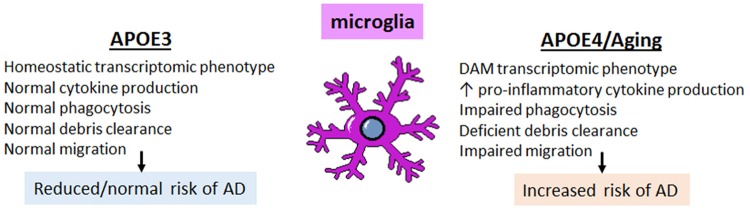
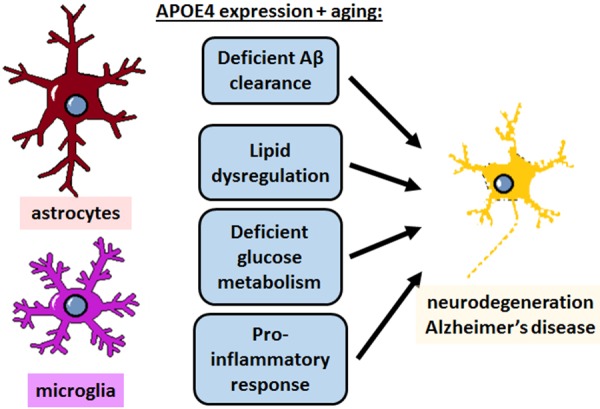
APOE4 is the greatest genetic risk factor for late-onset Alzheimer's disease (AD), increasing the risk of developing the disease by 3-fold in the 14% of the population that are carriers. Despite 25 years of research, the exact mechanisms underlying how APOE4 contributes to AD pathogenesis remain incompletely defined. APOE in the brain is primarily expressed by astrocytes and microglia, cell types that are now widely appreciated to play key roles in the pathogenesis of AD; thus, a picture is emerging wherein APOE4 disrupts normal glial cell biology, intersecting with changes that occur during normal aging to ultimately cause neurodegeneration and cognitive dysfunction. This review article will summarize how APOE4 alters specific pathways in astrocytes and microglia in the context of AD and the aging brain. APOE itself, as a secreted lipoprotein without enzymatic activity, may prove challenging to directly target therapeutically in the classical sense. Therefore, a deeper understanding of the underlying pathways responsible for APOE4 toxicity is needed so that more tractable pathways and drug targets can be identified to reduce APOE4-mediated disease risk.
Overview
The claims and statistics of this paper haven’t been checked yet.
Run the check — free, no account needed. It reads the open-access text and checks the sources it cites.
Integrity signals
Registry
Cites
Statistics
Figures
Verification
Claims the paper makes
The claims and statistics of this paper haven’t been checked yet.
Run the check — free, no account needed. It reads the open-access text and checks the sources it cites.
Claims other papers make about this one
Each is checked against this paper’s own text: does it say what the citing paper says it does?
The source backs part of the claim, not all of it — or backs it for a different population, condition or comparison.
In the citing paper
“ApoE is the most abundant apolipoprotein in the brain, where it is primarily expressed by astrocytes and reactive microglia7, regulating cholesterol metabolism8,9.”
From Decreased lipidated ApoE‐receptor interactions confer protection against pathogenicity of ApoE and its lipid cargoes in lysosomes (2025) · cites this paper as [7]
Experimental — accuracy not yet measuredThe source backs part of the claim, not all of it — or backs it for a different population, condition or comparison.
In the citing paper
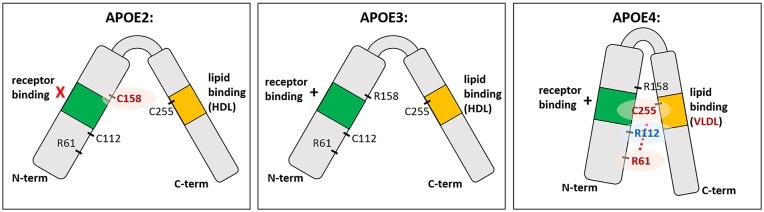
“The Cys112 residue in APOE2 reduces its receptor binding capacity, congruent with the increased levels of lipoproteins in plasma, leading to hyperlipidemia III (Fernandez et al., 2019).”
From APOE2, E3, and E4 differentially modulate cellular homeostasis, cholesterol metabolism, and inflammatory response in isogenic iPSC-derived astrocytes (2022) · cites this paper as Fernandez et al., 2019
Experimental — accuracy not yet measured
Self-check
Percentages, sums and reported differences re-computed from the paper’s own numbers.
The self-check needs the paper’s full text.
Citations
Cites
Corder, E. H., Saunders, A. M., Strittmatter, W. J., Schmechel, D. E., Gaskell, P. C., Small, G. W., Roses, A. D., Haines, J. L., & Pericak-Vance, M. A. (1993) · Science · doi:10.1126/science.8346443 · Cited by 9,429
Neurotoxic reactive astrocytes are induced by activated microglia
Liddelow, S. A., Guttenplan, K. A., Clarke, L. E., Bennett, F. C., Bohlen, C. J., Schirmer, L., Bennett, M. L., Münch, A. E., Chung, W.-S., Peterson, T. C., et al. (2017) · Nature · doi:10.1038/nature21029 · Cited by 7,971
A Unique Microglia Type Associated with Restricting Development of Alzheimer’s Disease
Keren-Shaul, H., Spinrad, A., Weiner, A., Matcovitch-Natan, O., Dvir-Szternfeld, R., Ulland, T. K., David, E., Baruch, K., Lara-Astaiso, D., Toth, B., et al. (2017) · Cell · doi:10.1016/j.cell.2017.05.018 · Cited by 5,493
Meta-Analysis of 74,046 Individuals Identifies 11 New Susceptibility Loci for Alzheimer’s Disease
(EADI), E. A. D. I., Lambert, J.-C., (GERAD), G. A. E. R. I. A. D., Alzheimer's Disease Genetic Consortium (ADGC), (CHARGE), C. F. H. A. A. R. I. G. E., Ibrahim-Verbaas, C. A., Harold, D., Naj, A. C., Sims, R., Bellenguez, C., et al. (2013) · Nature Genetics · doi:10.1038/ng.2802 · Cited by 4,336
Strittmatter, W. J., Saunders, A. M., Schmechel, D., Pericak-Vance, M., Enghild, J., Salvesen, G. S., & Roses, A. D. (1993) · Proceedings of the National Academy of Sciences · doi:10.1073/pnas.90.5.1977 · Cited by 4,268
Synaptic Pruning by Microglia Is Necessary for Normal Brain Development
Paolicelli, R. C., Bolasco, G., Pagani, F., Maggi, L., Scianni, M., Panzanelli, P., Giustetto, M., Ferreira, T. A., Guiducci, E., Dumas, L., et al. (2011) · Science · doi:10.1126/science.1202529 · Cited by 4,244
Microglia Sculpt Postnatal Neural Circuits in an Activity and Complement-Dependent Manner
Schafer, D. P., Lehrman, E. K., Kautzman, A. G., Koyama, R., Mardinly, A. R., Yamasaki, R., Ransohoff, R. M., Greenberg, M. E., Barres, B. A., & Stevens, B. (2012) · Neuron · doi:10.1016/j.neuron.2012.03.026 · Cited by 4,089
Apolipoprotein E: Cholesterol Transport Protein with Expanding Role in Cell Biology
Mahley, R. W. (1988) · Science · doi:10.1126/science.3283935 · Cited by 4,028
Association of apolipoprotein E allele ϵ4 with late‐onset familial and sporadic Alzheimer's disease
Saunders, A. M., Strittmatter, W. J., Schmechel, D., St. George-Hyslop, P. H., Pericak-Vance, M. A., Joo, S. H., Rosi, B. L., Gusella, J. F., Crapper-MacLachlan, D. R., Alberts, M. J., et al. (1993) · Neurology · doi:10.1212/wnl.43.8.1467 · Cited by 3,786
Oakley, H., Cole, S. L., Logan, S., Maus, E., Shao, P., Craft, J., Guillozet-Bongaarts, A., Ohno, M., Disterhoft, J., Van Eldik, L., et al. (2006) · The Journal of Neuroscience · doi:10.1523/jneurosci.1202-06.2006 · Cited by 3,530
Cited by
Sorted by citations
Items 101–200 of 278
Garcia‐Segura, M. E., Durainayagam, B. R., Liggi, S., Graça, G., Jiménez, B., Dehghan, A., Tzoulaki, I., Karaman, İ., Elliott, P., & Griffin, J. L. (2022) · Journal of Neurochemistry · doi:10.1111/jnc.15719 · Cited by 25
Anand, C., Maia, P. D., Torok, J., Mezias, C., & Raj, A. (2022) · Scientific Reports · doi:10.1038/s41598-022-25131-3 · Cited by 27
Cross interactions between Apolipoprotein E and amyloid proteins in neurodegenerative diseases
Loch, R. A., Wang, H., Perálvarez‐Marín, A., Berger, P., Nielsen, H. M., Chroni, A., & Luo, J. (2023) · Computational and Structural Biotechnology Journal · doi:10.1016/j.csbj.2023.01.022 · Cited by 26
APOE4 is a Risk Factor and Potential Therapeutic Target for Alzheimer's Disease
Ayyubova, G. (2023) · CNS & Neurological Disorders - Drug Targets · doi:10.2174/1871527322666230303114425 · Cited by 23
Sepulveda, J., Luo, N., Nelson, M., Ng, C. A. S., & Rebeck, G. W. (2022) · Journal of Neurochemistry · doi:10.1111/jnc.15665 · Cited by 24
Alternative Targets to Fight Alzheimer’s Disease: Focus on Astrocytes
Valenza, M., Facchinetti, R., Menegoni, G., Steardo, L., & Scuderi, C. (2021) · Biomolecules · doi:10.3390/biom11040600 · Cited by 25
Rouhi, N., Akhgari, A., Orouji, N., Nezami, A., Rahimzadegan, M., & Kamali, H. (2022) · Journal of Pharmaceutical and Biomedical Analysis · doi:10.1016/j.jpba.2022.115084 · Cited by 24
Little, K., Singh, A. P., del Marco, À., Llorián‐Salvador, M., Vargas-Soria, M., Turch, M., Solé, M., Bakker, N., Scullion, S., Comella, J. X., et al. (2023) · Diabetologia · doi:10.1007/s00125-023-05935-2 · Cited by 26
Celis, K., Moreno, M. D. M. M., Rajabli, F., Whitehead, P. L., Hamilton‐Nelson, K. L., Dykxhoorn, D. M., Nuytemans, K., Wang, L., Flanagan, M. E., Weıntraub, S., et al. (2023) · Alzheimer s & Dementia · doi:10.1002/alz.13075 · Cited by 23
Zhang, X., Chen, X., Zhang, L., Sun, Y., Liang, Y., Li, H., & Zhang, Y. (2023) · Neurochemistry International · doi:10.1016/j.neuint.2023.105639 · Cited by 23
Cell type-specific functions of Alzheimer's disease endocytic risk genes
Maninger, J.-K., Nowak, K., Goberdhan, S., O'Donoghue, R., & Connor-Robson, N. (2024) · Philosophical Transactions of the Royal Society B: Biological Sciences · doi:10.1098/rstb.2022.0378 · Cited by 22
Budny, V., Ruminot, I., Wybitul, M., Treyer, V., Barros, L. F., & Tackenberg, C. (2025) · Translational Psychiatry · doi:10.1038/s41398-025-03550-w · Cited by 25
Triebswetter, C., Kiely, M., Khattar, N., Ferrucci, L., Resnick, S. M., Spencer, R. G. S., & Bouhrara, M. (2022) · NeuroImage · doi:10.1016/j.neuroimage.2022.118988 · Cited by 21
Zhou, X., Fu, A. K. Y., & Ip, N. Y. (2021) · Current Opinion in Neurobiology · doi:10.1016/j.conb.2021.02.001 · Cited by 23
Faraji, P., Kühn, H., & Ahmadian, S. (2024) · Journal of Molecular Neuroscience · doi:10.1007/s12031-024-02224-4 · Cited by 25
Does Alzheimer's disease stem in the gastrointestinal system?
Khodabakhsh, P., Bazrgar, M., Dargahi, L., Mohagheghi, F., Taei, A. A., Parvardeh, S., & Ahmadiani, A. (2021) · Life Sciences · doi:10.1016/j.lfs.2021.120088 · Cited by 21
APOE polymorphism in ATTR amyloidosis patients treated with lipid nanoparticle siRNA
Niemietz, C., Nadzemova, O., Zibert, A., & Schmidt, H. H.-J. (2020) · Amyloid · doi:10.1080/13506129.2019.1681392 · Cited by 22
Robbins, J., Busquets, O., Tong, M., & de la Monte, S. M. (2020) · Journal of Alzheimer s Disease Reports · doi:10.3233/adr-200238 · Cited by 19
Luckey, A. M., Robertson, I. H., LAWLOR, B. A., Mohan, A., & Vanneste, S. (2021) · Journal of Alzheimer s Disease · doi:10.3233/jad-210404 · Cited by 24
Hyperpolarized [1-13C]lactate flux increased in the hippocampal region in diabetic mice
Choi, Y., Song, J. E., Lee, J. E., Kim, E., Kim, C. H., Kim, D., & Song, H. (2019) · Molecular Brain · doi:10.1186/s13041-019-0505-9 · Cited by 19
Pomilio, A. B., Vitale, A. A., & Lazarowski, A. (2022) · Current Medicinal Chemistry · doi:10.2174/0929867329666221003101548 · Cited by 18
Stephen, T., Breningstall, B. M., Suresh, S., McGill, C. J., & Pike, C. J. (2022) · Journal of Neuroinflammation · doi:10.1186/s12974-022-02650-4 · Cited by 17
COVID‐19 and the impact on Alzheimer's disease pathology
Furman, S., Green, K. N., & Lane, T. E. (2023) · Journal of Neurochemistry · doi:10.1111/jnc.15985 · Cited by 18
Geerts, H., & Spiros, Ä. (2020) · Alzheimer s & Dementia · doi:10.1002/alz.12082 · Cited by 19
Wu, B., Liu, Y., Li, H., Zhu, L., Zeng, L., Zhang, Z., & Peng, W. (2023) · Neural Regeneration Research · doi:10.4103/1673-5374.391305 · Cited by 22
Sepulveda, J., Kim, J. Y., Binder, J., Vicini, S., & Rebeck, G. W. (2024) · Molecular Neurodegeneration · doi:10.1186/s13024-024-00714-y · Cited by 19
Slota, J. A., Medina, S. J., Frost, K. L., & Booth, S. A. (2022) · Frontiers in Neuroscience · doi:10.3389/fnins.2022.918811 · Cited by 16
Microglial apolipoprotein E particles contribute to neuronal senescence and synaptotoxicity
Wang, N., Cai, L., Pei, X., Lin, Z., Huang, L., Liang, C., Wei, M., Shao, L., Guo, T., Huang, F., et al. (2024) · iScience · doi:10.1016/j.isci.2024.110006 · Cited by 18
ApoE4 attenuates cortical neuronal activity in young behaving apoE4 rats
Har-Paz, I., Arieli, E., & Moran, A. (2021) · Neurobiology of Disease · doi:10.1016/j.nbd.2021.105373 · Cited by 14
Cheng, Z., Tao, S., Li, X., Zeng, X., Zhang, M., & Yao, Q. (2019) · Artificial Cells Nanomedicine and Biotechnology · doi:10.1080/21691401.2019.1609979 · Cited by 16
Endogenous Human Proteins Interfering with Amyloid Formation
Gharibyan, A. L., Jayaweera, S. W., Lehmann, M., Anan, I., & Olofsson, A. (2022) · Biomolecules · doi:10.3390/biom12030446 · Cited by 17
The glymphatic system as a therapeutic target: TMS-induced modulation in older adults
Sundman, M., Liu, Y., Chen, N., & Chou, Y. (2025) · Frontiers in Aging Neuroscience · doi:10.3389/fnagi.2025.1597311 · Cited by 17
Amyloid –β pathology in Alzheimer’s disease: A nano delivery approach
Meghana, G. S., Gowda, D., Chidambaram, S. B., & Osmani, R. A. M. (2023) · Vibrational Spectroscopy · doi:10.1016/j.vibspec.2023.103510 · Cited by 17
Liou, J., Lou, J. J., Aguilar, L. F., Nakagiri, J., Yong, W. H., Hom, C. L., Doran, E. W., Totoiu, M. O., Lott, I. T., Mapstone, M. E., et al. (2025) · Alzheimer s & Dementia · doi:10.1002/alz.14479 · Cited by 16
Snellman, A., Ekblad, L. L., Koivumäki, M., Lindgrén, N., Tuisku, J., Perälä, M., Kallio, L., Lehtonen, R., Saunavaara, V., Saunavaara, J. P., et al. (2022) · Frontiers in Neurology · doi:10.3389/fneur.2022.826423 · Cited by 15
Пономарева, Н. В., Андреева, Т. В., Protasova, M., Коновалов, Р. Н., Кротенкова, М. В., Kolesnikova, E. P., Malina, D. D., Kanavets, E. V., Алексеевич, М. А., Fokin, V. F., et al. (2022) · Frontiers in Neuroscience · doi:10.3389/fnins.2022.931173 · Cited by 14
Fleeman, R. M., Snyder, A. M., Kuhn, M. K., Chan, D. C., Smith, G. C., Crowley, N. A., Arnold, A. C., & Proctor, E. A. (2022) · Neurobiology of Aging · doi:10.1016/j.neurobiolaging.2022.11.015 · Cited by 13
Hu, Z., Yuan, Y.-Q., Tong, Z., Liao, M., Yuan, S., Jian, Y., Yang, J.-L., & Liu, W. (2023) · Molecular Neurobiology · doi:10.1007/s12035-023-03529-y · Cited by 13
Laslo, A., Laslo, L., Arbănași, E. M., Ujlaki-Nagi, A.-A., Chinezu, L., Ivănescu, A. D., Arbănași, E. M., Carare, R. O., Cordoș, B. A., Popa, I. A., et al. (2024) · Pathophysiology · doi:10.3390/pathophysiology31040040 · Cited by 14
Pan, Y., Kagawa, Y., Sun, J., Lucas, D. D., Takechi, R., Mamo, J. C. L., Wai, D. C. C., Norton, R. S., Jin, L., & Nicolazzo, J. A. (2023) · Neurotherapeutics · doi:10.1007/s13311-023-01387-z · Cited by 12
Functional insight into LOAD-associated microglial response genes
Jonas, L. A., Jain, T., & Li, Y. (2022) · Open Biology · doi:10.1098/rsob.210280 · Cited by 13
The Significance of Apolipoprotein E Measurement in the Screening of Fetal Down Syndrome
Buczyńska, A., Sidorkiewicz, I., Ławicki, S., Kretowski, A. J., & Zbucka-Krętowska, M. (2020) · Journal of Clinical Medicine · doi:10.3390/jcm9123995 · Cited by 13
Accelerated midlife endocrine and bioenergetic brain aging in APOE4 females
Wang, T., Mao, Z., Shang, Y., Merlini, S., Vitali, F., Wiegand, J. L., & Brinton, R. D. (2025) · Frontiers in Aging Neuroscience · doi:10.3389/fnagi.2025.1632877 · Cited by 12
Manap, A. S. A., Madhavan, P., Vijayabalan, S., Chia, A. Y. Y., & Fukui, K. (2020) · PeerJ · doi:10.7717/peerj.10003 · Cited by 11
Liu, S., Zhang, R., & Hallajzadeh, J. (2025) · Molecular Medicine · doi:10.1186/s10020-025-01091-y · Cited by 11
Yang, X., Yao, K., Zhang, M., Zhang, W., & Zu, H. (2025) · Brain Research Bulletin · doi:10.1016/j.brainresbull.2025.111321 · Cited by 12
Toledano‐Díaz, A., Álvarez, M., & Tolédano, A. (2022) · Journal of Central Nervous System Disease · doi:10.1177/11795735221128703 · Cited by 11
Pham, A. M., Ortiz, L. E., Lukacher, A. E., & Kwun, H. J. (2023) · Cells · doi:10.3390/cells12030380 · Cited by 12
Liu, J., Amin, N., Sproviero, W., Arnold, M., Batra, R., Bonnechère, B., Chiou, Y., Fernandes, M., Krumsiek, J., Newby, D., et al. (2022) · medRxiv · doi:10.1101/2022.02.25.22271530 · Cited by 10
Research Progress of Lipid Metabolism-Mediated Neuroinflammation in Alzheimer’s Disease
Shen, Y., Wang, X., Liu, X., Wang, G., Hou, X., & Zhou, X. (2025) · Cellular and Molecular Neurobiology · doi:10.1007/s10571-025-01648-9 · Cited by 12
Tissue-specific features of microglial innate immune responses
Timmerman, R., Burm, S. M., & Bajramovic, J. J. (2020) · Neurochemistry International · doi:10.1016/j.neuint.2020.104924 · Cited by 10
Scheinman, S. B., Zaldua, S., Dada, A., Krochmaliuk, K., Dye, K., Marottoli, F. M., Thatcher, G. R. J., & Tai, L. M. (2021) · Frontiers in Neuroscience · doi:10.3389/fnins.2021.628403 · Cited by 11
Dolai, S., Pal, S., Deepa, S. M., & Garai, K. (2024) · The Journal of Physical Chemistry B · doi:10.1021/acs.jpcb.4c04738 · Cited by 8
Zhang, P.-F., Wang, Z.-T., Liu, Y., Hu, H., Sun, Y., Hu, H.-Y., Ma, Y.-H., Tan, L., & Yu, J.-T. (2022) · Journal of Alzheimer s Disease · doi:10.3233/jad-220057 · Cited by 9
Building in vitro models of the brain to understand the role ofAPOEin Alzheimer’s disease
Pinals, R. L., & Tsai, L. (2022) · Life Science Alliance · doi:10.26508/lsa.202201542 · Cited by 10
Ganesan, K., Rentsch, P., Langdon, A., Milham, L. T., & Vissel, B. (2024) · Frontiers in Aging Neuroscience · doi:10.3389/fnagi.2024.1357405 · Cited by 11
Singh, M., Singh, S. P., Yadav, D., Agarwal, M., Agarwal, S., Agarwal, V., Swargiary, G., Srivastava, S., Tyagi, S., Kaur, R., et al. (2020) · Current Gene Therapy · doi:10.2174/1566523220999200817164907 · Cited by 9
Stefano, G. B., Esch, T., Ptáček, R., & Kream, R. M. (2020) · Medical Science Monitor · doi:10.12659/msm.927739 · Cited by 9
Amukti, D. P., Wazni, A. R., Irham, L. M., Sulistyani, N., Ma’ruf, M. F., Adikusuma, W., Sarasmita, M. A., Khairi, S., Purwanto, B. D., Suyatmi, S., et al. (2024) · E3S Web of Conferences · doi:10.1051/e3sconf/202450101021 · Cited by 8
Williams, V. J., Trane, R. M., Sicinski, K., Herd, P., Engelman, M., & Asthana, S. (2024) · Alzheimer s & Dementia · doi:10.1002/alz.14216 · Cited by 7
Signs of Alzheimer’s Disease: Tied to Aging
Chen, J., Zhu, Z., & Xu, Y. (2025) · International Journal of Molecular Sciences · doi:10.3390/ijms26114974 · Cited by 10
Zang, Z., Yang, F., Qu, L., Ge, M., Tong, L., Xue, L., Sun, X., & Hai, Y. (2025) · Frontiers in Aging Neuroscience · doi:10.3389/fnagi.2025.1640389 · Cited by 8
Li, C., Lu, P., Zhang, L., He, Y., Zhang, L., Yang, L., Zhang, F., Kong, X., Tao, Q., Zhou, J., et al. (2023) · Neuroscience · doi:10.1016/j.neuroscience.2023.05.020 · Cited by 9
Diverse signaling mechanisms and heterogeneity of astrocyte reactivity in Alzheimer's disease
Qin, H., Zhou, L., Haque, F. T., Martín-Jiménez, C., Trang, A., Benveniste, E. N., & Wang, Q. (2023) · Journal of Neurochemistry · doi:10.1111/jnc.16002 · Cited by 10
SRC-1 Knockout Exerts No Effect on Amyloid β Deposition in APP/PS1 Mice
Wu, Q., Wang, B., Li, Q., Zhang, X., Ntim, M., Wu, X., Li, N., Zhu, D., Jiang, R., Yang, J.-Y., et al. (2020) · Frontiers in Aging Neuroscience · doi:10.3389/fnagi.2020.00145 · Cited by 8
de Leeuw, S. M., Kirschner, A. W. T., Lindner, K., Rust, R., Wolski, W., Gavin, A., Nitsch, R. M., & Tackenberg, C. (2021) · bioRxiv (Cold Spring Harbor Laboratory) · doi:10.1101/2021.07.17.452644 · Cited by 8
Lysaker, C. R., Johnson, C. N., Csikós, V., Franczak, E., Benson, M. N., Gilmore, C. A., Birky, C. J., Davis, X. C., McCoin, C. S., Smith, K. P., et al. (2025) · bioRxiv (Cold Spring Harbor Laboratory) · doi:10.1101/2025.06.15.659811 · Cited by 8
Grenon, M. B., Papavergi, M.-T., Bathini, P., Sadowski, M. J., & Lemere, C. A. (2024) · International Journal of Molecular Sciences · doi:10.3390/ijms25115754 · Cited by 7
Dobrowolski, C., Barraclough, M. L., Su, J., Tanic, M., Bingham, K. S., Ruttan, L., Beaton, D., Wither, J., Tartaglia, M. C., Sano, M. C., et al. (2023) · Lupus Science & Medicine · doi:10.1136/lupus-2023-000923 · Cited by 8
Srisaikaew, P., Chad, J. A., Mahakkanukrauh, P., Anderson, N. D., & Chen, J. J. (2023) · Frontiers in Neuroscience · doi:10.3389/fnins.2023.1049609 · Cited by 7
Hodgson, L. M., Li, Y., Iturria‐Medina, Y., Stratton, J. A., Wolf, G., Krishnaswamy, S., Bennett, D. A., & Bzdok, D. (2024) · Communications Biology · doi:10.1038/s42003-024-06273-8 · Cited by 7
APOE4 drives transcriptional heterogeneity and maladaptive immunometabolic responses of astrocytesPreprint
Lee, S., Williams, H. C., Gorman, A. A., Devanney, N. A., Harrison, D. A., Walsh, A. E., Goulding, D. S., Tuck, T., Schwartz, J. L., Zajac, D. J., et al. (2023) · bioRxiv (Cold Spring Harbor Laboratory) · doi:10.1101/2023.02.06.527204 · Cited by 7
Neurodevelopment and neural environment inform Alzheimer's disease age at onset and phenotype
Miller, Z., Ossenkoppele, R., Graff‐Radford, N. R., Allen, I. E., Shwe, W., Rosenberg, L. M., Olguin, D. J., Erkkinen, M. G., Butler, P. M., Spina, S., et al. (2025) · Alzheimer s & Dementia · doi:10.1002/alz.70668 · Cited by 13
APOEε4 alters ApoE and Fabp7 in frontal cortex white matter in prodromal Alzheimer's disease
Moreno‐Rodríguez, M., Perez, S. E., Malek‐Ahmadi, M. H., & Mufson, E. J. (2025) · Journal of Neuroinflammation · doi:10.1186/s12974-025-03349-y · Cited by 8
Wang, H., Zhang, Z., Sittirattanayeunyong, S., & Hongpaisan, J. (2023) · Neuroscience · doi:10.1016/j.neuroscience.2023.06.019 · Cited by 6
Comparative gene regulatory networks modulating APOE expression in microglia and astrocytesPreprint
Brase, L., Yu, Y., McDade, E., Dominantly Inherited Alzheimer Network (DIAN), Harari, O., & Benítez, B. A. (2024) · medRxiv · doi:10.1101/2024.04.19.24306098 · Cited by 6
Apolipoprotein E4 as a Novel Treatment Target for Alzheimer’s Disease
Jervies, J. L., King, S. P., & Suphioglu, C. (2021) · Cellular Physiology and Biochemistry · doi:10.33594/000000475 · Cited by 5
Akahane, S., Matsuura, H., Kaido, T., Usami, Y., Ishimine, N., Uehara, T., & Yamauchi, K. (2024) · Biological Chemistry · doi:10.1515/hsz-2024-0018 · Cited by 5
Miller, Z., Ossenkoppele, R., Graff‐Radford, N. R., Allen, I. E., Shwe, W., Rosenberg, L. M., Olguin, D. J., Erkkinen, M. G., Butler, P. M., Spina, S., et al. (2022) · medRxiv · doi:10.1101/2022.12.17.22283307 · Cited by 5
Eshghi, M., Rong, P., Dadgostar, M., Shin, H. I., Richburg, B. D., Barnett, N. V., Salat, D. H., Arnold, S. E., & Green, J. R. (2025) · medRxiv · doi:10.1101/2025.04.29.25326665 · Cited by 5
Trudel, L., Therriault, J., Macedo, A. C., Woo, M. S., Rahmouni, N., Aumont, É., Servaes, S., Hosseini, S. A., Ferrari‐Souza, J. P., Bellaver, B., et al. (2025) · Communications Medicine · doi:10.1038/s43856-025-01171-4 · Cited by 6
Park, E., Jin, S.-W., Lim, H.-J., Kim, H.-Y., Kang, M.-S., & Yang, S. (2021) · Toxics · doi:10.3390/toxics9070150 · Cited by 4
Zhai, T., Krass, E., Zhang, F., & Huang, Z. J. (2023) · Frontiers in Systems Biology · doi:10.3389/fsysb.2023.1188430 · Cited by 6
The Dynamic SUMOylation Changes and Their Potential Role in the Senescence of APOE4 Mice
Xu, Y., Cai, W., Sang, S., Cheng, X., Jin, B., Zhao, X., & Zhong, C. (2023) · Biomedicines · doi:10.3390/biomedicines12010016 · Cited by 4
Shome, A., Jha, K. T., Chahat, Chawla, V., & Chawla, P. A. (2024) · CNS & Neurological Disorders - Drug Targets · doi:10.2174/0118715273315191241002115155 · Cited by 4
Toledano‐Díaz, A., Álvarez, M. I., & Tolédano, A. (2022) · Journal of Central Nervous System Disease · doi:10.1177/11795735221123896 · Cited by 5
Beyond the Genotype: A Multi-Omic Analysis of APOEe4’s Role in Alzheimer’s DiseasePreprint
Markov, Y., Priyanka, A., Xu, L., Wang, W., Thrush, K., González, J. T., Borrus, D. S., Kasamoto, J., Sehgal, R., Zou, G., et al. (2025) · bioRxiv (Cold Spring Harbor Laboratory) · doi:10.1101/2025.10.16.682426 · Cited by 4
Sardari, M., Sahafi, O. H., & Rezayof, A. (2025) · Brain Research · doi:10.1016/j.brainres.2025.150040 · Cited by 3
Feizolahi, F., Arabzadeh, E., Sarshin, A., Falahi, F., Dehghannayeri, Z., Askari, A. A., Wong, A., Aghaei, F., & Zargani, M. (2024) · Neurotoxicity Research · doi:10.1007/s12640-024-00699-y · Cited by 3
APOE gene region methylation is associated with cognitive performance in middle-aged urban adults
Shen, B., Hernandez, D. G., Chitrala, K. N., Kuczmarski, M. F., Hooten, N. N., Pacheco, N. L., Mode, N. A., Zonderman, A. B., Ezike, N., & Evans, M. K. (2022) · Neurobiology of Aging · doi:10.1016/j.neurobiolaging.2022.03.010 · Cited by 3
Dzianok, P., & Kublik, E. (2023) · Acta Neurobiologiae Experimentalis · doi:10.55782/ane-2023-012 · Cited by 4
Cho, J., Alexander, K. L., Ferrell, J. L., Johnson, L. A., Estus, S., & D’Orazio, S. E. F. (2023) · Infection and Immunity · doi:10.1128/iai.00251-23 · Cited by 3
Gonzalez, H., Narasipura, S. D., Shull, T. L., Shetty, A., Teppen, T. L., Naqib, A. D., & Al‐Harthi, L. (2023) · Cells · doi:10.3390/cells12192357 · Cited by 3
Serum immunoglobulins and biomarkers of dementia: a population-based study
Yaqub, A., Khan, S. R., Vernooij, M. W., van Hagen, P. M., Peeters, R. P., Ikram, M. A., Chaker, L., & Dalm, V. A. S. H. (2023) · Alzheimer s Research & Therapy · doi:10.1186/s13195-023-01333-3 · Cited by 4
Impaired cellular copper regulation in the presence of ApoE4
Blades, B., Hung, Y. H., Belaidi, A. A., Volitakis, I., Schultz, A. G., Cater, M. A., Cheung, N. S., Bush, A. I., Ayton, S., & Fontaine, S. L. (2024) · Journal of Neurochemistry · doi:10.1111/jnc.16198 · Cited by 3
Zhu, Y., Ji, J., Lin, W., Li, M., Liu, L., Zhu, H., Xue, F., Li, X., Zhou, X., & Yuan, Z. (2020) · BMC Genetics · doi:10.1186/s12863-020-00899-3 · Cited by 4
Dzianok, P., & Kublik, E. (2020) · Frontiers in Aging Neuroscience · doi:10.3389/fnagi.2020.00127 · Cited by 4
ApoE4-carrying Human Astrocytes Oversupply Cholesterol into Neurons and Promote Aβ GenerationPreprint
Lee, S.-I., Jeong, W., Cho, S., Lee, H. G., Jang, Y., Lin, Y.-T., Tsai, L., & Seo, J. (2020) · Research Square · doi:10.21203/rs.3.rs-122857/v1 · Cited by 3
Grone, B. P., Zalocusky, K. A., Hao, Y., Yoon, S. Y., Arriola, P., & Huang, Y. (2022) · bioRxiv (Cold Spring Harbor Laboratory) · doi:10.1101/2022.06.16.496371 · Cited by 3
Kubiś, J., & Figiel, M. (2023) · bioRxiv (Cold Spring Harbor Laboratory) · doi:10.1101/2023.04.20.537649 · Cited by 3
Metadata
- Authors
- Fernandez, C. G., Hamby, M. E., McReynolds, M. L., & Ray, W. J.
- Affiliations
- The University of Texas MD Anderson Cancer Center (US)
- Corresponding author
- Fernandez, Celia G.
- Venue
- Frontiers in Aging Neuroscience
- Publisher
- Frontiers Media SA
- Published
- 2019-02-11
- Volume
- 11
- Pages
- 14-14
- ISSN
- 1663-4365 (ISSN-L)
- PMC
- PMC6378415
- OpenAlex
- W2911484089
- Cited by
- 277
- References
- 194
- Citations by year
- 2026: 25 · 2025: 32 · 2024: 31 · 2023: 54 · 2022: 50 · 2021: 36 · 2020: 43 · 2019: 6
- FWCI
- 3.97
- Type
- journal article
- Language
- en
- Open access
- gold
- doi.org
- Licence
- Locations
- Frontiers in Aging Neuroscience (publishedVersion, cc-by)
- Europe PMC (PubMed Central) (publishedVersion, cc-by)
- PubMed Central (publishedVersion, cc-by)
- PubMed (publishedVersion)
- DOAJ (DOAJ: Directory of Open Access Journals) (submittedVersion, cc-by-sa)
- Funders
- Robert A. and Renee E. Belfer Family Foundation
- Topics
- Life Sciences › Neuroscience › Cellular and Molecular Neuroscience › Alzheimer's disease research and treatments
- Life Sciences › Neuroscience › Neurology › Neuroinflammation and Neurodegeneration Mechanisms
- Health Sciences › Medicine › Psychiatry and Mental health › Dementia and Cognitive Impairment Research
- Keywords
- APOE ε4, Alzheimer's disease, astrocytes, microglia, brain aging, neurodegeneration, cognitive impairment, therapeutic target, genetic risk factors
About these checks
Registry, retraction, Cites and statistics results are computed, not judged, with one exception: a printed reference that no index lists is read once by a model before it counts as a citation error. Claims are extracted by a model and kept only when their quote appears verbatim in the text; each cited source is then checked, with a model’s help, for whether it says what the claim relies on. Those verdicts can be wrong — read the claim’s quote and the cited source before relying on one.
Statistics and arithmetic are recomputed, not judged.
Confidence bands are shown only for fields calibrated on our annotated test set. None is calibrated yet, so no band is shown.
What counts as a claim ›How we measure confidence ›How we check this ›
Are you an author, or do you see a problem with this page? Request a review
