

The DOI matches its Crossref record; 194 of the 194 references it cites were found in a registry or an index.
The Role of APOE4 in Disrupting the Homeostatic Functions of Astrocytes and Microglia in Aging and Alzheimer’s Disease
Open accessAbstract
APOE4 is the greatest genetic risk factor for late-onset Alzheimer's disease (AD), increasing the risk of developing the disease by 3-fold in the 14% of the population that are carriers. Despite 25 years of research, the exact mechanisms underlying how APOE4 contributes to AD pathogenesis remain incompletely defined. APOE in the brain is primarily expressed by astrocytes and microglia, cell types that are now widely appreciated to play key roles in the pathogenesis of AD; thus, a picture is emerging wherein APOE4 disrupts normal glial cell biology, intersecting with changes that occur during normal aging to ultimately cause neurodegeneration and cognitive dysfunction. This review article will summarize how APOE4 alters specific pathways in astrocytes and microglia in the context of AD and the aging brain. APOE itself, as a secreted lipoprotein without enzymatic activity, may prove challenging to directly target therapeutically in the classical sense. Therefore, a deeper understanding of the underlying pathways responsible for APOE4 toxicity is needed so that more tractable pathways and drug targets can be identified to reduce APOE4-mediated disease risk.
Overview
The claims and statistics of this paper haven’t been checked yet.
Run the check — free, no account needed. It reads the open-access text and checks the sources it cites.
Integrity signals
Registry
Cites
Statistics
Figures
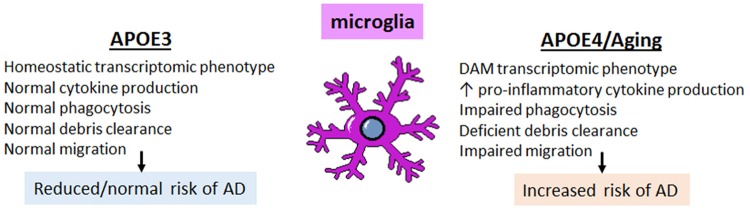
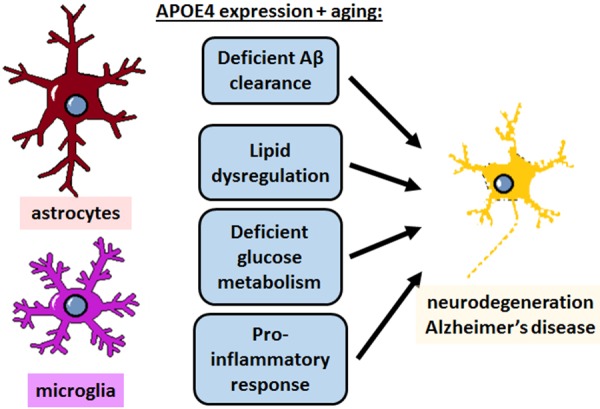
Verification
Claims the paper makes
The claims and statistics of this paper haven’t been checked yet.
Run the check — free, no account needed. It reads the open-access text and checks the sources it cites.
Claims other papers make about this one
Each is checked against this paper’s own text: does it say what the citing paper says it does?
The source backs part of the claim, not all of it — or backs it for a different population, condition or comparison.
In the citing paper
“ApoE is the most abundant apolipoprotein in the brain, where it is primarily expressed by astrocytes and reactive microglia7, regulating cholesterol metabolism8,9.”
From Decreased lipidated ApoE‐receptor interactions confer protection against pathogenicity of ApoE and its lipid cargoes in lysosomes (2025) · cites this paper as [7]
Experimental — accuracy not yet measuredThe source backs part of the claim, not all of it — or backs it for a different population, condition or comparison.
In the citing paper
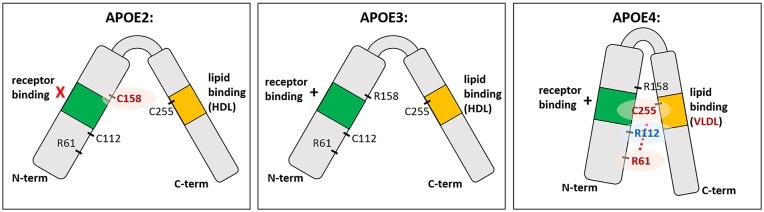
“The Cys112 residue in APOE2 reduces its receptor binding capacity, congruent with the increased levels of lipoproteins in plasma, leading to hyperlipidemia III (Fernandez et al., 2019).”
From APOE2, E3, and E4 differentially modulate cellular homeostasis, cholesterol metabolism, and inflammatory response in isogenic iPSC-derived astrocytes (2022) · cites this paper as Fernandez et al., 2019
Experimental — accuracy not yet measured
Self-check
Percentages, sums and reported differences re-computed from the paper’s own numbers.
The self-check needs the paper’s full text.
Citations
Cites
Corder, E. H., Saunders, A. M., Strittmatter, W. J., Schmechel, D. E., Gaskell, P. C., Small, G. W., Roses, A. D., Haines, J. L., & Pericak-Vance, M. A. (1993) · Science · doi:10.1126/science.8346443 · Cited by 9,429
Neurotoxic reactive astrocytes are induced by activated microglia
Liddelow, S. A., Guttenplan, K. A., Clarke, L. E., Bennett, F. C., Bohlen, C. J., Schirmer, L., Bennett, M. L., Münch, A. E., Chung, W.-S., Peterson, T. C., et al. (2017) · Nature · doi:10.1038/nature21029 · Cited by 7,971
A Unique Microglia Type Associated with Restricting Development of Alzheimer’s Disease
Keren-Shaul, H., Spinrad, A., Weiner, A., Matcovitch-Natan, O., Dvir-Szternfeld, R., Ulland, T. K., David, E., Baruch, K., Lara-Astaiso, D., Toth, B., et al. (2017) · Cell · doi:10.1016/j.cell.2017.05.018 · Cited by 5,493
Meta-Analysis of 74,046 Individuals Identifies 11 New Susceptibility Loci for Alzheimer’s Disease
(EADI), E. A. D. I., Lambert, J.-C., (GERAD), G. A. E. R. I. A. D., Alzheimer's Disease Genetic Consortium (ADGC), (CHARGE), C. F. H. A. A. R. I. G. E., Ibrahim-Verbaas, C. A., Harold, D., Naj, A. C., Sims, R., Bellenguez, C., et al. (2013) · Nature Genetics · doi:10.1038/ng.2802 · Cited by 4,336
Strittmatter, W. J., Saunders, A. M., Schmechel, D., Pericak-Vance, M., Enghild, J., Salvesen, G. S., & Roses, A. D. (1993) · Proceedings of the National Academy of Sciences · doi:10.1073/pnas.90.5.1977 · Cited by 4,268
Synaptic Pruning by Microglia Is Necessary for Normal Brain Development
Paolicelli, R. C., Bolasco, G., Pagani, F., Maggi, L., Scianni, M., Panzanelli, P., Giustetto, M., Ferreira, T. A., Guiducci, E., Dumas, L., et al. (2011) · Science · doi:10.1126/science.1202529 · Cited by 4,244
Microglia Sculpt Postnatal Neural Circuits in an Activity and Complement-Dependent Manner
Schafer, D. P., Lehrman, E. K., Kautzman, A. G., Koyama, R., Mardinly, A. R., Yamasaki, R., Ransohoff, R. M., Greenberg, M. E., Barres, B. A., & Stevens, B. (2012) · Neuron · doi:10.1016/j.neuron.2012.03.026 · Cited by 4,089
Apolipoprotein E: Cholesterol Transport Protein with Expanding Role in Cell Biology
Mahley, R. W. (1988) · Science · doi:10.1126/science.3283935 · Cited by 4,028
Association of apolipoprotein E allele ϵ4 with late‐onset familial and sporadic Alzheimer's disease
Saunders, A. M., Strittmatter, W. J., Schmechel, D., St. George-Hyslop, P. H., Pericak-Vance, M. A., Joo, S. H., Rosi, B. L., Gusella, J. F., Crapper-MacLachlan, D. R., Alberts, M. J., et al. (1993) · Neurology · doi:10.1212/wnl.43.8.1467 · Cited by 3,786
Oakley, H., Cole, S. L., Logan, S., Maus, E., Shao, P., Craft, J., Guillozet-Bongaarts, A., Ohno, M., Disterhoft, J., Van Eldik, L., et al. (2006) · The Journal of Neuroscience · doi:10.1523/jneurosci.1202-06.2006 · Cited by 3,530
TREM2 Variants in Alzheimer's Disease
Guerreiro, R., Wojtas, A., Bras, J., Carrasquillo, M., Rogaeva, E., Majounie, E., Cruchaga, C., Sassi, C., Kauwe, J. S. K., Younkin, S., et al. (2013) · New England Journal of Medicine · doi:10.1056/nejmoa1211851 · Cited by 3,020
Krasemann, S., Madore, C., Cialic, R., Baufeld, C., Calcagno, N., El Fatimy, R., Beckers, L., O’Loughlin, E., Xu, Y., Fanek, Z., et al. (2017) · Immunity · doi:10.1016/j.immuni.2017.08.008 · Cited by 2,979
Pellerin, L., & Magistretti, P. J. (1994) · Proceedings of the National Academy of Sciences · doi:10.1073/pnas.91.22.10625 · Cited by 2,927
The role of the posterior cingulate cortex in cognition and disease
Leech, R., & Sharp, D. J. (2014) · Brain · doi:10.1093/brain/awt162 · Cited by 2,247
Systematic meta-analyses of Alzheimer disease genetic association studies: the AlzGene database
Bertram, L., McQueen, M. B., Mullin, K., Blacker, D., & Tanzi, R. E. (2007) · Nature Genetics · doi:10.1038/ng1934 · Cited by 1,857
Apolipoprotein E: Far More Than a Lipid Transport Protein
Mahley, R. W., & Rall, S. C. (2000) · Annual Review of Genomics and Human Genetics · doi:10.1146/annurev.genom.1.1.507 · Cited by 1,836
TREM2 Lipid Sensing Sustains the Microglial Response in an Alzheimer’s Disease Model
Wang, Y., Cella, M., Mallinson, K., Ulrich, J. D., Young, K. L., Robinette, M. L., Gilfillan, S., Krishnan, G. M., Sudhakar, S., Zinselmeyer, B. H., et al. (2015) · Cell · doi:10.1016/j.cell.2015.01.049 · Cited by 1,736
Astrocyte-Neuron Lactate Transport Is Required for Long-Term Memory Formation
Suzuki, A., Stern, S. A., Bozdagi, O., Huntley, G. W., Walker, R. H., Magistretti, P. J., & Alberini, C. M. (2011) · Cell · doi:10.1016/j.cell.2011.02.018 · Cited by 1,711
Integrated Systems Approach Identifies Genetic Nodes and Networks in Late-Onset Alzheimer’s Disease
Zhang, B., Gaiteri, C., Bodea, L.-G., Wang, Z., McElwee, J., Podtelezhnikov, A. A., Zhang, C., Xie, T., Tran, L., Dobrin, R., et al. (2013) · Cell · doi:10.1016/j.cell.2013.03.030 · Cited by 1,657
Distinct patterns of brain activity in young carriers of the APOE -ε4 allele
Filippini, N., MacIntosh, B. J., Hough, M. G., Goodwin, G. M., Frisoni, G. B., Smith, S. M., Matthews, P. M., Beckmann, C. F., & Mackay, C. E. (2009) · Proceedings of the National Academy of Sciences · doi:10.1073/pnas.0811879106 · Cited by 1,613
The microglial sensome revealed by direct RNA sequencing
Hickman, S. E., Kingery, N. D., Ohsumi, T. K., Borowsky, M. L., Wang, L.-C., Means, T. K., & El Khoury, J. (2013) · Nature Neuroscience · doi:10.1038/nn.3554 · Cited by 1,511
An english translation of alzheimer’s 1907 paper, “über eine eigenartige erkankung der hirnrinde”
Stelzmann, R. A., Norman Schnitzlein, H., & Reed Murtagh, F. (1995) · Clinical Anatomy · doi:10.1002/ca.980080612 · Cited by 1,455
Normal aging induces A1-like astrocyte reactivity
Clarke, L. E., Liddelow, S. A., Chakraborty, C., Münch, A. E., Heiman, M., & Barres, B. A. (2018) · Proceedings of the National Academy of Sciences · doi:10.1073/pnas.1800165115 · Cited by 1,237
ApoE4 markedly exacerbates tau-mediated neurodegeneration in a mouse model of tauopathy
Initiative, A. D. N., Shi, Y., Yamada, K., Liddelow, S. A., Smith, S. T., Zhao, L., Luo, W., Tsai, R. M., Spina, S., Grinberg, L. T., et al. (2017) · Nature · doi:10.1038/nature24016 · Cited by 1,220
Lin, Y.-T., Seo, J., Gao, F., Feldman, H. M., Wen, H.-L., Penney, J., Cam, H. P., Gjoneska, E., Raja, W. K., Cheng, J., et al. (2018) · Neuron · doi:10.1016/j.neuron.2018.05.008 · Cited by 1,125
Block of A1 astrocyte conversion by microglia is neuroprotective in models of Parkinson’s disease
Yun, S. P., Kam, T.-I., Panicker, N., Kim, S., Oh, Y., Park, J.-S., Kwon, S.-H., Park, Y. J., Karuppagounder, S. S., Park, H., et al. (2018) · Nature Medicine · doi:10.1038/s41591-018-0051-5 · Cited by 1,123
Yeh, F. L., Wang, Y., Tom, I., Gonzalez, L. C., & Sheng, M. (2016) · Neuron · doi:10.1016/j.neuron.2016.06.015 · Cited by 943
Microglia in Alzheimer's disease
Sarlus, H., & Heneka, M. T. (2017) · Journal of Clinical Investigation · doi:10.1172/jci90606 · Cited by 911
Adult mouse astrocytes degrade amyloid-β in vitro and in situ
Wyss-Coray, T., Loike, J. D., Brionne, T. C., Lu, E., Anankov, R., Yan, F., Silverstein, S. C., & Husemann, J. (2003) · Nature Medicine · doi:10.1038/nm838 · Cited by 909
Glial Lipid Droplets and ROS Induced by Mitochondrial Defects Promote Neurodegeneration
Liu, L., Zhang, K., Sandoval, H., Yamamoto, S., Jaiswal, M., Sanz, E., Li, Z., Hui, J., Graham, B. H., Quintana, A., et al. (2015) · Cell · doi:10.1016/j.cell.2014.12.019 · Cited by 876
Lipid composition of the normal human brain: gray matter, white matter, and myelin
O'Brien, J. S., & Sampson, E. L. (1965) · Journal of Lipid Research · doi:10.1016/s0022-2275(20)39619-x · Cited by 848
Boyles, J. K., Pitas, R. E., Wilson, E., Mahley, R. W., & Taylor, J. M. (1985) · Journal of Clinical Investigation · doi:10.1172/jci112130 · Cited by 829
Supply and demand in cerebral energy metabolism: the role of nutrient transporters
Simpson, I. A., Carruthers, A., & Vannucci, S. J. (2007) · Journal of Cerebral Blood Flow & Metabolism · doi:10.1038/sj.jcbfm.9600521 · Cited by 812
Apolipoprotein E and Apolipoprotein E Receptors: Normal Biology and Roles in Alzheimer Disease
Holtzman, D. M., Herz, J., & Bu, G. (2012) · Cold Spring Harbor Perspectives in Medicine · doi:10.1101/cshperspect.a006312 · Cited by 782
apoE isoform–specific disruption of amyloid β peptide clearance from mouse brain
Deane, R., Sagare, A., Hamm, K., Parisi, M., Lane, S., Finn, M. B., Holtzman, D. M., & Zlokovic, B. V. (2008) · Journal of Clinical Investigation · doi:10.1172/jci36663 · Cited by 771
Pellerin, L., & Magistretti, P. J. (2011) · Journal of Cerebral Blood Flow & Metabolism · doi:10.1038/jcbfm.2011.149 · Cited by 760
Regional aerobic glycolysis in the human brain
Vaishnavi, S. N., Vlassenko, A. G., Rundle, M. M., Snyder, A. Z., Mintun, M. A., & Raichle, M. E. (2010) · Proceedings of the National Academy of Sciences · doi:10.1073/pnas.1010459107 · Cited by 738
The aging astrocyte transcriptome from multiple regions of the mouse brain.
Boisvert, M. M., Erikson, G. A., Shokhirev, M. N., & Allen, N. J. (2018) · Cell Reports · doi:10.1016/j.celrep.2017.12.039 · Cited by 702
Astrocytes synthesize apolipoprotein E and metabolize apolipoprotein E-containing lipoproteins
Pitas, R. E., Boyles, J. K., Lee, S. H., Foss, D., & Mahley, R. W. (1987) · Biochimica et Biophysica Acta (BBA) - Lipids and Lipid Metabolism · doi:10.1016/0005-2760(87)90295-5 · Cited by 693
LXRs control lipid-inducible expression of the apolipoprotein E gene in macrophages and adipocytes
Laffitte, B. A., Repa, J. J., Joseph, S. B., Wilpitz, D. C., Kast, H. R., Mangelsdorf, D. J., & Tontonoz, P. (2001) · Proceedings of the National Academy of Sciences · doi:10.1073/pnas.98.2.507 · Cited by 683
Weisgraber, K. H., Innerarity, T. L., & Mahley, R. W. (1982) · Journal of Biological Chemistry · doi:10.1016/s0021-9258(18)34954-8 · Cited by 673
Paresce, D. M., Ghosh, R. N., & Maxfield, F. R. (1996) · Neuron · doi:10.1016/s0896-6273(00)80187-7 · Cited by 663
Halliday, M. R., Rege, S. V., Ma, Q., Zhao, Z., Miller, C. A., Winkler, E. A., & Zlokovic, B. V. (2016) · Journal of Cerebral Blood Flow & Metabolism · doi:10.1038/jcbfm.2015.44 · Cited by 649
Lian, H., Litvinchuk, A., Chiang, A. C.-A., Aithmitti, N., Jankowsky, J. L., & Zheng, H. (2016) · The Journal of Neuroscience · doi:10.1523/jneurosci.2117-15.2016 · Cited by 597
Apolipoprotein E Is a Ligand for Triggering Receptor Expressed on Myeloid Cells 2 (TREM2)
Atagi, Y., Liu, C.-C., Painter, M. M., Chen, X.-F., Verbeeck, C., Zheng, H., Li, X., Rademakers, R., Kang, S. S., Xu, H., et al. (2015) · Journal of Biological Chemistry · doi:10.1074/jbc.m115.679043 · Cited by 587
Apolipoprotein E structure: insights into function
Hatters, D. M., Peters-Libeu, C. A., & Weisgraber, K. H. (2006) · Trends in Biochemical Sciences · doi:10.1016/j.tibs.2006.06.008 · Cited by 583 · cited 1×
“The three human APOE isoforms differ from one another in the protein sequence at amino acid positions 112 and 158 (Figure 1; Mahley, 1988; Raffai et al., 2001; Hatters et al., 2006).”
BackgroundMicroglia-Astrocyte Crosstalk: An Intimate Molecular Conversation
Jha, M. K., Jo, M., Kim, J.-H., & Suk, K. (2019) · The Neuroscientist · doi:10.1177/1073858418783959 · Cited by 579
Conserved epigenomic signals in mice and humans reveal immune basis of Alzheimer's disease
Gjoneska, E., Pfenning, A. R., Mathys, H., Quon, G., Kundaje, A., Tsai, L.-H., & Kellis, M. (2015) · Nature · doi:10.1038/nature14252 · Cited by 576
Sullivan, P. M., Mezdour, H., Aratani, Y., Knouff, C., Najib, J., Reddick, R. L., Quarfordt, S. H., & Maeda, N. (1997) · Journal of Biological Chemistry · doi:10.1074/jbc.272.29.17972 · Cited by 575
In vivo evidence for a lactate gradient from astrocytes to neurons
Mächler, P., Wyss, M. T., Elsayed, M., Stobart, J., Gutierrez, R., von Faber-Castell, A., Kaelin, V., Zuend, M., San Martín, A., Romero-Gómez, I., et al. (2016) · Cell Metabolism · doi:10.1016/j.cmet.2015.10.010 · Cited by 571
Apolipoprotein E promotes astrocyte colocalization and degradation of deposited amyloid-β peptides
Koistinaho, M., Lin, S., Wu, X., Esterman, M., Koger, D., Hanson, J., Higgs, R., Liu, F., Malkani, S., Bales, K. R., et al. (2004) · Nature Medicine · doi:10.1038/nm1058 · Cited by 571
Verghese, P. B., Castellano, J. M., Garai, K., Wang, Y., Jiang, H., Shah, A., Bu, G., Frieden, C., & Holtzman, D. M. (2013) · Proceedings of the National Academy of Sciences · doi:10.1073/pnas.1220484110 · Cited by 556
Liu, L., MacKenzie, K. R., Putluri, N., Maletić-Savatić, M., & Bellen, H. J. (2017) · Cell Metabolism · doi:10.1016/j.cmet.2017.08.024 · Cited by 556
Mechanisms of Aβ Clearance and Degradation by Glial Cells
Ries, M., & Sastre, M. (2016) · Frontiers in Aging Neuroscience · doi:10.3389/fnagi.2016.00160 · Cited by 527 · cited 2×
“APOE Isoforms and Amyloid Clearance Both astrocytes and microglia clear Aβ (Paresce et al., 1996; Wyss-Coray et al., 2003; Ries and Sastre, 2016) and although there is some evidence that APOE4 may enhance Aβ production (Ye et al.”
BackgroundXu, Q., Bernardo, A., Walker, D., Kanegawa, T., Mahley, R. W., & Huang, Y. (2006) · The Journal of Neuroscience · doi:10.1523/jneurosci.5476-05.2006 · Cited by 524
Central Nervous System Lipoproteins: ApoE and Regulation of Cholesterol Metabolism
Mahley, R. W. (2016) · Arteriosclerosis, Thrombosis, and Vascular Biology · doi:10.1161/atvbaha.116.307023 · Cited by 516
Lactate Produced by Glycogenolysis in Astrocytes Regulates Memory Processing
Newman, L. A., Korol, D. L., & Gold, P. E. (2011) · PLoS ONE · doi:10.1371/journal.pone.0028427 · Cited by 492
Glycogen synthase kinase 3: more than a namesake
Rayasam, G. V., Tulasi, V. K., Sodhi, R., Davis, J. A., & Ray, A. (2009) · British Journal of Pharmacology · doi:10.1111/j.1476-5381.2008.00085.x · Cited by 487
A transcriptomic atlas of aged human microglia
Olah, M., Patrick, E., Villani, A.-C., Xu, J., White, C. C., Ryan, K. J., Piehowski, P., Kapasi, A., Nejad, P., Cimpean, M., et al. (2018) · Nature Communications · doi:10.1038/s41467-018-02926-5 · Cited by 482
Brain lactate metabolism: the discoveries and the controversies
Dienel, G. A. (2012) · Journal of Cerebral Blood Flow & Metabolism · doi:10.1038/jcbfm.2011.175 · Cited by 479
Rangaraju, S., Dammer, E. B., Raza, S. A., Rathakrishnan, P., Xiao, H., Gao, T., Duong, D. M., Pennington, M. W., Lah, J. J., Seyfried, N. T., et al. (2018) · Molecular Neurodegeneration · doi:10.1186/s13024-018-0254-8 · Cited by 430
A common haplotype lowers PU.1 expression in myeloid cells and delays onset of Alzheimer's disease
The International Genomics of Alzheimer's Project, Huang, K.-L., Initiative, T. A. D. N., Marcora, E., Pimenova, A. A., Di Narzo, A. F., Kapoor, M., Jin, S. C., Harari, O., Bertelsen, S., et al. (2017) · Nature Neuroscience · doi:10.1038/nn.4587 · Cited by 423
Brecht, W. J., Harris, F. M., Chang, S., Tesseur, I., Yu, G.-Q., Xu, Q., Dee Fish, J., Wyss-Coray, T., Buttini, M., Mucke, L., et al. (2004) · The Journal of Neuroscience · doi:10.1523/jneurosci.4315-03.2004 · Cited by 403
Lynch, J. R., Tang, W., Wang, H., Vitek, M. P., Bennett, E. R., Sullivan, P. M., Warner, D. S., & Laskowitz, D. T. (2003) · Journal of Biological Chemistry · doi:10.1074/jbc.m306923200 · Cited by 394
Isolation of glia from Alzheimer’s mice reveals inflammation and dysfunction
Orre, M., Kamphuis, W., Osborn, L. M., Jansen, A. H. P., Kooijman, L., Bossers, K., & Hol, E. M. (2014) · Neurobiology of Aging · doi:10.1016/j.neurobiolaging.2014.06.004 · Cited by 394
Treusch, S., Hamamichi, S., Goodman, J. L., Matlack, K. E. S., Chung, C. Y., Baru, V., Shulman, J. M., Parrado, A., Bevis, B. J., Valastyan, J. S., et al. (2011) · Science · doi:10.1126/science.1213210 · Cited by 379
Mechanism suppressing glycogen synthesis in neurons and its demise in progressive myoclonus epilepsy
Vı́lchez, D., R�os, S., Cifuentes, D., Pujadas, L., Vallès, J., García-Fojeda, B., Criado‐García, O., Fernández-Sánchez, E., Medraño-Fernández, I., Domínguez, J. E., et al. (2007) · Nature Neuroscience · doi:10.1038/nn1998 · Cited by 374
Wender, R., Brown, A. M., Fern, R., Swanson, R. A., Farrell, K., & Ransom, B. R. (2000) · The Journal of Neuroscience · doi:10.1523/jneurosci.20-18-06804.2000 · Cited by 374
Akiyama, T. E., Sakai, S., Lambert, G. C., Nicol, C. J. B., Matsusue, K., Pimprale, S., Lee, Y., Ricote, M., Glass, C. K., Brewer, H. B., et al. (2002) · Molecular and Cellular Biology · doi:10.1128/mcb.22.8.2607-2619.2002 · Cited by 368
APOE genotype-specific differences in the innate immune response
Vitek, M. P., Brown, C. M., & Colton, C. A. (2009) · Neurobiology of Aging · doi:10.1016/j.neurobiolaging.2007.11.014 · Cited by 362
Mandrekar-Colucci, S., Karlo, J. C., & Landreth, G. E. (2012) · The Journal of Neuroscience · doi:10.1523/jneurosci.5268-11.2012 · Cited by 355 · cited 1×
“For example, computer simulations of neuron/astrocyte energetics, based on fMRS data, support a model in which neurons readily metabolize glucose and export lactate, which is taken up by astrocytes, and not the other way around (Simpson et al., 2007; Mangia et al., 2009).”
MethodImpact of Apolipoprotein E (ApoE) Polymorphism on Brain ApoE Levels
Riddell, D. R., Zhou, H., Atchison, K., Warwick, H. K., Atkinson, P. J., Jefferson, J., Xu, L., Aschmies, S., Kirksey, Y., Hu, Y., et al. (2008) · The Journal of Neuroscience · doi:10.1523/jneurosci.1972-08.2008 · Cited by 346
Association of Microglia with Amyloid Plaques in Brains of APP23 Transgenic Mice
Stalder, M., Phinney, A., Probst, A., Sommer, B., Staufenbiel, M., & Jucker, M. (1999) · The American Journal of Pathology · doi:10.1016/s0002-9440(10)65423-5 · Cited by 345
Sex-Specific Association of Apolipoprotein E With Cerebrospinal Fluid Levels of Tau
Hohman, T. J., Dumitrescu, L., Barnes, L. L., Thambisetty, M., Beecham, G., Kunkle, B., Gifford, K. A., Bush, W. S., Chibnik, L. B., Mukherjee, S., et al. (2018) · JAMA Neurology · doi:10.1001/jamaneurol.2018.0821 · Cited by 340
PSEN1 Mutant iPSC-Derived Model Reveals Severe Astrocyte Pathology in Alzheimer's Disease
Oksanen, M., Petersen, A. J., Naumenko, N., Puttonen, K., Lehtonen, Š., Gubert Olivé, M., Shakirzyanova, A., Leskelä, S., Sarajärvi, T., Viitanen, M., et al. (2017) · Stem Cell Reports · doi:10.1016/j.stemcr.2017.10.016 · Cited by 332
Apo E structure determines VLDL clearance and atherosclerosis risk in mice
Knouff, C., Hinsdale, M. E., Mezdour, H., Altenburg, M. K., Watanabe, M., Quarfordt, S. H., Sullivan, P. M., & Maeda, N. (1999) · Journal of Clinical Investigation · doi:10.1172/jci6172 · Cited by 324
Dong, L. M., Wilson, C., Wardell, M. R., Simmons, T., Mahley, R. W., Weisgraber, K. H., & Agard, D. A. (1994) · Journal of Biological Chemistry · doi:10.1016/s0021-9258(17)31797-0 · Cited by 320
Loss of Brain Aerobic Glycolysis in Normal Human Aging
Goyal, M. S., Vlassenko, A. G., Blazey, T. M., Su, Y., Couture, L. E., Durbin, T. J., Bateman, R. J., Benzinger, T. L.-S., Morris, J. C., & Raichle, M. E. (2017) · Cell Metabolism · doi:10.1016/j.cmet.2017.07.010 · Cited by 318
Human Apolipoprotein E4 Domain Interaction
Dong, L.-M., & Weisgraber, K. H. (1996) · Journal of Biological Chemistry · doi:10.1074/jbc.271.32.19053 · Cited by 318
Hasel, P., Dando, O., Jiwaji, Z., Baxter, P. S., Todd, A., Heron, S., Márkus, N. M., McQueen, J., Hampton, D. W., Torvell, M., et al. (2017) · Nature Communications · doi:10.1038/ncomms15132 · Cited by 311
Altered microglial response to Aβ plaques in APPPS1-21 mice heterozygous for TREM2
Ulrich, J. D., Finn, M. B., Wang, Y., Shen, A., Mahan, T. E., Jiang, H., Stewart, F. R., Piccio, L., Colonna, M., & Holtzman, D. M. (2014) · Molecular Neurodegeneration · doi:10.1186/1750-1326-9-20 · Cited by 302
Liver X receptors in the central nervous system: From lipid homeostasis to neuronal degeneration
Wang, L., Schuster, G. U., Hultenby, K. R., Zhang, Q., Andersson, S., & Gustafsson, J.-Α. (2002) · Proceedings of the National Academy of Sciences · doi:10.1073/pnas.172510899 · Cited by 298
Apolipoprotein E4 Impairs Neuronal Insulin Signaling by Trapping Insulin Receptor in the Endosomes
Zhao, N., Liu, C.-C., Van Ingelgom, A. J., Martens, Y. A., Linares, C., Knight, J. A., Painter, M. M., Sullivan, P. M., & Bu, G. (2017) · Neuron · doi:10.1016/j.neuron.2017.09.003 · Cited by 289
Hamilton, L. K., Dufresne, M., Joppé, S. E., Petryszyn, S., Aumont, A., Calon, F., Barnabé-Heider, F., Furtos, A., Parent, M., Chaurand, P., et al. (2015) · Cell Stem Cell · doi:10.1016/j.stem.2015.08.001 · Cited by 284
Ma, Q., Zhao, Z., Sagare, A. P., Wu, Y., Wang, M., Owens, N. C., Verghese, P. B., Herz, J., Holtzman, D. M., & Zlokovic, B. V. (2018) · Molecular Neurodegeneration · doi:10.1186/s13024-018-0286-0 · Cited by 281
Ye, S., Huang, Y., Müllendorff, K., Dong, L., Giedt, G., Meng, E. C., Cohen, F. E., Kuntz, I. D., Weisgraber, K. H., & Mahley, R. W. (2005) · Proceedings of the National Academy of Sciences · doi:10.1073/pnas.0508693102 · Cited by 275
Astrocytic LRP1 Mediates Brain Aβ Clearance and Impacts Amyloid Deposition
Liu, C.-C., Hu, J., Zhao, N., Wang, J., Wang, N., Cirrito, J. R., Kanekiyo, T., Holtzman, D. M., & Bu, G. (2017) · The Journal of Neuroscience · doi:10.1523/jneurosci.3442-16.2017 · Cited by 267
Control of Cholesterol Turnover in the Mouse
Dietschy, J. M., & Turley, S. D. (2002) · Journal of Biological Chemistry · doi:10.1074/jbc.r100057200 · Cited by 265
Sando, S. B., Melquist, S., Cannon, A., Hutton, M. L., Sletvold, O., Saltvedt, I., White, L. R., Lydersen, S., & Aasly, J. O. (2008) · BMC Neurology · doi:10.1186/1471-2377-8-9 · Cited by 261
Inhibition of glycogenolysis in astrocytes interrupts memory consolidation in young chickens
Gibbs, M. E., Anderson, D. G., & Hertz, L. (2006) · Glia · doi:10.1002/glia.20377 · Cited by 251
Loss of astrocyte cholesterol synthesis disrupts neuronal function and alters whole-body metabolism
Ferris, H. A., Perry, R. J., Moreira, G. V., Shulman, G. I., Horton, J. D., & Kahn, C. R. (2017) · Proceedings of the National Academy of Sciences · doi:10.1073/pnas.1620506114 · Cited by 246
Glycogen regulation and functional role in mouse white matter
Brown, A. M., Tekkök, S. B., & Ransom, B. R. (2003) · The Journal of Physiology · doi:10.1113/jphysiol.2003.042416 · Cited by 243
Novel allele-dependent role for APOE in controlling the rate of synapse pruning by astrocytes
Chung, W.-S., Verghese, P. B., Chakraborty, C., Joung, J., Hyman, B. T., Ulrich, J. D., Holtzman, D. M., & Barres, B. A. (2016) · Proceedings of the National Academy of Sciences · doi:10.1073/pnas.1609896113 · Cited by 242
Glial Glycogen Stores Affect Neuronal Survival during Glucose Deprivation in vitro
Swanson, R. A., & Choi, D. W. (1993) · Journal of Cerebral Blood Flow & Metabolism · doi:10.1038/jcbfm.1993.19 · Cited by 231
Havel, R. J., & Kane, J. P. (1973) · Proceedings of the National Academy of Sciences · doi:10.1073/pnas.70.7.2015 · Cited by 231
APOE genotype alters glial activation and loss of synaptic markers in mice
Zhu, Y., Nwabuisi‐Heath, E., Dumanis, S. B., Tai, L. M., Yu, C., Rebeck, G. W., & Ladu, M. J. (2012) · Glia · doi:10.1002/glia.22289 · Cited by 224
APOE ε4/ε4 diminishes neurotrophic function of human iPSC-derived astrocytes
Zhao, J., Davis, M. D., Martens, Y. A., Shinohara, M., Graff-Radford, N. R., Younkin, S. G., Wszolek, Z. K., Kanekiyo, T., & Bu, G. (2017) · Human Molecular Genetics · doi:10.1093/hmg/ddx155 · Cited by 221
Global quantitative analysis of the human brain proteome in Alzheimer’s and Parkinson’s Disease
Ping, L., Duong, D. M., Yin, L., Gearing, M., Lah, J. J., Levey, A. I., & Seyfried, N. T. (2018) · Scientific Data · doi:10.1038/sdata.2018.36 · Cited by 221
Gong, J.-S., Kobayashi, M., Hayashi, H., Zou, K., Sawamura, N., Fujita, S. C., Yanagisawa, K., & Michikawa, M. (2002) · Journal of Biological Chemistry · doi:10.1074/jbc.m203934200 · Cited by 214
Neurons Have an Active Glycogen Metabolism that Contributes to Tolerance to Hypoxia
Sáez, I., Durán, J., Sinadinos, C., Beltran, A., Yanes, Ó., Tevy, M. F., Martínez-Pons, C., Milán, M., & Guinovart, J. J. (2014) · Journal of Cerebral Blood Flow & Metabolism · doi:10.1038/jcbfm.2014.33 · Cited by 210
Bertrand, P., Poirier, J., Oda, T., Finch, C. E., & Pasinetti, G. M. (1995) · Molecular Brain Research · doi:10.1016/0169-328x(95)00097-c · Cited by 210
Amyloid clearance defect in ApoE4 astrocytes is reversed by epigenetic correction of endosomal pH
Prasad, H., & Rao, R. (2018) · Proceedings of the National Academy of Sciences · doi:10.1073/pnas.1801612115 · Cited by 207
Ruiz, J., Kouiavskaia, D., Migliorini, M., Robinson, S., Saenko, E. L., Gorlatova, N., Li, D., Lawrence, D., Hyman, B. T., Weisgraber, K. H., et al. (2005) · Journal of Lipid Research · doi:10.1194/jlr.m500114-jlr200 · Cited by 204
APOε4 is associated with enhanced in vivo innate immune responses in human subjects
Gale, S. C., Gao, L., Mikacenic, C., Coyle, S. M., Rafaels, N., Murray Dudenkov, T., Madenspacher, J. H., Draper, D. W., Ge, W., Aloor, J. J., et al. (2014) · Journal of Allergy and Clinical Immunology · doi:10.1016/j.jaci.2014.01.032 · Cited by 202
Introduction of human apolipoprotein E4 “domain interaction” into mouse apolipoprotein E
Raffaı̈, R. L., Dong, L., Farese, R. V., & Weisgraber, K. H. (2001) · Proceedings of the National Academy of Sciences · doi:10.1073/pnas.201279298 · Cited by 201
Why Is Research on Amyloid-β Failing to Give New Drugs for Alzheimer’s Disease?
Doig, A. J., del Castillo‐Frias, M. P., Berthoumieu, O., Tarus, B., Nasica-Labouze, J., Sterpone, F., Nguyen, P. H., Hooper, N. M., Faller, P., & Derreumaux, P. (2017) · ACS Chemical Neuroscience · doi:10.1021/acschemneuro.7b00188 · Cited by 198
Human APOE4 increases microglia reactivity at Aβ plaques in a mouse model of Aβ deposition
Rodriguez, G. A., Tai, L. M., LaDu, M. J., & Rebeck, G. W. (2014) · Journal of Neuroinflammation · doi:10.1186/1742-2094-11-111 · Cited by 193
Basak, J. M., Verghese, P. B., Yoon, H., Kim, J., & Holtzman, D. M. (2012) · Journal of Biological Chemistry · doi:10.1074/jbc.m111.288746 · Cited by 192
Mangia, S., Simpson, I. A., Vannucci, S. J., & Carruthers, A. (2009) · Journal of Neurochemistry · doi:10.1111/j.1471-4159.2009.06003.x · Cited by 189
Mandelblatt, J. S., Small, B. J., Luta, G., Hurria, A., Jim, H., McDonald, B. C., Graham, D. M. A., Zhou, X., Clapp, J. D., Zhai, W., et al. (2018) · Journal of Clinical Oncology · doi:10.1200/jco.18.00140 · Cited by 188
Wu, L., Zhang, X., & Zhao, L. (2018) · The Journal of Neuroscience · doi:10.1523/jneurosci.2262-17.2018 · Cited by 185
Grainger, D. J., Reckless, J., & McKilligin, E. (2004) · The Journal of Immunology · doi:10.4049/jimmunol.173.10.6366 · Cited by 183
Suh, S. W., Bergher, J. P., Anderson, C. M., Treadway, J. L., Fosgerau, K., & Swanson, R. A. (2007) · Journal of Pharmacology and Experimental Therapeutics · doi:10.1124/jpet.106.115550 · Cited by 182
Nuriel, T., Angulo, S. L., Khan, U., Ashok, A., Chen, Q., Figueroa, H. Y., Emrani, S., Liu, L., Herman, M., Barrett, G., et al. (2017) · Nature Communications · doi:10.1038/s41467-017-01444-0 · Cited by 181
Genome-wide Localization of SREBP-2 in Hepatic Chromatin Predicts a Role in Autophagy
Seo, Y., Jeon, T.-I., Chong, H. K., Biesinger, J., Xie, X. S., & Osborne, T. F. (2011) · Cell Metabolism · doi:10.1016/j.cmet.2011.03.005 · Cited by 177
Role of apolipoprotein E in neurodegenerative diseases
Giau, V. V., Bagyinszky, E., An, S. S. A., & Kim, S. (2015) · Neuropsychiatric Disease and Treatment · doi:10.2147/ndt.s84266 · Cited by 177
A dual role for apolipoprotein e in neuroinflammation: anti- and pro-inflammatory activity
Guo, L., LaDu, M. J., & Van Eldik, L. J. (2004) · Journal of Molecular Neuroscience · doi:10.1385/jmn:23:3:205 · Cited by 175
Can Exercise Improve Cognitive Symptoms of Alzheimer's Disease?
Panza, G. A., Taylor, B. A., MacDonald, H. V., Johnson, B. T., Zaleski, A. L., Livingston, J. M., Thompson, P. D., & Pescatello, L. S. (2018) · Journal of the American Geriatrics Society · doi:10.1111/jgs.15241 · Cited by 174
Matsui, T., Omuro, H., Liu, Y.-F., Soya, M., Shima, T., McEwen, B. S., & Soya, H. (2017) · Proceedings of the National Academy of Sciences · doi:10.1073/pnas.1702739114 · Cited by 172
Brown, A. M., Sickmann, H. M., Fosgerau, K., Lund, T. M., Schousboe, A., Waagepetersen, H. S., & Ransom, B. R. (2004) · Journal of Neuroscience Research · doi:10.1002/jnr.20335 · Cited by 169
Cabodevilla, A. G., Sánchez‐Caballero, L., Nintou, E., Boiadjieva, V. G., Picatoste, F., Gubern, A., & Claro, E. (2013) · Journal of Biological Chemistry · doi:10.1074/jbc.m113.466656 · Cited by 169
ApoE4 upregulates the activity of mitochondria‐associated ER membranes
Tambini, M. D., Pera, M., Kanter, E., Yang, H., Guardia‐Laguarta, C., Holtzman, D., Sulzer, D., Area‐Gomez, E., & Schon, E. A. (2016) · The EMBO Reports · doi:10.15252/embr.201540614 · Cited by 166
Astrocytic glycogen metabolism in the healthy and diseased brain
Bak, L. K., Walls, A. B., Schousboe, A., & Waagepetersen, H. S. (2018) · Journal of Biological Chemistry · doi:10.1074/jbc.r117.803239 · Cited by 163
Liang, Y., Lin, S., Beyer, T. P., Zhang, Y., Wu, X., Bales, K. R., DeMattos, R. B., May, P. C., Li, S. D., Jiang, X., et al. (2004) · Journal of Neurochemistry · doi:10.1111/j.1471-4159.2004.02183.x · Cited by 160
Durán, J., Sáez, I., Gruart, A., Guinovart, J. J., & Delgado-Garcia, J. M. (2013) · Journal of Cerebral Blood Flow & Metabolism · doi:10.1038/jcbfm.2012.200 · Cited by 159
Kim, W. S., Guillemin, G. J., Glaros, E. N., Lim, C. K., & Garner, B. (2006) · Neuroreport · doi:10.1097/01.wnr.0000221833.41340.cd · Cited by 158
Respiration-Deficient Astrocytes Survive As Glycolytic Cells In Vivo
Supplie, L. M., Düking, T., Campbell, G., Diaz, F., Moraes, C. T., Götz, M., Hamprecht, B., Boretius, S., Mahad, D., & Nave, K.-A. (2017) · The Journal of Neuroscience · doi:10.1523/jneurosci.0756-16.2017 · Cited by 153
Priming of microglia in a DNA-repair deficient model of accelerated aging
Raj, D. D. A., Jaarsma, D., Holtman, I. R., Olah, M., Ferreira, F. M., Schaafsma, W., Brouwer, N., Meijer, M., de Waard, M. C., van der Pluijm, I., et al. (2014) · Neurobiology of Aging · doi:10.1016/j.neurobiolaging.2014.03.025 · Cited by 147
Raj, T., Ryan, K. J., Replogle, J. M., Chibnik, L. B., Rosenkrantz, L., Tang, A., Rothamel, K., Stranger, B. E., Bennett, D. A., Evans, D. A., et al. (2014) · Human Molecular Genetics · doi:10.1093/hmg/ddt666 · Cited by 144
Association of APOE with tau-tangle pathology with and without β-amyloid
Farfel, J. M., Yu, L., Jager, P. L. D., Schneider, J. A., & Bennett, D. A. (2015) · Neurobiology of Aging · doi:10.1016/j.neurobiolaging.2015.09.011 · Cited by 142
APOE Stabilization by Exercise Prevents Aging Neurovascular Dysfunction and Complement Induction
Soto, I., Graham, L. C., Richter, H. J., Simeone, S. N., Radell, J. E., Grabowska, W., Funkhouser, W. K., Howell, M. C., & Howell, G. R. (2015) · PLOS Biology · doi:10.1371/journal.pbio.1002279 · Cited by 140
The endosomal-lysosomal pathway is dysregulated by APOE4 expression in vivo
Nuriel, T., Peng, K. Y., Ashok, A., Dillman, A. A., Figueroa, H. Y., Apuzzo, J., Ambat, J., Levy, E., Cookson, M. R., Mathews, P. M., et al. (2017) · Frontiers in Neuroscience · doi:10.3389/fnins.2017.00702 · Cited by 140
Rangaraju, S., Dammer, E. B., Raza, S. A., Gao, T., Xiao, H., Betarbet, R. S., Duong, D. M., Webster, J. A., Hales, C. M., Lah, J. J., et al. (2018) · Molecular Neurodegeneration · doi:10.1186/s13024-018-0266-4 · Cited by 138
Impaired Autophagy in APOE4 Astrocytes
Simonovitch, S., Schmukler, E., Bespalko, A., Iram, T., Frenkel, D., Holtzman, D. M., Masliah, E., Michaelson, D. M., & Pinkas-Kramarski, R. (2016) · Journal of Alzheimer's Disease · doi:10.3233/jad-151101 · Cited by 136
Shimabukuro, M. K., Langhi, L. G. P., Cordeiro, I., Brito, J. M., Batista, C. M. D. C., Mattson, M. P., & de Mello Coelho, V. (2016) · Scientific Reports · doi:10.1038/srep23795 · Cited by 136
Astroglial Regulation of Apolipoprotein E Expression in Neuronal Cells
Harris, F. M., Tesseur, I., Brecht, W. J., Xu, Q., Mullendorff, K., Chang, S., Wyss-Coray, T., Mahley, R. W., & Huang, Y. (2004) · Journal of Biological Chemistry · doi:10.1074/jbc.m309475200 · Cited by 135
The Role of Immunosenescence in Neurodegenerative Diseases
Costantini, E., D’Angelo, C., & Reale, M. (2018) · Mediators of Inflammation · doi:10.1155/2018/6039171 · Cited by 133
ApoE immunoreactivity and microglial cells in Alzheimer’s disease brain
Uchihara, T., Duyckaerts, C., He, Y., Kobayashi, K., Seilhean, D., Amouyel, P., & Hauw, J.-J. (1995) · Neuroscience Letters · doi:10.1016/0304-3940(95)11763-m · Cited by 131
ABCA7 and Pathogenic Pathways of Alzheimer’s Disease
Aikawa, T., Holm, M., & Kanekiyo, T. (2018) · Brain Sciences · doi:10.3390/brainsci8020027 · Cited by 128
Amyloid Beta Resistance in Nerve Cell Lines Is Mediated by the Warburg Effect
Newington, J. T., Pitts, A., Chien, A., Arseneault, R., Schubert, D. A., & Cumming, R. C. (2011) · PLoS ONE · doi:10.1371/journal.pone.0019191 · Cited by 121
Expression of apolipoprotein E mRNA in rat microglia
Nakai, M., Kawamata, T., Taniguchi, T., Maeda, K., & Tanaka, C. (1996) · Neuroscience Letters · doi:10.1016/0304-3940(96)12716-6 · Cited by 121
Functional significance of brain glycogen in sustaining glutamatergic neurotransmission
Sickmann, H. M., Walls, A. B., Schousboe, A., Bouman, S. D., & Waagepetersen, H. S. (2009) · Journal of Neurochemistry · doi:10.1111/j.1471-4159.2009.05915.x · Cited by 119
Gibbs, M. E., Lloyd, H., Santa, T., & Hertz, L. (2007) · Journal of Neuroscience Research · doi:10.1002/jnr.21307 · Cited by 118
Maezawa, I., Nivison, M. P., Montine, K. S., Maeda, N., & Montine, T. J. (2006) · The FASEB Journal · doi:10.1096/fj.05-5423fje · Cited by 117
Aerobic Glycolysis: Beyond Proliferation
Jones, W., & Bianchi, K. (2015) · Frontiers in Immunology · doi:10.3389/fimmu.2015.00227 · Cited by 114
Keeney, J. T.-R., Ibrahimi, S., & Zhao, L. (2015) · Journal of Alzheimer's Disease · doi:10.3233/jad-150348 · Cited by 102
Deleterious effects of neuronal accumulation of glycogen in flies and mice
Durán, J., Tevy, M. F., Garcı́a-Rocha, M., Calbó, J., Milán, M., & Guinovart, J. J. (2012) · EMBO Molecular Medicine · doi:10.1002/emmm.201200241 · Cited by 97
Jendresen, C., Årskog, V., Daws, M. R., & Nilsson, L. N. G. (2017) · Journal of Neuroinflammation · doi:10.1186/s12974-017-0835-4 · Cited by 94
Hyperglycemia Alters Astrocyte Metabolism and Inhibits Astrocyte Proliferation
Li, W., Roy Choudhury, G., Winters, A., Prah, J., Lin, W., Liu, R., & Yang, S.-H. (2018) · Aging and disease · doi:10.14336/ad.2017.1208 · Cited by 92
Understanding the Role of ApoE Fragments in Alzheimer’s Disease
Muñoz, S. S., Garner, B., & Ooi, L. (2018) · Neurochemical Research · doi:10.1007/s11064-018-2629-1 · Cited by 91
Age-dependent metabolic dysregulation in cancer and Alzheimer’s disease
Harris, R. A., Tindale, L. C., & Cumming, R. C. (2014) · Biogerontology · doi:10.1007/s10522-014-9534-z · Cited by 85
Saura, J., Petegnief, V., Wu, X., Liang, Y., & Paul, S. M. (2003) · Journal of Neurochemistry · doi:10.1046/j.1471-4159.2003.01788.x · Cited by 84
Genetics of CD33 in Alzheimer's disease and acute myeloid leukemia
Malik, M., Chiles, J. W., Xi, H. S., Medway, C., Simpson, J. F., Potluri, S., Howard, D. S., Yu, L., Paumi, C. M., Mukherjee, S., et al. (2015) · Human Molecular Genetics · doi:10.1093/hmg/ddv092 · Cited by 84
Apolipoprotein E isoform mediated regulation of nitric oxide release
Brown, C. M., Wright, E., Colton, C. A., Sullivan, P. M., Laskowitz, D. T., & Vitek, M. P. (2002) · Free Radical Biology and Medicine · doi:10.1016/s0891-5849(02)00803-1 · Cited by 84
Perkins, M., Wolf, A. B., Chavira, B., Shonebarger, D., Meckel, J. P., Leung, L., Ballina, L. E., Ly, S., Saini, A., Jones, T. B., et al. (2016) · Journal of Alzheimer s Disease · doi:10.3233/jad-151205 · Cited by 79
Walls, A. B., Sickmann, H. M., Brown, A. M., Bouman, S. D., Ransom, B. R., Schousboe, A., & Waagepetersen, H. S. (2008) · Journal of Neurochemistry · doi:10.1111/j.1471-4159.2008.05250.x · Cited by 73
Sex steroids, APOE genotype and the innate immune system
Colton, C. A., Brown, C. M., & Vitek, M. P. (2005) · Neurobiology of Aging · doi:10.1016/j.neurobiolaging.2004.08.001 · Cited by 71
ApoE2 and Alzheimer′s disease: time to take a closer look
Zhao, L., & Wu, L. (2016) · Neural Regeneration Research · doi:10.4103/1673-5374.179044 · Cited by 70
Hertz, L., O'Dowd, B. S., Ng, K. T., & Gibbs, M. E. (2003) · Brain Research · doi:10.1016/j.brainres.2003.09.044 · Cited by 64
Koch, G., Di Lorenzo, F., Loizzo, S., Motta, C., Travaglione, S., Baiula, M., Rimondini, R., Ponzo, V., Bonnì, S., Toniolo, S., et al. (2017) · Scientific Reports · doi:10.1038/s41598-017-14204-3 · Cited by 64
Apolipoprotein E Inhibits Cerebrovascular Pericyte Mobility through a RhoA Protein-mediated Pathway
Casey, C. S., Atagi, Y., Yamazaki, Y., Shinohara, M., Tachibana, M., Fu, Y., Bu, G., & Kanekiyo, T. (2015) · Journal of Biological Chemistry · doi:10.1074/jbc.m114.625251 · Cited by 63
Microglia in Alzheimer Brain: A Neuropathological Perspective
Mrak, R. E. (2012) · International Journal of Alzheimer s Disease · doi:10.1155/2012/165021 · Cited by 62
SREBP-2/PNPLA8 axis improves non-alcoholic fatty liver disease through activation of autophagy
Kim, K. A., Jang, H., Yang, Y. R., Park, K., Seo, J.-K., Shin, I.-W., Jeon, T.-I., Ahn, S., Suh, P., Osborne, T. F., et al. (2016) · Scientific Reports · doi:10.1038/srep35732 · Cited by 60
Drulis‐Fajdasz, D., Gizak, A., Wójtowicz, T., Wiśniewski, J. R., & Rakus, D. (2018) · Glia · doi:10.1002/glia.23319 · Cited by 60
Navarro, A., del Valle, E., Astudillo, A., del Rey, C. G., & Tolivia, J. (2003) · Experimental Neurology · doi:10.1016/s0014-4886(03)00315-7 · Cited by 59
Apolipoprotein E isoform‐dependent microglia migration
Cudaback, E., Li, X., Montine, K. S., Montine, T. J., & Keene, C. D. (2011) · The FASEB Journal · doi:10.1096/fj.10-176891 · Cited by 58
Holtman, I. R., Noback, M. A., Bijlsma, M., Duong, K. N., van der Geest, M. A., Ketelaars, P. T., Brouwer, N., Vainchtein, I. D., Eggen, B. J. L., & Boddeke, H. W. G. M. (2015) · Glia · doi:10.1002/glia.22810 · Cited by 57
Regional Variation in the Distribution of Apolipoprotein E and Aβ in Alzheimerʼs Disease
Gearing, M., Schneider, J. A., Robbins, R. S., Hollister, R. D., Mori, H., Games, D., Hyman, B. T., & Mirra, S. S. (1995) · Journal of Neuropathology & Experimental Neurology · doi:10.1097/00005072-199511000-00010 · Cited by 57
Nuclear Receptors as Therapeutic Targets for Neurodegenerative Diseases: Lost in Translation
Moutinho, M., Codocedo, J. F., Puntambekar, S. S., & Landreth, G. E. (2018) · The Annual Review of Pharmacology and Toxicology · doi:10.1146/annurev-pharmtox-010818-021807 · Cited by 57
Castranio, E. L., Mounier, A., Wolfe, C. M., Nam, K. N., Fitz, N. F., Letronne, F., Schug, J., Koldamova, R. P., & Lefterov, I. M. (2017) · Neurobiology of Disease · doi:10.1016/j.nbd.2017.05.006 · Cited by 56
McDougall, M. Q., Choi, J., Magnusson, K. R., Truong, L., Tanguay, R. L., & Traber, M. G. (2017) · Free Radical Biology and Medicine · doi:10.1016/j.freeradbiomed.2017.08.002 · Cited by 54
A Tale of Two Genes: Microglial Apoe and Trem2
Pimenova, A. A., Marcora, E. M., & Goate, A. (2017) · Immunity · doi:10.1016/j.immuni.2017.08.015 · Cited by 52
Introducing Human APOE into A β Transgenic Mouse Models
Tai, L. M., Youmans, K. L., Jungbauer, L., Yu, C., & LaDu, M. J. (2011) · International Journal of Alzheimer’s Disease · doi:10.4061/2011/810981 · Cited by 52
Regionally specific neuronal expression of human APOE gene in transgenic mice
Xu, P., Gilbert, J. R., Qiu, H.-L., Rothrock‐Christian, T., Settles, D. L., Roses, A. D., & Schmechel, D. E. (1998) · Neuroscience Letters · doi:10.1016/s0304-3940(98)00247-x · Cited by 50
Lysophosphatidylcholine export by human ABCA7
Tomioka, M., Toda, Y., Manucat-Tan, N. B., Akatsu, H., Fukumoto, M., Kono, N., Arai, H., Kioka, N., & Ueda, K. (2017) · Biochimica et Biophysica Acta (BBA) - Molecular and Cell Biology of Lipids · doi:10.1016/j.bbalip.2017.03.012 · Cited by 50
Fan, Y.-Y., Cai, Q.-L., Gao, Z.-Y., Lin, X., Huang, Q., Tang, W., & Liu, J.-H. (2017) · Brain Research Bulletin · doi:10.1016/j.brainresbull.2017.04.017 · Cited by 49
Maat–Schieman, M. L. C., Rozemüller, A. J. M., van Duinen, S. G., den Haan, J., Eikelenboom, P., & Roos, R. A. C. (1994) · Journal of Neuropathology & Experimental Neurology · doi:10.1097/00005072-199409000-00007 · Cited by 44
Validating GWAS Variants from Microglial Genes Implicated in Alzheimer’s Disease
dos Santos, L. R., Pimassoni, L. H. S., Sena, G. G. S., Camporez, D., Belcavello, L., Trancozo, M., Morelato, R. L., Errera, F. I. V., Passos‐Bueno, M. R., & Paula, F. (2017) · Journal of Molecular Neuroscience · doi:10.1007/s12031-017-0928-7 · Cited by 42
Olarte, L., Schupf, N., Lee, J. H., Tang, M.-X., Santana, V., Williamson, J., Maramreddy, P., Tycko, B., & Mayeux, R. (2006) · Archives of Neurology · doi:10.1001/archneur.63.11.1586 · Cited by 42
Koivisto, H., Leinonen, H., Puurula, M., Hafez, H. S., Alquicer, G., Stridh, M. H., Waagepetersen, H. S., Tiainen, M., Soininen, P., Zilberter, Y., et al. (2016) · Frontiers in Aging Neuroscience · doi:10.3389/fnagi.2016.00041 · Cited by 41
Yang, Y. J., Cudaback, E., Jorstad, N. L., Hemingway, J. F., Hagan, C. E., Melief, E. J., Li, X., Yoo, T., Khademi, S. B., Montine, K. S., et al. (2013) · American Journal Of Pathology · doi:10.1016/j.ajpath.2013.05.009 · Cited by 37
Glöckner, F., Meske, V., & Ohm, T. G. (2002) · Neuroscience · doi:10.1016/s0306-4522(02)00178-1 · Cited by 36
Speidell, A. P., Demby, T. C., Lee, Y., Rodriguez, O. C., Albanese, C., Mandelblatt, J. S., & Rebeck, G. W. (2018) · Neurotoxicity Research · doi:10.1007/s12640-018-9954-7 · Cited by 36
Aβ inhibits SREBP-2 activation through Akt inhibition
Mohamed, A., Viveiros, A., Williams, K., & Chaves, E. (2018) · Journal of Lipid Research · doi:10.1194/jlr.m076703 · Cited by 35
Involvement of cellular metabolism in age-related LTP modifications in rat hippocampal slices
Drulis‐Fajdasz, D., Wójtowicz, T., Wawrzyniak, M., Włodarczyk, J., Mozrzymas, J. W., & Rakus, D. (2015) · Oncotarget · doi:10.18632/oncotarget.4188 · Cited by 32
Decreased content, rate of synthesis and export of cholesterol in the brain of apoE knockout mice
Nunes, V. S., Cazita, P. M., Catanozi, S., Nakandakare, E. R., & Quintão, E. C. R. (2018) · Journal of Bioenergetics and Biomembranes · doi:10.1007/s10863-018-9757-9 · Cited by 32
Anand, S., Barnes, J. M., Young, S. A., García, D. M., Tolley, H. D., Kauwe, J. S. K., & Graves, S. W. (2017) · Journal of Alzheimer s Disease · doi:10.3233/jad-170035 · Cited by 31
Karim, R., Koç, M., Rettberg, J. R., Hodis, H. N., Henderson, V. W., John, J. A. S., Allayee, H., Brinton, R. D., & Mack, W. J. (2018) · Menopause The Journal of The North American Menopause Society · doi:10.1097/gme.0000000000001160 · Cited by 24
Effect of APOE ε4 Genotype on Metabolic Biomarkers in Aging and Alzheimer’s Disease
Morris, J. K., Uy, R. A. Z., Vidoni, E. D., Wilkins, H., Archer, A. E., Thyfault, J. P., Miles, J. M., & Burns, J. M. (2017) · Journal of Alzheimer s Disease · doi:10.3233/jad-170148 · Cited by 20
Polazzi, E., Mengoni, I., Peña‐Altamira, E., Massenzio, F., Virgili, M., Petralla, S., & Monti, B. (2015) · Journal of Neuropathology & Experimental Neurology · doi:10.1097/nen.0000000000000222 · Cited by 16
Hertz, L. (2003) · Brain Research · doi:10.1016/j.brainres.2003.09.043 · Cited by 6
ABCA7: a potential mediator between cholesterol homeostasis and the host defense system
Abe-Dohmae, S., & Yokoyama, S. (2012) · Clinical Lipidology · doi:10.2217/clp.12.67 · Cited by 5
Apolipoprotein Gene Structure and Function
Huey, P. U., & Chan, L. (2006) · Encyclopedia of Life Sciences · doi:10.1038/npg.els.0005909 · Cited by 1
Glucose transporter proteins in brain: Delivery of glucose to neurons and glia
Vannucci, S. J., Maher, F., & Simpson, I. A. (1997) · Glia · doi:10.1002/(sici)1098-1136(199709)21:1
Cited by
Sorted by citations
Molecular and cellular mechanisms underlying the pathogenesis of Alzheimer’s disease
Guo, T., Zhang, D., Zeng, Y., Huang, T. Y., Xu, H., & Zhao, Y. (2020) · Molecular Neurodegeneration · doi:10.1186/s13024-020-00391-7 · Cited by 994
ApoE in Alzheimer’s disease: pathophysiology and therapeutic strategies
Raulin, A.-C., Doss, S. V., Trottier, Z. A., Ikezu, T. C., Bu, G., & Liu, C.-C. (2022) · Molecular Neurodegeneration · doi:10.1186/s13024-022-00574-4 · Cited by 756
Astrocytic and microglial cells as the modulators of neuroinflammation in Alzheimer’s disease
Singh, D. (2022) · Journal of Neuroinflammation · doi:10.1186/s12974-022-02565-0 · Cited by 569
APOE and Alzheimer’s Disease: From Lipid Transport to Physiopathology and Therapeutics
Husain, M. A., Laurent, B., & Plourde, M. (2021) · Frontiers in Neuroscience · doi:10.3389/fnins.2021.630502 · Cited by 353
Fernández-Calle, R., Konings, S. C., Frontiñán-Rubio, J., García-Revilla, J., Camprubí-Ferrer, L., Svensson, M., Martinson, I., Boza-Serrano, A., Venero, J. L., Nielsen, H. M., et al. (2022) · Molecular Neurodegeneration · doi:10.1186/s13024-022-00566-4 · Cited by 278
Metadata
- Authors
- Fernandez, C. G., Hamby, M. E., McReynolds, M. L., & Ray, W. J.
- Affiliations
- The University of Texas MD Anderson Cancer Center (US)
- Corresponding author
- Fernandez, Celia G.
- Venue
- Frontiers in Aging Neuroscience
- Publisher
- Frontiers Media SA
- Published
- 2019-02-11
- Volume
- 11
- Pages
- 14-14
- ISSN
- 1663-4365 (ISSN-L)
- PMC
- PMC6378415
- OpenAlex
- W2911484089
- Cited by
- 277
- References
- 194
- Citations by year
- 2026: 25 · 2025: 32 · 2024: 31 · 2023: 54 · 2022: 50 · 2021: 36 · 2020: 43 · 2019: 6
- FWCI
- 3.97
- Type
- journal article
- Language
- en
- Open access
- gold
- doi.org
- Licence
- Locations
- Frontiers in Aging Neuroscience (publishedVersion, cc-by)
- Europe PMC (PubMed Central) (publishedVersion, cc-by)
- PubMed Central (publishedVersion, cc-by)
- PubMed (publishedVersion)
- DOAJ (DOAJ: Directory of Open Access Journals) (submittedVersion, cc-by-sa)
- Funders
- Robert A. and Renee E. Belfer Family Foundation
- Topics
- Life Sciences › Neuroscience › Cellular and Molecular Neuroscience › Alzheimer's disease research and treatments
- Life Sciences › Neuroscience › Neurology › Neuroinflammation and Neurodegeneration Mechanisms
- Health Sciences › Medicine › Psychiatry and Mental health › Dementia and Cognitive Impairment Research
- Keywords
- APOE ε4, Alzheimer's disease, astrocytes, microglia, brain aging, neurodegeneration, cognitive impairment, therapeutic target, genetic risk factors
About these checks
Registry, retraction, Cites and statistics results are computed, not judged, with one exception: a printed reference that no index lists is read once by a model before it counts as a citation error. Claims are extracted by a model and kept only when their quote appears verbatim in the text; each cited source is then checked, with a model’s help, for whether it says what the claim relies on. Those verdicts can be wrong — read the claim’s quote and the cited source before relying on one.
Statistics and arithmetic are recomputed, not judged.
Confidence bands are shown only for fields calibrated on our annotated test set. None is calibrated yet, so no band is shown.
What counts as a claim ›How we measure confidence ›How we check this ›
Are you an author, or do you see a problem with this page? Request a review
