

The DOI matches its Crossref record; 194 of the 194 references it cites were found in a registry or an index.
The Role of APOE4 in Disrupting the Homeostatic Functions of Astrocytes and Microglia in Aging and Alzheimer’s Disease
Open accessAbstract
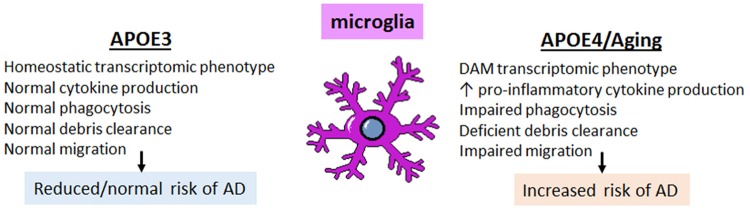
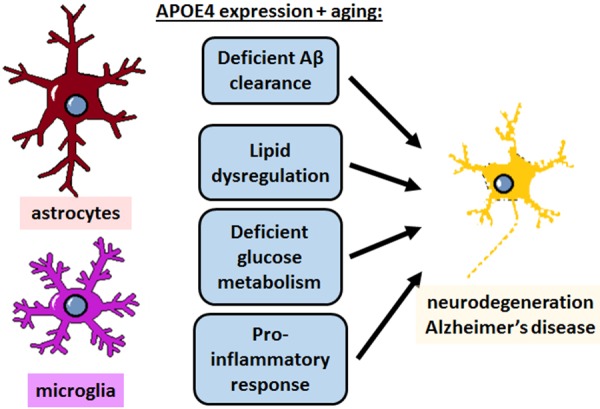
APOE4 is the greatest genetic risk factor for late-onset Alzheimer's disease (AD), increasing the risk of developing the disease by 3-fold in the 14% of the population that are carriers. Despite 25 years of research, the exact mechanisms underlying how APOE4 contributes to AD pathogenesis remain incompletely defined. APOE in the brain is primarily expressed by astrocytes and microglia, cell types that are now widely appreciated to play key roles in the pathogenesis of AD; thus, a picture is emerging wherein APOE4 disrupts normal glial cell biology, intersecting with changes that occur during normal aging to ultimately cause neurodegeneration and cognitive dysfunction. This review article will summarize how APOE4 alters specific pathways in astrocytes and microglia in the context of AD and the aging brain. APOE itself, as a secreted lipoprotein without enzymatic activity, may prove challenging to directly target therapeutically in the classical sense. Therefore, a deeper understanding of the underlying pathways responsible for APOE4 toxicity is needed so that more tractable pathways and drug targets can be identified to reduce APOE4-mediated disease risk.
Overview
The claims and statistics of this paper haven’t been checked yet.
Run the check — free, no account needed. It reads the open-access text and checks the sources it cites.
Integrity signals
Registry
Cites
Statistics
Figures
Verification
Claims the paper makes
The claims and statistics of this paper haven’t been checked yet.
Run the check — free, no account needed. It reads the open-access text and checks the sources it cites.
Claims other papers make about this one
Each is checked against this paper’s own text: does it say what the citing paper says it does?
The source backs part of the claim, not all of it — or backs it for a different population, condition or comparison.
In the citing paper
“ApoE is the most abundant apolipoprotein in the brain, where it is primarily expressed by astrocytes and reactive microglia7, regulating cholesterol metabolism8,9.”
From Decreased lipidated ApoE‐receptor interactions confer protection against pathogenicity of ApoE and its lipid cargoes in lysosomes (2025) · cites this paper as [7]
Experimental — accuracy not yet measuredThe source backs part of the claim, not all of it — or backs it for a different population, condition or comparison.
In the citing paper
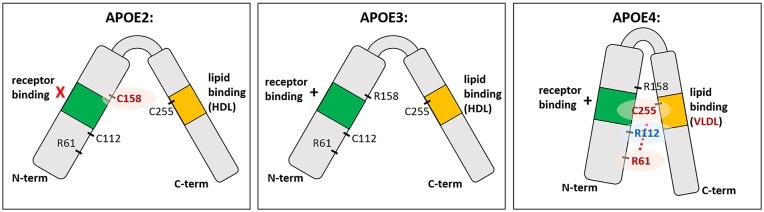
“The Cys112 residue in APOE2 reduces its receptor binding capacity, congruent with the increased levels of lipoproteins in plasma, leading to hyperlipidemia III (Fernandez et al., 2019).”
From APOE2, E3, and E4 differentially modulate cellular homeostasis, cholesterol metabolism, and inflammatory response in isogenic iPSC-derived astrocytes (2022) · cites this paper as Fernandez et al., 2019
Experimental — accuracy not yet measured
Self-check
Percentages, sums and reported differences re-computed from the paper’s own numbers.
The self-check needs the paper’s full text.
Citations
Cites
Corder, E. H., Saunders, A. M., Strittmatter, W. J., Schmechel, D. E., Gaskell, P. C., Small, G. W., Roses, A. D., Haines, J. L., & Pericak-Vance, M. A. (1993) · Science · doi:10.1126/science.8346443 · Cited by 9,429
Neurotoxic reactive astrocytes are induced by activated microglia
Liddelow, S. A., Guttenplan, K. A., Clarke, L. E., Bennett, F. C., Bohlen, C. J., Schirmer, L., Bennett, M. L., Münch, A. E., Chung, W.-S., Peterson, T. C., et al. (2017) · Nature · doi:10.1038/nature21029 · Cited by 7,971
A Unique Microglia Type Associated with Restricting Development of Alzheimer’s Disease
Keren-Shaul, H., Spinrad, A., Weiner, A., Matcovitch-Natan, O., Dvir-Szternfeld, R., Ulland, T. K., David, E., Baruch, K., Lara-Astaiso, D., Toth, B., et al. (2017) · Cell · doi:10.1016/j.cell.2017.05.018 · Cited by 5,493
Meta-Analysis of 74,046 Individuals Identifies 11 New Susceptibility Loci for Alzheimer’s Disease
(EADI), E. A. D. I., Lambert, J.-C., (GERAD), G. A. E. R. I. A. D., Alzheimer's Disease Genetic Consortium (ADGC), (CHARGE), C. F. H. A. A. R. I. G. E., Ibrahim-Verbaas, C. A., Harold, D., Naj, A. C., Sims, R., Bellenguez, C., et al. (2013) · Nature Genetics · doi:10.1038/ng.2802 · Cited by 4,336
Strittmatter, W. J., Saunders, A. M., Schmechel, D., Pericak-Vance, M., Enghild, J., Salvesen, G. S., & Roses, A. D. (1993) · Proceedings of the National Academy of Sciences · doi:10.1073/pnas.90.5.1977 · Cited by 4,268
Synaptic Pruning by Microglia Is Necessary for Normal Brain Development
Paolicelli, R. C., Bolasco, G., Pagani, F., Maggi, L., Scianni, M., Panzanelli, P., Giustetto, M., Ferreira, T. A., Guiducci, E., Dumas, L., et al. (2011) · Science · doi:10.1126/science.1202529 · Cited by 4,244
Microglia Sculpt Postnatal Neural Circuits in an Activity and Complement-Dependent Manner
Schafer, D. P., Lehrman, E. K., Kautzman, A. G., Koyama, R., Mardinly, A. R., Yamasaki, R., Ransohoff, R. M., Greenberg, M. E., Barres, B. A., & Stevens, B. (2012) · Neuron · doi:10.1016/j.neuron.2012.03.026 · Cited by 4,089
Apolipoprotein E: Cholesterol Transport Protein with Expanding Role in Cell Biology
Mahley, R. W. (1988) · Science · doi:10.1126/science.3283935 · Cited by 4,028
Association of apolipoprotein E allele ϵ4 with late‐onset familial and sporadic Alzheimer's disease
Saunders, A. M., Strittmatter, W. J., Schmechel, D., St. George-Hyslop, P. H., Pericak-Vance, M. A., Joo, S. H., Rosi, B. L., Gusella, J. F., Crapper-MacLachlan, D. R., Alberts, M. J., et al. (1993) · Neurology · doi:10.1212/wnl.43.8.1467 · Cited by 3,786
Oakley, H., Cole, S. L., Logan, S., Maus, E., Shao, P., Craft, J., Guillozet-Bongaarts, A., Ohno, M., Disterhoft, J., Van Eldik, L., et al. (2006) · The Journal of Neuroscience · doi:10.1523/jneurosci.1202-06.2006 · Cited by 3,530
Cited by
Sorted by citations
Items 201–278 of 278
Kim, J. H., Park, S., Jung, H., Lee, E.-H., Lee, E., Lee, J.-J., & Sohn, J.-H. (2025) · International Journal of Molecular Sciences · doi:10.3390/ijms26125718 · Cited by 2
APOE4 drives maladaptive heterogeneity and immunometabolic responses of astrocytes
Lee, S., Williams, H. C., Gorman, A. A., Devanney, N. A., Harrison, D. A., Walsh, A. E., Goulding, D. S., Tuck, T., Schwartz, J. L., Zajac, D. J., et al. (2026) · Journal of Neuroinflammation · doi:10.1186/s12974-026-03698-2 · Cited by 8
Skarlis, C., Markoglou, N., Artemiadis, A., Gontika, M. P., Koutsis, G., Chrousos, G. P., & Anagnostouli, M. C. (2024) · Multiple Sclerosis and Related Disorders · doi:10.1016/j.msard.2024.105797 · Cited by 2
Celis, K., Griswold, A. J., Bussies, P. L., Rajabli, F., Whitehead, P. L., Hamilton‐Nelson, K. L., Beecham, G. W., Dykxhoorn, D. M., Nuytemans, K., Wang, L., et al. (2020) · Alzheimer s & Dementia · doi:10.1002/alz.045415 · Cited by 2
Maximizing the utility of brain organoid models and overcoming their perceived limitations
Wenzel, T. J., & Mousseau, D. D. (2024) · Elsevier eBooks · doi:10.1016/b978-0-323-95730-4.00009-3 · Cited by 2
A Neuropathology Case Report of a Woman with Down Syndrome who Remained Cognitively StablePreprint
Liou, J., Lou, J. J., Nakagiri, J., Yong, W. H., Hom, C. L., Doran, E. W., Totoiu, M. O., Lott, I. T., Mapstone, M. E., Keator, D. B., et al. (2024) · medRxiv · doi:10.1101/2024.06.01.24308050 · Cited by 2
Linden, A. K., Affaneh, A., Aylward, A., Wong, Y., Kessler, J. A., & Peng, C.-Y. (2025) · doi:10.64898/2025.12.14.694212 · Cited by 1
Yang, L. P., Tan, Q., Wan, W., Bu, Z., Xuan, C., Yu, C., Wu, J., & Yan, J. (2023) · Bioanalysis · doi:10.4155/bio-2023-0043 · Cited by 1
Intervention Role of APOE in CNS Diseases: APOE Actions and APOE Neurogenesis Capability
Li, W., Ma, S., & Li, M. (2025) · Molecular Neurobiology · doi:10.1007/s12035-025-05028-8 · Cited by 1
Balakrishnan, R., Subbarayan, R., Shrestha, R., & Chauhan, A. (2025) · Biochemical Genetics · doi:10.1007/s10528-025-11208-x · Cited by 1
Valdez-Gaxiola, C. A., Rosales-Leycegui, F., Gaxiola-Rubio, A., Dumois‐Petersen, S., Gallegos‐Arreola, M. P., Ringman, J. M., & Figuera, L. E. (2025) · International Journal of Molecular Sciences · doi:10.3390/ijms26167929 · Cited by 1
Garrahy, J. P. (2025) · Journal of Alzheimer s Disease · doi:10.1177/13872877251404970 · Cited by 1
Koivumäki, M., Martiskainen, H., Takalo, M., Lehtisalo, J., Ngandu, T., FinnGen, Snellman, A., Hiltunen, M. O., & Rinne, J. O. (2026) · Alzheimer s Research & Therapy · doi:10.1186/s13195-026-01984-y · Cited by 1
Cholesterol metabolism in neurodegenerative diseases: mechanisms and therapeutic advances
Tu, D., Zheng, Y., Ding, P., Shen, M., Tang, W., Wei, B., & Wang, H. (2026) · Molecular Neurodegeneration · doi:10.1186/s13024-026-00951-3 · Cited by 1
Guan, Y., Cheng, C. H., Khanna, S., Fader, C., Ohene, Y., Wells, J. A., & Koo, B. (2026) · Journal of Neuroinflammation · doi:10.1186/s12974-026-03888-y · Cited by 1
APOE4-drives brain bioenergetic shifts independent of Alzheimer’s disease pathology
Lysaker, C. R., Johnson, C. N., Csikos, V., Franczak, E., Benson, M., Gilmore, C. A., Birky, C. J., Davis, X., McCoin, C. S., Smith, K. P., et al. (2026) · npj Dementia · doi:10.1038/s44400-026-00105-8 · Cited by 1
Marques, E. T. A., Demers, M., D’Aiuto, L., Castanha, P. M. S., Yeung, J., Wood, J. A., Chowdari, K. V., Zheng, W., Yolken, R. H., & Nimgaonkar, V. L. (2022) · Current topics in behavioral neurosciences · doi:10.1007/7854_2022_383 · Cited by 1
Nissar, K., Firdous, P., Hussain, A., Bashir, S., Ahmad, Z., & Ganai, B. A. (2023) · Molecular Neurobiology · doi:10.1007/s12035-023-03425-5 · Cited by 1
Astrocytes in Neuroinflammatory and Neurodegenerative Diseases
Bhandarkar, S., Qavi, D., Park, C., & Pitt, D. (2023) · Elsevier eBooks · doi:10.1016/b978-0-323-95702-1.00048-8 · Cited by 1
Martinez, V. K., McAlpin, B. R., Singh, A. K., Heijnen, C. J., & Mahalingam, R. (2025) · Molecular Neurobiology · doi:10.1007/s12035-025-05161-4 · Cited by 2
Dementia, A General Medical Practitioner’s Concern: A Review
Ravishankar, M. V., & Pushpalatha, K. (2020) · Indian Journal of Public Health Research & Development · doi:10.37506/ijphrd.v11i8.10897
ApoE4-carrying Human Astrocytes Oversupply Cholesterol into Neurons and Promote Aβ GenerationPreprint
Lee, S.-I., Jeong, W., Cho, S., Lee, H. G., Jang, Y., Lin, Y.-T., Tsai, L., & Seo, J. (2020) · Research Square · doi:10.21203/rs.3.rs-122857/v2 · Cited by 1
Loss of Pigment Epithelium Derived Factor Sensitizes C57BL/6J Mice to Light-Induced Retinal DamagePreprint
Shelton, D. A., Papania, J. T., Getz, T. E., Sellers, J. T., Giradot, P. E., Chrenek, M. A., Grossniklaus, H. E., Boatright, J. H., & Nickerson, J. M. (2024) · bioRxiv (Cold Spring Harbor Laboratory) · doi:10.1101/2024.12.04.626802 · Cited by 1
Kim, M. J., Blumenfeld, J. R., Li, Y., Yip, O., Yao, L., Ancheta, S., Leon, S. D., Platow, Z., Liang, Z., Shostak, D. M., et al. (2025) · bioRxiv (Cold Spring Harbor Laboratory) · doi:10.64898/2025.12.04.692390 · Cited by 1
Inhibition of ApoE4 Endocytosis with LDLR-LA PeptidesPreprint
Park, S. H., Gomes, G.-N. W., Beyer, B. A., & Levine, Z. A. (2026) · bioRxiv (Cold Spring Harbor Laboratory) · doi:10.64898/2026.05.20.726622 · Cited by 1
Genomika obrazowa: nowy trend w badaniach nad chorobą Alzheimera
Dzianok, P. (2020) · Kosmos · doi:10.36921/kos.2020_2636
INVESTIGATING THE ROLE OF VASCULAR ACTIVATION IN ALZHEIMER’S DISEASE-RELATED NEUROINFLAMMATION
Iannucci, J. (2020) · Digital Commons - URI (University of Rhode Island) · doi:10.23860/iannucci-jaclyn-2020
Apolipoprotein E4 Prevalence in Different Canine Breeds
(2022) · International Journal of Veterinary Science · doi:10.47278/journal.ijvs/2021.123 · Cited by 1
Celis, K., Moreno, M. D. M. M., Rajabli, F., Whitehead, P. L., Hamilton‐Nelson, K. L., Dykxhoorn, D. M., Nuytemans, K., Wang, L., Dalgard, C. L., Flanagan, M. E., et al. (2022) · bioRxiv (Cold Spring Harbor Laboratory) · doi:10.1101/2022.10.27.514114
Timmerman, R. (2022) · Utrecht University Repository (Utrecht University) · doi:10.33540/1603
Dilemma of Glial in Alzheimer’s: A Review of the Role of Glial Cells in Alzheimer’s Disease
Cheng, Y.-X. (2023) · Highlights in Science Engineering and Technology · doi:10.54097/hset.v36i.5645
Oler, J. R. L., Hoogerheide, E. S. S., Tiago, A. V., & Pinto, J. M. A. (2023) · doi:10.22533/at.ed.4552309053
Batista, J. E. D. S., da Silva, V. S., & Klamt, F. (2023) · doi:10.22533/at.ed.4552309054
Anacardium occidentale L. (ANACARDIACEAE): ANTIBACTERIAL AND ANTIBIOTIC POTENTIATING ACTIVITY
Ulisses, V. R. D. A., Costa, A. R., Coutinho, H. D. M., Pereira, R. L. S., dos Santos, C. A. L., Teles, B. R. D. S., dos Santos, L. B., Silva, L. V., Almeida‐Bezerra, J. W., de Oliveira, M. G., et al. (2023) · doi:10.22533/at.ed.4552309056
de Castro, V. F., Cabral, L. M., & Hoffmann, L. (2023) · doi:10.22533/at.ed.4552309051
la Fuente, A. O. R., Heredia-Rojas, J. A., Rebollar-Téllez, E. A., Noguera-Díaz, P. A., Martínez, P. C. C., & Heredia-Rodríguez, O. (2023) · doi:10.22533/at.ed.4552309055
Principais temas da pesquisa em Ciências Biológicas 2
da Silva, E. (2023) · doi:10.22533/at.ed.455230905 · Cited by 1
TRANSPLANTE MITOCONDRIAL: ASPECTOS TECNOLÓGICOS E APLICAÇÕES CLÍNICAS DA MITOTERAPIA
Albrecht, P. A. C., Galina, A., & Klamt, F. (2023) · doi:10.22533/at.ed.4552309052
Xu, D. C., Sas‐Nowosielska, H., Donahue, G., Huang, H., Pourshafie, N., Good, C. R., & Berger, S. L. (2023) · bioRxiv (Cold Spring Harbor Laboratory) · doi:10.1101/2023.09.18.558276
Assessment of Serum level of Apolipoprotein E4 in Patients with Vitiligo: A Comparative Review
Aql, E., Abdallah, O. B., AbdelKhalik, G., & Mohammed, A. (2023) · Benha Journal of Applied Sciences · doi:10.21608/bjas.2023.227673.1222
Guebel, D. V. (2025) · Exploration of Medicine · doi:10.37349/emed.2025.1001299
Gregory, S., Saunders, S., & Ritchie, C. W. (2025) · Elsevier eBooks · doi:10.1016/b978-0-12-822240-9.00016-8
A Review: Metabolism of Lipid Via TREM-2A
Otitoju, O., Iruka, A., & Danjuma, J. (2024) · Kwaghe International Journal of Sciences and Technology · doi:10.58578/kijst.v1i1.3398
ApoE and Intestinal Mucosal Immunity
de Azevedo, O. G. R., Brito, G. A. D. C., Warren, C. A., & Oriá, R. B. (2025) · Springer eBooks · doi:10.1007/978-3-031-52641-1_17-1
Shin, J., Brady, E. S., Chen, C., Lauderdale, K., Agrawal, A., Zhang, Y., Jiang, X., Nambiar, P., Herbert, J., Mallen, D. D., et al. (2025) · bioRxiv (Cold Spring Harbor Laboratory) · doi:10.1101/2025.11.11.687887
Additional file 1 of Serum immunoglobulins and biomarkers of dementia: a population-based study
Yaqub, A., Khan, S. R., Vernooij, M. W., van Hagen, P. M., Peeters, R. P., Ikram, M. A., Chaker, L., & Dalm, V. A. S. H. (2023) · Figshare · doi:10.6084/m9.figshare.24522625
Xu, D. C., Sas‐Nowosielska, H., Donahue, G., Huang, H., Pourshafie, N., Good, C. R., & Berger, S. L. (2024) · Figshare · doi:10.6084/m9.figshare.26658526
Sepulveda, J., Kim, J. Y., Binder, J., Vicini, S., & Rebeck, G. W. (2024) · Figshare · doi:10.6084/m9.figshare.26691931
Sepulveda, J., Kim, J. Y., Binder, J., Vicini, S., & Rebeck, G. W. (2024) · Figshare · doi:10.6084/m9.figshare.26691937
Bhattacherjee, A., Jung, J., Zia, S., Ho, M. F. S., Eskandari‐Sedighi, G., St. Laurent, C. D., McCord, K. A., Bains, A., Sidhu, G., Sarkar, S., et al. (2021) · Figshare · doi:10.6084/m9.figshare.14314649
Xu, D. C., Sas‐Nowosielska, H., Donahue, G., Huang, H., Pourshafie, N., Good, C. R., & Berger, S. L. (2024) · Figshare · doi:10.6084/m9.figshare.26658529
Sepulveda, J., Kim, J. Y., Binder, J., Vicini, S., & Rebeck, G. W. (2024) · Figshare · doi:10.6084/m9.figshare.26691934
Role of apolipoprotein E4 in alzheimer’s disease pathogenesis and emerging therapeutic strategies
Natarajan, S., & Saraswathy, S. D. (2025) · Metabolic Brain Disease · doi:10.1007/s11011-025-01761-0
Resende, R. R., & Pereira, C. F. (2025) · Springer eBooks · doi:10.1007/978-3-031-52641-1_14-1
Carpentier, M., Bertho, P., & Bigot‐Corbel, E. (2026) · Revue Francophone des Laboratoires · doi:10.1016/s1773-035x(26)76570-9
ApoE in Lipidomic Signature of Alzheimer’s Disease
Wartchow, K. M., Souza, D. O., & McIntire, L. B. (2026) · Springer eBooks · doi:10.1007/978-3-031-52641-1_65-1
Étude de l'interaction de l'apolipoprotéine E avec le virus de l'hépatite E et le virus Zika
Tréguier, Y. (2022) · theses.fr (ABES) · doi:10.70675/2670b253z6927z4dd5z9cbez44dc79fdddbf
Jung, D. H., Park, E., Ju, H. C., Moon, C., & Jahanshahi, A. (2026) · Alzheimer s & Dementia · doi:10.1002/alz.71322
Genome-scale metabolic modeling uncovers cell-type specific signatures associated with APOE variants
Uzuner, D., Stephenson, R. A., Cheng, L., Yang, L. G., Narayan, P. S., Çakır, T., & Thambisetty, M. (2026) · iScience · doi:10.1016/j.isci.2026.115638
Apolipoprotein E governs neuroinflammation resolution and recovery from viral encephalitisPreprint
Cox, A., Nguyen, W., Tang, B., Yan, K., Raghavendra, A., Ziegman, R., Härtel, G., Nguyen, Q. H., Hodson, M. P., Suhrbier, A., et al. (2026) · bioRxiv (Cold Spring Harbor Laboratory) · doi:10.64898/2026.04.28.721524
Shimizu, R., Akahane, S., Suzuki, H., Matsuura, H., Uematsu, Y., Iimura, W., Ishimine, N., & Yamauchi, K. (2026) · Biochemistry and Biophysics Reports · doi:10.1016/j.bbrep.2026.102634
Stage-dependent dynamics of neuroinflammation across the Alzheimer’s continuum
Yu, R., Suraev, A. S., Shi, L., Martins, R. N., Drummond, E., Kong, S., Bassett, K., Naismith, S. L., & Michaelian, J. C. (2026) · Brain Behavior and Immunity · doi:10.1016/j.bbi.2026.106823
ApoE in Lipidomic Signature of Alzheimer’s Disease
Wartchow, K. M., Souza, D. O., & McIntire, L. B. (2026) · Springer eBooks · doi:10.1007/978-3-031-96089-5_65
Resende, R. R., & Pereira, C. F. (2026) · Springer eBooks · doi:10.1007/978-3-031-96089-5_14
Anpassungsfähigkeit und Kreativität
Graw, J. (2026) · Springer eBooks · doi:10.1007/978-3-662-72246-6_4
Gothwal, A., Muolokwu, C. E., Belin, M. A. F., Tagoe, B., Frey, W. H., Zhao, J., Parsons, T. M., Kanekiyo, T., & Singh, J. (2026) · International Journal of Biological Macromolecules · doi:10.1016/j.ijbiomac.2026.152803
Zhou, Y., Huang, J., Chen, X., Xu, L., Zhang, F., 白春晓, Yang, J., Fan, F., Wang, Y., Fan, Y., et al. (2026) · Cardiovascular Diabetology · doi:10.1186/s12933-026-03220-1
Yang, J., Wang, X., Peng, L., Tang, J., Cai, S., & Xue, Y. (2026) · Big Data · doi:10.1177/2167647x261463929
Reversing brain aging: Targeting energy metabolism in endogenous neural stem cells
Chen, C., Wang, J., Yu, J., Zhou, Y., Liu, L., Liu, J., & Wang, L. (2026) · Interdisciplinary medicine · doi:10.1002/inmd.70159
Marshall, C. R., Moser, F. A., Scott, C. F., Ventura‐Antunes, L., Romero‐Fernandez, W., Migas, L. G., Tideman, L. E. M., Colley, M. E., Dufresne, M., Schrag, M., et al. (2026) · Acta Neuropathologica Communications · doi:10.1186/s40478-026-02361-4 · Cited by 1
Zebrafish as a translational model for peptide-mediated synaptic dysfunction related to obesity
Rodrigues, A. C., Lacerda, A. P., Mukoyama, L. T. H., de Carvalho, G. B., da Mata, J. A. L., Buccini, D. F., Franco, O. L., & Migliolo, L. (2026) · Frontiers in Synaptic Neuroscience · doi:10.3389/fnsyn.2026.1845252
Kang, S., & Goodridge, H. S. (2026) · Aging Cell · doi:10.1111/acel.70660
Prielipp, M., Packeiser, E., Bathen‐Nöthen, A., Mischke, R., & Tipold, A. (2026) · Frontiers in Veterinary Science · doi:10.3389/fvets.2026.1901246
Liu, X., Wang, S., Long, W., Tan, X., Li, W., & Gao, L. (2026) · Frontiers in Aging Neuroscience · doi:10.3389/fnagi.2026.1926883
Metadata
- Authors
- Fernandez, C. G., Hamby, M. E., McReynolds, M. L., & Ray, W. J.
- Affiliations
- The University of Texas MD Anderson Cancer Center (US)
- Corresponding author
- Fernandez, Celia G.
- Venue
- Frontiers in Aging Neuroscience
- Publisher
- Frontiers Media SA
- Published
- 2019-02-11
- Volume
- 11
- Pages
- 14-14
- ISSN
- 1663-4365 (ISSN-L)
- PMC
- PMC6378415
- OpenAlex
- W2911484089
- Cited by
- 277
- References
- 194
- Citations by year
- 2026: 25 · 2025: 32 · 2024: 31 · 2023: 54 · 2022: 50 · 2021: 36 · 2020: 43 · 2019: 6
- FWCI
- 3.97
- Type
- journal article
- Language
- en
- Open access
- gold
- doi.org
- Licence
- Locations
- Frontiers in Aging Neuroscience (publishedVersion, cc-by)
- Europe PMC (PubMed Central) (publishedVersion, cc-by)
- PubMed Central (publishedVersion, cc-by)
- PubMed (publishedVersion)
- DOAJ (DOAJ: Directory of Open Access Journals) (submittedVersion, cc-by-sa)
- Funders
- Robert A. and Renee E. Belfer Family Foundation
- Topics
- Life Sciences › Neuroscience › Cellular and Molecular Neuroscience › Alzheimer's disease research and treatments
- Life Sciences › Neuroscience › Neurology › Neuroinflammation and Neurodegeneration Mechanisms
- Health Sciences › Medicine › Psychiatry and Mental health › Dementia and Cognitive Impairment Research
- Keywords
- APOE ε4, Alzheimer's disease, astrocytes, microglia, brain aging, neurodegeneration, cognitive impairment, therapeutic target, genetic risk factors
About these checks
Registry, retraction, Cites and statistics results are computed, not judged, with one exception: a printed reference that no index lists is read once by a model before it counts as a citation error. Claims are extracted by a model and kept only when their quote appears verbatim in the text; each cited source is then checked, with a model’s help, for whether it says what the claim relies on. Those verdicts can be wrong — read the claim’s quote and the cited source before relying on one.
Statistics and arithmetic are recomputed, not judged.
Confidence bands are shown only for fields calibrated on our annotated test set. None is calibrated yet, so no band is shown.
What counts as a claim ›How we measure confidence ›How we check this ›
Are you an author, or do you see a problem with this page? Request a review
