

The role of PI3K signaling pathway in Alzheimer’s disease
Open accessThe DOI matches its Crossref record; 169 of the 169 references it cites were found in a registry or an index.
Abstract
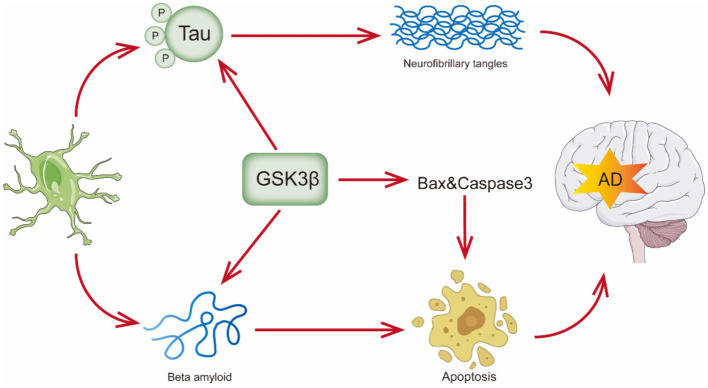
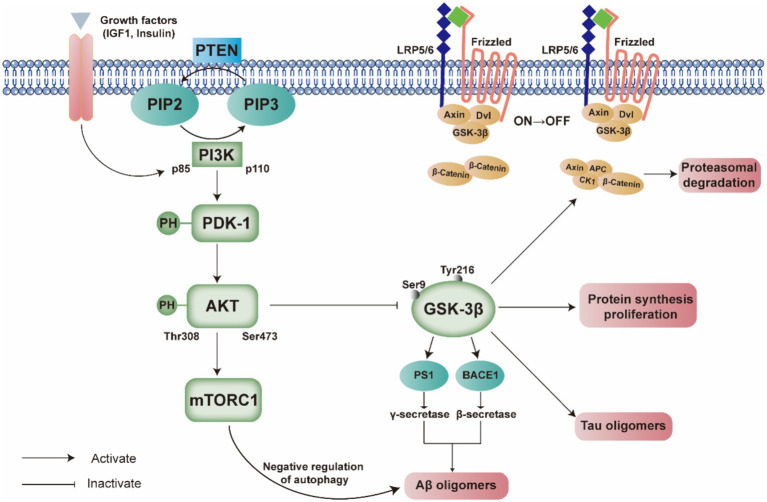
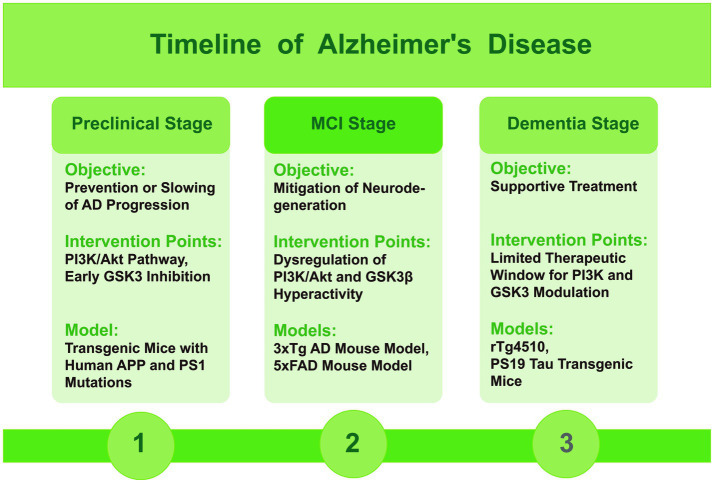
Alzheimer’s disease (AD) is a debilitating progressively neurodegenerative disease. The best-characterized hallmark of AD, which is marked by behavioral alterations and cognitive deficits, is the aggregation of deposition of amyloid-beta (Aβ) and hyper-phosphorylated microtubule-associated protein Tau. Despite decades of experimental progress, the control rate of AD remains poor, and more precise deciphering is needed for potential therapeutic targets and signaling pathways involved. In recent years, phosphoinositide 3-kinase (PI3K) and Akt have been recognized for their role in the neuroprotective effect of various agents, and glycogen synthase kinase 3 (GSK3), a downstream enzyme, is also crucial in the tau phosphorylation and Aβ deposition. An overview of the function of PI3K/Akt pathway in the pathophysiology of AD is provided in this review, along with a discussion of recent developments in the pharmaceuticals and herbal remedies that target the PI3K/Akt signaling pathway. In conclusion, despite the challenges and hurdles, cumulative findings of novel targets and agents in the PI3K/Akt signaling axis are expected to hold promise for advancing AD prevention and treatment.
Overview
The claims and statistics of this paper haven’t been checked yet.
Free: it reads the open-access text and checks the first 5 claims that cite a source we can check. Create a free account to check every claim.
Integrity signals
Registry
Cites
Statistics
Figures
Verification
Claims the paper makes
The claims and statistics of this paper haven’t been checked yet.
Free: it reads the open-access text and checks the first 5 claims that cite a source we can check. Create a free account to check every claim.
Claims other papers make about this one
Each is checked against this paper’s own text: does it say what the citing paper says it does?
The source backs part of the claim, not all of it — or backs it for a different population, condition or comparison.
In the citing paper
“Studies in both animal and human models show that increased Aβ plaque burden correlates with dysregulation of key ciliary signaling pathways, including Shh and Wnt [107,108,109,110].”
From The Impact of Neurotoxin Proteins Trafficked by Primary Cilia and Extracellular Vesicles in Neurodegenerative Diseases (2025) · cites this paper as [110]
Experimental — accuracy not yet measured
Self-check
Percentages, sums and reported differences re-computed from the paper’s own numbers.
The self-check needs the paper’s full text.
Citations
Cites
Amyloid oligomers exacerbate tau pathology in a mouse model of tauopathy
Selenica, M.-L. B., Brownlow, M., Jimenez, J. P., Lee, D. C., Pena, G., Dickey, C. A., Gordon, M. N., & Morgan, D. (2013) · Neurodegenerative Diseases · doi:10.1159/000337230 · Cited by 10,359
Wnt/β-Catenin Signaling, Disease, and Emerging Therapeutic Modalities
Nusse, R., & Clevers, H. (2017) · Cell · doi:10.1016/j.cell.2017.05.016 · Cited by 4,342
Triple-Transgenic Model of Alzheimer’s Disease with Plaques and Tangles
Oddo, S., Caccamo, A., Shepherd, J. D., Murphy, M. P., Golde, T. E., Kayed, R., Metherate, R., Mattson, M. P., Akbari, Y., & LaFerla, F. M. (2003) · Neuron · doi:10.1016/s0896-6273(03)00434-3 · Cited by 4,126
2023 Alzheimer's disease facts and figures
(2023) · Alzheimer's & Dementia · doi:10.1002/alz.13016 · Cited by 3,212
Oxidative stress and neurodegeneration: where are we now?
Halliwell, B. (2006) · Journal of Neurochemistry · doi:10.1111/j.1471-4159.2006.03907.x · Cited by 2,614 · cited 1×
“Following a reaction with hydrogen peroxide or dioxygen, these compounds produce superoxide and hydroxyl radicals, respectively (Halliwell, 2006; Faller and Hureau, 2012).”
Bloom (2014) · doi:10.1001/jamaneurol.2013.5847 · Cited by 2,194 · cited 1×
“…of AD related to tau pathology are hyperphosphorylated Tau and NFTs. AD etiology is significantly influenced by tau hyperphosphorylation, mainly at serine (Ser) or threonine (Thr), so molecules that reduce phospho-tau accumulation may represent an effective treatment strategy (Bloom, 2014).”
BackgroundOxidative stress and the amyloid beta peptide in Alzheimer’s disease
Cheignon, C., Tomas, M., Bonnefont-Rousselot, D., Faller, P., Hureau, C., & Collin, F. (2018) · Redox Biology · doi:10.1016/j.redox.2017.10.014 · Cited by 2,185 · cited 1×
“This is one of the characteristics of AD (Cheignon et al., 2018).”
BackgroundOxidative Stress, Synaptic Dysfunction, and Alzheimer’s Disease
Tönnies, E., & Trushina, E. (2017) · Journal of Alzheimer s Disease · doi:10.3233/jad-161088 · Cited by 1,750 · cited 1×
“This process occurs early in AD, predating AD clinical symptoms and A β pathology (Tönnies and Trushina, 2017).”
BackgroundRequirement for glycogen synthase kinase-3β in cell survival and NF-κB activation
Hoeflich, K. P., Luo, J., Rubie, E. A., Tsao, M.-S., Jin, O., & Woodgett, J. R. (2000) · Nature · doi:10.1038/35017574 · Cited by 1,393 · cited 1×
“At many AD-related sites, including Thr-181 Stimulation of the Wnt or insulin signaling pathways, which are negatively regulated by GSK3, has been observed to inhibit tau phosphorylation (Hoeflich et al., 2000).”
BackgroundGlycogen synthase kinase-3 (GSK3): Inflammation, diseases, and therapeutics
Jope, R. S., Yuskaitis, C. J., & Beurel, E. (2007) · Neurochemical Research · doi:10.1007/s11064-006-9128-5 · Cited by 774
Cited by
Emerging Frontiers in GLP-1 Therapeutics: A Comprehensive Evidence Base (2025)
Patel, S., & Niazi, S. K. (2025) · Pharmaceutics · doi:10.3390/pharmaceutics17081036 · Cited by 54
“Inhibition of glycogen synthase kinase-3 β (GSK-3 β ) at Ser9 prevents tau hyperphosphorylation in neurons and enhances insulin signaling in metabolic tissues [21,22].”
Modulating Neuroinflammation as a Prospective Therapeutic Target in Alzheimer’s Disease
Lee, E., & Chang, Y. (2025) · Cells · doi:10.3390/cells14030168 · Cited by 48
“Additionally, the PI3K/AKT signaling pathway plays a crucial role in the mechanisms underlying the onset of AD and other neurodegenerative disorders [267–269].”
Atabi, F., Moassesfar, M., Nakhaie, T., Bagherian, M., Hosseinpour, N., & Hashemi, M. (2025) · Diabetology & Metabolic Syndrome · doi:10.1186/s13098-025-01930-2 · Cited by 46
Mhm, N., Chakravarthi, S., Aung, T., Htoo, P. M., Shwe, W. H., Gupalo, S., Udayah, M. W., Singh, H., Kabir, M. S., Thangarajan, R., et al. (2025) · International Journal of Molecular Sciences · doi:10.3390/ijms26157212 · Cited by 41
“Additionally, mTOR and GSK3 β , which are downstream effectors, present other possible targets that could be used in combination therapies [125].”
Bhatia, V., Sharma, V. V., Chandel, A., & Rattan, A. (2025) · Inflammopharmacology · doi:10.1007/s10787-025-01715-z · Cited by 28
Metadata
- Authors
- Pan, J., Yao, Q., Wang, Y., Chang, S., Li, C., Wu, Y., Shen, J., & Yang, R.
- Affiliations
- Nantong University (CN)
- Affiliated Hospital of Nantong University (CN)
- Corresponding author
- Shen, Jianhong
- Yang, Riyun
- Venue
- Frontiers in Aging Neuroscience
- Publisher
- Frontiers Media SA
- Published
- 2024-09-27
- Volume
- 16
- Pages
- 1459025-1459025
- ISSN
- 1663-4365 (ISSN-L)
- PMC
- PMC11466886
- OpenAlex
- W4402958204
- Cited by
- 89
- References
- 169
- Citations by year
- 2026: 47 · 2025: 42
- FWCI
- 5.08
- Type
- journal article
- Language
- en
- Open access
- gold
- doi.org
- Licence
- Locations
- Frontiers in Aging Neuroscience (publishedVersion, cc-by)
- PubMed Central (publishedVersion, cc-by)
- PubMed (publishedVersion)
- DOAJ (DOAJ: Directory of Open Access Journals) (submittedVersion, cc-by-sa)
- Funders
- National Natural Science Foundation of China (YJXYY202204, 82101455)
- Government of Jiangsu Province
- Topics
- Life Sciences › Neuroscience › Cellular and Molecular Neuroscience › Alzheimer's disease research and treatments
- Health Sciences › Medicine › Psychiatry and Mental health › Dementia and Cognitive Impairment Research
- Life Sciences › Neuroscience › Neurology › Neuroinflammation and Neurodegeneration Mechanisms
- Keywords
- Alzheimer's disease, PI3K/Akt signaling, amyloid-beta deposition, tau hyperphosphorylation, glycogen synthase kinase-3, neuroprotection, therapeutic target, herbal medicine, cognitive impairment
About these checks
Registry, retraction, Cites and statistics results are computed, not judged, with one exception: a printed reference that no index lists is read once by a model before it counts as a citation error. Claims are extracted by a model and kept only when their quote appears verbatim in the text; each cited source is then checked, with a model’s help, for whether it says what the claim relies on. Those verdicts can be wrong — read the claim’s quote and the cited source before relying on one.
Statistics and arithmetic are recomputed, not judged.
Confidence bands are shown only for fields calibrated on our annotated test set. None is calibrated yet, so no band is shown.
What counts as a claim ›How we measure confidence ›How we check this ›
Are you an author, or do you see a problem with this page? Request a review
Data sources
Bibliographic data: Semantic Scholar, OpenAlex, Crossref.
Contains information from the Semantic Scholar Academic Graph Datasets, made available under the ODC Attribution License (ODC-BY 1.0).
Semantic Scholar’s data is described in: Kinney, R., et al. (2023). The Semantic Scholar Open Data Platform. arXiv:2301.10140.
