

Mapping Alzheimer’s disease heterogeneity through exploratory unsupervised learning
Open accessThe DOI matches its Crossref record; 58 of the 58 references it cites were found in a registry or an index; none of the 71 sources its claims cite is checked for support yet.
Abstract
Introduction: Alzheimer’s disease (AD) is becoming one of the most pressing health challenges of the century, affecting circa 55 million people worldwide and expected to triple this number by 2050. Besides the growing prevalence, AD remains difficult to diagnose due to its long preclinical phase and substantial symptomatic heterogeneity. Despite the existence of international guidelines for AD diagnosis emphasizing the use of biomarkers (such as neuroimaging and cerebrospinal molecular biomarkers), most research studies are still using data disregarding their diagnostic quality, blurring the overall statistical outcomes. Aiming to circumvent this effect, biomarker confirmed samples from the Alzheimer’s Disease Neuroimaging Initiative (ADNI) were used, which integrate genetic and neuroimaging data for all participants. Methods: Unsupervised machine learning clustering methods were tested to explore whether curated genetic markers can reveal underlying substructure within sporadic AD (sAD). Here two specific sets of single nucleotide polymorphisms (SNPs) were selected: (i) candidate SNPs highlighted in previous studies that identified the existence of different subtypes in sAD and (ii) SNPs found associated with sAD in genome wide association studies (GWAS) that used at least 50% of samples with biomarker-confirmed diagnosis. Results: This strategy minimized background noise and enabled the construction of high quality SNP sets for analysis. Different clustering algorithms were evaluated with agglomerative hierarchical clustering consistently yielding the most robust performance. Across SNP sets, most trials revealed a reproducible binary structure within sAD samples, suggesting the presence of genetically distinguishable subgroups. Discussion: These findings align with emerging multimodal evidence supporting biological heterogeneity in AD. Overall, this work demonstrates that curated SNP panels combined with unsupervised learning can uncover meaningful substructure in sAD, reinforcing the value of integrating high quality genetic data into subtype research.
Overview
CoChat Summary
TL;DR
This exploratory study applied unsupervised clustering to curated SNP panels from biomarker-confirmed sporadic Alzheimer’s disease samples in ADNI and found a reproducible binary genetic substructure. Agglomerative hierarchical clustering was the most robust method, with a few SNPs consistently driving cluster structure.
Key findings
- Across SNP sets, most trials revealed a reproducible binary structure within sAD samples; the best Group 1 solution (9 SNPs, N=1,167) was agglomerative k=2 with silhouette=0.309, CH=178.9, DB=1.37. APOE2 addition refined but did not redefine the underlying structure.
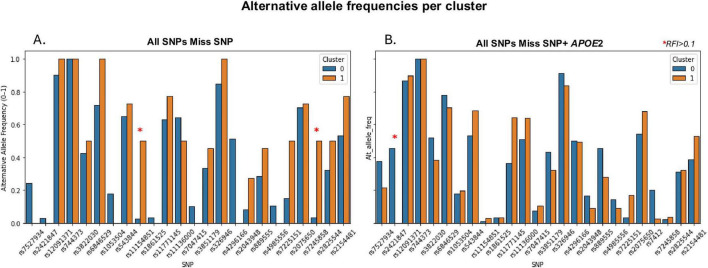
- Agglomerative hierarchical clustering consistently ranked among top performers and was most stable; KMeans and Spectral were more sensitive to panel composition/APOE2, and DBSCAN was ill-suited. Combined “All SNPs” panels showed SNP dilution: best all-SNPs–Miss_SNP (24 SNPs, N=1,318) was spectral k=2 silhouette=0.198; with APOE2 (25 SNPs, N=773) KMeans k=2 silhouette=0.210.
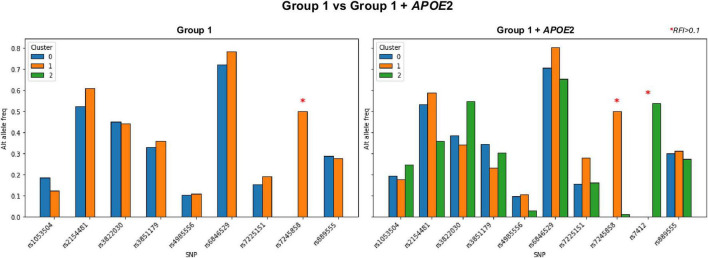
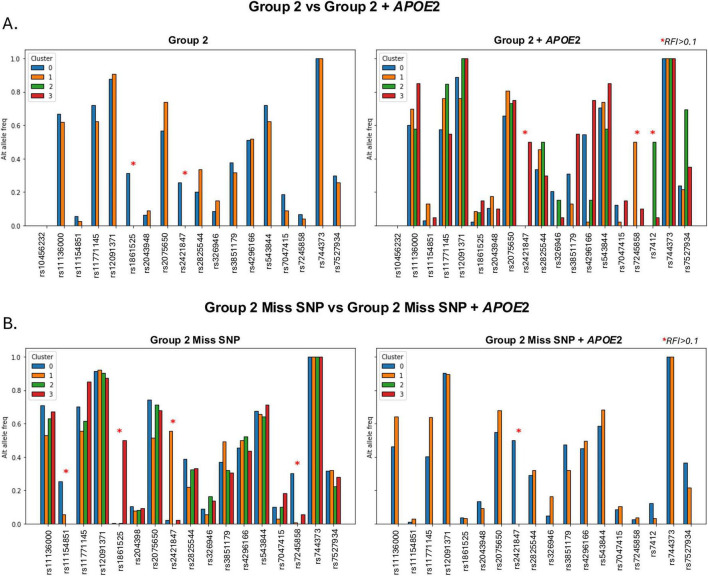
- Resilient top contributors were rs2421847 (PRRC2C; RFI ≥0.1 in all four Group 2 subsets, peak 0.743), rs7245858 (PPIAP59; RFI=0.9455 in Group 1 raw, 0.4949 with APOE2, 0.1724 in All SNPs–Miss_SNP), rs11154851 (PDE7B; RFI=0.1845 in Group 2–Miss_SNP and 0.2570 in All SNPs–Miss_SNP), and rs4296166 (AKAP6; stable ~0.07). rs1861525 was fragile: RFI fell from 0.487 (raw Group 2) to 0.247 after Miss_SNP exclusion and ≤0.016 with APOE2.
- Excluding Miss_SNP rs10456232 nearly doubled sample size (669→1,110), improved cluster compactness (CH 61.5→95.0, +54.6%), and enhanced reproducibility despite negligible RFI=0.000. APOE2 rs7412 acted as a confounder/homogenizer; rs7245858 was independent of APOE (r2=0.002, D’=0.064).
Methods
- Data came from ADNI GWAS initiatives 1, GO, and 2, filtered for biomarker-confirmed sAD; genotyping used Illumina Human610-Quad, HumanOmniExpress, and Omni 2.5M arrays. From an initial 69 SNPs, 45 were absent from ADNI arrays; only rs1053504 served as a proxy for rs2245466. Three subsets were analyzed: Group 1 (9 subtype-associated SNPs), Group 2 (18 GWAS risk SNPs), and Group 3 combined (24 SNPs), with analyses run with/without rs10456232 (Miss_SNP) and with/without rs7412 (APOE2).
- Clustering used Python 3/scikit-learn: DBSCAN (deterministic) and K-means, agglomerative hierarchical, spectral, and Gaussian mixture models (stochastic; k=2–5, three iterations). Quality was assessed by silhouette, Calinski-Harabasz (CH), and Davies-Bouldin (DB) indices; SNP importance used random forest feature importance (RFI) and mutual information (MI); LD was checked with LDlink.
- Genotypes were encoded 0/1/2; samples with any missing value and duplicates were excluded; SNPs with >10% missingness were excluded.
Limitations
- Stated: only one APOE SNP (rs7412) was present because rs429358 was absent from the arrays, possibly reducing impact; sample sizes were moderate due to stringent biomarker-confirmed sAD criteria and data-access challenges; unequal subtype frequencies may create imbalanced ratios; lack of accompanying metadata prevents supervised models; the predominantly European-ancestry ADNI cohort limits generalizability, no formal ancestry correction was applied, residual ancestry stratification cannot be excluded, and top SNP drivers may not behave similarly in non-European populations; independent validation is needed.
- Stated: this is an exploratory pilot; silhouette values indicate only moderate separation (e.g., 0.198–0.309); some best scores came from a single iteration (asterisked in Table 2); combined panels showed SNP dilution weakening clustering; DBSCAN was ill-suited to the data manifold.
- Evident from the text: the study relies on unsupervised clustering without external labels, and the reported binary structure is a latent signal in this ADNI sample rather than clinically validated subtypes.
Model-written summary. Check it against the paper before relying on it.
Integrity signals
Registry
Cites
Statistics
Figures
Verification
Claims the paper makes
0 Valid · 3 Not valid · 42 Not checked · 113 Own results and interpretations
A result the paper reports from its own data — it cites no other source for it, so there is none to check. The quote shows it is in the paper.
In the paper
“Preliminary analyses using candidate markers and unsupervised clustering algorithms support the feasibility of genotypic AD subtyping.”
§ Mapping Alzheimer’s disease heterogeneity through exploratory unsupervised learning > Introduction
hedgedstates an association- Asserted: passes — The authors put it forward as true.
- Checkable: passes — It can be checked against evidence.
- Load-bearing: passes — The paper’s conclusions depend on it.
- Based: passes — The paper gives a reason why it holds.
A result the paper reports from its own data — it cites no other source for it, so there is none to check. The quote shows it is in the paper.
In the paper
“When adding the APOE SNP, only one SNP shows RFI > 0.1 - rs2421847 (PRRC2C), mimicking the pattern observed for Group 2 – Miss_SNP + APOE2.”
§ Mapping Alzheimer’s disease heterogeneity through exploratory unsupervised learning > Results > Analysis of the combined SNP datasets
plain- Asserted: passes — The authors put it forward as true.
- Checkable: passes — It can be checked against evidence.
- Load-bearing: unclear — It is unclear whether the paper’s conclusions depend on it.
- Based: passes — The paper gives a reason why it holds.
A result the paper reports from its own data — it cites no other source for it, so there is none to check. The quote shows it is in the paper.
In the paper
“Group 3 combined SNP analyses confirm that SNP dilution weakens clustering across all algorithms compared to optimized Group 1/2 panels.”
§ Mapping Alzheimer’s disease heterogeneity through exploratory unsupervised learning > Results > Analysis of the combined SNP datasets
boostedstates a cause- Asserted: passes — The authors put it forward as true.
- Checkable: passes — It can be checked against evidence.
- Load-bearing: passes — The paper’s conclusions depend on it.
- Based: passes — The paper gives a reason why it holds.
A result the paper reports from its own data — it cites no other source for it, so there is none to check. The quote shows it is in the paper.
In the paper
“the APOE SNP rs7412 still shows differential alternative allele frequencies between clusters in the All SNPs + APOE2 subset (∼0.20 vs. ∼0.03)”
§ Mapping Alzheimer’s disease heterogeneity through exploratory unsupervised learning > Results > Analysis of the combined SNP datasets
plainstates an association- Asserted: passes — The authors put it forward as true.
- Checkable: passes — It can be checked against evidence.
- Load-bearing: unclear — It is unclear whether the paper’s conclusions depend on it.
- Based: passes — The paper gives a reason why it holds.
A result the paper reports from its own data — it cites no other source for it, so there is none to check. The quote shows it is in the paper.
In the paper
“Rs11154851 behaves as a “cleaning-revealed” marker, rising from low importance in raw Group 2 to RFI = 0.1845 in Group 2 - Miss_SNP and 0.2570 (top ranked) in All SNPs - Miss_SNP”
§ Mapping Alzheimer’s disease heterogeneity through exploratory unsupervised learning > Discussion
plainstates an association- Asserted: passes — The authors put it forward as true.
- Checkable: passes — It can be checked against evidence.
- Load-bearing: passes — The paper’s conclusions depend on it.
- Based: passes — The paper gives a reason why it holds.
54 more claims
Create a free account to see all 158 claims and to verify the 70 references still open.
- It may state two separate claims as one. 79
- Probably not a substantial claim. 39
Self-check
Percentages, sums and reported differences re-computed from the paper’s own numbers.
Each contradiction between two passages listed here was confirmed by an independent check.
Rated major: it would touch a result — a value a result rests on, reported and recomputed p-values on opposite sides of the significance level, two passages that conflict with no sign which is right, or a cited work retracted before this paper was published.
In the paper
§ Mapping Alzheimer’s disease heterogeneity through exploratory unsupervised learning > Discussion
“The consistent preference for k = 2 across groups and algorithms further suggests that the dominant latent signal in this sAD cohort is essentially binary, with higher-order partitions mainly degrading cluster quality rather than uncovering stable subtypes.”
§ Mapping Alzheimer’s disease heterogeneity through exploratory unsupervised learning > Material and methods > Samples and SNPs selection
“| Group 1 + APOE2 | 788 | 10 | Agglomerative | 3 | 0.281 | 97,445 | 1,431 | rs724585 (0.495), rs7412 (0.404) |”
Rated major: it would touch a result — a value a result rests on, reported and recomputed p-values on opposite sides of the significance level, two passages that conflict with no sign which is right, or a cited work retracted before this paper was published.
In the paper
§ Mapping Alzheimer’s disease heterogeneity through exploratory unsupervised learning > Results > Analysis of the combined SNP datasets
“In Group 3 (−Miss_SNP), Spectral clustering achieved the highest silhouette of 0.198 (k = 2, CH = 66.1, DB = 3.107)”
§ Mapping Alzheimer’s disease heterogeneity through exploratory unsupervised learning > Material and methods > Samples and SNPs selection
“| All SNPs–Miss_SNP | 1,318 | 24 | Spectral | 2 | 0.198 | 17,976 | 1,237 | rs7245858 (0.172), rs11154851 (0.257) |”
Rated minor: it would not touch a result — a value no result rests on, a p-value that stays on the same side of the significance level, or a conflict that is clerical, resolved elsewhere in the paper, or outside its own findings.
In the paper
§ Mapping Alzheimer’s disease heterogeneity through exploratory unsupervised learning > Results > Analysis of SNP subsets
“APOE2 (rs7412) emerged as a potent confounder across panels, rising to RFI = 0.4042 (#1 in G1, surpassing rs7245858)”
§ Mapping Alzheimer’s disease heterogeneity through exploratory unsupervised learning > Results > Analysis of SNP subsets
“with rs7245858 and APOE2 emerging as the main drivers (RFI = 0.4949 and 0.4042, respectively; Supplementary Table 4)”
Citations
Cites
PLINK: a tool set for whole-genome association and population-based linkage analyses.
Purcell, S., Neale, B., Todd-Brown, K., Thomas, L., Ferreira, M. A. R., Bender, D., Maller, J., Sklar, P., de Bakker, P. I. W., Daly, M. J., et al. (2007) · The American Journal of Human Genetics · doi:10.1086/519795 · Cited by 34,089 · cited 1×
“…was annotated in Ensembl 2 , the reference allele was arbitrarily but deterministically selected and then used consistently for all individuals and all clustering runs, following standard practice in population genetics-analyses (Patterson et al., 2006; Price et al., 2006; Purcell et al., 2007).”
McKhann, G. M., Knopman, D. S., Chertkow, H., Hyman, B. T., Jack, C. R., Kawas, C. H., Klunk, W. E., Koroshetz, W. J., Manly, J. J., Mayeux, R., et al. (2011) · Alzheimer's & Dementia · doi:10.1016/j.jalz.2011.03.005 · Cited by 18,657 · cited 4×
“Current guidelines for the clinical diagnosis of AD recommend the use of biomarkers such as imaging and cerebrospinal protein signals to biologically confirm or rule out the disease (Jack et al., 2024), in line with those previously developed for research purposes (McKhann et al., 2011).”
InfluentialPrincipal components analysis corrects for stratification in genome-wide association studies
Price, A. L., Patterson, N. J., Plenge, R. M., Weinblatt, M. E., Shadick, N. A., & Reich, D. (2006) · Nature Genetics · doi:10.1038/ng1847 · Cited by 10,248
Corder, E. H., Saunders, A. M., Strittmatter, W. J., Schmechel, D. E., Gaskell, P. C., Small, G. W., Roses, A. D., Haines, J. L., & Pericak-Vance, M. A. (1993) · Science · doi:10.1126/science.8346443 · Cited by 9,429
A map of human genome variation from population-scale sequencing.
The 1000 Genomes Project Consortium (2010) · Nature · doi:10.1038/nature09534 · Cited by 7,877
Population Structure and Eigenanalysis
Patterson, N., Price, A. L., & Reich, D. (2006) · PLoS Genetics · doi:10.1371/journal.pgen.0020190 · Cited by 5,280 · cited 1×
“…was annotated in Ensembl 2 , the reference allele was arbitrarily but deterministically selected and then used consistently for all individuals and all clustering runs, following standard practice in population genetics-analyses (Patterson et al., 2006; Price et al., 2006; Purcell et al., 2007).”
Sensitivity of revised diagnostic criteria for the behavioural variant of frontotemporal dementia
Rascovsky, K., Hodges, J. R., Knopman, D., Mendez, M. F., Kramer, J. H., Neuhaus, J., van Swieten, J. C., Seelaar, H., Dopper, E. G. P., Onyike, C. U., et al. (2011) · Brain · doi:10.1093/brain/awr179 · Cited by 5,221 · cited 2×
“…variant primary progressive aphasia presenting language difficulties (Ahmed et al., 2012; Crutch et al., 2017 ; Spinelli et al., 2017), and behavioral/dysexecutive that is characterized by executive function impairment and behavioral alterations (Rascovsky et al., 2011; Ossenkoppele et al., 2015).”
2023 Alzheimer's disease facts and figures
(2023) · Alzheimer's & Dementia · doi:10.1002/alz.13016 · Cited by 3,212
Integrating common and rare genetic variation in diverse human populations
The International HapMap 3 Consortium (2010) · Nature · doi:10.1038/nature09298 · Cited by 3,026 · cited 1×
“A 10% SNP level-missingness threshold is recommended in standard GWAS QC pipelines (Anderson et al., 2010; Saykin et al., 2010) and has been applied in large consortia datasets including HapMap and early 1000 Genomes releases (Abecasis et al., 2010; Altshuler et al., 2010).”
Revised criteria for diagnosis and staging of Alzheimer's disease: Alzheimer's Association Workgroup
Jack, C. R., Andrews, J. S., Beach, T. G., Buracchio, T., Dunn, B., Graf, A., Hansson, O., Ho, C., Jagust, W., McDade, E., et al. (2024) · Alzheimer's & Dementia · doi:10.1002/alz.13859 · Cited by 2,803
New insights into the genetic etiology of Alzheimer’s disease and related dementias
Bellenguez, C., Küçükali, F., Jansen, I. E., Kleineidam, L., Moreno-Grau, S., Amin, N., Naj, A. C., Campos-Martin, R., Grenier-Boley, B., Andrade, V., et al. (2022) · Nature Genetics · doi:10.1038/s41588-022-01024-z · Cited by 2,498 · cited 2×
“Although more than 70 loci are now identified as linked to developing sAD (Wightman et al., 2021; Bellenguez et al., 2022), their statistical impact with higher number of samples was not increased (Escott-Price and Hardy, 2022; Xavier and Pinto, 2025).”
Machiela, M. J., & Chanock, S. J. (2015) · Bioinformatics · doi:10.1093/bioinformatics/btv402 · Cited by 2,069
Analysis of shared heritability in common disorders of the brain
The Brainstorm Consortium, Anttila, V., Bulik-Sullivan, B., Finucane, H. K., Walters, R. K., Bras, J., Duncan, L., Escott-Price, V., Falcone, G. J., Gormley, P., et al. (2018) · Science · doi:10.1126/science.aap8757 · Cited by 1,924 · cited 1×
“…gradient was identified for ε 4 in Europe with higher frequencies in northern regions decreasing toward southernmost countries (Singh et al., 2006; Brainstorm Consortium et al., 2018; Belloy et al., 2019) and showing different frequency patterns in Chinese and African populations (Singh et al.,…”
On the classification of long non-coding RNAs
Ma, L., Bajic, V. B., & Zhang, Z. (2013) · RNA Biology · doi:10.4161/rna.24604 · Cited by 1,327
Data quality control in genetic case-control association studies
Anderson, C. A., Pettersson, F. H., Clarke, G. M., Cardon, L. R., Morris, A. P., & Zondervan, K. T. (2010) · Nature Protocols · doi:10.1038/nprot.2010.116 · Cited by 1,318 · cited 1×
“A 10% SNP level-missingness threshold is recommended in standard GWAS QC pipelines (Anderson et al., 2010; Saykin et al., 2010) and has been applied in large consortia datasets including HapMap and early 1000 Genomes releases (Abecasis et al., 2010; Altshuler et al., 2010).”
Genome-wide Analysis of Genetic Loci Associated With Alzheimer Disease
Seshadri, S. (2010) · JAMA · doi:10.1001/jama.2010.574 · Cited by 1,219 · cited 1×
“…genetics-imaging studies; (2) SNPs associated with increased sAD risk in genetic association studies with > 50% biomarker confirmed cases/controls (Seshadri et al., 2010; Jun et al., 2014; Sherva et al., 2014; Herold et al., 2016) and (3) the APOE defining SNPs (Weisgraber et al., 1981; Rall et…”
Wightman, D. P., Jansen, I. E., Savage, J. E., Shadrin, A. A., Bahrami, S., Holland, D., Rongve, A., Børte, S., Winsvold, B. S., Drange, O. K., et al. (2021) · Nature Genetics · doi:10.1038/s41588-021-00921-z · Cited by 1,011
Weisgraber, K. H., Rall, S. C., & Mahley, R. W. (1981) · Journal of Biological Chemistry · doi:10.1016/s0021-9258(19)52510-8 · Cited by 777 · cited 1×
“…studies; (2) SNPs associated with increased sAD risk in genetic association studies with > 50% biomarker confirmed cases/controls (Seshadri et al., 2010; Jun et al., 2014; Sherva et al., 2014; Herold et al., 2016) and (3) the APOE defining SNPs (Weisgraber et al., 1981; Rall et al., 1983).”
The genetics of Alzheimer disease
Tanzi, R. E. (2012) · Cold Spring Harbor Perspectives in Medicine · doi:10.1101/cshperspect.a006296 · Cited by 727
New insights into atypical Alzheimer's disease in the era of biomarkers
Graff-Radford, J., Yong, K. X. X., Apostolova, L. G., Bouwman, F. H., Carrillo, M., Dickerson, B. C., Rabinovici, G. D., Schott, J. M., Jones, D. T., & Murray, M. E. (2021) · The Lancet Neurology · doi:10.1016/s1474-4422(20)30440-3 · Cited by 706
Consensus classification of posterior cortical atrophy
Crutch, S. J., Schott, J. M., Rabinovici, G. D., Murray, M., Snowden, J. S., van der Flier, W. M., Dickerson, B. C., Vandenberghe, R., Ahmed, S., Bak, T. H., et al. (2017) · Alzheimer's & Dementia · doi:10.1016/j.jalz.2017.01.014 · Cited by 665
A Quarter Century of APOE and Alzheimer’s Disease: Progress to Date and the Path Forward
Belloy, M. E., Napolioni, V., & Greicius, M. D. (2019) · Neuron · doi:10.1016/j.neuron.2019.01.056 · Cited by 570 · cited 1×
“…Europe with higher frequencies in northern regions decreasing toward southernmost countries (Singh et al., 2006; Brainstorm Consortium et al., 2018; Belloy et al., 2019) and showing different frequency patterns in Chinese and African populations (Singh et al., 2006; Hu et al., 2011; Hao et al.,…”
Ossenkoppele, R., Pijnenburg, Y. A. L., Perry, D. C., Cohn-Sheehy, B. I., Scheltens, N. M. E., Vogel, J. W., Kramer, J. H., van der Vlies, A. E., Joie, R. L., Rosen, H. J., et al. (2015) · Brain · doi:10.1093/brain/awv191 · Cited by 548 · cited 1×
“…variant primary progressive aphasia presenting language difficulties (Ahmed et al., 2012; Crutch et al., 2017 ; Spinelli et al., 2017), and behavioral/dysexecutive that is characterized by executive function impairment and behavioral alterations (Rascovsky et al., 2011; Ossenkoppele et al., 2015).”
Bertram, L., Lange, C., Mullin, K., Parkinson, M., Hsiao, M., Hogan, M. F., Schjeide, B. M. M., Hooli, B., DiVito, J., Ionita, I., et al. (2008) · The American Journal of Human Genetics · doi:10.1016/j.ajhg.2008.10.008 · Cited by 511
2025 Alzheimer's disease facts and figures
(2025) · Alzheimer's & Dementia · doi:10.1002/alz.70235 · Cited by 474
Saykin, A. J., Shen, L., Foroud, T. M., Potkin, S. G., Swaminathan, S., Kim, S., Risacher, S. L., Nho, K., Huentelman, M. J., Craig, D. W., et al. (2010) · Alzheimer's & Dementia · doi:10.1016/j.jalz.2010.03.013 · Cited by 442 · cited 2×
“All subjects were genotyped using different Illumina SNP arrays: Human610-Quad, HumanOmniExpress, and Omni 2.5M chips, as previously described by Saykin et al. (2010).”
Role of the prolyl isomerase Pin1 in protecting against age-dependent neurodegeneration
Liou, Y.-C., Sun, A., Ryo, A., Zhou, X. Z., Yu, Z.-X., Huang, H.-K., Uchida, T., Bronson, R., Bing, G., Li, X., et al. (2003) · Nature · doi:10.1038/nature01832 · Cited by 435 · cited 2×
“PPIAP59 (also known as LOC390956 , rs7245858) encodes a peptidyl prolyl isomerase, this family of proteins has been linked to neurodegenerative diseases and Tau regulation (Liou et al., 2003).”
Biological subtypes of Alzheimer disease: A systematic review and meta-analysis
Ferreira, D., Nordberg, A., & Westman, E. (2020) · Neurology · doi:10.1212/wnl.0000000000009058 · Cited by 422
Typical and atypical pathology in primary progressive aphasia variants
Spinelli, E. G., Mandelli, M. L., Miller, Z. A., Santos‐Santos, M. A., Wilson, S. M., Agosta, F., Grinberg, L. T., Huang, E. J., Trojanowski, J. Q., Meyer, M., et al. (2017) · Annals of Neurology · doi:10.1002/ana.24885 · Cited by 409 · cited 1×
“…2017; Sahoo et al., 2018), logopenic variant primary progressive aphasia presenting language difficulties (Ahmed et al., 2012; Crutch et al., 2017 ; Spinelli et al., 2017), and behavioral/dysexecutive that is characterized by executive function impairment and behavioral alterations (Rascovsky et…”
APOE distribution in world populations with new data from India and the UK
Singh, P. P., Singh, M., & Mastana, S. S. (2006) · Annals of Human Biology · doi:10.1080/03014460600594513 · Cited by 351
Cytochrome c oxidase is decreased in Alzheimer’s disease platelets
Cardoso, S. M., Proença, M. T., Santos, S., Santana, I., & Oliveira, C. R. (2004) · Neurobiology of Aging · doi:10.1016/s0197-4580(03)00033-2 · Cited by 281 · cited 1×
“The enzyme produced, cytochrome c oxidase (COX) is found in lower levels in sAD brains and platelets, although this is not considered a direct consequence of neurodegeneration (Cardoso et al., 2004).”
Tijms, B. M., Vromen, E. M., Mjaavatten, O., Holstege, H., Reus, L. M., van der Lee, S., Wesenhagen, K. E. J., Lorenzini, L., Vermunt, L., Venkatraghavan, V., et al. (2024) · Nature Aging · doi:10.1038/s43587-023-00550-7 · Cited by 258
Varol, E., Sotiras, A., & Davatzikos, C. (2017) · NeuroImage · doi:10.1016/j.neuroimage.2016.02.041 · Cited by 208
Transcriptomic profiling of microglia and astrocytes throughout aging
Pan, J., Ma, N., Yu, B., Zhang, W., & Wan, J. (2020) · Journal of Neuroinflammation · doi:10.1186/s12974-020-01774-9 · Cited by 188
Genome-wide association study of the rate of cognitive decline in Alzheimer’s disease
Sherva, R., Tripodis, Y., Bennett, D. A., Chibnik, L. B., Crane, P. K., de Jager, P. L., Farrer, L. A., Saykin, A. J., Shulman, J. M., Naj, A., et al. (2014) · Alzheimer's & Dementia · doi:10.1016/j.jalz.2013.01.008 · Cited by 180
Genetic risk factors for the posterior cortical atrophy variant of Alzheimer's disease
Schott, J. M., Crutch, S. J., Carrasquillo, M. M., Uphill, J., Shakespeare, T. J., Ryan, N. S., Yong, K. X., Lehmann, M., Ertekin‐Taner, N., Graff‐Radford, N. R., et al. (2016) · Alzheimer's & Dementia · doi:10.1016/j.jalz.2016.01.010 · Cited by 125
Harmonized diagnostic criteria for Alzheimer's disease: recommendations
Morris, J. C., Blennow, K., Froelich, L., Nordberg, A., Soininen, H., Waldemar, G., Wahlund, L. ‐., & Dubois, B. (2014) · Journal of Internal Medicine · doi:10.1111/joim.12199 · Cited by 121 · cited 1×
“Clinical AD phenotypic variants are usually defined by their clinical symptoms (Graff-Radford et al., 2021) or cognitive performance (Morris et al., 2014).”
Genome-wide association studies for Alzheimer’s disease: bigger is not always better
Escott-Price, V., & Hardy, J. (2022) · Brain Communications · doi:10.1093/braincomms/fcac125 · Cited by 119
Herold, C., Hooli, B. V., Mullin, K., Liu, T., Roehr, J. T., Mattheisen, M., Parrado, A. R., Bertram, L., Lange, C., & Tanzi, R. E. (2016) · Molecular Psychiatry · doi:10.1038/mp.2015.218 · Cited by 111
Rall, S. C., Weisgraber, K. H., Innerarity, T. L., Mahley, R. W., & Assmann, G. (1983) · Journal of Clinical Investigation · doi:10.1172/jci110829 · Cited by 91 · cited 1×
“…studies; (2) SNPs associated with increased sAD risk in genetic association studies with > 50% biomarker confirmed cases/controls (Seshadri et al., 2010; Jun et al., 2014; Sherva et al., 2014; Herold et al., 2016) and (3) the APOE defining SNPs (Weisgraber et al., 1981; Rall et al., 1983).”
Logopenic aphasia in Alzheimer's disease: clinical variant or clinical feature?
Ahmed, S., de Jager, C. A., Haigh, A.-M. F., & Garrard, P. (2012) · Journal of Neurology, Neurosurgery & Psychiatry · doi:10.1136/jnnp-2012-302798 · Cited by 88
PLXNA4 is associated with Alzheimer disease and modulates tau phosphorylation
Jun, G., Asai, H., Zeldich, E., Drapeau, E., Chen, C., Chung, J., Park, J., Kim, S., Haroutunian, V., Foroud, T., et al. (2014) · Annals of Neurology · doi:10.1002/ana.24219 · Cited by 67
Genetic screen in a large series of patients with primary progressive aphasia
Ramos, E. M., Dokuru, D. R., Van Berlo, V., Wojta, K., Wang, Q., Huang, A. Y., Miller, Z. A., Karydas, A. M., Bigio, E. H., Rogalski, E., et al. (2019) · Alzheimer's & Dementia · doi:10.1016/j.jalz.2018.10.009 · Cited by 63 · cited 1×
“Although APOE ε 4 allele has been linked to an increased risk for typical AD and posterior cortical atrophy, logopenic variant primary progressive aphasia showed a different genetic constellation, including different variants in GRN and C9orf72 genes (Ramos et al., 2019; Samra et al., 2023).”
Hu, P., Qin, Y. H., Jing, C. X., Lü, L., Hu, B., & Du, P. F. (2010) · Molecular Biology Reports · doi:10.1007/s11033-010-0132-0 · Cited by 60 · cited 1×
“…with higher frequencies in northern regions decreasing toward southernmost countries (Singh et al., 2006; Brainstorm Consortium et al., 2018; Belloy et al., 2019) and showing different frequency patterns in Chinese and African populations (Singh et al., 2006; Hu et al., 2011; Hao et al., 2022).”
Li, Z., Yin, B., Zhang, S., Lan, Z., & Zhang, L. (2023) · European Journal of Medicinal Chemistry · doi:10.1016/j.ejmech.2023.115817 · Cited by 54
Na, H. K., Kang, D. R., Kim, S. S., Seo, S. W., Heilman, K. M., Noh, Y., & Na, D. L. (2016) · Neurobiology of Aging · doi:10.1016/j.neurobiolaging.2016.08.001 · Cited by 50
Multimodal Precision Prevention - A New Direction in Alzheimer's Disease
Barbera, M., Perera, D., Matton, A., Mangialasche, F., Rosenberg, A., Middleton, L. T., Ngandu, T., Solomon, A., & Kivipelto, M. (2023) · The Journal of Prevention of Alzheimer s Disease · doi:10.14283/jpad.2023.114 · Cited by 42 · cited 1×
“A recent multimodal study on sAD prevention when adopting healthier lifestyles was also published recently (Barbera et al., 2023).”
Tijms, B. M., Vromen, E. M., Mjaavatten, O., Holstege, H., Reus, L. M., van der Lee, S., Wesenhagen, K. E., Lorenzini, L., Vermunt, L., Venkatraghavan, V., et al. (2023) · doi:10.1101/2023.05.10.23289793 · Cited by 10
Hao, L., Jia, J., Xing, Y., & Han, Y. (2022) · Frontiers in Neuroscience · doi:10.3389/fnins.2022.829031 · Cited by 7
Xavier (2025) · doi:10.1177/13872877251317543
Self-citationSamra (2023) · doi:10.1093/braincomms/fcad036 · cited 1×
“Although APOE ε 4 allele has been linked to an increased risk for typical AD and posterior cortical atrophy, logopenic variant primary progressive aphasia showed a different genetic constellation, including different variants in GRN and C9orf72 genes (Ramos et al., 2019; Samra et al., 2023).”
Pinning down phosphorylated tau and tauopathies.
Lim (2005) · doi:10.1016/j.bbadis.2004.10.003 · cited 1×
“Pin1 (another prolyl isomerase) binds to phosphorylated Tau and restores its binding capacities towards microtubules, therefore its expression has been found to be inversely correlated with neurodegeneration in sAD brains (Liou et al., 2003; Lim and Lu, 2005).”
Sahoo (2018) · doi:10.3233/jad-180169 · cited 1×
“…variations, such as posterior cortical atrophy known for presenting complex visual impairments as one of the initial symptoms (Crutch et al., 2017; Sahoo et al., 2018), logopenic variant primary progressive aphasia presenting language difficulties (Ahmed et al., 2012; Crutch et al., 2017 ; Spinelli…”
Yang (2024) · doi:10.1038/s41467-023-44271-2 · cited 4×
“This view aligns with recent multimodal (Varol et al., 2017; Yang et al., 2024) and proteomics (Tijms et al., 2024) studies, opening several research directions: (i). validation in independent biomarker-confirmed cohorts to test SNP generalizability across populations; (ii). multimodal integration…”
InfluentialAnsari (2024) · doi:10.1016/j.ejphar.2024.176816
Wahul (2025) · doi:10.1007/s44163-025-00358-x
Zhang (2023) · doi:10.21037/jgo-23-10
Basu (2026) · doi:10.1038/d41586-026-00697-4 · cited 1×
“Since only ADNI was used as source of genetic data, the sAD diagnosis was confirmed with neuroimaging biomarkers, avoiding the introduction of dubious data as seen in recent AI-led biomedical studies (Basu, 2026).”
Metadata
- Authors
- Xavier, C., Correia, A. P., Lopes, J., Fernandes, J., Laranjinha, I., & Pinto, N.
- Affiliations
- i3S - Instituto de Investigação e Inovação em Saúde, Universidade do Porto (PT)
- Unidade Local de Saúde de Santo António EPE (PT)
- Universidade do Porto (PT)
- Corresponding author
- Xavier, Catarina
- Pinto, Nádia
- Venue
- Frontiers in Aging Neuroscience
- Publisher
- Frontiers Media SA
- Published
- 2026-07-16
- Volume
- 18
- Pages
- 1869804-1869804
- ISSN
- 1663-4365 (ISSN-L)
- PMC
- PMC13422478
- OpenAlex
- W7168734008
- Cited by
- 0
- References
- 57
- FWCI
- 0.00
- Type
- journal article
- Language
- en
- Open access
- gold
- doi.org
- Licence
- Locations
- Frontiers in Aging Neuroscience (publishedVersion, cc-by)
- PubMed Central (publishedVersion, cc-by)
- PubMed (publishedVersion)
- DOAJ (DOAJ: Directory of Open Access Journals) (submittedVersion)
- Funders
- Fundação para a Ciência e a Tecnologia (2022.04734.PTDC, 2022.04997.CEECIND)
- Topics
- Health Sciences › Medicine › Psychiatry and Mental health › Dementia and Cognitive Impairment Research
- Life Sciences › Neuroscience › Cellular and Molecular Neuroscience › Alzheimer's disease research and treatments
- Life Sciences › Biochemistry, Genetics and Molecular Biology › Genetics › Genetic Associations and Epidemiology
- Keywords
- Alzheimer's disease, sporadic Alzheimer's disease, disease heterogeneity, genetic subtypes, single nucleotide polymorphisms, genetic biomarkers, unsupervised clustering, agglomerative clustering, Alzheimer's Disease Neuroimaging Initiative, genome-wide association study, candidate SNPs
About these checks
Registry, retraction, Cites and statistics results are computed, not judged, with one exception: a printed reference that no index lists is read once by a model before it counts as a citation error. Claims are extracted by a model and kept only when their quote appears verbatim in the text; each cited source is then checked, with a model’s help, for whether it says what the claim relies on. Those verdicts can be wrong — read the claim’s quote and the cited source before relying on one.
A language model drew the claims from the paper on 2026-11-26, under version 3 of the claim definition (model deepseek-v4.1-flash, prompt extract-v3).
A second model labelled each claim on 2026-11-26 (model jev-1.13-20260917, definition revision gold-guideline-v0.2).
Statistics and arithmetic are recomputed, not judged.
Confidence bands are shown only for fields calibrated on our annotated test set. None is calibrated yet, so no band is shown.
What counts as a claim ›How we measure confidence ›How we check this ›
Are you an author, or do you see a problem with this page? Request a review
Data sources
Bibliographic data: Semantic Scholar, OpenAlex, Crossref.
Contains information from the Semantic Scholar Academic Graph Datasets, made available under the ODC Attribution License (ODC-BY 1.0).
Semantic Scholar’s data is described in: Kinney, R., et al. (2023). The Semantic Scholar Open Data Platform. arXiv:2301.10140.
