

The DOI matches its Crossref record; 137 of the 137 references it cites were found in a registry or an index.
Gut to Brain Dysbiosis: Mechanisms Linking Western Diet Consumption, the Microbiome, and Cognitive Impairment
Open accessAbstract
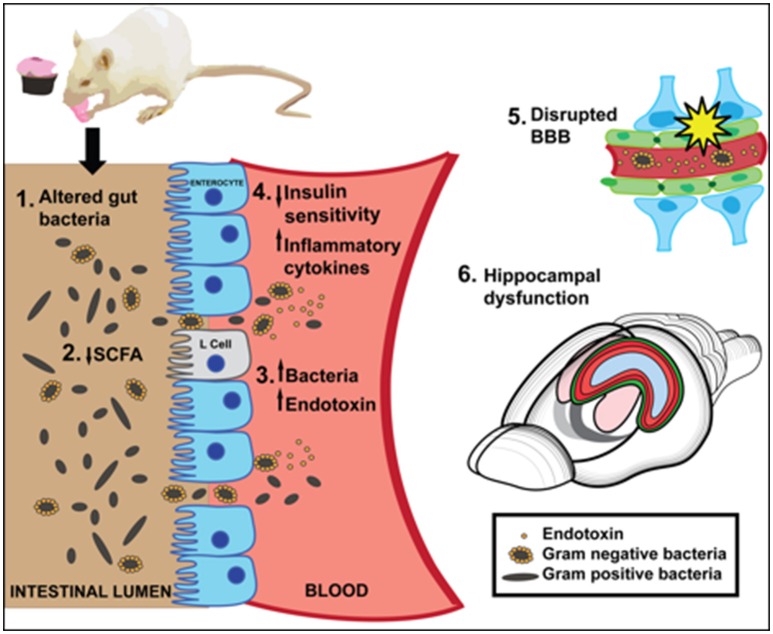
Consumption of a Western Diet (WD) that is high in saturated fat and added sugars negatively impacts cognitive function, particularly mnemonic processes that rely on the integrity of the hippocampus. Emerging evidence suggests that the gut microbiome influences cognitive function via the gut-brain axis, and that WD factors significantly alter the proportions of commensal bacteria in the gastrointestinal tract. Here we review mechanisms through which consuming a WD negatively impacts neurocognitive function, with a particular focus on recent evidence linking the gut microbiome with dietary- and metabolic-associated hippocampal impairment. We highlight evidence linking gut bacteria to altered intestinal permeability and blood brain barrier integrity, thus making the brain more vulnerable to the influx of deleterious substances from the circulation. WD consumption also increases production of endotoxin by commensal bacteria, which may promote neuroinflammation and cognitive dysfunction. Recent findings also show that diet-induced alterations in gut microbiota impair peripheral insulin sensitivity, which is associated with hippocampal neuronal derrangements and associated mnemonic deficits. In some cases treatment with specific probiotics or prebiotics can prevent or reverse some of the deleterious impact of WD consumption on neuropsychological outcomes, indicating that targeting the microbiome may be a successful strategy for combating dietary- and metabolic-associated cognitive impairment.
Overview
The claims and statistics of this paper haven’t been checked yet.
Run the check — free, no account needed. It reads the open-access text and checks the sources it cites.
Integrity signals
Registry
Cites
Statistics
Figures
Verification
Claims the paper makes
The claims and statistics of this paper haven’t been checked yet.
Run the check — free, no account needed. It reads the open-access text and checks the sources it cites.
Claims other papers make about this one
Each is checked against this paper’s own text: does it say what the citing paper says it does?
In the citing paper
“Indeed, the inflammatory effects of a diet high in calories and saturated fat have been proposed as one mechanism through which the Western diet may have detrimental effects on brain health, including cognitive decline, hippocampal dysfunction, and damage to the blood-brain barrier.15”
From Food and mood: How do diet and nutrition affect mental wellbeing? (2020) · cites this paper as [15]
In the citing paper
“On the other hand, high calorie meals rich in saturated fat appear to stimulate immune activation.13 15”
From Food and mood: How do diet and nutrition affect mental wellbeing? (2020) · cites this paper as [15]
In the citing paper
“Conversely, the consumption of a diet high in fibres, polyphenols, and unsaturated fatty acids (as found in a Mediterranean diet) can promote gut microbial taxa which can metabolise these food sources into anti-inflammatory metabolites,15 28 such as short chain fatty acids, while lowering the production of secondary bile acids and p-cresol.”
From Food and mood: How do diet and nutrition affect mental wellbeing? (2020) · cites this paper as [15]
In the citing paper
“In addition to genetic factors and exposure to antibiotics, diet is a potentially modifiable determinant of the diversity, relative abundance, and functionality of the gut microbiome throughout life.”
From Food and mood: How do diet and nutrition affect mental wellbeing? (2020) · cites this paper as [15]
In the citing paper
“Such a decrease in the function of the gut barrier is sometimes referred to as a “leaky gut” and has been linked to an “unhealthy” gut microbiome resulting from a diet low in fibre and high in saturated fats, refined sugars, and artificial sweeteners.15 23 27”
From Food and mood: How do diet and nutrition affect mental wellbeing? (2020) · cites this paper as [15]
In the citing paper
“For instance, the neurocognitive effects of the Western diet, and the possible mediating role of low grade systemic immune activation (as discussed above) may result from a compromised mucus layer with or without increased epithelial permeability.”
From Food and mood: How do diet and nutrition affect mental wellbeing? (2020) · cites this paper as [15]
In the citing paper
“Decreased levels of BDNF were found in subjects consuming diets with high sugar and fat [222, 223].”
From Brain-Derived Neurotrophic Factor in Brain Disorders: Focus on Neuroinflammation (2019) · cites this paper as [223]
Self-check
Percentages, sums and reported differences re-computed from the paper’s own numbers.
The self-check needs the paper’s full text.
Citations
Cites
1 retracted
Tsukumo, D. M. L., Carvalho-Filho, M. A., Carvalheira, J. B. C., Prada, P. O., Hirabara, S. M., Schenka, A. A., Araújo, E. P., Vassallo, J., Curi, R., Velloso, L. A., et al. (2007) · Diabetes · doi:10.2337/db06-1595 · Cited by 826
RetractedDiet rapidly and reproducibly alters the human gut microbiome
David, L. A., Maurice, C. F., Carmody, R. N., Gootenberg, D. B., Button, J. E., Wolfe, B. E., Ling, A. V., Devlin, A. S., Varma, Y., Fischbach, M. A., et al. (2014) · Nature · doi:10.1038/nature12820 · Cited by 10,100
Changes of Intestinal Functions in Liver Cirrhosis
Fukui, H., & Wiest, R. (2016) · Inflammatory Intestinal Diseases · doi:10.1159/000444436 · Cited by 6,820
Metabolic Endotoxemia Initiates Obesity and Insulin Resistance
Cani, P. D., Amar, J., Iglesias, M. A., Poggi, M., Knauf, C., Bastelica, D., Neyrinck, A. M., Fava, F., Tuohy, K. M., Chabo, C., et al. (2007) · Diabetes · doi:10.2337/db06-1491 · Cited by 6,638
Host-Bacterial Mutualism in the Human Intestine
Bäckhed, F., Ley, R. E., Sonnenburg, J. L., Peterson, D. A., & Gordon, J. I. (2005) · Science · doi:10.1126/science.1104816 · Cited by 5,277
Cani, P. D., Bibiloni, R., Knauf, C., Waget, A., Neyrinck, A. M., Delzenne, N. M., & Burcelin, R. (2008) · Diabetes · doi:10.2337/db07-1403 · Cited by 4,819
Hearing loss and cognitive decline in older adults
Lin, F. R., Yaffe, K., Xia, J., Xue, Q.-L., Harris, T. B., Purchase-Helzner, E., Satterfield, S., Ayonayon, H. N., Ferrucci, L., Simonsick, E. M., et al. (2013) · JAMA Internal Medicine · doi:10.1001/jamainternmed.2013.1868 · Cited by 4,017
Intestinal mucosal barrier function in health and disease
Turner, J. R. (2009) · Nature reviews. Immunology · doi:10.1038/nri2653 · Cited by 3,952
Gut Microbiota from Twins Discordant for Obesity Modulate Metabolism in Mice
Ridaura, V. K., Faith, J. J., Rey, F. E., Cheng, J., Duncan, A. E., Kau, A. L., Griffin, N. W., Lombard, V., Henrissat, B., Bain, J. R., et al. (2013) · Science · doi:10.1126/science.1241214 · Cited by 3,788
Hsiao, E. Y., McBride, S. W., Hsien, S., Sharon, G., Hyde, E. R., McCue, T., Codelli, J. A., Chow, J., Reisman, S. E., Petrosino, J. F., et al. (2013) · Cell · doi:10.1016/j.cell.2013.11.024 · Cited by 3,283
Cited by
Sorted by citations
Items 201–300 of 333
Rianda, D., Suradijono, S. H. R., Setiawan, E. A., Susanto, F., Meilianawati, M., Prafiantini, E., Kok, F. J., Shankar, A. H., & Agustina, R. (2022) · Journal of Functional Foods · doi:10.1016/j.jff.2022.105014 · Cited by 9
Nutrition and Gut–Brain Pathways Impacting the Onset of Parkinson’s Disease
Terenzi, D., Muth, A.-K., & Park, S. Q. (2022) · Nutrients · doi:10.3390/nu14142781 · Cited by 11
Thomas, C., Shilpa, B. M., & Mythri, R. B. (2021) · IntechOpen eBooks · doi:10.5772/intechopen.97546 · Cited by 8
Disease mechanisms as subtypes: Microbiome
Bonvegna, S., & Cilia, R. (2023) · Handbook of clinical neurology · doi:10.1016/b978-0-323-85555-6.00006-0 · Cited by 8
Gáspárová, Z., Janega, P., Weismann, P., Falougy, H. E., Kaprinay, B. T., Lipták, B., Micháliková, D., & Sotníková, R. (2018) · General Physiology and Biophysics · doi:10.4149/gpb_2018016 · Cited by 8
Bulgakova, S. V., Romanchuk, N., & Станиславовна, П. О. (2020) · Bulletin of Science and Practice · doi:10.33619/2414-2948/61/15 · Cited by 8
Diet Quality According to Mental Status and Associated Factors during Adulthood in Spain
Cebrino, J., & de la Cruz, S. P. (2021) · Nutrients · doi:10.3390/nu13051727 · Cited by 8
Developing our understanding of nutrition in depression
Upton, N. (2021) · British Journal Of Nutrition · doi:10.1017/s0007114521001744 · Cited by 8
Bulut, E. C., Kutucu, D. E., Üstünova, S., Ağırbaşlı, M. A., Dedeakayoğulları, H., Tarhan, Ç., Kapucu, A., Yeğen, B. Ç., Tansel, C. D., & Gürel-Gürevin, E. (2024) · Experimental Physiology · doi:10.1113/ep092052 · Cited by 7
Lim, V. J. T., Tabassum, N. I., Orian, J. M., Arumugam, T. V., & Weng, E. F.-J. (2025) · Progress in brain research · doi:10.1016/bs.pbr.2025.05.003 · Cited by 7
Morandini, H. A. E., Watson, P. A., Stewart, R. M., Wong, J. W. Y., Rao, P., & Zepf, F. D. (2022) · Clinical Nutrition ESPEN · doi:10.1016/j.clnesp.2022.10.004 · Cited by 7
Kania, B., Sotelo, A., Ty, D., & Wisco, J. J. (2023) · Journal of Alzheimer s Disease · doi:10.3233/jad-220224 · Cited by 8
Role of Flavor in Health and Wellness Food Products
Salta, D., & Du, X. (2024) · Springer eBooks · doi:10.1007/978-3-031-51808-9_2 · Cited by 8
Kang, J. E., Park, S. K., Kang, J. Y., Kim, J. M., Kwon, B. S., Park, S. H., Lee, C. J., Yoo, S. K., & Heo, H. J. (2020) · Journal of Microbiology and Biotechnology · doi:10.4014/jmb.2009.09012 · Cited by 7
Wang, L., Liu, Y., Gao, H., Ge, S., Yao, X., Liu, C., & Tan, X. (2023) · Molecules · doi:10.3390/molecules28135132 · Cited by 7
Solano-Aguilar, G. I., Lakshman, S., Jang, S., Gupta, R., Molokin, A., Schroeder, S., Gillevet, P. M., & Urban, J. F. (2021) · Metabolites · doi:10.3390/metabo11110779 · Cited by 7
Mustika, S., Santosaningsih, D., Handayani, D., & Rudijanto, A. (2023) · F1000Research · doi:10.12688/f1000research.129645.1 · Cited by 6
Fotros, D., Noormohammadi, M., Togha, M., Ghorbani, Z., Hekmatdoost, A., Rafiee, P., Torkan, Z., Shirani, P., Ansari, H., Karami, A., et al. (2024) · Food Science & Nutrition · doi:10.1002/fsn3.4168 · Cited by 6
Impact of Gut–Brain Axis and Probiotics on Alzheimer’s Disease
Tabaza, R., & Hartman, R. E. (2025) · Neurology International · doi:10.3390/neurolint17100153 · Cited by 7
Can essential fatty acids (EFAs) prevent and ameliorate post-COVID-19 long haul manifestations?
Das, U. N. (2024) · Lipids in Health and Disease · doi:10.1186/s12944-024-02090-4 · Cited by 6
Crain, E., Minaya, D. M., & Serre, C. B. D. L. (2025) · Nutrition Research · doi:10.1016/j.nutres.2025.04.002 · Cited by 6
Gut-brain axis as a key aspect of clinical conditions
Rodrigues, S. D. O., Pádua, A. G., Lima, C. M. G., Rodrigues, R. D. O., de Assis, I. B., & Pagnossa, J. P. (2022) · International Journal of Family & Community Medicine · doi:10.15406/ijfcm.2022.06.00291 · Cited by 6
Gut microbiota and brain aging: a comparative review of African and western populations
Ortutu, B. F., Okin, A. O., Darkwah, K. O., Onuorah, U. M., Maigoro, A. Y., & Iheme, G. O. (2026) · Frontiers in Aging Neuroscience · doi:10.3389/fnagi.2026.1740408 · Cited by 5
Probiotic: A Gut Microbiota-Based Therapeutic Approaches for the Treatment of Parkinson’s Disease
Rout, M., Prusty, S. K., & Kar, D. M. (2024) · Current Clinical Pharmacology · doi:10.2174/0127724328332572241219102122 · Cited by 5
Klug, M. E., Crain, E., Hayes, A., Shanmugam, M. V., Serre, C. B. D. L., & Kanoski, S. E. (2025) · Comprehensive physiology · doi:10.1002/cph4.70044 · Cited by 4
Self-citationMcCabe, E. M., Ketcham, C. J., & Hall, E. E. (2021) · Frontiers in Sports and Active Living · doi:10.3389/fspor.2021.692601 · Cited by 5
Zhu, Y., Mei, Y., Baby, N., Teo, H. Y., Hanafi, Z. B., Salleh, S. N. M., Sajikumar, S., & Liu, H. (2023) · Communications Biology · doi:10.1038/s42003-023-05036-1 · Cited by 5
Ageing and the gut-brain axis: lessons from the Drosophila model.
Tan, F. H., Shamsuddin, S., & Zainuddin, A. (2023) · Beneficial Microbes · doi:10.1163/18762891-20230056 · Cited by 5
Use of Prebiotics for Addressing Gut Dysbiosis and Achieving Healthy Gut–Brain Axis
Lasrado, L. D., & Rai, A. K. (2022) · Springer eBooks · doi:10.1007/978-981-16-8444-9_11 · Cited by 6
Bai, H., Xu, Y., Qu, S., Li, B., & Wang, X. (2026) · Frontiers in Neuroscience · doi:10.3389/fnins.2025.1737795 · Cited by 4
Measuring Mood in Nutritional Research
Asuku, A. O., Ayinla, M. T., & Ajibare, A. J. (2024) · Nutritional neurosciences · doi:10.1007/978-981-97-2681-3_10 · Cited by 4
Santamarina, A. B., Filho, V. N., de Freitas, J. A., Franco, L. A. M., Fonseca, J. V. D. S., Martins, R. C. R., Turri, J. A. O., da Silva, B. F. R. B., Gusmão, A. F., Olivieri, E. H. R., et al. (2024) · Nutrients · doi:10.3390/nu16183049 · Cited by 4
Nutrition is Associated with Violent and Criminal Behaviors
Asil, E., & Erkmen, E. (2025) · Current Nutrition Reports · doi:10.1007/s13668-025-00668-7 · Cited by 4
Ashman, S., & Krishnamurthy, H. K. (2019) · Elsevier eBooks · doi:10.1016/b978-0-12-816665-9.00004-4 · Cited by 4
Ouerdane, Y., El-Nahas, Z. S., Ouerdane, F., Hamam, K. M., & Ebada, M. A. (2022) · Springer eBooks · doi:10.1007/978-981-16-7606-2_12 · Cited by 4
Xu, T., Roy, S. P., Hadia, R., Annu, Bhowmik, S., & Panchal, A. (2026) · Frontiers in Pharmacology · doi:10.3389/fphar.2026.1826681 · Cited by 3
Targeting gut dysbiosis as a means to enhance recovery from surgical brain injury
Danehower, S. (2021) · Surgical Neurology International · doi:10.25259/sni_72_2021 · Cited by 3
Wpływ mikrobiomu jelitowego na mózg i psychikę
Żakowicz, J., Bramorska, A., Zarzycka, W., Kovbasiuk, A., Kuć, K., & Brzezicka, A. (2020) · Kosmos · doi:10.36921/kos.2020_2634 · Cited by 3
The Gut–Brain Axis, Cognition and Honey
Zahir, F., Alhewairini, S. S., & Mahamood, M. (2020) · Springer eBooks · doi:10.1007/978-981-15-6799-5_17 · Cited by 3
Griffith, J. S. (2020) · Springer eBooks · doi:10.1007/978-3-030-30730-1_28 · Cited by 3
Sato, K., Suzuki, F., Tsujiguchi, H., Hara, A., Kannon, T., Miyagi, S., Suzuki, K., Nakamura, M., Takazawa, C., Shibata, A., et al. (2022) · Nutrients · doi:10.3390/nu14235042 · Cited by 3
Gáspárová, Z., Ruskova, E., Micháliková, D., Brnoliaková, Z., Švík, K., Slovák, L., Bezek, Š., Knezl, V., & Sotníková, R. (2023) · General Physiology and Biophysics · doi:10.4149/gpb_2022053 · Cited by 2
Falaiye, T. A., Okobi, O. E., Oramu, C. I., & Jegede, A. O. (2025) · Cureus · doi:10.7759/cureus.78251 · Cited by 3
Chronic increase in sugar consumption and visual attention in Wistar rats
Lange, K. W., Hauser, J., Kaunzinger, I., Nakamura, Y., Reißmann, A., Stollberg, E., Guo, J., & Li, S. (2018) · Journal of Food Bioactives · doi:10.31665/jfb.2018.3159 · Cited by 3
Paulino, B. C., Aquino, J. D. S., de Souza, E. L., Gomes, J. A. D. S., Lins, P. P., de Lima, T. A. S., Alves, E. M. D. S., & do Nascimento, E. (2019) · Journal of Food and Nutrition Research · doi:10.12691/jfnr-7-4-6 · Cited by 3
Fecal Microbiota Transplantation in the Treatment-Resistant Psychiatric Disorders
Evrensel, A., & Ceylan, M. E. (2018) · Springer eBooks · doi:10.1007/978-981-10-4358-1_24 · Cited by 3
Whole Food and Ketogenic-Informed Dietary Interventions for OCD: A Metabolic Perspective
Dawson, S., Rucklidge, J. J., & Schofield, G. (2025) · Current Treatment Options in Psychiatry · doi:10.1007/s40501-025-00361-0 · Cited by 3
Targeting autophagy and programmed cell death in neurological diseases via probiotic intervention
Chen, L., Sabihi, S.-S., & Zhang, C. (2025) · Gut Pathogens · doi:10.1186/s13099-025-00787-0 · Cited by 2
Desmond, L. W., & Lowry, C. A. (2026) · Brain Behavior and Immunity Integrative · doi:10.1016/j.bbii.2026.100166 · Cited by 2
Altınsoy, C., Aksoy, E. K., Özgül, S., & Dikmen, D. (2026) · Current Nutrition Reports · doi:10.1007/s13668-026-00747-3 · Cited by 2
de Carvalho, P. R., Lopes, P. C., & de Almeida, G. F. (2020) · ID on line REVISTA DE PSICOLOGIA · doi:10.14295/idonline.v14i50.2492 · Cited by 3
The Role of Milk Nutrition and Ketogenic Diet in Epileptic Disorders
Ciliberti, M. G., Santillo, A., Polito, R., Messina, G., & Albenzio, M. (2022) · Epilepsy · doi:10.36255/exon-publications-epilepsy-ketogenic-diet · Cited by 2
Ernesto, J. T., Damásio, C. M., Gontijo, V. S., Gasparotto, J., & Viegas, C. (2023) · Exploration of Neuroprotective Therapy · doi:10.37349/ent.2023.00038 · Cited by 2
The Role of Gut Microbiota-derived Short Chain Fatty Acids in Amyotrophic Lateral Sclerosis
Saadh, M. J., Dhiaa, S. M., Bansal, P., Dabis, H. K., Katyal, A., Saraswat, V., Ibrahim, A. A., Kadem, R. U., & Ubaid, M. (2025) · Current Behavioral Neuroscience Reports · doi:10.1007/s40473-024-00292-9 · Cited by 2
role of the gut microbiota in pathogenesis and treatment of depression
Bogusz, K., Baran, N., Maksymowicz, M., BIELAK, A., NOWAK, A., CYWKA, Ł., Szwed, W., Nowak, A., & Machowiec, P. A. (2023) · Journal of Education Health and Sport · doi:10.12775/jehs.2023.31.01.006 · Cited by 2
Experts’ Opinion on Immunity and Nutrition to Support Key Cognitive Functions
Sekartini, R., Surapsari, J., Oktarina, M. D., Wiguna, T., Pasiak, T. F., Basrowi, R. W., Kartjito, M. S., & Wasito, E. (2023) · World Nutrition Journal · doi:10.25220/wnj.v06.s2.0001 · Cited by 3
Bhratee, A., Kumar, M., Alam, M. R., Anand, P., & Singh, S. (2023) · Current Pharmacology Reports · doi:10.1007/s40495-023-00325-z · Cited by 2
Brandt, T. J. (2023) · Open Cultural Studies · doi:10.1515/culture-2022-0201 · Cited by 2
Development of Electronic-Nose Technologies for Early Disease Detection Based on Microbial Dysbiosis
Wilson, A. D., & Forse, L. B. (2018) · International Electronic Conference on Sensors and Applications (ECSA) · doi:10.3390/ecsa-5-05832 · Cited by 2
Ben‐Porat, T., Alberga, A. S., Audet, M., Belleville, S., Cohen, T. R., Garneau, P. Y., Lavoie, K., Marion, P., Mellah, S., Pescarus, R., et al. (2023) · Surgery for Obesity and Related Diseases · doi:10.1016/j.soard.2023.02.022 · Cited by 1
Behavioral and neural alterations of the ventral tegmental area by exposure to junk food in rats
Lalanza, J. F., Oyem, J. C., Huijgens, P. T., McCutcheon, J. E., Heijkoop, R., & Snoeren, E. M. S. (2025) · Appetite · doi:10.1016/j.appet.2025.108146 · Cited by 2
Zhou, W., Qiao, X., Liu, T., Wen, L., Gao, H., Wang, C., Jin, Y., Liu, Q., Li, Y., Yu, J., et al. (2025) · Geriatric Nursing · doi:10.1016/j.gerinurse.2025.103474 · Cited by 1
Kim, H., Kiefer, K. B., Schmidt-Combest, S. E., Noratto, G. D., Arbizu, S., Chicas, M. C., Georghiades, N. C., Riechman, S. E., Kay, C. D., San-Cristóbal, R., et al. (2025) · Food & Function · doi:10.1039/d5fo01687h · Cited by 1
Vesnupriya, P., Karukuvelraja, R., Rehanaz, N., Shamna, M. E., & Saranya, N. (2026) · Journal of Food Science and Technology · doi:10.1007/s13197-026-06587-x · Cited by 2
Fang, K., Lv, Y., Zhang, X.-H., Liu, H., Zhai, B.-Z., Yao, Y., Tian, H., & Xu, H. (2026) · Nutrients · doi:10.3390/nu18040684 · Cited by 1
Chen, Y., Xiang, F., Xie, J., Zhang, Z., Xia, B., Lin, Y., Shi, Z., Tuo, Q., Lin, L., & Li, Y. (2026) · Journal of Ethnopharmacology · doi:10.1016/j.jep.2026.121446 · Cited by 1
Meal-specific dietary patterns relate to memory functioning
Kossowska-Wywiał, M., Kublanova, O., Zając, A., Orłowski, J., Front, G., Kulisz, P., Maciejewski, P., Bylina, W., & Brzezicka, A. (2026) · Frontiers in Nutrition · doi:10.3389/fnut.2026.1760033 · Cited by 2
Do food and nutrition have therapeutic value for disorders of mood and conation?
Prakash, J., Chaudhury, S., Chatterjee, K., & Kumar, S. (2022) · Industrial Psychiatry Journal · doi:10.4103/ipj.ipj_68_22 · Cited by 1
The value of fruit and vegetable consumption in pediatric migraine
Jahromi, S. R., Ariyanfar, S., Rafiee, P., & Togha, M. (2023) · Elsevier eBooks · doi:10.1016/b978-0-323-89834-8.00026-x · Cited by 1
Mental health screening in patients with type-2 diabetes mellitus
Ropero, D. M. I., Dallos, D. K. M., Sandoval, M. A. V., & Naranjo, J. A. L. (2023) · Journal of Diabetes Metabolic Disorders & Control · doi:10.15406/jdmdc.2023.10.00261 · Cited by 1
You Need Guts to Make New Neurons
Wolf, S. A., & Mattei, D. (2017) · Current Behavioral Neuroscience Reports · doi:10.1007/s40473-017-0127-4 · Cited by 1
Empleo de prebióticos y probióticos en el manejo de la ansiedad
Cepeda-Vidal, V., Mondragón, A. D. C., Lamas, A., Miranda, J. M., & Cepeda, A. (2019) · Farmacéuticos Comunitarios · doi:10.5672/fc.2173-9218.(2019/vol11).002.05 · Cited by 3
Vegan diet for adults with overweight or obesity
Nugent, S. J., Rogerson, D., Ranchordas, M. K., & Broom, D. R. (2021) · Cochrane Database of Systematic Reviews · doi:10.1002/14651858.cd013828 · Cited by 1
Asociaciones entre dieta y función cognitiva en el Proyecto SUN
Muñoz, M. I. (2022) · Deposito Adademico Digital Universidad De Navarra (University of Navarra) · doi:10.15581/10171/63292 · Cited by 1
Song, R., Gao, H. Y., Jiang, H., Zhang, W., & Han, S. (2023) · Research Square · doi:10.21203/rs.3.rs-2485897/v1 · Cited by 1
Dietary Patterns, Foods and Beverages in Age-Related Cognitive Performance and Dementia
Dreher, M. L. (2018) · Springer eBooks · doi:10.1007/978-3-319-59180-3_18
Panickar, K. S., Tavener, S. K., & Jewell, D. E. (2018) · Elsevier eBooks · doi:10.1016/b978-0-12-811959-4.00003-1
MICROBIOMA INTESTINAL: SEU POTENCIAL COMO UM NOVO ALVO TERAPÊUTICO
Magalhães, M. D. C., Roque, A. T., & Taketani, N. F. (2019) · Ensaios USF · doi:10.24933/eusf.v2i2.120
ARE THEY ALSO MIND COLONIZERS? EXPLORING THE ASSOCIATION BETWEEN GUT MICROBIOTA AND DEPRESSION
Ayeni, F. A., & Fadeyi, T. E. (2020) · FUDMA Journal of Sciences · doi:10.33003/fjs-2020-0402-24
Effect of diet on neurological disorders and regenerative processes in the brain
Farooqui, A. A. (2020) · Elsevier eBooks · doi:10.1016/b978-0-12-821711-5.00002-4
Gut Microbiota in Brain diseases
Salami, M. (2021) · Elsevier eBooks · doi:10.1016/b978-0-12-819265-8.00040-1
Gut microbiota and brain function and pathophysiology
Duttaroy, A. K. (2021) · Elsevier eBooks · doi:10.1016/b978-0-12-822405-2.00014-1
Gut microbiota and autoimmune diseases (Literature review)
Tereshchenko, L., & Voloshyna, N. (2020) · Ukrains kyi Visnyk Psykhonevrolohii · doi:10.36927/2079-0325-v28-is3-2020-10
Pathophysiology of Diabetes‐Induced Complications
Dahiya, R., Buttar, H. S., & Gupta, S. (2022) · Wiley eBooks · doi:10.1002/9781119746843.ch30
Tavera, F. N. N., & Mendoza, C. (2021) · Revista Peruana de Medicina Integrativa · doi:10.26722/rpmi.2021.v6n2.41
Fermente Besinlerin Beyin-Bağırsak Ekseni ve Psikiyatrik Bozukluklara Etkisi
Ömür, S., & Kalkan, İ. (2023) · İzmir Katip Çelebi Üniversitesi Sağlık Bilimleri Fakültesi Dergisi · doi:10.61399/ikcusbfd.1246338 · Cited by 1
Influence of Intestinal Microbiota on Depression and Obesity
ODABAŞI, M., YAYLA, M. A., ÖZKAN, E. B., ALTUNTAŞ, İ., & ERBAŞ, O. (2023) · doi:10.59287/irhs.670
FRECUENCIA Y FACTORES DE RIESGO DE LAS LESIONES IATROGÉNICAS DE LA VÍA BILIAR
Sarabia-Alcocer, B., López-Gutiérrez, T. J., Aké-Canché, B., Alcántara, E. J. G., PERÉZ-BALÁN, R. A., & Velázquez-Sarabia, I. (2023) · doi:10.22533/at.ed.2422330105
Carranza, S. F. A., Sánchez, J. P. C., Medina, K. A. M., & Moreno, A. L. (2023) · doi:10.22533/at.ed.2422330107
López, M. J. C., Castillo, A. L., Casados, J. C., Carmona, R. S. O., & Casados, L. N. C. (2023) · doi:10.22533/at.ed.2422330106
Sampedro, T. D. L. G., Pacheco, M. D. C. C., & Allauca, J. G. Q. (2023) · doi:10.22533/at.ed.2422330101
García-Gómez, S., & Pérez-Tejero, J. (2023) · doi:10.22533/at.ed.2422330109
SÍNDROME DE BURNOUT EN PROFESIONALES DEL SECTOR SALUD
Sarabia-Alcocer, B., López-Gutiérrez, T. J., Aké-Canché, B., Alcántara, E. J. G., PERÉZ-BALÁN, R. A., & Velázquez-Sarabia, I. (2023) · doi:10.22533/at.ed.2422330104
Quispe, N. B. P., Acurio, J. T., Vilca, O. M. L., Tapia, J. L. P., Quille, L. Q., Rivera, T. J. C., Cervantes, C. R. H., Perales, L. D. M., Donayre, E. M. F., & Cayllahua, Y. H. (2023) · doi:10.22533/at.ed.2422330102
CONSIDERACIONES DEL HOCKEY SOBRE CÉSPED PARA PROFESIONALES DEL ÁREA DE SALUD
Mohr, C. F. S. M., Bustos, M. J. C., Fuentes, E. C. G., Paonessa, S. M., Marambio, N. S., Repenning, A. E., Jullian, N. F., & Gómez, A. I. D. (2023) · doi:10.22533/at.ed.2422330108
Espinoza, C. O. L., & Gutierrez, A. X. A. (2023) · doi:10.22533/at.ed.2422330103
Effect of Diet Patterns in the Prevention of Alzheimer’s Disease
Cosio, D. S., Rodriguez, S., Jayakumar, A. R., & Paidas, M. J. (2023) · Nutritional neurosciences · doi:10.1007/978-981-99-0677-2_13
Metadata
- Authors
- Noble, E. E., Hsu, T. M., & Kanoski, S. E.
- Affiliations
- University of Southern California (US)
- Corresponding author
- Kanoski, Scott E.
- Venue
- Frontiers in Behavioral Neuroscience
- Publisher
- Frontiers Media SA
- Published
- 2017-01-30
- Volume
- 11
- Pages
- 9-9
- ISSN
- 1662-5153 (ISSN-L)
- PMC
- PMC5277010
- OpenAlex
- W2574256641
- Cited by
- 333
- References
- 137
- Citations by year
- 2026: 26 · 2025: 30 · 2024: 36 · 2023: 60 · 2022: 37 · 2021: 38 · 2020: 42 · 2019: 26 · 2018: 27 · 2017: 11
- FWCI
- 2.71
- Type
- journal article
- Language
- en
- Open access
- gold
- doi.org
- Licence
- cc-by
- Locations
- Frontiers in Behavioral Neuroscience (publishedVersion, cc-by)
- PubMed Central (publishedVersion, cc-by)
- PubMed (publishedVersion)
- Funders
- National Institute of Diabetes and Digestive and Kidney Diseases (DK104897)
- Topics
- Life Sciences › Biochemistry, Genetics and Molecular Biology › Molecular Biology › Gut microbiota and health
- Health Sciences › Medicine › Public Health, Environmental and Occupational Health › Nutritional Studies and Diet
- Health Sciences › Medicine › Gastroenterology › Gastrointestinal motility and disorders
- Keywords
- Western diet, gut microbiota, gut-brain axis, cognitive impairment, hippocampus, memory impairment, intestinal permeability, blood-brain barrier, endotoxin, neuroinflammation, insulin sensitivity, probiotics, prebiotics, dietary fat, added sugars
About these checks
Registry, retraction, Cites and statistics results are computed, not judged, with one exception: a printed reference that no index lists is read once by a model before it counts as a citation error. Claims are extracted by a model and kept only when their quote appears verbatim in the text; each cited source is then checked, with a model’s help, for whether it says what the claim relies on. Those verdicts can be wrong — read the claim’s quote and the cited source before relying on one.
Statistics and arithmetic are recomputed, not judged.
Confidence bands are shown only for fields calibrated on our annotated test set. None is calibrated yet, so no band is shown.
What counts as a claim ›How we measure confidence ›How we check this ›
Are you an author, or do you see a problem with this page? Request a review
