

The DOI matches its Crossref record; 2 of the 2 references it cites were found in a registry or an index.
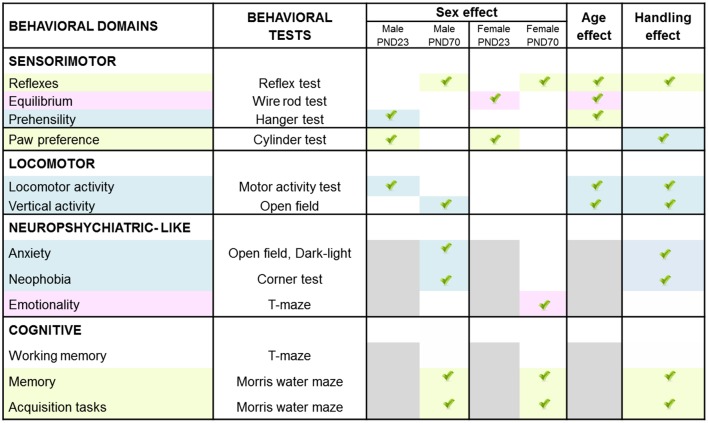
Severe Perinatal Hypoxic-Ischemic Brain Injury Induces Long-Term Sensorimotor Deficits, Anxiety-Like Behaviors and Cognitive Impairment in a Sex-, Age- and Task-Selective Manner in C57BL/6 Mice but Can Be Modulated by Neonatal Handling
Overview
The claims and statistics of this paper haven’t been checked yet.
Run the check — free, no account needed. It reads the open-access text and checks the sources it cites.
Integrity signals
Registry
Cites
Statistics
Figures
Verification
Claims the paper makes
The claims and statistics of this paper haven’t been checked yet.
Run the check — free, no account needed. It reads the open-access text and checks the sources it cites.
Claims other papers make about this one
Each is checked against this paper’s own text: does it say what the citing paper says it does?
In the citing paper
“The numbers of crossings and total distance traveled by HI-insult mice increased as previously reported [21–23], while miR-100-5p antagomir administration significantly decreased the crossing number and total distance traveled compared with the HI + NC group (Fig. 2A, B).”
From Engineered Extracellular Vesicles Loaded with MiR-100-5p Antagonist Selectively Target the Lesioned Region to Promote Recovery from Brain Damage (2025) · cites this paper as [23]
Self-check
Percentages, sums and reported differences re-computed from the paper’s own numbers.
The self-check needs the paper’s full text.
Citations
Cites
Early-life handling stimulation and environmental enrichment
Fernández-Teruel, A., Giménez-Llort, L., Escorihuela, R. M., Gil, L., Aguilar, R., Steimer, T., & Tobeña, A. (2002) · Pharmacology Biochemistry and Behavior · doi:10.1016/s0091-3057(02)00787-6 · Cited by 171
Self-citationMånsson, J., Fellman, V., Stjernqvist, K., & the EXPRESS Study Group (authors) (2015) · Acta Paediatrica · doi:10.1111/apa.12937 · Cited by 67
Research works printed but not linked: 114
- Alasmi, 1997, Effect of tactile stimulation on serum lactate in the newborn rat, Pediatr. Res., 41, 857, 10.1203/00006450-199706000-00010 · DOI
- Andiné, 1990, Evaluation of brain damage in a rat model of neonatal hypoxic-ischemia, J. Neurosci. Methods, 35, 253, 10.1016/0165-0270(90)90131-x · DOI
- Antier, 1998, Effects of neonatal focal cerebral hypoxia-ischemia on sleep-waking pattern, ECoG power spectra and locomotor activity in the adult rat, Brain Res., 807, 29, 10.1016/s0006-8993(98)00703-3 · DOI
- Arteni, 2010, Lateralized and sex-dependent behavioral and morphological effects of unilateral neonatal cerebral hypoxia-ischemia in the rat, Behav. Brain Res., 210, 92, 10.1016/j.bbr.2010.02.015 · DOI
- Arteni, 2003, Neonatal cerebral hypoxia-ischemia causes lateralized memory impairments in the adult rat, Brain Res., 973, 171, 10.1016/s0006-8993(03)02436-3 · DOI
- Balduini, 2000, Long-lasting behavioral alterations following a hypoxic/ischemic brain injury in neonatal rats, Brain Res., 859, 318, 10.1016/s0006-8993(00)01997-1 · DOI
- Balduini, 2001, Simvastatin protects against long-lasting behavioral and morphological consequences of neonatal hypoxic/ischemic brain injury, Stroke, 32, 2185, 10.1161/hs0901.094287 · DOI
- Bona, 1998, Protective effects of moderate hypothermia after neonatal Hypoxia-Ischemia: short- and long-term outcome, Pediatr. Res., 43, 738, 10.1203/00006450-199806000-00005 · DOI
- Bona, 1997, Sensorimotor function and neuropathology five to six weeks after hypoxia-ischemia in seven-day-old rats, Pediatr. Res., 42, 678, 10.1203/00006450-199711000-00021 · DOI
- Cañete, 2015, Cognitive and emotional alterations in young Alzheimer’s disease (3xTgAD) mice: effects of neonatal handling stimulation and sexual dimorphism, Behav. Brain Res., 281, 156, 10.1016/j.bbr.2014.11.004 · DOI
- Carletti, 2012, Folic acid prevents behavioral impairment and Na+, K+-ATPase inhibition caused by neonatal hypoxia-ischemia, Neurochem. Res., 37, 1624, 10.1007/s11064-012-0757-6 · DOI
- Caston, 1997, Effects of a brief sensorimotor training on the development of behavioral inhibition in the mouse, Behav. Processes, 39, 295, 10.1016/s0376-6357(96)00754-1 · DOI
- Chang, 2005, Erythropoietin improves functional and histological outcome in neonatal stroke, Pediatr. Res., 58, 106, 10.1203/01.pdr.0000163616.89767.69 · DOI
- Chou, 2001, Behavioral/environmental intervention improves learning after cerebral hypoxia-ischemia in rats, Stroke, 32, 2192, 10.1161/hs0901.095656 · DOI
- Clark, 1977, Vestibular stimulation influence on motor development in infants, Science, 196, 1228, 10.1126/science.300899 · DOI
- de Paula, 2009, Hemispheric brain injury and behavioral deficits induced by severe neonatal hypoxia-ischemia in rats are not attenuated by intravenous administration of human umbilical cord blood cells, Pediatr. Res., 65, 631, 10.1203/PDR.0b013e31819ed5c8 · DOI
- Donders, 2002, Gender differences in learning and memory after pediatric traumatic brain injury, Neuropsychology, 16, 491, 10.1037//0894-4105.16.4.491 · DOI
- Durán-Carabali, 2017, Prenatal and early postnatal environmental enrichment reduce acute cell death and prevent neurodevelopment and memory impairments in rats submitted to neonatal hypoxia ischemia, Mol. Neurobiol., 55, 3627, 10.1007/s12035-017-0604-5 · DOI
- Elsmén, 2004, Preterm male infants need more initial respiratory and circulatory support than female infants, Acta Paediatr., 93, 529, 10.1080/08035250410024998 · DOI
- Fan, 2011, Beneficial effect of erythropoietin on sensorimotor function and white matter after hypoxia-ischemia in neonatal mice, Pediatr. Res., 69, 56, 10.1203/PDR.0b013e3181fcbef3 · DOI
- Fan, 2005, Hypoxia-ischemia induced neurological dysfunction and brain injury in the neonatal rat, Behav. Brain Res., 165, 80, 10.1016/j.bbr.2005.06.033 · DOI
- Fan, 2013, Hypothermia and erythropoietin for neuroprotection after neonatal brain damage, Pediatr. Res., 73, 18, 10.1038/pr.2012.139 · DOI
- Fernández-Teruel, 1991, Infantile (handling) stimulation and behavior in young Roman high- and low-avoidance rats, Physiol. Behav., 50, 563, 10.1016/0031-9384(91)90546-z · DOI
- Fitzgerald, 2005, The development of nociceptive circuits, Nat. Rev. Neurosci., 6, 507, 10.1038/nrn1701 · DOI · Paper page
- Fung, 2002, Feeding dysfunction is associated with poor growth and health status in children with cerebral palsy, J. Am. Diet. Assoc., 102, 361, 10.1016/s0002-8223(02)90084-2 · DOI
- Giménez-Llort, 2007, Modeling behavioral and neuronal symptoms of Alzheimer’s disease in mice: a role for intraneuronal amyloid, Neurosci. Biobehav. Rev., 31, 125, 10.1016/j.neubiorev.2006.07.007 · DOI
- Giménez-Llort, 2002, Mice lacking the adenosine A1 receptor are anxious and aggressive, but are normal learners with reduced muscle strength and survival rate, Eur. J. Neurosci., 16, 547, 10.1046/j.1460-9568.2002.02122.x · DOI
- Girard, 2009, Developmental motor deficits induced by combined fetal exposure to lipopolysaccharide and early neonatal hypoxia/ischemia: a novel animal model for cerebral palsy in very premature infants, Neuroscience, 158, 673, 10.1016/j.neuroscience.2008.10.032 · DOI
- Girard, 2012, Postnatal administration of IL-1Ra exerts neuroprotective effects following perinatal inflammation and/or hypoxic-ischemic injuries, Am. J. Perinatol., 26, 1331, 10.1016/j.bbi.2012.09.001 · DOI
- Grow, 2003, Can lateralizing sensorimotor deficits be identified after neonatal cerebral hypoxia-ischemia in rats?, Dev. Neurosci., 25, 394, 10.1159/000075665 · DOI
- Gschanes, 1998, Early postnatal stimulation influences passive avoidance behaviour of adult rats, Behav. Brain Res., 93, 91, 10.1016/s0166-4328(97)00143-5 · DOI
- Hagberg, 2002, Models of white matter injury: comparison of infectious, hypoxic-ischemic, and excitotoxic insults, Ment. Retard. Dev. Disabil. Res. Rev., 8, 30, 10.1002/mrdd.10007 · DOI
- Hagberg, 2004, PARP-1 gene disruption in mice preferentially protects males from perinatal brain injury, J. Neurochem., 90, 1068, 10.1111/j.1471-4159.2004.02547.x · DOI
- Hill, 2012, Sex differences in mechanisms and outcome of neonatal hypoxia-ischemia in rodent models: implications for sex-specific neuroprotection in clinical neonatal practice, Neurol. Res. Int., 2012, 867531, 10.1155/2012/867531 · DOI
- Huang, 2008, Hypoxic-ischemic brain injury: imaging findings from birth to adulthood, Radiographics, 28, 417, 10.1148/rg.282075066 · DOI
- Huang, 2009, Long-term cognitive impairment and myelination deficiency in a rat model of perinatal hypoxic-ischemic brain injury, Brain Res., 1301, 100, 10.1016/j.brainres.2009.09.006 · DOI
- Hurn, 2005, Adult or perinatal brain injury: does sex matter?, Stroke, 36, 193, 10.1161/01.STR.0000153064.41332.f6 · DOI
- Ikeda, 2006, Rehabilitative training tasks improve spatial learning impairment in the water maze following hypoxic-ischemic insult in neonatal rats, Pediatr. Res., 59, 61, 10.1203/01.pdr.0000190582.49589.14 · DOI
- Ikeda, 2001, Selective and long-term learning impairment following neonatal hypoxic-ischemic brain insult in rats, Behav. Brain Res., 118, 17, 10.1016/s0166-4328(00)00287-4 · DOI
- Jansen, 1996, Long-term effects of neonatal ischemic-hypoxic brain injury on sensorimotor and locomotor tasks in rats, Behav. Brain Res., 78, 189, 10.1016/0166-4328(95)00248-0 · DOI
- Jones, 2008, Long-term functional and protective actions of preconditioning with hypoxia, cobalt chloride, and desferrioxamine against hypoxic-ischemic injury in neonatal rats, Pediatr. Res., 63, 620, 10.1203/PDR.0b013e31816d9117 · DOI
- Karalis, 2011, Resveratrol ameliorates hypoxia/ischemia-induced behavioral deficits and brain injury in the neonatal rat brain, Brain Res., 1425, 98, 10.1016/j.brainres.2011.09.044 · DOI
- Kim, 2008, Erythropoietin attenuates brain injury, subventricular zone expansion, and sensorimotor deficits in hypoxic-ischemic neonatal rats, J. Korean Med. Sci., 23, 484, 10.3346/jkms.2008.23.3.484 · DOI
- Kurinczuk, 2010, Epidemiology of neonatal encephalopathy and hypoxic-ischaemic encephalopathy, Early Hum. Dev., 86, 329, 10.1016/j.earlhumdev.2010.05.010 · DOI
- Labarba, 1974, The effects of neonatal tactile stimulation on adult emotional reactivity in BALB-c mice, Dev. Psychobiol., 7, 393, 10.1002/dev.420070503 · DOI
- Lang, 2003, Emotional instability but intact spatial cognition in adenosine receptor 1 knock out mice, Behav. Brain Res., 145, 179, 10.1016/s0166-4328(03)00108-6 · DOI
- Lee, 2010, Mesenchymal stem-cell transplantation for hypoxic-ischemic brain injury in neonatal rat Model, Pediatr. Res., 67, 42, 10.1203/PDR.0b013e3181bf594b · DOI
- Lehmann, 2002, Comparison of maternal separation and early handling in terms of their neurobehavioral effects in aged rats, Neurobiol. Aging, 23, 457, 10.1016/s0197-4580(01)00320-7 · DOI
- Levine, 1957, Infantile experience and resistance to physiological stress, Science, 126, 405, 10.1126/science.126.3270.405 · DOI
- Levine, 1963, Genetic and ontogenetic determinants of adult behavior in the rat, J. Comp. Physiol. Psychol., 56, 423, 10.1037/h0040285 · DOI
- Levine, 1967, Physiological and behavioral effects of infantile stimulation, Physiol. Behav., 2, 55, 10.1016/0031-9384(67)90011-x · DOI
- Levine, 1958, The effects of handling before and after weaning on the resistance of albino rats to later deprivation, Can. J. Psychol., 12, 103, 10.1037/h0083730 · DOI
- Lubics, 2005, Neurological reflexes and early motor behavior in rats subjected to neonatal hypoxic-ischemic injury, Behav. Brain Res., 157, 157, 10.1016/j.bbr.2004.06.019 · DOI
- Mallard, 2015, Modeling ischemia in the immature brain: how translational are animal models?, Stroke, 46, 3006, 10.1161/strokeaha.115.007776 · DOI
- Marlow, 2005, Neuropsychological and educational problems at school age associated with neonatal encephalopathy, Arch. Dis. Child. Fetal Neonatal Ed., 90, F380, 10.1136/adc.2004.067520 · DOI
- Mason, 2018, Nesting environment provides sex-specific neuroprotection in a rat model of neonatal hypoxic-ischemic injury, Front. Behav. Neurosci., 12, 221, 10.3389/fnbeh.2018.00221 · DOI
- McAuliffe, 2006, Adult neurological function following neonatal hypoxia-ischemia in a mouse model of the term neonate: water maze performance is dependent on separable cognitive and motor components, Brain Res., 1118, 208, 10.1016/j.brainres.2006.08.030 · DOI
- Millar, 2017, Neonatal hypoxia ischaemia: mechanisms, models, and therapeutic challenges, Front. Cell. Neurosci., 11, 78, 10.3389/fncel.2017.00078 · DOI
- Montagu, 1953, The sensory influences of the skin, Tex. Rep. Biol. Med., 11, 292
- Moster, 2002, Joint association of Apgar scores and early neonatal symptoms with minor disabilities at school age, Arch. Dis. Child. Fetal Neonatal Ed., 86, F16, 10.1136/fn.86.1.f16 · DOI
- Netto, 2018, Pregnancy as a valuable period for preventing hypoxia-ischemia brain damage, Int. J. Dev. Neurosci., 70, 12, 10.1016/j.ijdevneu.2018.06.004 · DOI
- Netto, 2017, Sex-dependent consequences of neonatal brain hypoxia-ischemia in the rat, J. Neurosci. Res., 95, 409, 10.1002/jnr.23828 · DOI
- Nie, 2016, Sex-specific effects of N-acetylcysteine in neonatal rats treated with hypothermia after severe hypoxia-ischemia, Neurosci. Res., 108, 24, 10.1016/j.neures.2016.01.008 · DOI
- Northington, 2006, Brief update on animal models of hypoxic-ischemic encephalopathy and neonatal stroke, ILAR J., 47, 32, 10.1093/ilar.47.1.32 · DOI
- Oakley, 1975, Ontogeny of spontaneous locomotor activity in rabbit, rat, and guinea pig, J. Comp. Physiol. Psychol., 89, 267, 10.1037/h0076816 · DOI
- Paolucci, 2015, Tactile and proprioceptive sensory stimulation modifies estimation of walking distance but not upright gait stability: a pilot study, J. Phys. Ther. Sci., 27, 3287, 10.1589/jpts.27.3287 · DOI
- Pazos, 2012, Cannabidiol administration after hypoxia-ischemia to newborn rats reduces long-term brain injury and restores neurobehavioral function, Neuropharmacology, 63, 776, 10.1016/j.neuropharm.2012.05.034 · DOI
- Peacock, 2012, Neonatal and infant outcome in boys and girls born very prematurely, Pediatr. Res., 71, 305, 10.1038/pr.2011.50 · DOI
- Pereira, 2007, Effects of daily environmental enrichment on memory deficits and brain injury following neonatal hypoxia-ischemia in the rat, Neurobiol. Learn. Mem., 87, 101, 10.1016/j.nlm.2006.07.003 · DOI
- Pereira, 2008, Early enriched housing results in partial recovery of memory deficits in female, but not in male, rats after neonatal hypoxia-ischemia, Brain Res., 1218, 257, 10.1016/j.brainres.2008.04.010 · DOI
- Platt, 2007, Trends in cerebral palsy among infants of very low birthweight (<1500 g) or born prematurely (<32 weeks) in 16 European centres: a database study, Lancet, 369, 43, 10.1136/adc.2007.117689 · DOI
- Raineki, 2014, Neonatal handling: an overview of the positive and negative effects, Dev. Psychobiol., 56, 1613, 10.1002/dev.21241 · DOI
- Reilly, 1996, Prevalence of feeding problems and oral motor dysfunction in children with cerebral palsy: a community survey, J. Pediatr., 129, 877, 10.1016/s0022-3476(96)70032-x · DOI
- Rice, 1981, The influence of immaturity on hypoxic-ischemic brain damage in the rat, Ann. Neurol., 9, 131, 10.1002/ana.410090206 · DOI
- Robertson, 1993, Long-term follow-up of term neonates with perinatal asphyxia, Clin. Perinatol., 20, 483, 10.1016/s0095-5108(18)30405-6 · DOI
- Rodrigues, 2004, Tactile stimulation and maternal separation prevent hippocampal damage in rats submitted to neonatal hypoxia-ischemia, Brain Res., 1002, 94, 10.1016/j.brainres.2003.12.020 · DOI
- Rojas, 2013, Effects of daily environmental enrichment on behavior and dendritic spine density in hippocampus following neonatal hypoxia-ischemia in the rat, Exp. Neurol., 241, 25, 10.1016/j.expneurol.2012.11.026 · DOI
- Rojas, 2015, Environmental stimulation improves performance in the ox-maze task and recovers Na+,K+-ATPase activity in the hippocampus of hypoxic-ischemic rats, Neuroscience, 291, 118, 10.1016/j.neuroscience.2015.01.017 · DOI
- Rutter, 2003, Using sex differences in psychopathology to study causal mechanisms: unifying issues and research strategies, J. Child Psychol. Psychiatry, 44, 1092, 10.1111/1469-7610.00194 · DOI · Paper page
- Sanches, Early hypoxia-ischemia causes hemisphere and sex-dependent cognitive impairment and histological damage, Neuroscience, 237, 208, 10.1016/j.neuroscience.2013.01.066 · DOI
- Sanches, Are the consequences of neonatal hypoxia-ischemia dependent on animals’ sex and brain lateralization?, Brain Res., 1507, 105, 10.1016/j.brainres.2013.02.040 · DOI
- Sanches, 2015, Sexual dimorphism and brain lateralization impact behavioral and histological outcomes following hypoxia-ischemia in P3 and P7 rats, Neuroscience, 290, 581, 10.1016/j.neuroscience.2014.12.074 · DOI
- Schallert, 2000, CNS plasticity and assessment of forelimb sensorimotor outcome in unilateral rat models of stroke, cortical ablation, parkinsonism and spinal cord injury, Neuropharmacology, 39, 777, 10.1016/s0028-3908(00)00005-8 · DOI
- Schlager, 2011, Systemic G-CSF treatment does not improve long-term outcomes after neonatal hypoxic-ischaemic brain injury, Exp. Neurol., 230, 67, 10.1016/j.expneurol.2010.11.021 · DOI
- Schuch, 2016, Early environmental enrichment affects neurobehavioral development and prevents brain damage in rats submitted to neonatal hypoxia-ischemia, Neurosci. Lett., 617, 101, 10.1016/j.neulet.2016.02.015 · DOI
- Semple, 2013, Brain development in rodents and humans: identifying benchmarks of maturation and vulnerability to injury across species, Prog. Neurobiol., 1, 10.1016/j.pneurobio.2013.04.001 · DOI · Paper page
- Sheldon, 2001, Delayed cell death in neonatal mouse hippocampus from hypoxia-ischemia is neither apoptotic nor necrotic, Neurosci. Lett., 304, 165, 10.1016/s0304-3940(01)01788-8 · DOI
- Sheldon, 1998, Strain-related brain injury in neonatal mice subjected to hypoxia-ischemia, Brain Res., 810, 114, 10.1016/s0006-8993(98)00892-0 · DOI
- Shen, 1991, The behavioral and anatomical effects of prenatal umbilical cord clamping in the rat and their alteration by the prior maternal administration of nimodipine, Restor. Neurol. Neurosci., 3, 11, 10.3233/RNN-1991-3102 · DOI
- Shrivastava, 2012, Short and long-term analysis and comparison of neurodegeneration and inflammatory cell response in the ipsilateral and contralateral hemisphere of the neonatal mouse brain after hypoxia/ischemia, Neurol. Res. Int., 2012, 781512, 10.1155/2012/781512 · DOI
- Smith, 2014, Sex differences in behavioral outcome following neonatal hypoxia ischemia: insights from a clinical meta-analysis and a rodent model of induced hypoxic ischemic brain injury, Exp. Neurol., 254, 54, 10.1016/j.expneurol.2014.01.003 · DOI
- Soares, 2013, Cognitive impairment and persistent anxiety-related responses following bilateral common carotid artery occlusion in mice, Behav. Brain Res., 249, 28, 10.1016/j.bbr.2013.04.010 · DOI
- Spandou, 2005, Erythropoietin prevents long-term sensorimotor deficits and brain injury following neonatal hypoxia-ischemia in rats, Brain Res., 1045, 22, 10.1016/j.brainres.2005.03.013 · DOI
- Sullivan, 2000, Prevalence and severity of feeding and nutritional problems in children with neurological impairment: oxford feeding study, Dev. Med. Child Neurol., 42, 674, 10.1111/j.1469-8749.2000.tb00678.x · DOI
- Tagin, 2012, Hypothermia for neonatal hypoxic ischemic encephalopathy, Arch. Pediatr. Adolesc. Med., 166, 558, 10.1001/archpediatrics.2011.1772 · DOI
- Tata, 2015, Effects of maternal separation on behavior and brain damage in adult rats exposed to neonatal hypoxia-ischemia, Behav. Brain Res., 280, 51, 10.1016/j.bbr.2014.11.033 · DOI
- Ten, 2003, Brain injury and neurofunctional deficit in neonatal mice with hypoxic-ischemic encephalopathy, Behav. Brain Res., 145, 209, 10.1016/s0166-4328(03)00146-3 · DOI
- Ten, 2004, Late measures of brain injury after neonatal hypoxia-ischemia in mice, Stroke, 35, 2183, 10.1161/01.str.0000137768.25203.df · DOI
- Thorngren-Jerneck, 2001, Cerebral glucose metabolism measured by positron emission tomography in term newborn infants with hypoxic ischemic encephalopathy, Pediatr. Res., 49, 495, 10.1203/00006450-200104000-00010 · DOI
- Tioseco, 2006, Male sex and intraventricular hemorrhage, Pediatr. Crit. Care Med., 7, 40, 10.1097/01.pcc.0000192341.67078.61 · DOI
- Torres-Lista, 2015, Early postnatal handling and environmental enrichment improve the behavioral responses of 17-month-old 3xTg-AD and non-transgenic mice in the Forced Swim Test in a gender-dependent manner, Behav. Processes, 120, 120, 10.1016/j.beproc.2015.09.011 · DOI
- Towfighi, 1991, Neuropathology of remote hypoxic-ischemic damage in the immature rat, Acta Neuropathol., 81, 578, 10.1007/bf00310141 · DOI
- Tsuji, 2010, Sex differences in the benefits of rehabilitative training during adolescence following neonatal hypoxia-ischemia in rats, Exp. Neurol., 226, 285, 10.1016/j.expneurol.2010.09.002 · DOI
- van der Kooij, 2010, Mild neonatal hypoxia-ischemia induces long-term motor- and cognitive impairments in mice, Brain Behav. Immun., 24, 850, 10.1016/j.bbi.2009.09.003 · DOI
- van Handel, 2007, Long-term cognitive and behavioral consequences of neonatal encephalopathy following perinatal asphyxia: a review, Eur. J. Pediatr., 166, 645, 10.1007/s00431-007-0437-8 · DOI
- Van Kooij, 2008, Corpus callosum size in relation to motor performance in 9- to 10-year-old children with neonatal encephalopathy, Pediatr. Res., 63, 103, 10.1203/pdr.0b013e31815b4435 · DOI
- van Velthoven, 2010, Nasal administration of stem cells: a promising novel route to treat neonatal ischemic brain damage, Pediatr. Res., 68, 419, 10.1203/pdr.0b013e3181f1c289 · DOI
- Vannucci, 2004, Hypoxia-ischemia in the immature brain, J. Exp. Biol., 207, 3149, 10.1242/jeb.01064 · DOI
- Vannucci, 1997, A model of perinatal hypoxic-ischemic brain damage, Ann. N Y Acad. Sci., 835, 234, 10.1111/j.1749-6632.1997.tb48634.x · DOI
- Vannucci, 2005, Perinatal hypoxic-ischemic brain damage: evolution of an animal model, Dev. Neurosci., 27, 81, 10.1159/000085978 · DOI
- Wahlsten, 1974, A developmental time scale for postnatal changes in brain and behaviour of B6D2F2 mice, Brain Res., 72, 251, 10.1016/0006-8993(74)90863-4 · DOI
- Williams, 1994, How Does Your Engine Run?
- Young, 1986, Behavioral performance of rats following neonatal hypoxia-ischemia, Stroke, 17, 1313, 10.1161/01.str.17.6.1313 · DOI
- Robertson, 1988, Educational readiness of survivors of neonatal encephalopathy associated with birth asphyxia at term, J. Dev. Behav. Pediatr., 9, 298, 10.1097/00004703-198810000-00009 · DOI
Cited by
Sorted by citations
Cheng, Y., Gai, C., Zhao, Y., Li, T., Song, Y., Luo, Q., Xin, D., Jiang, Z., Chen, W., Liu, D., et al. (2025) · Neuroscience Bulletin · doi:10.1007/s12264-025-01376-6 · Cited by 5
Metadata
- Authors
- Muntsant, A., Shrivastava, K., Recasens, M., & Giménez-Llort, L.
- Venue
- Frontiers in Behavioral Neuroscience
- Publisher
- Frontiers Media SA
- Published
- 2019-02-13
- Volume
- 13
- ISSN
- 1662-5153
- PMC
- PMC6381068
- Cited by
- 32
- References
- 2
- Funders
- Fundació La Marató de TV3 (2011-110531)
- Universitat Autònoma de Barcelona (EME-13-140335)
About these checks
Registry, retraction, Cites and statistics results are computed, not judged, with one exception: a printed reference that no index lists is read once by a model before it counts as a citation error. Claims are extracted by a model and kept only when their quote appears verbatim in the text; each cited source is then checked, with a model’s help, for whether it says what the claim relies on. Those verdicts can be wrong — read the claim’s quote and the cited source before relying on one.
Statistics and arithmetic are recomputed, not judged.
Confidence bands are shown only for fields calibrated on our annotated test set. None is calibrated yet, so no band is shown.
What counts as a claim ›How we measure confidence ›How we check this ›
Are you an author, or do you see a problem with this page? Request a review
How to cite
Cite CoChat for the checks on this page, and the paper for its own findings.
- This page
- CoChat. (2026). Citation check: Severe Perinatal Hypoxic-Ischemic Brain Injury Induces Long-Term Sensorimotor Deficits, Anxiety-Like Behaviors and Cognitive Impairment in a Sex-, Age- and Task-Selective Manner in C57BL/6 Mice but Can Be Modulated by Neonatal Handling. https://app.cochat.ai/papers/10.3389/fnbeh.2019.00007
- The paper
- Muntsant, A., Shrivastava, K., Recasens, M., & Giménez-Llort, L. (2019). Severe Perinatal Hypoxic-Ischemic Brain Injury Induces Long-Term Sensorimotor Deficits, Anxiety-Like Behaviors and Cognitive Impairment in a Sex-, Age- and Task-Selective Manner in C57BL/6 Mice but Can Be Modulated by Neonatal Handling. Frontiers in Behavioral Neuroscience. https://doi.org/10.3389/fnbeh.2019.00007
